Bring the Jew haters to Israel – it’s the only solution

I love the State of Israel and am preparing to go on my 25th trip there in just a few days. I have four (4) tentative trips scheduled for 2026. It’s a part of who I am. It’s in my DNA. If I had a nickel for every tim I have been asked if I live in Israel or plan to live in Israel, I could retire (and maybe in Israel!)

I fell in love with Israel as a child. My Great Grandma Rose was a Zionist. All four of my grandparents were Zionists and they all visited Israel when I was a child. I grew up listening to stories about how my grandparents listened to the UN vote on the partition plan on their transistor radio and how they celebrated when they knew it was going to pass and there would finally be a Jewish State and homeland after close to 2,000 years without one. My parents were Zionists. As a child, I learned how important Israel is to Judaism and it became integral to my Jewish identity.

I didn’t go to Israel until after I graduated college. My second trip was a decade later. In the last 25 years, I have now gone 23 times. Being in Israel is healing to my soul – it is the type of thing you can’t explain to somebody until they have been to Israel and once they have been to Israel, you don’t need to explain it.

It is why I find myself baffled at those who hate the State of Israel yet have never been there. They haven’t seen it first hand, yet they choose to speak as if they are experts. They haven’t met with people who live there – Jews, Arabs, Druze, Christians, and Bedouins – yet they speak for them. It is clear we have a major problem and an opportunity for a solution.

When challenged by the younger generation losing their connection to Judaism, leaders in the Jewish community banded together and created Taglit: Birthright Israel. Their belief was that bringing these young adults, ages 18-26, to Israel as a gift, as their version of the biblical birthright from last week’s Torah portion, would change their connection to Judaism and maybe to Israel as well. 800,000 participants later, the data shows this has been effective.

What can we learn from this? In today’s world, where many of the youth no longer have any connection to Israel and won’t participate on birthright trip and where so many Jews and people of other faiths only believe the lies they see in the media, getting people to Israel is more important than ever. Not just getting them to Israel. Having staffed more than 10 Taglit trips, I know what they see. I know who they speak to. That’s great for the audience they are targeting. For this group, we need to show them a different version of Israel. The version of Israel that is struggling with the government, that the war has impacted heavily, that is not just Jewish. There was a great opinion piece in e-Jewish Philanthropy on November 13, 2025, titled How to support Israel and still have your grandchildren speak to you. The author argues that we need to show these people the Israel that speaks to them. I agree wholeheartedly.

It is why in November 2019 I participated in the Encounter Immersive program during which I spent four days meeting with leaders of Palestinian civil society. I was public about my decision to participate and wrote in great detail in this blog about my experience. You can read those posts beginning here. While on this trip, I met with many different people who had many differerent viewpoints. Some reinforced every stereotype I had. Others gave me inspiration and hope. I slept in Ramallah, ate dinner at the home of a Palestinian Christian and explored Bethlehem, was hosted for dinner by the Arab daughter of the family that has had the keys to the church of the Holy Sepulchre since the 1100s, and had lunch with a member of Hamas and a member of the Al Aqsa Brigade. I have followed up and kept in touch with many of those who inspired me and never forgotten those filled with hate. I want other people to meet those who inspired me, to talk with them, to listen to them, and to understand both the challenges and the opportunities that they share.

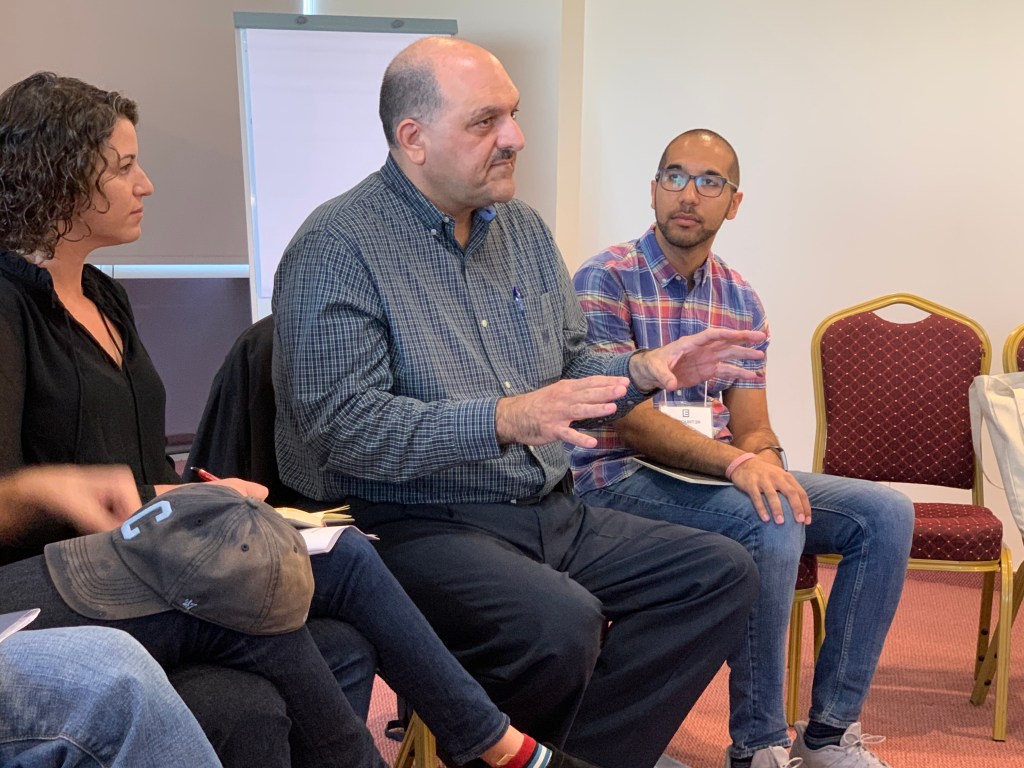
The more time I spend in Israel, the more people I meet who inspire me with the work they do to build the type of country and society that is inclusive of all. A country that values human rights and embraces differences. You won’t see this on the news or read it in the New York Times, but it happens every single day in Israel. For example, Dror Israel and their affiliated youth movement, HaNaor HaOved (NOAL), works in every Druze village in Israel and in 58 Arab villages with over 20,000 arab children, teaching them leadership and friendship in efforts to build a shared society between all those who live in Israel. I had the opportunity to visit two of the Arab villages, meet with the children and the leaders of the Arab branches of NOAL, and was incredibly inspired by their work.

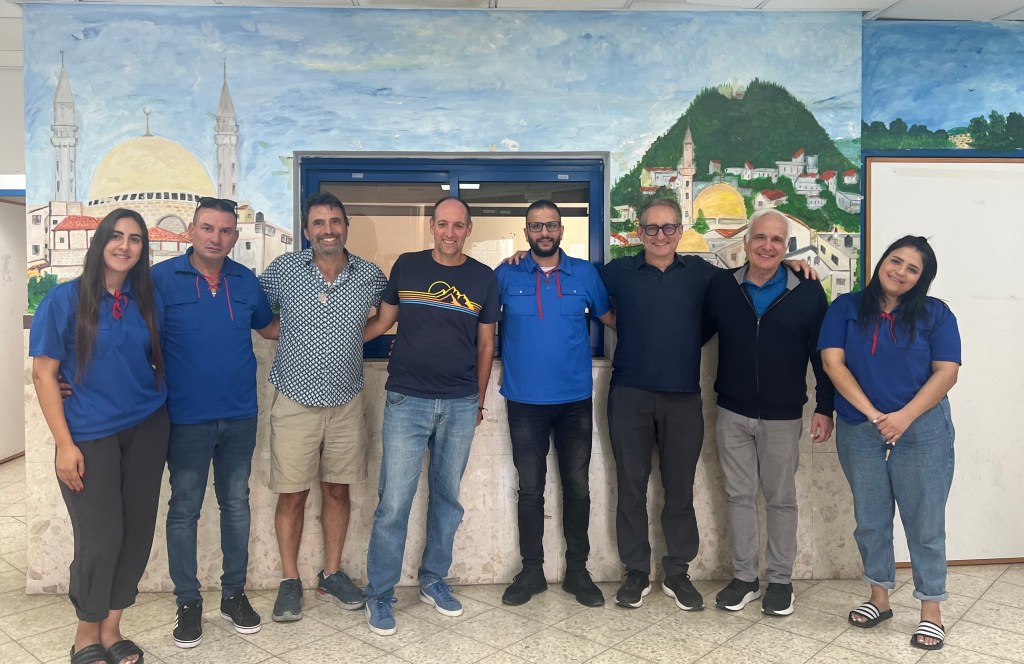
It is amazing to see the work that they do each and every day. When the mayor of the Arab village showed up to talk to us about the youth movement, sharing that he enrolled his own daughters in the movement, preaching to us how important it was to future of his village, we were amazed. As I listened to my friend Shadi tell us about the challenges he faces being Arab, Israeli, and a Zionist and how the current situation challenges his own personal identity, I was captivated. Ever since he invited me to join him in January for a leadership retreat with the Arab branches, I have been trying to figure out how to get back to Israel in January to be there to both support him and experience it myself. To watch the Arab village leadership working with the youth leaders in the Arab villages and document what I experienced to share. When I met Hamami, the only women in the fisherman’s guild in the Arab village of Jzir Al Zarqa, who created a program called Surfing for Peace as a way to intervene with village youth who were skipping school and getting in trouble, I knew I was with a force of nature. As she told us why she partners with Dror Israel and NOAL, because they only care about helping the kids, it was inspiring to see Arabs and Jews working together for a beter future for all. These are the things you can only experience in person, in Israel, to understand the beauty of this country.

Video about the Arab branches of NOAL

In Jerusalem, home to the Kotel (Western Wall of the Temple), Temple Mount and Dome of the Rock and Al Aqsa Mosque, and Church of the Holy Sepulchre, there is another treasure that far too many people don’t know about and that the media will never cover. 100 year old Hapoel Jerusaelem Football Club (Hapoel) is not only a professional men’s and women’s soccer team playing at the highest levels, it’s also a nonprofit that is owned by its fan club. Their most famous leader of the fan club was Hersh Goldberg-Polin (z’l), murdered by Hamas after being taken as a hostage on October 7 from the Nova Music Festival. Hersh loved Hapoel because of their social programs, designed to improve Jerusalem for everybody. Imagine if the news covered their neighborhoods league, where Jews and Arabs (from East Jerusalem) practiced and played soccer against each other each week. Now imagine that they did it without referees. What would the world say? Bring the Jew haters to watch Jewish and Arab children practice and play soccer together, befriending each other, and competing without referees. They wouldn’t know what to do. They’d be lost. It’s why we need to bring them to Israel to see with their own eyes. They need to see the homeless women soccer program, the girls league, Spectrum soccer, the Unified Teams, where neurotypical members of the fan club play on the same team as those who are neurodiverse against a similarly composed team, all including Jews and Arabs. These are the things you have to see in person to believe. These are the things that the media won’t cover. The narrative breaks when you watch Jews and Arabs living together, playing together, and striving for a better future together.

Watch and learn more about Hapoel Jerusalem Football Club and their social programs.

So it is time. Time to bring the Jew and Israel haters to see for themselves what they rail against. Let them cry apartheid as they watch an inclusive society. Let them talk with Arab members of the Knesset, Arab leaders of civil society, Arab and Jewish children who play together and build a new community together. Let them watch Arab, Jewish, and Druze children learn leadership skills together. Let them see the truth that the media won’t cover and expose the lies they breathe in the light of the truth. Hasbara has not worked. It’s time to show them the real Israel, warts and all. A country founded on the belief that all inhabitants should be able to live there in peace, not one that wants one. Let them follow the experience and the lead of Kasim Hafeez, a British citizen of Pakistani Muslim heritage who grew up embracing a radical Islamist ideology, becaming active in the anti-Israel movement. He wanted to see the horrors of Israel first hand and in 2007 went to confirm all his beliefs about the evil of Israel. Instead, he experienced the true nature of the Jewish state, changing his perception of Israel to where he now is a Zionist. We can create more Kasim’s by letting them see Israel first hand. The time in now. We cannot afford to wait.
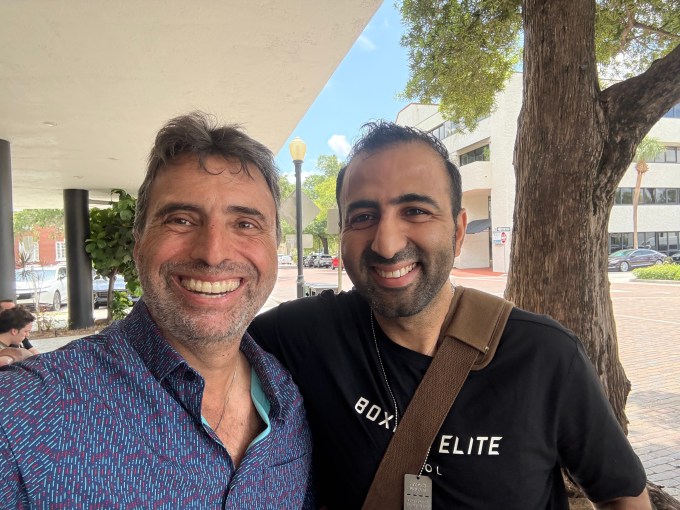
Hanging with Kasim, two Zionists, one who is a self-admitted former Jihadist and anti-semite.

We need to understand that the media isn’t going to be our friend, our ally, or our advocate. They will continue to tell lies. The only way to combat those lies is to make sure that those who criticize Israel based on the lies come to see the lies themselves – and thus discover the truth. Israel isn’t perfect, but what country is? It is a country striving to be better. It is a people who despite their leadership issues (we all have them), are fighting to build a country for every resident.

If we don’t figure out how to get them to Israel to see, feel, touch and taste the truth, I’m afraid we have lost. And I won’t lose. Let’s all do our part to help the critics without any facts experience the truth themselves. Get them to Israel.
Let’s discuss Zionism

I am a proud Zionist. I’m not afraid to say it. I’m never going to deny it. Those who hate Jews continue to attempt to turn that word in a slur. They want it to be something evil. They don’t understand what it even means. Their Jew hatred has them blind to what it means.

In response to this Jew hatred and attempt to reclaim the word Zionism, those who love Israel have fallen into the simplicity of hasbarah. For those who don’t know, Hasbarah is pro-Israel propoganda. It reduces the concept of Zionism and Israel to talking points without depth, without understanding.

So here we are today – people who hate Jews thinking Israel and Zionism is a racist and hateful ideaology. And people who love Israel thinking that Zionism means that Israel does no wrong. It’s not a helpful place and won’t address the core need.

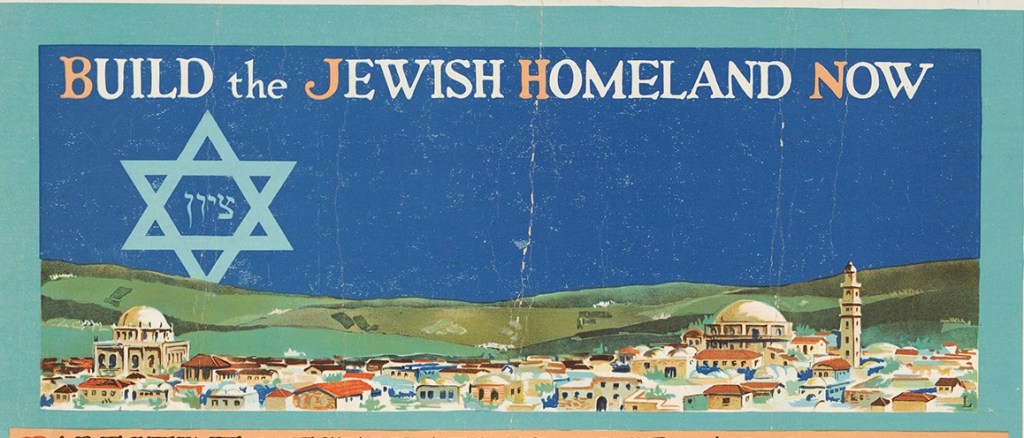
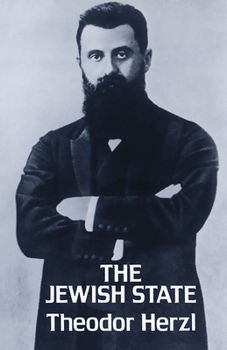
As I spent a few days with my colleague from Dror Israel this week, we talked a lot both among ourselves and with those we were meeting with about Zionism. About what it really means. About the origin. Herzl defined zionism as a political and nationalist movement to establish a sovereign Jewish state in the ancestral Jewish homeland. It came during a time of rising antisemitism as a solution for the homeless Jewish people. Herzl believed that Jews were a nation without a homeland. As a result, the Jewish people had become unwelcome strangers in other nations; a target for hatred. His vision was designed to be both a political and practical one, creating a Jewish national home secured by public law, providing Jews with self-determination and security.  Yet it wasn’t just about the land. Herzl emphasized the importance of restoring the “inner unity of the Jewish soul” and building a strong Jewish consciousness. He famously said, “Zionism is a return to Judaism even before there is a return to the Jewish land”.  It’s far more than just the land although the land is a critical part of it.

If we want to call ourselves Zionists, it means we must know that yes, it is about having our ancestral homeland but it is also about being Jewish. The Zionist experiment, like the American experiment, is far from perfect and far from finished. When David Ben Gurion read the In Israeli Declaration of Independence, he said these words that are written in it:

“THE STATE OF ISRAEL will be open for Jewish immigration and for the Ingathering of the Exiles;
it will foster the development of the country for the benefit of all its inhabitants; it will be based on
freedom, justice and peace as envisaged by the prophets of Israel; it will ensure complete equality
of social and political rights to all its inhabitants irrespective of religion, race or sex; it will
guarantee freedom of religion, conscience, language, education and culture; it will safeguard the holy places of all religions; and it will be faithful to the principles of the Charter of the United
Nations.”

This is what Israel and Zionism is about and strives to be, no matter what anybody else tells you. The simpler explanation that keeps resounding in my head was shared by my colleague Noam, from Dror Israel. He said that Zionism is about being a “just, safe and equally prosperous home for all of its inhabitants.” That is a great summary of Israel’s Declaration of Independence. You may ask, “what about Smoltrich and Ben-Gvir?” To that I would reply, that they are politicians and but a part of a democracy and the Israeli and Zionist experiment. Every country has their outliers and that’s who they are. You may ask, ‘What about Bibi?” and I would reply that in a democracy, sovereign nations have the right to elect their leaders. They don’t always choose who we may want or make the best choices. All you have to do is look back at the history of the American experiment to see that.

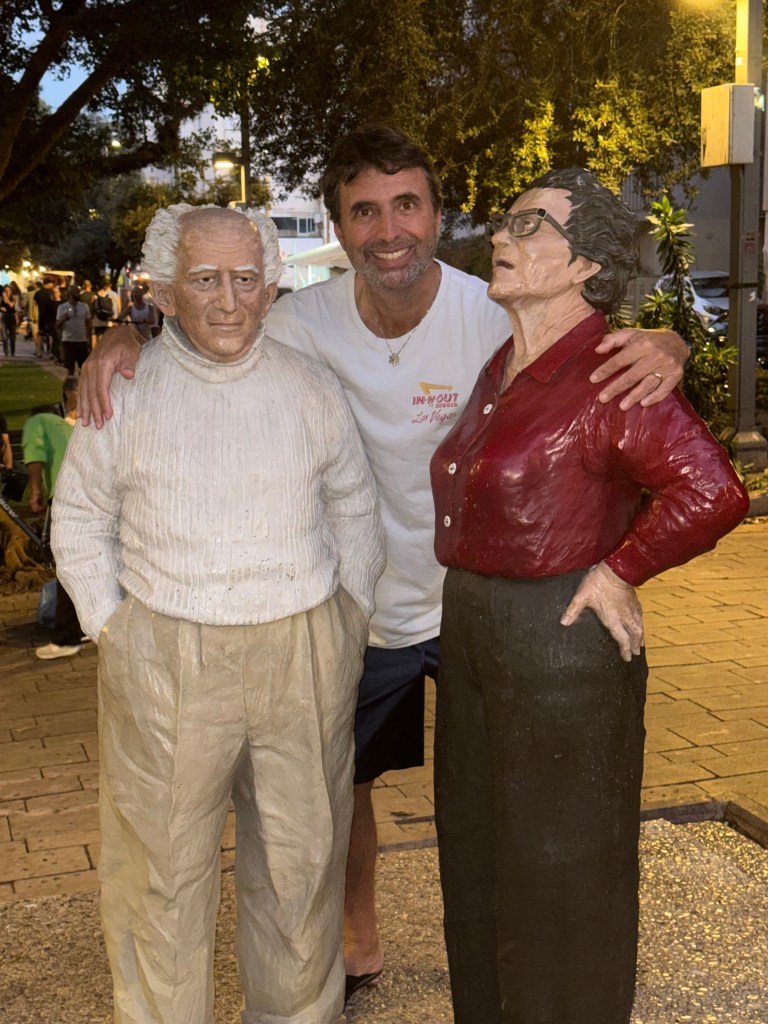
The more I learn about David Ben Gurion the more I am inspired by him. With the statues of him and his wife Paula near their home in Tel Aviv.

The American experiment is very similar to the Israeli and Zionist experiment, tying back to the words of the American Declaration of Independence where it states that, “We hold these truths to be self-evident, that all men are created equal, that they are endowed by their Creator with certain unalienable Rights, that among these are Life, Liberty and the pursuit of Happiness.” Yes, it’s clear that women and people of color were omitted in 1776 and the American experiment has adjusted for and continues to adjust for this throughout the years. The Free Press had a great article about the writing of that sentence today and how it got to it’s final form. Both Zionism and America are experiments that require adjustment, change, and constant work. They are not in their final form.

It’s also important to remember that the Israeli and Zionist experiment is only 77 years old. To put that in context, when the American experiment was 77 years old, we were in the middle of the civil war. Israel is a young country, the Zionist and Israeli ideals are being tested, just like the American ideals were tested in 1853. Slavery wasn’t abolished until 1865 when America was 79. Women didn’t get the right to vote until 1920, when America was 144 years old. We didn’t codify comprehensive civil rights into law in America until 1964, when America was 188 and marriage equality wasn’t made into law in America until 2015, when America was 239 years old. Perhaps giving some time and grace to a 77 year old country is a good idea. Unless you are obsessed with Jew hatred.

Those of us who identify as Zionists also need to let go of the belief that everything Israel does is perfect and right. The country, the leaders, and the people make mistakes. Unfortunately, due to the incredible Jew hatred that we face, we think that we can’t admit when things happen that aren’t correct. We buy into the Jew hating world view that any mistake made by Israel, her elected or military leaders, or any Israeli people, means the country itself should not exist and extended further, that Jews should not exist. This is a fallacy that we cannot afford to buy into. Admitting Israeli’s mistakes is how we truly become that “just, safe and equally prosperous home for all of its inhabitants.”

I have spent most of my career as a servant leader for the Jewish people. As a result, I have chosen not to serve in volunteer leadership for many organizations. The one that I have chosen to serve is the Center for Israel Education. Why have I chosen that one to serve? Because it is truly about what its name says. Israel Education. Not hasbara. It is fact based, uses source documents, and tells the story of Israel, warts and all. It provides knowledge so that those who want to support Israel, who want to defend Israel, have the real information, the whole story, and can address the lies told by so many who are really just Jew haters. If you haven’t been to their website, I urge to you go and to explore. Get lost in the information. Search for things you may have heard something about but don’t know the whole story. Read the original documents so you know what they say, not what somebody who is doing hasbara tells you they say nor what those who hate Jews tells you what happened.

If we truly believe in the State of Israel, in Zionism, and in Jewish self-determination, we need to make sure we know exactly what we are saying and what that means. Those who hate Jews don’t know what it means – it’s simply a line and word they can use to express their Jew hatred. When I was in Israel a few weeks ago, I had the opportunity to talk to my friend Shadi, who lives in an Arab village in Israel, and is Israeli, Arab, and a Zionist. We began an incredible conversation about the challenges he faces being Israeli, Arab, and loving the State of Israel in these tumultuos times. We need to have these conversations. We need to continue to work to ensure that the words of Israel’s Declaration of Independence remain our guiding principle. Israel needs to be a country for the benefit of all its inhabitants; based on freedom, justice and peace as envisaged by the prophets of Israel; ensuring complete equality of social and political rights to all its inhabitants irrespective of religion, race or sex; and guaranteeing freedom of religion, conscience, language, education and culture. When we are clear about what we are fighting for, we can fight for real Zionism and truly fight the Jew haters who want to steal the word from us. Make the effort to learn.

Coexistence vs. Shared Society

One thing has become crystal clear over the past few years. Our world is really messed up. Those who used to advocate for standing up against hate are now leading the charge with their Jew hatred. Places that were once safe for Jews no longer are. The Arab world has begun to stand up against Hamas — sort of. The far left advocates for the Palestinians until Hamas begins to murder them – then they go silent. There is a famine in Gaza until a ceasefire is agreed upon at which point there is suddenly 3 months worth of food, overnight. The cries for the ceasefire are endless until there is one agreed upon and then those crying for the ceasefire urge Hamas to reject it so more people will die. New York, home to one of the largest Jewish populations outside of Israel, is ready to elect a Mayor who openly hates the Jews. A huge number of those NY Jews are ready to vote to elect him as Mayor as he openly talks about excluding anybody who supports the existence of Israel from his administration. The mainstream media publishes lie after lie and when caught, just pretends it didn’t happen.

It’s a crazy world we are living in. A crazy world we are told we are living in that often isn’t accurate or the truth. The words we use are often the wrong ones and we call things by the wrong name to incite people (famine instead of hunger, genocide instead of war, militant instead of terrorist).

Coexistence is one of these words. I never thought about it until yesterday when I spent time with people from the Arab villages of Ein Mahel and Jisr Al Zarqa. I had the opportunity to visit Ein Mahel last September and meet the leaders and some of th children in their branch of HaNoar HaOved (NOAL), an Israeli, Zionistic youth movement that is now 101 years old. That’s right, in Arab villages in Israel (55 to be exact) there are Zionist youth movement branchs. There are more than 20,000 arab children in these branches. More than 20,000 arab children who are actively involved with an Israeli, Zionistic, youth movement. Where do you see this on the news? Where do you read about this? It changes the paradigm in a way that those who hate Jews don’t like.

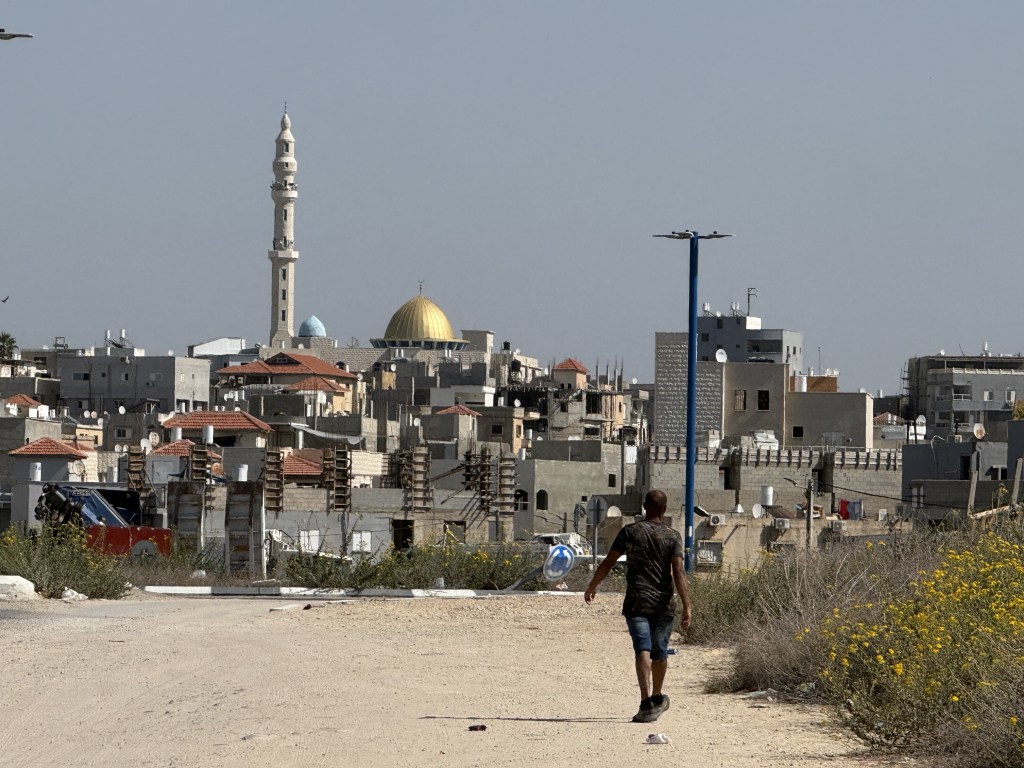
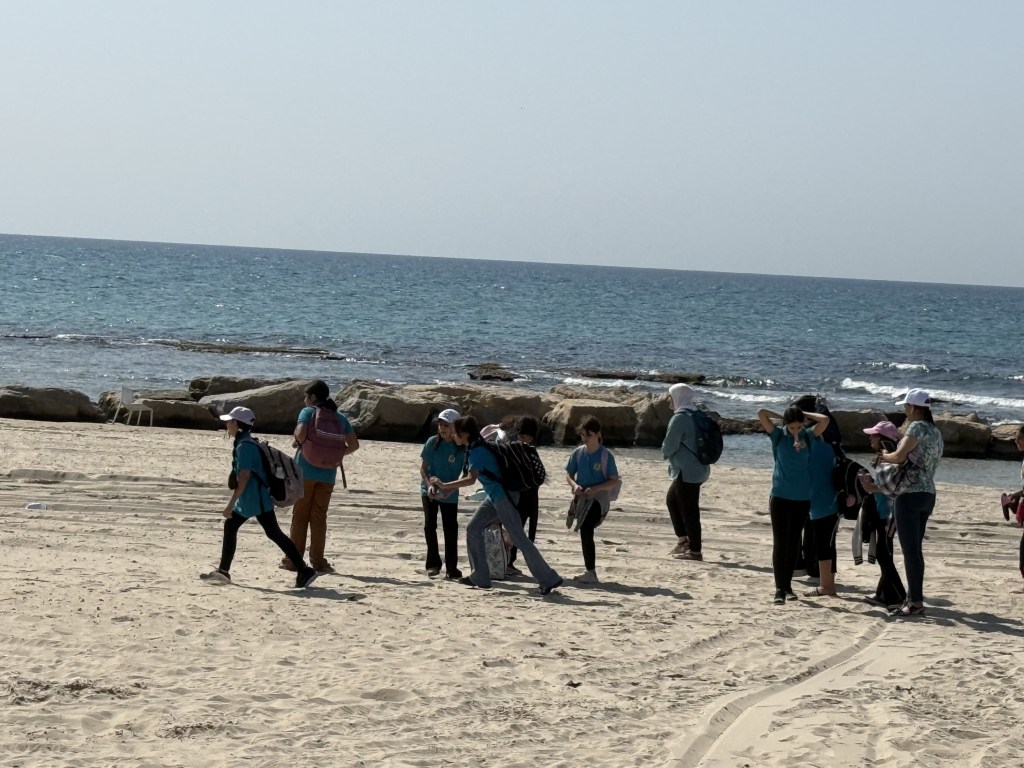
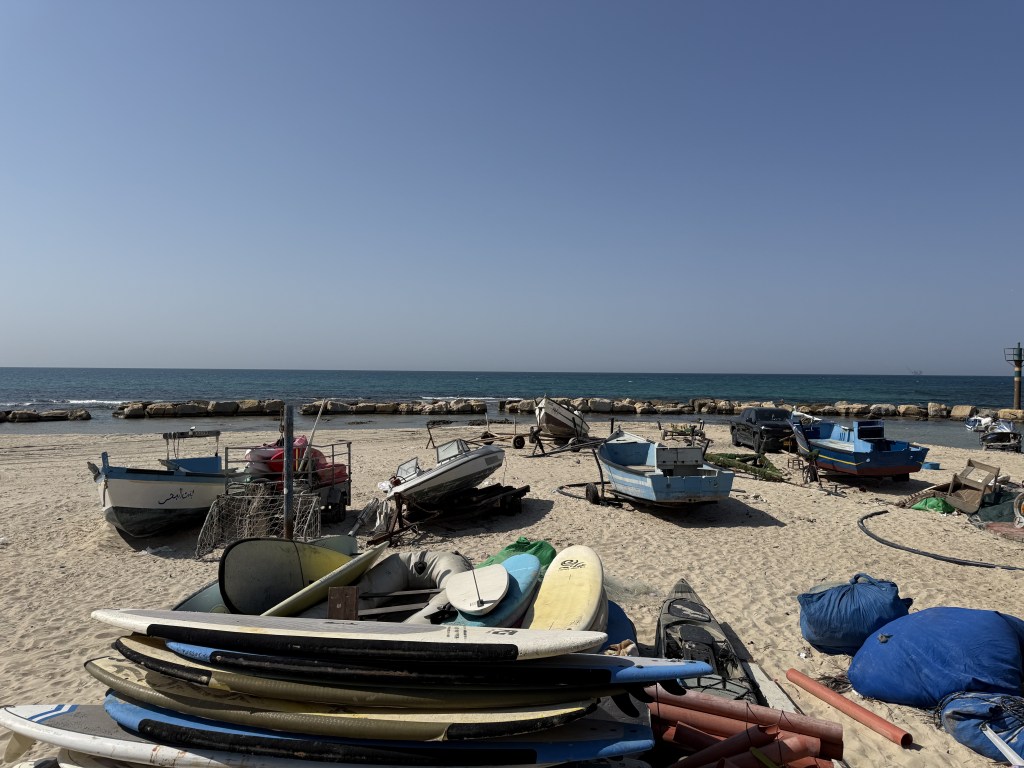
On Thursday, I had the chance to visit the Arab village of Jisr Al Zarqa. It is one of the poorest Arab villages that struggles with violence inside the village. As we entered the village, it was pointed out to us the locations where people were murdered by gangs inside the village last week. Jisr Al Zarqa has a remarkable asset that sets it apart from every other Arab village in Israel. It sits on the beach of the Mediterannean Sea. This poor town is right on the water with a beautiful beach. As we walked to the beach, we saw the trash strewn all around. It was a harbinger of the story we were about to be told – a story of hope and of a potential different future.

At the beach, we met Shadi, who lives in Ein Mahel and who I got to know last year during the visit. We also met Hamami, an amazing women from the village of Jisr Al Zarqa, and Hassan, an amazing young man from the village of Jisr Al Zarqa. Why did we meet with them? Because of their involvement with HaNoar HoOved (NOAL). Both Shadi and Hassan grew up in the movement. Shadi is in his early 30s, Hassan is 20. Both are leaders in the movement. You read that right – Arab (Muslim) leaders in an Israeli, Zionistic, youth movement. Shatters what the media tells you. Shatters the paradigm the world is taught and believes. We also met Hamami, a spectacular woman who is changing the reality on the ground. Hamami is a fisherman, the only woman in the fisherman’s guild in Jisr Al Zarqa. She was a professional soccer player when it was unheard of to have an Arab woman play professional sports on an Israeli team. She is a force of nature.

What is she doing? In a village where children often skip school and get in lots of trouble, she began going out in the streets and pulling them off the streets to participate in a sports program she created herself. She took them fishing, surfing, swimming, and all sorts of water sports. Every day she goes out in the streets and corrals them to come with her and do something productive instead of getting in trouble in the streets. At one point, she went to the schools and began working with them. She took the children off the streets in her program and then ordered them to return at 8 am the next day. All but 2 returned on time. The two who were late were sent home. The next day all of them showed up on time. She spent 3 months working with them on the water, with the sea, before returning them to school where they restarted their education. What an incredible woman.

Uri, a member of NOAL who works with the Arab villages, learned about the work of Hamami, and went to meet her. She told us that he was the first person who didn’t try to make money off her program and instead just wanted to know how he could help her and help the children. They are now partners in the effort, as Dror Israel, the overaching organization of NOAL, works to fund and support her organization Instead of trying to MAKE money off the work of Hamami and the children, they are INVESTING money in the work of Hamami and the children! Once again, you read that right. Jews and Arabs working together, in partnership, in Israel, to help the Arab children who are at risk. You don’t hear that from the UN or in the media. But it is happening.

As we sat together to eat lunch and continue our conversation, one of our group used the phrase “coexistence’. Shadi quickly spoke up telling us not to use that word. He told us that coexistence means we live alongside each other. We don’t interact. There are Arab schools and Jewish schools. Arab youth movements and Jewish youth movements. Arab leadership programs and Jewish leadership programs. Saying coexistence means living separately, side-by-side. The right phrase, he educated us, was ‘shared society’ because we share things together. That’s what they are doing with NOAL. That’s what we need to strive for. Not coexistance where we live separately but a shared society where we truly live together. I was inspired and am changing my vocabulary.

Having met Shadi last year and connecting, we spent more time together this year. We built our friendship and talked about many things. The challenge of being Zionistic (loving Israel) with the challenges of the government and the country, especially post October 7th was the start of a fascinating conversation that I look forward to continuing with my friend.

As we talked, he shared his upcoming visit to the United States, mostly New York, to share the work of NOAL, Dror Israel, and help change people’s minds about what is happening and what is possible. When I shared that I may be back in December, he was quick to ask when and tell me about an amazing three (3) day leadership conference they are having in early January and urge me to come and experience it. I’m not sure what my schedule will look like but I know it’s something that if I can attend, I will attend. I can’t wait to see Shadi and the others lead and educate these Arab and Jewish youth together about leadership and shared society. As Shadi said to me and I replied back to him, “Inshalla” which means “if it’s God’s will”. A beautiful Arabic word. Part of a shared vocabulary now.

While the title uses the phrase Shadi taught me not to use, this is a great event and when they cme near you, make sure to go meet him, listen and learn.

There is so much happening in Israel that does not fit the narrative the media tells us. There is hope and there is possibility. There are Arabs and Jews working together, not just with NOAL and Dror Israel but across the entire country. It is something you can see with your own eyes and they are people you can meet in person and speak with. It is part of why I urge people of all faiths to go to Israel and see it themselves. Experience it yourself. Don’t believe the narrative. Don’t believe the lies. We can have a shared society if and when we work hard for it. Hamami, Shadi, Hassan and Uri are only 4 people working towards it. I’ve met many, many more. Too many to list by name. Come join them. See it, feel it, believe it, and help make it happen. Bring them to your community. Share the story and share them with your friends and family. Shared society is about togetherness and that’s what we need to make it happen.

On the beach – Marc, Irit, Gary, Shadi, Sasha, Hamami, Jill, me, and Hassan – a new group of friends.

Free Palestine

We have heard this chant for years. Since October 7th, the cries have come more frequently, louder, and in many places. It has become the calling card for antisemitism and Jew hatred. “From the River to the Sea, Palestine will be free.” A chant that is saying, “From the River to the Sea, the middle east will be Jew free.” It is cute, clever, rhymes and is easy to say. It’s also racist and bigoted. But because it’s a chant against the Jews, it’s accepted and defended.

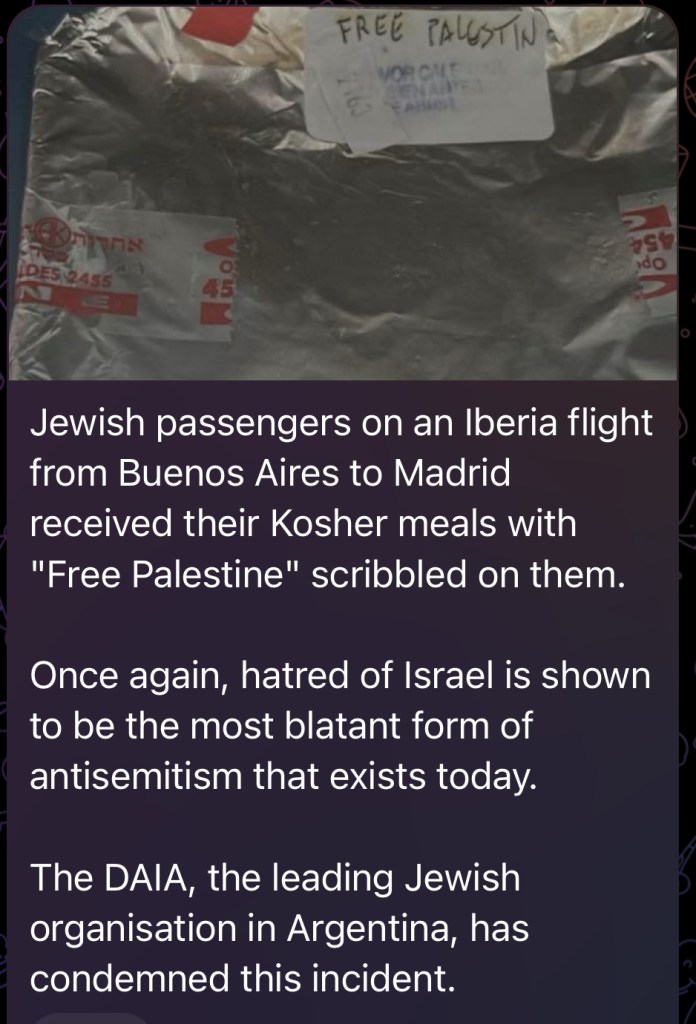
Since October 7th, it has caught on like wildfire. It’s an easy way to terrorize Jews and attack Jews in a now socially accepted manner. Jewish passengers on an Iberia flight had to deal with it. What will be the consequences for this blatent Jew hatred? Nothing.

As Jews, we have allowed this to happen. We have tolerated it, excused it, minimized it, and allowed the Jew hatred to grow. Even today, we continue to find ways to excuse Jew hatred and do things to make the Jewish community responsible for others behavior. The claims that Israel is committing genocide is a perfect example. They are fighting a war. Innocent people are dying. They are not fighting a perfect war and have made many mistakes. Just like every other country in the history of war. It doesn’t matter that the data doesn’t support this claim. It doesn’t matter that it clearly doesn’t meet the definition of genocide while Hamas’s attack on October 7th fully does. It doesn’t matter that just a few weeks ago, in Syria, the Syrian army were ordered to kill every Druze and to eliminate the entire population, a clear genocidal intent, which the world didn’t care about. Every time I see a Jewish person make the claim of genocide my stomache turns. When it is a Jewish leader, especially a Rabbi, my heart breaks. Once again, we are helping our abusers destroy us. Once again we are complicit. In his article in the Free Press, Coleman Hughes addresses the simple truth about the war.

Yahyah Sinwar knew this about the world and about the Jews. In his article, The Wisdom of Yahyah Sinwar, Oren states clearly that, “The leader of Hamas bet that the West’s oldest hatred would obscure Hamas’s atrocities. He was right.” The world hates Jews. We are th oldest scapegoat, easy to blame for anything and everything. Easy to hate because we help those who hate us. Oren points out the many lies that have been told, the way the truth has been proven and yet it is the lies that remain what the public remembers and believes. And we help them.

There are many people who have been very critical of our major Jewish organizations and our Rabbinic leadership for their failure to speak out fast enough, powerfully enough, clearly enough, and with a strong moral clarity. It is easy to miss those who speak out clearly and powerfully, with moral clarity and no ambiguity. My friend Rabbi Jeremy Barras is one of them. Rabbi of one of the largest reform synagogue in Miami, Temple Beth Am, Rabbi Barras is an unabashed Zionist and speaks with incredible passion and moral clarity. His comments below are powerful, clear, and come with moral clarity. Listen to what he says and understand.

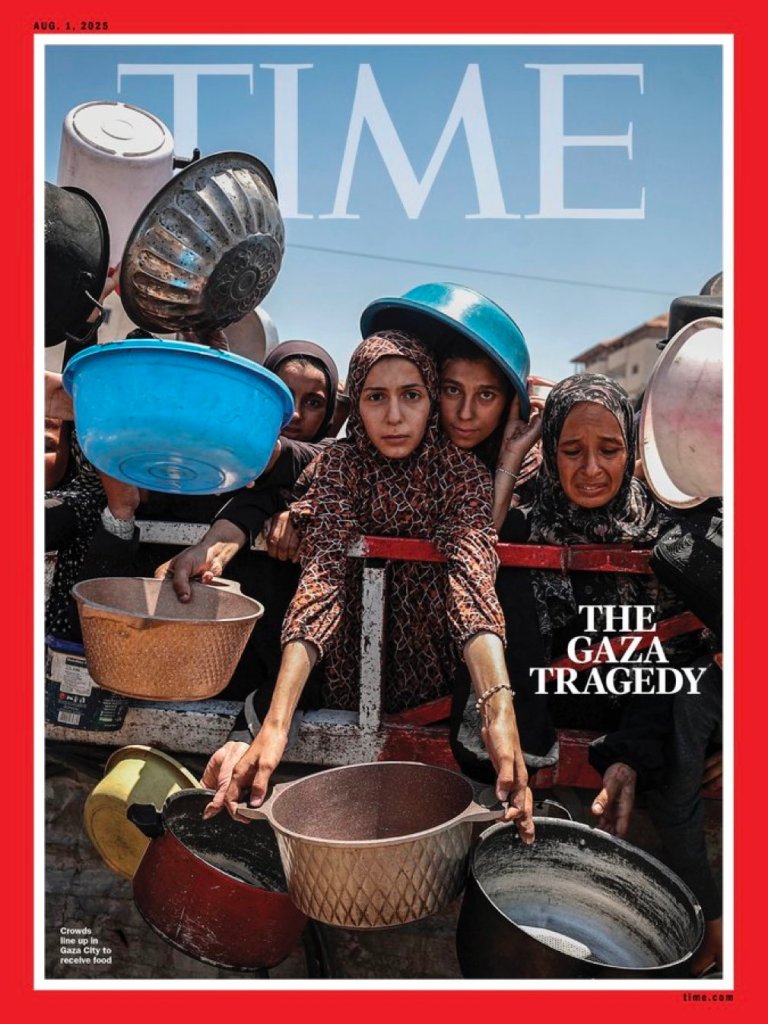
It is time for us to stop helping those who want to kill us to succeed. It is time for us to stand up for who we are and what we believe. It is time to call the world out on their Jew hatred and not allow it. The NY Times knowingly ran a picture that was altered and of a child with Cerebral Palsy and lied about it, staying it was starvation. There are rumors that Irael is going to sue the NY Times for $10 billion dollars for this. I hope they do. They must be held accountable. It isn’t just the NY Times. Today it came out that TIme Magazine staged a photo of people in Gaza starving. They did this for the cover of their magazine!

It doesn’t matter to the world that the pictures are altered or staged. It doesn’t matter to the world that these ‘news’ organizations knowingly lie about the story. It fits the narrative that the world wants of the Jews. Michael Oren wrote in his article about how the world holds, “the 2,000-year belief that Jews were inherently vengeful, greedy, and lustful for the blood of innocents and children.”

This is the reality that we face today. Hamas lies. The media intentionally believes the lies and helps facilitate the lies to generate Jew hatred. People believe it. Jew hatred grows. A good example of how this happens and the impact is Sam Rasoul of the Virginia House of Delegates. He is a Democrat who chairs the Education Committee in the state’s House of Delegates and has used his social media accounts to attack Israel and America’s support for Israel. Recently, he has gone even more offensive in his posting, slandering Zionism and putting Jews in danger. On July 26, 2025, he posted on Instagram that Zionism is a “supremist ideology created to destroy and conquer everything and everyone in its way.”. He then accused Zionists of “making the world less safe for my Jewish friends.”

He starts with a lie about Zionism – simply the belief that Jews should have their own homeland. A homeland that continues to offer peace to the Palestinians that they have continued to reject. If there is any supremist ideology, it is the Palestinian leadership that demands everything and rejects peace. But the truth doesn’ tmatter. He then accuses Zionists of making the world less safe for Jews, another lie, as it is people like him who are making it less safe. Maybe he has some Jewish friends but I doubt they more than tokens designed to provide some cover to his Jew hatred.

This is the person who chairs the Education Committee in the Virginia legislature. Is it reasonable to assume he’ll provide real information and educational guidance about Jews and Israel? Should we expect that he will do everything required to protect Jewish students, especially if they are Zionists? Will a student wearing a Jewish star or any visible support of Israel be deemed a fair target for abuse under his leadership? All good questions and concerns yet the silence of the leadership of the House of Delegates is frightening.

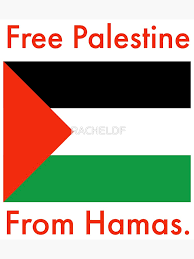
We can’t be silent especially when leadership is silent in the face of Jew hatred. We cannot allow the lies to grow. When we hear the words, “Free Palestine” we must ensure that it includes “From Hamas”.

Are you going to be part of the silence and the problem or be vocal and part of the solution? Our silence allows the lies to grow unchallenged. That is no longer an option. Be like Rabbi Barras and speak out. Be like John Spencer, Michael Oren, Coleman Hughes, Erin Moran, Michael Rappaport, Brianna Wu, and the others who are willing to speak out, to take risks, and fight the lies. Otherwise the effort to make the work Juden-frei (Jew free) will grow and one day, it may succeed.

A love for life – we will survive

The world seems to get crazier and crazier. The stock market plummets and then returns. Tariffs are high and then are gone, delayed, or small. The only constant seems to be Jew hatred, lies, and the hostages being ignored by the UN, Red Cross, and the world.

May 15th is the day of Israel Independence on the secular calendar. 77 years ago, David Ben Gurion stood in Tel Aviv, in what is now Independence Hall, and declared Israel to be a State. Every time I stand in Independence Hall, look at the seats set up as they were that day, and listen to Ben Gurion’s voice declaring the State, I get chills.

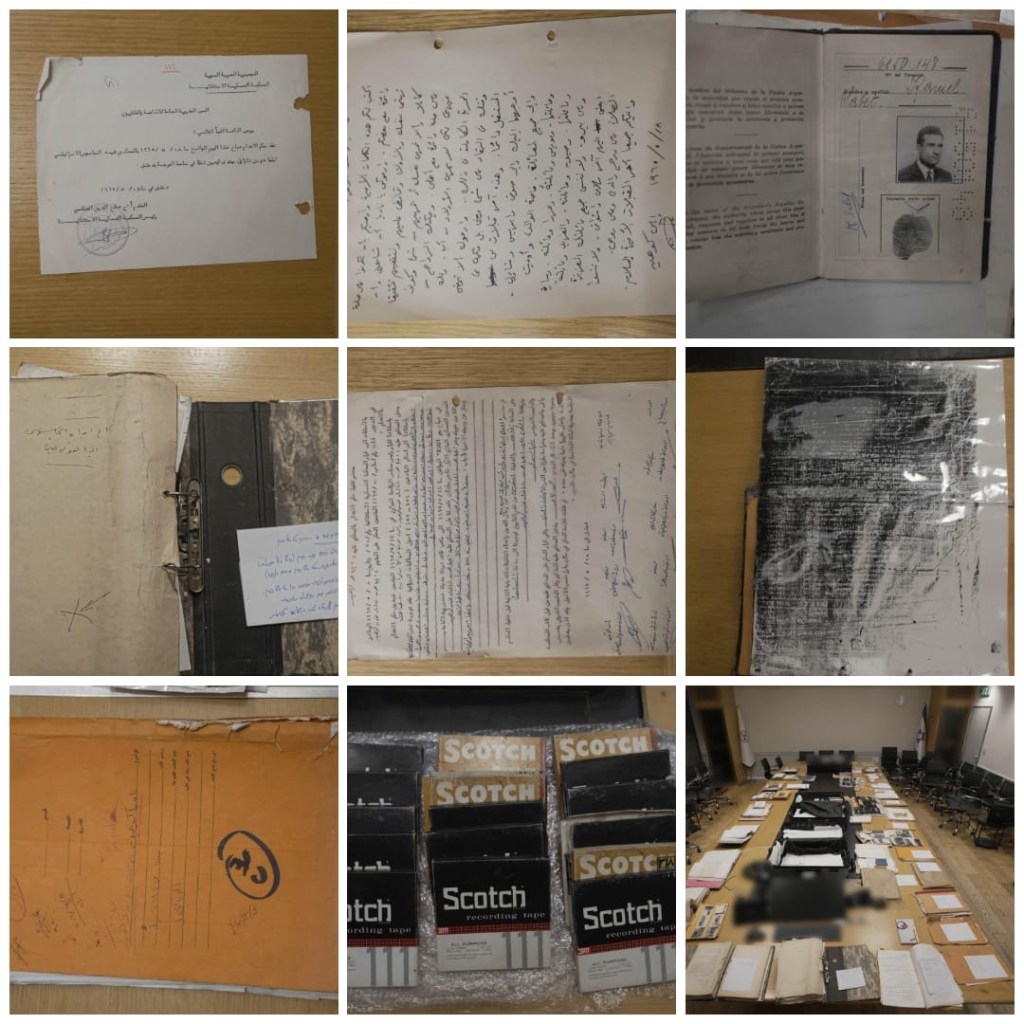
That declaration by Ben Gurion was a statement about the Jewish love of life. Of how we never forget. Of how we place life ahead of everything. This week, there were two examples of this. It was recently announced that Israel had recovered a number of documents and items from Syria that belonged to Eli Cohen. Captured as a spy by Syria and hung as punishment, Cohen is one of the great stories of Israel. I knew about what he did long before I knew his story. The actor Sasha Baron-Cohen played him brillantly in the Netflix mini-series, The Spy.

Top row, center: Cohen’s final will, handwritten in Arabic just hours before his death on May 18, 1965. Addressed to his wife Nadia and children, the letter is a heartfelt farewell filled with guidance, dignity, and emotional clarity.

Top row, right: A forged Argentine passport issued under the alias Kamel Amin Thaabet, the identity Cohen used to infiltrate the highest levels of the Syrian regime.

Middle row, right: The official death sentence, signed by Syrian military judges, condemning Cohen for espionage.

Bottom row, center: Scotch-brand audio tapes, used by Syrian intelligence to record Cohen’s interrogations and radio transmissions

While we have now retrieved more than 2,500 documents and artifacts related to Eli Cohen, we still don’t have his body back. Executed in 1965, 60 years ago, we have never forgotten him or the desire to get his body back.

This past week, the IDF and Mossad were able to recover and return the body of Sergeant First Class Tzvika Feldman. 43 years after he was killed in the Battle of Sultan Yacoub during the First Lebanon War. Syrian soldiers transferring his body to Syria until this past week when his body was returned to Israel. We love and treasure life. We don’t ever forget.
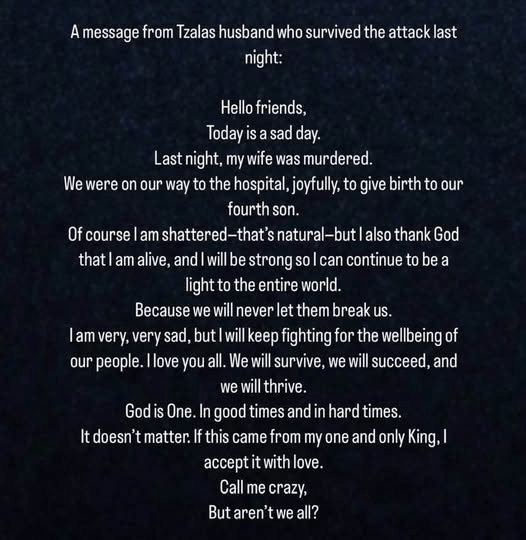
This week, Tzeela Gez and her husband Hananel, left their home in the northern West Bank community of Bruchin to head to the hospital so she could give birth to their fourth (4th) child. A terrorist shot at their car, wounding them both. A few hours later, after an emergency C-section to deliver their newborn son, Tzeela died.

The media barely covered this brutal attack. They don’t cover the violence against Israelis in the West Bank. They don’t cover the rockets that are launched at the citizens of Israel. They don’t address or condemn the ballistic missiles fired by the Houthis from Yemen targeting civilians. It is up to us to remember, to never forget. It is up to us to ensure that the souls of Eli Cohen, Tzvika Feldman, and Tzeela Gez are never forgotten. It is up to us to ensure that future Hersh, Carmel, Alex, Eden, Or, and Almog’s know who they are named for and what their obligation is to honor those they are named for.

The message below from Tzeel’s husband Hananel is the essence of Judaism. We have never and will never let them break us. We will fight for our people no matter how sad or downhearted we are. We will survive, succeed, and thrive under any and all circumstances.

Our effort to survive, succeed, and thrive means that we fight for truth. Even when it is inconvenient. Even when it is difficult. Even when the world doesn’t want to see, hear, or recognize it when it’s right in front of their face.

A friend of mine shared this piece about the history of the term Nakba that was written by Adam Louis Klein. It is a fascinating history that shows the power of the media and of repeating a lie long enough and loud enough that people think it is the truth

The term Nakba, now central to Palestinian national memory, was coined by Constantin Zureiq, a Christian Arab nationalist and key figure in shaping modern Arab nationalist ideology. As detailed in a recent article in Fathom Journal by David Szeftel, Zureiq was part of an intellectual movement in the 1930s and 40s that openly admired fascist and even Nazi models of anti-Western power, seeing them as templates for Arab revival.

When he introduced Nakba in his 1948 book Ma’na al-Nakba (The Meaning of the Disaster), it did not refer to Palestinian suffering or displacement. It referred to the Arab League’s failure to destroy the newly declared State of Israel and the humiliation of Arab armies. It was a political lament over defeat, not a humanitarian reflection on refugees.

Only later was it linked to the “right of return” for Palestinian refugees, a policy heavily promoted by the Arab League and eventually formalized through the United Nations. But this “right of return” wasn’t about refugee welfare—it became a political tool designed to prevent Israel from continuing to exist as a Jewish state by flooding it demographically.

This strategy also led to the unprecedented perpetuation of refugee status across multiple generations (see Einat Wilf’s work on this). Unlike any other refugee situation in history, Palestinians were deliberately kept in a state of statelessness by Arab regimes, denied full citizenship rights even in places like Egypt and Jordan, which directly controlled Gaza and the West Bank after 1948. In effect, the Arab League actively denied Palestinians the right to rebuild their lives in order to weaponize their suffering and make Israel appear impermanent and illegitimate.

Over time, the meaning of the Nakba shifted. It became less about the Arab world’s military failure and more about constructing a permanent Palestinian grievance narrative. The historical record was rewritten to erase the Arab invasion and rejection of the UN’s two-state partition plan, portraying the events of 1948 instead as unprovoked Israeli aggression. This narrative also conveniently erased Jordan’s displacement of Jewish communities from the West Bank, the appropriation of their land and property, and suppressed the mass dispossession of Jewish communities across Iran and Arab countries after 1948.

Eventually, the displacement of Palestinians was rebranded as a case of “ethnic cleansing” and “settler colonialism,” rather than what it historically was: the tragic outcome of a war of independence triggered by the Arab world’s invasion of the newly declared Jewish state—though it’s important to acknowledge that some forced expulsions of Palestinians did occur amidst that war.

In short, Nakba has evolved from a term describing the Arab world’s military failure to a political myth that erases historical complexity in favor of a one-sided narrative of perpetual grievance.” 

I’ve been the Aida ‘refugee camp’ in Bethlehem. It is a city. They live in apartments, not tents. They have schools and community centers. Their schools and community centers teach them hate. In 2019, I met with and talked to the head of their community center. He bragged about the suicide bomber that he helped raise and create. Openly. Publicly. The world loves their Jew hatred and they will continue to use whatever and whoever they can in their effort to eliminate us. From the Assyrians to the Babylonians to the Persian to the Greeks to the Romans to the Byzantine empire to the Spanish Inquisition to the pogroms in Russia to the Nazis in the 1930s and 40s, to today, whatever it takes to attack us is free reign.

The difference is that today we fight back. Today we don’t cower in fear. We don’t allow others to determine our fate. The world can hate us and we will still fight. The world can lie about us and we will still fight. Survival isn’t an option and we won’t allow survival to be under the control of anybody else. Today we have the IDF. Today we have Israel. Today we won’t stay silent and we will fight back.

Am Yisrael Chai.

Love, Kindness, Goodness and Friendship – An Inspiration

This has been a challenging week for many people. For some it’s the results of the election. For others it is the pogrom in Amsterdam and watching Jew hatred go to another level. Today is the 400th day of the hostages being in captivity. Two Jewish students were assaulted at Chicago’s DePaul University for the crime of being Jewish. In the past months, Jewish students have been attacked at The University of Michigan and The University of Pittsburgh for being Jewish. Rockets continue to be fired every single day by Hezbollah from Lebanon into Israel.

We live in arguably the most divided time in the United States since the Civil War. The world may not be this divided since World War II. It is easy to feel sad and depressed. It is easy to lose hope and think the world is ending. Concern over the next few weeks, months, and years is a common refrain heard regularly.

And yet there are examples of hope all around us. There are examples that show when we decide to be the answer, the solution; when we decide that we are no longer going to wait for others to solve the problem and challengs of the world, that we create change.

We are a college football family. For years, our Shabbat has involved being together as a family, either watching college football on TV or in person. When our older son was playing High School football, Shabbat dinner was at the football field. When he was coaching High School football, we spent Friday nights watching him coach and as he coaches college football, we are watching on TV or in person once again. This morning, as I was watching ESPN Gameday, a beautiful and inspiring story was shown.

Malachi Moore, a star player for Alabama, befriend a young girl, Henrietta Murray, who had a terminal illness. Their relationship and his relationship with her family, is a beautiful thing to see. Once again, it shows the power one person has to change the world. Malachi changed not only Henrietta’s life but the lives of her parents and his own life. Listening to him talk about what his friendship with Henrietta not only meant to him but how it changed his outlook on life is powerful. We all have th ability to be like Malachi. We all have the power to change lives with our actions. Watch, listen, and feel the love.

Watch Malachi and Henrietta’s story

Then there is the story of Melhem Asad. A Druze fan of Maccabi Tel Aviv football/soccer, Melhaem was at the game in Amsterdam. As he watched the attacks begin against Israelis by criminal antisemites with law enforcement not helping, he thought quickly on his feet. As an Arab speaker, he ran to groups of Israeli fans, speaking loudly in Arabic to them, creating the impression that everyone in his group was Arab rather than Jewish. By doing this, he successfully misled the attackers, who left these groups alone as they searched for Jews to attack. He didn’t just do this once or two. He spent several hours using this strategy to shield Jewish Maccabi fans who were under attack in restaurants and bars, unable to safely reach their hotels. When people call Israel an apartheid state, when people say that Jews, Arabs, and Druze can never get along and never exist together, this is more proof that these are lies.

Thank you Melhem for showing that humanity isn’t about being Jewish, Druze, or Arab. It’s about being a good person, caring about your fellow human beings, and combatting hate. You are an example to everybody of what the future can look like when we choose to take action ourselves. When we don’t wait for somebody else to do something. When we don’t tolerate the status quo and do what we can to make the world a better place.

Melhem Asad, who’s quick thinking and speaking Arabic saved many from being beaten.

Kirk Herbstreit is the cornerstone of ESPN Gameday. He is well known, popular, and one of the people fans want to hear from. Recently, the focus has been on the relationship with him and his dog Ben. Ben became a travel companion for Herbstreit, with him on the road, on the field, and on the set. In many ways, he became America’s dog. Recently he got very ill and in the past week he died. His loss was felt not just by Kirk but by fans and dog lovers all over the world. ESPN chose to show a tribute to Ben today. It was beautiful and powerful. It shows the power of love. I have always felt that dogs are pure love in a living being. We lost our beautiful chocolate lab, Bella, earlier this year. I miss her every day, and ask Kirk publicly mourned the loss of Ben, I could relate and understand the loss.

Our sweet girl Bella, enjoying the back yard, the sun, the grass, and being with me.

We can have this type of unconditional love with a dog. Why can’t we have this type of love for our fellow human beings? Before the election and after the election, the vitriol expressed against those supporting a different candidate was horrific. You might be branded a racist, a bigot, a Jew hater, an antisemite, an islamaphobe, transphobic, anti-LGBTQ, anti-woman, anti-American, and many other terms. It’s ok to to support different candidates for many reasons. Understanding why people make the choices they make gives us a chance to build bridges, work together towards the type of society we want to live in. Most people don’t support every position that the candidate they supported stood for. Yet we simplify people and live in hatred and disgust rather than love and understanding.

Dogs aren’t like that. They love you no matter what. It is as if they understand that people are fallible and love is what helps us deal with our imperfections. Dogs really are perfect love. I miss having Bella climb in my lap to cuddle no matter what was going on. I miss her giving me kisses and laying down at my feet to be close to me. I miss taking her out to the backyard to walk and lay in the grass, appreciating the beauty of nature, the warmth of the sun, the smell of fresh air.

It’s pure love. Watch the tribute to Ben and let Ben inspire all of us to treat people better.

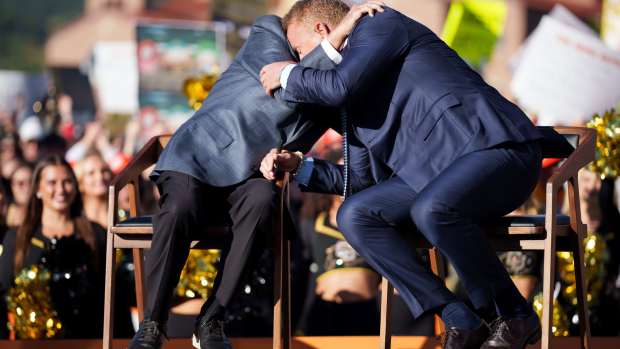
Speaking of Kirk Herbstreit, every week when I watch him on ESPN Gameday with Lee Corso, their interaction is one of the sweetest things in today’s world. It’s clear that they have a father-son relationship. As Corso has gotten older, Herbstreit openly provides him with more help and more support. It is a beautiful thing to watch.

Today, it was the opposite. As the tribute to Kirk’s dog, Ben, began, he was visibly crying and emotional. You could feel his pain and loss. And who was there to support him? Lee Corso of course. It was a public display of love and support. No worries about what it looked like or what anybody though. It was two close friends being together, even with millions of people watching.

We can use the example of the relationship between these two men as a teaching lesson for each of us. Every day we have an opportunity to be there for somebody else. Every day we have a chance to build these special relationships. I am lucky. Along with my brother and sister, I have two people that I consider brothers and two people I consider sisters. That’s how close we are. While biologically I have two siblings, in reality I have six. I choose to invest in relationships with people. The quality of friends is so much more important than the quantity. Many years ago, an older friend of mine (he was my age now back then) used to say, “I don’t need more friends at my age.” I heard him but didn’t really understand at that time. Now I do.

The example of Corso and Herbstreit shows us what we can do for other people if we want. It shows how we change the world, one person, one relationship at a time. It takes so little to improve the day and the life of another person. It also can take so little to suck the energy out of somebody’s day, making their life more challenging. The question is which type of person do you want to be. Do you want to be somebody who spends every day working to make the world a little bit better or do you want to live in negativity and make the world a little bit worse every day?

I choose to change the world every day with kindness.

Zionist vs. Patriot

I’ve been a proud Zionist all my life.  My great-grandmother, who I knew, was a Zionist.  My grandparents were Zionists.  On a visit to Israel a number of years ago, I went to the JNF building and found the books that had their name in it for their support of JNF back in the 60s.  My parents were Zionists.  I grew up filled with a love for Israel and a strong belief in the importance of a Jewish homeland. 

All four of my grandparents went to Israel.  My parents went to Israel.  My in-laws went to Israel.  My brother and sister-in-law have been to Israel.  My sister and brother-in-law have been to Israel.  My wife has been to Israel and this last trip was my 22nd trip to Israel.  The proof is in the pudding as they say.
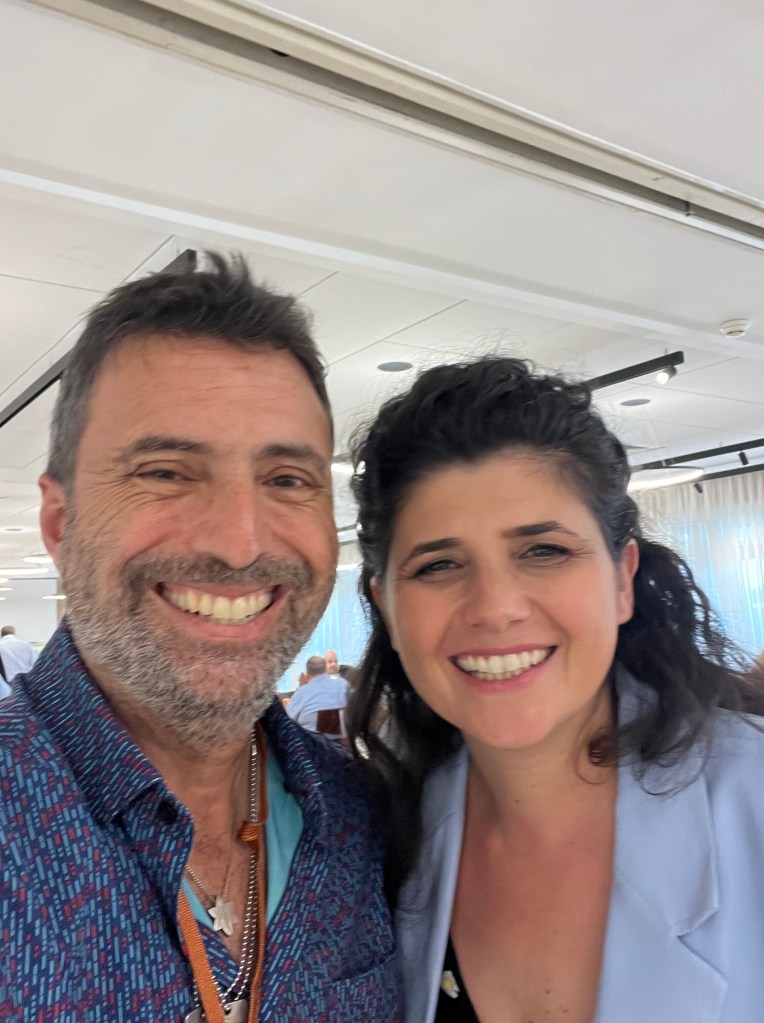
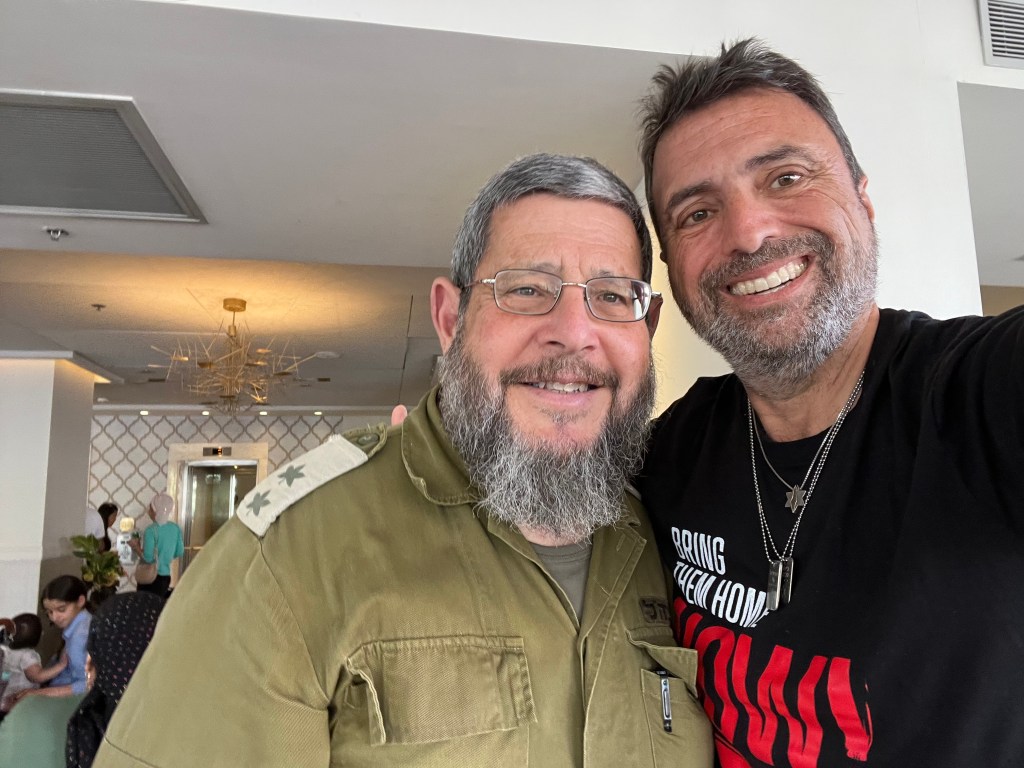
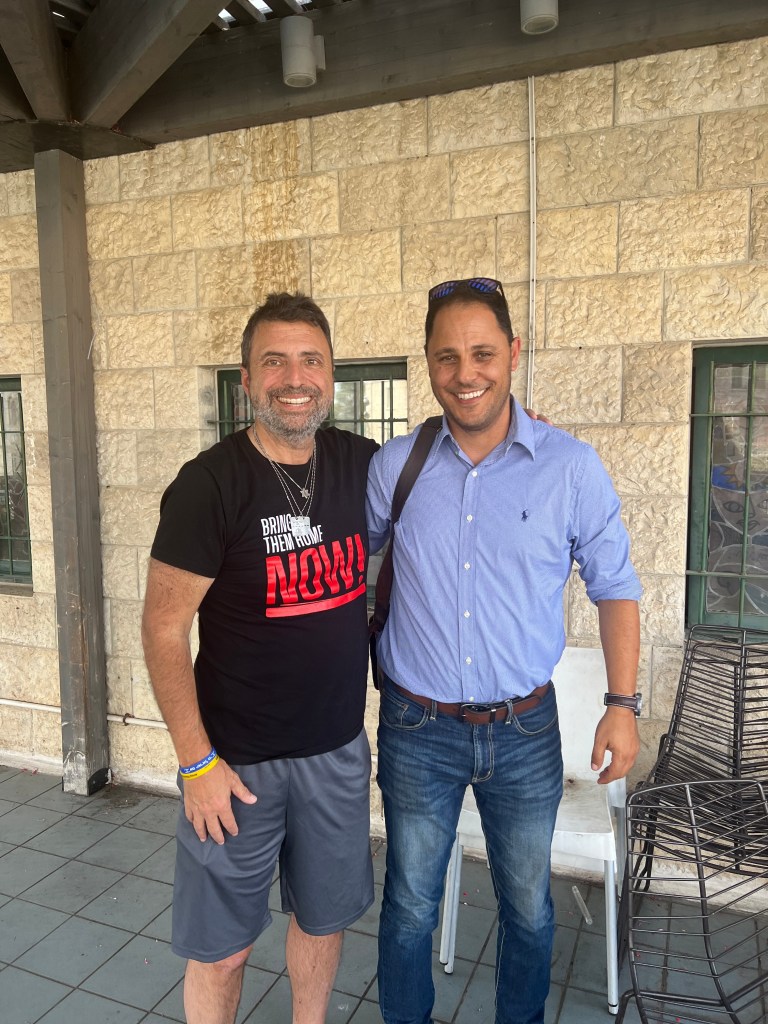
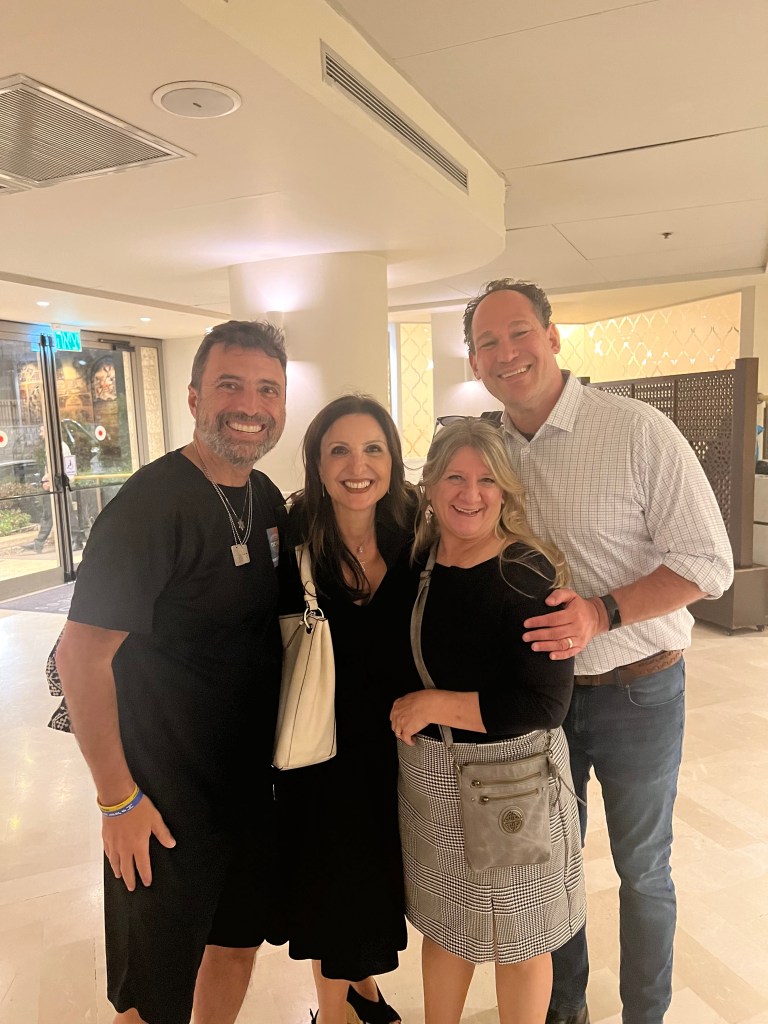
On this recent trip, while sitting in the back of the bus with one of the participants, he posed an interesting question to me.  “Why do we still call it Zionism?”   After all, Zionism is the belief that the Jewish people should have their own state and be able to have their own self-determination.  We have that.  We have had it for 76 years.  In 1776, the Americans were revolutionaries.  We no longer call ourselves revolutionaries nor have we for more than two centuries.  We are patriots because America is a country, and we no longer have to fight for our freedom from another country’s rule.

In 1948, in the former home of Mayor Meir Dizengoff, David Ben Gurion declared independence for the State of Israel.  While we have fought many wars since then, from that point forward the Jewish people have had a state.  We have had our homeland.  We have had self-determination.  So why are we still calling it Zionism?  Shouldn’t we just be patriots as well?  Haven’t we accomplished the goal of Zionism, the creation of a Jewish homeland?
It is a question I find myself struggling with for many reasons. While we have a Jewish homeland, the State of Israel, there are so many people and countries that want to eliminate our homeland and right to self determination that we must always be vigilant. So while we have our Jewish state and self determination, we cannot afford to sit on our laurels. We must continue to fight to maintain it. As a Zionist, I fight for our homeland and won’t let it be deligitimized. Today, more than ever, that is critical. The United Nations, UNRWA, and the International Court of Justice (ICJ) are actively working to eliminate our homeland. If we are merely patriots, do we lose the urgency needed to defend Israel? Do we forget how long it took us to have our homeland after the Romans sent us into exile? Do we lose the passion of Zionism when we become Patriots? I don’t have the answers but I do have the questions.
On the flip side, we have our country. We have the right to self determination. Do we really need to be fighting for something that we already have? Defend it as patriots, yes. The Zionist dream is real and has been for 76 years. We accomplished the goal of Theodore Herzl. His radical idea, “the restoration of the Jewish State”, has come to pass. Are we using a word that we don’t need to? Are we creating challenges for ourselves because of that? Is it time to change the paradigm, to not live in fear that we will not have a Jewish state, because we actually have one?

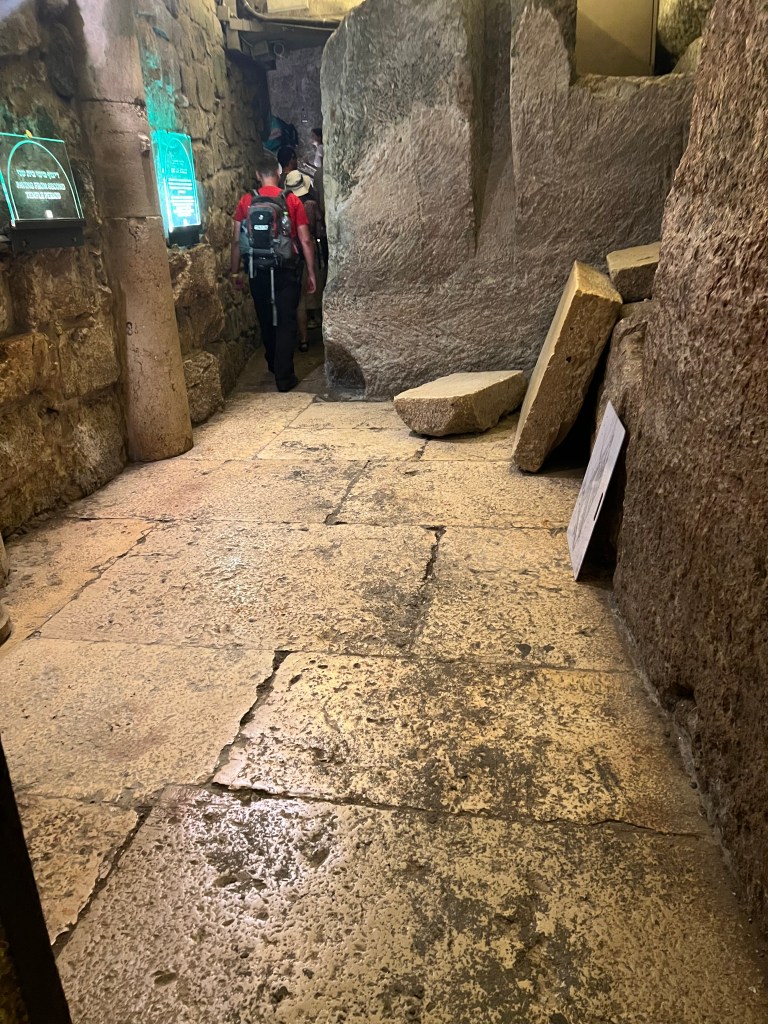
As a Zionist, that word ties me to generations of my family. It ties me not only to my Great-great-grandparents and the time of Herzl but to ancient Jews and receiving the Torah. It is being a part of the Jewish people. Generations upon generations. When I was recently in Israel, walking on 2,000 year old streets, looking out at where King David’s castle was, praying at the Kotel, the base of Temple Mount, it all came together. My ancestors from thousands of years ago stood where I was standing.

Original streets from more than 2,000 years ago, beneath the Kotel.

In May, when I stood on top of Temple Mount, it was a connection to the Temple built by Solomon and then rebuilt and modified by King Herod.

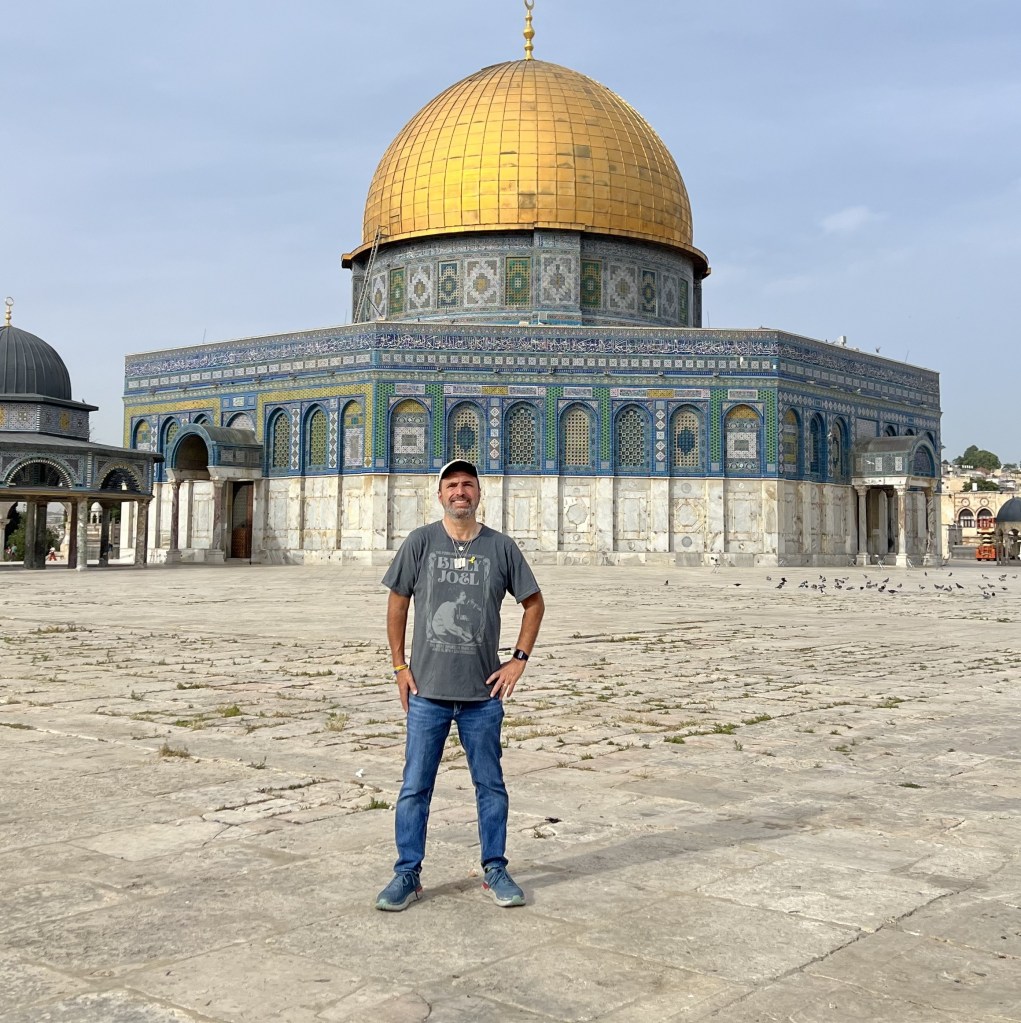
In front of Dome of the Rock on Temple Mount, where the Temple used to stand

At Passover every year, we remember that God took us out of Egypt. Not just our ancestors but us. We were all at Sinai for the giving of the Torah. Judaism isn’t about what happened to others. It’s about what happens for us. So yes, the Zionistic dream of Herzl has been attained. But Zionism remains for all of us to defend. To fight for. To advocate for. Our history shows us that if we take it for granted, we will lose it.

After lots of thinking about the word Zionist and comparing it to Patriot, there is no question in my mind that Zionist is the right word. Our homeland is too precious to be diluted. As I watch so many Jews not understand the importance of Israel, having never been to Israel, not seeing the historical connection and minimizing what Israel means to Judaism and the Jewish people, I am not sure the fight for Zionism will ever be over. We owe a huge debt of gratitude to those who came before us and fought for Zionism and for the existance of Israel. They are giants on who’s shoulders we continue the fight.

I won’t change from Zionist to Patriot. I won’t stop advocating for Israel and the Jewish state. And I won’t stop being public with my Jewish identity and passion for Israel. Each trip I video walking the streets to show those who have never been what it’s really like. I post images and tell stories. Zionism is more than a national identity. It is core to the Jewish people. From Abraham to Moses to Joshua to King David to King Solomon, from the Mishkan to the First Temple to the Second Temple. If you don’t believe me, take a trip to Israel and see it yourself.

Am Yisrael Chai!

Thoughts from my July 2024 Israel trip

I returned from Israel about a week ago.  It was my second trip this summer and very meaningful on many levels.  I love going to Israel and being in Israel.  Everybody in my family knows how much I enjoy being there, how meaningful it is to me, and I’m sure there are some who expect that one day I will make Aliyah and live there.

This trip was highlighted by a few things that I think are very important, not just because they mean so much to me but because they highlight a bigger picture of Israel and the meaning to the Jewish people.

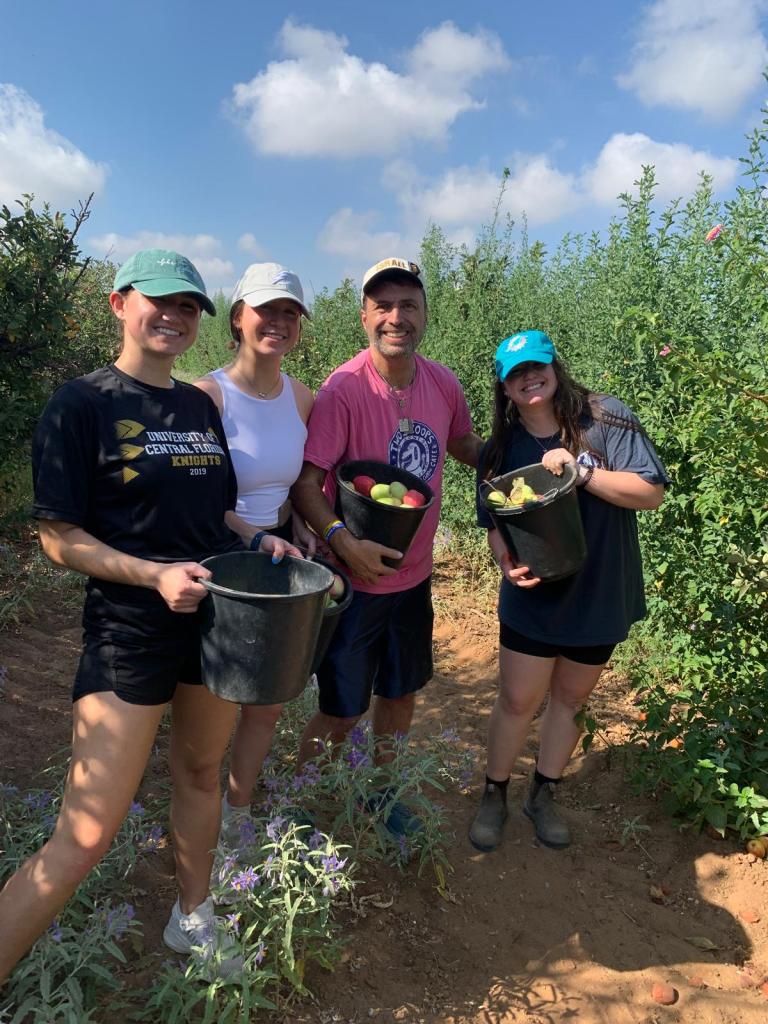
We got off the plane and after changing, the first thing we did was go to work the land.  There is something about Israel and working the land that is incredibly gratifying.  We went to pick apples that will be given to those in need.  It was a hot morning, and we had our water and hats and off we went.  There were two huge bins to fill that looked daunting when we began.  Yet working the land in Israel meant that we worked hard.  Very quickly the first bin was halfway full.  We talked, we laughed, and we picked apples.  Halfway through filling both bins, we took a break to eat some fresh watermelon.  By fresh, I mean it was picked just to cut up for us. 

Israel was founded by working the land.  “Making the desert bloom” remains a key goal and catchphrase.  There is something about getting your hands dirty in Israel by picking fruits and vegetables that is incredibly rewarding and meaningful.  It ties you to the founders of the State of Israel.  It ties you to 3500 years of Jewish history in the land of Israel.  I’ve been to farms in the Negev where they are growing fruit and vegetables in the sand and picked them.  I’ve helped with lemon trees in the Gaza envelope.  I’ve been to a friend’s Moshav near Gaza growing all sorts of fruits, vegetables, and nuts.  Now I have picked apples.  It’s incredibly rewarding, and I can’t wait to do it again.  I learned about Israel Food Rescue, an opportunity to volunteer picking fruit and vegetables in Israel to help harvest the food needed since the loss of so many Thai workers and Palestinian workers since October 7.  Israel gives you an opportunity to really give back, not just with money or time, but with your hands and sweat equity. 

I had the opportunity of this trip to meet and do some work with incredible leaders of Israeli civil society.  I went to the Knesset to meet with MK Sharron Haskel, an amazing leader who represents a new generation of Israeli leaders.  As we reach a crossroads in Israel with leadership, she is part of a new generation that will shape the future.  I met with former Deputy Mayor of Jerusalem, Fleur Hassan-Nahoum, who I met a number of years ago and is a friend.  Fleur is also part of this new generation of Israeli leaders who will change the shape of the country.  Fleur spoke to our group and captivated them with her brilliance.  Her analysis of the possibility of a 2-state solution, a 1-state solution, and other options for peace was fascinating.  She recently debated former Ambassador Dennis Ross on the topic and I can’t wait to watch it when it is released on August 2nd.  I met with Brigadier General (ret) Amir Avivi and my friend Lt. Col. (ret) Yaron Buskila about the future of leadership in the IDF and the Jewish world.  They are doing some exciting work and I have the opportunity to be a part of it and learn from them.  I met with Lt. Col. Rabbi Yedida Atlas who oversees the religious aspect of the IDF.  He gave me a pair of the IDF’s tzitzit (ritual garments worn under your shirt) that since October 7, IDF soldiers, regardless of their religion, want to wear for spiritual protection.  Later that day, I had the chance to help make tzitzit for the IDF which was incredibly meaningful.  I am working with him to get enough mezuzahs for the IDF due to the war and all the reserve call-ups.  I was on a zoom call with my friend Roni Ekele, the Director General of the Ethiopian National Project (ENP) and childhood friend, Grace Rodnitzki, the Director of International Relations for ENP.  ENP provides critical services for the Ethiopian Israeli youth to ensure their success in Israeli society. 

With Member of the Knesset Sharron Haskel
Lt. Col. Rabbi Atlas and me
With my friend Lt. Col. Yaron Buskila
With my friends Fleur Hassan Nahoum, Lisa Barkan and Rabbi Randy Brown

In Israel, you have the ability to meet, befriend, and work with incredible leaders.  They are accessible.  They are friendly.  They are passionate.  I have great hope for the future of Israel because of these leaders – the future leaders of the country.  In America, we are very concerned about the future of our leadership.  We wonder where the quality leaders are and where they will come from.  In Israel, we see them emerging in all aspects of society. 

This was a leadership trip for 19-26 year olds. We had a very diverse group on the trip. Some graduated Jewish Day School. Some were entirely secular. Some knew nothing. Throughout the trip, we learned something with everything we did. The Torah study was interesting as we explored the ‘why’ of the first verses in the Torah. Not the story but what the lesson is behind the story. The things that affect us today. Services were not about the ritual of the service but the meaning of the prayers. Not just what we say, but why we say it. We sang, “L’dor V’dor”, from strength to strenth, throughout the trip, reminding us of our place in Jewish continuity. We sang Acheynu ,the prayer to free captives, for the hostages. As we stood under the Kotel, on original flooring from over 2,000 years ago, we sang it, one of the more powerful experiences I have had in Israel. At our last dinner of the trip, everybody had a chance to share their feelings about the trip and the experience. It was powerful listening to what everybody got out of it. I’m excited to see what this group of leaders is going to do. Just like the future of Israel is bright with their future leaders, I believe that American Jewry can also have a bright future with these type of leaders. It takes effort. It takes work. It’s not easy to find them, recruit them, train them, and pay for all of it. But we must. I have seen the impact of this trip for the past 26 years. I have seen what engaging the future of Jewish life in a meaningful way means and does. It is something I am committed to and I look forward to sharing some exciting plans for 2025 in this area. This trip, seeing what happened for these future leaders, has inspired me to do more. So pay attention, something very exciting is coming in the very near future in regards to young leadership!!

Singing Acheynu for the hostages while standing on a 2,000+ year old original floor under the Kotel
Our group of future leaders after making sandwiches for those in need. The future is bright!!

Israel is a special place. If you haven’t been to Israel, I can’t really explain to you what it’s like. If you have been, I don’t have to. There is something in the air. Walking the streets of Jerusalem is unlike anywhere else in the world. Floating in the Dead Sea, swimming in the Mediterranean Sea, doing a water hike in the lower Galilee, eating on the edge of the Kinneret (Sea of Galilee), looking at the Golan Heights, being at the Kotel, working the land – each is so much more than just an activity. There is a connection. There is deep meaning. Israel isn’t just a place you visit. It visits your soul. It visits your heart and your mind. As we sat in Machane Yehuda one night, the traditional middle eastern market that turns into a nightclub, the buzz was amazing. The music was pumping. The energy level was high. And then they played ‘Am Yisrael Chai’. It touched us all in our hearts and in our souls. We knew it was more than just a nightclub. We knew it was more than just a fun place to be with friends. It was home. It was a connection to thousands of years of history and of family. Israel changed us all for the better. Am Yisrael Chai.

The party at Machane Yehuda at night – Am Yisrael Chai is playing

Racism and hate has always been here even if we didn’t want to see it.

I grew up in a very multicultural environment.  My friends were many different religions and came from many different cultures.  They were of many ethnicities.  They came from different socio-economic backgrounds.  Some had intact families, some had parents that were divorced.  Some were straight and while some were not ‘out’ yet, we all knew they were gay. It was a great way to grow up as people were just people.  Friends were friends because of who they were, not any other reason.  Growing up this way shaped me as person.  To this day, my friends are my friends because of who they are, not based on their religion, culture, ethnicity, socio-economic status, sexual orientation or identification. 

I didn’t realize that how I grew up was a bubble in a world that was not like that until much later in my life.  As a Jewish, middle-class kid, I didn’t feel any different than my friends.  I would go to their house; they would come to mine. We all played together, hung out together, dated each other, shared our hopes and dreams with each other.  I wrongly assumed that everybody felt the way I felt.

It wasn’t until I went away to college that I began to notice the difference.  We went to different colleges, and some didn’t go to college.  A number of my friends had children when they were 19, 20 or 21.  Even my friends who went to college with me ended up having different social groups that were more aligned with their personal identity.  I joined a Jewish fraternity.  I had friends that joined the historically black fraternities.  Some joined fraternities that didn’t like Jews or black people.  Others joined no fraternity and had a totally different social circle.

While I faced antisemitism in college, I didn’t see my friends facing prejudice because of their skin color or their ethnicity or their sexual identity.  It wasn’t something that I lived with and so it was easy not to notice.  I was blind to the discrimination they faced.  When my childhood friends came out, it wasn’t a big deal to me because I had already known they were gay since childhood.  While I was happy that they could now publicly be who they were, I didn’t understand what they were now facing as openly gay men.

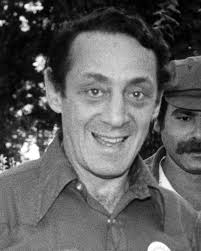
It wasn’t until I was in my 40s and living in Seattle that I began to notice what my friends faced.  I saw the Jew hatred starting and saw others ignoring it or not standing up for it.  I saw hatred against the LGTBQ+ community and saw people ignore it.  A friend of mine there told me that my leadership reminded her of Harvey Milk, and I’m embarrassed to admit that while I knew the name and that he was a gay man and leader in San Francisco, I didn’t know his story.  I read about him, watched the movie (I highly recommend watching Sean Penn as Harvey Milk in the movie Milk) and was amazed that this incredible leader isn’t taught to children.  I was more stunned when I learned it was his murderer who got off on the ‘Twinkie Defense’ which I had heard of. 

Harvey Milk

When the murders happened at Pulse in Orlando, it was shocking to me.  After Eric Garner, Michael Brown, Philando Castile, Botham Jean, Breanna Taylor, and Ahmaud Arbery were killed, I remember a friend of mine posting about how her son was driving across country and how worried she was about his safety because he would be driving while black. That was a slap in the face for me.  My children were just a little younger than hers and while I worried about them driving safely, I wasn’t worried about them getting pulled over and ending up dead.  It deeply affected me and made me realize how much I was oblivious to because of how I grew up and my own life experiences.  My heart broke for her.  It broke for my other friends who faced the same thing and were not comfortable saying it publicly.

When my son was recruited to play football by Howard University, a historically black college, I was excited for him.  Howard is an excellent school with a great alumni base, and a childhood friend of mine was one of the coaches.  When they offered him a full scholarship, I really wanted him to choose Howard.  I was surprised by the pushback I got from people.  He decided to attend UCF instead and I was sad about the process.  When he thought about transferring, he was recruited by 4-5 other HBCs and I encouraged him to consider them.  Again, there was pushback by others which saddened me. 

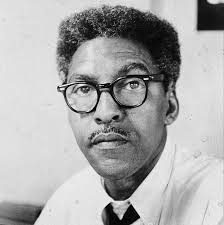
I began paying more attention.  One of my childhood friends posts regularly about black history and important black historical figures.  Most of them I have never heard of and as I read about them, I am sad that I never had.  When The Free Press wrote an article about Bayard Rustin, the architect of the March on Washington in 1963, I was stunned that I had never heard of him.  I learned about the March on Washington, the Reverand Dr. Martin Luther King, Jr., and Malcom X.  Why had I never learned about Bayard Rustin? 

Bayard Rustin – if you haven’t seen the movie about him and the March on Washington, watch it!

When October 7th happened, it was my turn.  The pain I felt from the murders, rapes, and kidnappings that day was intense.  I was worried about my friends in Israel who lived in the south of Israel and could be murdered just because they were Jewish.  Those murdered and kidnapped from the Nova music festival hit me hard as that could have been my children and could have been me with them.  When my friend’s son was killed by the terrorists, it hit hard.  He was younger than both my sons.  When I learned of family members of my friends who were being held hostage, I was devastated.  As of now, there were 10 hostages that are related to my friends.  6 remain hostages to this date. 

When the violence against Jews increased after October 7th and people were silent, I was outraged.  When the denial of the rapes happened, I was outraged.  When the women’s rights groups are silent about the rape of Jewish women on October 7th, I was outraged.  When the hostages are forgotten or not mentioned by many of our leaders, I am outraged.  When Israel gets vilified for defending her citizens, I get outraged.  When the lies about what is going on become accepted, I get outraged. 

I got it.  While Jews marched with Dr. King and were active in the civil rights movement, that was 50 years ago.  Where have we been as real partners for other communities, building friendships and relationships, since then?  How could we expect them to be there for us when we haven’t been there for them?  Of course there are some people who have been, but as a community, we have not.  I made a commitment to not be that person any longer.  To build relationships with other communities so they know the Jews are there for them before we ask them to be there for us. To have my eyes open for hatred of all types and to stand up against it. 

On Thursday June 20, 2024, the SF Giants played the St. Louis Cardinals at Rickwood Field in Birmingham, Alabama.  It was a tribute to the Negro Leagues and to honor Willie Mays (z’l).  The fact that Mays died on June 18, 2024, days before the game, made it more poignant.  That June 19th is the holiday Juneteenth made it more powerful.  During the pregame interviews on television, Alex Rodriguez asked Reggie Jackson what it was like returning to a field that held so many memories of baseball’s past.  Reggie’s response was one of the most powerful things I have ever heard. He describes with bitter passion how horrible it was for him.  He shared the prejudice he faced.  How his manager, teammates, and even the owner, supported him.  How they likely saved his life because without them he would have reacted on his anger.  It made me commit even more to fight against racism and hatred.  Watch the interview – it is powerful.

Reggie Jackson sharing the powerful experiences he had with racism when he played in Birmingham

As I listened to Reggie talk, it hit me that we are back there again.  From violence against the black community, the LGTBQ+ community, the Asian community, the Muslim community, and the current horrific issues against the Jewish community, it is just like what Reggie described.  “No Jews” is now heard.  Being a Zionist means your teachers and other students will discriminate against you.  Being Jewish makes you eligible to be attacked.  Looking Jewish makes you a target for physical violence.  A 12-year-old Jewish girl was gang raped in France on June 19th because she was Jewish.  Jewish schools have been shot at in Canada.  The horrors Reggie faced are now being faced by Jewish students on college campuses, in public schools, synagogues, and other public spaces.  How have we come so far to be right back where we were?

This is why we need to do 3 things immediately.

  1. Get educated.  Learn the facts.  Don’t believe the lies and don’t just speak in generalities.  Know that Zionists so wanted a Jewish homeland that they accepted the partition plan immediately despite the challenges the plan presented.  It was a Jewish homeland, so they took it.  The Arabs rejected it and have continued to reject every opportunity for peace and a 2-state solution since 1948.  Most of the time rejecting with violence.  Learn about the State of Israel and the Arab supreme court Justice, the Arabs in the Knesset.  The Israeli-Arabs, the Ethiopian Jews, the Druze, the Bhai, the Bedouins, and the Christians.  Hasbarah is great but not enough.  Learn the history.  Learn the facts.  Be able to have an intelligent discussion and defend Israel.  Even when you are talking with people who know nothing.  Actually, especially when you are talking with people who know nothing. 
  • Defend Israel and the Jewish people.  The days of hiding or playing defense are over.  We play offense now.  We don’t take the beatings because we get to stay alive.  We fight back so we can live.  Go to Israel and be public about it.  Wear your Jewish pride, as a Star of David, a Chai, a kippah, a t-shirt, or whatever you want.  Stand up.  Speak out. 
  • Build relationships with other communities.  We need to have these relationships.  During Pride month, be visible as a Jew celebrating Pride.  During Black History month, be visible as a Jew.  Stand with the black community as they celebrate their history.  During Ramadan, go to a community Iftar and celebrate with your Muslim brothers and sisters.  Learn the right greeting and wish them a Ramadan Kareem or Ramadan Mubarak.  Know and use the greeting Eid Mubarak on Eid-al-fitr, the last day of Ramadan.  Build relationships with the Christian community, the Sikh community, and every other community you can.  We need them and they need us. 

Here is an example of what getting educated and defending Israel can look like.  Watch as this lie, this falsehood, is completely exposed by the speaker.

This is what we all need to be able to do.

And watch true experts, Douglas Murray and Natasha Hausdorff debate on behalf of Israel here.  Some highlights of the debate are below.

Some highlights of the debate.

Hate is on the rise.  Don’t think it isn’t.  Don’t think it hasn’t always been here.  I’m ashamed to admit that I didn’t see it for a long time while my friends had to deal with it.  I’m embarrassed it took what it took to open my eyes.  Now that they are open, there are only two options. 

  1. Keep my eyes open and take action to fight hate and bigotry.
  2. Put my head back in the sand and pretend that I never saw it. 

History has shown that only keeping our eyes open open and taking action has positive results.  This action includes making the effort to support other communities and show that we are there for them before we need them to be there for us. That’s my choice. What is yours?

Meeting with my friend Mahmoud, a Palestinian living in East Jerusalem

I met Mahmoud in 2019 on my Encounter trip.  You can read about the trip starting with this blog post and continue forward.   It was great to see Mahmoud and we hugged when we saw each other.  He asked us to sit as we caught up on our families, work, and life changes.  This of course brought up the war which has impacted him both economically and in terms of how safe he feels for his family.  It was another connection point as I have those same feelings as a Jew in the United States. 

Mahmoud is incredibly smart.  The conversation was deep and not stuck on talking points or things that often impede real conversation.  It was refreshing to have somebody to talk with about what is happening without the incitement of specific words.

We didn’t use words like Genocide.  We both agreed that lots of people were dying, and we wanted that to stop.   We didn’t use words like forced famine.  We agreed that not enough food was getting to the people, and they were hungry.  He doesn’t believe enough food is getting in even if it wasn’t being stolen and sold.  He said there were fewer trucks going in now than before the war.  From what I understood that wasn’t accurate but I didn’t have the facts in front of me so chose not to dispute that point and just agree that people were hungry.  We agreed that the Hamas attacks on October 7 were unacceptable. We agreed that Hamas was evil.  We agreed that Hamas must be removed and cannot continue to exist in power. The murders, rapes, burning of bodies, and other actions were evil and unacceptable.  He shared that he and his friends were horrified when they learned of the attack.  We agreed that taking the civilian hostages was unacceptable and he shared that his hope was that they would be released the very next day.  He also said that he felt the taking of soldiers was different as this was an act of war by Hamas and taking military personnel for future prisoner swaps was ok.  While I understand his position on this, I struggle with it because of how Hamas treats prisoners. 

We talked about Zionism.  When we met in 2019, he made the comment that, “If Zionism means the Jews have a right to the land and we do as well, then I am ok with Zionism.”  When I said that the definition of Zionism is that the Jews have a right to a homeland and says nothing about anybody else, he commented that too many people disagree with me.  There are people who believe all of historical Israel belongs to the Jews and not only should we have the West Bank/Judea and Samaria but also Jordan and more.  That Greater Israel should be ours.  Just like there are Palestinians who believe there should be no Jewish state at all.  They believe the entire land should be Palestinian.  We can’t listen to the extremes and that’s where we are at the current time.  The media only covers the extremes.  That is what sells.  That’s what gets ratings and advertisers. 

We talked about the campus protests.  He wasn’t aware of the number of outside agitators that were involved with them.  As we discussed it, he commented that the fascists and communists always do that.  This is their pattern throughout history, so it isn’t a surprise.  I shared that in my opinion they were stealing his story and his pain for their own agenda which had nothing to do with Palestinians.  It was about anarchy and changing the United States government.   He agreed.

We discussed how the status quo in the relationship between the Israelis and Palestinians was not something that could continue long term.  When I participated in the Encounter trip, one thing that was clear to me was that the status quo couldn’t continue.  We agree on that.  From the day I met him, Mahmoud has been a proponent of a one state solution.  For him this doesn’t mean someplace that is free of Jews.  It is his position that Israel already controls the entire area and that it is already one state in which some of the people who live there get treated differently.  The challenge of a one state solution is that it would mean that Israel would no longer be a Jewish state.  That’s the cost of peace in a one state solution.  Unfortunately, I agree with him that the cost of a one state solution is the loss of Israel as a Jewish state.  I chose not to tell him that this would be unacceptable to the world Jewish community as the entire purpose of having a state of Israel is to have a Jewish state.  It is why I believe a one state solution will never occur.  The Palestinians would have to agree to leave the land and they are not going to do that.

He was pessimistic about any chance of a two-state solution working.  He made the point that Gaza was effectively a two-state solution. We see how that worked out.  I agree with him.  The challenge of a two-state solution is that the Palestinian leaders and people need to not just accept that Israel exists as a Jewish state but also there will be travel limitations and challenges because there are two countries with sovereign boundaries.  This also doesn’t even consider the trust factor needed.  The current trust factor is at best zero right now.  When I made the comment that it might take ten (10) years to get to a real two-state solution he shook his head and told me that was likely too long.  He said if it is going to take 10 years, it is dead.  I don’t agree with him here and we spent a lot of time talking about leadership. 

For those who have been reading my blog, you know how critical I have been about our lack of leadership.  This lack of leadership exists in the Jewish community, in America, in Europe and certainly in Israel and with the Palestinians.  The Palestinian Authority President Abbas was elected to a 4-year term in 2005.  There have not been elections since.  He is in year 20 of a 5-year term.  The world stays silent and supports him.  Prime Minister Netanyahu has been in power longer than any other Israeli Prime Minister.  While he has been in and out of power due to free elections, there is a reason why many countries have term limits for these and other positions.  A new voice is needed.  New leadership.

Both Mahmoud and I expressed our concerns about future leadership.  Who might it be?  Mahmoud is concerned Israel will elect Ben-Gvir, Smoltrich, or somebody on the far right like them.  I don’t share those same concerns as the Israeli people are not far right like them.  They are given a far too large platform because Netanyahu needs them to remain in power.  I am concerned that the leadership that will follow Abbas is going to be Hamas or Hamas like.  Somebody who will not lead towards peace but will lead back to the days of the intifadas and violence.  Both of us are stunned that in the United States, with well over 300 million people, these are the two candidates we have for President.  Because of their age, it is unlikely that either of them will be running in 2028 (one won’t be eligible per our constitution) so perhaps we can see some change in the US in four years but no matter who wins, it will be a very challenging four years.  With all this negativity about leadership, Mahmoud wanted to talk more about the people rather than leadership. 

His concern is that leaders are elected by the people.  His concern is that the anger and rage at Hamas is spilling over to the Palestinian people and will make things worse.  There are people who say, “just bomb them all” or “flatten Gaza and kill them all” or “they are all terrorists”.  I shared with him that as I was in Kfar Aza and at the Nova site, I felt rage.  I didn’t share that at Kfar Aza, as each bomb exploded in Jabaliyah, I felt better, as not only does that really bother me that I felt that way but also it would have been counterproductive to our conversation.  He isn’t wrong.  Israel is not the same country as it was on October 6.  The people of Israel are not the same.  The events of October 7 have altered the people and the country.  I don’t know where it is going to end up.  I told him I remain hopeful that when the war ends, and the war will end at some point, I am hopeful that the Israeli people can heal and look to a future where there can be peace and something like October 7 will never happen again.  He was much more pessimistic and really fears that the long-term impact on the Israeli people will be to radicalize them further and further to the right.  I shared my hope that after the war, it would bring them back towards the center due to the desire to live life. 

We also spent time talking about how important it is for Jews and Palestinians to talk the way we were.  To respect each other and share ideas, not ideology. To work towards finding solutions, not arguing and fighting for the sake of arguing and fighting.  He shared that while some Israelis do some to talk with him, he has no platform in Israel to do this.  Coming to the United States to talk to Israelis and Jewish communities isn’t the answer either.  We need more dialogue.  We need more discussion.  This brought me back to my points about leadership and how they can’t and won’t do this.  Perhaps after the war ends and Bibi is replaced and in the next few years when it is likely that Abbas will die, we will have a chance for new leadership that is willing to engage with each other and really work for the benefit of their people rather than to remain in power.  Maybe I am overly optimistic.  Maybe I am being too positive and too hopeful.  I don’t see another way to live.

As we wrapped up our 90-minute conversation, there is much to think about and much to contemplate.  We hugged goodbye and made plans to get together on one of my future trips to Israel.  Because of the time and the heat, we chose to take a cab back instead of walking.  Matthew and I began to talk a little about the experience, but those conversations will happen back in the US over a coffee or twenty. 

I appreciate Mahmoud for giving his time.  For sharing his opinions and concerns.  For listening to both Matthew and my comments, concerns, and opinions.  For being open to a real discussion and conversation.  For looking to the future and not being stuck in the past.  As we said during the conversation, we can’t change the past, but we can change the future.  I look forward to future conversations with Mahmoud and to a future where there is peace. To a time when the Palestinians can live in peace with their neighbor Israel.  When the thought of another October 7th isn’t on everybody’s minds. 

My friendship with Mahmoud and a number of other Palestinians living in East Jerusalem and the West Bank/Judea and Samaria (two names for the same place) are examples that we can live together. We can have difference and get beyond them and live together. It gives me hope that when we finally get new leadership who truly cares about a different future, we might be able to have peace.