Being Jewish and Inspired

Those who know me, know that I am not the most religiously observant person. While I am very Jewish and have a strong Jewish identity, when it comes to religious observant, I’m on the low end. When my friend asked me to come to services this Shabbat as he was sponsoring the kiddush in memory of his son, I said yes without hesitation. Not because I love services but because friends show up. Instead of my relaxing Saturday morning on the couch, watching College Gameday, rooting for the student to make the field goal and take Pat McAfee’s money, I found myself in synagogue.

I care much more about what goes on inside a synagogue that what the inside looks like in a synagogue. I have been to many that are beautiful inside but I don’t find warm, welcoming, or the service interesting or meaningful. I understand why many people want to invest in making the environment beautiful but I’d much rather see the money go to ensure great clergy, staff, culture. It’s a personal preference.

I note this because I have found that those that are more modest aesthetically tend to be more welcoming and I tend to enjoy what happens in them. As soon as I walked into this synagogue, I felt at home. It was warm, welcoming, and it was clear to me that the investment was being made in what happens inside the rooms rather than the rooms themselves. A number of people welcomed me immediately and the Rabbi, in the middle of the service, walked up to me to welcome me and give me a hug. In a crowded room, they made sure to find me a seat. People came up to say hello and welcome me.

I often find that in Jewish spaces, this type of welcoming doesn’t happen. We want people to come to our events, to be a part of our organizations, and yet we don’t make sure they feel included or special when they do. It was the first time I was at this synagogue and they made me feel right at home. As sombody who doesn’t love services, I found myself enjoying it because of how I was made to feel while there. I enjoyed the loud singing and comraderie that was happening as part of the service. Amazingly, I found myself thinking I would like to go back.

I found myself wondering why we don’t do this more often. We see our synagogues and Jewish organizations struggling with membership and attendance. We also see so many people who want to have a Jewish connection and yet they can’t find one that resonates with them. The old ways, the “Jewish tax”, the mandatory synagogue membership, etc. are no longer applicable. People want to spend their time in a meaningful way and many of them aren’t finding it in Jewish spaces. How do we change this?

There was recently a study about the shortage of people enrolling in Rabbinic School. In the study, they found an incredible diversity of those who enrolled. 58% identify as women, 30% as men, and 12% as nonbinary with an estimated 51% identify as LGBTQ. It’s amazing to see how the field has changed in the past decade or so. There was a big outrage by some about the high percentage being LGTBQ and women Rabbinic students, as if that was a problem. Perhaps to some it is. The bigger concern to me is about the overall number of people enrolling in Rabbinic school and the Rabbis that are graduating. I am a firm believer that the Rabbi is the key to the success of a synagogue. When the Rabbi is inspiring, the synagogue tends to flourish. People want to learn from somebody who inspires them. People want to spend time around those who inspire them. Rather than focus on the sexuality or gender of those in Rabbinic school, perhaps we should be asking ourselves why we aren’t recruiting the best, inspirational people to be our clergy?

At the synagogue I attended this Shabbat, the Rabbi was engaging. He was teaching us torah in between each aliyah. He was funny. He was engaging. I learned something new and applicable to my life each time he taught during the service. It made me want to learn more with him. It made me want to go back. He was inspiring. Our leaders, particularly our clergy, need to be inspiring. What are we doing to ensure we have inspiring clergy? Where are we failing? How will we address it?

One of my favorite clergy members is Cantor Azi Schwartz from Park Avenue Synagogue. He does amazing work putting classic Jewish prayers and songs to contemporary music. His version of Hallelujah set to Bruce Springsteen’s Born to Run at Rosh Hashanah this year is outstanding. I’ve listened to it more than a dozen times.

His version of Adon Olam set to the music of the Broadway show Hamilton has over 1.2 million views on Youtube. I don’t get tired of listening to it and signing along. He inspires and I look forward to seeing and hearing what he will do next. When the streaming services from Park Ave Synagogue come on, I watch because I know it’s going to be special and meaningful.

When the Broadway show Wicked (one of my personal favorites) came out as a movie last year, Cantor Azi and Cantor Mira Davis were ready with a new version of Adon Olam set to the music from Wicked. It’s fun to listen to, to sing along with. There is very little Jewish music that I want to sing along with yet Cantor Azi has multiple versions of Jewish prayer that he has inspired me to listen to for fun and to sing along with.

As I was writing this and looking at the things Cantor Azi has done, I even found new ones. Adon Olam set to Born in the USA. I quickly began to sing along, tapping my feet, clapping my hands, and thoroughly enjoying myself. I found a version of Mi Chamocha set to Taylor Swift. That’s inspiration. Oseh Shalom to the tune of Shallow.

Not everybody has to be Cantor Azi. There are many ways to inspire. There are many ways to be welcoming and engaging. It takes effort. The payoff is worth it, both for the Jewish people as a whole and for each of us individually.

I’ve been lucky to work with and learn with many inspiring Rabbis. My childhood Rabbi, Jeffrey Wohlberg (always my image of a Rabbi) set a great example for me. Rabbis David Kaiman, Andy Koren, Yoni Kaiser-Blueth, Aaron Alexander, Dave Baum, Jonathan Siger, Yonah Schiller, Gail Swedrow, Chaim Albert, Jill Borodin, Randy Brown, Gabi Gittleson, Herb Tobin, Dovid Yachnes, Ari Federgrun, Ben Hassan, Danny Weiner, Josh Broide, Mark Kram, Efrem Goldberg, Irving “Yitz” Greenberg, Ed Rosenthal, Joseph Telushkin, Daniel Wolnerman, Darren Kleinberg, Mayer Abramowitz (z’l), Steve Engel, Neil Zuckerman, Jeremy Barras, Jonah Zinn, and Amram Hoffer are just a microcosm of the Rabbis who have impacted me. While the number of Cantors who have impacted me are smaller, I can’t leave out Cantors Lisa Segal, Rachelle Nelson, Mitch Martin (my Bar Mitzvah Cantor who I still keep in touch with today) who are incredibly inspiring. Perhaps I am spoiled by these amazing Rabbis and Cantors so I have set the bar too high. I don’t think so. Their excellence has showed me what is possible.

As a people, we need to invest whatever it takes to ensure we have excellent clergy. We need to do invest in ensuring we are a welcoming community. We need to invite those who show up into our community. When I was in Hebron a few years ago, our guide pointed to the parking lot and said to us, “This is where Abraham, recently self-circumsized, greeted the strangers and washed their feet.” (the the three angels). I think that if Abraham, at that point in time, would get up to welcome the stranger, who am I not to do the same?

As I finish writing and prepare to return to Israel in 2 days, I want to leave you with Cantor Azi and his Taylor Swift cover. As he sings, “We are never going back to Egypt again” think about what you are willing to do to ensure you are never enslaved again – mentally, physically, or spiritually. Think about what youwill do to find a way to make being Jewish interesting and fun. Ask yourself what it would take for you to want to be involved? To get your family involved? To make sure Judaism has an important part in your life, no matter how religious you may or may not be. No matter how much you may like or not particularly like religious services. No matter how you define being Jewish. Because at the end of the day, we are all Jewish so lets figure it out together.
Fighting antisemitism by being Jewish

I have been talking and writing about the increase in antisemitism and Jew hatred for a decade now.  I saw it when I was living in Seattle when a swastika would be drawn/painted on a Jewish building almost monthly.  I called it out then and many people thought I was being reactionary and fear mongering.  I was pointing out what was happening.

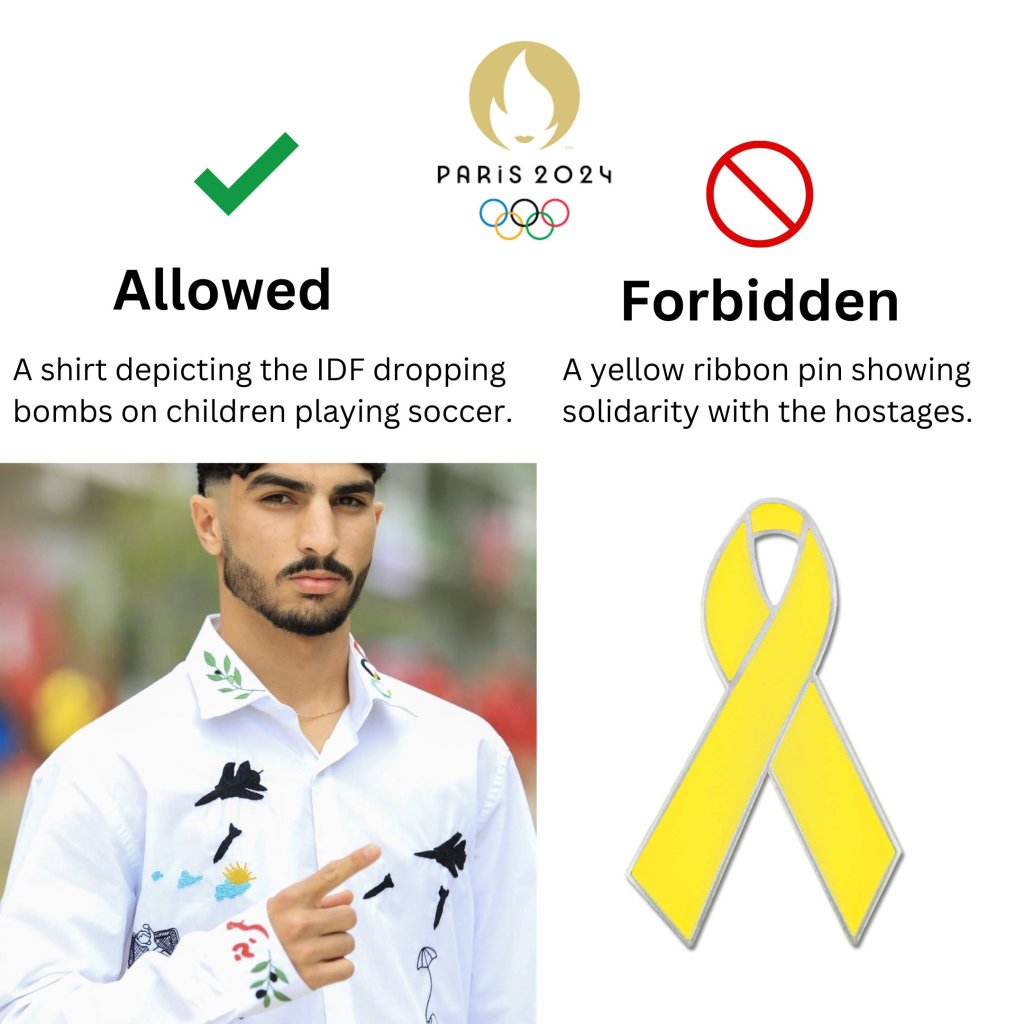
Over the past decade, it has only gotten worse.  Since October 7th, the rise in Jew hatred has become frightening.  Violence against Jews is now common.  Shooting at Jewish schools happens too often.  Ugly, racist protests occur on college campuses and in the streets in the US, Canada, and throughout Europe.  Israeli Olympic athletes are threatened with death.  The Palestinian athletes are allowed to wear shirts with bombs dropping on Israel, but the Israeli athletes are not permitted to wear the yellow ribbons for the hostages.  The list goes on and on. 

I have mentioned many times how I’m not super religious but very Jewish.  Over the past few years, I have been digging deeper into what being Jewish means to me outside of services.  Like many people, services don’t connect or inspire me.  I knew there was much more to being Jewish than just religious services so my exploration into Jewish spirituality, text and how it applies to my life, and finding more meaning have been a big part of my recent journey.

As I learn with Rabbi Ehrenkranz, we include a bit of prayers to understand the why instead of the what.  My recent trip to Israel with the Jewish Leadership Institute (JLI) also focused deeply on the why instead of the what.  My recent trips to Israel have also been an exploration into the why instead of the what.  Why does Jerusalem matter?  What is the point behind some of what we do?  What is the intention?  The goal?  The objective?  I have found that when I understand the why, I can adapt the what to fit my life and what is meaningful to me.  Judaism has adapted since the time of Abraham, Moses, King David, and even the 2nd Temple.  We don’t pray the way they did but we can connect to God and each other the way they did.  I find that very meaningful.

Rabbi Ehrenkranz started a monthly Sunday morning Minyan (prayer service) that I began attending because he asked me to.  Often times, just asking somebody you have a relationship with gets them to do what you ask.  It turns out most of the people who attend are friends of mine, so it becomes a social gathering as well as an opportunity to grow.  I appreciate how Rabbi Ehrenkranz explains the goal of each part of the service.  It has enabled me to move away from reading the Hebrew words that I don’t know what they mean and instead think about the goal and objective and connect that way.  It has turned an experience that was rote into one that is meaningful.

This Sunday, with all that is going on in Israel and the recent attack by Hezbollah on the Druze village, I chose to wear my IDF tzitzit (ritual fringed garments).  I got them from Rabbi Atlas in the IDF as I am helping him with a project to fund the 5,000 mezuzahs the IDF needs.  I don’t wear them regularly and in fact, this was the first time that I wore them under my shirt like you are ‘supposed’ to.  It was a way to connect to Israel, the IDF, and Judaism.  I feel that way about mezuzahs too – something that is easy to put on your door and have a meaningful symbol without being required to be super religious.  It’s an easy thing to put on your doorpost and show Jewish pride both internally and externally.  If you don’t have one and want one, MyZuzah will give you one for FREE!  And if you want to support the IDF in their effort to get their needed mezuzahs for IDF soldiers, there is a dollar for dollar match and you can buy them for the IDF here for $30 each.

At the minyan, I spent the time during the silent Amidah (the major prayer of the service) in my own mediation and conversation with God, thanking God for all the gifts in my life today.  In my learning with Rabbi Ehrenkranz, part of what I have learned is that most of our prayers are really a reminder to ourselves about how we should live and how much we need to be thankful to God for our lives.  As such, I took this time to focus in this area.  It is easy to take so many things for granted in our lives and this gave me a few minutes to really focus on things and express my gratitude.  Instead of reading Hebrew words without meaning, this time was special because it was focused on gratitude.  It reshaped my entire day as I realized not only how lucky I am to live the life that I do but also that it is only by the grace of God that I have so many gifts.  I am grateful to Rabbi Ehrenkranz for helping me find meaning in something that didn’t have meaning before.

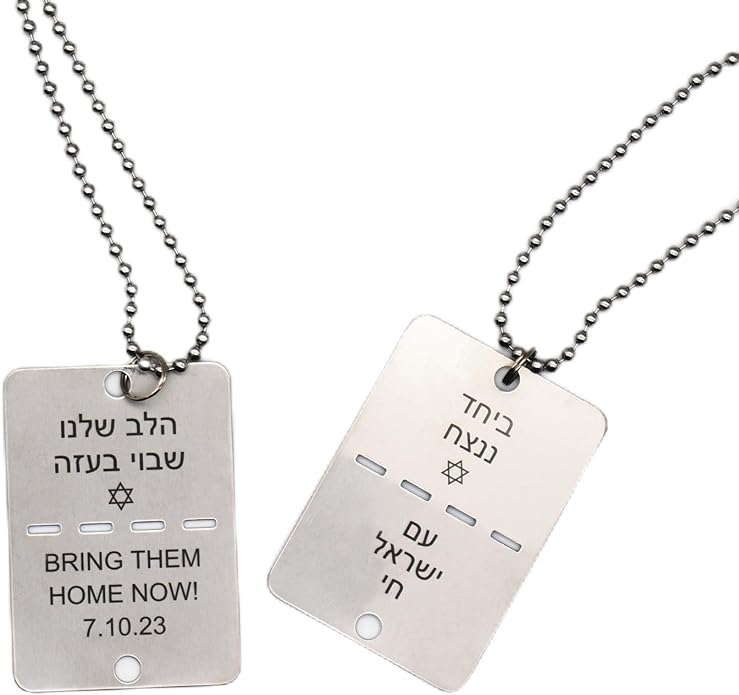
We sang Acheinu, the prayer for those in capitivity, for the hostages. I began singing this in Israel in July and it has become incredibly meaningful to me. It’s an easy song to sing, a powerful prayer to say, and reminds me to keep the hostages front and center in my mind. That, along with my ‘Bring them home now’ dogtag that I wear every day keeps my priorities front of mind. It has been almost 10 full months of captivity and the reports now coming out from released hostages are horrific. I’m glad that I learned the how to sing it and do so daily. It takes me a couple of minutes, fills me with gratitude for my life, and doesn’t let me ever forget the hostages.

Over the past few years, I have been very lucky to have some amazing Jewish mentors and teachers.  People who expose me to things that are meaningful and show Judaism in a different way in which I can connect.  Harry Rothenberg, Ari Shabat,  Saul Blinkoff, Lori Palatnik, Mickey Singer, David Abramowitz, and Rabbi Ehrenkranz are just some of them.  Each exposes me to different things to think about.  Each one expands my knowledge and enriches my life in different ways.  Pirkei Avot says, “Find yourself a teacher, acquire for yourself a friend”, and I have found this to be true.  Each of these teachers are also friends and only one is a Rabbi!

As somebody who raised somewhat religious and is not any longer, I have found deep meaning in Judaism through understanding the why of what we do.  The what doesn’t really mean much to me but the why is something entirely different.  As antisemitism grows and Jew hatred explodes across the globe, I have found investing in my Jewish identity and Jewish meaningful practices to be important.  I have begun to bake challah again.  I make sure to say thank you to God every morning for waking me up (the basis of the Modeh Ani prayer), and since I learned about thanking God for making the rooster understand the difference between day and night, I thank him for the beauty of nature and this world. (It is a funny prayer that we start with – almost like the Rabbi’s are pranking us!)

Many people think it is all or nothing.  You either go to synagogue or you don’t pray.  You either can pray in Hebrew or you don’t pray Jewishly.  You keep kosher or you aren’t really Jewish.  You keep Shabbat one specific way, or it doesn’t have any meaning to you.  I have found just the opposite.  There is incredible gray in Judaism once you understand why we do things.  Then you have the opportunity to do what is meaningful to you to accomplish the goals. 

I encourage you to explore the why.  To learn about why Israel matters to Judaism.  To understand the intent behind the services and the prayers we do.  It will open doors for you to grow in ways you can’t imagine.

Who am I? Find for yourself a teacher.

As I have said many times, I am not a religious person.  I don’t go to synagogue often.  In fact, a monthly Sunday morning service is all I do right now.  And I only go because of the way it is done.  It is done in a meaningful and intentional way.  It is done not only for the ‘how’ of praying but more importantly for me, the ‘why’.  I began learning Torah with a Rabbi a few years ago because I valued the discussion and questions that came out of the process.  Studying Torah became about how I choose to live my life today rather than learning some stories verbatim and being able to repeat them back.

I often think that the challenge people have with religion and services, both in the Jewish and non-Jewish communities, is that we are taught only the HOW.  We are never taught the WHY.  One of my favorite parts of being Jewish has been that I have begun to ask the WHY question and don’t really care that much about the HOW.  The WHY is what matters. 

Simon Sinek’s amazing Ted Talk about Start with Why. The Why matters.

It’s interesting that for a guy who isn’t religious, doesn’t really like going to synagogue, doesn’t keep kosher, has his own definition of keeping Shabbat (I don’t do work but I drive, cook, drive a car, turn on the TV, etc.  I just don’t do professional work (most of the time)) that I find wisdom in the Torah.  As a few friends and teachers have told me, “The Torah is the instruction manual for life.”  I think it’s because of the teachers that I have found and the way they teach, how they explain the WHY of things rather than the literal story, that I find meaning and inspiration to be a better person.

I was excited that on this trip, the young adults and I were going to have the opportunity to learn some of the WHY from my longtime colleague and friend, Aryeh Ben-David.  From my experiences with him over the past 15 or so years, I knew that he would get to the WHY and boy did he.  He did in a brilliant and simple way, using only the first verse of the Torah. 

Genesis verse 1 talks about the creation of the earth.  Most of know the story of the six days of creation and the 7th day God rested.  None of this was what Aryeh discussed.  Instead, we focused on THE major life question.  WHO AM I?

Three words.  None more than 3 letters.  Yet it is perhaps the most asked and the most challenging question for all of us.  We start the Torah with the big question.  Judaism doesn’t mess around.  Let’s get right to it. 

As we discussed the question first in chevruta (pairs of two) and then as a big group, we were able to bring it together with Aryeh’s guidance to two things.  First, we are made in God’s image so that we are all perfectly as God intended.  This also means we have to strive to be more Godlike in life.  Secondly, we are both dust and soul.  The two don’t get along.  They fight constantly over us.  Are we focused on the here and now and pleasures of the body?  Or are we going to be focused on delayed gratification, making things have meaning, going deeper into what we are doing and why we are doing it?  Every choice we make is between the immediate pleasure or the delayed gratification.  The shallow or the deep.  One thing became very clear.  While there are people only for the dust (immediate pleasure), they are few and far between and typically easy to identify because they look like a caricature.  There are very few who are all about the soul (delayed gratification) and they are also easy to identify.  They are monks.  They deny the physical entirely, never marrying, living in isolation, depriving themselves of everything but the basics.  The challenge is the balance between the two.

There is a place for the dust.  We want nice things and there is nothing wrong with having nice things.  Good food.  Good wine.  A nice house.  A nice car.  Good clothes.  An enjoyable sex life.   Money in the bank.  The ability to travel.  The question is always, “at what cost?”  Where is the balance?  At what point are we only serving ourselves and not serving the larger community or God (and if you don’t believe in God, replace the word with nature or civilization or whatever you want).  Do we want to be like the wealthy attorney who owns the huge fields in Israel that we picked apples at and who donates all the food to those who are in need, or do we want to be the person who owns large parcels of land and lets them sit empty because they merely want to make a profit on the resale of the property?  Do we want to keep all our money, time, and talent for our benefit or do we want to give our money, time and talent to help others and improve the world.  These are the questions we need to ask.

In these crazy times that we currently live, this first verse of the Torah is more important than ever.  Do we want to fight hate or make money off it?  Do we want to hide and stay quiet, hoping it will pass us by or do we want to do the right thing and stand up against it?  Do we want to spend the time to get educated and understand the nuance or believe the soundbites and move on?  What are our morals?  What are our ethics?  What do we stand for?  The old saying, “If you don’t stand for something you will fall for anything” has never been truer.

We can even take this into the United State political arena.  Do you want to be part of the country that hates the other part of the country?  Do you want to live in hating the other political party and their candidates?  Would you rather work to solve our society problems?  These are choices we get to make every day.  Do we want to be spending more of our time on the dust, the physical plane or the soul, the spiritual plane.  Note that none of this has to do with religion or even being Jewish although the thought and questions come from the Torah. 

Each day we get to ask ourselves these questions.  Each day, when we wake up, we have the opportunity to make new choices.  In a different session, as we discussed a few of the prayers, there were two that jumped out at me.  The first, Modeh Ani, is what we are supposed to say every morning.  It is a simple thank you to God for letting us wake up.  It also ties into the dust and soul issue.  Our soul leaves us at night and returns in the morning.  Sleep is for the physical, the dust.  While I don’t usually say the Modeh Ani when I wake up, I do thank God every morning when I wake up.  It’s the first think that I do (maybe the second after using the bathroom).  I thank God for giving me the day ahead and everything that comes with it.  It takes me a minute or two and it’s really very simple.  “Thank you, God, for the day ahead and everything that comes with it.  I am excited to be alive today and grateful that you gave me the gift of life today.”  That’s the entire prayer.  Each morning when I say it, it inspires me to take action in the day, no matter what the day entails.  Sometimes I say it out loud, sometimes in my head.  I say it every day.

The second prayer that jumped out at me was the first prayer of the morning service.  It is a strange one.  We thank God for giving “the rooster understanding to differentiate between day and night.”  What a weird thing to say as the very first prayer of the service. We all sat there thinking about why we would say that.  What makes that so important to have it be the first prayer of the morning service.  Our teacher talked to us about how the most precious thing we have in life is time.  On a trip with a group of young adults, all under 26, that’s an interesting concept to discuss.  Time is endless for them.  They are in the beginning of living as adults.  We talked about how Judaism ensures we mark time to remember how important it is.  A bris or baby naming.  Bar/Bat Mitzvah.  Wedding/chuppah.  Yahrzeit (anniversary of somebody’s death).  We constantly mark the passage of time to not forget how important it is.  We say this prayer so that we notice not just the passage of time but also that we pay attention to all the little things that happen every single day that we take for granted.  The sun rising.  Food to eat.  Clothes to wear.  Shelter.  Loved ones in our life.  The rooster knowing the difference between day and night is to symbolize nature and all the things we take for granted.  We start each day with gratitude by saying Modeh Ani or our own thank you to God for the day ahead.  Then we thank God again for all the things we take for granted. 

What a way to start every day.  As most of you know, I’m not very religious so saying the Hebrew prayers isn’t something that I do regularly.  Every day, I do thank God for the gift of the day and now I have the opportunity to thank God for all the things I take for granted.  Maybe that will help me notice them during the day and not take them for granted. 

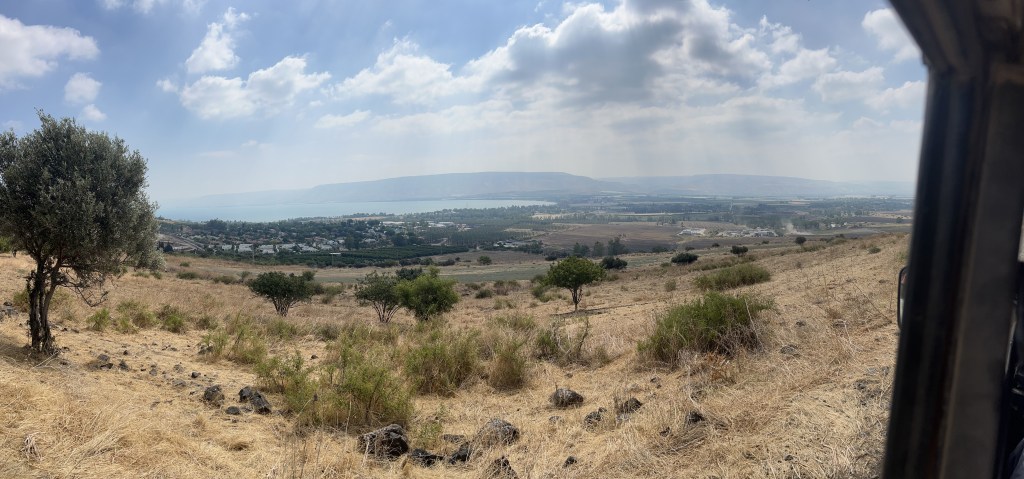
On my trip to Israel last month, we learned about what a miracle it is to wake up in Jerusalem.  To breathe the air in Jerusalem.  To walk the streets.  This morning, I woke up in the Southern Galilee to beautiful views.  God as an artist.  We rode jeeps around the area, looking at the fields growing fruit and vegetables.  At the mountains and the sky.  At the Kinneret (Sea of Galilee).  When we are in a different place and see the beauty around us, it is very easy to notice it.  What about in our own daily life?  What about in our own homes, looking at our own backyards? 

View of the lower Galilee. The Kinneret n the distance. Israel, Syria, and Jordan in the background.

As I spend two weeks of July in a country at war after spending 10 days here in May and planning another 10 days in August, I am so grateful for many things.  Grateful for the existence of the State of Israel.  Grateful to the IDF who protect this country.  Grateful that I have the ability to come to Israel as often as I have in my life.  Grateful for the pioneers who made the desert bloom.  Grateful to the leaders like David Ben Gurion, Moshe Dayan, Golda Meir, Shimon Peres, Menachem Begin, Yitzhak Rabin, Ariel Sharon, and many more who created this country.  I have the opportunity to live in the dust, enjoy being able to come here and enjoy the food, the people, the beach, and everything it has to offer.  More importantly, I have the opportunity to live in the soul as well, fighting on Israel’s behalf to educated and inform people about what it is really like and what is really happening.  I have the opportunity to let my soul open up while here and make sure it stays open when I return home. 

A short video from the lower Galilee with Israel, Syria, and Jordan in the background. It highlights how close everything is and is a way for me to educate and speak out on Israel’s behalf.

In Pirkei Avot 1:6, there is a famous line that I have chosen to live by.  To paraphrase it, we are charged to find ourselves a teacher, make them our friend, and judge others with grace and giving them the benefit of the doubt.  While all three are important, I sometimes struggle with the third and it is the first two that I am living by.  I have found myself not just a teacher but a few teachers.  They have become my friends.  They provide me guidance to be a better person.  They explain things and I ask lots of questions.  They make it relatable to my life today, in 2024.  One of my teachers, who I have been learning with and from for more than 20 years, told me a few weeks ago that I was now a yogi.  That was high praise from him and I’m not sure that I really believe that, but I have come a long way.  They all continue to inspire me.  I learn from all of them. 

So, who are you?  Where do you stand in the balance of dust and soul?  If you don’t know, that is totally ok.  Most people do not know.  Find yourself a teacher.  Make them your friend.  Learn.  It is not about being more religious.  It is about learning life lessons and how to apply them.  It is about finding meaning for you in what you choose to do.  It is a deeply personal journey and a powerful one.  I encourage you to begin the journey.  From my experience, it is one you will really enjoy.

My favorite band. One of their great songs. Who are you? That’s the key question.
In case you want to listen. Watching Keith Moon on drums is always a joy.

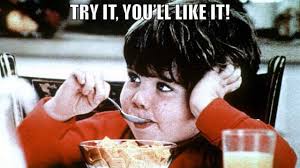
Try it, you’ll like it!

I went to minyan this morning.  For those that know me or follow me, you know that I am not religious and rarely go to synagogue.  The Rabbi that I learn with has begun a monthly Sunday morning minyan and I have committed to going to support him.  I bring my tallis and tefillin (the prayer shawl and the black boxes that go on your arm and your head) and one of my many prayerbooks that I rarely use to join the group.  Somehow, the group is always a group of friends so it’s a bonus to see them too.

I have found that I really enjoy going.  It’s not because I have become religious, it is because the service is done in an intentional and meaningful way.  As we go through the prayers, what we are actually praying for and about is explained very briefly.  “This section is where we ask God to help the world in difficult times.”   Simple.  Clear.  It provides context to what we are saying and why we are saying it.  It’s a tour through the prayerbook.

It reminds me of the playbill at the theater where they tell you what each scene is going to be.  When I learn with my Rabbi friend, we start by exploring the Siddur.  When we started doing this, I wasn’t very excited.  Services haven’t been meaningful to me in a very long time and exploring the Siddur wasn’t on my list of things to do.  I decided to be open to it and as we discuss a prayer and I understand what it is and why we say it, it has become interesting.  It reminds me of what my friend Roie, an IDF soldier at the time, said after Shabbat services.  The conversation went as follows:

Roie:  So you know how to read the Hebrew words?  

Us:  Yes.

Roie:  And you know the tune to sing it?

Us:  Yes.

Roie:  But you have no idea what you are saying?

Us:  That’s correct

Roie:  I don’t understand!

This was repeated over and over again.  He couldn’t understand how we could know the words and the tune but not what we were saying or why we were saying it.  He understood that just knowing the words and the tune wasn’t enough.  It wasn’t meaningful.  We were missing out on the entire purpose of what we were doing.  How could Judaism be meaningful if we didn’t know what we were actually doing or why we were doing it.

I turn 57 this year and these minyanim are the first time that the parts of the service were actually explained.  As the different sections were explained, it began to make sense.  There was actual intention in each part.  There was a purpose to what we were saying.

One of the things that really struck me today was his explanation of the Modim Anachnu Lach prayer.  It was so simple and so basic.  He said, “Nobody can say thank you to God for you except you.  You have to thank God yourself.  That’s what this prayer is for.”

Wow.  Three short sentences and the prayer that I have said at services most of my life suddenly had real meaning.  What I have found is that Judaism has great meaning.  We simply don’t provide that type of content to our children and as a result, when they are adults, they aren’t interested.  When we show the meaning, people get engaged and excited. 

There was recently a great poem written by Lizzy Savetsky titled, “The Six Pointed Star”.  It talks about who we are and points out that the hatred of today provides us with a reminder of who we are and that perhaps, we need to get back to basics and remember we are Jews and what being a Jew means.  I hope you enjoy her reciting it as much as I did.

The Six Pointed Star

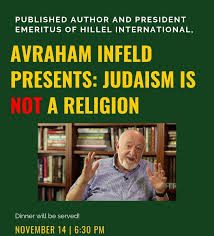
There is something special about being Jewish.  I am not saying that Jews are better than anybody else.  It’s a more than 3,500-year-old peoplehood.  My friend Avraham Infeld had many sayings that I love.  One was when he would say, “Judaism in NOT a religion.  We are a mishpacha (family) that shares a common religion.” 

Those words struck me not only the first time I heard them but every time after.  They resonated with me.  Being Jewish is about being part of a family.  It’s about being part of something bigger than yourself.  It’s why going to minyan this morning felt good.  I was with family.  We were spending our morning together.  We greeted each other with hugs.  We spent time after the minyan talking about our lives. 

It is why Jewish holidays are a big deal.  We get together for a Passover Seder, to light the Hanukkah menorah, to eat in the sukkah or to dress up and eat hamantaschen.  Every holiday is about being together.  This year, I spent Yom HaZikaron (Israel’s Memorial Day) and Yom Ha’atzmaut (Israel’s Independence Day) in Israel.  After October 7th and in the middle of a war, it was more important to be together.  It meant more to Israelis that we were there than ever before.  Their brothers and sisters from across the Atlantic came to support them.  Their brothers and sisters came to show support and love. 

Part of the reason Judaism and Jews are still here, more than 3,500 years later, is because we are more than a religion. Rabbi Harold Kushner z”l, in his book, To Life, asks the question, “What do you have to believe in order to be Jewish?” It is a great question. The answer is very simple. NOTHING! You don’t have to believe anything. You are born Jewish. If you convert, the minute you convert, you are now Jewish forever. Don’t believe in God? You are still Jewish. Don’t believe in keeping Kosher? Still Jewish. Don’t want to pray 3 times a day? Still Jewish. Don’t wear a kippah or follow the laws of Jewish purity? Still Jewish. Another of my favorite Avraham Infeld quotes is when he talks about people who convert to Judaism. He says there is no such thing a convert. The minute you convert, you are a Jew. Period. But, he says, there is a term ‘converted Jew’. This is somebody who is Jewish who converts to another religion. He says, “They only think they are the other religion. They are still a Jew.” We are more than a religion. We are more than a people. We are a mishpacha (family). So why not get to know your family a little better? Why not learn about your family? The more you learn, the more you will love your familiy and the more you will be happy and feel lucky to be a part of this family. As the famous Life Cereal commercial said, “Try it, you’ll like it”.

Can learning the Torah actually be fun and exciting???

A number of years ago, I was exposed to Jewish learning in a different way.  Instead of the boring lecture style of a classroom, I was in a group of 3 where one of us was the leader and would guide us into a discussion of Jewish text.  We spent months over a weekly lunch discussing the book of Daniel.  It was fun and interesting and something that I looked forward to each and every week.  It was very unlike my Hebrew School experience which I found boring.  I never thought that learning Jewish texts could be both fun and interesting.  I learned that I was wrong.

Since then, I have had the opportunity to learn with a few different people.  It’s something that I enjoy as I have found it to be intellectually challenging.  With a good learning partner, it’s not about the dry words, it’s about how the words come to life.  What can we learn from the words and the teachings that apply to our lives TODAY?  How does it impact the choices we make now?

I want to share a few examples of this from my own life and experiences. 

Many years ago, at UF Hillel, I gave a D’var Torah (sermon) on one of the High Holidays.  I talked about how for many years, I found the Torah to be a dusty old scroll.  It wasn’t relevant.  It wasn’t that interesting, especially since I didn’t speak Hebrew.  And, quite honestly, I preferred the movie (The 10 Commandments, still a favorite.)   I shared how I was exposed to this different type of Torah learning.  How it was a discussion and debate.  How I could ask questions and disagree and argue my points of view with another person.  They would argue back, and it would be a passionate conversation.  We would understand each other and sometimes agree at the end, and sometimes still disagree.  How it was intellectually challenging even if I wasn’t a Torah scholar and couldn’t speak Hebrew. 

One of my most memorable experiences with this type of learning happened in Israel when we visited Hebron, where the tombs of the Matriarchs and Patriarchs are (other than Rachel).  We sat between the tombs of the Patriarch Abraham and the Matriarch Sarah, which was surreal by itself, and discussed the story when God told Sarah she was going to have a baby when she was 90 years old, and she laughed.  My friend Harry Rothenberg led the learning session.  What did that mean?  What could it mean?  We dissected the story and the different possibilities.  It was fascinating hearing all the different possible interpretations of this story.  At the end, Harry shared his interpretation.  How it was really a love story between Abraham and Sarah.  How it was about communication and honesty between partners.  How it described not just their relationship but included relationship lessons for us today.  It wasn’t anything that I had contemplated before we sat down or during the conversation.  And then I thought how amazing it was to be talking about the love story of Abraham and Sarah while sitting between their burial tombs.  It is an experience I will never forget.

A year later, back in Israel with Harry, we were climbing Masada.  I’ve climbed Masada with both the snake path and Roman path many times.  The Roman path is pretty easy and quick.  The snake path is longer, harder, and more meaningful.  This morning we took the snake path.  I had been having some health issues and probably should have take the cable care to the top instead, but I was stubborn and chose poorly.  As I was making the long climb, I found myself needing to stop very frequently to catch my breath and let my heart rate slow down.  Everybody else passed me and a couple of friends slowed down to stay with me as we made the climb together.  Harry started late and came upon us.  He joked about me resting until I told him what was going on.  He then said he’d walk with us slowly as well.  I then challenged him – use this moment to teach me a little Torah.  I figured I had stumped him!!  Instead, he thought for a minute and told me the following story.

When Moses led the Jewish people to the edge of entering Israel, he was not permitted to enter the land.  He begged God thousands of times to please change his mind and let him enter the land.  God would not relent and change his mind.  However, after all of Moses’s pleading, God told Moses to climb to the top of the mountain where he would be able to see all of Israel.  Moses climbed the mountain and looked out at all of Israel.  His heart broke into pieces at the beauty and that he wouldn’t be able to enter the land.  It is those pieces of Moses’s heart in all of us that creates our longing and love for Israel. 

Harry took a Torah lesson, applied it to the mountain we were climbing, and our love and passion for Israel.  It was a beautiful moment.  He has a weekly video blog that I encourage you to check out. It’s 3-4 minutes and I find it interesting each week.

This week’s video blog by Harry Rothenberg, an attorney who is the best Jewish educator I have ever experienced.

When I lived in Seattle, I spent some time with Rabbi Levitin, the head of Chabad for the Pacific Northwest.  One day at lunch, he was talking about a big talk he was about to give.  The topic was about surrogacy and donor sperm/eggs.  He then went to the Torah to cite passages that apply to various circumstance for surrogacy.  Something we couldn’t contemplate at the time of the Torah, yet it applies today.  We discussed how it might affect a couple if it was the man’s sperm and a donor’s egg.  What if it was donor sperm and the woman’s egg?  And what if it was donor sperm and a donor egg?  Did it matter if the egg was implanted in a surrogate or in the woman who wanted the baby?  Is there a difference in how parents would treat a child they ended up having biologically instead of one of the other ways?  Fascinating topics and discussion points, all tied back to Torah lessons and commentators from centuries ago.

Now I learn with Rabbi Ehrenkranz from JOIN Orlando.  Each week we meet to study and learn Torah.  We meet in a public place, usually a Starbucks or Krispy Kreme.  While I don’t wear a kippah all the time, I put one on when I learn Torah out of respect and in honor of what I am doing.  So we sit in public, both wearing kippot, our siddurs open, reading out loud and discussing what we are reading.  We also use the Sefaria app (a free download and really a great resource that is now adding Lord Rabbi Jonathan Sachs teachings to it) to study what the commentators said over thousands of years.  We discuss, often debate, and I push him to better explain to me the things I either don’t understand or don’t agree with.  Most of the time he is able to do it but there are still things that I struggle with and that’s ok.  It’s part of the process.  I just hope that I don’t frustrate him too much with my questions and challenges!

Usually nobody bothers us, but I remember one time when a man came over and asked if we were doing bible study.  When we told him yes, his response was, “Cool!” and he walked away.  As I think about what happened in the UK yesterday when a man was threatened with arrest because he was wearing a kippah while a pro-Palestinian march was going on because him being Jewish was threatening to them, I am grateful we can learn publicly in Orlando.  I also wonder when/if that will change here. 

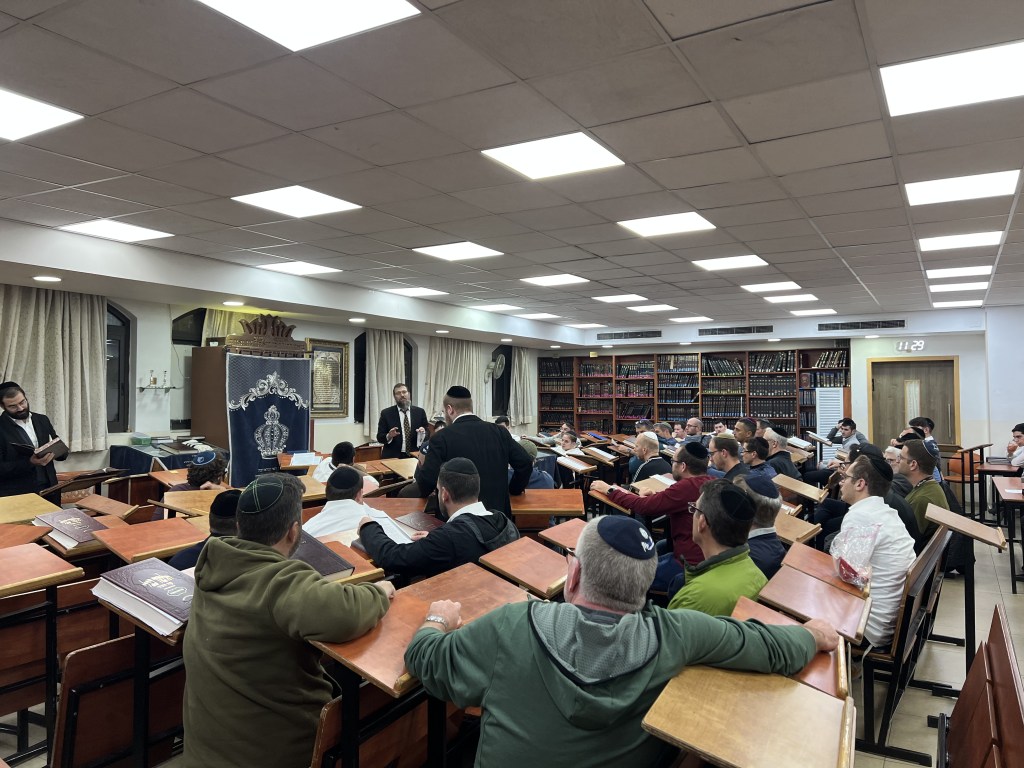
On two of my last three trips to Israel, I had the chance to go to a Yeshiva in Jerusalem on Thursday night for an hour-long learning session from 11 pm until midnight.  Usually I’m asleep well before 11 pm (I have gotten old).  I was worried I would fall asleep in the middle of it and embarrass myself.  Yet when it started, it was interesting and exciting.  It was a legal discussion.  It was back and forth.  Voices raised a bit.  Excitement when somebody thought they had the answer.  Disappointment when the explanation showed they were wrong but vindication when their thought process was affirmed.  The hour went fast.  The Rabbi teaching us shared his explanation.  It was great.  And then we had chicken poppers and cholent while hanging out.  What a fun night.  So much fun that it now happens in Orlando as well.  I don’t go often but enjoy it when I do.  There is a good crowd of regular people like me, not Torah scholars, who enjoy the back and forth.  We have to think thoroughly.  We build off prior lessons.  We do it together. 

Learning at the Yeshiva in Israel – it was captivating

Being Jewish is often seen as being a burden.  In fact, Rabbi Ehrenkranz and I talked this week about how being Jewish means you are taking on more responsibilities.  How we are the chosen people because we have chosen to take on these responsibilities.  If you are like me, then as a child you weren’t given meaningful Jewish content.  You never had the chance to argue with a teacher about Jewish topics.  It was bible stories and boring things.  Judaism was the thing for my parents and not something that was meaningful to me.  And yet that changed dramatically for me as I got past what and how I was taught as a child and understood the meaning that was possible.  I’m far from Orthodox.  I don’t go to synagogue.  I don’t keep kosher.  Yet I find the teachings of the Torah fascinating.  I find the exploration of Jewish texts to be relevant and impactful.  Hanging mezuzahs, putting on tefillin (occasionally), lighting shabbat candles, the Hanukkiah, baking challah, and other Jewish rituals are meaningful to me.  I’m excited to build a sukkah in my backyard this year.  I don’t think I’ll sleep in it, but I will enjoy building it and eating in it and hanging out in it.  It’s fun.  Judaism can be fun.  Learning Torah can be fun. 

So much fun singing Hotel California with this Hassid at Mamilla Mall in Jerusalem – proof that being Jewish can be fun.

So if you decide you want to start a journey like I did with Jewish learning in this way, let me know.  I’ll find somebody for you to learn with so you can find the joy that I have.  I encourage you to try – I’m willing to bet you won’t be disappointed.

Dancing at the Kotel on Friday night – so much fun being Jewish