I’ve been captivated by watching what is happening on the various college campuses in the United States over the last week. I admit that when I was in college, I was not an activist. It was the mid to late 1980s and while there were some protests on campus, it was largely calm and quiet and a wonderful place to be. I had way too much fun and not enough studying and almost no activism. When I began working at the University of Florida Hillel in 1998 that began to change and by the time my tenure at UF Hillel ended in 2013, I was a full-fledged campus activist. My focus was on understanding, partnership, friendship, communication, and inclusion. Focusing on our similarities rather than our differences became a passion of mine during those 15 years and remains one today. So as I watch these ‘activists’ on college campuses and how the ‘leadership’ at each University chooses to handle their behavior I am fascinated by what is happening.
I grew up in an era where we had a lot of freedoms. My mother was famous for teaching us, and our friends, that you do whatever you want as long as you were willing to pay the consequences. It was a lesson I learned early in life and have continued to use today. Actions have consequences. Take the risk, accept the consequences. This lesson is part of what I find so challenging as I watch what is happening now.
These ‘campus activists’ (I use quotes because many of them are not from the campus nor are they activists, they are imported to agitate and inflame the situation) fully expect that there will be no consequences to them for their actions. They expect others to have consequences. Delays in getting places. Inability to access campus. Having to take classes remotely. They don’t get the permits they need or if they get them, they don’t follow the rules that are affiliated with the permit. Their entitlement is amazing to witness.
You see it being taught by their professors. As the videos of professors being arrested because they thought they were above the law are shown, I find it humorous. These entitled individuals are shocked that anybody would actually hold them accountable. The students and the professors have grown up in a world in which nobody taught them that actions have consequences. That if they take the risk, they have to be willing to accept the consequences. We see it with the University Presidents who choose to allow these encampments to remain and who won’t discipline or remove the discipline from those who violate the rules. They aren’t doing these students or professors a favor.
Emory Professor being arrested because she isn’t follow police directions and is breaking the law
And then there are those who do hold people accountable for their actions. President Ben Sasse at The University of Florida ensured there would be no encampment by reminding everybody in advance what the rules are and what the consequences are for violating them. Nobody questioned whether he would enforce the consequences of their actions and as a result, free speech was maintained as was the safety of Jewish students. At places like The University of Minnesota, The University of Texas and Emory University, those violating the rules and/or breaking laws were arrested. When they chose not to listen to the police officers, they were forcibly removed. That’s the real world. Actions have consequences.
Growing up in the 70s and 80s, I admit my generation was different. It’s something that we need to look back upon and see how far we have gone off the rails in the name of ‘protecting’ our children. This video, while intended as humor, also shows the difference.
The rise of hate speech isn’t new, and it doesn’t begin in 2016 with Donald Trump like many want to believe. For proof, I offer this 2010 letter to the Editor that I wrote in the University of Florida campus newspaper, The Alligator, calling out hate speech
It was more civil in 2010
In July 2014, the Pacific Northwest head of the National Rifle Association (NRA) came out and said that The Holocaust wouldn’t have happened if Jews had guns in Nazi Germany. At the time, I called the statement, “Idiotic, simplistic, and simply wrong.” I stand by those words today. More Nazis would have been killed but likely more Jews as well. It was a statement based on the belief that Jews are weak and won’t fight back and need guns in order to be allowed to exist. I’m not anti-gun at all. You can ask those who know me. I am anti-hate and anti-stupidity. As a child, my mom would often complain that I had no tolerance for stupid people, and it caused me problems then as it does today. Smart people can act stupidly at times. We see that today. My fight with the NRA in 2016 over this person’s comment and antisemitism got national attention and you can read about it in the Seattle Times. Or just google me and the NRA and it comes up.
Over the last 8 years it pretty clear that I was right and the author of the second piece, who likely approves of the antisemitic, hate filled, violence driven campus actions, was wrong. Some people won’t learn even when they are the target.
Seven (7) years ago we got this warning from the UAE’s Foreign Minister and failed to heed it. It helps explain why were are where we are today.
7 years ago, the UAE’s Foreign Minister issued a warning to the West.
Today we see elected officials like US Representative Ilhan Omar (D-MN) join the antisemitic and violent gathering at Columbia and publicly make the following statement while facing no serious consequences.
“I think it is really unfortunate that people don’t care about the fact that all Jewish kids should be kept safe and that we should not have to tolerate antisemitism or bigotry for all Jewish students, whether they are pro-genocide or anti-genocide.”
While she is trying to say that Israel is committing genocide, a factual lie. In reality it was Hamas who did commit a genocide on October 7th. And intended to kill more Jews. And has openly stated that they will continue to kill Jews until they are all eliminated. That is the definition of genocide. Yet Rep. Ilhan Omar faces no backlash.
We see Representative Alexandria Ocasio-Ortiz (AOC) (D-NY) also visit the Columbia cesspool of hate and then posting on X (Twitter)
“Calling in police enforcement on nonviolent demonstrations of young students on campus is an escalatory, reckless, and dangerous act. It represents a heinous failure of leadership that puts people’s lives at risk. I condemn it in the strongest possible terms.”
They are peaceful to her as a woman of color who isn’t Jewish. In this case, she is the one with the privilege she often rails against. Calling the police on people breaking the law is what we do in the United States, unless you live in New York. Enforcing our laws is what happens in countries ruled by laws unless you live in New York. I do agree with her that we have a ‘heinous failure of leadership that puts people’s lives at risk’ but I assign that failure of leadership to Columbia University President Manouche Shafik who chooses daily not to enforce the rules of Columbia. I assign it to the leadership of Columbia University who continue to allow President Shafik to remain in her role when she is showing daily that she isn’t able to do her job and protect ALL students, which includes Jewish students.
Representative Jamaal Bowman (D-NY) was also at Columbia University, not protecting the Jewish students from his district but to encourage those breaking the law and violating Columbia’s policies to continue doing it. To continue to chant things like ‘Death to America’ and ‘We are all Hamas’. To harass and threaten Jewish students. As one Jewish student recounted,
“They were pushing and shoving me. . . They threw rocks at my face. At that moment, my life was totally threatened. And there was no safety authority on campus.”
At least Representative Bowman is losing his primary race and will hopefully not be in office in just a few months.
I grew up in a Zionist home with parents and grandparents who were Zionists. We all support the existence of a Jewish homeland, the State of Israel. The fact that there was a country that we could be a citizen of just by showing up sounded really amazing and empowering. The thought of actually making Aliyah, moving to Israel and claiming citizenship, was a fantasy throughout my youth. My cousin actually did it in 1980 and was the outlier we all used as our token Israeli relative. During and after college I had a few friends who made Aliyah and I thought it was cool for them. During my 15 years at UF Hillel I had many students who chose to make Aliyah, become lone soldiers and serve in the Israeli Defense Force (IDF). It wasn’t until the 2000s that I thought maybe some day it would actually be something that I would want to do. The more I went to Israel, the more time I spent there, the more the fantasy became a dream and maybe even a goal and objective.
Just a couple of years ago, in my mid-50s, I realized that I didn’t really want to make Aliyah. It was a fantasy. I wanted to live as an American in Israel. Expensive apartment. Eating dinner out at fancy restaurants. Not have a real job to go to every day. I changed my fantasy to spending a month in Israel every year at some point. That seemed more realistic. It became something to being to save and plan for. I knew my wife would never really want to make Aliyah and be that far from our kids and her parents and siblings but a month a year was something I could discuss with her.
Since October 7th, I have been questioning everything. As America becomes more and more unsafe for Jews, my fantasy of being an American spending a month in Israel every year has gone back to considering if maybe we did need to move there in order to be safe. A country under attack from at least 4 fronts (Hamas, Hezbollah, the Houthis in Yemen, and Iran), in an active war zone, was safer than America. What a scary thought. Yet I also know I am not the only one who struggles with that concept and that thought. I talk about it with friends. We look back at those who saw the signs in Germany and Europe and left when it was possible compared to those who were stubborn and stayed until they went to the death camps and want to learn from their sacrifice. From their murder.
And then I find Arabs speaking out against Hamas and trying to speak sense to these radicalized students and professors. People like my friend Ali Abu-Awaad. People like Loay Alshareef, who I have reached out to, who is traveling to campuses all over America and posting on social media. Watch a few of his posts and you may have hope that there is a future with peace.
⚠️
This video is going viral on Instagram!
Islamists and extremists despise witnessing the unity between Muslims and Jews.
I'm unapologetic and will continue this work despite the hate.
— Loay Alshareef لؤي الشريف (@lalshareef) April 26, 2024
Dear White Americans and Gen Zs who support or tolerate Hamas supporters on US campuses, a gentle reminder from a credible Arab Muslim voice from the Middle East:
You are supporting a terror group with the same Islamist/ Muslim brotherhood pathological creed that brought down… pic.twitter.com/ltfKJRFVHJ
— Loay Alshareef لؤي الشريف (@lalshareef) April 23, 2024
⚠️WATCH
I recently spoke at the University of Southern California, I explained to students the dangers posed by Muslim Brotherhood/Hamas’ ideology to the region.
I also debunked common misconceptions, such as the claim that their opposition is only against Zionists, not Jews. pic.twitter.com/wT2rKbfKqi
— Loay Alshareef لؤي الشريف (@lalshareef) April 24, 2024
So maybe I need to stay and fight. Maybe there is a third option that our ancestors in Germany and Europe didn’t have. Instead of running to safety or sticking our heads in the sand, maybe we can stand up together and fight back. We can be the nonviolent version of Mordechai Anielewicz, who at 20 years old was trying to get Jews to return and fight against the Nazis. Who just before he turned 20 began to fight back in the Warsaw Ghetto. And who at 23 led the actual uprising against the Nazis. Their valiant effort didn’t defeat the Nazis but it showed that Jews could and would fight back. It inspired the future leaders of the new State of Israel to fight and defend themselves. He and those who fought with him inspire me not give up hope and to keep fighting.
Mordechai Anielewicz didn’t do it along. There were other leaders who joined him. Icchak Cukierman, Tosia Altman, Marek Edelman, Cywia Lubetkin
One of the great things about being Jewish is we have thousands of years of role models. Not just the biblical ones we learn about but recent ones like Mordechai Aneilewicz. Ruth Bader Ginsburg. Natan Sharansky. David Ben Gurion. Moshe Dayan. Golda Meir. Elie Wiesel. Betty Freidan. Harvey Milk. Louis Brandeis. Judy Blume. Rabbi Abraham Joshua Heschel. There are many more. And that’s just recent role models.
I choose to follow the role models I mentioned and fight. I choose to not give up and not be quiet. I choose the third option. What will you choose?
Many things feel differently this year. October 7th changed everything. As a Jew, it was a personal Kristallnacht, Pearl Harbor Day, 9/11. In my life I’ve had a number of days that I thought were like this. Three Mile Island and the possible meltdown (I lived 10 miles away in Harrisburg, PA at the time). The day that Ronald Reagan was shot (I watched the news on a small black and white TV at the Harrisburg JCC outside the locker rooms). September 11th. None of them were close.
As we approached Passover this year, the term freedom meant something entirely different. Hostages remain in Gaza. How many are alive, we do not know. I have 3 friends that each have a relative that remain a hostage and 3 other friends that have relatives that were hostages that have been released. For the families where the hostages were released, there is freedom. For those still kept as hostages and their families, there is no freedom. For those of us who are a part of the global Jewish community, we have no freedom as long as the hostages remain in Gaza, kept by Hamas. As we told the story of exodus from Mitzrayim, the dark place often translated as Egypt, I wondered what the story of the exodus of the hostages will be. When will we be able to tell it?
I thought of the 1972 Olympics in Munich when the 11 Israeli athletes were murdered. Israel responded against Black September with Operation Wrath of God to hold those involved accountable. When the Air France plane was hijacked and taken to Entebbe Airport in Uganda, those passengers not deemed to be Jewish or Israeli were released and those who were thought to be Jewish or Israeli kept, Israel responded with a classic and mythical raid to free them. The hostages were safe and only one IDF solider, Yoni Netanyahu (Bibi’s older brother) was killed. Bold action to keep Israelis and Jews safe.
Success – the raid on Entebbe
The world understood vicious terrorism and how to counteract it. When terrorism began to hit Europe and then the United States on 9/11, I mistakenly thought that both Europe and the US would really understand the impact and how important it is to eliminate evil. I was hopeful that this would lead to a worldwide effort to eliminate terrorists and make the world a safer place for all. Boy was I naïve. The conspiracy theorists began blaming Israel for the attacks on 9/11. Still, it was a fringe group, and I maintained my hope. Boy, was I mistaken.
Charlottesville and George Floyd had to show America and the world the danger of hate. How to get off the path we somehow got on that encouraged hate. The mainstream middle of the road people had to rise up against the extremism on the right and the left to demand common sense return. I wanted to believe that the desire to live in a world without extremism existed and there was a large mass of people who would be willing to stand up and speak out. People would join together because they agreed on far more than they disagreed. Friendship would win out and people would talk with their friends because relationships matter. Instead, friendships ended. People separated even more.
Covid happened. Open states vs. closed states. Vaccines vs. no-vaccines. At a time when I wondered if we could be divided any more, I learned that yes, we can. Once again, the antisemites began the ‘Covid was created by the Jews’ campaign. I saw it firsthand when they protested at the JCC. When they protested at a local Chabad. When they wore Nazi uniforms at Disney and by the entrance to the University of Central Florida. When they hung banners from the overpasses on I-4. This division enabled the antisemites to be more vocal, bolder, and more visible.
The attack by Hamas on October 7th was traumatizing to most Jews. In the words of Ambassador Michael Oren, the covenant created between the State of Israel and the Jewish people in 1948 was violated. Both “Never Again” and “The IDF will always be there” were not true. Hamas video recorded their atrocities and posted them online. Surely the world would see terrorism for what it was. Surely the world would see evil and respond.
Respond they did. But not as I expected nor as I hoped. The blaming of Israel began immediately. The lies and untruths began almost immediately. “It was because of the occupation.” Except Gaza hasn’t been occupied since 2005. “It was because of the blockade.” The blockade, by Israel AND EGYPT is to attempt to stop the flow of rockets and explosives and terrorists into Gaza. Food and medical supplies were plentiful. When Israel responded with targeted attacks, it became “genocide” even though the number of civilians killed AS REPORTED BY HAMAS was well below the UN and Red Cross’s 9-1 ratio. Lies, repeated over and over again, become accepted as truth and we began to fight against them.
Hamas has reduced the number to 22,000. Another 4,000 statistically died of natural causes. The ratio is below 1:1 now.
Recently we have seen horrific actions on the campus of Columbia University. The University President, Minouche Shafik, had just testified in front of Congress. While she was better than the prior University Presidents who testified before Congress, she wasn’t good. When the protests began on campus, she showed no leadership. She eventually called in the NYPD to enforce their rules but then wouldn’t let them back on campus. An Israeli professor had his access to campus revoked. Jewish students were advised by a campus Rabbi to go home. Jewish students are now virtual while the antisemites get to go to class in person. It is a hot mess of antisemitism. Luckily some of our Representatives and Senators are calling it out and calling for the removal of their Federal funding. We are at a tenuous time. If campuses are not held accountable for their failure to protect Jewish students, we will continue to mirror 1930’s Germany. At the University of Minnesota, they took down the antisemitic protests within 5 hours! It can be done. Our voices must be amplified. We must speak up loudly against those who claim this is free speech. Even free speech has limitations and advocating and calling for the murder of Jewish students and Jews in general is not allowed nor should it be acceptable. It certainly would not be acceptable for any other group. Alumni are pulling donations. It’s not enough. We need to call our Representatives and Senators and demand that Federal funding be withheld as long as they won’t ensure the safety of Jewish students and faculty. You can’t bar a Jewish professor while inviting a Hamas terrorist onto campus the same day. Columbia did that. They need to be held accountable. Israeli Prime Minister Benjamin Netanyahu issued this statement today – that’s how bad it has gotten. The Israeli Prime Minister, in the middle of a war on multiple fronts, is taking time to address the Jew hatred in the US and on our college campuses. Civilized people should be embarrassed.
Anti-Semitism on campuses in the United States is reminiscent of what happened in German universities in the 1930s.
— Benjamin Netanyahu – בנימין נתניהו (@netanyahu) April 24, 2024
Today, Hamas released a video of Hersh Goldberg-Polin, an American taken hostage by Hamas over 200 days ago. An American who is being left to languish by our government. He isn’t the only American hostage. Edan Alexander, Itai Chen, Sagui Dekel-Chen, Omer Neutra, and Keith Siegel are the others. We cannot forget their names. We cannot forget that they are kept in deplorable conditions by terrorists along with the other hostages kidnapped by Hamas. I hope this video is actually recent. His reference to ‘the holiday’ concerns me as he doesn’t say Pesach, indicating it could have been filmed anytime. He says 200 days, but they could have told him that a long time ago. Being kept underground in awful conditions means it is easy to lose track of time. My heart breaks for his family. For the families of all the hostages. Watch if you want – it’s not easy – and pray for his safety and the safe return of all the hostages.
Hersh Goldberg-Polin before being taken hostage and in the video released today.
Passover is a holiday about freedom. But more than just freedom. It’s about action. Moses didn’t have to kill the Egyptian overseer that was beating a Jew. He didn’t have to return to Egypt to free the Jews. Nachshon didn’t have to be the one to unwaveringly walk into the Red Sea, believing in God, showing the faith in God that resulted in the splitting of the sea. At Mount Sinai, the Jews didn’t have to create the Golden Calf, but they did, and suffered the consequences. Each year, we tell the story of redemption from slavery, of our exodus from Egypt, or as Mitzrayim mean, from darkness. We are in a time of darkness now. We have hostages being held brutally by Hamas in tunnels, receiving no medical care, minimal food, no sunlight. Who knows what brutality the women hostages are facing – it’s almost too much to even imagine. The antisemitism Jewish students are facing on many campuses is horrific. The lack of leadership is atrocious.
In the Passover Seder we talk about the lessons some of the great Rabbis taught us. It’s important to think of the lessons we are learning now that our Rabbis will record and will be shared hundreds of years in the future. We included empty seats at our Seder table for the hostages. We put up pictures of the Bibas family. They are a family of 4 with 2 boys. We are a family of 4 with 2 boys. My children are about the same age difference as the Bibas boys (3 years apart). They couldn’t have a Seder in the tunnels so symbolically had them at our Seder. We talked about the BIbas family. The age of the children. How they were all taken together. How we hoped they were still alive but were afraid they were not. We are not the timid Jews of the past. We are not willing to go to the gas chambers willingly. We will not allow ourselves to be attacked – in Israel by Hamas, Hezbollah, the Houthis, or Iran or in the United States on college campuses or in Europe. We will not stay quiet and hope it goes away. These are lessons we learned over the past 75 years that won’t go away. We finish the Seder by saying “L’shana Haba’ah B’Yerushalayim – Next year in Jerusalem.” For me it’s next month in Jerusalem. I’ve need to be in Israel since October 7th and next month will be able to return. Visiting Israel often is also a lesson we have learned in the past 75 years and if you haven’t been, I urge you to go. And if you have been but haven’t been back recently, I urge you to return.
Yarden and Ariel Bibas – we put them on one chair because Ariel would sit on Yarden’s lap for comfortShiri and Kfir Bibas – they had one chair as well as I can’t imagine Shiri would not hold him.
I used to say that these were ‘interesting times’ and we were dealing with the ancient Chinese curse, “May you live in interesting times.”. I no longer think that. We live in dark times. We live in Mitzrayim. We have members of the US House of Representatives spreading lies about Israel and the IDF. We have college campuses not safe for Jews and University Presidents who won’t keep them safe. A Jewish woman was raped in France this week to ‘Free Palestine’ – how raping a Jewish woman frees Palestine is beyond me. Jews are being assaulted in Europe and the United States just for being Jewish. A Jewish man in the UK was threatened with arrest because he looked Jewish and that might incite those supporting Hamas.
In this dark time, we need to fight for the light. We need to be Warriors of Light (watch for more about this in the future). We need to fight for what is good and righteous. We need to fight evil no matter the cost. I’m not saying it is easy because it isn’t. And I am not saying there is no price to be paid for it because there is. The alternative is death. The alternative is a return to the gas chambers, to the final solution. The alternative is unacceptable. So in these dark times, let me leave you with a little light. At the University of Florida, where I was the Hillel Director for 15 years, there were more than 1,000 students who attended a Passover Seder held by Chabad in the O’Connell Center (the basketball arena). The University President, Ben Sasse, was in attendance. Look at these pictures and smile because campuses don’t have to be the way Columbia is. University Presidents can lead and protect Jewish students. We have the proof it can be done, so now let’s go do it. (Pictures from the Gainesville Sun).
UF President Ben Sasse, right, takes a selfie with a student during the annual Passover Seder at The O’Connell Center on Monday night in Gainesville. The event was organized and sponsored by the Chabad UF Jewish Student Center. The Passover Seder was the largest in North America.UF President Ben Sasse wasn’t there for a photo op. He stayed for the Seder at The O’Connell Center on Monday night in Gainesville.The crowd at Passover Seder at UF – more than 1,000 students gathering together.Students call their families and take pictures during the annual Seder at The O’Connell Center in Gainesville.My friend, Rabbi Berl Goldman speaking during the Seder. My friend, Chabad Rabbi Berl Goldman and UF President Ben Sasse speaking to the more than 1,000 students at Seder this year.Rabbi Berl Goldman chants “Its great to be a Jewish Florida Gator” during the Seder. If only other Universities could say the same thing about being Jewish there.Jewish students at UF lighting candles for Pesach – openly being Jewish is ok at University of Florida.Students drinking one of the 4 cups of wine at Seder.Breaking the mazoh for the AfikomenSeder plate at UF Seder
A number of years ago, I was exposed to Jewish learning in a different way. Instead of the boring lecture style of a classroom, I was in a group of 3 where one of us was the leader and would guide us into a discussion of Jewish text. We spent months over a weekly lunch discussing the book of Daniel. It was fun and interesting and something that I looked forward to each and every week. It was very unlike my Hebrew School experience which I found boring. I never thought that learning Jewish texts could be both fun and interesting. I learned that I was wrong.
Since then, I have had the opportunity to learn with a few different people. It’s something that I enjoy as I have found it to be intellectually challenging. With a good learning partner, it’s not about the dry words, it’s about how the words come to life. What can we learn from the words and the teachings that apply to our lives TODAY? How does it impact the choices we make now?
I want to share a few examples of this from my own life and experiences.
Many years ago, at UF Hillel, I gave a D’var Torah (sermon) on one of the High Holidays. I talked about how for many years, I found the Torah to be a dusty old scroll. It wasn’t relevant. It wasn’t that interesting, especially since I didn’t speak Hebrew. And, quite honestly, I preferred the movie (The 10 Commandments, still a favorite.) I shared how I was exposed to this different type of Torah learning. How it was a discussion and debate. How I could ask questions and disagree and argue my points of view with another person. They would argue back, and it would be a passionate conversation. We would understand each other and sometimes agree at the end, and sometimes still disagree. How it was intellectually challenging even if I wasn’t a Torah scholar and couldn’t speak Hebrew.
One of my most memorable experiences with this type of learning happened in Israel when we visited Hebron, where the tombs of the Matriarchs and Patriarchs are (other than Rachel). We sat between the tombs of the Patriarch Abraham and the Matriarch Sarah, which was surreal by itself, and discussed the story when God told Sarah she was going to have a baby when she was 90 years old, and she laughed. My friend Harry Rothenberg led the learning session. What did that mean? What could it mean? We dissected the story and the different possibilities. It was fascinating hearing all the different possible interpretations of this story. At the end, Harry shared his interpretation. How it was really a love story between Abraham and Sarah. How it was about communication and honesty between partners. How it described not just their relationship but included relationship lessons for us today. It wasn’t anything that I had contemplated before we sat down or during the conversation. And then I thought how amazing it was to be talking about the love story of Abraham and Sarah while sitting between their burial tombs. It is an experience I will never forget.
A year later, back in Israel with Harry, we were climbing Masada. I’ve climbed Masada with both the snake path and Roman path many times. The Roman path is pretty easy and quick. The snake path is longer, harder, and more meaningful. This morning we took the snake path. I had been having some health issues and probably should have take the cable care to the top instead, but I was stubborn and chose poorly. As I was making the long climb, I found myself needing to stop very frequently to catch my breath and let my heart rate slow down. Everybody else passed me and a couple of friends slowed down to stay with me as we made the climb together. Harry started late and came upon us. He joked about me resting until I told him what was going on. He then said he’d walk with us slowly as well. I then challenged him – use this moment to teach me a little Torah. I figured I had stumped him!! Instead, he thought for a minute and told me the following story.
When Moses led the Jewish people to the edge of entering Israel, he was not permitted to enter the land. He begged God thousands of times to please change his mind and let him enter the land. God would not relent and change his mind. However, after all of Moses’s pleading, God told Moses to climb to the top of the mountain where he would be able to see all of Israel. Moses climbed the mountain and looked out at all of Israel. His heart broke into pieces at the beauty and that he wouldn’t be able to enter the land. It is those pieces of Moses’s heart in all of us that creates our longing and love for Israel.
Harry took a Torah lesson, applied it to the mountain we were climbing, and our love and passion for Israel. It was a beautiful moment. He has a weekly video blog that I encourage you to check out. It’s 3-4 minutes and I find it interesting each week.
This week’s video blog by Harry Rothenberg, an attorney who is the best Jewish educator I have ever experienced.
When I lived in Seattle, I spent some time with Rabbi Levitin, the head of Chabad for the Pacific Northwest. One day at lunch, he was talking about a big talk he was about to give. The topic was about surrogacy and donor sperm/eggs. He then went to the Torah to cite passages that apply to various circumstance for surrogacy. Something we couldn’t contemplate at the time of the Torah, yet it applies today. We discussed how it might affect a couple if it was the man’s sperm and a donor’s egg. What if it was donor sperm and the woman’s egg? And what if it was donor sperm and a donor egg? Did it matter if the egg was implanted in a surrogate or in the woman who wanted the baby? Is there a difference in how parents would treat a child they ended up having biologically instead of one of the other ways? Fascinating topics and discussion points, all tied back to Torah lessons and commentators from centuries ago.
Now I learn with Rabbi Ehrenkranz from JOIN Orlando. Each week we meet to study and learn Torah. We meet in a public place, usually a Starbucks or Krispy Kreme. While I don’t wear a kippah all the time, I put one on when I learn Torah out of respect and in honor of what I am doing. So we sit in public, both wearing kippot, our siddurs open, reading out loud and discussing what we are reading. We also use the Sefaria app (a free download and really a great resource that is now adding Lord Rabbi Jonathan Sachs teachings to it) to study what the commentators said over thousands of years. We discuss, often debate, and I push him to better explain to me the things I either don’t understand or don’t agree with. Most of the time he is able to do it but there are still things that I struggle with and that’s ok. It’s part of the process. I just hope that I don’t frustrate him too much with my questions and challenges!
Usually nobody bothers us, but I remember one time when a man came over and asked if we were doing bible study. When we told him yes, his response was, “Cool!” and he walked away. As I think about what happened in the UK yesterday when a man was threatened with arrest because he was wearing a kippah while a pro-Palestinian march was going on because him being Jewish was threatening to them, I am grateful we can learn publicly in Orlando. I also wonder when/if that will change here.
On two of my last three trips to Israel, I had the chance to go to a Yeshiva in Jerusalem on Thursday night for an hour-long learning session from 11 pm until midnight. Usually I’m asleep well before 11 pm (I have gotten old). I was worried I would fall asleep in the middle of it and embarrass myself. Yet when it started, it was interesting and exciting. It was a legal discussion. It was back and forth. Voices raised a bit. Excitement when somebody thought they had the answer. Disappointment when the explanation showed they were wrong but vindication when their thought process was affirmed. The hour went fast. The Rabbi teaching us shared his explanation. It was great. And then we had chicken poppers and cholent while hanging out. What a fun night. So much fun that it now happens in Orlando as well. I don’t go often but enjoy it when I do. There is a good crowd of regular people like me, not Torah scholars, who enjoy the back and forth. We have to think thoroughly. We build off prior lessons. We do it together.
Learning at the Yeshiva in Israel – it was captivating
Being Jewish is often seen as being a burden. In fact, Rabbi Ehrenkranz and I talked this week about how being Jewish means you are taking on more responsibilities. How we are the chosen people because we have chosen to take on these responsibilities. If you are like me, then as a child you weren’t given meaningful Jewish content. You never had the chance to argue with a teacher about Jewish topics. It was bible stories and boring things. Judaism was the thing for my parents and not something that was meaningful to me. And yet that changed dramatically for me as I got past what and how I was taught as a child and understood the meaning that was possible. I’m far from Orthodox. I don’t go to synagogue. I don’t keep kosher. Yet I find the teachings of the Torah fascinating. I find the exploration of Jewish texts to be relevant and impactful. Hanging mezuzahs, putting on tefillin (occasionally), lighting shabbat candles, the Hanukkiah, baking challah, and other Jewish rituals are meaningful to me. I’m excited to build a sukkah in my backyard this year. I don’t think I’ll sleep in it, but I will enjoy building it and eating in it and hanging out in it. It’s fun. Judaism can be fun. Learning Torah can be fun.
So much fun singing Hotel California with this Hassid at Mamilla Mall in Jerusalem – proof that being Jewish can be fun.
So if you decide you want to start a journey like I did with Jewish learning in this way, let me know. I’ll find somebody for you to learn with so you can find the joy that I have. I encourage you to try – I’m willing to bet you won’t be disappointed.
Dancing at the Kotel on Friday night – so much fun being Jewish
A friend of mine who is a Rabbi came by today to give me some Shmura matzah for Passover. It’s a special, hand baked type of matzah. Since I’m gluten-free, I can’t eat it, but we’ll use it on the Seder plate. While he was here, I had three new mezuzahs that I had just gotten to hang on my 3 back doorframes. The ones I had were too big, so I needed new ones. So I asked him to hang them with me. I’ve hung my other mezuzahs myself but since he is a friend and a Rabbi, I thought this would be a nice thing to do together.
I have the privilege of working with a program called MyZuzah. The concept is that the mezuzah is a great Jewish symbol, it provides protection to the home, is easy to put up, is a low barrier entry to something Jewish, and is a visual, daily reminder of being Jewish. MyZuzzah provides free mezuzah cases and kosher, fair trade scrolls, known as klafs, to anybody who doesn’t have a mezuzah on their front door. It’s a cool program and helps start a Jewish journey.
They also have a great store with cool cases that you can buy. I have an awesome mezuzah on my front door and a very cool one on my office door. But I didn’t have one on my doors to the back patio or the backyard. As we worked together and I looked at the store, I saw that they had ones made by the Ethiopian Israeli community. Not only were they beautiful, but I have a personal connection to this community.
My childhood friend Grace works for the Ethiopian National Project (ENP).
With Grace when she and ENP visited Orlando earlier this year
This is a project created by the Israeli government to help Ethiopian Israeli children with their education in order to have better success in life. The original Ethiopian Israeli’s didn’t speak Hebrew and didn’t have formal education so they couldn’t help their children in school. This mean the first generation of children struggled to have success. Their children then had similar struggles, resulting in the creation of the ENP. Since their creation, the ENP has had incredible success helping this community improve their academic effort, get into better military units, and have success in college. Their results are extraordinary. I have had the opportunity to visit the ENP sites on two occasions. The kids were amazing and inspiring. It was clear the impact the ENP programs were having on these kids. One of the adults at the site took us to the roof to teach us Ethiopian dancing. It’s still one of my favorite Israel memories. I’ve become friends with Roni Akale, the Director General, who made the walk from Ethiopia to Sudan in 1993 when he was 20 years old. I love hearing his story as it never gets old. His success is a model for the Ethiopian Israeli children of today as they see somebody like them who is a huge success.
With Roni, the Director General, who made the walk from Ethiopia to Sudan in 1983
Ethiopian Dancing on the roof of the ENP
More Ethiopian dancing on the roof of ENP. It was so much fun
This isn’t my only connection. When I was in Seattle, I had the privilege of meeting Sid Weiner. Sid was an amazing man who in the early 1980s began working to ‘Save all Ethiopian Jews” by creating a program by that name, also known as SAEJ. SAEJ rescued Ethiopian Jews in many ways. Two of my favorite stories that Sid told me about how they did it were as follows.
Sid Weiner at his birthday partySid telling us stories about his life at his birthday party
First, they met with Secretary of State George Shultz. They advocated to issue visas for the Ethiopian Jews to come to the United States. After much conversation, Secretary Shultz agreed to allow them make fake visas so that the Ethiopian Jews could escape Ethiopia and come to the US under the condition that they only stay 24 hours in the US before flying to Israel. So that’s what Sid and his team did. They made fake visas, flew Ethiopian Jews to New York using them, put them up in a hotel for the night, and put them back on a plane to Israel the next day. It’s truly an amazing story of ingenuity and daring.
The second story was about how they would create fake adoptions so the new adopted children could come to the US to live with their new parents and family. These adopted children would arrive in New York and promptly board a plane to Israel where they would make Aliyah and become citizens. Sid didn’t know how many children he ‘adopted’ this way. He said that one time in Israel, he was with a group of Ethiopian Israelis eating dinner when he realized that at his table were four of the children he had ‘adopted’! He hadn’t seen them since they were in New York years earlier.
Needless to say, the Ethiopian Israeli community has personal meaning to me. So the opportunity to buy the three mezuzah cases and kosher, fair trade klafs that I needed for my doors AND have them be made by the Ethiopian-Israeli community AND be beautiful Ethiopian art was something I couldn’t pass up. So I bought them and today they were hung. Every time I look at those doors, I have a smile on my face. Not only have these mezuzahs made the door frames more beautiful, I did a mitzvah in putting them up, they offer protection to the home, and they are a tie to the Ethiopian-Israeli community. What a win for me!
The 3 mezuzahs I bought that were designed by Ethiopian Israelis
That’s the thing about Israel – there is incredible diversity and amazing different cultures to explore. In Tzfat I always get food from the Yemenite place. It’s delicious and they even have a gluten free option now. I’ve been getting food from the same place and from the same Yemenite Israeli man since my first trip in 1989. I love getting Hummus from Abu Ghosh, an Arab town, 10 kilometers west of Jerusalem. While others may disagree, I think the hummus from Abu Ghosh is the best in the world. I’ve spent time with the Druze and had lunch with them. It’s fun learning about their culture, sharing a Druze meal, and talking. There is nothing like visiting Haifa and the Bha’i Gardens. Learning about the Bha’i religion and the Bab is interesting. The only way to tour the entire gardens is with a member of the Bha’I faith who gives you the tour. It’s truly spectacular and never gets old.
The Baha’i Gardens during the day – it’s beautiful to see and walk throughThe Baha’i Gardens at night – it’s simply spectacular
So how does this all tie back to the mezuzah and hanging it with my friend Amram today? When we purchased our house, the first thing I wanted to do was hang a mezuzah on the front door to mark it as ours. When I created my home office, the first thing I wanted to do was put up a mezuzah to mark the special change in the room. A mezuzah marks your home as a Jewish home. In these times it may be scary to clearly mark your home as Jewish, but as we approach Passover, lets remember that marking our homes as Jewish is what saved the Jewish first born from the angel of death when they ‘passed over’ the homes that had the marking on it. It’s a symbol of pride and of commitment. When I was in Havana a number of years ago, we visited the Hotel Raquel in Old Havana. This Jewish inspired hotel not only had Jewish art throughout and matzo ball soup on the menu in the restaurant, it had a mezuzah on each hotel room door. As we toured the hotel, it was the mezuzah on each door that struck me the most.
Each room at the Hotel Raquel has a Jewish biblical name and a mezuzah on the door
In these crazy times when antisemitism is rising and all around us, Israel is fighting the evil of Hamas and Hezbollah, Iran attacked Israel with drones, cruise, and ballistic missiles, and we see hate all around us, the simple act of putting up a mezuzah is a simple, yet powerful statement. Every time I see the mezuzah on my front door, on my office door, and now on my back doors, it puts a smile on my face. It’s a reminder of what being Jewish means. It’s a reminder that I am part of a mishpacha, a family, that goes back thousands of years and is worldwide. Jewish homes all over the world and for centuries have had a mezuzah on their front door. It is truly l’dor v’dor, generation to generation, strength to strength, that we are here, we aren’t going anywhere, and we will not only survive, but we will thrive.
So if you don’t have a mezuzah on your door and want one, there is now no excuse. MyZuzah will send you one for free and show you how to hang it. You can easily mark your home as a Jewish home and tie it with generations of Jewish homes along with Jewish homes all over the world. Each time you walk past it, you will be reminded of being part of the Jewish people. It’s a pretty amazing little thing that can change your life. Hanging those three mezuzahs today brought me great joy. I hope you choose to hang one and that it brings you great joy too.
It’s Sunday so time to let music be my inspiration. This week it’s a song by Luke Bryan from 2017 titled, “Most People are Good”. It’s an interesting choice since not long ago, inspired by Anne Frank, I was talking about how there aren’t enough good people in the world. I’m honestly not sure if there aren’t enough good people or if they are just quiet and do good, or if the media just chooses to only focus on the bad. Perhaps it’s a combination of all three.
The lyrics are insightful and thoughtful.
I believe kids oughta stay kids as long as they can. Turn off the screen, go climb a tree, get dirt on their hands.
We live in a world where kids grow up way to fast. I think back to my childhood where we played outside every day. People had part time jobs for pocket money not as a primary goal nor to further our future careers. We played multiple sports and had diverse groups of friends. There was no such thing as “travel ball.” My mom would make us take off not just our shoes but our dirty clothes in the garage before entering the house. Times were simpler. The only screens were TVs and VCRs were fairly new so you could try to tape a show if you missed it but our lives were not dominated by TV, the internet (didn’t exist), streaming services, etc. We stayed kids as long as we could and that wasn’t a bad thing. When I look at how my kids and their friends grew up compared how I grew up, it’s truly a different world. We walked or road our bikes everywhere. Our parents didn’t know where we were every moment of every day through tracking software on cellphones or texting. Life was simpler. I have done what I can to provide that for my children. We have never tracked their location on their cellphones. We encourage them to stay kids as long as they can because adulting is both hard and long. Childhood is meant to be cherished and in today’s world, it’s now rushed through. I worry about our future when kids aren’t allowed and encouraged to be kids.
I believe we gotta forgive and make amends. ‘Cause nobody gets chance to make new old friends.
I consider myself lucky, in part because I have so many friends for more than 30 years. Some are more than 40 years and others more than 50. People who I grew up with. People who I have known most of my life. Like the song says, you can’t make new, old friends. Many years ago, I learned to ask a very important question. Would I rather be happy, or right? Most of the time, I’d rather be happy and choose actions that provide happiness. By choosing to be happy, I forgive and make amends. My friends stay my friends and we get through the challenges that all friendships and relationships have. Just this week I was talking to a friend from middle school and a friend from high school. I am getting together with a high school friend today because she is in town. These relationships are precious. They span decades and go back to a simpler time with cherished memories. In today’s world, we often let disagreements end friendships. Life is too short. Time is too precious. What do I gain from ending friendships that have lasted decades over unimportant things? I like that my children know my old friends. I like that they tell my children stories from ‘the old days’, even when they are embarrassing and especially when they are funny. Here are just a few pictures of a few of them.
I just got to spend time with Jim, Ananda, and Anna Marie at our friend Jeremy’s wedding. It has been years for some of us yet it felt like no time had passed.
My friend Aric who tells my kids classic stories they often don’t believe. We became friends in 1988 and are like brothers.
My friend Todd who has great stories to tell my kids, also ones they don’t believe. We became friends in 1987 and talk at least once a week.
My dear friend Ron – we have experienced the ups and downs of life together for the past 30+ years.
Larry and I met in either 1984 or 1985. We still talk every week.
Jamal and I have been friends for 20 years. He always inspires me and I am humbled when he says the same about me.
Darryl and I have been friends since 6th grade. He is now a mentor to my son Evan. Who wants to try to make new, old friends when you have old friends like this?
I read a very interesting article about two friends in Israel who allowed their political differences to impact their friendship. The impact of October 7th made them realize how important their friendship is and their disagreements politically aren’t a reason to not be friends. That’s a real life example of this lyric.
I believe in workin’ hard for what you’ve got. Even if it doesn’t add up to a hell of a lot.
My grandparents and parents taught me early in life the importance of hard work. They would often say that hard work is its own reward. As a kid, this was hard to understand. Hard work was to get a result. It was to obtain things. How could hard work be its own reward?
As I got older, I began to understand what they were talking about. It is about having a work ethic. It is about having values and living up to them. It is having integrity and working hard because it is the right thing to do, not because you will get a specific outcome.
The older I have gotten, the more I appreciate the things I have. Growing up and into my 30s it was all about more, more, more. The bigger house. The nicer car. More toys. The newest technology. Today I am grateful for what I have and often time realize that I would be just as happy, if not happier, if I had less. There is value in appreciating what you have and not wanting more all the time.
There is also another hidden message in these lyrics. Often times we judge people based on appearance. Based on the car they drive, the clothes they wear. This line urges us to look at the person, not what or how much they have. It reminds me of quote by the Reverend Dr. Martin Luther King, Jr. in which he said, “I have a dream that my four little children will one day live in a nation where they will not be judged by the color of their skin but by the content of their character.” The color of their skin, the amount of money in their bank account, the type of car they drive, the clothes they wear – all have nothing to do with the content of their character. All have nothing to do with the type of person and human being they are. We need to pay attention to who people are based on their actions, not their bank account.
A brilliant quote from To Kill a Mockingbird by Harper Lee. We see what we look for.
I believe most people are good and most mamas oughta qualify for sainthood.
This is the line that I struggle with. Not the second part but the first part. In today’s world, are most people good? Half the country hates the other half. The rise in antisemitism is frightening. We literally see Nazis in Central Florida every few weeks. Sometimes in uniform, usually waving a big Nazi flag and chanting horrible things with awful signs. In Nashville there was a Nazi march where people were chanting ‘Heil Hitler’. This is not the 1930s in Germany. This is 2024 in the United States. Crime is up. Instead of random acts of kindness, we see random acts of violence. The rape, murder, and kidnapping of Jews on October 7th is acceptable only because they are Jews. Calls for a ceasefire happen daily but these people don’t demand the release of the hostages, now in their 133rd day of captivity. Too many good people are silent. It seems that over the past few years the famous quote, “The only thing necessary for the triumph of evil is for good men to do nothing.” was everywhere being said by everybody. Yet after October 7th, these people went silent. It seems there are daily demonstrations of the evil of humanity. I look every day for signs that most people are good and yet most people fail the test every day.
This was yesterday, 2 miles from my house. The hatred is real.I never thought I’d see Nazi flags flying like this in my lifetime. This was February 17, 2024.The growth of antisemitism is real. February 17, 2024 in Winter Park, FL.
It is a reminder to me that I can’t control anybody else. I am only responsible for myself. I can choose to be good. I can do my part to make the world a better place. I can choose to engage in random acts of kindness. I can choose to fight against all hatred and stand up and speak out. I can be an example and live true to my values. Perhaps if we each take responsibility for ourselves, we will end up with most people being good. At the end of the day, I’m not responsible for most people. I am responsible for myself.
I love the line about most mamas qualifying for sainthood. Being a parent is difficult and as I have watched my mom, my mother-in-law, and my wife, I see how much more difficult it is to be a mom. I don’t know if it is societal expectations and training or something innate, but the differences between being a mom and a dad are significant. I am ok with my children struggling – it’s part of life and learning important life lessons. My wife wants to protect them from any struggles, it’s in her DNA as a mom. We both love our children and want only the best for them. We talked about this last night, and I was fascinated by the difference in our points of view. So I agree with Luke Bryan – most mamas should be Saint Mama.
I believe most Friday nights look better under neon or stadium lights.
As the parent of a high school football player, there was not much better than Friday Night Lights and watching my son play each week. It was an incredible four years and six years after it ended, I still miss it.
I can dig deeper into this lyric and go beyond high school football. Growing up, Friday night meant Shabbat dinner. It didn’t matter what I wanted to do before or after, we sat down as a family, often with guests, for Shabbat dinner. My mom would light Shabbat candles, my dad would typically make kiddush, and one of the kids would say the Motzi. No matter what, we were together as a family for Shabbat dinner. When my son played high school football, that became our Shabbat dinner – together as a family, under the stadium lights, usually eating a hot dog or hamburger for dinner, and loving every minute of being together.
Friday night, Shabbat, gives me the opportunity to set aside the business of the week and focus on the things that are really important. Family. Friends. Spirituality. Health. Just like Friday Night Lights creates a special environment, Shabbat itself creates that opportunity, if we are willing to take it. I fully admit that I am not a traditionally shomer shabbat person. I do use Shabbat as a break from the week. It’s the day that I get to refocus and recenter. It’s the day I focus more intensely on family. As a family of college football fanatics, Shabbat has been a traditional day where all four of us sit together all day watching college football. When the kids were little, we all climbed into our bed. Now that they are bigger than me, we watch in the living room. It’s become a family tradition that is a break from the rest of the week.
Friday night looks better under the neon or stadium lights because of the uniqueness they offer. Friday night also looks better because of the uniqueness of Shabbat and the opportunity to, for one day, set aside the stress of the real world and focus instead on the smaller, more intimate world of family and friends.
I believe you love who you love. Ain’t nothing you should ever be ashamed of.
It makes me so happy that a country singer wrote these words and sings it proudly. Country music and fans of country music are often categorized as racist and homophobic. To have a major country music star make this type of statement helps improve the world. It says loud and clear that people are people. Who you love is your business and nobody else’s. And there is nothing wrong with loving whoever it is that you love.
Growing up, we had a tight group of friends that all went to Hebrew School together. Most of us also went to the same public schools. We remain close today and have a Facebook messenger chat group to keep in touch. I remember when two members of our tightknit group came out. It wasn’t a surprise to any of us. We had known for years and years. It didn’t matter because we love everybody in the group for who they are. We celebrate all the diversity of our friends because of who they are.
My confirmation class – we stay in touch 40 years later.
In a song about most people being good, this line is so important. Hate is simply unacceptable yet continues to grow in our world. It doesn’t matter who the hate is targeting. It can be the African American community, the LGBTQ+ community, the Asian community, the Muslim community, the Jewish community – hate is hate is hate. We must stand together against all hate because those who live in hate will simply move their hatred from group to group. Our power comes from standing together and strongly condemning all hate. Not allowing it to fester and grow. Hate is taught which means we can teach love instead of hate. Just like Luke Bryan, I believe you love who you love and there is nothing to be ashamed of. You are who you are and there is nothing to be ashamed of. If we want to live in a world driven by love instead of hate, we accept people for who they are and appreciate all the differences each of us bring to our community and to the world.
I believe this world ain’t half as bad as it looks. I believe most people are good.
Despite some of my struggles with most people being good, I find this line inspirational. Perhaps it is because he says it ‘ain’t half as bad as it looks’, recognizing that the world looks pretty bad today. So much of why the world looks bad is because of what the media shows us. The saying, “If it bleeds, it leads” has become more than the truth, it seems it is now the mantra for the media. We get shown the worst of humanity most of the time. We live in our own bubbles where we don’t interact enough with people who are different from us. We don’t celebrate our diversity and we don’t bother to try to understand others, instead we try to get them to agree with us.
In 2019 I had the gift of participating on the Encounter Immersive Program. This is a program that takes Jewish leaders to meet with leaders of Palestinian civil society for four days. I remember thinking that four days seemed awful short. After day 3, I was grateful it was only four days. The tagline for Encounter is “Listen, Learn, Lead.” And the program is really all about listening. It’s about understanding a different point of view and perspective. It’s not about trying to convince anybody of my beliefs but rather a chance for me to learn about their beliefs, their narrative, their story. It was a truly fascinating experience that I wrote about earlier in this blog – you can find the many posts I wrote near the beginning of this site. By listening, learning, and asking clarifying questions, I got a better understanding of the challenges in the region. It wasn’t just the simple good vs. evil or mine vs. yours. It gave me a chance to dig into challenges that have reframed by understanding. It only strengthened my Zionism while also increasing my humanity and building bridges.
If we can get beyond the surface answers and really spend time communicating – listening and learning – there is hope for the future. Not just in Israel but in the United States and around the world. There is so much clickbait and so many people only read the headlines without really understanding the details that it is easy to lose hope and only see the negative. I truly believe that most of us want the same things, it is more about how we get there and how we find was to talk about it that are the key. I think often of the stories of President Ronald Reagan and Speaker of the House, Tip O’Neill. They would spend all day arguing policy and at the end of the day, they would go out together and get a beer. How do we get back to the days when we focused on our similarities, not our differences?
So maybe the world really isn’t half as bad as it looks. We can certainly hope and do our part, since it looks pretty awful right now.
I believe them streets of gold are worth the work. But I’d still wanna go even if they were paved in dirt.
My parents taught us all that results aren’t promised. We can only do our part and put in the work. That’s what they asked of us – put in the work. I remember being happy in school getting an A- without any work and my parents being very upset. I didn’t understand. I remember working hard and only getting a B and they were happy and supportive. That confused me as well – wasn’t the A- better than the B? It took me a long time to understand that the value was in the work, not the result.
As I got older and began to understand the importance of the work itself, I began to learn things like not having control of the results. I can only do the work and put things in place for a likelihood of success. There are too many other factors to make it my responsibility for the outcome. The wisdom of Benjamin Franklin spoke to me when said, “If you fail to plan, you are planning to fail”. One of my mentors, Rabbi Mark Kram, was famous for saying “Failure to plan on your part does not constitute an emergency on my part.”
Over the past years as I began to learn with a Rabbi, these thinking was reinforced again. I have learned with many Rabbis and educators. One common theme has been and continues to be that everything comes from God. Our job is to the work, not determine the results. Recently I was having dinner with my friend Harry Rothenberg, an attorney who is perhaps the best Jewish educator I have ever experienced. I watch his video blog every week and learn something meaningful each time. We were talking about how he had been stuck in terrible traffic and was going to be late to an event. He didn’t have a chance to eat lunch and there was a great cocktail reception before the event with delicious food. He was incredibly hungry and was going to miss the chance to eat. He was getting frustrated. He managed to make it to the event just as they were finishing clearing up the last of the food. Disappointed and hungry, he sat down for the event. At that time, he realized that the entire plan was one from God. He made the event on time. He arrived safely. Sure he missed the food but he wasn’t going to starve. He just missed the food. In the meantime, he had missed the bigger picture of everything being God’s plan. He realized he needed to do better.
Harry and me after dinner and a great learning session. I love having him as a friend and teacher.
I was inspired by the story for two reasons. First, if you are like me, you tend to get caught up in what is happening that minute and can lose sight of the big picture. I can get upset because traffic means I will be late. The person in front of me is driving slowly. I didn’t get to eat lunch and am hungry. All sorts of details that are happening right at that time but don’t really matter. I lose the big picture that I I will arrive where I need to get safely. That patience is a virtue. That I won’t starve and have plenty of food, just not at that minute. When I focus on the big picture, I get filled with gratitude. Even if the roads are paved in dirt, they feel like they are paved in gold.
The second part of inspiration is the desire to do better. There is always an opportunity to improve, to do a little more, to be a little better. My spiritual advisor, Mickey Singer, would often guide me that life is a journey to be experienced. We are here as a spiritual being, having a human experience, so experience it. Realizing that we can improve, that we can be better, and doing the work required to do better really does make those dirt roads into gold.
I believe that youth is spent well on the young. ‘Cause wisdom in your teens would be a lot less fun.
How many times have any of us said, “If I only knew then what I know now…”? Would we really want to know then what we know now? As a 16-year-old, would I really know and be able to follow through on things that took me 40 years to learn? Would that knowledge ruin the childhood that I talked about above? Would I be any better off knowing it then but not having the capacity or ability to really take advantage of it?
Youth is for the young. Our bodies are able to do more. We have more energy and the lessons of the world have not been learned yet. As somebody who grew up in the 70s and 80s, I look back with fond memories. Not because I want to be who I was back then but because of who I was back then. It was the only time in my life that I could be that person. That I could have the freedom offered to the young. No physical restriction. No limitations because of the responsibilities of a wife and children. No career to be concerned about.
I think about friends who didn’t have the luxury of youth when they were young. Financial insecurity. Issues with permanent housing. Unstable home life situations. They were forced to grow up quickly and had far more wisdom at 16 or 20 than I did. It comes at a cost. I think of the children impacted by the war with Israel and Hamas. They have far too much life wisdom now. How many of them would trade all of this wisdom to go back to an October 6th world?
We live in such a fast-paced world now that kids don’t get a chance to be kids. There is academic pressure that begins at an insanely early age. I remember a few years ago talking to parents about their 2-year-old child in our preschool. The child’s grandfather had already called Harvard about getting him on a wait list. Let me repeat, the child was 2 YEARS OLD! I think about the IB and AP courses my children took in high school and the academic pressure they faced. In hindsight was it really worth it? When I talk with them the answer is no – both would have been much happier doing a dual enrollment program or even taking regular coursework.
Youth is for the young. Let’s not steal it from them by trying to get them somewhere before they need to be there.
I believe if you just go by the nightly news, your faith in all mankind would be first thing you lose.
I stopped watching the nightly news a number of years ago. Everything was negative and the national news was focused entirely on their own spin. There is a reason there is no longer a news department and these programs are in the entertainment division. It is far too easy to find a news channel that will reinforce your own beliefs or will make you hate those with different views.
For a while I watched the CBS Sunday morning show because they only told happy and inspiring stories. It made me realize that there are plenty of these stories available if you look for them. We don’t have to be consumed with the negativity and lose our faith in mankind. We can find the stories that inspire us. That give us hope. One news site I follow does a story every Sunday where they allow a reader to tell a story of gratitude where they get to highlight the kindness somebody else did for them. It’s one of my favorite things to read because it reinforces faith in mankind.
The nightly news can be toxic. On October 7th, my friend the Consul General of Israel to Florida, told me to stop watching the news. It wasn’t healthy to be so focused and so obsessed on the murder, rape, and kidnapping of Jews by Hamas. I understood but also couldn’t stop. When I watched the Hamas video of October 7th, many people asked why I would want to see that inhumanity and put myself through it. I told them I needed to bear witness. We have to be careful with what we consume as it shapes our reality. I spend time talking with friends of mine in Israel, with friends who have had family members taken hostage – some have been released and some are still hostages. I talk with people who are actively looking to change the world through their actions. Medical research. Summer camp for children. People working with victims of terror to attempt to restore humanity. Mentoring and coaching youth who need the guidance and support to have a better future. Those working with pediatric hospitalized patients and seniors struggling with loneliness. People focused on finding the light in the world amidst the darkness.
We can find our faith in mankind restored when we choose to see the beauty happening all around us and make an active choice to join in that beauty.
I believe that days go slow, and years go fast. And every breath’s a gift, the first one to the last.
As a kid, the days went slow, and the years seemed to go slower. There was always something to look forward to. Turning 10 and being double digits. 13 was Bar Mitzvah. 16 was my driver’s license. Graduating high school and going off to college. 18 was voting. 21 the legal drinking age. Graduating college. Focusing on the milestones, time seemed to drag on as the next one was always so significant and exciting. I remember when my oldest son was born and being told that now the days will go slow, but the years will go fast. How true that statement became. It seems like yesterday my sons were in preschool, taking naps, and I was reading them bedtime stories as we cuddled, never certain who fell asleep first, them or me. Precious days and precious times. My wife commented to me the other day how much she misses my older son who is now in Tennessee starting his career. My youngest is still at home and we treasure the time because it goes too fast. In a few months he will be a senior in college, and we will prepare for the next big change in our lives.
I turned 56 in December. I still feel like I am in my 30s most days and there are times I feel like I’m back in high school. Yet 60 is around the corner. I remember when my Uncle Joe died at 50 years old thinking, “at least he lived a good long life.” I was 21 – what did I know? As a kid, filled with youth and being young, time was plentiful and abundant. Now it is the most precious commodity in the world. We only get so much of it and then it is gone forever.
I first experienced this when my cousin Eric died in 1995 at the age of 27. We grew up together and were like brothers. My childhood is filled with stories of Eric and me. One day he was here, vibrant, alive, with an incredible future. Then he was gone. I was blessed to know two of my great grandparents, all four of my grandparents, all four of my wife’s grandparents, and have great relationships with my parents and my in-laws. My great-grandparents and all eight of the grandparents are now gone. I treasure the time with them and appreciate all that I got. My dad died in September 2022, and I miss him every day. My cousin Todd, Eric’s younger brother, died tragically in 2015. After Eric’s death, he became another little brother to me, and we had many long and deep conversations. I had spoken with him a few days before he died. Every breath truly is a gift, the first to the last. And we are never promised the next one.
Its still hard to believe it has been almost 30 years since Eric died
I can’t beieve it’s 8 1/2 years since Todd died.
Over the last two years I had a number of health issues. I was still in the youth mindset of living forever and being indestructible, despite the clear signals that wasn’t true. My dad dying was the point where I knew I had to make changes. I lost weight, got in better shape, and tried to put better boundaries in my life. Work life balance became much more important as I realized that I had taken more breaths in my past than I would in my future. As these changes took hold and required significant life alterations, it really hit home when my mom said to me, “I was waiting for the call telling me you had a heart attack.” That statement shook me to the core and still does today. I’ve chosen to live my life differently as a result. Each breath we get is truly precious, from the first to the last. Why would want to waste a single one?
Who would have thought that a simple country music song would inspire a 5,000-word essay? I guess the need for believing that most people are good is really that important. The world we live in is so fraught with challenges that a simple believe in the goodness of people is essential and a given. Let’s join together to change that.
Over the past 3 months, I have discovered substack and the amazing wealth of great writing that is there. Bari Weiss’s The Free Press and Kareem Abdul Jabbar are my two favorites so far and I have paid subscriptions to both. I am currently exploring Daniel Gordis’s Israel From the Inside with a free subscription to decide if it’s worth paying for as well. His piece on Friday moves me closer to paying for the content.
In Friday’s piece, he writes about the letters left by IDF soldiers for their families in case they are killed in combat, highlighting two that have been publicly released and discussing the number of IDF soldiers who have them either on their bodies or left in their rooms at their home. In his words, these letters “reveal a young Israeli generation astounding in the depth of its commitment to the Jewish people.” And more importantly to me, he states, “If the West is to survive, its young women and men will need to emulate them.”
Those statements and the article itself made me think deeply about the future of Judaism, of Jewish life in America, the future for my children and future grandchildren. It brought me back to my childhood and talking with my grandparents about Jewish life when it was so different than today. I also thought about my own Jewish identity, both what it means to me and how I express it. I thought about the way I grew up and how I live now, both the similarities and the clear differences.
For many people, what it means to be Jewish changed in the aftermath of October 7th. For some, it was because of the murder, rape, kidnapping, and other atrocities that were reported. For others, it was watching their ‘friends, colleagues, and allies’ abandon them. Others watched or experienced the increase in antisemitism and Jew hatred around the country, in their backyard or on their alma mater’s campus. They were shaken by the hatred they saw or experienced. Many people, for the first time in their lives, realized that they were Jews first and that every other identity was secondary. It was similar to the revelation the Jews of Germany experienced in the 1930s.
I have wondered about the future of Jewish life in America for most of my 25-year career in the Jewish world. I have watched as Jews of all ages have drifted away from Jewish life and spent more time and resources in the non-Jewish world. I have seen both in my personal life and with my friends and others, the lack of synagogue affiliation, fewer and fewer people keeping kosher (I grew up in kosher home but haven’t kept kosher since I left for college), and more and more people choosing secular life over any form of Jewish life. I wondered if after thousands of years of hatred trying to eliminate the Jewish people, would it finally be their love and acceptance that did it.
The post October 7th world shows me that I may have been right. The increase of Jew hatred has seemed to generate interest in Jews exploring Jewish life and finding out what being Jewish means for them. In many ways it reminds of me of what happened on September 11th on college campuses when it became ok to ask spiritual questions and students were very much asking about God.**
As Jews begin to question what it means to be Jewish, they are finding all sorts of different answers. For me, I have found a few things that answer that and are meaningful.
I have chosen to get involved in Jewish rituals. This includes things like putting on tefillin, lighting candles on Shabbat, and I am preparing to bake challah once again with a new gluten free recipe so I can enjoy it as well.
I am spending an hour a week learning Torah with a Rabbi and meet with another Rabbi friend of mine for an hour a week to talk and begin doing some Jewish learning. I enjoy these deep conversations and how each week we take ancient Jewish text and convert it into a lesson for the 21st century and my daily life. Unlike Hebrew School as a child, the time flies by as we discuss, argue, debate, and question each other. It’s intellectual, spiritual, and fun.
I wear very little jewelry. It’s not who I am. After October 7th, I decided that I wanted to wear a piece of Judaica, so I searched and found a beautiful Magen David (star of David) made by an Israeli artist that has Israel at the center of it. I wear it proudly outside of my shirt, publicly displaying my Jewish identity and my love of Israel.
I hung a new, special mezuzah made from the plastic removed from the water by Tikkun HaYam (Repair the Seas) on my new home office. You can purchase one of these mezuzahs or the other cool things they make from recycled plastic here.
I continue to watch the inspirational messages that my friends Harry Rothenberg and Ari Shabat send each week based on the Torah portion. The 3-4 minutes I spend to watch each of them inspires me and gets me thinking about something I can do in my life. I look forward to getting them each week.
As you see, it’s not a lot. Yet it is meaningful and makes my day better because I take the time to do something Jewish on a regular basis.
It brings me back to the two statements above from Daniel Gordis:
“reveal a young Israeli generation astounding in the depth of its commitment to the Jewish people.”
The IDF called up 300,000 reserves and expected 250,000 at most to actually report for duty. Instead, 360,000 showed up. This was due to their commitment to the Jewish people. The bitter political divides in Israel were put aside after October 7th as the commitment to Israel and to the Jewish people took precedence. Watching the Haredi (groups within Orthodox Judaism that are characterized by their strict adherence to halakha (Jewish law) and traditions) sign up for the army when they were exempt was extremely moving for me. I was also incredibly moved by Mia Schem, held hostage by Hamas in Gaza for 55 days. Not long after her release, she got a tattoo that reads, “We will dance again”. Her commitment to not allow Hamas to define her future shows me that I can’t allow anybody to determine my future either. This is the commitment of the Maccabees, of those on Masada, of Ruth and Queen Esther. It is what has allowed the Jewish people to continue to survive.
“If the West is to survive, its young women and men will need to emulate them.”
This is the important point for those of us in the United States and in the diaspora. Our young men and women need to emulate this commitment. I watch the divide among our youth about Israel and Judaism and fear for the survival of Jewish life in the diaspora. We fight amongst ourselves and give those who want us to not exist the ammunition they need. We defend those who exhibit Jew hatred, antisemitism, through intellectual statements, qualifying what they said, blaming others, or using things like race, religion, history of being in a persecuted or minimized group as the reason they have these beliefs and that they don’t really mean it. It’s time for our Jewish young women and men to accept that when people say they want to kill us, they really want to kill us. When people defend those who promise to kill us and are actively killing Jews, they want the Jews to be killed by these people.
We need a radical new approach to Jewish life. We need to inspire people with the beauty and power and meaning of Jewish life. We need to help people understand it’s not ‘all or nothing’ as they may have been taught growing up. Instead, it’s take something, anything, and do it, use it, live it, love it, and maybe it grows into something a little more.
Wearing my Hanukkah PJs – that one thing can be fun!
I saw a meme this Hanukkah that said the miracle of Hannukah is not that the oil lasted 8 days. The miracle of Hanukkah is that it has sustained the Jewish people for over 2,000 years. Let’s not let that miracle burn out when a little effort will make the flames of Judaism grow exponentially.
** I know many people choose to write G-d to not write God’s name but since that isn’t really the name, I choose to just write it.
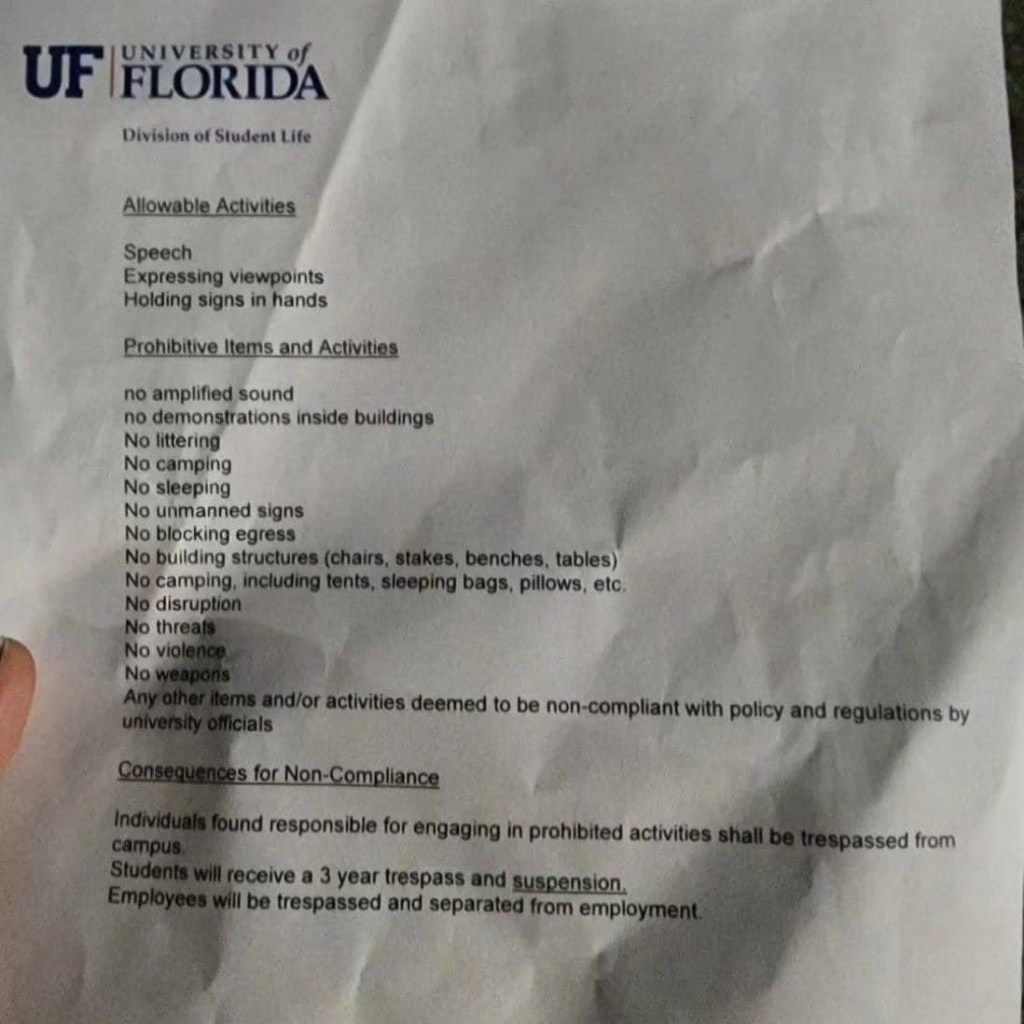


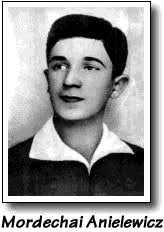
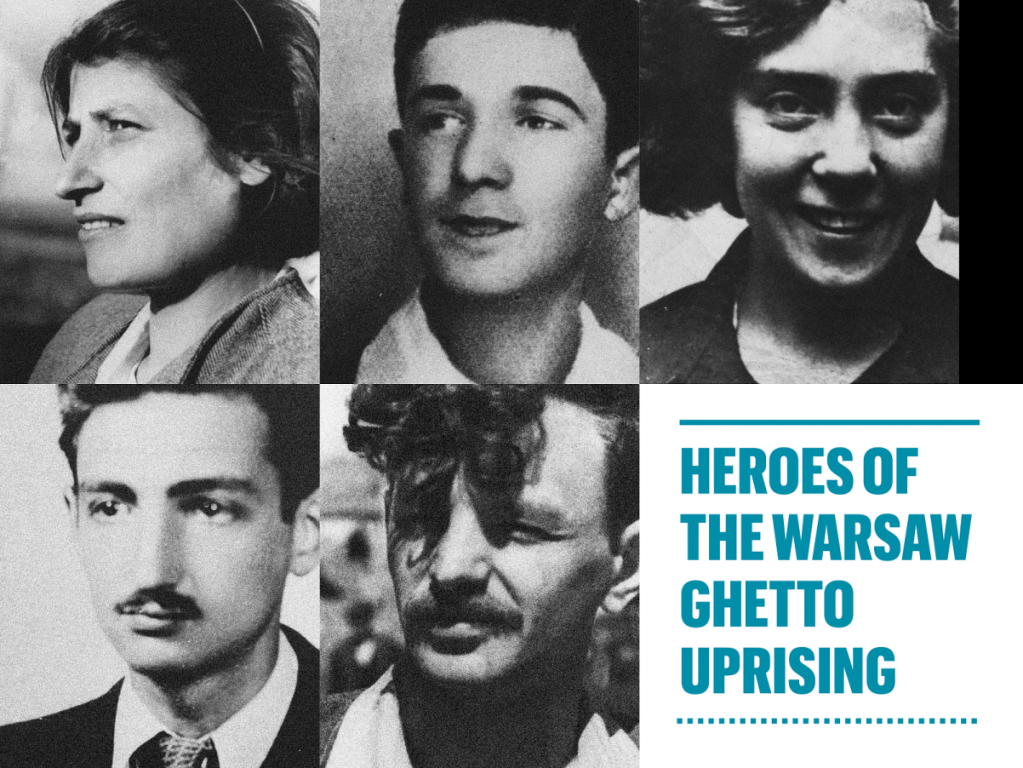


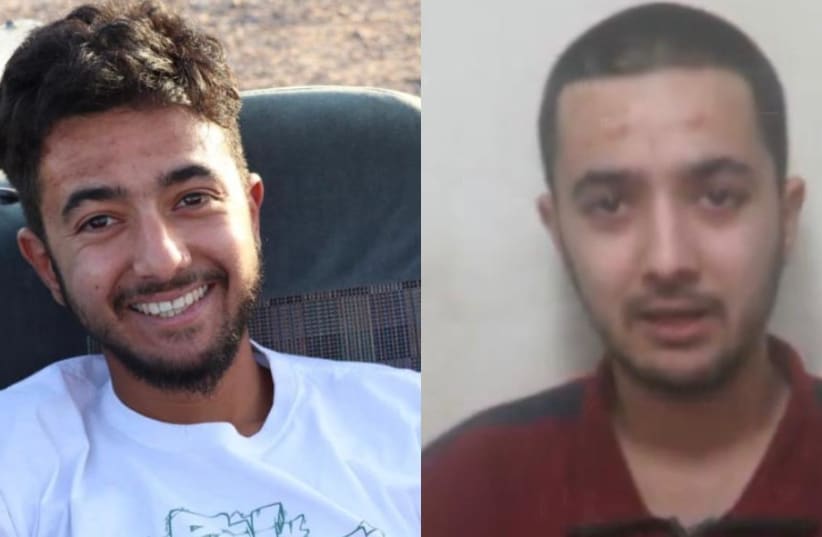

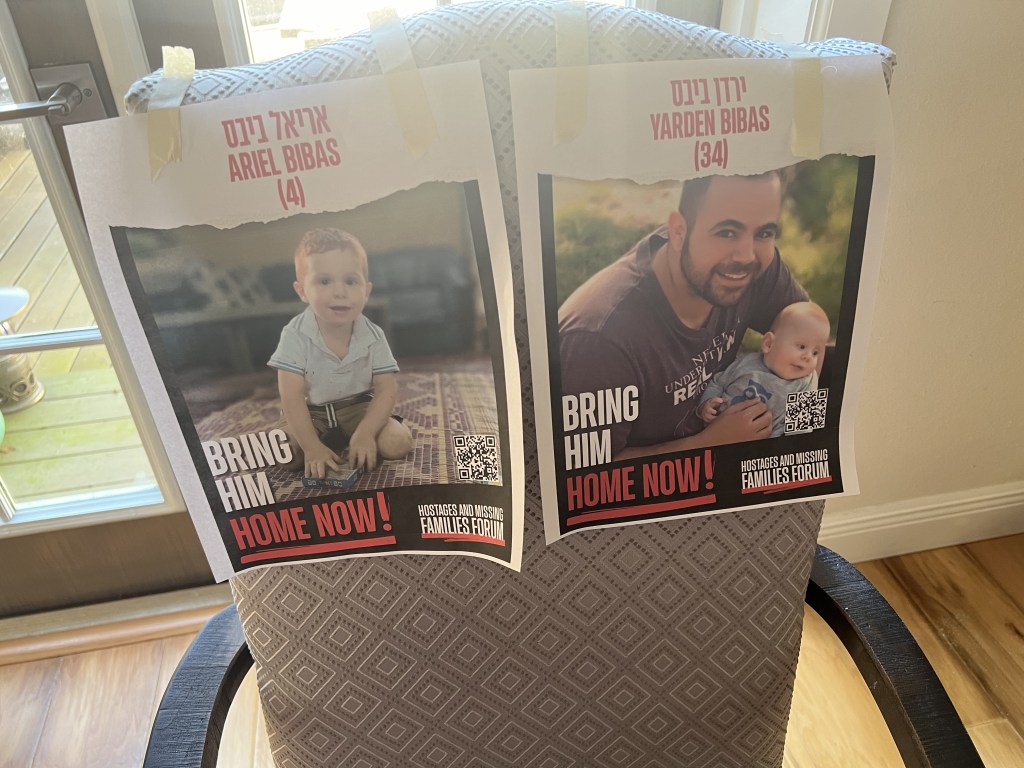
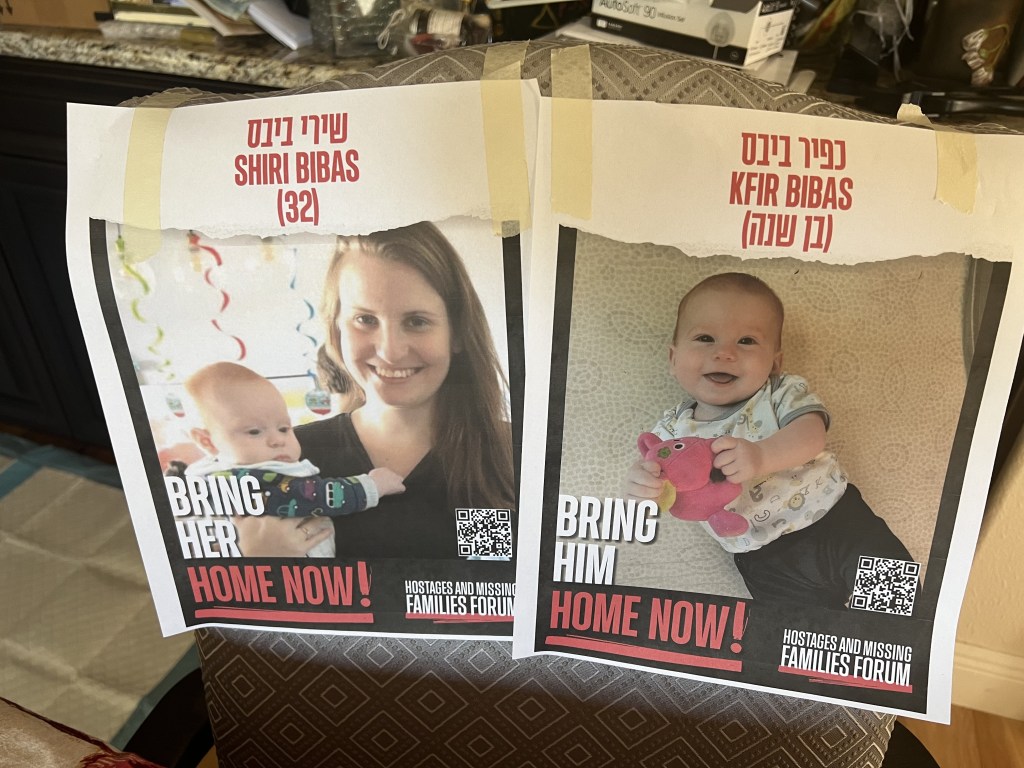




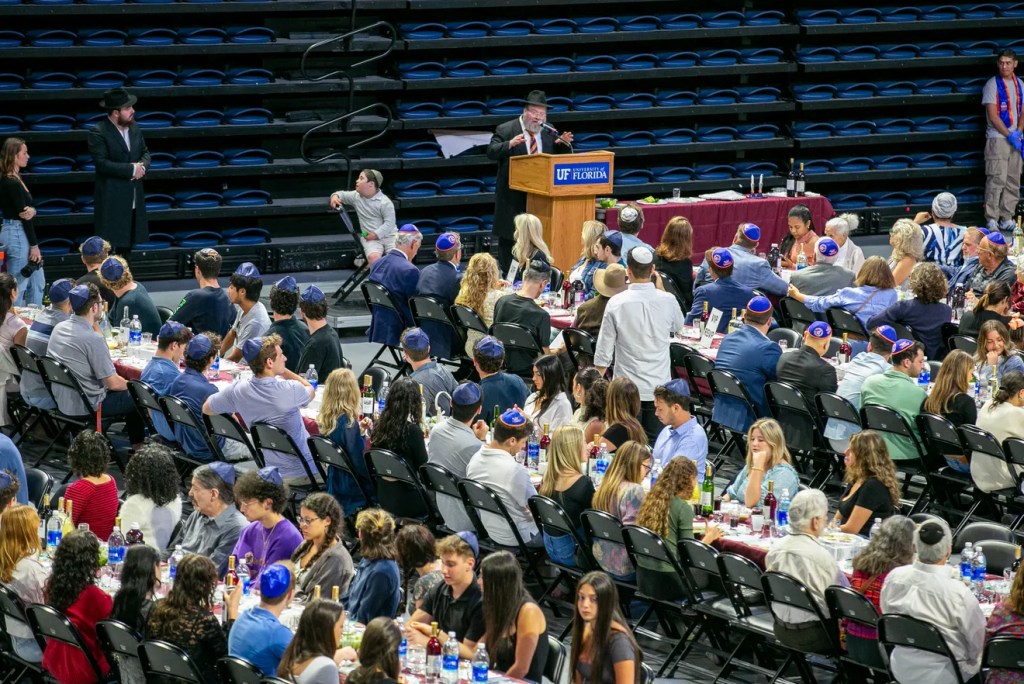


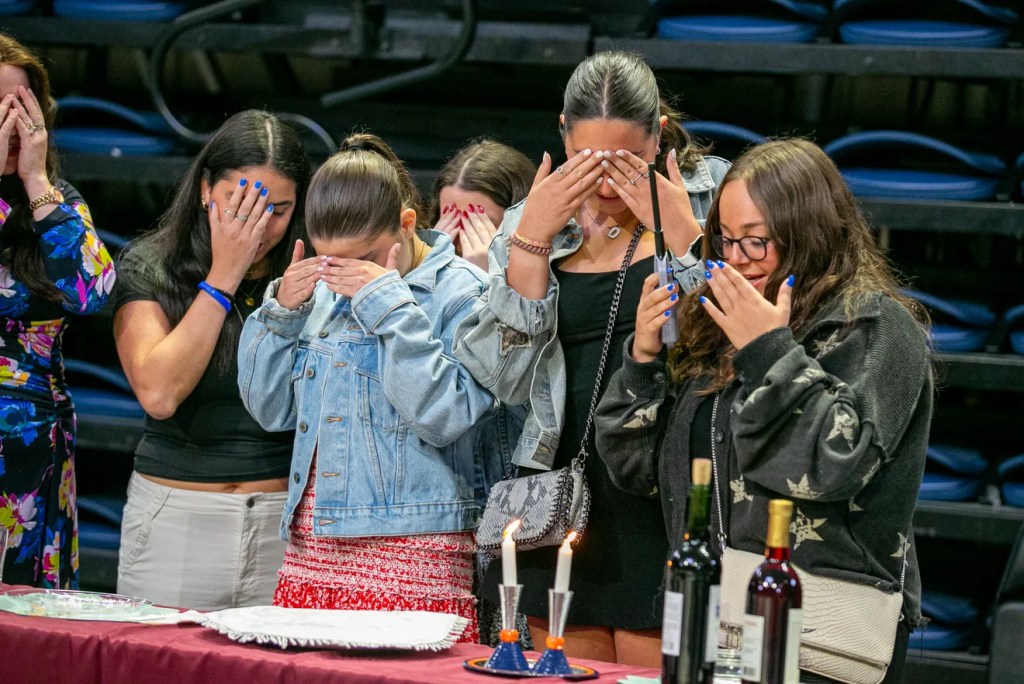


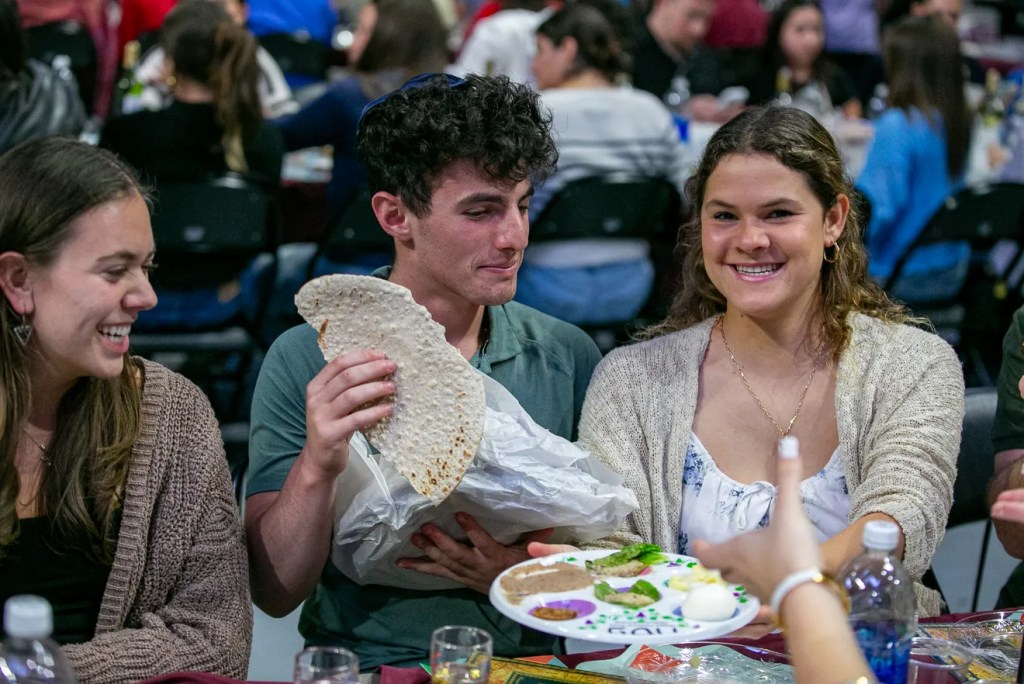
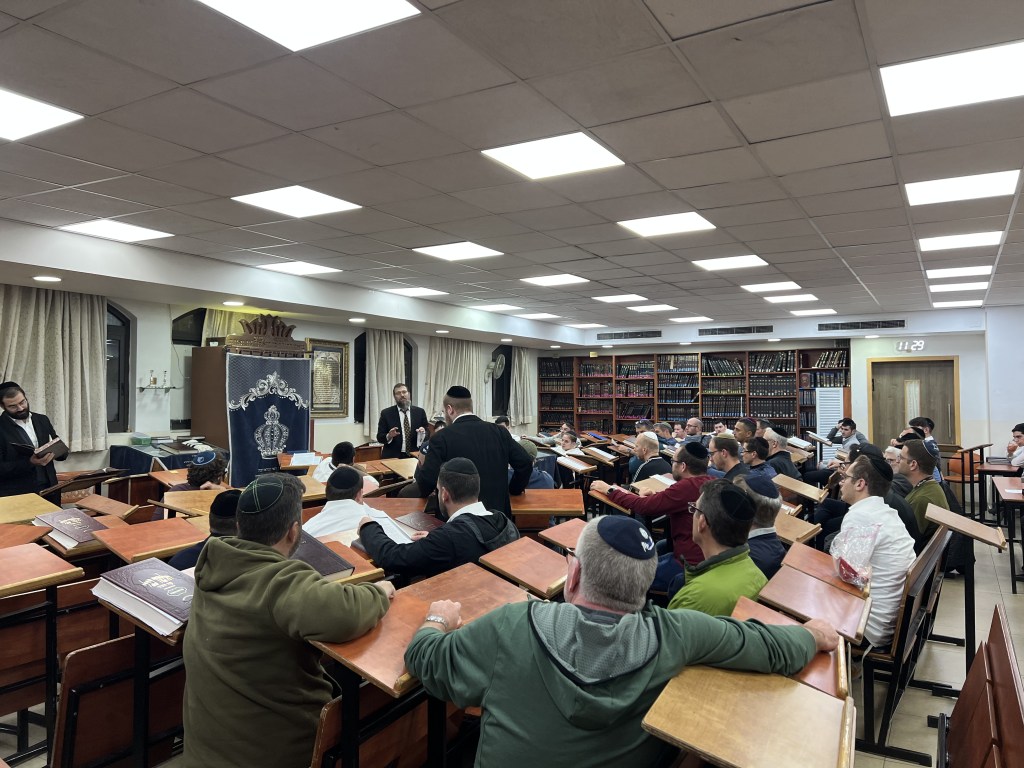
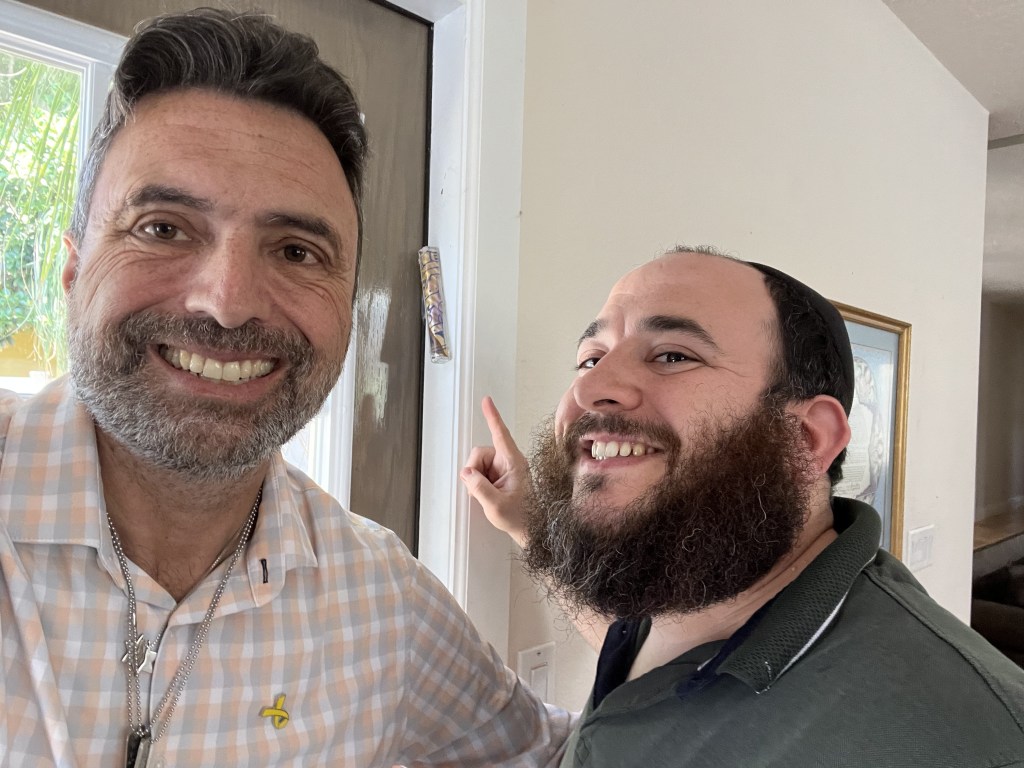
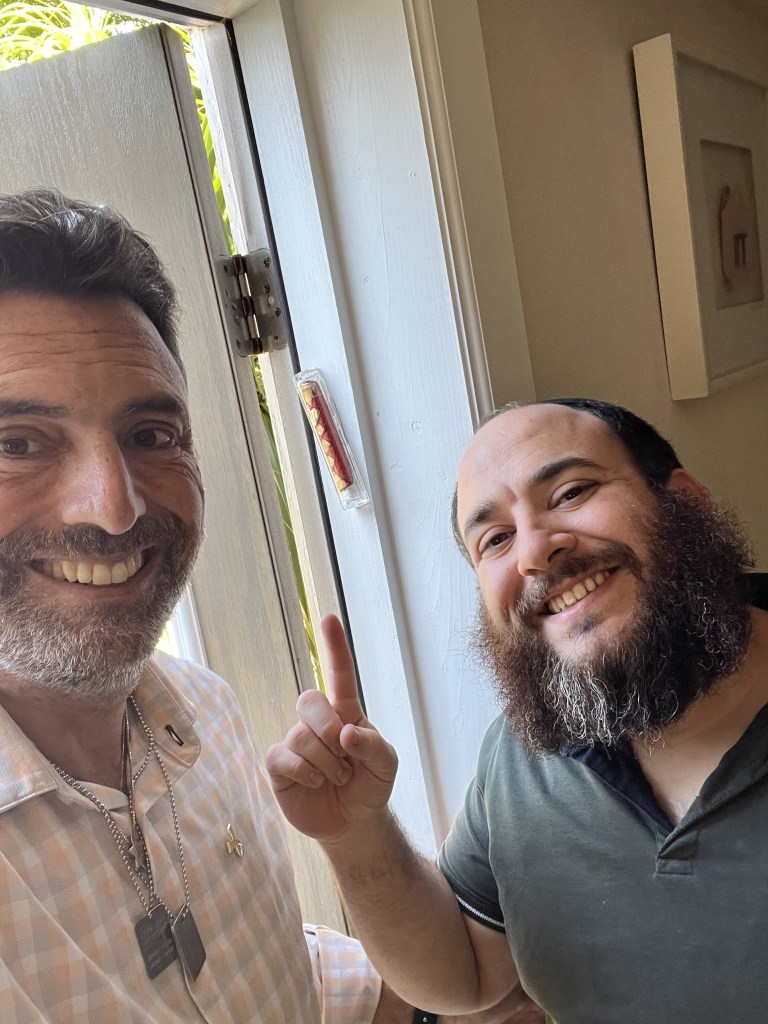
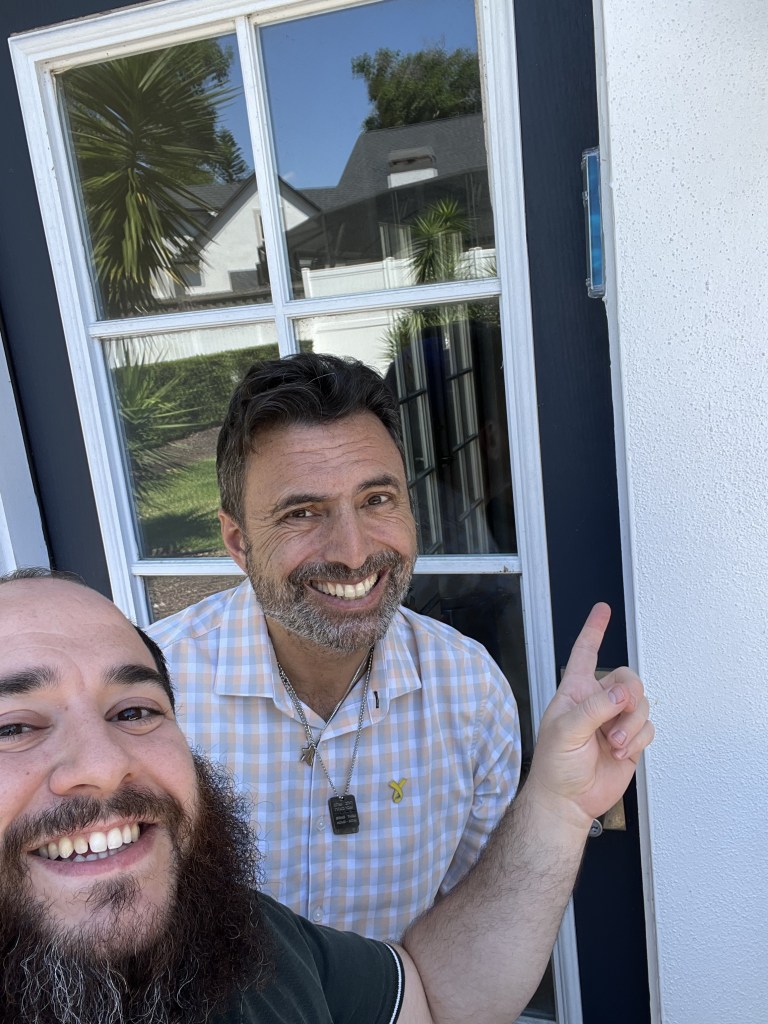

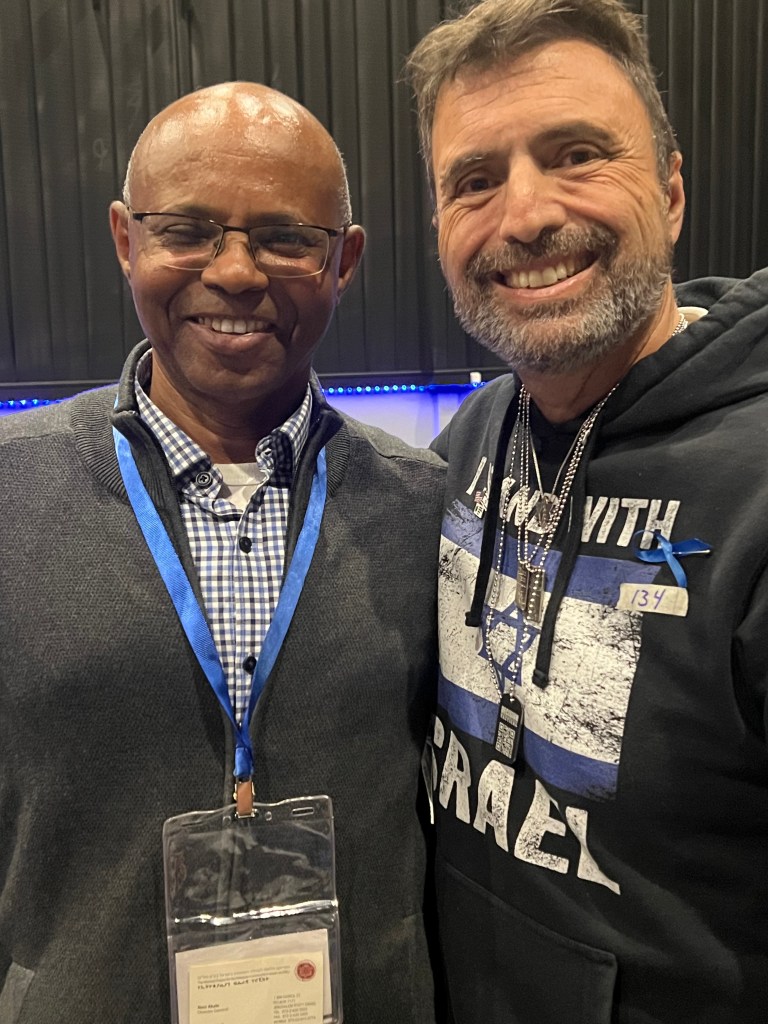

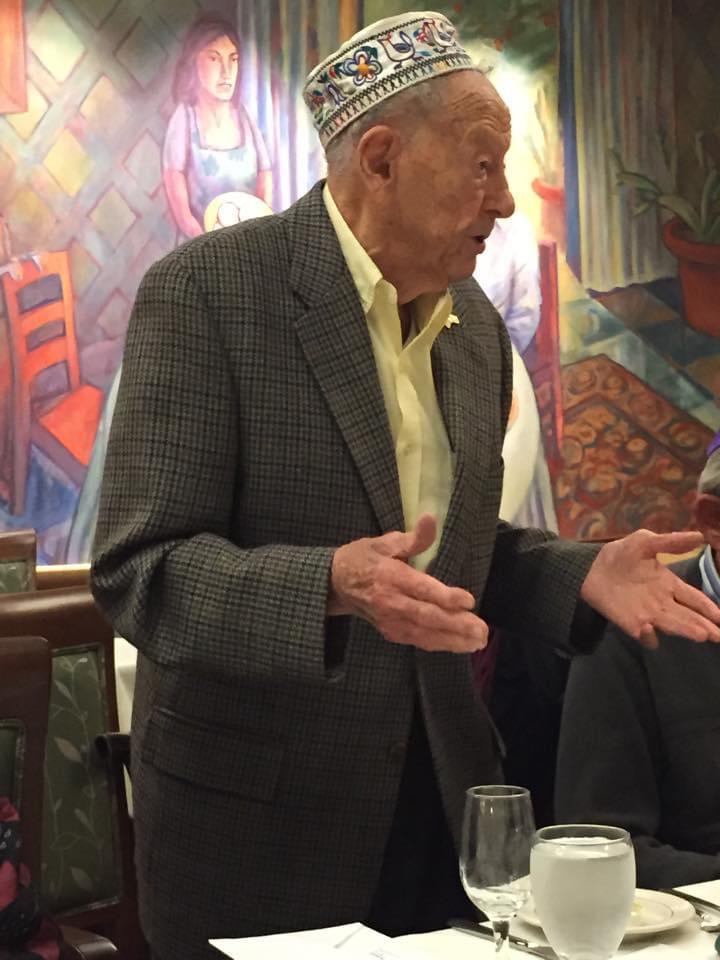
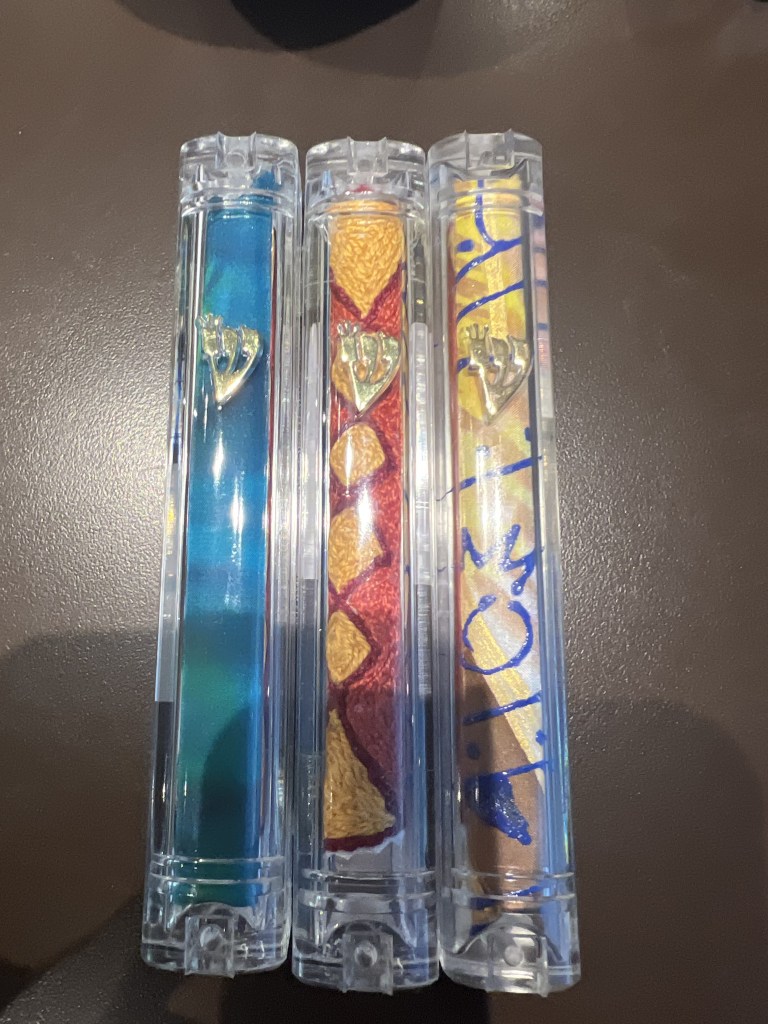


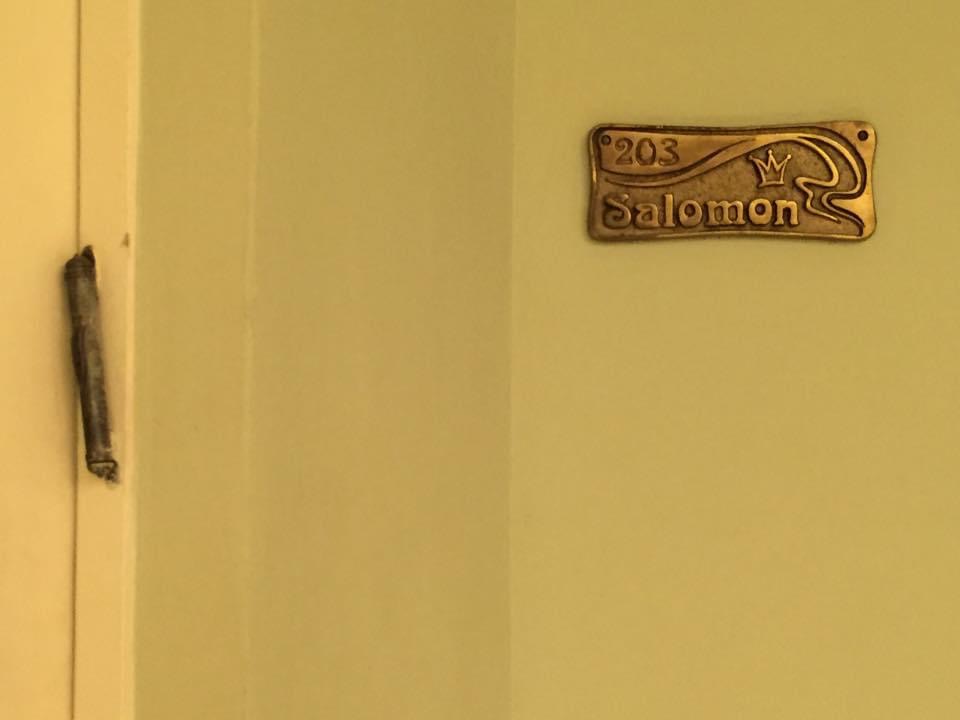

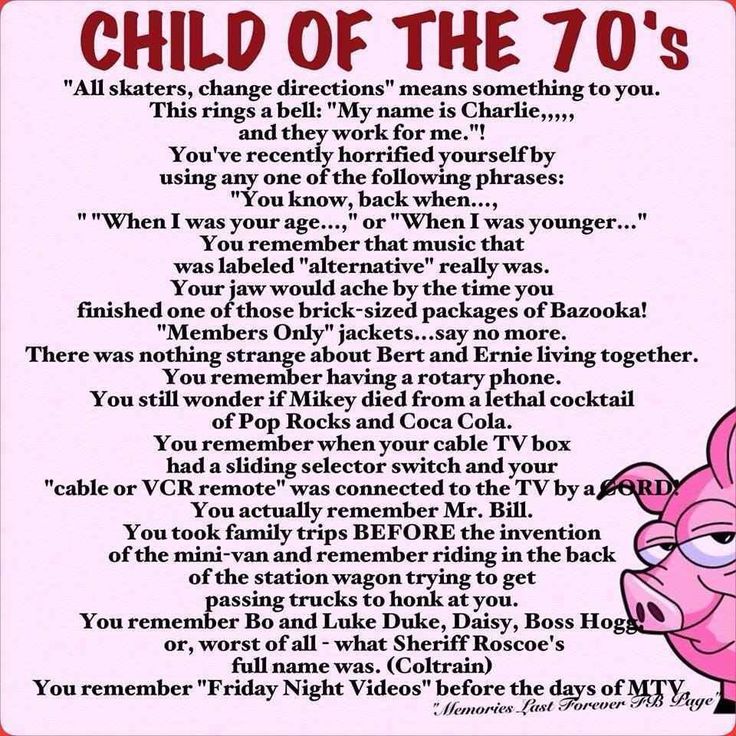

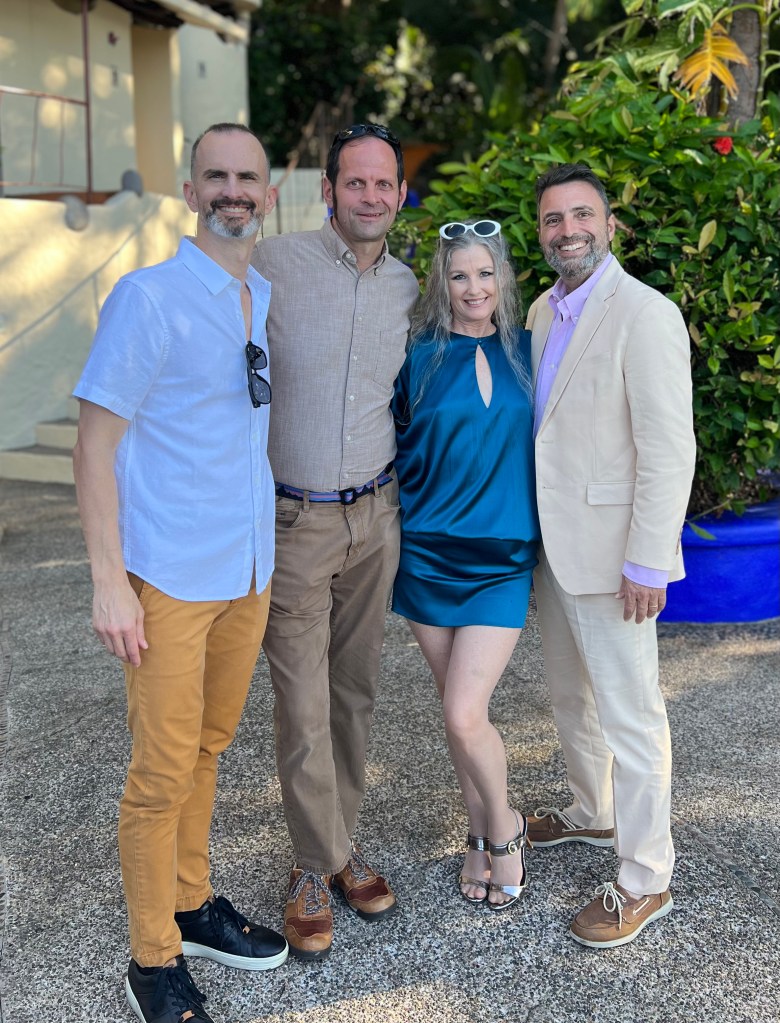
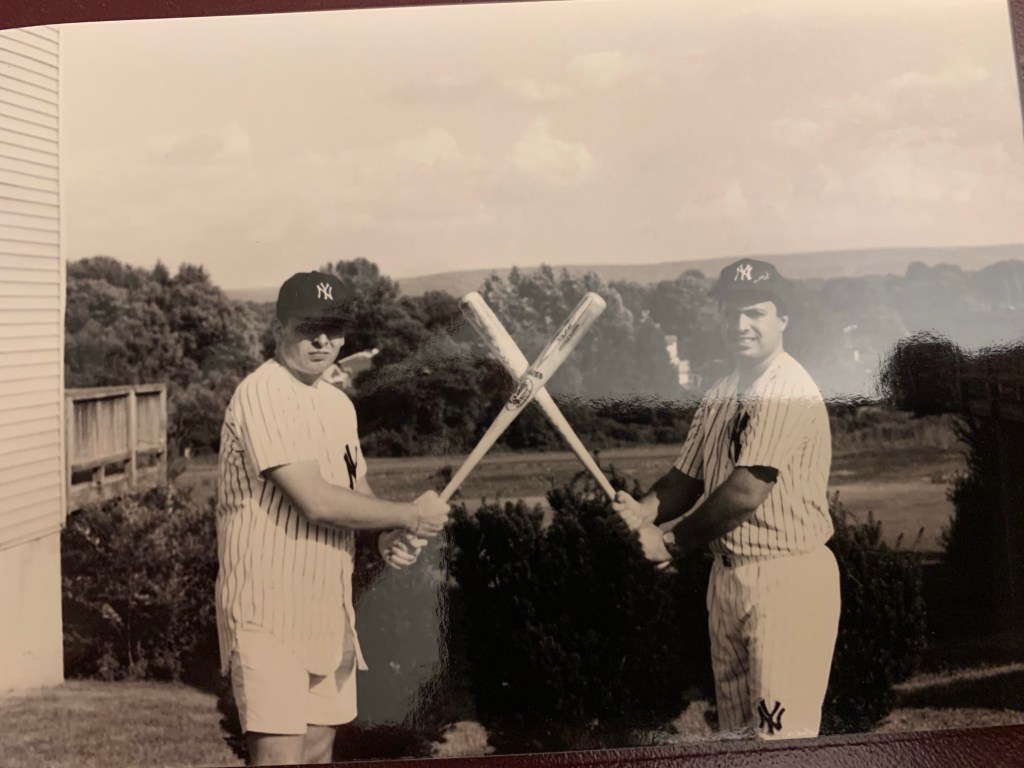

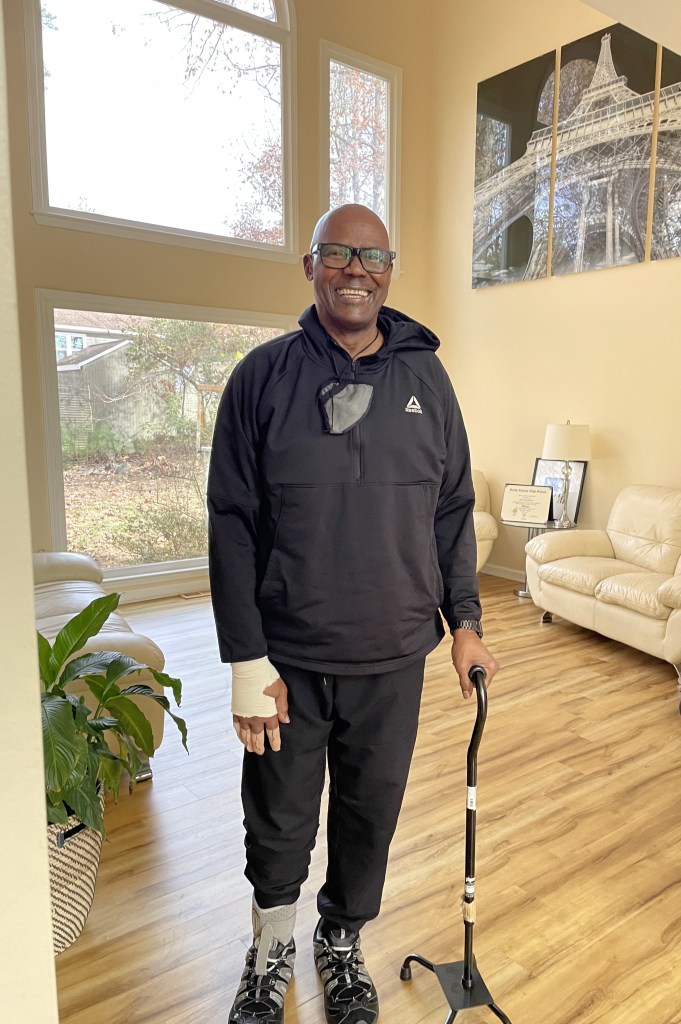
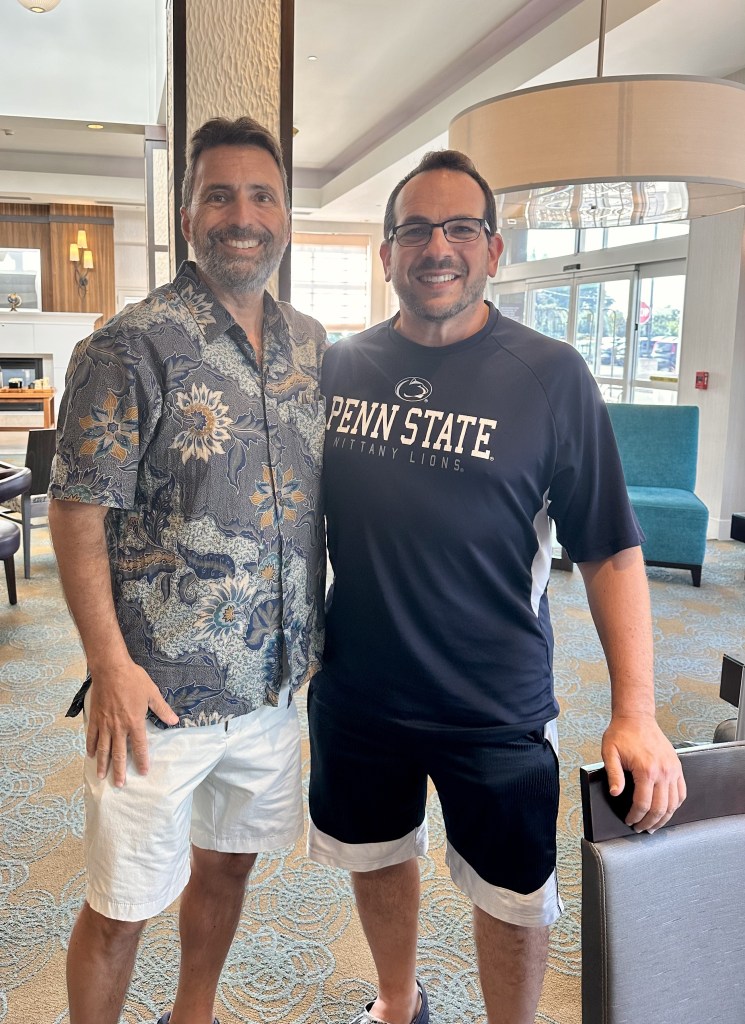
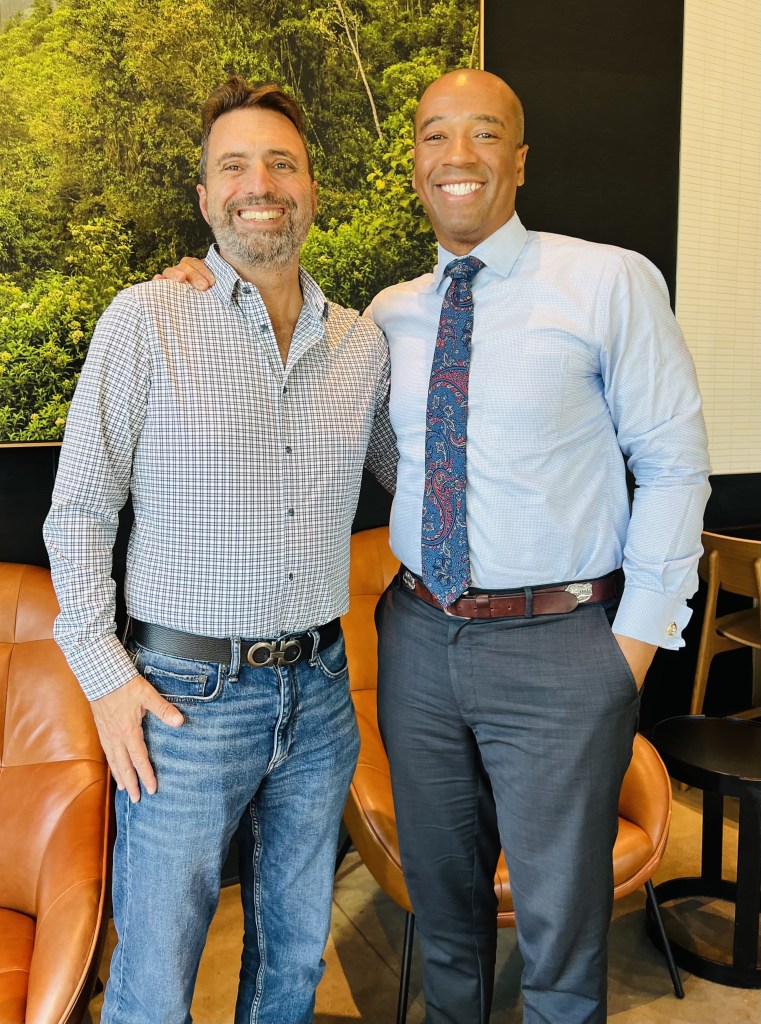
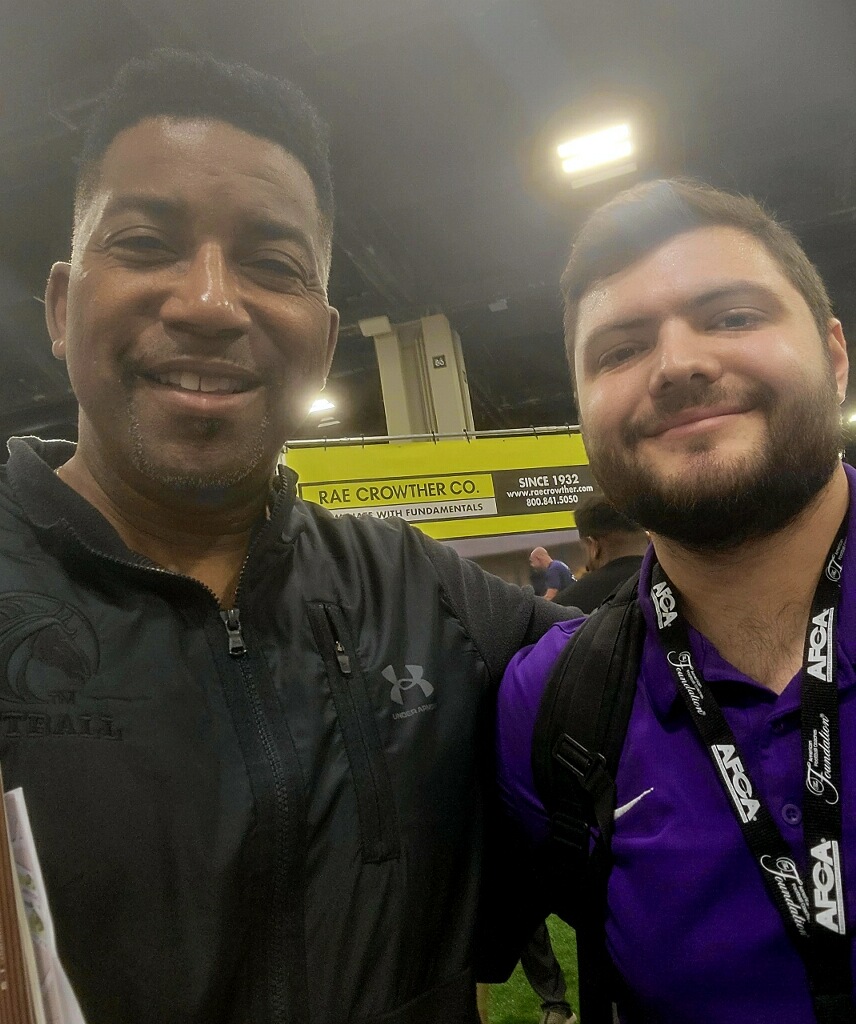

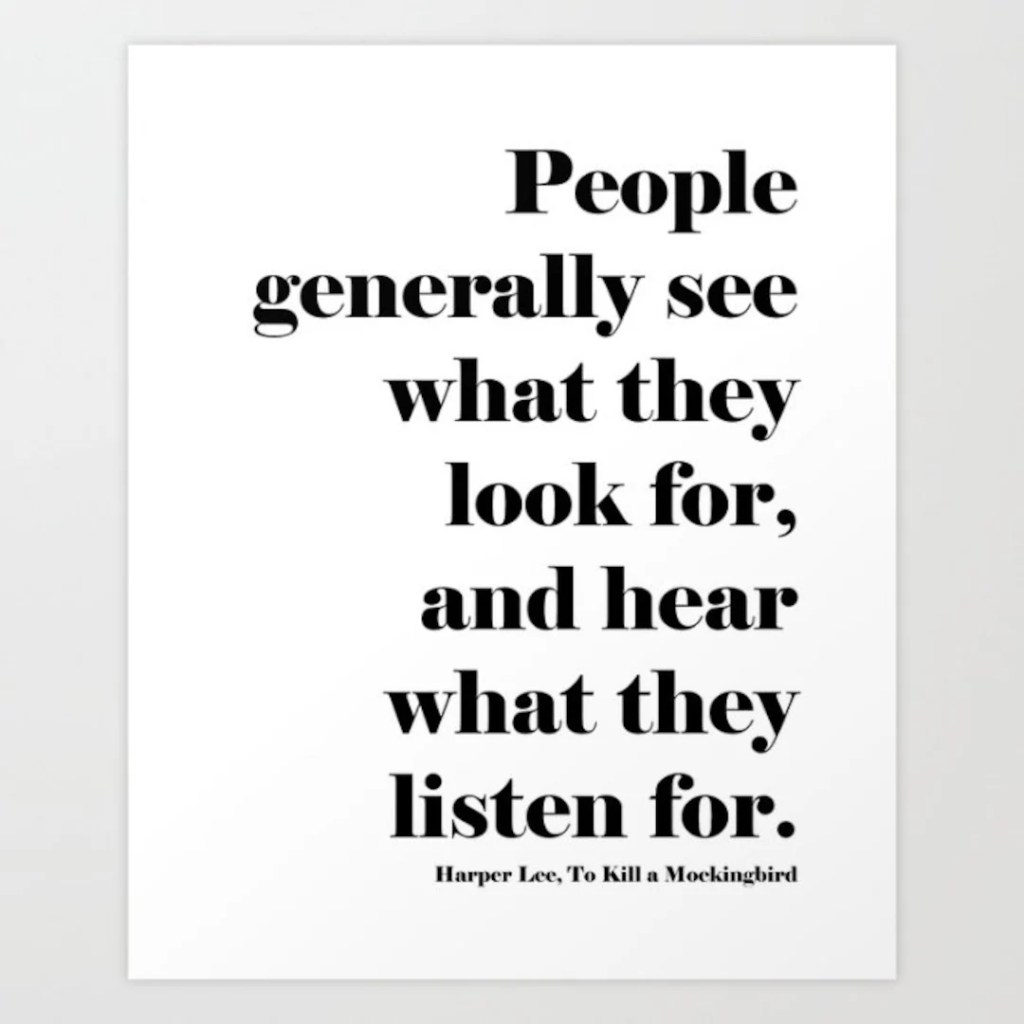



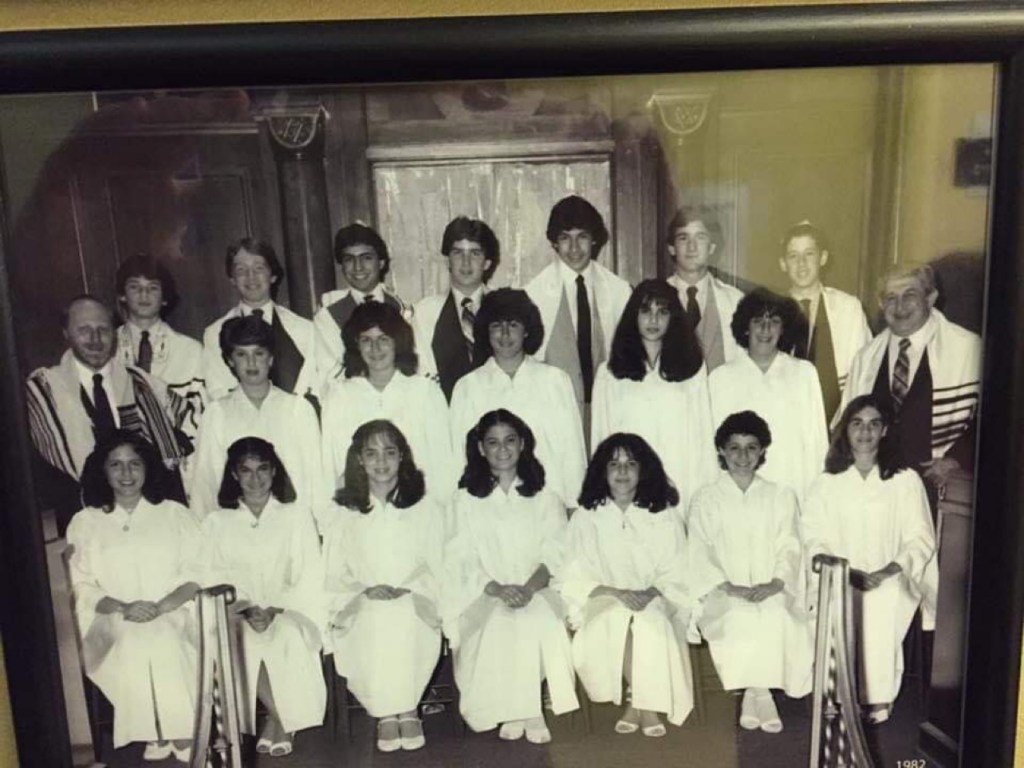

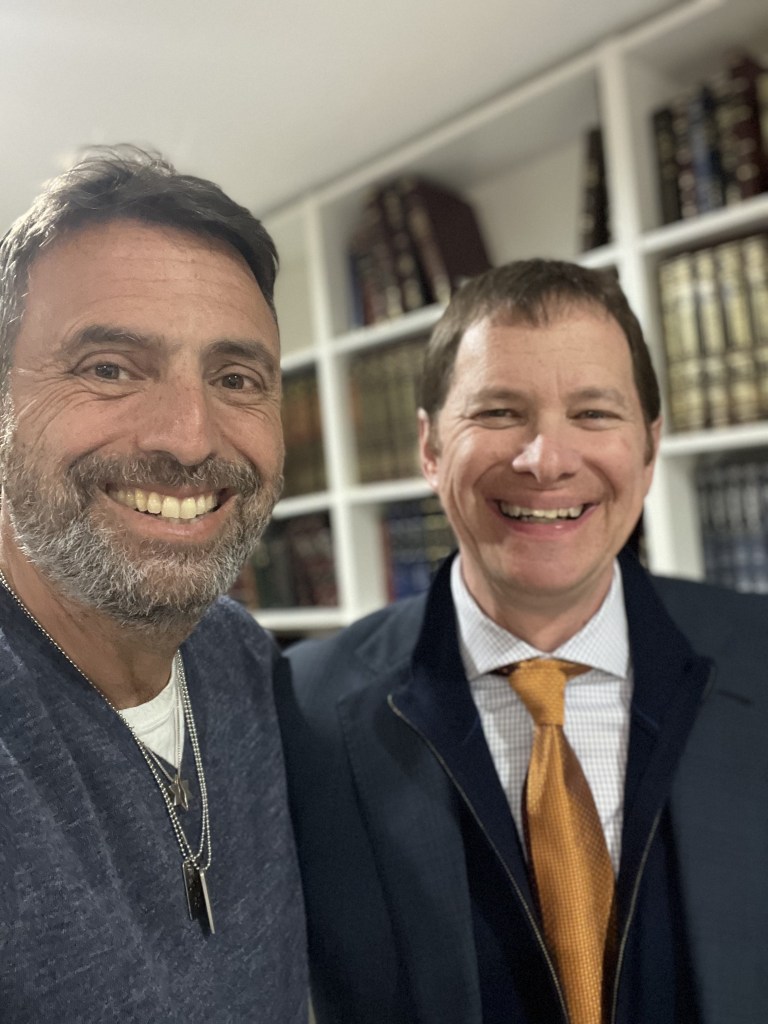



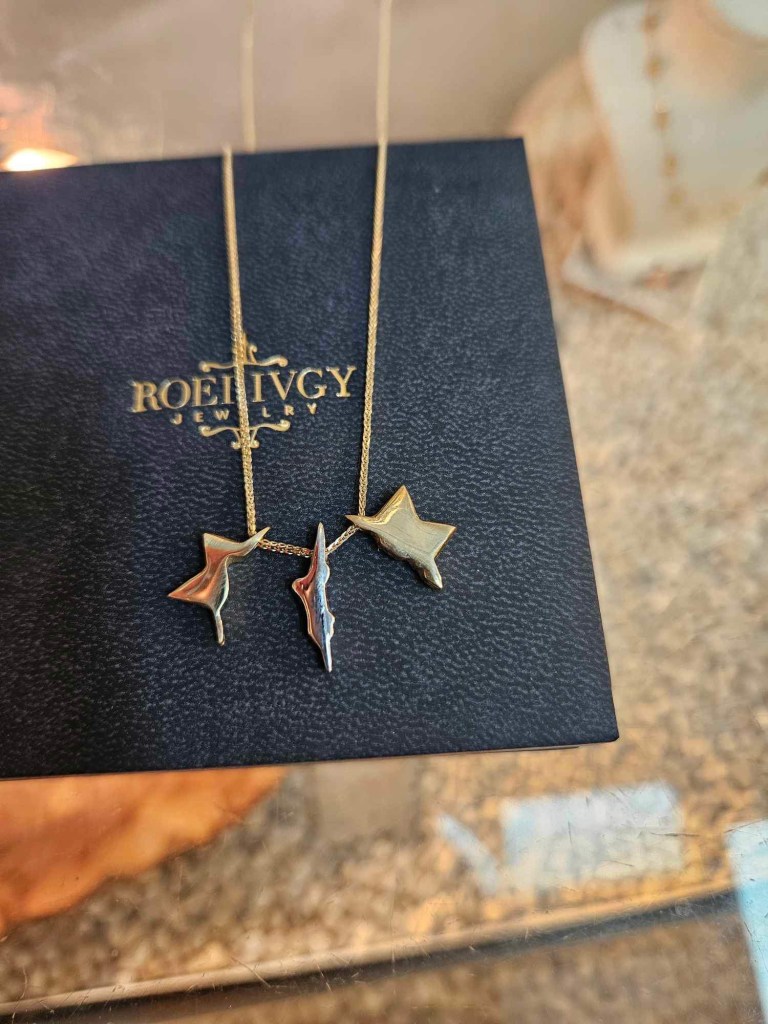
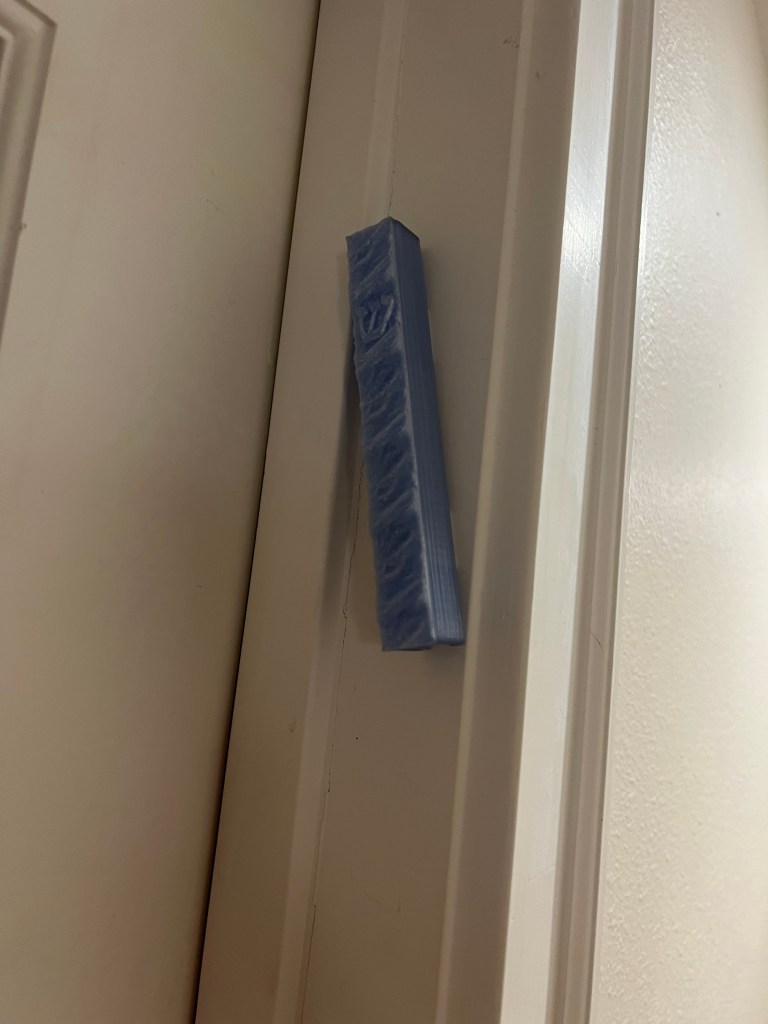
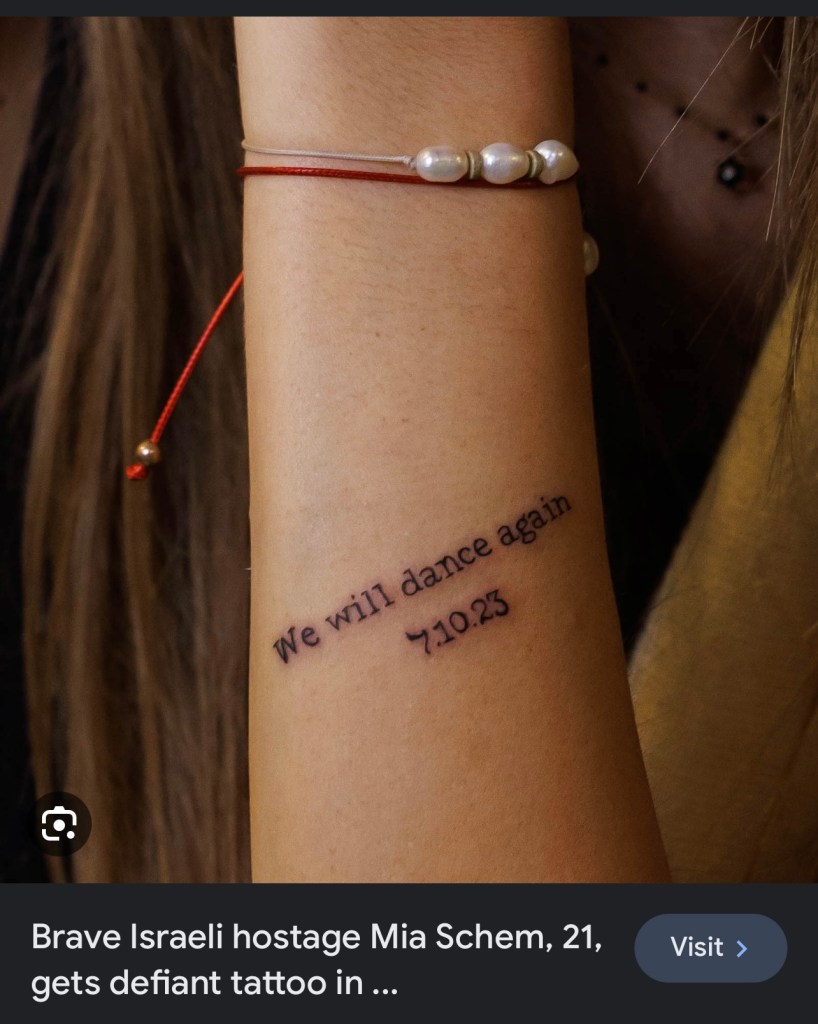
 keithdblog