The Hospital for Broken Souls

There is something special about Fridays in Israel. While Shabbat happens everywhere in the world, Friday in Israel, especially in Jerusalem, just seems different. There is a different energy, a different vibe. There is a buzz in the air, an excitment about it almost being Shabbat. It is something I don’t think I can adequately explain – it’s something you have to feel, you have to experience. This Friday was no exception, especially because it is Jerusalem. There was an energy in the air, a vibe that you can’t describe, you can only feel.

Being in Jerusalem always creates a desire for me to learn. One of my favorite teachers, Ari Ben-David joined us to explore some facinating questions. Today’s topic was “What am I?” A great and deep question. Being in Israel and in Jerusalem, we went to the Torah to explore it.

If you are like me, the image of torah study that I grew up with was boring. Reading these stories with no context and taking them literally. Over the years, I have learned that is not torah study. It’s simply reading stories. Torah study involves discussion, analysis, questioning, and debating. That’s what we did, led my friend and amazing educator, Aryeh Ben-David. Aryeh took us through Genesis chapter 1, verse 1 and half of verse 2. That’s it. All we needed to spend an hour or more discussing the deep topic, “What am I?”

He asked us to pick one line in chapter 1 and one line in chapter 2 that most answered the question. In chapter 1, we agreed on verse 26, “And God said, ‘Let us make man in our image, after our likeness.” In chapter 2, we agreed on verses 7 and 8, “the Lord God formed man from the dust of the earth. He blew into his nostrils the breath of life, and man became a human being.” So we are the image of God, have God inside us, and are dust. Simple points.

It doesn’t end there. Dust is our physical being but the image of God and having God inside us is our soul. That’s the competition we face every single day. Every single decision. Dust (physical wants and needs) vs. soul (the greater good). Dust is about the self and immediate pleasure. The soul is about all and comprises the past, present, and future. What will we choose when faced with the decision? That’s the key question that each of us answer every day with every decision. It’s not about always choosing one over the other – there are times when we need to choose dust and there are times when we need to choose the soul. It’s about being conscious of the decision. What a mind blowing realization on a Friday morning in Jerusalem? With Shabbat approaching quickly, it’s a deep thought to take to the Kotel.

I love the energy of Machane Yehuda, the shuk, especially on a Friday. I went to help bring the catered food for Shabbat dinner to our room and get everything set up before heading to the shuk. A little bit of soul work. When I got to the shuk, as usual it was packed. I wanted to get to my favorite gluten free bakery there to get a bunch of challah, challah rolls, babkah, dates and walnuts. Most I will bring home and freeze, but I wanted a challah I could eat for shabbat and dates with walnuts to snack on. It was 100% for dust, for my own wants and needs. While there, I got to buy some desserts for Shabbat dinner (parve rugalach from Marzipan) and wine for those at dinner. A little bit of soul, doing things for others, since I wasn’t eating the rugalach or drinking the wine. Torah into action.

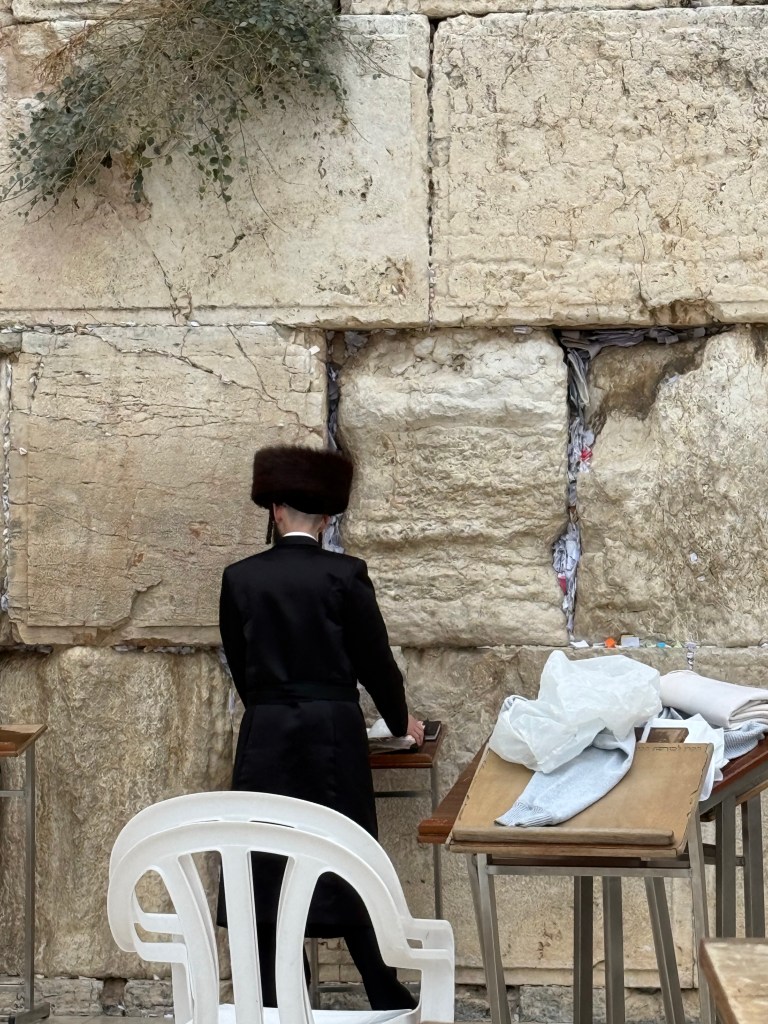
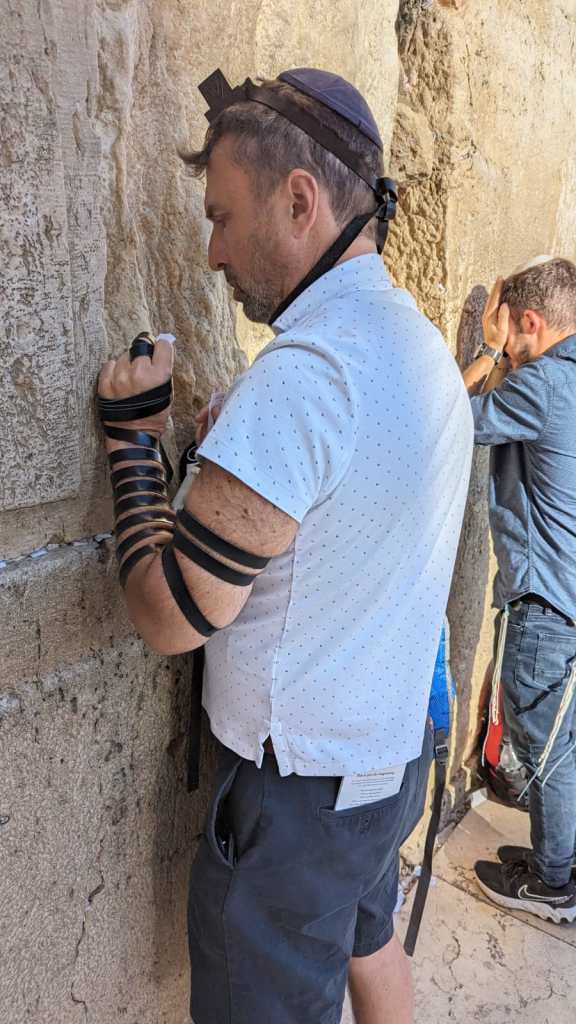
We got to the Kotel for shabbat very early. It was fairly empty when we arrived which gave us time to spend at the wall in deep thought and prayer. For the first time in a very long time, I had the time and space to sit in a chair at the kotel and just be. To let the air and the spirituality overwhelm me as I did nothing but sit and be. It was incredibly peaceful and powerful. I looked at the notes in the Kotel that others had left – their prayers, hopefully answered. I saw Jews of all shapes and colors arrive and pray. As the sun began to set, I felt the quiet and peace around and inside me.

If you’ve never been to the Kotel for Shabbat, it’s quite an experience. It never gets old for me. The singing, dancing, ruach (spirit) and connection is incredible. This was no exception. We gathered together in the plaza and prayed, sang, danced, and connected. We listed as others, in bigger groups, did the same but even louder. It was more than personal prayer – it was the feeling of a people coming together as one. As somebody who doesn’t love services, I always love Friday night at the Kotel. When we finished our prayer, I wanted to go join one of the others.

Instead we began our walk from the old city to where we were having Shabbat dinner. It was about a 40 minute walk, on a beautiful night, exiting through the Armenian Quarter and continuing up Jaffa Street until we arrived. The table was set for 15, the food was plentiful, and the company divine. I love the Shabbat table where you have a little bit of prayer, a little bit of ritual, and a lot of food and conversation. We prayed, ate, sang, and talked for a few hours, getting to know each other better, sharing pieces of ourselves, and enjoying the beauty of peoplehood, Shabbat, Jerusalem, and Israel.

During our learning with Aryeh he asked us what Jerusalem really was. We threw out a bunch of answers before he gave us his. He said, “Jerusalem is the hospital for broken souls.”. Powerful, beautiful, and true. Each of us has our own cracks in our soul. It’s part of being human. In Jerusalem we can get the treatment to begin the healing process for our soul. I’ve always loved Jerusalem but never really had a deep understanding why. Aryeh’s explanation fits. When I’m hear, my soul gets the treatment it needs to heal. To improve. To be better. I can get out of focusing on the dust, on my wants and needs, and instead focus on my soul. On the bigger picture. On being of service instead of what’s in it for me.

If you’ve never been to Jerusalem, I encourage to visit. To explore. To open your heart and heal your soul. If you’ve been – come back. It’s time for another treatment.

This was a wonderful Shabbat filled with happiness, joy, friendship and peace. I want to do my part to make sure they are all like this, no matter where I am.

Being Jewish and Inspired

Those who know me, know that I am not the most religiously observant person. While I am very Jewish and have a strong Jewish identity, when it comes to religious observant, I’m on the low end. When my friend asked me to come to services this Shabbat as he was sponsoring the kiddush in memory of his son, I said yes without hesitation. Not because I love services but because friends show up. Instead of my relaxing Saturday morning on the couch, watching College Gameday, rooting for the student to make the field goal and take Pat McAfee’s money, I found myself in synagogue.

I care much more about what goes on inside a synagogue that what the inside looks like in a synagogue. I have been to many that are beautiful inside but I don’t find warm, welcoming, or the service interesting or meaningful. I understand why many people want to invest in making the environment beautiful but I’d much rather see the money go to ensure great clergy, staff, culture. It’s a personal preference.

I note this because I have found that those that are more modest aesthetically tend to be more welcoming and I tend to enjoy what happens in them. As soon as I walked into this synagogue, I felt at home. It was warm, welcoming, and it was clear to me that the investment was being made in what happens inside the rooms rather than the rooms themselves. A number of people welcomed me immediately and the Rabbi, in the middle of the service, walked up to me to welcome me and give me a hug. In a crowded room, they made sure to find me a seat. People came up to say hello and welcome me.

I often find that in Jewish spaces, this type of welcoming doesn’t happen. We want people to come to our events, to be a part of our organizations, and yet we don’t make sure they feel included or special when they do. It was the first time I was at this synagogue and they made me feel right at home. As sombody who doesn’t love services, I found myself enjoying it because of how I was made to feel while there. I enjoyed the loud singing and comraderie that was happening as part of the service. Amazingly, I found myself thinking I would like to go back.

I found myself wondering why we don’t do this more often. We see our synagogues and Jewish organizations struggling with membership and attendance. We also see so many people who want to have a Jewish connection and yet they can’t find one that resonates with them. The old ways, the “Jewish tax”, the mandatory synagogue membership, etc. are no longer applicable. People want to spend their time in a meaningful way and many of them aren’t finding it in Jewish spaces. How do we change this?

There was recently a study about the shortage of people enrolling in Rabbinic School. In the study, they found an incredible diversity of those who enrolled. 58% identify as women, 30% as men, and 12% as nonbinary with an estimated 51% identify as LGBTQ. It’s amazing to see how the field has changed in the past decade or so. There was a big outrage by some about the high percentage being LGTBQ and women Rabbinic students, as if that was a problem. Perhaps to some it is. The bigger concern to me is about the overall number of people enrolling in Rabbinic school and the Rabbis that are graduating. I am a firm believer that the Rabbi is the key to the success of a synagogue. When the Rabbi is inspiring, the synagogue tends to flourish. People want to learn from somebody who inspires them. People want to spend time around those who inspire them. Rather than focus on the sexuality or gender of those in Rabbinic school, perhaps we should be asking ourselves why we aren’t recruiting the best, inspirational people to be our clergy?

At the synagogue I attended this Shabbat, the Rabbi was engaging. He was teaching us torah in between each aliyah. He was funny. He was engaging. I learned something new and applicable to my life each time he taught during the service. It made me want to learn more with him. It made me want to go back. He was inspiring. Our leaders, particularly our clergy, need to be inspiring. What are we doing to ensure we have inspiring clergy? Where are we failing? How will we address it?

One of my favorite clergy members is Cantor Azi Schwartz from Park Avenue Synagogue. He does amazing work putting classic Jewish prayers and songs to contemporary music. His version of Hallelujah set to Bruce Springsteen’s Born to Run at Rosh Hashanah this year is outstanding. I’ve listened to it more than a dozen times.

His version of Adon Olam set to the music of the Broadway show Hamilton has over 1.2 million views on Youtube. I don’t get tired of listening to it and signing along. He inspires and I look forward to seeing and hearing what he will do next. When the streaming services from Park Ave Synagogue come on, I watch because I know it’s going to be special and meaningful.

When the Broadway show Wicked (one of my personal favorites) came out as a movie last year, Cantor Azi and Cantor Mira Davis were ready with a new version of Adon Olam set to the music from Wicked. It’s fun to listen to, to sing along with. There is very little Jewish music that I want to sing along with yet Cantor Azi has multiple versions of Jewish prayer that he has inspired me to listen to for fun and to sing along with.

As I was writing this and looking at the things Cantor Azi has done, I even found new ones. Adon Olam set to Born in the USA. I quickly began to sing along, tapping my feet, clapping my hands, and thoroughly enjoying myself. I found a version of Mi Chamocha set to Taylor Swift. That’s inspiration. Oseh Shalom to the tune of Shallow.

Not everybody has to be Cantor Azi. There are many ways to inspire. There are many ways to be welcoming and engaging. It takes effort. The payoff is worth it, both for the Jewish people as a whole and for each of us individually.

I’ve been lucky to work with and learn with many inspiring Rabbis. My childhood Rabbi, Jeffrey Wohlberg (always my image of a Rabbi) set a great example for me. Rabbis David Kaiman, Andy Koren, Yoni Kaiser-Blueth, Aaron Alexander, Dave Baum, Jonathan Siger, Yonah Schiller, Gail Swedrow, Chaim Albert, Jill Borodin, Randy Brown, Gabi Gittleson, Herb Tobin, Dovid Yachnes, Ari Federgrun, Ben Hassan, Danny Weiner, Josh Broide, Mark Kram, Efrem Goldberg, Irving “Yitz” Greenberg, Ed Rosenthal, Joseph Telushkin, Daniel Wolnerman, Darren Kleinberg, Mayer Abramowitz (z’l), Steve Engel, Neil Zuckerman, Jeremy Barras, Jonah Zinn, and Amram Hoffer are just a microcosm of the Rabbis who have impacted me. While the number of Cantors who have impacted me are smaller, I can’t leave out Cantors Lisa Segal, Rachelle Nelson, Mitch Martin (my Bar Mitzvah Cantor who I still keep in touch with today) who are incredibly inspiring. Perhaps I am spoiled by these amazing Rabbis and Cantors so I have set the bar too high. I don’t think so. Their excellence has showed me what is possible.

As a people, we need to invest whatever it takes to ensure we have excellent clergy. We need to do invest in ensuring we are a welcoming community. We need to invite those who show up into our community. When I was in Hebron a few years ago, our guide pointed to the parking lot and said to us, “This is where Abraham, recently self-circumsized, greeted the strangers and washed their feet.” (the the three angels). I think that if Abraham, at that point in time, would get up to welcome the stranger, who am I not to do the same?

As I finish writing and prepare to return to Israel in 2 days, I want to leave you with Cantor Azi and his Taylor Swift cover. As he sings, “We are never going back to Egypt again” think about what you are willing to do to ensure you are never enslaved again – mentally, physically, or spiritually. Think about what youwill do to find a way to make being Jewish interesting and fun. Ask yourself what it would take for you to want to be involved? To get your family involved? To make sure Judaism has an important part in your life, no matter how religious you may or may not be. No matter how much you may like or not particularly like religious services. No matter how you define being Jewish. Because at the end of the day, we are all Jewish so lets figure it out together.

Lessons – will we ever learn?

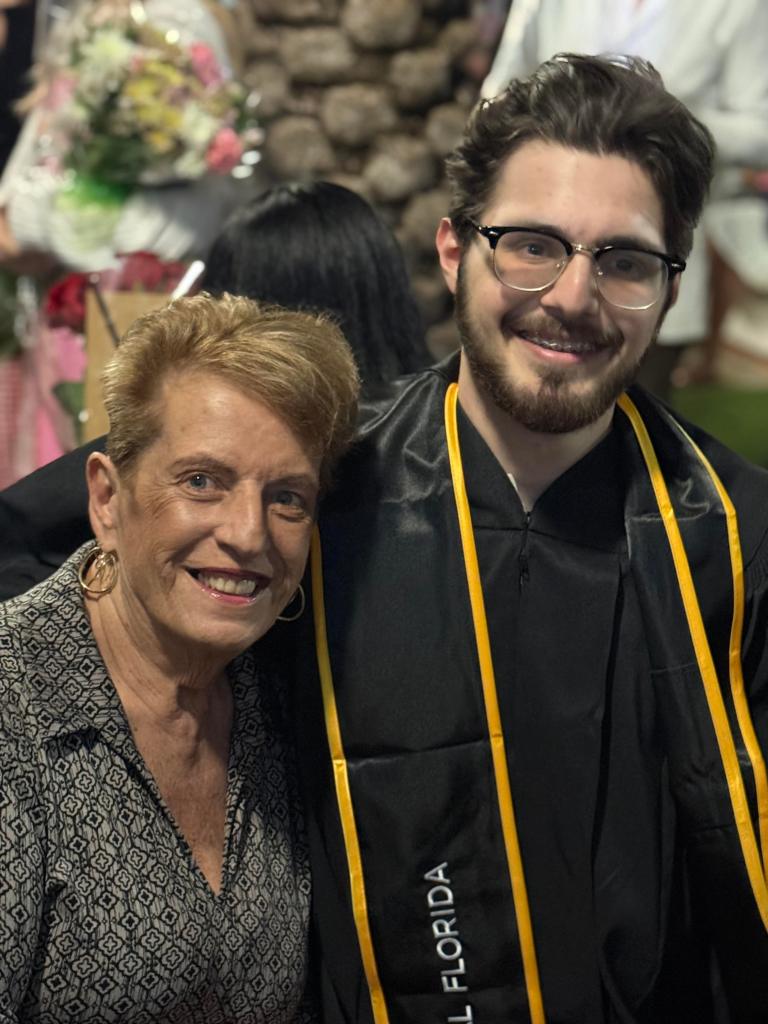
My youngest son graduated college on Friday. It was a momentous occasion in his life and in ours. My mom came in to celebrate and attend the graduation. I treasure these moments more and more as time goes on. We sat in the auditorium, watching where he was sitting (he helped us find him, texting us his location and turning around to us and waving), and waited for him to have his name announced and walk across the stage. As a parent, it was an incredible moment for many reasons.

My mom and Matthew at graduation – I treasure these moments more and more.

I noticed a few things surrounding his graduation that got me thinking. They may seem totally unrelated, but for me, they all tie together.

On the drive to campus for graduation, I noticed a few things. First, how many people drove as if they were the only car on the road. Turning right from the left turn lane. Going straight and trying to outrace cars from the left turn lane. Where was the common courtesy? Where was basic rule following? I laughed as one car that did this ended up far behind me – they almost caused an accident to end up behind the car they had to cut off.

The second thing was that when I tried to be kind, to let cars in ahead of me, how they wouldn’t accept the kindness. They wouldn’t go in front of me. It got me thinking, “When did kindness become so rare that people don’t recognize it?”

At the graduation, it was the same conflict. They asked not to scream and yell when your loved one’s name was announced as it meant the next name couldn’t be heard. Yet people screamed, drowning out the name of the next person graduating. Rudeness and lack of caring was all over the place. As I went to video my son about to walk across the stage, the people in front of me had to stand up, blocking my view. No awareness of people around them. I stood up, moved slightly, and was able to video and watch him walk. Had they done that a minute later, I would have missed it.

Yet the number of people willing to take pictures of my family when asked, the number of families who I took pictures of when asked was remarkable. The wishes of congratulations to strangers because they were celebrating the graduation of a loved one was remarkable.

What a dichotomy. It got me thinking that perhaps America isn’t really as lost as it appears. Perhaps there is hope. Perhaps we can regain our country from the extremes and return to a world of kindness, caring for others, and awareness of the world around us. Perhaps we don’t have to live in a world where it is ‘my way or the highway’ on every single issue.

I do know one thing for sure. It starts with each of us. We may not be able to change the entire country but we certainly can change our own behavior. We certainly can change the world of those around us. I hope we can all make a commitment to do our best to be kind. To be aware of those around us. To celebrate with those who are celebrating and to embrace joy rather than hate. It is how we will save our country and our world.

A little more than 10 years ago, I began writing about the rise in Jew hatred. It was controversial at that time to use the words Jew Hatred. I used them anyway because that’s what I was seeing. Swastikas being drawn on buildings in Seattle. This article in the Seattle Times on June 26, 2016, got pushback that it wasn’t happening and that this was all being overblown and exaggerated. We see now that unfortunately, I was right. This article, almost 9 years old today, is hard for me to re-read because of what has happened in those 9 years. Because of what was being called out then that was ignored by so many. Because of October 7, 2023 and what has happened since then. The signs have been there and far too many of our ‘leaders’ have chosen to ignore them.

Take for instance, this harrowing exchange between David Horowitz and a student at the University of California San Diego in 2010. This was FIFTEEN (15) years ago. The only difference between then and now is that Horowitz would be booed offstage now, this vile, hateful woman would be cheered, and the University would defend HER hatred instead of protecting Jewish students on campus.

The Jew hatred on campus was clear in 2010 but we ignored it

We saw things like this years ago but failed to take it seriously and failed to act. As a result, our Jewish students on campus today are faced with incredible antisemitism. I spoke with one of the leaders of Mothers Against Antisemitism from the Dallas chapter this week and the stories she shared about the University of North Texas were horrifying. Students afraid to be publicly Jewish in any way. Jewish/Israel speakers being spirited to campus at night, under the cover of darkness, to an unadvertised speech because had it been advertised, students would have been too afraid to show up. The work we have been doing has simply failed and we must admit it. We built building on campuses while the Jew haters built departments, programs, and hired Jew hating professors and administrators. We put Jewish names on libraries and centers for performing arts while the Jew haters invested in teaching that Jews are evil, are powerful and responsible for all the bad in the world, that Israel is a genocidal country that doesn’t want peace and are colonialists that want to take over the entire middle east and the world.

My friend Adam Bellos wrote a powerful piece last week. Most of you likely did not see it or read it. I encourge, no I implore you to read it. To think about what he writes. To take action to change the current reality. He writes:

This is the tragedy: we trained kids to explain checkpoints without explaining Herzl. We taught them to debate apartheid without introducing them to Ahad Ha’am, Rabbi Kook, or the Book of Joshua. We armed them with casualty charts, not courage. With U.N. resolutions, not roots. With talking points, not Torah. Hasbara failed because it tried to outsource pride. Because it assumed the average young Jew could fight for Israel while remaining estranged from Hebrew, from Zion, from the soul of their people. Because it traded the moral complexity of the conflict for the false clarity of press releases.

His summary is a beautiful and powerful statement that I believe in, have advocated for, and continue to push to create.

And so, this moment demands something entirely different: a revolution of Jewish education. A renaissance of context. A return to knowing who we are, not just what we’re defending. We don’t need more content creators to explain why Israel is right. We need Jewish children who know why they are Jewish. We don’t need another “crisis comms” playbook. We need people who speak Hebrew, dream in Zion, and learn how to walk into a room not begging for understanding but embodying truth.

We need to make sure we are providing quality and meaningful education to our children and, in all honesty, to our adults. As my friend Ari Shabbat often says, “The Torah is playbook for life”. If we don’t know this, don’t know how to use it, don’t bother every learning that it can be interesting, fun, and meaningful to learn Jewishly, how can we survive? If Israel becomes just another country rather than our spiritual homeland, Judaism will never be more than meaningless rituals that we do because our parents did them. There will be no meaning in hanging a mezuzah, putting on tefillin, or identifying as Jewish. We will merely be Jewish because we have been told we are Jewish. To me, that is unacceptable. I hope that you find it unacceptable as well.

I was deeply saddened to hear the news that Rabbi Sholom Lipskar (z’l), the longtime leader of The Shul of Bal Harbour and founder of the Aleph Institute, died this week. I had the privilege of meeting Rabbi Lipskar a number of times and the community he build at The Shul of Bal Harbour is extraordinary. I found him to be a man who didn’t accept the impossible. His vision impacted not just the South Florida Jewish community but the entire South Florida community and the world. I found him to be a kind man, always willing to listen, always seeing the good in people, and working to make the world a better place. If you want to read a little about him, you can do so here. The world is certainly a bit dimmer without him in it, however his teachings and life’s work remain to inspire us all.

At the end of the day, we are left with one simple question. What are we going to do? Are we going to be like Rabbi Lipskar (z’l)? Are we going to take action as Adam implores us? Are we going to take the time to learn what being Jewish is really about? Are we going to make the effort to be kind to others? The world we live in today is one that is short on kindness, on wisdom, on compassion, and on knowledge. Are you going to believe whatever somebody decides to tell you or are you going to actually learn something? Are you going to only listen to one narrative or are you going to engage with others and learn both with and from them?

The choice is yours. Just remember that choices have consequences. We are where we are today because of the choices we made years ago. When we look back in a decade or two, I hope that we are happy with the choices we make now and that we have the type of world so many of us desire and want to work to build.

Queen Esther and Sacrifice – a Purim leadership lesson

Purim is one of my favorite holidays. It’s got a great story, an evil villian, a heroine that is tough to beat, and delicious triangle cookies. What’s not to love?

This year before Purim, I took the opportunity to learn a bit more about the story from a variety of teachers. It took me down a much deeper road with lots of lessons that apply to to our world today. I always enjoy when I find something in ancient texts that somehow team me a lesson for today’s world.

Purim is highlighted by a few major characters. Queen Esther, the heroine. A much deeper character to explore that the basic story presents. Her ‘uncle’ Mordechai, the hero. He pushes back against the evil villian and wins. Haman, the evil villian, who’s triangle hat becomes the Hamentaschen, the cookies we eat, at Purim. Haman, who’s name we drown out during the reading of the Megillah. King Achashvarosh, who divorces/murders his wife and marries Esther. And Queen Vashti, who refuses the King’s order/request, resulting in her divorce/death. I want to focus on Queen Esther here.

She was always one of my favorite charcters because of my Grandma Esther. Subconciously, there was always a connection to my Grandma Esther and Queen Esther. Plus dressing up, Purim carnivals, hamentaschen, and the fun makes Purim a special holiday for children. For much of my life, I thought of her as Morchechai’s niece who married the King to save the Jewish people. A wonderful and simple heroine. I never bothered to ask what happened to her when the story ends. I never bothered to ask if her ‘Uncle’ was really an uncle. I took it at face value and enjoyed the story.

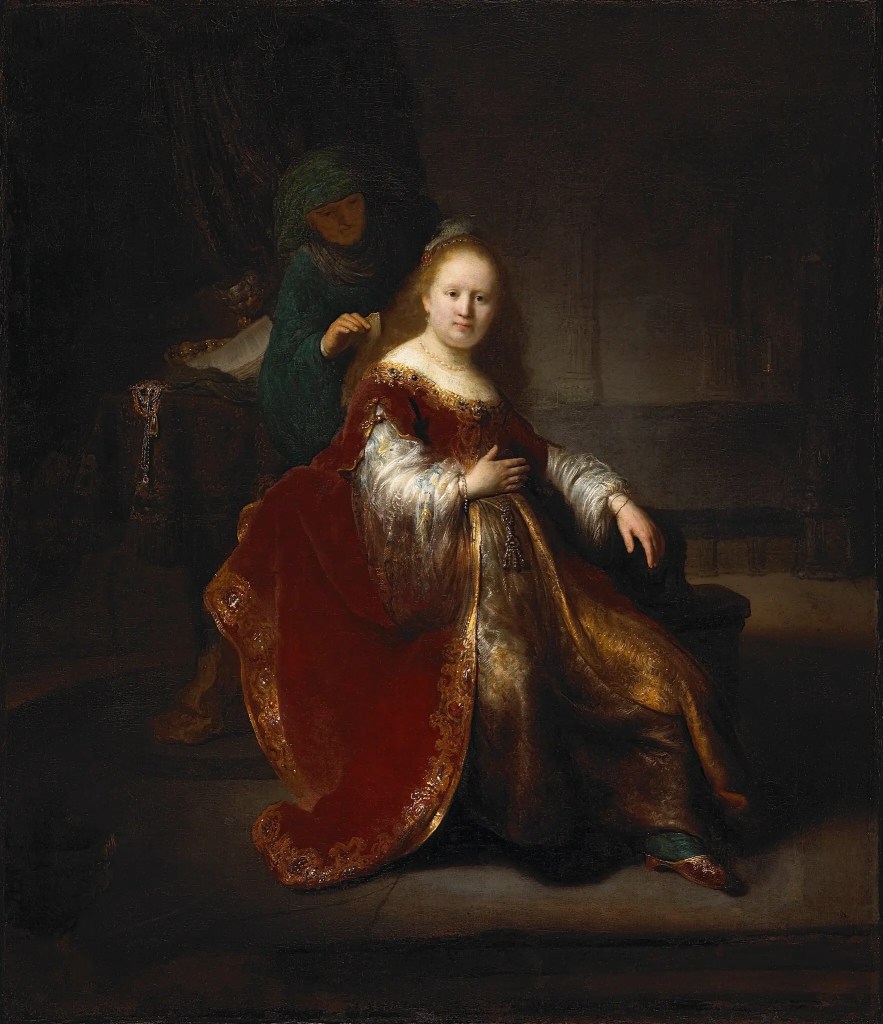
Queen Esther as painted by the great Rembrandt. He painted many images from the Purim story.

It is much deeper than that. Jewish tradition and the talmud teaches us that Esther and Mordechai were actually husband and wife. The Talmud interprets the phrase “Mordecai adopted her as his own daughter” (Esther 2:7) as “Mordecai took her as his wife”. Think about what it must be like to be settled, married, and planning what your life will look like when all of a sudden your husband asks you to leave him and try to marry the King. Your husband who pushes you out of his bed and into the King’s bed. It is hard to believe that this is something that Esther wants to do or is looking forward to doing. I find myself wondering why shouldn’t just tank the interview to be Queen, find some way to ensure that the King will not pick her so she can return to her husband and her life. That’s the easy thing to do. Finish second, don’t strive to win, just be a part of the pack and be forgettable. Yet that isn’t what she does. Instead, she charms the King and he picks her to be his wife, forever ending any chance she has of returning to her life with Mordechai. She makes a huge sacrifice based entirely on trust and faith.

How often do we face challenges that require a sacrifice and we fail to do so? These aren’t always life changing challenges and yet we still are not willing to make the sacrifice for the greater good. History has shown us what happens when you fail to make the sacrifice for the greater good. When you put yourself first and the world or your community second. True leaders are willing to make that sacrifice. It doesn’t mean they aren’t afraid of the cost. Instead, they are very afraid of the cost yet go ahead and do it anyway. That’s leadership. Queen Esther did what was needed at great cost to herself and her life. She gave up the life she knew for the greater good.

Queen Esther took a risk when she told King Achashveros that she was Jewish. There was no guarantee that the King would choose her over Haman. She couldn’t be sure that the King wouldn’t be disgusted with her and get rid of her like he did with Queen Vashti. She didn’t have to take the risk to tell him. She was safe. Like many people in today’s world, she was a hidden Jew. She could have stayed quiet, stayed hidden, and lived a full life. But she didn’t. She is the example to us today that no matter how good we have it in our country, at the end of the day, we will always be seend as Jews first. Jews in Germany who had prominent roles in the military, the government, and business got no special dispensation from the Nazis. They were Jews first. Our Jewish legislators who think they are safe because they defend the rights of others at the cost of the Jews are merely fooling themselves. Queen Esther showed us the way.

I look at many of our leaders today, both in and out of the Jewish community, and wonder why they aren’t following Queen Esther’s lead. Very few are willing to actually put it on the line and take the risk of losing their power and position to do what is right. There are the exceptions. Senator John Fetterman has been outspoken and lately there have been pieces written about the cost he has paid as a result. The Wall Street Journal wrote a piece about him being the “Lonliest Democrat in Washington”.

He has spoken out repeatedly against Hamas and those who defend them. He is a throwback to the days when America didn’t negotiate with terrorists, when terrorist was evil without any excuse. He is a true leader who is going to do what is right, regardless of the personal consequences.

Secretary of State Marco Rubio has done the same, talking about the evil of Hamas and revoking the green cards of those who incite violence and support terrorist organizations. He is unequivative is his condemnation of Hamas and those who support them.

We simply don’t have enough of these leaders in the Democratic or Republican party. We have far too many Bernie Sanders, who blames Israel when Hamas won’t agree to ceasefires, won’t release the hostages, and remains responsible. We have Thomas Massie on the right, who is an open antisemite. We have people like Rashida Tlaib, Ilhan Omar, and Pramila Jayapal on the left who are so far into their Jew hatred that they could be mistaken for Marjorie Taylor-Greene or Lauren Boebert with their hatred. Queen Esther teaches us all that we must stand up for what is right, regardless of the personal cost. The greater good matters.

As a Jew, the ending of the story of Purim was always a happy one. Like most Jewish stories, they tried to kill us, we won, let’s eat. However the story ends differently for Queen Esther. She doesn’t go back to her regular life after Haman is hung and Mordechai promoted. She doesn’t get to leave the castle and stop being Queen or the wife of King Achashverosh. Her sacrifice is truly one for her entire life. Often times we think it is just for the length of the story. That the things we are willing to give up, the choices that we make are only going to be temporary. Queen Esther reminds us that is not always the case. There are times when the sacrifice we make is much greater and lasts much longer. It doesn’t change the importance or significance of that sacrifice. The megillah continues after Queen Esther tells King Achashverosh she is Jewish and Haman wants to kill her and her people. The story continues about the role of Mordechai and the gifts and power he is given. Esther falls into the background. Her work is done but her sacrifice is not done. It is one she continues to make on a daily basis for the rest of her life.

That’s the lesson about sacrifice. It’s for the greater good and must be willing to pay the price regardless of how much it may be. The cost of not making the sacrifice is far greater. We see this with the IDF soldiers and the people of Israel. Since October 7th, they have made incredible sacrifices. Many have lost their lives. Their families have been changed forever. Children have spent most of the year without their parent(s) who have had to serve in milium (reserves). Incredible instability with rockets falling daily, war all around, funerals on a regular basis due to the war, many forceably relocated for safety. Soldiers facing PTSD and their lives changed forever. Hostages who endured unbelievable torture. Every Saturday night there are massive protests against the government and demands to release the hostages. The leaders of these efforts pay a high price. Those who commit to be there pay a high price.

One of my friends was a high level commander in Gaza during the first four months of the war. The price he paid was easy to see when we got together after those four months. Just recently, he was one of the commanders in charge of the hostage releases during phase 1 of the ceasefire. He shared how difficult and painful that was for him. What he experienced on October 7th, the first four months of the war, and managing the hostage releases will stay with him for life. He is not the same person he was on October 6th. Like Queen Esther, he was willing to make the sacrifices that were necessary, regardless of the personal cost.

There are lessons to be learned from Queen Esther beyond being proud of being Jewish and standing up for the Jewish people to those in power. The lesson of sacrifice is key among them. The lesson of the greater good. The lesson of standing up for what is right regardless of the cost. Nowhere in the Megillah does it recount Queen Esther complaining to Mordechai that she did her job and now is stuck for the rest of her life. That’s true leadership.

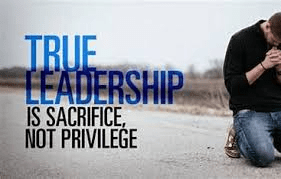
True leadership is remembering that it is a sacrifice, not a privilege. It is an obligation not a coronation. This applies in our political arena as well as our Jewish organizations. The lesson of George Washington only serving two terms and our Founding Fathers wanting to get home to their families and their lives rather than serve forever in Washington DC has been lost. Their willingness to sacrifice their personal success and time with their familes for the greater good has been lost. The Israeli people are showing us what it looks like. People stepping up to serve much longer than required. People letting their spouses serve and figuring out how to raise children and pay the bills without one of the parents being there. People leaving the government because they fundamentally disagree with decisions being made. People peacefully protesting every single week because they want to see change. It’s time to bring it back. It is time for us to do our part. Otherwise we are letting evil win. I, for one, refuse to do that. What about you?

Am Yisrael Chai – we need to live not die

There isn’t a lot in this world that really shocks me. Maybe it is because I have low expectations of our leaders and of the people in the world. Maybe it is because I expect people to say dumb, uneducated, and ill-informed things. Perhaps it is because I have seen people feed off of hatred and believe anything that fuels their hate. It may even because I have come to believe that most people are dumb. Our education system is broken. They aren’t taught, they don’t learn the basics, and everything is based on headlines, clickbait, and opinions rather than facts.

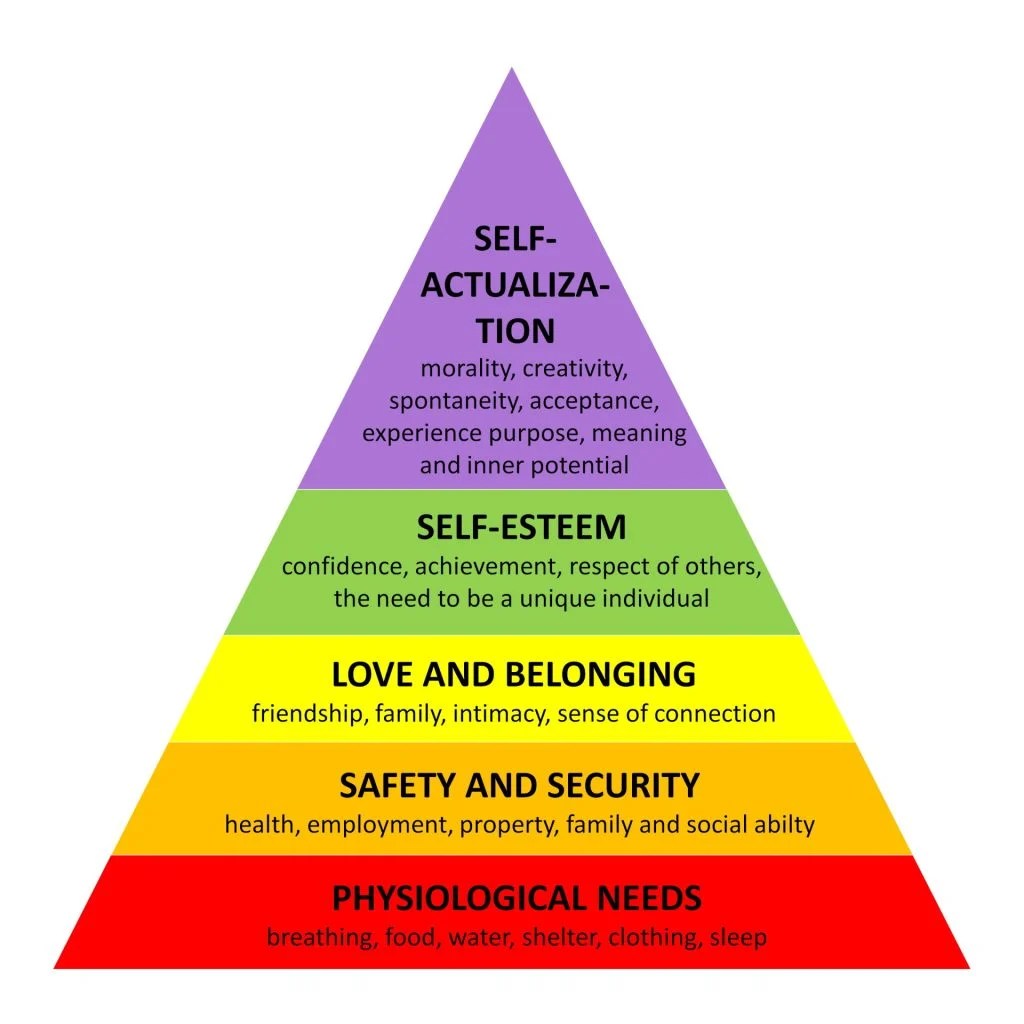
Since October 7th, I have found myself being consistently shocked by one thing. The number of Jews who put their own self-interests and needs low on their priority list. Maslow’s heirarchy of needs clearly shows how the basics, food, water, shelter, etc. are the base. That is what we need most of all. Second is safety and security. I watch so many Jews place their own safety and security much lower on the list, concerned much more with the things in self-esteem and self-actualization. They are important but not at the risk of one’s own safety.

This has been bothering me a great deal lately. So much so that I had trouble sleeping last night. I dreamt that I was talking to the Jews who were killed in the Holocaust, murdered by Hitler and the Nazis. They were yelling at me about things such as equal rights, women’s rights, freedom of worship, access to health care, marriage equality, etc., telling me that I would have no need for that after they murdered me. These were all things that mattered to people who were alive, not to people who were dead. It shook me and I awoke at 3:30 am, unable to fall back to sleep.

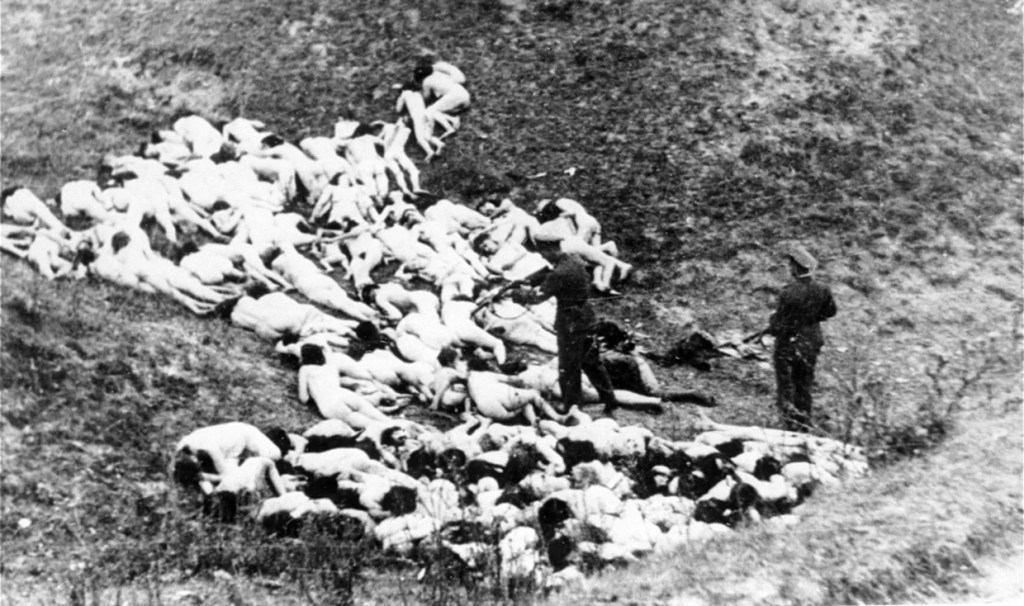
Murdered Jews by the Nazis. Without safety and security we have nothing.

They are right. All the things we put value on in our society only matter to the living. Once we are dead, clean air doesn’t matter to us because we are no longer breathing air. We don’t need drinkable water, because we aren’t drinking fluids. It doesn’t matter who we have the right to marry because we are not getting married, we are dead. The only one with rights to our bodies are the undertakers who are preparing us for burial or cremation. These are truly first world problems and challenges and I am grateful that we have them to fight for. They are important and matter – when we are alive!

Some may say, “What about your children and grandchildren? Doesn’t it matter to them?” Here is the unfortunate news. They are not coming to kill just me. They are going to kill my children and grandchildren too. My brother and sister. My nieces and nephews. None of us are exempt. So once again, when they are alive, it matters a great deal. But when we are all dead, killed because we are Jews, it doesn’t matter at all.

Many people think I am overreacting. They think I am fear mongering. Perhaps. I hope so. The Jews of the 1930s thought so until it was too late. The rise of Jew hatred has been visible for a long time and I have been told I was overreacting for more than a decade. I wish they were right. The monthly drawing of swastikas on buildings in Seattle have grown to daily instances of violence against Jews around the world. Just yesterday, on Shabbat outside a Chabad in NY city, a Jewish man was stabbed by somebody yelling “Free Palestine”. His crime was being Jewish. I remember my African-American friends talking about the problem of “Driving while black” or “Shopping while black”. I empathized and thought I understood. I realize now that I didn’t.

This is an election year which makes things even more sensitive. People support one candidate or party over the other and demonize the one they don’t support. I’m not asking for anybody to comment on this blog about which candidate/party they support, why, or why the other one is evil. What I find shocking in this election cycle is how the survival of the Jewish people isn’t the number one concern for every Jew. In a world that is filled with Jew hatred, where violence against Jews is increasing daily, where the calls for violence against Jews is increasing daily, the fact that our safety and security isn’t the top priority stuns me.

I wonder if the changes in Jewish life over the past 50 years of so is the reason why. My grandparents knew that being Jewish meant a risk to their safety and security. They lived through the Holocaust, albeit in the United States. My Uncle Ralph, who lived through Kristallnacht while hiding upstairs with his grandmother, was 9 years old when his family left Munich to escape the Nazis. After escaping, he and his family had to deal with the Japanese, an ally of Germany, taking over in the Philipines. He understands the risk of our safety and security,

My Uncle Ralph speaking via Zoom to the Orlando community on International Holocaust Memorial Day

Today’s generation does not. They believe they are American’s first. They believe that America will always protect them. While I hope this is true, the Jews of Germany felt the same way until it was too late. I watch as Jewish college students align themselves with Students for Justice in Palestine, Jewish Voice for Peace, Code Pink, and other groups that hate Jews, are funded by Jew haters, and are aimed at eliminating Jews. I shake my head. When I see Jewish LGBTQ+ students holding signs that say “Queers for Palestine” I wonder how much they really know about Hamas, Hezbollah, and the Palestinian Authority. If they understand how they would be treated by those governments.

It reminds me of a story my friend David Abramowitz tells about his father, Rabbi Mayer Abramowitz z”l. Rabbi Abramowitz was the founding Rabbi of Temple Menorah in Miami, a very successful synagogoue. In 1989, at 75 years of age, with a lifetime contract at the syngagogue, he shocked everybody by telling them that he had failed. The youth were not educated and were not staying Jewishly connected. He left his lifetime contract to create a radical program with a radical idea. The Jewish Leadership Institute (JLI) would take students to Israel at a highly subsidized price to teach them leadership and infuse them with a Jewish connection, Jewish knowledge, Jewish values, and how Judaism is relevent in their daily lives. This was a decade before Birthright. Fifteen years before MASA. 31 years before RootOne. I have seen the impact of this program since 1998. It’s more than what Birthright and MASA do because the mission is different. I was on the trip in July and saw the impact during the trip, not just after the trip.

See the impact it made me wonder how much of what we see with Jews not prioritizing our safety first and being stuck on Tikkun Olam, thinking that repairing the world is the greatest thing we can do, even at our own expense, is because of a lack of real knowledge. Over the past few years I have been investing some of my time in learning more Jewishly. High quality and interesting learning. Content based learning. Things I can apply in my daily life type of learning. I think this impacts the way I think, the things I value, and certainly my actions.

One example is the first prayer we say in morning services. I’m not a service goer and would never have known anything about this without being taught. We thank God for the rooster knowing the difference between day and night. It’s a prayer of gratitude. It’s a prayer to remind us to pay attention to the beauty of nature and all that is around us. In a world filled with so much darkness, I now start my day by saying thank you to God and being grateful for all that I have in my life and that is around me. It’s a simple thing to do and I do it in english. It’s my own prayer and awareness. It also helps me stay out of the negativity that is so pervasive in today’s world.

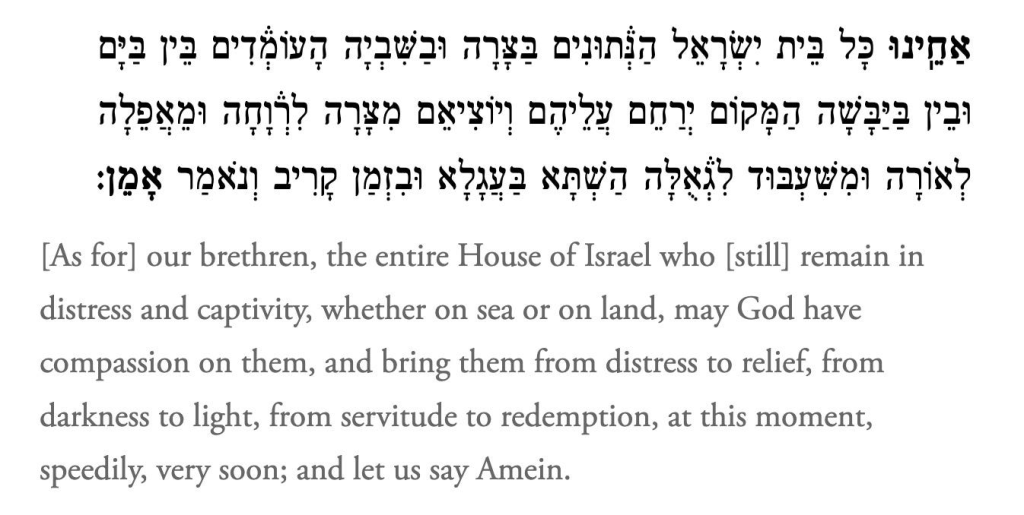
It’s been over 10 months since October 7th and we still have hostages being held in Gaza. The Red Cross has yet to visit them. They are never mentioned by the UN or UNRWA. We cannot forget them. We know the importance of human life in Judaism, Pikuach nefesh. We know that the mishnah tells us that whoever saves a life saves an entire world. In Israel in July, we learned and sung the Acheinu prayer at least once a day. It’s not an ancient prayer and is only 35 years old. It was easy to learn and easy to sing. Every day, I continue to sing the Acheinu prayer to make sure I never forget the hostages. Judaism gives us these reminders all the time about how to behave. This prayer is just one example.

I have also learned that when we praise God for all the amazing things he does for us, it is a reminder that we are made in the image of God and that we are supposed to strive to be that way as well. We are not expected to do things that will harm us however. The exceptions abound where our health, our lives, take precedent over everything else. The Talmud tells us very clearly that, “You shall live by them, but not die by them” and is based on Leviticus 18:5. When I see people doing things that harm the Jewish people or the State of Israel because of their belief in Tikkun Olam or Jewish values, it frustrates me because they harm themselves and the Jewish people with a faulty understanding. It’s always fair to criticize a government and a leader for their decisions, policies, and actions. When they are undermining the Jewish people, the State of Israel, it is not ok. That’s what they do. I have former students of mine who claim they love Israel as they work to rip the country apart. I wonder, “Where did I go wrong?” How was I unable to teach them where the lines are between criticism of governments and criticisms of the Jewish people?

My dream from last night of the victims of the Holocaust scolding me will haunt me for a long time. They are a reminder that life comes first. Without our lives, everything else doesn’t matter. Make no mistake, Iran, Hamas, Hezbollah, the Houthis, and the Palestinian Authority want us all dead. From the River to the Sea means no Jews – we are all pushed into the sea. They openly say it. They don’t hide their intentions. When they say they are going to kill us, we need to believe them.

We continue to make the same mistakes. It is our history. We try to fit in and think they will leave us alone. We work to be a part of their country and think they will appreciate us as part of their country. We think if we only give them what they want, they will leave us alone. What we forget is that what they want is for there to be no Jews. What they want is to kill us all. This is thousands of years old and we are once again making the same mistake again. As my father would say to me, “If we don’t take care of the Jews, nobody else will.” My friend Fleur Hassan-Nahoum says it so well when she says, “The problem isn’t that there is no Palestinian State. The problem is that there is a Jewish State.

I hope that I am wrong. Over a decade ago, with the rise of Jew hatred, I openly said that I hoped that I was wrong. This isn’t something I want to be right about. Yet I was right about the rise of Jew hatred. I was right about the far left and their hatred of Jews when everybody said it was just the far right. I don’t want to be right here, but I fear that I am. We need to stop helping them kill us. We need to stop thinking that they will like us, want us, and leave us alone if we just go along. History shows that never happens.

Invest in learning about Jewish values so you can apply them appropriately. Invest in Jewish practice that you find meaningful, whatever that may be. Visit Israel to see the reality, not what the Jew hating media tells you. Be proud to be Jewish and don’t hide. Don’t think it will just pass you by. The thought that keeps playing in my head is what far too many friends in Israel have said to me. “I hope you can move here before it is too late and they won’t let you leave.

What are you waiting for? Am Yisrael Chai.

Fighting antisemitism by being Jewish

I have been talking and writing about the increase in antisemitism and Jew hatred for a decade now.  I saw it when I was living in Seattle when a swastika would be drawn/painted on a Jewish building almost monthly.  I called it out then and many people thought I was being reactionary and fear mongering.  I was pointing out what was happening.

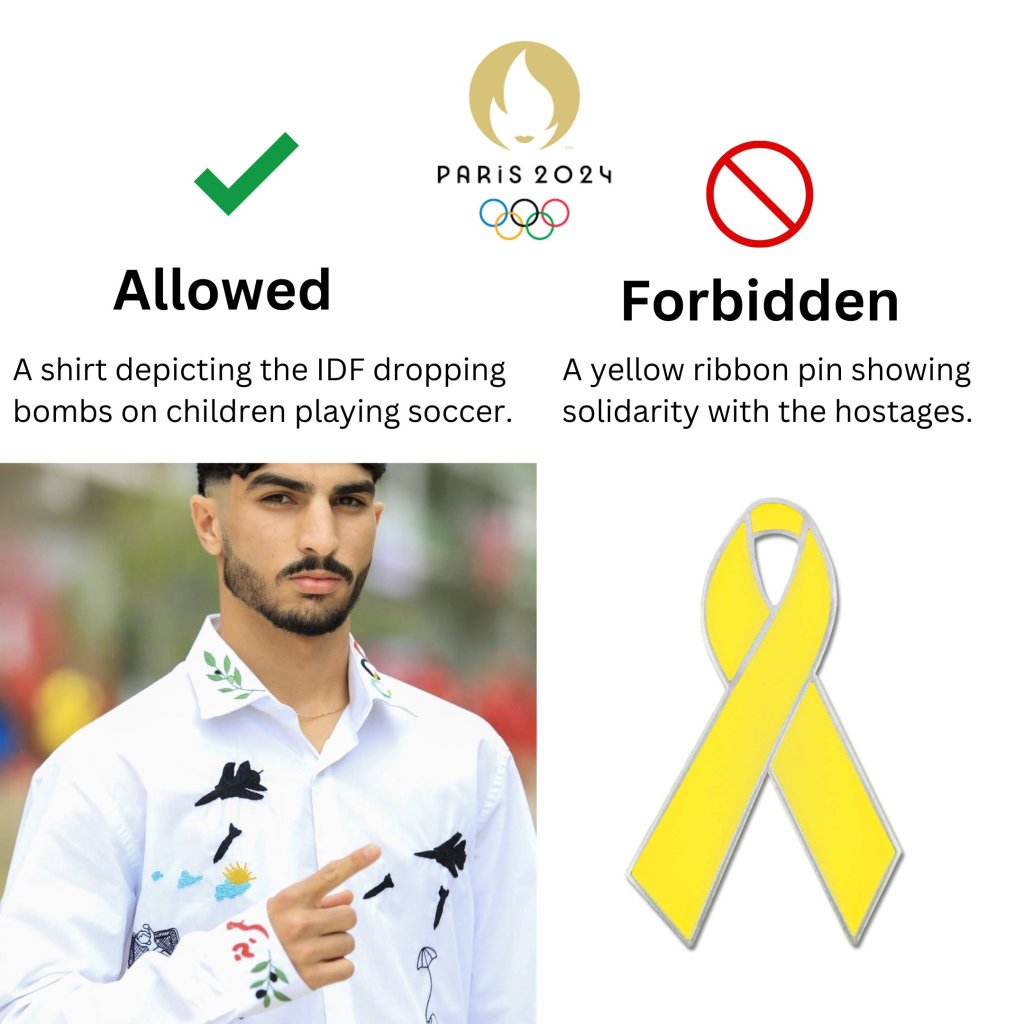
Over the past decade, it has only gotten worse.  Since October 7th, the rise in Jew hatred has become frightening.  Violence against Jews is now common.  Shooting at Jewish schools happens too often.  Ugly, racist protests occur on college campuses and in the streets in the US, Canada, and throughout Europe.  Israeli Olympic athletes are threatened with death.  The Palestinian athletes are allowed to wear shirts with bombs dropping on Israel, but the Israeli athletes are not permitted to wear the yellow ribbons for the hostages.  The list goes on and on. 

I have mentioned many times how I’m not super religious but very Jewish.  Over the past few years, I have been digging deeper into what being Jewish means to me outside of services.  Like many people, services don’t connect or inspire me.  I knew there was much more to being Jewish than just religious services so my exploration into Jewish spirituality, text and how it applies to my life, and finding more meaning have been a big part of my recent journey.

As I learn with Rabbi Ehrenkranz, we include a bit of prayers to understand the why instead of the what.  My recent trip to Israel with the Jewish Leadership Institute (JLI) also focused deeply on the why instead of the what.  My recent trips to Israel have also been an exploration into the why instead of the what.  Why does Jerusalem matter?  What is the point behind some of what we do?  What is the intention?  The goal?  The objective?  I have found that when I understand the why, I can adapt the what to fit my life and what is meaningful to me.  Judaism has adapted since the time of Abraham, Moses, King David, and even the 2nd Temple.  We don’t pray the way they did but we can connect to God and each other the way they did.  I find that very meaningful.

Rabbi Ehrenkranz started a monthly Sunday morning Minyan (prayer service) that I began attending because he asked me to.  Often times, just asking somebody you have a relationship with gets them to do what you ask.  It turns out most of the people who attend are friends of mine, so it becomes a social gathering as well as an opportunity to grow.  I appreciate how Rabbi Ehrenkranz explains the goal of each part of the service.  It has enabled me to move away from reading the Hebrew words that I don’t know what they mean and instead think about the goal and objective and connect that way.  It has turned an experience that was rote into one that is meaningful.

This Sunday, with all that is going on in Israel and the recent attack by Hezbollah on the Druze village, I chose to wear my IDF tzitzit (ritual fringed garments).  I got them from Rabbi Atlas in the IDF as I am helping him with a project to fund the 5,000 mezuzahs the IDF needs.  I don’t wear them regularly and in fact, this was the first time that I wore them under my shirt like you are ‘supposed’ to.  It was a way to connect to Israel, the IDF, and Judaism.  I feel that way about mezuzahs too – something that is easy to put on your door and have a meaningful symbol without being required to be super religious.  It’s an easy thing to put on your doorpost and show Jewish pride both internally and externally.  If you don’t have one and want one, MyZuzah will give you one for FREE!  And if you want to support the IDF in their effort to get their needed mezuzahs for IDF soldiers, there is a dollar for dollar match and you can buy them for the IDF here for $30 each.

At the minyan, I spent the time during the silent Amidah (the major prayer of the service) in my own mediation and conversation with God, thanking God for all the gifts in my life today.  In my learning with Rabbi Ehrenkranz, part of what I have learned is that most of our prayers are really a reminder to ourselves about how we should live and how much we need to be thankful to God for our lives.  As such, I took this time to focus in this area.  It is easy to take so many things for granted in our lives and this gave me a few minutes to really focus on things and express my gratitude.  Instead of reading Hebrew words without meaning, this time was special because it was focused on gratitude.  It reshaped my entire day as I realized not only how lucky I am to live the life that I do but also that it is only by the grace of God that I have so many gifts.  I am grateful to Rabbi Ehrenkranz for helping me find meaning in something that didn’t have meaning before.

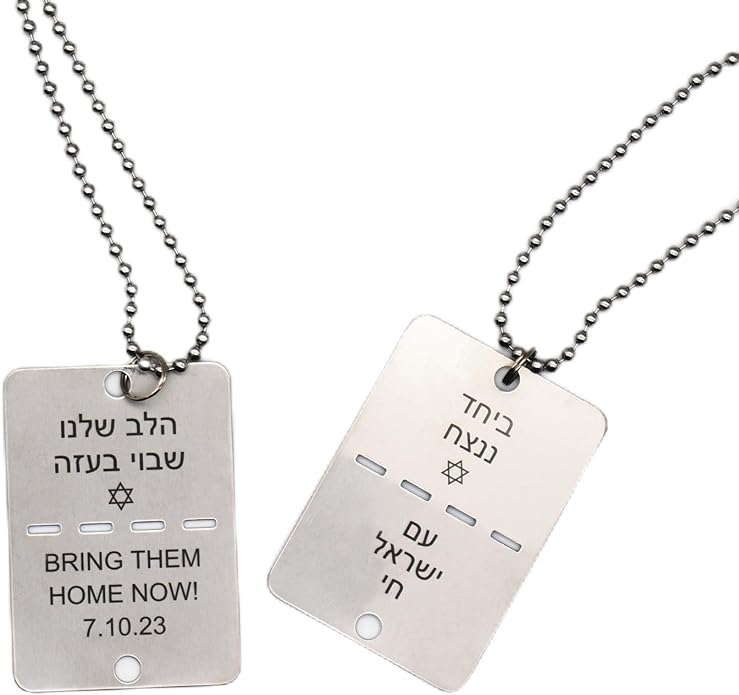
We sang Acheinu, the prayer for those in capitivity, for the hostages. I began singing this in Israel in July and it has become incredibly meaningful to me. It’s an easy song to sing, a powerful prayer to say, and reminds me to keep the hostages front and center in my mind. That, along with my ‘Bring them home now’ dogtag that I wear every day keeps my priorities front of mind. It has been almost 10 full months of captivity and the reports now coming out from released hostages are horrific. I’m glad that I learned the how to sing it and do so daily. It takes me a couple of minutes, fills me with gratitude for my life, and doesn’t let me ever forget the hostages.

Over the past few years, I have been very lucky to have some amazing Jewish mentors and teachers.  People who expose me to things that are meaningful and show Judaism in a different way in which I can connect.  Harry Rothenberg, Ari Shabat,  Saul Blinkoff, Lori Palatnik, Mickey Singer, David Abramowitz, and Rabbi Ehrenkranz are just some of them.  Each exposes me to different things to think about.  Each one expands my knowledge and enriches my life in different ways.  Pirkei Avot says, “Find yourself a teacher, acquire for yourself a friend”, and I have found this to be true.  Each of these teachers are also friends and only one is a Rabbi!

As somebody who raised somewhat religious and is not any longer, I have found deep meaning in Judaism through understanding the why of what we do.  The what doesn’t really mean much to me but the why is something entirely different.  As antisemitism grows and Jew hatred explodes across the globe, I have found investing in my Jewish identity and Jewish meaningful practices to be important.  I have begun to bake challah again.  I make sure to say thank you to God every morning for waking me up (the basis of the Modeh Ani prayer), and since I learned about thanking God for making the rooster understand the difference between day and night, I thank him for the beauty of nature and this world. (It is a funny prayer that we start with – almost like the Rabbi’s are pranking us!)

Many people think it is all or nothing.  You either go to synagogue or you don’t pray.  You either can pray in Hebrew or you don’t pray Jewishly.  You keep kosher or you aren’t really Jewish.  You keep Shabbat one specific way, or it doesn’t have any meaning to you.  I have found just the opposite.  There is incredible gray in Judaism once you understand why we do things.  Then you have the opportunity to do what is meaningful to you to accomplish the goals. 

I encourage you to explore the why.  To learn about why Israel matters to Judaism.  To understand the intent behind the services and the prayers we do.  It will open doors for you to grow in ways you can’t imagine.

Who am I? Find for yourself a teacher.

As I have said many times, I am not a religious person.  I don’t go to synagogue often.  In fact, a monthly Sunday morning service is all I do right now.  And I only go because of the way it is done.  It is done in a meaningful and intentional way.  It is done not only for the ‘how’ of praying but more importantly for me, the ‘why’.  I began learning Torah with a Rabbi a few years ago because I valued the discussion and questions that came out of the process.  Studying Torah became about how I choose to live my life today rather than learning some stories verbatim and being able to repeat them back.

I often think that the challenge people have with religion and services, both in the Jewish and non-Jewish communities, is that we are taught only the HOW.  We are never taught the WHY.  One of my favorite parts of being Jewish has been that I have begun to ask the WHY question and don’t really care that much about the HOW.  The WHY is what matters. 

Simon Sinek’s amazing Ted Talk about Start with Why. The Why matters.

It’s interesting that for a guy who isn’t religious, doesn’t really like going to synagogue, doesn’t keep kosher, has his own definition of keeping Shabbat (I don’t do work but I drive, cook, drive a car, turn on the TV, etc.  I just don’t do professional work (most of the time)) that I find wisdom in the Torah.  As a few friends and teachers have told me, “The Torah is the instruction manual for life.”  I think it’s because of the teachers that I have found and the way they teach, how they explain the WHY of things rather than the literal story, that I find meaning and inspiration to be a better person.

I was excited that on this trip, the young adults and I were going to have the opportunity to learn some of the WHY from my longtime colleague and friend, Aryeh Ben-David.  From my experiences with him over the past 15 or so years, I knew that he would get to the WHY and boy did he.  He did in a brilliant and simple way, using only the first verse of the Torah. 

Genesis verse 1 talks about the creation of the earth.  Most of know the story of the six days of creation and the 7th day God rested.  None of this was what Aryeh discussed.  Instead, we focused on THE major life question.  WHO AM I?

Three words.  None more than 3 letters.  Yet it is perhaps the most asked and the most challenging question for all of us.  We start the Torah with the big question.  Judaism doesn’t mess around.  Let’s get right to it. 

As we discussed the question first in chevruta (pairs of two) and then as a big group, we were able to bring it together with Aryeh’s guidance to two things.  First, we are made in God’s image so that we are all perfectly as God intended.  This also means we have to strive to be more Godlike in life.  Secondly, we are both dust and soul.  The two don’t get along.  They fight constantly over us.  Are we focused on the here and now and pleasures of the body?  Or are we going to be focused on delayed gratification, making things have meaning, going deeper into what we are doing and why we are doing it?  Every choice we make is between the immediate pleasure or the delayed gratification.  The shallow or the deep.  One thing became very clear.  While there are people only for the dust (immediate pleasure), they are few and far between and typically easy to identify because they look like a caricature.  There are very few who are all about the soul (delayed gratification) and they are also easy to identify.  They are monks.  They deny the physical entirely, never marrying, living in isolation, depriving themselves of everything but the basics.  The challenge is the balance between the two.

There is a place for the dust.  We want nice things and there is nothing wrong with having nice things.  Good food.  Good wine.  A nice house.  A nice car.  Good clothes.  An enjoyable sex life.   Money in the bank.  The ability to travel.  The question is always, “at what cost?”  Where is the balance?  At what point are we only serving ourselves and not serving the larger community or God (and if you don’t believe in God, replace the word with nature or civilization or whatever you want).  Do we want to be like the wealthy attorney who owns the huge fields in Israel that we picked apples at and who donates all the food to those who are in need, or do we want to be the person who owns large parcels of land and lets them sit empty because they merely want to make a profit on the resale of the property?  Do we want to keep all our money, time, and talent for our benefit or do we want to give our money, time and talent to help others and improve the world.  These are the questions we need to ask.

In these crazy times that we currently live, this first verse of the Torah is more important than ever.  Do we want to fight hate or make money off it?  Do we want to hide and stay quiet, hoping it will pass us by or do we want to do the right thing and stand up against it?  Do we want to spend the time to get educated and understand the nuance or believe the soundbites and move on?  What are our morals?  What are our ethics?  What do we stand for?  The old saying, “If you don’t stand for something you will fall for anything” has never been truer.

We can even take this into the United State political arena.  Do you want to be part of the country that hates the other part of the country?  Do you want to live in hating the other political party and their candidates?  Would you rather work to solve our society problems?  These are choices we get to make every day.  Do we want to be spending more of our time on the dust, the physical plane or the soul, the spiritual plane.  Note that none of this has to do with religion or even being Jewish although the thought and questions come from the Torah. 

Each day we get to ask ourselves these questions.  Each day, when we wake up, we have the opportunity to make new choices.  In a different session, as we discussed a few of the prayers, there were two that jumped out at me.  The first, Modeh Ani, is what we are supposed to say every morning.  It is a simple thank you to God for letting us wake up.  It also ties into the dust and soul issue.  Our soul leaves us at night and returns in the morning.  Sleep is for the physical, the dust.  While I don’t usually say the Modeh Ani when I wake up, I do thank God every morning when I wake up.  It’s the first think that I do (maybe the second after using the bathroom).  I thank God for giving me the day ahead and everything that comes with it.  It takes me a minute or two and it’s really very simple.  “Thank you, God, for the day ahead and everything that comes with it.  I am excited to be alive today and grateful that you gave me the gift of life today.”  That’s the entire prayer.  Each morning when I say it, it inspires me to take action in the day, no matter what the day entails.  Sometimes I say it out loud, sometimes in my head.  I say it every day.

The second prayer that jumped out at me was the first prayer of the morning service.  It is a strange one.  We thank God for giving “the rooster understanding to differentiate between day and night.”  What a weird thing to say as the very first prayer of the service. We all sat there thinking about why we would say that.  What makes that so important to have it be the first prayer of the morning service.  Our teacher talked to us about how the most precious thing we have in life is time.  On a trip with a group of young adults, all under 26, that’s an interesting concept to discuss.  Time is endless for them.  They are in the beginning of living as adults.  We talked about how Judaism ensures we mark time to remember how important it is.  A bris or baby naming.  Bar/Bat Mitzvah.  Wedding/chuppah.  Yahrzeit (anniversary of somebody’s death).  We constantly mark the passage of time to not forget how important it is.  We say this prayer so that we notice not just the passage of time but also that we pay attention to all the little things that happen every single day that we take for granted.  The sun rising.  Food to eat.  Clothes to wear.  Shelter.  Loved ones in our life.  The rooster knowing the difference between day and night is to symbolize nature and all the things we take for granted.  We start each day with gratitude by saying Modeh Ani or our own thank you to God for the day ahead.  Then we thank God again for all the things we take for granted. 

What a way to start every day.  As most of you know, I’m not very religious so saying the Hebrew prayers isn’t something that I do regularly.  Every day, I do thank God for the gift of the day and now I have the opportunity to thank God for all the things I take for granted.  Maybe that will help me notice them during the day and not take them for granted. 

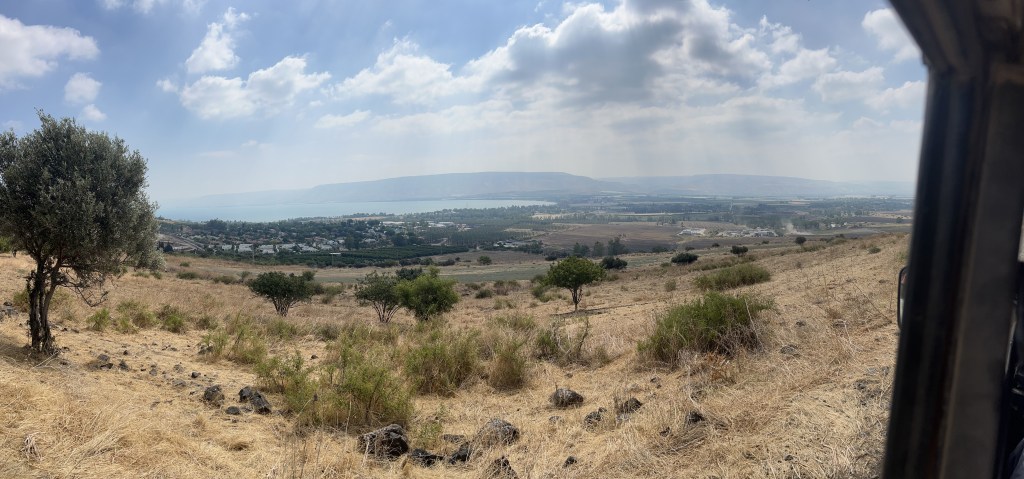
On my trip to Israel last month, we learned about what a miracle it is to wake up in Jerusalem.  To breathe the air in Jerusalem.  To walk the streets.  This morning, I woke up in the Southern Galilee to beautiful views.  God as an artist.  We rode jeeps around the area, looking at the fields growing fruit and vegetables.  At the mountains and the sky.  At the Kinneret (Sea of Galilee).  When we are in a different place and see the beauty around us, it is very easy to notice it.  What about in our own daily life?  What about in our own homes, looking at our own backyards? 

View of the lower Galilee. The Kinneret n the distance. Israel, Syria, and Jordan in the background.

As I spend two weeks of July in a country at war after spending 10 days here in May and planning another 10 days in August, I am so grateful for many things.  Grateful for the existence of the State of Israel.  Grateful to the IDF who protect this country.  Grateful that I have the ability to come to Israel as often as I have in my life.  Grateful for the pioneers who made the desert bloom.  Grateful to the leaders like David Ben Gurion, Moshe Dayan, Golda Meir, Shimon Peres, Menachem Begin, Yitzhak Rabin, Ariel Sharon, and many more who created this country.  I have the opportunity to live in the dust, enjoy being able to come here and enjoy the food, the people, the beach, and everything it has to offer.  More importantly, I have the opportunity to live in the soul as well, fighting on Israel’s behalf to educated and inform people about what it is really like and what is really happening.  I have the opportunity to let my soul open up while here and make sure it stays open when I return home. 

A short video from the lower Galilee with Israel, Syria, and Jordan in the background. It highlights how close everything is and is a way for me to educate and speak out on Israel’s behalf.

In Pirkei Avot 1:6, there is a famous line that I have chosen to live by.  To paraphrase it, we are charged to find ourselves a teacher, make them our friend, and judge others with grace and giving them the benefit of the doubt.  While all three are important, I sometimes struggle with the third and it is the first two that I am living by.  I have found myself not just a teacher but a few teachers.  They have become my friends.  They provide me guidance to be a better person.  They explain things and I ask lots of questions.  They make it relatable to my life today, in 2024.  One of my teachers, who I have been learning with and from for more than 20 years, told me a few weeks ago that I was now a yogi.  That was high praise from him and I’m not sure that I really believe that, but I have come a long way.  They all continue to inspire me.  I learn from all of them. 

So, who are you?  Where do you stand in the balance of dust and soul?  If you don’t know, that is totally ok.  Most people do not know.  Find yourself a teacher.  Make them your friend.  Learn.  It is not about being more religious.  It is about learning life lessons and how to apply them.  It is about finding meaning for you in what you choose to do.  It is a deeply personal journey and a powerful one.  I encourage you to begin the journey.  From my experience, it is one you will really enjoy.

My favorite band. One of their great songs. Who are you? That’s the key question.
In case you want to listen. Watching Keith Moon on drums is always a joy.

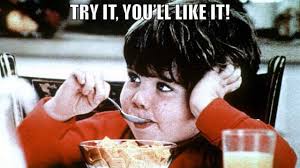
Try it, you’ll like it!

I went to minyan this morning.  For those that know me or follow me, you know that I am not religious and rarely go to synagogue.  The Rabbi that I learn with has begun a monthly Sunday morning minyan and I have committed to going to support him.  I bring my tallis and tefillin (the prayer shawl and the black boxes that go on your arm and your head) and one of my many prayerbooks that I rarely use to join the group.  Somehow, the group is always a group of friends so it’s a bonus to see them too.

I have found that I really enjoy going.  It’s not because I have become religious, it is because the service is done in an intentional and meaningful way.  As we go through the prayers, what we are actually praying for and about is explained very briefly.  “This section is where we ask God to help the world in difficult times.”   Simple.  Clear.  It provides context to what we are saying and why we are saying it.  It’s a tour through the prayerbook.

It reminds me of the playbill at the theater where they tell you what each scene is going to be.  When I learn with my Rabbi friend, we start by exploring the Siddur.  When we started doing this, I wasn’t very excited.  Services haven’t been meaningful to me in a very long time and exploring the Siddur wasn’t on my list of things to do.  I decided to be open to it and as we discuss a prayer and I understand what it is and why we say it, it has become interesting.  It reminds me of what my friend Roie, an IDF soldier at the time, said after Shabbat services.  The conversation went as follows:

Roie:  So you know how to read the Hebrew words?  

Us:  Yes.

Roie:  And you know the tune to sing it?

Us:  Yes.

Roie:  But you have no idea what you are saying?

Us:  That’s correct

Roie:  I don’t understand!

This was repeated over and over again.  He couldn’t understand how we could know the words and the tune but not what we were saying or why we were saying it.  He understood that just knowing the words and the tune wasn’t enough.  It wasn’t meaningful.  We were missing out on the entire purpose of what we were doing.  How could Judaism be meaningful if we didn’t know what we were actually doing or why we were doing it.

I turn 57 this year and these minyanim are the first time that the parts of the service were actually explained.  As the different sections were explained, it began to make sense.  There was actual intention in each part.  There was a purpose to what we were saying.

One of the things that really struck me today was his explanation of the Modim Anachnu Lach prayer.  It was so simple and so basic.  He said, “Nobody can say thank you to God for you except you.  You have to thank God yourself.  That’s what this prayer is for.”

Wow.  Three short sentences and the prayer that I have said at services most of my life suddenly had real meaning.  What I have found is that Judaism has great meaning.  We simply don’t provide that type of content to our children and as a result, when they are adults, they aren’t interested.  When we show the meaning, people get engaged and excited. 

There was recently a great poem written by Lizzy Savetsky titled, “The Six Pointed Star”.  It talks about who we are and points out that the hatred of today provides us with a reminder of who we are and that perhaps, we need to get back to basics and remember we are Jews and what being a Jew means.  I hope you enjoy her reciting it as much as I did.

The Six Pointed Star

There is something special about being Jewish.  I am not saying that Jews are better than anybody else.  It’s a more than 3,500-year-old peoplehood.  My friend Avraham Infeld had many sayings that I love.  One was when he would say, “Judaism in NOT a religion.  We are a mishpacha (family) that shares a common religion.” 

Those words struck me not only the first time I heard them but every time after.  They resonated with me.  Being Jewish is about being part of a family.  It’s about being part of something bigger than yourself.  It’s why going to minyan this morning felt good.  I was with family.  We were spending our morning together.  We greeted each other with hugs.  We spent time after the minyan talking about our lives. 

It is why Jewish holidays are a big deal.  We get together for a Passover Seder, to light the Hanukkah menorah, to eat in the sukkah or to dress up and eat hamantaschen.  Every holiday is about being together.  This year, I spent Yom HaZikaron (Israel’s Memorial Day) and Yom Ha’atzmaut (Israel’s Independence Day) in Israel.  After October 7th and in the middle of a war, it was more important to be together.  It meant more to Israelis that we were there than ever before.  Their brothers and sisters from across the Atlantic came to support them.  Their brothers and sisters came to show support and love. 

Part of the reason Judaism and Jews are still here, more than 3,500 years later, is because we are more than a religion. Rabbi Harold Kushner z”l, in his book, To Life, asks the question, “What do you have to believe in order to be Jewish?” It is a great question. The answer is very simple. NOTHING! You don’t have to believe anything. You are born Jewish. If you convert, the minute you convert, you are now Jewish forever. Don’t believe in God? You are still Jewish. Don’t believe in keeping Kosher? Still Jewish. Don’t want to pray 3 times a day? Still Jewish. Don’t wear a kippah or follow the laws of Jewish purity? Still Jewish. Another of my favorite Avraham Infeld quotes is when he talks about people who convert to Judaism. He says there is no such thing a convert. The minute you convert, you are a Jew. Period. But, he says, there is a term ‘converted Jew’. This is somebody who is Jewish who converts to another religion. He says, “They only think they are the other religion. They are still a Jew.” We are more than a religion. We are more than a people. We are a mishpacha (family). So why not get to know your family a little better? Why not learn about your family? The more you learn, the more you will love your familiy and the more you will be happy and feel lucky to be a part of this family. As the famous Life Cereal commercial said, “Try it, you’ll like it”.

Lessons to make me a better person

Shabbat (the Sabbath) is an interesting concept.  A day of rest.  A day where you don’t do work.  A day of reflection.  What is it really and what do words like rest, work, and reflection actually mean? 

I have never found an interest in ‘keeping shabbat’ (following all the rules) in a strict sense.  Not turning on light switches or the using the remote control never made sense to me.  Driving isn’t really work, is it?  You turn a key or push a button and it starts.  After that, what’s the difference?  Not turn on the oven or stove.  Why can’t I push buttons on the microwave or the air fryer?  And not carry?  Why do pants have pockets anyway? 

When I am in Israel, Shabbat becomes a little bit clearer.  I typically find that I look forward to it for a number of reasons.  First, by the time Friday afternoon arrives, I am usually wiped out.  The thought of having a day with little to do and a chance to really unplug from the prior week is attractive.  Going to the Kotel (Western Wall) for Shabbat services is always fun and meaningful.  You’ll hear more about that later.  A nice dinner with friends that is leisurely and relaxing?  Sign me up. 

On this trip I had the privilege of learning from three amazing people.  As we were walking back to the hotel on Friday after an amazing morning at the Begin Center, I started asking Lori Palatnik, the founder of Momentum, about Shabbat.  I understand the prohibition about not working and a day of rest, but my definition of work isn’t starting and driving a car, turning on the stove or oven and cooking, turning on the TV, changing channels and watching shows.  So how does that reconcile?  Lori taught me something interesting that I am still chewing on.  She told me that there is no prohibition against work.  That is a wrong interpretation.  The prohibition is for creating.  And the reason there is a prohibition against creating is that Shabbat is a chance to honor and recognize THE creator, God.  The reason she doesn’t do these things is because they involve creating.  On Shabbat, it’s all about our creator, God. 

It is an interesting concept to take a day each week and use it to honor and thank God.  I meditate and pray every day.  I have for more than 35 years.  I don’t use a prayerbook when I pray, it’s a quiet conversation with God.  Over the years it has gone from asking him for things that I wanted to thanking him for the things that I have.  When I meditate, it’s often in silence, just focusing on my breathing and paying attention to all the sounds around me.  I get in touch with God and with the world.  Sometimes I will do a guided meditation to mix it up and they are enjoyable as well.  But most of the time, my meditation is about getting closer to God. 

So what if I was to expand my practice of prayer and meditation to take a full day each week and focused entirely on that connection with God?  I don’t know that I’d go to synagogue or follow a formal process, but what if I were to unplug, honor our creator, and not worry about making anything for a day?  It’s an interesting question and one that I will ponder for a while.

I also had the opportunity to learn with Rabbi Yakov Palatnik, Lori’s husband.  I have seen him on other trips, but this was the first time I really got to spend time with him, and WOW!  I have been missing out.  This quiet and humble man is filled with incredible wisdom.  One of the things we discussed that really intrigued me was about prayer.  As a scholar of Maimonides (the Rambam), he told me that the Rambam said you need three things in a prayer.

The first is to praise God and acknowledge his greatness.  While I am not an overly religious person, that is something I always do.  One of my favorite things to say is that God often does for me, what I can’t do for myself.  I have seen that happen over and over again in my life.  Things happen that I hate and that I think are awful and I would get upset about.  A few days or weeks or months later, I would look back and realize it was the best thing that could have happened.  I know and understand the greatness of God and it centers me and gives me great comfort.

The second is to ask for what you want or need.  As I said, I used to do this but stopped.  In part this was because of my understanding of the greatness of God.  Who am I to ask?  I don’t know what’s best for me.  Isn’t it better to ask God just to take care of me and that’s enough?  Rabbi Palatnik said no.  He said we have to ask because we have to know ourselves.  If we don’t ask it means we don’t know.  Of course God knows, and we aren’t asking for him to know.  We are asking to show that we know.  We are asking because we have done our part and done the work.  That makes sense to me but it is still going to be uncomfortable to ask for things for myself.  That is because of the third thing that Rabbi Palatnik told me Maimonides required in prayer.

You have to say Thank You to God.  That I do every day.  I thank God for giving me another day of life.  Sometimes it’s saying the Modeh Ani, but most of the time it is just saying thank you for another day.  I say it at night when I go to sleep.  I say it throughout the day.  Part of the reason I struggle with asking God for things is because I know he will take care of me and I’d rather say thank you than ask for things that I may think I want but in hindsight I wish I didn’t get.  Saying thank you to God is comforting to me. 

It is an interesting process for sure.  Over the next few days, weeks, and month, I am going to follow Rabbi Palatnik’s suggestion to listen to the Rambam.  I’m going to work to make sure I include all three components in my prayers.  We will see what happens as a result.

Lori and Rabbi Palatnik and me. Two great teachers. One average student.

The third person I got to learn from was our trip leader, Saul Blinkoff.  Saul is an amazing man, and you can google him to learn more about him.  During Shabbat, he said two things that really resonated with me. 

The first is that what you will die for determines what you live for.  It’s a fascinating concept.  He shared the story of a woman in a concentration camp during the Holocaust.  The woman looked like she was ready to end her life when she walked up to the Rabbi in the camp and asked for a knife.  The Rabbi was shocked and worried about her.  She demanded a knife again.  The Rabbi didn’t have one and tried to talk to her.  She looked behind him and saw a member of the SS who had a knife.  She walked up to him, grabbed the knife, reached down to her leg and pulled a baby out from under her uniform.  She had recently given birth and was keeping the baby a secret.  She took the knife, performed a circumcision, a Brit Milah in Hebrew, entering her son into the covenant with God.  She then gave the knife and the crying, newly circumcised baby to the SS officer, turned around and walked away.  A minute later there was a shot and the baby stopped crying.  A few seconds later and the SS officer shot the woman in the back of the head.  She knew what she was willing to die for – to be Jewish and part of the Jewish people.  So she knew what she was living for. 

It is a powerful lesson and question.  What am I willing to die for?  What is so important to me that I would sacrifice my life for it?  I have started my list and will be thinking about this for a long time.  Once I know what I would die for, I will know what I live for and can make sure that’s what I am doing in my daily life. 

The other lesson Saul taught me on Shabbat was about the mezuzah.  I have had a mezuzah on my door for many, many years.  I know what it is, why it is there, what is inside it, what it says, where the commandment comes from.  One of my clients has a focus on the mezuzah so I’ve learned even more over the past few months.  And yet, Saul taught me something new and important.  He said that one reason the mezuzah is on the door is because it signals a transition.  When we walk into the home from outside, we need to leave our outside problems at the door.  It is a visible signal to change our focus to what is inside the house, our family, and go all in.  What a really cool concept.  A visible reminder of what is important.  This is one that I have already started using.  When I walk through a new door with a mezuzah on it, I think about where I am going to and what mindset do I need in this new space. 

Saul Blinkoff teaching us. What an amazing man and teacher. Lucky and proud to call him my friend.

Learning stuff like this to challenge my behaviors and beliefs is really cool (at least to me) but that isn’t the only special part of Shabbat.  As I have said, I am not the most religious person and don’t really go to shul.  Ok, I don’t go to shul unless it is a family simcha (celebration).  In Israel, I don’t want to miss Shabbat at the Kotel (Western Wall).  It is joyous, fun, exciting, and meaningful.  There are so many different types of Jews there and so many different services going on.  And you never know who you are going to see.  This Shabbat was no exception.  As we got to the Kotel and began our service, I looked ahead and saw Rabbi Lipskier from Chabad at UCF.  I quickly made my way over to him to give him a big hug and to wish him Shabbat Shalom.  Only in Israel!  I returned to our group and the singing and dancing began.  We were a group of about 25-30 men.  This is small on Friday night at the Kotel but as we sang louder and danced, we started seeing others come over and join us.  IDF soldiers in uniform.  Hassidic men.  Men in Black hats.  Men pulling out their kippah from their pocket before they joined us.  Men with the big fur hat.  Men who looked like they belonged at a Grateful Dead show.  Even a little boy.  It was amazing to see all these different types of Jews join us to sing and dance.

When it was over and it was just our group again, I started thinking about how this was an allegory for the world.  If Jews of all different types can come together at the Kotel on Shabbat and not only pray together and separately but also join together in unification, why can’t we do it elsewhere.  Forget about the entire world, why can’t we do this in our local communities?  Why can’t we find different types of people who will be happy with their differences and yet also celebrate their similarities?  What can we do to make our local communities look more like the Kotel on Shabbat?  Different types of people enjoying both their differences and similarities.  That’s the type of world I want to live in.

My takeaway is really something else that Rabbi Palatnik taught me during this trip.  We have to be able to learn from everybody.  It is a fascinating concept that everybody has something to teach us.  It doesn’t matter who they are, where they come from, how much or how little they have, how well educated they are or are not, or anything else.  Everybody in the world has something to teach us.  I haven’t only learned from these three amazing people on this trip.  I learned from the other men on the trip.  I learned from some of the women on the women’s trip who spoke.  I learned from the French Machal soldiers and the families from Kibbutz Alumim who have been relocated.  I learned from the farmer, visiting Kfar Aza and Nova.  I learned from the Chabad Rabbi who put my tefillin on at the Kotel on Wednesday.  When I am open to thing, I can learn from everybody.

I know how to put on Tefillin but I can still learn from the Chabad Rabbi who did it for me at the Kotel.

What a powerful thought – to learn from everybody and every interaction.  That sure makes us all better people and makes for a better world.

Is making Aliyah the answer?

I’ve been captivated by watching what is happening on the various college campuses in the United States over the last week.  I admit that when I was in college, I was not an activist.  It was the mid to late 1980s and while there were some protests on campus, it was largely calm and quiet and a wonderful place to be.  I had way too much fun and not enough studying and almost no activism.  When I began working at the University of Florida Hillel in 1998 that began to change and by the time my tenure at UF Hillel ended in 2013, I was a full-fledged campus activist.  My focus was on understanding, partnership, friendship, communication, and inclusion.  Focusing on our similarities rather than our differences became a passion of mine during those 15 years and remains one today.  So as I watch these ‘activists’ on college campuses and how the ‘leadership’ at each University chooses to handle their behavior I am fascinated by what is happening.

I grew up in an era where we had a lot of freedoms.  My mother was famous for teaching us, and our friends, that you do whatever you want as long as you were willing to pay the consequences.  It was a lesson I learned early in life and have continued to use today.  Actions have consequences.  Take the risk, accept the consequences.  This lesson is part of what I find so challenging as I watch what is happening now.

These ‘campus activists’ (I use quotes because many of them are not from the campus nor are they activists, they are imported to agitate and inflame the situation) fully expect that there will be no consequences to them for their actions.  They expect others to have consequences.  Delays in getting places.  Inability to access campus.  Having to take classes remotely.  They don’t get the permits they need or if they get them, they don’t follow the rules that are affiliated with the permit.  Their entitlement is amazing to witness. 

You see it being taught by their professors.  As the videos of professors being arrested because they thought they were above the law are shown, I find it humorous.  These entitled individuals are shocked that anybody would actually hold them accountable.  The students and the professors have grown up in a world in which nobody taught them that actions have consequences.  That if they take the risk, they have to be willing to accept the consequences.  We see it with the University Presidents who choose to allow these encampments to remain and who won’t discipline or remove the discipline from those who violate the rules.  They aren’t doing these students or professors a favor. 

Emory Professor being arrested because she isn’t follow police directions and is breaking the law

And then there are those who do hold people accountable for their actions.  President Ben Sasse at The University of Florida ensured there would be no encampment by reminding everybody in advance what the rules are and what the consequences are for violating them.  Nobody questioned whether he would enforce the consequences of their actions and as a result, free speech was maintained as was the safety of Jewish students.  At places like The University of Minnesota, The University of Texas and Emory University, those violating the rules and/or breaking laws were arrested.  When they chose not to listen to the police officers, they were forcibly removed.  That’s the real world.  Actions have consequences. 

Growing up in the 70s and 80s, I admit my generation was different.  It’s something that we need to look back upon and see how far we have gone off the rails in the name of ‘protecting’ our children.  This video, while intended as humor, also shows the difference.

The rise of hate speech isn’t new, and it doesn’t begin in 2016 with Donald Trump like many want to believe.  For proof, I offer this 2010 letter to the Editor that I wrote in the University of Florida campus newspaper, The Alligator, calling out hate speech

It was more civil in 2010

In July 2014, the Pacific Northwest head of the National Rifle Association (NRA) came out and said that The Holocaust wouldn’t have happened if Jews had guns in Nazi Germany.  At the time, I called the statement, “Idiotic, simplistic, and simply wrong.”  I stand by those words today.   More Nazis would have been killed but likely more Jews as well.  It was a statement based on the belief that Jews are weak and won’t fight back and need guns in order to be allowed to exist.  I’m not anti-gun at all.  You can ask those who know me.  I am anti-hate and anti-stupidity.  As a child, my mom would often complain that I had no tolerance for stupid people, and it caused me problems then as it does today.   Smart people can act stupidly at times.  We see that today.  My fight with the NRA in 2016 over this person’s comment and antisemitism got national attention and you can read about it in the Seattle Times.  Or just google me and the NRA and it comes up. 

https://www.seattletimes.com/seattle-news/jewish-group-says-gun-remarks-lsquoidiotic-simplistic-and-wrongrsquo

And since 2014 it has gotten much less civil.  On June 26, 2016, this op-Ed I co-wrote was published in the Seattle Times. 

https://www.seattletimes.com/opinion/recognize-and-speak-out-against-anti-semitism

A few weeks later, on July 10, 2016, the following response denying and minimizing the rise in antisemitism was published.

https://www.seattletimes.com/opinion/dont-believe-that-washington-state-is-awash-in-anti-semitism

Over the last 8 years it pretty clear that I was right and the author of the second piece, who likely approves of the antisemitic, hate filled, violence driven campus actions, was wrong.  Some people won’t learn even when they are the target.

Seven (7) years ago we got this warning from the UAE’s Foreign Minister and failed to heed it.  It helps explain why were are where we are today.

Today we see elected officials like US Representative Ilhan Omar (D-MN) join the antisemitic and violent gathering at Columbia and publicly make the following statement while facing no serious consequences.

“I think it is really unfortunate that people don’t care about the fact that all Jewish kids should be kept safe and that we should not have to tolerate antisemitism or bigotry for all Jewish students, whether they are pro-genocide or anti-genocide.”

While she is trying to say that Israel is committing genocide, a factual lie.  In reality it was Hamas who did commit a genocide on October 7th.  And intended to kill more Jews.  And has openly stated that they will continue to kill Jews until they are all eliminated.  That is the definition of genocide.  Yet Rep. Ilhan Omar faces no backlash.

We see Representative Alexandria Ocasio-Ortiz (AOC) (D-NY) also visit the Columbia cesspool of hate and then posting on X (Twitter)

“Calling in police enforcement on nonviolent demonstrations of young students on campus is an escalatory, reckless, and dangerous act. It represents a heinous failure of leadership that puts people’s lives at risk. I condemn it in the strongest possible terms.”

They are peaceful to her as a woman of color who isn’t Jewish.  In this case, she is the one with the privilege she often rails against.  Calling the police on people breaking the law is what we do in the United States, unless you live in New York.  Enforcing our laws is what happens in countries ruled by laws unless you live in New York.  I do agree with her that we have a ‘heinous failure of leadership that puts people’s lives at risk’ but I assign that failure of leadership to Columbia University President Manouche Shafik who chooses daily not to enforce the rules of Columbia.  I assign it to the leadership of Columbia University who continue to allow President Shafik to remain in her role when she is showing daily that she isn’t able to do her job and protect ALL students, which includes Jewish students. 

Representative Jamaal Bowman (D-NY) was also at Columbia University, not protecting the Jewish students from his district but to encourage those breaking the law and violating Columbia’s policies to continue doing it.  To continue to chant things like ‘Death to America’ and ‘We are all Hamas’.  To harass and threaten Jewish students.  As one Jewish student recounted,

“They were pushing and shoving me. . . They threw rocks at my face. At that moment, my life was totally threatened. And there was no safety authority on campus.”

At least Representative Bowman is losing his primary race and will hopefully not be in office in just a few months.

I grew up in a Zionist home with parents and grandparents who were Zionists.  We all support the existence of a Jewish homeland, the State of Israel.  The fact that there was a country that we could be a citizen of just by showing up sounded really amazing and empowering.  The thought of actually making Aliyah, moving to Israel and claiming citizenship, was a fantasy throughout my youth.  My cousin actually did it in 1980 and was the outlier we all used as our token Israeli relative.  During and after college I had a few friends who made Aliyah and I thought it was cool for them.  During my 15 years at UF Hillel I had many students who chose to make Aliyah, become lone soldiers and serve in the Israeli Defense Force (IDF).  It wasn’t until the 2000s that I thought maybe some day it would actually be something that I would want to do.  The more I went to Israel, the more time I spent there, the more the fantasy became a dream and maybe even a goal and objective. 

Just a couple of years ago, in my mid-50s, I realized that I didn’t really want to make Aliyah.  It was a fantasy.  I wanted to live as an American in Israel.  Expensive apartment.  Eating dinner out at fancy restaurants.  Not have a real job to go to every day.  I changed my fantasy to spending a month in Israel every year at some point.  That seemed more realistic.  It became something to being to save and plan for.  I knew my wife would never really want to make Aliyah and be that far from our kids and her parents and siblings but a month a year was something I could discuss with her. 

Since October 7th, I have been questioning everything.  As America becomes more and more unsafe for Jews, my fantasy of being an American spending a month in Israel every year has gone back to considering if maybe we did need to move there in order to be safe.  A country under attack from at least 4 fronts (Hamas, Hezbollah, the Houthis in Yemen, and Iran), in an active war zone, was safer than America.  What a scary thought.   Yet I also know I am not the only one who struggles with that concept and that thought.  I talk about it with friends.  We look back at those who saw the signs in Germany and Europe and left when it was possible compared to those who were stubborn and stayed until they went to the death camps and want to learn from their sacrifice.  From their murder. 

And then I find Arabs speaking out against Hamas and trying to speak sense to these radicalized students and professors.  People like my friend Ali Abu-Awaad.  People like Loay Alshareef, who I have reached out to, who is traveling to campuses all over America and posting on social media. Watch a few of his posts and you may have hope that there is a future with peace.

So maybe I need to stay and fight.  Maybe there is a third option that our ancestors in Germany and Europe didn’t have.  Instead of running to safety or sticking our heads in the sand, maybe we can stand up together and fight back.  We can be the nonviolent version of Mordechai Anielewicz, who at 20 years old was trying to get Jews to return and fight against the Nazis.  Who just before he turned 20 began to fight back in the Warsaw Ghetto.  And who at 23 led the actual uprising against the Nazis.  Their valiant effort didn’t defeat the Nazis but it showed that Jews could and would fight back.  It inspired the future leaders of the new State of Israel to fight and defend themselves.  He and those who fought with him inspire me not give up hope and to keep fighting. 

Mordechai Anielewicz didn’t do it along.  There were other leaders who joined him.  Icchak Cukierman, Tosia Altman, Marek Edelman, Cywia Lubetkin

One of the great things about being Jewish is we have thousands of years of role models. Not just the biblical ones we learn about but recent ones like Mordechai Aneilewicz. Ruth Bader Ginsburg. Natan Sharansky. David Ben Gurion. Moshe Dayan. Golda Meir. Elie Wiesel. Betty Freidan. Harvey Milk. Louis Brandeis. Judy Blume. Rabbi Abraham Joshua Heschel. There are many more. And that’s just recent role models.

I choose to follow the role models I mentioned and fight. I choose to not give up and not be quiet. I choose the third option. What will you choose?