The Hospital for Broken Souls

There is something special about Fridays in Israel. While Shabbat happens everywhere in the world, Friday in Israel, especially in Jerusalem, just seems different. There is a different energy, a different vibe. There is a buzz in the air, an excitment about it almost being Shabbat. It is something I don’t think I can adequately explain – it’s something you have to feel, you have to experience. This Friday was no exception, especially because it is Jerusalem. There was an energy in the air, a vibe that you can’t describe, you can only feel.

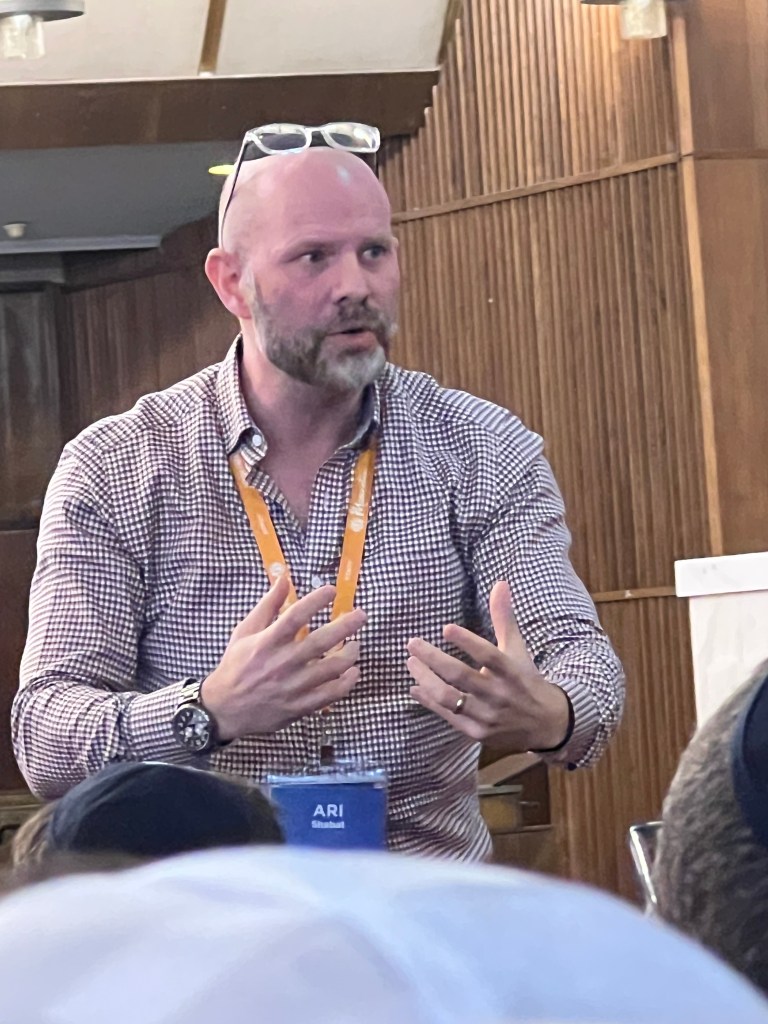
Being in Jerusalem always creates a desire for me to learn. One of my favorite teachers, Ari Ben-David joined us to explore some facinating questions. Today’s topic was “What am I?” A great and deep question. Being in Israel and in Jerusalem, we went to the Torah to explore it.

If you are like me, the image of torah study that I grew up with was boring. Reading these stories with no context and taking them literally. Over the years, I have learned that is not torah study. It’s simply reading stories. Torah study involves discussion, analysis, questioning, and debating. That’s what we did, led my friend and amazing educator, Aryeh Ben-David. Aryeh took us through Genesis chapter 1, verse 1 and half of verse 2. That’s it. All we needed to spend an hour or more discussing the deep topic, “What am I?”

He asked us to pick one line in chapter 1 and one line in chapter 2 that most answered the question. In chapter 1, we agreed on verse 26, “And God said, ‘Let us make man in our image, after our likeness.” In chapter 2, we agreed on verses 7 and 8, “the Lord God formed man from the dust of the earth. He blew into his nostrils the breath of life, and man became a human being.” So we are the image of God, have God inside us, and are dust. Simple points.

It doesn’t end there. Dust is our physical being but the image of God and having God inside us is our soul. That’s the competition we face every single day. Every single decision. Dust (physical wants and needs) vs. soul (the greater good). Dust is about the self and immediate pleasure. The soul is about all and comprises the past, present, and future. What will we choose when faced with the decision? That’s the key question that each of us answer every day with every decision. It’s not about always choosing one over the other – there are times when we need to choose dust and there are times when we need to choose the soul. It’s about being conscious of the decision. What a mind blowing realization on a Friday morning in Jerusalem? With Shabbat approaching quickly, it’s a deep thought to take to the Kotel.

I love the energy of Machane Yehuda, the shuk, especially on a Friday. I went to help bring the catered food for Shabbat dinner to our room and get everything set up before heading to the shuk. A little bit of soul work. When I got to the shuk, as usual it was packed. I wanted to get to my favorite gluten free bakery there to get a bunch of challah, challah rolls, babkah, dates and walnuts. Most I will bring home and freeze, but I wanted a challah I could eat for shabbat and dates with walnuts to snack on. It was 100% for dust, for my own wants and needs. While there, I got to buy some desserts for Shabbat dinner (parve rugalach from Marzipan) and wine for those at dinner. A little bit of soul, doing things for others, since I wasn’t eating the rugalach or drinking the wine. Torah into action.

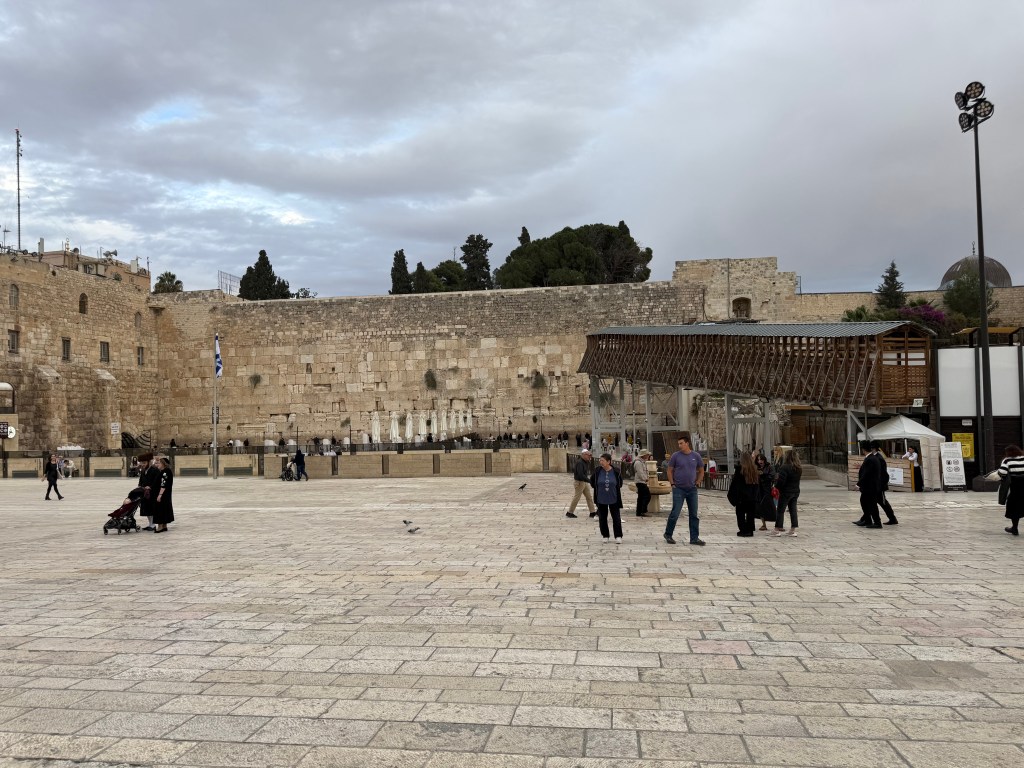
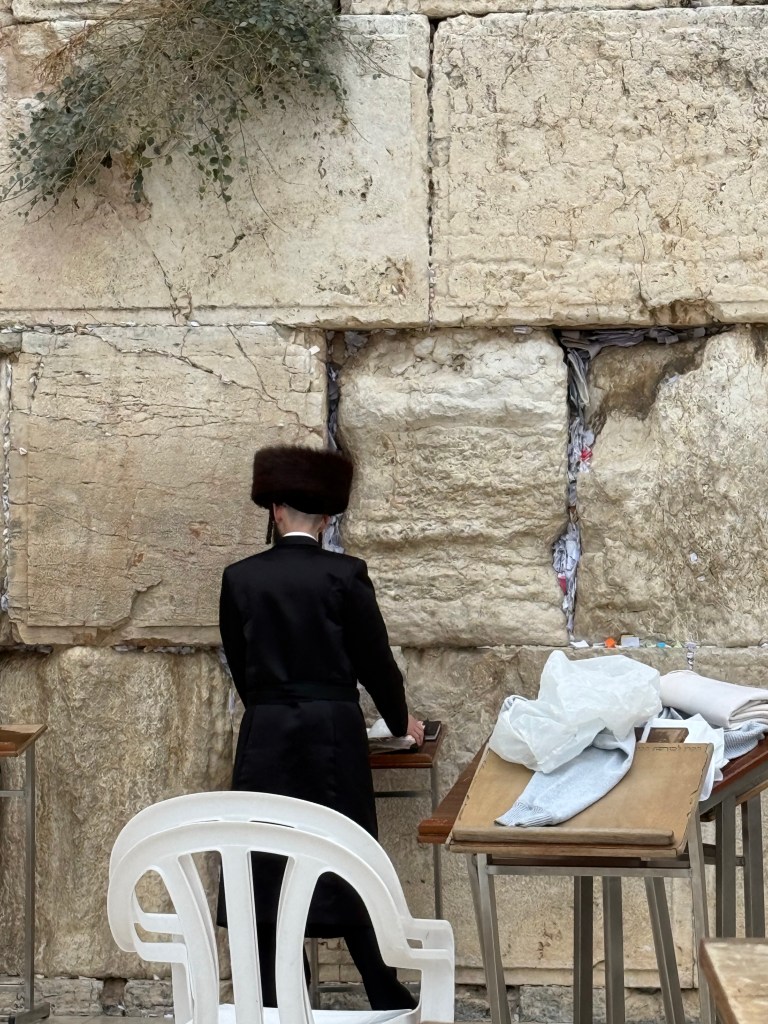
We got to the Kotel for shabbat very early. It was fairly empty when we arrived which gave us time to spend at the wall in deep thought and prayer. For the first time in a very long time, I had the time and space to sit in a chair at the kotel and just be. To let the air and the spirituality overwhelm me as I did nothing but sit and be. It was incredibly peaceful and powerful. I looked at the notes in the Kotel that others had left – their prayers, hopefully answered. I saw Jews of all shapes and colors arrive and pray. As the sun began to set, I felt the quiet and peace around and inside me.

If you’ve never been to the Kotel for Shabbat, it’s quite an experience. It never gets old for me. The singing, dancing, ruach (spirit) and connection is incredible. This was no exception. We gathered together in the plaza and prayed, sang, danced, and connected. We listed as others, in bigger groups, did the same but even louder. It was more than personal prayer – it was the feeling of a people coming together as one. As somebody who doesn’t love services, I always love Friday night at the Kotel. When we finished our prayer, I wanted to go join one of the others.

Instead we began our walk from the old city to where we were having Shabbat dinner. It was about a 40 minute walk, on a beautiful night, exiting through the Armenian Quarter and continuing up Jaffa Street until we arrived. The table was set for 15, the food was plentiful, and the company divine. I love the Shabbat table where you have a little bit of prayer, a little bit of ritual, and a lot of food and conversation. We prayed, ate, sang, and talked for a few hours, getting to know each other better, sharing pieces of ourselves, and enjoying the beauty of peoplehood, Shabbat, Jerusalem, and Israel.

During our learning with Aryeh he asked us what Jerusalem really was. We threw out a bunch of answers before he gave us his. He said, “Jerusalem is the hospital for broken souls.”. Powerful, beautiful, and true. Each of us has our own cracks in our soul. It’s part of being human. In Jerusalem we can get the treatment to begin the healing process for our soul. I’ve always loved Jerusalem but never really had a deep understanding why. Aryeh’s explanation fits. When I’m hear, my soul gets the treatment it needs to heal. To improve. To be better. I can get out of focusing on the dust, on my wants and needs, and instead focus on my soul. On the bigger picture. On being of service instead of what’s in it for me.

If you’ve never been to Jerusalem, I encourage to visit. To explore. To open your heart and heal your soul. If you’ve been – come back. It’s time for another treatment.

This was a wonderful Shabbat filled with happiness, joy, friendship and peace. I want to do my part to make sure they are all like this, no matter where I am.

Israel trip 25 begins

I arrived back in Israel at 6:30 this morning. I didn’t sleep much on the plane which meant this was going to be 2 days back to back with just a few 15 minute power naps to get me through. Good thing it’s Israel, since that always inspires me and gets my blood flowing.

After clearing passport control and customs and getting on the bus, we headed towards Rechovot for two different purposes. The first was to see the Weitzman Institute, a truly incredible research facility. The Weitzman Institute was targeted by Iran with their ICBMs in June of this year. They took a direct to one of their research facilities, destroying it. Their cancer research facility was also heavily damaged, resulting in the loss of priceless research that could have cured cancer.

At the Weitzman Institute, they have already been rebuilding. It’s amazing to see how quickly they repaired the damage and how important this research facility is. You can see the damage at some buiildings on the side and with missing windows but the destruction has been cleared, the frames of the new buildings in place. The cancer center images below show the damage on the side but the buildings that existed next to this one have been demolished and the new ones will be built soon. The building above now looks like new construction and it won’t be long before it is finished and operational again.

The Weitzman Institute is symbolic of Israel, Israelis and the Jewish people. We are resilient. We bounce back. We may be damaged but we won’t be destroyed. This is the Israel I saw in October and see today. An Israel bouncing back. A Jewish people determined not just to survive but to thrive. This is our ‘secret sauce’. We refuse to give up. We refuse to die. Our enemies have tried to kill us for thousands of years and we simply refuse to go away. Driving through the Weitzman Institute, seeing the mix of beauty and destruction, of live and commitment to the future through their research, reminded me that we all have our part to play and we all need to play our role. We aren’t asked to do more than that yet we are expected to do our part.

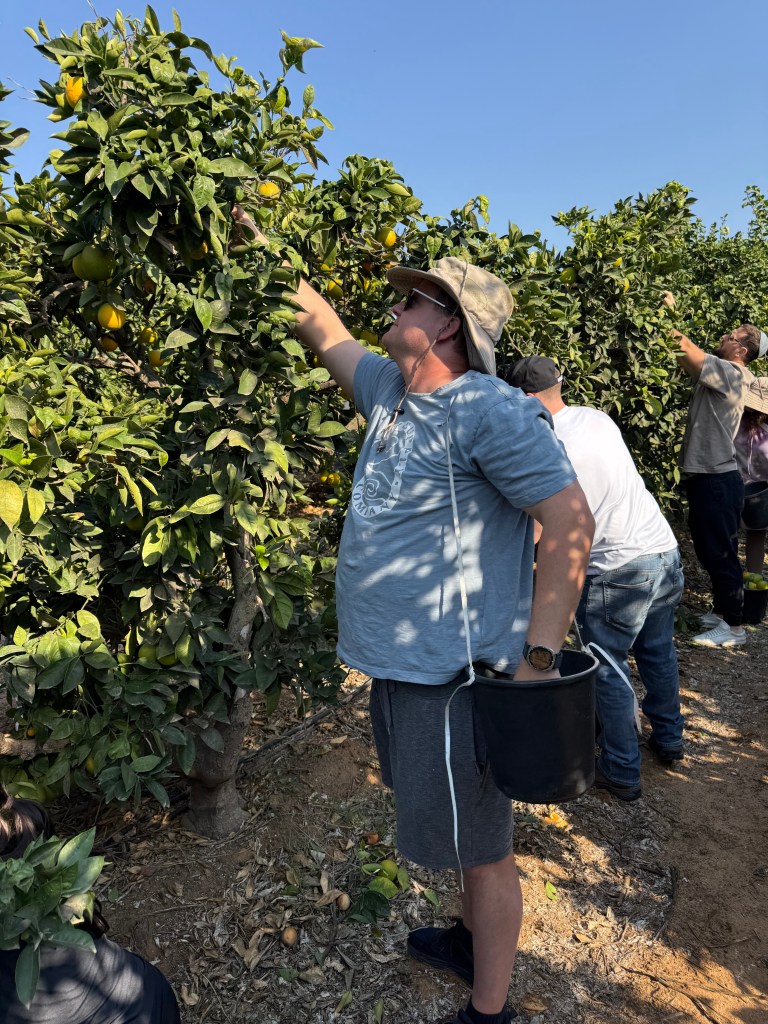
After leaving the Weitzman Institute, we headed to one of my favorite places in Israel, Ha-tov veHamtiv, outside of Rehovot. What is Ha-tov veHamtiv? It’s a farm, and orchard, owned and caretaken by an incredible man, a true Tzaddik (righteous person). Sandy, one of Israel’s most successful patent attornies, began this effort more than 40 years ago as a community garden. Today, this more than 200 acre facility, grows more than 35 different fruits and vegetables, depending on the season. All the food grown is donated to those in need. Sandy funds the entire project. Volunteers come and pick the fruit and vegetables. Last year, in July, we picked apples. This year, in December, we picked oranges. We picked them, we ate them, we worked the land, and we got energized. Less than 2 hours off the plane from Miami, we were out in the sun, working the land. Instead of being tired from a more than 11 hour flight and having little to no sleep, we were filled with vigor. It didn’t take long for us to fill up two big bins of oranges. We connected with the land. We connected with our ancestors. We connected with Israel and the founders of the modern state of Israel.

Sandy came to talk to us. What an incredibly understated and humble man. He was filled with joy at being in the orchard. He was filled with emotion, seeing us working the fields, working the land, being in Israel. Then he shared an incredible fact with us. His 200 acres provide more than 50 tons of food to those in need EVERY WEEK. This one man, through his effort, philanthropy, commitment, and working with others is providing more than 2,600 tons of food to those in need every year. Who says one person cannot change the world. Think about that – more than 2,600 TONS of food a year. That’s more than 5.2 MILLION pounds of food every year. How amazing and incredible is that. One man. With a dream. With a vision. Responsible for more than 5.2 million pounds of food being given to those in need. Feeding the hungry. I was humbled to meet him, to be in his presence, not because of his wealth or business success, but by the 5.2 million pounds of food he is responsible for providing every single year. He gives us something to strive for. One little (or not so little) orchard/farm outside of Rechovot in Israel. Imagine what we can each do with somebody like him as our role model.

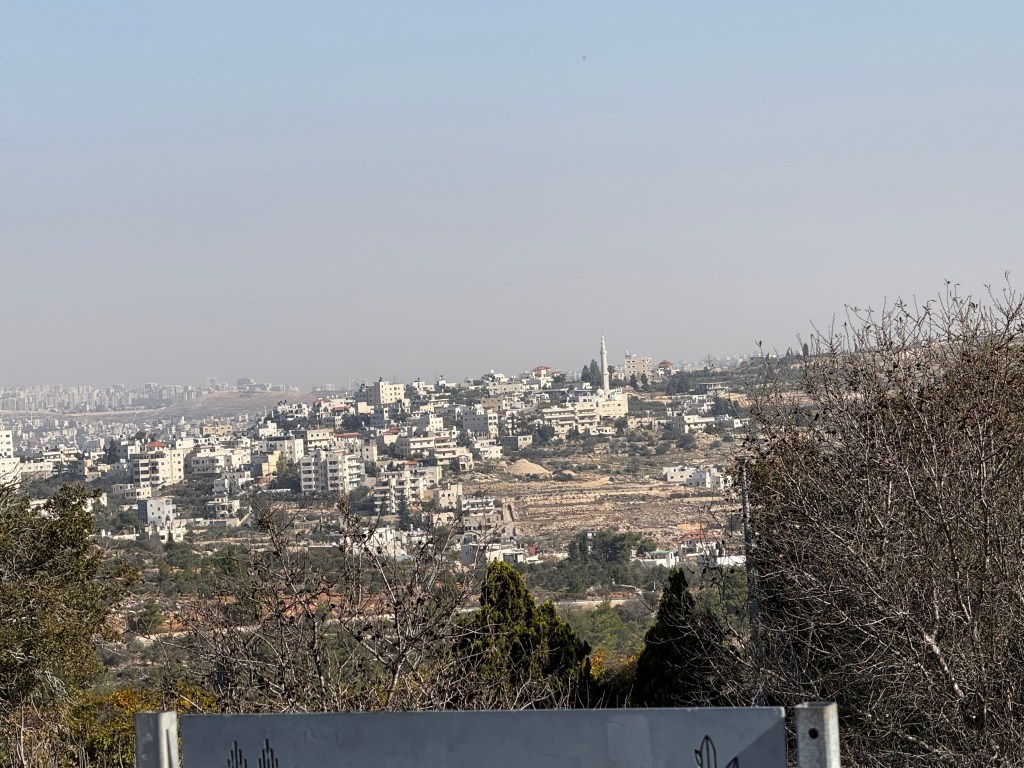
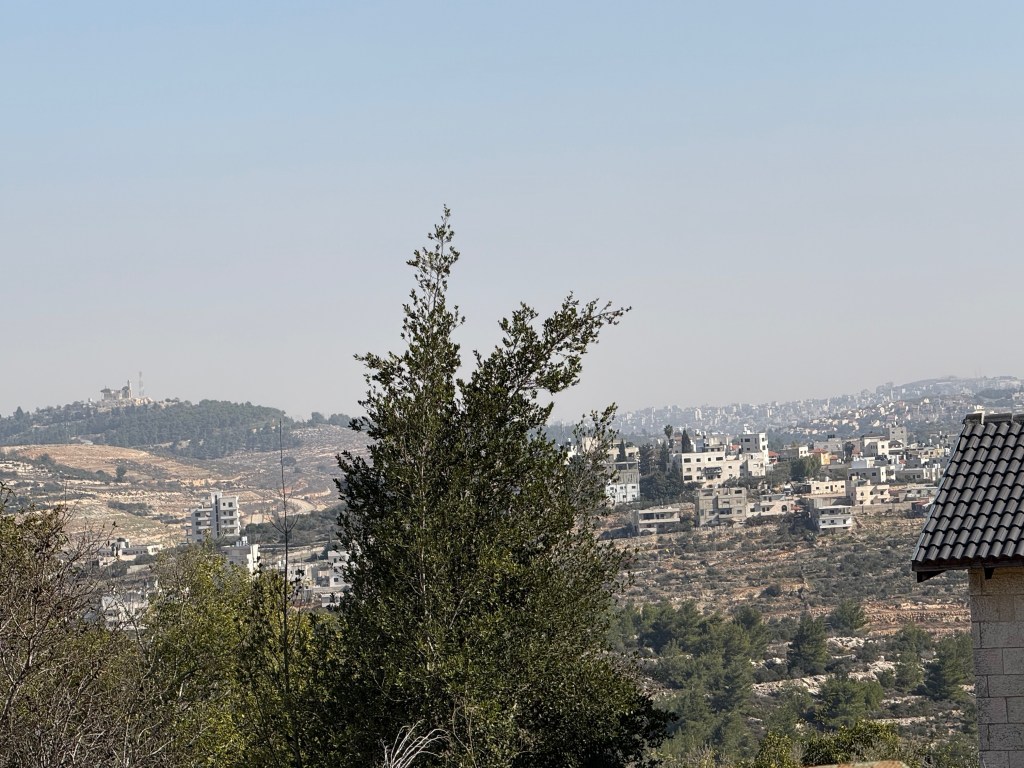
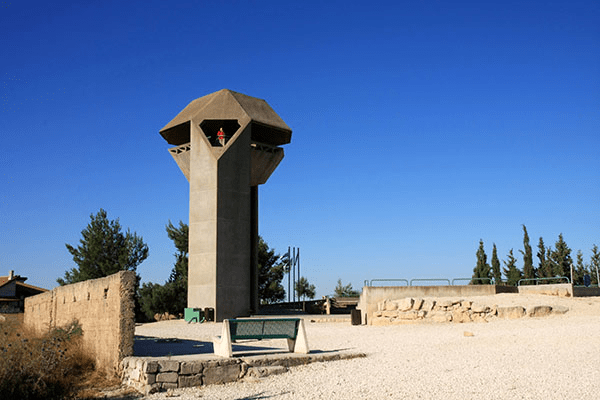
We hopped on the bus, stopped for some coffee, and continued on to Har Adar, an incredible overlook in the Jerusalem mountains. It was the sight of key battles in the War of Independence (1948) and the Six Day Way (1967), with tanks left there to memorialize those battles. Israel and her geography can be challenging for those who have never been to visit and seen how small the country is, how much the topography matters for security. Har Adar is a great location to understand the challenges and talk about where we have been, where we are, and where we hope to one day be.

The villages in the background of these photos are looking into Judea/Samaria/West Bank (names are political so I use them all). Deep in the background is Ramallah. Up front are Arab villages. Off to the right is Jerusalem. You get a feel for how close everything is. Before the second intifada (Sept 2000 – Feb 2005) it was common to walk easily between the villages in Judea/Samaria/West Bank and towns like Har Adar. Due to the violence of the second intifada, Israel needed to install the security fence to stop terrorists from coming through and becoming suicide bombers, murdering innocent civilians. The cost of this was that innocent civilians in those villages now had to go through checkpoints, needed approval to enter Israel proper, and had their lives made more difficult. After October 7th, it became more difficult. Just last summer we were able to climb up the tower at the scenic lookout to get a high view of the area. Today the lookout is padlocked and we couldn’t enter. Security cameras were installed since July 2024 to monitor the area. Our reality makes me sad.

Har Adar was once an affluent community. People have left because they don’t feel safe living that close to the border. Sitting by the tanks, eating our lunch, looking over the outlook, all I saw was a lost past and a lost future. Will we ever be able to return to the days where the security fence and checkpoints aren’t needed? Where we can live together in a shared society? I hope. I dream. I’m not sure that I believe. It makes me sad.

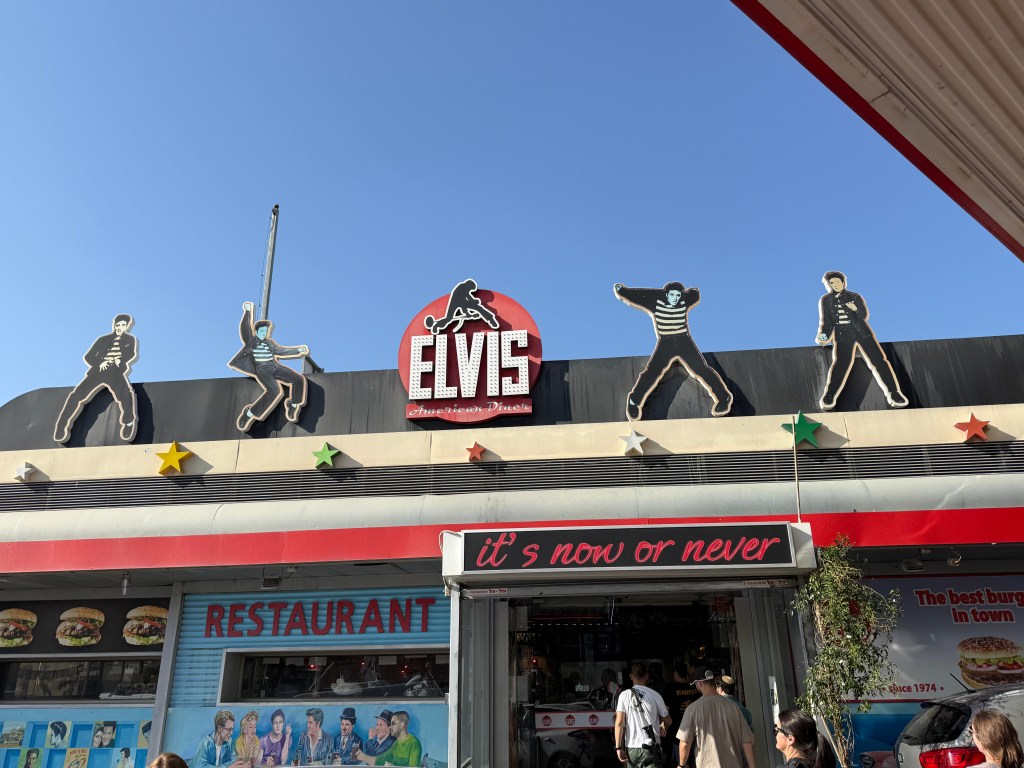
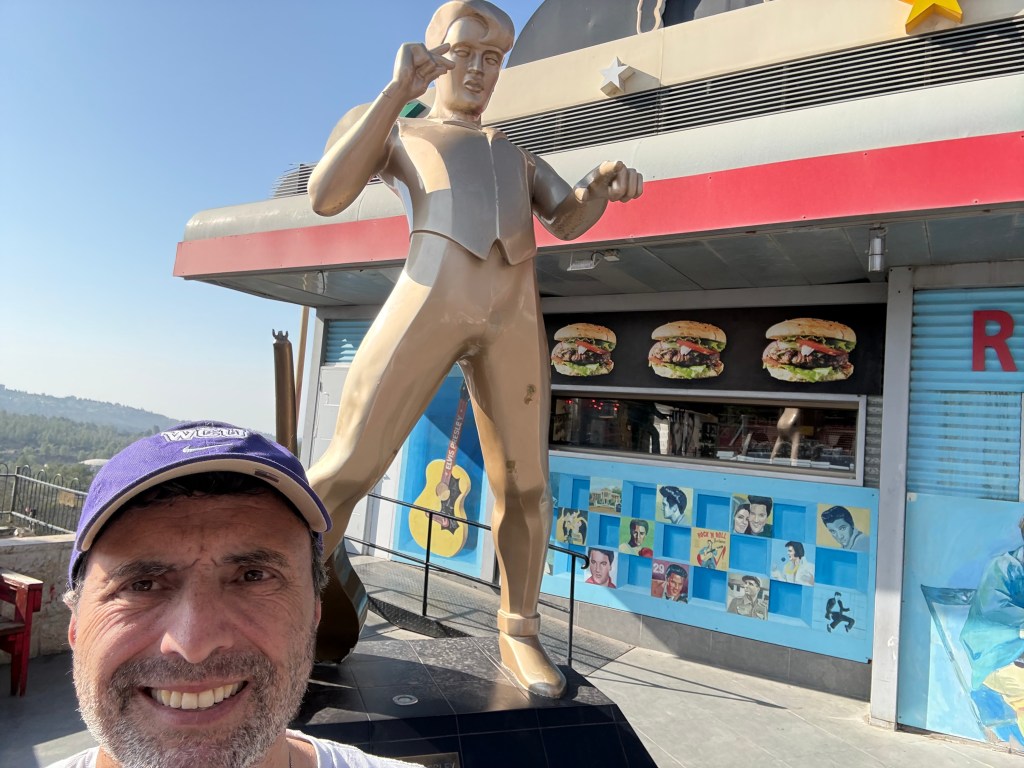
From Har Adar, we made a quick stop at the Elvis Presley Diner to use the bathrooms (the bathrooms at the Har Adar lookout were locked – another security change) and it was fun to experience it. Lots of kitchy things to buy but we couldn’t stop because we were off to the old city of Jerusalem.

In the Old City, we were going to explore the tunnels under the Kotel, under Temple Mount. I’ve been through them many, many times and it never gets old. The education about what Temple Mount is, the history of this area from Abraham and Isaac, to Kings David and Solomon, the Macabees of the Hanukkah story, and King Herod, ties together so much of Jewish history. When you go into the tunnels, that history comes alive. You see the actual walls built by King Herod. In their natural status from 2,000 years ago. You see the actual destruction of the second Temple by the Romans. You get to walk on the actual street from second temple times, the same street our ancestors walked on more than 2,000 years ago. Our feet were on the same street that people walked on during second temple times. It may be the same street that Judah Macabee walked on. As we stood on that street, overcome with the connection we were all feeling, we joined together to sing Am Yisrael Chai – the people of Israel live. We do live. We will continue to live. We will not just survive but thrive. If you told the Jewish people who were being taken into slavery and exile in the year 70 CE that in 2025 their ancestors would be standing on that street, singing Am Yisrael Chai, in the country of Israel, they wouldn’t have believed it.

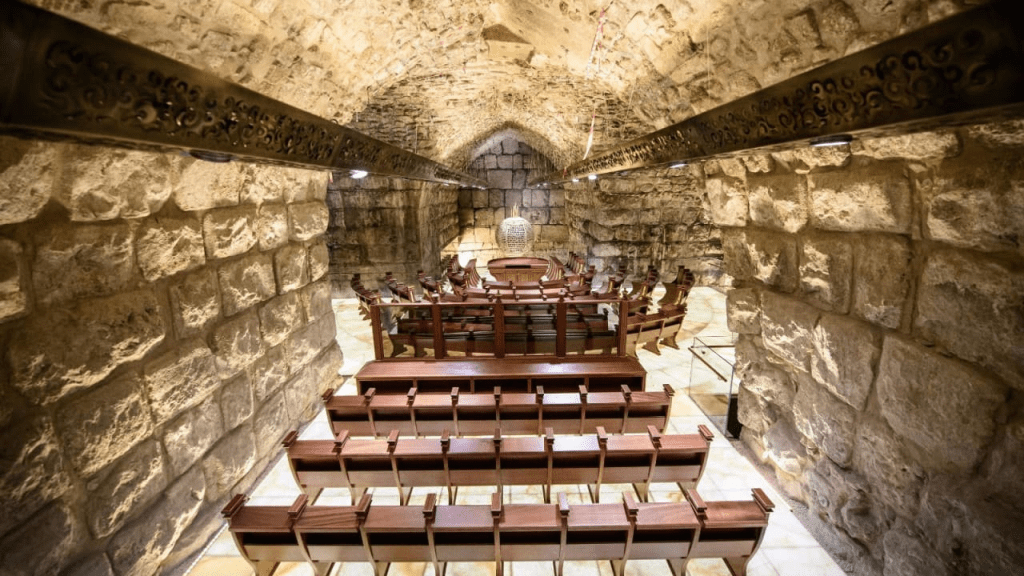
As you enter the tunnels, there is a beautiful modern synagogue built in 2017. Pictures don’t do it justice.

There is a Jewish tradition that at age 70, you begin counting again so when you turn 83, you can have a second Bar/Bat Mitzvah. I’ve decided that when I’m 83, I want to have my second Bar Mitzvah here, in this synagogue, in the tunnels beneath the Kotel, beneath the Temple Mount. I’ve got a while to go yet it is something that gives me hope, that gives me joy. To think that I may be there in 25 years, with my family, my wife, siblings, children, grandchildren, and maybe even great-grandchildren chanting from the Torah and leading services for my 2nd Bar Mitzvah makes me smile. It gives me hope. When that happens, you are all invited!

Israel is a powerful place. As I woke up this morning in Jerusalem and will be spending Shabbat at the Kotel, the Western Wall of the Temple, I can’t help but be filled with gratitude. Despite the challenges in the world today, despite the rise of antisemitism, of hatred, and of division, here I am. In Israel. In Jerusalem. I’m reminded of Psalm 137, verse 5 (and I’m not a Torah scholar but this one is a goodie).

I’ll never forget Jerusalem. I’ll never forget Israel. And I get to be here right now, today. Am Yisrael Chai.

Being Jewish and Inspired

Those who know me, know that I am not the most religiously observant person. While I am very Jewish and have a strong Jewish identity, when it comes to religious observant, I’m on the low end. When my friend asked me to come to services this Shabbat as he was sponsoring the kiddush in memory of his son, I said yes without hesitation. Not because I love services but because friends show up. Instead of my relaxing Saturday morning on the couch, watching College Gameday, rooting for the student to make the field goal and take Pat McAfee’s money, I found myself in synagogue.

I care much more about what goes on inside a synagogue that what the inside looks like in a synagogue. I have been to many that are beautiful inside but I don’t find warm, welcoming, or the service interesting or meaningful. I understand why many people want to invest in making the environment beautiful but I’d much rather see the money go to ensure great clergy, staff, culture. It’s a personal preference.

I note this because I have found that those that are more modest aesthetically tend to be more welcoming and I tend to enjoy what happens in them. As soon as I walked into this synagogue, I felt at home. It was warm, welcoming, and it was clear to me that the investment was being made in what happens inside the rooms rather than the rooms themselves. A number of people welcomed me immediately and the Rabbi, in the middle of the service, walked up to me to welcome me and give me a hug. In a crowded room, they made sure to find me a seat. People came up to say hello and welcome me.

I often find that in Jewish spaces, this type of welcoming doesn’t happen. We want people to come to our events, to be a part of our organizations, and yet we don’t make sure they feel included or special when they do. It was the first time I was at this synagogue and they made me feel right at home. As sombody who doesn’t love services, I found myself enjoying it because of how I was made to feel while there. I enjoyed the loud singing and comraderie that was happening as part of the service. Amazingly, I found myself thinking I would like to go back.

I found myself wondering why we don’t do this more often. We see our synagogues and Jewish organizations struggling with membership and attendance. We also see so many people who want to have a Jewish connection and yet they can’t find one that resonates with them. The old ways, the “Jewish tax”, the mandatory synagogue membership, etc. are no longer applicable. People want to spend their time in a meaningful way and many of them aren’t finding it in Jewish spaces. How do we change this?

There was recently a study about the shortage of people enrolling in Rabbinic School. In the study, they found an incredible diversity of those who enrolled. 58% identify as women, 30% as men, and 12% as nonbinary with an estimated 51% identify as LGBTQ. It’s amazing to see how the field has changed in the past decade or so. There was a big outrage by some about the high percentage being LGTBQ and women Rabbinic students, as if that was a problem. Perhaps to some it is. The bigger concern to me is about the overall number of people enrolling in Rabbinic school and the Rabbis that are graduating. I am a firm believer that the Rabbi is the key to the success of a synagogue. When the Rabbi is inspiring, the synagogue tends to flourish. People want to learn from somebody who inspires them. People want to spend time around those who inspire them. Rather than focus on the sexuality or gender of those in Rabbinic school, perhaps we should be asking ourselves why we aren’t recruiting the best, inspirational people to be our clergy?

At the synagogue I attended this Shabbat, the Rabbi was engaging. He was teaching us torah in between each aliyah. He was funny. He was engaging. I learned something new and applicable to my life each time he taught during the service. It made me want to learn more with him. It made me want to go back. He was inspiring. Our leaders, particularly our clergy, need to be inspiring. What are we doing to ensure we have inspiring clergy? Where are we failing? How will we address it?

One of my favorite clergy members is Cantor Azi Schwartz from Park Avenue Synagogue. He does amazing work putting classic Jewish prayers and songs to contemporary music. His version of Hallelujah set to Bruce Springsteen’s Born to Run at Rosh Hashanah this year is outstanding. I’ve listened to it more than a dozen times.

His version of Adon Olam set to the music of the Broadway show Hamilton has over 1.2 million views on Youtube. I don’t get tired of listening to it and signing along. He inspires and I look forward to seeing and hearing what he will do next. When the streaming services from Park Ave Synagogue come on, I watch because I know it’s going to be special and meaningful.

When the Broadway show Wicked (one of my personal favorites) came out as a movie last year, Cantor Azi and Cantor Mira Davis were ready with a new version of Adon Olam set to the music from Wicked. It’s fun to listen to, to sing along with. There is very little Jewish music that I want to sing along with yet Cantor Azi has multiple versions of Jewish prayer that he has inspired me to listen to for fun and to sing along with.

As I was writing this and looking at the things Cantor Azi has done, I even found new ones. Adon Olam set to Born in the USA. I quickly began to sing along, tapping my feet, clapping my hands, and thoroughly enjoying myself. I found a version of Mi Chamocha set to Taylor Swift. That’s inspiration. Oseh Shalom to the tune of Shallow.

Not everybody has to be Cantor Azi. There are many ways to inspire. There are many ways to be welcoming and engaging. It takes effort. The payoff is worth it, both for the Jewish people as a whole and for each of us individually.

I’ve been lucky to work with and learn with many inspiring Rabbis. My childhood Rabbi, Jeffrey Wohlberg (always my image of a Rabbi) set a great example for me. Rabbis David Kaiman, Andy Koren, Yoni Kaiser-Blueth, Aaron Alexander, Dave Baum, Jonathan Siger, Yonah Schiller, Gail Swedrow, Chaim Albert, Jill Borodin, Randy Brown, Gabi Gittleson, Herb Tobin, Dovid Yachnes, Ari Federgrun, Ben Hassan, Danny Weiner, Josh Broide, Mark Kram, Efrem Goldberg, Irving “Yitz” Greenberg, Ed Rosenthal, Joseph Telushkin, Daniel Wolnerman, Darren Kleinberg, Mayer Abramowitz (z’l), Steve Engel, Neil Zuckerman, Jeremy Barras, Jonah Zinn, and Amram Hoffer are just a microcosm of the Rabbis who have impacted me. While the number of Cantors who have impacted me are smaller, I can’t leave out Cantors Lisa Segal, Rachelle Nelson, Mitch Martin (my Bar Mitzvah Cantor who I still keep in touch with today) who are incredibly inspiring. Perhaps I am spoiled by these amazing Rabbis and Cantors so I have set the bar too high. I don’t think so. Their excellence has showed me what is possible.

As a people, we need to invest whatever it takes to ensure we have excellent clergy. We need to do invest in ensuring we are a welcoming community. We need to invite those who show up into our community. When I was in Hebron a few years ago, our guide pointed to the parking lot and said to us, “This is where Abraham, recently self-circumsized, greeted the strangers and washed their feet.” (the the three angels). I think that if Abraham, at that point in time, would get up to welcome the stranger, who am I not to do the same?

As I finish writing and prepare to return to Israel in 2 days, I want to leave you with Cantor Azi and his Taylor Swift cover. As he sings, “We are never going back to Egypt again” think about what you are willing to do to ensure you are never enslaved again – mentally, physically, or spiritually. Think about what youwill do to find a way to make being Jewish interesting and fun. Ask yourself what it would take for you to want to be involved? To get your family involved? To make sure Judaism has an important part in your life, no matter how religious you may or may not be. No matter how much you may like or not particularly like religious services. No matter how you define being Jewish. Because at the end of the day, we are all Jewish so lets figure it out together.

Two years of war and a happy country?

I returned from Israel on Friday. It was a long return trip, waking up at 5 am IST (10 pm Thursday night ET) and leaving early in the morning from Haifa to get to Ben Gurion airport. The long flight to JFK was easy but was during the day so I didn’t sleep much. A 2 hour layover and I was on my flight home. I got to my house around midnight, 26 hours after I woke up in Haifa.

The long trip gave me a lot of time to think. Dealing with jetlag upon my return gave me more time to think. This was a different trip for me. I knew going into it that I needed to be in Israel for my soul. I wasn’t touring the ‘normal’ way and was going to spend a few days just being in Israel before a day of work in Jerusalem and then 3 days up north working. It was a day about my relationship with Israel and Israelis, not about the Jewish connection to Israel. I was in Jerusalem but not the old city. I didn’t visit the Dead Sea or Masada. I did spend time on the beach, hanging in restaurants with Israelis, visiting schools and youth programs, and being connected to ordinary people.

On the plane returning and in the past two days, I have found myself reflecting on the ordinary people of Israel. Israel is typically rated one of the happiest countries in the world. This despite living in a very tough neighborhood with genocidal terrorist organizations like Hamas and Hezbollah on their borders. Terrorists try to come in every day to murder Israeli people and Iran is an existential threat. This was before the horrors of October 7th. Yet in the 2025 survey of the world’s happiest countries, Israel ranked 5th. A country that was attacked and invaded in 2023 where over 1,200 people murdered in the attack. A country at war with so many of her citizens called back to serve in the reserves. A country being villified by the international community based on terrible lies, being called terrible things, all due to Jew hatred. A country that had the north evacuated due to daily rocket attacks and who spent time almost daily in bomb shelters. This is the country that was the 5th happiest in 2024?

This past week helped me really understand how a country facing all these challenges could be the world’s 5th happiest country (for comparison, the United States was 21st). In Israel, they focus on what they have rather than what they don’t have. They focus on gratitude not desire. It’s a country that realizes that gratitude is a far better way to live than envy.

It got me thinking about my life and the changes I have made in the past few years. My dad dying in September 2022 was a life changing event for me. Not just because I lost a parent and mentor. It was a realization that the end is closer than any of us want to acknowledge and the question is more about who we want to be and how we want to live than how much we can have.

So I have changed my life. I removed a great deal of stress. for decades, my job was filled with stress. I’m just as busy and working just as hard but now it is without the stress that I used to have. I make sure that I am rested and not burning the candle at both ends. I make sure to eat and eat healthy. No more skipping lunch because I’m too busy. I eat healthy now – whole foods rather than something quick. Today I had the time to make a fresh salad for lunch, cutting up lettuce, tomatoes and other veggies rather than grabbing something quick to stuff down my throat because I had no time between meetings.

On this Israel trip, I got to meet people who were doing the same thing. People who lived by their values so they moved their family to the north to repopulate that area after the war. While many people won’t move back, there are many who realize how important it is to live there and are choosing to do so. The high school student who had the opportunity to decide whether he wanted to take the exams for his bagrut (high school diploma) and decided not to take them. As he shared that with us, I could feel his trepidation as he was waiting for criticism. Criticism that he didn’t get. The early childhood teacher who loved his job and the children he interacted with. The little tricks he did for them and the joy in their faces as he did them. The care in his voice as he talked to them and way they were truly little people, not just kids.

I talked with people who are more concerned about the mental health of IDF combat soldiers than their personal income. They are volunteering tremendous amounts of time to do their part in providing for the mental health care needed for these soldiers. Each time an IDF combat soldier commits suicide, a little piece of them dies, so they work to reduce that number to zero. They invest their time, their money, and their heart and soul.

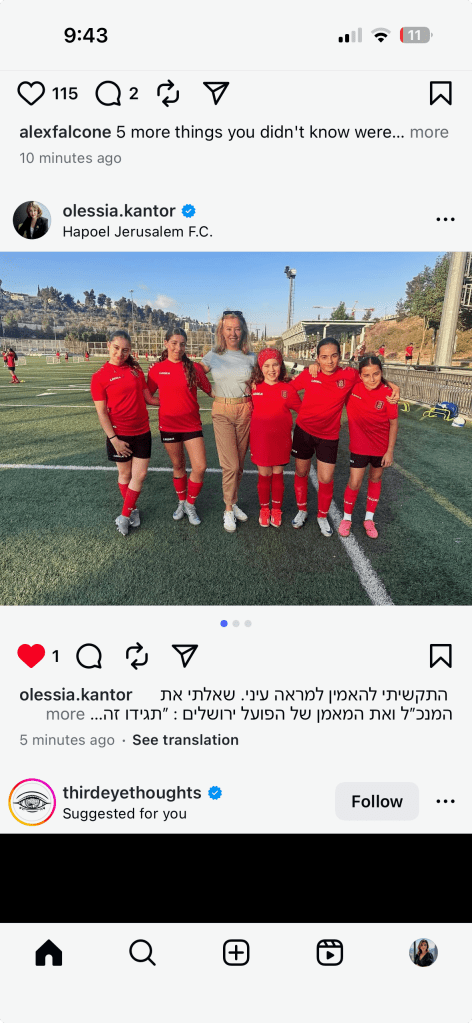
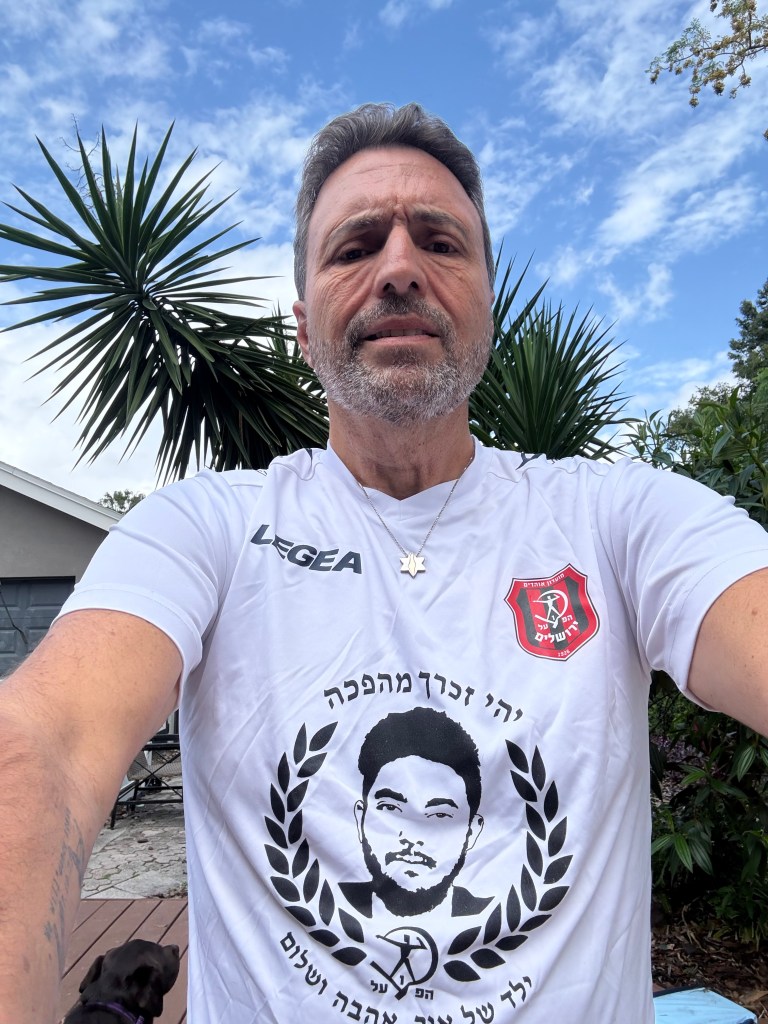
I went to visit Hapoel Jerusalem Football Club (HJFC), a team that is much more than a professional team in the Premier League for men and women’s soccer. Their social programs are changing the face of Jerusalem and the future of Israel. Hersh Goldberg-Polin (z’l) was one of the leaders of their fan club. I wear my Hapoel Jerusalem FC shirt with his face on it proudly. It speaks to people living by their values, choosing to make the world a better place which means they are happier in their daily lives. Read the post below which describes somebody’s experience with the girls program of HJFC. It’s extraordinary.

I used to believe that I could never make Aliyah (move to Israel) because I want to live like an American in Israel and to do so is extremely expensive. There is a saying about life in Israel that explains this well.

People don’t move to Israel to become financially rich. They move to Israel to be spiritually rich. To be emotionally fulfilled. To have meaning in their life. You don’t have to move to Israel to have those things. We can choose them in our daily lives. Yet in America, we rarely do. We place money ahead of our values. Our answer to the saying, “You can either be happy or right” is often to be right. The lesson I was reminded of on this trip is that we don’t have to make those choices. We can learn to focus on what matters. Being happy. Enjoying life.

When I came back from Israel, my oldest son was home for the weekend. It was great having him home for the weekend, even though we didn’t do anything. Just having him around was nice. My best friend’s son is getting married next weekend and I’ll be there to celebrate. A few days later, my younger son is taking the LSAT and has to go to Ft Myers to take it (that’s an entirely different story). So we’ll drive down to Ft Myers, stay in a hotel, he’ll take the LSAT and then we’ll drive home. 8 hours in the car together along with a night at the hotel together. Priceless. That’s the key to being happy – enjoying every minute and the opportunities they present.

I think of my dog, a now 10 month old chocolate lab. She gets excited to see me every morning, not because I’m going to take her outside and give her breakfast. Not because she’ll get treats and do a puzzle. She gets excited because we are together. When my wife comes downstairs and comes home from work, my puppy is filled with anticipation and realizes she is the luckiest dog in the world because she’s with her people, with her pack. That’s how I want to be.

Israel taught me that. Despite two years of war, they cherish every moment. Despite a year of rockets falling on them and rushing to their safe room day after day after day, they found ways to appreciate things. As I sat on the beach in Tel Aviv, breathing the fresh air, listening to the waves and people all around me, I realized just how lucky I am. It’s not about the things I have or don’t have. It’s not about the size of my house or my bank account. It’s about the people in my life. Recognizing the beauty in the world around me. The gifts of life.

I have been to Israel 24 times. Trip 25 is scheduled. What a gift. What a blessing. As I look at that image, my heartbeat slows, any stress disappears, I relax and realize just how lucky I am. And when we realize how lucky we are instead of thinking about all we don’t have, the world is a much better place.

If you don’t know what you’re willing to die for, then you don’t know what you’re living for

About a year ago, on a trip to Israel, Saul Blinkoff, one of our trip leaders was speaking to us. He quoted one of his Rabbis, the great Rabbi Noah Weinberg (z’l), the founder of Aish HaTorah, who taught him that “If you don’t know what you’re willing to die for, then you don’t know what you’re living for.” Powerful words and a powerful and deep thought. We spent the rest of the trip grappling with what that means in general and to each of us. It’s something that has stayed with me since then and something that I ask myself on a regular basis.

In this crazy world that we live in today, with all the Jew hatred we see around us, take a few minutes and ask yourself that question. What are you willing to die for? When you come up with the answer, make the choice to LIVE for it. Almost 30 years ago, I began a career working on behalf of the Jewish people. From Hillel to the Federation to the JCC/Federation to today, working with clients in Israel, I have spent the vast majority of my professional life. I write and speak out because so many Jews before me were willing to die so that I could live, so many are fighting right now to ensure that my children and future grandchildren will be able to live, that I must actively live.

My friend Saul, who spoke that wisdom to us in Israel last year, is also a Hollywood Filmmaker (Disney, Dreamworks, Netflix). He has a great podcast that I encourage you to subscribe and listen to. He began his career with Disney. On that trip, he gifted us all not just a prayerbook, but one where he personally drew Mickey Mouse for us. He told us the story of how when he was illustrating the Winnie the Pooh movie, he made sure to put a mezuzzah on Winnie the Pooh’s doorpost, joking that he made him “Winnie the Jew”. We all have the ability to pick the things that matter to us, the things we would die for, and live for them. I do that with my family. With my children. I’d willingly die for them so why would I not take advantage of the chance to live for them. I take advantage of the time I get to spend with them because no time is guaranteed.

I feel the same way about my values. They matter to me. They define who I am and how I live. I’m willing to die for them. If that’s the case, then I’d better live for them. That means actively making choices that align with my values, even when they aren’t popular. Even when they aren’t easy to follow. Even when there are consequences for living them actively. Especially when they are difficult to follow through with or there is risk involved in standing by them.

Saul talked about this an much more on Ben Platt’s podcast. It’s worth the 30 minutes to watch and listen, to take in what he says and ask yourself deep questions. Especially the big one. What would you die for? And if you’d die for it, why aren’t you living for it right now?

In the podcast, Saul talks about the barbecue with the families from the kibbutz and the dancing with the children on our soldiers. That was my trip. Here’s a video of us dancing with the kids. It is something I will never forget. These families were attacked on October 7th. They had to relocate to Netanya from the Gaza envelope. They left their homes and their lives behind, moving to an apartment building in a different city. Many of the husbands were not there, called up to serve in the IDF to defend Israel and the Jewish people. Yet they were living life. Robustly. I watched a sweet toddler riding his tricycle. Kids playing ping pong. And, as you see in this video, dancing on our shoulders.

They literally went through what they would die for – living in the South of Israel in the Gaza envelope. It’s clear they know what they will live for and are doing so. There is much we can learn from them.

The older I get, the more I find I can learn. The more I find I must learn. Today’s world doesn’t value learning. Look at how poor our education system is. Look at how few people actually want to take the time to learn facts – instead they’ll get their information and knowledge from a TikTok video made by somebody who knows nothing. Judaism is all about learning. What’s going on in Israel and in the United States takes effort to learn. To investigate. To question.

In this critical time, remember the words from the Mishna. “Find yourself a teacher, acquire for yourself a friend.” There many types of teachers. You can find a Rabbi or a Jewish educator. Ask the hard questions. You can find some experts who write regularly. Read what they write, listen to their podcasts. I have done both. Every week I learn from my friends Harry Rothenberg and Ari Shabat through their video blogs. You can subscribe via email to Harry’s and by whatsapp to both Harry and Ari’s. I read Michael Oren, who has both a substack and writes in the Free Press. I read John Spencer’s substack which you can subscribe for free or get a paid subscription. I am a paid subscriber to The Free Press, with it’s many articles and different points of view. I read Daniel Gordis’s Israel from the Inside, delivered to my email each morning. I get the Bernie News Network on WhatsApp, with so much information every day it is usually overwhleming. You don’t have to be like me in terms of how many teachers you choose to have. Start with one. Get a taste of what real, accurate, challenging information is like. Things that make you think, not parrot back a position somebody else tells you to take.

Once you start down this path, your mind and spirit will thank you.

The Genocide Libel

For more than two decades, I have made one simple claim. American’s are dumb. It’s simple. It’s clear. I don’t think it is even debatable at this point. This doesn’t mean I don’t love America or that I hate the American people. It does mean that we are so self-righteous and have such a small attention span that we believe whatever we are told. It means that the Big Lie theory, popularized by Adolph Hitler, is right when the theory says, “if a lie is sufficiently enormous and repeated frequently enough, people will eventually believe it.” We see it all the time. Our news media does it all the time. Our leaders do it all the time.

I have lunch every Friday afternoon with a group of 80 year old men. It’s a fabulous group and I’m thrilled that they invited me over a year ago, 20 to 30 years younger than them, to join. When working, they were titans of their industries. Lawyers, Doctors, Judges, Newspaper editors, and much more. Their wisdom infuses the conversations each week into something rare in today’s world. For the past few months I have been bringing up the subject of the media and their agenda with everything that they do. No longer is it the about getting the facts and the truth out into the public arena. No longer is it about verifying stories before you go to press because truth and integrity matters. Today’s media is about money. It’s about clicks and views and being the fastest out with something because that’s how you monitize it. I often make the comment that there is a reason why the news is now in the entertainment division. My friend who was the newspaper editor always takes umbrage when I say this because he recalls a different day. A day when the media had an obligation to truth and independence. A day when you could count on the media almost all the time to get it right, even if they didn’t get it fast. I long for those days but am realistic about where we are.

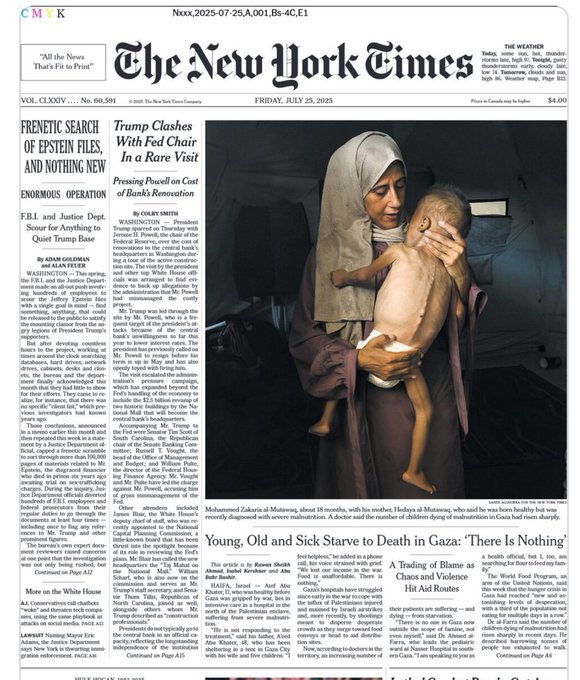
The media lies because it sells papers, gets ratings, and gets clicks. They don’t even try to hide it. Take the NY Times. In order to blame Israel, they used a photo of Mohammed al-Mutawaaq, a child with a muscular disorder, as the face of famine in Gaza.

This isn’t the first time they have lied about Israel nor will it be the last. Earlier in the week they ran a terrible piece, based on no facts, stating that there is no proof that Hamas is stealing the food from the UN. The day after, a piece in the Jerusalem post showed just how wrong the Times was once again and how they and Reuters ignored a mountain of evidence to print their narrative and lies. The NY Times and the media simply don’t get held accountable. I’m stunned by the number of Jews who continu to read the NY Times and view it as a source of respectible journalism. Then again, I am stunned by the number of Jews who support those who would kill us all if they had the opportunity. This isn’t a new phenomenon. It’s been going on for thousands of years. In our effort to build a better world, we have done harm to ourselves going back thousands of years. It is our history. The question is when will we learn from our history – or maybe better stated, will we ever learn from our history.

A friend of mine from Jewish summer camp many years ago just wrote a piece accusing Israel of Genocide. I won’t post it. He is a University Professor in Canada so it didn’t surprise me. It did sadden me. As I read it, I was even more disappointed as so many facts were simply wrong. When educated, smart Jews who I know have a strong Jewish identity believe the lies, it is clear that we have failed. It is clear that what we have done up until now has not worked and that if we don’t take a hard look at ourselves, our organizations, and our communities and understand where we went wrong, where we missed, and devise a new path, we have a very troubled and scary future in front of us.

We had a detailed interaction and conversation on Facebook about it. It was very civil and reasonable. Topics were discussed, information shared, and no minds were changed. I think what was the saddest part for me, other than seeing the lack of real information being used by him was his final statement. I had asked him to read a piece written by John Spencer, the chair of Urban Warfare studies at the Madison Policy Forum. Spencer is one of the world experts on war and specifically Urban war like in Gaza. He is not just an academic, as he served 25 years in the U.S. Army, to included two combat tours in Iraq. The piece, titled I’m a War Scholar. There Is No Genocide in Gaza, is filled with facts and information from somebody who is world renown in the field and has no skin in the game. He isn’t Jewish or Israeli and is completely independent. My friend’s reply was “Thank you, but I think I’ve read enough.”

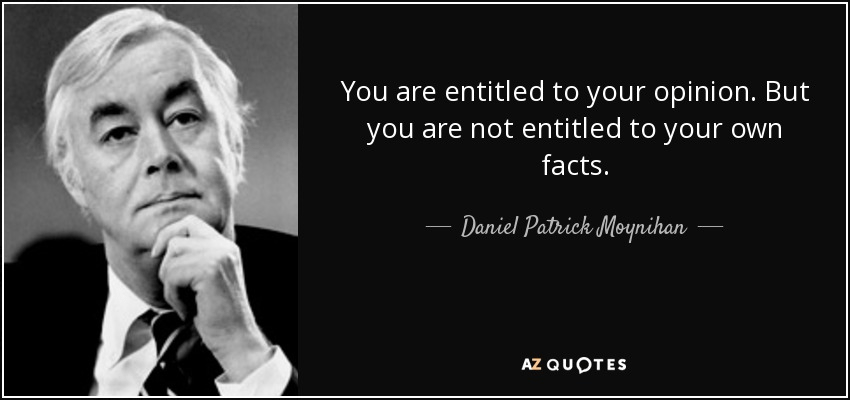
That’s a major part of the problem. People read things that confirm their bias. They watch the news that is clearly far left or clearly far right. They never read things that challenge their beliefs or their world view. It goes back to the saying “my truth”. There isn’t ‘my truth’. There is only ‘the truth’. As the late, great Senator Daniel Patrick Moynihan said, “You are entitled to your opinion. But you are not entitled to your own facts.” In today’s world, people are choosing their own facts.

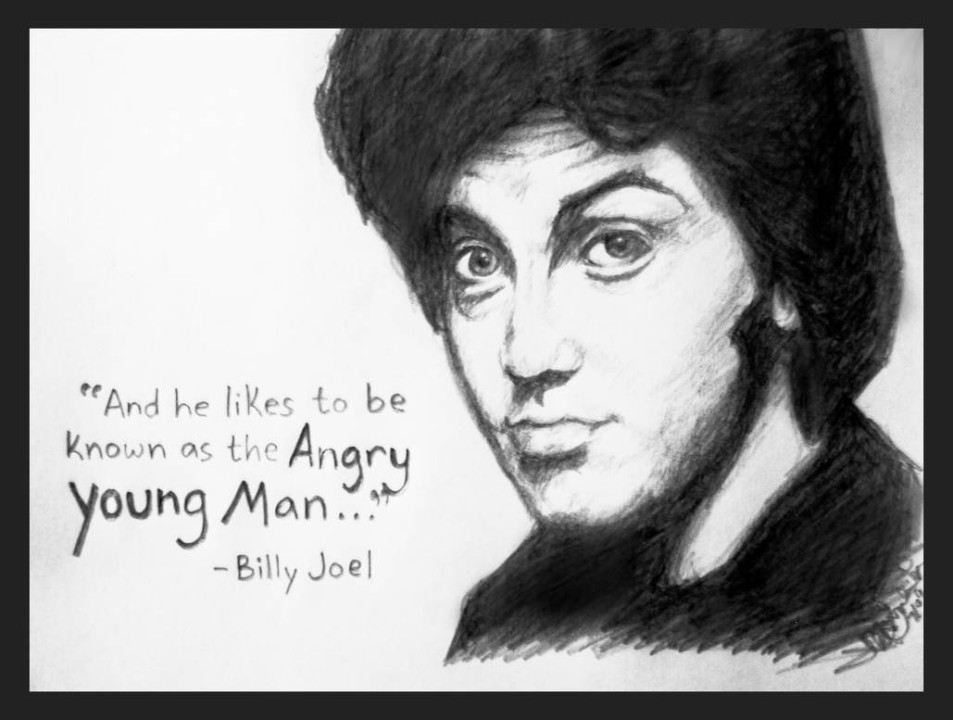
I read a piece in the Free Press today about the greatness of Billy Joel. In it, they quoted two verses from his classic song, “Prelude/Angry Young Man”. It’s one of my favorite songs and the lyrics hit me different this time.

The first verse quoted reflects the attitude of the young. It reads: 

There’s a place in the world for the angry young man
With his working-class ties and his radical plans
He refuses to bend, he refuses to crawl,
And he’s always at home with his back to the wall.
And he’s proud of his scars and the battles he’s lost,
And he struggles and bleeds as he hangs on his cross
And he likes to be known as the angry young man.

Billy Joel

When I was young, I related to that verse. It spoke to me as who I was at that time. Then I got older. I got more mature. I got married, had a family, built a life within society. The second verse of the song that they wrote about reflects that version of me.

I believe I’ve passed the age
Of consciousness and righteous rage
I found that just surviving was a noble fight.
I once believed in causes too,
I had my pointless point of view,
And life went on no matter who was wrong or right.

Billy Joel

Until October 7th, that was more of who I was. I no longer had that ‘righteous rage’ and understood that there was a nobleness in surviving the challenges of life. Everything didn’t have to be perfect and there were certain things that no matter how wrong I thought they were, they were not going to change. My point of view was mine and the world didn’t need to conform to my worldview. I respected my scars and the battles I’ve lost but I didn’t need to obtain new ones or lose new battles. October 7th changed that for me.

Since October 7th, I’m no longer that person passed the age of conciousness and righteous rage. I’m also not the angry young man. The person I am has more of the angry young man than the older version. I know that we can’t sit by idly and I need to be part of the group that will have radical plans because what has been done up to now has epically failed. I can’t bend and I can’t crawl. I have to fight because now it really is about survival.

So despite my inability to change the mind of my camp friend, I won’t stop speaking the truth. I won’t stop calling out the Jew hatred all around us. I won’t stop naming those who are vile antisemites or those who blatently lie because of their Jew hatred. Will there be consequences? Probably. Will I get new scars? Definitely. Will I be proud of the battles I’ve lost? Not a chance. Because losing a battle isn’t success. There are no moral victories when it comes to my life and the lives of my fellow Jews. I may be known as the angry ‘not so young’ man, but I don’t care. Because if we don’t stand up and fight now, by the time we may be ready, it will be too late. I’m not willing to take that chance. Are you?

We are at war with utter savages. Not human beings who are capable of savagery. Just savages. Irredeemable savages.

I do a lot of reading to keep up with things. I don’t depend on one source or one type of opinion (although my wife gives me grief for reading the NY Post, but honestly as a Yankee fan, it is for the sports more than anything else).

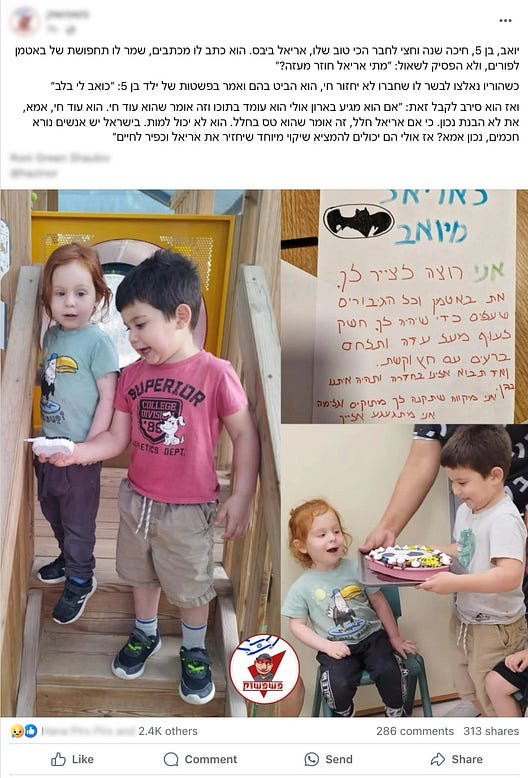
The latest image and story that has captivated my heart and mind is about Ariel Bibas’s best friend, Yoav. The story that has been shared is that Yoav has been waiting for his friend to come back from Gaza. He saved a Batman costume for him. He wrote him letters. It’s an incredible friendship story that inspires me to be a better person and a better friend. A 5 year old has become my teacher.

This morning, in Daniel Gordis’s substack, Israel from the Inside, he told an incredible story about Yoav. When told that his friend Ariel would not be coming home from Gaza alive, Yoav refused to accept it. He said, “If he’s coming back in a coffin, maybe he’s standing inside it, which means he’s still alive. He’s still alive, Mommy, you didn’t understand correctly. Because if Ariel is a khalal [Hebrew for “fallen soldier”], it means he’s flying in space [the Hebrew word for “space” is also khalal]. He can’t die. In Israel, there are very smart people, right Mom? So maybe they can invent a special potion that will bring Ariel and Kfir back to life.”

Oh to be 5 years old. To think the impossible is possible. To not really understand complete evil. The innocence of childhood. I hope that Yoav never loses that gift and that he never forgets his best friend Ariel. Maybe Yoav will be the one who changes the world, brings peace, leads the effort to eliminate hate. We can only hope.

Daniel also wrote very clearly and powerfully what I have been feeling. He said it much more succinctly that I have been able to do. He wrote, “We are at war not with mere enemies. We are at war with utter savages. Not human beings who are capable of savagery. Just savages. Irredeemable savages.” RIght to the point. Those who protest on college campuses, in the streets, and other places about Israel defending herself simply don’t understand the reality. They want us dead. Period. No ‘ifs, ands, or buts’. There is no common ground to be found. I am reminded of the famous political cartoon that states it better than any words can.

If we met them halfway, their demands wouldn’t change and we would simply have lost half of the Jewish population. That’s the reality. That’s who we are dealing with.

Nobody said that the Nazis should be allowed to stay in power or have their own Nazi Germany state as a part of Germany after World War II. There are laws to ensure that a child molestor won’t live close to their victim but also not close to any child. Nobody expects a victim of sexual assault to give their attacker a room in their home or welcome them to live in their neighborhood. Yet that is what is expected of Israel. To not just welcome these utter savages as neighbors but to enable them to rebuild their military strength and to be able to once again brutally attack, murder, kidnap, rape, and massacre the Israeli people. It’s beyond absurd.

The past week has been one where I flipflop between anger and range and sadness. Ariel, Kfir and Shiri Bibas’s murders and the stories coming out about how they were murdered along with what Hamas and the terrorists did to their bodies afterwards has my blood boiling. I’ve been in a place of anger and rage much more than sadness. Anger for what they endured. Anger for Yarden and what he has lost forever. Rage at the world who continues to enable and defend the monsters that strangled a 10 month old boy and 4 year old boy and then mutilated their bodies trying to cover up what they did. Enraged at fools like AOC and Bernie Sanders who continue to blame Israel for what the terrorists did and continue to do. Bernie pretends to take a moral stand by defending terrorists and is once again attempting to thwart efforts to support Israel against these savages.

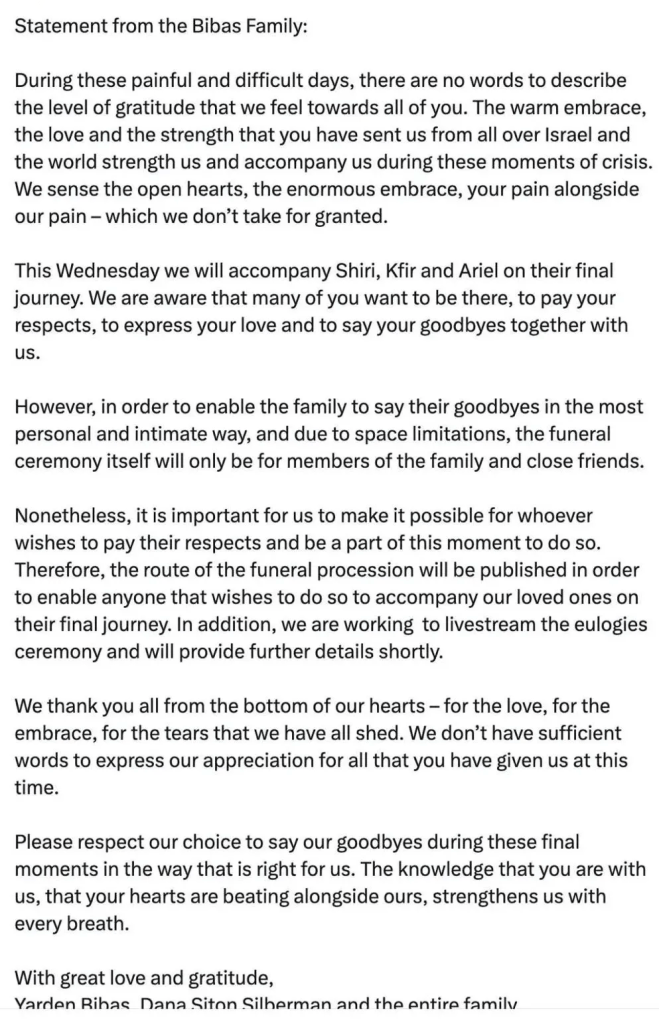
In today’s Israel from the Inside, Daniel Gordis gives me hope and something to strive for. He highlights the Statement from the Bibas family about the upcoming funerals for Shiri, Ariel, and Kfir. They recognize that the country and the Jewish diaspora has an emotional attachment with the family and these children. They also recognize their own need to grieve in their own way this horror. It’s an incredible statement with compassion, care, pain, and beauty.

Daniel then points out, “That’s the difference between them and us. Chants for revenge at Nasrallah’s “funeral”, versus a request for a private, intimate parting at a kibbutz. Murderous savages hailed by their “people,” versus a wife who, too excited for words, just posts three words from a classic poem and that brief post makes the headlines of Israel’s most-read newspaper. 

Irredeemable savage evil, versus a people that still believes in the possibility of goodness. A death cult embraced on American campuses “led” by administrations that have so lost their moral compass that they can’t even say that it’s wrong, versus a national liberation movement (ours, and it’s called “Zionism”) that still insists on believing that better days can lie ahead.”

He reminded me that we are different. That our essence is different. We love and treasure life. We revere it. We respect it. We honor the loss of it. They love and treasure death. They revere death. They celebrate death. We are not the same. Recognizing this, the question becomes, so what do I do with this difference? Daniel tells us in his closing of this piece.

“But that that is what we as a people must do is not in doubt. On a week when what we want most is to obliterate them, the way that we win is by being as different from them as we possibly can.” So we have our charge. We must maintain being as different from them as we possibly can. As much as the anger in me wants them to all be destroyed, Gaza to become a parking lot, eliminate them all so that we don’t make a mistake and let any of the evil continue, that is not who we are and that is not who I am. I’m still struggling with me standing in Kfar Aza during May 2024, watching and listening to the bombs being dropped in Jabaliya and that being the only thing that brought relief and peace to my soul. I said it then and I repeat it now, that is NOT who I am. That is NOT who I want to be. It was who I was in that moment. Our job is to lean into life. Our job is to do all that we can to be better human beings, not to match their level of depravity.

I had a friend reach out to me last week with a challenge she was facing and ask for my help. I was happy to help and did my part. The thanks she gave me over and over was overwhelming. I didn’t help for the thanks. I didn’t help because I was a ‘big shot with connections’. I helped because it was the right thing to do. Thank you Daniel Gordis for your piece this morning that reminded me not only THAT we are different from them but WHY we are different from them. And reminding me that vengance will only make me more evil and will not bring light to the world and to my soul. They will get what is coming to them. I need to work to be a better person and to celebrate life every minute of every day. The anger and rage is still there but it’s quieter now. I don’t need vengence to honor the lives of Shiri, Ariel, and Kfir Bibas. I need to bring more light into the world to replace their light that was eliminate by evil.
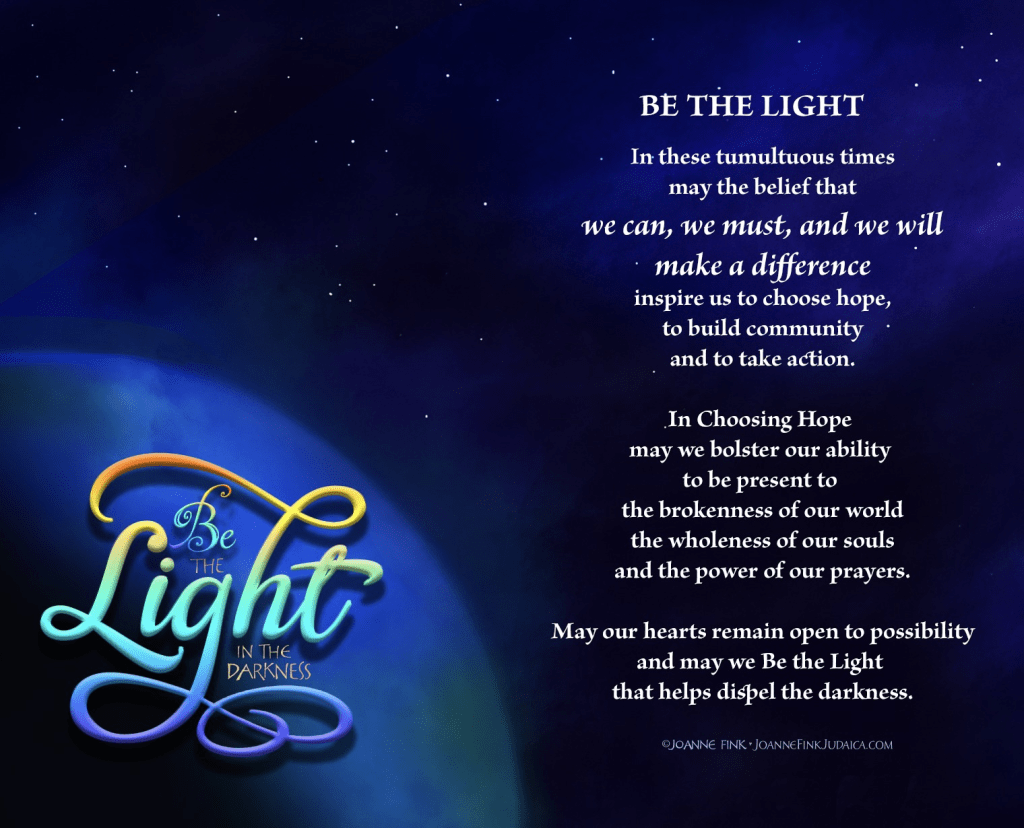
Art by Joanne Fink. Visit her website for more beautiful pieces that will inspire you. https://zenspirations.com/

Fire, loss, and gratitude

The wildfires in California are devastating. People are losing their homes and their valuables. Some are losing their lives. I live in Florida, far from California. There is no threat of those fires expanding to my community, yet I truly understand what that loss feels like.

In 2013, my family and I were preparing to move from Gainesville, FL to Seattle, WA as I had been recruited and hired to be the new President and CEO of the Jewish Federation of Greater Seattle. It was a big move with lots of nerves, fear, and concern for all of us. We were literally moving completely across the country. My wife and kids had never not lived close to family and now we were moving nearly 3,000 miles away.

This was a big new job in a new community for me. Alison, my wife, had one friend who lived there and my kids knew nobody. It was exciting and scary at the same time. We packed up our house, the movers took our belongings away, and we moved into my in-laws house for a few days. I was leaving a few days before my family to get things set up, move into our rental home, pick up our dog at the airport and then get the family a few days later. Everything was set up for this big change in our lives.

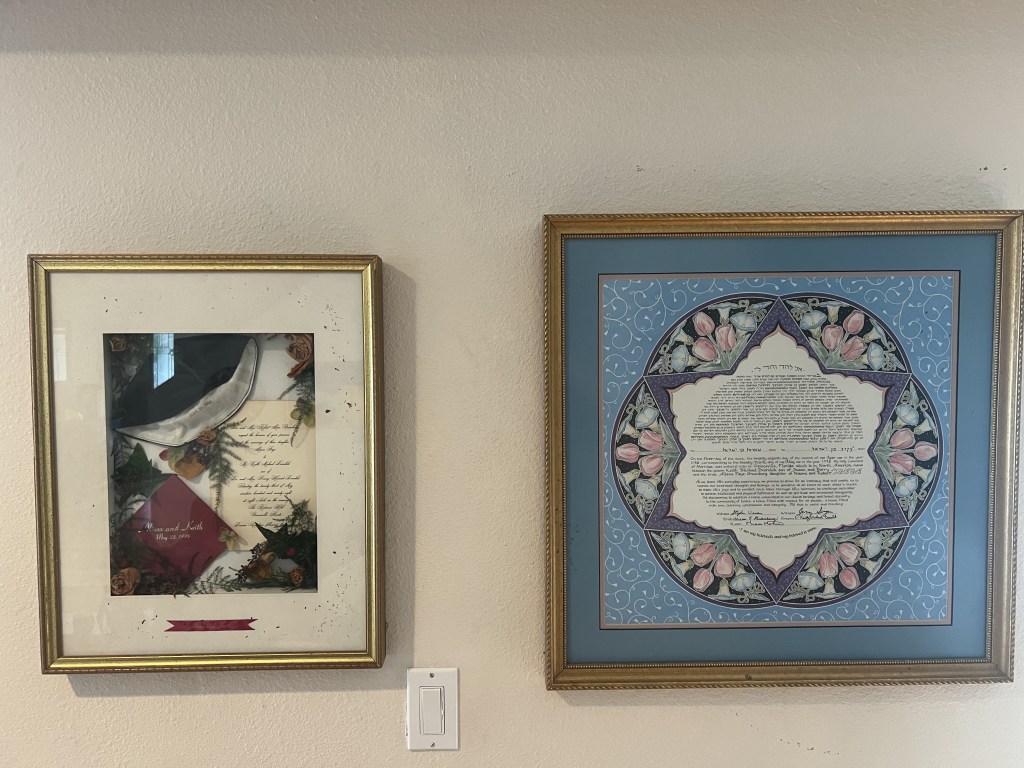
As I prepared to head to the airport in a rental car (our cars had been shipped already), my phone rang. It was the moving company. They told me that there had been a fire in our moving truck and it was a complete loss. Everything we owned that was on that truck was lost. My face dropped. I didn’t know what to do. For a minute I thought I was being pranked, I hoped and prayed I was being pranked, but I wasn’t. I told Alison and she was stunned. How do you comprehend losing all your belongings like that. Your memories. Your photos as a child, with your grandparents, your children as babies, your ketubah (marriage certificate) and so much more.

I headed to the airport in shock, talking to Alison on the phone the entire time. I called Delta, told them what happened, and they changed my flight to a day later. I called my new board chair and shared the news with her. She was shocked. Using humor to deflect my feelings, I said to her, “Well, at least we don’t have to unpack.”

When I got back to my in-laws house, we spoke to the moving company again and they said we could come to the facility in Jacksonville where the truck was and salvage anything that we wanted. Still in shock, Alison and I drove to Jacksonville, depressed at what we were going to see.

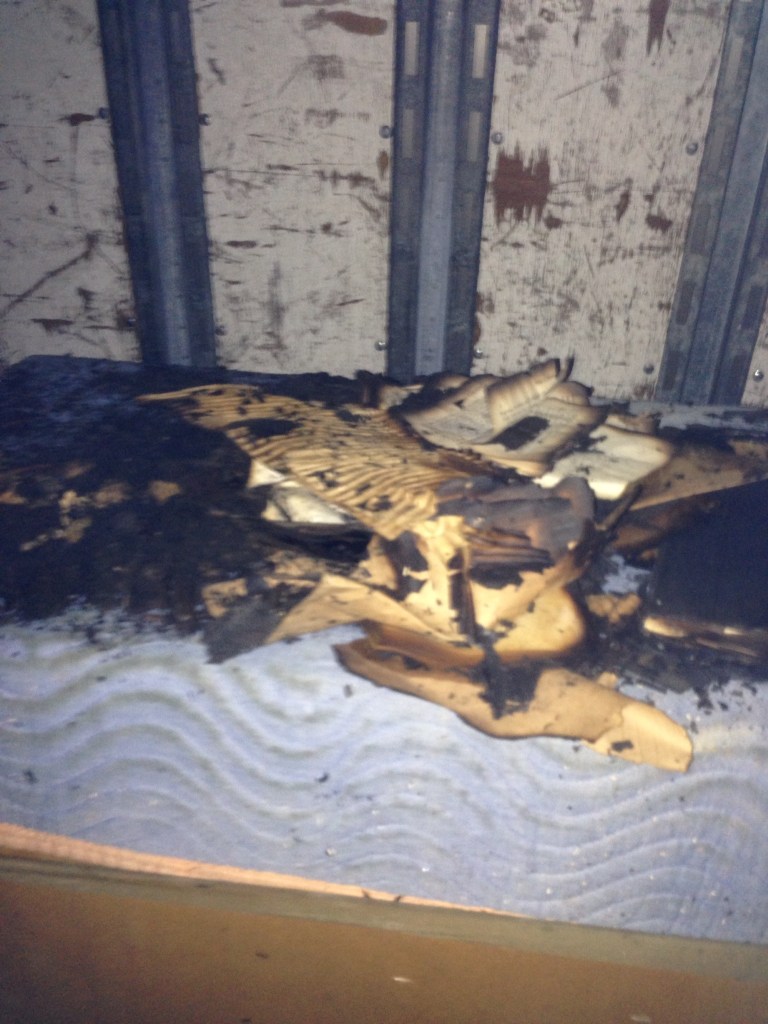
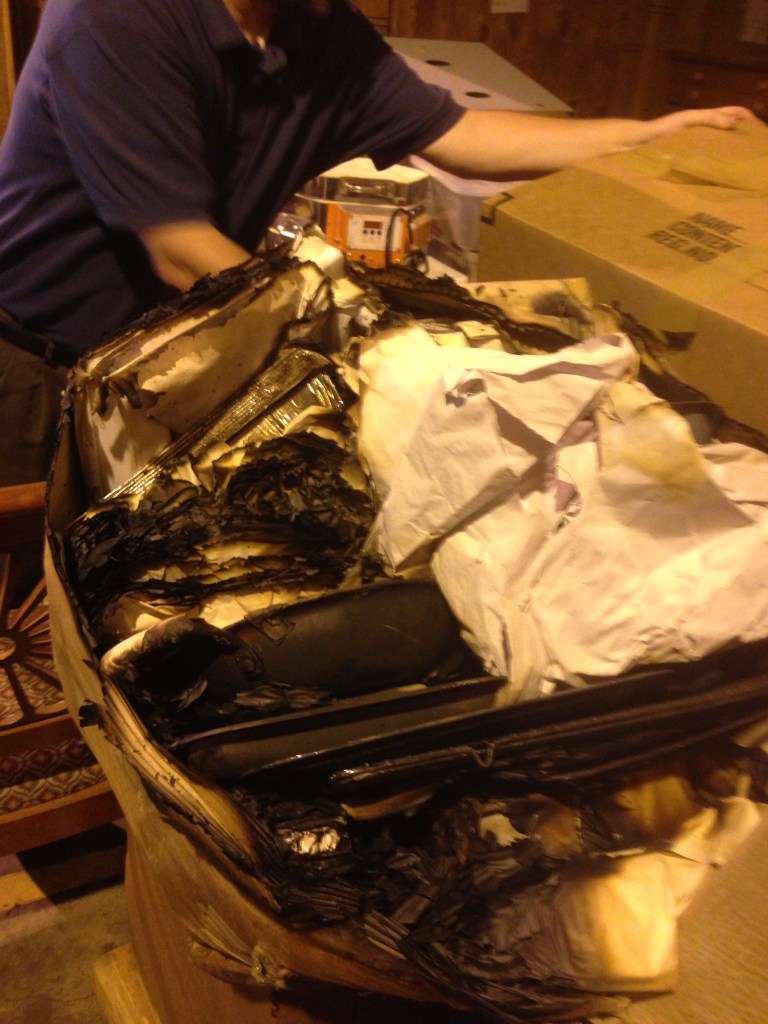
When we arrived, they told us what happened. The truck hadn’t left the yard yet. There was an issue with the truck that needed to be fixed before they could send it to Seattle. The way to fix it involved using a blowtorch. Their standard operating procedure is to removed everything from the truck, then use the blowtorch to fix it, and then reload the truck. The person who was fixing it decided he didn’t want to do that and just tried to fix it with all our belonging still on the truck. Something caught fire, the truck went up in flames, they rushed to put it out, but the fire, smoke, and water ruined our belongings. Later, I reached out to a few attornies about a lawsuit since they didn’t follow their procedures and I learned that they are only liable for the loss. Not for anything else. I learned that sentimental things have no value other than replacement of them. Things that were handed down from my grandfathers would be worth pennies because they were old things that could easily replaced. A lesson learned.

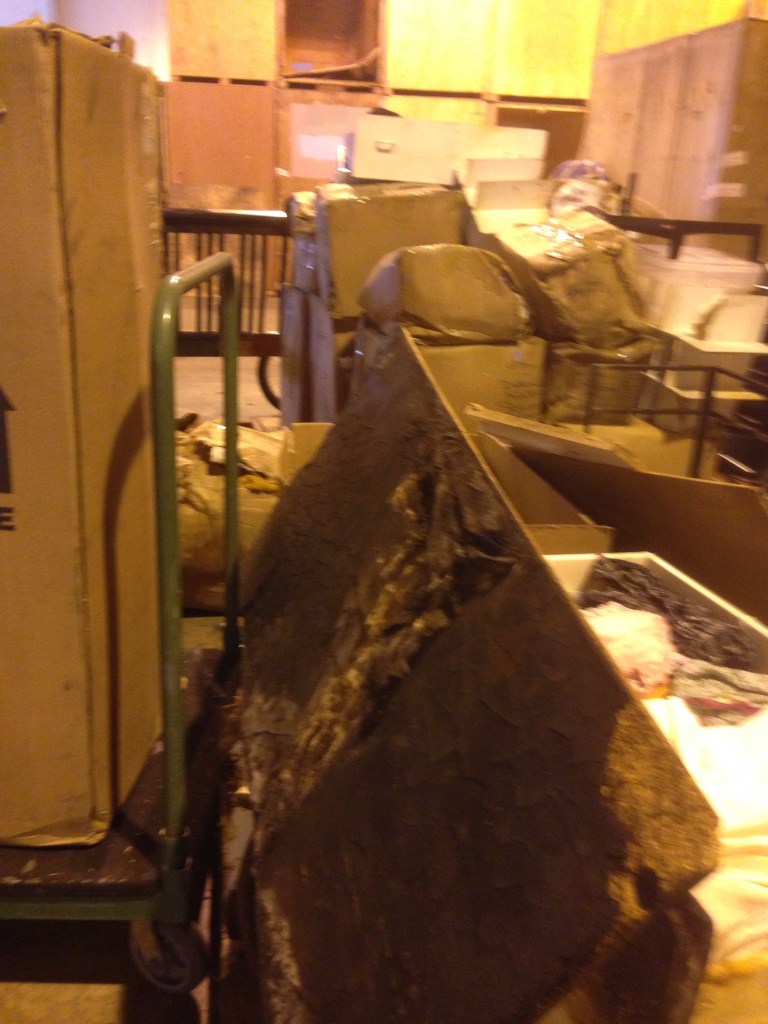
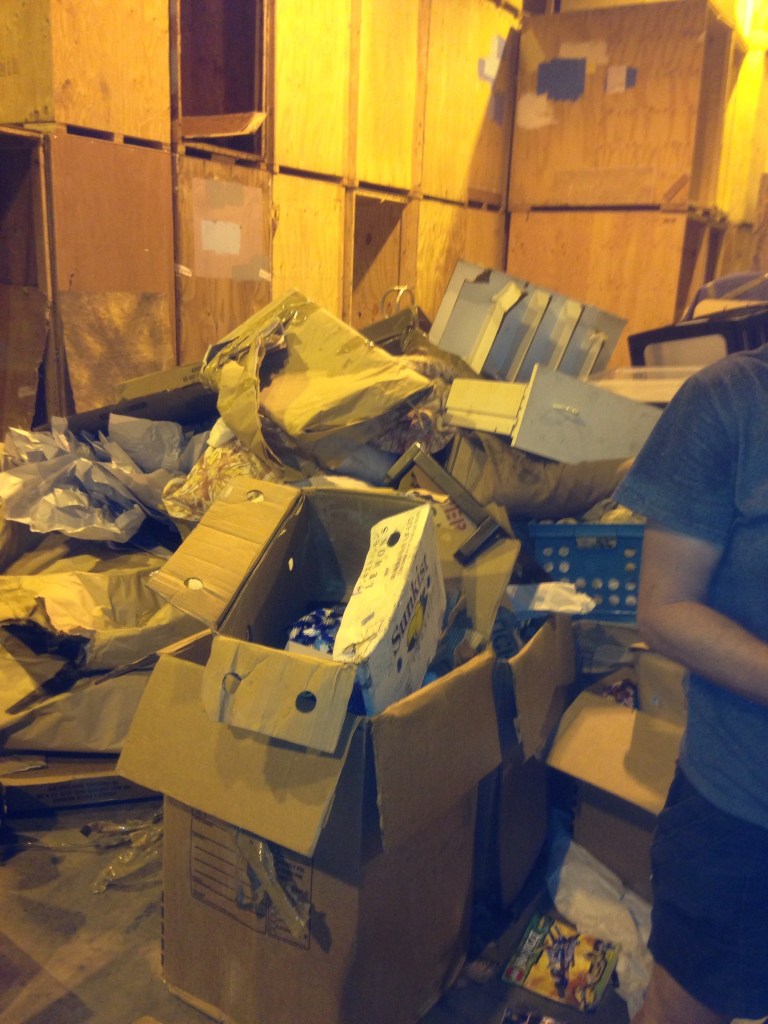
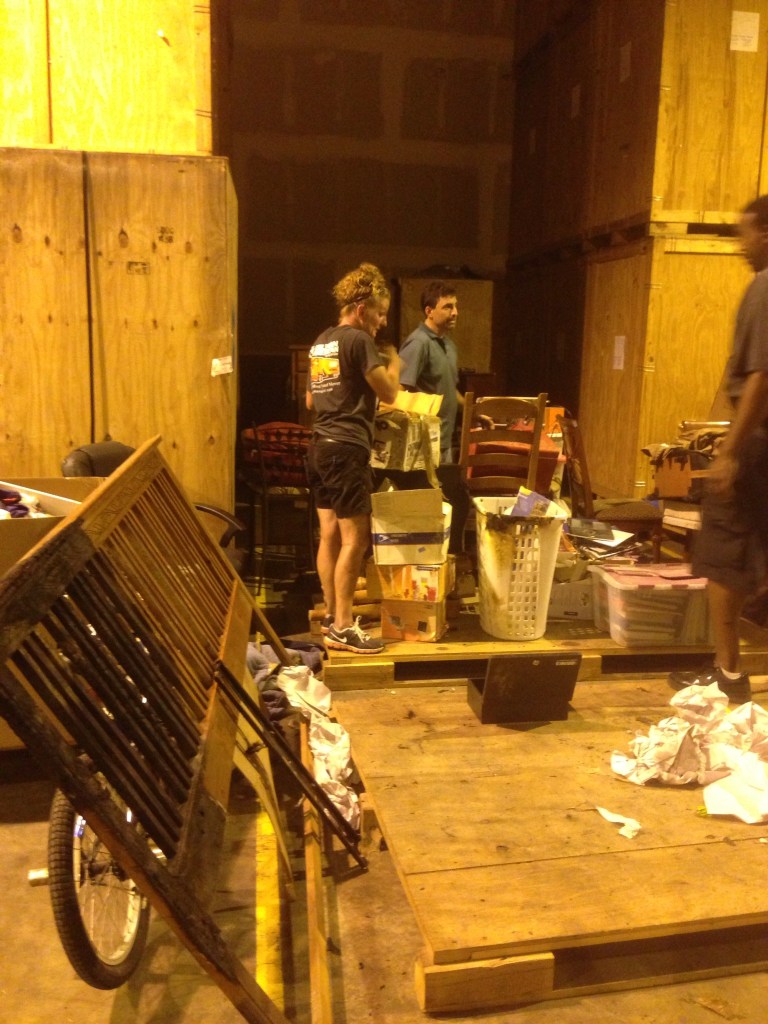
We were both fuming as we walked to the area where the truck and our belongings were. You could smell the smoke well before we got there. The sight was devastating. Boxes were charred and wet. Furniture burned. We slowly approached the area, tears in our eyes, and began to go through the boxes.

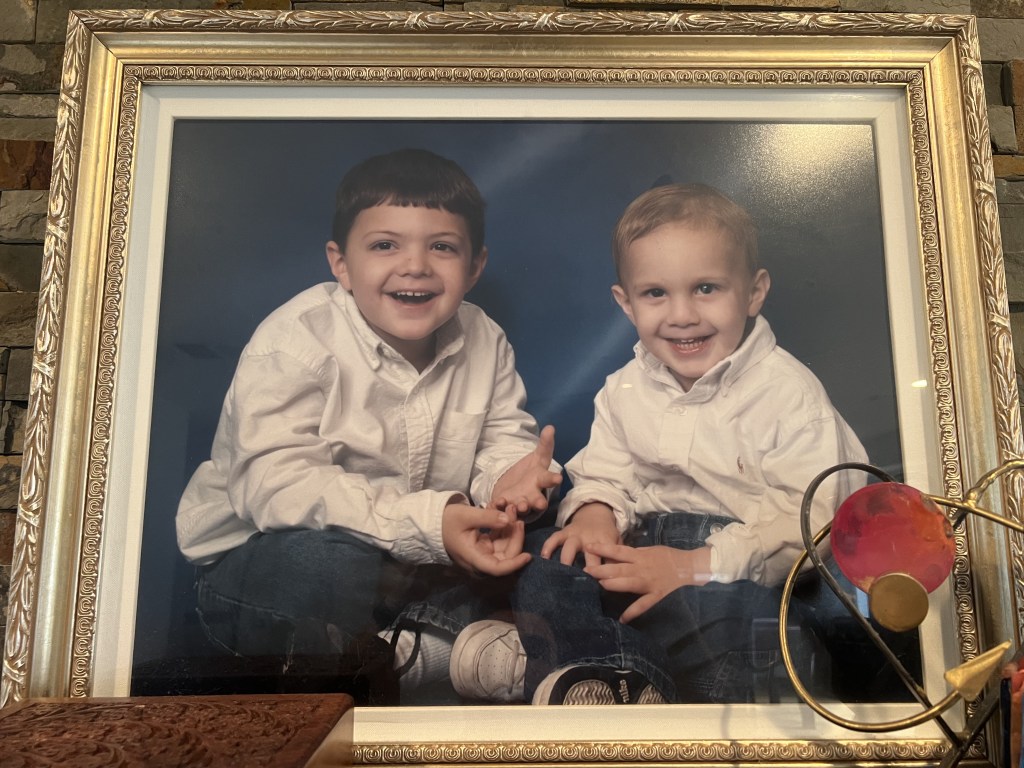
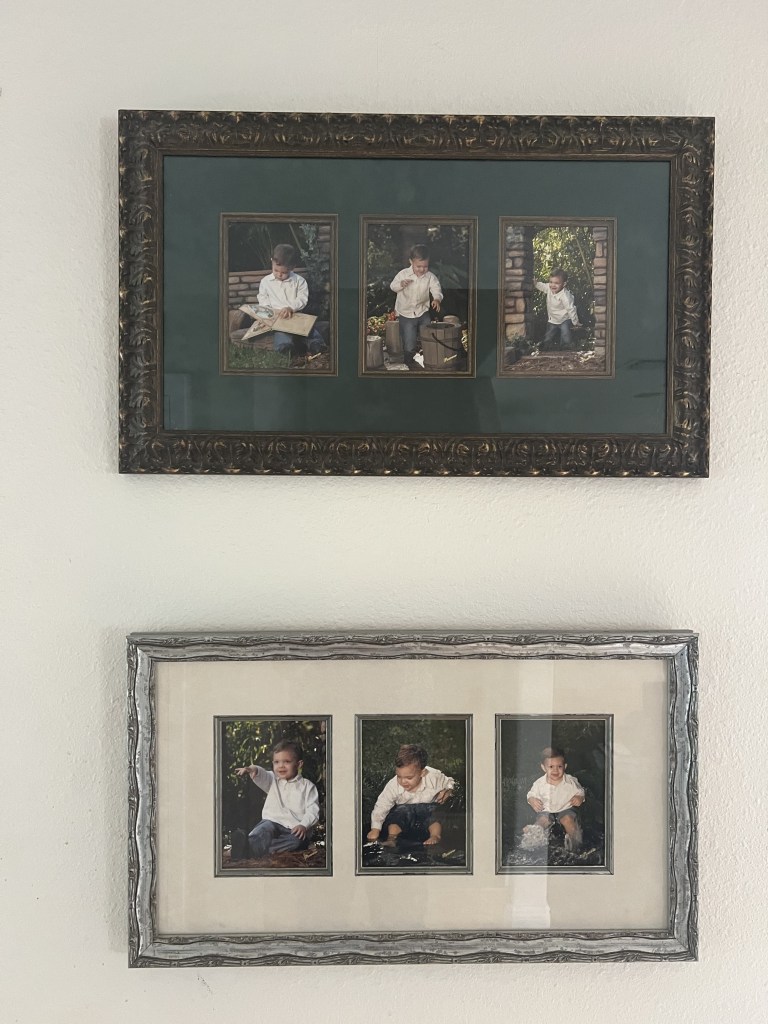
Then something amazing happened. We opened a wet and charred box and found our ketubah in it, in perfect condition. We opened another wet and charred box and found our wedding album along with other picture albums from our childhoods. We found our children’s professional pictures when they were 4 and 2 perfectly safe. We looked around as our furniture, clothes, and everything that could be replaced with money was damaged and lost and realized that things that really mattered to us were not. The collage from our wedding reception was fine. My autographed sports memorabilia that I got personally, signed to me, was fine. The things my grandfather and Alison’s grandfather did special for us, were fine. My grandfather had the newspapers from the 4 days leading up to Nixon’s resignation and the day that FDR died. They mean the world to me because they connect me to him, long after he died. They were all fine. Our hearts warmed quickly and were filled with gratitude. Yes, we lost all our material possessions and would have to get everything new. Yet the things that truly mattered to us, the things that were irreplaceable, were saved.

This was my proof that God exists. There was no reason for these things to be saved. They weren’t in a part of the truck that wasn’t burned. Our ketubah and Alison’s bridal portrait were in boxes that were behind the couch that burned up. The things that mattered the most were mixed with everything that was a complete loss. There was no reason for them to be saved and in great condition other than God.

As we see what is happening in Calfornia with the fire and loss of homes, I think back to when we lost everything we owned. When people reached out, wanting to donate money to help us, we declined. Why did we decline? We had insurance on our items and they could be replaced. We thought we had enough insurance but eventually learned that replacing EVERYTHING you own is much more expensive than you think. We told people that most importantly, nobody was hurt. We still had a place to live and material things are not important compared to being healthy.

I feel for the people who have lost their homes and their possessions. I have been there with the possessions and was grateful it was just possessions and not my house. I was lucky that the things that couldn’t be replaced were saved. The people in California don’t have that luck. Houses and possessions can be replaced. It will be an inconvenience. It will be frustrating. It’s not something anybody would want to go through. For those who lost their lives, they can’t be replaced. For those who lost their material possessions, all that can, and will, be replaced.

After losing our material possessions in 2013, I found myself grateful. Grateful that we were safe and it was just things. Grateful we had insurance, which covered about 85% of the cost of replacing everything. I was incredibly grateful that the things that couldn’t be replaced were saved. It reminded me of my priorities. It reminded me that material things are just that – things. We may like them and enjoy them, but they are just things. There are many things far more important.

I hope that those going through this awful time of loss, of devastation, and in a time when they are in shock, the same way I was in shock after hearing the news, come to the same realization. Their homes will be rebuilt. They will buy new clothes and new furniture. They can buy new art for the walls, new rugs for the floors, new towels and sheets, and appliances. There are many things that are irreplaceable. Possessions are not among them.

I found great comfort in this realization. I hope those dealing with it in California find the same comfort. Having lost all my possessions in 2013, I know what is really important. I would gladly go through it all over again to ensure my health and the health of my loved ones. Possessions are temporary and unimportant. Our lives and the lives of our loved ones are what matters. Health and happiness. Let the pain those in California are going through be a lesson to us all about what really matters in life. I know it’s a reminder for me.

Me walking through the fire damage of our belongings
Inside the moving van where the fire occurred.

“Just because” is not longer enough

There are many things we take as truth ‘just because’. Rituals we do because that’s what we were taught, without understanding the why or the intention behind them. Things we accept as fact, once again, ‘just because’. We live in a time where we no longer have that luxury.

On the English calendar, my dad died on September 6, 2022. I will always remember him on that day. In addition, the Hebrew calendar (which is lunar) means that his yartzheit (remembrance of the day he died) is different. It was the 11th of the month of Elul. This year the 11th of Elul began last night (Friday night) and it is all day today. Being in Israel and staying in a hotel, I wanted to think how to best remember and honor him. Typically I would light the yartzheit candle that burns for 24 hours and use that to reflect. Being in a hotel, lighting the candle wouldn’t be possible.

It was also Shabbat (the sabbath). This added an additional opportunity and compexity. What would I be doing Friday night and with whom? And then Saturday would be a completely free day to reflect – what an opportunity! The first answer came quickly. My friends Margot and Tamar invited me to their new home in Modi’in (the just moved there from Jerusalem) to enjoy Shabbat with their family. I always see Margot when I am in Jerusalem, so the chance to see their new home, see Tamar and their beautiful 3 children, was something I couldn’t pass up. An added bonus was Margot’s parents were visiting along with another friend of theirs from Jerusalem.

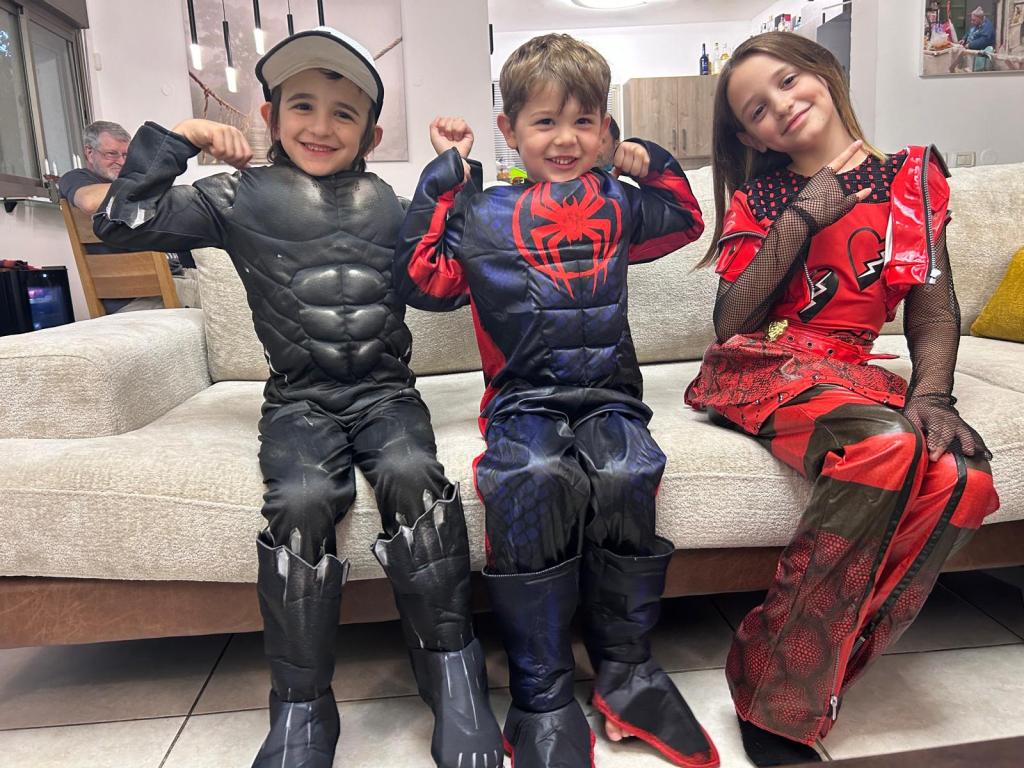
The last time I got to spend time with Margot and Tamar’s kids was about 2 1/2 years ago. During that visit, the two older ones put on costumes and ran around playing while the youngest had already fallen asleep. Remembering how much they loved costumes, I brainstormed with Margot about what they would want and got them special presents. I couldn’t wait to give them their presents and see the joy on their faces. It was something very much in the spirit of my dad – bringing happiness and joy to people was so important to him.

The excitement of the costumes was as I hoped. They put them on and ran around. It was so much fun to watch their faces and hear their voices.

Black Panther, Spiderman, and Red.

I smiled as I watched their joy. It was a fitting way to honor my dad. He loved children and loved making people happy. As they talked excitedly to me, especially Halleli as Red, I was filled with his presence. I felt like him with his grandchildren, paying full attention to them and validating their excitement with his listening. We laughed, we sang and we danced. Margot and Halleli did a dance together that was fun to watch. Halleli danced by herself for us. The joy was palpable. Yartzheit’s and remember those we have lost is usually sad and somber. I’m grateful that this year, on my dad’s 2nd Yartzheit, he joined us in spirit by making it fun and full of light. It was his spirit and the way he lived that infused Friday night. As Tamar drove me back to my hotel in Tel Aviv we had an in depth conversation about the impact of the war on her and Margot, on other parents, and especially on children. It was a reminder to me of not just what Margot and Tamar and other Israeli parents are doing to protect their children but all the things that my parents did to protect my siblings and me. I was filled with gratitude. It was far better and more meaningful than simply lighting a candle.

Margot and Halleli dancing

The day of my dad’s yartzheit (Saturday) I had a slow morning of rest and relaxation. I then spent the day on the beach with some new friends. It was a great day to celebrate life. That’s what my dad did, celebrated life. It was a different way to honor his memory this year. It was also very meaningful because it was about the essense of who he was. It was about his values (family) and happiness and enjoying life. It felt right. It felt good. And I felt him with me the entire time. ‘Just because’ you are supposed to light a candle for remembrance isn’t enough. I lived the day as my dad would have, truly remembering and honoring him.

One of my favorite pictures of my dad and me

I’m currently in Israel. The past few days I have been in Tel Aviv and enjoying the weather, the beach, the Mediterranean, delicious food, and time with friends and colleagues. A group of new friends went to dinner on the beach and it was amazing to learn how interconnected we were. The food was good, the company better, and the view of the beach spectacular. Later, we sat on the roof last night talking about Israel, perceptions, safety, and much more. It was a beautiful night. The weather was cool, the sky was clear, you could see and hear the Mediterranean. We talked about the beauty of Israel. How safe we felt. Our love for the country. Some of us were here for the first time. Some for multiple times. Some were Jewish and some were not. What a diverse group. Around midnight our group broke up and I walked back to my hotel.

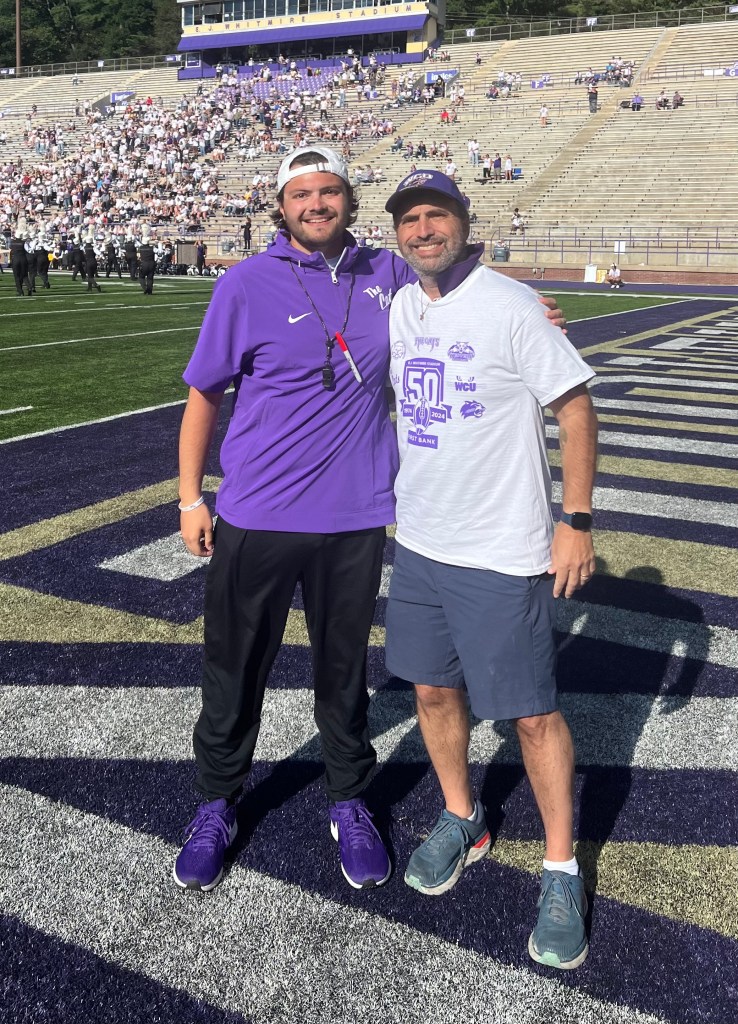
A few hours later my phone rang. It was my oldest son. It woke me from a deep sleep and I immediately answered. His voice was full of excitement as the team he coaches had just won a big road game and for the second week in a row, the part he coaches played a key role in them winning. It was awesome that he wanted to call me to share his joy. I didn’t mind that it was 4 am for me – the fact he wanted to share this joy with me right after the game ended meant the world. This was my dad’s dream – that his children would have that type of relationship with their children. That his children would remain close as adults. I shared in his joy with immense gratitude. Does life really get any better than your children having success and joy and wanting to share it with you? I don’t think so. I know my dad didn’t think so.

On the field after the first home game – nothing comes close to celebrating your children’s happiness and success.

I fell back asleep and a few hours later, when I woke up, I saw messages from friends in the US asking what was going on and if I was safe. I wasn’t sure what they meant since it was quiet in Tel Aviv and I slept well. I opened my WhatsApp to see what was going on and saw this:

I understood why they were worried and reaching out. Thankfully the rockets and the alerts did not reach Tel Aviv. It didn’t impact my sleep nor did I have to go to the 2nd floor saferoom in the hotel (yes, there is one, and yes, I know where it is). The rockets and the sirens did reach Modi’in, where I have many friends and where I had Shabbat dinner this week. I checked on my friends and they are all safe, just a bit flustered from the 6:30 am sirens and going to their safe rooms, getting their children and sometimes parents into the safe room, in the time alotted for safety. I responded to my friends that reached out that I was safe and we had no sirens. Even though it was around midnight on the East Coast of the US, I texted my family, brother and sister, and mom to let them know we had no sirens and I am safe. Hopefully it didn’t wake them up and they can have a restful sleep and see it when they wake up.

A rocket did hit part of the train station in Modi’in. In May, I was at that train station. If the trains ran later on Friday afternoons (they close just after 2 pm for Shabbat), I’d have been there on Friday afternoon. This is the reality of terrorism, Hamas, Hezbollah, the Houthi’s and the head of the snake, Iran. This is what Tamar and I were discussing on the ride to my hotel Friday night. How does she explain this to her young children? How do she and Margot deal with the stress of parenting plus parenting in a war plus shielding their children and keeping them safe, physically, emotionaly, and spiritually. Most people understand that the IDF soldiers, the families of hostages, the rescued hostages, and those who lost loved ones on October 7th or afterwards, are struggling. The reality is the entire country is struggling. You feel the struggle when you are here. The recovery will take a long time after the war ends. Tamar and I discussed that on our ride from Modi’in to Tel Aviv. While we are seeing the greatest generation of Israelis step up in this time of crisis, there are other generations that are doing the best they can in these circumstances to survive, to live, to protect their children. The repurcussions of this war are long standing. There is a deep wound in the Israeli psyche and the Israeli people that will need to heal. Those of us in the diaspora need to understand this and help as much as we can. Coming to Israel is part of that support. As diaspora Jews, we do not understand the power of our coming to Israel during this time and the message it sends to our Israeli brothers and sisters. To know they are not alone now is critical. I have been here three (3) times since May. The thanks that I get, and the shock from many that I would come to a war zone at all, let alone 3 times, is powerful. Our Israeli brothers and sisters need us. They need our support. I urge you to come. More will be coming from me in the very near future about new ways to get here that are meaningful and affordable. It matters.

Escalator at the train station in Modi’in after a rocket hit the station

Our choices determine who we are. My dad taught me that. It’s what we do, not what we say. He taught me that too. I have lived my life in a way that when my grandchildren ask what I did at key moments, there are answers that I will proud for my children to share with them. On 9/11 I was active and helping address the trauma the UF students were dealing with. During Covid I was active in helping ensure we found ways to being back our employees quickly and provide needed services. After October 7th I made sure to be at the rally in DC, I got active with helping hostages that were released, and helping Israel. I have come here 3 times since October 7, brought students on a leadership trip, and am working with Israeli nonprofits that help children, families, small businesses, US college students, and families of hostages.

“Just because” isn’t good enough. It’s no longer acceptable. Each of us have the ability to make a difference with our actions. A friend of mine in Richmond posted this message on Facebook about a fraternity brother and me being in Israel together with a picture of us here.

Two past Richmonders who are amazing Israel advocates who don’t just talk the talk but are constantly walking the walk and using social media to share their experience! This is so much more powerful than the ho hum talk of people who lead without their personal investment and family involvement. We need THIS here!

We need this everywhere. Take action. You can. The status quo does not have be accepted. In my dad’s memory, I refuse to be silent. I refuse to sit by idly. I refuse to accept the unacceptable and will fight for the future of the Jewish people, the land of Israel, and the type of world not only that I want to live in but one that I want for my future grandchildren and great-grandchildren. I owe them no less. My grandparents did if for me, how can I not do it for mine?

Am Yisrael Chai.

Fighting antisemitism by being Jewish

I have been talking and writing about the increase in antisemitism and Jew hatred for a decade now.  I saw it when I was living in Seattle when a swastika would be drawn/painted on a Jewish building almost monthly.  I called it out then and many people thought I was being reactionary and fear mongering.  I was pointing out what was happening.

Over the past decade, it has only gotten worse.  Since October 7th, the rise in Jew hatred has become frightening.  Violence against Jews is now common.  Shooting at Jewish schools happens too often.  Ugly, racist protests occur on college campuses and in the streets in the US, Canada, and throughout Europe.  Israeli Olympic athletes are threatened with death.  The Palestinian athletes are allowed to wear shirts with bombs dropping on Israel, but the Israeli athletes are not permitted to wear the yellow ribbons for the hostages.  The list goes on and on. 

I have mentioned many times how I’m not super religious but very Jewish.  Over the past few years, I have been digging deeper into what being Jewish means to me outside of services.  Like many people, services don’t connect or inspire me.  I knew there was much more to being Jewish than just religious services so my exploration into Jewish spirituality, text and how it applies to my life, and finding more meaning have been a big part of my recent journey.

As I learn with Rabbi Ehrenkranz, we include a bit of prayers to understand the why instead of the what.  My recent trip to Israel with the Jewish Leadership Institute (JLI) also focused deeply on the why instead of the what.  My recent trips to Israel have also been an exploration into the why instead of the what.  Why does Jerusalem matter?  What is the point behind some of what we do?  What is the intention?  The goal?  The objective?  I have found that when I understand the why, I can adapt the what to fit my life and what is meaningful to me.  Judaism has adapted since the time of Abraham, Moses, King David, and even the 2nd Temple.  We don’t pray the way they did but we can connect to God and each other the way they did.  I find that very meaningful.

Rabbi Ehrenkranz started a monthly Sunday morning Minyan (prayer service) that I began attending because he asked me to.  Often times, just asking somebody you have a relationship with gets them to do what you ask.  It turns out most of the people who attend are friends of mine, so it becomes a social gathering as well as an opportunity to grow.  I appreciate how Rabbi Ehrenkranz explains the goal of each part of the service.  It has enabled me to move away from reading the Hebrew words that I don’t know what they mean and instead think about the goal and objective and connect that way.  It has turned an experience that was rote into one that is meaningful.
This Sunday, with all that is going on in Israel and the recent attack by Hezbollah on the Druze village, I chose to wear my IDF tzitzit (ritual fringed garments).  I got them from Rabbi Atlas in the IDF as I am helping him with a project to fund the 5,000 mezuzahs the IDF needs.  I don’t wear them regularly and in fact, this was the first time that I wore them under my shirt like you are ‘supposed’ to.  It was a way to connect to Israel, the IDF, and Judaism.  I feel that way about mezuzahs too – something that is easy to put on your door and have a meaningful symbol without being required to be super religious.  It’s an easy thing to put on your doorpost and show Jewish pride both internally and externally.  If you don’t have one and want one, MyZuzah will give you one for FREE!  And if you want to support the IDF in their effort to get their needed mezuzahs for IDF soldiers, there is a dollar for dollar match and you can buy them for the IDF here for $30 each.

At the minyan, I spent the time during the silent Amidah (the major prayer of the service) in my own mediation and conversation with God, thanking God for all the gifts in my life today.  In my learning with Rabbi Ehrenkranz, part of what I have learned is that most of our prayers are really a reminder to ourselves about how we should live and how much we need to be thankful to God for our lives.  As such, I took this time to focus in this area.  It is easy to take so many things for granted in our lives and this gave me a few minutes to really focus on things and express my gratitude.  Instead of reading Hebrew words without meaning, this time was special because it was focused on gratitude.  It reshaped my entire day as I realized not only how lucky I am to live the life that I do but also that it is only by the grace of God that I have so many gifts.  I am grateful to Rabbi Ehrenkranz for helping me find meaning in something that didn’t have meaning before.

We sang Acheinu, the prayer for those in capitivity, for the hostages. I began singing this in Israel in July and it has become incredibly meaningful to me. It’s an easy song to sing, a powerful prayer to say, and reminds me to keep the hostages front and center in my mind. That, along with my ‘Bring them home now’ dogtag that I wear every day keeps my priorities front of mind. It has been almost 10 full months of captivity and the reports now coming out from released hostages are horrific. I’m glad that I learned the how to sing it and do so daily. It takes me a couple of minutes, fills me with gratitude for my life, and doesn’t let me ever forget the hostages.

Over the past few years, I have been very lucky to have some amazing Jewish mentors and teachers.  People who expose me to things that are meaningful and show Judaism in a different way in which I can connect.  Harry Rothenberg, Ari Shabat,  Saul Blinkoff, Lori Palatnik, Mickey Singer, David Abramowitz, and Rabbi Ehrenkranz are just some of them.  Each exposes me to different things to think about.  Each one expands my knowledge and enriches my life in different ways.  Pirkei Avot says, “Find yourself a teacher, acquire for yourself a friend”, and I have found this to be true.  Each of these teachers are also friends and only one is a Rabbi!

As somebody who raised somewhat religious and is not any longer, I have found deep meaning in Judaism through understanding the why of what we do.  The what doesn’t really mean much to me but the why is something entirely different.  As antisemitism grows and Jew hatred explodes across the globe, I have found investing in my Jewish identity and Jewish meaningful practices to be important.  I have begun to bake challah again.  I make sure to say thank you to God every morning for waking me up (the basis of the Modeh Ani prayer), and since I learned about thanking God for making the rooster understand the difference between day and night, I thank him for the beauty of nature and this world. (It is a funny prayer that we start with – almost like the Rabbi’s are pranking us!)

Many people think it is all or nothing.  You either go to synagogue or you don’t pray.  You either can pray in Hebrew or you don’t pray Jewishly.  You keep kosher or you aren’t really Jewish.  You keep Shabbat one specific way, or it doesn’t have any meaning to you.  I have found just the opposite.  There is incredible gray in Judaism once you understand why we do things.  Then you have the opportunity to do what is meaningful to you to accomplish the goals. 

I encourage you to explore the why.  To learn about why Israel matters to Judaism.  To understand the intent behind the services and the prayers we do.  It will open doors for you to grow in ways you can’t imagine.