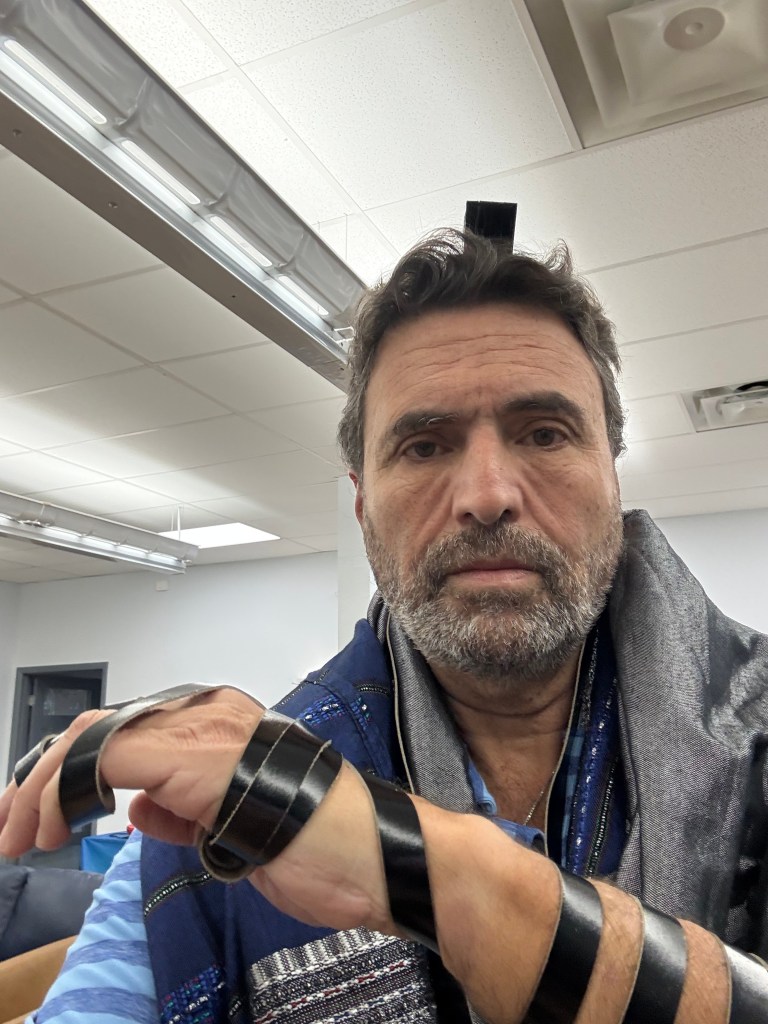
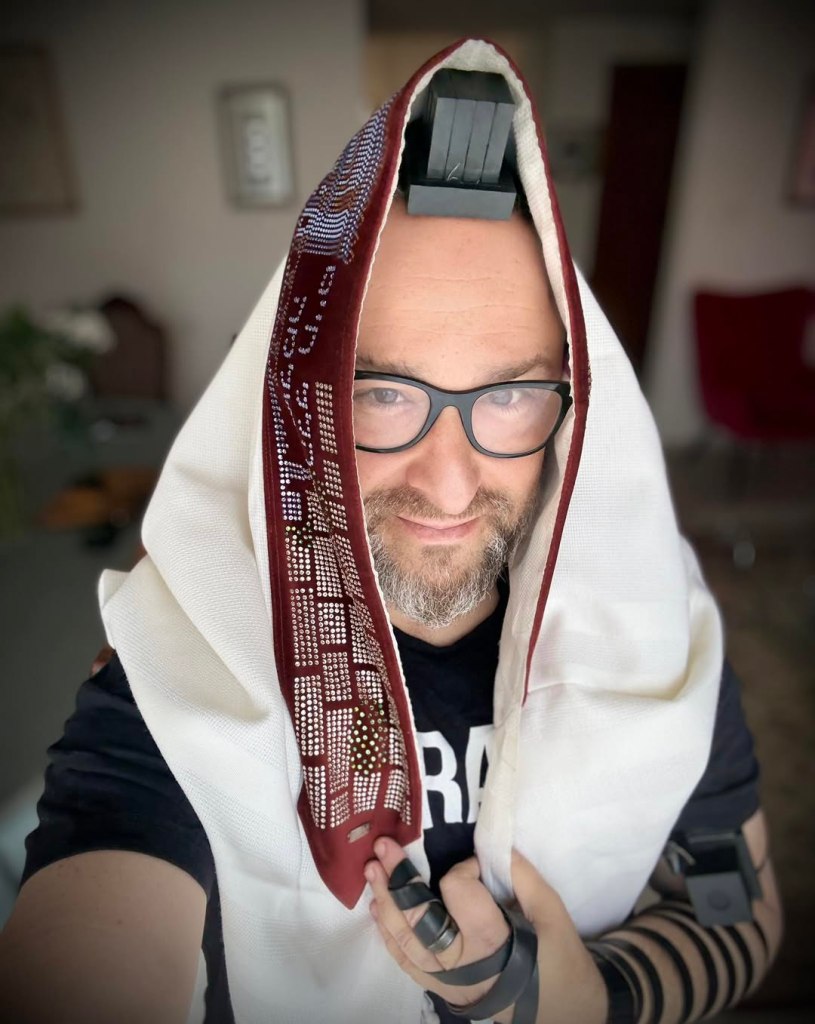
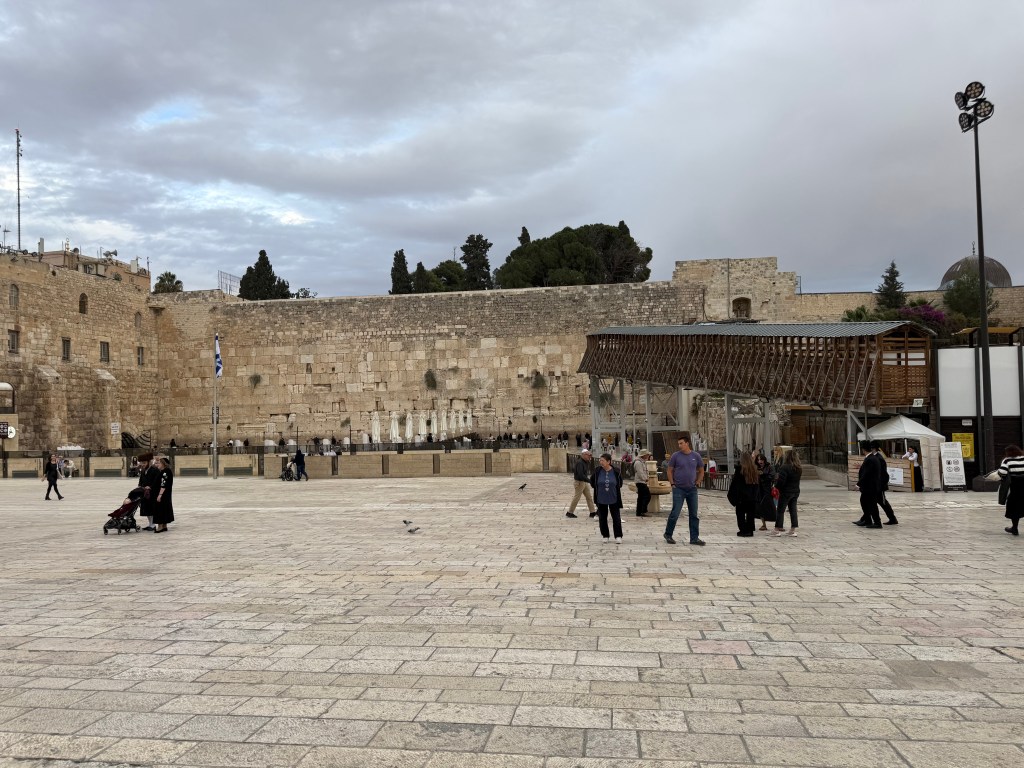
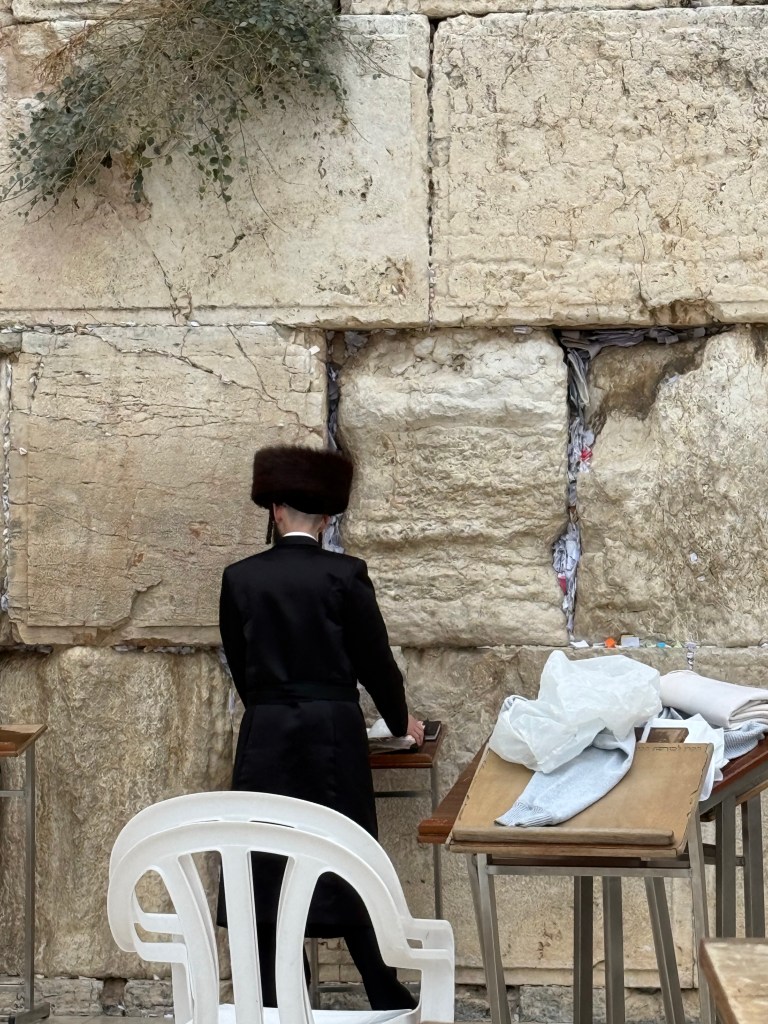
There is something special about Fridays in Israel. While Shabbat happens everywhere in the world, Friday in Israel, especially in Jerusalem, just seems different. There is a different energy, a different vibe. There is a buzz in the air, an excitment about it almost being Shabbat. It is something I don’t think I can adequately explain – it’s something you have to feel, you have to experience. This Friday was no exception, especially because it is Jerusalem. There was an energy in the air, a vibe that you can’t describe, you can only feel.
Being in Jerusalem always creates a desire for me to learn. One of my favorite teachers, Ari Ben-David joined us to explore some facinating questions. Today’s topic was “What am I?” A great and deep question. Being in Israel and in Jerusalem, we went to the Torah to explore it.
If you are like me, the image of torah study that I grew up with was boring. Reading these stories with no context and taking them literally. Over the years, I have learned that is not torah study. It’s simply reading stories. Torah study involves discussion, analysis, questioning, and debating. That’s what we did, led my friend and amazing educator, Aryeh Ben-David. Aryeh took us through Genesis chapter 1, verse 1 and half of verse 2. That’s it. All we needed to spend an hour or more discussing the deep topic, “What am I?”
He asked us to pick one line in chapter 1 and one line in chapter 2 that most answered the question. In chapter 1, we agreed on verse 26, “And God said, ‘Let us make man in our image, after our likeness.” In chapter 2, we agreed on verses 7 and 8, “the Lord God formed man from the dust of the earth. He blew into his nostrils the breath of life, and man became a human being.” So we are the image of God, have God inside us, and are dust. Simple points.
It doesn’t end there. Dust is our physical being but the image of God and having God inside us is our soul. That’s the competition we face every single day. Every single decision. Dust (physical wants and needs) vs. soul (the greater good). Dust is about the self and immediate pleasure. The soul is about all and comprises the past, present, and future. What will we choose when faced with the decision? That’s the key question that each of us answer every day with every decision. It’s not about always choosing one over the other – there are times when we need to choose dust and there are times when we need to choose the soul. It’s about being conscious of the decision. What a mind blowing realization on a Friday morning in Jerusalem? With Shabbat approaching quickly, it’s a deep thought to take to the Kotel.
I love the energy of Machane Yehuda, the shuk, especially on a Friday. I went to help bring the catered food for Shabbat dinner to our room and get everything set up before heading to the shuk. A little bit of soul work. When I got to the shuk, as usual it was packed. I wanted to get to my favorite gluten free bakery there to get a bunch of challah, challah rolls, babkah, dates and walnuts. Most I will bring home and freeze, but I wanted a challah I could eat for shabbat and dates with walnuts to snack on. It was 100% for dust, for my own wants and needs. While there, I got to buy some desserts for Shabbat dinner (parve rugalach from Marzipan) and wine for those at dinner. A little bit of soul, doing things for others, since I wasn’t eating the rugalach or drinking the wine. Torah into action.
We got to the Kotel for shabbat very early. It was fairly empty when we arrived which gave us time to spend at the wall in deep thought and prayer. For the first time in a very long time, I had the time and space to sit in a chair at the kotel and just be. To let the air and the spirituality overwhelm me as I did nothing but sit and be. It was incredibly peaceful and powerful. I looked at the notes in the Kotel that others had left – their prayers, hopefully answered. I saw Jews of all shapes and colors arrive and pray. As the sun began to set, I felt the quiet and peace around and inside me.
If you’ve never been to the Kotel for Shabbat, it’s quite an experience. It never gets old for me. The singing, dancing, ruach (spirit) and connection is incredible. This was no exception. We gathered together in the plaza and prayed, sang, danced, and connected. We listed as others, in bigger groups, did the same but even louder. It was more than personal prayer – it was the feeling of a people coming together as one. As somebody who doesn’t love services, I always love Friday night at the Kotel. When we finished our prayer, I wanted to go join one of the others.
Instead we began our walk from the old city to where we were having Shabbat dinner. It was about a 40 minute walk, on a beautiful night, exiting through the Armenian Quarter and continuing up Jaffa Street until we arrived. The table was set for 15, the food was plentiful, and the company divine. I love the Shabbat table where you have a little bit of prayer, a little bit of ritual, and a lot of food and conversation. We prayed, ate, sang, and talked for a few hours, getting to know each other better, sharing pieces of ourselves, and enjoying the beauty of peoplehood, Shabbat, Jerusalem, and Israel.
During our learning with Aryeh he asked us what Jerusalem really was. We threw out a bunch of answers before he gave us his. He said, “Jerusalem is the hospital for broken souls.”. Powerful, beautiful, and true. Each of us has our own cracks in our soul. It’s part of being human. In Jerusalem we can get the treatment to begin the healing process for our soul. I’ve always loved Jerusalem but never really had a deep understanding why. Aryeh’s explanation fits. When I’m hear, my soul gets the treatment it needs to heal. To improve. To be better. I can get out of focusing on the dust, on my wants and needs, and instead focus on my soul. On the bigger picture. On being of service instead of what’s in it for me.
If you’ve never been to Jerusalem, I encourage to visit. To explore. To open your heart and heal your soul. If you’ve been – come back. It’s time for another treatment.
This was a wonderful Shabbat filled with happiness, joy, friendship and peace. I want to do my part to make sure they are all like this, no matter where I am.
I arrived back in Israel at 6:30 this morning. I didn’t sleep much on the plane which meant this was going to be 2 days back to back with just a few 15 minute power naps to get me through. Good thing it’s Israel, since that always inspires me and gets my blood flowing.
After clearing passport control and customs and getting on the bus, we headed towards Rechovot for two different purposes. The first was to see the Weitzman Institute, a truly incredible research facility. The Weitzman Institute was targeted by Iran with their ICBMs in June of this year. They took a direct to one of their research facilities, destroying it. Their cancer research facility was also heavily damaged, resulting in the loss of priceless research that could have cured cancer.
At the Weitzman Institute, they have already been rebuilding. It’s amazing to see how quickly they repaired the damage and how important this research facility is. You can see the damage at some buiildings on the side and with missing windows but the destruction has been cleared, the frames of the new buildings in place. The cancer center images below show the damage on the side but the buildings that existed next to this one have been demolished and the new ones will be built soon. The building above now looks like new construction and it won’t be long before it is finished and operational again.
The Weitzman Institute is symbolic of Israel, Israelis and the Jewish people. We are resilient. We bounce back. We may be damaged but we won’t be destroyed. This is the Israel I saw in October and see today. An Israel bouncing back. A Jewish people determined not just to survive but to thrive. This is our ‘secret sauce’. We refuse to give up. We refuse to die. Our enemies have tried to kill us for thousands of years and we simply refuse to go away. Driving through the Weitzman Institute, seeing the mix of beauty and destruction, of live and commitment to the future through their research, reminded me that we all have our part to play and we all need to play our role. We aren’t asked to do more than that yet we are expected to do our part.
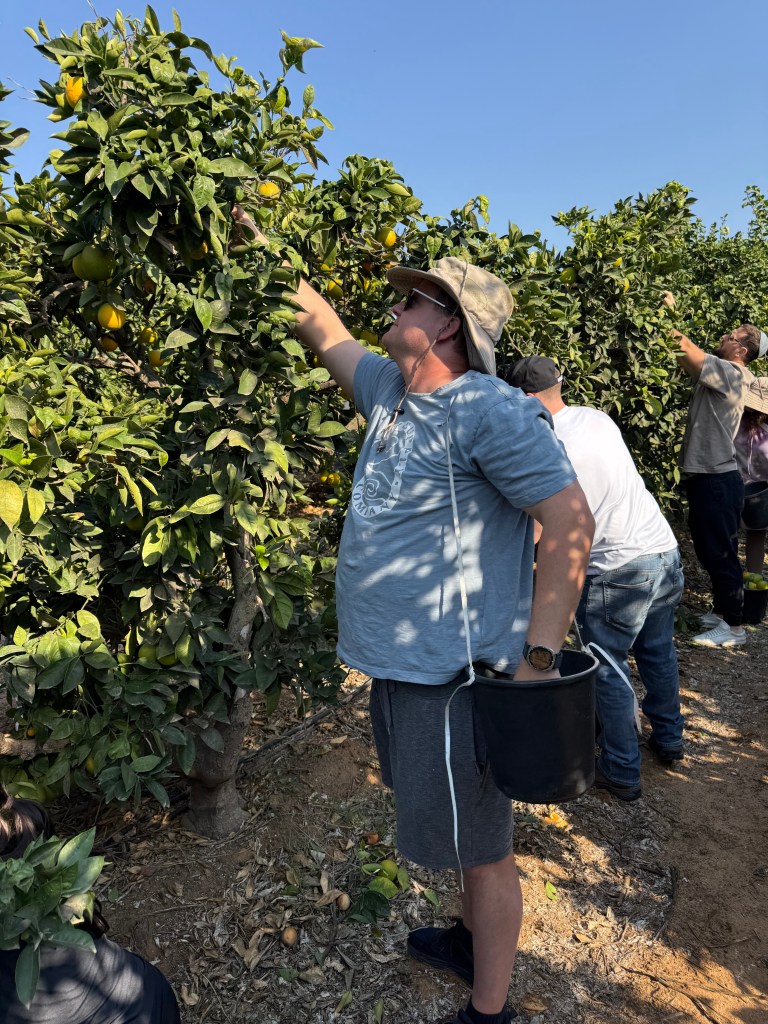
After leaving the Weitzman Institute, we headed to one of my favorite places in Israel, Ha-tov veHamtiv, outside of Rehovot. What is Ha-tov veHamtiv? It’s a farm, and orchard, owned and caretaken by an incredible man, a true Tzaddik (righteous person). Sandy, one of Israel’s most successful patent attornies, began this effort more than 40 years ago as a community garden. Today, this more than 200 acre facility, grows more than 35 different fruits and vegetables, depending on the season. All the food grown is donated to those in need. Sandy funds the entire project. Volunteers come and pick the fruit and vegetables. Last year, in July, we picked apples. This year, in December, we picked oranges. We picked them, we ate them, we worked the land, and we got energized. Less than 2 hours off the plane from Miami, we were out in the sun, working the land. Instead of being tired from a more than 11 hour flight and having little to no sleep, we were filled with vigor. It didn’t take long for us to fill up two big bins of oranges. We connected with the land. We connected with our ancestors. We connected with Israel and the founders of the modern state of Israel.
Sandy came to talk to us. What an incredibly understated and humble man. He was filled with joy at being in the orchard. He was filled with emotion, seeing us working the fields, working the land, being in Israel. Then he shared an incredible fact with us. His 200 acres provide more than 50 tons of food to those in need EVERY WEEK. This one man, through his effort, philanthropy, commitment, and working with others is providing more than 2,600 tons of food to those in need every year. Who says one person cannot change the world. Think about that – more than 2,600 TONS of food a year. That’s more than 5.2 MILLION pounds of food every year. How amazing and incredible is that. One man. With a dream. With a vision. Responsible for more than 5.2 million pounds of food being given to those in need. Feeding the hungry. I was humbled to meet him, to be in his presence, not because of his wealth or business success, but by the 5.2 million pounds of food he is responsible for providing every single year. He gives us something to strive for. One little (or not so little) orchard/farm outside of Rechovot in Israel. Imagine what we can each do with somebody like him as our role model.
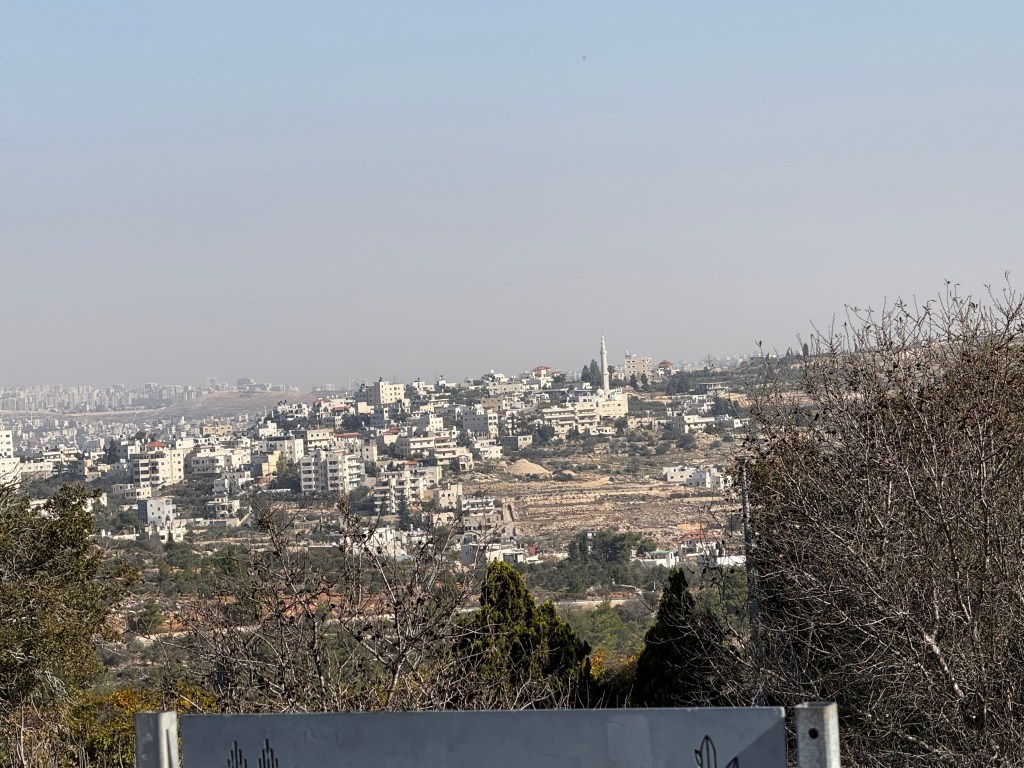
We hopped on the bus, stopped for some coffee, and continued on to Har Adar, an incredible overlook in the Jerusalem mountains. It was the sight of key battles in the War of Independence (1948) and the Six Day Way (1967), with tanks left there to memorialize those battles. Israel and her geography can be challenging for those who have never been to visit and seen how small the country is, how much the topography matters for security. Har Adar is a great location to understand the challenges and talk about where we have been, where we are, and where we hope to one day be.
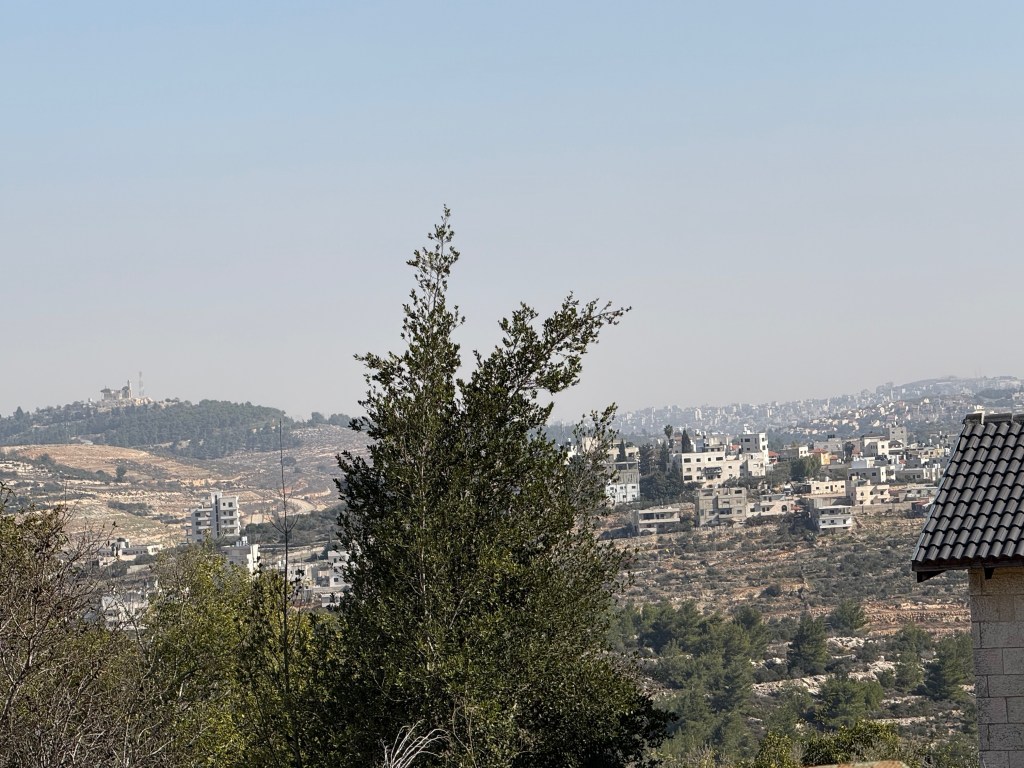
David Abramowitz speaking to the group at Har AdarThe view from Har Adar into Judea/Samaria/West BankThe view from Har Adar into Judea/Samaria/West Bank
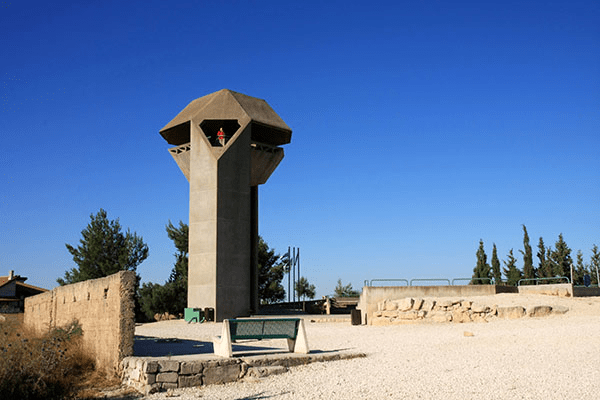
The villages in the background of these photos are looking into Judea/Samaria/West Bank (names are political so I use them all). Deep in the background is Ramallah. Up front are Arab villages. Off to the right is Jerusalem. You get a feel for how close everything is. Before the second intifada (Sept 2000 – Feb 2005) it was common to walk easily between the villages in Judea/Samaria/West Bank and towns like Har Adar. Due to the violence of the second intifada, Israel needed to install the security fence to stop terrorists from coming through and becoming suicide bombers, murdering innocent civilians. The cost of this was that innocent civilians in those villages now had to go through checkpoints, needed approval to enter Israel proper, and had their lives made more difficult. After October 7th, it became more difficult. Just last summer we were able to climb up the tower at the scenic lookout to get a high view of the area. Today the lookout is padlocked and we couldn’t enter. Security cameras were installed since July 2024 to monitor the area. Our reality makes me sad.
Har Adar was once an affluent community. People have left because they don’t feel safe living that close to the border. Sitting by the tanks, eating our lunch, looking over the outlook, all I saw was a lost past and a lost future. Will we ever be able to return to the days where the security fence and checkpoints aren’t needed? Where we can live together in a shared society? I hope. I dream. I’m not sure that I believe. It makes me sad.
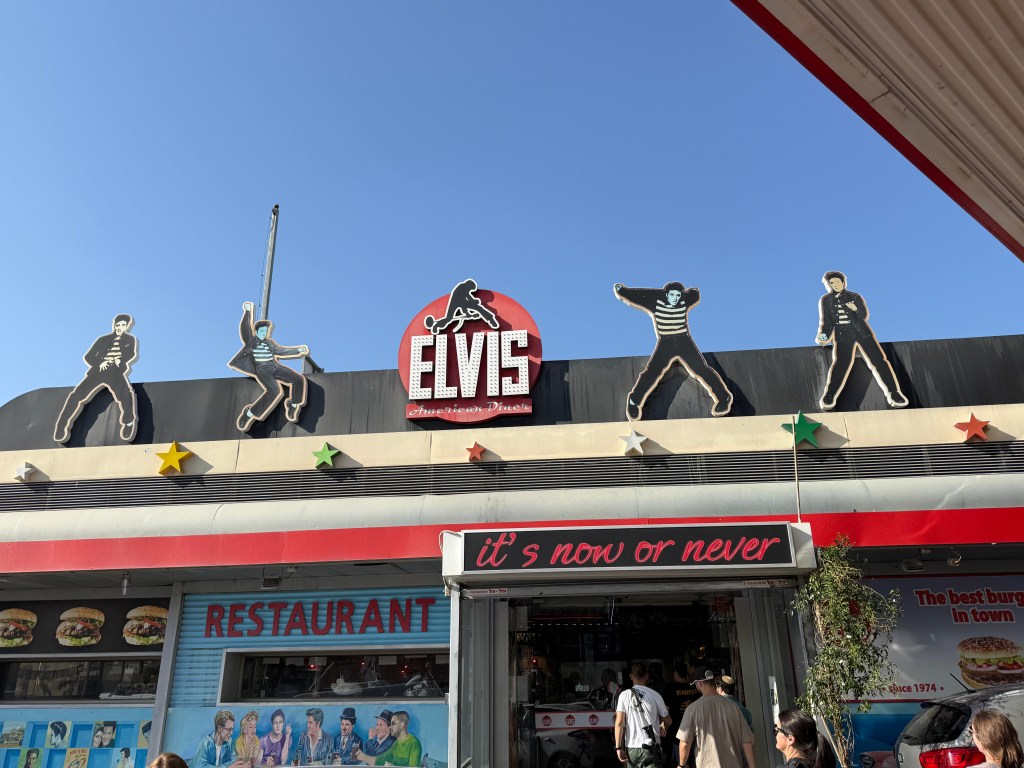
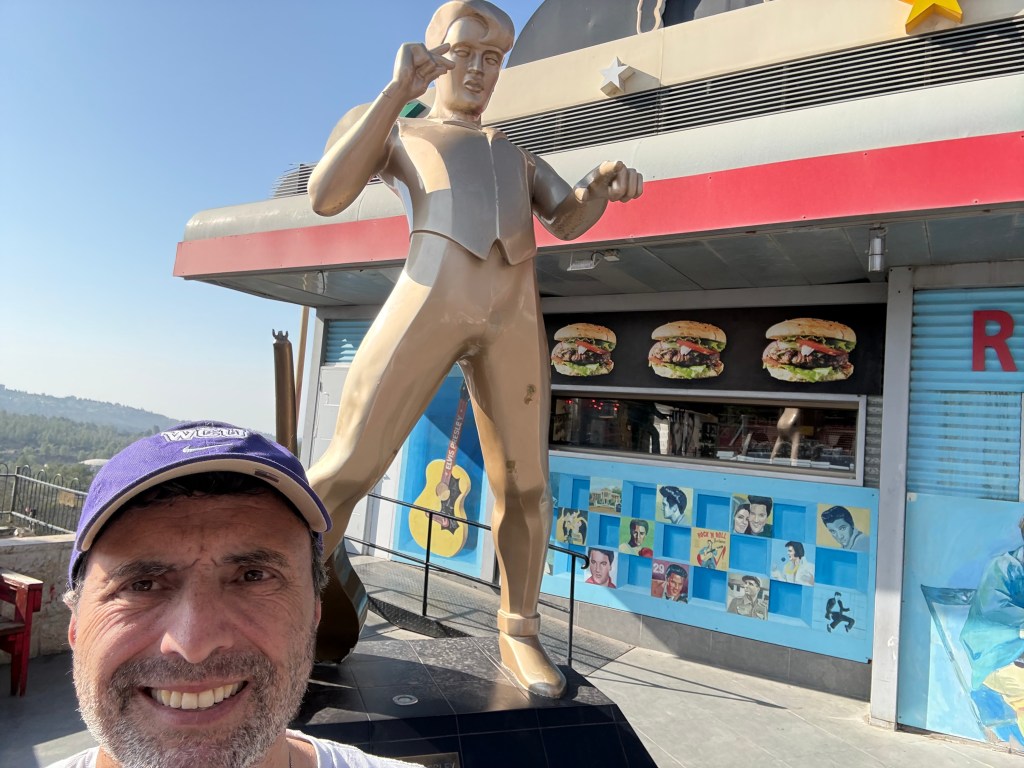
From Har Adar, we made a quick stop at the Elvis Presley Diner to use the bathrooms (the bathrooms at the Har Adar lookout were locked – another security change) and it was fun to experience it. Lots of kitchy things to buy but we couldn’t stop because we were off to the old city of Jerusalem.
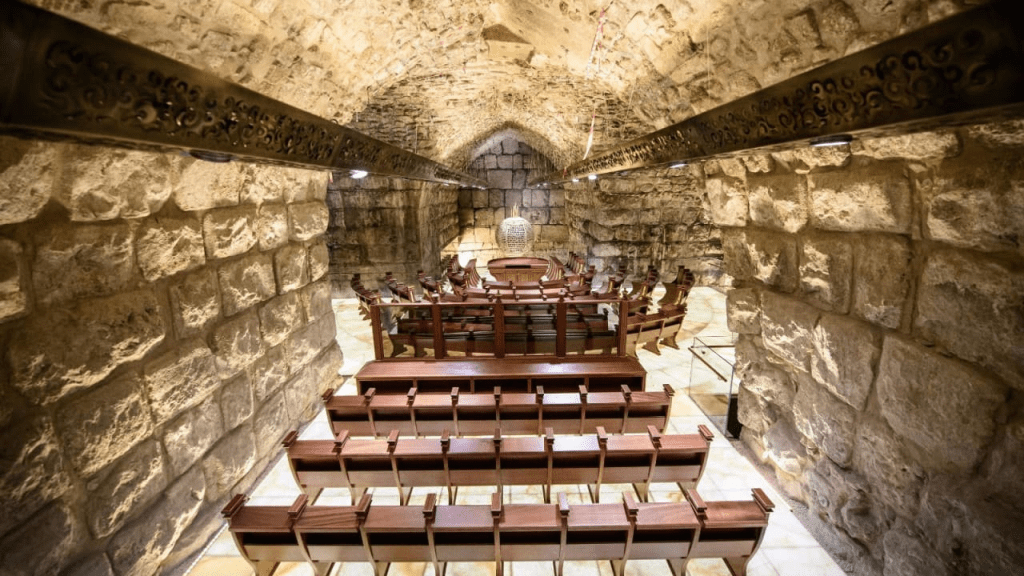
In the Old City, we were going to explore the tunnels under the Kotel, under Temple Mount. I’ve been through them many, many times and it never gets old. The education about what Temple Mount is, the history of this area from Abraham and Isaac, to Kings David and Solomon, the Macabees of the Hanukkah story, and King Herod, ties together so much of Jewish history. When you go into the tunnels, that history comes alive. You see the actual walls built by King Herod. In their natural status from 2,000 years ago. You see the actual destruction of the second Temple by the Romans. You get to walk on the actual street from second temple times, the same street our ancestors walked on more than 2,000 years ago. Our feet were on the same street that people walked on during second temple times. It may be the same street that Judah Macabee walked on. As we stood on that street, overcome with the connection we were all feeling, we joined together to sing Am Yisrael Chai – the people of Israel live. We do live. We will continue to live. We will not just survive but thrive. If you told the Jewish people who were being taken into slavery and exile in the year 70 CE that in 2025 their ancestors would be standing on that street, singing Am Yisrael Chai, in the country of Israel, they wouldn’t have believed it.
There is a Jewish tradition that at age 70, you begin counting again so when you turn 83, you can have a second Bar/Bat Mitzvah. I’ve decided that when I’m 83, I want to have my second Bar Mitzvah here, in this synagogue, in the tunnels beneath the Kotel, beneath the Temple Mount. I’ve got a while to go yet it is something that gives me hope, that gives me joy. To think that I may be there in 25 years, with my family, my wife, siblings, children, grandchildren, and maybe even great-grandchildren chanting from the Torah and leading services for my 2nd Bar Mitzvah makes me smile. It gives me hope. When that happens, you are all invited!
Israel is a powerful place. As I woke up this morning in Jerusalem and will be spending Shabbat at the Kotel, the Western Wall of the Temple, I can’t help but be filled with gratitude. Despite the challenges in the world today, despite the rise of antisemitism, of hatred, and of division, here I am. In Israel. In Jerusalem. I’m reminded of Psalm 137, verse 5 (and I’m not a Torah scholar but this one is a goodie).
I’ll never forget Jerusalem. I’ll never forget Israel. And I get to be here right now, today. Am Yisrael Chai.
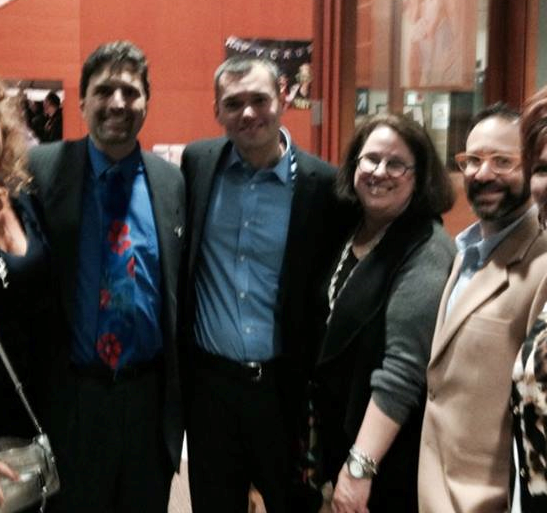
In 2014, Peter Beinart came to speak at the University of Washington Hillel. At the time, I was the President and CEO of the Jewish Federation of Greater Seatle and we were supportive of him coming to campus. While controversial at the time, his talk about the challenge of Israel being both a Jewish and Democratic state while millions of Palestinian Arabs are living in the West Bank was informative and thoughtful. There was much to discuss and while I (and many others) didn’t agree with Peter’s solutions to the challenge and found his presentation to be missing many factors that needed to be discussed, as you will see in the article at that time in “The Mike Report”, a well known, pro-Israel, very Zionistic blog in Seattle, there was a lot to the conversation. While we disagreed with Peter’s recommendations, the challenge facing Israel was clear and a reasonable discussion occurred. In 2014 you could love Israel, agree on the challenges she faced, and discuss differing ways to address the challenges in a respectful manner. While Jew haters would do it, very few Jews at that time were spreading lies about Israel and attempting to delegitimize the country, those who supported Israel, or defend those who publicly called for or celebrated the murder of Jews.
My how times have changed. In the 11 years since that speech, Peter Beinart has become one of the most anti-Israel Jews around. He no longer advocates for Israel but instead villifies her. He no longer cares about the challenge and the solution, only in being anti-Israel and fighting for the end of Israel as a Jewish state. The question of Jewish and Democratic is no longer an issue for him. It’s now about how to make Israel not exist, make it Palestine “from the river to the sea”, and how to villify Jews. He has joined the likes of Bernie Sanders who are Jews in Name Only (JINO) – only to help eliminate Israel and to bad mouth the Jewish community. He joins with and supports those who chant things like “from the river to the sea” and “globalize the intifade”. This week was a new low, even for him.
Beinart accepted the offer to speak at Tel Aviv University and share his lies, accusing Israel of both apartheid and genocide. It is only in a free society like Israel that he would be invited and feel safe to spread these lies. Can you imagine somebody speaking publicly in Iran about the evils of the Ayatolleh? We’ve seen what happens to those who merely criticize the Iranian regime – they are quickly arrested and murdered. We see what happens when people oppose Hamas in Gaza – they are quickly and publicly murdered. Those who oppose Putin in Russia quickly disappear. Yet in Israel, you are invited to publicly share your opinions, even when they are blatent lies, and you have no worries about your safety. You can even publicize on social media what lies you are going to tell and still be invited and safe.
Tonight, I’m going to speak at Tel Aviv University. I know many people who I respect will think this was the wrong decision given that Israel—as widely recognized by experts on international law—practices not only apartheid but genocide. I support full equality for Israel’s…
Then, just when you think it can’t get worse than regular Peter Beinart, somehow he goes even lower. He manages to embarrass himself and the lies he tells even more. How does he do this? He apologizes to those who want to kill every Jew in the world, those who actively support the genocide of Jews and who celebrated the massacre on October 7th. He says he was wrong to even speak to Israelis. It’s no longer enough to lie about them. It’s no longer enough to support those who tell the lies and who want there to be no Israel and no Jews. Now, it’s not even ok to speak to them. To share your lies with them and try to convince them that they are racists, murderers, and the worst people on the face of the earth. Now, you simply have to pretend they are not even human, are not even worthy of being talked with.
By speaking earlier this week at Tel Aviv University, I made a serious mistake.
In the past, when formulating my views about Israel-Palestine, I’ve sought out Palestinian friends and interlocutors and listened carefully to their views. In this case, I did not.
I think back to the Peter Beinart that I met in 2014. A person that I agreed with on the challenge ahead and disagreed with on the solution to the challenge. Somebody who wanted to engage in dialogue. This week he proved, in a very public fashion, that Peter Beinart no longer exists. I am now a person he would never speak with. Somebody he wouldn’t even lower himself to speak with. Somebody who isn’t worthy of being graced by his presence nor worthy of hearing him share his lies. It makes me wonder how much longer it will take for him to change the word “Israeli” or “Jew” to simply “vermin” like the Nazis did.
Peter Beinart taught us all a very important lesson this week. There will always be Jews who are embarrassed to be Jewish and as a result, will do all they can to tear us down. We have seen it througout history. Especially throughout our own history. We continue to survive and to thrive despite these efforts because we continue to invest in Judaism. We continue to celebrate being Jewish. So we survive. I was shocked when I learned that not all the Jews left Egypt with Moses. The great Jewish commentator Rashi said that only 20% actually left with Moses. The rest stayed and faded away. Those like Peter Beinart and Bernie Sanders have existed throughout history. They are the 80% of the Jews who stayed in Egypt and didn’t leave with Moses.
Peter Beinart this week showed us the importance of investing in being Jewish. As I prepare to head to Israel on Wednesday with a group of 30-45 year olds for an intense, one week Jewish leadership experience, this lesson couldn’t have come at a better time. Whatever you think being Jewish means, it can mean more. It can be a part of your daily life no matter how religiously observant you may or may not be. Embrace it, because history has shown us that the world will certainly define you as Jewish no matter how much you define yourself. So learn and define yourself in a meaningfully Jewish way. You won’t regret it.
2014 with Peter Beinart. I will never let people like him define being Jewish or defame Israel
I spent the beginning of the week in Washington DC at the Jewish Federation of North America’s (JFNA) General Assembly (GA). The GA is a gathering of 2,000 Jewish communal professionals and volunteer leaders, networking and addressing the challenges facing the Jewish world. I’ve been to more than I can count and find them both energizing and exhausting. This year’s GA is no exception.
With the ‘end of the war’ and the return of the living hostages, this year has focused on rebuilding and resilence, two key factors not just for Israel but for those of us living in the diaspora. The past two years, since October 7, 2023, have been incredibly challenging, painful, and filled with far too many ups and downs both in Israel and the diaspora.
Having just been in Israel and seeing the difference in the country with the return of the living hostages and the hope that perhaps there will remain a cessession of the war, if not an opportunity for peace, I began to feel some hope for Israel and Israelis. I haven’t felt that way about the diaspora and particularly in America. Here at the GA, I have begun to get a little bit of that. So what is that began to give me this hope?
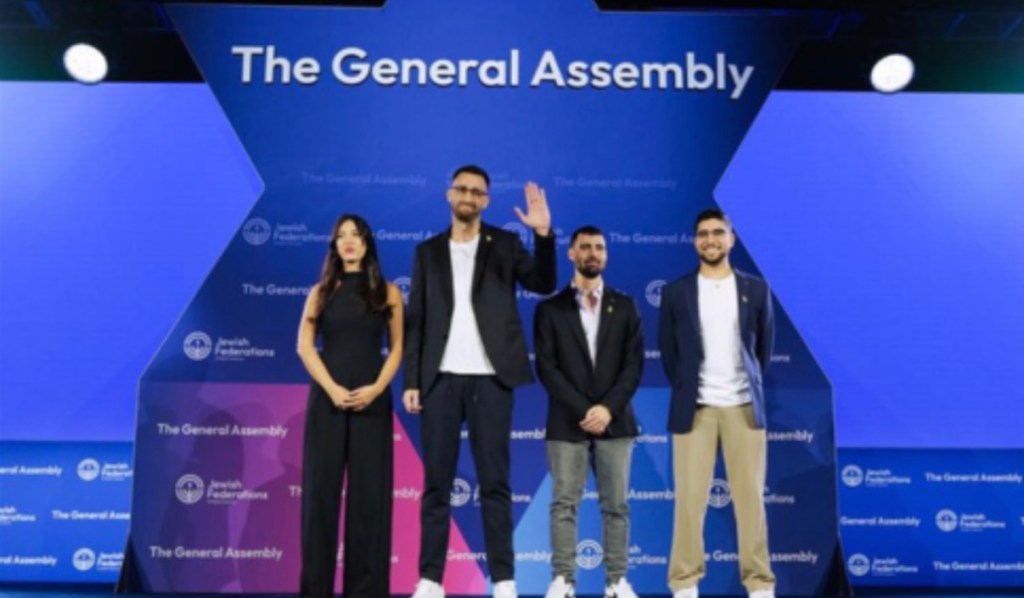
On Sunday night, at the beginning of the first main session, four former hostages spoke to us. Noa Argamani, Avinatan Or, Evyatar David and Guy Gilboa-Dalal shared not just some of what happened to them but also their incredible gratitude to the IDF soldiers who fought for their freedom. They recognized the soldiers who paid the ultimate sacrifice in order to rescue them and to defend Israel. They recognized the spouses and children of the soldiers who returned to milium (reserves) time after time after time, all to free the hostages and defend Israel. The incredible grace these four people showed was inspiring. I don’t know that I would be filled with gratitude after being held hostage as long as each of them were. I don’t know that I would be able to show grace instead of anger if I went through what they went through. It was an incredible lesson of humanity and I found it inspirational for me to be a better person, a better friend, a better member of society, and somebody who wants to continue to work to do my part in making this a better world for everybody.
Former hostages Noa Argamani, Avinatan Or, Evyatar David and Guy Gilboa-Dalal
I was especially struck by Avinatan as he shared his story. Kept underground, by himself, in the tunnels, for 738 days, more than 2 years. Two years of no sunlight. Two years of no fresh air. Two years of no human companionship, only terrorists beating and harrassing him. He lived in his mind. He told us the story of his escape attempt, digging through the dirt day after day after day. When one day he hit the roots of tree, it was his first proof of life outside the tunnel and the entire audience could imagine that moment. He shared about finally breaking through into the outside and his first breaths of fresh air in well over a year, looking at the stars in the sky at night, and feeling alive, just for a moment, before he was caught and taken back to the tunnels. Bound to a chair and beaten for a week. Yet he wouldn’t lose hope. He wouldn’t lose faith.
We live in a world today that is lacking that hope and that faith. Listening to Avinatan, Noa, Eyatar and Guy was a powerful reminder of community. Of faith. Of hope. These four amazing people somehow managed to keep their faith and hope alive in horrifying circumstances. Just a few days ago, Guy publicly stated that he was sexually abused by Hamas while being held as a hostage. This could break a person’s soul, ruin their faith, and strip hope from them. Yet somehow Guy held on to hope and to faith.
My hope and faith get tested every day. At Park East synagogue in New York, protestors this week chanted antisemitic slogans such as “Death to the IDF” and “Globalize the intifada,” things Mayor-Elect Mamdani has failed to condemn. His spokesperson, Dora Pekec, issued the following statement to the online publication Jewish Insider:
“The mayor-elect has discouraged the language used at last night’s protest and will continue to do so. He believes every New Yorker should be free to enter a house of worship without intimidation, and that these sacred spaces should not be used to promote activities in violation of international law.”
So according to Mayor-elect Mamdani, promoting Aliyah (moving to Israel) at a synagogue is a violation of International Law. He doesn’t condemn those who advocate violence against Jews in other houses of worship. He doesn’t want to crack down on those who plan violence against Jews, those who hurl hate messages outside a house of worship, only those who want to talk about emigrating to Israel. It’s hard not to see the antisemitism and Jew hatred in his statement. I wonder what those in the Jewish community who voted for and support him will say and do if he begins to crack down on anything Israel related in a synagogueor in New York. Will there still be an Israel parade? Will Israeli flags be banned in synagogues in New York? Will we see extra taxes and fees place on flights leaving New York to Israel? How far will it go? He hasn’t even been inaugrated and the concern continues to mount.
Yet I remain hopeful. I won’t lose faith. For the last four days I have been in Seattle with Noam from Dror Israel. We spent a lot of time talking with each other. One of the things that he said repeatedly that stuck with me is that he can’t worry about changing the rest of the world. He can only worry about changing Israel. In this crazy world that we live in, it can be overwhelming to think that we have to change the entire world. Instead, if I focus on changing my world, I can have a real impact. Change my community, my city, maybe even my state. I am not responsible for the entire world or even my entire country. But I can work to change my community. That is my responsibility.
I have been on the road for the past week and have heard from a number of people how I have the best job in the world. I agree with them. I have the privilige of working with amazing nonprofit organizations that are changing their communities. They are changing the world by doing so. I get inspired by them every single day. Every day when I wake up, I know that in my small way, I am helping them to change the world. Because of the work that I do, these organizations are improving the lives of people. It fills me with gratitude. It gives me hope and restores my faith. With Thanksgiving just a few days away, there is so much I have to be thankful for. My family. My health. And the fact that every single day, it this crazy and often absurd world that we live in, I get to do my part to make it a little bit better. I don’t have to be the type of heroes that the IDF soldiers have been, risking their lives to save the hostages. All I have to do is my part to make the world a better place. I know when I wake up tomorrow, that’s exactly what I will do. Will you?
I returned from Israel on Friday. It was a long return trip, waking up at 5 am IST (10 pm Thursday night ET) and leaving early in the morning from Haifa to get to Ben Gurion airport. The long flight to JFK was easy but was during the day so I didn’t sleep much. A 2 hour layover and I was on my flight home. I got to my house around midnight, 26 hours after I woke up in Haifa.
The long trip gave me a lot of time to think. Dealing with jetlag upon my return gave me more time to think. This was a different trip for me. I knew going into it that I needed to be in Israel for my soul. I wasn’t touring the ‘normal’ way and was going to spend a few days just being in Israel before a day of work in Jerusalem and then 3 days up north working. It was a day about my relationship with Israel and Israelis, not about the Jewish connection to Israel. I was in Jerusalem but not the old city. I didn’t visit the Dead Sea or Masada. I did spend time on the beach, hanging in restaurants with Israelis, visiting schools and youth programs, and being connected to ordinary people.
On the plane returning and in the past two days, I have found myself reflecting on the ordinary people of Israel. Israel is typically rated one of the happiest countries in the world. This despite living in a very tough neighborhood with genocidal terrorist organizations like Hamas and Hezbollah on their borders. Terrorists try to come in every day to murder Israeli people and Iran is an existential threat. This was before the horrors of October 7th. Yet in the 2025 survey of the world’s happiest countries, Israel ranked 5th. A country that was attacked and invaded in 2023 where over 1,200 people murdered in the attack. A country at war with so many of her citizens called back to serve in the reserves. A country being villified by the international community based on terrible lies, being called terrible things, all due to Jew hatred. A country that had the north evacuated due to daily rocket attacks and who spent time almost daily in bomb shelters. This is the country that was the 5th happiest in 2024?
This past week helped me really understand how a country facing all these challenges could be the world’s 5th happiest country (for comparison, the United States was 21st). In Israel, they focus on what they have rather than what they don’t have. They focus on gratitude not desire. It’s a country that realizes that gratitude is a far better way to live than envy.
It got me thinking about my life and the changes I have made in the past few years. My dad dying in September 2022 was a life changing event for me. Not just because I lost a parent and mentor. It was a realization that the end is closer than any of us want to acknowledge and the question is more about who we want to be and how we want to live than how much we can have.
So I have changed my life. I removed a great deal of stress. for decades, my job was filled with stress. I’m just as busy and working just as hard but now it is without the stress that I used to have. I make sure that I am rested and not burning the candle at both ends. I make sure to eat and eat healthy. No more skipping lunch because I’m too busy. I eat healthy now – whole foods rather than something quick. Today I had the time to make a fresh salad for lunch, cutting up lettuce, tomatoes and other veggies rather than grabbing something quick to stuff down my throat because I had no time between meetings.
On this Israel trip, I got to meet people who were doing the same thing. People who lived by their values so they moved their family to the north to repopulate that area after the war. While many people won’t move back, there are many who realize how important it is to live there and are choosing to do so. The high school student who had the opportunity to decide whether he wanted to take the exams for his bagrut (high school diploma) and decided not to take them. As he shared that with us, I could feel his trepidation as he was waiting for criticism. Criticism that he didn’t get. The early childhood teacher who loved his job and the children he interacted with. The little tricks he did for them and the joy in their faces as he did them. The care in his voice as he talked to them and way they were truly little people, not just kids.
I talked with people who are more concerned about the mental health of IDF combat soldiers than their personal income. They are volunteering tremendous amounts of time to do their part in providing for the mental health care needed for these soldiers. Each time an IDF combat soldier commits suicide, a little piece of them dies, so they work to reduce that number to zero. They invest their time, their money, and their heart and soul.
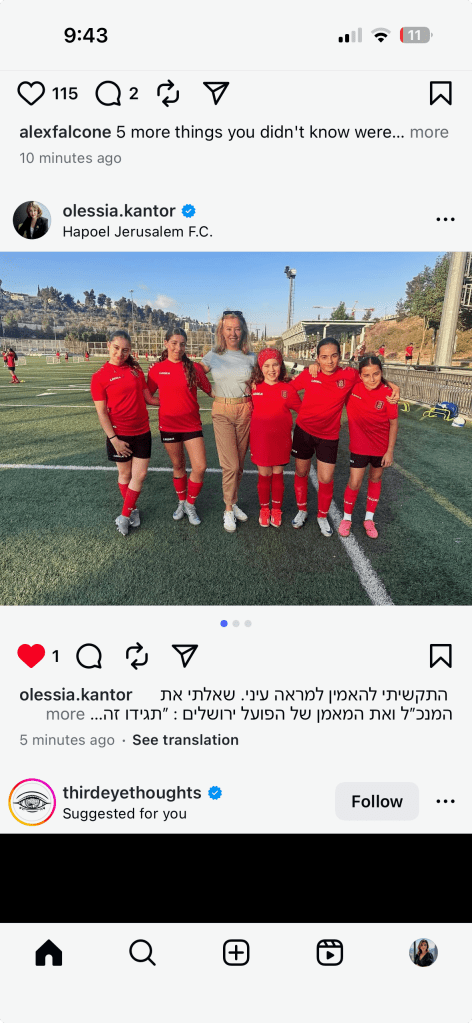
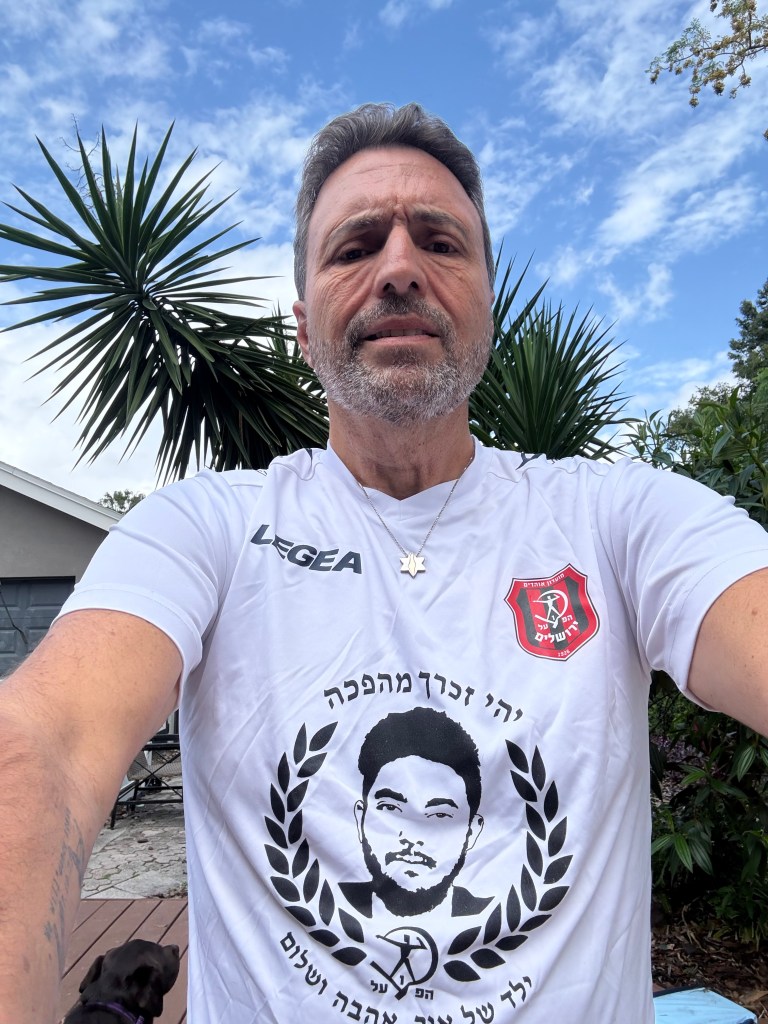
I went to visit Hapoel Jerusalem Football Club (HJFC), a team that is much more than a professional team in the Premier League for men and women’s soccer. Their social programs are changing the face of Jerusalem and the future of Israel. Hersh Goldberg-Polin (z’l) was one of the leaders of their fan club. I wear my Hapoel Jerusalem FC shirt with his face on it proudly. It speaks to people living by their values, choosing to make the world a better place which means they are happier in their daily lives. Read the post below which describes somebody’s experience with the girls program of HJFC. It’s extraordinary.
I used to believe that I could never make Aliyah (move to Israel) because I want to live like an American in Israel and to do so is extremely expensive. There is a saying about life in Israel that explains this well.
People don’t move to Israel to become financially rich. They move to Israel to be spiritually rich. To be emotionally fulfilled. To have meaning in their life. You don’t have to move to Israel to have those things. We can choose them in our daily lives. Yet in America, we rarely do. We place money ahead of our values. Our answer to the saying, “You can either be happy or right” is often to be right. The lesson I was reminded of on this trip is that we don’t have to make those choices. We can learn to focus on what matters. Being happy. Enjoying life.
When I came back from Israel, my oldest son was home for the weekend. It was great having him home for the weekend, even though we didn’t do anything. Just having him around was nice. My best friend’s son is getting married next weekend and I’ll be there to celebrate. A few days later, my younger son is taking the LSAT and has to go to Ft Myers to take it (that’s an entirely different story). So we’ll drive down to Ft Myers, stay in a hotel, he’ll take the LSAT and then we’ll drive home. 8 hours in the car together along with a night at the hotel together. Priceless. That’s the key to being happy – enjoying every minute and the opportunities they present.
I think of my dog, a now 10 month old chocolate lab. She gets excited to see me every morning, not because I’m going to take her outside and give her breakfast. Not because she’ll get treats and do a puzzle. She gets excited because we are together. When my wife comes downstairs and comes home from work, my puppy is filled with anticipation and realizes she is the luckiest dog in the world because she’s with her people, with her pack. That’s how I want to be.
Israel taught me that. Despite two years of war, they cherish every moment. Despite a year of rockets falling on them and rushing to their safe room day after day after day, they found ways to appreciate things. As I sat on the beach in Tel Aviv, breathing the fresh air, listening to the waves and people all around me, I realized just how lucky I am. It’s not about the things I have or don’t have. It’s not about the size of my house or my bank account. It’s about the people in my life. Recognizing the beauty in the world around me. The gifts of life.
I have been to Israel 24 times. Trip 25 is scheduled. What a gift. What a blessing. As I look at that image, my heartbeat slows, any stress disappears, I relax and realize just how lucky I am. And when we realize how lucky we are instead of thinking about all we don’t have, the world is a much better place.
About a year ago, on a trip to Israel, Saul Blinkoff, one of our trip leaders was speaking to us. He quoted one of his Rabbis, the great Rabbi Noah Weinberg (z’l), the founder of Aish HaTorah, who taught him that “If you don’t know what you’re willing to die for, then you don’t know what you’re living for.” Powerful words and a powerful and deep thought. We spent the rest of the trip grappling with what that means in general and to each of us. It’s something that has stayed with me since then and something that I ask myself on a regular basis.
In this crazy world that we live in today, with all the Jew hatred we see around us, take a few minutes and ask yourself that question. What are you willing to die for? When you come up with the answer, make the choice to LIVE for it. Almost 30 years ago, I began a career working on behalf of the Jewish people. From Hillel to the Federation to the JCC/Federation to today, working with clients in Israel, I have spent the vast majority of my professional life. I write and speak out because so many Jews before me were willing to die so that I could live, so many are fighting right now to ensure that my children and future grandchildren will be able to live, that I must actively live.
My friend Saul, who spoke that wisdom to us in Israel last year, is also a Hollywood Filmmaker (Disney, Dreamworks, Netflix). He has a great podcast that I encourage you to subscribe and listen to. He began his career with Disney. On that trip, he gifted us all not just a prayerbook, but one where he personally drew Mickey Mouse for us. He told us the story of how when he was illustrating the Winnie the Pooh movie, he made sure to put a mezuzzah on Winnie the Pooh’s doorpost, joking that he made him “Winnie the Jew”. We all have the ability to pick the things that matter to us, the things we would die for, and live for them. I do that with my family. With my children. I’d willingly die for them so why would I not take advantage of the chance to live for them. I take advantage of the time I get to spend with them because no time is guaranteed.
I feel the same way about my values. They matter to me. They define who I am and how I live. I’m willing to die for them. If that’s the case, then I’d better live for them. That means actively making choices that align with my values, even when they aren’t popular. Even when they aren’t easy to follow. Even when there are consequences for living them actively. Especially when they are difficult to follow through with or there is risk involved in standing by them.
Saul talked about this an much more on Ben Platt’s podcast. It’s worth the 30 minutes to watch and listen, to take in what he says and ask yourself deep questions. Especially the big one. What would you die for? And if you’d die for it, why aren’t you living for it right now?
In the podcast, Saul talks about the barbecue with the families from the kibbutz and the dancing with the children on our soldiers. That was my trip. Here’s a video of us dancing with the kids. It is something I will never forget. These families were attacked on October 7th. They had to relocate to Netanya from the Gaza envelope. They left their homes and their lives behind, moving to an apartment building in a different city. Many of the husbands were not there, called up to serve in the IDF to defend Israel and the Jewish people. Yet they were living life. Robustly. I watched a sweet toddler riding his tricycle. Kids playing ping pong. And, as you see in this video, dancing on our shoulders.
They literally went through what they would die for – living in the South of Israel in the Gaza envelope. It’s clear they know what they will live for and are doing so. There is much we can learn from them.
The older I get, the more I find I can learn. The more I find I must learn. Today’s world doesn’t value learning. Look at how poor our education system is. Look at how few people actually want to take the time to learn facts – instead they’ll get their information and knowledge from a TikTok video made by somebody who knows nothing. Judaism is all about learning. What’s going on in Israel and in the United States takes effort to learn. To investigate. To question.
In this critical time, remember the words from the Mishna. “Find yourself a teacher, acquire for yourself a friend.” There many types of teachers. You can find a Rabbi or a Jewish educator. Ask the hard questions. You can find some experts who write regularly. Read what they write, listen to their podcasts. I have done both. Every week I learn from my friends Harry Rothenberg and Ari Shabat through their video blogs. You can subscribe via email to Harry’s and by whatsapp to both Harry and Ari’s. I read Michael Oren, who has both a substack and writes in the Free Press. I read John Spencer’s substack which you can subscribe for free or get a paid subscription. I am a paid subscriber to The Free Press, with it’s many articles and different points of view. I read Daniel Gordis’s Israel from the Inside, delivered to my email each morning. I get the Bernie News Network on WhatsApp, with so much information every day it is usually overwhleming. You don’t have to be like me in terms of how many teachers you choose to have. Start with one. Get a taste of what real, accurate, challenging information is like. Things that make you think, not parrot back a position somebody else tells you to take.
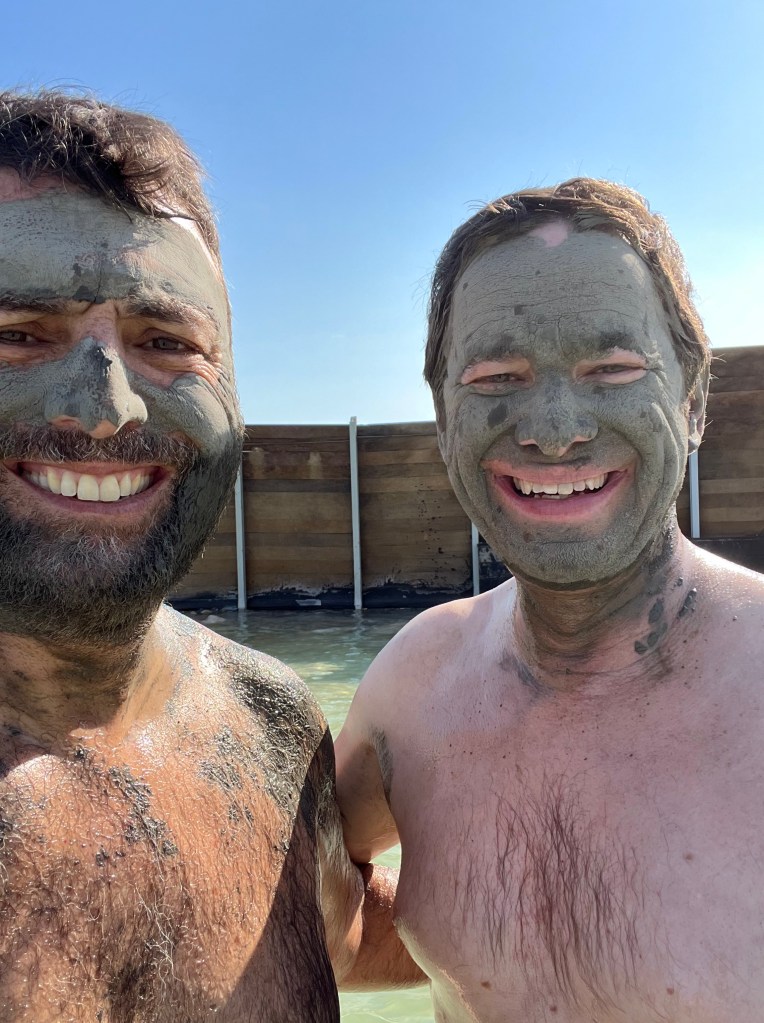
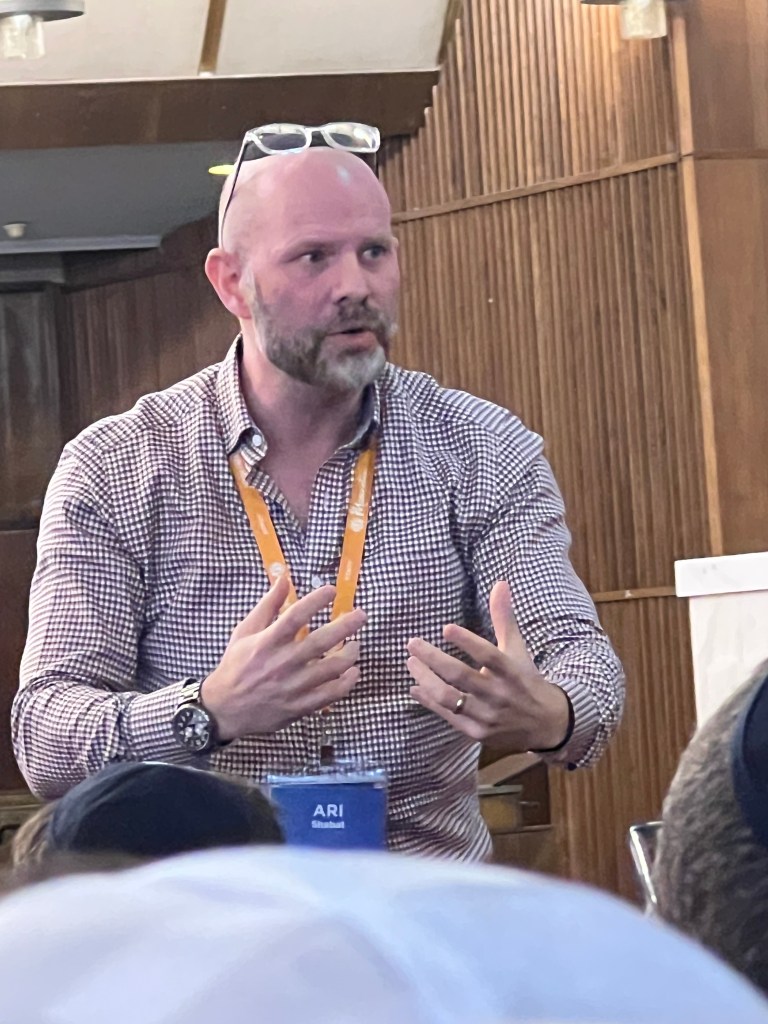
Keith and Harry at the Dead SeaAri Shabat teaching us in Israel
Once you start down this path, your mind and spirit will thank you.
For more than two decades, I have made one simple claim. American’s are dumb. It’s simple. It’s clear. I don’t think it is even debatable at this point. This doesn’t mean I don’t love America or that I hate the American people. It does mean that we are so self-righteous and have such a small attention span that we believe whatever we are told. It means that the Big Lie theory, popularized by Adolph Hitler, is right when the theory says, “if a lie is sufficiently enormous and repeated frequently enough, people will eventually believe it.” We see it all the time. Our news media does it all the time. Our leaders do it all the time.
I have lunch every Friday afternoon with a group of 80 year old men. It’s a fabulous group and I’m thrilled that they invited me over a year ago, 20 to 30 years younger than them, to join. When working, they were titans of their industries. Lawyers, Doctors, Judges, Newspaper editors, and much more. Their wisdom infuses the conversations each week into something rare in today’s world. For the past few months I have been bringing up the subject of the media and their agenda with everything that they do. No longer is it the about getting the facts and the truth out into the public arena. No longer is it about verifying stories before you go to press because truth and integrity matters. Today’s media is about money. It’s about clicks and views and being the fastest out with something because that’s how you monitize it. I often make the comment that there is a reason why the news is now in the entertainment division. My friend who was the newspaper editor always takes umbrage when I say this because he recalls a different day. A day when the media had an obligation to truth and independence. A day when you could count on the media almost all the time to get it right, even if they didn’t get it fast. I long for those days but am realistic about where we are.
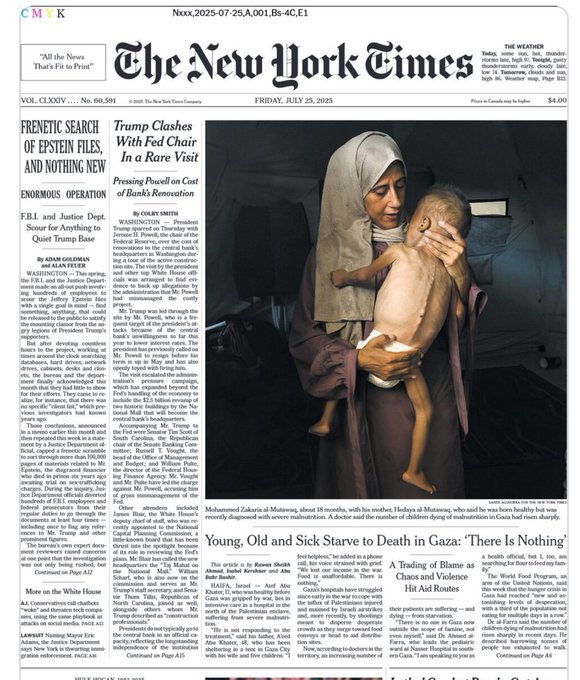
The media lies because it sells papers, gets ratings, and gets clicks. They don’t even try to hide it. Take the NY Times. In order to blame Israel, they used a photo of Mohammed al-Mutawaaq, a child with a muscular disorder, as the face of famine in Gaza.
This isn’t the first time they have lied about Israel nor will it be the last. Earlier in the week they ran a terrible piece, based on no facts, stating that there is no proof that Hamas is stealing the food from the UN. The day after, a piece in the Jerusalem post showed just how wrong the Times was once again and how they and Reuters ignored a mountain of evidence to print their narrative and lies. The NY Times and the media simply don’t get held accountable. I’m stunned by the number of Jews who continu to read the NY Times and view it as a source of respectible journalism. Then again, I am stunned by the number of Jews who support those who would kill us all if they had the opportunity. This isn’t a new phenomenon. It’s been going on for thousands of years. In our effort to build a better world, we have done harm to ourselves going back thousands of years. It is our history. The question is when will we learn from our history – or maybe better stated, will we ever learn from our history.
A friend of mine from Jewish summer camp many years ago just wrote a piece accusing Israel of Genocide. I won’t post it. He is a University Professor in Canada so it didn’t surprise me. It did sadden me. As I read it, I was even more disappointed as so many facts were simply wrong. When educated, smart Jews who I know have a strong Jewish identity believe the lies, it is clear that we have failed. It is clear that what we have done up until now has not worked and that if we don’t take a hard look at ourselves, our organizations, and our communities and understand where we went wrong, where we missed, and devise a new path, we have a very troubled and scary future in front of us.
We had a detailed interaction and conversation on Facebook about it. It was very civil and reasonable. Topics were discussed, information shared, and no minds were changed. I think what was the saddest part for me, other than seeing the lack of real information being used by him was his final statement. I had asked him to read a piece written by John Spencer, the chair of Urban Warfare studies at the Madison Policy Forum. Spencer is one of the world experts on war and specifically Urban war like in Gaza. He is not just an academic, as he served 25 years in the U.S. Army, to included two combat tours in Iraq. The piece, titled I’m a War Scholar. There Is No Genocide in Gaza, is filled with facts and information from somebody who is world renown in the field and has no skin in the game. He isn’t Jewish or Israeli and is completely independent. My friend’s reply was “Thank you, but I think I’ve read enough.”
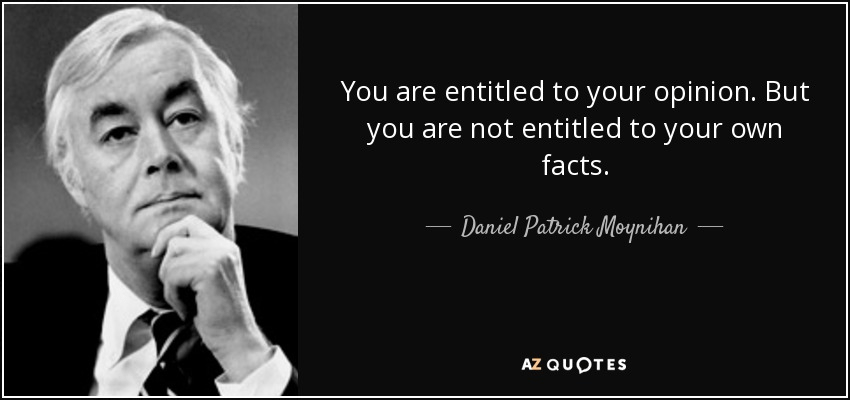
That’s a major part of the problem. People read things that confirm their bias. They watch the news that is clearly far left or clearly far right. They never read things that challenge their beliefs or their world view. It goes back to the saying “my truth”. There isn’t ‘my truth’. There is only ‘the truth’. As the late, great Senator Daniel Patrick Moynihan said, “You are entitled to your opinion. But you are not entitled to your own facts.” In today’s world, people are choosing their own facts.
I read a piece in the Free Press today about the greatness of Billy Joel. In it, they quoted two verses from his classic song, “Prelude/Angry Young Man”. It’s one of my favorite songs and the lyrics hit me different this time.
The first verse quoted reflects the attitude of the young. It reads:
There’s a place in the world for the angry young man With his working-class ties and his radical plans He refuses to bend, he refuses to crawl, And he’s always at home with his back to the wall. And he’s proud of his scars and the battles he’s lost, And he struggles and bleeds as he hangs on his cross And he likes to be known as the angry young man.
Billy Joel
When I was young, I related to that verse. It spoke to me as who I was at that time. Then I got older. I got more mature. I got married, had a family, built a life within society. The second verse of the song that they wrote about reflects that version of me.
I believe I’ve passed the age Of consciousness and righteous rage I found that just surviving was a noble fight. I once believed in causes too, I had my pointless point of view, And life went on no matter who was wrong or right.
Billy Joel
Until October 7th, that was more of who I was. I no longer had that ‘righteous rage’ and understood that there was a nobleness in surviving the challenges of life. Everything didn’t have to be perfect and there were certain things that no matter how wrong I thought they were, they were not going to change. My point of view was mine and the world didn’t need to conform to my worldview. I respected my scars and the battles I’ve lost but I didn’t need to obtain new ones or lose new battles. October 7th changed that for me.
Since October 7th, I’m no longer that person passed the age of conciousness and righteous rage. I’m also not the angry young man. The person I am has more of the angry young man than the older version. I know that we can’t sit by idly and I need to be part of the group that will have radical plans because what has been done up to now has epically failed. I can’t bend and I can’t crawl. I have to fight because now it really is about survival.
So despite my inability to change the mind of my camp friend, I won’t stop speaking the truth. I won’t stop calling out the Jew hatred all around us. I won’t stop naming those who are vile antisemites or those who blatently lie because of their Jew hatred. Will there be consequences? Probably. Will I get new scars? Definitely. Will I be proud of the battles I’ve lost? Not a chance. Because losing a battle isn’t success. There are no moral victories when it comes to my life and the lives of my fellow Jews. I may be known as the angry ‘not so young’ man, but I don’t care. Because if we don’t stand up and fight now, by the time we may be ready, it will be too late. I’m not willing to take that chance. Are you?
Purim is one of my favorite holidays. It’s got a great story, an evil villian, a heroine that is tough to beat, and delicious triangle cookies. What’s not to love?
This year before Purim, I took the opportunity to learn a bit more about the story from a variety of teachers. It took me down a much deeper road with lots of lessons that apply to to our world today. I always enjoy when I find something in ancient texts that somehow team me a lesson for today’s world.
Purim is highlighted by a few major characters. Queen Esther, the heroine. A much deeper character to explore that the basic story presents. Her ‘uncle’ Mordechai, the hero. He pushes back against the evil villian and wins. Haman, the evil villian, who’s triangle hat becomes the Hamentaschen, the cookies we eat, at Purim. Haman, who’s name we drown out during the reading of the Megillah. King Achashvarosh, who divorces/murders his wife and marries Esther. And Queen Vashti, who refuses the King’s order/request, resulting in her divorce/death. I want to focus on Queen Esther here.
She was always one of my favorite charcters because of my Grandma Esther. Subconciously, there was always a connection to my Grandma Esther and Queen Esther. Plus dressing up, Purim carnivals, hamentaschen, and the fun makes Purim a special holiday for children. For much of my life, I thought of her as Morchechai’s niece who married the King to save the Jewish people. A wonderful and simple heroine. I never bothered to ask what happened to her when the story ends. I never bothered to ask if her ‘Uncle’ was really an uncle. I took it at face value and enjoyed the story.
Queen Esther as painted by the great Rembrandt. He painted many images from the Purim story.
It is much deeper than that. Jewish tradition and the talmud teaches us that Esther and Mordechai were actually husband and wife. The Talmud interprets the phrase “Mordecai adopted her as his own daughter” (Esther 2:7) as “Mordecai took her as his wife”. Think about what it must be like to be settled, married, and planning what your life will look like when all of a sudden your husband asks you to leave him and try to marry the King. Your husband who pushes you out of his bed and into the King’s bed. It is hard to believe that this is something that Esther wants to do or is looking forward to doing. I find myself wondering why shouldn’t just tank the interview to be Queen, find some way to ensure that the King will not pick her so she can return to her husband and her life. That’s the easy thing to do. Finish second, don’t strive to win, just be a part of the pack and be forgettable. Yet that isn’t what she does. Instead, she charms the King and he picks her to be his wife, forever ending any chance she has of returning to her life with Mordechai. She makes a huge sacrifice based entirely on trust and faith.
How often do we face challenges that require a sacrifice and we fail to do so? These aren’t always life changing challenges and yet we still are not willing to make the sacrifice for the greater good. History has shown us what happens when you fail to make the sacrifice for the greater good. When you put yourself first and the world or your community second. True leaders are willing to make that sacrifice. It doesn’t mean they aren’t afraid of the cost. Instead, they are very afraid of the cost yet go ahead and do it anyway. That’s leadership. Queen Esther did what was needed at great cost to herself and her life. She gave up the life she knew for the greater good.
Queen Esther took a risk when she told King Achashveros that she was Jewish. There was no guarantee that the King would choose her over Haman. She couldn’t be sure that the King wouldn’t be disgusted with her and get rid of her like he did with Queen Vashti. She didn’t have to take the risk to tell him. She was safe. Like many people in today’s world, she was a hidden Jew. She could have stayed quiet, stayed hidden, and lived a full life. But she didn’t. She is the example to us today that no matter how good we have it in our country, at the end of the day, we will always be seend as Jews first. Jews in Germany who had prominent roles in the military, the government, and business got no special dispensation from the Nazis. They were Jews first. Our Jewish legislators who think they are safe because they defend the rights of others at the cost of the Jews are merely fooling themselves. Queen Esther showed us the way.
I look at many of our leaders today, both in and out of the Jewish community, and wonder why they aren’t following Queen Esther’s lead. Very few are willing to actually put it on the line and take the risk of losing their power and position to do what is right. There are the exceptions. Senator John Fetterman has been outspoken and lately there have been pieces written about the cost he has paid as a result. The Wall Street Journal wrote a piece about him being the “Lonliest Democrat in Washington”.
He has spoken out repeatedly against Hamas and those who defend them. He is a throwback to the days when America didn’t negotiate with terrorists, when terrorist was evil without any excuse. He is a true leader who is going to do what is right, regardless of the personal consequences.
Secretary of State Marco Rubio has done the same, talking about the evil of Hamas and revoking the green cards of those who incite violence and support terrorist organizations. He is unequivative is his condemnation of Hamas and those who support them.
Reporter: "Your revocation of the green card to many is seen as one of the most anti-speech actions a Secretary can take with his powers. How do you respond?"@MarcoRubio's response is fierce and factual ⬇️ pic.twitter.com/uVwJy30dVo
We simply don’t have enough of these leaders in the Democratic or Republican party. We have far too many Bernie Sanders, who blames Israel when Hamas won’t agree to ceasefires, won’t release the hostages, and remains responsible. We have Thomas Massie on the right, who is an open antisemite. We have people like Rashida Tlaib, Ilhan Omar, and Pramila Jayapal on the left who are so far into their Jew hatred that they could be mistaken for Marjorie Taylor-Greene or Lauren Boebert with their hatred. Queen Esther teaches us all that we must stand up for what is right, regardless of the personal cost. The greater good matters.
As a Jew, the ending of the story of Purim was always a happy one. Like most Jewish stories, they tried to kill us, we won, let’s eat. However the story ends differently for Queen Esther. She doesn’t go back to her regular life after Haman is hung and Mordechai promoted. She doesn’t get to leave the castle and stop being Queen or the wife of King Achashverosh. Her sacrifice is truly one for her entire life. Often times we think it is just for the length of the story. That the things we are willing to give up, the choices that we make are only going to be temporary. Queen Esther reminds us that is not always the case. There are times when the sacrifice we make is much greater and lasts much longer. It doesn’t change the importance or significance of that sacrifice. The megillah continues after Queen Esther tells King Achashverosh she is Jewish and Haman wants to kill her and her people. The story continues about the role of Mordechai and the gifts and power he is given. Esther falls into the background. Her work is done but her sacrifice is not done. It is one she continues to make on a daily basis for the rest of her life.
That’s the lesson about sacrifice. It’s for the greater good and must be willing to pay the price regardless of how much it may be. The cost of not making the sacrifice is far greater. We see this with the IDF soldiers and the people of Israel. Since October 7th, they have made incredible sacrifices. Many have lost their lives. Their families have been changed forever. Children have spent most of the year without their parent(s) who have had to serve in milium (reserves). Incredible instability with rockets falling daily, war all around, funerals on a regular basis due to the war, many forceably relocated for safety. Soldiers facing PTSD and their lives changed forever. Hostages who endured unbelievable torture. Every Saturday night there are massive protests against the government and demands to release the hostages. The leaders of these efforts pay a high price. Those who commit to be there pay a high price.
One of my friends was a high level commander in Gaza during the first four months of the war. The price he paid was easy to see when we got together after those four months. Just recently, he was one of the commanders in charge of the hostage releases during phase 1 of the ceasefire. He shared how difficult and painful that was for him. What he experienced on October 7th, the first four months of the war, and managing the hostage releases will stay with him for life. He is not the same person he was on October 6th. Like Queen Esther, he was willing to make the sacrifices that were necessary, regardless of the personal cost.
There are lessons to be learned from Queen Esther beyond being proud of being Jewish and standing up for the Jewish people to those in power. The lesson of sacrifice is key among them. The lesson of the greater good. The lesson of standing up for what is right regardless of the cost. Nowhere in the Megillah does it recount Queen Esther complaining to Mordechai that she did her job and now is stuck for the rest of her life. That’s true leadership.
True leadership is remembering that it is a sacrifice, not a privilege. It is an obligation not a coronation. This applies in our political arena as well as our Jewish organizations. The lesson of George Washington only serving two terms and our Founding Fathers wanting to get home to their families and their lives rather than serve forever in Washington DC has been lost. Their willingness to sacrifice their personal success and time with their familes for the greater good has been lost. The Israeli people are showing us what it looks like. People stepping up to serve much longer than required. People letting their spouses serve and figuring out how to raise children and pay the bills without one of the parents being there. People leaving the government because they fundamentally disagree with decisions being made. People peacefully protesting every single week because they want to see change. It’s time to bring it back. It is time for us to do our part. Otherwise we are letting evil win. I, for one, refuse to do that. What about you?
I do a lot of reading to keep up with things. I don’t depend on one source or one type of opinion (although my wife gives me grief for reading the NY Post, but honestly as a Yankee fan, it is for the sports more than anything else).
The latest image and story that has captivated my heart and mind is about Ariel Bibas’s best friend, Yoav. The story that has been shared is that Yoav has been waiting for his friend to come back from Gaza. He saved a Batman costume for him. He wrote him letters. It’s an incredible friendship story that inspires me to be a better person and a better friend. A 5 year old has become my teacher.
This morning, in Daniel Gordis’s substack, Israel from the Inside, he told an incredible story about Yoav. When told that his friend Ariel would not be coming home from Gaza alive, Yoav refused to accept it. He said, “If he’s coming back in a coffin, maybe he’s standing inside it, which means he’s still alive. He’s still alive, Mommy, you didn’t understand correctly. Because if Ariel is a khalal [Hebrew for “fallen soldier”], it means he’s flying in space [the Hebrew word for “space” is also khalal]. He can’t die. In Israel, there are very smart people, right Mom? So maybe they can invent a special potion that will bring Ariel and Kfir back to life.”
Oh to be 5 years old. To think the impossible is possible. To not really understand complete evil. The innocence of childhood. I hope that Yoav never loses that gift and that he never forgets his best friend Ariel. Maybe Yoav will be the one who changes the world, brings peace, leads the effort to eliminate hate. We can only hope.
Daniel also wrote very clearly and powerfully what I have been feeling. He said it much more succinctly that I have been able to do. He wrote, “We are at war not with mere enemies. We are at war with utter savages. Not human beings who are capable of savagery. Just savages. Irredeemable savages.” RIght to the point. Those who protest on college campuses, in the streets, and other places about Israel defending herself simply don’t understand the reality. They want us dead. Period. No ‘ifs, ands, or buts’. There is no common ground to be found. I am reminded of the famous political cartoon that states it better than any words can.
If we met them halfway, their demands wouldn’t change and we would simply have lost half of the Jewish population. That’s the reality. That’s who we are dealing with.
Nobody said that the Nazis should be allowed to stay in power or have their own Nazi Germany state as a part of Germany after World War II. There are laws to ensure that a child molestor won’t live close to their victim but also not close to any child. Nobody expects a victim of sexual assault to give their attacker a room in their home or welcome them to live in their neighborhood. Yet that is what is expected of Israel. To not just welcome these utter savages as neighbors but to enable them to rebuild their military strength and to be able to once again brutally attack, murder, kidnap, rape, and massacre the Israeli people. It’s beyond absurd.
The past week has been one where I flipflop between anger and range and sadness. Ariel, Kfir and Shiri Bibas’s murders and the stories coming out about how they were murdered along with what Hamas and the terrorists did to their bodies afterwards has my blood boiling. I’ve been in a place of anger and rage much more than sadness. Anger for what they endured. Anger for Yarden and what he has lost forever. Rage at the world who continues to enable and defend the monsters that strangled a 10 month old boy and 4 year old boy and then mutilated their bodies trying to cover up what they did. Enraged at fools like AOC and Bernie Sanders who continue to blame Israel for what the terrorists did and continue to do. Bernie pretends to take a moral stand by defending terrorists and is once again attempting to thwart efforts to support Israel against these savages.
In today’s Israel from the Inside, Daniel Gordis gives me hope and something to strive for. He highlights the Statement from the Bibas family about the upcoming funerals for Shiri, Ariel, and Kfir. They recognize that the country and the Jewish diaspora has an emotional attachment with the family and these children. They also recognize their own need to grieve in their own way this horror. It’s an incredible statement with compassion, care, pain, and beauty.
Daniel then points out, “That’s the difference between them and us. Chants for revenge at Nasrallah’s “funeral”, versus a request for a private, intimate parting at a kibbutz. Murderous savages hailed by their “people,” versus a wife who, too excited for words, just posts three words from a classic poem and that brief post makes the headlines of Israel’s most-read newspaper.
Irredeemable savage evil, versus a people that still believes in the possibility of goodness. A death cult embraced on American campuses “led” by administrations that have so lost their moral compass that they can’t even say that it’s wrong, versus a national liberation movement (ours, and it’s called “Zionism”) that still insists on believing that better days can lie ahead.”
He reminded me that we are different. That our essence is different. We love and treasure life. We revere it. We respect it. We honor the loss of it. They love and treasure death. They revere death. They celebrate death. We are not the same. Recognizing this, the question becomes, so what do I do with this difference? Daniel tells us in his closing of this piece.
“But that that is what we as a people must do is not in doubt. On a week when what we want most is to obliterate them, the way that we win is by being as different from them as we possibly can.” So we have our charge. We must maintain being as different from them as we possibly can. As much as the anger in me wants them to all be destroyed, Gaza to become a parking lot, eliminate them all so that we don’t make a mistake and let any of the evil continue, that is not who we are and that is not who I am. I’m still struggling with me standing in Kfar Aza during May 2024, watching and listening to the bombs being dropped in Jabaliya and that being the only thing that brought relief and peace to my soul. I said it then and I repeat it now, that is NOT who I am. That is NOT who I want to be. It was who I was in that moment. Our job is to lean into life. Our job is to do all that we can to be better human beings, not to match their level of depravity.
I had a friend reach out to me last week with a challenge she was facing and ask for my help. I was happy to help and did my part. The thanks she gave me over and over was overwhelming. I didn’t help for the thanks. I didn’t help because I was a ‘big shot with connections’. I helped because it was the right thing to do. Thank you Daniel Gordis for your piece this morning that reminded me not only THAT we are different from them but WHY we are different from them. And reminding me that vengance will only make me more evil and will not bring light to the world and to my soul. They will get what is coming to them. I need to work to be a better person and to celebrate life every minute of every day. The anger and rage is still there but it’s quieter now. I don’t need vengence to honor the lives of Shiri, Ariel, and Kfir Bibas. I need to bring more light into the world to replace their light that was eliminate by evil.
Art by Joanne Fink. Visit her website for more beautiful pieces that will inspire you. https://zenspirations.com/
I have written extensively about how behind the times I am when it comes to music. I recently discovered the 2001 song by Alan Jackson, Where were you? (when the world stopped turnin’). He wrote it about September 11, 2001 not long afterwards and performed it only 10 days later at the Country Music Awards (CMAs). I find it very impactful, not just as it reminds me of what I felt and was going through after 9/11 but also what I felt like on October 7th and continue to feel today.
Jackson said that he had strong feelings and wanted to write something that expressed them without being political or partisan. He wanted it to clearly reflect his thoughts and feelings. This song accomplished that in an incredible manner. Since October 7th, I have been writing to try to do the same. When I heard this song and when I listened deeply to the lyrics, they not only speak about September 11th and the feelings afterwards but easily could reflect October 7th and afterwards. Many Israeli artists have written songs about October 7th and after but I haven’t heard or seen a single American songwriter or singer with the exception of Bono and U2 changing the words of the song Pride: In the Name of Love to reflect October 7th instead of April 4 and the Supernova music festival. You can see and hear the pain Bono is feeling. I remember being incredibly moved when I heard it for the first time and even today, as I listen to it, it brings tears to my eyes. I wish they would re-release it with altered lyrics.
Where were you when the world stopped turnin’ That September day? Were you in the yard with your wife and children Or workin’ on some stage in L.A.?
Most people know where they were on September 11, 2001 as it is part of our American psyche. I know where I was. Who I was talking to. What TV station I was watching. Where I was when the first tower fell. Where I was when the 2nd tower fell. Keeping in touch with my brother, who worked in NYC at that time, to check on his safety. Being grateful that my dad wasn’t flying that day – he had flown the day before. Running a Hillel meant I had students to attend to and their needs. The pain everybody felt was palpable. September 11th and days that followed were filled with hugs, tears, conversations, and questions.
October 7th was very similar for me. I remember exactly where I was, where I sat, what TV stations I watched, and who I was with. I remember sending WhatsApp messages to friends and family in Israel to check on them. The uncertainty of where the attacks were going to occur that day. Was it just going to be near the Gaza envelope? Were they going to be attacked from the north and Lebanon? What was the PA going to do and would we see terrorists coming in from the East as well?
There are moments in our lives that we never forget the details. My wedding. The birth of my children. Family simchas. The last day I spent with my father before he died. Three Mile Island (I lived nearby in Harrisburg at the time). The assassination attempt on Ronald Reagan. John Lennon and Yitzhak Rabin being assassinated. 9/11. October 7th. In one way or another, the world stopped turning on all of those days. Some due to joy, some due to sadness. How the world stopping turning impacted us and what we do with the changes that result is what’s key.
Did you stand there in shock at the sight of that black smoke Risin’ against that blue sky? Did you shout out in anger, in fear for your neighbor Or did you just sit down and cry?
On 9/11, when the first plane hit the first tower, I remember thinking it was an accident. We watched in horror but didn’t realize we were under attack. It wasn’t until the second plane hit the second tower that the shock really hit. Where was going to be next? My brother worked in NYC and his building was attached to Grand Central Station. Was that the next target? My dad was supposed to fly that week and his flight was changed. I tried to remember when it was changed. Was it changed so that he was flying that day? Was it the day before? Was it the day after? What about my friends who worked and lived in NY? Then the plane was crashed into Shanksville, PA and then into the Pentagon. Were there going to be more attacks? If so, where? How?
On October 7th, I sat there in shock. I couldn’t believe what I was watching and hearing. As I communicated with friends and family in Israel, it didn’t get any better. I shouted in anger, in fear for my friends and family. I sat in shock at what I watched and as names were released, prayed that I didn’t know any of them and was also sad that these people, these members of my Jewish family, were killed or taken hostage.
I couldn’t move from my chair in front of the television. I couldn’t change the channel. I didn’t want to talk to anybody as I had nothing to say. It was so unbelievable. When I did talk, it was usually filled with anger at what happened, not understanding where the IDF was. Not understanding how this was continuing as long as it was. Not understanding how it even happened. The more that was reported, the angrier I got at Hamas for doing it and for the Israeli government for missing the signs and for allowing it to happen. I got angry at the Gazan people who were welcomed into the kibbutzim for work and ate dinner with the families that they sold out to Hamas, ensuring their death or kidnapping.
We all have our own way of dealing with this type of trauma. Jackson’s point is that whatever we did, however we dealt with it, is what we needed. He isn’t saying one is better than the other. He isn’t saying if you didn’t do it his way, you were wrong. It’s a recognition that however we dealt with 9/11 or with October 7th, it’s what we needed to do in the moment. And that’s good enough.
Did you weep for the children, they lost their dear loved ones Pray for the ones who don’t know? Did you rejoice for the people who walked from the rubble And sob for the ones left below?
On 9/11 it was common to weep for everybody. Those who were killed. Those who we didn’t know what happened. The families of both. We prayed for the yet to be born children who lost their father on 9/11. And the children who lost one or both parents. We celebrated those who managed to escape and to live. And mourned those who didn’t. We found heroes in the passengers that crashed the plane in Shanksville, PA instead of letting the terrorists crash it into what they wanted, which would have killed more people.
October 7th seems to be viewed differently by many. I recently saw the documentary about the SuperNova music festival. These young people who were there to celebrate music were massacred by evil terrorists. I saw the Hamas video which showed them celebrating the murder of civilians – the elderly, women, children, and adults. Kfir Babis was taken hostage at less than a year old and his brother at 4 years old are forgotten by most of the world. The American hostages have been forgotten by Americans and by our leaders. In Israel, there is an uprising against the government for how they are handling the hostage crisis. Families have been displaced for more than 5 months, both from the Gaza envelope and from the north, where Hezbollah is sending rockets every day into Israel.
The trauma of Israelis is forgotten. The trauma of the diaspora Jews is ignored. The world weeps for the children of Gaza who are dying because of Hamas but ignores the children of Israel who died because of Hamas. The Red Cross still hasn’t visited the hostages, 177 days later. They haven’t received their medication in 177 days. As the father of a child with Type 1 diabetes, I know what would happen if he went 177 days without insulin. After 9/11, America stood together in support of those impacted and those who lost loved ones. We stood together against evil. When it comes to October 7th, that stand only lasted a few days before they became held responsible for their own victimization by evil. It disgusts me. When I listen to Alan Jackson sing these words, I find myself burning inside, wondering why it doesn’t apply to Jews. Why does everybody else matter but we don’t. How can people who supposedly stand for morals, ethics, justice, equality, and the like actually show how fraudulent they are and not be held accountable.
My heart breaks daily for the families of the current hostages. It aches every day for the hostages that were released and their families, for what they must go through. It hurts for the families of the victims and the survivors of the SuperNova music festival massacre. I have a deep hole in my heart and my soul for everybody impacted by October 7th – the Jews, Bedouins, Arab-Israelis, Druze, Bhai’I, and the innocent Palestinians and people of Gaza (because there is a difference between the terrorists and the people). I wish the world mourned with me and stood up against evil. This verse reminds me that no matter how much we want to think that we can just fit in with society, we are always Jews first and the world will always look at us differently. They will weep and cry out for anybody other than us. They will mourn and fight for the rights of everybody other than us. We are the only ones who will stand up for ourselves.
The great Israeli leader Golda Meir had a number of quotes that reflects this reality. They include:
Did you burst out with pride for the red, white, and blue And the heroes who died just doin’ what they do? Did you look up to heaven for some kind of answer And look at yourself and what really matters?
After 9/11, American pride was as high as I have seen since the 1980 US Olympic Hockey team beat the Soviets and then won the gold medal. We were united as Americans. Nobody was going to stop us. We were going to kill the terrorists, restore democracy, rule the world. Our first responders were all heroes. I remember the flag from the Twin Towers being flown at Yankee Stadium. We begin singing ‘God Bless America’ in the 7th inning of baseball games. We thanked our soldiers for their service.
The flag from ground zero flying at Yankee Stadium in 2001
We looked to God for answers. As a Hillel Director, it was an incredible time as students flocked to ask existential questions. Nobody was afraid to ask a question and seem uneducated because everybody was asking questions. People reassessed their lives, their values. Seeing these widows and orphans, pregnant women who lost their husbands, hearing the recording from the planes, inspired us all to be better people. “Let’sRoll”, said by Todd Beamer, before he and the other passengers on Flight 93 attacked the cockpit and the terrorists, crashing the plane into a field before it could be used as a weapon, was an inspiration to us all. We asked ourselves what we would do, what could we do, if we were in a similar situation.
October 7th was different for the world. As Jews, as Zionists, we asked where was the IDF. We were united in our grief, not in our dominance. We knew that Israel would respond, that war was here, and that Gaza would be devastated, but we took no pride in that. We took no joy. We wanted our hostages back. We wanted our country back. We wanted to dream of peace back. We sang Hatikvah, ‘Hope’, the Israeli national anthem with hope for the safe return of the hostages, safety for the IDF soldiers who were going to war, hope that peace would come quickly. The heroes we saw were ordinary people who raced into danger to help others.
Bedouins like Ismail Al-Karnawi, who left Rahat with three other family members to head towards Kibbutz Be’eri in order to rescue residents from the inferno. Sari Al-Karnawi, who served as a police officer at the Nova party and rescued partygoers from the attack. Muhammad Abu Najah, an employee of the cleaning company at Nova, who fought against the terrorists, called first responders, and warned others of the presence of terrorists. Omar Abu Sabeelah, who in Sderot heard a woman’s scream and saw Odaya Suissa with her two daughters, aged 6 and 3, and her husband Dolev who was shot dead by the terrorists. Despite being wounded, Sabeelah managed to reach the girls in the car and get them out to safety. He later died from his injuries. Yousef Alziyadneh, who saved the lives of approximately 30 Nova party revelers who were under fire. Anis Abu Dabbus, a senior paramedic crew at the Rahat Magen David Adom station, who acted with his crew in the Rahat and Ofakim area, treating the wounded and providing lifesaving treatment to many.
Heroes like retired general Noam Tibon, who got in his car with his wife and headed towards Kibbutz Nahal Oz, where his son, daughter-in-law, and two young granddaughters were hiding in their safe room as the Kibbutz was attacked and overtaken by Hamas terrorists. Tibon encountered a battle between IDF soldiers and Hamas and picked up a weapon and helped defeat the terrorists. He took 2 of the wounded soldiers to his wife who drove them to the hospital for treatment while he continued on foot until being picked up by another retired general who was answering the call and taken to the Kibbutz. 60 Minutes did a story on his heroism.
Countless other heroes like my friend Yaron Buskila, who left his house without a weapon to fight the terrorists and save lives. Yaron shared a little of what it was like and that little bit that he shared showed me not just his bravery, but the bravery of so many Israelis; Jewish, Bedouin, Arab, and Christian on October 7th.
On October 7th we all looked to heaven for an answer. An answer that will never come. Instead, we began to question ourselves about what really matters. What is important to us and how do we show that. How do we reprioritize our lives around the things that matter instead of the things we thought mattered before October 7th. It’s amazing to have lived in the post 9/11 world and the post October 7th world. Two terrorist attacks. Two tragedies. Two horrible things. Two very different outcomes and feelings.
I’m just a singer of simple songs I’m not a real political man I watch CNN, but I’m not sure I can tell you The diff’rence in Iraq and Iran
I find this to be one of the most profound lines in the song. So many of us don’t know what’s really going on. We didn’t know who the Taliban was before 9/11. We couldn’t tell you the difference between the Shiite country of Iran and the Sunni country of Iraq other than their rulers.
The same holds true after October 7th but it’s even worse. People don’t only know what Hamas and Hezbollah are, they don’t know that Gaza hasn’t been ‘occupied’ since 2005. They use phrases like “From the River to the Sea” and don’t know what river or what sea they are talking about. They use words like Apartheid and Genocide because they sound good and are powerful without understand the facts or definition of those words. They talk about the high number of civilians that have been killed, not understanding that war is terrible and civilians are killed, but that Israel is nearly 9 times better than the norm in minimizing civilan deaths. Instead of addressing the evil of Hamas, people are feeding into ancient Jewish tropes and feeding global antisemitism.
Israel-Hamas figures compared to the normal rates in war
I am concerned that this ignorance, this hate, will result in catastrophic events happening in the United States as we blame the victim and both encourage and allow the evil to grow.
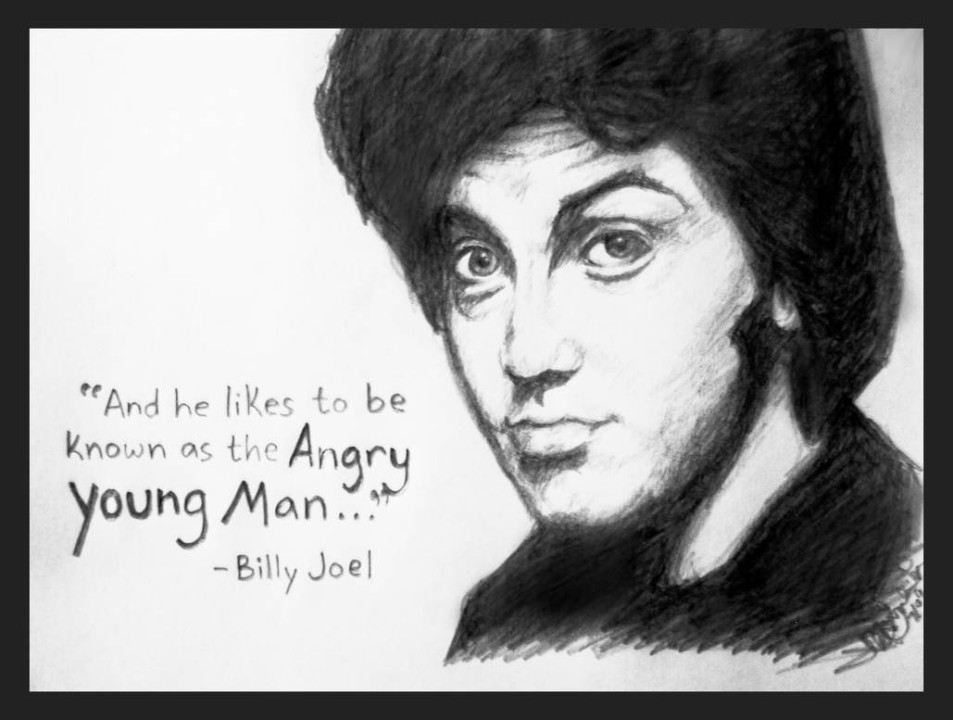
But I know Jesus and I talk to God And I remember this from when I was young Faith, hope, and love are some good things He gave us And the greatest is love
One of my favorite things about Judaism is the way we look to God, to the Torah, for answers. There are always lessons to learn. Since October 7th I have spent much more time asking questions, learning Torah with Rabbis, and working to understand my role as a Jew in this world.
There is a line in Pirkei Avot, the lessons of our fathers, that always speaks to me. It comes from 2:16 and says that Rabbi Tarfon used to say, “It is not your duty to finish the work, but neither are you at liberty to neglect it.” After October 7th this hit home in a very different way. I am not a soldier and can’t fight with the IDF. I am not an Israeli citizen. I do not have the duty to finish the work of the war. However, I am also not able to just neglect the situation and not do my part. There are many ways to do my part and I have learned that there is much I can do. We all have roles to play and our responsibility is not to do everything but rather to play our part, to do what we can. Speak out. Get educated. Encourage others to learn and not just repeat things they hear.
We can also work to live with faith, hope, and love. This doesn’t mean excuse the behavior of the terrorists or those who repeat the lies because they don’t know better. We can have faith that Israel will defeat evil. We can have faith in God and the IDF. And we can focus on love. Love of the Jewish people. Love of our mishpacha (family). Love of Israel. Love of our family. Love of the teachings of the Torah (which if you know me doesn’t sound like something I would say.)
In these terrible times, in these times of desperation, we can still live with faith, hope, and love. We can choose to look to the future with positivity or negativity. We can do our part to make the world a beautiful, better place or we can allow it to die. The choice is ours.
Where were you when the world stopped turnin’ That September day? Teachin’ a class full of innocent children Or drivin’ down some cold interstate?
Did you feel guilty ’cause you’re a survivor? In a crowded room did you feel alone? Did you call up your mother and tell her you love her? Did you dust off that Bible at home?
This verse reminds us that the world did stop turning on both 9/11 and on October 7th. We don’t have to pretend that it didn’t. President Bush was reading to a class full of innocent children. We were all doing something when it happened, when we got the news.
President Bush reading to children as terrorists attacked on 9/11
We don’t have to live with survivors’ guilt. I wasn’t living in NY on 9/11 or in Israel on October 7th. Why would I have survivors’ guilt? Because I know people who were. I know people who lost loved ones. My life was altered only in the inconveniences I had to deal with after 9/11. October 7th meant that I didn’t get to go to Israel in November like I had planned. Yet the survivors’ guilt is real because I am part of a community. While I am an American, Israel is my homeland. I have a strong tie to Israel and my homeland, my love, was critically injured and damaged on October 7th. That is where my survivors’ guilt comes from. Because I haven’t been able to go to Israel since October 7th.
There are plenty of times when I do feel alone. People chanting antisemitic tropes. Dressing in Nazi uniforms and flying Nazi flags. When I see friends posting hateful comments that they don’t even necessarily understand are hateful and hurtful. I have learned who my friends really are and who aren’t. This can be painful but it’s also refreshing because I don’t have to include those people in my life any longer.
After 9/11 I made sure to talk to my parents, my siblings, and my loved ones. It was a reminder of how short life is. The same thing happened after October 7th. This type of brutality and horror reminds us how precious life is. How limited our time really is. What and who is really important to us. Last week I reached out to my friends who are Palestinian and live in that area. I wanted to see how they are doing. I wanted to let them know I was thinking of them. I wanted to let them know I consider them my friend no matter what is happening in the world. And that I want to see them when I get to Israel in the near future because they matter. I choose to live in faith, hope, and love, not in hate.
After 9/11 people began asking questions about God and opened a door that had been closed for them. October 7th was the same. The opportunity to study, to learn, to ask questions, and to explore Judaism, God, and spirituality was there and many of us took it. It opened me up to learning more, to being a better person, and to ask why I behave certain ways and is that reflective of the person I want to be. We have an opportunity to do better and to be better. I am taking that opportunity.
Did you open your eyes and hope it never happened Close your eyes and not go to sleep? Did you notice the sunset for the first time in ages And speak to some stranger on the street? Did you lay down at night and think of tomorrow Go out and buy you a gun?
After 9/11 I know a lot of people who did close their eyes and hope it never happened. People who struggled with sleep. I wasn’t one of them. But after October 7th, I was. I hoped it was a nightmare. I hoped I would wake up and it was only a nightmare. I struggled to sleep and when I did sleep, it wasn’t restful. October 7th was much more personal for me than 9/11. Unfortunately, I think most of the country has forgotten the horror of 9/11 and October 7th happened ‘over there’ and ‘to them’ and doesn’t affect their daily lives.
I have chosen to invest more in random acts of kindness. Today I was at the grocery store behind a couple with a child that has a disability. It meant that they were going very slow. I was stuck behind them. Instead of getting frustrated and trying to push by, I took a deep breath and watched them with their daughter. And found joy in it. Instead of being angry and resentful, I was grateful and filled with love. All because I took a deep breath and didn’t push past them. I say hello to strangers and talk with them as people, not strangers. I will hold a door open, let somebody get in front of me, and enjoy the beauty of the day.
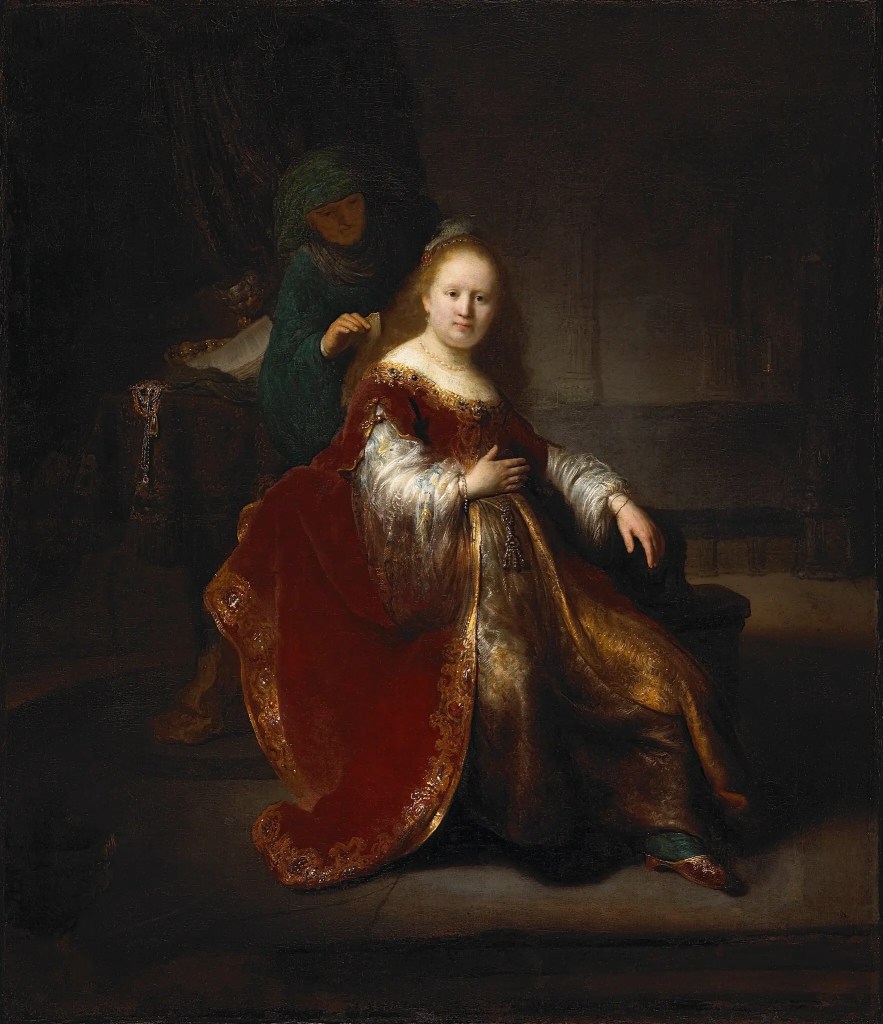
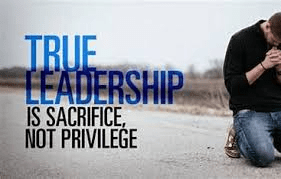
The world is a scary place and has only gotten scarier since October 7th. Being so public as a Jewish leader, I felt targeted and at risk. Long before October 7th, I did get training on firearms and made sure that I have them to protect myself. They are things I hope to only use on the range when I practice. But I won’t be a victim. I won’t allow my family to be at risk from the hatred that exists in the world. And I know I am not alone in these thoughts, concerns, and actions.
Did you turn off that violent old movie you’re watchin’ And turn on I Love Lucy reruns? Did you go to a church and hold hands with some strangers Stand in line to give your own blood? Did you just stay home and cling tight to your family Thank God you had somebody to love?
This last verse asks what we are doing differently. While there are specific things listed, it’s really about who you are and what you are doing as a result of 9/11 and now October 7th. There are many things I do differently today than I did prior to October 7th. I speak out much more often against antisemitism and hatred. I reach out to those I love and to my friends. I make sure my friends who are different religions, races, cultures, etc. know I care about them and that I am interested in our similarities, not our differences.
Like Pirkei Avot teaches us, I have an obligation to help with the work. So I give blood, hold doors, exhibit patience, spend more time with my family, tell those that I love that I love them. I invest in friendships and allow those that have been shown to not be investable to die so that I am investing in those of value.
I appreciate what I have in my life. I am a rich man because I want what I have rather than having what I want. I am grateful for the life that I get to live rather than worrying about the life I wish I had. I am more connected spiritually and am open to all that the universe brings to me.
I am committed to making the world a better place. That starts with those around me and in my local community. It means doing things for the right reasons. President Ronald Reagan had on his desk a sign that said, “There is no limit to what a man can do or where he can go if he doesn’t mind who gets the credit.” That is how I live my life post October 7th. I don’t care who gets the credit. I don’t care about the recognition. I only care about what we can do together. What we can accomplish. How we can make the world a better place for all.
The paperweight from President Ronald Reagan’s desk
Where were you when the world stopped turnin’ On that September day?
The song ends with the haunting question that it began with. It reminds us that the world did stop turning. Both on 9/11 and October 7th the world was forever altered. We were forever altered. Where were we? What did we do as a result? How did we change? How did we change the world? What did we do to make the world a better place and to get it turning once again.
At the end of the day, all we can control is our own actions. What are you going to do today to make the world a better place? How are you going to change the world today? Remember that just because the world stopped turning on October 7th doesn’t mean we are free from the obligation to make sure it is turning once again. I’m up for the challenge and I hope you will join me.