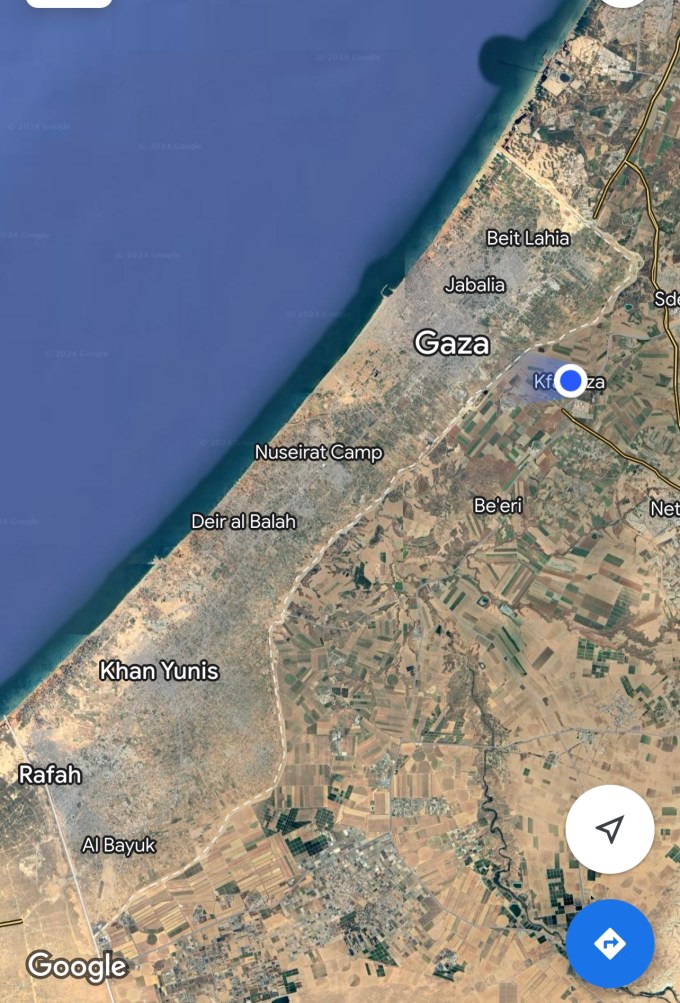
I’ve been close to the Gaza border twice, In May 2024 I visited both Kfar Aza and the Nova site and in July 2024 I returned to both Kfar Aza and Nova along with Kibbutz Alumim. I was about a mile from Gaza on both occasions, heard and saw the drones and jets fly over Jabalya, and saw and heard bombs drop, gunfire, explosions and building collapse. Both were intense experiences as it felt strange to be so close to an active war zone.
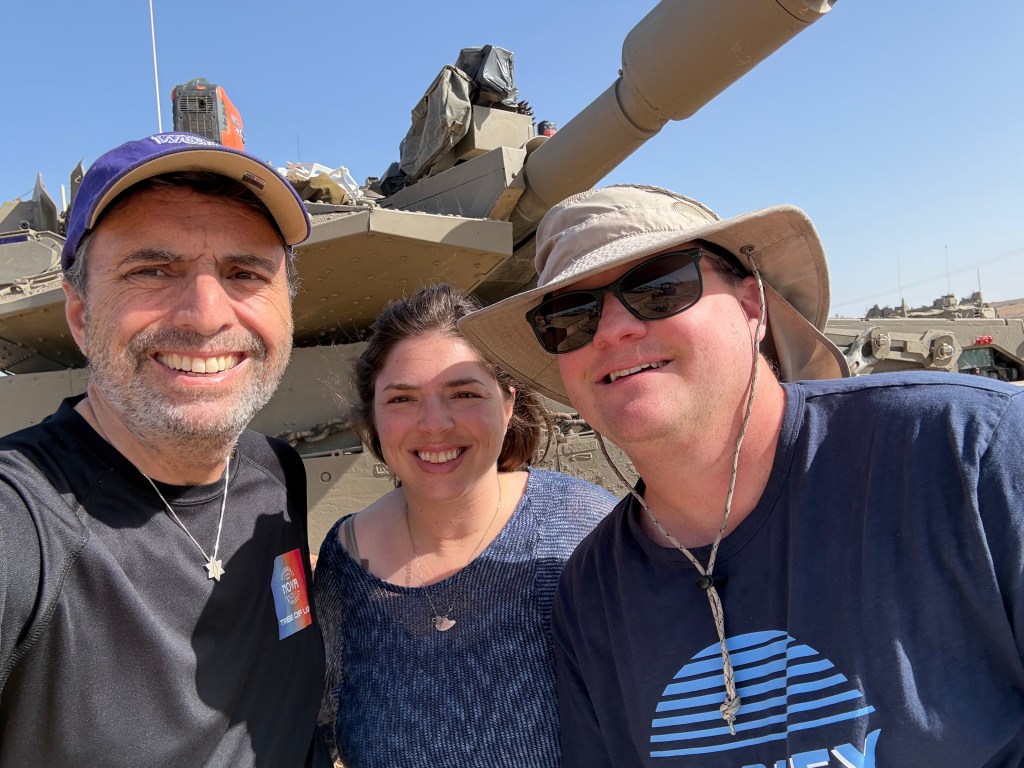
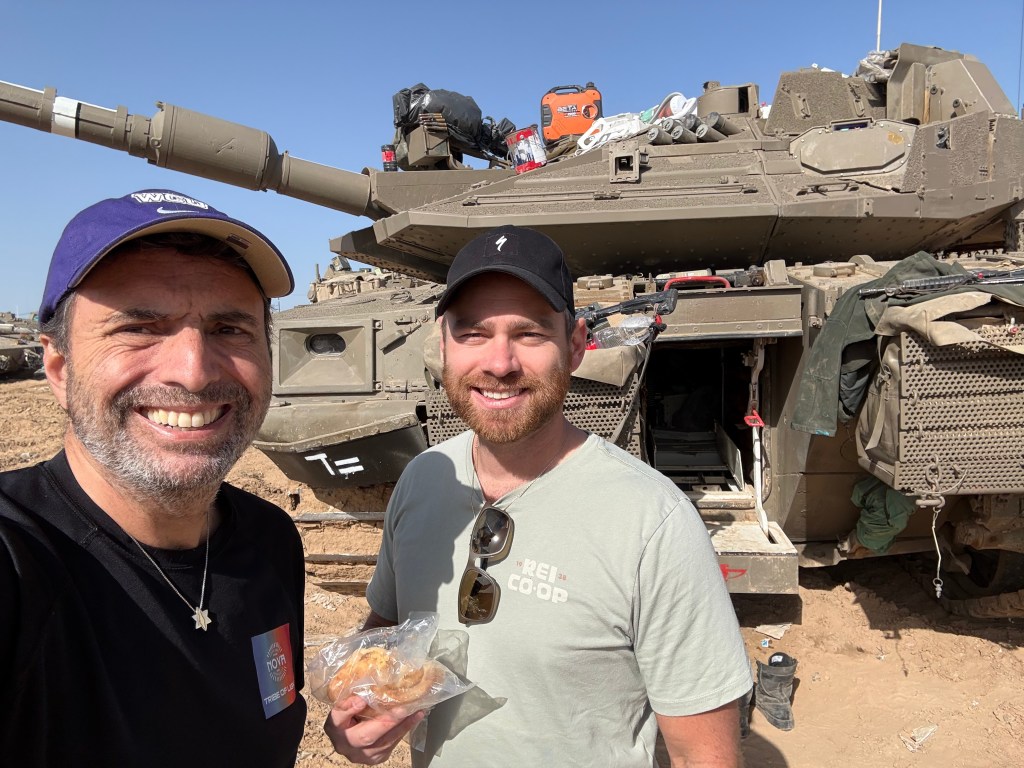
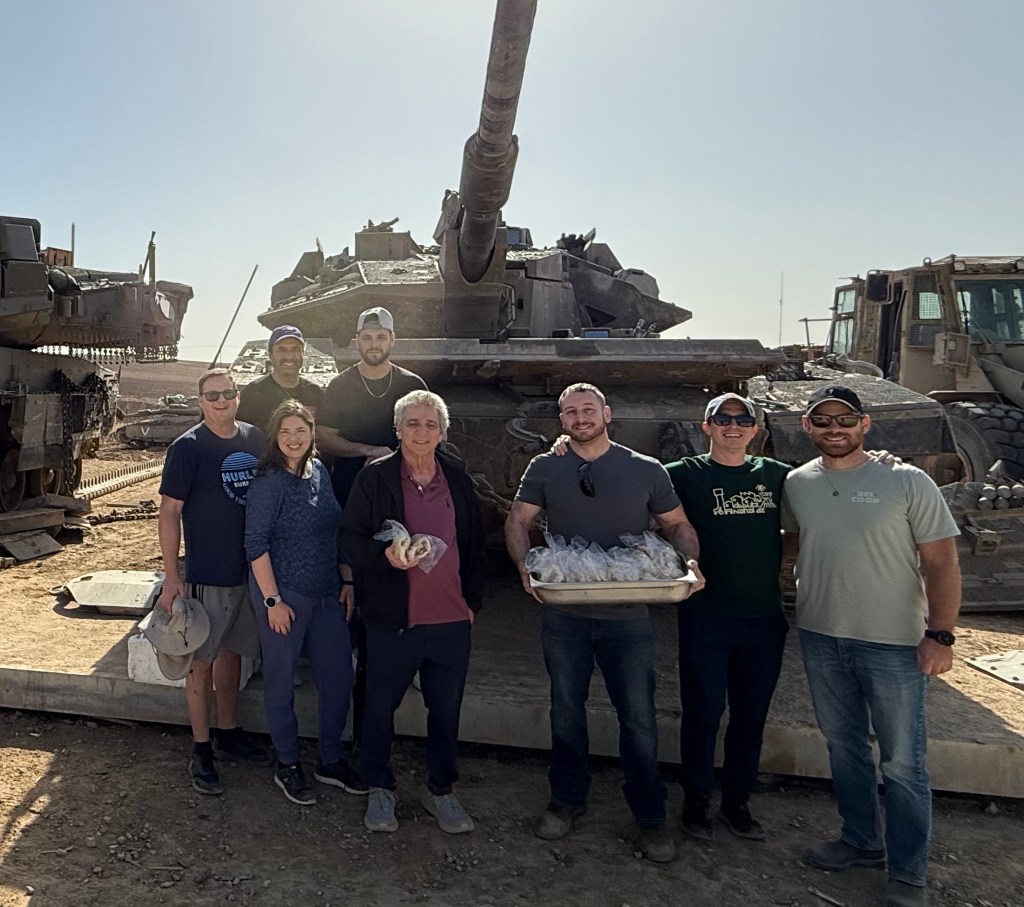
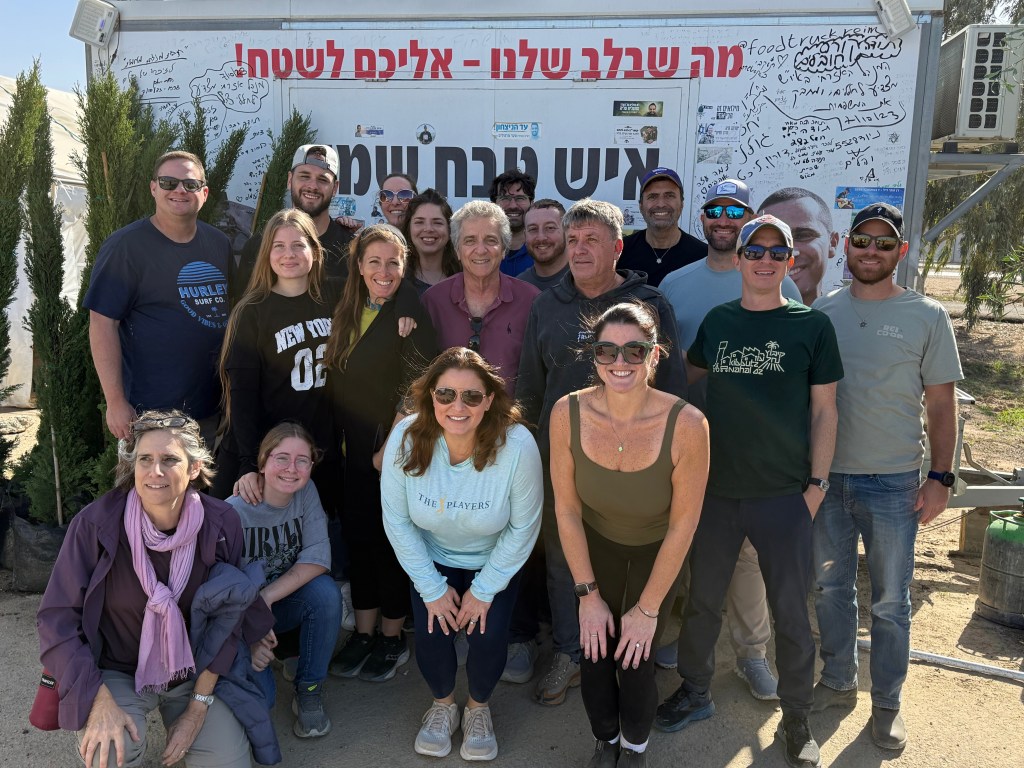
Today I got even closer. We had the opportunity to go to Shlomi’s Food Truck, right outside Kibbutz Be’eri, and make sandwiches to feed soldiers fighting in Gaza and on the border. We cut vegetables, stuffed pita with schnitzel, salad, hummus and tahini, bagged them and filled up box after box after box, then loaded them into a truck and van, and left for the border.
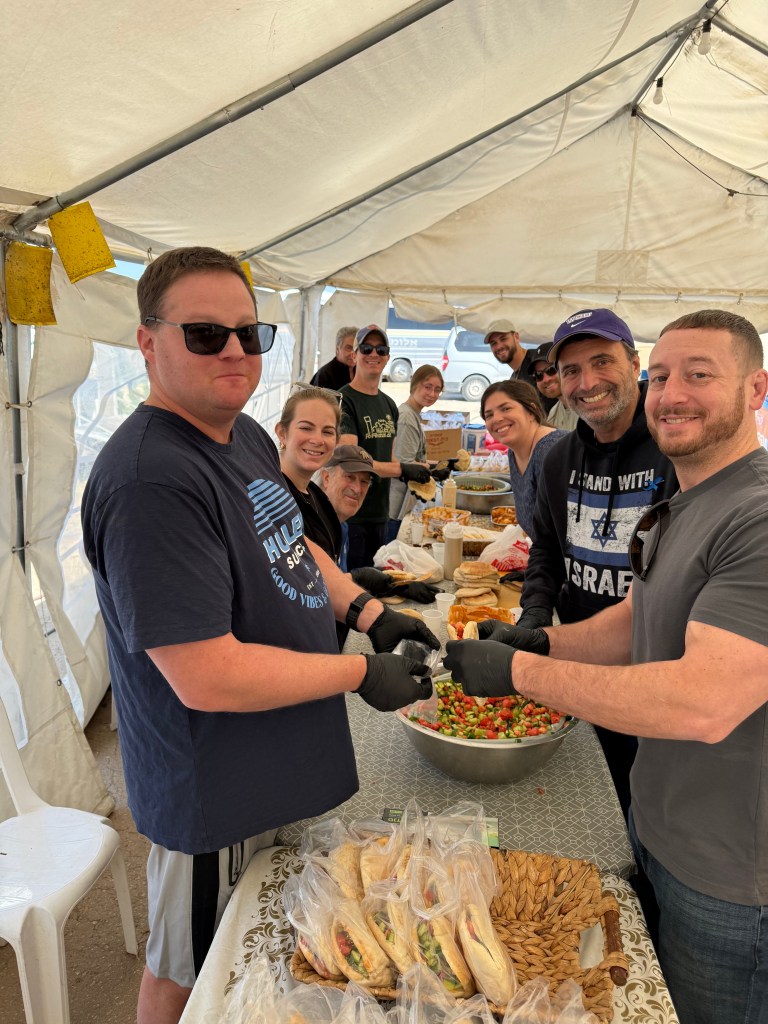
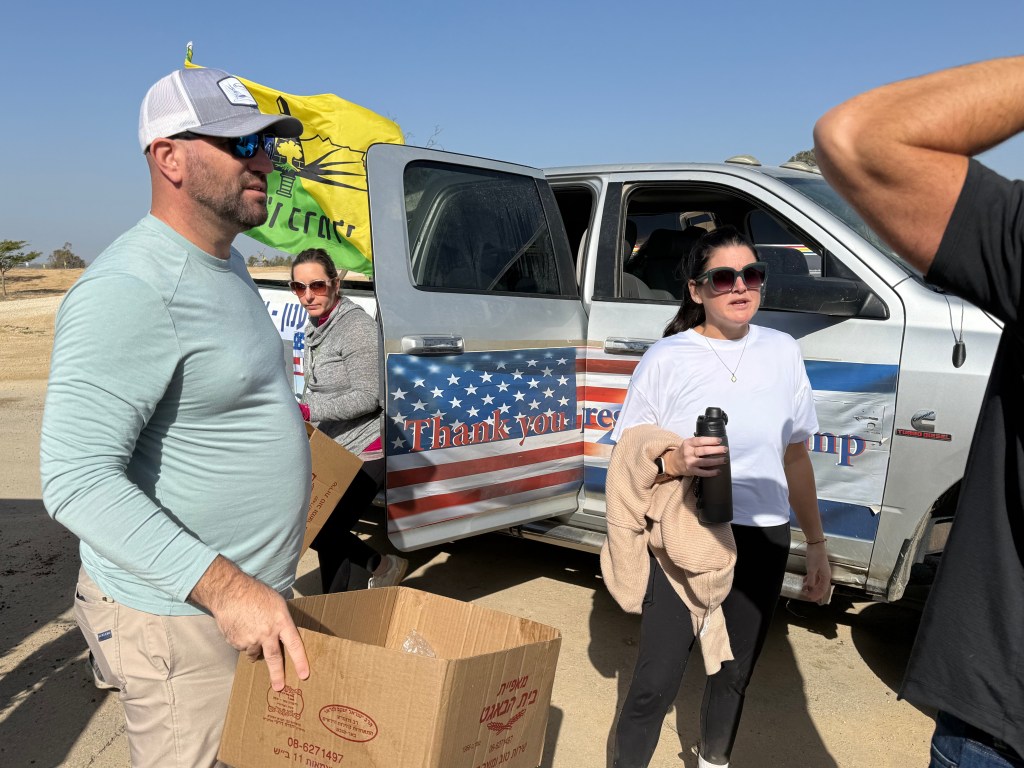
Shlomi showed up outside Kibbutz Be’eri on October 8, 2023 and began making sandwiches for the soliders. Every Sunday to Thursday since then, he shows up, makes sandwiches and gives them to soldiers on the border. Volunteers, like us, began coming to help him. He has paid for this out of his own pocket for more than two years. It costs about $5,000 a week to do this. You can do the math on how much of his own money he has spent over the past more than two years feeding soldiers. It’s a passion, a mission, and an obligation for him.
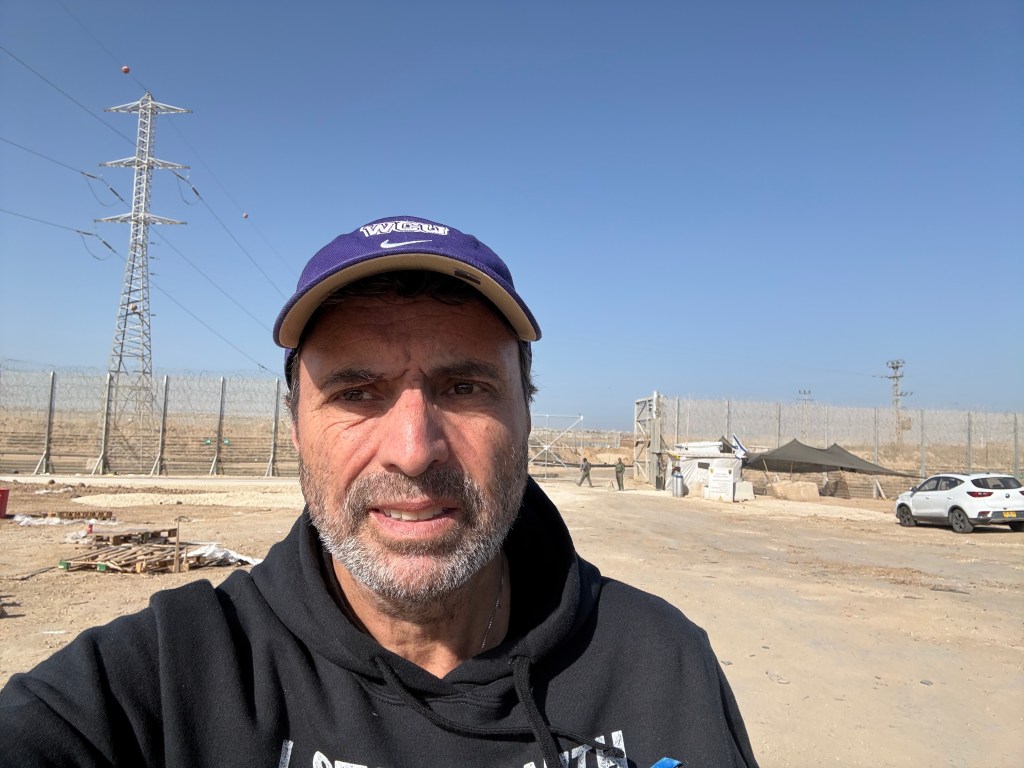
Going to the border was an unbelievable experience. We drove right along it, went into the area where the soldiers were working, offering them lunch. The smiles on their faces, the thank you’s that we received are priceless. I kept thanking them. It is them who are risking their lives, going into Gaza, keeping Israel and the world safe. All we did was make and deliver some sandwiches. We walked all through the area as they worked on their tanks, handing out lunch. We met soldier and soldier after soldier. Being right there on the border with Gaza and getting to make sandwiches and then feed the soldiers was an incredible experience. It’s not something I will ever forget.

As we prepared to finish our work, we ran into a bunch of soldiers from the Carmeli unit, about to go into Gaza. Watching these brave soldiers load up into the truck, smiling, laughing, and prepared to do whatever it takes to keep Israel and the world safe, was incredibly powerful. I lifted a box of sandwiches to them in the truck so they could take them into Gaza and give them to soldiers who couldn’t come back across the border. This picture of them in the truck was possible because they all had their backs to the camera at that moment. The hate for Israel and Jews around the world means we can’t take pictures of their faces. The flag is their unit’s flag. It’s something I will always remember.


After lunch at Kibbutz Alumim, we headed to Kfar Aza. As I said, I’ve been there before. In May 2024, the devastation was incredible. The blatent brutality was in my face. By July 2024 they had begun to make some changes. This time the changes were incredible. The burned and shot up homes had been demolished and new construction was in place. Most of the kibbutz was no longer witness to the devastation of October 7th, it was a sign of life and the resilience of the Jewish people. This house is an example. In May and July of 2024 it was a symbol of the savagery of Hamas. In December 2025 it is a symbol of life, a beautiful new house in a beautiful area of the Kibbutz. As I looked at it, I could imagine myself living there. The dichotomy of my visits in 2024 and 2025 are symbolic of the Jewish people. We face many challenges and get repeatedly knocked down. But like the beautiful new house in 2025, we always get up. We look to the future with hope and with dreams. We won’t stay down, we won’t allow others to defeat us.
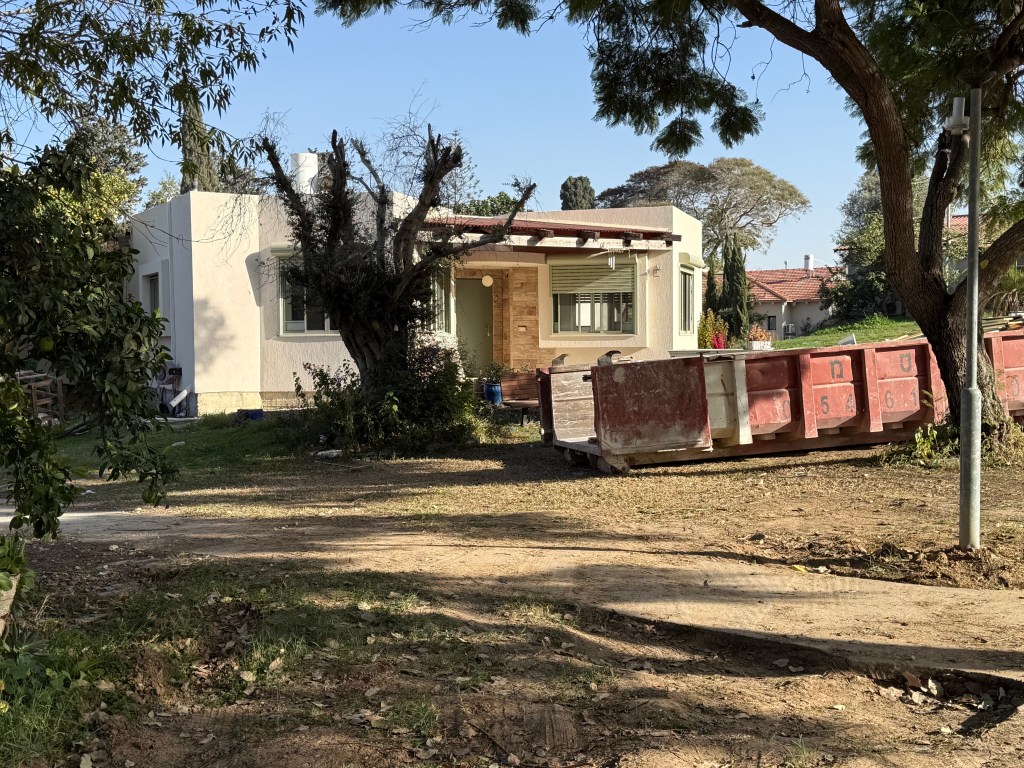
We met with Schacher, a resident of Kfar Aza. He told me his story and gave us the tour of Kfar Aza in July 2024. As we sat on the deck of his house, he told us what it was like on October 7th, hiding in his safe room as those around him were murdered and kidnapped. Why the terrorists didn’t come into his safe room we will never know. They came into his house, ate his food, and used his deck, the same deck and chairs we were sitting at, as their headquarters for the attack. It was surreal to be sitting in the same place that the terrorists were on October 7th.
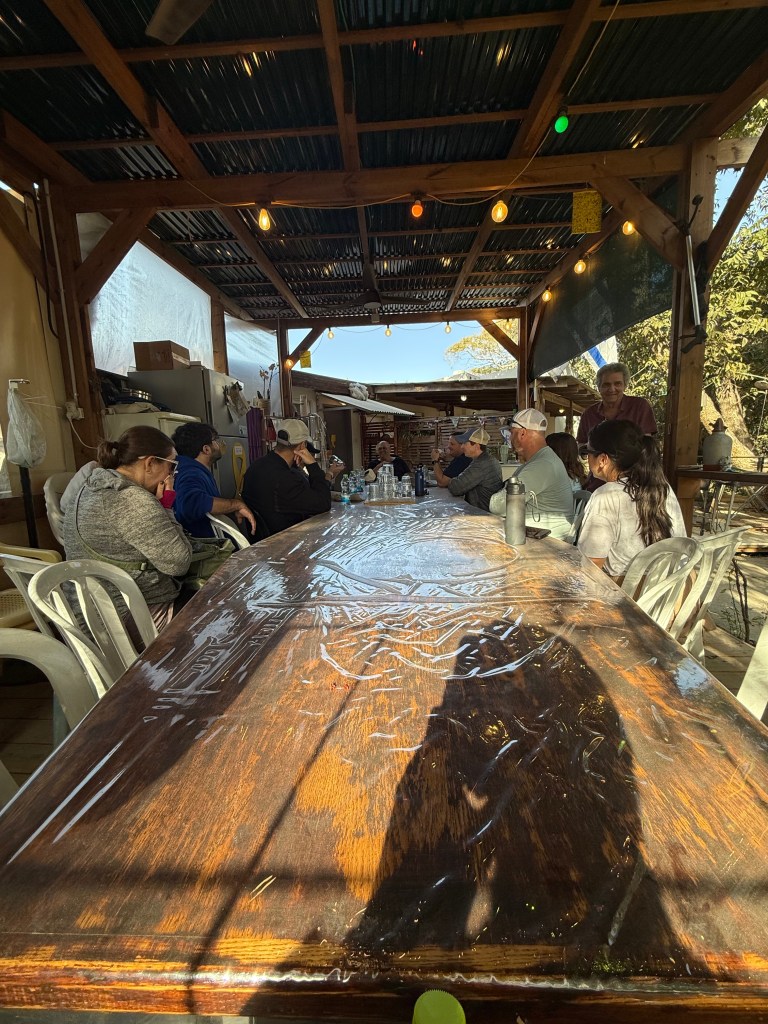
Schacher took us around Kfar Aza, showing us where terrorists murdered people, where they kidnapped people, and told us stories of those who died and those who survived. It was incredibly powerful to experience. It was also a bit surreal as the changes since my last visit in July 2024 were obvious. While people haven’t moved back en masse yet, it was still a place of life now, not of death. Until we got to the young people’s section of the kibbutz. This area was targeted by Hamas for kidnapping and murder. The devastation remained. There are two homes we can walk in, one because the family gave permission as they want people to see the brutality of Hamas and how their daughter was murdered, the other because it was empty on October 7th. I also saw the home of Netta Epstein. I met Netta’s mother in November 2025 and her story and how Netta died was powerful and painful. Netta and his fiance were at home when Hamas stormed Kfar Aza. Hamas began throwing grenades into their small home and Netta threw them out. Until he couldn’t get to one fast enough. He jumped on the grenade to save his fiance, sacrificing his life. She was taken hostage and ultimately released. When I look at his picture, I see somebdy like my kids, with a bright future ahead. Hamas stole that from Netta, from his family, and from the world.

I wasn’t as angry at Kfar Aza this time because it was clear life was returning. It is a good lesson for us all and perhaps the true secret of why the Jewish people have continued to survive for thousands of years. We focus on life, not on death. We can grieve those who were murdered but we can’t bring them back. What we can do is live fully in their memory. We can make sure that their being murdered for the crime of being Jewish doesn’t become meaningless.
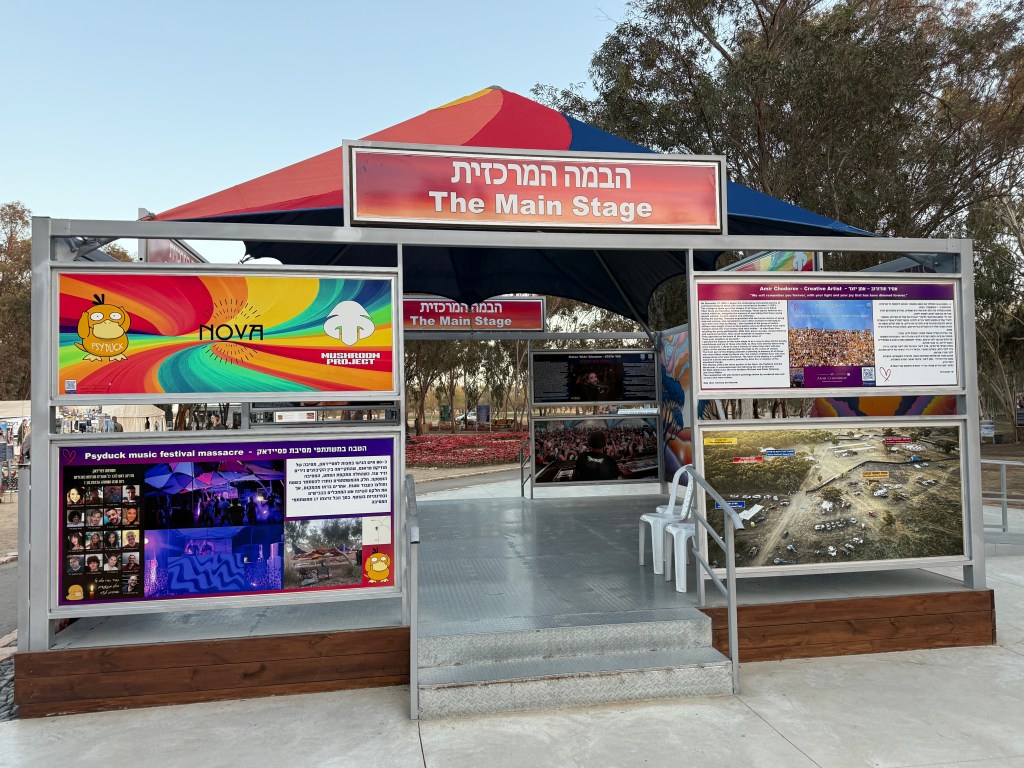
Our final stop in the south was the Nova festival site. I had heard from others how it had changed and been built up since my last visit but I wasn’t prepared for what I saw. Two new forests were built by Jewish National Fund (JNF) to honor those murdered there. There was a new area for the main stage and for the big yellow dumpsters. Seating areas had been built and real bathrooms now existed. The dirt road was replaced with paved road. Even the pictures in the field to memorialize the victims had been upgraded. It left me with conflicted feelings
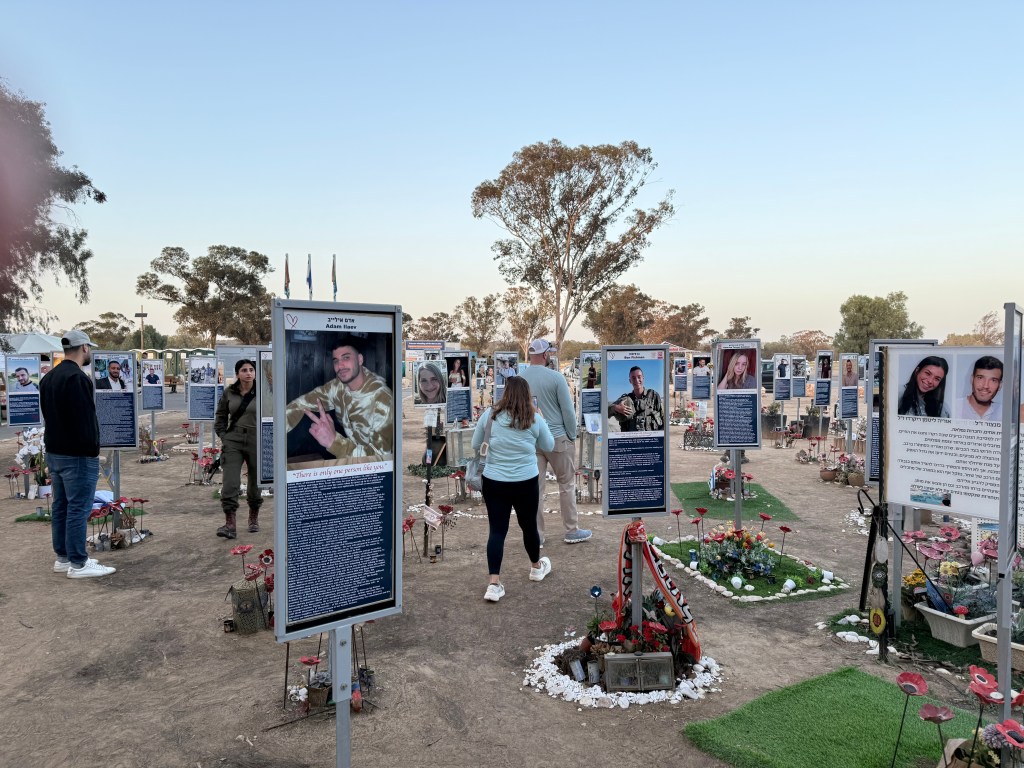
Part of me appreciated the need to make this into a true memorial for the country. To add exhibits and make it look more professional. Yet another part of me really appreciated the simplicity and raw emotion that the earlier version offered. Change is difficult and for me, the impact of the first two times I visited the Nova site was strong. This is a different version of the site. Yet when I watched how it impacted those on the trip who had never been to Nova before, I saw them having the same experience I had my first time. Perhaps it really is just me and what I wanted to see rather than the impact that it had. I enjoyed the main stage exhibit and the big yellow dumpsters exhibit. They were new and really added something to the experience.
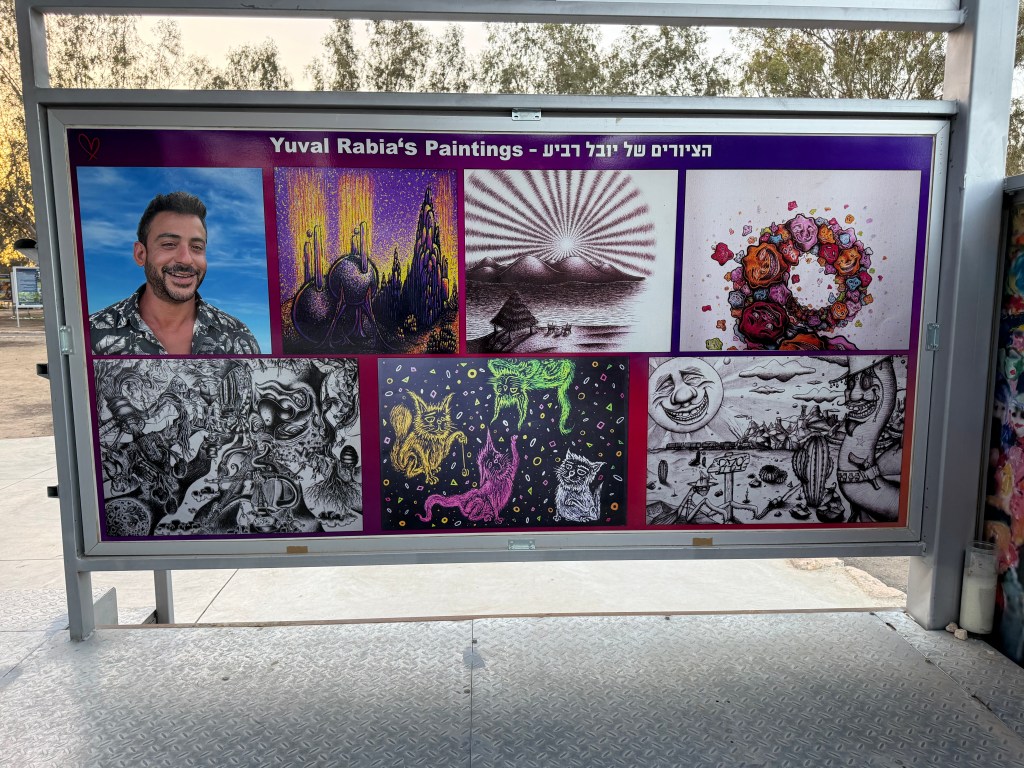
We finished out time at Nova by gathering in a circle and singing. All three times I have visited Nova, we have sung. As the memorial site to those brutally murdered at a music festival, I think it is important to bring music, even if just one song, to the visit. This time we gathered together and sang Hatikvah. Not only is it the Israeli National Anthem, it means “The Hope.” On a day that involved being on the border with Gaza, visiting Kibbutz Alumim, Kibbutz Kfar Aza, and the Nova Site, hope is essential and fitting. Yet after we finished singing, we discussed the lyrics.

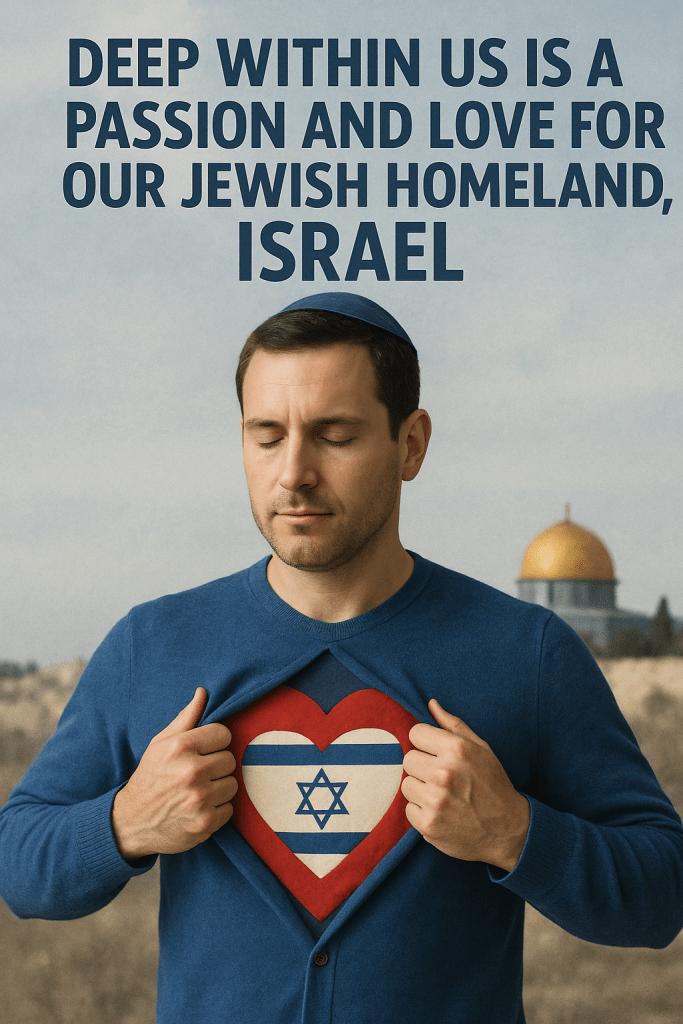
The song begins, “As long as the heart within the Jewish soul yearns, and towards the eastern edge, onward, and eye gazes to Zion.” The hope for the Jewish State of Israel in this song is not unconditional. In fact, it is very conditional. Our hearts must yearn towards Zion, towards Israel, in order to have a Jewish state. It has to be within us, a part of our being. That’s what makes Israel so special – the longing we have for her. The deep within us passion and love for our Jewish homeland. Without that passion and love, deep within our heart exists, so will Israel. I don’t know about you, but I know that I have that deep yearning of my soul, in my heart, for Israel, our Jewish homeland. I gaze towards Israel often, come visit whenever and as often as I can, and love being here. I hope that you do as well. It is a remarkable country on so many levels.
Discover more from keithdblog
Subscribe to get the latest posts sent to your email.
 keithdblog
Beautiful Keith. Thank you for sharing.
Michael
LikeLike
Beautiful Keith.
Thank
you for sharing.
Michael
LikeLike
very moving and descriptive. I appreciate everything you described and especially the notion of yearning for Zion. I feel this deeply. We hope to go on this similar trip in the next couple of weeks. I would love to prepare meals for soldiers. We did a JNF mission a year ago and I understand about the rawness of Nova. I’m a bit nervous to witness the change. Like you said, if it helps enlighten, then it’s for the good. Am Yisrael Chai.
LikeLike