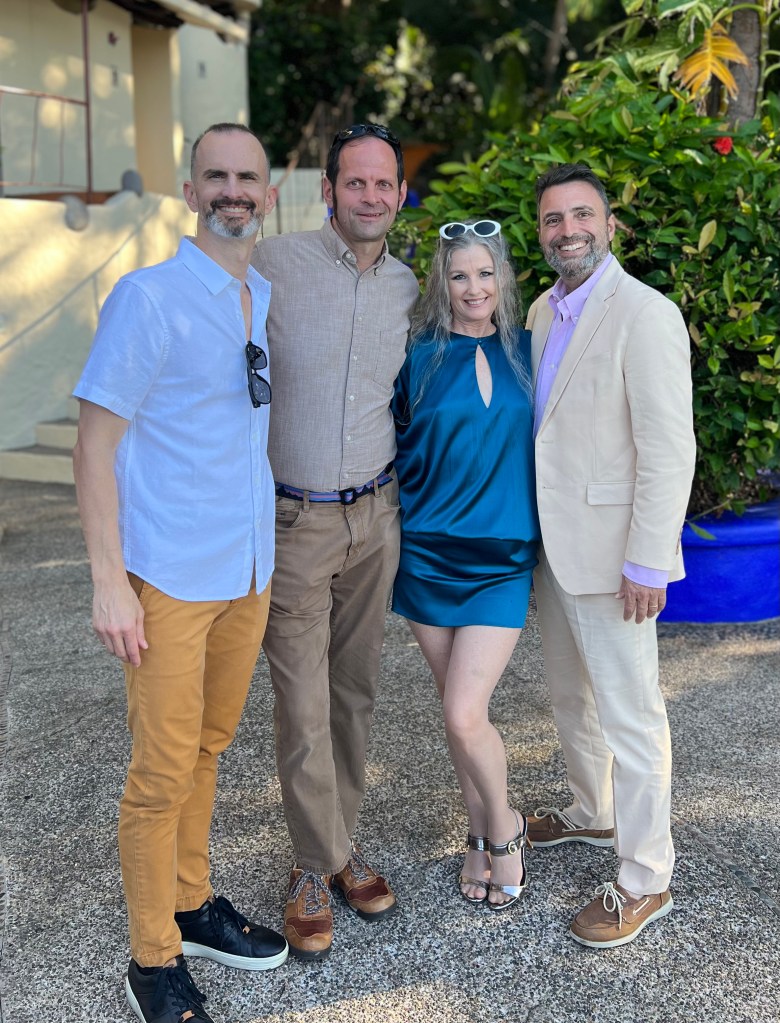
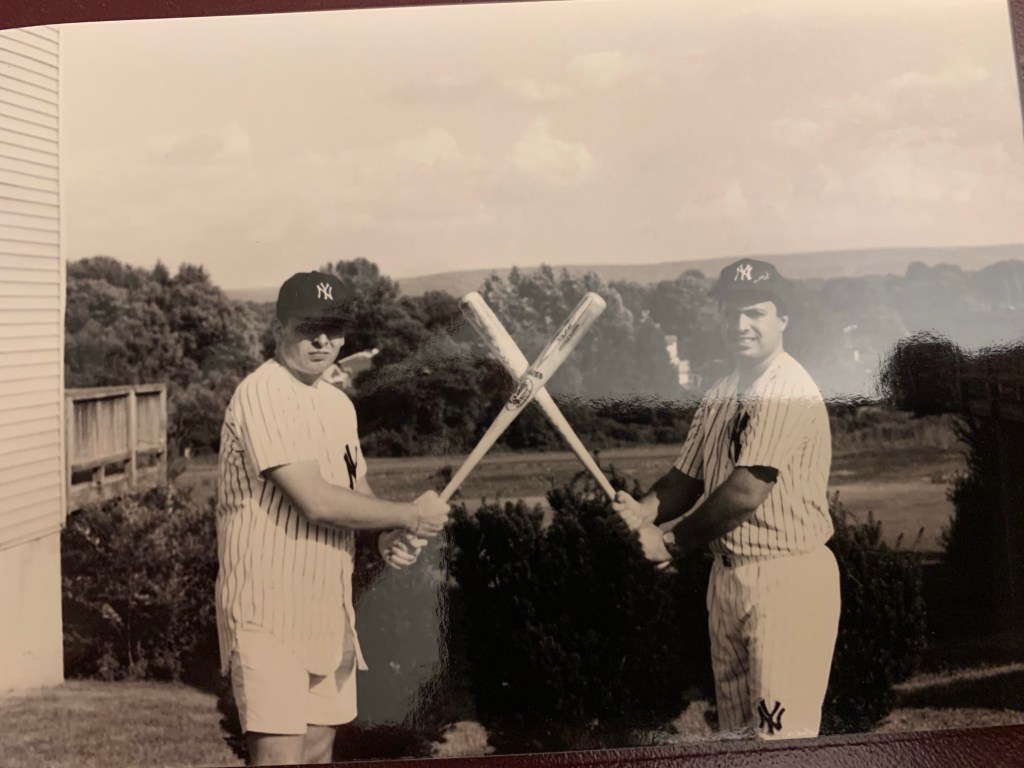
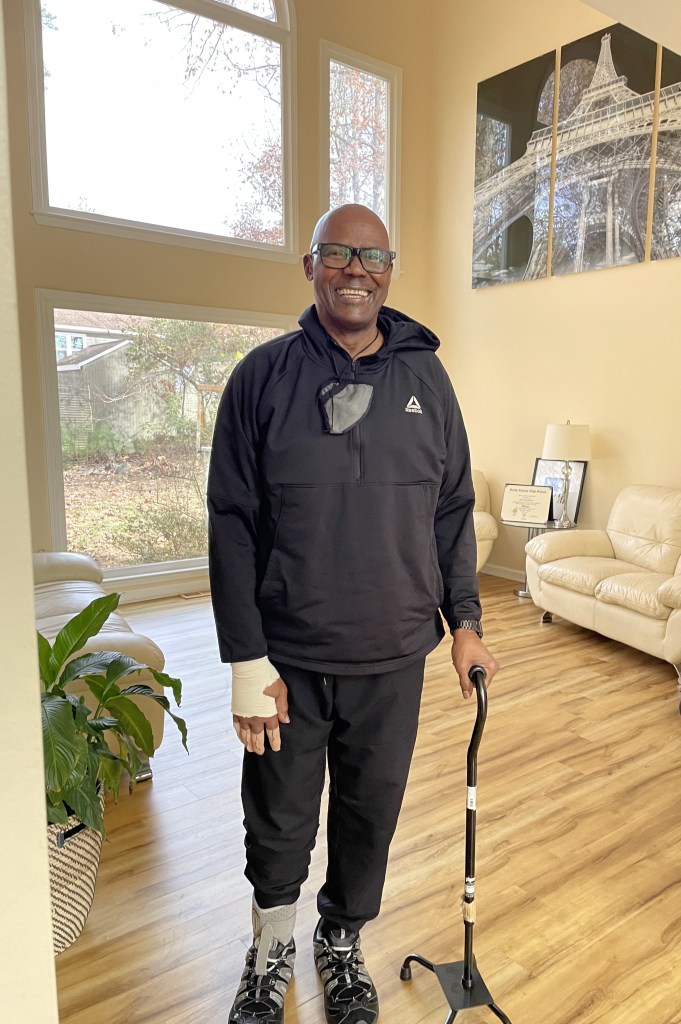
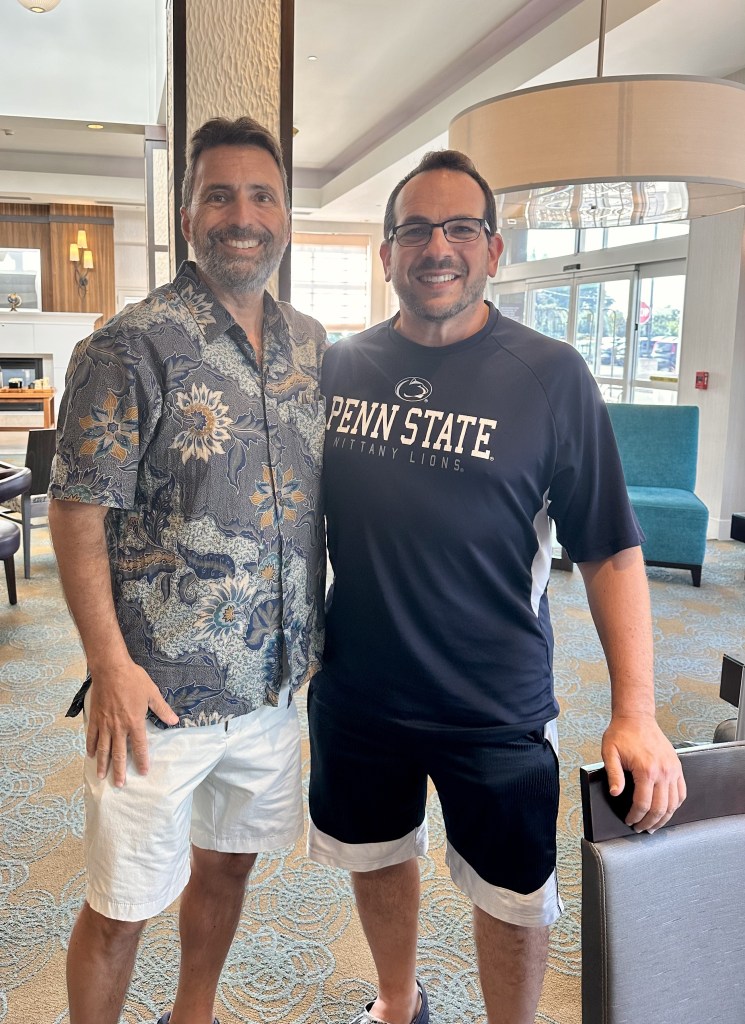
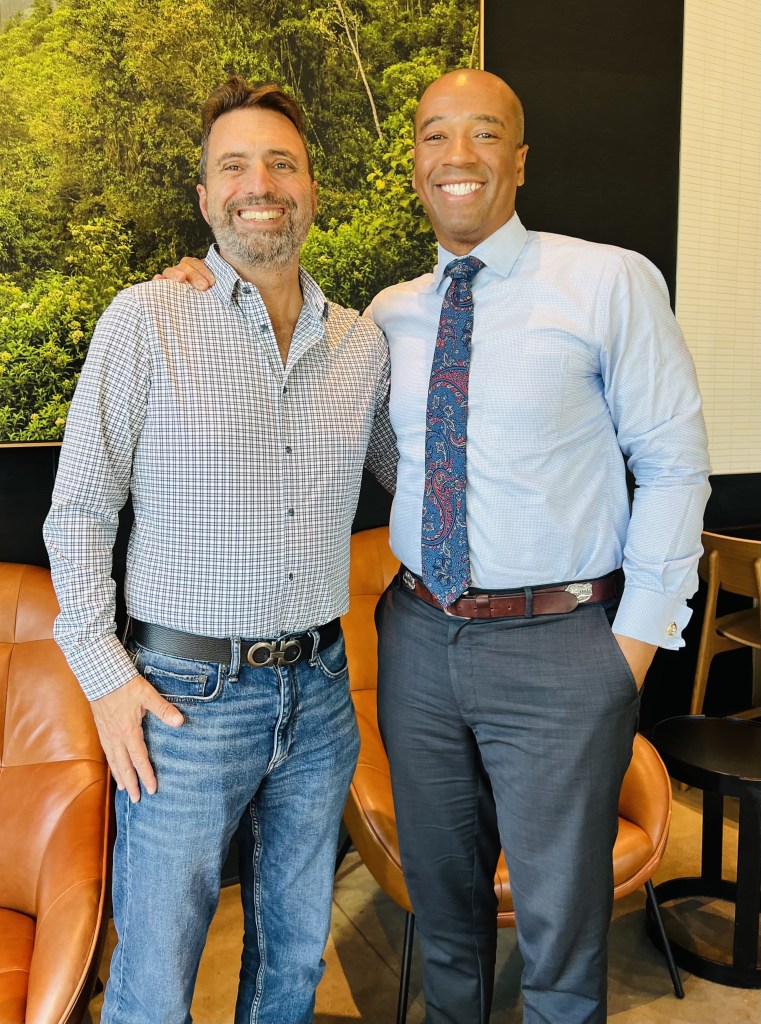
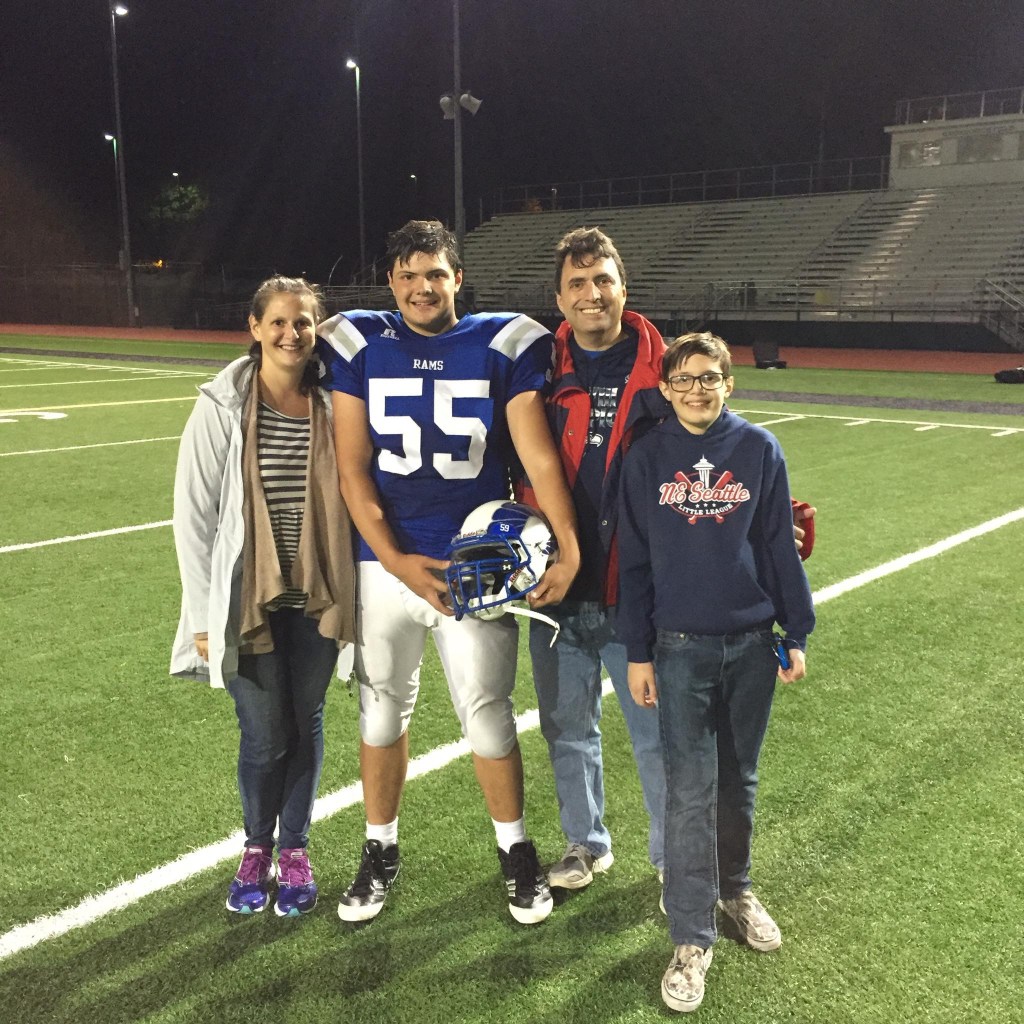
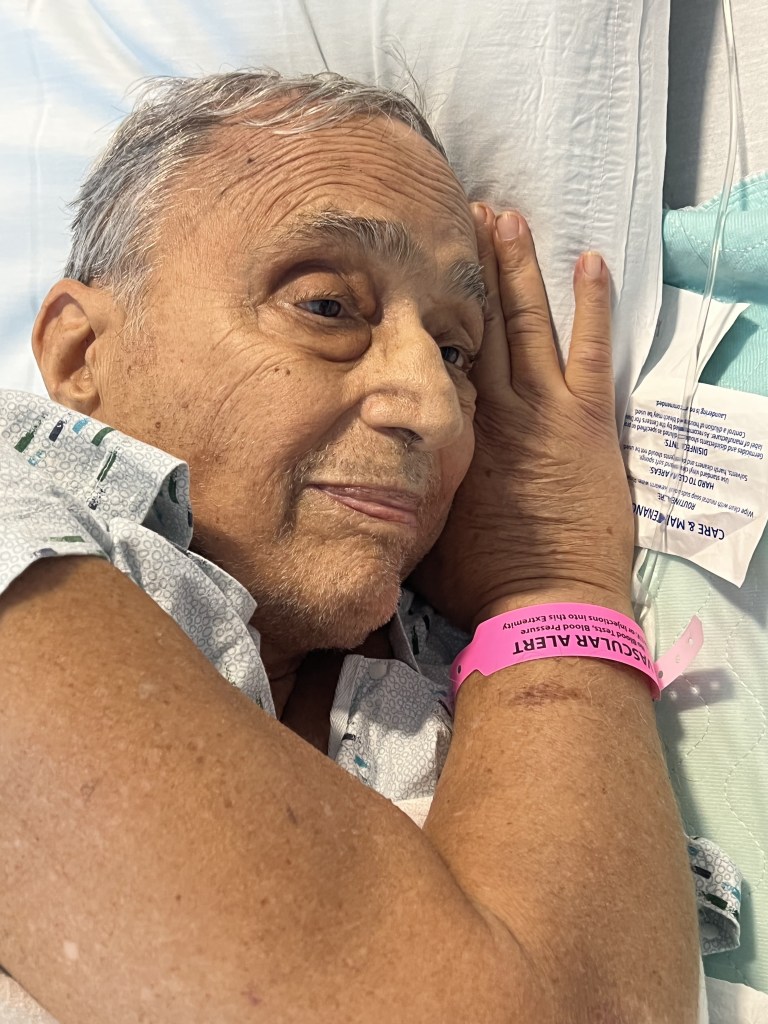
My dad (z’l) would be 80 today and celebrate his 20th birthday. Huh???

Today is my dad’s (z’l) 80th birthday.  Yes, that means he was a February 29th, leap year baby. 
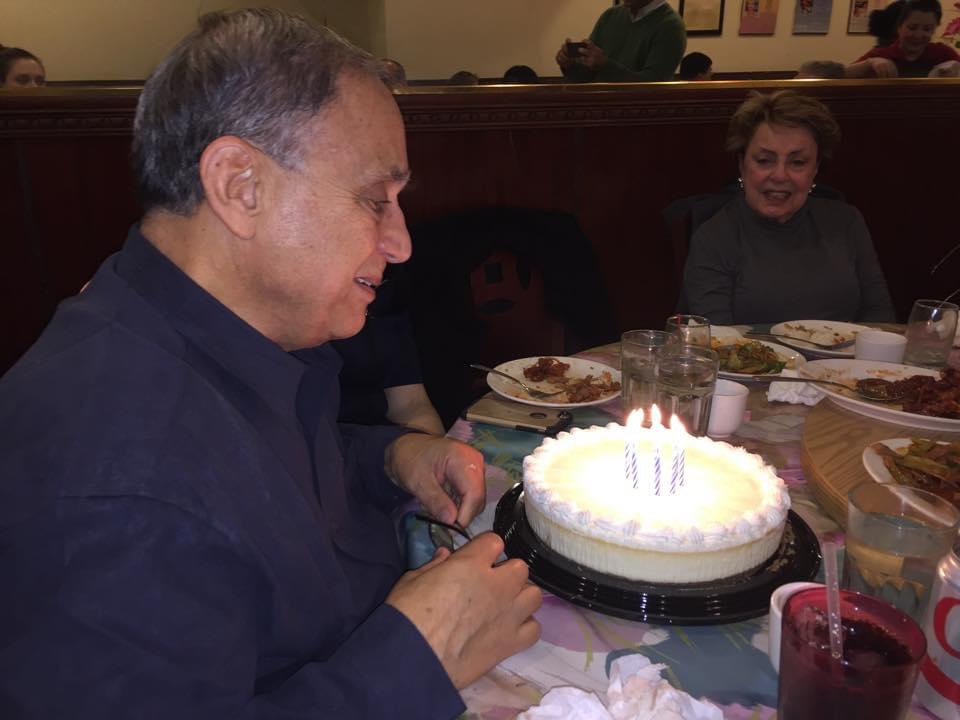
My favorite story about his birthday came from his mother, my Grandma Esther.  When she took him to enroll in public school, they asked when she chose to celebrate his birthday.   She asked why it would matter, as his birthday is his birthday.  They told her that if they celebrated his birthday on February 28th, then he could enroll this year.  But since that was the cutoff date, if they celebrated it March 1, he had to wait another year to enroll.  You guessed it, she told them they celebrated on February 28th!! 

My dad believed this 100%

My dad’s real birthdays were always a special celebration in part because they only came once every four years.  I remember counting down until I had more birthdays than him (it was when I had my 8th birthday and he had to wait almost 2 full months for his actual 8th birthday!   My brother and sister did it as well as did my kids.  My son Matthew turned 20 two weeks after my dad died, having celebrated 19 real birthdays.  We talked a lot about how he just missed celebrating his 20th before my dad did.  Thinking about it now still brings tears to my eyes as it did when we lovingly talked about it.

As we prepare to celebrate his 80th birthday, and we will celebrate it, I find myself missing him a great deal, especially at this time in my life, and thinking of the lessons he taught me and how important they are and how core they are to who I am as a person.  I want to share a few with you.

  1. Family is Everything. 

My dad (and my mom) not only preached this but lived it on a daily basis.  Nothing came before family.  For family simchas (celebrations), my parents were always there.  Growing up, the entire family was there.  With my cousin’s daughter’s Bat Mitzvah coming up, there is no question we’ll be there, just as we were for my other cousin’s son’s Bar Mitzvah last year.  Family is everything and you don’t sacrifice family or family time for anything.  You do whatever you can and whatever is needed for family. 

Family is also not defined by blood.  I have ‘Aunts and Uncles’ who are not related by blood.  I have ‘brothers and sisters’ who are not related by blood.  I have cousins who are more like siblings.   My in-laws are second parents and my wife’s family is truly my family.  I joke with people about my family because it’s gotten so big because so many people are part of it that aren’t blood related.

When it comes to family, we were taught that you do whatever is needed to help.  Period.  No, ‘if’s, ands or buts’ as my mom would often say.  I’m grateful to my dad and my mom for instilling this in us as children.  It’s not only how I live my life, but also what I teach my children, and Family First has been a core philosophy during the 25 years I ran nonprofit organizations.
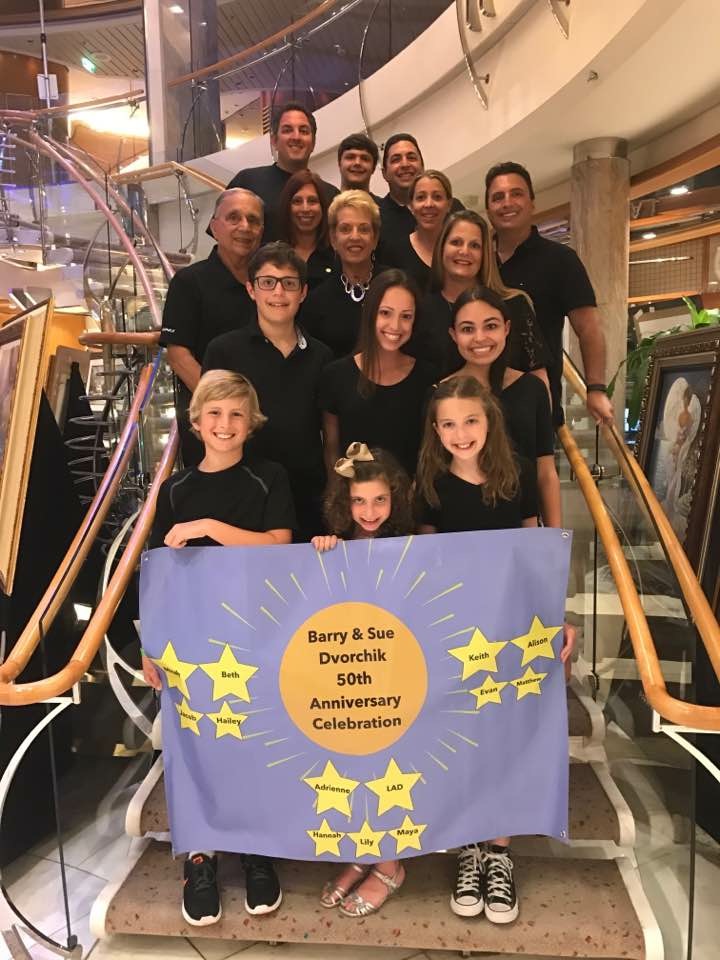
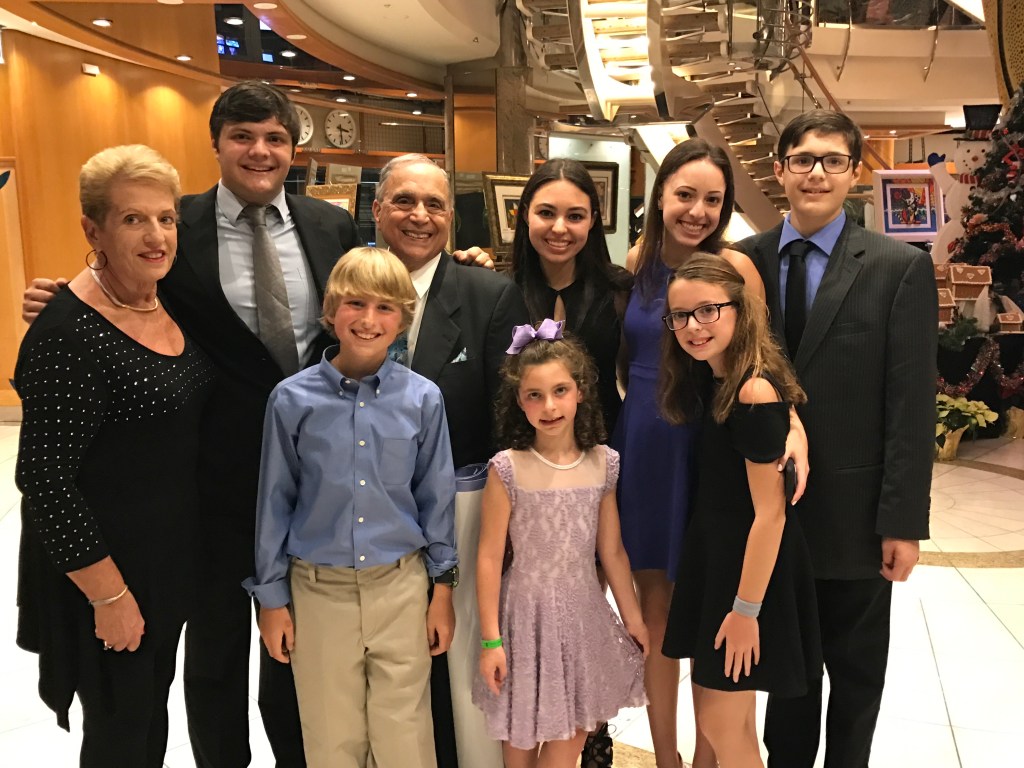
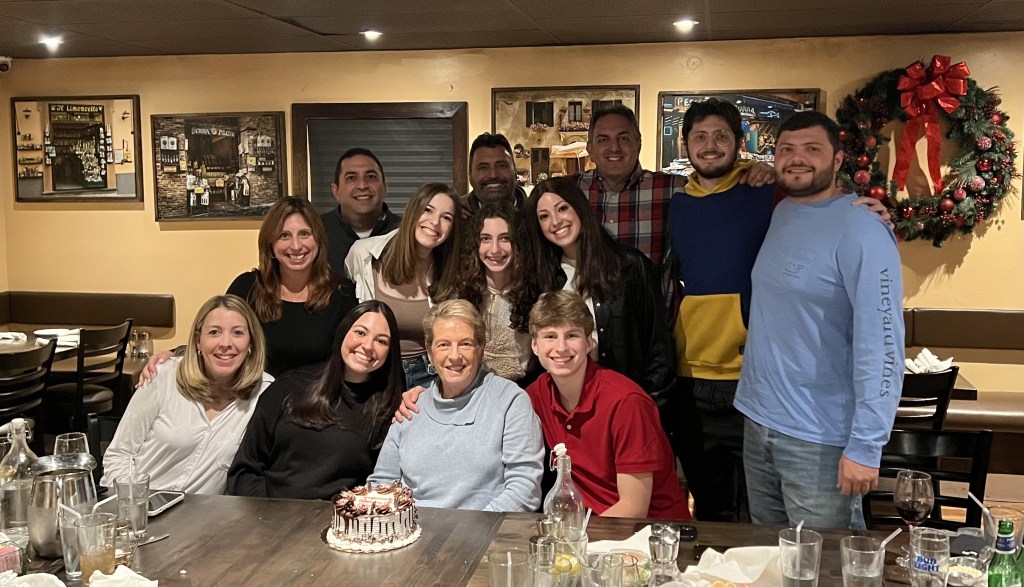
All together for my parents 50th wedding anniversary
  • Be ethical – behave as if your mother will see everything you do on the front page of the New York Times.  

My dad preached this all the time.  When making decisions and making choices, always imagine that your actions or inactions will be on the front page of the NY Times and your mother, and her friends will see it.  Is that what I really want my mom to see and read?  Is that what I want her friends to be asking her about? 

My dad always wanted us to think through our decisions. I can’t count how many times we sat and talked about different situations and went through all the possible outcomes. We’d discuss how we would handle it if this specific thing happened. What if it was something different? How would we handle that? What type of person do you want to be? How do you want people to view you? What values matter to you and how do you consistently act on them.

My long time friends have some great stories about me when I didn’t act that way. When I wouldn’t want my behavior and actions to have been on the front page of the NY Times. Most of those happened in high school and college, which isn’t surprising. That’s when we are testing boundaries, learning limits, and still believe that we are infallible. I use those stories to show my mistakes to my kids. To teach them from the things I didn’t do well how they can do better. They aren’t things I am proud of but they are the things that 13-22 year olds do. We often laugh at them now because they are certainly ridiculous and absurd. And they are the type of things I would never do now.
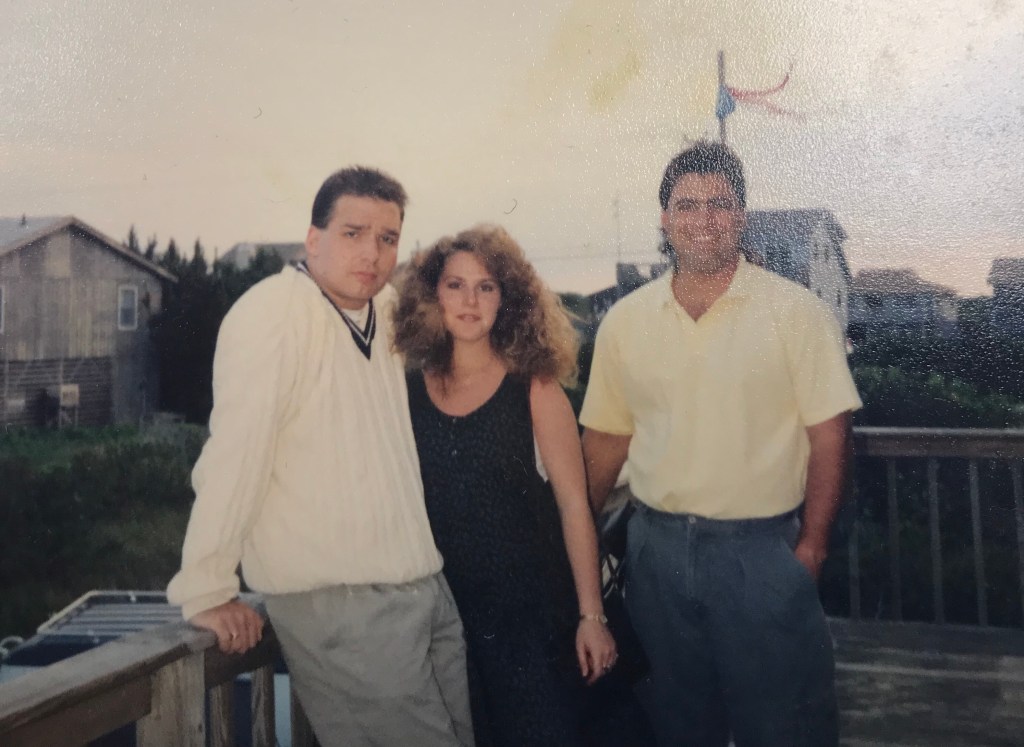
With my friend (who is a brother) Aric and his future wife Carol Ann. You can tell from this picture we were up to no good. He has a wealth of stories that thankfully he doesn’t tell.

My dad began instilling this in us as young children because I think he knew that it would take time for it to really set into our soul. That we wouldn’t understand as kids but by consistenly reinforcing it and teaching us, we would learn it before we made any catestrophic mistakes. His foresight is greatly appreciated and something I have copied with my children.

Thanks Dad, for making me question my actions and strive to always be ethical in my actions. I’m a better person, husband, father, friend, and colleague because of the time and effort you invested to teach me the importance of living an ethical life.

  • Be Kind

In recent times, there has been a focus on the need to be kind.  In many ways this is due to the fact that so many people are not kind.  They behave in ways that are atrocious, unethical, and shameful.  The way they treat others is completely unacceptable.  My dad taught us to be kind.  He taught us that how you treat people says something about you and your character.  It doesn’t mean you have to like or respect people, but it is important to treat them with dignity.  It’s important to be kind. 

This doesn’t mean I need to be a doormat.  It means that until or unless somebody shows you that they don’t deserve kindness and respect, you give it to them.  And even when they show you that, it’s important to behave in an ethical manner.  My dad taught me that it is important to remember that at the end of the day, I have to live with myself and my decisions.  This means standing up for what is right, what I believe in, and what are my core values.  Although at times it takes work and a lot of effort, I can do this in a kind manner. 

After my dad died, one of the things that was said about him the most was that he was a kind man. He had a heart of gold and never wanted to hurt anybody, only to help people. It’s one of the characteristics and personality traits of his that I strive to emulate.

  • Get Involved – make a difference.

My grandparents taught this to my parents who taught it to me and my siblings.  Don’t stand on the sidelines.  It is important to get involved and work to improve the world in whatever way you can.  That was my dad as my cub scout troop leader when nobody else would do it.  It was me coaching my kids’ sports teams.  It is getting involved with Jewish life in one way or another.  Working to connect with legislators who make the laws that we live with.  Volunteering with organizations that do work that matters to you.

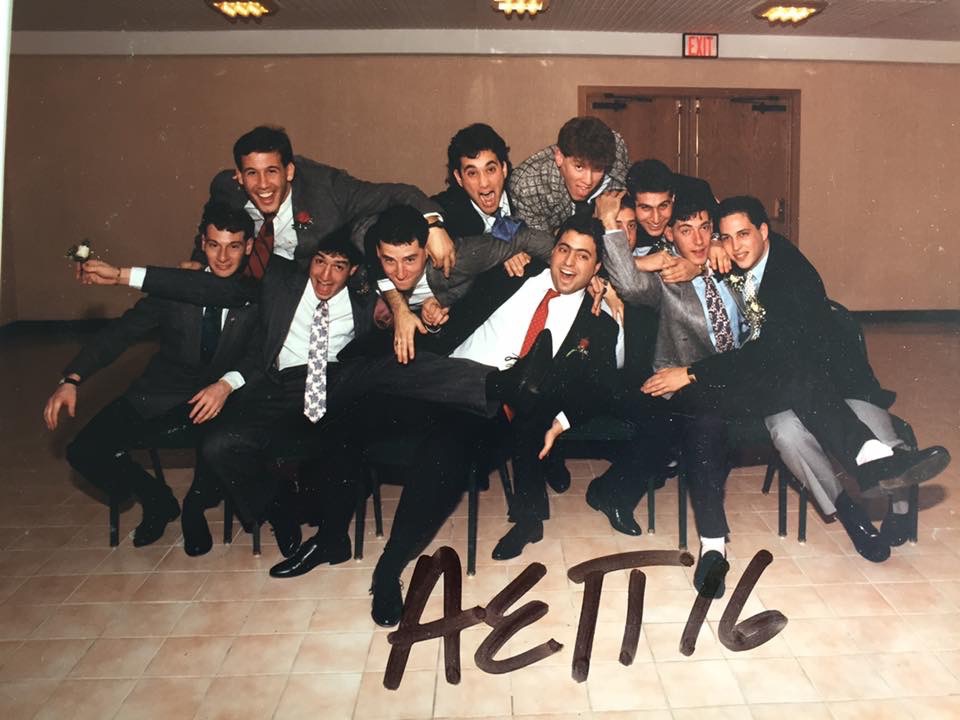
My dad taught me that life is a contact sport.  Sitting on the sidelines isn’t what life is about.  I got involved with a youth group in high school.  Fraternity in college.  Volunteering throughout my life.  Working in the nonprofit world for the past 25+ years.  Building relationships with people and always being willing to help them.

I was on the phone yesterday with a friend of a friend who connected us about some work-related topics.  As we were talking, she asked if I could help with something totally unrelated to the conversation.  My answer was 100% yes.  Because that’s what I was taught to do.  I was talking to another friend yesterday who thanked me for doing something to help them.  I told them they didn’t need to say thank you, that’s what friends do for each other.  Because that’s what I was taught.

My grandparents were volunteering in the synagogue, at the Jewish home for the elderly, raising money for JNF, volunteering and knitting slippers and sweaters for kids in the hospital.  It was always something.  They were involved in their community and their lives were richer as a result.  I’ll never forget the stories of Holocaust Survivors sleeping on the floor at my great-grandmother’s house because they had no place to go and she just took them in until they could get settled.  My parents ‘adopted’ a family from the former Soviet Union when they finally got out and came to the US.  My mom is in touch with them today and they are another part of our family, unrelated by blood. 

My kids often laugh at me when I talk about ‘my friend (insert name)’ because often times they have no idea which one I am talking about because they hear so many names.  I have to clarify which person it is for them because they have grown up understanding that getting involved and helping others is what we do.  It is one way that we can make the world a better place.

Thanks Dad.  Thanks Mom.  By teaching me this value, you’ve made me a better person and allowed me to impact the world in my own way.

My dad loved Nefesh Mountain and brought them to Tampa as a fundraiser to send kids to Jewish summer camp. It was his last major volunteer project.
  • Set goals.  Setting them is more important than achieving them.

This sounds wrong.  Isn’t it about what you achieve?  I struggled with this when my dad would talk to me about this when I was a kid.  Especially in high school when achievement was everything and effort didn’t seem to matter that much.  Once again, he was right, and it just took me a little longer to understand it.

If you don’t set goals, you don’t know where you want to go.  And if you don’t know where you want to go, you can end up anywhere.  I didn’t understand that as kid.  I wanted to go to college, have a career, make money, have a family, buy a house, retire, and enjoy my life.  Those were goals and I knew where I wanted to go.  But I didn’t know how to get there.  It is like the famous Theodore Herzl quote, ‘If you will it, it is no dream.’  Just wanting it isn’t enough.  You have to will it.  You have to work for it.  And if you don’t know the steps to take to get there, you likely won’t get there. 

I set goals all the time.  Goals for the day, the week, the month, the year.  When I am working on a project, I have goals and milestones set to achieve so I can measure my progress.  Financial goals for retirement.  I have an objective for when my house is paid off, places I want to visit, things I want to do.  Without setting the goals, I’d have no way to get to what I want to accomplish.

So yes, achieving the goals is important, but if you don’t set them first, you can’t achieve them.  Once again, Dad you were right, it just took me a while to understand it.

  • People remember who you are, not what you did.

Simon Sinek’s amazing TED Talk, Start with Why, focuses on the fact that people don’t buy what you do, they buy why you do it.  My dad knew this concept years before Simon’s TED talk, as he taught us this lesson as children.  He was never caught up in what he did, but rather who he was a person.  The number of stories we heard about my dad and the impact he had on people was incredible.  People remembered who he was.  They remembered the time he spent with them.  The way he listened to them.  The way he would always be there for them when they needed him, no matter what.  It was who he was.  The fact that he had a very successful career and made an impact in the pharmaceutical industry through research and getting new drugs through the FDA was nice, but it wasn’t what he thought was important. 

Throughout my career, I have been most proud of the relationships I have built and the people who have been in my life at different stages that still are a part of my life today.  People who used to work for me.  Students from UF Hillel.  Parents of students.  Alumni.  I have these interactions almost every week.  This week alone it happened about 10 times.  That’s not a typo – literally 10 or more just this week.  I treasure those conversations and connections. I even told one of them today that I was writing about this in the blog as we connected about different things, talked about family, and it seemed like we had just been together yesterday.

I enjoy having the opportunity to remain in people’s lives for decades.  To build and maintain friendships.  To be a mentor, advisor, friend, colleague and watch their lives unfold.  To be a part of their group and for them to be a part of mine. 

After my dad died, the stories people told about him were remarkable.  I’d heard the same theme throughout my life however after he died, the number of people who had those stories was truly remarkable.  He was somebody who was there for everybody.  He was known to sit down next to you, pat your thigh and ask, “So what’s going on good?”  And then he listened.   He heard them.  He spent time understanding what they were really talking about and what they were really asking.  And then he provided some suggestions and guidance that they could take or not.  Most of the time they took it and expressed their gratitude.

One of my friends met my dad only once.  He didn’t have a relationship with his own father and was astounded by the relationship I had with my father.  He would always remind me of the interaction with my dad and how much it impacted him.  He would imitate my dad when he told him, “Call me Barry.”   That’s who he was to everybody.  He was the person anybody and everybody could reach out to talk with, to share challenges with who would listen and give you 100% of his attention.  He was a friend and confidante to so many people.  I don’t think any of us realized just how wide and broad his impact in this role was until after he died.

People don’t buy what you do, they buy why you do it.  People remember who you are, not what you did.  Simon Sinek and Barry Dvorchik (z’l).
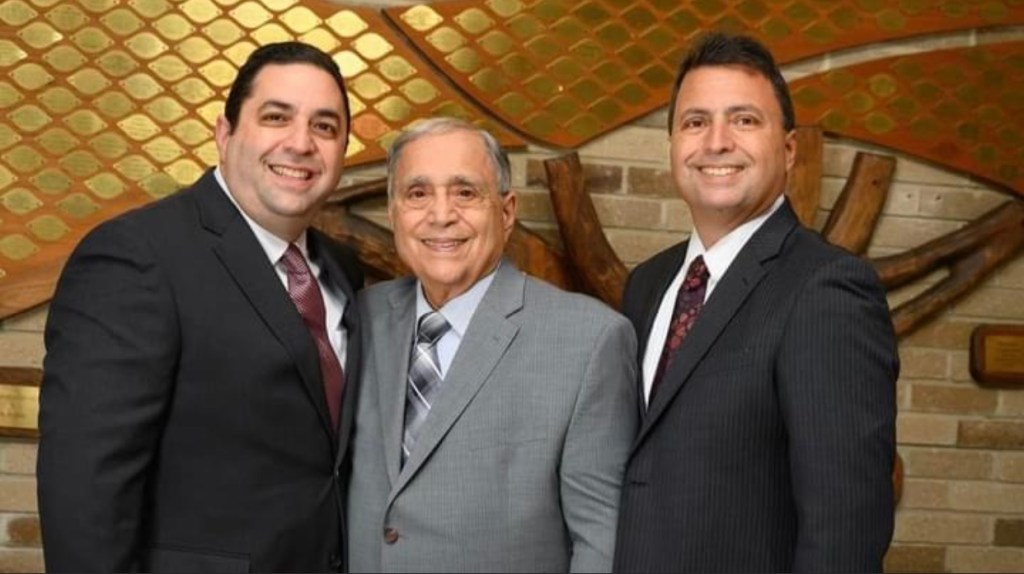
My dad and his 2 (biological) sons. He had many more who considered him to either be dad or Uncle Barry

February 29th will always be a special day for me.  In many ways I’m glad that it only comes every 4 years, although having celebrated his birthday on February 28th most years means there still is a day that I will miss him even more.  I’m very lucky to have had him as a dad and for the wisdom he imparted that I continue to hear in my head and continue to follow. 

So today, February 29, 2024, do something special for Barry.  Spend some extra time with your family.  Call your kids or your parents or your grandparents just to say you love them.  Talk with your siblings for no reason other than you love them, and if you have a strained relationship with family, make a commitment to work towards repairing it.  He’s up there watching and nothing would make him happier than seeing people investing in their family in his name. And do what he loved to do more than anything…. start dinner by eating dessert first!
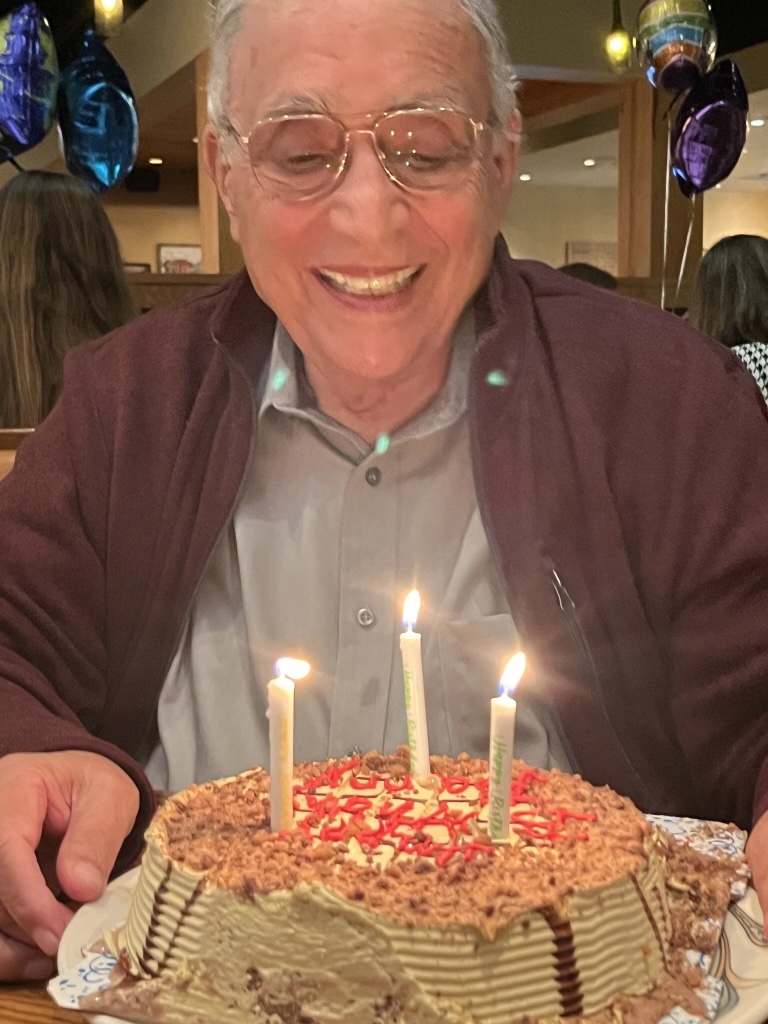
I love and miss you dad. Happy heavenly birthday.
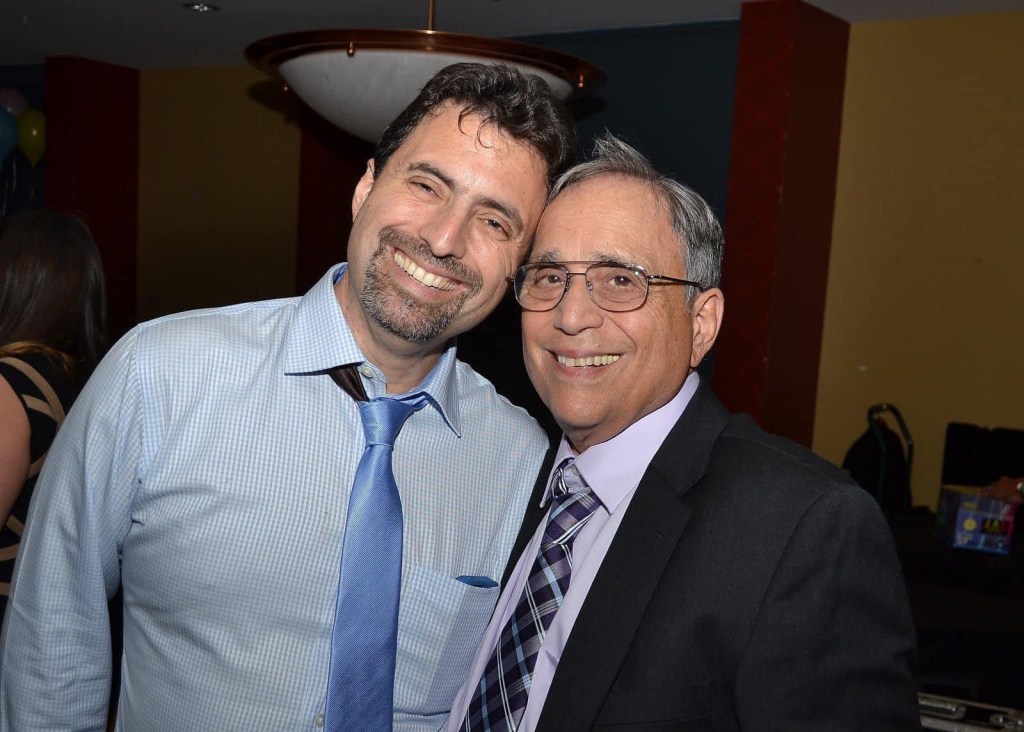
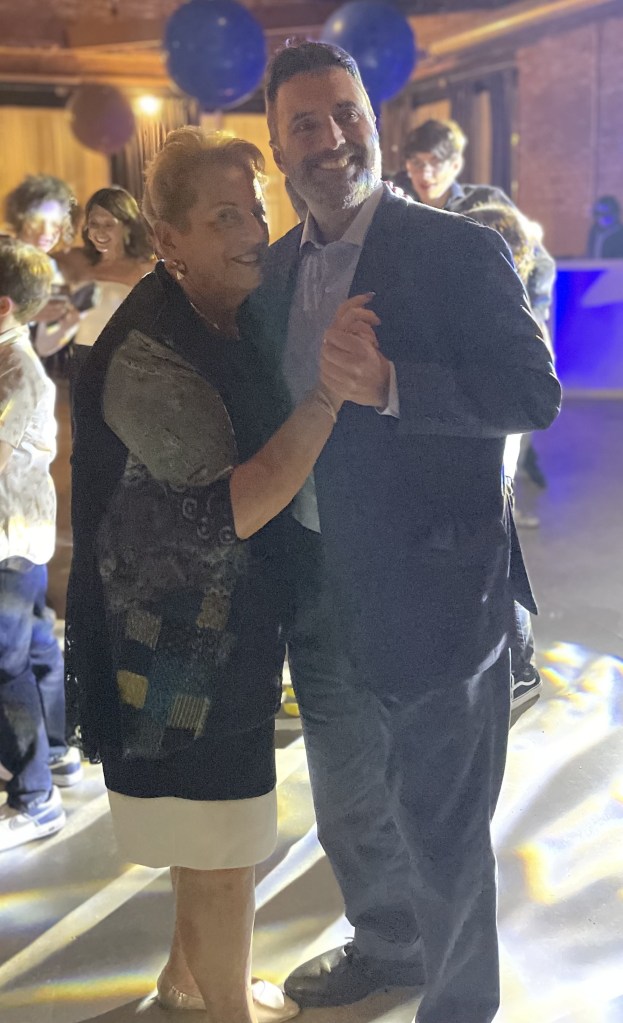
One of my favorite pictures with my dad. This was at Evan’s Bar Mitzvah and we were filled with joy.

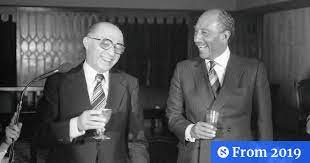
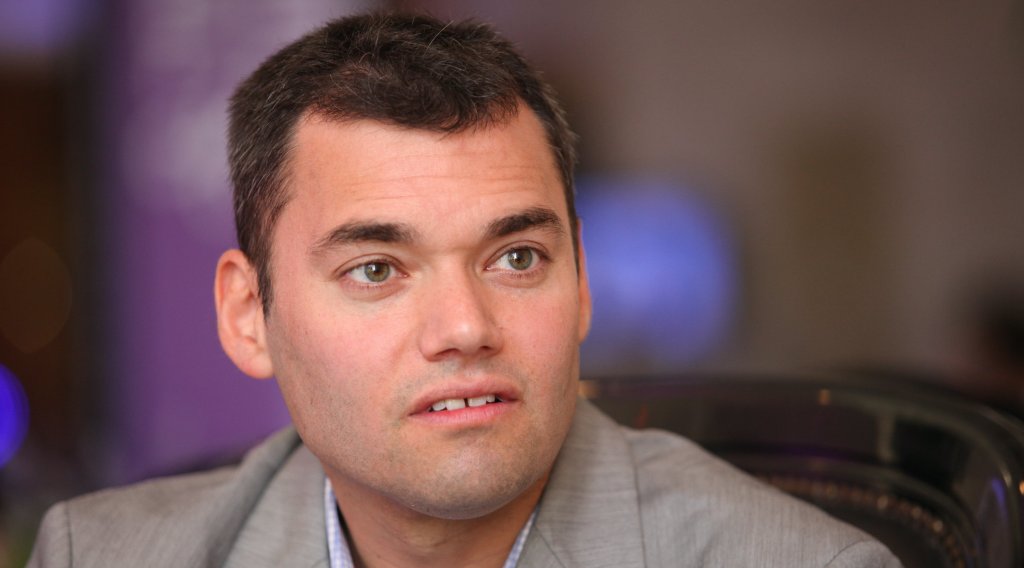
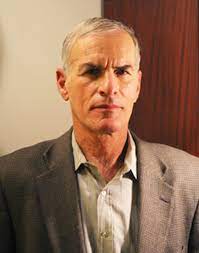
Happy Birthday Ariel Sharon and Yitzhak Rabin – 2 complex Israeli heroes

As most of you know, I am a passionate and unapologetic Zionist.  Being a Zionist simply means that I believe that the Jewish people have a right to their own country and their own self-determination.  No matter what else you may THINK Zionism is or means, that’s what it really does.  The rest is simply propaganda created and spread by those Jew haters who want no Jews to exist and those who aren’t willing to actually learn something about Zionism.

As a result of my love affair with the State of Israel, I got connected with Dr. Ken Stein and the Center for Israel Education (CIE).  Each week, CIE puts out ‘This week in Israeli history’.  Some weeks there are nuggets that I learn about and other weeks there are monumentous events.  This week it’s of the monumentous variety.

On February 27, 1928, Ariel Sharon was born is born in K’far Malal (near Hod Hasharon).  For those of you who know much about Israel, Hod Hasharon is the home of the Alexander Muss High School in Israel.  My cousin Eric attended there in 1984 and I have many friends who have attended as well. This would have been Ariel Sharon’s 96th birthday.
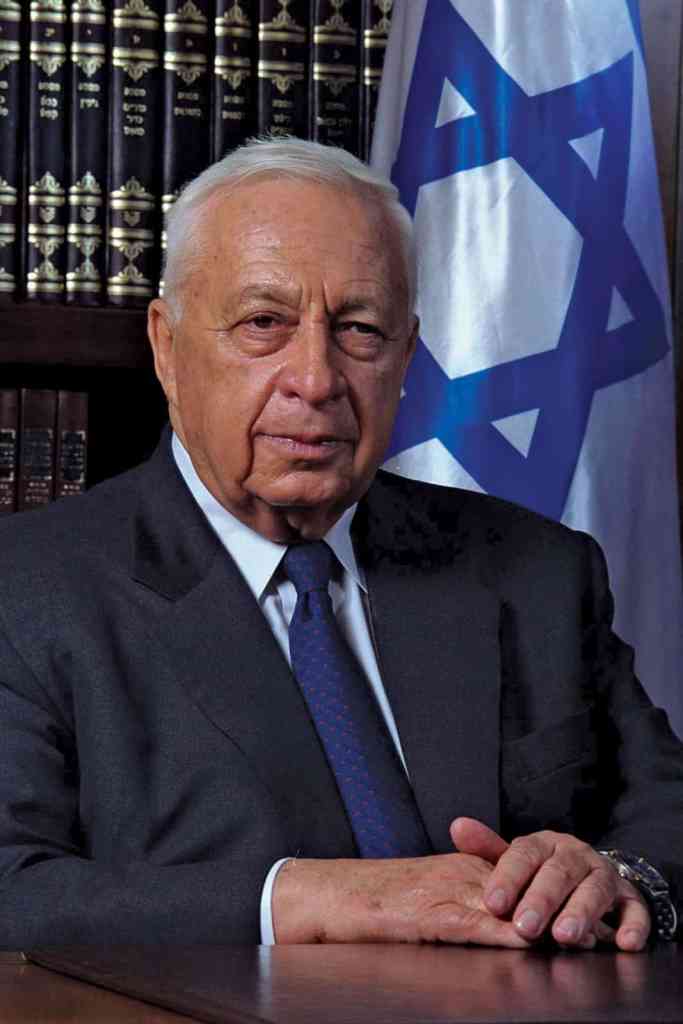
Sharon, like many of that generation, took an Israeli last name, changing his birth name of Scheinerman to Sharon.  A true Zionist and patriot, he joined the Haganah in 1945 and served in the War of Independence.  His reputation, which continued through his life, was having a lack of restraint and being very aggressive.  He served as a paratrooper commander in the 1956 war, a Major General in the Six Day War (1967), and the commander of an armored division in the Yom Kippur War (1973).

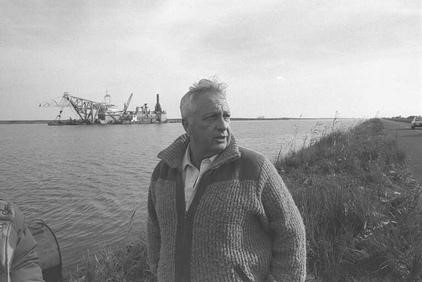
Ariel Sharon in 1982 at the Suez Canal after peace with Egypt

Already a hero, Sharon was appointed the Israeli Defense Minister in 1981 by Prime Minister Menachem Begin.  He launched the Operation Peace for the Galilee (1982) and was forced to resign after being found negligent in failing to prevent the massacre of Palestinians in the Sabra and Shatilla refugee camps by the Lebanese Christian Phalange troops.

Sharon was elected head of the Likud party in 1999 and became Israel’s 11th Prime Minister in 2001.  As Prime Minister, he approved construction of the security fence, advocated for settlements in Judea and Samaria (the West Bank) and despite his reputation as a military hawk, oversaw the disengagement from Gaza, hoping it would jump start peace talks with the Palestinians.  In 2006, he suffered a stroke that left him incapacitated and was no longer Prime Minister.  He passed away in January 2014 after spending 8 years in a coma.

Ariel Sharon is a complex figure and a good lesson in the complexities of Israel and the region.  Most of his career, he was considered a far right, war hawk.  He was a military hero whose leadership was critical to the victory in the Six Day War.  His leadership and actions in the 1973 war were essential to Israel turning the tide and capturing the Suez Canal and almost marching to Cairo before America and Secretary of State Henry Kissinger stepped in to stop the war.

His resignation after being found negligent in the Sabra and Shatilla refugee camps by the Christian Phalange troops have many branding him a war criminal.  He certainly did not use good judgment at the time, doing nothing to stop Christian militiamen allied with Israel from entering the camps, despite fears they might seek to avenge the killing of their leader the previous day.  War criminal or not, it was a poor decision that helped define his life, career, and legacy.
In 2000, he went to the Temple Mount and visited the Al Aqsa Mosque.  To many people this would be seen as no big deal.  It’s the historic site of the ancient first and second Jewish temple.  The ‘Rock’ in Dome of the Rock is supposed to be both the rock that Abraham bound Isaac to, prepared to sacrifice him, as well as the rock that Muhammad rose to heaven from.  It’s also a flashpoint for violence as Jewish access is limited and many attribute the 2nd intifada to this visit.  It’s a place I have never been to and hope that one day I will be able to have access.  I remember this visit and wondering why he chose to do it as it was clearly going to incite violence.

Ariel Sharon on Temple Mount – this is considered by many to be what incited the 2nd intifada

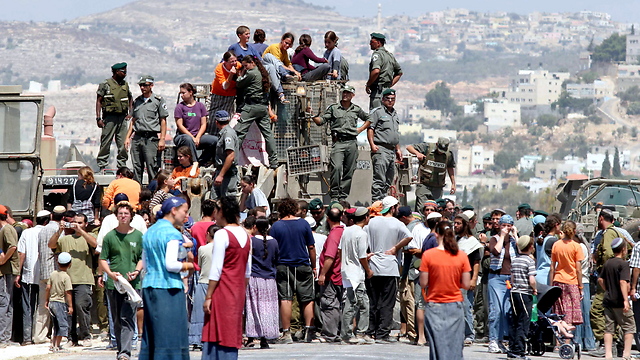
In 2005, he made the decision to withdraw all Israelis and Jews from Gaza, returning it to Palestinian control, as an effort to jumpstart peace.  The settlers and many Israelis were very upset that he would take this action as 21 Israeli communities were forcibly removed from Gaza and relocated inside Israel.  His hopes for peace as a result never materialized, his stroke a few months later meant that he never had the opportunity to follow up on his vision.  The Hamas massacre on October 7, 2023, is tied back my many to this action in 2005 which led to the creation of modern Gaza.

The removal of Israelis and Jews from Gaza in 2005 was highly controversial. In the end, it didn’t accomplish the goal of peace and resulted in the Hamas massacre of October 7th

Sharon is an Israeli hero that I have always struggled with.  My grandparents loved him because after the Shoah, he was the face of an Israeli and Jewish warrior.  He kept safeguarding the Jewish people as his top priority and his actions were very public and visible.  From 1957 through 1973, he played key roles in winning wars to ensure Israel’s existence and inspiring Jews in Israel and the diaspora.  When I look back on those years, I see a headstrong officer who I can say thank you to for ensuring Israel exists. 

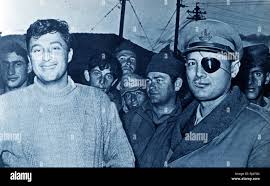
A young Ariel Sharon with Moshe Dayan, another of the great Israeli leaders.

The Sabra and Shatila massacre cause me great pain and challenges.  While he didn’t actually murder anybody and it wasn’t IDF soldiers under his command who committed the massacre, he had the opportunity to stop it or at least intervene, and he didn’t. From what I know of Ariel Sharon, I believe it to be a tactical choice that he made.  I cannot reconcile the Jewish hero I wrote about with the man who would allow this to happen.  I remember struggling with his being elected Prime Minister because of this.  This struggle was enhanced by that 2000 visit to Temple Mount.  As I’ve said, it’s a place I have always wanted to go and have never been able to visit.  While there have been times when it has been permitted, the access is limited and as meaningful as it would be to pray on the Temple Mount, that is forbidden to Jews.  Most people don’t know of this prohibition.  It is hard to believe that his visit was not intended to incite violence.  At the time the impeding visit was discussed with this being the likely outcome.  Yet he did it anyway.  Just like Sharon in battle, who did what he wanted, and thought was right, he did it with this visit, with the 2nd intifada as the resulting outcome. 
And then there was the withdrawal from Gaza.  I grew up being taught that when we finally got to the point of land for peace or money to release the Jewish people from oppression (like in the USSR), the battle was won.  We would always give up land for peace just as we would pay for the freedom of our people.  21 Jewish communities were relocated.  I hated seeing the families uprooted from their homes and forcibly removed.  I hated seeing their crying and outrage.  Yet I was hopeful that it would be for the greater good and that perhaps, the Palestinians would create a ‘Singapore of the Middle East’ in Gaza, and we might have peace. 

As Israel faces all sorts of calls from countries around the world for a ‘Ceasefire Now’ and the creation of a Palestinian State without conditions.  It’s worth remembering what President George W. Bush said in his August 27, 2005 radio address about the withdrawal from Gaza and the hope for a different future and what was required. 

During the past two weeks, Prime Minister Sharon and the Israeli people took a courageous and painful step by removing Israeli settlements in Gaza and parts of the northern West Bank. I congratulate the Prime Minister for his bold leadership.

Now that Israel has withdrawn, the way forward is clear. The Palestinians must show the world that they will fight terrorism and govern in a peaceful way. We will continue to help the Palestinians to prepare for self-government and to defeat the terrorists who attack Israel and oppose the establishment of a peaceful Palestinian state.
We remain fully committed to defending the security and well-being of our friend and ally Israel. We demand an end to terrorism and violence in every form because we know that progress depends on ending terror. And we will continue working for the day when the map of the Middle East shows two democratic states – Israel and Palestine – living side by side in peace and security.

It is obvious this didn’t happen.  There was no Palestinian fight against terrorism, nor did they govern in a peaceful way.  The demand for an end to terrorism and violence remains a key requirement for peace and security.  The withdrawal from Gaza was an abject failure even before October 7th.  My hopes didn’t come to fruition and while I respect Sharon’s efforts to find peace, it turned out to be yet another failure of his leadership decisions. 

Ultimately, I find myself viewing Sharon as a Lion of Israel, one of the key people who ensured the survival of the Jewish state, but also one who struggled with political leadership.  He isn’t a role model, there is far too much that is troublesome, but he is an icon in the history of the modern State of Israel and one worth studying and discussing to learn from.

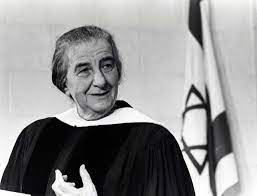
Remember that in the start of this post, I used the work momentous.  The birth of Ariel Sharon in a week is significant but not momentous.  On March 1, 1922, Yitzhak Rabin was born.  They celebrated their birthdays just a few days apart.  Two amazing leaders of the Modern State of Israel and the Jewish people. This would have been Rabin’s 102nd birthday!

When I read about Rabin, I’m always shocked that he was Israel’s 5th Prime Minister.  I forget that he took over for Golda Meir in 1974 and think of him much more during his 2nd term of Prime Minister from 1992-1995.  I also am always shocked at how short his second term was as it seems he accomplished so much during that term. It speaks to how young the country really is that somebody who played a prominent role in virtually all of Israel’s history is somebody that I recall so vividly.  In many ways it would be like experiencing George Washington, Thomas Jefferson or Ben Franklin in the US.

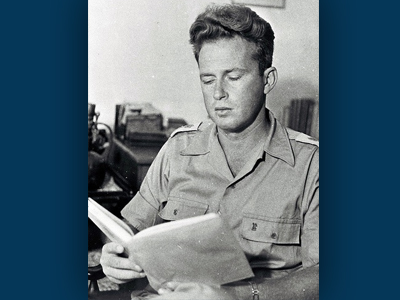
Rabin in his Palmach uniform in January 1948

Rabin, the first Israeli Prime Minister to be born in Eretz Yisrael (Palestine at the time), served in the Palmach and as a commander in the 1948 Independence War.   As Chief of Staff of the Israel Defense Forces (IDF), he was in charge of the 1967 Six Day War. Following the War, he was appointed Israel’s Ambassador to the United States from 1968 until 1973. Fifty years ago, he was already an icon.  After returning to Israel, Rabin was elected to the Knesset and became Prime Minister Golda Meir’s Minister of Labor. Upon her resignation in 1974, Rabin became Prime Minister.

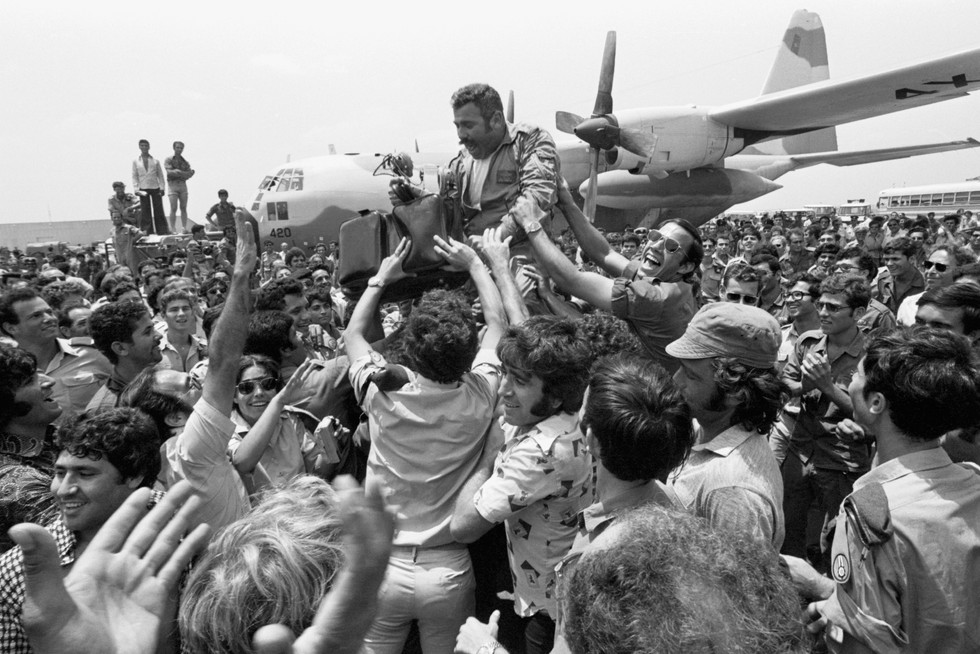
Being Prime Minister in Israel means you live in interesting times and your leadership is constantly tested.  As Prime Minister, Rabin signed an interim agreement with Syria in May 1974 and one with Egypt over the Sinai in 1975.  One of his most famous actions occurred in 1976 when terrorists hijacked an Israeli plan and flew it to Uganda.  Rabin ordered the  rescue of Israeli, Jewish, and other hostages from Entebbe in Uganda in 1976.  

The raid on Entebbe was a huge success and raised the profile of the Israeli military further beyond the 6 day war. The only casualty was Yonatan Netanyahu, Bibi’s older brother.

Israel is an interesting country with some interesting laws and scandals.  In 1977, it was discovered that he and his wife, Leah, had maintained an American bank account from their time in the US as the Israeli Ambassador.  Leah publicly confirmed that she opened and operated the account alone however, then Attorney General Aharon Barak decided to prosecute both Leah and Yitzhak for this violation which normally only incurred a civil fine.  Named by the media as the ‘Dollar Affair’, Rabin chose to resign over the lapse.  When we look at our leaders today, it’s hard to imagine them taking such a moral and ethical stance over such a small infraction when they are involved in much larger scandals and choose to deny, minimize, and deflect.  Unlike Ariel Sharon, Yitzhak Rabin chose to live his values, morals, and ethics, no matter the cost.

Rabin returned to the Knesset and also served as Minister of Defense from 1984-1990.  In 1992, he again assumed leadership of the Labor party, and was elected to his second term as Prime Minister in June of 1992.

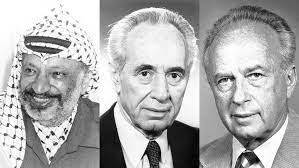
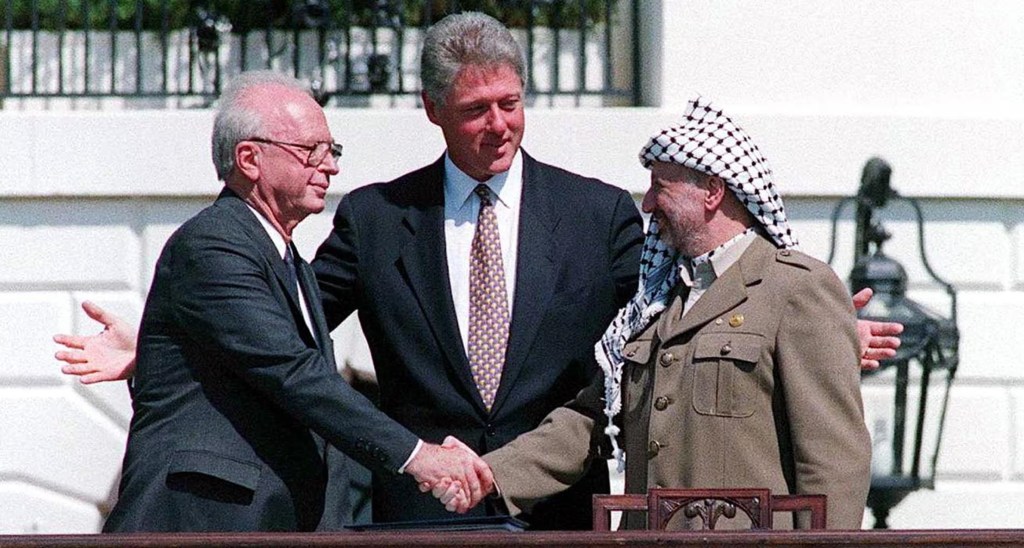
The 1992-1995 years of his second term as Prime Minister, Rabin oversaw some amazing breakthroughs that most people hoped would be transformational in the peace process.  The Oslo Accords were negotiated and signed by Rabin with Yassir Arafat.  In 1994 Rabin was able to negotiate with King Hussein of Jordan on a peace treaty that remains in place 30 years later. These efforts inspired the world and in 1994, Rabin, Shimon Peres and Yasser Arafat were jointly awarded the Nobel Peace Prize “for their efforts to create peace in the Middle East.” 

The 1994 Nobel Peace Prize winners
The famous picture of Rabin and Arafat shaking hands with President Clinton

Sadly, on November 4, 1995, Rabin was assassinated by a right wing, nationalistic Israeli who didn’t want peace.  The assassination came minutes after Rabin gave a pro-peace speech in Tel Aviv to more than 100,000 people cheering and hopeful about a different future.

I remember when Rabin was assassinated and the shock that was felt around the world.  The fact that it was a fellow Jew who murdered him made it even worse.  Hope for a brighter future seemed to disappear and in the 28 years since, has never recovered. 

Every time I am in Israel, I seem to find my way to Rabin Square, the location of the pro-peace speech and his assassination, named for him after his murder.  I’ve been there for Yom Ha’atzmaut celebrations and for concerts.  It’s an empty space until there is a reason to gather.  I can imagine the energy that night and the power of hope.  In the back, there is the area where he was shot.  It’s preserved as a mini-museum documenting what happened.  You can see where everybody was standing and even stand in their footsteps.  You can see where Rabin’s security failed, allowing the murderer access to shoot Rabin.  You can learn about the chaos that happened after the shooting, resulting in him being taken to the wrong hospital, wasting key time that may have been able to save his life.  I am always humbled when I stand there and find myself dreaming of what could have been

The memorial where Rabin was assasinated.

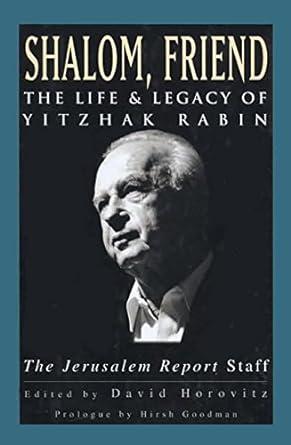
I read the David Horovitz biography of Rabin, Shalom Friend, and was deeply moved by the man.  Similar to Ariel Sharon, he was there from the beginning in the War of Independence and throughout all the wars that came after.  Rabin remained committed to his core beliefs throughout and unlike Sharon, didn’t waver.  Rabin was complicated in the fact that he was both a man of war and of peace.  While Sharon faced significant questions related to his sincerity for peace, Rabin was seen by the world as the bringer of peace.  I often wonder if Yitzhak Rabin was the last politician I will see in my lifetime who truly acted on his morals, values, and integrity rather than his electability.  While I don’t doubt what I think Sharon would say and do after October 7th, I am challenged by what Rabin would say and do.  As a Zionist who did everything he could to ensure Israel won every war, he also did everything he could to ensure Israel could win the peace.  Would he bring clarity to the world at a time when it’s so greatly needed?  Would he be able to unite Israel at a time when we are seeing divisions again about the hostages, finishing the war in Gaza, Bibi as Prime Minister, and so much more. 

Despite the Oslo Accords not working the way we hoped, Rabin is a true hero.  Unlike Sharon, a Lion of Israel, Rabin was a true statesman.  He was a true leader.  He had a clear vision for what Israel could and should be.  He had a vision of a world where Israel lived in peace with her neighbors.  Rabin understood America and diaspora Jews just as he understood Israelis.  Perhaps the only thing he didn’t understand was the power of hatred, which cost him his life and has resulted in the Hamas massacre of October 7th.  That’s a shortcoming I’d be happy to accept in a leader of Israel and the US. 

As we celebrate the birth of two icons of the Modern State of Israel this week, we have a chance to learn from them both.  Both taught and continue to teach us important lessons about moral character, about hatred and the short term and long term impacts of it, of leadership and of hope.  Although both died before accomplishing their goals due to a stroke and an assassin, both died with hope in their hearts and in their efforts.  Let’s not let the sacrifices of these two great men go to waste because we lose hope.  Even in times of despair, we must hold onto hope for a brighter future.  It is that hope which will sustain us through the difficult times and allow us to reach better ones. 

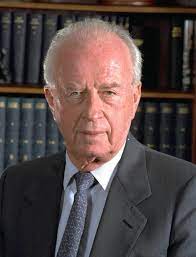
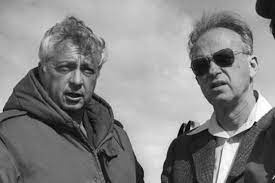
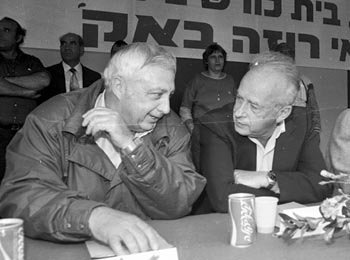
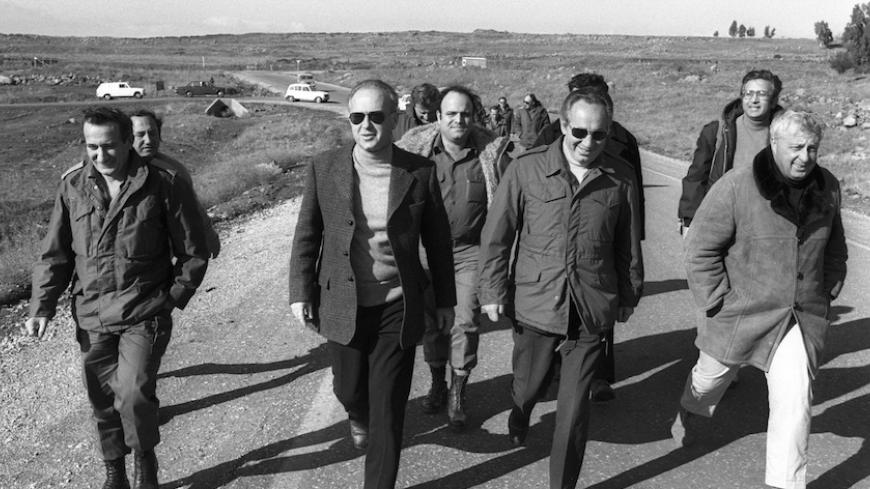
Pictures of Rabin and Sharon. The last one also has Shimon Peres. These are the founding fathers of the Modern State of Israel.

What does matter to me?

It’s Sunday so it’s back to music that inspires me.  Before this week’s blog, written just before I left for a concert by Sting and Billy Joel, I want to comment on the concert.

Both are amazing musicians and performers. Both are in their early 70s and put on an incredible show. Both brought me back to the late 1970s and early 1980s with their music, as vibrant today as it was when released. That’s the power of music. I sat with my 21 year old son Matthew, his 21 year old girlfriend Carla, and my wife, as we all enjoyed the show. Matthew was amazed when Sting performed one of his songs that was recently sampled by a current artist. Carla was in shock when I explained to her that Scenes from an Italian Restaurant was actually 3 unfinished songs that Billy Joel creatively crafted into an all time classic. We sang, we danced, and we enjoyed the music and the performance. My favorite was Billy Joel imitating Mick Jagger as he sang Start Me Up and did his interpretation of Mick’s dancing. I may write about this concert and what it meant to me later, but it felt wrong not to mention it in a post about music a few hours after experiencing such a powerful few hours of music.

Now onto the song I wanted to discuss.

Luke Combs got a lot of attention at the Grammy’s with his duet with Tracy Chapman.  If somehow you haven’t seen it, watch it.  If you have seen it, watch it again.  There is so much that is truly remarkable about it.  You could see how in awe of her he was and how honored he was to have the chance to sing with her.  It’s a song written by a queer woman of color in the 1980s that was a big hit then and covered by a white country star in 2023 who didn’t change the pronouns and had no problem singing it as written.  And the lyrics speak about the challenges of the American dream in the 1980s that is perhaps even more relevant today.  There is a lesson for us all there that could be an entire different blog post.
I saw Tracy Chapman in concert when I was in college, and it was an amazing show.  She is an amazing artist.  And so is Luke Combs.  I’ve always been a fan of hers and have become a big fan of his and have many of his songs that I love.  Today I want to talk about his song, “Does to me.

Released in 2019, it makes me feel better that I am only 5 years behind the music curve.  Like a number of amazing songs, Eric Church is also featured.  The lyrics read:

I was a third-string dreamer on a second-place team
But I was hell on wheels with a full head of steam
When coach put me in
And I’m still proud of that hit

To start a song with true self-awareness is an amazing choice.  Most of us like to brag about the size of the fish that we almost caught.  Or we talk about the star player we played with or against.  The superstar we met or saw nearby to us.  The hole in one we almost made, the local tennis tournament we won or almost won.  We glory in greatness or close to greatness.  Yet here is Luke Combs talking about being a third string player who wasn’t very good on a team that wasn’t very good.  It’s about as far from greatness as possible.  When he finally got a chance to play, he was so proud that he actually got a chance to play and did something in the game.  He doesn’t get into any details of ‘that hit’, who it was against, or that anybody else thought it was something special.  Just that he got into the game, played, and made a tackle.  He is bragging about making one tackle.  Not leading the team, not making a key or important tackle to anybody but himself.

We often judge ourselves by other people’s outsides.  What looks good or important.  We forget about what might really be important to us and the things we value.  The songs opening stanza is a reminder that we only need judge ourselves against ourselves.  He knows he isn’t a good player.  He wants to be on the team and is appreciative that he got a chance to actually play.  That one hit is enough for him.  He doesn’t have to be Al Bundy from Married with Children constantly remembering his 4 touchdowns at Polk High School 30 years later.  What makes that funny is we can all relate to that desire for greatness and adoration from the outside when what really matters is what’s inside.
I was a last resort to go to prom with the queen
Thanks to an ex-boyfriend who broke her heart that week
No, I didn’t get luck
But I still felt like a king


Once again, Luke Combs is self-deprecating.  He was the last resort for the prom queen because her boyfriend broke up with her that week AND he didn’t have a date.  Think about what it’s like to acknowledge that yes, I went with the prom queen but only because the week of prom, I didn’t have a date and she suddenly became single.  He’s proudly beating his chest saying I was the best choice of the bottom of the barrel of options for her. 

Once again, he understands who he is and what is important to him.  He got to go to the prom with the queen.  That’s all that matters.  How it happened is a fact but doesn’t define him.  It wasn’t a romantic prom experience, but it was a prom experience that he will forever be grateful to have had. And he can always say he went to prom with the prom queen!

Many things in life are like that for all of us.  If we focus on all the details of the how they happened, we miss out on the great experience.  Many years ago, I took my kids to a Tampa Bay Rays baseball game.  We didn’t have great tickets, but they weren’t bad ones.  Yet when we walked into the ballpark, for some reason they chose us to get the Stubhub upgraded tickets.  We sat behind the Orioles bullpen and my kids had fun talking to the Orioles relievers the entire game.  One of them even gave my kids baseballs. 

Mark Hendrickson was the pitcher on the Orioles who spent most of the game talking with my kids and gave them baseballs. He won’t ever remember them but we will always remember him.

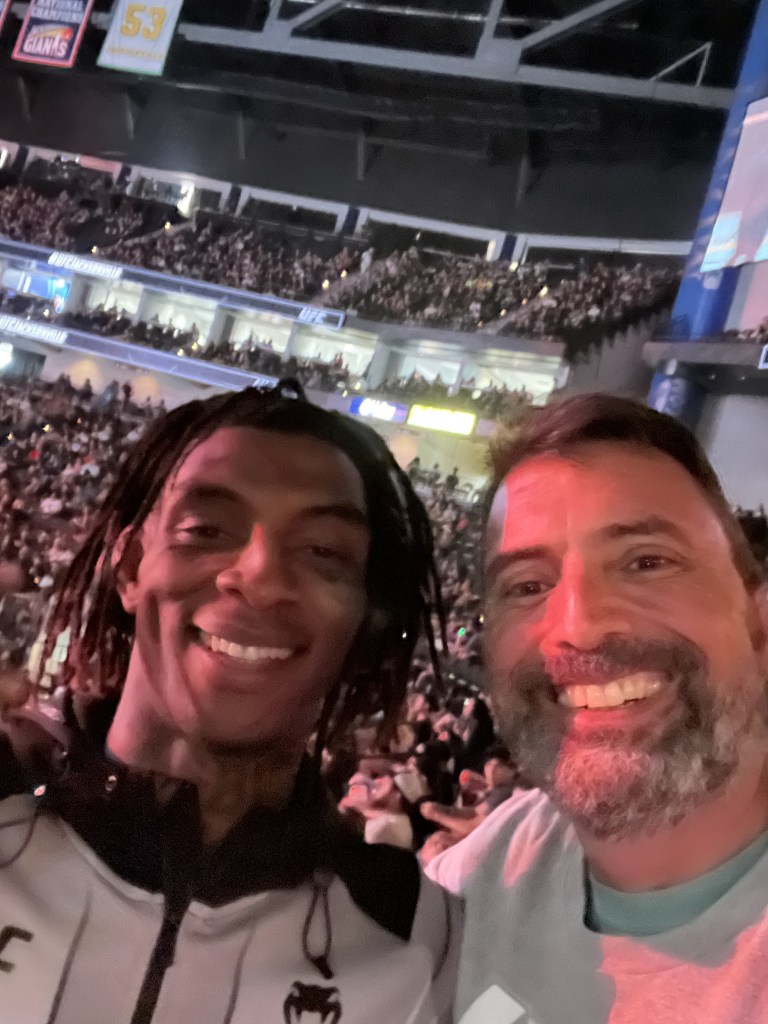
Well more than a decade later, we still talk about the experience and laugh about the funny things they talked to the players about.  We could have focused on the fact that it was the Orioles, not the Rays bullpen.  We could have focused on the fact that players they interacted with were not stars.  Instead Major League players (and Mark Hendrickson in particular) spent most of the game talking with them. Focusing on anything else would only diminish the experience.  Something similar happened at a UFC fight we went to last year.  Sedriques “The Reaper” Dumas came into the stands and they stopped him, took pictures, and spent a minute talking with him and hanging out.  It was a fun moment and I only remember his name because it was unique.  I’d never heard of him before but we thoroughly enjoyed the moment.

Sedriques!

Combs is telling us to enjoy the moment when they come.  It doesn’t matter why or how they come.  Live in the moment, appreciate the cool and fun things when they happen.  Otherwise we miss the moment and they don’t come around often enough.

And that might not mean much to you
But it does to me

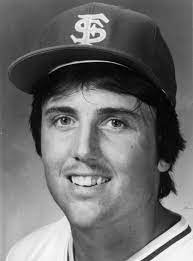
This is point of the entire song.  Our life experiences that we value don’t have to mean anything to anybody else.  They only have to matter to us.  As a kid, I was a huge baseball fan (I still am).  I followed both college and the minor leagues.  The college player of the year in 1982 was a guy named Jeff Ledbetter. He attended Florida State. He had been drafted by the Yankees (my favorite team) out of high school and that year was drafted by the Red Sox (their rival) in the first round.  At my summer camp, we used to go to see the Hagerstown Suns (Orioles minor league team) play.  That year they played the Red Sox minor league team and Jeff Ledbetter was on the team and playing.  I was so excited to watch him play.  My friends laughed at me because they’d never heard of him and I was acting as if he was a major league star.  During the game, I went near the bench, found him, and engaged in a conversation.  In 1982, having a fan know who you are in the minor leagues and seek you was a big deal, so he was happy to talk to me during the game.  He even gave me some of his chewing tobacco which I tried (and got sick under the bleachers). I got his autograph and was beyond excited and happy for weeks.  And my friends kept laughing at me.  It didn’t matter to me.  41 years later, I still remember him, the conversation, and the experience because it mattered to me.

Jeff Ledbetter in 1982

We all have stories like this.  It may be a college band.  An author we fell in love with at some point in our life.  The local sports or weather broadcaster on the news.  The high school star athlete when we are in middle or elementary school.  It doesn’t matter who they are in general, only in how they matter to us at that point in our lives.  We treasure those moments because they mark a special time in our life.  We should enjoy them when they come because they don’t come often enough.

So say I’m a middle of the road
Not much to show
Underachieving, average Joe
But I’m a hell of a lover
A damn good brother
And I wear this heart on my sleeve

And that might not mean much to you
But it does to me

Once again, it’s amazing to see somebody so proud of who they are.  Self-awareness is so critical in the world and most of us struggle with it.  We think we are more important that we are, that our roles and titles define us, how much money we make equates to our value.  There has been a loss of pride in doing what we do as best as we can and that being enough.  I think of my grandfathers and what they did.  One owned a 5 and dime with a luncheonette across from the GE factory with his brother-in-law, my great uncle.  Working class, high character, good citizen, good husband, father, grandfather.  The other one worked managing low-income housing with his 2 partners, an accountant and attorney.  They handled the business side; he handled the management and people side.  I’ll never forget that he would get up early, go to the Bridgeport JCC to exercise and have a ‘soak and a schvitz’ (hot tub and steam room) and then come back to have breakfast with my grandmother.  Blue collar, hardworking, good husband, father, and grandfather.  Both were exceptional people and could have been called ‘average Joe’s’.  Neither were flashy.  Neither measured their worth by what they did for a living or how much money they had.  They were good people first. Active community members and true role models.

The second half of the lyric highlights what is important.  Hell of a lover, damn good brother, and not embarrassed to have a heart and let it show.  The final two sentences show that those are the things that matter.  It’s about setting our priorities.  It’s about values.  It’s about ethics.  It’s about what matters to each of us.  I’ve yet to be at a funeral where people reveled in the house the person owned, the car they drove, the jewelry that they wore.  They always talk about the person they were.  Their values.  How they impacted the world.  Their behavior and their actions.  It’s yet another lesson to not judge our insides by other people’s outsides. 

I was the one phone call when my brother went to jail
Pawned my guitar just to pay his bail
No, I will never get it back
But I’m okay with that

Reliability.  Responsibility.  Dependability.  That’s what this verse adds to morals, values, and ethics.  In the example he sings about, he can be depended upon by his family and friends.  He understands what’s important in life, family, and that things can always be replaced.  And if we don’t ever replace the things, they are just things.  Things are designed to be enjoyed and an added bonus to our lives, they are not the key to enjoying our lives. 

Most of my life, I was obsessed with getting the things that I wanted.  The newest technology.  The biggest TV.  I remember getting my first real component stereo system when I was 13 (for those of you too young to know what this was, it was the most incredible thing in the world).  The best car, the nicest and biggest house.  Today, while I appreciate the things I have, I’m just as happier if I have less.  I don’t need the new car or the bigger house.  I’m happy with my phone, which is a few years old, and my TVs, which aren’t the newest nor the biggest.  I have a little Bluetooth speaker to listen to music that cost less than my first turntable.  The things I have enhance my life, they don’t define it.  My family, my mom, my in-laws, siblings, cousins and friends are what’s important.  I’d rather spend the money to go to my cousin’s daughter’s Bat Mitzvah in Chicago than buy some other toy.   It’s so nice having less because I actually have more.

I was the first man standing next to my best friend
The day the love of his life said “I do” to him
I was a couple beers deep
But I still remembered that speech
And that might not mean much to you
But it does to me

I have had the privilege of being the best man a few times in family and friend’s weddings.  I even had a chance to officiate a friend’s wedding last month!  The opportunity to be present for these life events are priceless.  Where before I may have found an excuse to not go, letting my life be too busy to take the time, spend the money, or whatever excuse I came up with, I have realized that there is nothing like being there when loved ones celebrate special occasions.  The most valuable thing in life is time and the people we choose to spend it with.  Over the past 25 years, I have made choices and spent time with people that when I look back, weren’t worth the time or the opportunity cost of doing so.  Today I get to choose who I want to be around.  Who is worth my time.  Who do I want in my life and why are they important.  It’s a much smaller group of people but it’s a much more impactful group of people.  It’s a lesson that I wish I had learned earlier in life and certainly one that I am actively teaching my children now.  I want them to understand that people will show you who they are and use that to ensure they don’t have to waste the time that I did with people who show you they don’t deserve it. 

There’s a worn-out blade that my Granddaddy gave me
My Mama’s first Bible, Daddy’s Don Williams vinyl
That first-fish-catching Zebco thirty-three
Well, that might not mean much to you
But it does to me

I have a number of things from my grandparents and my dad that are meaningful to me.  It’s not the financial value of them, it’s the emotional value.  I have my grandfather’s masonic ring that I can wear because, like him, I joined the Masons.  I have the newspaper covers from when Nixon resigned that my other grandfather had, which always reminds me of him and working in his basement workshop together.  We have the handmade wooden trucks that my wife’s grandfather made with his handwriting, signature and date on the bottom.  I have candlesticks and special China from my great grandmother than I still use.  It’s not the item itself that has the value, it’s the memories they bring up.  Once again, we are reminded that time and people are what matter.  The memories we make with people are what last forever.  The stories we get to tell our children and grandchildren make them live for generations after they are gone.  I am not the handiest person in the world, but I have my grandfather’s tools because he was handy and used them constantly.  Holding them in my hand is like holding his hand, 25 years after he passed away. 

So say I’m a middle of the road
Not much to show
Underachieving average Joe
But I’m a hell of a lover
A damn good brother
And I wear this heart on my sleeve
And I’m a damn hard working
One thing’s for certain
I stand up for what I believe


And that might not mean much to you
But it does to me

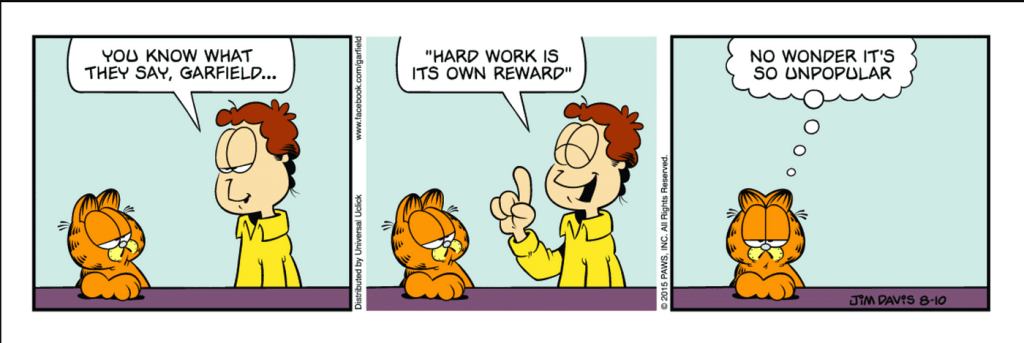
The final stanza, while similar to one above, adds two key lines to highlight.  The first is working hard.  We live in a world today where hard work is often considered a four-letter word.  That working hard is related to compensation and if we don’t feel that we are compensated appropriately, we don’t work as hard.  This line reminds us that working hard is entirely about ourselves.  It’s about our values, our morals, our ethics.  We choose to work hard because it is who we are.  I remember when being told you worked hard was a complement that had nothing to do with a paycheck.  Hard work in school was its own reward.  As a 15 year old working part time at Wendy’s for $3.35 an hour I worked hard because I was taught that was what you did at a job, regardless of the pay.  It makes a statement about my values, not my wallet.  I have never forgotten that lesson.

As he finishes the song by saying “I stand up for what I believe.” I find myself thinking how important that is.  A friend used to say all the time that, “If you don’t stand for something, you will fall for anything.”  I think about that and often ask myself, what do I believe?  What is important to me?  What does society tell me matters that really doesn’t.  How much is ego driven instead of value driven?  What is the outcome I really want and if I don’t stand up for what I believe, can I get that outcome both externally and internally.  There have been times in my life when I have gotten the external outcome that I desired but internally it was empty.  It didn’t feel good.  There have been times where I didn’t get the external outcome I desired, however I stood up for what I believed and even though others might say that I ‘lost’, I actually won because at the end of the day, I felt good inside. 

I truly love this song because as I have said earlier, it reminds me not to judge my insides with other’s outsides.  It reminds me that what I choose to value and prioritize is what matters, not what society or other people tell me matters.  At the end of the day, if society views me as a success but internally, I am empty, I am not a success.  If I feel internally successful and value the way I live my life, nothing else matters. 

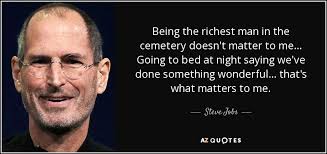
This Steve Jobs quote truly resonates. Do something wonderful today. Be with the people you want to be with. Stand up for what you believe.

Lessons from Alexei Navalny (z”l)

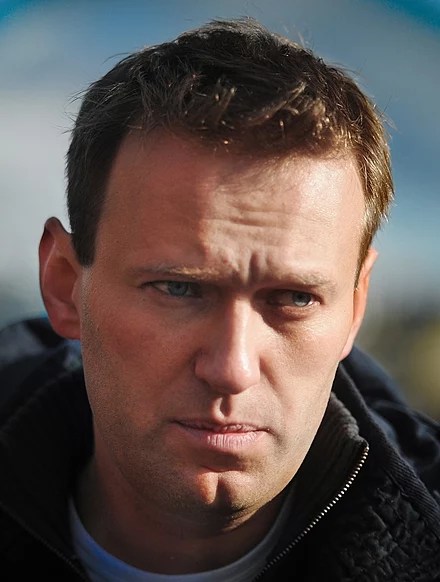
The murder of Alexei Navalny (z”l) on February 16, 2024, has received a lot of attention.  Navalny, one of the most vocal critics of Russian President Vladimir Putin, had been imprisoned in an Arctic penal colony for his crimes of standing up to Putin.

In his death, Navalny has taught us a great deal of powerful lessons.  The more I have read about him, the more I am in awe of his dedication, commitment, ethics, and values.  After being poisoned and recovering, he returned to Russia to continue his fight for the Russian people, despite knowing he would be arrested and imprisoned.  Why would he return, knowing brutal imprisonment and likely death would be the result?  In an Instagram post on Jan. 14, 2022, he wrote, “The question ‘to return or not’ never stood before me, mainly because I never left. I ended up in Germany, having arrived in an intensive care box, for one reason: they tried to kill me.”

Within weeks of his arrest, he sent a note to his friend and mentor, the journalist Yevgenia Albats. It read:

Zhenya, everything is O.K. History is happening. Russia is going through it, and we are coming along. We’ll make it (probably). I am all right, and I have no regrets. And you shouldn’t, either, and shouldn’t worry. Everything will be all right. And, even if it isn’t, we’ll have the consolation of having lived honest lives. Hugs!

I think about the courage and commitment it takes to think that everything will be alright, and if it isn’t, you still lived an honest life.  Far too often today people need to be right.  People need to win.  People refuse to do what’s right because it’s not what is expedient or because it affects their ego.  Navalny shows us that living that way isn’t worth it.  It’s better to live honestly, where your word means something, where the focus is on the bigger picture, the long view.  It is the famous line from Star Trek, The Wrath of Khan, “The needs of the many outweigh the needs of the few.  Or the one.”  Far too many people focus on the needs of the one and neglect the needs of the many, of the larger community, of those that are impacted by the consequences of taking care of the needs of the one.

Spock and Kirk – the needs of the many outweigh the needs of the few, or the one.

The Free Press posted his 2014 speech to the judges upon conviction of bogus charges.  As I read it, I was struck by the power of both his words and that he addressed the panel of judges directly, calling them out on their behavior.  When he said,

“I call you “people who look the other way.” Do you even notice that you are constantly looking down? You’re looking the other way. I am talking to you but you’re looking down all the time. None of you have anything to say.”

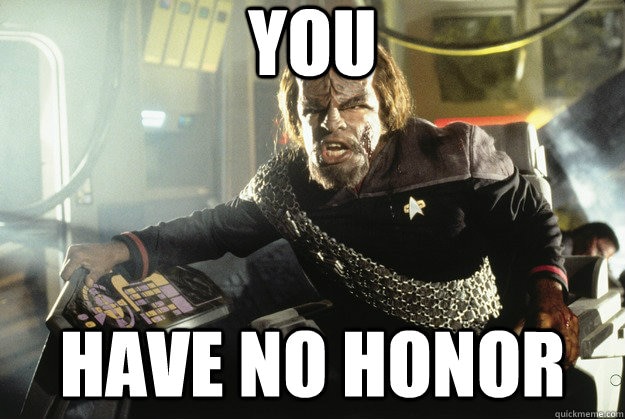
As I read the article, I could feel the shame of the judges as they were called out.  He wasn’t willing to allow people to behave in an unethical or immoral manner without being made to face the choice that they made to sell out their values.  Navalny was not afraid to hold those accountable who had not done what they were supposed to do.  They did what Putin wanted.  But as the Klingons in Star Trek would say, “You have no honor”.  Navalny stresses the importance of honor.  The criticalness of integrity.  He understood and tried to communicate how without any of these things, life is hollow.  Those who judged him had no honor or integrity because they didn’t stand for or live by their values.  The lesson to us is to remember that.  When we make choices in our personal and professional lives, do so with honor and integrity.  Don’t look at the small picture of what it may do for us, look at the bigger picture of what it does for the world.  Make sure you are able to live with yourself based on the choices and decisions that you make. 

Later in the speech, he said,

“But, in spite of all of this, it’s important to me to address you, the people who will watch or read my last words. It’s more or less pointless, but the people who look the other way are also a battlefield. On one side of it are the crooks who have seized power in our country, and on the other are people who want to change this. We are fighting over the people who look the other way, the people who shrug their shoulders, the people who are in a situation where all they have to do is not do something cowardly, who do it anyway.” 

In today’s world we are fighting over the people who just have to not do something cowardly, and they can help change the world.  Stand up to hate.  Stand up to terror.  Stand up to lies.  It’s easy to be a coward and go along with another leader tells you.  It’s easy to be a coward and look down, avert your eyes, as injustice is done.  Navalny, through is actions and his words, is teaching us all not to be cowards, not to just go along, shrug your shoulders, and allow the wrong thing to be done, even when we know it’s the wrong thing. He is telling us that our job isn’t done because people don’t care.  Our job is to make them care.  It reminds me of the famous line in Pirkei Avot (Ethics of our Fathers) that reads,

It Is not up to you to finish the task, but you are not free to avoid it.”

It is not our responsibility for their choice of action or inaction.  It is our responsibility to do what it takes to encourage them to take action.  To act honorably.  To act with integrity.  In today’s world, too many people accept the status quo.  They believe the lies they are told without asking any questions or doing any research.  They take the simple way out, the way the judges in his case took the simple and easy path rather than the honest and difficult one. Navalny continues,

There’s the famous quote from Dragon: “Yes, everyone was taught to be evil, but why did you have to be top of the class?” I’m not just talking about this court. A huge number of people are either forced to act like cowards or act like cowards without being forced or even asked to. They just look the other way and try to ignore what is happening. We are fighting for these people. We are trying to get them, you, to admit that everything that is happening in our society is based on endless lies.” 

He isn’t giving up on those who are acting as cowards.  He isn’t willing to write off this group of people who just go along, put their heads down so they don’t have to watch, and allow the lies to take root.  Navalny is telling us that not only do they deserve a chance, but we need them to fight off the crooks, the bad people, often times our leaders.  He is telling us that it is our job to inspire the masses who keep their head in the sand, don’t want to make waves, and let things be. 

In today’s world, with the rising antisemitism and overall hatred, what could be more important?  We live in a world where it has become challenging to have difficult conversations because people only want to be heard, not to listen.  People want to be right, not to be informed.  Navalny is telling us what Ghandi told us, that we have to be the change.  We have to be the ones who will brave the tough discussions.  We have to be the ones who will speak out.  Who will take the risk?  Who will work to inspire others to lift up their head, see the realities around us, and join in being the changemakers?  He finished the speech by saying,

“Thank you, everyone, for your support. I know for a fact that when they isolate and imprison me, another will take my place. Nothing I did was unique or special. Anyone can do what I did. Live not by lies.”

I think this is perhaps the most important part of his entire speech.  Many people hold him up to be a hero.  To make him into something unique and special.  And while he was unique and special, it was because of what he chose to do.  We all can choose to do that.  We all can stand up to injustice.  We all can look for the greater good.  All of us have the opportunity to not be silent and bury our heads in the sand.  When I read this, I hear him saying that even when he is gone, he can be replaced by many others.  It’s our job to make sure we are included in the group that is going to make a difference.  That is going to stand up and speak out.  That isn’t going to allow the lies to go unchallenged.  That isn’t afraid of the consequences to speak up and take action because we know the consequences of being silent are so much worse. 

I think of my Uncle Ralph Preiss who grew up in Berlin in the 1930s.  He was there during Kristallnacht (the night of broken glass).  He tells, with great emotion even today, the story of him being told in 1st grade that he could no longer pledge allegiance to the Fuhrer (Adolph Hitler) because as a Jew, he was not his Fuhrer.  The praise he gives to President Quezon and the Frieder Brothers (from Cincinnati) who did all they could to save Jews from the Nazis by getting them to the Philippines.    They spoke out and stepped up and saved many lives as a result.  They didn’t put their head in the sand and pretend nothing was happening.  Instead, they took action to save Jews.  Many of us have seen Schindler’s List but few of us know anybody who was saved by Schindler.  I am grateful to President Quezon and the Frieder brothers for saving my Uncle Ralph.

My Uncle Ralph Preiss telling his story on International Holocaust Rembrance Day in 2021.

Alexei Navalny gave his life for what he believed in.  In his letters to Natan Sharansky from the gulag, printed in The Free Press, he clearly knows what is in store for him, yet he and Sharansky are able to joke and laugh because they both fought for something far greater than themselves.  Just like his 2014 speech, in his first letter to Sharansky he writes,

“Nonetheless, the “virus of freedom” is far from being eradicated. It is no longer tens or hundreds as before, but tens and hundreds of thousands who are not scared to speak out for freedom and against the war, despite the threats. Hundreds of them are in prisons, but I am confident that they will not be broken and they will not give up.”

In 2014 he talked about somebody taking up after him.  Here he writes about tens and hundreds of thousands who are willing to speak out for freedom.  The virus of freedom that Putin is trying to eradicate is instead growing.  This is what happens when we take the risk and stand up for what we believe in.  When we do the right thing and live with integrity, even if it makes it harder for us individually, as it makes it better for the entire community.  Navalny may no longer be among the living, but his ideas and ideals live on far beyond him.  And more and more people are now picking up the responsibility from him, taking it on themselves, and working to make the world a better place.  Just like those in Russia that he writes about, we have that same responsibility in the United States.  We cannot be silent.  We cannot stand by while antisemitism and hate continues to grow.  We cannot put our heads in the sand, hoping that it will go away or they won’t notice us and will leave us alone.  We saw how that worked in the Shoah.  We have thousands of years of history that show us how it doesn’t work.  Navalny is reminding us, once again, that silence only helps those who want to harm others.

Sharansky, in his response to Navalny, had a passage that struck me deeply.

I was very angered by the question of a certain European correspondent the day after your return to Russia. “Why did he return? We all knew that he would be arrested in the airport—does he not understand such simple things?” My answer was pretty rude: “You’re the one who doesn’t understand something. If you think that his goal is survival—then you are right. But his true concern is the fate of his people—and he is telling them: ‘I am not afraid and you should not be afraid either.’”

Sharansky, who himself spent 8 years in the gulag for standing up for what he believed, understands that survival, while important, is not the most important driving force.  Standing up for your beliefs, for what is right, having morals and ethics, living with integrity, is far more important.  Showing others, through his own example, that they don’t have to be afraid and that they can make a difference is what matters.  Sharansky did it himself.  He will also be a hero to me as his struggle in Russia happened when I was a child.  I remember him being sentenced to the gulag for wanting to be a Jew and wanting to move to Israel.  I remember his release and the celebration that occurred upon it.  And I remember meeting him in DC and truly feeling like I was in the presence of somebody great.  The lesson from Navalny and reiterated by Sharansky is that we can all be that person.  Both Navalny and Sharansky play down their own heroism to play up the role that each of us needs to take to better the world.  We can, and should, learn from their teachings.

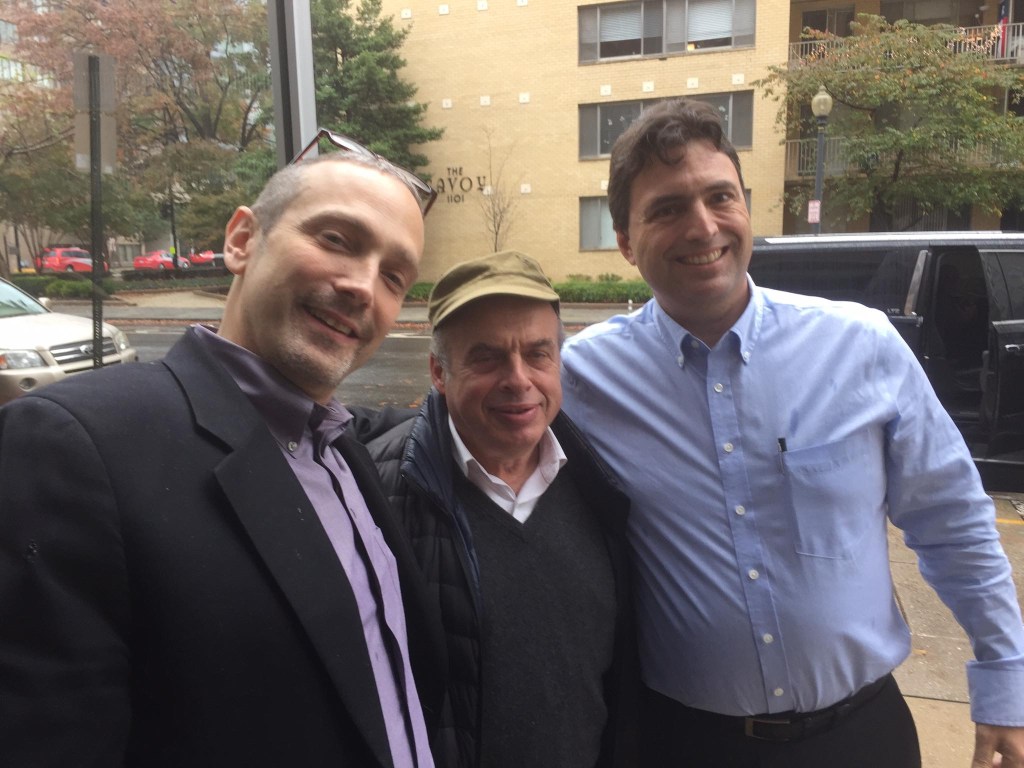
The time I met Natan Sharansky. I was with my best friend, Todd Sukol.

The final letter from Navalny to Sharansky had a simple but powerful line that resonated for me.  He wrote,

“But I continue to believe that we will correct it and one day in Russia there will be what was not. And will not be what was.”

He doesn’t talk about in his lifetime.  He doesn’t talk about survival.  He doesn’t even talk about himself.  It’s all about the future of the country and the people who live there.  His concern isn’t for his well-being but for the greater good.  The selflessness in this line is so incredibly powerful and inspirational.  When I read what he and Sharansky wrote about taking action, I can relate to that and it inspires me to so.  When I read this line, I see true greatness.  Few of us can truly look beyond our own lives, sacrificing our lives, in order for a brighter future that is not promised but we believe in.  It’s an inspiration to do better.  It’s a reminder that the world existed before us and will exist after us.  What matters is what we do while we are here, not how long we are here.  We get to decide that.

In Sharansky’s final reply to Navalny, he quotes he first verse of Nikolai Zabolotsky’s poem “Ne pozvolai dushe lenitsa” writing,

“Do not let your soul be lazy, to not pound water in mortar, the soul is forced to labor, both day and night, both day and night.” In Russia, people struggle with this, but you do it effortlessly.”

The brilliance of these two men who understand that the world is greater than themselves is astounding.  The way they are able to communicate, not only to each other but to the world, the importance of taking action and not sitting by idly, is inspiring.  Each of these men spent years in the gulag, in the arctic circle, living in terrible conditions, yet expressed no regret for their actions, no fear for the possible outcome of death, working to inspire others to follow their lead to change the world.  As the poem expresses, we cannot let our souls be lazy, we cannot just stand by and do nothing while the world implodes.  Our soul, our very beings, are forced to do the hard work all day, every day, to improve the world.  We often talk about Tikkun Olam, repairing the world, and do so with periods of activity.  Both Navalny and Sharansky remind us that the job is not to do occasional acts to repair the world, it’s to constantly be living and acting in a way that does repair the world.  In that final sentence above, Sharansky recognizes that this struggle and effort is not easy for people and most struggle with it.  He complements Navalny, who like Sharansky, were able to do it with such dignity and deep belief, that it looked effortless, even though they both know it’s anything but.

Alexei Navalny (z”l) was and is an inspiration to us all.  While many of today’s youth only know Sharansky from his time in Israel, as a member of the Knesset, as the head of the Jewish Agency for Israel (JAFI) and who he has become after his release from Russia, he was Navalny in the 70s and early 80s.  These two men teach and inspire us to be better human beings and to do better.  They remind us through not just their words but also their actions that freedom is not free, that to have the world we want to live in requires sacrifice and effort.  They tell us point blank that if we want to sit back and let others do the work, the work will not get done. 

My friend Ari Shabat finishes his weekly video blog on the torah portion by saying “This Shabbat, I’m going to think about……”.  I’m going to copy him this week.   This Shabbat I’m going to think about the things that I am doing to improve the world and the things I am willing to stand on the sidelines while others do the work.  I’m going to focus on what I can and should be doing to live with integrity, in line with my values, and to truly be involved in Tikkun Olam all day, every day, like the poet that Sharansky quoted wrote.  Today I am going to do what I can to make the world a better place.

Sunday was an Israel day

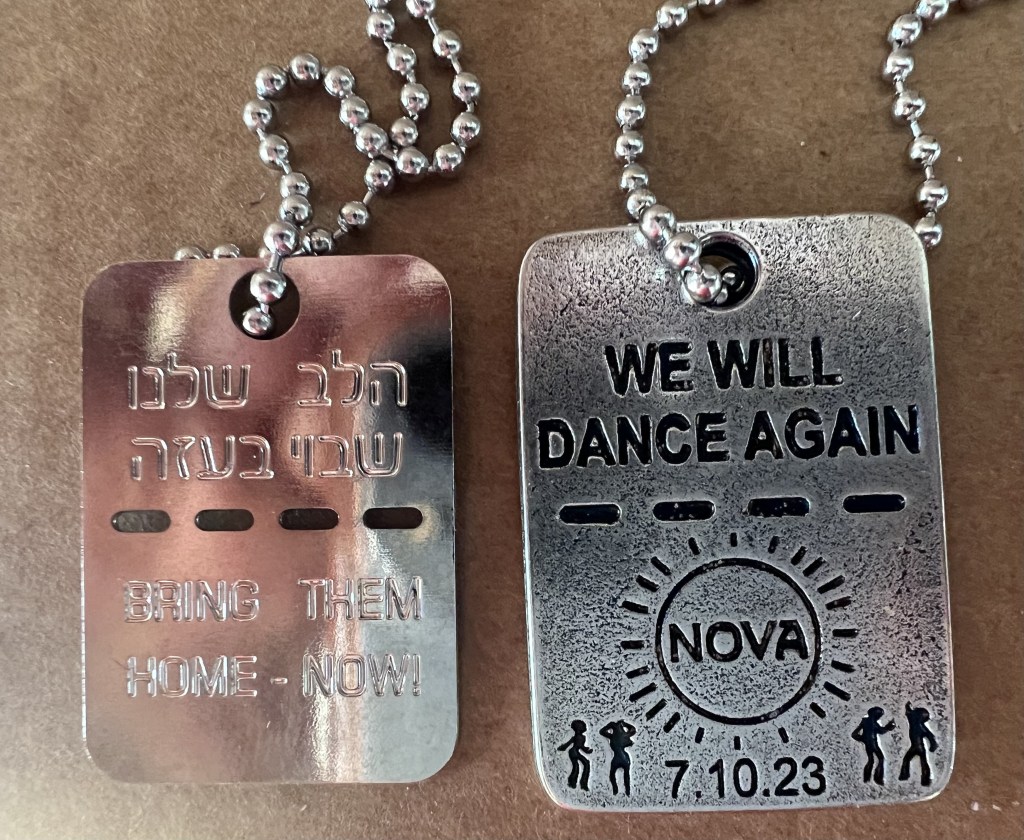
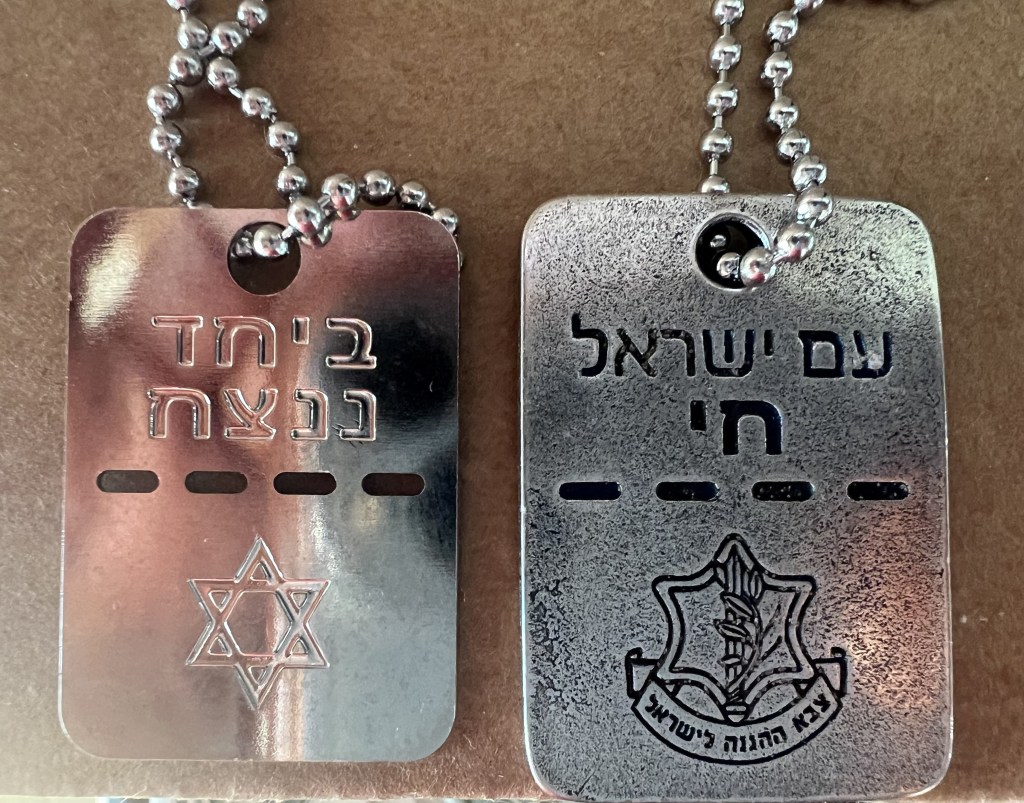
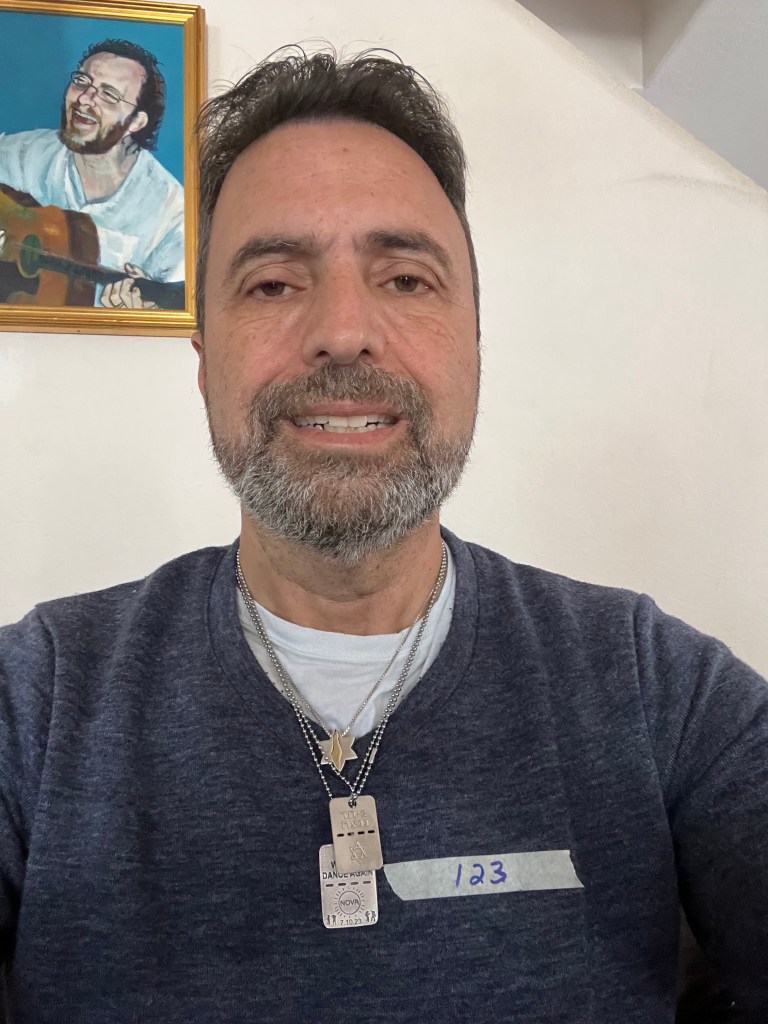
Sunday turned into a significant Israel day for me in a wonderful way.  Since October 7th, most Israel days have been focused on things like the hostages, the war, relatives of friends who were hostages or who were murdered, the IDF soldiers who were killed in action and both hoping that they weren’t people that I knew and being sad that they are people I will never get to know.  It’s writing the number of days the hostages have been held on a piece of masking tape that I wear over my heart, my two dog tags that say, ‘Bring them home now” and “We will dance again”.  It’s following the rocket attacks from Hezbollah in the north and hoping that there won’t be a war in the north.  Checking on my friends in Israel and their loved ones who are serving.  Following Congress’s lack of ability to pass the needed aid package for Israel (and Ukraine).  The inane demands for a ceasefire now without a demand to release the hostages now.  Seeing social media posts from friends who have no clue what’s going on, advocating against Israel, and believing the lies.  I love Israel and it’s a heavy burden on a daily basis even in America.

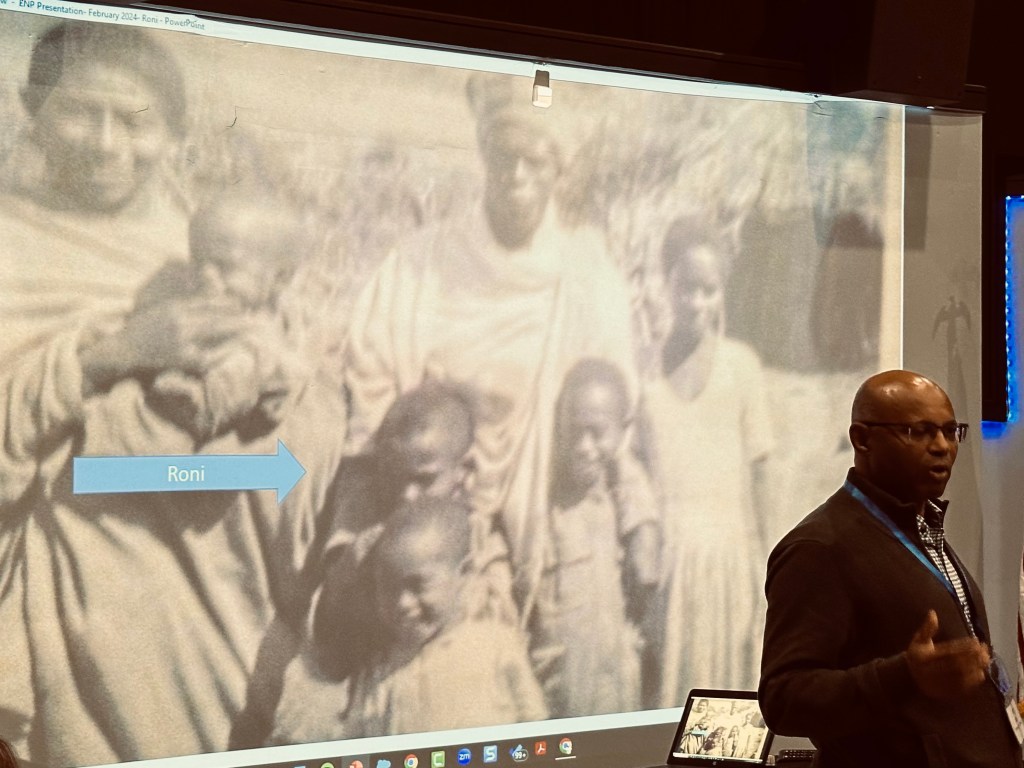
Sunday was a day of joy.  My childhood friend, Grace Rodnitzki, was in town for the BBYO International Convention on behalf of the Ethiopian National Project (ENP), where she has worked for nearly 2 decades.  I have previously written about not needing ‘new, old friends’ and being grateful for the long-term relationships I have.  Grace is one of those people as we have been friends since the early 1980s when we were in BBYO together.  She brought her boss, Roni Akale, with her.  Roni is the Director General of the ENP and made the walk from Ethiopia to Sudan in 1983 at the age of 20.  I’ve met Roni many times and he is a truly amazing person. 

My friend Grace – it’s always so good to see her either here or in Israel.

Roni Akale. I love seeing him and hearing his stories. The work of ENP is amazing.

Roni as a child in Ethiopia

I have visited a few ENP sites in Israel and was amazed at the work that they do for the Ethiopian Jewish community.  Having an opportunity for Roni and Grace to discuss the work of ENP and share Roni’s story with members of the Central Florida community was a privilege.  We spent a few hours before the event talking and catching up.  It was so meaningful to be talking about Israel, hope, and the future after October 7th

Watch the video of us learning Ethiopian dancing at an ENP site years ago. So much fun and such a great memory.
Another video of us dancing at an ENP site. Visit an ENP site and it will change your life.

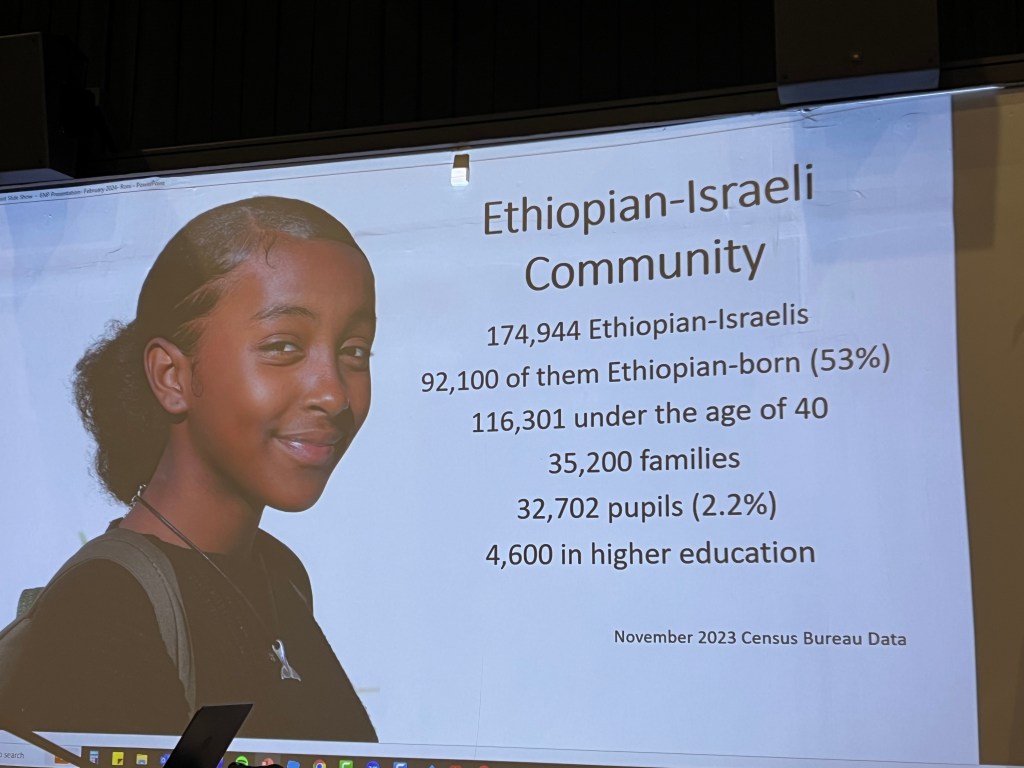
There is so much misinformation and disinformation about Israel.  The antisemites want to paint Israel as a white, European, colonial effort.  It’s so inaccurate that it would laughable if people didn’t believe it so easily.  Walk the streets of Israel and experience the beauty of diversity.  Mizrahi Jews (those descended from Jews in the Middle East, North Africa, and Central Asia), Ashkenazic (Eastern European) Jews, Ethiopian Jews, Arabs, Druze, Christians, and B’hai all call Israel home.  If you explore the Ethiopian Israeli culture, you will experience a vibrancy that may surprise you.  There are now approximately 175,000 Ethiopian Israelis with 47% of them born as Sabras (born in Israel).  It’s a growing population just like all the diverse groups within Israel are growing.   

Israel is a growing and thriving country.  Not only is it the only democracy in the region, it is also the only place where equal rights exist for everybody.  I often get very frustrated by people who I know and like who believe the propaganda put out by those who hate Jews.  They aren’t bad people; they are simply misinformed.  When I have the chance to have a real conversation, face to face, it’s usually not only productive but personally meaningful.  I have chosen not to engage with them on social media because it doesn’t go anywhere and is often more harmful than helpful.  Finding ways to get them to experience the diversity of Israel is more productive through conversation, meeting with different Israeli populations, and serious dialogue rather than simple hasbara (advocacy).   

My favorite story that Roni tells is how during the walk from Ethiopia to Sudan, the man leading them did not continue and left the group with a donkey and his son.  As they walked through the jungle, they were robbed and had everything taken.  No food, no water, no supplies.  When they asked the son who was leading them how to get to Sudan, he didn’t know!  So how did they get from the middle of the jungle to where they needed to be in Sudan?  Because the donkey, who they had with them, knew the way!  It was the donkey who led them from Ethiopia to Sudan!  

I also had another wonderful surprise on Sunday.  My friend Yaron, who is in the IDF reserves and was recently released from duty in Gaza, was in town.  We got to spend time together before the ENP event and he even participated in the ENP event, sharing his experience that the Ethiopian community were incredible resources and merely needed the support and education that ENP provides to excel academically, in the IDF, and afterwards in university and in business.  Yaron and I then spent a few hours together catching up and touring Decision Tactical, a truly amazing place.  I encourage you to visit Decision Tactical and learn self-defense and more from them – you will be amazed.

My friend Yaron. So good to see him and know that he is safe. He is a true hero.

While touring Decision Tactical with Yaron, it was fascinating to see his reactions and hear his insights.  While we were touring, we had an opportunity to meet with some Israelis who have new technology with virtual reality and self-defense and law enforcement training.  I loved the fact that it was Israelis who designed this technology and that it will be available for our law enforcement to use as training and for civilians to experience and learn.  There is so much that Israel gives to the world that is not appreciated by those who are ignorant.  Those who use their iPhone to tweet about Boycott, Divest, and Sanction (BDS), not realizing they are using Israeli technology.  Those who text not knowing it was Israeli technology that created SMS.  People who lives are saved by Israeli medical research and technology that are on the front line of Jew hatred and BDS.     People who use their computers to spread hate against the Jews and Israel, not realizing their computer chips come from Israel.  The list goes on and on.

Yaron’s story was told in a much earlier blog post when I was in Israel.  He spent 120 days in Gaza after October 7th as head of operations.  He shared with me how often he faced death during those 120 days, and it was truly unbelievable.  On October 7th, he ran from his house to fight the terrorists without a weapon.  He didn’t have one until he came across a murdered IDF soldier and was able to use his weapon.  I found it insightful and very moving when he shared that hardest part was actually on the flight from Israel to the US when it was quiet.  It was the first time he had quiet in 120 days.  It was the first time that he could actually feel his feelings.  He told me how difficult that flight was as he began processing everything since October 7th.  It highlights the big challenge facing Israel after this war ends.  So many Israelis will have PTSD to deal with.  The trauma didn’t end on October 7th.  It just began.  Besides being a friend and an amazing human being, Yaron is a true hero and a real badass. 

I told Yaron the story of my friend’s cousin, Hila Rotem Shoshani, who was taken by Hamas along with her mother as hostages from Kibbutz Be’eri on October 7th.  You can read the story in this previous blog.  When I showed him the videos of her opening the birthday and Hanukkah presents that we got for her, the look on his face was priceless.  It’s one I will never forget.  You could see a bit of joy.  A bit of relief.  It was exactly why he put himself in mortal danger in Gaza.  It is why he spent his career in the IDF.  It is why he returned.  It’s the essence of the Jewish people.  Kol arevim ze la ze (all of Israel are responsible for each other.) 

Hila opening the suitcase and some of her presents. Look at her face – how can it not warm your heart?
You will smile as big or bigger than she is when you watch this.

Yaron and IDF soldiers like him inspire me.  I have too many friends who are serving in the reserves.  Too many friends who have their children serving in the IDF.  4 friends that have 6 relatives that were hostages.  Four have been released, two remain hostages.  Friends that lost relatives at the Nova Music Festival.  These IDF soldiers are not just fighting for the survival of Israel.  They are fighting for the survival of the Jewish people.  Their willingness to fight for Israel and the Jewish people inspires me to do what I can here in America.  They inspire me to go to Israel as soon as possible so that I can contribute in whatever way possible.  As we see the increase of antisemitism around the world and especially here in America, it is frightening to think of a world without Israel.  These IDF soldiers ensure that we don’t have to worry about a world without Israel.

This poem (translated from Hebrew) inspired me.  It’s a beautiful poem but more importantly it is true. 

The Real Israelis – Asaf Perry

(Translation Gadi Ben Dov)

The History teacher is really a Delta Force fighter.

The kindergarten teacher is a Military Intelligence Officer

None of us knew that the stuck-up neighbor is a company commander in the Tanks corps.

And that the contractor with the funny hat working at the house next door is an F16 pilot.

That the “always dressed perfectly” female lawyer from upstairs is a combat officer that is

working overtime at her post in the army, the funny owner of the neighborhood food market

is a trained sniper who is lying on a rooftop somewhere in Gaza right now.

Some say that the angry tough lady who is the bank branch manager is deputy regiment commander in the Home Front Command and is now working to organize all the housing by

the Dead Sea hotels for the evacuees from the villages near the border with Gaza.

That the friendly smiley bus driver that always takes the kids to school is a commander of a

battery of 155mm artillery guns stationed in the north and the fancy looking interior designer next door is a paramedic who is now stationed in the West Bank.

Legend has it that the geeky looking physics student is really a Navy Seal that performs some crazy operations in an undisclosed location right now.

They look like normal ordinary everyday people dressed like normal people with ordinary jobs but that’s really just their cover story. Because suddenly when they are needed, they open a hidden drawer or closet in their apartment or pull out a trunk from under their bed and take out their superhero cape, their reserve duty IDF uniform and go out to save theworld and protect us.

In Israel we all look like ordinary people – really we do, but deep down inside we are a country of SUPERHEROS.

Since October 7th I find myself longing to be in Israel.  It’s been very difficult not being there and not being able to do something in Israel for Israel.  I do what I can from America but it doesn’t feel enough.  Israel isn’t just a core part of who I am as a Jew.  It’s who I am as a human being.  It’s part of my core identity.  If you have never been to Israel, I urge you to go and go soon.  I’m happy to help you find the best way to go.  There are many opportunities to go on solidarity and volunteer trips now where you can experience Israel and make a difference.  If you have been, I urge you to go back.  Israel needs us more than ever to show that we are all part of the same family. 

Am Yisrael Chai

Sunday’s musical inspiration – Luke Bryan and Most People are Good.

It’s Sunday so time to let music be my inspiration.  This week it’s a song by Luke Bryan from 2017 titled, Most People are Good”.  It’s an interesting choice since not long ago, inspired by Anne Frank, I was talking about how there aren’t enough good people in the world.  I’m honestly not sure if there aren’t enough good people or if they are just quiet and do good, or if the media just chooses to only focus on the bad.  Perhaps it’s a combination of all three. 

The lyrics are insightful and thoughtful.

I believe kids oughta stay kids as long as they can.  Turn off the screen, go climb a tree, get dirt on their hands. 

We live in a world where kids grow up way to fast.  I think back to my childhood where we played outside every day.  People had part time jobs for pocket money not as a primary goal nor to further our future careers.  We played multiple sports and had diverse groups of friends.  There was no such thing as “travel ball.”  My mom would make us take off not just our shoes but our dirty clothes in the garage before entering the house.  Times were simpler.  The only screens were TVs and VCRs were fairly new so you could try to tape a show if you missed it but our lives were not dominated by TV, the internet (didn’t exist), streaming services, etc.  We stayed kids as long as we could and that wasn’t a bad thing.  When I look at how my kids and their friends grew up compared how I grew up, it’s truly a different world.  We walked or road our bikes everywhere.  Our parents didn’t know where we were every moment of every day through tracking software on cellphones or texting.  Life was simpler.  I have done what I can to provide that for my children.  We have never tracked their location on their cellphones.  We encourage them to stay kids as long as they can because adulting is both hard and long.  Childhood is meant to be cherished and in today’s world, it’s now rushed through.  I worry about our future when kids aren’t allowed and encouraged to be kids.

I believe we gotta forgive and make amends.  ‘Cause nobody gets chance to make new old friends.

I consider myself lucky, in part because I have so many friends for more than 30 years.  Some are more than 40 years and others more than 50.  People who I grew up with.  People who I have known most of my life.  Like the song says, you can’t make new, old friends.  Many years ago, I learned to ask a very important question.  Would I rather be happy, or right?  Most of the time, I’d rather be happy and choose actions that provide happiness.  By choosing to be happy, I forgive and make amends.  My friends stay my friends and we get through the challenges that all friendships and relationships have.  Just this week I was talking to a friend from middle school and a friend from high school.  I am getting together with a high school friend today because she is in town.  These relationships are precious.  They span decades and go back to a simpler time with cherished memories.  In today’s world, we often let disagreements end friendships.  Life is too short.  Time is too precious.  What do I gain from ending friendships that have lasted decades over unimportant things?  I like that my children know my old friends.  I like that they tell my children stories from ‘the old days’, even when they are embarrassing and especially when they are funny. Here are just a few pictures of a few of them.

I just got to spend time with Jim, Ananda, and Anna Marie at our friend Jeremy’s wedding. It has been years for some of us yet it felt like no time had passed.

My friend Aric who tells my kids classic stories they often don’t believe. We became friends in 1988 and are like brothers.

My friend Todd who has great stories to tell my kids, also ones they don’t believe. We became friends in 1987 and talk at least once a week.

My dear friend Ron – we have experienced the ups and downs of life together for the past 30+ years.

Larry and I met in either 1984 or 1985. We still talk every week.

Jamal and I have been friends for 20 years. He always inspires me and I am humbled when he says the same about me.

Darryl and I have been friends since 6th grade. He is now a mentor to my son Evan. Who wants to try to make new, old friends when you have old friends like this?

I read a very interesting article about two friends in Israel who allowed their political differences to impact their friendship.  The impact of October 7th made them realize how important their friendship is and their disagreements politically aren’t a reason to not be friends.  That’s a real life example of this lyric. 

I believe in workin’ hard for what you’ve got.  Even if it doesn’t add up to a hell of a lot.

My grandparents and parents taught me early in life the importance of hard work.  They would often say that hard work is its own reward.  As a kid, this was hard to understand.  Hard work was to get a result.  It was to obtain things.  How could hard work be its own reward?

As I got older, I began to understand what they were talking about.  It is about having a work ethic.  It is about having values and living up to them.  It is having integrity and working hard because it is the right thing to do, not because you will get a specific outcome. 

The older I have gotten, the more I appreciate the things I have.  Growing up and into my 30s it was all about more, more, more.  The bigger house.  The nicer car.  More toys.  The newest technology.  Today I am grateful for what I have and often time realize that I would be just as happy, if not happier, if I had less.  There is value in appreciating what you have and not wanting more all the time. 

There is also another hidden message in these lyrics.  Often times we judge people based on appearance.  Based on the car they drive, the clothes they wear.  This line urges us to look at the person, not what or how much they have.  It reminds me of quote by the Reverend Dr. Martin Luther King, Jr. in which he said, “I have a dream that my four little children will one day live in a nation where they will not be judged by the color of their skin but by the content of their character.”  The color of their skin, the amount of money in their bank account, the type of car they drive, the clothes they wear – all have nothing to do with the content of their character.  All have nothing to do with the type of person and human being they are.  We need to pay attention to who people are based on their actions, not their bank account.

A brilliant quote from To Kill a Mockingbird by Harper Lee. We see what we look for.

I believe most people are good and most mamas oughta qualify for sainthood.

This is the line that I struggle with.  Not the second part but the first part.  In today’s world, are most people good?  Half the country hates the other half.  The rise in antisemitism is frightening.  We literally see Nazis in Central Florida every few weeks.  Sometimes in uniform, usually waving a big Nazi flag and chanting horrible things with awful signs.  In Nashville there was a Nazi march where people were chanting ‘Heil Hitler’.  This is not the 1930s in Germany.  This is 2024 in the United States.  Crime is up.  Instead of random acts of kindness, we see random acts of violence.  The rape, murder, and kidnapping of Jews on October 7th is acceptable only because they are Jews.  Calls for a ceasefire happen daily but these people don’t demand the release of the hostages, now in their 133rd day of captivity.  Too many good people are silent.  It seems that over the past few years the famous quote, “The only thing necessary for the triumph of evil is for good men to do nothing.” was everywhere being said by everybody.  Yet after October 7th, these people went silent.  It seems there are daily demonstrations of the evil of humanity.  I look every day for signs that most people are good and yet most people fail the test every day. 

This was yesterday, 2 miles from my house. The hatred is real.
I never thought I’d see Nazi flags flying like this in my lifetime. This was February 17, 2024.
The growth of antisemitism is real. February 17, 2024 in Winter Park, FL.

It is a reminder to me that I can’t control anybody else.  I am only responsible for myself.  I can choose to be good.  I can do my part to make the world a better place.  I can choose to engage in random acts of kindness.  I can choose to fight against all hatred and stand up and speak out.  I can be an example and live true to my values.  Perhaps if we each take responsibility for ourselves, we will end up with most people being good.  At the end of the day, I’m not responsible for most people.  I am responsible for myself.

I love the line about most mamas qualifying for sainthood.  Being a parent is difficult and as I have watched my mom, my mother-in-law, and my wife, I see how much more difficult it is to be a mom.  I don’t know if it is societal expectations and training or something innate, but the differences between being a mom and a dad are significant.  I am ok with my children struggling – it’s part of life and learning important life lessons.  My wife wants to protect them from any struggles, it’s in her DNA as a mom.  We both love our children and want only the best for them.  We talked about this last night, and I was fascinated by the difference in our points of view.  So I agree with Luke Bryan – most mamas should be Saint Mama. 

I believe most Friday nights look better under neon or stadium lights.

As the parent of a high school football player, there was not much better than Friday Night Lights and watching my son play each week.  It was an incredible four years and six years after it ended, I still miss it. 

I can dig deeper into this lyric and go beyond high school football.  Growing up, Friday night meant Shabbat dinner.  It didn’t matter what I wanted to do before or after, we sat down as a family, often with guests, for Shabbat dinner.  My mom would light Shabbat candles, my dad would typically make kiddush, and one of the kids would say the Motzi.  No matter what, we were together as a family for Shabbat dinner.  When my son played high school football, that became our Shabbat dinner – together as a family, under the stadium lights, usually eating a hot dog or hamburger for dinner, and loving every minute of being together. 

Friday night, Shabbat, gives me the opportunity to set aside the business of the week and focus on the things that are really important.  Family.  Friends.  Spirituality.  Health.  Just like Friday Night Lights creates a special environment, Shabbat itself creates that opportunity, if we are willing to take it.   I fully admit that I am not a traditionally shomer shabbat person.  I do use Shabbat as a break from the week.  It’s the day that I get to refocus and recenter.  It’s the day I focus more intensely on family.   As a family of college football fanatics, Shabbat has been a traditional day where all four of us sit together all day watching college football.  When the kids were little, we all climbed into our bed.  Now that they are bigger than me, we watch in the living room.  It’s become a family tradition that is a break from the rest of the week. 

Friday night looks better under the neon or stadium lights because of the uniqueness they offer.  Friday night also looks better because of the uniqueness of Shabbat and the opportunity to, for one day, set aside the stress of the real world and focus instead on the smaller, more intimate world of family and friends.

I believe you love who you love.  Ain’t nothing you should ever be ashamed of.

It makes me so happy that a country singer wrote these words and sings it proudly.  Country music and fans of country music are often categorized as racist and homophobic.  To have a major country music star make this type of statement helps improve the world.  It says loud and clear that people are people.  Who you love is your business and nobody else’s.  And there is nothing wrong with loving whoever it is that you love.

Growing up, we had a tight group of friends that all went to Hebrew School together.  Most of us also went to the same public schools.  We remain close today and have a Facebook messenger chat group to keep in touch.    I remember when two members of our tightknit group came out.  It wasn’t a surprise to any of us.  We had known for years and years.  It didn’t matter because we love everybody in the group for who they are.  We celebrate all the diversity of our friends because of who they are.

My confirmation class – we stay in touch 40 years later.

In a song about most people being good, this line is so important.  Hate is simply unacceptable yet continues to grow in our world.  It doesn’t matter who the hate is targeting.  It can be the African American community, the LGBTQ+ community, the Asian community, the Muslim community, the Jewish community – hate is hate is hate.  We must stand together against all hate because those who live in hate will simply move their hatred from group to group.  Our power comes from standing together and strongly condemning all hate.  Not allowing it to fester and grow.  Hate is taught which means we can teach love instead of hate.  Just like Luke Bryan, I believe you love who you love and there is nothing to be ashamed of.  You are who you are and there is nothing to be ashamed of.  If we want to live in a world driven by love instead of hate, we accept people for who they are and appreciate all the differences each of us bring to our community and to the world. 

I believe this world ain’t half as bad as it looks.  I believe most people are good.

Despite some of my struggles with most people being good, I find this line inspirational.  Perhaps it is because he says it ‘ain’t half as bad as it looks’, recognizing that the world looks pretty bad today.  So much of why the world looks bad is because of what the media shows us. The saying, “If it bleeds, it leads” has become more than the truth, it seems it is now the mantra for the media.  We get shown the worst of humanity most of the time.  We live in our own bubbles where we don’t interact enough with people who are different from us.  We don’t celebrate our diversity and we don’t bother to try to understand others, instead we try to get them to agree with us. 

In 2019 I had the gift of participating on the Encounter Immersive Program.  This is a program that takes Jewish leaders to meet with leaders of Palestinian civil society for four days.  I remember thinking that four days seemed awful short.  After day 3, I was grateful it was only four days.  The tagline for Encounter is “Listen, Learn, Lead.”  And the program is really all about listening.  It’s about understanding a different point of view and perspective.  It’s not about trying to convince anybody of my beliefs but rather a chance for me to learn about their beliefs, their narrative, their story.  It was a truly fascinating experience that I wrote about earlier in this blog – you can find the many posts I wrote near the beginning of this site.  By listening, learning, and asking clarifying questions, I got a better understanding of the challenges in the region.  It wasn’t just the simple good vs. evil or mine vs. yours.  It gave me a chance to dig into challenges that have reframed by understanding.  It only strengthened my Zionism while also increasing my humanity and building bridges. 

If we can get beyond the surface answers and really spend time communicating – listening and learning – there is hope for the future.  Not just in Israel but in the United States and around the world.  There is so much clickbait and so many people only read the headlines without really understanding the details that it is easy to lose hope and only see the negative.  I truly believe that most of us want the same things, it is more about how we get there and how we find was to talk about it that are the key.  I think often of the stories of President Ronald Reagan and Speaker of the House, Tip O’Neill.  They would spend all day arguing policy and at the end of the day, they would go out together and get a beer.  How do we get back to the days when we focused on our similarities, not our differences?

So maybe the world really isn’t half as bad as it looks.  We can certainly hope and do our part, since it looks pretty awful right now.

I believe them streets of gold are worth the work.  But I’d still wanna go even if they were paved in dirt. 

My parents taught us all that results aren’t promised.  We can only do our part and put in the work.  That’s what they asked of us – put in the work.  I remember being happy in school getting an A- without any work and my parents being very upset.  I didn’t understand.  I remember working hard and only getting a B and they were happy and supportive.  That confused me as well – wasn’t the A- better than the B?  It took me a long time to understand that the value was in the work, not the result. 

As I got older and began to understand the importance of the work itself, I began to learn things like not having control of the results.  I can only do the work and put things in place for a likelihood of success.  There are too many other factors to make it my responsibility for the outcome.  The wisdom of Benjamin Franklin spoke to me when said, “If you fail to plan, you are planning to fail”.    One of my mentors, Rabbi Mark Kram, was famous for saying “Failure to plan on your part does not constitute an emergency on my part.”   

Over the past years as I began to learn with a Rabbi, these thinking was reinforced again.  I have learned with many Rabbis and educators.  One common theme has been and continues to be that everything comes from God.  Our job is to the work, not determine the results.  Recently I was having dinner with my friend Harry Rothenberg, an attorney who is perhaps the best Jewish educator I have ever experienced.  I watch his video blog every week and learn something meaningful each time.  We were talking about how he had been stuck in terrible traffic and was going to be late to an event.  He didn’t have a chance to eat lunch and there was a great cocktail reception before the event with delicious food.  He was incredibly hungry and was going to miss the chance to eat.  He was getting frustrated.  He managed to make it to the event just as they were finishing clearing up the last of the food.  Disappointed and hungry, he sat down for the event.  At that time, he realized that the entire plan was one from God.  He made the event on time.   He arrived safely.  Sure he missed the food but he wasn’t going to starve.  He just missed the food.  In the meantime, he had missed the bigger picture of everything being God’s plan. He realized he needed to do better.

Harry and me after dinner and a great learning session. I love having him as a friend and teacher.

I was inspired by the story for two reasons.  First, if you are like me, you tend to get caught up in what is happening that minute and can lose sight of the big picture.  I can get upset because traffic means I will be late.  The person in front of me is driving slowly.  I didn’t get to eat lunch and am hungry.  All sorts of details that are happening right at that time but don’t really matter.  I lose the big picture that I I will arrive where I need to get safely.  That patience is a virtue.  That I won’t starve and have plenty of food, just not at that minute.  When I focus on the big picture, I get filled with gratitude.  Even if the roads are paved in dirt, they feel like they are paved in gold.

The second part of inspiration is the desire to do better.  There is always an opportunity to improve, to do a little more, to be a little better.  My spiritual advisor, Mickey Singer, would often guide me that life is a journey to be experienced.  We are here as a spiritual being, having a human experience, so experience it.  Realizing that we can improve, that we can be better, and doing the work required to do better really does make those dirt roads into gold.

I believe that youth is spent well on the young.  ‘Cause wisdom in your teens would be a lot less fun. 

How many times have any of us said, “If I only knew then what I know now…”?  Would we really want to know then what we know now? As a 16-year-old, would I really know and be able to follow through on things that took me 40 years to learn?  Would that knowledge ruin the childhood that I talked about above?  Would I be any better off knowing it then but not having the capacity or ability to really take advantage of it? 

Youth is for the young.  Our bodies are able to do more.  We have more energy and the lessons of the world have not been learned yet.  As somebody who grew up in the 70s and 80s, I look back with fond memories.  Not because I want to be who I was back then but because of who I was back then.  It was the only time in my life that I could be that person.  That I could have the freedom offered to the young.  No physical restriction.  No limitations because of the responsibilities of a wife and children.  No career to be concerned about. 

I think about friends who didn’t have the luxury of youth when they were young.  Financial insecurity.  Issues with permanent housing.  Unstable home life situations.  They were forced to grow up quickly and had far more wisdom at 16 or 20 than I did.  It comes at a cost.  I think of the children impacted by the war with Israel and Hamas.  They have far too much life wisdom now.  How many of them would trade all of this wisdom to go back to an October 6th world?

We live in such a fast-paced world now that kids don’t get a chance to be kids.  There is academic pressure that begins at an insanely early age.  I remember a few years ago talking to parents about their 2-year-old child in our preschool.  The child’s grandfather had already called Harvard about getting him on a wait list.  Let me repeat, the child was 2 YEARS OLD!  I think about the IB and AP courses my children took in high school and the academic pressure they faced.  In hindsight was it really worth it?  When I talk with them the answer is no – both would have been much happier doing a dual enrollment program or even taking regular coursework. 

Youth is for the young.  Let’s not steal it from them by trying to get them somewhere before they need to be there.

I believe if you just go by the nightly news, your faith in all mankind would be first thing you lose.

I stopped watching the nightly news a number of years ago.  Everything was negative and the national news was focused entirely on their own spin.  There is a reason there is no longer a news department and these programs are in the entertainment division.  It is far too easy to find a news channel that will reinforce your own beliefs or will make you hate those with different views. 

For a while I watched the CBS Sunday morning show because they only told happy and inspiring stories.  It made me realize that there are plenty of these stories available if you look for them.  We don’t have to be consumed with the negativity and lose our faith in mankind.  We can find the stories that inspire us.  That give us hope.  One news site I follow does a story every Sunday where they allow a reader to tell a story of gratitude where they get to highlight the kindness somebody else did for them.  It’s one of my favorite things to read because it reinforces faith in mankind. 

The nightly news can be toxic.  On October 7th, my friend the Consul General of Israel to Florida, told me to stop watching the news.  It wasn’t healthy to be so focused and so obsessed on the murder, rape, and kidnapping of Jews by Hamas.  I understood but also couldn’t stop.  When I watched the Hamas video of October 7th, many people asked why I would want to see that inhumanity and put myself through it.  I told them I needed to bear witness.  We have to be careful with what we consume as it shapes our reality.  I spend time talking with friends of mine in Israel, with friends who have had family members taken hostage – some have been released and some are still hostages.  I talk with people who are actively looking to change the world through their actions.  Medical research.  Summer camp for children.  People working with victims of terror to attempt to restore humanity.  Mentoring and coaching youth who need the guidance and support to have a better future.  Those working with pediatric hospitalized patients and seniors struggling with loneliness.  People focused on finding the light in the world amidst the darkness.

We can find our faith in mankind restored when we choose to see the beauty happening all around us and make an active choice to join in that beauty. 

I believe that days go slow, and years go fast.  And every breath’s a gift, the first one to the last.

As a kid, the days went slow, and the years seemed to go slower.  There was always something to look forward to.  Turning 10 and being double digits.  13 was Bar Mitzvah.  16 was my driver’s license.  Graduating high school and going off to college.  18 was voting. 21 the legal drinking age.  Graduating college.  Focusing on the milestones, time seemed to drag on as the next one was always so significant and exciting.   I remember when my oldest son was born and being told that now the days will go slow, but the years will go fast.  How true that statement became.  It seems like yesterday my sons were in preschool, taking naps, and I was reading them bedtime stories as we cuddled, never certain who fell asleep first, them or me.  Precious days and precious times.  My wife commented to me the other day how much she misses my older son who is now in Tennessee starting his career.  My youngest is still at home and we treasure the time because it goes too fast.  In a few months he will be a senior in college, and we will prepare for the next big change in our lives. 

I turned 56 in December.  I still feel like I am in my 30s most days and there are times I feel like I’m back in high school.  Yet 60 is around the corner.  I remember when my Uncle Joe died at 50 years old thinking, “at least he lived a good long life.”   I was 21 – what did I know?  As a kid, filled with youth and being young, time was plentiful and abundant.  Now it is the most precious commodity in the world.  We only get so much of it and then it is gone forever.

I first experienced this when my cousin Eric died in 1995 at the age of 27.  We grew up together and were like brothers.  My childhood is filled with stories of Eric and me.  One day he was here, vibrant, alive, with an incredible future.  Then he was gone.  I was blessed to know two of my great grandparents, all four of my grandparents, all four of my wife’s grandparents, and have great relationships with my parents and my in-laws.  My great-grandparents and all eight of the grandparents are now gone.  I treasure the time with them and appreciate all that I got.  My dad died in September 2022, and I miss him every day.  My cousin Todd, Eric’s younger brother, died tragically in 2015.  After Eric’s death, he became another little brother to me, and we had many long and deep conversations.  I had spoken with him a few days before he died.  Every breath truly is a gift, the first to the last.  And we are never promised the next one. 

Its still hard to believe it has been almost 30 years since Eric died

I can’t beieve it’s 8 1/2 years since Todd died.

Over the last two years I had a number of health issues.  I was still in the youth mindset of living forever and being indestructible, despite the clear signals that wasn’t true.  My dad dying was the point where I knew I had to make changes.  I lost weight, got in better shape, and tried to put better boundaries in my life.  Work life balance became much more important as I realized that I had taken more breaths in my past than I would in my future.  As these changes took hold and required significant life alterations, it really hit home when my mom said to me, “I was waiting for the call telling me you had a heart attack.”  That statement shook me to the core and still does today.  I’ve chosen to live my life differently as a result.  Each breath we get is truly precious, from the first to the last.  Why would want to waste a single one?

Who would have thought that a simple country music song would inspire a 5,000-word essay?  I guess the need for believing that most people are good is really that important.  The world we live in is so fraught with challenges that a simple believe in the goodness of people is essential and a given.  Let’s join together to change that.

Israel’s 1948 covenants with the Jewish people

On Monday I listened to Ambassador Michael Oren speak about what’s going on in Israel.  He talked about many different topics, and each was fascinating.  The one that struck me the deepest was the covenant created in 1948 between the Israeli Government and the Israeli people and how October 7th violated that covenant for the first time.

Ambassador Michael Oren and me

I found the use of the word covenant significant as this is the basis for the Jewish people, our covenant made between Abraham and God.  I don’t think Ambassador Oren used it indiscriminately but rather intentionally to connect the two covenants: the one between God and Abraham and the one between the Israeli government and the Israeli/Jewish people.  He told us that there were two covenants between the Israeli government and the Israeli people made in 1948, both of which were broken on October 7th.

The first covenant relates to the fact that literally almost 3 years to the day that the Shoah ended, David Ben Gurion issued the Declaration of Independence, creating the State of Israel.  At that time, the covenant was ‘Never Again’.  Now that we had a country and would have an army, something like the Shoah would never happen again.  Yet on October 7th, Hamas terrorists murdered the largest number of Jews since the Shoah.  The government and the army did not protect the people and allowed it to happen.  The how and why will be determined at a later date, but the covenant was broken.  

The second covenant was that the Government would never leave anybody behind.  Whatever the cost to get Jews and Israelis back when taken hostage or captive would be paid for their return.  When Gilad Shalit was taken hostage, the eventual deal to release him meant that Israel traded 1,027 prisoners, terrorists, murderers, in exchange for Gilad.  It was a heavy price to pay, especially in hindsight since one of them was Yahya Sinwar, the head of Hamas and architect of the October 7th attacks.  While being controversial at the time, it was this covenant that led to it happening.  Since that trade and what Sinwar has become and done, Israel has not been willing to pay whatever the price required to release all the hostages.  As a result, we are now in day 132 of the hostages being held.  Israel’s security needs are outweighing the price being demanded by Hamas, breaking this covenant as well.  This is why we see families of hostages blocking the road where humanitarian aid is being delivered by Israel.  It is why former MK Einat Wilf recently stated that Israel should not have given or permitted any humanitarian aid to Gaza unless they released the hostages.  It is why Israel hasn’t filled the tunnels with gasoline and thrown in a match, eliminating Hamas leadership, who are hiding in the tunnels.  The hostages are also in the tunnels and getting them back is required.

In November 2013 I had the honor of meeting Gilad Shalit (pictured with his girlfriend)

As he spoke to us and shared these two covenants, I began to think about how many people have no understanding of what’s going on.  The LGBTQ+ community in support of Hamas, who would execute them for existing.  Women who stand up against sexual violence everywhere yet remain quiet when it’s Israeli/Jewish women because somehow it was justified.   The cries of genocide as the number of people in Gaza continue to increase year after year after year.  Calling Israel an apartheid state while not understanding the definition or how it goes against everything being Jewish is about.  Ethnic cleansing when the exact opposite is happening and while the arab states in the region have removed all or almost of all their Jews. 

The cries of indiscriminate killing by Israel is absurd.  There is data, based on what Hamas has unreliably provided, that prove this fact.  In December 2023, an article highlighted the data analysis that proved this to be false.  This data analysis shows that

Our analysis of reported deaths in Gaza in the 2014 and 2023 conflicts rules out any allegations of “indiscriminate killing” of civilians; it suggests rather that the opposite is true. The data highlight a clear and significant excess of deaths amongst males, and particularly those aged 20-39 who would be the most likely in the combatant population. This finding was consistent in both the 2014 and 2023 conflicts, which refutes any such allegation in both wars.

In addition, in his most recent substack piece, Ambassador Oren breaks down the unreliable data provided by Hamas to show that the civilian to combatant fatality rate in Gaza is one to one.  He also documents that according to The New York Times, the Boston Globe, and the Watson Institute of Brown University, in America’s wars in Syria, Iraq, and Afghanistan, the ratio was four civilians killed for every combatant. The record for NATO’s 1999 intervention in Serbia was similarly four-to-one.   Israel is 4 times better in Gaza than the United States was in Syria, Iraq, and Afghanistan as well NATO in Serbia, yet Israel is accused of indiscriminate killing.

A friend of mine who is very liberal, has reached out a lot since October 7th with questions.  Things he didn’t know and after October 7th and the rise in antisemitism, he wants to learn.  He is always stunned that the more he learns, the less things make sense.  The clearer the situation becomes; the murkier reality is.  We chat online regularly throughout the week.  I appreciate his questions as they come from a place of inquiry.  We need to continue to encourage the asking of questions and the often times hard answers.  Hasbara is no longer enough.  We must confront the challenges that exist in order to take advantage of the opportunities that come as a result. 

Most days I find myself frustrated with the media and the lack of honest reporting.  Another friend, who is not Jewish, asked me today, “How come we don’t hear much about the hostages anymore?”  Since I hear about them every day, put my masking tape on with the updated number of days they have been hostages every day, wear my Bring Them Home Now dogtag and my We Will Dance Again dogtag every day and choose not to watch or listen to most of the main stream media, I didn’t realize the coverage has disappeared.  As the cries for ‘Cease Fire Now’ continue, I wonder why ‘Bring the home now’ isn’t just as loud or louder?  As the cries for more humanitarian aid get louder, I wonder why the fact that the UN and UNRWA aren’t even picking up the truckloads of aid that are dropped off for them to pick up daily.  As the proof of UNRWA being both a funder of Hamas and that so many of the UNRWA employees are members of Hamas continues to grow, why the demand that they must continue even exists.  Now that it’s been shown that the hostages never got the medication that was supposed to be given to them, why is the International Committee of the Red Cross (ICRC) still in existence?  133 days as hostages and not a single visit from the ICRC.  Isn’t that their entire reason for existing?

This picture, from February 15, 2024, shows the content of 500 trucks of humanitarian aid on the Gazan side of Kerem Shalom, AFTER Israeli inspection, waiting to be picked up and distributed by UN orgs. It was the 3rd day in a row that hundreds of trucks are not picked up and distributed to the people of Gaza by UNRWA.

I remember growing up and being told by my grandparents and my Rabbi that being Jewish wasn’t easy.  That being Jewish meant we had to do more than the minimum.  That we had obligations that went far beyond what was acceptable as the norm.  That we have a history of being hated that wasn’t going away.  In their wildest dreams, I don’t think my grandparents, my father, or my Rabbi could have imagined the world as it is today.  I am 100% sure that my grandparents and my father would be cheering on the IDF and encouraging them to finish the job.  Not because they hate the Palestinian people or the Gazan people.  It would be because the loved the Jewish people and they know that if we don’t protect ourselves, nobody else will.  We have thousands of years of proof of that.  Luckily, today we have Israel and the IDF to ensure the survival of the Jewish people.  It may not be pretty, and it certainly isn’t what any of us want to be happening.  It also is what is necessary to ensure that the Jewish people and the State of Israel continue to flourish.  My heart breaks for the innocent civilians who have been killed because of Hamas and their use of human shields and terror.  My heart breaks for innocent people who have lost everything because of Hamas.  I wish them no ill will.  But my heart is broken and will remain broken for my Jewish brothers and sisters who were murdered on October 7th.  For my IDF brothers and sisters who paid the ultimate price for the survival of the Jewish people.  For the families who have lost loved ones or still have loved ones as hostages.  For all those displaced as a result of Hamas’s hatred

The creation of the modern State of Israel means the Jewish people will no longer be sheep led to slaughter.  That may bother a lot of antisemites and I don’t care. 

Am Yisrael Chai.  Never Again. 

The Center for Israel Education inspires and teaches

Approximately 20 years ago at an AIPAC Policy Conference, I attended one of the breakout sessions to learn a bit more about a detailed topic.  The presenter, Professor Ken Stein from Emory University, blew my mind with details and facts that I didn’t know.  I sat there taking notes with tons of questions forming in my mind.  There were so many of them, I had to write those down as well.  After the session, I went up to talk with him and ask some of those questions.  It was an inauspicious start of a friendship and professional relationship that lasts until today.

My friend Professor Ken Stein

I made it a point to always attend Ken’s sessions at AIPAC.  I was amazing that he was the only speaker on Israel that I found nobody had a problem with.  They may ask tough questions, but Ken wasn’t trying to do Hasbara (trying to convince somebody you are correct) but rather shared the facts and allowed you to determine your own beliefs.  As a result of this, I brought Ken to Seattle and then to Orlando to teach about the history of Israel. 

In 2008, Ken created the Center for Israel Education (CIE), a nonprofit dedicated to educating the public about modern State of Israel.  Using source documents, CIE provides context to a challenging topic.  A number of years ago, I was honored when Ken asked me to join the board of directors and I have been a member ever since. 

Each week, CIE provides information that is both timely and interesting.  Sometimes it is related to, “This week in Israeli history” while other times it relates to what’s happening in the world.   I find it interesting and learn a lot about people and policies that I didn’t know.  This week’s information was particularly interesting for two reasons.

The first reason relates to ‘This week in Israeli history’.  On Feb. 14, 1896, Vienna journalist Theodor Herzl published 500 copies of a pamphlet entitled “Der Judenstaat” (“The Jewish State”), declaring the need and justice of Jewish sovereignty 18 months before he convened the First Zionist Congress.  I’ve been to Israel 20 times and been to Herzl’s grave at least 20 times.  It’s a powerful place to visit as he was the person who had the vision of a Jewish state.   Whenever I am there, I find myself humbled by his vision and always remember his famous quote, “If you will it, it is no dream.”   That quote has inspired me throughout my career.

Theodore Herzl – the founder of Zionism

Interestingly enough, Herzl’s idea wasn’t limited to the middle east or to the historic greater Israel.  He merely wanted the Jewish people to have their own land where they were in charge and had self-determination.  He wrote about It wasn’t until the First Zionist Congress held in Basel, Switzerland with 200 delegates from across the Jewish world, that the goal to establish a Jewish State in the Land of Israel were explicitly adopted by the new Zionist movement.

Theodore Herzl at the First Zionist Congress in Basel on August 25, 1897

Herzl, as a secular Jew and journalist, was inspired by the Dryfuss Affair to find a way to keep Jews safe.  It was his vision to have a Jewish State, a homeland, where Jews would be in charge and Jews would be safe.  Where Jews would have the power of self-determination.  He didn’t care where it was, only that it existed.   It was at the First Zionist Congress that non-secular Jews, who understood the tie to the biblical land, ensured that the land would need to be in our historic homeland, not just anywhere.

The Dryfuss Affair on the cover of The New Yorker

Captain Alfred Dryfuss, wrongly convicted because he was a Jew.

It ties to the famous Chaim Weizmann quote.  When a member of the House of Lords asked him, “Why do you Jews insist on Palestine when there are so many undeveloped countries you could settle in more conveniently?”

Weizmann answered: “That is like my asking you why you drove twenty miles to visit your mother last Sunday when there are so many old ladies living on your street?”

Wiezmann said, ‘Mr. Balfour, if you were offered Paris instead of London, would you take it?’ … He looked surprised. He said: ‘But London is our own!’ Weizmann said, ‘Jerusalem was our own when London was a marsh.’ He said, ‘That’s true.'”

Dr. Chaim Weizmann, one of the great founders of the State of Israel

Having been to Israel 20 times in my life, there is something special not just because it is a Jewish state and the only place that I am in the majority.  Being in Jerusalem and standing at the Kotel is a direct connection to King Solomon.  It’s a direct connection to the ‘holy of holies.’  To 5,000+ years of Jewish history.  

Being at the Kotel is always such a special feeling

Going to Hebron and visiting the graves of Abraham, Jacob, Sarah, and Leah is a special feeling. (Isaac and Rebeca are also buried there but they are on the Palestinian side so Jews can only go there 10 days a year).  I’ll never forget sitting between the graves of Abraham and Sarah as my friend Harry Rothenberg led us in a discussion focused on the text where Sarah was told by God that she would get pregnant when she was 90 years old, and she laughed.  We explored not just the story but the love story of Abraham and Sarah.  It was incredibly powerful to do this between their graves. It’s something I will never forget.

We also learned that one of times when all of the Tomb of the Patriarchs and Matriarchs is open to Jews, Christians and non-muslims is during the Shabbat of Chayei Sarah. This is when Sarah dies and is buried in Hebron. There are 40,000-50,000 people who come to spend Shabbat outside the Tomb. They bring in catered meals, tents, and it’s a huge party. Watching the videos of the celebration put this on my bucket list.

In Hebron, the oldest complete building still used for it’s original purpose in the world. Inside are the caves (graves) of the Patriarchs and Matriarchs.

Below is the cave with the grave of Abraham, the patriarch.

Across from the cave of Abraham is the cave of Sarah our matriarch, where Abraham buried her himself.

The grave of Jacob, our patriarch. He wrestled with the angel and got the name Israel. It’s unbelievable to be at his grave.

The grave of Leah, our matriarch. Rachel was buried on the road (her grave is in what is now Bethlehem) while Isaac and Rebecca are on the side controlled by the Palestinians and are only accessible 10 days a year to Jews.

I’ve been the Tomb of Joseph, not too far from Nablus.  There is something unique and special being there, knowing his story and how integral he was to the Jewish people.  It’s hard to explain the feeling of connection, of thousands of years of history, and of peoplehood that occurred for me there. 

The tomb of Joseph in Nablus. When I was there it was packed with Jews praying over his grave.

Being in the Jordan River is another unique experience.  This is where our people crossed over to enter the land of Canaan after leaving Egypt.  The history and connection is amazing.  It was smaller than I expected and reminded me of the Ichetucknee River outside of Gainesville, Florida, that I used to go tubing down in the summer.  I had imagined this powerful river that was both wide and deep.  It’s the same river my ancestors crossed thousands of years ago as they entered ‘the land of milk and honey’ for the first time.

Rafting down the Jordan River is always fun – on one trip we went with a group of Muslim women who were fully clothed while we were in bathing suits. They started a splash fight with us and we had so much fun with them. 

As you drive through Israel you see the field where David slew Goliath.  In Tzfat you see the fields where Lecha Dodi was inspired, the mikvah of the Ari, various ancient synagogues.  In Akko the excavated buildings from the crusades exist.  You can see the Dead Sea Scrolls.  It’s a land filled with rich Jewish history everywhere that you turn.  That’s what Herzl didn’t understand but was smart enough to listen the First Zionist Congress.  It’s why the modern State of Israel is home to all of us.  It’s not just a country of Jewish self-determination.  It is our historic homeland, our past, present, and future.  It is tied to our souls as anybody who has visited there, Jewish or not, will attest.  I’m grateful that Herzl listened to the delegates at the First Zionist Conference and wouldn’t accept just anywhere.  Israel is my mother that I travel 6,500 miles to visit and it’s worth it every time. 

Looking out on the fields in Tzfat. This is what inspired L’cha Dodi and where they would walk out to meet the Shabbat Bride each Friday night.

Looking down at the Mikvah of the Ari from the 1500s. It’s inside the building. He used in the 1500s and I used in in 2021 and 2022. That’s the power of Israel for Jews.

The actual Mikvah itself. The Ari used it in the 1500s, stepping into the same pool (not the same water) as I did in 2021 and 2022.

The second piece of information that I found fascinating goes back to 1993.  During the Knesset debate over the Oslo Accords in September 1993, then Foreign Minister Shimon Peres warned that “There are in Gaza this year between 750,000 and 800,000 inhabitants. Within 20 years, there will be almost 2 million residents in the Gaza Strip. The population density leads to violence, the poverty leads to terrorism.” If you read his full remarks, it is fascinating to apply them to today. 

I met Shimon Peres more than 20 years (and 70 pounds!) ago. A truly special man and leader.

As Israel continues to respond to the horror of October 7th, there are more than 2 million people in Gaza.  Life there has led to violence and terrorism.  Hamas, UNWRA, and the UN have contributed to these problems.  At a JNF lunch event today, Ambassador Michael Oren told us that Israel is figuring out how many of the terrorists on October 7th were taught at an UNWRA school.  I’m afraid to see how high that number will be.  UNWRA ignored or allowed the strategic headquarters of Hamas to be built in tunnels under the UNWRA headquarters.  The textbooks are filled with antisemitism.  Even children’s programming is targeted to hate and kill Jews.  The Hamas version of Sesame Street, Tomorrow’s Pioneers, is focused on murdering JewsThis clip blames the Jews for a character cheating in school.  Shimon Peres was right about the growth in Gaza and what the consequences would be.  October 7th proved him right.  The question is how do we move forward from here?

The textbooks provided by UNRWA to the Palestinian/Gazan children are filled with antisemitism and Jew hatred. 

In the same warning, Peres stated, “Neither do I propose that we talk of economic cooperation. Why? Because the Arabs believe that the State of Israel wants to dominate the region. We do not want to do the Arabs any favors. I am not even suggesting economic cooperation with the Arabs. All I am telling the Arabs is this: There are problems that will remain unresolved unless we tackle them jointly. We should make a joint effort only when problems are insolvable without such a joint effort.”

Was this Peres foreshadowing the Abraham Accords?  The threat of Iran brought Arab countries together to recognize Israel, forever changing the dynamic.  The Iranian problem was insolvable without a joint effort.  After October 7th, these nations did not abandon Israel.  They understand that Iran is the problem and that it’s insolvable without Israel being a part of the solution.  Could this be the basis for a new government in Gaza and perhaps the West Bank/Judea and Samaria?  Could this be the key to rebuilding Gaza and finally making it into the ‘Singapore of the Middle East’?  Could this be the basis for peace and a willingness to live together?

An incredible picture of the signing of the Abraham Accords as more muslim countries recognize and normalize relations with Israel.

I find myself looking to some of the great Israeli leaders of the past for inspiration on a regular basis.  David Ben Gurion.   Golda Meir.  Shimon Peres.  Yitzhak Rabin.  Moshe Dayan.  Menachem Begin. 

Picture of Ben Gurion reading the Declaration of Independence in Independence Hall

When I saw this statue of Ben Gurion, I had to get a picture with it. The more I learn about him, the more in awe I am of who he was and what he did.

I think of current Israeli leaders such as Ambassador Michael Oren, Ambassador Ron Dermer, and the many Consul Generals I have had the pleasure to interact with and befriend.  We are wise to listen to their insights.  Michael Oren has a substack that I now subscribe to.  Their words are treasurers. 

Michael Oren speaking in Orlando this week at a JNF event. A future blog will talk about what he said.

Talking with and listen to Michael Oren is truly incredible. A brilliant man to learn from

Two of my favorite Ben Gurion quotes are: 

“Dare, Persevere, Succeed.”

“Pioneering is refusing to accept reality as it is.”

As I look back at Herzl and at the words of Peres; as I look forward to ‘The Day After’ and the Abraham Accords, these two quotes inspire me for the future of Israel.  And they inspire me personally.  We change the world by being daring, persevering, and succeeding.  And by being pioneers and not accepting reality as it is, we have the opportunity to create a new reality.  A new dream.  “If you will it, it is no dream.  Dare, persevere, succeed.  Refusing to accept reality as it is.”  Three quotes that sum up Israel and the Jewish people.  Three belief systems that will change your life and change the world. 

The Sunday music inspiration

About 6 months ago I began subscribing to The Free Press.  The articles have been great and each Sunday there is a focus by Douglas Murray called, “Things Worth Remembering” that in year one focused on poetry.  I have to admit that for most of my life, poetry hasn’t been something that I really got.  Yet getting this weekly article about a specific poem that really dug into the words began to inspire me.  I went from glancing at it, to skimming it, to reading it and really enjoying it.  The Free Press announced that year two of the column will now focus on great oratory of the ages. 

I’ve also written about how behind I am with popular music.  So, as I catch up on music, I thought I’d imitate the Free Press and use Sunday as a day to be inspired by music.  Today’s song is from 2017, so I’m only 6-7 years behind the curve on this one.  It’s by Scotty McCreary and called ‘Five More Minutes”.  The words remind me of the past and inspire me for the future.

Eight years old, couple cane pole sittin’ down by the creek.  Lines in the water, watchin’ those bobbers, seein’ that red sun sink. Mama’s on the porch yellin’, “Supper’s hot! Y’all come and get it!”  We yelled, “Five more minutes.”

As a child, we played outside every day.  Winter, Spring, Summer, or Fall, it didn’t matter how hot or cold it was, we were outside playing.  The rules were when the streetlights came on, we had to head home.  And every day, when the lights came on, we kept playing until at least one of our mothers who open the front door and yell at us to come inside for dinner.  And just like in the song, we would groan and beg for just five more minutes.  We never really wanted just five more minutes but that was what we asked for.  As an adult, I look back on those days with such gratitude.  We had no worries.  We played all sorts of games outside with everybody in the neighborhood.  The only worry we had was watching for the streetlights to turn on.  There are many days that I wish for just five more minutes of that childhood without the pressures of life.  As my children grew up, I wanted to give them to same type of experience.  While the world had changed and technology meant they weren’t outside all afternoon like we were, I still wanted to give them the opportunity to ask for just five more minutes.  I smile when it’s dinner time and my now young adult sons will ask for just a few more minutes to finish their game before they come to eat.

The joy of childhood is precious, and we lose it far too often.  While as adults we have responsibilities beyond coming home for dinner when the streetlights turn on, we can find our own ways to do the things that bring us similar joy to we experienced in childhood.  In the times we live in, bringing some childhood joy to our lives is critical to maintain our sanity.

At sixteen, it was 12:03, standin’ at her front door.  And Katie’s dad said “Midnight,” but we needed just a little more.  Yellow light flippin’ on and off interruptin’ that good night kissin’.  We wanted five more minutes.

As a teen, it was no longer just come in for dinner when the streetlights came on.  After dinner it was going out with friends.  First it was just in the neighborhood and as we got older and could drive, it was midnight and later.   It was exciting and thrilling.  The night brought lots of opportunities, especially with dating.  I remember many times sitting in the car or at the front door with the ‘goodnight kiss’, knowing that her dad was waiting inside to make sure she got home by curfew.  And like the song, we always wanted just five more minutes.   High school was all about the five more minutes of whatever we were doing, other than school.  Dating, parties, youth group conventions, vacations – we always wanted just a little bit more. 

When I look back, I find myself thinking about how to get that extra time with the things I love.  Going to sporting events with my kids, the theater with my wife, vacations with my wife and with the family, concerts, spending holidays together, and so much more.  I remember growing up hearing about how time was the most precious commodity we have and thinking how young I was and how much future was ahead.  In my mid 50s, with 60 around the corner, I look back and appreciate the way I spent some of my time and think of the missed time that I can never get back.  I treasure the time I got to spend with my grandparents and how integral all four of them were to me into my mid-20s and early 30s.  I think of my great-grandma Rose and the time I spent with her.  I think of my parents, my siblings (including my wife’s sisters and her family), my cousins, my in-laws, and my close friends. 

As I look at the next two decades of my life, I want to focus on that extra five more minutes with the people I love and the people who matter to me.  Time truly is the most precious possession we have, and I am grateful to be at a place in my life and with my career where I don’t have to sacrifice the time because of work, finances, or ego.  I want to remember what it felt like being a teenager when I treasured every minute on a date, while being out with friends, and with everything that I did.  Somehow when building a career and raising a family, these things get lost, and it is too easy to never recover them. 

Time rolls by, the clock don’t stop. I wish I had a few more drops of the good stuff, the good times.  Ah, but they just keep on flyin’. Right on by like it ain’t nothin’.  I wish I had me a-, a pause button.  Moments like those, Lord knows I’d hit it.  And give myself five more minutes. 

As a kid, time seemed to drag on.  I remember being told that as I got older, the days would go slow and the years would go fast.  I didn’t believe it nor did I truly understand it.  I was young.  Invincible.  The future was mine and so much ahead of me.  I remember turning 30 and thinking how old I was, because I grew up in shadows of the ‘don’t trust anybody over 30’ generation.  I wanted a fast forward button, not a pause button.  Fast forward through high school so I could be independent and move away to college.  College was fun but I wanted to fast forward to building a career.  Being single was fun but I wanted to fast forward to getting married and having children.  Time was plentiful so why would I want to slow life down? 

My fraternity brothers at one of our formals. Truly the best of times that went way too fast.

My friend Aric, who is like a brother to me, and his now wife Carol Ann. We joke that if it was ‘my turn’ when we met girls that she would have been my wife instead of his. It feels like yesterday but it was more than 30 years ago.

High school. Hard to believe this was almost 40 years ago. It feels like yesterday. We lost my friend Ellen (z’l) in the Penn Sweatshirt and sunglasses last year. Time goes too fast. I’d like 5 more minutes with my friend.

How naïve we are as young people.  We think we are indestructible.  We think we will live forever.  We think nothing bad will happen.  I would love to go back and use the pause button as my grandparents’ beach cottage every summer with extended family.  I want to use the pause button on our family Thanksgiving touch football games and our family Passover whiffle ball games, especially when my grandparents would play in one way or another.  I’d use the pause button when we celebrated both sets of grandparents 50th wedding anniversaries on the same cruise and when we celebrated my parents 50th wedding anniversary on another cruise.  I’d hit the pause button on all the time I spent with my cousin Eric growing up together.  I’d pause my wedding and honeymoon.  I’d use it when my kids, Evan and Matthew, were little to get more of them as small children.  When I look at the pictures that we have of them when they were both under 6, I wonder where the time went and how it went so quickly. 

Family picture on my parents 50th anniversary cruise

My parents and their grandchildren as we celebrated their 50th anniversary.

The family in Curacao at the oldest synagogue in the western hemisphere. We had so much fun together celebrating my parents.

My cousin Eric and me at ‘the cottage’ cooking breakfast. We had amazing times together and at the cottage before his early passing. We had life plans that never happened.

While we don’t have a real life pause button, we do have the ability to treasure every moment and not miss them.  I think of driving Evan to Tennessee to start graduate school and his college football coaching career and how I treasured every minute of the drive, moving him in, and shopping for the things he needed.  I think of the times I went on college recruiting trips with Evan and when I took Matthew to visit and explore potential colleges.  Going to theater with my wife and Matthew, sporting events with Evan and Matthew, and our special fantasy baseball ‘Get Together’ weekends with our ICBL brothers each year and smile as the memories are vivid and I enjoyed every minute.  Recently I attended my friend Jeremy’s wedding and had the honor of officiating their marriage.  Every minute of the time we all spent together was special and treasured.  We have the ability to step back, slow down, and appreciate the gifts we have in our life.  Too often, we look back and realize ‘we missed it’.  I made the decision when my dad died that I wasn’t going to miss anything any longer.  It was the experience that taught me the importance of time and how to treasure it.  To live life as if there was a pause button so I appreciate all the moments.

Jeremy and me before the wedding. A memory I will never forget.

Evan, Matthew and me on the field before the game at Ben Hill Griffin Stadium during a recruiting vist to UF.

Alison, Matthew, Carla, and me at the Orlando Ballet’s performance of the Nutcracker. These are highlights we take advantage of while we can.

At eighteen, turned my helmet in and walked to the fifty-yard line.  Just the coach and me after we lost eighteen to nine.  And I cried, “Man, next time to get in here, I’ll have to buy a ticket.  Can’t you give me five more minutes?”

My oldest son Evan played high school football and started all four years.  We went to football camps together his last two years of high school.  As a family, we didn’t miss games and the opportunity to watch him play.  I’ll never forget his last high school football game as we walked the field arm in arm, as he was honored on senior night.  I’ll never forget the look on his face after the game, a big win, and the connection he had with his coach.  I remember the feeling I had at that moment, knowing I would never watch him play high school football again and that not only was his life changing, but mine was as well.  We stayed on the field after the game for a long time to soak up every minute we could.  And I remember thinking as we walked off the field how I wish I could have had just a little more time, just five more minutes, of that experience as it ended forever.  When he told me that he had decided not to continue playing college football and instead wanted to start his coaching career early, while he was in college, I was devastated.  He was fine with his decision and didn’t regret ending one stage and moving onto the next step in his career.  I wasn’t ready.  I was looking forward to watching him play, to celebrating his achievements, and struggled with the way it was changing my life.  I was still able to watch him coach at UCF and then in high school and with the semi-pro Orlando law enforcement/first responders’ team.  It was still an awesome experience, but a very different one.  As he started his professional career coaching college football, it was an incredible experience watching him coach. 

Evan and Coach Carter sharing emotion after his final high school game.

Evan and Coach Carter. A great mentor

Evan tackling as a freshman. His first tackle ever was NBA star Dejounte Murray.

Family picture on the field after his freshman season

Evan played in the band at halftime 3 of his 4 years of varsity football. This was a classic – we need more cowbell! Matthew is in the back as they played in the band together.

Evan in uniform at UCF

Evan in the locker room before the game

Evan with his conference championship ring. A forever treasure.

Evan snapping in practice. He was a great long snapper.

Evan with the UCF conference championship trophy. What a memory
Evan as the head coach of the Orlando Guardians of the National Public Safety Football League. They played teams like FDNY and the Chicago Fire Department. 

Watching Matthew, my younger son, graduate high school was another seminal moment.  I would now only have kids in college.  Attending his graduation, Magna Cum Laude, from Seminole State, was an incredible experience. When he graduates UCF in another year, I will no longer have any kids in college.  It’s another major life transition and when he moves out of the house as well, I know I will want 5 more minutes of kids living in my house.  It’s another reminder of how precious time is and how important it is not to waste the time we have.

Matthew graduation night – he graduated Magna Cum Laude, truly impressive. 

I was invited to the White House Hanukkah party in 2022. Matthew came with me and we had a great time. Another special moment we will both remember forever.

At eighty-six, my grandpa said, “There’s angels in the room.”  All the family gathered ‘round, knew the time was comin’ soon.  With so much left to say I prayed, “Lord, I ain’t finished.  Just give us five more minutes.”

My dad died on September 6, 2022.  I had gotten him moved to Advent Health about three weeks prior and my mom moved in with us while he was in the hospital.  I visited him every day while he was in the hospital and got to spend quality time with my mom every morning and evening.  Those three weeks are precious to me, both for the time I spent with my dad and the time I spent with my mom.  When I think of them, I tear up, because they were some of the most meaningful days of my life.  I look back at some of the pictures from those three weeks and smile with a mixture of happiness and sadness.  My dad eating real food I had delivered when he got out of ICU into a private room – I can still hear him talking about how good it was because the hospital food was so bad.  The picture of him and my mom walking hand in hand in the hospital hallway.  They were married for 56 years and together for 65+.  The last picture I took of my dad, lying in his bed, with a sweet smile on his face.  I remember kissing him goodnight, telling him I loved him and would see him in the morning.  My mom got the call from the hospital around 1:30 am that morning that he had died.  We went to the hospital together and sat with him, just the three of us, while we waited until it was not too early to call my brother and my sister as well as my Aunt Sheila, his sister.  Writing about it brings tears to my eyes once again.

When I look at this picture, I can hear my dad’s voice talking about how good the food was and how much he enjoyed it. I’m forever grateful for the opportunity I had the last 3 weeks of his life.

My mom and dad walking the hospital hallway. So many special moments during those 3 weeks that I will treasure forever.

The last picture I took of my dad. He looked so sweet and peaceful. I gave him a kiss, told him I loved him and that I’d see him the next morning. He died a few hours later. Every time I look at this picture it brings tears to my eyes. How I wish I could have 5 more minutes.

As we sat in the room with him after he had died, I remember wishing I just had one more chance to talk with him, to tell him again how much I loved him, to be able to ask his advice and hear his wisdom and knowing that would never be possible.  I wanted those five more minutes.  I have no regrets with my dad, I just wanted more.  I wanted those five more minutes.  And today, there are plenty of times when I want to pick up the phone and call him, talk for five minutes, and pick his brain and get his advice.  Once again, it’s an example of the precious nature of time. 

I choose to invest my time with my family.  With my sons, my wife, my mom, siblings and siblings-in-law.  I want to do my part to ensure that when the time comes, my children have no regrets.  They don’t wish they had just done something more with me.  They don’t regret missing out spending time together. 

Celebrating my mom’s birthday with the family. I don’t miss these opportunities.

The family celebrating Alison’s 50th birthday

Dancing with my mom at a family Bar Mitzvah. 

I think of the lost time with my family members who died too young.  My Uncle Joe. My cousins Eric and Todd.  I think of the time missed with my friends who have died in the past few years and how they won’t be around any longer.  I always think of my dad, who died in September 2022, and who I miss daily.  We have no guarantees in life, and we get to choose our priorities.  I’ve reached a place in my life where my priorities have shifted.  It’s far more rewarding to do what I can to minimize the impact of wanting those five more minutes at the end. 

Yeah, sometimes this ol’ life will leave you wishin’.  That you had five more minutes.  Five more minutes. 

Priorities are the key.  We live in a culture that values money, status, and titles.  We often sacrifice things like time with family and friends in our effort to make money, obtain a better title, or because our identity is tied to our job.  In the end, like the song says, those priorities “will leave you wishin’ that you had five more minutes.”  Our society puts pressure on us to meet their priorities.  Over the past 18 months, since my dad got sick and then died, I have been reviewing my priorities.  Asking myself what is really important.  What do I really value?  It’s been a complete reset in many areas.

October 7th only highlighted this even more.  I have seen the 47-minute Hamas video and it’s horrifying.  I have four friends who had family members taken hostage.  Of the 6 hostages, 4 have been released.  There are still 2 held by Hamas, now for 126 days.  I have friends who lost family members at the music festival.  Friends who lost family serving in the IDF.  Friends who are serving or have children currently serving in the IDF, worried every day about their safety.  I wear my dogtags every day.  My Magen David (star of David) every day.  I put a new piece of masking tape on my shirt, over my heart, every day, updating the number of days the hostages have been kept. 

Besides being a great song, Five More Minutes teaches an important lesson.  It reminds us that in the end, all we really want is more time.  No matter how much money we may have, no matter how much power and influence we may have, no matter what our titles are or what we have accomplished in our careers, the one thing we all want is just five more minutes. At the end of the day, we have the choice to set our priorities.  I choose to do what I can to want, but not need, those five more minutes. 

The 2 state delusion?

As the hostages begin day 123, the war between Israel and Hamas continues with hand to hand combat inside the tunnels, things get more heated in the north with Hezbollah, and the US-England partnership is bombing the Houthis and Syria in retribution for the 3 soldiers murdered by Iran and 40+ injured, I find myself in disbelief at the world stage and what’s going on in the United States.

Montana Tucker at the Grammy’s highlighting the hostages and urging to ‘Bring them home’. Very different than Annie Lennox asking for a cease fire that only benefits Hamas and that Hamas rejected.

Calls for a ceasefire continue to grow even though Hamas has publicly stated that there will be no ceasefire nor any peace as long as Israel exists.  Not as long as Israel has soldiers in Gaza, but as long as Israel exists.  Today, Hamas rejected another ceasefire offer yet the pressure remains on Israel to simply stop defending herself. Israel has basically stopped the bombing and is engaged in hand-to-hand combat in the tunnels, trying to free the hostages.  These calls for a ceasefire are unilateral for Israel, not forcing Hamas to release the hostages and surrender.  It’s as if October 7th never happened. 

The newest twist has been the call to require a 2 state solution as part of the end to hostilities.  Not only are Hamas and the Palestinian Authority (PA) committed to there being no Israel, both have no interest in a 2 state solution.  Yet the US and Europe are obsessed with this currently impossible solution.  Can you imagine if after 9/11 the US was required to have the Taliban as a new state on the northern AND southern border?  Instead of dividing Germany after WWII can you imagine allowing the Nazi’s to remain in power of a demilitarized state in the same location with evil countries feeding them weapons and bombs despite the demilitarized requirement?

It’s not that a 2-state solution is never possible.  It’s not possible now.  In 2019, when I spent time with leaders of Palestinian civil society, I was amazed when some of the brightest people around told me that if there were elections, they would probably vote for Hamas because the PA did nothing and while Hamas probably would also do nothing, there was at least a chance they might do something to benefit them.  New leadership is needed for the Palestinians.  Leadership that wants to live in peace with their neighbor Israel.  My friend Ali Abu Awwad, founder of the Taghyeer movement, focuses on Palestinian non-violence, change, and living in peace with their neighbor Israel.  He speaks openly, stating, “peace will not come through Jewish blood.  It will come from Jewish hearts.”  That’s the type of leadership needed for peace and a functional Palestinian state. 

My friend Ali Abu Awwad is the voice for the future. Click on the link above with his name and read about a new way forward through Palestinian non-violence and trust. 

Elliot Abrams wrote a beautiful and powerful article about The Two State Delusion on February 5th that should be required reading by all of our elected officials.  We cannot want peace more than the PA, Hamas, Hezbollah, and Iran do.  Until there is a modern-day Sadat and a modern day Begin, there simply isn’t a path to peace or a 2 state solution. 

Sadat and Begin – great leaders who risked everything for peace. It cost Sadat his life yet the peace holds 44 years later.

I try to imagine or find any other country that is told by their allies and the world that they don’t have the right to defend themselves.  A single country that is told they can’t keep their citizens safe.  Imagine rockets were being fired at the US from Canada and Mexico.  How long would it take for us to level the country?   Three US deaths and 40+ injured on January 28 by terrorists has resulted in the reported deaths of between174 to 225 civilians due to U.S. drone strikes in Yemen.  There is no outrage as we understand that when attacked, the accidental death of civilians occurs.  It is one of the horrors of war and why war should be a last resort, not a first action.  The terrorists of Hamas view it just the opposite.  For them, civilian deaths should be high because it helps their cause.  They do what they can to ensure that civilians are used as human shields and are put in harm’s way.  If you doubt that, ask yourself how many rocket launchers, grenades, bombs, and rifles are kept in your child’s school.  As yourself when you go to the hospital, if there are rooms there where rocket launchers, grenades, bombs, and rifles are kept.  When you go to worship, ask the religious leader to see the rocket launchers and armory they keep. 

I wear my dog tags every day.  One says “bring them home now” and the other says “we will dance again”.  Along with my Magen David (star of David), this guy who only wore an apple watch for years wears these proudly displayed outside my shirt.  I have masking tape I have begun to wear counting the days the hostages have been kept.  Today I will sadly write 123 on the masking tape and put it on my shirt.  Yesterday I wore my “I stand with Israel” sweatshirt with the blue ribbon attached for the hostages.  At the grocery store a number of people asked about my sweatshirt and commented.  No comments were negative, which surprised me. At the bank today, the teller asked me about 123 and when I told her, she shared empathy and said she’d pray for the hostages.

We are truly in a battle for our lives.  There are many in the Jewish community who want to downplay this.  They want to say it’s about Israel and Zionism or the Netanyahu government.  I spoke with my US representative yesterday and we discussed the difference between the government and some of the elected officials in Israel and compared them to members of our US government.  They are people who are held accountable to the electorate.  Just as the current US administration will be held accountable in November with elections where they job performance is evaluated by voters, so too will the Israeli government either at the end of their terms or earlier if the government falls (the difference between the US and Israel’s parliamentary system).  This is very unlike in Gaza where there have not been elections since 2007.  Or the PA where Mahmoud Abbas was elected on January 9, 2005, to serve as President of the Palestinian National Authority for a 4-year term.  He is now 19 years into his 4-year term.  Where is the outrage? 

We are seeing the world once again blame the Jews.  We are held collectively responsible for the hatred against us.  Just as 9/11 was labeled a Jewish conspiracy by many, today it’s Covid-19.  We are accused of blood libels, controlling the banks and the media.  The 2021 book by Dara Horn, People Love Dead Jews, calls back to the words of former Prime Minister Golda Meir, who famously was quoted stating, “If we have to have a choice between being dead and pitied, and being alive with a bad image, we’d rather be alive and have the bad image.” Israel gets this.  Many in the diaspora get this.  Unfortunately, we still have many, such as Peter Beinart and Norman Finkelstein, who don’t get it yet have the public stage.  And the media loves to give attention to those who hate us and want us dead.

A powerful book – they love us when we are dead

I heard Peter Beinart speak in Seattle and met him afterwards. He will excuse Jew hatred and make it our fault until we are all dead.

Norman Finkelstein is the son of Holocaust survivors and one of the worst at excusing Jew hatred and blaming Jews for everything. He is vile.

The current situation reminds me of both The Emperor’s New Clothes and something that happened when I was in High School.  We all know the story of The Emperor’s New Clothes.  When I was in High School, we had a kid in my homeroom who had many issues.  One day he stood in front of a bulletin board in the hallway with a cigarette lighter in his hand as he lit the paper on the bulletin board on fire.  When somebody asked him why he was lighting the bulletin board on fire, he looked right at them and said, “I’m not lighting the bulletin board on fire.”  The worldwide Jewish community is under attack and no matter how much we want to pretend we have beautiful clothes; we are naked.  And no matter what is said, the bulletin board is being lit on fire.  We can either wake up, speak up, speak out, and counter the lies and blood libel being spread or we can whimper away and revisit the horrors of the past.  I agree with Golda and would rather be alive.  I will continue to call out the nakedness and the bulletin board being lit on fire.  Pretending otherwise only ensures our destruction.  I hope you decide to join me.

Golda Meir understood that unless we stand up for ourselves, nobody else will.

Am Yisrael Chai.