Over the past 3 months, I have discovered substack and the amazing wealth of great writing that is there. Bari Weiss’s The Free Press and Kareem Abdul Jabbar are my two favorites so far and I have paid subscriptions to both. I am currently exploring Daniel Gordis’s Israel From the Inside with a free subscription to decide if it’s worth paying for as well. His piece on Friday moves me closer to paying for the content.
In Friday’s piece, he writes about the letters left by IDF soldiers for their families in case they are killed in combat, highlighting two that have been publicly released and discussing the number of IDF soldiers who have them either on their bodies or left in their rooms at their home. In his words, these letters “reveal a young Israeli generation astounding in the depth of its commitment to the Jewish people.” And more importantly to me, he states, “If the West is to survive, its young women and men will need to emulate them.”
Those statements and the article itself made me think deeply about the future of Judaism, of Jewish life in America, the future for my children and future grandchildren. It brought me back to my childhood and talking with my grandparents about Jewish life when it was so different than today. I also thought about my own Jewish identity, both what it means to me and how I express it. I thought about the way I grew up and how I live now, both the similarities and the clear differences.
For many people, what it means to be Jewish changed in the aftermath of October 7th. For some, it was because of the murder, rape, kidnapping, and other atrocities that were reported. For others, it was watching their ‘friends, colleagues, and allies’ abandon them. Others watched or experienced the increase in antisemitism and Jew hatred around the country, in their backyard or on their alma mater’s campus. They were shaken by the hatred they saw or experienced. Many people, for the first time in their lives, realized that they were Jews first and that every other identity was secondary. It was similar to the revelation the Jews of Germany experienced in the 1930s.
I have wondered about the future of Jewish life in America for most of my 25-year career in the Jewish world. I have watched as Jews of all ages have drifted away from Jewish life and spent more time and resources in the non-Jewish world. I have seen both in my personal life and with my friends and others, the lack of synagogue affiliation, fewer and fewer people keeping kosher (I grew up in kosher home but haven’t kept kosher since I left for college), and more and more people choosing secular life over any form of Jewish life. I wondered if after thousands of years of hatred trying to eliminate the Jewish people, would it finally be their love and acceptance that did it.
The post October 7th world shows me that I may have been right. The increase of Jew hatred has seemed to generate interest in Jews exploring Jewish life and finding out what being Jewish means for them. In many ways it reminds of me of what happened on September 11th on college campuses when it became ok to ask spiritual questions and students were very much asking about God.**
As Jews begin to question what it means to be Jewish, they are finding all sorts of different answers. For me, I have found a few things that answer that and are meaningful.
I have chosen to get involved in Jewish rituals. This includes things like putting on tefillin, lighting candles on Shabbat, and I am preparing to bake challah once again with a new gluten free recipe so I can enjoy it as well.
I am spending an hour a week learning Torah with a Rabbi and meet with another Rabbi friend of mine for an hour a week to talk and begin doing some Jewish learning. I enjoy these deep conversations and how each week we take ancient Jewish text and convert it into a lesson for the 21st century and my daily life. Unlike Hebrew School as a child, the time flies by as we discuss, argue, debate, and question each other. It’s intellectual, spiritual, and fun.
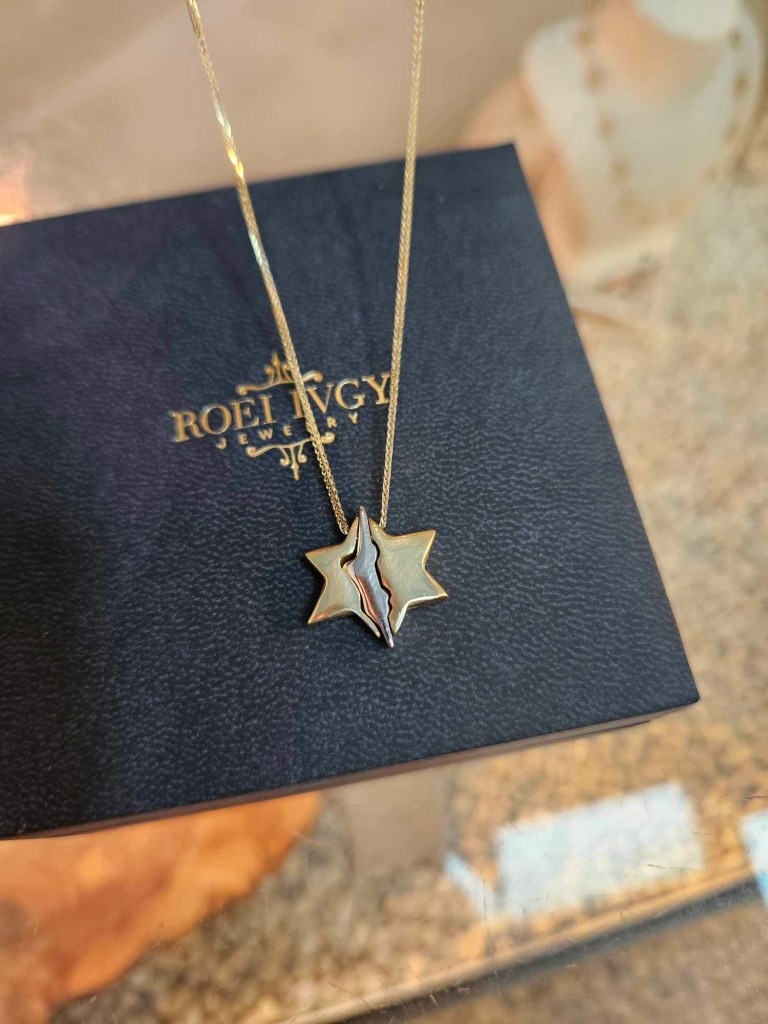
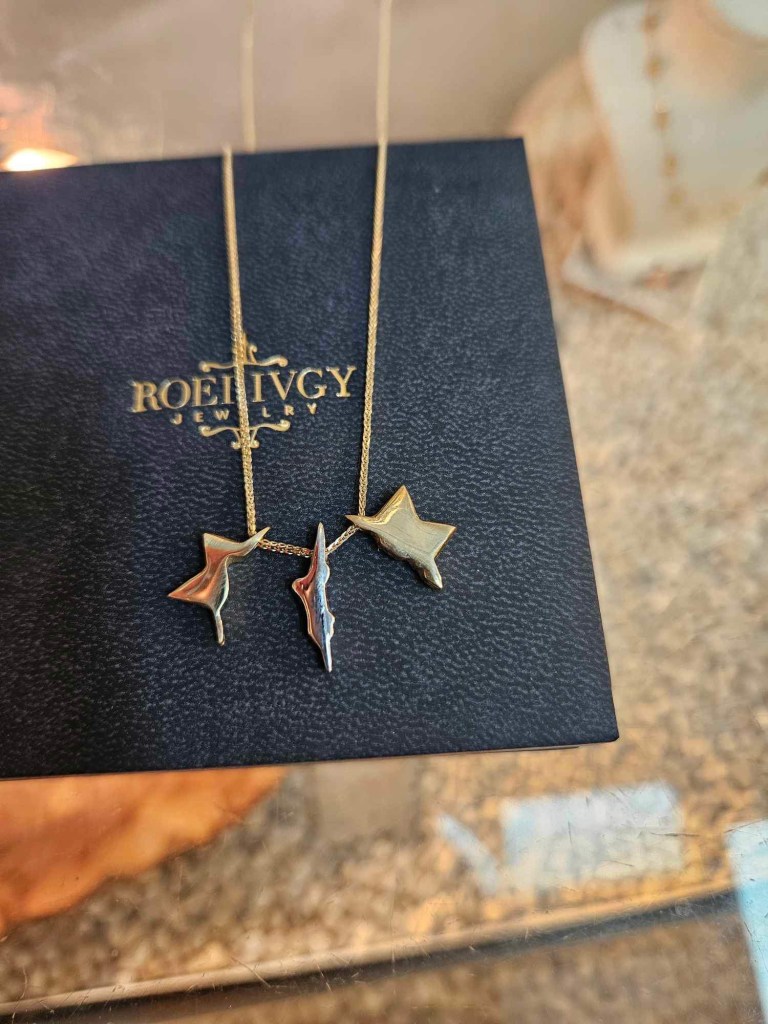
I wear very little jewelry. It’s not who I am. After October 7th, I decided that I wanted to wear a piece of Judaica, so I searched and found a beautiful Magen David (star of David) made by an Israeli artist that has Israel at the center of it. I wear it proudly outside of my shirt, publicly displaying my Jewish identity and my love of Israel.
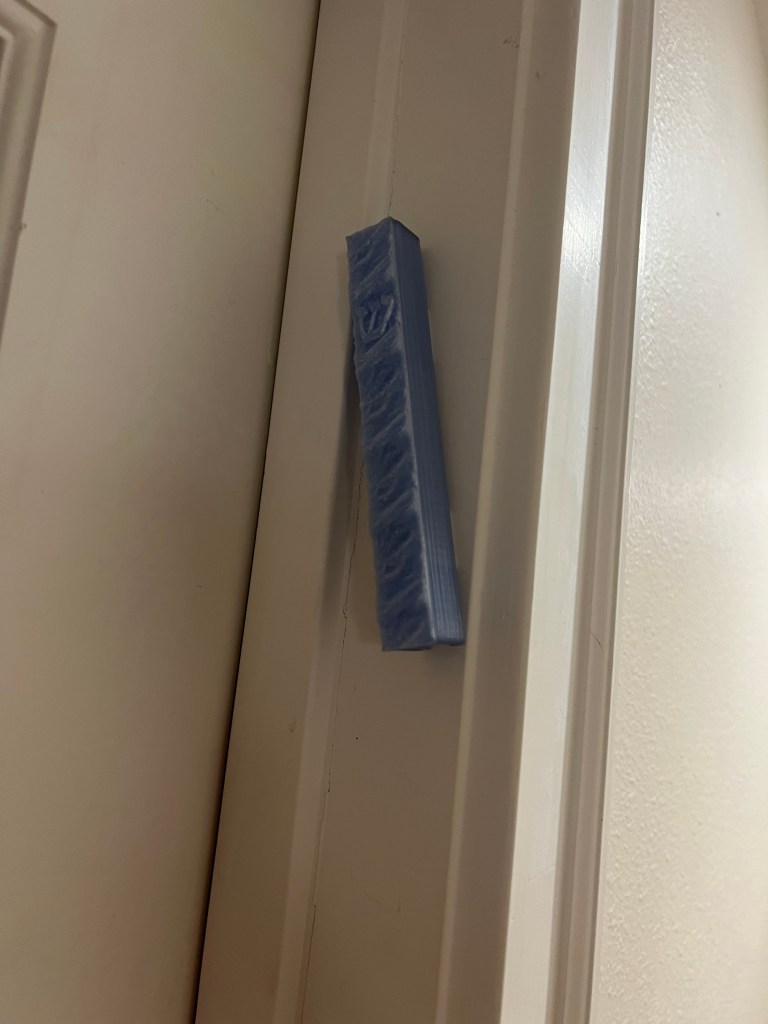
I hung a new, special mezuzah made from the plastic removed from the water by Tikkun HaYam (Repair the Seas) on my new home office. You can purchase one of these mezuzahs or the other cool things they make from recycled plastic here.
I continue to watch the inspirational messages that my friends Harry Rothenberg and Ari Shabat send each week based on the Torah portion. The 3-4 minutes I spend to watch each of them inspires me and gets me thinking about something I can do in my life. I look forward to getting them each week.
As you see, it’s not a lot. Yet it is meaningful and makes my day better because I take the time to do something Jewish on a regular basis.
It brings me back to the two statements above from Daniel Gordis:
“reveal a young Israeli generation astounding in the depth of its commitment to the Jewish people.”
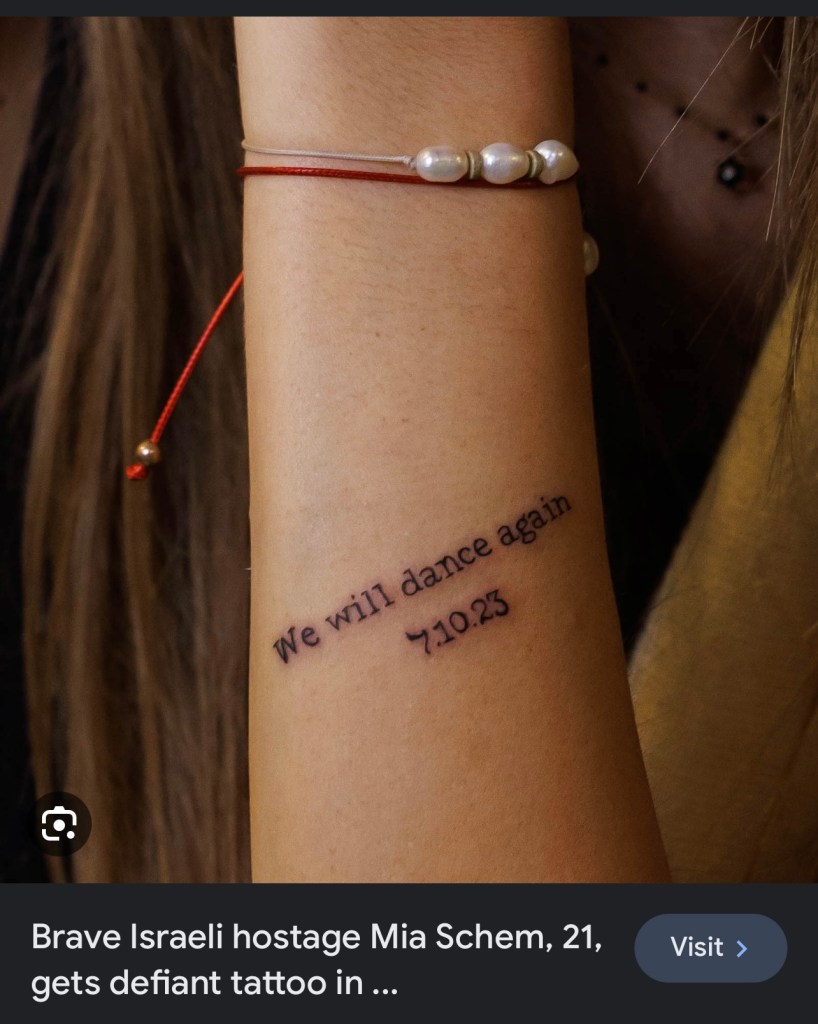
The IDF called up 300,000 reserves and expected 250,000 at most to actually report for duty. Instead, 360,000 showed up. This was due to their commitment to the Jewish people. The bitter political divides in Israel were put aside after October 7th as the commitment to Israel and to the Jewish people took precedence. Watching the Haredi (groups within Orthodox Judaism that are characterized by their strict adherence to halakha (Jewish law) and traditions) sign up for the army when they were exempt was extremely moving for me. I was also incredibly moved by Mia Schem, held hostage by Hamas in Gaza for 55 days. Not long after her release, she got a tattoo that reads, “We will dance again”. Her commitment to not allow Hamas to define her future shows me that I can’t allow anybody to determine my future either. This is the commitment of the Maccabees, of those on Masada, of Ruth and Queen Esther. It is what has allowed the Jewish people to continue to survive.
“If the West is to survive, its young women and men will need to emulate them.”
This is the important point for those of us in the United States and in the diaspora. Our young men and women need to emulate this commitment. I watch the divide among our youth about Israel and Judaism and fear for the survival of Jewish life in the diaspora. We fight amongst ourselves and give those who want us to not exist the ammunition they need. We defend those who exhibit Jew hatred, antisemitism, through intellectual statements, qualifying what they said, blaming others, or using things like race, religion, history of being in a persecuted or minimized group as the reason they have these beliefs and that they don’t really mean it. It’s time for our Jewish young women and men to accept that when people say they want to kill us, they really want to kill us. When people defend those who promise to kill us and are actively killing Jews, they want the Jews to be killed by these people.
We need a radical new approach to Jewish life. We need to inspire people with the beauty and power and meaning of Jewish life. We need to help people understand it’s not ‘all or nothing’ as they may have been taught growing up. Instead, it’s take something, anything, and do it, use it, live it, love it, and maybe it grows into something a little more.
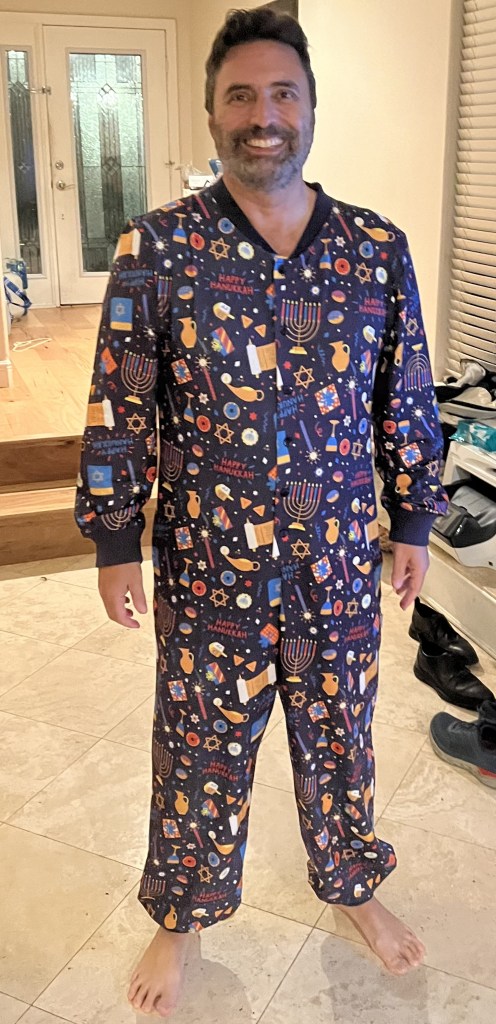
Wearing my Hanukkah PJs – that one thing can be fun!
I saw a meme this Hanukkah that said the miracle of Hannukah is not that the oil lasted 8 days. The miracle of Hanukkah is that it has sustained the Jewish people for over 2,000 years. Let’s not let that miracle burn out when a little effort will make the flames of Judaism grow exponentially.
** I know many people choose to write G-d to not write God’s name but since that isn’t really the name, I choose to just write it.
Discover more from keithdblog
Subscribe to get the latest posts sent to your email.
 keithdblog
Thank you
LikeLike