Fighting antisemitism by being Jewish

I have been talking and writing about the increase in antisemitism and Jew hatred for a decade now.  I saw it when I was living in Seattle when a swastika would be drawn/painted on a Jewish building almost monthly.  I called it out then and many people thought I was being reactionary and fear mongering.  I was pointing out what was happening.

Over the past decade, it has only gotten worse.  Since October 7th, the rise in Jew hatred has become frightening.  Violence against Jews is now common.  Shooting at Jewish schools happens too often.  Ugly, racist protests occur on college campuses and in the streets in the US, Canada, and throughout Europe.  Israeli Olympic athletes are threatened with death.  The Palestinian athletes are allowed to wear shirts with bombs dropping on Israel, but the Israeli athletes are not permitted to wear the yellow ribbons for the hostages.  The list goes on and on. 

I have mentioned many times how I’m not super religious but very Jewish.  Over the past few years, I have been digging deeper into what being Jewish means to me outside of services.  Like many people, services don’t connect or inspire me.  I knew there was much more to being Jewish than just religious services so my exploration into Jewish spirituality, text and how it applies to my life, and finding more meaning have been a big part of my recent journey.

As I learn with Rabbi Ehrenkranz, we include a bit of prayers to understand the why instead of the what.  My recent trip to Israel with the Jewish Leadership Institute (JLI) also focused deeply on the why instead of the what.  My recent trips to Israel have also been an exploration into the why instead of the what.  Why does Jerusalem matter?  What is the point behind some of what we do?  What is the intention?  The goal?  The objective?  I have found that when I understand the why, I can adapt the what to fit my life and what is meaningful to me.  Judaism has adapted since the time of Abraham, Moses, King David, and even the 2nd Temple.  We don’t pray the way they did but we can connect to God and each other the way they did.  I find that very meaningful.

Rabbi Ehrenkranz started a monthly Sunday morning Minyan (prayer service) that I began attending because he asked me to.  Often times, just asking somebody you have a relationship with gets them to do what you ask.  It turns out most of the people who attend are friends of mine, so it becomes a social gathering as well as an opportunity to grow.  I appreciate how Rabbi Ehrenkranz explains the goal of each part of the service.  It has enabled me to move away from reading the Hebrew words that I don’t know what they mean and instead think about the goal and objective and connect that way.  It has turned an experience that was rote into one that is meaningful.

This Sunday, with all that is going on in Israel and the recent attack by Hezbollah on the Druze village, I chose to wear my IDF tzitzit (ritual fringed garments).  I got them from Rabbi Atlas in the IDF as I am helping him with a project to fund the 5,000 mezuzahs the IDF needs.  I don’t wear them regularly and in fact, this was the first time that I wore them under my shirt like you are ‘supposed’ to.  It was a way to connect to Israel, the IDF, and Judaism.  I feel that way about mezuzahs too – something that is easy to put on your door and have a meaningful symbol without being required to be super religious.  It’s an easy thing to put on your doorpost and show Jewish pride both internally and externally.  If you don’t have one and want one, MyZuzah will give you one for FREE!  And if you want to support the IDF in their effort to get their needed mezuzahs for IDF soldiers, there is a dollar for dollar match and you can buy them for the IDF here for $30 each.

At the minyan, I spent the time during the silent Amidah (the major prayer of the service) in my own mediation and conversation with God, thanking God for all the gifts in my life today.  In my learning with Rabbi Ehrenkranz, part of what I have learned is that most of our prayers are really a reminder to ourselves about how we should live and how much we need to be thankful to God for our lives.  As such, I took this time to focus in this area.  It is easy to take so many things for granted in our lives and this gave me a few minutes to really focus on things and express my gratitude.  Instead of reading Hebrew words without meaning, this time was special because it was focused on gratitude.  It reshaped my entire day as I realized not only how lucky I am to live the life that I do but also that it is only by the grace of God that I have so many gifts.  I am grateful to Rabbi Ehrenkranz for helping me find meaning in something that didn’t have meaning before.

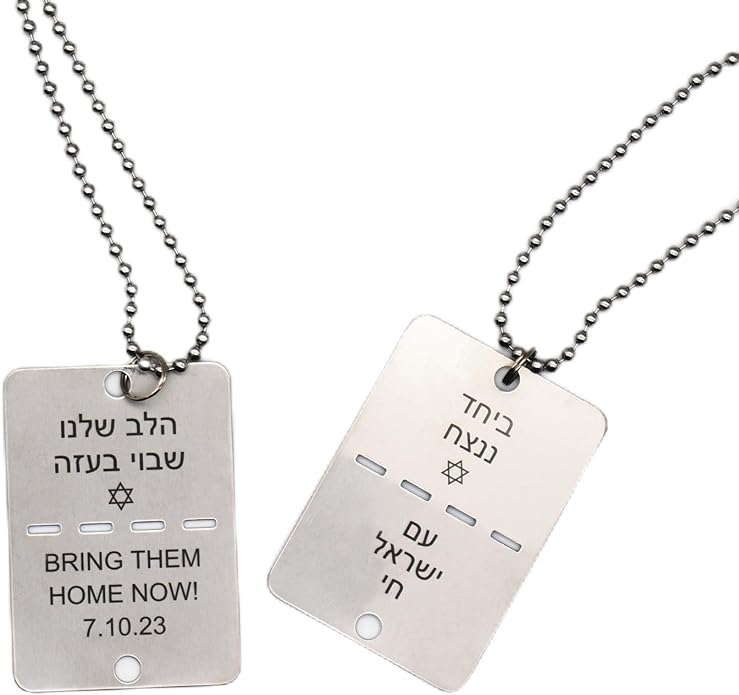
We sang Acheinu, the prayer for those in capitivity, for the hostages. I began singing this in Israel in July and it has become incredibly meaningful to me. It’s an easy song to sing, a powerful prayer to say, and reminds me to keep the hostages front and center in my mind. That, along with my ‘Bring them home now’ dogtag that I wear every day keeps my priorities front of mind. It has been almost 10 full months of captivity and the reports now coming out from released hostages are horrific. I’m glad that I learned the how to sing it and do so daily. It takes me a couple of minutes, fills me with gratitude for my life, and doesn’t let me ever forget the hostages.
Over the past few years, I have been very lucky to have some amazing Jewish mentors and teachers.  People who expose me to things that are meaningful and show Judaism in a different way in which I can connect.  Harry Rothenberg, Ari Shabat,  Saul Blinkoff, Lori Palatnik, Mickey Singer, David Abramowitz, and Rabbi Ehrenkranz are just some of them.  Each exposes me to different things to think about.  Each one expands my knowledge and enriches my life in different ways.  Pirkei Avot says, “Find yourself a teacher, acquire for yourself a friend”, and I have found this to be true.  Each of these teachers are also friends and only one is a Rabbi!

As somebody who raised somewhat religious and is not any longer, I have found deep meaning in Judaism through understanding the why of what we do.  The what doesn’t really mean much to me but the why is something entirely different.  As antisemitism grows and Jew hatred explodes across the globe, I have found investing in my Jewish identity and Jewish meaningful practices to be important.  I have begun to bake challah again.  I make sure to say thank you to God every morning for waking me up (the basis of the Modeh Ani prayer), and since I learned about thanking God for making the rooster understand the difference between day and night, I thank him for the beauty of nature and this world. (It is a funny prayer that we start with – almost like the Rabbi’s are pranking us!)

Many people think it is all or nothing.  You either go to synagogue or you don’t pray.  You either can pray in Hebrew or you don’t pray Jewishly.  You keep kosher or you aren’t really Jewish.  You keep Shabbat one specific way, or it doesn’t have any meaning to you.  I have found just the opposite.  There is incredible gray in Judaism once you understand why we do things.  Then you have the opportunity to do what is meaningful to you to accomplish the goals. 

I encourage you to explore the why.  To learn about why Israel matters to Judaism.  To understand the intent behind the services and the prayers we do.  It will open doors for you to grow in ways you can’t imagine.

The power of the mezuzah and the connection to Ethiopian Jewry

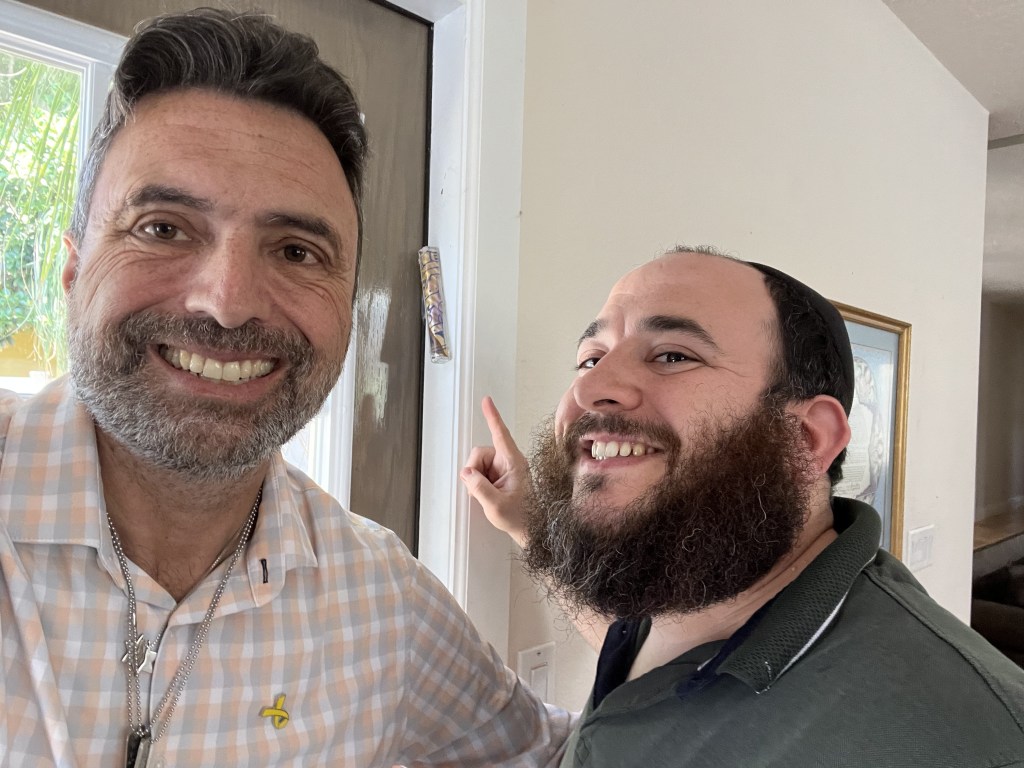
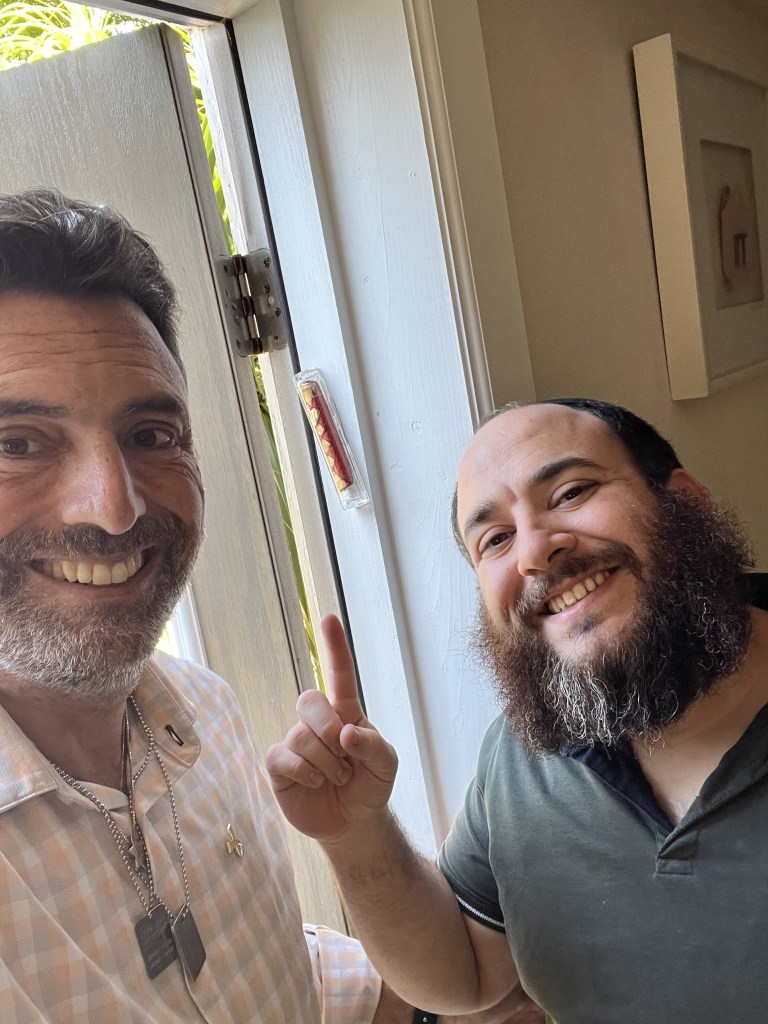
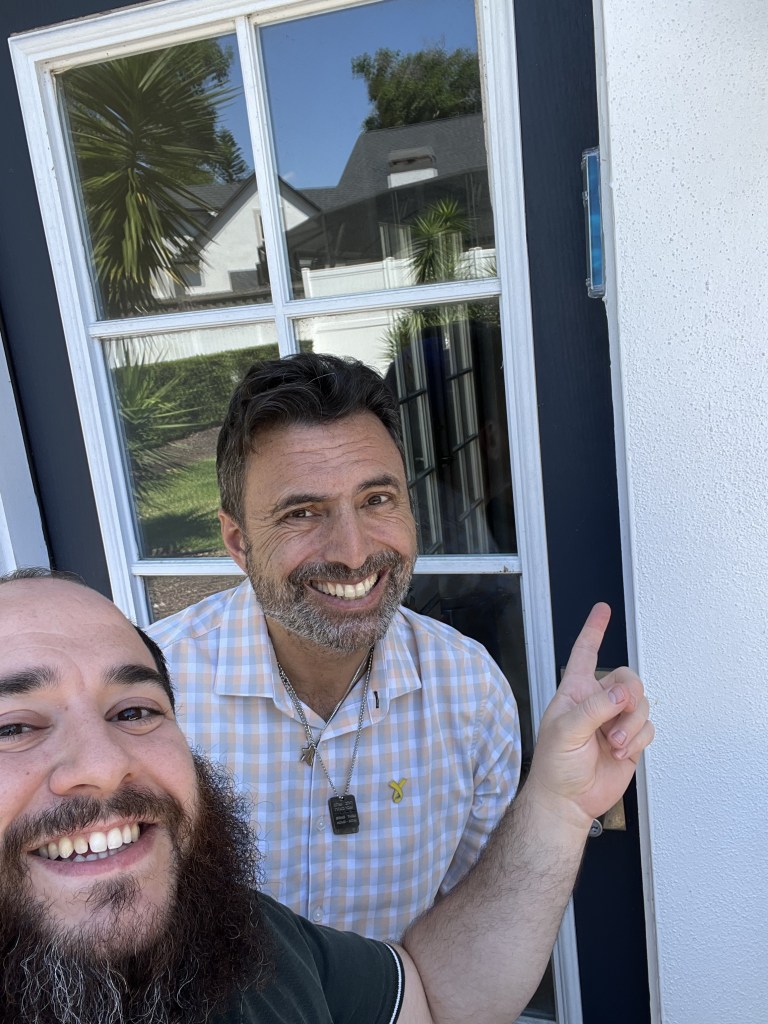
A friend of mine who is a Rabbi came by today to give me some Shmura matzah for Passover.  It’s a special, hand baked type of matzah.  Since I’m gluten-free, I can’t eat it, but we’ll use it on the Seder plate.  While he was here, I had three new mezuzahs that I had just gotten to hang on my 3 back doorframes.  The ones I had were too big, so I needed new ones.  So I asked him to hang them with me.  I’ve hung my other mezuzahs myself but since he is a friend and a Rabbi, I thought this would be a nice thing to do together.

I have the privilege of working with a program called MyZuzah.  The concept is that the mezuzah is a great Jewish symbol, it provides protection to the home, is easy to put up, is a low barrier entry to something Jewish, and is a visual, daily reminder of being Jewish.  MyZuzzah provides free mezuzah cases and kosher, fair trade scrolls, known as klafs, to anybody who doesn’t have a mezuzah on their front door.  It’s a cool program and helps start a Jewish journey.

They also have a great store with cool cases that you can buy.  I have an awesome mezuzah on my front door and a very cool one on my office door.  But I didn’t have one on my doors to the back patio or the backyard.  As we worked together and I looked at the store, I saw that they had ones made by the Ethiopian Israeli community.  Not only were they beautiful, but I have a personal connection to this community.

My childhood friend Grace works for the Ethiopian National Project (ENP). 

With Grace when she and ENP visited Orlando earlier this year

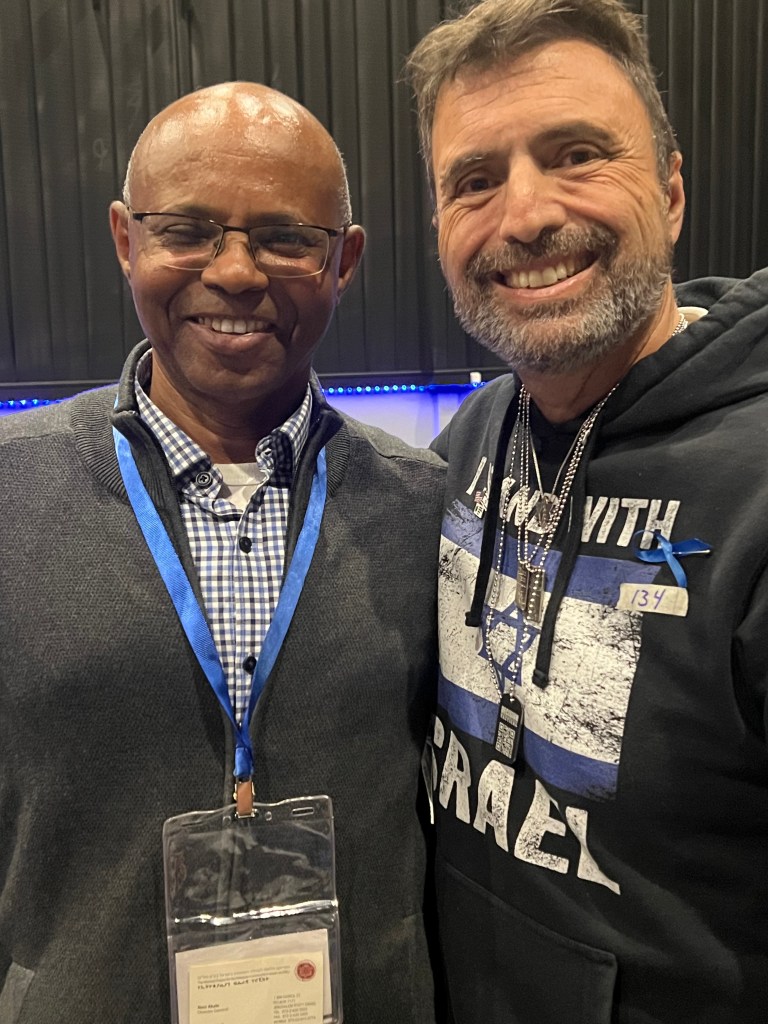
This is a project created by the Israeli government to help Ethiopian Israeli children with their education in order to have better success in life.  The original Ethiopian Israeli’s didn’t speak Hebrew and didn’t have formal education so they couldn’t help their children in school.  This mean the first generation of children struggled to have success.  Their children then had similar struggles, resulting in the creation of the ENP.  Since their creation, the ENP has had incredible success helping this community improve their academic effort, get into better military units, and have success in college.  Their results are extraordinary.  I have had the opportunity to visit the ENP sites on two occasions.  The kids were amazing and inspiring.  It was clear the impact the ENP programs were having on these kids.  One of the adults at the site took us to the roof to teach us Ethiopian dancing.  It’s still one of my favorite Israel memories.  I’ve become friends with Roni Akale, the Director General, who made the walk from Ethiopia to Sudan in 1993 when he was 20 years old.  I love hearing his story as it never gets old.  His success is a model for the Ethiopian Israeli children of today as they see somebody like them who is a huge success.

With Roni, the Director General, who made the walk from Ethiopia to Sudan in 1983
Ethiopian Dancing on the roof of the ENP
More Ethiopian dancing on the roof of ENP. It was so much fun

This isn’t my only connection.  When I was in Seattle, I had the privilege of meeting Sid Weiner.  Sid was an amazing man who in the early 1980s began working to ‘Save all Ethiopian Jews” by creating a program by that name, also known as SAEJ.  SAEJ rescued Ethiopian Jews in many ways.  Two of my favorite stories that Sid told me about how they did it were as follows.

Sid Weiner at his birthday party
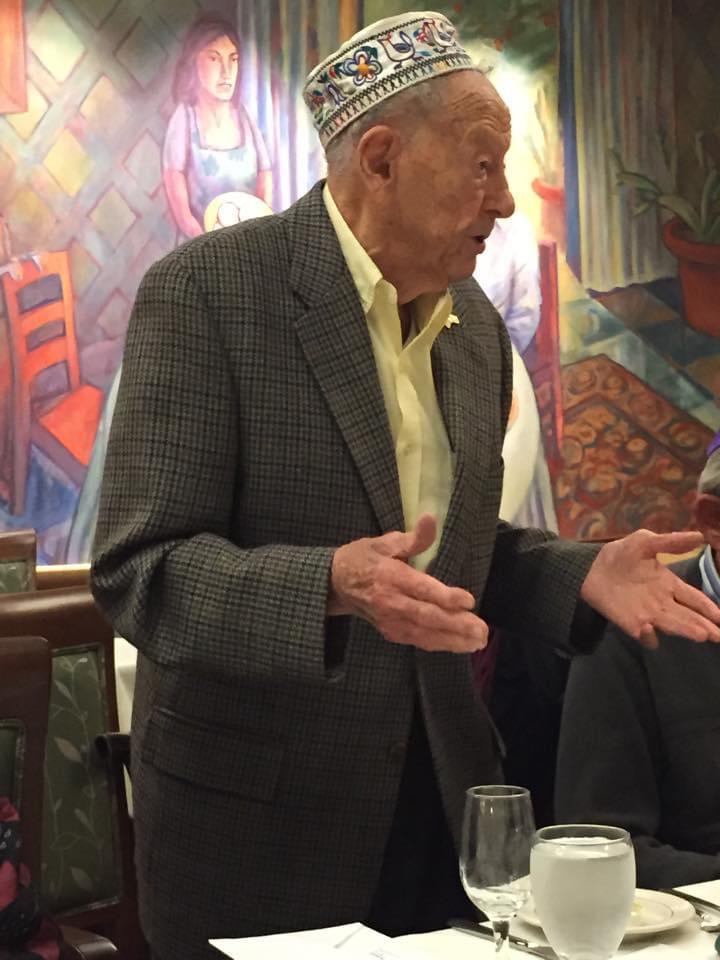
Sid telling us stories about his life at his birthday party

First, they met with Secretary of State George Shultz.  They advocated to issue visas for the Ethiopian Jews to come to the United States.  After much conversation, Secretary Shultz agreed to allow them make fake visas so that the Ethiopian Jews could escape Ethiopia and come to the US under the condition that they only stay 24 hours in the US before flying to Israel.  So that’s what Sid and his team did.  They made fake visas, flew Ethiopian Jews to New York using them, put them up in a hotel for the night, and put them back on a plane to Israel the next day.  It’s truly an amazing story of ingenuity and daring. 

The second story was about how they would create fake adoptions so the new adopted children could come to the US to live with their new parents and family.  These adopted children would arrive in New York and promptly board a plane to Israel where they would make Aliyah and become citizens.  Sid didn’t know how many children he ‘adopted’ this way.  He said that one time in Israel, he was with a group of Ethiopian Israelis eating dinner when he realized that at his table were four of the children he had ‘adopted’!  He hadn’t seen them since they were in New York years earlier. 

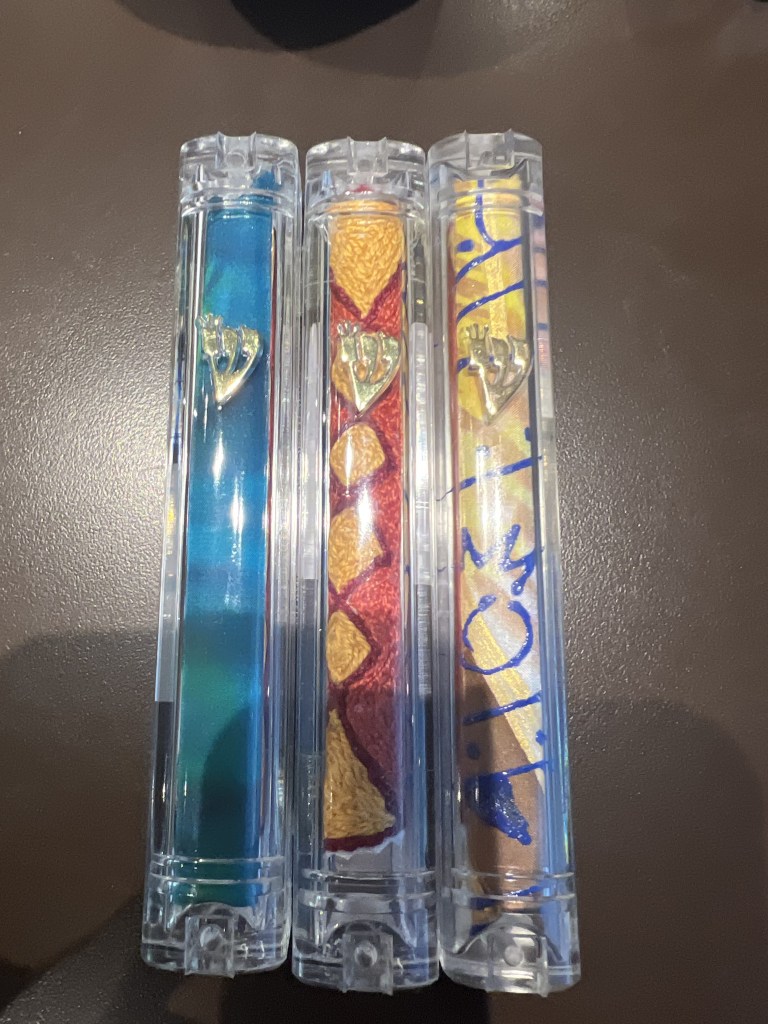
Needless to say, the Ethiopian Israeli community has personal meaning to me.  So the opportunity to buy the three mezuzah cases and kosher, fair trade klafs that I needed for my doors AND have them be made by the Ethiopian-Israeli community AND be beautiful Ethiopian art was something I couldn’t pass up.  So I bought them and today they were hung.  Every time I look at those doors, I have a smile on my face.  Not only have these mezuzahs made the door frames more beautiful, I did a mitzvah in putting them up, they offer protection to the home, and they are a tie to the Ethiopian-Israeli community.  What a win for me!

The 3 mezuzahs I bought that were designed by Ethiopian Israelis

That’s the thing about Israel – there is incredible diversity and amazing different cultures to explore.  In Tzfat I always get food from the Yemenite place.  It’s delicious and they even have a gluten free option now.  I’ve been getting food from the same place and from the same Yemenite Israeli man since my first trip in 1989.  I love getting Hummus from Abu Ghosh, an Arab town, 10 kilometers west of Jerusalem.  While others may disagree, I think the hummus from Abu Ghosh is the best in the world.  I’ve spent time with the Druze and had lunch with them.  It’s fun learning about their culture, sharing a Druze meal, and talking.  There is nothing like visiting Haifa and the Bha’i Gardens.  Learning about the Bha’i religion and the Bab is interesting.  The only way to tour the entire gardens is with a member of the Bha’I faith who gives you the tour.  It’s truly spectacular and never gets old.

The Baha’i Gardens during the day – it’s beautiful to see and walk through
The Baha’i Gardens at night – it’s simply spectacular

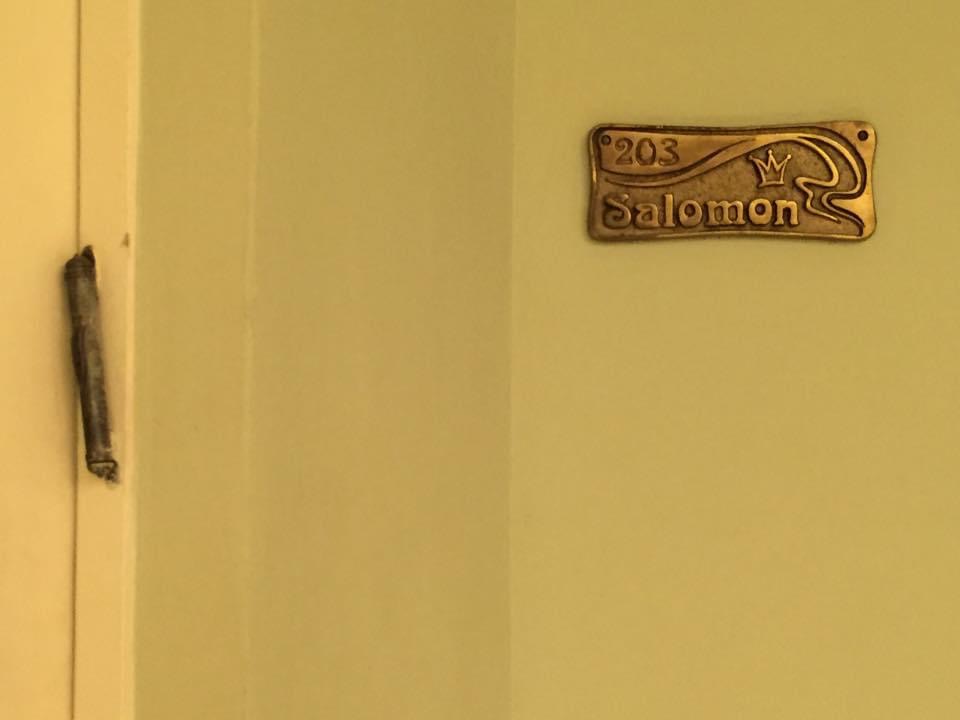
So how does this all tie back to the mezuzah and hanging it with my friend Amram today?  When we purchased our house, the first thing I wanted to do was hang a mezuzah on the front door to mark it as ours.  When I created my home office, the first thing I wanted to do was put up a mezuzah to mark the special change in the room.  A mezuzah marks your home as a Jewish home.  In these times it may be scary to clearly mark your home as Jewish, but as we approach Passover, lets remember that marking our homes as Jewish is what saved the Jewish first born from the angel of death when they ‘passed over’ the homes that had the marking on it.  It’s a symbol of pride and of commitment.  When I was in Havana a number of years ago, we visited the Hotel Raquel in Old Havana.  This Jewish inspired hotel not only had Jewish art throughout and matzo ball soup on the menu in the restaurant, it had a mezuzah on each hotel room door.  As we toured the hotel, it was the mezuzah on each door that struck me the most. 

Each room at the Hotel Raquel has a Jewish biblical name and a mezuzah on the door

In these crazy times when antisemitism is rising and all around us, Israel is fighting the evil of Hamas and Hezbollah, Iran attacked Israel with drones, cruise, and ballistic missiles, and we see hate all around us, the simple act of putting up a mezuzah is a simple, yet powerful statement.   Every time I see the mezuzah on my front door, on my office door, and now on my back doors, it puts a smile on my face.  It’s a reminder of what being Jewish means.  It’s a reminder that I am part of a mishpacha, a family, that goes back thousands of years and is worldwide.  Jewish homes all over the world and for centuries have had a mezuzah on their front door.  It is truly l’dor v’dor, generation to generation, strength to strength, that we are here, we aren’t going anywhere, and we will not only survive, but we will thrive.

So if you don’t have a mezuzah on your door and want one, there is now no excuse.  MyZuzah will send you one for free and show you how to hang it.  You can easily mark your home as a Jewish home and tie it with generations of Jewish homes along with Jewish homes all over the world.  Each time you walk past it, you will be reminded of being part of the Jewish people.  It’s a pretty amazing little thing that can change your life.  Hanging those three mezuzahs today brought me great joy.  I hope you choose to hang one and that it brings you great joy too.