Hypocrisy much?

In the Syrian Civil War that began in 2011, President Bashar Assad was responsible for murdering over 500,000 civilians. He used chemical weapons on his own people in order to stay in power. Despite the massive unrest, both Russia and Iran lent their support and he was able to remain in power. The UN was silent. The International Court of Justice was silent.

Assad continued to abuse the Syrian people. He enabled weapons to come into Lebanon for Hezbollah to attack and terrorize Israel. He was a pawn of Russia and Iran. There were no protests on college campuses. No riots in the street. No calls of genocide, despite half a million people being murdered by him. Despite his use of chemical weapons on his own people.

Then an amazing thing happened. Rebels in Syria rose up against Assad this week. Because of the war with Ukraine, Russia did not help. Because of war with Israel through their proxies, Hamas and Hezbollah, as well as the impact of the Israeli attacks responding to Iran, Iran did not help. Within a week, the Assad government fell. He and his family are now in Russia.

It is amazing what happens when you take on the bullies. With Russia and Iran out of the picture, the evil Assad regime is over. There are many different rebel forces now in charge of different parts of Syria. Hayat Tahrir al-Sham (HTS), led by Abu Muhammad al-Julani (Ahmed Hussein al-Shar’a) are aligned with Al Qaeda. Some are more moderate and Israel has talked with them about the border. Nobody knows what Syria will look like moving forward. What we do know is that the influence of Russia and Iran in Syria has been greatly reduced to eliminated. The people of Syria have freed themselves from the tyranny of Syria when given the opportunity. Where are the talking heads, using this as an example for the Iranian people and the Iranian regime? Where are the talking heads for the Gazan people and Hamas? Where are those same people for the Lebanese people and Hezbollah? They are nowhere to be found. Just like on the college campuses. If you can’t use it to blame the Jews, we will ignore it.

With the upheaval in Syria, Israel has gone ahead to secure the border. The IDF has secured the eastern part of the Golan Heights and the demilitarized zone to ensure the safety of Israeli’s living on the border. The map below shows it well. I fully expect that next week the Jew hating talking heads along with those on college campuses will blame Israel and accuse them of trying to colonize Syria. The hypocrisy is brutal. Israel has publicly stated they are merely securing the border. Israel has communicated with the Syrian rebels that they are not trying to invade Syria and are securing the border. Israel has let the rebels know that as long as they leave the border alone, there will be no attacks. Israel is destroying military stores to ensure the border remains safe. The facts won’t matter, just like they didn’t matter when Assad was murdering his own people. No Jews, No News.

Is what happened with the Assad regime in Syria a model for Iran? Reports out of Iran are saying that the fall of the Assad regime has created significant internal tensions within Iran’s Islamic Revolutionary Guard Corps (IRGC) as younger, radical members criticize senior leadership over the handling of the Syrian conflict. President Trump is expected to return U.S. “maximum pressure” sanctions on Iran, this means the regime faces an increasingly precarious situation. Internal divisions within the IRGC risk undermining their ability to suppress unrest and project power abroad. We have seen the people of Iran rise up int eh past and the world ignore them and leave them to face the wrath of the regime. The world has changed, placing the regime in its most vulnerable position in decades. Will we finally see Iranian regime change, freeing the Iranian people from their tyranny? Will we see a new government that won’t be a state sponsor of terror? Will we see the return of the Persian people instead of religious zealots?
Early in the morning of December 4th, Brian Thompson, the CEO of United Healthcare’s insurance business, was assassinated in public on the streets of New York. While the business practices of insurance companies is reprehensible to many (they deny coverage, don’t listen to what doctors say, and are more interested in profit than healthcare), a public execution of a business leader is not acceptable. It creates a slippery slope where it is ok to murder anybody in a business you don’t like or think has harmed you. Not just insurance companies. A restaurant where you get food poisoning or a bad meal means the owner, chef, or even server becomes fair game. A dry cleaner that ruins your clothes is now a target to be killed.

Amazingly, there is a large group of people who don’t understand this. They are celebrating his murder. They even held a shooter look-a-like contest.

It makes me wonder where we are going as a country. It’s perfectly ok to not like Brian Thompson and what he stands for. It’s perfectly ok to not like United Healthcare or all insurance companies. If you want to wish bad things on those running these companies or the company itself, you can do that. I had a terrible experience at a specific restaurant and vowed to never give them any of my money ever again.

Greta Thunburg became a star on the world stage because of her care for the planet. She was outspoken about climate change and got the world’s attention. She has been nominated for the Nobel Peace Prize every year from 2019-2023. Many found her a voice of reason in an unreasonable world. It is clear that all this fame has gone to her head. Thankfully, she never won the Nobel Peace Prize as she now advocates publicly for the elimination of Israel. Her Jew hatred is public and she has become a hate filled person who loves herself and her fame more than anything else. It’s sad to watch somebody who seemed to genuinely care about the world and making it a better place, devolve into hate and bigotry. It’s sad when being famous is more important than anything else and drives you into hate. Using Greta’s own words, “F**k you Greta”.

We often think we have it bad. There is stress in our life. Pressure. We forget how lucky we are. I was talking with a friend in Israel this morning who apologized for his delay in responding because he was back in milium (reserves) once again. Then he shared that his wife’s nephew was an IDF soldier killed in Gaza last week and he had to deal with that. Yet he was apologizing to me for taking time to respond. He has stress. He has pressure. I needed no apology and told him that. Then I read this story from Shaquille O’Neal and it reinforced how lucky we are. How we take so much for granted. How these spoiled, elitist college students spew hatred because they don’t know anything. How these college professors and administrators enable and often encourage Jew hatred because they don’t know anything about life or reality. My friend taught me a lesson in gratitude. Shaquille O’Neal reinforced it.

Shaquille O’Neal said, “My stepdad was a sergeant in the army-a serious, strong man of character. We had an excellent relationship. I once played at Madison Square Garden against the New York Knicks in my first season in the NBA. I had a terrible game. Afterward, he called me and asked why I played so badly. He wondered if it was the pressure of facing Patrick Ewing and the Knicks. I told him I felt pressure. He said, ‘Tomorrow, I want you home at 7:00 AM. Pick me up-we’re going to see a family that has no home.’ On the way, we encountered a family in need. My stepdad stopped, gave them money for their next meal, and said, ‘That’s pressure. You have everything; you’re weak. There’s no pressure in playing basketball and earning millions of dollars. Real pressure is felt by those who don’t know when or where their next meal will come from! He told me to get out and help that family. I got out and saw a man with his wife and two children who had just lost their home. The man was looking for work. He told me he was cutting grass. I called a friend and asked him to get this man a job. I called another friend and said I needed an apartment for a family of four, promising to send a check the next day. They needed help. After that, I never felt pressure in a basketball game again because that family had real pressure.”

The entitled college students who believe the Hamas lies, who express publicly their Jew hatred, and who show they are terrible human beings don’t understand the world. They live in a mindset of blame and hate. Their entitlement shows itself in their expectations that everything should be given to them, that other people should work hard so they get things for free, and that not taking responsiblity is the way to success. They could use a lesson from Shaquille O’Neal’s father.

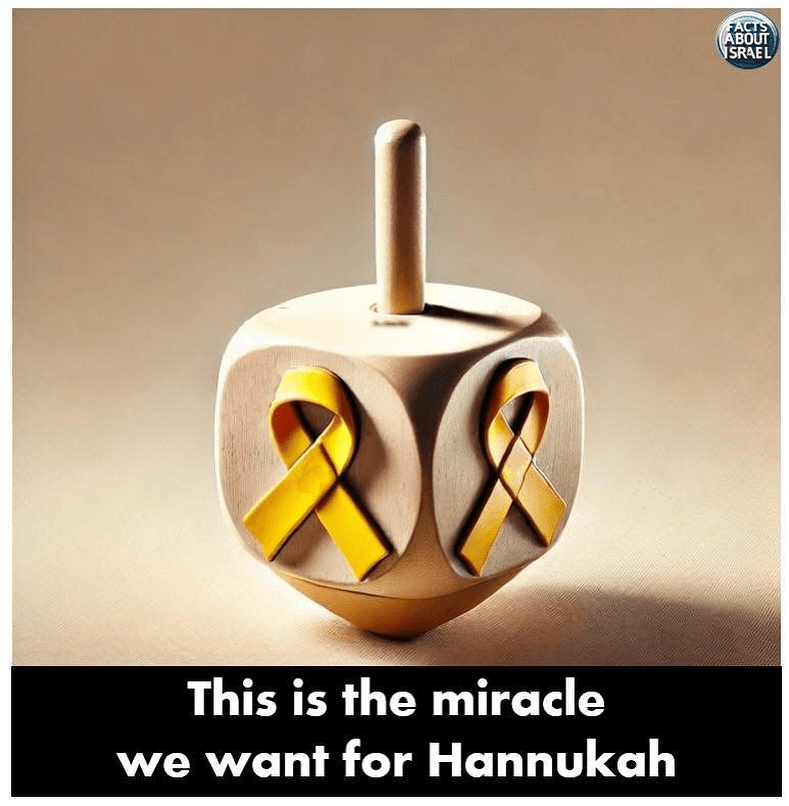
Hanukkah is late this year. It begins on Christmas. Just like many people, the only gift I really want is the return of the hostages. The end of Hamas and Hezbollah so there can be peace. I saw dreidel image and it expresses visually what I am feeling. No matter where it lands, the hostages get freed. That is not hypocritical. That’s what we are about. Freedom. Hanukkah is a holiday about freedom. This war is about freedom from terrorism. Freedom from Jew hatred and antisemitism. Freedom from Hamas and Hezbollah. Freedom from Iran. Freedom for the Syrian people. Freedom from hate and bigotry.

The dreidel letters The letters on a dreidel are an acronym for the Hebrew phrase “Nes gadol haya sham”, which translates to “a great miracle happened there.” In Israel, the dreidel replaces the letter Shin (Sham) with the letter Pay for Po (here). May this Hanukkah be one where we can say both – a great miracle happened there (return of the hostages, end of the war) and a great miracle happened here (a stop to the rampant Jew hatred).
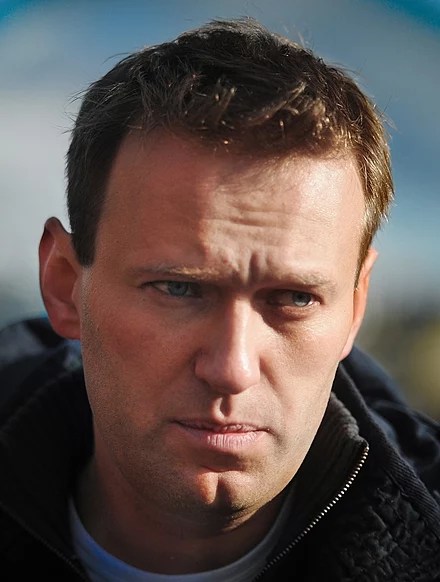
Lessons from Alexei Navalny (z”l)

The murder of Alexei Navalny (z”l) on February 16, 2024, has received a lot of attention.  Navalny, one of the most vocal critics of Russian President Vladimir Putin, had been imprisoned in an Arctic penal colony for his crimes of standing up to Putin.

In his death, Navalny has taught us a great deal of powerful lessons.  The more I have read about him, the more I am in awe of his dedication, commitment, ethics, and values.  After being poisoned and recovering, he returned to Russia to continue his fight for the Russian people, despite knowing he would be arrested and imprisoned.  Why would he return, knowing brutal imprisonment and likely death would be the result?  In an Instagram post on Jan. 14, 2022, he wrote, “The question ‘to return or not’ never stood before me, mainly because I never left. I ended up in Germany, having arrived in an intensive care box, for one reason: they tried to kill me.”

Within weeks of his arrest, he sent a note to his friend and mentor, the journalist Yevgenia Albats. It read:

Zhenya, everything is O.K. History is happening. Russia is going through it, and we are coming along. We’ll make it (probably). I am all right, and I have no regrets. And you shouldn’t, either, and shouldn’t worry. Everything will be all right. And, even if it isn’t, we’ll have the consolation of having lived honest lives. Hugs!

I think about the courage and commitment it takes to think that everything will be alright, and if it isn’t, you still lived an honest life.  Far too often today people need to be right.  People need to win.  People refuse to do what’s right because it’s not what is expedient or because it affects their ego.  Navalny shows us that living that way isn’t worth it.  It’s better to live honestly, where your word means something, where the focus is on the bigger picture, the long view.  It is the famous line from Star Trek, The Wrath of Khan, “The needs of the many outweigh the needs of the few.  Or the one.”  Far too many people focus on the needs of the one and neglect the needs of the many, of the larger community, of those that are impacted by the consequences of taking care of the needs of the one.

Spock and Kirk – the needs of the many outweigh the needs of the few, or the one.

The Free Press posted his 2014 speech to the judges upon conviction of bogus charges.  As I read it, I was struck by the power of both his words and that he addressed the panel of judges directly, calling them out on their behavior.  When he said,

“I call you “people who look the other way.” Do you even notice that you are constantly looking down? You’re looking the other way. I am talking to you but you’re looking down all the time. None of you have anything to say.”

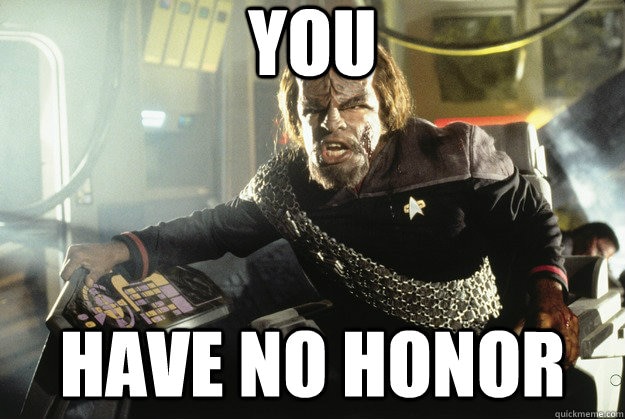
As I read the article, I could feel the shame of the judges as they were called out.  He wasn’t willing to allow people to behave in an unethical or immoral manner without being made to face the choice that they made to sell out their values.  Navalny was not afraid to hold those accountable who had not done what they were supposed to do.  They did what Putin wanted.  But as the Klingons in Star Trek would say, “You have no honor”.  Navalny stresses the importance of honor.  The criticalness of integrity.  He understood and tried to communicate how without any of these things, life is hollow.  Those who judged him had no honor or integrity because they didn’t stand for or live by their values.  The lesson to us is to remember that.  When we make choices in our personal and professional lives, do so with honor and integrity.  Don’t look at the small picture of what it may do for us, look at the bigger picture of what it does for the world.  Make sure you are able to live with yourself based on the choices and decisions that you make. 

Later in the speech, he said,

“But, in spite of all of this, it’s important to me to address you, the people who will watch or read my last words. It’s more or less pointless, but the people who look the other way are also a battlefield. On one side of it are the crooks who have seized power in our country, and on the other are people who want to change this. We are fighting over the people who look the other way, the people who shrug their shoulders, the people who are in a situation where all they have to do is not do something cowardly, who do it anyway.” 

In today’s world we are fighting over the people who just have to not do something cowardly, and they can help change the world.  Stand up to hate.  Stand up to terror.  Stand up to lies.  It’s easy to be a coward and go along with another leader tells you.  It’s easy to be a coward and look down, avert your eyes, as injustice is done.  Navalny, through is actions and his words, is teaching us all not to be cowards, not to just go along, shrug your shoulders, and allow the wrong thing to be done, even when we know it’s the wrong thing. He is telling us that our job isn’t done because people don’t care.  Our job is to make them care.  It reminds me of the famous line in Pirkei Avot (Ethics of our Fathers) that reads,

It Is not up to you to finish the task, but you are not free to avoid it.”

It is not our responsibility for their choice of action or inaction.  It is our responsibility to do what it takes to encourage them to take action.  To act honorably.  To act with integrity.  In today’s world, too many people accept the status quo.  They believe the lies they are told without asking any questions or doing any research.  They take the simple way out, the way the judges in his case took the simple and easy path rather than the honest and difficult one. Navalny continues,

There’s the famous quote from Dragon: “Yes, everyone was taught to be evil, but why did you have to be top of the class?” I’m not just talking about this court. A huge number of people are either forced to act like cowards or act like cowards without being forced or even asked to. They just look the other way and try to ignore what is happening. We are fighting for these people. We are trying to get them, you, to admit that everything that is happening in our society is based on endless lies.” 

He isn’t giving up on those who are acting as cowards.  He isn’t willing to write off this group of people who just go along, put their heads down so they don’t have to watch, and allow the lies to take root.  Navalny is telling us that not only do they deserve a chance, but we need them to fight off the crooks, the bad people, often times our leaders.  He is telling us that it is our job to inspire the masses who keep their head in the sand, don’t want to make waves, and let things be. 

In today’s world, with the rising antisemitism and overall hatred, what could be more important?  We live in a world where it has become challenging to have difficult conversations because people only want to be heard, not to listen.  People want to be right, not to be informed.  Navalny is telling us what Ghandi told us, that we have to be the change.  We have to be the ones who will brave the tough discussions.  We have to be the ones who will speak out.  Who will take the risk?  Who will work to inspire others to lift up their head, see the realities around us, and join in being the changemakers?  He finished the speech by saying,

“Thank you, everyone, for your support. I know for a fact that when they isolate and imprison me, another will take my place. Nothing I did was unique or special. Anyone can do what I did. Live not by lies.”

I think this is perhaps the most important part of his entire speech.  Many people hold him up to be a hero.  To make him into something unique and special.  And while he was unique and special, it was because of what he chose to do.  We all can choose to do that.  We all can stand up to injustice.  We all can look for the greater good.  All of us have the opportunity to not be silent and bury our heads in the sand.  When I read this, I hear him saying that even when he is gone, he can be replaced by many others.  It’s our job to make sure we are included in the group that is going to make a difference.  That is going to stand up and speak out.  That isn’t going to allow the lies to go unchallenged.  That isn’t afraid of the consequences to speak up and take action because we know the consequences of being silent are so much worse. 

I think of my Uncle Ralph Preiss who grew up in Berlin in the 1930s.  He was there during Kristallnacht (the night of broken glass).  He tells, with great emotion even today, the story of him being told in 1st grade that he could no longer pledge allegiance to the Fuhrer (Adolph Hitler) because as a Jew, he was not his Fuhrer.  The praise he gives to President Quezon and the Frieder Brothers (from Cincinnati) who did all they could to save Jews from the Nazis by getting them to the Philippines.    They spoke out and stepped up and saved many lives as a result.  They didn’t put their head in the sand and pretend nothing was happening.  Instead, they took action to save Jews.  Many of us have seen Schindler’s List but few of us know anybody who was saved by Schindler.  I am grateful to President Quezon and the Frieder brothers for saving my Uncle Ralph.

My Uncle Ralph Preiss telling his story on International Holocaust Rembrance Day in 2021.

Alexei Navalny gave his life for what he believed in.  In his letters to Natan Sharansky from the gulag, printed in The Free Press, he clearly knows what is in store for him, yet he and Sharansky are able to joke and laugh because they both fought for something far greater than themselves.  Just like his 2014 speech, in his first letter to Sharansky he writes,

“Nonetheless, the “virus of freedom” is far from being eradicated. It is no longer tens or hundreds as before, but tens and hundreds of thousands who are not scared to speak out for freedom and against the war, despite the threats. Hundreds of them are in prisons, but I am confident that they will not be broken and they will not give up.”

In 2014 he talked about somebody taking up after him.  Here he writes about tens and hundreds of thousands who are willing to speak out for freedom.  The virus of freedom that Putin is trying to eradicate is instead growing.  This is what happens when we take the risk and stand up for what we believe in.  When we do the right thing and live with integrity, even if it makes it harder for us individually, as it makes it better for the entire community.  Navalny may no longer be among the living, but his ideas and ideals live on far beyond him.  And more and more people are now picking up the responsibility from him, taking it on themselves, and working to make the world a better place.  Just like those in Russia that he writes about, we have that same responsibility in the United States.  We cannot be silent.  We cannot stand by while antisemitism and hate continues to grow.  We cannot put our heads in the sand, hoping that it will go away or they won’t notice us and will leave us alone.  We saw how that worked in the Shoah.  We have thousands of years of history that show us how it doesn’t work.  Navalny is reminding us, once again, that silence only helps those who want to harm others.

Sharansky, in his response to Navalny, had a passage that struck me deeply.

I was very angered by the question of a certain European correspondent the day after your return to Russia. “Why did he return? We all knew that he would be arrested in the airport—does he not understand such simple things?” My answer was pretty rude: “You’re the one who doesn’t understand something. If you think that his goal is survival—then you are right. But his true concern is the fate of his people—and he is telling them: ‘I am not afraid and you should not be afraid either.’”

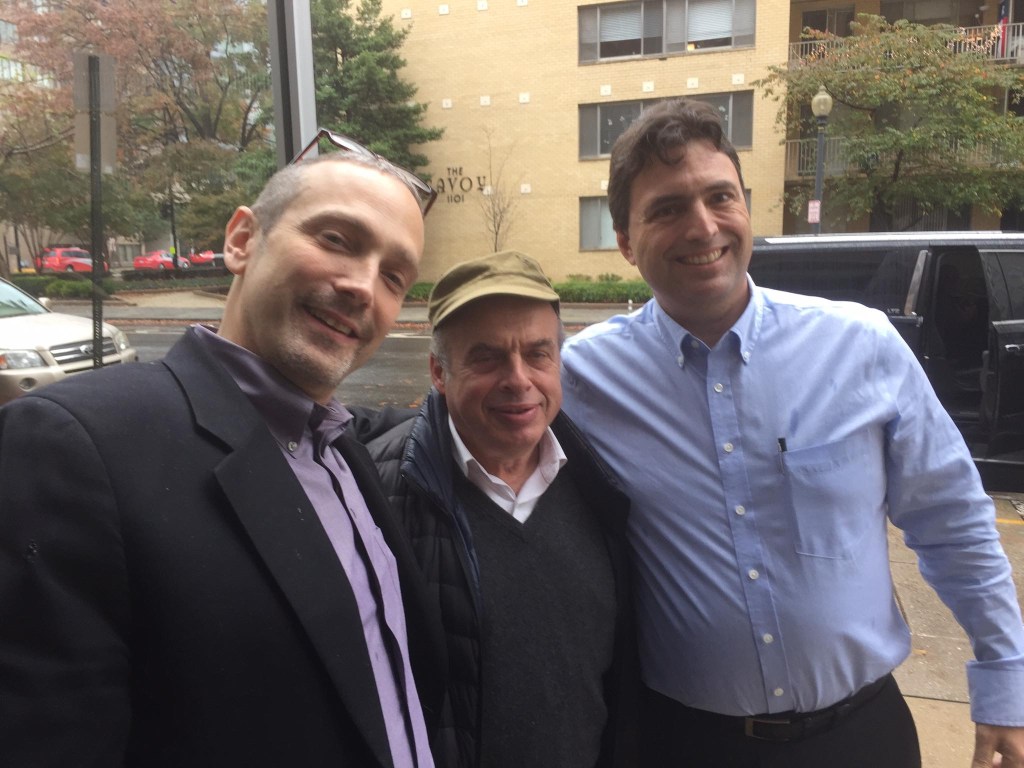
Sharansky, who himself spent 8 years in the gulag for standing up for what he believed, understands that survival, while important, is not the most important driving force.  Standing up for your beliefs, for what is right, having morals and ethics, living with integrity, is far more important.  Showing others, through his own example, that they don’t have to be afraid and that they can make a difference is what matters.  Sharansky did it himself.  He will also be a hero to me as his struggle in Russia happened when I was a child.  I remember him being sentenced to the gulag for wanting to be a Jew and wanting to move to Israel.  I remember his release and the celebration that occurred upon it.  And I remember meeting him in DC and truly feeling like I was in the presence of somebody great.  The lesson from Navalny and reiterated by Sharansky is that we can all be that person.  Both Navalny and Sharansky play down their own heroism to play up the role that each of us needs to take to better the world.  We can, and should, learn from their teachings.

The time I met Natan Sharansky. I was with my best friend, Todd Sukol.

The final letter from Navalny to Sharansky had a simple but powerful line that resonated for me.  He wrote,

“But I continue to believe that we will correct it and one day in Russia there will be what was not. And will not be what was.”

He doesn’t talk about in his lifetime.  He doesn’t talk about survival.  He doesn’t even talk about himself.  It’s all about the future of the country and the people who live there.  His concern isn’t for his well-being but for the greater good.  The selflessness in this line is so incredibly powerful and inspirational.  When I read what he and Sharansky wrote about taking action, I can relate to that and it inspires me to so.  When I read this line, I see true greatness.  Few of us can truly look beyond our own lives, sacrificing our lives, in order for a brighter future that is not promised but we believe in.  It’s an inspiration to do better.  It’s a reminder that the world existed before us and will exist after us.  What matters is what we do while we are here, not how long we are here.  We get to decide that.

In Sharansky’s final reply to Navalny, he quotes he first verse of Nikolai Zabolotsky’s poem “Ne pozvolai dushe lenitsa” writing,

“Do not let your soul be lazy, to not pound water in mortar, the soul is forced to labor, both day and night, both day and night.” In Russia, people struggle with this, but you do it effortlessly.”

The brilliance of these two men who understand that the world is greater than themselves is astounding.  The way they are able to communicate, not only to each other but to the world, the importance of taking action and not sitting by idly, is inspiring.  Each of these men spent years in the gulag, in the arctic circle, living in terrible conditions, yet expressed no regret for their actions, no fear for the possible outcome of death, working to inspire others to follow their lead to change the world.  As the poem expresses, we cannot let our souls be lazy, we cannot just stand by and do nothing while the world implodes.  Our soul, our very beings, are forced to do the hard work all day, every day, to improve the world.  We often talk about Tikkun Olam, repairing the world, and do so with periods of activity.  Both Navalny and Sharansky remind us that the job is not to do occasional acts to repair the world, it’s to constantly be living and acting in a way that does repair the world.  In that final sentence above, Sharansky recognizes that this struggle and effort is not easy for people and most struggle with it.  He complements Navalny, who like Sharansky, were able to do it with such dignity and deep belief, that it looked effortless, even though they both know it’s anything but.

Alexei Navalny (z”l) was and is an inspiration to us all.  While many of today’s youth only know Sharansky from his time in Israel, as a member of the Knesset, as the head of the Jewish Agency for Israel (JAFI) and who he has become after his release from Russia, he was Navalny in the 70s and early 80s.  These two men teach and inspire us to be better human beings and to do better.  They remind us through not just their words but also their actions that freedom is not free, that to have the world we want to live in requires sacrifice and effort.  They tell us point blank that if we want to sit back and let others do the work, the work will not get done. 

My friend Ari Shabat finishes his weekly video blog on the torah portion by saying “This Shabbat, I’m going to think about……”.  I’m going to copy him this week.   This Shabbat I’m going to think about the things that I am doing to improve the world and the things I am willing to stand on the sidelines while others do the work.  I’m going to focus on what I can and should be doing to live with integrity, in line with my values, and to truly be involved in Tikkun Olam all day, every day, like the poet that Sharansky quoted wrote.  Today I am going to do what I can to make the world a better place.