A day down south

I’ve been close to the Gaza border twice, In May 2024 I visited both Kfar Aza and the Nova site and in July 2024 I returned to both Kfar Aza and Nova along with Kibbutz Alumim. I was about a mile from Gaza on both occasions, heard and saw the drones and jets fly over Jabalya, and saw and heard bombs drop, gunfire, explosions and building collapse. Both were intense experiences as it felt strange to be so close to an active war zone.
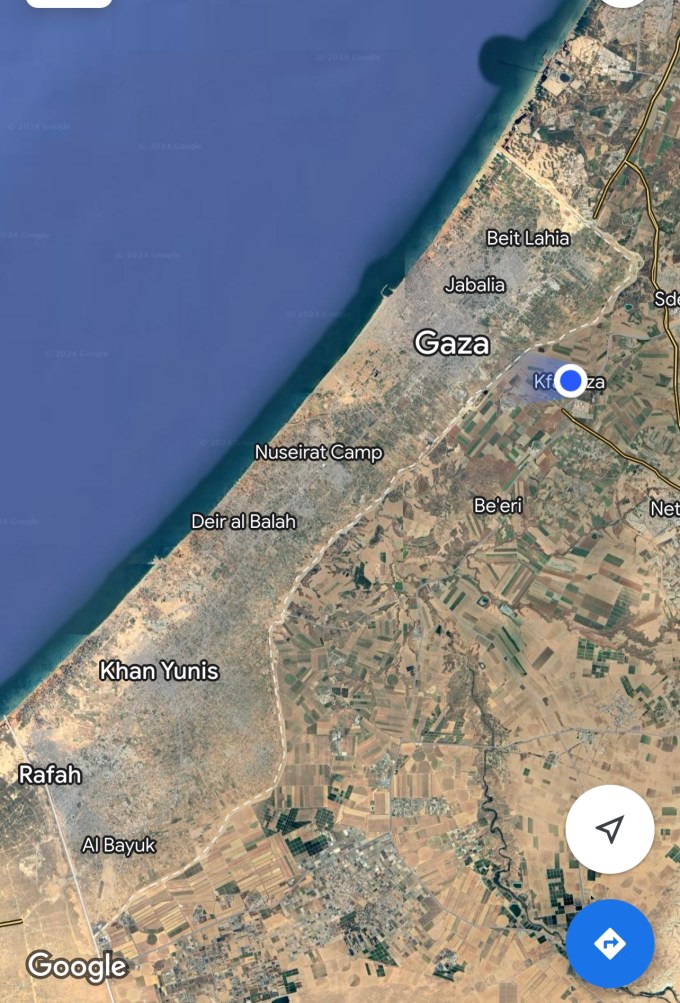
Google Maps view from my May 2024 visit to Kfar Aza

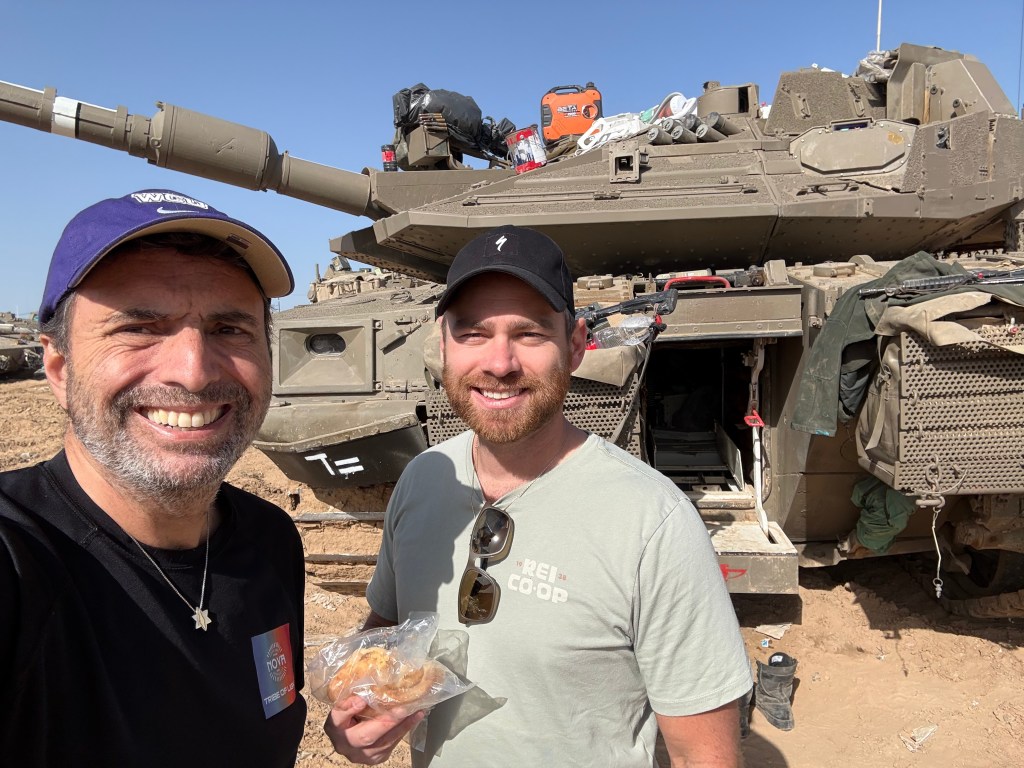
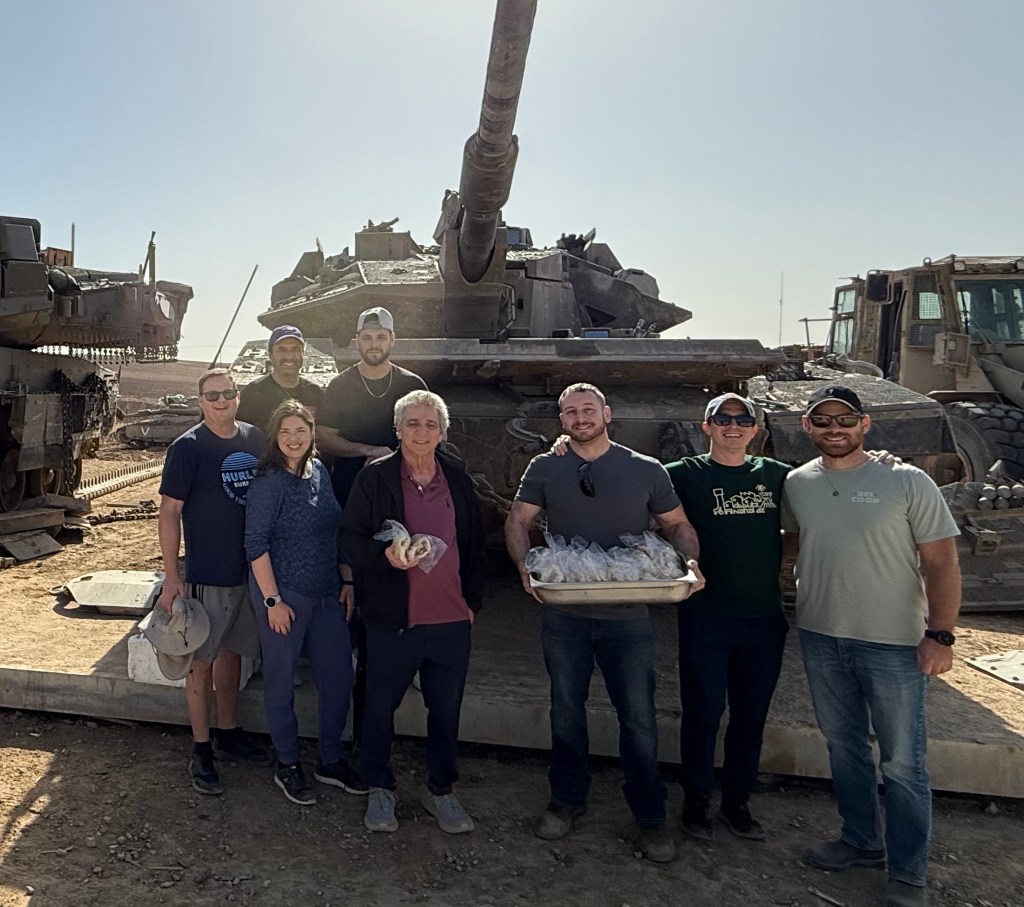
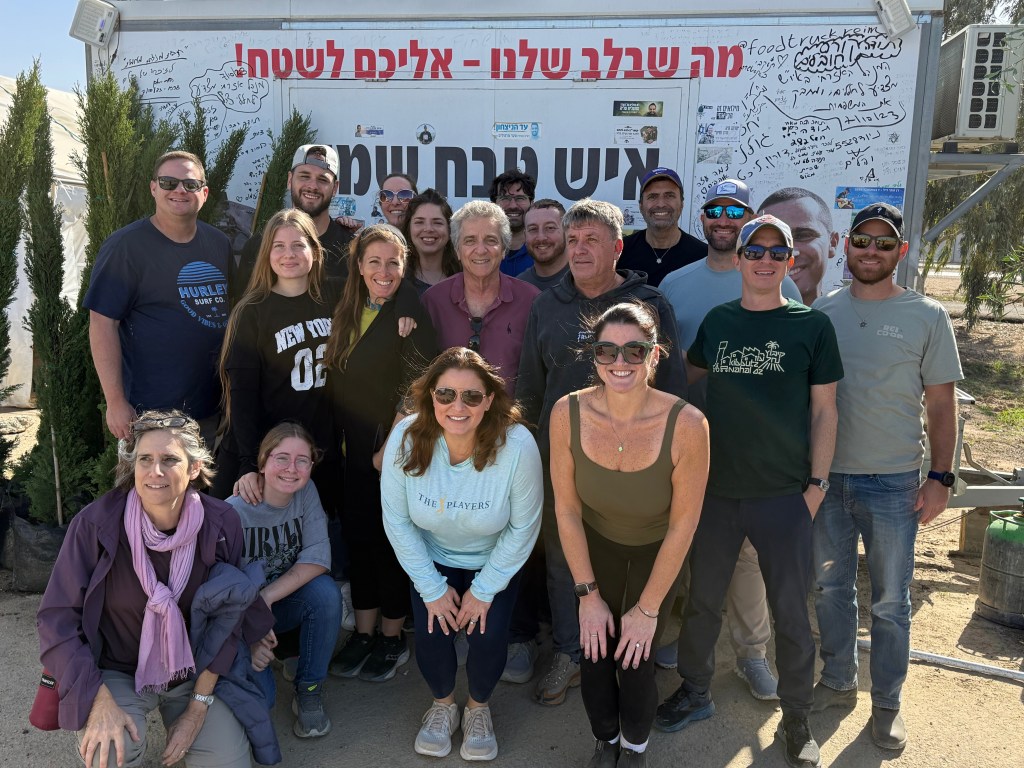
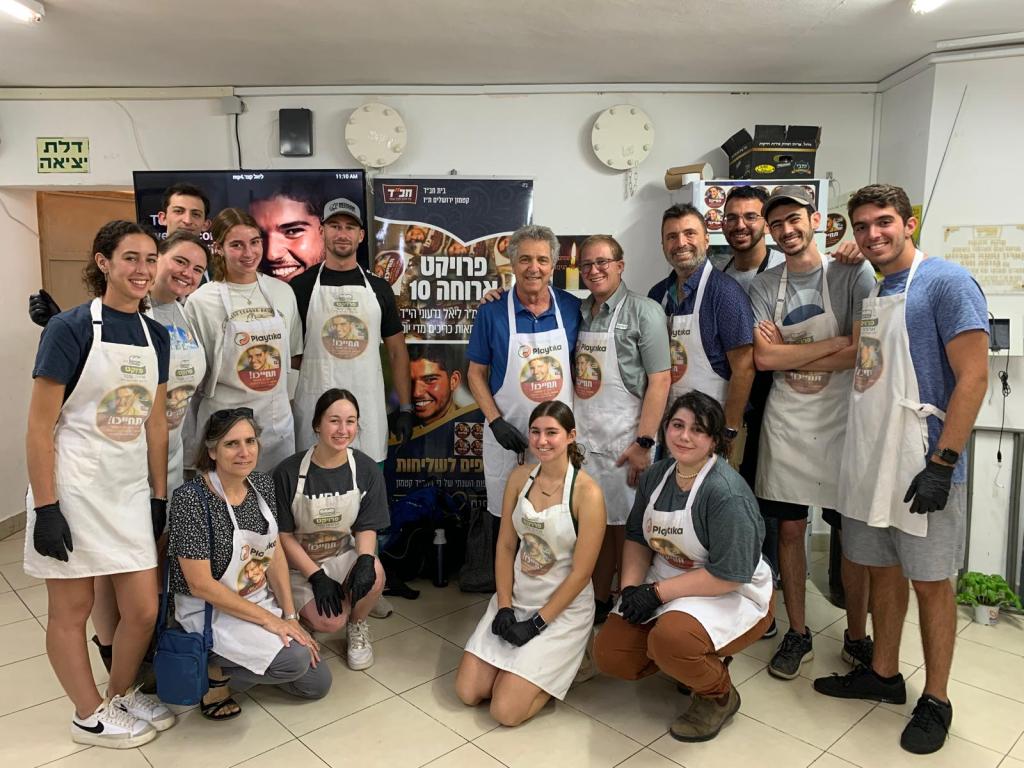
Today I got even closer. We had the opportunity to go to Shlomi’s Food Truck, right outside Kibbutz Be’eri, and make sandwiches to feed soldiers fighting in Gaza and on the border. We cut vegetables, stuffed pita with schnitzel, salad, hummus and tahini, bagged them and filled up box after box after box, then loaded them into a truck and van, and left for the border.
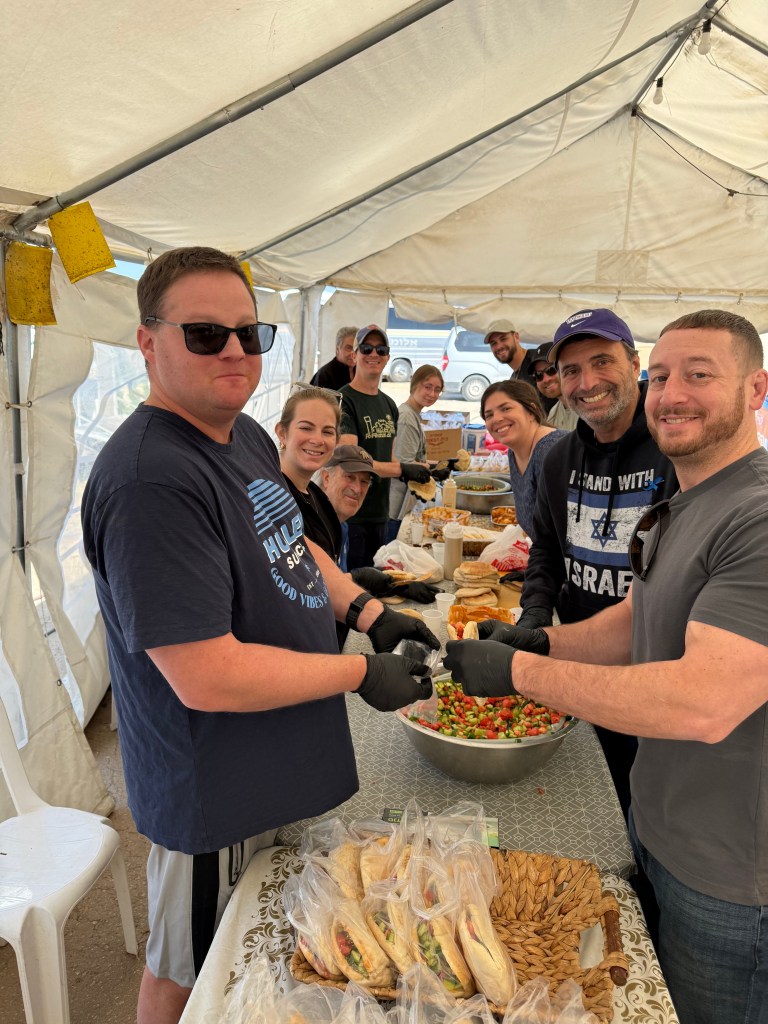
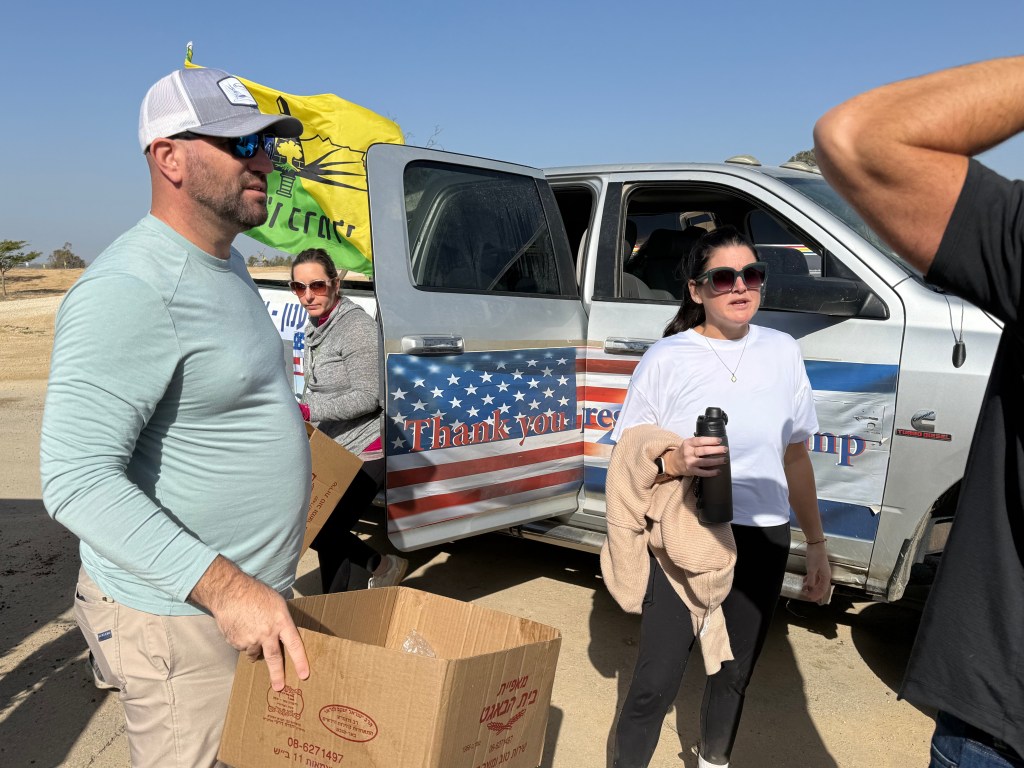
Shlomi showed up outside Kibbutz Be’eri on October 8, 2023 and began making sandwiches for the soliders. Every Sunday to Thursday since then, he shows up, makes sandwiches and gives them to soldiers on the border. Volunteers, like us, began coming to help him. He has paid for this out of his own pocket for more than two years. It costs about $5,000 a week to do this. You can do the math on how much of his own money he has spent over the past more than two years feeding soldiers. It’s a passion, a mission, and an obligation for him.

Going to the border was an unbelievable experience. We drove right along it, went into the area where the soldiers were working, offering them lunch. The smiles on their faces, the thank you’s that we received are priceless. I kept thanking them. It is them who are risking their lives, going into Gaza, keeping Israel and the world safe. All we did was make and deliver some sandwiches. We walked all through the area as they worked on their tanks, handing out lunch. We met soldier and soldier after soldier. Being right there on the border with Gaza and getting to make sandwiches and then feed the soldiers was an incredible experience. It’s not something I will ever forget.
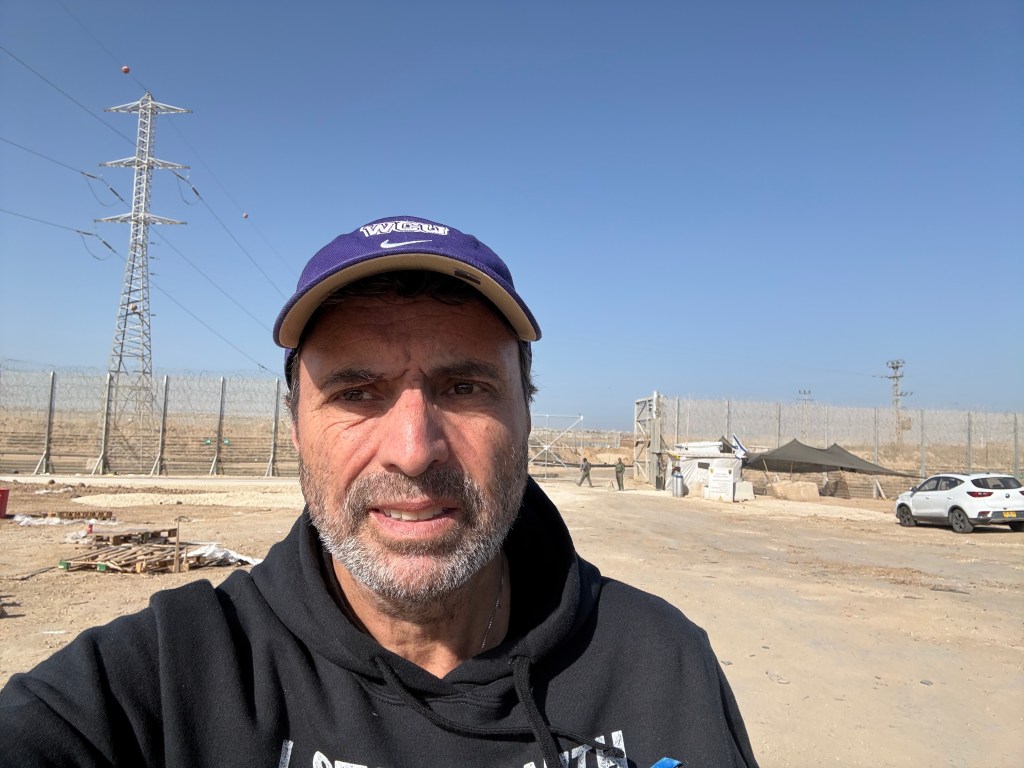
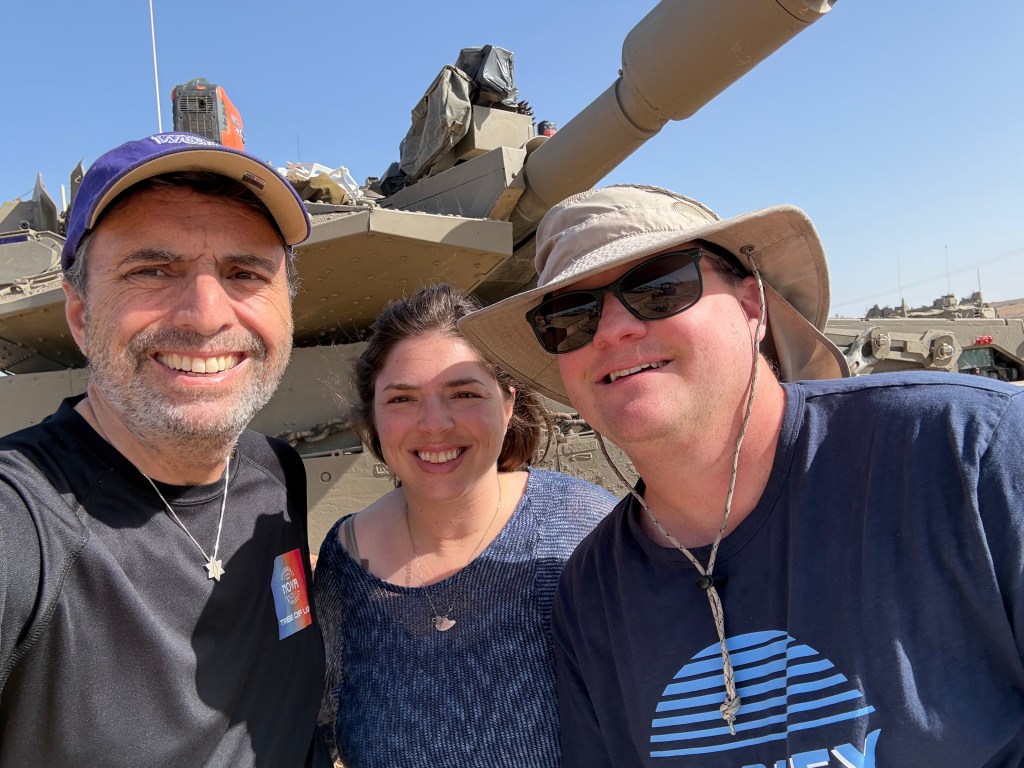
As we prepared to finish our work, we ran into a bunch of soldiers from the Carmeli unit, about to go into Gaza. Watching these brave soldiers load up into the truck, smiling, laughing, and prepared to do whatever it takes to keep Israel and the world safe, was incredibly powerful. I lifted a box of sandwiches to them in the truck so they could take them into Gaza and give them to soldiers who couldn’t come back across the border. This picture of them in the truck was possible because they all had their backs to the camera at that moment. The hate for Israel and Jews around the world means we can’t take pictures of their faces. The flag is their unit’s flag. It’s something I will always remember.

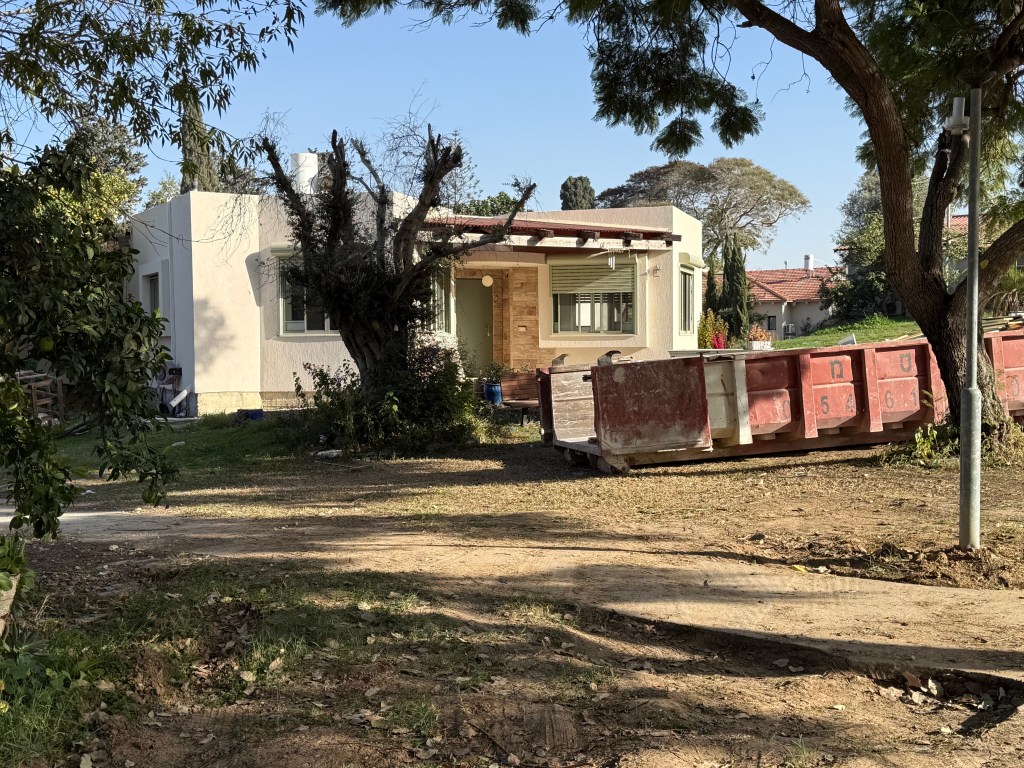
After lunch at Kibbutz Alumim, we headed to Kfar Aza. As I said, I’ve been there before. In May 2024, the devastation was incredible. The blatent brutality was in my face. By July 2024 they had begun to make some changes. This time the changes were incredible. The burned and shot up homes had been demolished and new construction was in place. Most of the kibbutz was no longer witness to the devastation of October 7th, it was a sign of life and the resilience of the Jewish people. This house is an example. In May and July of 2024 it was a symbol of the savagery of Hamas. In December 2025 it is a symbol of life, a beautiful new house in a beautiful area of the Kibbutz. As I looked at it, I could imagine myself living there. The dichotomy of my visits in 2024 and 2025 are symbolic of the Jewish people. We face many challenges and get repeatedly knocked down. But like the beautiful new house in 2025, we always get up. We look to the future with hope and with dreams. We won’t stay down, we won’t allow others to defeat us.
We met with Schacher, a resident of Kfar Aza. He told me his story and gave us the tour of Kfar Aza in July 2024. As we sat on the deck of his house, he told us what it was like on October 7th, hiding in his safe room as those around him were murdered and kidnapped. Why the terrorists didn’t come into his safe room we will never know. They came into his house, ate his food, and used his deck, the same deck and chairs we were sitting at, as their headquarters for the attack. It was surreal to be sitting in the same place that the terrorists were on October 7th.
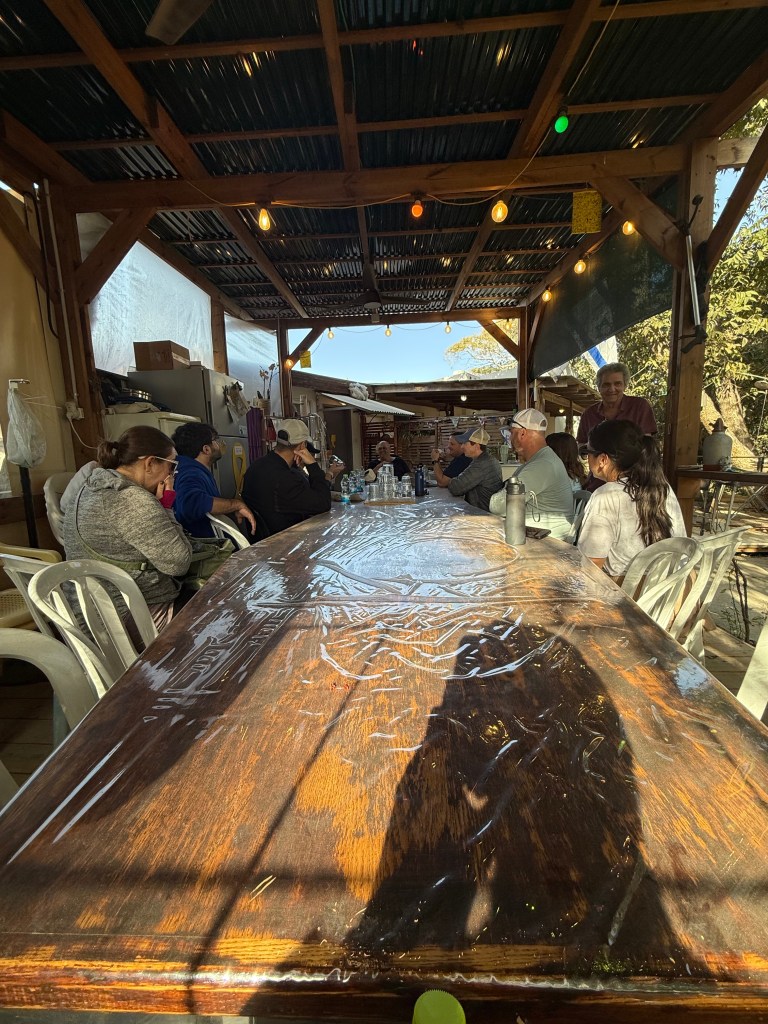
Schacher’s table and deck, where the terrorists sat and planned their attack on October 7th at Kfar Aza.

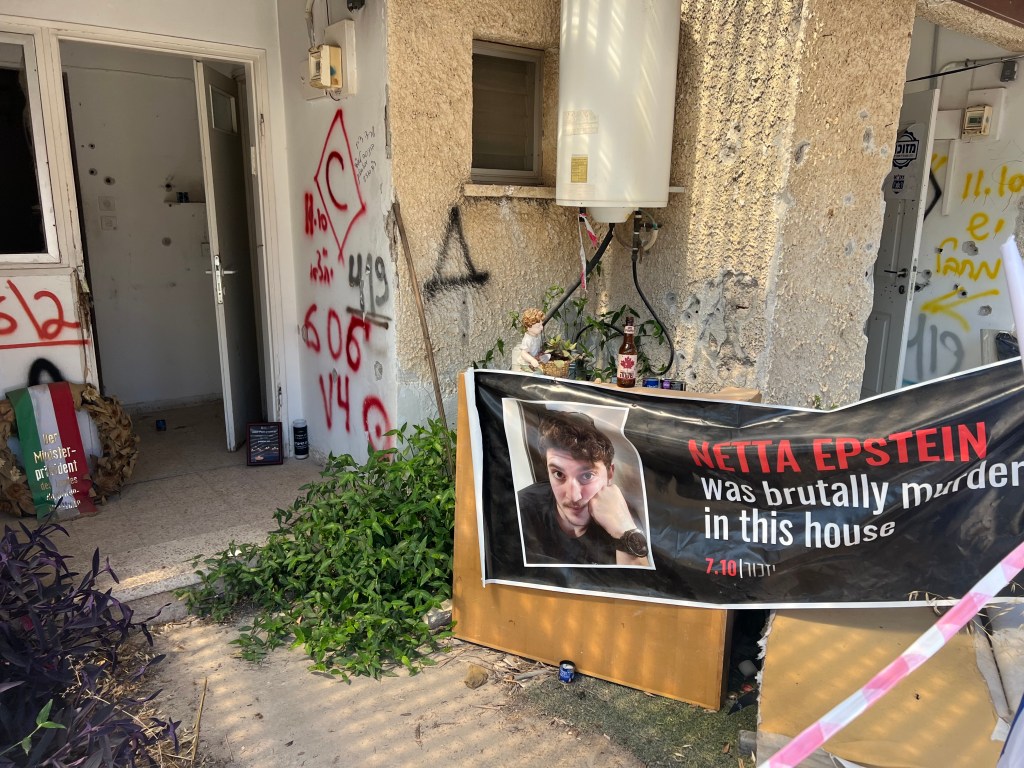
Schacher took us around Kfar Aza, showing us where terrorists murdered people, where they kidnapped people, and told us stories of those who died and those who survived. It was incredibly powerful to experience. It was also a bit surreal as the changes since my last visit in July 2024 were obvious. While people haven’t moved back en masse yet, it was still a place of life now, not of death. Until we got to the young people’s section of the kibbutz. This area was targeted by Hamas for kidnapping and murder. The devastation remained. There are two homes we can walk in, one because the family gave permission as they want people to see the brutality of Hamas and how their daughter was murdered, the other because it was empty on October 7th. I also saw the home of Netta Epstein. I met Netta’s mother in November 2025 and her story and how Netta died was powerful and painful. Netta and his fiance were at home when Hamas stormed Kfar Aza. Hamas began throwing grenades into their small home and Netta threw them out. Until he couldn’t get to one fast enough. He jumped on the grenade to save his fiance, sacrificing his life. She was taken hostage and ultimately released. When I look at his picture, I see somebdy like my kids, with a bright future ahead. Hamas stole that from Netta, from his family, and from the world.

I wasn’t as angry at Kfar Aza this time because it was clear life was returning. It is a good lesson for us all and perhaps the true secret of why the Jewish people have continued to survive for thousands of years. We focus on life, not on death. We can grieve those who were murdered but we can’t bring them back. What we can do is live fully in their memory. We can make sure that their being murdered for the crime of being Jewish doesn’t become meaningless.

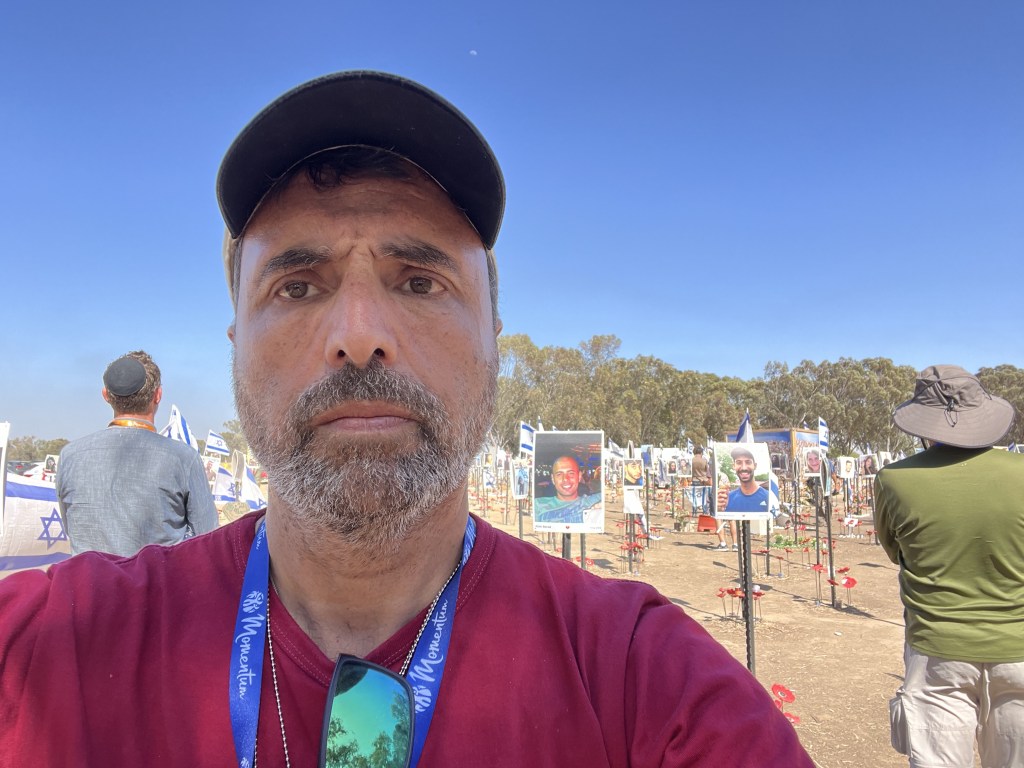
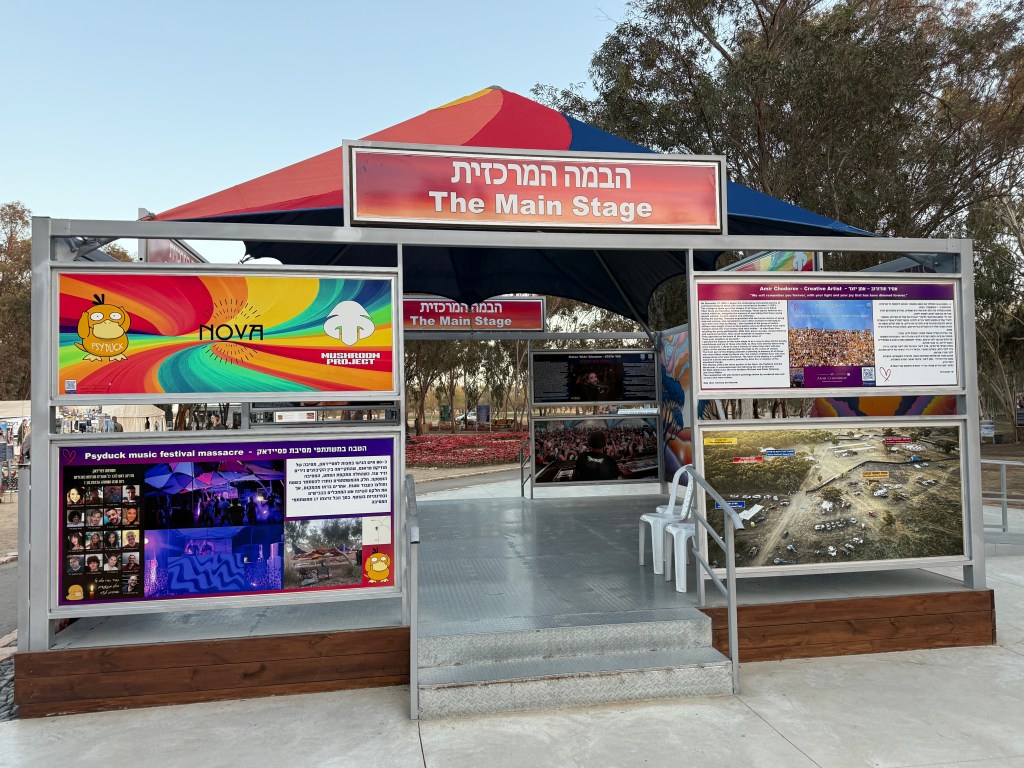
Our final stop in the south was the Nova festival site. I had heard from others how it had changed and been built up since my last visit but I wasn’t prepared for what I saw. Two new forests were built by Jewish National Fund (JNF) to honor those murdered there. There was a new area for the main stage and for the big yellow dumpsters. Seating areas had been built and real bathrooms now existed. The dirt road was replaced with paved road. Even the pictures in the field to memorialize the victims had been upgraded. It left me with conflicted feelings
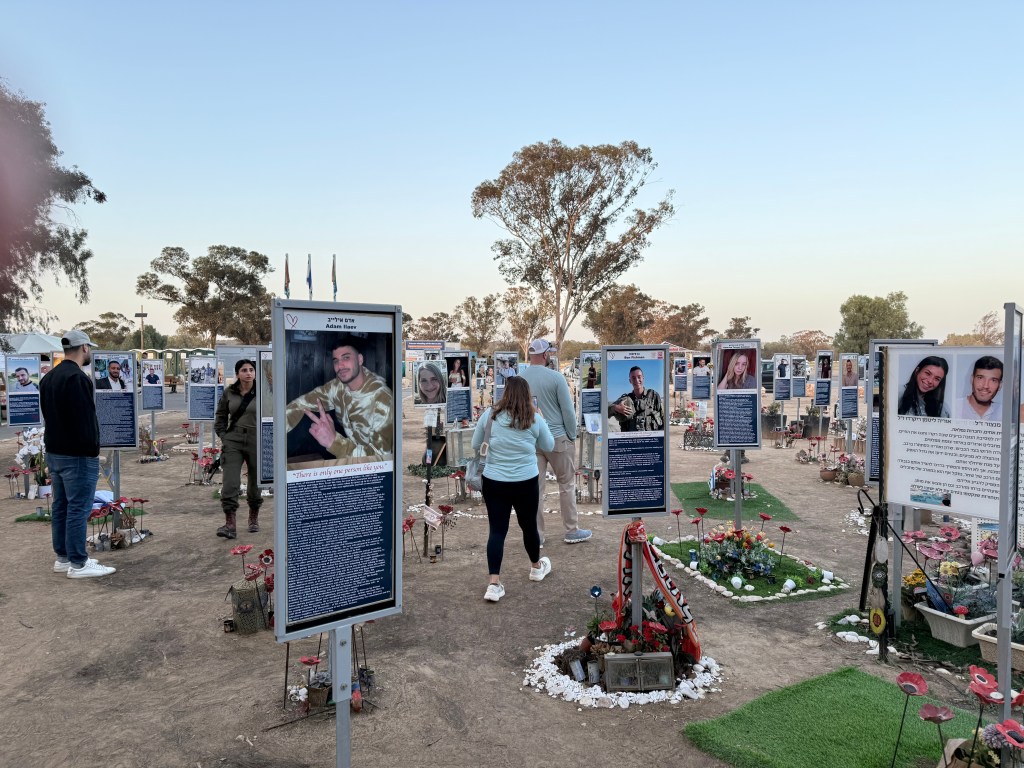
The updated and upgraded Nova memorial

Part of me appreciated the need to make this into a true memorial for the country. To add exhibits and make it look more professional. Yet another part of me really appreciated the simplicity and raw emotion that the earlier version offered. Change is difficult and for me, the impact of the first two times I visited the Nova site was strong. This is a different version of the site. Yet when I watched how it impacted those on the trip who had never been to Nova before, I saw them having the same experience I had my first time. Perhaps it really is just me and what I wanted to see rather than the impact that it had. I enjoyed the main stage exhibit and the big yellow dumpsters exhibit. They were new and really added something to the experience.
We finished out time at Nova by gathering in a circle and singing. All three times I have visited Nova, we have sung. As the memorial site to those brutally murdered at a music festival, I think it is important to bring music, even if just one song, to the visit. This time we gathered together and sang Hatikvah. Not only is it the Israeli National Anthem, it means “The Hope.” On a day that involved being on the border with Gaza, visiting Kibbutz Alumim, Kibbutz Kfar Aza, and the Nova Site, hope is essential and fitting. Yet after we finished singing, we discussed the lyrics.

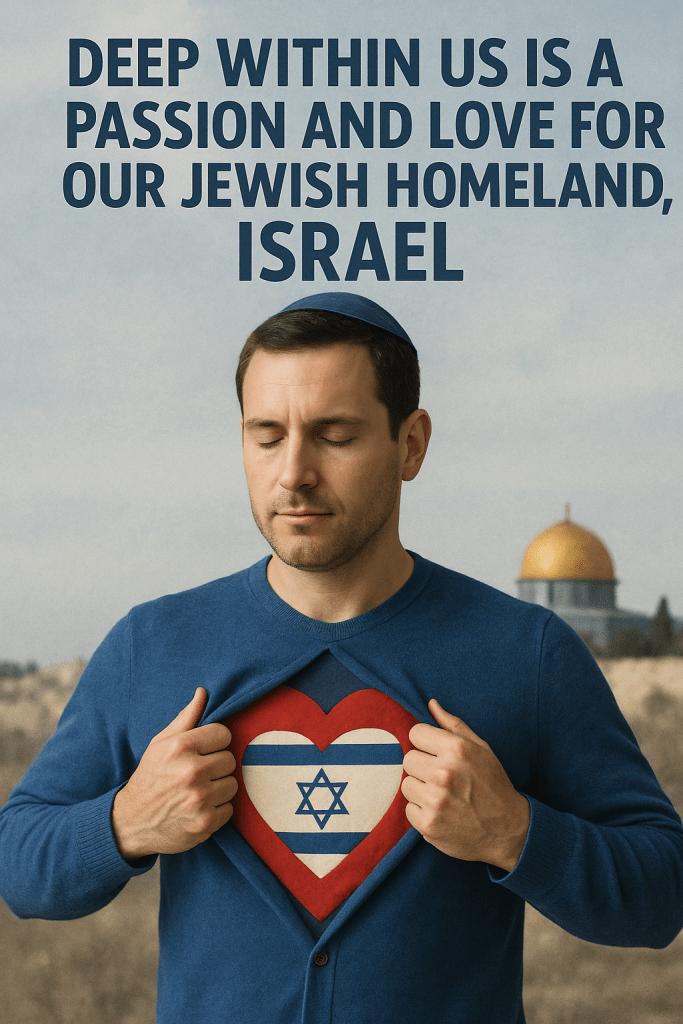
The song begins, “As long as the heart within the Jewish soul yearns, and towards the eastern edge, onward, and eye gazes to Zion.” The hope for the Jewish State of Israel in this song is not unconditional. In fact, it is very conditional. Our hearts must yearn towards Zion, towards Israel, in order to have a Jewish state. It has to be within us, a part of our being. That’s what makes Israel so special – the longing we have for her. The deep within us passion and love for our Jewish homeland. Without that passion and love, deep within our heart exists, so will Israel. I don’t know about you, but I know that I have that deep yearning of my soul, in my heart, for Israel, our Jewish homeland. I gaze towards Israel often, come visit whenever and as often as I can, and love being here. I hope that you do as well. It is a remarkable country on so many levels.
A love for life – we will survive

The world seems to get crazier and crazier. The stock market plummets and then returns. Tariffs are high and then are gone, delayed, or small. The only constant seems to be Jew hatred, lies, and the hostages being ignored by the UN, Red Cross, and the world.

May 15th is the day of Israel Independence on the secular calendar. 77 years ago, David Ben Gurion stood in Tel Aviv, in what is now Independence Hall, and declared Israel to be a State. Every time I stand in Independence Hall, look at the seats set up as they were that day, and listen to Ben Gurion’s voice declaring the State, I get chills.

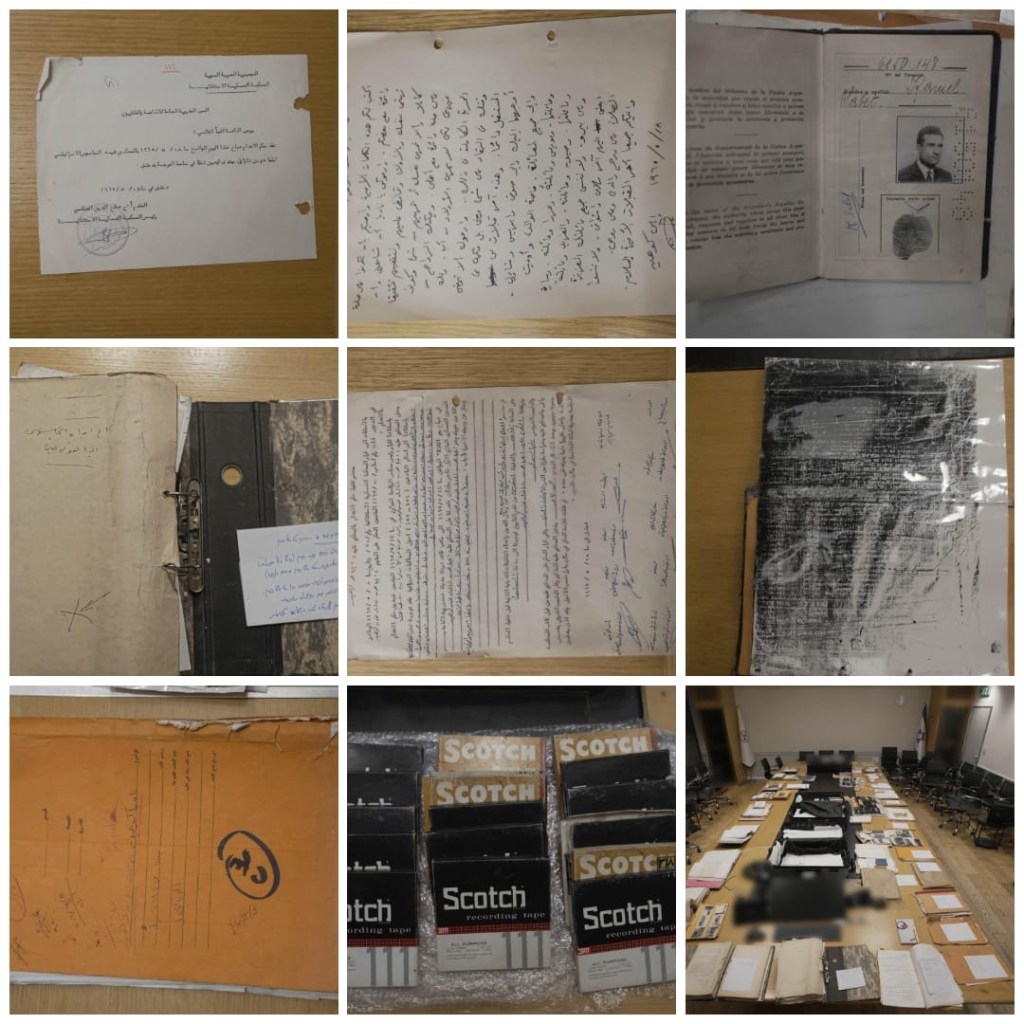
That declaration by Ben Gurion was a statement about the Jewish love of life. Of how we never forget. Of how we place life ahead of everything. This week, there were two examples of this. It was recently announced that Israel had recovered a number of documents and items from Syria that belonged to Eli Cohen. Captured as a spy by Syria and hung as punishment, Cohen is one of the great stories of Israel. I knew about what he did long before I knew his story. The actor Sasha Baron-Cohen played him brillantly in the Netflix mini-series, The Spy.

Top row, center: Cohen’s final will, handwritten in Arabic just hours before his death on May 18, 1965. Addressed to his wife Nadia and children, the letter is a heartfelt farewell filled with guidance, dignity, and emotional clarity.

Top row, right: A forged Argentine passport issued under the alias Kamel Amin Thaabet, the identity Cohen used to infiltrate the highest levels of the Syrian regime.

Middle row, right: The official death sentence, signed by Syrian military judges, condemning Cohen for espionage.

Bottom row, center: Scotch-brand audio tapes, used by Syrian intelligence to record Cohen’s interrogations and radio transmissions

While we have now retrieved more than 2,500 documents and artifacts related to Eli Cohen, we still don’t have his body back. Executed in 1965, 60 years ago, we have never forgotten him or the desire to get his body back.

This past week, the IDF and Mossad were able to recover and return the body of Sergeant First Class Tzvika Feldman. 43 years after he was killed in the Battle of Sultan Yacoub during the First Lebanon War. Syrian soldiers transferring his body to Syria until this past week when his body was returned to Israel. We love and treasure life. We don’t ever forget.

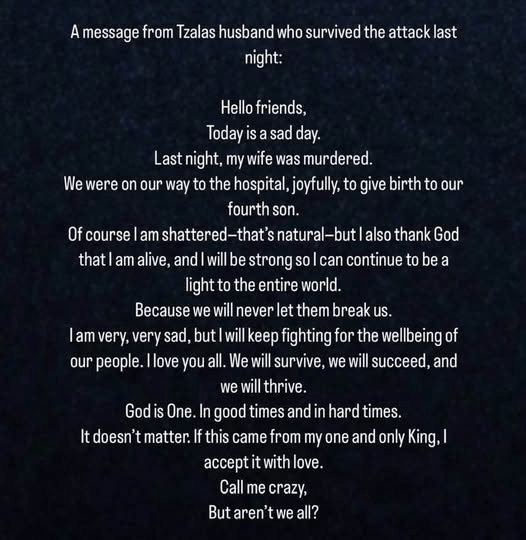
This week, Tzeela Gez and her husband Hananel, left their home in the northern West Bank community of Bruchin to head to the hospital so she could give birth to their fourth (4th) child. A terrorist shot at their car, wounding them both. A few hours later, after an emergency C-section to deliver their newborn son, Tzeela died.

The media barely covered this brutal attack. They don’t cover the violence against Israelis in the West Bank. They don’t cover the rockets that are launched at the citizens of Israel. They don’t address or condemn the ballistic missiles fired by the Houthis from Yemen targeting civilians. It is up to us to remember, to never forget. It is up to us to ensure that the souls of Eli Cohen, Tzvika Feldman, and Tzeela Gez are never forgotten. It is up to us to ensure that future Hersh, Carmel, Alex, Eden, Or, and Almog’s know who they are named for and what their obligation is to honor those they are named for.

The message below from Tzeel’s husband Hananel is the essence of Judaism. We have never and will never let them break us. We will fight for our people no matter how sad or downhearted we are. We will survive, succeed, and thrive under any and all circumstances.

Our effort to survive, succeed, and thrive means that we fight for truth. Even when it is inconvenient. Even when it is difficult. Even when the world doesn’t want to see, hear, or recognize it when it’s right in front of their face.

A friend of mine shared this piece about the history of the term Nakba that was written by Adam Louis Klein. It is a fascinating history that shows the power of the media and of repeating a lie long enough and loud enough that people think it is the truth

The term Nakba, now central to Palestinian national memory, was coined by Constantin Zureiq, a Christian Arab nationalist and key figure in shaping modern Arab nationalist ideology. As detailed in a recent article in Fathom Journal by David Szeftel, Zureiq was part of an intellectual movement in the 1930s and 40s that openly admired fascist and even Nazi models of anti-Western power, seeing them as templates for Arab revival.

When he introduced Nakba in his 1948 book Ma’na al-Nakba (The Meaning of the Disaster), it did not refer to Palestinian suffering or displacement. It referred to the Arab League’s failure to destroy the newly declared State of Israel and the humiliation of Arab armies. It was a political lament over defeat, not a humanitarian reflection on refugees.

Only later was it linked to the “right of return” for Palestinian refugees, a policy heavily promoted by the Arab League and eventually formalized through the United Nations. But this “right of return” wasn’t about refugee welfare—it became a political tool designed to prevent Israel from continuing to exist as a Jewish state by flooding it demographically.

This strategy also led to the unprecedented perpetuation of refugee status across multiple generations (see Einat Wilf’s work on this). Unlike any other refugee situation in history, Palestinians were deliberately kept in a state of statelessness by Arab regimes, denied full citizenship rights even in places like Egypt and Jordan, which directly controlled Gaza and the West Bank after 1948. In effect, the Arab League actively denied Palestinians the right to rebuild their lives in order to weaponize their suffering and make Israel appear impermanent and illegitimate.

Over time, the meaning of the Nakba shifted. It became less about the Arab world’s military failure and more about constructing a permanent Palestinian grievance narrative. The historical record was rewritten to erase the Arab invasion and rejection of the UN’s two-state partition plan, portraying the events of 1948 instead as unprovoked Israeli aggression. This narrative also conveniently erased Jordan’s displacement of Jewish communities from the West Bank, the appropriation of their land and property, and suppressed the mass dispossession of Jewish communities across Iran and Arab countries after 1948.

Eventually, the displacement of Palestinians was rebranded as a case of “ethnic cleansing” and “settler colonialism,” rather than what it historically was: the tragic outcome of a war of independence triggered by the Arab world’s invasion of the newly declared Jewish state—though it’s important to acknowledge that some forced expulsions of Palestinians did occur amidst that war.

In short, Nakba has evolved from a term describing the Arab world’s military failure to a political myth that erases historical complexity in favor of a one-sided narrative of perpetual grievance.” 

I’ve been the Aida ‘refugee camp’ in Bethlehem. It is a city. They live in apartments, not tents. They have schools and community centers. Their schools and community centers teach them hate. In 2019, I met with and talked to the head of their community center. He bragged about the suicide bomber that he helped raise and create. Openly. Publicly. The world loves their Jew hatred and they will continue to use whatever and whoever they can in their effort to eliminate us. From the Assyrians to the Babylonians to the Persian to the Greeks to the Romans to the Byzantine empire to the Spanish Inquisition to the pogroms in Russia to the Nazis in the 1930s and 40s, to today, whatever it takes to attack us is free reign.

The difference is that today we fight back. Today we don’t cower in fear. We don’t allow others to determine our fate. The world can hate us and we will still fight. The world can lie about us and we will still fight. Survival isn’t an option and we won’t allow survival to be under the control of anybody else. Today we have the IDF. Today we have Israel. Today we won’t stay silent and we will fight back.

Am Yisrael Chai.

Hope inspired in the barbershop

I went to get my hair cut and beard trimmed yesterday. I’ve gone to the same barbershop since we moved to Central Florida. It is a true, old school barbershop. What makes it a little unique is that it is a Latin barbershop. Most of the people working there do not speak much English. The owner, Gomez, does and he usually cuts my hair now. My previously guy, who was great, didn’t speak English so we communicated with pictures and hand guestures, unfortunately left.

It is a barbershop with an interesting history. When we began going there in 2016, it was in a different location than it is now. A year or so into going there, there was a major gang shooting there leaving one barber dead and a few injured. It closed for a few months and then reopened. I never thought of going anywhere else. Maybe that says more about me in many ways than anything else. I wasn’t going to be afraid and I wanted to continue supporting this small business where I had become friendly with the owner. They added a buzzer to be let in, tinted the windows, and business went on as usual. A few years later, the land was sold and they had to move. The new location is a little further away, in a little sketchier area, but once again, I wasn’t going to stop supporting the business.

When I went yesterday, the only person working was a young barber that I had never met before. He didn’t speak English so I showed him a picture of what I wanted and we managed to figure things out. He cut my hair and we didn’t talk because of the language barrier. As we got near the end of the haircut, he took out the straight razor to get the close shave and make things look good. A man I don’t know, where we have a language barrier, has a razor to my neck, and I’m laying back with my eyes closed. I began to think about what it would take for an Israeli Jew to get into a barber chair and let a Palestinian Arab not just give them a haircut with sharp scissors but then take a straight razor to their neck. It was something that I no longer could imagine. Prior to October 7th, I could imagine places in Israel where relationships between Jews and Arabs are good where this could happen. Today, I can’t fathom it.

The buzzer rang and two teenage latin boys came into the barbershop. The conversation was all in Spanish. I had no idea what they were saying and the barber had the straight razor on my neck. I tried to imagine two Arab teens coming into an Arab barbershop, speaking to the Arab barber in Arabic, with a Jewish Israeli who doesn’t speak Arabic in the chair, a straight razor on their neck. Again, it was incomprehensible. How can something be so absolutely incomprehensible in one place that is so easily done in another? What is the difference that makes that happen? How do we change the reality?

It comes down to hate. The terrorists hate the Jews. They want them all dead. They hate the Christians, Druze, and even the Arabs who work with the Jews. There is no compromise. There is no opportunity for commonality. When there isn’t hate, there is opportunity. I saw it myself in 2019 when I spent 4 days meeting with leaders of Palestinian civil society. Those who lived in hate gave me no hope, made me angry and frustrated. Those who chose not to live in hate gave me lots of hope and made me want to do better. When I was in Israel in May, I walked from Ben Yehuda Street through East Jerusalem to the American Colony Hotel. I walked through Arab neighborhoods, past Arab schools getting out for the day, passed by Arabs on the street. I met my friend who owns the bookstore at the American Colony Hotel and we spent 90 minutes talking about October 7th, the hope for peace, if the 2 state solution was dead, Hamas, hostages, and much more. It was a thoughtful and insightful conversation. I didn’t agree with everything he said and he didn’t agree with everything I said, but we had a great dialogue. It gave me hope. In September while doing work with Dror Israel, a client of mine, we went to visit their youth movement, Hanoar Haoved, in Ein Mahil, an Arab village. This is an Israeli, Zionistic Youth Movement that is in EVERY Druze Village in Israel along with 55 ARAB VILLAGES with over 20,000 Arab children involved. The Mayor of Ein Mahil came to speak with us because he enrolled his daughters in Hanoar Haoved. We spoke to leaders of the movement in their 20s, 30s, and 40s, Arabs who grew up in the movement and have dedicated their lives to it. We met with children in the youth movement and it was beautiful. Throughout the time at Ein Mahil and ever since, this has given me hope.

In Ein Mahel with the leaders and children of Hanoar Haoved.

Israel is a different place today than it was on October 6, 2023. The hostages remain front and center in our hearts and minds. The IDF soldiers, risking their lives every day, are in my thoughts. My friends who are serving or who’s children are serving in the IDF, the families dealing with the challenges of having their mother and/or father away for long stretches of time due to milium (reserve duty). One of the people I met in September was from Kibbutz Nir Oz. He lost his mother and father on October 7th although he didn’t know his father was murdered for a few weeks and didn’t know his mother was murdered until July 2024 when they found her body in Gaza. I thought of him today as hostages Arbel Yehoud and Gadi Mozes were released from Gaza. Both are from Kibbutz Nir Oz, a small kibbutz of 380 people on October 7th. I can’t imagine the way he is feeling, watching them come home. I can’t imagine the emotions he has thinking of his parents, who were murdered after being taken hostage, and his friends and neighbors, who were also taken, finally coming home after 482 days of captivity.

The Unites States and the world are different since October 7th as well. Antisemitism is on the rise and we see violence against Jews and Jewish organizations and buildings. It is often times hard to find hope. It often feels that where we are and where we are heading is hopeless. We cannot allow that to be our reality. Without hope we are lost. I think of two different quotes about hope from two remarkable people. Anne Frank wrote, “I don’t think of all the misery, but of the beauty that remains”The Reverend Dr. Martin Luther King Jr. said, “We must accept finite disappointment, but never lose infinite hope”.  In these challenging times, I think of their words and of my 4 days in 2019, my meeting with my friend in May in East Jerusalem, and the visit to Ein Mahil in September to give me hope for a better future. I refuse to be lost so I will continue to find hope.

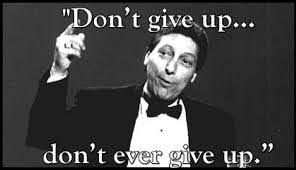
Don’t Give Up, Don’t Ever Give up.

I was talking to my friend Tal in Israel the other day. Tal is a Lieutenant Colonel (Res.) in the IDF and we hav been discussing a project together. He told me that we’d have to wait a few weeks to continue our conversation because he had been called back for milium (reserve duty) once again and had to report the next day. He then sighed and told me how tired he was of this. It’s been a year already and his life has been turned upside down. He then said something remarkable. He told me that he’d continuing showing up because “we have to win”. Having been to Israel in May, July, and September, I understood both the fatigue and the desire to keep showing up because there is no alternative to winning this war. It’s an existential war. Iran, through their proxies Hamas, Hezbollah, and the Houthis, won’t stop until Israel is eliminated. Until the Jews are eliminated. It’s easy to sit in the United States and criticize Israel for doing what they have to do to survive. Go to Israel and see the devastation from October 7th in the kibbutzim on the Gaza border. Kfar Aza, Nir Oz, Be’eri. Visit the site of the Nova music festival and listen to survivors and those who rescued people from the terrorists. Listen to the story of Rami Davidian, a farmer who saved 750 people on October 7th from the terrorists and the horrors he saw on October 8th when he returned to the Nova site to clean up and provide dignity to the people who had been murdered.

Israel and the survival of the Jewish people are miracles. There is no other way to describe how we have lasted for thousands of years, outliving every other society throughout history. How more than 3,000 years after we first entered the land of Israel, we are living there today. In May and July it was driven home to me multiple times how if 2,000 years ago, as the Romans were taking the Jews into slavery, the Temple was in flames, Jerusalem destroyed, you had told our ancestors that we’d be back here, in our homeland, in 2,000 years, they would have laughed at the concept. Yet here we are.

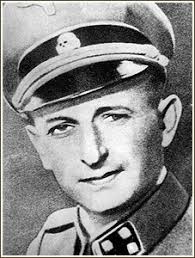
The Holocaust was an effort to send us to the history books. Hitler’s goal was to create a museum of the Jewish people that people could visit to see who we were because we no longer existed. I read a story told by Rabbi Yitz Greenberg to Rabbi Daniel Gordis about Adolf Eichmann, who had disappeared, running away in 1946, to Argentina. He was hiding with Ferenc Szálasi, the facist leader of Hungary who was his partner in wiping out Hungarian Jewry.

Szalasi said in his last conversation with Eichmann, “you know, if they catch us, they will put us to death. We committed this incredible crime.” So, Eichmann says to him, “if they catch me and they execute me, I will leap into my grave laughing. Why? Because he said, I didn’t kill every last Jew, but they’ll never recover. It hit such a destructive blow to the heartland of Jewry, the Eastern European Jewry was the biological heartland. They’ll never recover. I feel I succeeded even if I didn’t get all the way.” Yet the Jewish people did recover. The biological heartland was not, has never been, and never will be Eastern Europe. It has been and will always be the land of Israel.

The reason we have outlasted ancient Egypt and the Pharoahs, the Philistines, the Assyrians, the Babylonians, the Persians, the Greeks, the Romans, the Byzantine empire, the Crusaders, the Spanish Empire, the Nazis and the Soviet Union is because even when we are tired; no make that especially when we are tired, we do not give up. We have never given up. This is why we will outlast Hamas, Hezbollah, the Houthis, and the Iranian regime. We value life too much. We value the future too much.

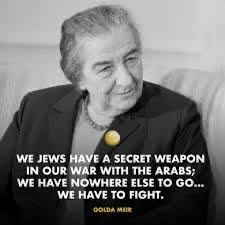
I am tired. I’ve been consumed since October 7th with doing my part, whatever that may be, to fight. Putting on a rally the day after October 7th. Going to be with 300,000 people on the National Mall in Washington, DC to join together in support of the Jewish people and Israel. Writing this blog for over a year, often times multiple times a week. Going to Israel in May, July, and September. Volunteering in Israel cleaning lemon trees, picking apples, making tzizit for the IDF, making sandwiches for those in need, making care packages for IDF soldiers, bringing supplies to IDF units with me in my luggage, getting my new tattoos, wearing my dogtags, my Jewish star, my yellow ribbon pin for the hostages, helping Israeli NGOs to serve the people in need, and working to help the Israeli economy any way that I can. It’s not serving in the IDF but it’s doing my part. Just like Tal, I’m tired of this. And just like Tal, I won’t give up either. Because we have to win. We have no other choice. Golda Meir put it best.

So fight we do. We fight the antisemites. We fight on college campuses. Columbia, Penn, Harvard, MIT, Princeton, UC Berkely, Stanford, USLA, CUNY and Rutgers are a few of the major hotstpots where Jews are targeted. We fight against politicians like Ilhan Omar, Rashida Tlaib, AOC, and Summer Lee along with ensure that people like Cori Bush and Jamaal Bowman lose their Congressional seats and can’t spew their hatred. We fight against corrupt, Jew hating organizations like the United Nations, UNRWA, UNIFIL, UNICEF, and Amnesty International. We call out leaders like UN Secretary General António Guterres and UN Special Rapporteur on the occupied Palestinian territories Francesca Albanese who tell lies about Israel and feed antisemitism. We don’t allow celebrities with a public forum like Susan Sarandan, Mark Ruffalo, John Cusack, Bella Hadid, Dua Lipa, John Oliver, Cynthia Nixon, Rachel Zegler, or adult film star Mia Khalifa to spread lies to those who listen to them only because of their celebrity status, not because they know anything.

One of my favorite speeches of all time is by Jim Valvano when he won the Arthur Ashe Courage Award at the first ESPY awards. In it, he makes the famous quote, “Don’t give up, don’t ever give up.” That’s the motto of the Jewish people.

So even though we are tired, even though Israelis are tired, even though the IDF soldiers and reservists are tired, even though Israeli families are tired, we won’t stop fighting. We won’t give up. And because of that motto, the people of Israel live. Am Yisrael Chai

The ultimate price

I recently saw a video clip from the first season of the West Wing about the virtue of a proportional response. It struck me deeply as I feel as frustrated about Iran attacking Israel and the definition of ‘proportional response’ being used by the West as President Bartlett is in the clip about Syria. Since Iran fired nearly 500 ballistic missiles at Israel, does that mean Israel should shoot 500 ballistic missiles at Iran? Would taking out their oil refineries or nuclear facilities be considered proportional to 500 ballistic missiles? It also inspired me to go back and rewatch the show for the umpteenth time as it inspires me and we live in a time with such great need for inspiration.

One of the great things about the West Wing is that the characters are strong, the issues still relevant, and the challenges are real. I don’t always agree with President Bartlett, Leo McGary, Josh, Toby, CJ, or Sam, but I enjoy the challenges they face and the way they think through things. I find myself wishing for the moral clarity of President Bartlett, even during struggles. I wish for the outrage of Toby Ziegler in his quest to be moral and just. I enjoy the struggles of Josh Lyman as he tries to do the right thing but often struggles with the question of, “do the ends justify the means?”

In Season 1, episode 10, Toby Ziegler is called out to the scene of a death because his card was found in the pocket of the coat the homeless man who died was wearing. Toby realizes it was a coat he gave to Goodwill and then realizes that the homeless man who died was a Marine veteran from Korea. He is offended and humbled by the way this veteran is being treated. It took 90 minutes for them to remove his body. He wasn’t going to be honored with a military funeral despite getting awarded a Purple Heart. He intervenes, uses President Bartlett’s name, and arranges for a funeral at Arlington National Cemetary with full military honors for this veteran.

At the same time, the episode explores Mrs. Landingham’s backstory. Her twin sons were in medical school when they were drafted to Viet Nam. They could have gotten an exemption because of medical school but chose not to. She shared with Charlie that she and her husband begged them get the exemption but they refused, wanting to serve their country as they felt is was their obligation. Both of her sons were killed in battle, paying the ultimate price for our freedom.

Toby speaks with President Bartlett about using his name to arrange the funeral. When President Bartlett makes the comment that every homeless veteran would now come ask for special treatment, Toby replies, “I hope so.” That struck me deeply. I never served in the military. After the movie Top Gun, I wanted to join the air force to fly jets but when I found out my vision disqualified me, I lost interest. It’s a decision I have often wondered about, sometimes with deep regret. I have friends that made Aliyah to serve in the IDF and have often wondered why I never considered that. I have always had a soft spot in my heart for veterans. They put their lives at risk for our freedom. They are willing to make the ultimate sacrifice for the rest of us. I feel a deep debt to all of them and it has always bothered me that we have homeless veterans. We owe them everything and don’t adquately repay them. Toby’s comments are how I feel.

When Toby leaves for the funeral, Mrs. Landingham tells him she wants to join him and go to the funeral. My heart ached for her and tears filled my eyes. There are so many families that have lost members due to their military service that are not aware of. They live with the pain daily. It brought me to today and the war between Israel, Hamas, Hezbollah, and ultimately Iran.

I have many friends who have children serving in the IDF. I have many friends who have served in the IDF and are now serving once again as they have been called up for reserves. Many have been recalled multiple times, putting their lives on hold for months at a time, risking their lives. One of my friends was a commander in Gaza for the first four months of the war. I spent time with him right after he left Gaza and the impact on him was palpable. I could see it in his eyes. I could hear it in his voice. He told me that on the plane from Israel to the US it was the first time he had quiet in four months and he finally began to process what he had experienced and seen. He spoke very briefly about how many times he was almost killed. It was hard to see and hear.

Every time they announce IDF casualties, I am very hesitant to click on the link to see who the person is that was killed, afraid it will be one of my friends or one of my friends’ children. I have been lucky so far that none of the names are people that I know. Yet each and every one is family. Each and every one is a terrible loss. I make sure to read each name slowly, their age, their hometown, and anything about them that is shared. I feel an obligation to them and their families to know about their loved one who paid the ultimate price to ensure the future and safety of the Jewish people.

When I was in Israel in July, we went to visit the grave of one of the participant’s friends in Modi’in. He was a medic who was leaving Gaza in a car with other medics when a rocket fired by Hamas his their car, killing them all. He was just like Mrs. Landingham’s sons in The West Wing. As we stood by his grave, hearing stories about him, my heart broke. I looked around that section of the cemetary and saw all the graves of these young people who gave their lives to protect Israel and the Jewish people. That section was just for those killed since October 7th. There were far too many graves. I walked through, documenting them all on video, because owe it to them and their families to remember them.

Walter Hitchcock, a retired U.S. Air Force Colonel from the New Mexico Military Institute, is credited with the saying, “Freedom is not free.” It is one of the most accurate quotes I have ever seen. We, as Americans and as Jews owe a debt to those who keep us free. The US military. The IDF. It is a debt we can never repay and a debt that as Americans, we barely pay the interest on. We must do better.

During my last conversation with my friend who was the commander in Gaza, he casually commented that he had “just landed in NY and two days ago I left Rafa.” He said it as if he was reporting that he just came back from the grocery store. During my May trip to Israel, he left our group because he had to back into Gaza that night. We had plans to spend more time together that trip but he spent the rest of the time I was there in Gaza. I have had business meetings postponed because they were called up for “melowim”, Hebrew for reserve duty.

These are warriors. These are heroes. They fight to keep us safe. They fight for our values and for our way of life. Many of them are 18 or 19 years old. They risk their lives for us. Let’s make sure we never hide our gratitude for their service or their sacrifice.

IDF lone soldiers from France. These are the faces of the young people who defend the Jewish people. Look at those behind them and notice how young they are.

Am Yisrael Chai. God bless America. May those serving in the IDF and the US military be kept safe in performing their sacred duty.


Thoughts from my July 2024 Israel trip

I returned from Israel about a week ago.  It was my second trip this summer and very meaningful on many levels.  I love going to Israel and being in Israel.  Everybody in my family knows how much I enjoy being there, how meaningful it is to me, and I’m sure there are some who expect that one day I will make Aliyah and live there.
This trip was highlighted by a few things that I think are very important, not just because they mean so much to me but because they highlight a bigger picture of Israel and the meaning to the Jewish people.

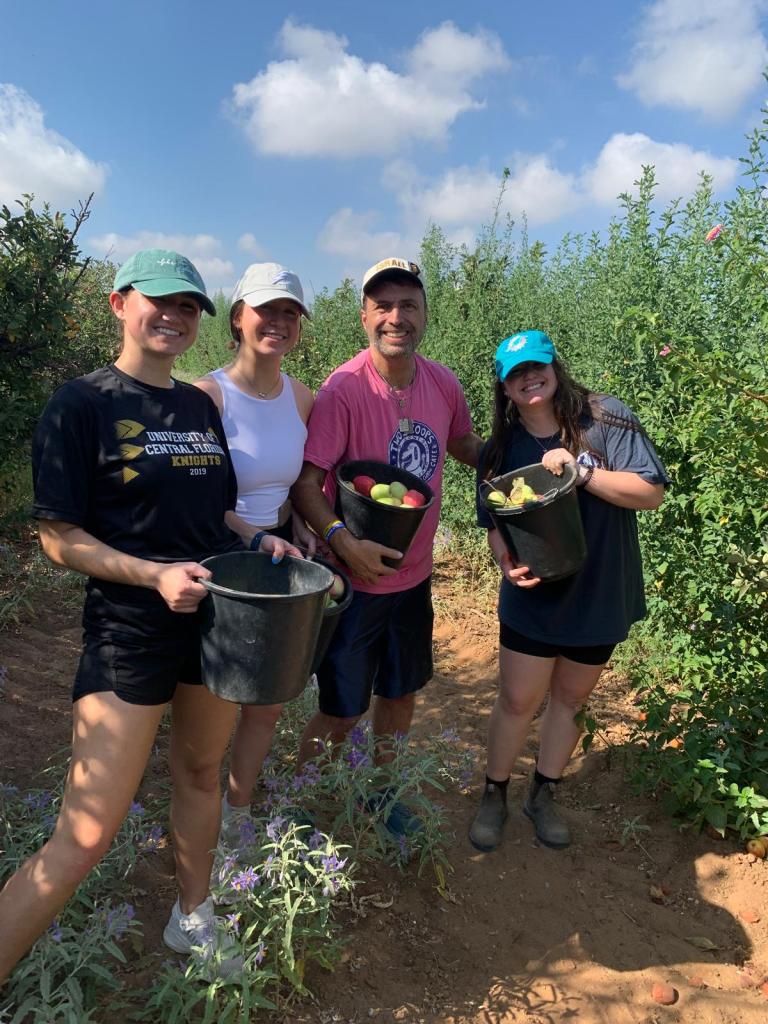
We got off the plane and after changing, the first thing we did was go to work the land.  There is something about Israel and working the land that is incredibly gratifying.  We went to pick apples that will be given to those in need.  It was a hot morning, and we had our water and hats and off we went.  There were two huge bins to fill that looked daunting when we began.  Yet working the land in Israel meant that we worked hard.  Very quickly the first bin was halfway full.  We talked, we laughed, and we picked apples.  Halfway through filling both bins, we took a break to eat some fresh watermelon.  By fresh, I mean it was picked just to cut up for us. 

Israel was founded by working the land.  “Making the desert bloom” remains a key goal and catchphrase.  There is something about getting your hands dirty in Israel by picking fruits and vegetables that is incredibly rewarding and meaningful.  It ties you to the founders of the State of Israel.  It ties you to 3500 years of Jewish history in the land of Israel.  I’ve been to farms in the Negev where they are growing fruit and vegetables in the sand and picked them.  I’ve helped with lemon trees in the Gaza envelope.  I’ve been to a friend’s Moshav near Gaza growing all sorts of fruits, vegetables, and nuts.  Now I have picked apples.  It’s incredibly rewarding, and I can’t wait to do it again.  I learned about Israel Food Rescue, an opportunity to volunteer picking fruit and vegetables in Israel to help harvest the food needed since the loss of so many Thai workers and Palestinian workers since October 7.  Israel gives you an opportunity to really give back, not just with money or time, but with your hands and sweat equity. 

I had the opportunity of this trip to meet and do some work with incredible leaders of Israeli civil society.  I went to the Knesset to meet with MK Sharron Haskel, an amazing leader who represents a new generation of Israeli leaders.  As we reach a crossroads in Israel with leadership, she is part of a new generation that will shape the future.  I met with former Deputy Mayor of Jerusalem, Fleur Hassan-Nahoum, who I met a number of years ago and is a friend.  Fleur is also part of this new generation of Israeli leaders who will change the shape of the country.  Fleur spoke to our group and captivated them with her brilliance.  Her analysis of the possibility of a 2-state solution, a 1-state solution, and other options for peace was fascinating.  She recently debated former Ambassador Dennis Ross on the topic and I can’t wait to watch it when it is released on August 2nd.  I met with Brigadier General (ret) Amir Avivi and my friend Lt. Col. (ret) Yaron Buskila about the future of leadership in the IDF and the Jewish world.  They are doing some exciting work and I have the opportunity to be a part of it and learn from them.  I met with Lt. Col. Rabbi Yedida Atlas who oversees the religious aspect of the IDF.  He gave me a pair of the IDF’s tzitzit (ritual garments worn under your shirt) that since October 7, IDF soldiers, regardless of their religion, want to wear for spiritual protection.  Later that day, I had the chance to help make tzitzit for the IDF which was incredibly meaningful.  I am working with him to get enough mezuzahs for the IDF due to the war and all the reserve call-ups.  I was on a zoom call with my friend Roni Ekele, the Director General of the Ethiopian National Project (ENP) and childhood friend, Grace Rodnitzki, the Director of International Relations for ENP.  ENP provides critical services for the Ethiopian Israeli youth to ensure their success in Israeli society. 

With Member of the Knesset Sharron Haskel
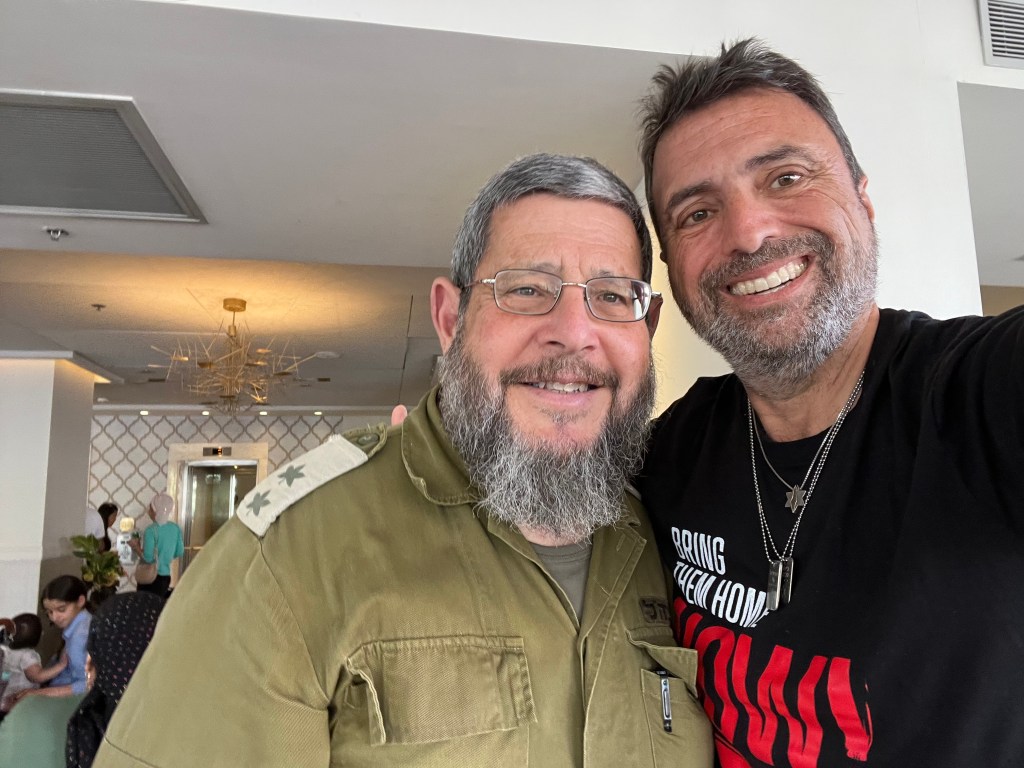
Lt. Col. Rabbi Atlas and me
With my friend Lt. Col. Yaron Buskila
With my friends Fleur Hassan Nahoum, Lisa Barkan and Rabbi Randy Brown

In Israel, you have the ability to meet, befriend, and work with incredible leaders.  They are accessible.  They are friendly.  They are passionate.  I have great hope for the future of Israel because of these leaders – the future leaders of the country.  In America, we are very concerned about the future of our leadership.  We wonder where the quality leaders are and where they will come from.  In Israel, we see them emerging in all aspects of society. 

This was a leadership trip for 19-26 year olds. We had a very diverse group on the trip. Some graduated Jewish Day School. Some were entirely secular. Some knew nothing. Throughout the trip, we learned something with everything we did. The Torah study was interesting as we explored the ‘why’ of the first verses in the Torah. Not the story but what the lesson is behind the story. The things that affect us today. Services were not about the ritual of the service but the meaning of the prayers. Not just what we say, but why we say it. We sang, “L’dor V’dor”, from strength to strenth, throughout the trip, reminding us of our place in Jewish continuity. We sang Acheynu ,the prayer to free captives, for the hostages. As we stood under the Kotel, on original flooring from over 2,000 years ago, we sang it, one of the more powerful experiences I have had in Israel. At our last dinner of the trip, everybody had a chance to share their feelings about the trip and the experience. It was powerful listening to what everybody got out of it. I’m excited to see what this group of leaders is going to do. Just like the future of Israel is bright with their future leaders, I believe that American Jewry can also have a bright future with these type of leaders. It takes effort. It takes work. It’s not easy to find them, recruit them, train them, and pay for all of it. But we must. I have seen the impact of this trip for the past 26 years. I have seen what engaging the future of Jewish life in a meaningful way means and does. It is something I am committed to and I look forward to sharing some exciting plans for 2025 in this area. This trip, seeing what happened for these future leaders, has inspired me to do more. So pay attention, something very exciting is coming in the very near future in regards to young leadership!!

Singing Acheynu for the hostages while standing on a 2,000+ year old original floor under the Kotel
Our group of future leaders after making sandwiches for those in need. The future is bright!!

Israel is a special place. If you haven’t been to Israel, I can’t really explain to you what it’s like. If you have been, I don’t have to. There is something in the air. Walking the streets of Jerusalem is unlike anywhere else in the world. Floating in the Dead Sea, swimming in the Mediterranean Sea, doing a water hike in the lower Galilee, eating on the edge of the Kinneret (Sea of Galilee), looking at the Golan Heights, being at the Kotel, working the land – each is so much more than just an activity. There is a connection. There is deep meaning. Israel isn’t just a place you visit. It visits your soul. It visits your heart and your mind. As we sat in Machane Yehuda one night, the traditional middle eastern market that turns into a nightclub, the buzz was amazing. The music was pumping. The energy level was high. And then they played ‘Am Yisrael Chai’. It touched us all in our hearts and in our souls. We knew it was more than just a nightclub. We knew it was more than just a fun place to be with friends. It was home. It was a connection to thousands of years of history and of family. Israel changed us all for the better. Am Yisrael Chai.

The party at Machane Yehuda at night – Am Yisrael Chai is playing

Jewish blood is no longer cheap

I’m on my way to Miami today so that I can fly to Israel on Tuesday at noon.  It’s one of my least favorite times to fly because you fly all day long and then it’s 7 am in the morning and you start a whole new day.  The good news is that by doing it this way, we will get a full extra day in Israel.

This trip is with the Jewish Leadership Institute (JLI), a program I am proud to have worked with for over 25 years.  Targeting 19-26 year olds for a 2 week leadership experience in Israel, JLI has had an incredible impact on the lives of those who participate.  Heavily subsidized, the program is available to everybody interested in developing their leadership in a Jewish context. 

It is amazing that post October 7th, in the middle of a war, with things heating up in the north of Israel with Hezbollah, we have a group of young adults who want to go to Israel for two weeks, volunteer, visit Kibbutz Kfar Aza and the Nova Festival site, learn, and connect Jewishly.  It is the essence of Jewish community.  It is hope for our future.

Standing at the Nova site

This will be my 22nd trip to Israel.  I began going after graduating college in 1989 and didn’t return for a decade.  Since then, I go as often as I can.  Israel is home.  There is a special feeling being there that you can’t explain to somebody who hasn’t been and that once somebody has been, you don’t have to explain.  I have been there during the first intifada, the second intifada, just as the country was about to reopen from Covid, and during this war.  I have been there during times of quiet and during bombings.  I have always felt safe in Israel.  Just last month, I walked from Ben Yehuda Street to East Jerusalem through Arab neighborhoods and felt safe.  The news tells one story and when you are there, you realize the media lies.

I am proud of the men who I went to Israel with last month.  You can watch a 23 minute video of our trip and feel the emotions we felt, experience the power of the trip and of Israel below.

An incredible video made by Saul Blinken of our trip. Like #23 Michael Jordan, this 23 minute video is great.

I am proud of the young adults I am going with now.  Years from now, my grandchildren and great grandchildren will ask what I did during this time.  My children will tell them that I went to Washington DC for the March for Israel rally after October 7th, joining nearly 300,000 other people on the National Mall in support of Israel.  I went to Israel multiple times.  I helped get the IDF supplies that they need and got them the mezuzahs they needed due to all the reserves called up and the battlefield housing.  (If you want to participate in the Mezuzah project, click here.)  I took young adults to Israel and worked with organizations that helped displaced Israelis because of the attack on October 7th and the war in the north.  I showed up and hope that my children, grandchildren, and great grandchildren will use that as inspiration to do the same.

In the movie, Independence Day, just like Israel currently faces incredible challenges in Gaza, from Hezbollah in the north, from Iran, from the Houthis, and from the international community, the world faced a threat from aliens that was seen as overwhelming.  Just like Israel, in the movie, the people didn’t give up and rose to the challenge.  The President gave a powerful speech before the attack.  It reminds me exactly of what Israel is facing and how we need to rise up and do what we can to support Israel and the Jewish people.

I used to say that I didn’t understand why the German Jews stayed in Germany as long as they did.  So many stayed until it was too late.  When I am in Israel and when I talk to my friends in Israel, they all ask me the same question.  Why are you staying in the US?  I hope you don’t stay until it is too late to get out.  You need to move to Israel.  This is not the Aliyah recruitment that I have experienced since my first trip to Israel in 1989.  This is not an effort to get more Jews to Israel.  This is true concern for our safety.  I find myself wondering if they are right.  Like most, I think this is a small minority with a loud voice creating chaos that the media love to cover because people watch, read, and click on it.  It’s good business for the media.  But what if I am wrong?  When will we know that it is time?  Will it be when it is too late?  I already have the person that will hide my family and me if it comes to that.  Does that mean I expect I won’t know it is time to leave until it is too late?

As Jews, spending most of our 3500-year history in exile and under the rule of others, we are used to trying to fit in.  We do our best to integrate into the culture of the country we live in and follow their rules.  We fool ourselves into thinking that we are just like them.  We have seen the consequences over and over and over again.  Are we doing it again?  The big difference this time is that we have the State of Israel.  We have the IDF.  We don’t have to fit in.  We don’t have to hide and hope they don’t harm us.  We fight back.  We defend ourselves.  We won’t be victims again.  For nearly 3400 years, we played defense.  We protected ourselves and tried to be invisible.  We tried to not be a target and always failed.  For the past 76 years that dynamic has changed.  Since the creation of the modern State of Israel, we now play offense.  When attacked, whether it was 1948, 1956, 1967, 1973, or on October 7th, we fight back.  It’s a dynamic the world doesn’t like.  Israelis don’t care.  Zionists don’t care.  Those who care are stuck in the past and would recreate the horrors of our past in order to be liked and to fit in.  They refuse to learn the lessons of the past.

As I head back to Israel for the second time in just over 7 weeks, this message resonates strongly with me.  I have seen the carnage at Kibbutz Kfar Aza.  I have heard from survivors of the Nova Music Festival.  I have seen the Hamas 47-minute video.  I have been to the Nova site and felt the loss of the souls there.  I have met with a hero of Nova who rescued 750 people that day (a truly remarkable number for a farmer in the area to do.)   I heard from the woman who had to identify the women’s bodies that were murdered on October 7th, then prepare them for burial.  I have spoken to friends who are serving in the IDF, called up from reserves and leaving their families behind.  I have heard from those who have lost their children fighting for Israel and the Jewish people and from fathers who have children that are still hostages in Gaza.  We are victims no more.  We refuse to allow harm to come to the Jewish people without defending ourselves. 

Kfar Aza – one of the most powerful and moving experiences of my life.

I don’t know what the future will bring.  War with Hezbollah and potentially Iran will be devastating but may be necessary.  Israel is already a different country since October 7th.  What will it be like after a war in the north?  How many people will die?  How much damage will be done?  Will the United States and NATO step in should Iran get involved?  Will this be the start of World War III (WWIII)?  There is much that is unknown.  What I do know is that Jewish blood will not be cheap.  Jewish safety matters.  No matter what the ICC, the UN, or other countries say, Israel will defend herself and the Jewish people. 

I also know that I have done, am doing, and will continue to do my part.  Will you?

Tikkun Olam? Tzedakah? Intention is how we change the world.

There is always a lot going on in the world and there is, unfortunately, always people who need our help.  One of the essences of Judaism is our responsibility to repair the world, Tikkun Olam, and to help those in need, Tzedakah.

We do this in many ways.  We support our local Jewish community through our schools, synagogues, JCCs, Federation, Jewish Family Service (JFS), Hillels, Chabads, and the many other organizations that make up our Jewish community.  We give of our time, talent, and our treasure. 

We support financially organizations that do important work in our local community, our state, and in our country.  We may support organizations in Israel like the Friends of the IDF, Jewish National Fund (JNF), or others that we learn of that inspire us.

We may donate to ‘Go Fund Me’ campaigns that help those we know or are friends of people we know who are in need.  We sign up for meal trains to provide food for those going through hard times.  We visit the sick, make shiva calls (visits to people who have lost loved ones), and help our friends with whatever their need may be at that time.

We lobby our local, state, and federal legislators to take action on the things that matter to us.  Jews are not monolithic so there are plenty of social and economic issues that matter to different people and we have the ability to do that.

This is and has been the standard Jewish way to give Tzedakah and to be involved with Tikkun Olam.  Now I am going to challenge you to look at the world in a slightly different way.

Every day that we wake up and take that first breath, we have an opportunity to make the world a better place.  It doesn’t take a lot of money.  It doesn’t take a lot of time.  It doesn’t even take a lot of effort.  It does take intentionality.  It does take a conscious desire.

When you have the conscious desire to make the world a better place every single day, it actually becomes really easy to do so.  Here is a brief list of six (6) things that you can do that take minimal/no money, minimal time, and minimal effort yet have maximum effort.

  1. Hold the door for others as you enter a building.  I do this regularly.  I let hold the door open and let people in before me.  Sometimes that means they get in line ahead of me.  They may get the table at the restaurant before me.  They may get the bank teller before me.  In the grand scheme of things, it doesn’t matter.  What does matter is the smile I get, the thank you I get, and the good feeling we both get from the interaction.  It can change their day and it certainly changes mine.
  • Offer to help somebody with their hands full.  The other day I was on a plane with my sons.  We had the bulkhead seats, and a mom came on board with her hands overloaded including two car seats.  Her kids were already in their seats with their grandmother.  It took no effort on my part to offer to help her take the car seats out of their carrying case, offer to help bring them back to the seats on the plane, or help with what she had in her hands.  The flight attendant did it and said he didn’t need my help, but afterwards thanked me for offering to help.  The mom got the help she needed.  The flight attendant felt appreciated and validated.  I was glad that I offered to help.  Everybody won.  All it took was the intention to help.
  • Pay attention at the grocery store and all around you.  There is usually an older person or a single parent with kids who is struggling to get through the checkout line or out to their car.  A few minutes helping them through the line and/or out to the car makes a huge difference in their day and has little to no impact on yours.
  • On the same flight, there were people who needed help taking their bags down from the overhead bin.  As I was taking mine down, I also took theirs down.  It took an extra minute to do that.  It made their life easier.  It had no impact on my time.  It took minimal effort.  It did take intentionality to ask if they needed help and then to give it to them.  A side benefit was to everybody else on the plane who didn’t have to wait longer to get off while they struggled with their bags. 
  • I was talking to a friend today who is very philanthropic.  She was telling me how much joy it gives her to give.  She gave me examples of not only gifts to organizations but how neighbors of hers had some significant unexpected expenses and didn’t have the financial ability to deal with them.  She gave them not only the money they needed but a cushion so that they didn’t have to worry and didn’t have to live with the stress.  It was something she could afford and had a huge impact on her neighbors and friends.  She got immense joy out of being able to help others directly.  Sometimes it only takes a little bit of money to make a huge difference in somebody’s life.  A couple hundred dollars may pay a utility bill that keeps it from being shut off.  A hundred dollars might clear a child’s school lunch bill, so they have dignity at lunch.  I know people who go to Wal Mart or K Mart and pay off layaway items so people can have gifts for the holidays.  It doesn’t always take big money, but it does always take intention. I promise you that helping somebody else will give you far more pleasure than anything you buy for yourself.
  • In 2018, on one of my trips to Israel, we stopped at the JNF headquarters in Jerusalem, and I had a chance to go through the records. I saw gifts that my grandparents made to JNF in 1967 and 1973.  It made me so proud to be their grandson.  My grandmother died in 1994 and my grandfather in 2001.  It was many years after the gift and after they died, yet their impact was still felt.  Intention.  Teaching your children and grandchildren about their responsibility to help others and make the world a better place is our obligation. Both sets of my grandparents did this. My parents did this. I do it with my children. If we use intention to teach our children and grandchildren, they will understand how important it is and they will make sure it is part of what they do in their lives.

Intention is always the key.  There are so many opportunities to make a difference, to change the world, that it is easy to miss them. I heard a story years ago about the father of the author Alex Haley. One interaction with one random man, changed his life forever. It allowed Alex Haley to become the person he was. The world got the gift of Alex Haley’s writing, all because of this one man, his intention, and his decision to help somebody in need. That man truly changed the world. Read the story, “The Man on the Train” and realize that you too can change the world, one person at a time.

I want to highlight two things that I have found to be meaningful and make a difference. Maybe one or both speak to you. Maybe neither does. I hope one or both do.

When I was in Israel in May, we met with Lt. Colonel Rabbi Yedida Atlas.  His title is Director of Special Projects.  What he really does is oversee the part of the IDF that ensures that their Torahs (yes, they have a torah with every unit) and their mezuzahs (yes, they have a mezuzah on all the doors of the barracks) are kosher.  As we talked, he mentioned that with all the reserves called up and with all of the new barracks being constructed near the Gaza border and now in the north, they need approximately 5,000 mezuzahs!! 

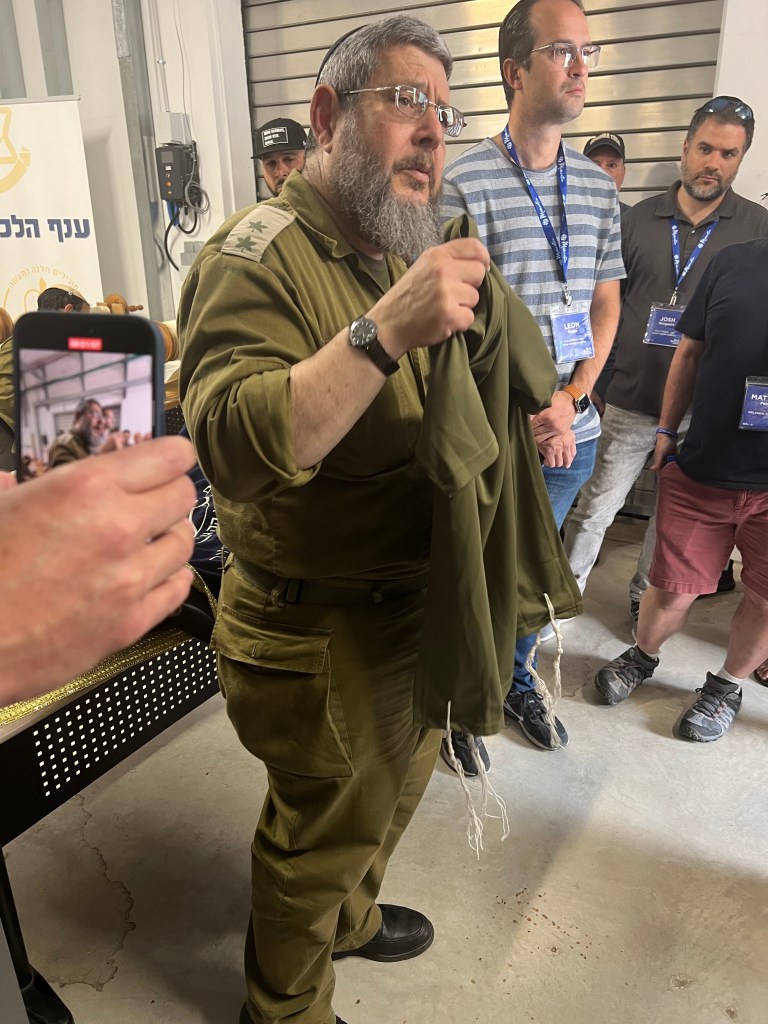
Rabbi Atlas talking to us about what they do and what they need. He is showing us the special IDF tzitzit that soldiers have asked to wear.

I work with a client that is in the business of providing fair trade, kosher mezuzahs, so I reached out and told Rabbi Atlas we would find a way to make it happen for the IDF and the soldiers.  Because Rabbi Atlas’s unit does the checking on the mezuzahs to make sure they are kosher, the cost is only $60 for each mezuzah.  That means our challenge is to raise $300,000.  Working with my client, we secured a match, reducing the need to only $150,000.

Each mezuzah now only costs $30.  So if you are interested in supporting the IDF and helping with them getting mezuzahs for their barracks, here is the link to buy them.  It’s also fully tax deductible!  You get to do a mitzvah, help the IDF, help Israel, get a tax deduction, and feel good about what you are doing.  How many ways do you need to win?

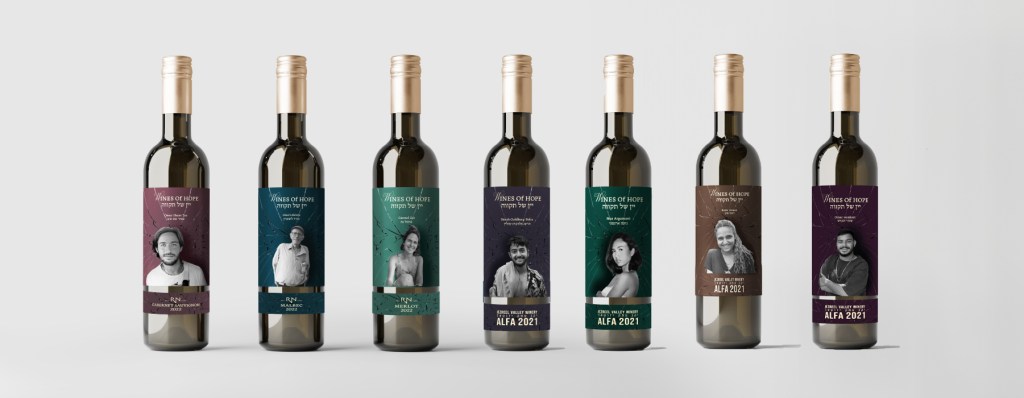
The second really amazing thing also has both a serious and fun component.  Many people don’t know that Israel has some amazing vineyards and a booming wine business.  Some of the wines from the Carmel mountains are incredibly highly regarded.  My friend Adam Bellos, founder of Wine on the Vine, has amazing Israeli wines available for sale.  So if you like wine and want to support Israeli vineyards you can order wine on his website.  That’s not the cool part of what I want to highlight.

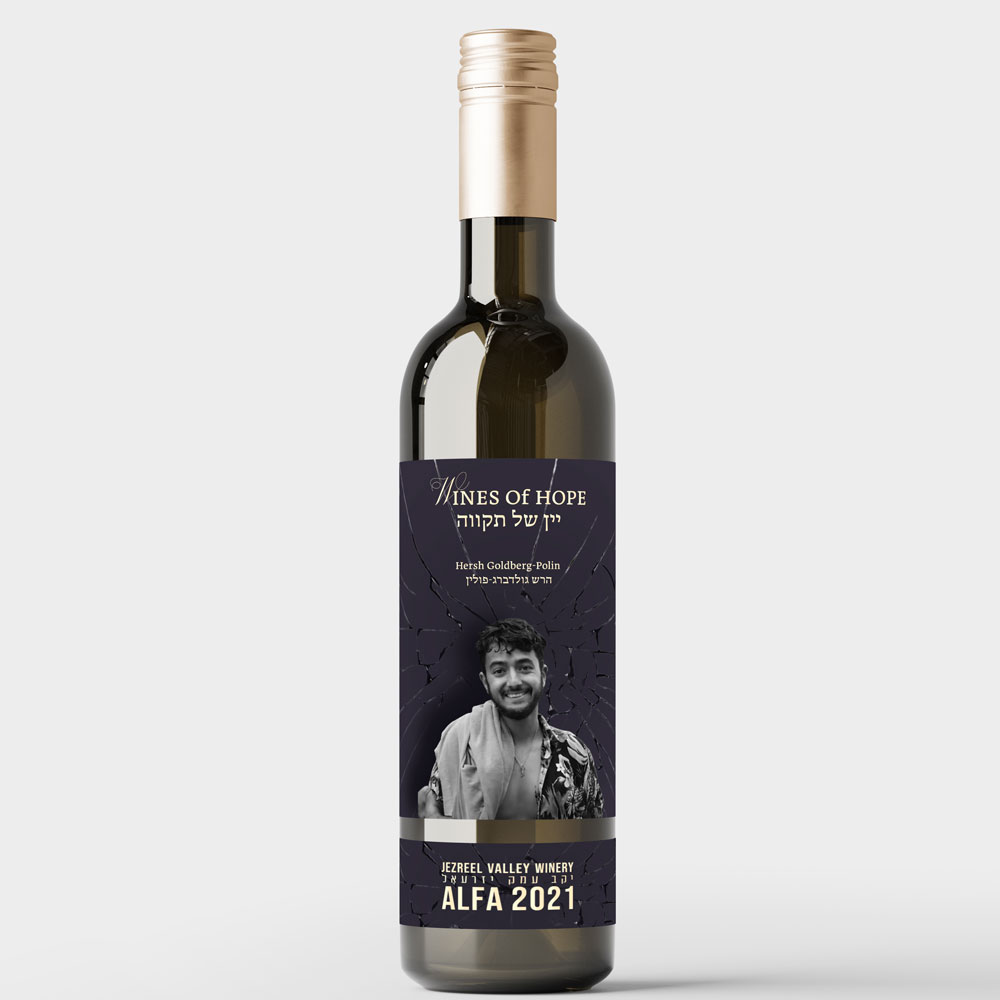
On October 7th, not only were 1,200 people murdered, 257 were taken hostage.  There are 120 still hostages today.  Adam works with some of the families of the hostages and got their permission to use their pictures on certain bottles of wine to create Wines of Hope. As such, every bottle of wine tells a story. Wines of Hope tells the story of the 257 hostages who were taken captive by Hamas terrorists on October 7, 2023, and specifically the 120 people who remain there until today. With every sip you take, you drink the wine as a symbol of hope and a yearning for the return of the hostages.  One day, we will be able to drink together with them, fully rejoicing and celebrating true freedom.

In addition, one-third (1/3) of all the proceeds will be donated to the Hostages and Missing Families Forum.

You can support the families of the hostages, you can remember the hostages, you can support Israeli vineyards, you drink good wine, all while doing a mitzvah.  Imagine the conversations about the hostages while you drink the wine.  The awareness brought to those who may not know or really understand what happened on October 7th and what is happening with the hostages now. 

Hersh Goldberg-Polin, an American-Israeli who has been a hostage since October 7th.
Noa Argamani, recently rescued from being a hostage in Gaza.

You can order your bottles of wine here

We are often too focused on the people who can make large donations. Bill Gates. Mackezie Scott. Warren Buffet. Michael Bloomberg. Susan and Michael Dell. Mark Zuckerberg and Priscilla Chan. Bernie and Billi Marcus. The people who named the performing arts center in your town. In reality, we can all have the same effect every single day if we use intention. People don’t think about the big names every day, but they do remember the person who held the door for them. They remember the person who helped with their luggage on a plane or helped them at the grocery store. They appreciate the person who helped pay their utility bill or paid off the student lunch debt far more than the big name donors.

Intention is everything. If we live with intention, we change the world around us. The person that you help today may be the parent of the next Alex Haley. They may become the next Alex Haley. We never know what will happen, other than the life of the person we help will be better because of it and our lives will be better because we did something to make the world a better place.

What will you do today? How will you change the world today? Because you can. With intention.

Nes Gadol Hayah Sham, a great miracle happened there.

There hasn’t been a lot of joy since October 7th.  Sure, there have been family simchas.  There have been birthdays and anniversaries.  Life continues which means meaningful events occur, but there hasn’t been much sheer joy.  Briefly when the hostages were released in December after 50 days of captivity.  There has been a lot of stress, a lot of grieving, a lot of worry about friends and family members serving in the IDF.  Concern with the rise of antisemitism on campus and in our cities and towns. 

This morning was joy.  It was announced that four (4) of the hostages were rescued from the market in Nuseirat.  They were being held captive in private homes by ‘civilians’.  The same ‘civilians’ that participated on October 7th.  The same ones that held hostages after October 7th.  The same ones that hide guns and rockets in their children’s bedrooms, a baby’s crib, in the schools and in the hospitals. 

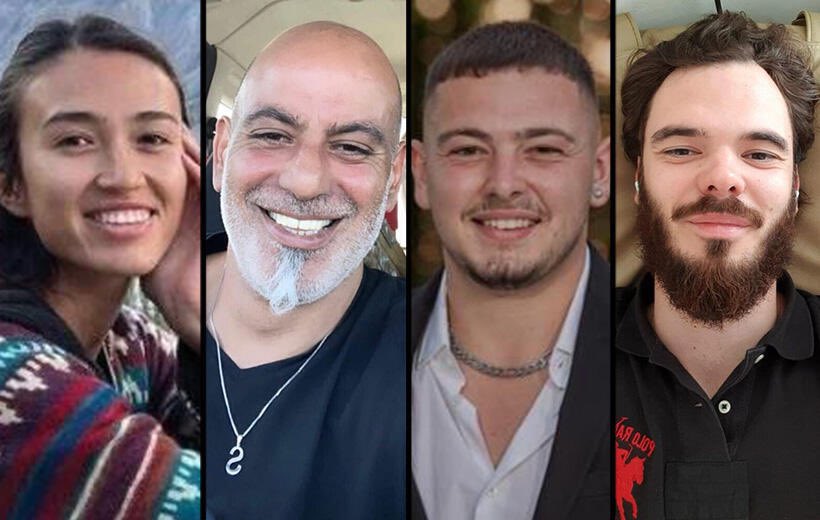
Noa Argamani (25), Almog Meir Jan (21), Andrey Kozlov (27) and Shalom Ziv (40) are free today. The IDF had a very detailed and daring rescue planned and got them out. They were being held in “civilian homes’.

Almog Jan spoke after being released and said that they were moved from house to house during the 8 months of captivity. When the media and other groups talk about the innocent people being killed, remember that the innocent people helped with October 7th. They were involved with the second and third waves of the attack. They turn their homes into military bases, even their children’s rooms and baby’s cribs. They hide hostages in their homes. The definition of ‘innocent’ seems to not fit very well.

The rescue of the hostages has reverberated throughout the Jewish world. Friends in Israel reached out with a joy I haven’t heard in a long time. Friends in the US shared their excitement and gratitude. It has been the topic of the day. These two videos are what it is all about. It’s the importance of Jewish community. They are why we want and need Israel. When I read that Noa Argamani said, ‘There was a knock on the door. A voice said, “It’s the IDF. We’ve come to take you home.’” I got chills.

Noa Argamani reuniting with her father. I cried watching this.

Shlomi Ziv talking to his wife for the first time in 8 months.  I am not embarrassed to admit that I cried watching it too.

As wonderful as the news of the rescue of the hostages was, there was sad news as well. Arnon Zamora (z’l), an IDF soldier who was a part of the force that broke into the apartment where the hostages were being held, was severely injured during a battle, and later died in the hospital. This brave IDF soldier risked, and lost, his life for Israel, for the Jewish people, and for the hostages. Arnon left behind a wife and two children. On October 7th, he led the battle at the Yad Mordechai Junction, eliminating dozens of terrorists and preventing the terrorists from infiltrating northwards. He then went on to fight in the battle at Kibbutz Nahal Oz and Kibbutz Be’eri. Unlike America, who still does nothing to rescue the American hostages in Gaza, Israel takes action. Arnon knew the risks. He also understood that rescuing the hostages was far more than saving these four people. It was saving a nation. It was saving the Jewish people. What a hero. What a huge loss. What a lesson. What an inspiration.

Arnon Zamora (z’l), killed in the rescue of the four hostages. May the memory of this hero always be for a blessing.

Almog Meir, shown above with his grandfather, learned today that his father died today. When they went to notify Yossi Meir about his son, they found his body. Yossi died before learning his son was alive and had been rescued. I can’t think of much worse for a parent, not knowing if your child is alive or what type of abuse they are undergoing as a hostage. Almog celebrates his freedom by preparing for the funeral of his father a day later. I can’t imagine what he is going through. Hamas stole his time with his father and may even be the reason his father died, so worried about the fate of his son.

Those who hate Israel and Jews have already come out strong with criticism. They focus on the approximately 200 dead and 400 injured in Gaza during the rescue. They like to overlook the fact that the hostages were kept in personal homes. They like to forget that the market and the UNRWA camp had become Hamas military installations. They don’t like to admit that Hamas firing at the IDF killed many of the people. They call them ‘innocent civilians’ despite the fact that they participated in the keeping of the hostages, they allowed Hamas to have military bases inside their community, and were actively involved with Hamas.

They also use the pictures of Noa Argamani and claim that she wasn’t raped (we don’t know if she was or wasn’t on October 7th or since then) so there was no sexual violence or rape by Hamas and that she gained weight so was treated great and somehow got food when there is none available and Gazans are starving. In their rapid Jew hatred, they actually are proving that UNRWA is giving the food to Hamas and not the people. They are showing their Jew hatred because Noa isn’t pregnant which automatically means there was no rape or sexual violence by Hamas. The rabid antisemitism is unbearable to watch especially with the lies they spread.

They criticize the tactical approach Israel used which involved pretending to be humanitarian vehicles to get into the area. They neglect all the times Hamas has used ambulances, hospitals, schools, and mosques to attack Israel and Jews. It’s a very self-indulgent approach to attack Israel and the Jews. It is their pattern. We cannot allow it to continue. We must call out the lies every time we hear or read them. We must call out the Jew hatred and antisemitism when we see it.

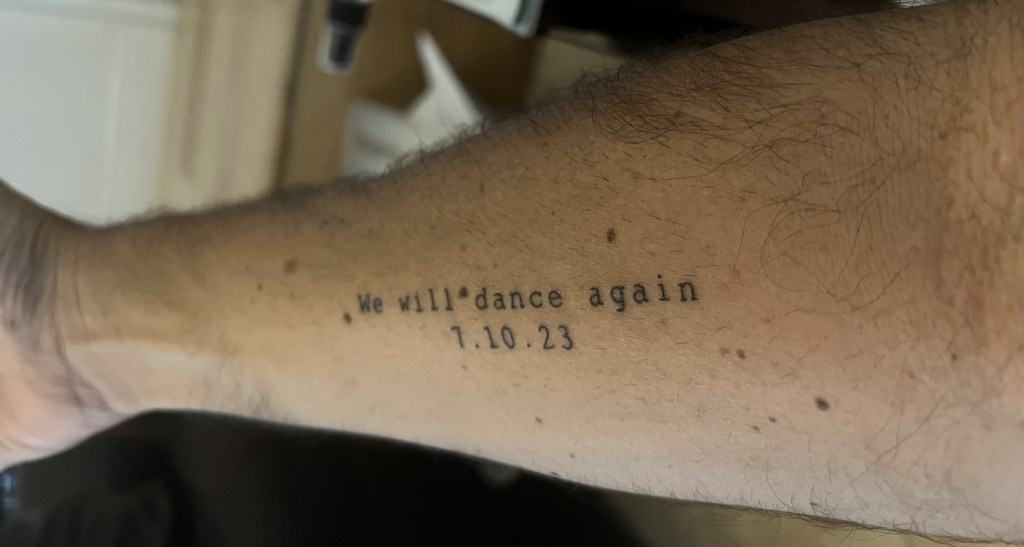
The IDF showed us today the importance of fighting back. We each have that responsibility. We cannot allow the lies and half-truths to stand unchallenged. We cannot allow the facts to be manipulated and twisted. At my age, I can’t join the IDF to fight back but I can fight back with advocacy, with knowledge, and with relationships. I can stand up and speak out. I wear my Magen David everywhere. I wear my dogtags for ‘We will dance again’ and for ‘Bring then home now’. I wear my lapel pins, one for the hostages and one with the US and Israeli flag on it. I wear short sleeves to show off my ‘We will dance again’ and ‘Nova’ tattoos.

The world we live in is one filled with Jew hatred. We have a choice. We can fight back or we can try to hide. Throughout history, our attempts to fit in and hide have not worked. Fighting back has been the only way to ensure our safety. I choose to fight back. Just like the IDF rescuing the 4 hostages today by fighting back, so will I fight back. I refuse to run and hide. I refuse to pretend I am not Jewish and try to fit in, hoping that they will leave me alone. Those who side with evil because they hope they will be spared should look at history. It never works out that way.

Israel and the IDF showed us how we fight back today. They showed us how every Jew matters. They inspired us. Now it’s our turn to show them how we fight back. How every Jew matters to us. We need to inspire them. We fight back by speaking up. We fight back by writing to our legislators and holding them accountable. We fight back by voting and making sure the incumbants and challengers know that Israel matters to us. We insire our Israeli brothers and sisters by our actions. We visit Israel to show them we care and they matter. We visit the Kibbuzim that were devastated on October 7th, the Nova festival site, the displaced Israelis from the North and the South, and soldiers on bases to give them a hug and remind them that they matter to us. After my trip to Israel in May, it became clear how important just showing up was to Israelis. I’ll be back in July in part to do the same thing all over again.

Today was a great day as 4 hostages were rescued. There are 120 more to get home. The leadership of Hamas must be stopped. There is a lot left to do. One of the famous sayings in Pirke Avot, the Ethics of our Fathers, is, “You are not required to finish your work, yet neither are you permitted to desist from it.” This holds true with the war in Gaza. We must engage. We must fight back. The world thinks they can bully us and as the IDF showed today, they are wrong. Let’s make sure they see it from all of us.

Mourning, Air Force Base, and celebration

The last day of our trip was a powerful one on many levels. The amazing thing is that we only went three places and one of them was the restaurant for lunch!

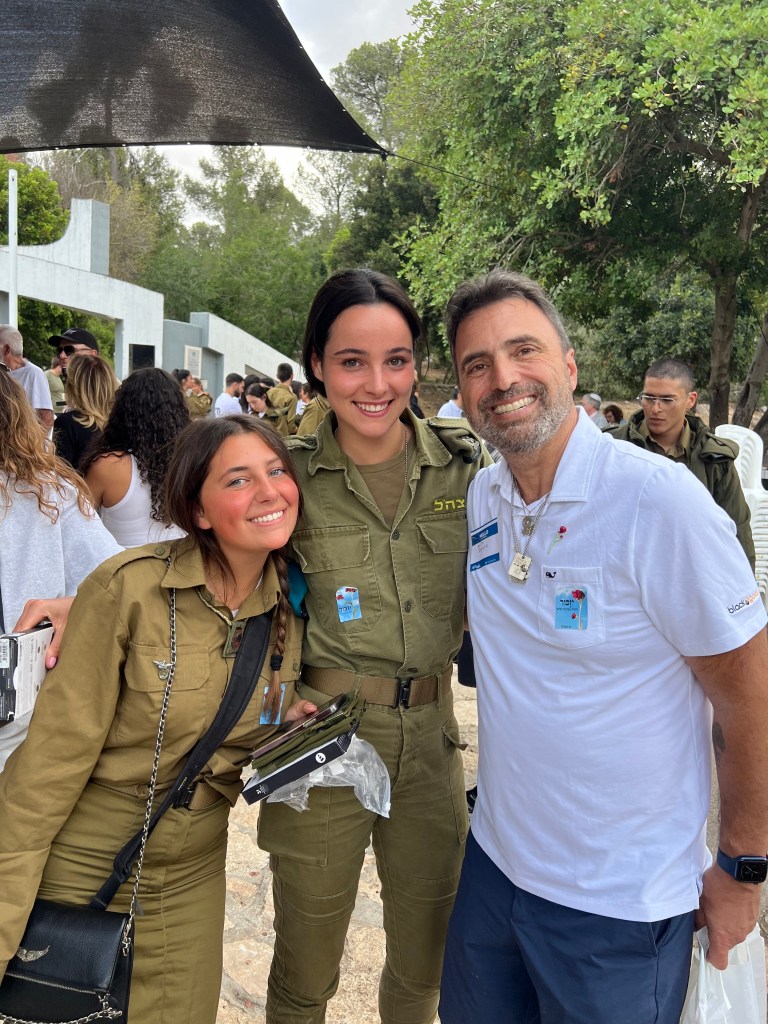
We left about 30 minutes late which frustrated our staff. It ended up being perfect. Our first stop was at Shura Army base, a forensic center near Ramle where most of the victims from October 7th were brought to be identified. As we got there, they were loading the body of one of the IDF soldiers who was killed on Saturday in Gaza into the van to take him home to be buried. We go to watch them put him into the van, one of our group who was saying Kaddish for his mother said Kaddish, and we then escorted him out of the parking lot on his final journey. It was incredibly powerful and moving. To be able to do that type of honor for a soldier killed defending Israel and the Jewish people was overwhelming. These kids, and they are kids, put their lives at risk every day to protect Israel and the Jewish people. In America when I see a soldier, I always thank them for their service. In Israel, I want to begin doing that as well. It’s the very least I can do.

We met Noa, the woman who works to prepare the bodies for burial and for identification. Noa told us that she has 8 children and on October 7th, 7 of them, plus her husband and herself were drafted into the army. Think about what that must be like. It was yet another reminder that the Israeli people do not want this war. They do not want this war to go on indefinitely. They want the hostages returned. They want Hamas out of power and not able to kill Israelis any longer. They want peace and quiet on the border. They want to go back to living thir lives. They don’t want to worry about their children or their spouses in firefights. They want normalcy and that only comes with the return of the hostages and Hamas removed. They will deal with the emotions and fear to accomplish those goals. But it’s not what they want to do, despite what the media may tell you.

Noa speaking to us

We entered the base and came to the meeting room where we learned what they do here. After October 7th, this is where most of the bodies came for identification. They have a lab on the second floor to do DNA testing. They have DNA, dental records as well as fingerprint records for every IDF soldier . It made some of the identification easier but many of the bodies were burned or were just ashes. As we entered the actual area where they did this work, we were silent as the gravity of the work settled in each of us.

The meeting room in the base before you enter. Notice the pictures on the wall are all faces of those murdered on October 7.

In the room where they do the ritual preparation of the bodies, we heard what it was like after October 7th. I’m not sure that i can even try to describe what she was telling us. The condition of the bodies that came in. Some of the challenges identifying them. Some that were just ashes or parts of bodies. And the blood. That is the one thing that I will never forget. Her description of how much blood there was and they had to deal with. She told us about a Hassidic man who came in with bodies. He had been pulling dead bodies out of bomb shelters that Hamas attacked at Nova. He had blood halfway up his calf because to pull them out he had to step in pools of blood. The more stories she told us, the more horrified we were. Then she said something that has me thinking. She said that she can’t focus on how awful it was and what happened. Instead, she chooses to focus on the good in her life and what she can do to make the world better. She wants to cook a better dinner for her family. Be a better mother for her children. Be a better wife for her husband. Be a better friend, neighbor, and boss. It’s an incredible way to look at the world and an incredible attitude. It made me thing about what I am willing to do to deal with the anger and rage from Kfar Aza, Nova, and being at this base. Am I going to let the anger and rage consume me or am I going to turn it into something to make the world a better place. If Noa can do it after what she has seen, I know that I can as well.

We left the room and moved to the room where families have their chance to say their last goodbyes to their loved ones. It was hard sitting in that room, looking at the table where the body would be, knowing what families must be feeling and experiencing when their loved one is on that table. We were all quiet as we sat in the room and Noa talked to us. I think we were all grateful to have been in the room but even more grateful to leave it.

Listening to Noa talk about what she and her team have gone through since October 7th makes me think about all the people we normally don’t think about. They aren’t family members of those murdered or kidnapped. They haven’t lost family members who are serving in the IDF. Yet they are traumatized by what happened on October 7th and what has happened since October 7th. What is it like to have 7 of your 8 children drafted into the army to fight a war? What is it like to have both you and your spouse drafted into the army during a war, potentially leaving your chidren as orphans? What is it like to deal with that many dead bodies? With that many mutilated people? With remains that are just ashes? The entire country is dealing with PTSD and I’m not sure what it will mean long term.

Our last stop on the base was to visit the place where all the IDF Torahs that need repair or can’t be repaired are kept. It was incredible seeing how many Torahs they have there. As the Rabbi who is in charge told us, it’s the largest Aaron Kodesh (ark) in the world. He also told me that the IDF needs thousands of mezuzahs for their soldiers. They need them for the rooms where soldiers sleep in bases, outposts and bunkers both within Israel, along the borders (south and north) and in Judea and Samaria. They also need a few dozen at this point for buildings inside Gaza seized and used for headquartersWhen you watch this video I took, you will be amazed at what you see.

The IDF torahs in need of repair or that can’t be repaired
The sofer (scribe) repairing a Torah

As we left the base, we were all shaken by the experience. Like at Kfar Aza and Nova, we felt the death. We felt the overwhelming loss related to the murder of 1200 people on October 7th. As I think about how Israel has changed since October 7th, these feelings are a part of it. If I am feeling it after only 8 days, how powerful must it be for Israelis who have been feeling it for over 7 months?

We headed to our last stop of the trip, the Palmachim air force base. This is where they fly drones from. The base is highly secure, no pictures were allowed, and things were off the record. What I can tell you is that I was blown away by what we learned. I can tell you that the process Israel uses to actually have a drone drop a bomb is multi-leveled and requires multiple approvals. And I can tell you that the drone operator ALWAYS has the authority to abort the mission no matter what the supervisor says if they determine that there are civilians, women or children in the area and that it would not be appropriate to execute the mission. I can also tell you that this happens more often than you would expect. The drone operators are kids. Their support staff are 18-19 year olds. It’s always amazing to look at who comprises the Israeli military. It’s largely the 18-22 year old population. This is very different from the US military and not what most people think of when they think of an army. These are kids who are willing to do whatever is needed to defend their country and the Jewish people but really want to finish their service, travel, and then go to college and live their lives.

After the briefing, we had our final barbecue with the soliders on the base. These 18-25 year old men and women were so happy to have us there. We sat with them, talked, and got to know them. The DJ played great music, the food was good, and we had fun. After we ate, the DJ really got things moving and we got up and started dancing. The soldiers joined us as we danced and laughed and had a great time. As it got to be time for us to leave to take people to the airport, they had difficulty getting us to stop. We finally did, celebrating with the soldiers. Some of the guys on our trip were from Emek, a Jewish Day School in Los Angeles. They had some of their students write letters to the soldiers. The day after our visit, we got this note from the wife of one of the soldiers on the base. If you ever wonder if the letters you write, the visits you take to Israel, the support you provide really matter, I think this note proves how much they really do.

It was sad as some of the guys headed for Tel Aviv and then we dropped a bunch at Ben Gurion airport. The rest of us returned to Jerusalem and a few of us made plans for the next day. The trip was over but the experience will last a lifetime. There is so much for me to unpack from this trip. So much to understand about what it means to me to be a man, a husband, a father, and a Jew. What does it really mean to be a Zionist? what am I willing to die for that shows what I actually live for? Much much more. As I unpack it, I will share them.

I still have 2 days in Israel, two precious days in Israel. Two days to wake up in Jerusalem, smell the air, walk the streets. What a blessing that is. A day in Tel Aviv with meetings. Time to see friends. Israel is truly in my heart and in my soul. As my 21st trip approaches the end, I am already looking at possible trips 22, 23, 24, and 25 in the next year. I appreciate how lucky I am to get to go to Israel. How lucky I am to have the contacts and connections in Israel that I have. The Israeli friends that I have. An understand of the land, the history, the challenges, the struggles, and just how much it means to me as a Jew. If you haven’t been to Israel, I urge you to come, especially now. If you have been to Israel, I urge you to come back. I promise you will experience a different country and a have a different experience.