A couple of years ago, a friend of mine called to tell me that her family was moving from Orlando to DC because they felt Florida was no longer safe for their family. It is a strange thing to hear about where you live. Yet I understood what she meant and why she felt they had to move. It wasn’t the gun laws in Florida nor was it the mass tourists or the humidity. It was the political climate where the government was getting into their personal lives. It was because their daughter is Trans.
My heart broke as they sold their dream home, packed up, and moved. We stayed in touch and I saw her last year when i was in DC and we got together for dinner and to hang out. Her daughter was flourishing and the family, while missing Florida, was doing well.
She reached out to me today to let me know that she and her daughter were moving to Israel for two years because America was no longer safe for her family. I had known this was a possibility for a few weeks and hoped that it wouldn’t be what ended up happening, but it is.
How do we live in a country where people literally have to leave because they feel unsafe to live here because of who they are? I know there are many people who are undocumented, who did not follow our immigration laws, that feel unsafe. Their feeling of being unsafe is the risk of being sent OUT of the country and their desire is to stay. This is the opposite. They are choosing to leave because staying wouldn’t be safe.
I understand the concern about safety. With the rise of antisemitism and my public stance on speaking out, I felt that I became a target of those who hate. I was on TV regularly and was clearly identified as being Jewish and a leader in the Jewish community. My information is public. Anybody can find where I live with a simple property search. They can see what cars my family and I drive and follow us easily. We had people in Orlando wearing Nazi uniforms, flying Nazi flags, chanting hateful sayings, hanging Jew hating banners from bridges over interstate roads and even assaulting jewish students on camera.
Two hate groups met on a bridge in Orlando in September 2023The entrance to Disney in June, 2023, with protesters flying multiple Nazi flags
I couldn’t take the risk of being a victim of serious hate crimes against me or my family, so I went to get my concealed carry permit. I made sure that if the need every came up to protect my family from serious harm, I could. I also reached out to a friend to ask if they would hide me and my family, if the need every came. Just the thought of making that call made me sick to my stomach. When I actually did it, it felt worse.
As I watch what my friend and her family are going through, they are actually leaving the country. We have reached the point where American’s don’t feel safe living in our country because of hate. Hate for those that are different. Hate for those we don’t understand. Hate based on lies, misstatements, misunderstandings, and lack of knowledge along with pure bigotry.
I have friends who have many differences. At least four that I know of have children who are Trans. Some of my friends are Gay or Lesbians. Others are different races and religions. Their differences only enhance my life, they don’t detract from it. Their friendship, who they are, make my life better. I have learned that friendship is about who shows up. It’s not because you are have similar physical characteristics. As I think of my friend and her daughter getting ready to leave for Israel, I am both excited for them and this journey (a part of me has always wanted to make aliyah), and I am sad for them, forced to move once again due to safety concerns as a result of hate and bigotry.
We can do better. We must do better. We must be better. This isn’t about giving any singular group ‘special privileges’. This is about ensuring that every American has the same inalienable rights guaranteed in the U.S. Declaration of Independence, where it is written, “We hold these truths to be self-evident, that all men are created equal, that they are endowed by their Creator with certain unalienable Rights, that among these are Life, Liberty and the pursuit of Happiness.” In this time where hate in our country continues to grow, we must also remember the words of the Declaration of Independence that come after this. “That to secure these rights, Governments are instituted among Men, deriving their just powers from the consent of the governed”. Government is to ensure we have these rights, not to take them away. The past few decades have shown our Government to be taking them away. And once again, the Declaration of Independence tells us what happens when our Government does this. “That whenever any Form of Government becomes destructive of these ends, it is the Right of the People to alter or to abolish it, and to institute new Government, laying its foundation on such principles and organizing its powers in such form, as to them shall seem most likely to effect their Safety and Happiness.”
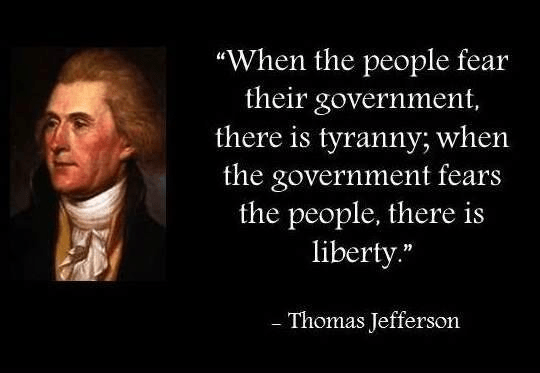
Thomas Jefferson, the primary author of the Declaration of Independence, had many beliefs about the government. It’s purpose was to ensure these rights for all. Not for some. Not for those who agreed with him. Not for the limited few who met random criteria of wealth, age, race, gender, sexuality, etc. For all. That’s why he wrote those words in the Declaration of Independence.
Our Government exists to serve the people and ensure our inalienable rights. Somehow we have forgotten that. Somehow we have gotten to a place where Government now scares half the country all of the time.
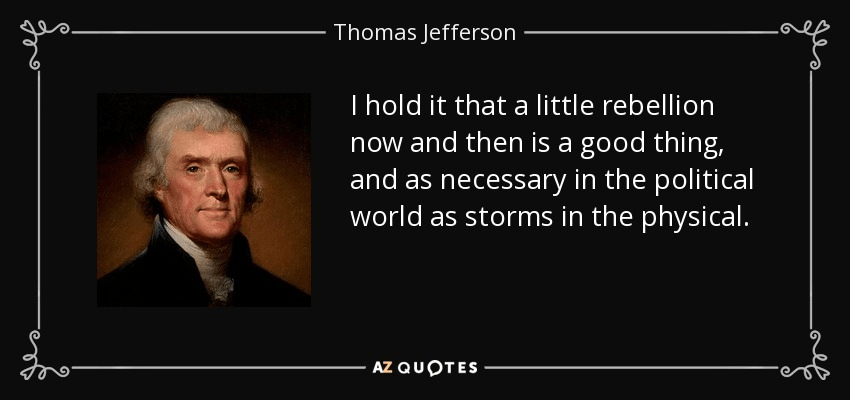
Once again I go back to Thomas Jefferson, one of our most influential and impactful founding fathers for inspiration. We have seen our government struggle to truly guard our inalienable rights for nearly 30 years. Year after year, it seems to get worse. It doesn’t matter who the President has been, which party has control of the House of Representatives or the Senate, our government has bred divisiveness and created fear among the citizens. The type of fear that led my friend to leave the country with her daughter to keep her daughter safe. For the past 3 Presidential elections I have chosen to write in candidates because I refused to support either of the ones running. I reject the ‘lesser of two evils’ with the belief that I don’t want evil at all. I want inspiration. I want somebody who truly cares about the entire country to lead it, not with an agenda to only benefit half the country (I don’t care which half). I’ve taken lots of grief for this but I don’t care. In this past election, it seemed many people agreed with me. Now it’s time for us to to listen to Jefferson and have ‘a little rebellion’ to force the change we want. What we are currently doing isn’t working. There is no reason to think it will work after the election in 2 years or in 4 years if we keep doing what we are doing.
It’s time for us to stop the insanity. It’s time for us to take action and do something different. We need to listen to Albert Einstein and take action. Forget about bringing business back to America. We to make sure our citizens feel safe and don’t need to leave to stay safe. We need to have a government that reflects the vision of Abraham Lincoln. “Of the people, by the people, for the people.” The way things continue to go, what we have will perish from the face of the earth.
I hope my friend and her daughter will feel safe enough to return to live in the United States. That is up to each of us to remember that if we want freedom for ourselves, we need freedom for everybody. If we want to feel safe in our country, we need everybody to feel safe in our country. If we truly value our Declaration of Independence and Constitution, we need to make sure that everybody is represented and personal beliefs don’t become our country’s policies.
The question is what are you going to do? Do you want to wait until it’s your turn to have to leave the country? Do you want to put your head in the sand and think they won’t eventually come for you? Because they always do. I faced it myself with Jew hatred. I have seen it happen to my friend and her family. I choose to speak up. I choose to take action. As long as we allow hate to exist, it will grow and eventually will come for all of us.
I’ve been a proud Zionist all my life. My great-grandmother, who I knew, was a Zionist. My grandparents were Zionists. On a visit to Israel a number of years ago, I went to the JNF building and found the books that had their name in it for their support of JNF back in the 60s. My parents were Zionists. I grew up filled with a love for Israel and a strong belief in the importance of a Jewish homeland.
All four of my grandparents went to Israel. My parents went to Israel. My in-laws went to Israel. My brother and sister-in-law have been to Israel. My sister and brother-in-law have been to Israel. My wife has been to Israel and this last trip was my 22nd trip to Israel. The proof is in the pudding as they say.
On this recent trip, while sitting in the back of the bus with one of the participants, he posed an interesting question to me. “Why do we still call it Zionism?” After all, Zionism is the belief that the Jewish people should have their own state and be able to have their own self-determination. We have that. We have had it for 76 years. In 1776, the Americans were revolutionaries. We no longer call ourselves revolutionaries nor have we for more than two centuries. We are patriots because America is a country, and we no longer have to fight for our freedom from another country’s rule.
In 1948, in the former home of Mayor Meir Dizengoff, David Ben Gurion declared independence for the State of Israel. While we have fought many wars since then, from that point forward the Jewish people have had a state. We have had our homeland. We have had self-determination. So why are we still calling it Zionism? Shouldn’t we just be patriots as well? Haven’t we accomplished the goal of Zionism, the creation of a Jewish homeland?
It is a question I find myself struggling with for many reasons. While we have a Jewish homeland, the State of Israel, there are so many people and countries that want to eliminate our homeland and right to self determination that we must always be vigilant. So while we have our Jewish state and self determination, we cannot afford to sit on our laurels. We must continue to fight to maintain it. As a Zionist, I fight for our homeland and won’t let it be deligitimized. Today, more than ever, that is critical. The United Nations, UNRWA, and the International Court of Justice (ICJ) are actively working to eliminate our homeland. If we are merely patriots, do we lose the urgency needed to defend Israel? Do we forget how long it took us to have our homeland after the Romans sent us into exile? Do we lose the passion of Zionism when we become Patriots? I don’t have the answers but I do have the questions.
On the flip side, we have our country. We have the right to self determination. Do we really need to be fighting for something that we already have? Defend it as patriots, yes. The Zionist dream is real and has been for 76 years. We accomplished the goal of Theodore Herzl. His radical idea, “the restoration of the Jewish State”, has come to pass. Are we using a word that we don’t need to? Are we creating challenges for ourselves because of that? Is it time to change the paradigm, to not live in fear that we will not have a Jewish state, because we actually have one?
As a Zionist, that word ties me to generations of my family. It ties me not only to my Great-great-grandparents and the time of Herzl but to ancient Jews and receiving the Torah. It is being a part of the Jewish people. Generations upon generations. When I was recently in Israel, walking on 2,000 year old streets, looking out at where King David’s castle was, praying at the Kotel, the base of Temple Mount, it all came together. My ancestors from thousands of years ago stood where I was standing.
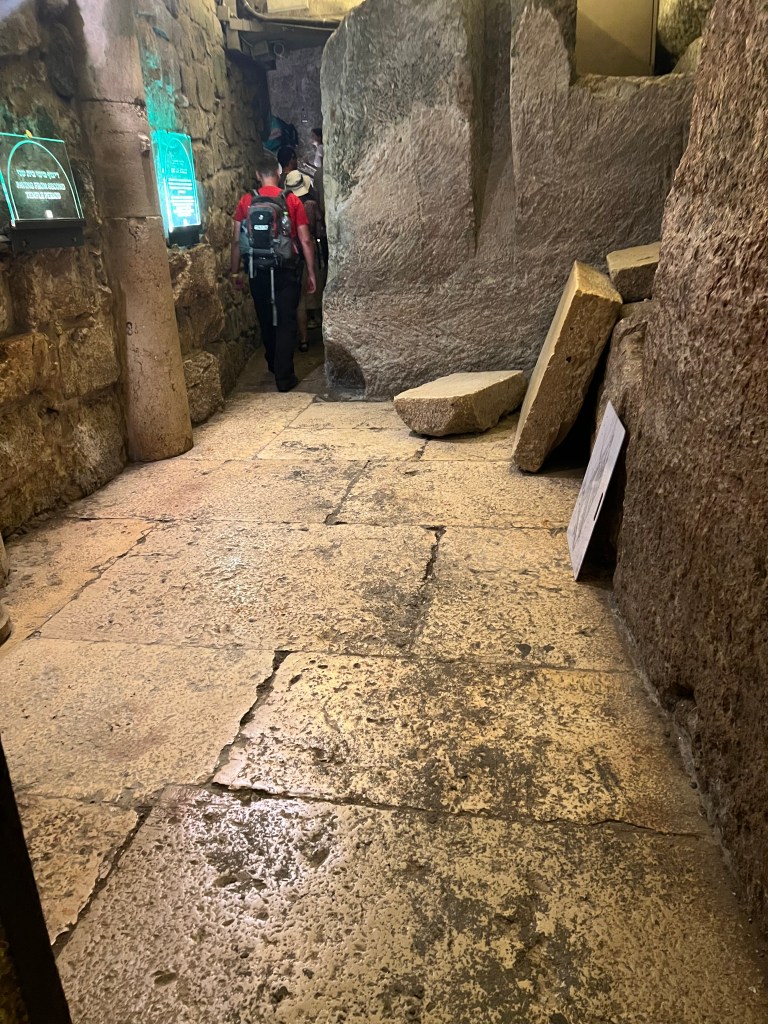
Original streets from more than 2,000 years ago, beneath the Kotel.
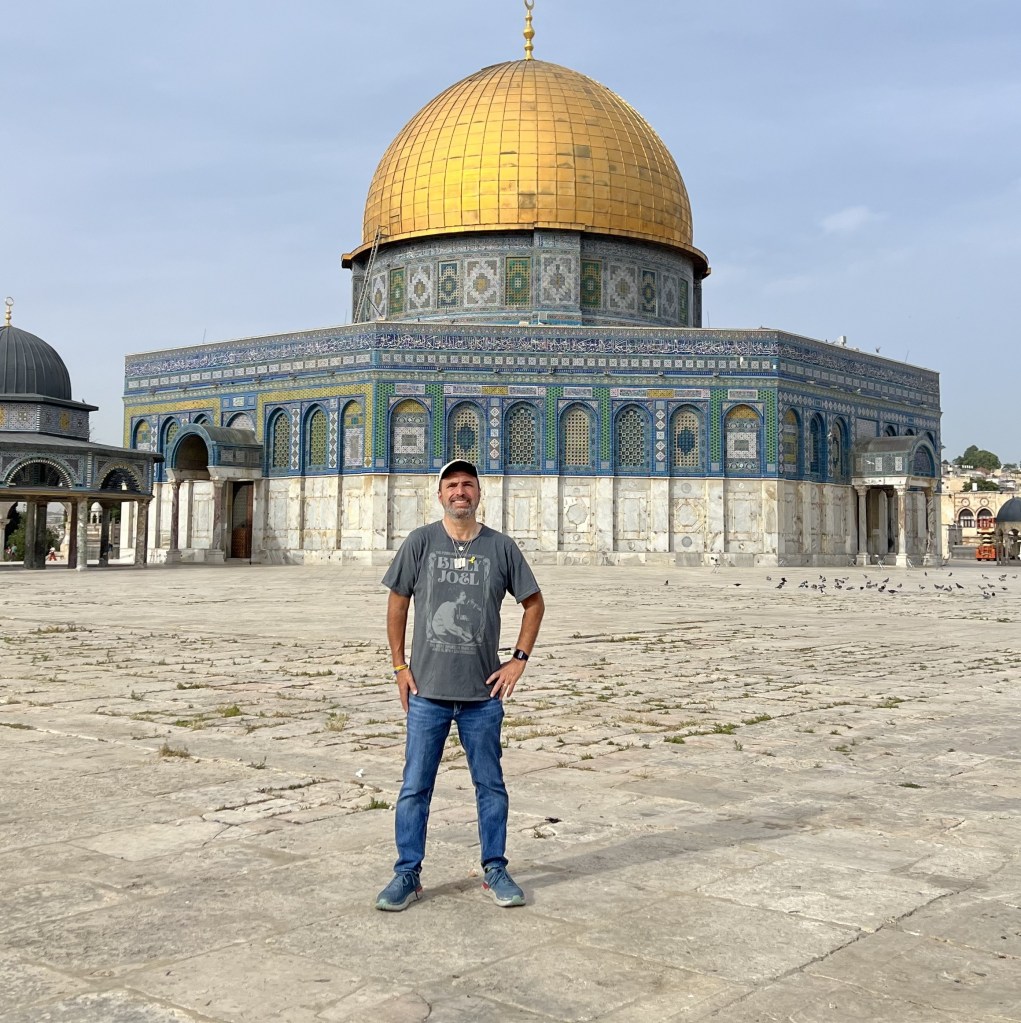
In May, when I stood on top of Temple Mount, it was a connection to the Temple built by Solomon and then rebuilt and modified by King Herod.
In front of Dome of the Rock on Temple Mount, where the Temple used to stand
At Passover every year, we remember that God took us out of Egypt. Not just our ancestors but us. We were all at Sinai for the giving of the Torah. Judaism isn’t about what happened to others. It’s about what happens for us. So yes, the Zionistic dream of Herzl has been attained. But Zionism remains for all of us to defend. To fight for. To advocate for. Our history shows us that if we take it for granted, we will lose it.
After lots of thinking about the word Zionist and comparing it to Patriot, there is no question in my mind that Zionist is the right word. Our homeland is too precious to be diluted. As I watch so many Jews not understand the importance of Israel, having never been to Israel, not seeing the historical connection and minimizing what Israel means to Judaism and the Jewish people, I am not sure the fight for Zionism will ever be over. We owe a huge debt of gratitude to those who came before us and fought for Zionism and for the existance of Israel. They are giants on who’s shoulders we continue the fight.
I won’t change from Zionist to Patriot. I won’t stop advocating for Israel and the Jewish state. And I won’t stop being public with my Jewish identity and passion for Israel. Each trip I video walking the streets to show those who have never been what it’s really like. I post images and tell stories. Zionism is more than a national identity. It is core to the Jewish people. From Abraham to Moses to Joshua to King David to King Solomon, from the Mishkan to the First Temple to the Second Temple. If you don’t believe me, take a trip to Israel and see it yourself.
I returned from Israel about a week ago. It was my second trip this summer and very meaningful on many levels. I love going to Israel and being in Israel. Everybody in my family knows how much I enjoy being there, how meaningful it is to me, and I’m sure there are some who expect that one day I will make Aliyah and live there.
This trip was highlighted by a few things that I think are very important, not just because they mean so much to me but because they highlight a bigger picture of Israel and the meaning to the Jewish people.
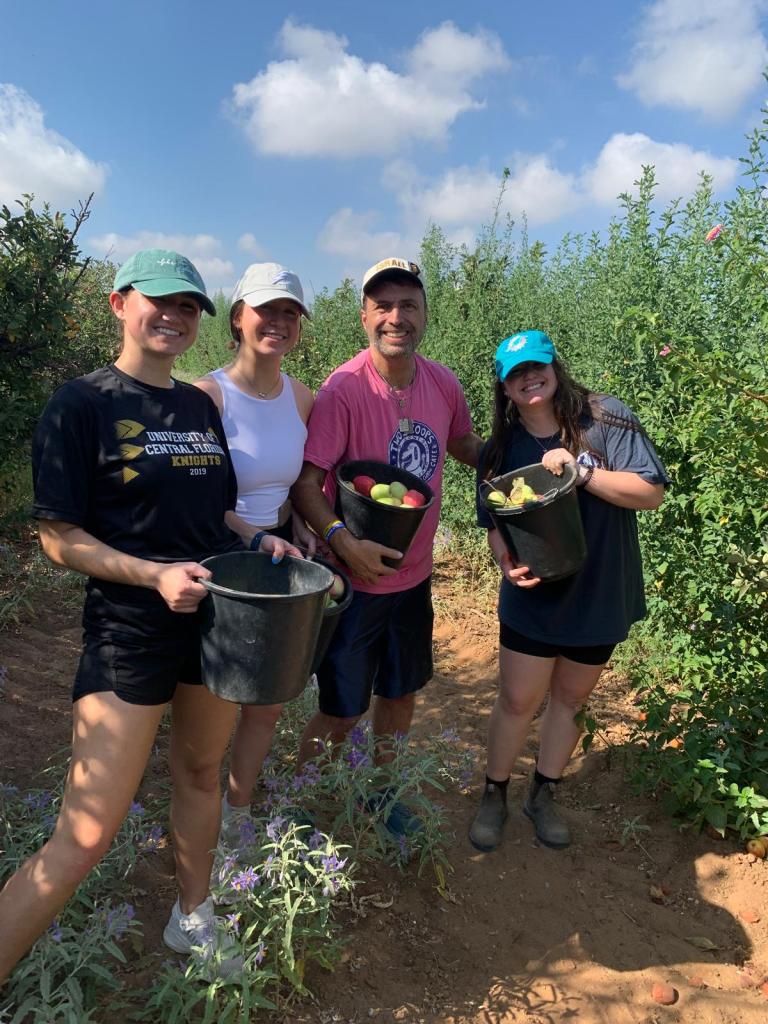
We got off the plane and after changing, the first thing we did was go to work the land. There is something about Israel and working the land that is incredibly gratifying. We went to pick apples that will be given to those in need. It was a hot morning, and we had our water and hats and off we went. There were two huge bins to fill that looked daunting when we began. Yet working the land in Israel meant that we worked hard. Very quickly the first bin was halfway full. We talked, we laughed, and we picked apples. Halfway through filling both bins, we took a break to eat some fresh watermelon. By fresh, I mean it was picked just to cut up for us.
Israel was founded by working the land. “Making the desert bloom” remains a key goal and catchphrase. There is something about getting your hands dirty in Israel by picking fruits and vegetables that is incredibly rewarding and meaningful. It ties you to the founders of the State of Israel. It ties you to 3500 years of Jewish history in the land of Israel. I’ve been to farms in the Negev where they are growing fruit and vegetables in the sand and picked them. I’ve helped with lemon trees in the Gaza envelope. I’ve been to a friend’s Moshav near Gaza growing all sorts of fruits, vegetables, and nuts. Now I have picked apples. It’s incredibly rewarding, and I can’t wait to do it again. I learned about Israel Food Rescue, an opportunity to volunteer picking fruit and vegetables in Israel to help harvest the food needed since the loss of so many Thai workers and Palestinian workers since October 7. Israel gives you an opportunity to really give back, not just with money or time, but with your hands and sweat equity.
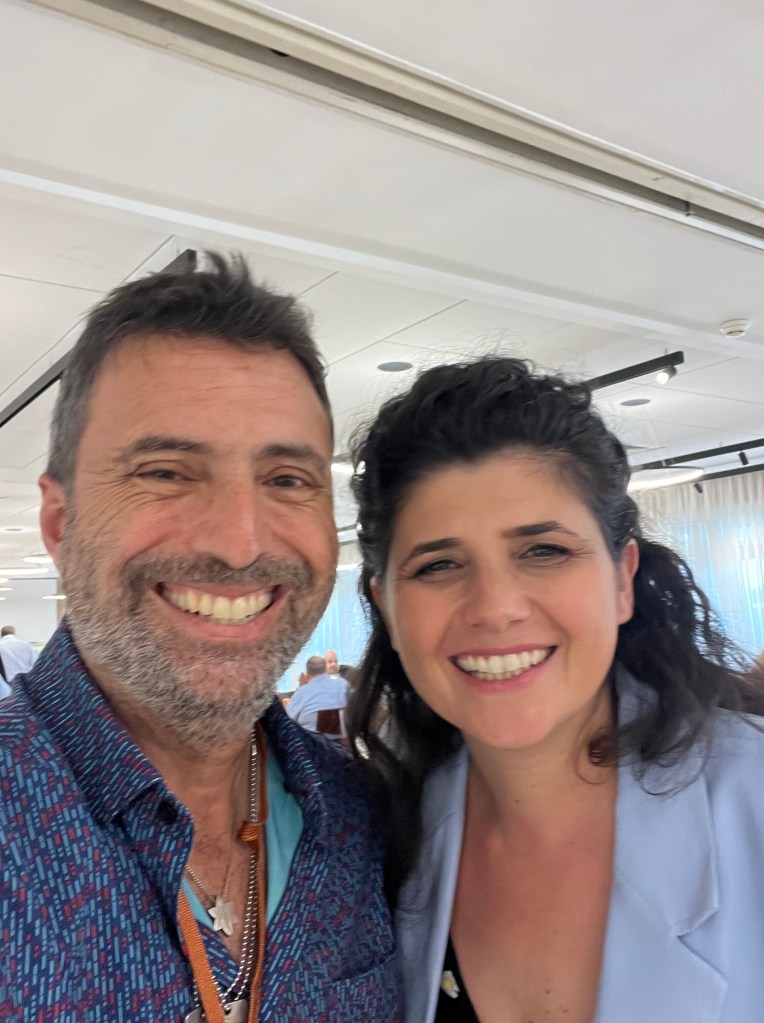
I had the opportunity of this trip to meet and do some work with incredible leaders of Israeli civil society. I went to the Knesset to meet with MK Sharron Haskel, an amazing leader who represents a new generation of Israeli leaders. As we reach a crossroads in Israel with leadership, she is part of a new generation that will shape the future. I met with former Deputy Mayor of Jerusalem, Fleur Hassan-Nahoum, who I met a number of years ago and is a friend. Fleur is also part of this new generation of Israeli leaders who will change the shape of the country. Fleur spoke to our group and captivated them with her brilliance. Her analysis of the possibility of a 2-state solution, a 1-state solution, and other options for peace was fascinating. She recently debated former Ambassador Dennis Ross on the topic and I can’t wait to watch it when it is released on August 2nd. I met with Brigadier General (ret) Amir Avivi and my friend Lt. Col. (ret) Yaron Buskila about the future of leadership in the IDF and the Jewish world. They are doing some exciting work and I have the opportunity to be a part of it and learn from them. I met with Lt. Col. Rabbi Yedida Atlas who oversees the religious aspect of the IDF. He gave me a pair of the IDF’s tzitzit (ritual garments worn under your shirt) that since October 7, IDF soldiers, regardless of their religion, want to wear for spiritual protection. Later that day, I had the chance to help make tzitzit for the IDF which was incredibly meaningful. I am working with him to get enough mezuzahs for the IDF due to the war and all the reserve call-ups. I was on a zoom call with my friend Roni Ekele, the Director General of the Ethiopian National Project (ENP) and childhood friend, Grace Rodnitzki, the Director of International Relations for ENP. ENP provides critical services for the Ethiopian Israeli youth to ensure their success in Israeli society.
With Member of the Knesset Sharron HaskelLt. Col. Rabbi Atlas and meWith my friend Lt. Col. Yaron BuskilaWith my friends Fleur Hassan Nahoum, Lisa Barkan and Rabbi Randy Brown
In Israel, you have the ability to meet, befriend, and work with incredible leaders. They are accessible. They are friendly. They are passionate. I have great hope for the future of Israel because of these leaders – the future leaders of the country. In America, we are very concerned about the future of our leadership. We wonder where the quality leaders are and where they will come from. In Israel, we see them emerging in all aspects of society.
This was a leadership trip for 19-26 year olds. We had a very diverse group on the trip. Some graduated Jewish Day School. Some were entirely secular. Some knew nothing. Throughout the trip, we learned something with everything we did. The Torah study was interesting as we explored the ‘why’ of the first verses in the Torah. Not the story but what the lesson is behind the story. The things that affect us today. Services were not about the ritual of the service but the meaning of the prayers. Not just what we say, but why we say it. We sang, “L’dor V’dor”, from strength to strenth, throughout the trip, reminding us of our place in Jewish continuity. We sang Acheynu ,the prayer to free captives, for the hostages. As we stood under the Kotel, on original flooring from over 2,000 years ago, we sang it, one of the more powerful experiences I have had in Israel. At our last dinner of the trip, everybody had a chance to share their feelings about the trip and the experience. It was powerful listening to what everybody got out of it. I’m excited to see what this group of leaders is going to do. Just like the future of Israel is bright with their future leaders, I believe that American Jewry can also have a bright future with these type of leaders. It takes effort. It takes work. It’s not easy to find them, recruit them, train them, and pay for all of it. But we must. I have seen the impact of this trip for the past 26 years. I have seen what engaging the future of Jewish life in a meaningful way means and does. It is something I am committed to and I look forward to sharing some exciting plans for 2025 in this area. This trip, seeing what happened for these future leaders, has inspired me to do more. So pay attention, something very exciting is coming in the very near future in regards to young leadership!!
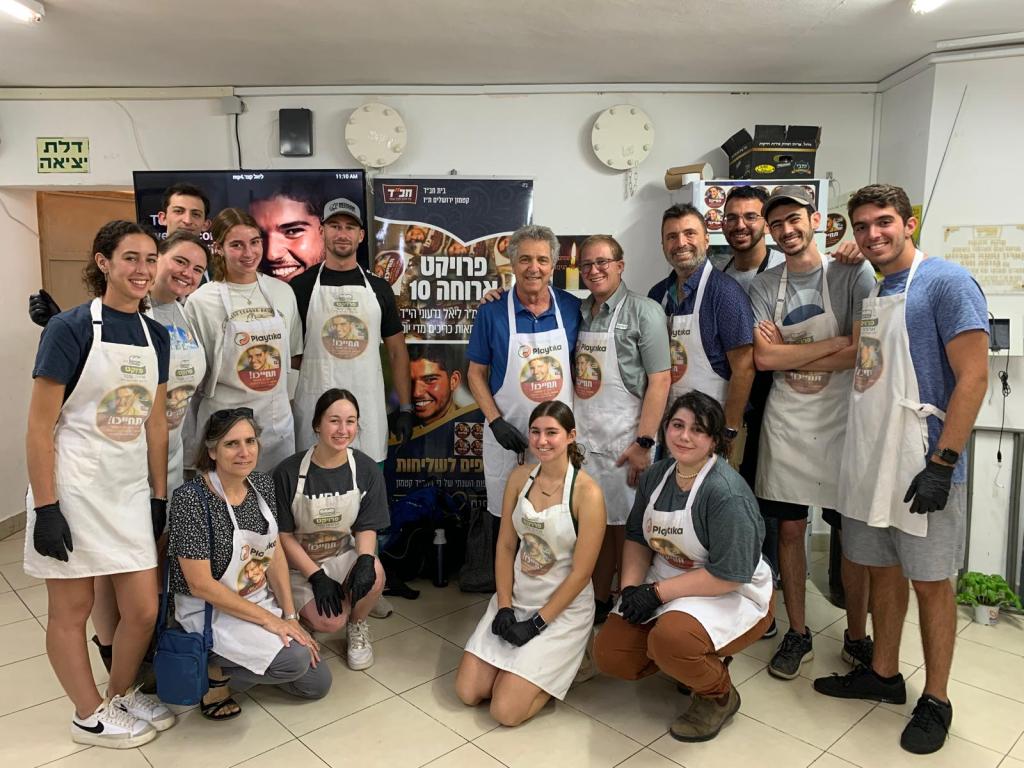
Singing Acheynu for the hostages while standing on a 2,000+ year old original floor under the KotelOur group of future leaders after making sandwiches for those in need. The future is bright!!
Israel is a special place. If you haven’t been to Israel, I can’t really explain to you what it’s like. If you have been, I don’t have to. There is something in the air. Walking the streets of Jerusalem is unlike anywhere else in the world. Floating in the Dead Sea, swimming in the Mediterranean Sea, doing a water hike in the lower Galilee, eating on the edge of the Kinneret (Sea of Galilee), looking at the Golan Heights, being at the Kotel, working the land – each is so much more than just an activity. There is a connection. There is deep meaning. Israel isn’t just a place you visit. It visits your soul. It visits your heart and your mind. As we sat in Machane Yehuda one night, the traditional middle eastern market that turns into a nightclub, the buzz was amazing. The music was pumping. The energy level was high. And then they played ‘Am Yisrael Chai’. It touched us all in our hearts and in our souls. We knew it was more than just a nightclub. We knew it was more than just a fun place to be with friends. It was home. It was a connection to thousands of years of history and of family. Israel changed us all for the better. Am Yisrael Chai.
The party at Machane Yehuda at night – Am Yisrael Chai is playing
On my recent trip to Israel, we were in the Lower Galilee on a jeep ride. It was beautiful to ride through the lush area, climbing the mountain in the jeeps, until we reached an amazing view.
In the background, you see the Golan Heights. The Golan is a strategic area as whoever holds it has complete control of the valley below. Prior to 1967, Syria would sit there and shoot at the people living in the villages in the valley. In the 1973 war, the Golan was almost lost. The story of the tank unit in the 188th armored battallion is legendary. I first heard it a few years ago when we visited the unit as they proudly told the story of their unit. Totally outmanned, they managed to hold off the Syrians as the cost of their lives until support could arrive to fight and eventually win.
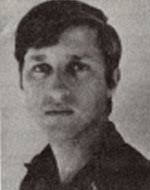
What I didn’t know is that my friend David’s cousin, Benny Katzin, was one of the leaders of that unit in 1973. While looking at that view, David told us his story. As he was preparing to leave for the weekend to spend both Shabbat and Yom Kippur with his family, Benny sensed that something was going on and there was something wrong. His overall commander told him not to worry and to go home and enjoy Shabbat and celebrate Yom Kippur with his family. He told him he had earned it.
Benny Katzin
The uneasy feeling wouldn’t leave him. As much as he wanted to see his family and spend the holiday with them, Benny couldn’t leave. His responsibility was too great. Instead of leaving that Friday afternoon to go home, he stayed on base just in case something happened. Something happened all right.
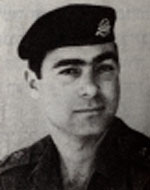
On Saturday October 6, 1973, the armies of Syria and Egypt attacked. Not only was it Shabbat, it was Yom Kippur. Israel was not prepared. On the Syrian-Israeli border, the Syrian army made incredible progress. They were so successful, so quickly, that they thought it was a plot to trick them into going to far so they stopped. This gave Bennie and his immediate commander, Yitzchak Ben Shosham the time to move any tanks that still worked to try to delay the Syrian army. They managed to hold off for another day while reinforcements were sent north, ultimately defeating Syria on the border. Bennie and his commander were fighting in the last 2 operating tanks against a Syrian force of 177. When only one tank worked, they both jumped into it to continue to fight. The were found dead together in that last tank. It had stopped being able to move so they used whatever ammunition they had until they ran out and were then killed.
Yitzchak Ben Shosham
What makes this story any different from hundreds of other acts of heroism at that time? Why bother with this specific story? Benny was a hero, not for what he did when the war began on October 6 or for what he did to defend Israel on October 7, 1973 when he died. It isn’t for taking on 177 Syrian tanks with just two Israeli tanks. If itsn’t because they were successful in delaying the Syrian army until reinforcements could arrive. Benny is a hero for what he did on October 5th. For choosing to stay. For listening to his gut and deciding it was more important to be there in case he was right rather than go home and hope he was wrong.
How many times have we been faced with that type of situation? We have a feeling something is going to happen. We know deep down that we should stay but we want to go home. We want to see our spouse, our children, our parents. We want to relax, eat a good meal, and not deal with the ongoing stress. How many of us do that instead of listening to our gut and doing the hard thing, staying.
Here in America, many of us have that feeling in our gut. Something is wrong. Something bad is going to happen. Whether it is something with women’s rights, individual rights, assassination attempts of leaders, school shootings, the rise of antisemitism, or many other things, we feel it deep within ourselves. The question is what are WE going to do? Are we going to ignore the signs that we see, the feeling in our gut, go home and hope it doesn’t happen? Are we going to sit at home and ignore the feeling, hoping if it happens, it is not to us or those we love? Are we going to leave the responsibility to somebody else because we can? Or are we going to be like Benny? Are we going to act? Are we going to say, “Not on my watch! I refuse to allow this to happen without doing what I can to stop it.”
We have the choice. Nobody would have faulted Benny for going home that Friday to spend Shabbat and Yom Kippur with his family. He would have been recalled on Saturday and been fighting against Syria on Sunday. He would have known. He would have to live with the fact that he knew in his bones that something was going to happen and left. He would have known that he could have made a difference on Saturday and didn’t.
The truth about Hamas, UNRWA, and Gaza is slowly coming out. The UN has already cut in half the number of women and children that have been killed in the war. If you take the numbers reported by Hamas/Gaza Health Ministry/UNRWA (they are all the same terrorists), in the UNRWA report from Tuesday July 9, 2024, they reported that 38,193 people have been killed. They don’t discern between terrorists and civilians. They don’t include anybody dying of natural causes. The same report estimated that 50,000 babies have been born in the past 9 months. This means that in this so called ‘genocide’, the population of Gaza has actually INCREASED even including the terrorists who have been killed and those who died of natural causes! While Israel is amazing in so many ways, they sure are terrible at genocide.
Yet the cries of genocide and apartheid remain. We’ve already seen how this ‘genocide’ is the only one in history where the victims have seen their population increase. If you go to Israel, you will soon realize so are the claims of apartheid. On my most recent trip, one of the participants got sick. I took her to the medical clinic that morning where she was treated by an Arab-Israeli doctor and nurse. When I got her prescription filled, it was by an Arab-Israeli pharmacist. The wonderful man who cleaned my hotel room every day, who I talked to multiple times a day and built a friendship with (and tipped him well for an awesome job done) is an Arab-Israel. Our medic and security guard one day was an Ethiopian-Israeli. One of our speakers shared with us that the number of Arab-Israelis choosing to serve in the IDF continues to grow significantly as are those who are choosing national service as an option.
Yet here in America and around the world, we are faced with these lies. We are faced with growing anti-semitism – I choose to call it Jew hatred because that’s what it really is. What are we going to do about it? How are we going to respond? Are we going to respond? Should we just sit back and hope it goes away? I have heard the arguments about Jews staying on the campuses where they are facing daily hatred both in and out of the classroom because we can’t abandon them. I disagree. Abandon them we must. Protecting ourselves is more important. Imagine a Jew-free Ivy league. How much would their prestige fall? How many Nobel Prize winners would now come from other Universities? How many innovators and business creators would now come from other Universities? The brain drain will affect them tremendously and our students stay safe. Imagine the amazing Jewish professors leaving the Ivy League hatred and improving the quality of education elsewhere. Rabbi David Wolpe writes about his year at Harvard and why he left. Imagine the talent leaving these hate filled institutions and going elsewhere.
It’s Friday in America now. The question is who are you going to be? Are you going to be Benny Katzin who chose to stay because he knew something was coming? Are you going to be like Benny and instead of going home to see family and celebrate the holiday, make the sacrifice to stay and fight? To be there because you know it is coming? It’s Friday in America. Are you going to look back with pride that you took action and didn’t let others face it without you or are you going to look back with regret because you could have made difference and didn’t. When your grandchildren ask what you did and where you were when it was Friday in America, how are you going to answer them? I know how I am going to answer them. My children already know the answer to tell their grandchildren about what I have done and what I am doing when it is Friday in America. What about yours?
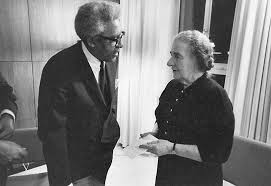
I’ve written about Bayard Rustin a few times since I learned about him. He was an incredible friend to the Jewish people and an avid Zionist, even visiting Israel and meeting with then Prime Minister Golda Meir. I decided to watch the new movie about his life, focusing on how he made the March on Washington occur. It’s available on Netflix.
Watch the trailer
I was stunned as I watched the opening scenes of the movie which depict the end of segregation and the first time African Americans were attending the same schools at white students. Not because of how awful and vile what happened at that time was. Not because of the suffering those students went through to bravely fight for their right to equal opportunity. I was stunned because it looked exactly like what Jewish students are facing on college campuses today. People yelling in their face. Calling them names. Treating them like second class citizens. It was horrible and unacceptable then. It is horrible and unacceptable now. Yet it’s happening every single day on college campuses across the country and in Canada.
Jewish students forced to hide and barricade themselves in the library at Cooper Union in NY.
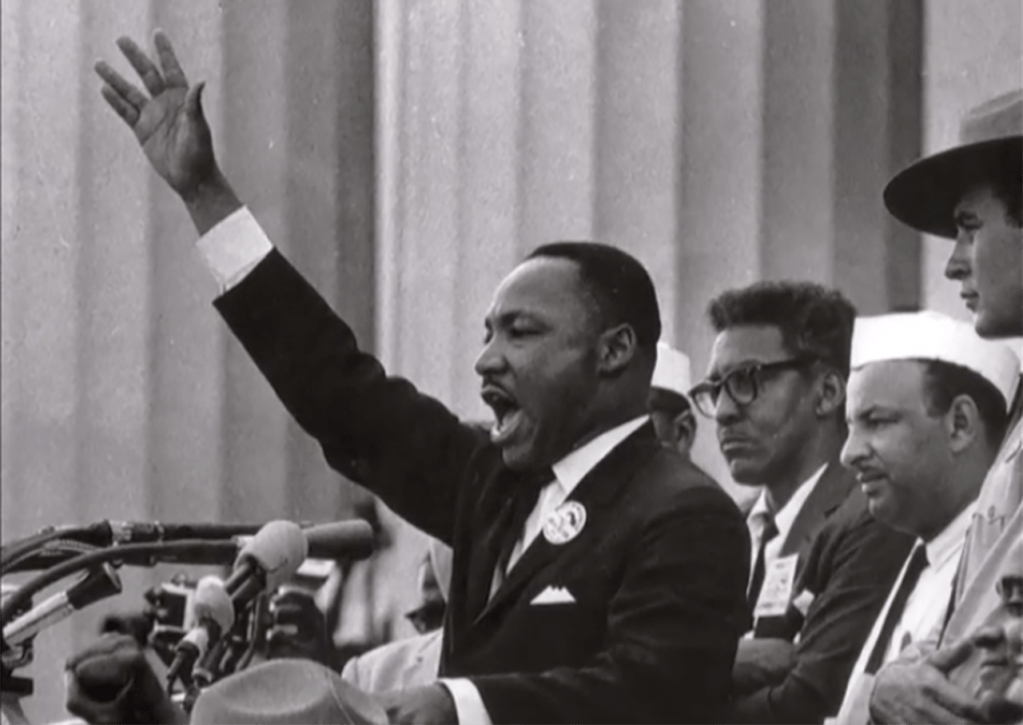
Bayard Rustin was the brains and genius behind the march of Washington, DC where Dr. King gave his “I have a dream speech”. He talked about having the largest peaceful protest in history – 100,000 people on the National Mall (the actual number was 250,000). After October 7th, I was part of 300,000 people who gathered together peacefully in Washington, DC., in support of Israel and the Jewish people. When it was announced, I knew I had to be there. I knew that I wanted to be able to tell my future grandchildren that I was there. I wanted to be a role model for my children, nephews, and nieces, that I went and was part of it. It felt like a big hug, being there with signs supporting Israel and demanding the release of the hostages. Singing Hatikvah with 300,000 people was something I will never forget. History repeats itself – in 1963 it was the March on Washington for civil rights. In 2023 it was the rally for Israel with 300,000 people gathering to not just support Israel and the Jewish people but support each other.
There is a scene in the movie where Bayard tries to get the NAACP on board with the march. The head of the NAACP, Roy Wilkins, was afraid of what might happen if they had 100,000 ‘Negroes’ coming to Washington to protest. In the scene, they talk about other marches with far fewer people and highlight one, from 1932, done by WWI veterans. President Hoover unleashed the military to break up the march. Using tear gas and bayonets, the military chased away the veterans and those supporting them, burning their shanty towns in the process. Wilkins asks in the movie, “what was their race?” The answer, “they were white.” His fear of what might happen led the NAACP to say no to the march. We face the same thing today in the Jewish community. We have many communal leaders, many Jewish stars in sports, entertainment, and politics, who are afraid to take a bold position after October 7th, with the rise of antisemitism everywhere, out of fear of what might happen to them. This fear paralyzes us and results in more damage occurring to Israel and the Jewish people everywhere. It’s ok to be afraid, it’s not ok to let that fear paralyze us into inaction. As Jews, we have thousands of years of history that shows us what happens when we live in fear, when we don’t act, when we just try to be a part of some other society and don’t stand up and fight for ourselves when threatened. I made the decision after October 7th to not be paralyzed by fear. I made the decision to speak out against the evil of Hamas and of the Iranian leaders. I made the decision to call out antisemitism whenever and wherever I see it. It’s an ongoing conversation in my family as they are concerned about what some crazy, hate filled person might do. How I may be targeted. How my family may be targeted. One thing I know from our Jewish history is that if we stay silent, we will all end up being targeted, we will all end up being harmed. I’m not willing to repeat the mistakes of the past. Bayard Rustin wasn’t willing to accept being paralyzed by the fear of what might happen at the march. He knew that doing nothing would result in a far worse outcome. I hope we, as Jews, can learn from his leadership and not be afraid to stand up for ourselves, to speak out, to call out those who hate us and wish to harm us.
As they talk about what date to hold the march, the first suggestion is a Monday. Bayard replies, “Mondays are hard for our Pastors.” He then adds, “and Fridays are bad for our Jewish friends.” It’s a great reminder that as Jews, we were active in the civil rights movement. We played an important role and built a strong relationship with the African American community. In the years since then, for whatever reason, that relationship has deteriorated. We, as the Jewish community, don’t have the relationships we need with many other groups. We do with the Evangelical Christian community because THEY have been active supporters of Israel. We have neglected our relationships with other groups. As a large community, we are absent on MLK Day and the celebrations. As a group, we are not there during Pride month. As a group, we are not joining our Muslim brothers for their community Iftars during Ramadan. Because we have neglected these relationships, we see many of these groups not being there for us when we need them. It’s our responsibility to be there for them before we need them to be there for us. Bayard Rustin showed that when he was considerate of Shabbat and that if the march was on a Friday, the Jewish community couldn’t be there. He knew we’d be there for them if he was thoughtful first. I hope that we can learn to invest in these relationships outside the Jewish community. We are so hyper-focused on what’s going on inside the Jewish community that we are not ensuring the relationships we need outside the Jewish community are strong.
Bayard Rustin with Prime Minister Golda Meir during his visit to Israel in 1969
The movie has 2 scenes in which Senator Strom Thurmond plays a key role. In the first, he makes allegations against Dr. King about being a communist because Bayard Rustin, one of his close friends, was involved with the communist party earlier in his life. This false allegation was designed to stop the march and to create problems for Dr. King. The second is when he goes on the radio to ‘out’ Bayard Rustin as a ‘pervert’ due to his conviction for engaging in homosexual sex to attempt to stop the march from happening. It’s very similar to the false allegations against Israel being made by Representatives Rashida Talib, Ilhan Omar, Cori Bush, Jamal Bowman, Alexandria Ocasio Cortez, and many others today. Senator Thurmond was a known racist. The Representatives I mentioned above are known antisemites. Bayard fought against Senator Thurmond and wouldn’t allow him to win. Today, we must do the same against these antisemites in our own government. We can’t allow them to win. We can’t excuse their statements or their behavior.
There are two very powerful lines in the movie that apply to our Jewish community today. The first is when Bayard Rustin says to Dr. King, “when we tell ourselves such lies, start to live and believe such lies, we do the work of our oppressor by oppressing ourselves.” We have far too many people in our Jewish community who tell themselves lies about Israel and Zionism, who live and believe these lies, and not only do the work of antisemites but do it better than they do. It is our obligation to confront these lies in our own community. It is responsibility to make sure that members of our Jewish community are educated with the facts, not with the lies that Jew haters tell. Bayard Rustin knew that about his community. I hope we learn that lesson for ours.
The second line I am referring to also comes from Bayard Rustin speaking to Dr. King in the scene when he says, “on the day I was born black, I was also born homosexual. They either believe in freedom and justice for all, or they do not.” The same holds true today. Countries either have a right to defend themselves or they do not. Countries either have a right to make peace with their enemies through direct negotiations or they do not. Countries either get to have their democratic election processes or they do not. Israel cannot be held to a different standard than every other country in the world. When they do that, just like Bayard Rustin knew about freedom for all people, they are being antisemitic and going against the values they say they believe in. We cannot let them get away with it. Bayard stood up and spoke out and got the support from those he needed to speak out as well. We need to do the same. We cannot allow the double standard to continue to exist. We must demand our leaders, both political and those with large followings, do the same and speak out. We must condemn those who use the double standard to hide their antisemitism. It is not up to others to do this. It is up to us.
Near the end of the movie, the 10 heads of the committee for the March on Washington are invited to the White House to meet with President Kennedy. Somebody says that Bayard should be with him. Bayard already won – the March happened and was a huge success. He declines and says he is going to pick up trash. The rest leave to meet the President and he takes a bag and begins to pick up trash. The young people who follow him are shown with admiration in their eyes. They get it. It is about the work. It is about making things happen and driving change. Who gets the credit isn’t important to those who really want change. The same holds true for the Jewish community. You see this more in Israel than in the United States. In Israel they are all heroes because they do what is necessary. Civilians volunteering in the fields to pick produce. IDF soldiers risking everything for their country and the Jewish people. People moving all over the country to help those displaced with educational needs, healthcare needs, mental health needs, and whatever needs they have. In the United States we tend to focus more on who gets the credit. Who is the public face. We need to learn this lesson from Bayard Rustin. It’s the same lesson Ronald Reagan spoke about. In the words of President Harry S. Truman,“It is amazing what you can accomplish if you do not care who gets the credit.” We have a lot of work ahead of us to fight antisemitism, to advocate for Israel, to educate both the Jewish and non-Jewish community, and for our survival. We can’t worry about who gets the credit, we have to be willing to pick up a bag and collect trash.
The saying on Ronald Reagan’s desk from the Harry Truman quote. We can all learn from this
The song at the end of the movie, Road to Freedom, is by Lenny Kravitz. Lenny is African American and Jewish. How fitting for the blog post. The lessons of Bayard Rustin applied to 2024 antisemitism through the song written and sung by an African American Jew.
I watched the movie Rustin to learn more about a man I recently learned about and have been fascinated with. How did such an important figure in the civil rights movement get basically erased from our history? How many others like him are there? I seem to learn about more of them all the time. Yet while watching the movie to learn about him, there were so many lessons that apply to our lives today. To the world we live in today. The fight for civil rights is not over. So many communities are still fighting it today. In the Jewish community, we fooled ourselves into thinking we were not one of them. October 7th and the aftermath showed us we are. While we still have many who don’t think this is true, who ‘do the work of the oppressor by oppressing ourselves,’ the rise in antisemitism in the United States and around the world shows us that that it is true. We have much to learn from the life of Bayard Rustin, an avid Zionist and friend to the Jewish people. I could write an entire post just about his connection to the Jewish people and the State of Israel. Let’s take a moment to thank him and honor his memory by learning the lessons he taught us and apply them today. From what I have learned about him, I think he’d really like that.
Bayard Rustin standing behind Dr. King during the I have a Dream speech
As most of you know, I am a passionate and unapologetic Zionist. Being a Zionist simply means that I believe that the Jewish people have a right to their own country and their own self-determination. No matter what else you may THINK Zionism is or means, that’s what it really does. The rest is simply propaganda created and spread by those Jew haters who want no Jews to exist and those who aren’t willing to actually learn something about Zionism.
As a result of my love affair with the State of Israel, I got connected with Dr. Ken Stein and the Center for Israel Education (CIE). Each week, CIE puts out ‘This week in Israeli history’. Some weeks there are nuggets that I learn about and other weeks there are monumentous events. This week it’s of the monumentous variety.
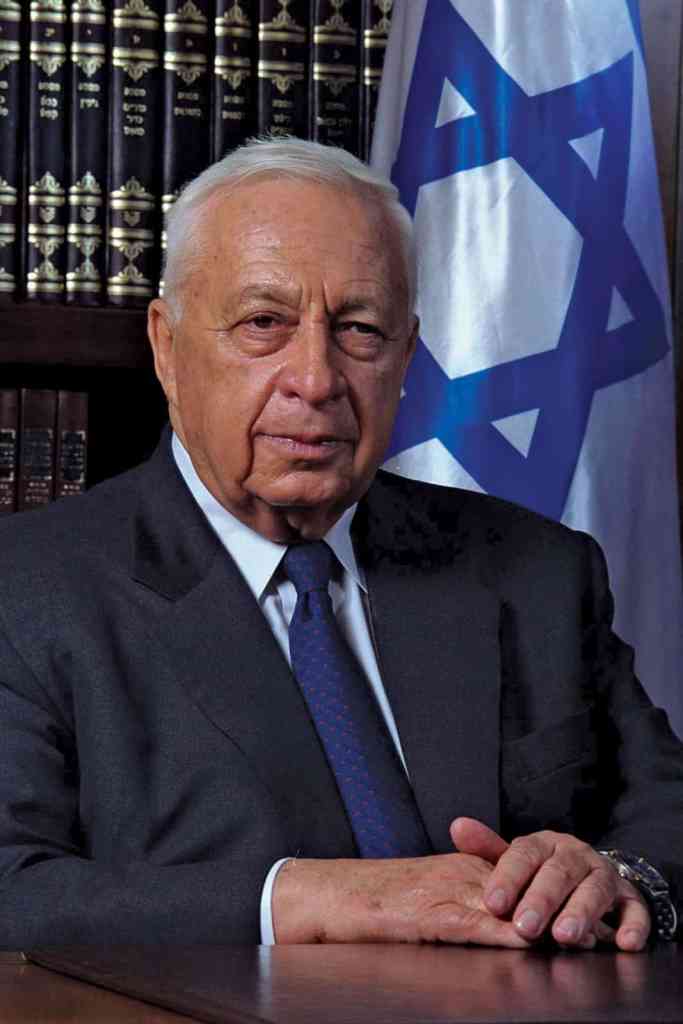
On February 27, 1928, Ariel Sharon was born is born in K’far Malal (near Hod Hasharon). For those of you who know much about Israel, Hod Hasharon is the home of the Alexander Muss High School in Israel. My cousin Eric attended there in 1984 and I have many friends who have attended as well. This would have been Ariel Sharon’s 96th birthday.
Sharon, like many of that generation, took an Israeli last name, changing his birth name of Scheinerman to Sharon. A true Zionist and patriot, he joined the Haganah in 1945 and served in the War of Independence. His reputation, which continued through his life, was having a lack of restraint and being very aggressive. He served as a paratrooper commander in the 1956 war, a Major General in the Six Day War (1967), and the commander of an armored division in the Yom Kippur War (1973).
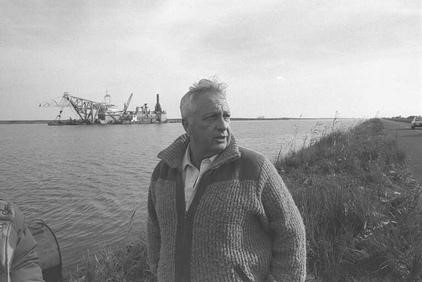
Ariel Sharon in 1982 at the Suez Canal after peace with Egypt
Sharon was elected head of the Likud party in 1999 and became Israel’s 11th Prime Minister in 2001. As Prime Minister, he approved construction of the security fence, advocated for settlements in Judea and Samaria (the West Bank) and despite his reputation as a military hawk, oversaw the disengagement from Gaza, hoping it would jump start peace talks with the Palestinians. In 2006, he suffered a stroke that left him incapacitated and was no longer Prime Minister. He passed away in January 2014 after spending 8 years in a coma.
Ariel Sharon is a complex figure and a good lesson in the complexities of Israel and the region. Most of his career, he was considered a far right, war hawk. He was a military hero whose leadership was critical to the victory in the Six Day War. His leadership and actions in the 1973 war were essential to Israel turning the tide and capturing the Suez Canal and almost marching to Cairo before America and Secretary of State Henry Kissinger stepped in to stop the war.
His resignation after being found negligent in the Sabra and Shatilla refugee camps by the Christian Phalange troops have many branding him a war criminal. He certainly did not use good judgment at the time, doing nothing to stop Christian militiamen allied with Israel from entering the camps, despite fears they might seek to avenge the killing of their leader the previous day. War criminal or not, it was a poor decision that helped define his life, career, and legacy.
In 2000, he went to the Temple Mount and visited the Al Aqsa Mosque. To many people this would be seen as no big deal. It’s the historic site of the ancient first and second Jewish temple. The ‘Rock’ in Dome of the Rock is supposed to be both the rock that Abraham bound Isaac to, prepared to sacrifice him, as well as the rock that Muhammad rose to heaven from. It’s also a flashpoint for violence as Jewish access is limited and many attribute the 2nd intifada to this visit. It’s a place I have never been to and hope that one day I will be able to have access. I remember this visit and wondering why he chose to do it as it was clearly going to incite violence.
Ariel Sharon on Temple Mount – this is considered by many to be what incited the 2nd intifada
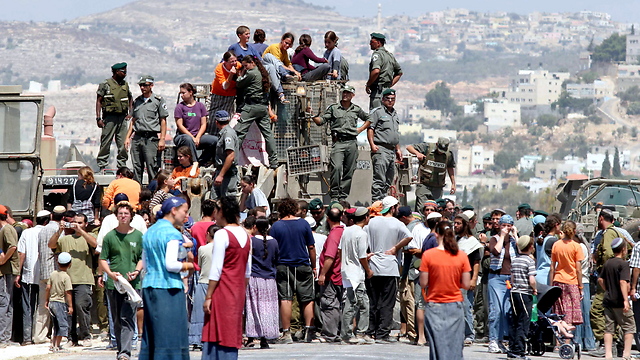
In 2005, he made the decision to withdraw all Israelis and Jews from Gaza, returning it to Palestinian control, as an effort to jumpstart peace. The settlers and many Israelis were very upset that he would take this action as 21 Israeli communities were forcibly removed from Gaza and relocated inside Israel. His hopes for peace as a result never materialized, his stroke a few months later meant that he never had the opportunity to follow up on his vision. The Hamas massacre on October 7, 2023, is tied back my many to this action in 2005 which led to the creation of modern Gaza.
The removal of Israelis and Jews from Gaza in 2005 was highly controversial. In the end, it didn’t accomplish the goal of peace and resulted in the Hamas massacre of October 7th
Sharon is an Israeli hero that I have always struggled with. My grandparents loved him because after the Shoah, he was the face of an Israeli and Jewish warrior. He kept safeguarding the Jewish people as his top priority and his actions were very public and visible. From 1957 through 1973, he played key roles in winning wars to ensure Israel’s existence and inspiring Jews in Israel and the diaspora. When I look back on those years, I see a headstrong officer who I can say thank you to for ensuring Israel exists.
A young Ariel Sharon with Moshe Dayan, another of the great Israeli leaders.
The Sabra and Shatila massacre cause me great pain and challenges. While he didn’t actually murder anybody and it wasn’t IDF soldiers under his command who committed the massacre, he had the opportunity to stop it or at least intervene, and he didn’t. From what I know of Ariel Sharon, I believe it to be a tactical choice that he made. I cannot reconcile the Jewish hero I wrote about with the man who would allow this to happen. I remember struggling with his being elected Prime Minister because of this. This struggle was enhanced by that 2000 visit to Temple Mount. As I’ve said, it’s a place I have always wanted to go and have never been able to visit. While there have been times when it has been permitted, the access is limited and as meaningful as it would be to pray on the Temple Mount, that is forbidden to Jews. Most people don’t know of this prohibition. It is hard to believe that his visit was not intended to incite violence. At the time the impeding visit was discussed with this being the likely outcome. Yet he did it anyway. Just like Sharon in battle, who did what he wanted, and thought was right, he did it with this visit, with the 2nd intifada as the resulting outcome.
And then there was the withdrawal from Gaza. I grew up being taught that when we finally got to the point of land for peace or money to release the Jewish people from oppression (like in the USSR), the battle was won. We would always give up land for peace just as we would pay for the freedom of our people. 21 Jewish communities were relocated. I hated seeing the families uprooted from their homes and forcibly removed. I hated seeing their crying and outrage. Yet I was hopeful that it would be for the greater good and that perhaps, the Palestinians would create a ‘Singapore of the Middle East’ in Gaza, and we might have peace.
As Israel faces all sorts of calls from countries around the world for a ‘Ceasefire Now’ and the creation of a Palestinian State without conditions. It’s worth remembering what President George W. Bush said in his August 27, 2005 radio address about the withdrawal from Gaza and the hope for a different future and what was required.
During the past two weeks, Prime Minister Sharon and the Israeli people took a courageous and painful step by removing Israeli settlements in Gaza and parts of the northern West Bank. I congratulate the Prime Minister for his bold leadership.
Now that Israel has withdrawn, the way forward is clear. The Palestinians must show the world that they will fight terrorism and govern in a peaceful way. We will continue to help the Palestinians to prepare for self-government and to defeat the terrorists who attack Israel and oppose the establishment of a peaceful Palestinian state.
We remain fully committed to defending the security and well-being of our friend and ally Israel. We demand an end to terrorism and violence in every form because we know that progress depends on ending terror. And we will continue working for the day when the map of the Middle East shows two democratic states – Israel and Palestine – living side by side in peace and security.
It is obvious this didn’t happen. There was no Palestinian fight against terrorism, nor did they govern in a peaceful way. The demand for an end to terrorism and violence remains a key requirement for peace and security. The withdrawal from Gaza was an abject failure even before October 7th. My hopes didn’t come to fruition and while I respect Sharon’s efforts to find peace, it turned out to be yet another failure of his leadership decisions.
Ultimately, I find myself viewing Sharon as a Lion of Israel, one of the key people who ensured the survival of the Jewish state, but also one who struggled with political leadership. He isn’t a role model, there is far too much that is troublesome, but he is an icon in the history of the modern State of Israel and one worth studying and discussing to learn from.
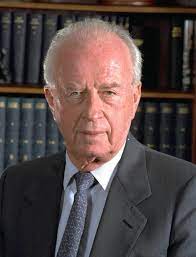
Remember that in the start of this post, I used the work momentous. The birth of Ariel Sharon in a week is significant but not momentous. On March 1, 1922, Yitzhak Rabin was born. They celebrated their birthdays just a few days apart. Two amazing leaders of the Modern State of Israel and the Jewish people. This would have been Rabin’s 102nd birthday!
When I read about Rabin, I’m always shocked that he was Israel’s 5th Prime Minister. I forget that he took over for Golda Meir in 1974 and think of him much more during his 2nd term of Prime Minister from 1992-1995. I also am always shocked at how short his second term was as it seems he accomplished so much during that term. It speaks to how young the country really is that somebody who played a prominent role in virtually all of Israel’s history is somebody that I recall so vividly. In many ways it would be like experiencing George Washington, Thomas Jefferson or Ben Franklin in the US.
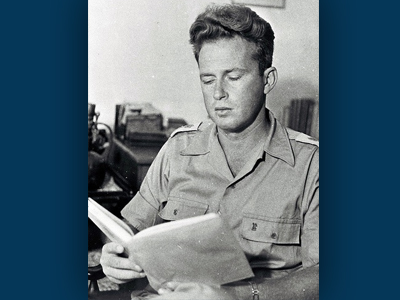
Rabin in his Palmach uniform in January 1948
Rabin, the first Israeli Prime Minister to be born in Eretz Yisrael (Palestine at the time), served in the Palmach and as a commander in the 1948 Independence War. As Chief of Staff of the Israel Defense Forces (IDF), he was in charge of the 1967 Six Day War. Following the War, he was appointed Israel’s Ambassador to the United States from 1968 until 1973. Fifty years ago, he was already an icon. After returning to Israel, Rabin was elected to the Knesset and became Prime Minister Golda Meir’s Minister of Labor. Upon her resignation in 1974, Rabin became Prime Minister.
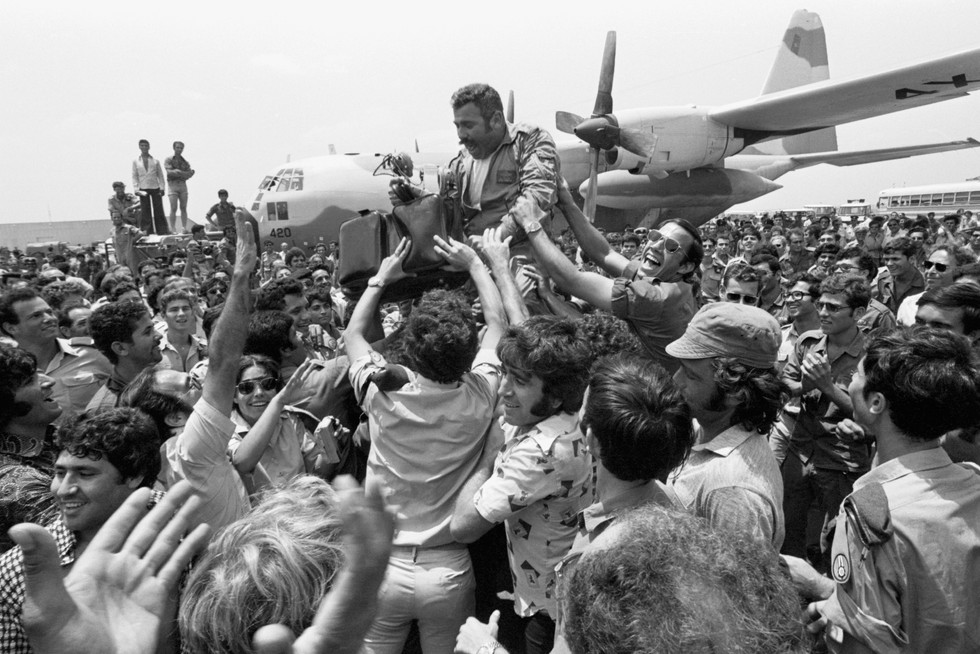
Being Prime Minister in Israel means you live in interesting times and your leadership is constantly tested. As Prime Minister, Rabin signed an interim agreement with Syria in May 1974 and one with Egypt over the Sinai in 1975. One of his most famous actions occurred in 1976 when terrorists hijacked an Israeli plan and flew it to Uganda. Rabin ordered the rescue of Israeli, Jewish, and other hostages from Entebbe in Uganda in 1976.
The raid on Entebbe was a huge success and raised the profile of the Israeli military further beyond the 6 day war. The only casualty was Yonatan Netanyahu, Bibi’s older brother.
Israel is an interesting country with some interesting laws and scandals. In 1977, it was discovered that he and his wife, Leah, had maintained an American bank account from their time in the US as the Israeli Ambassador. Leah publicly confirmed that she opened and operated the account alone however, then Attorney General Aharon Barak decided to prosecute both Leah and Yitzhak for this violation which normally only incurred a civil fine. Named by the media as the ‘Dollar Affair’, Rabin chose to resign over the lapse. When we look at our leaders today, it’s hard to imagine them taking such a moral and ethical stance over such a small infraction when they are involved in much larger scandals and choose to deny, minimize, and deflect. Unlike Ariel Sharon, Yitzhak Rabin chose to live his values, morals, and ethics, no matter the cost.
Rabin returned to the Knesset and also served as Minister of Defense from 1984-1990. In 1992, he again assumed leadership of the Labor party, and was elected to his second term as Prime Minister in June of 1992.
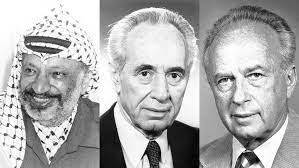
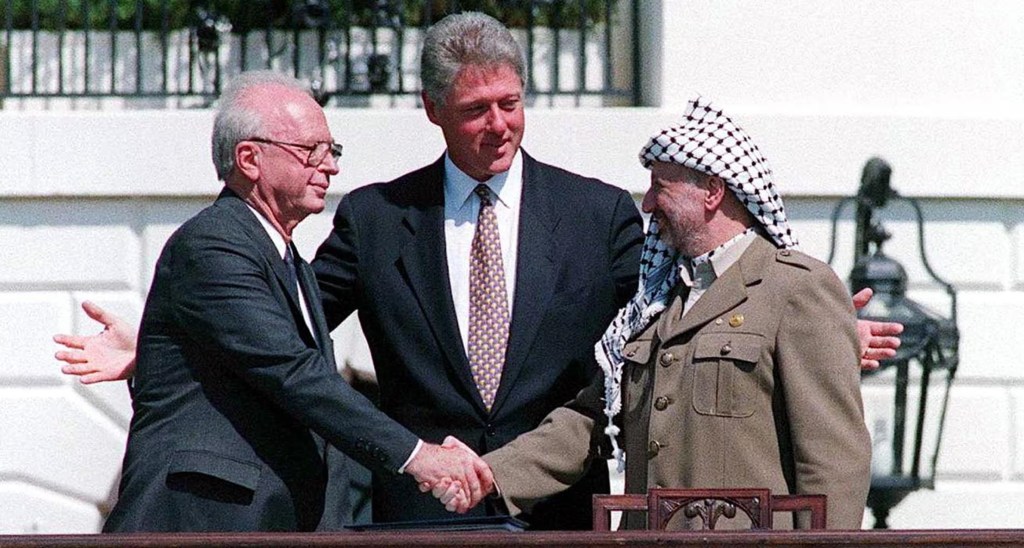
The 1992-1995 years of his second term as Prime Minister, Rabin oversaw some amazing breakthroughs that most people hoped would be transformational in the peace process. The Oslo Accords were negotiated and signed by Rabin with Yassir Arafat. In 1994 Rabin was able to negotiate with King Hussein of Jordan on a peace treaty that remains in place 30 years later. These efforts inspired the world and in 1994, Rabin, Shimon Peres and Yasser Arafat were jointly awarded the Nobel Peace Prize “for their efforts to create peace in the Middle East.”
The 1994 Nobel Peace Prize winnersThe famous picture of Rabin and Arafat shaking hands with President Clinton
Sadly, on November 4, 1995, Rabin was assassinated by a right wing, nationalistic Israeli who didn’t want peace. The assassination came minutes after Rabin gave a pro-peace speech in Tel Aviv to more than 100,000 people cheering and hopeful about a different future.
I remember when Rabin was assassinated and the shock that was felt around the world. The fact that it was a fellow Jew who murdered him made it even worse. Hope for a brighter future seemed to disappear and in the 28 years since, has never recovered.
Every time I am in Israel, I seem to find my way to Rabin Square, the location of the pro-peace speech and his assassination, named for him after his murder. I’ve been there for Yom Ha’atzmaut celebrations and for concerts. It’s an empty space until there is a reason to gather. I can imagine the energy that night and the power of hope. In the back, there is the area where he was shot. It’s preserved as a mini-museum documenting what happened. You can see where everybody was standing and even stand in their footsteps. You can see where Rabin’s security failed, allowing the murderer access to shoot Rabin. You can learn about the chaos that happened after the shooting, resulting in him being taken to the wrong hospital, wasting key time that may have been able to save his life. I am always humbled when I stand there and find myself dreaming of what could have been.
The memorial where Rabin was assasinated.
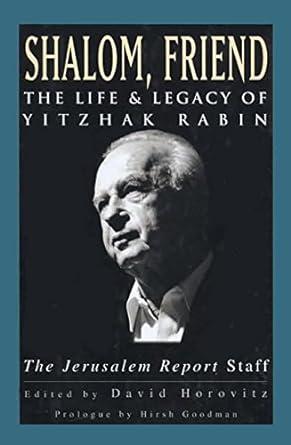
I read the David Horovitz biography of Rabin, Shalom Friend, and was deeply moved by the man. Similar to Ariel Sharon, he was there from the beginning in the War of Independence and throughout all the wars that came after. Rabin remained committed to his core beliefs throughout and unlike Sharon, didn’t waver. Rabin was complicated in the fact that he was both a man of war and of peace. While Sharon faced significant questions related to his sincerity for peace, Rabin was seen by the world as the bringer of peace. I often wonder if Yitzhak Rabin was the last politician I will see in my lifetime who truly acted on his morals, values, and integrity rather than his electability. While I don’t doubt what I think Sharon would say and do after October 7th, I am challenged by what Rabin would say and do. As a Zionist who did everything he could to ensure Israel won every war, he also did everything he could to ensure Israel could win the peace. Would he bring clarity to the world at a time when it’s so greatly needed? Would he be able to unite Israel at a time when we are seeing divisions again about the hostages, finishing the war in Gaza, Bibi as Prime Minister, and so much more.
Despite the Oslo Accords not working the way we hoped, Rabin is a true hero. Unlike Sharon, a Lion of Israel, Rabin was a true statesman. He was a true leader. He had a clear vision for what Israel could and should be. He had a vision of a world where Israel lived in peace with her neighbors. Rabin understood America and diaspora Jews just as he understood Israelis. Perhaps the only thing he didn’t understand was the power of hatred, which cost him his life and has resulted in the Hamas massacre of October 7th. That’s a shortcoming I’d be happy to accept in a leader of Israel and the US.
As we celebrate the birth of two icons of the Modern State of Israel this week, we have a chance to learn from them both. Both taught and continue to teach us important lessons about moral character, about hatred and the short term and long term impacts of it, of leadership and of hope. Although both died before accomplishing their goals due to a stroke and an assassin, both died with hope in their hearts and in their efforts. Let’s not let the sacrifices of these two great men go to waste because we lose hope. Even in times of despair, we must hold onto hope for a brighter future. It is that hope which will sustain us through the difficult times and allow us to reach better ones.
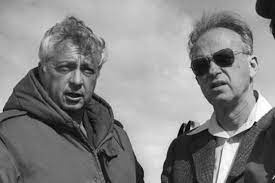
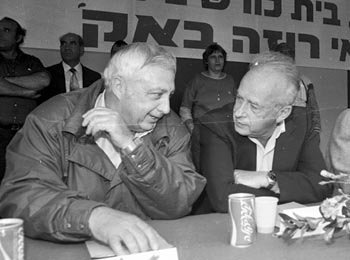
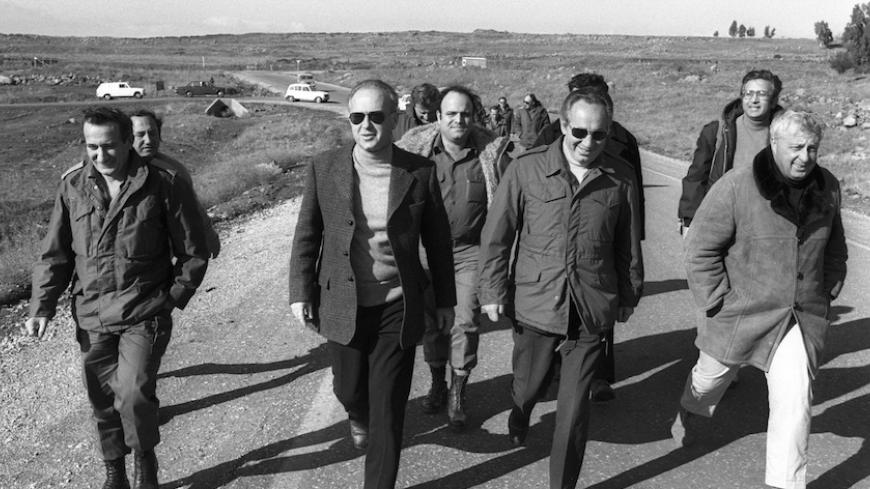
Pictures of Rabin and Sharon. The last one also has Shimon Peres. These are the founding fathers of the Modern State of Israel.
Approximately 20 years ago at an AIPAC Policy Conference, I attended one of the breakout sessions to learn a bit more about a detailed topic. The presenter, Professor Ken Stein from Emory University, blew my mind with details and facts that I didn’t know. I sat there taking notes with tons of questions forming in my mind. There were so many of them, I had to write those down as well. After the session, I went up to talk with him and ask some of those questions. It was an inauspicious start of a friendship and professional relationship that lasts until today.
My friend Professor Ken Stein
I made it a point to always attend Ken’s sessions at AIPAC. I was amazing that he was the only speaker on Israel that I found nobody had a problem with. They may ask tough questions, but Ken wasn’t trying to do Hasbara (trying to convince somebody you are correct) but rather shared the facts and allowed you to determine your own beliefs. As a result of this, I brought Ken to Seattle and then to Orlando to teach about the history of Israel.
In 2008, Ken created the Center for Israel Education (CIE), a nonprofit dedicated to educating the public about modern State of Israel. Using source documents, CIE provides context to a challenging topic. A number of years ago, I was honored when Ken asked me to join the board of directors and I have been a member ever since.
Each week, CIE provides information that is both timely and interesting. Sometimes it is related to, “This week in Israeli history” while other times it relates to what’s happening in the world. I find it interesting and learn a lot about people and policies that I didn’t know. This week’s information was particularly interesting for two reasons.
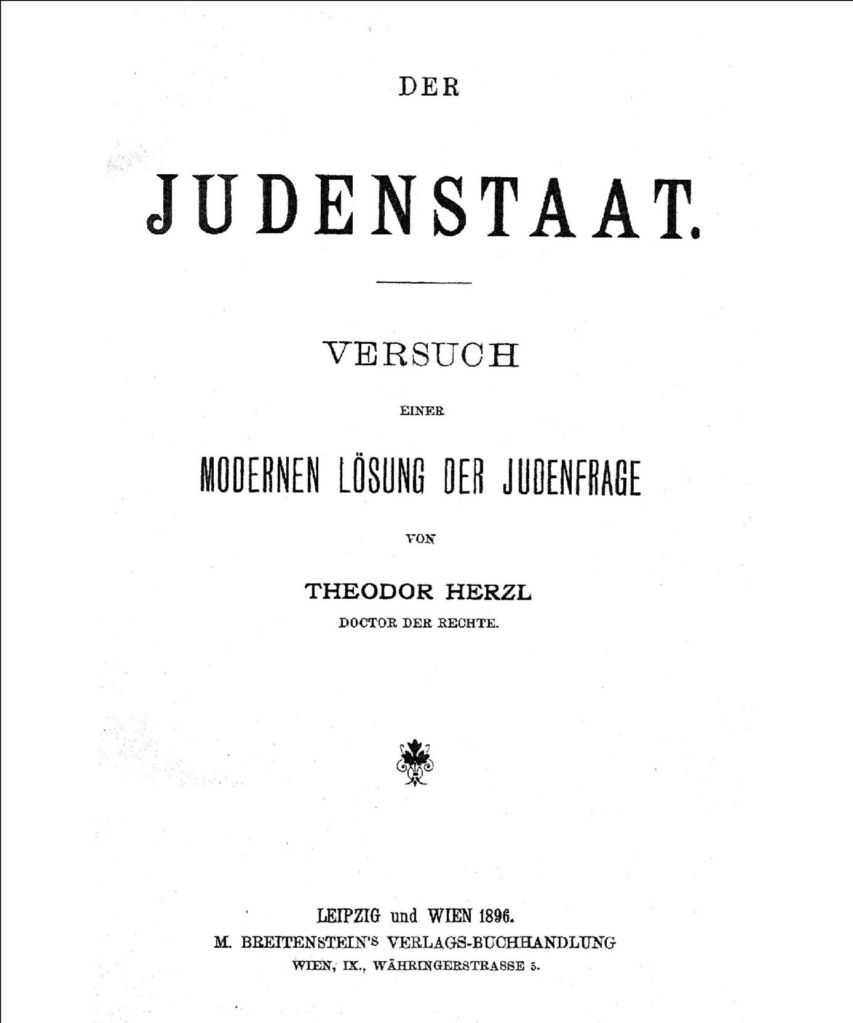
The first reason relates to ‘This week in Israeli history’. On Feb. 14, 1896, Vienna journalist Theodor Herzl published 500 copies of a pamphlet entitled “Der Judenstaat” (“The Jewish State”), declaring the need and justice of Jewish sovereignty 18 months before he convened the First Zionist Congress. I’ve been to Israel 20 times and been to Herzl’s grave at least 20 times. It’s a powerful place to visit as he was the person who had the vision of a Jewish state. Whenever I am there, I find myself humbled by his vision and always remember his famous quote, “If you will it, it is no dream.” That quote has inspired me throughout my career.
Theodore Herzl – the founder of Zionism
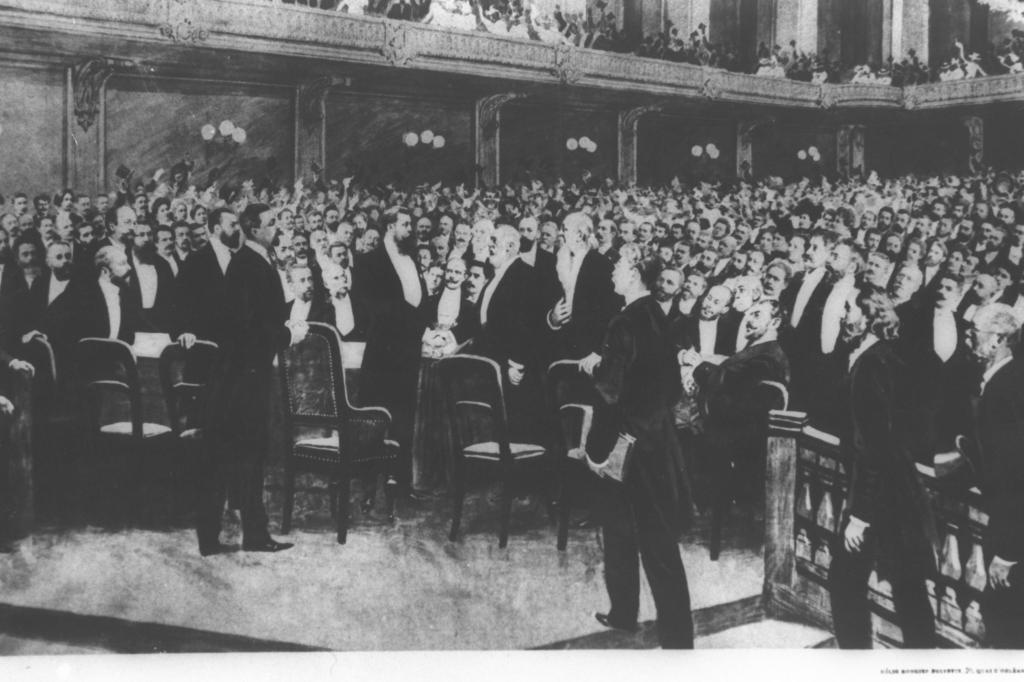
Interestingly enough, Herzl’s idea wasn’t limited to the middle east or to the historic greater Israel. He merely wanted the Jewish people to have their own land where they were in charge and had self-determination. He wrote about It wasn’t until the First Zionist Congress held in Basel, Switzerland with 200 delegates from across the Jewish world, that the goal to establish a Jewish State in the Land of Israel were explicitly adopted by the new Zionist movement.
Theodore Herzl at the First Zionist Congress in Basel on August 25, 1897
Herzl, as a secular Jew and journalist, was inspired by the Dryfuss Affair to find a way to keep Jews safe. It was his vision to have a Jewish State, a homeland, where Jews would be in charge and Jews would be safe. Where Jews would have the power of self-determination. He didn’t care where it was, only that it existed. It was at the First Zionist Congress that non-secular Jews, who understood the tie to the biblical land, ensured that the land would need to be in our historic homeland, not just anywhere.
The Dryfuss Affair on the cover of The New Yorker
Captain Alfred Dryfuss, wrongly convicted because he was a Jew.
It ties to the famous Chaim Weizmann quote. When a member of the House of Lords asked him, “Why do you Jews insist on Palestine when there are so many undeveloped countries you could settle in more conveniently?”
Weizmann answered: “That is like my asking you why you drove twenty miles to visit your mother last Sunday when there are so many old ladies living on your street?”
Wiezmann said, ‘Mr. Balfour, if you were offered Paris instead of London, would you take it?’ … He looked surprised. He said: ‘But London is our own!’ Weizmann said, ‘Jerusalem was our own when London was a marsh.’ He said, ‘That’s true.'”
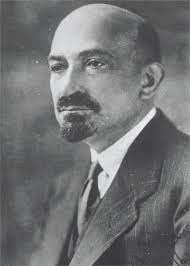
Dr. Chaim Weizmann, one of the great founders of the State of Israel
Having been to Israel 20 times in my life, there is something special not just because it is a Jewish state and the only place that I am in the majority. Being in Jerusalem and standing at the Kotel is a direct connection to King Solomon. It’s a direct connection to the ‘holy of holies.’ To 5,000+ years of Jewish history.
Being at the Kotel is always such a special feeling
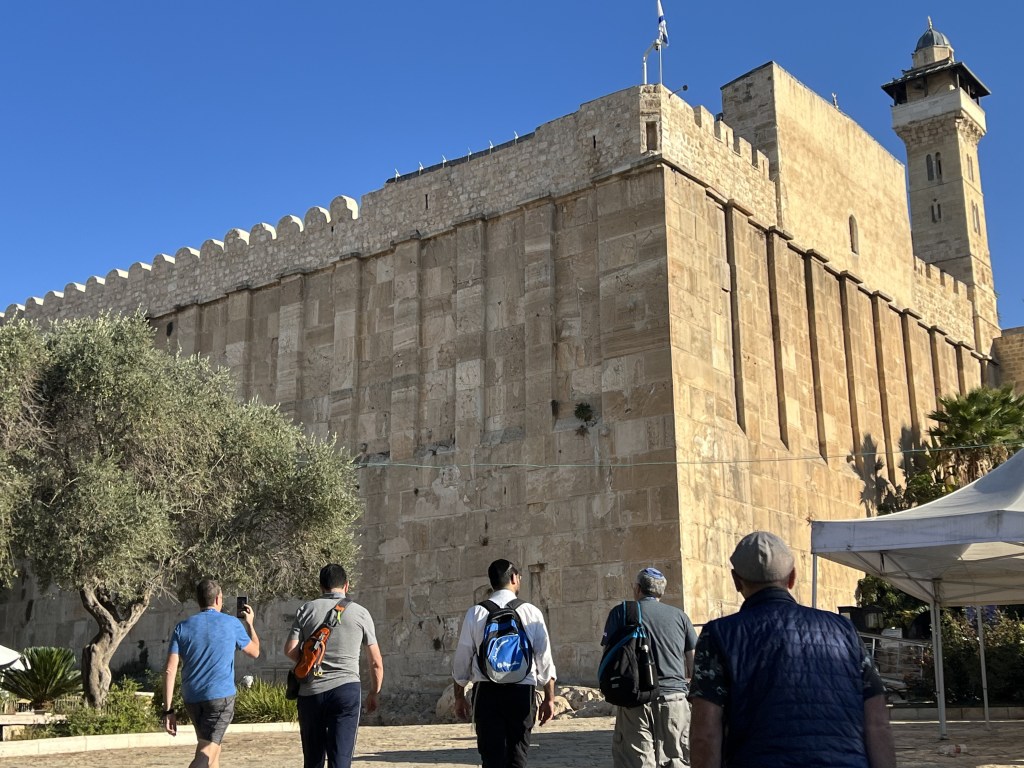
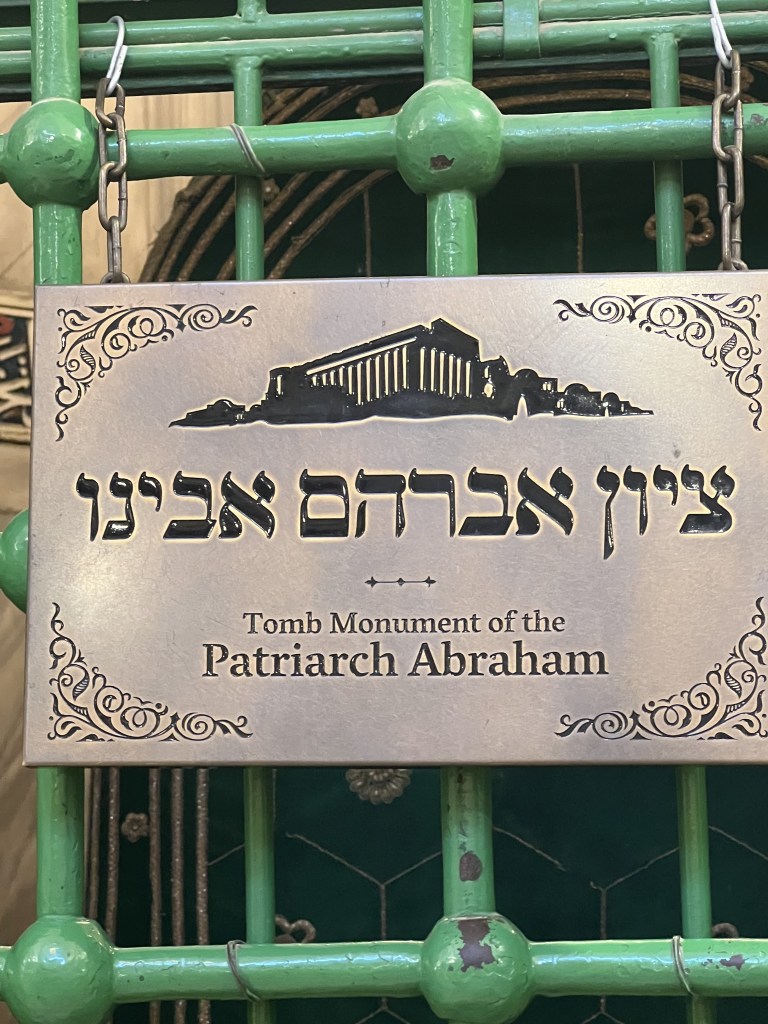
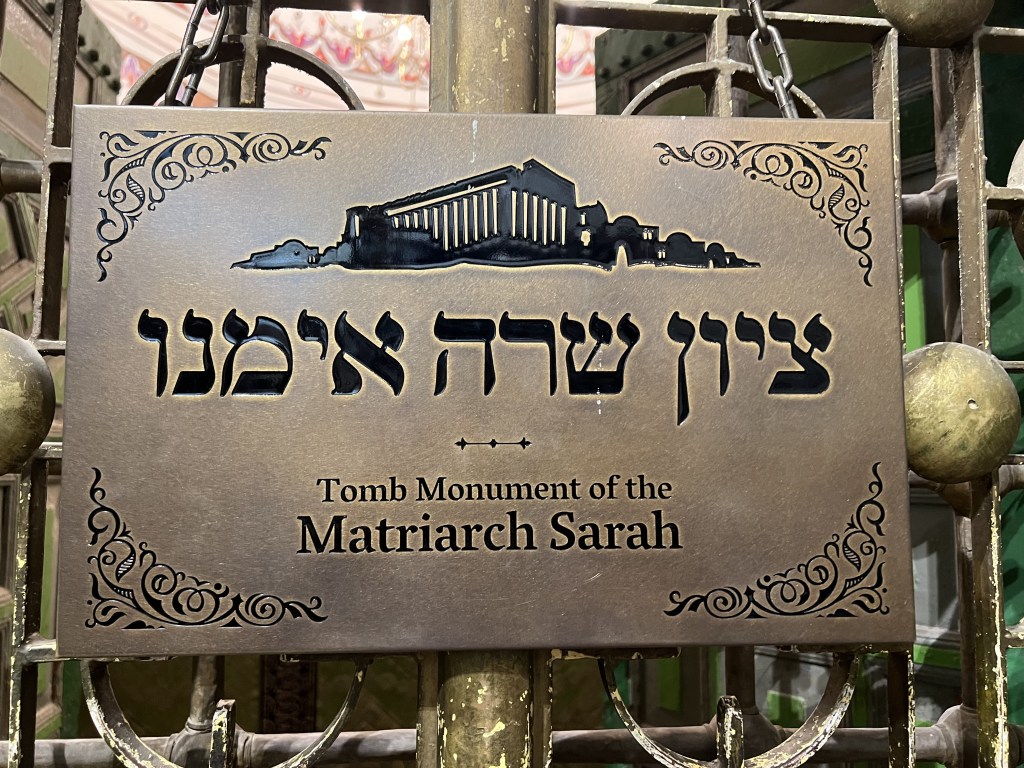
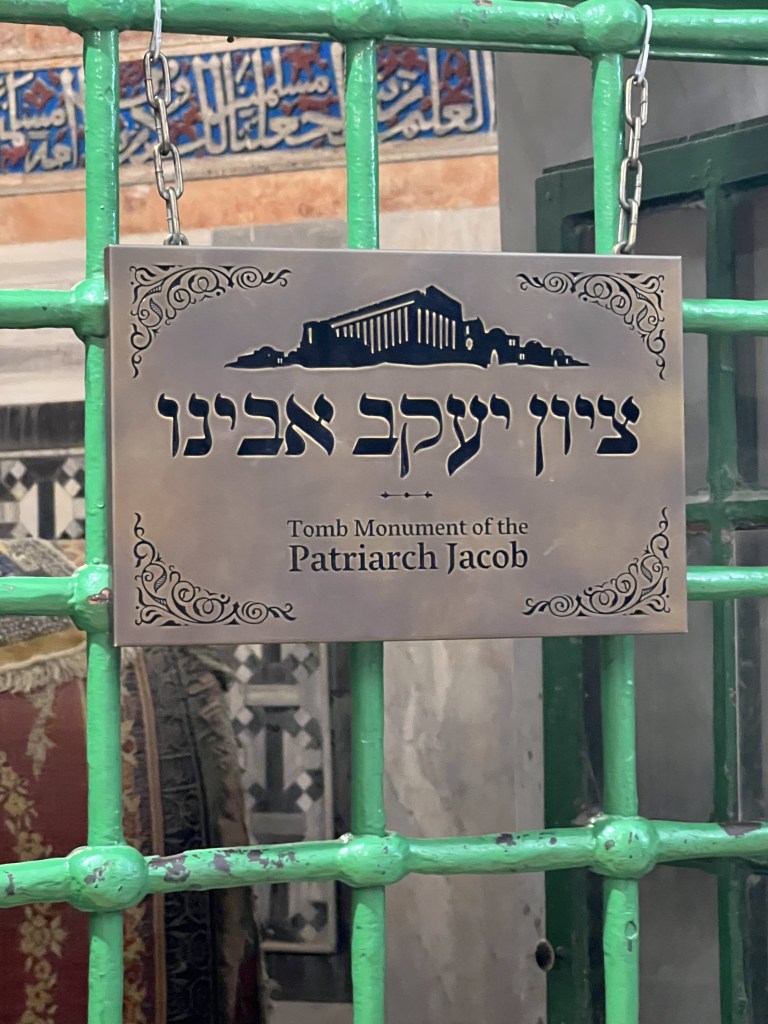
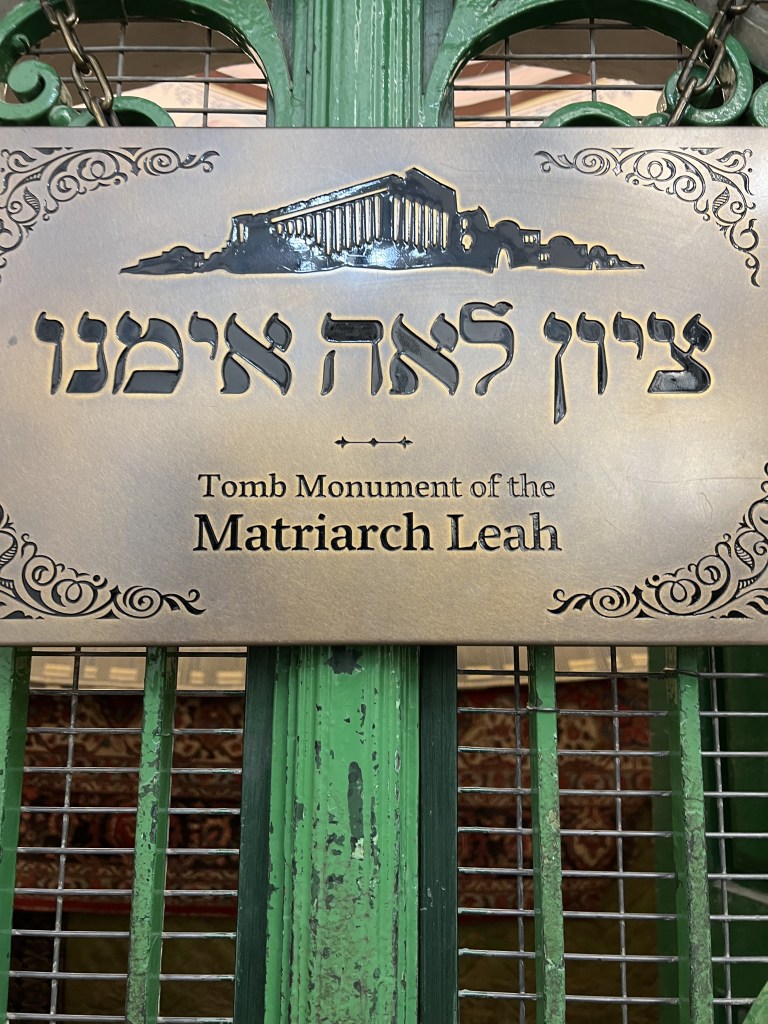
Going to Hebron and visiting the graves of Abraham, Jacob, Sarah, and Leah is a special feeling. (Isaac and Rebeca are also buried there but they are on the Palestinian side so Jews can only go there 10 days a year). I’ll never forget sitting between the graves of Abraham and Sarah as my friend Harry Rothenberg led us in a discussion focused on the text where Sarah was told by God that she would get pregnant when she was 90 years old, and she laughed. We explored not just the story but the love story of Abraham and Sarah. It was incredibly powerful to do this between their graves. It’s something I will never forget.
We also learned that one of times when all of the Tomb of the Patriarchs and Matriarchs is open to Jews, Christians and non-muslims is during the Shabbat of Chayei Sarah. This is when Sarah dies and is buried in Hebron. There are 40,000-50,000 people who come to spend Shabbat outside the Tomb. They bring in catered meals, tents, and it’s a huge party. Watching the videos of the celebration put this on my bucket list.
In Hebron, the oldest complete building still used for it’s original purpose in the world. Inside are the caves (graves) of the Patriarchs and Matriarchs.
Below is the cave with the grave of Abraham, the patriarch.
Across from the cave of Abraham is the cave of Sarah our matriarch, where Abraham buried her himself.
The grave of Jacob, our patriarch. He wrestled with the angel and got the name Israel. It’s unbelievable to be at his grave.
The grave of Leah, our matriarch. Rachel was buried on the road (her grave is in what is now Bethlehem) while Isaac and Rebecca are on the side controlled by the Palestinians and are only accessible 10 days a year to Jews.
I’ve been the Tomb of Joseph, not too far from Nablus. There is something unique and special being there, knowing his story and how integral he was to the Jewish people. It’s hard to explain the feeling of connection, of thousands of years of history, and of peoplehood that occurred for me there.
The tomb of Joseph in Nablus. When I was there it was packed with Jews praying over his grave.
Being in the Jordan River is another unique experience. This is where our people crossed over to enter the land of Canaan after leaving Egypt. The history and connection is amazing. It was smaller than I expected and reminded me of the Ichetucknee River outside of Gainesville, Florida, that I used to go tubing down in the summer. I had imagined this powerful river that was both wide and deep. It’s the same river my ancestors crossed thousands of years ago as they entered ‘the land of milk and honey’ for the first time.
Rafting down the Jordan River is always fun – on one trip we went with a group of Muslim women who were fully clothed while we were in bathing suits. They started a splash fight with us and we had so much fun with them.
As you drive through Israel you see the field where David slew Goliath. In Tzfat you see the fields where Lecha Dodi was inspired, the mikvah of the Ari, various ancient synagogues. In Akko the excavated buildings from the crusades exist. You can see the Dead Sea Scrolls. It’s a land filled with rich Jewish history everywhere that you turn. That’s what Herzl didn’t understand but was smart enough to listen the First Zionist Congress. It’s why the modern State of Israel is home to all of us. It’s not just a country of Jewish self-determination. It is our historic homeland, our past, present, and future. It is tied to our souls as anybody who has visited there, Jewish or not, will attest. I’m grateful that Herzl listened to the delegates at the First Zionist Conference and wouldn’t accept just anywhere. Israel is my mother that I travel 6,500 miles to visit and it’s worth it every time.
Looking out on the fields in Tzfat. This is what inspired L’cha Dodi and where they would walk out to meet the Shabbat Bride each Friday night.
Looking down at the Mikvah of the Ari from the 1500s. It’s inside the building. He used in the 1500s and I used in in 2021 and 2022. That’s the power of Israel for Jews.
The actual Mikvah itself. The Ari used it in the 1500s, stepping into the same pool (not the same water) as I did in 2021 and 2022.
The second piece of information that I found fascinating goes back to 1993. During the Knesset debate over the Oslo Accords in September 1993, then Foreign Minister Shimon Peres warned that “There are in Gaza this year between 750,000 and 800,000 inhabitants. Within 20 years, there will be almost 2 million residents in the Gaza Strip. The population density leads to violence, the poverty leads to terrorism.” If you read his full remarks, it is fascinating to apply them to today.
I met Shimon Peres more than 20 years (and 70 pounds!) ago. A truly special man and leader.
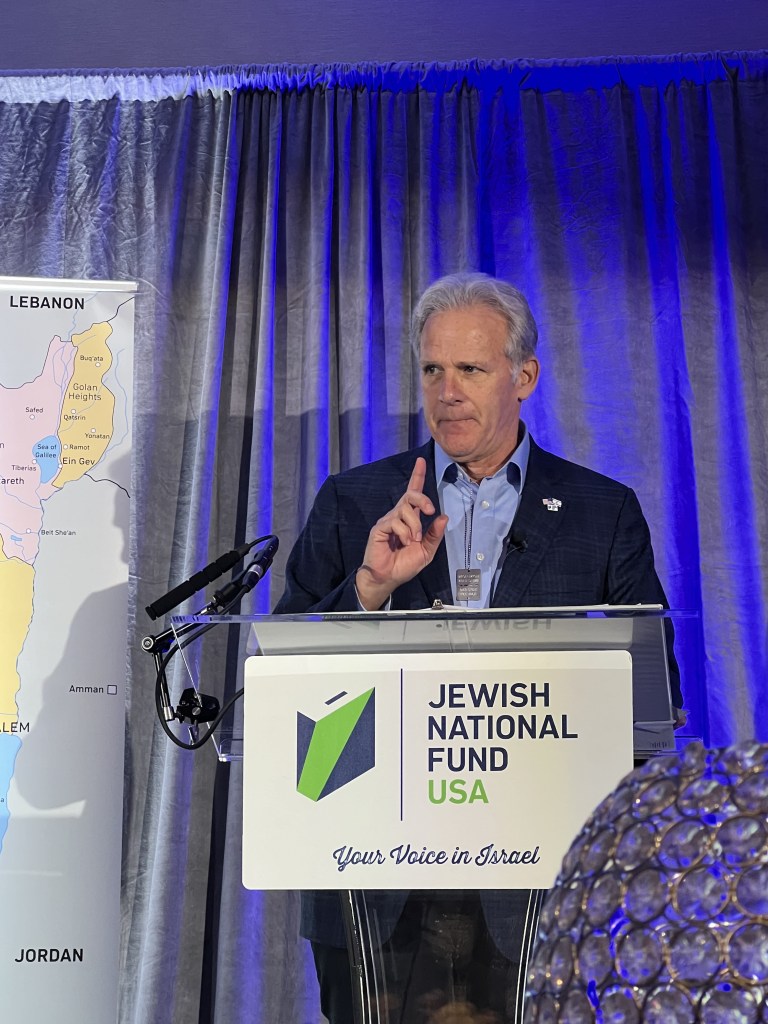
As Israel continues to respond to the horror of October 7th, there are more than 2 million people in Gaza. Life there has led to violence and terrorism. Hamas, UNWRA, and the UN have contributed to these problems. At a JNF lunch event today, Ambassador Michael Oren told us that Israel is figuring out how many of the terrorists on October 7th were taught at an UNWRA school. I’m afraid to see how high that number will be. UNWRA ignored or allowed the strategic headquarters of Hamas to be built in tunnels under the UNWRA headquarters. The textbooks are filled with antisemitism. Even children’s programming is targeted to hate and kill Jews. The Hamas version of Sesame Street, Tomorrow’s Pioneers, is focused on murdering Jews. This clip blames the Jews for a character cheating in school. Shimon Peres was right about the growth in Gaza and what the consequences would be. October 7th proved him right. The question is how do we move forward from here?
The textbooks provided by UNRWA to the Palestinian/Gazan children are filled with antisemitism and Jew hatred.
In the same warning, Peres stated, “Neither do I propose that we talk of economic cooperation. Why? Because the Arabs believe that the State of Israel wants to dominate the region. We do not want to do the Arabs any favors. I am not even suggesting economic cooperation with the Arabs. All I am telling the Arabs is this: There are problems that will remain unresolved unless we tackle them jointly. We should make a joint effort only when problems are insolvable without such a joint effort.”
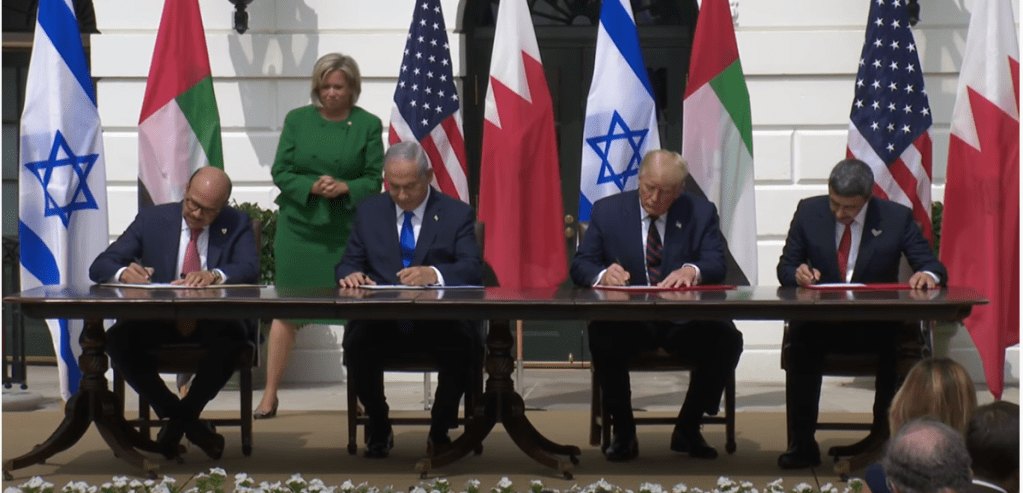
Was this Peres foreshadowing the Abraham Accords? The threat of Iran brought Arab countries together to recognize Israel, forever changing the dynamic. The Iranian problem was insolvable without a joint effort. After October 7th, these nations did not abandon Israel. They understand that Iran is the problem and that it’s insolvable without Israel being a part of the solution. Could this be the basis for a new government in Gaza and perhaps the West Bank/Judea and Samaria? Could this be the key to rebuilding Gaza and finally making it into the ‘Singapore of the Middle East’? Could this be the basis for peace and a willingness to live together?
An incredible picture of the signing of the Abraham Accords as more muslim countries recognize and normalize relations with Israel.
I find myself looking to some of the great Israeli leaders of the past for inspiration on a regular basis. David Ben Gurion. Golda Meir. Shimon Peres. Yitzhak Rabin. Moshe Dayan. Menachem Begin.
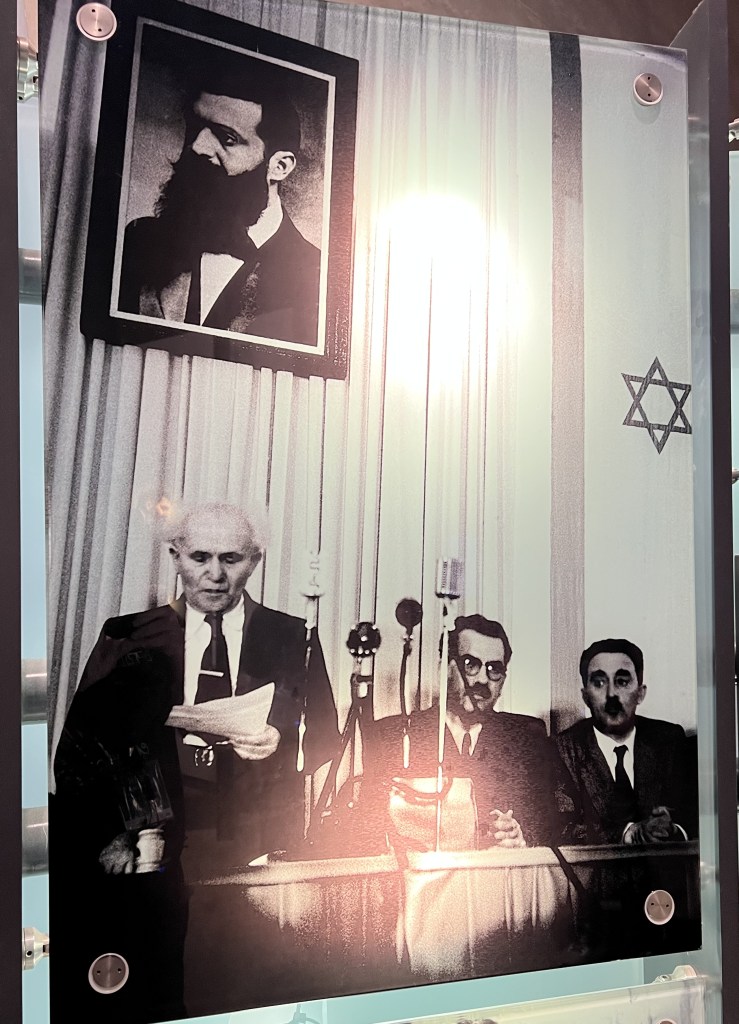
Picture of Ben Gurion reading the Declaration of Independence in Independence Hall
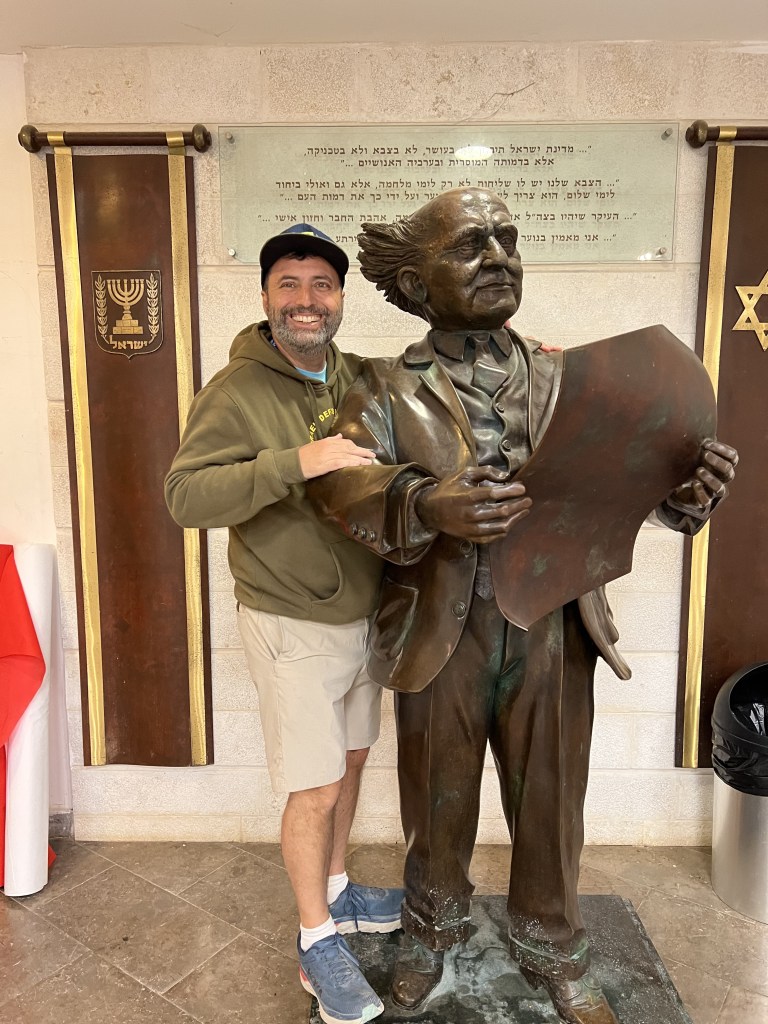
When I saw this statue of Ben Gurion, I had to get a picture with it. The more I learn about him, the more in awe I am of who he was and what he did.
I think of current Israeli leaders such as Ambassador Michael Oren, Ambassador Ron Dermer, and the many Consul Generals I have had the pleasure to interact with and befriend. We are wise to listen to their insights. Michael Oren has a substack that I now subscribe to. Their words are treasurers.
Michael Oren speaking in Orlando this week at a JNF event. A future blog will talk about what he said.
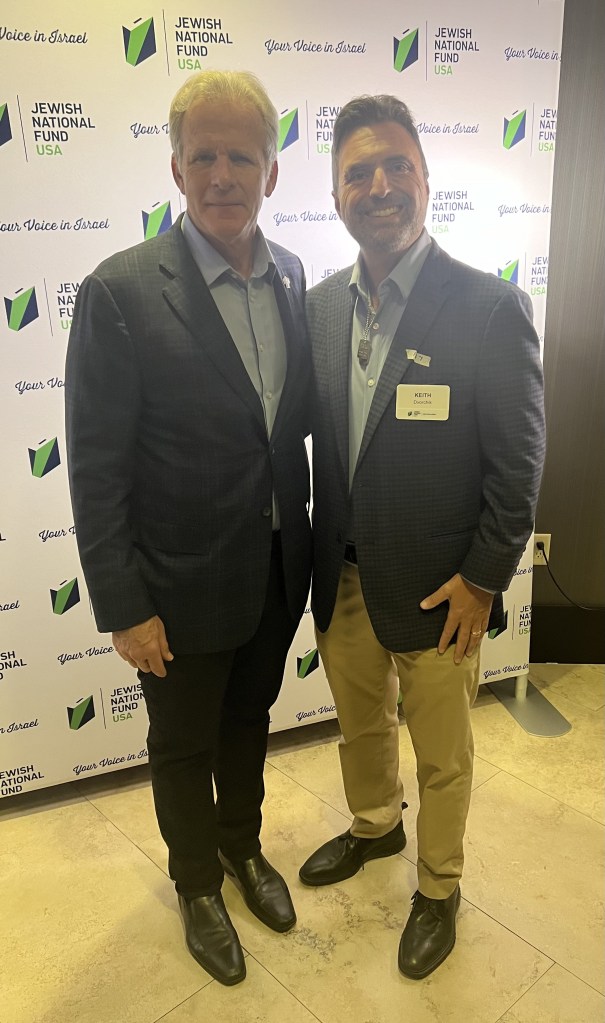
Talking with and listen to Michael Oren is truly incredible. A brilliant man to learn from
Two of my favorite Ben Gurion quotes are:
“Dare, Persevere, Succeed.”
“Pioneering is refusing to accept reality as it is.”
As I look back at Herzl and at the words of Peres; as I look forward to ‘The Day After’ and the Abraham Accords, these two quotes inspire me for the future of Israel. And they inspire me personally. We change the world by being daring, persevering, and succeeding. And by being pioneers and not accepting reality as it is, we have the opportunity to create a new reality. A new dream. “If you will it, it is no dream. Dare, persevere, succeed. Refusing to accept reality as it is.” Three quotes that sum up Israel and the Jewish people. Three belief systems that will change your life and change the world.





















 keithdblog