If you don’t know what you’re willing to die for, then you don’t know what you’re living for

About a year ago, on a trip to Israel, Saul Blinkoff, one of our trip leaders was speaking to us. He quoted one of his Rabbis, the great Rabbi Noah Weinberg (z’l), the founder of Aish HaTorah, who taught him that “If you don’t know what you’re willing to die for, then you don’t know what you’re living for.” Powerful words and a powerful and deep thought. We spent the rest of the trip grappling with what that means in general and to each of us. It’s something that has stayed with me since then and something that I ask myself on a regular basis.

In this crazy world that we live in today, with all the Jew hatred we see around us, take a few minutes and ask yourself that question. What are you willing to die for? When you come up with the answer, make the choice to LIVE for it. Almost 30 years ago, I began a career working on behalf of the Jewish people. From Hillel to the Federation to the JCC/Federation to today, working with clients in Israel, I have spent the vast majority of my professional life. I write and speak out because so many Jews before me were willing to die so that I could live, so many are fighting right now to ensure that my children and future grandchildren will be able to live, that I must actively live.

My friend Saul, who spoke that wisdom to us in Israel last year, is also a Hollywood Filmmaker (Disney, Dreamworks, Netflix). He has a great podcast that I encourage you to subscribe and listen to. He began his career with Disney. On that trip, he gifted us all not just a prayerbook, but one where he personally drew Mickey Mouse for us. He told us the story of how when he was illustrating the Winnie the Pooh movie, he made sure to put a mezuzzah on Winnie the Pooh’s doorpost, joking that he made him “Winnie the Jew”. We all have the ability to pick the things that matter to us, the things we would die for, and live for them. I do that with my family. With my children. I’d willingly die for them so why would I not take advantage of the chance to live for them. I take advantage of the time I get to spend with them because no time is guaranteed.

I feel the same way about my values. They matter to me. They define who I am and how I live. I’m willing to die for them. If that’s the case, then I’d better live for them. That means actively making choices that align with my values, even when they aren’t popular. Even when they aren’t easy to follow. Even when there are consequences for living them actively. Especially when they are difficult to follow through with or there is risk involved in standing by them.

Saul talked about this an much more on Ben Platt’s podcast. It’s worth the 30 minutes to watch and listen, to take in what he says and ask yourself deep questions. Especially the big one. What would you die for? And if you’d die for it, why aren’t you living for it right now?

In the podcast, Saul talks about the barbecue with the families from the kibbutz and the dancing with the children on our soldiers. That was my trip. Here’s a video of us dancing with the kids. It is something I will never forget. These families were attacked on October 7th. They had to relocate to Netanya from the Gaza envelope. They left their homes and their lives behind, moving to an apartment building in a different city. Many of the husbands were not there, called up to serve in the IDF to defend Israel and the Jewish people. Yet they were living life. Robustly. I watched a sweet toddler riding his tricycle. Kids playing ping pong. And, as you see in this video, dancing on our shoulders.

They literally went through what they would die for – living in the South of Israel in the Gaza envelope. It’s clear they know what they will live for and are doing so. There is much we can learn from them.

The older I get, the more I find I can learn. The more I find I must learn. Today’s world doesn’t value learning. Look at how poor our education system is. Look at how few people actually want to take the time to learn facts – instead they’ll get their information and knowledge from a TikTok video made by somebody who knows nothing. Judaism is all about learning. What’s going on in Israel and in the United States takes effort to learn. To investigate. To question.

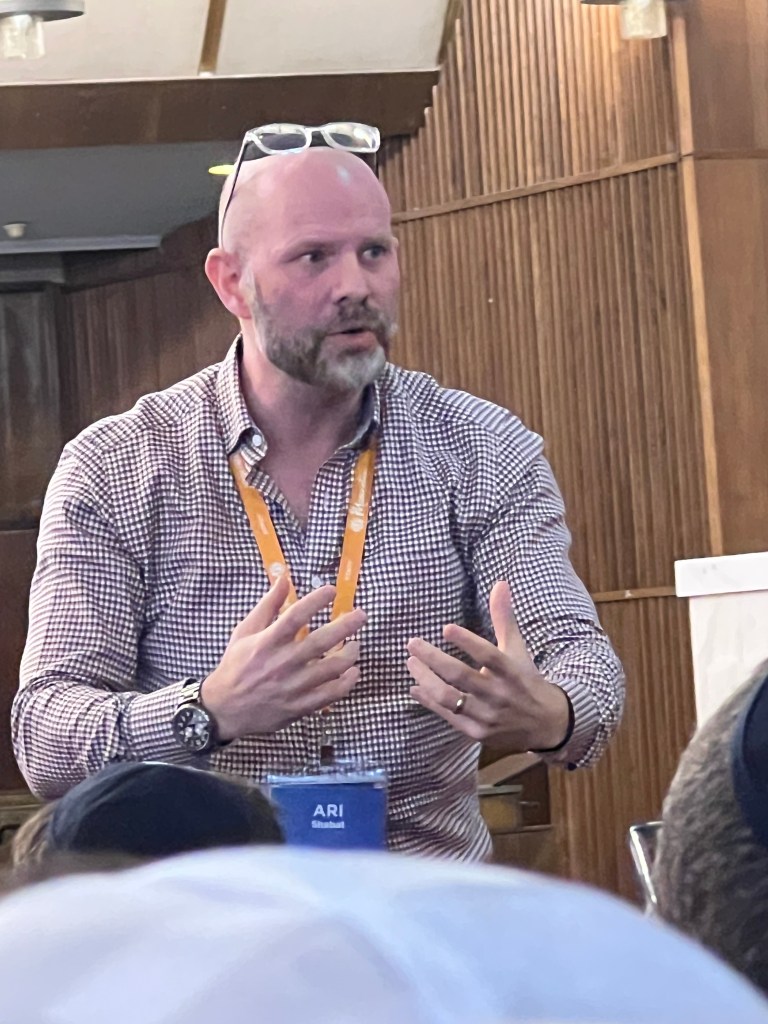
In this critical time, remember the words from the Mishna. “Find yourself a teacher, acquire for yourself a friend.” There many types of teachers. You can find a Rabbi or a Jewish educator. Ask the hard questions. You can find some experts who write regularly. Read what they write, listen to their podcasts. I have done both. Every week I learn from my friends Harry Rothenberg and Ari Shabat through their video blogs. You can subscribe via email to Harry’s and by whatsapp to both Harry and Ari’s. I read Michael Oren, who has both a substack and writes in the Free Press. I read John Spencer’s substack which you can subscribe for free or get a paid subscription. I am a paid subscriber to The Free Press, with it’s many articles and different points of view. I read Daniel Gordis’s Israel from the Inside, delivered to my email each morning. I get the Bernie News Network on WhatsApp, with so much information every day it is usually overwhleming. You don’t have to be like me in terms of how many teachers you choose to have. Start with one. Get a taste of what real, accurate, challenging information is like. Things that make you think, not parrot back a position somebody else tells you to take.

Once you start down this path, your mind and spirit will thank you.

Lessons – will we ever learn?

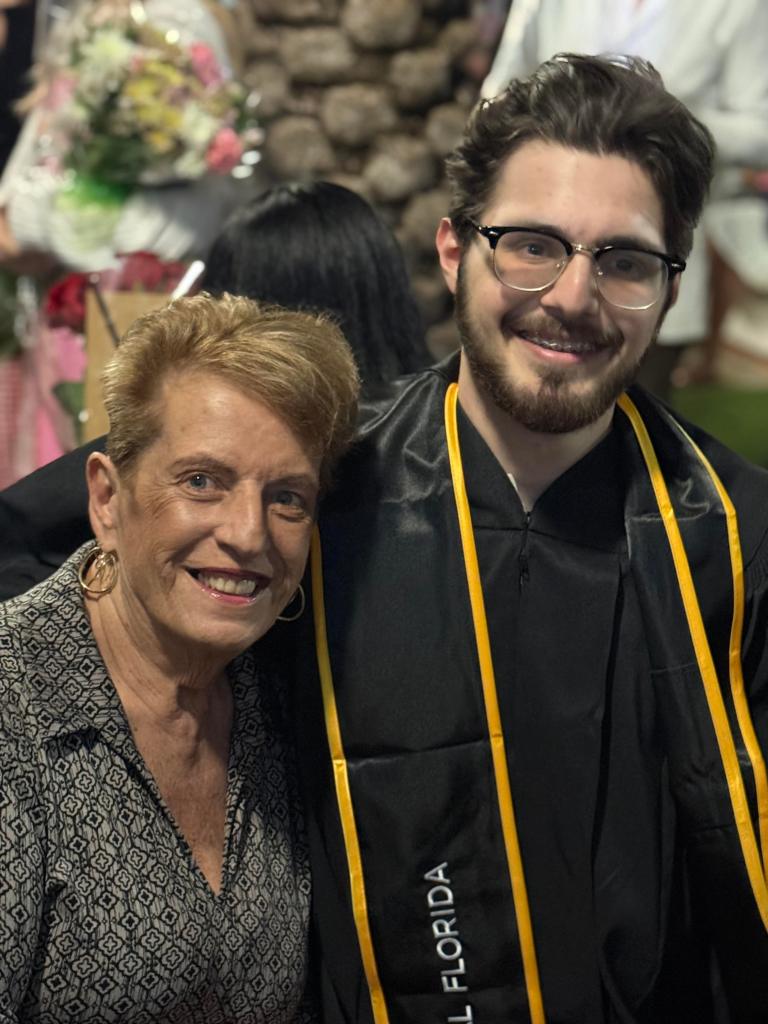
My youngest son graduated college on Friday. It was a momentous occasion in his life and in ours. My mom came in to celebrate and attend the graduation. I treasure these moments more and more as time goes on. We sat in the auditorium, watching where he was sitting (he helped us find him, texting us his location and turning around to us and waving), and waited for him to have his name announced and walk across the stage. As a parent, it was an incredible moment for many reasons.

My mom and Matthew at graduation – I treasure these moments more and more.

I noticed a few things surrounding his graduation that got me thinking. They may seem totally unrelated, but for me, they all tie together.

On the drive to campus for graduation, I noticed a few things. First, how many people drove as if they were the only car on the road. Turning right from the left turn lane. Going straight and trying to outrace cars from the left turn lane. Where was the common courtesy? Where was basic rule following? I laughed as one car that did this ended up far behind me – they almost caused an accident to end up behind the car they had to cut off.

The second thing was that when I tried to be kind, to let cars in ahead of me, how they wouldn’t accept the kindness. They wouldn’t go in front of me. It got me thinking, “When did kindness become so rare that people don’t recognize it?”

At the graduation, it was the same conflict. They asked not to scream and yell when your loved one’s name was announced as it meant the next name couldn’t be heard. Yet people screamed, drowning out the name of the next person graduating. Rudeness and lack of caring was all over the place. As I went to video my son about to walk across the stage, the people in front of me had to stand up, blocking my view. No awareness of people around them. I stood up, moved slightly, and was able to video and watch him walk. Had they done that a minute later, I would have missed it.

Yet the number of people willing to take pictures of my family when asked, the number of families who I took pictures of when asked was remarkable. The wishes of congratulations to strangers because they were celebrating the graduation of a loved one was remarkable.

What a dichotomy. It got me thinking that perhaps America isn’t really as lost as it appears. Perhaps there is hope. Perhaps we can regain our country from the extremes and return to a world of kindness, caring for others, and awareness of the world around us. Perhaps we don’t have to live in a world where it is ‘my way or the highway’ on every single issue.

I do know one thing for sure. It starts with each of us. We may not be able to change the entire country but we certainly can change our own behavior. We certainly can change the world of those around us. I hope we can all make a commitment to do our best to be kind. To be aware of those around us. To celebrate with those who are celebrating and to embrace joy rather than hate. It is how we will save our country and our world.

A little more than 10 years ago, I began writing about the rise in Jew hatred. It was controversial at that time to use the words Jew Hatred. I used them anyway because that’s what I was seeing. Swastikas being drawn on buildings in Seattle. This article in the Seattle Times on June 26, 2016, got pushback that it wasn’t happening and that this was all being overblown and exaggerated. We see now that unfortunately, I was right. This article, almost 9 years old today, is hard for me to re-read because of what has happened in those 9 years. Because of what was being called out then that was ignored by so many. Because of October 7, 2023 and what has happened since then. The signs have been there and far too many of our ‘leaders’ have chosen to ignore them.

Take for instance, this harrowing exchange between David Horowitz and a student at the University of California San Diego in 2010. This was FIFTEEN (15) years ago. The only difference between then and now is that Horowitz would be booed offstage now, this vile, hateful woman would be cheered, and the University would defend HER hatred instead of protecting Jewish students on campus.

The Jew hatred on campus was clear in 2010 but we ignored it

We saw things like this years ago but failed to take it seriously and failed to act. As a result, our Jewish students on campus today are faced with incredible antisemitism. I spoke with one of the leaders of Mothers Against Antisemitism from the Dallas chapter this week and the stories she shared about the University of North Texas were horrifying. Students afraid to be publicly Jewish in any way. Jewish/Israel speakers being spirited to campus at night, under the cover of darkness, to an unadvertised speech because had it been advertised, students would have been too afraid to show up. The work we have been doing has simply failed and we must admit it. We built building on campuses while the Jew haters built departments, programs, and hired Jew hating professors and administrators. We put Jewish names on libraries and centers for performing arts while the Jew haters invested in teaching that Jews are evil, are powerful and responsible for all the bad in the world, that Israel is a genocidal country that doesn’t want peace and are colonialists that want to take over the entire middle east and the world.

My friend Adam Bellos wrote a powerful piece last week. Most of you likely did not see it or read it. I encourge, no I implore you to read it. To think about what he writes. To take action to change the current reality. He writes:

This is the tragedy: we trained kids to explain checkpoints without explaining Herzl. We taught them to debate apartheid without introducing them to Ahad Ha’am, Rabbi Kook, or the Book of Joshua. We armed them with casualty charts, not courage. With U.N. resolutions, not roots. With talking points, not Torah. Hasbara failed because it tried to outsource pride. Because it assumed the average young Jew could fight for Israel while remaining estranged from Hebrew, from Zion, from the soul of their people. Because it traded the moral complexity of the conflict for the false clarity of press releases.

His summary is a beautiful and powerful statement that I believe in, have advocated for, and continue to push to create.

And so, this moment demands something entirely different: a revolution of Jewish education. A renaissance of context. A return to knowing who we are, not just what we’re defending. We don’t need more content creators to explain why Israel is right. We need Jewish children who know why they are Jewish. We don’t need another “crisis comms” playbook. We need people who speak Hebrew, dream in Zion, and learn how to walk into a room not begging for understanding but embodying truth.

We need to make sure we are providing quality and meaningful education to our children and, in all honesty, to our adults. As my friend Ari Shabbat often says, “The Torah is playbook for life”. If we don’t know this, don’t know how to use it, don’t bother every learning that it can be interesting, fun, and meaningful to learn Jewishly, how can we survive? If Israel becomes just another country rather than our spiritual homeland, Judaism will never be more than meaningless rituals that we do because our parents did them. There will be no meaning in hanging a mezuzah, putting on tefillin, or identifying as Jewish. We will merely be Jewish because we have been told we are Jewish. To me, that is unacceptable. I hope that you find it unacceptable as well.

I was deeply saddened to hear the news that Rabbi Sholom Lipskar (z’l), the longtime leader of The Shul of Bal Harbour and founder of the Aleph Institute, died this week. I had the privilege of meeting Rabbi Lipskar a number of times and the community he build at The Shul of Bal Harbour is extraordinary. I found him to be a man who didn’t accept the impossible. His vision impacted not just the South Florida Jewish community but the entire South Florida community and the world. I found him to be a kind man, always willing to listen, always seeing the good in people, and working to make the world a better place. If you want to read a little about him, you can do so here. The world is certainly a bit dimmer without him in it, however his teachings and life’s work remain to inspire us all.

At the end of the day, we are left with one simple question. What are we going to do? Are we going to be like Rabbi Lipskar (z’l)? Are we going to take action as Adam implores us? Are we going to take the time to learn what being Jewish is really about? Are we going to make the effort to be kind to others? The world we live in today is one that is short on kindness, on wisdom, on compassion, and on knowledge. Are you going to believe whatever somebody decides to tell you or are you going to actually learn something? Are you going to only listen to one narrative or are you going to engage with others and learn both with and from them?

The choice is yours. Just remember that choices have consequences. We are where we are today because of the choices we made years ago. When we look back in a decade or two, I hope that we are happy with the choices we make now and that we have the type of world so many of us desire and want to work to build.

Creativity throughout Israel

I spent this week in Israel with one of my clients, Dror Israel. Dror works with youth in schools, afterschool programs, youth group, and summer camps. It was an amazing four days that both inspired me further with the work they do and also challenged me to ask why we can’t replicate it here in the US. At a time when it’s clear that we have lousy leadership throughout our organizations, local, state, and federal governments, and internationally, why can’t we look to a different model that not only inspires leadership but teaches it. That not only values the individual but also the group. That has proven to work across diverse groups of people. What stops us from actually doing better?

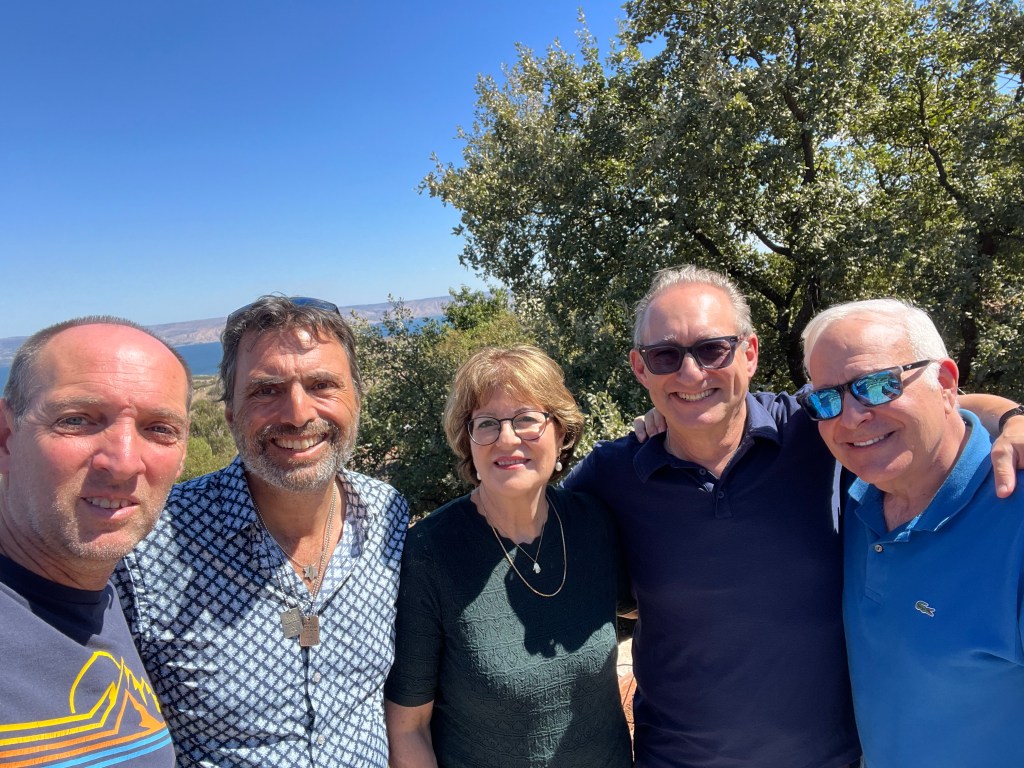
Gary (Dror Israel), me, Irit, Marc, and Michael. My partners and I had an incredible experience with Dror Israel last week.

Here is a great example of what we saw in Israel with a Dror school in Ravid. The students wanted to have a music room. There were two challenges to adding a music room. There was no existing room that could be repurposed for a music room and while there was plenty of room to build a music room, there was no money to build a new music room. Simple, right? In America, this would mean there would simply be no music room. Two good reasons, a lack of creativity to figure out a solution, so the answer is simply ‘no’. Not with a Dror school!

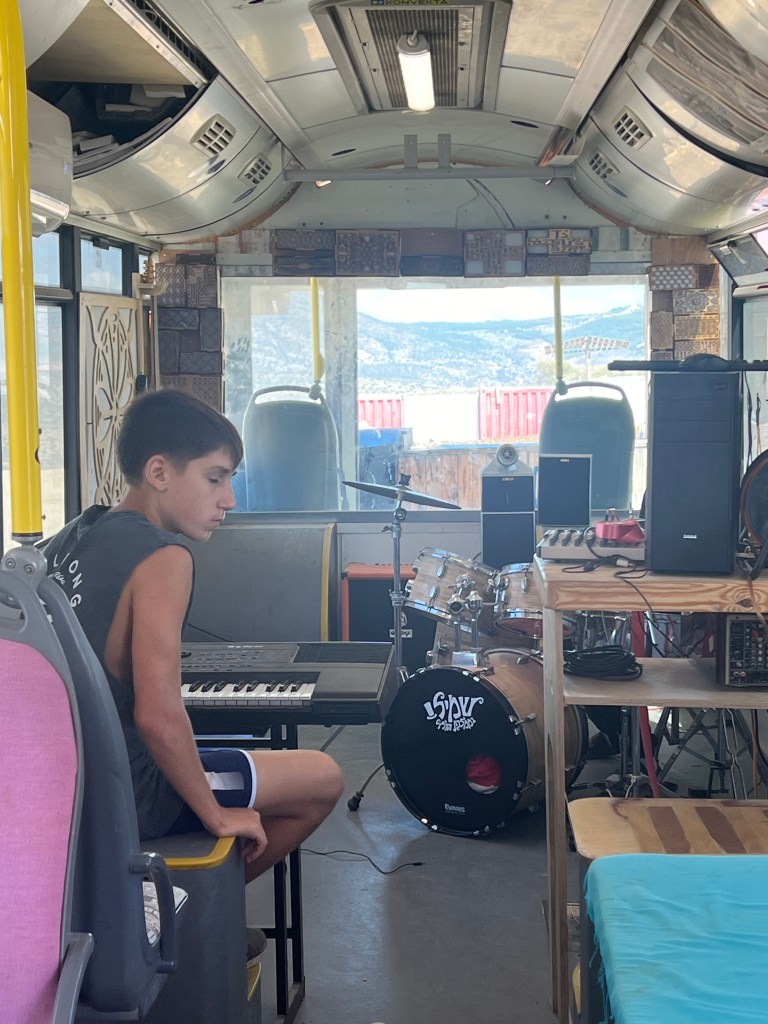
The students wanted the music room so they had to figure out a solution. And figure it out they did! They learned that there were old shuttle buses that used to take people from Terminal 1 to Terminal 3 at Ben Gurion airport that no longer worked. They learned that if they could get one of the shuttle buses to the school, they could have the bus for free. The school has a maker space where they use 3D printing and computer software to design things build in a mdoern ‘wood shop’. What did the students do? They used their technology and what they had available to them to make their own drum set! Problem solved. Solution achieved. There is now an amazing music room, housed in the old shuttle bus, that students use all the time. Imagine if our students, leaders, government, etc. used this type of thinking. Imagine if they were empowered to find solutions to our problems

The old shuttle bus that is now a music room. Pretty ingenious.
Inside the music room/old shuttle bus
The drum set was made by students on campus using their technology. What a great space!

I would love to do something like this at my house to make an art studio for my wife. Put in some air conditioning and she’d have exactly what she wants without having to lose a bedroom in the house, without having to convert our garage and lose that space. Without having to deal with permits and zoning. If you ever see an old bus in my driveway, you will know that I was inspired by the High School students of Ravid and that it is an art studio, not a bus!!

We have so many children struggling in school in the United States and no solutions for them. This was before Covid closed schools for up to 2 years and made it even worse. I was proud when my younger son decided to stay home and go to Community College where he could learn to wake up, do homework, study, and get back into the learning mode without the stress of going away to college. He graduated with his AA Magna Cum Laude and now that he is at a traditional 4-year University, he is doing outstanding academically. He was the minority who made that non-traditional decision. Our education system doesn’t encourage creative thinking or solutions. It doesn’t encourage learning, it is based on test scores.

The Dror schools are based on a different philosophy. Teachers are encouraged to engage students where they are. They are required to listen and learn from their students. They get to know their students as people, not just as test scores. While everybody at Dror is an educator, they play different roles. Listening to those in the classroom talk about their students was enlightening. They knew about their home life. Those who struggled to get to school regularly would get phone calls from their educators every morning to make sure they were awake and coming to school. They call them educators instead of teachers because that’s what they are doing. Educating. Not teaching to a test. Not teaching things to regurgitate on a test when you can simply find the information on your phone when you need it. They are educating them for life. Showing them how to treat people, how to invest in people and relationships. How to succeed in life, not on an exam.

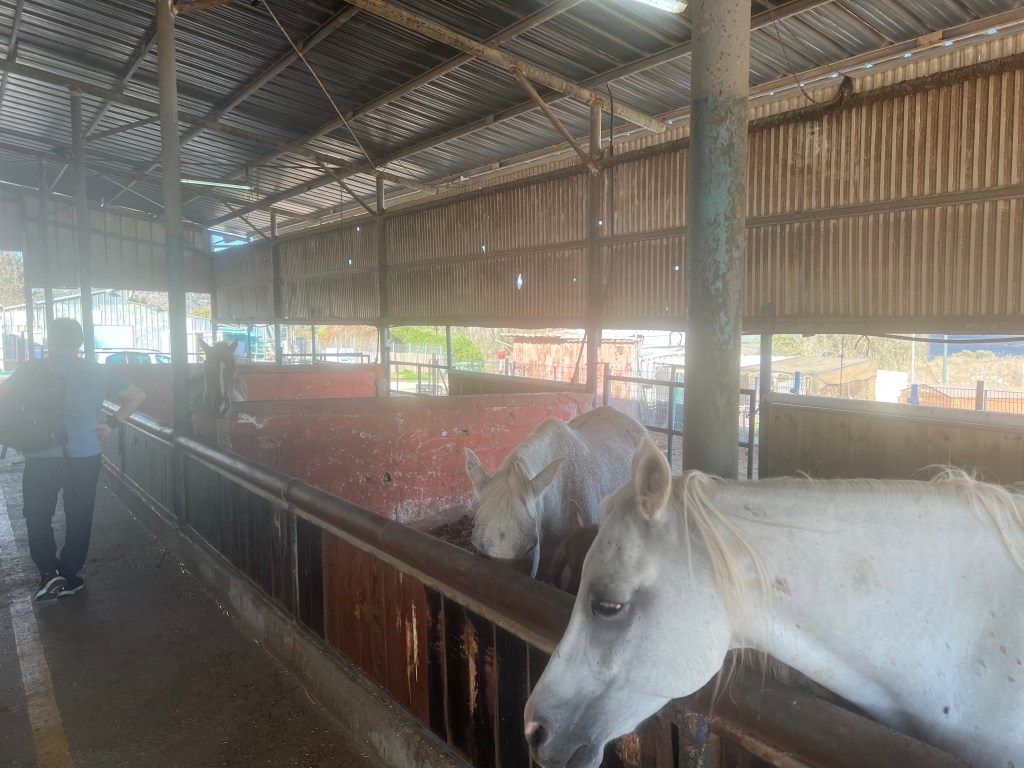
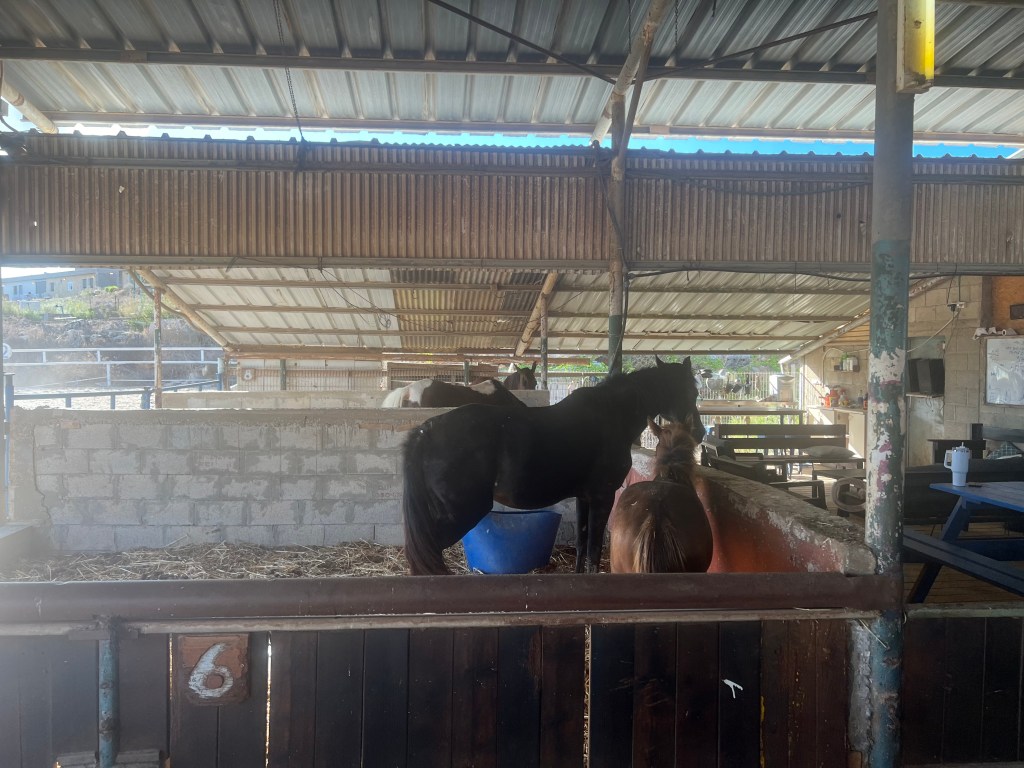
At the school in Ravid, we saw some incredible, creative ways to encourage learning. They have a stable for horses and teach riding. It’s not just riding though. The students are required to do everything for the stables. They get up early to feed the horses. They clean the stables. They rub down the horses. It’s not just a class on horseback riding. It’s a class on life, responsibility, and committment. They teach that joy comes with work. We met Tamar, a wonderful 16 year old young woman there, 16 year. She shared her story with us. She was struggling at a regular school. Nobody paid attention to her. She was lost. She spent too much time out late doing things she ‘shouldn’t have been doing.’ At the Dror school in Ravid, the teachers paid attention to her. She said, “when I need to, I can get up, leave class, smoke a cigarette, and then come back.” Hearing her love for the school and for learning was exciting. She loved the horses but that wasn’t what she wanted to focus on. She told us her goal was to get her certificate in dog training. The school doesn’t just have stables and horses. They have a kennel and an entire dog training curriculum. For those who love animals, they can get a real education in this school and leave with a trade to ensure they have a successful life. Imagine education focused on that instead of test scores to get you into college to get a degree that you can’t find a job with.

Horses in the stables
More horses in the stables

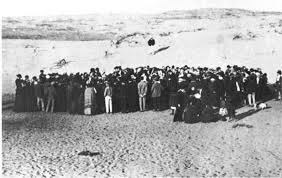
We see this type of thinking in Israel all the time. Tel Aviv was an empty beach 115 years ago. Now it’s a thriving city and one of the world centers of technology and innovation.

A picture of the founding to Tel Aviv. That sand is now a bustling city.

Israel, an agricultural country just 40 years ago, became known as start-up nation in the 2000s. Computer chips, instant messaging and SMS technology, along with medical innovations and much more all come from Israel. Massive use of desalinization to create drinkable water and water for irrigation is Israel. Drip irrigation is Israel.

Warren Buffet famously said, “If you are looking for brains, energy and dynamism in the Middle East, Israel is the only place you need to go.”

He also said, “In industries ranging from software to textiles, Israelis have shown that they have a special genius for devising creative solutions to problems.”

My final Warren Buffet quote is, “Israel has created a miracle in the desert. It is a miracle of creativity and innovation.

Each of these quotes reinforces what the Dror educational model in Israel does. Creative. Innovation. Solutions. Genius. Brains. Energy. Dynamism. Inspired to use their minds to find solutions. To analyze the situation and be creative to find a resolution.

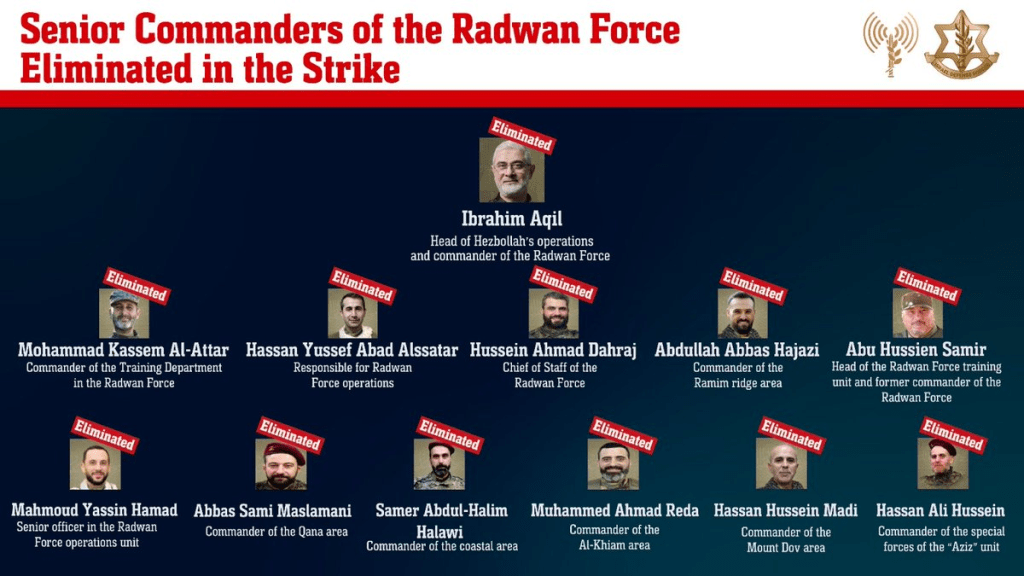
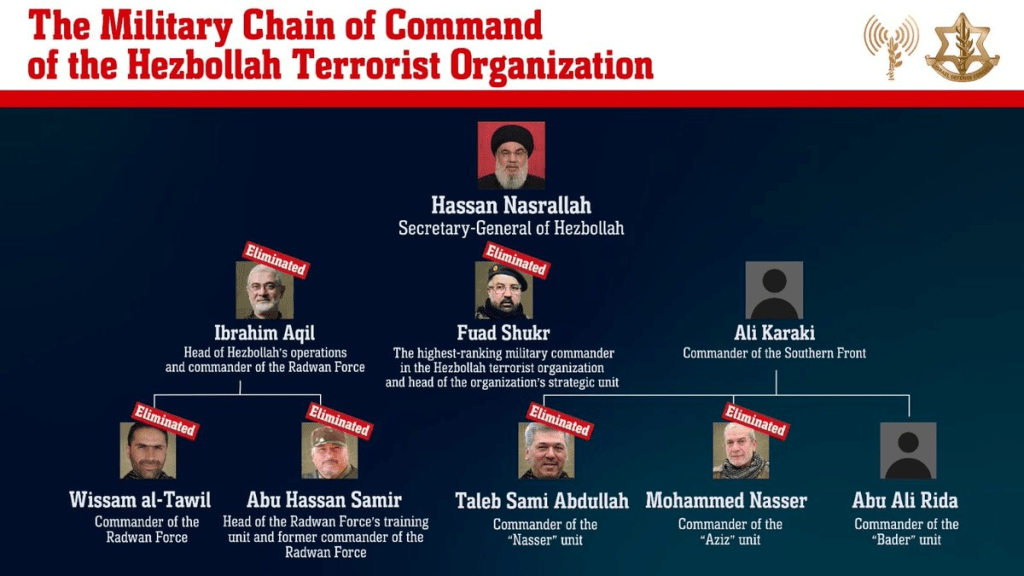
Faced with 150,000 rockets in the north with the Iran proxy Hezbollah threatening, Israel had a real issue to deal with. This was not Hamas with far fewer rockets and far inferior weapons. This was an existential threat. How did Israel address this? On September 17th, the beepers that Hezbollah was using went off and then exploded, killing, injuring, and maiming thousands of terrorists. The next day, the walkie talkies they switched to exploded, killing, injuring and maiming even more terrorists. Their communications network destroyed, their leaders injured, Hezbollah was weakened. Israel targeted their leadership and eliminated them.

Truly weakened, Israel moved in. They began bombing the Hezbollah military sites where these rockets and the rocket launchers were kept. They destroyed rockets and rocket launchers, limiting what Hezbollah can do to attack them.

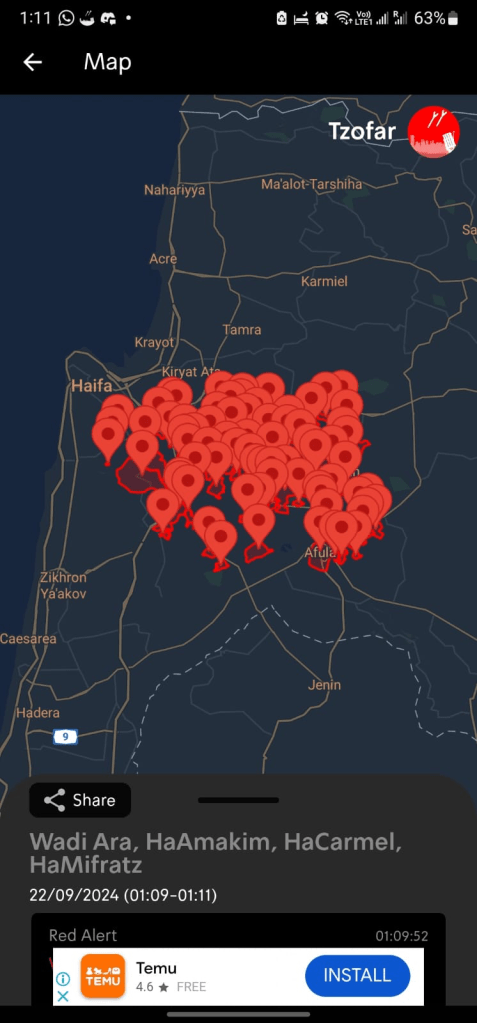
This doesn’t mean that Hezbollah can’t attack Israel, they can and have. The area around Haifa is under attack tonight however as big as it is, it could have been worse. They still have plenty of rockets. They are now limited. Hezbollah’s main target tonight was the Ramat David air base, where most of the Israeli jets flying into Lebanon have been based. Half of the rockets were intercepted, some direct hits in Nazareth, but no injuries reported thus far. Ramat David air base was not harmed. Israel used creativity, innovation, genius, and boldness to find a solution to the massive amount of rockets on her northern border.

Rockets launched at Israel late Saturday night, early Sunday morning on September 21-22.

To give you context, I was in Acre (Akko), Karmiel, and that area just a few days ago. I was in Nazareth, where this video was taken. Israel isn’t a big country and needs to use their creativity and innovation to stay alive.

Nazareth after Hezbollah rocket attacks tonight

I started by writing about the creative way students got a music room and ended with the creative way that Israel reduced the threat. It is all about creativity and encouraging the use of minds to find solutions. Despite the rockets falling in Israel tonight, Israelis remain undeterred. They know there is a solution for everything when they put their mind to it. This video was from Nazareth, the same place as the fire above, after the rockets fell.

Am Yisrael Chai

Can learning the Torah actually be fun and exciting???

A number of years ago, I was exposed to Jewish learning in a different way.  Instead of the boring lecture style of a classroom, I was in a group of 3 where one of us was the leader and would guide us into a discussion of Jewish text.  We spent months over a weekly lunch discussing the book of Daniel.  It was fun and interesting and something that I looked forward to each and every week.  It was very unlike my Hebrew School experience which I found boring.  I never thought that learning Jewish texts could be both fun and interesting.  I learned that I was wrong.

Since then, I have had the opportunity to learn with a few different people.  It’s something that I enjoy as I have found it to be intellectually challenging.  With a good learning partner, it’s not about the dry words, it’s about how the words come to life.  What can we learn from the words and the teachings that apply to our lives TODAY?  How does it impact the choices we make now?

I want to share a few examples of this from my own life and experiences. 

Many years ago, at UF Hillel, I gave a D’var Torah (sermon) on one of the High Holidays.  I talked about how for many years, I found the Torah to be a dusty old scroll.  It wasn’t relevant.  It wasn’t that interesting, especially since I didn’t speak Hebrew.  And, quite honestly, I preferred the movie (The 10 Commandments, still a favorite.)   I shared how I was exposed to this different type of Torah learning.  How it was a discussion and debate.  How I could ask questions and disagree and argue my points of view with another person.  They would argue back, and it would be a passionate conversation.  We would understand each other and sometimes agree at the end, and sometimes still disagree.  How it was intellectually challenging even if I wasn’t a Torah scholar and couldn’t speak Hebrew. 

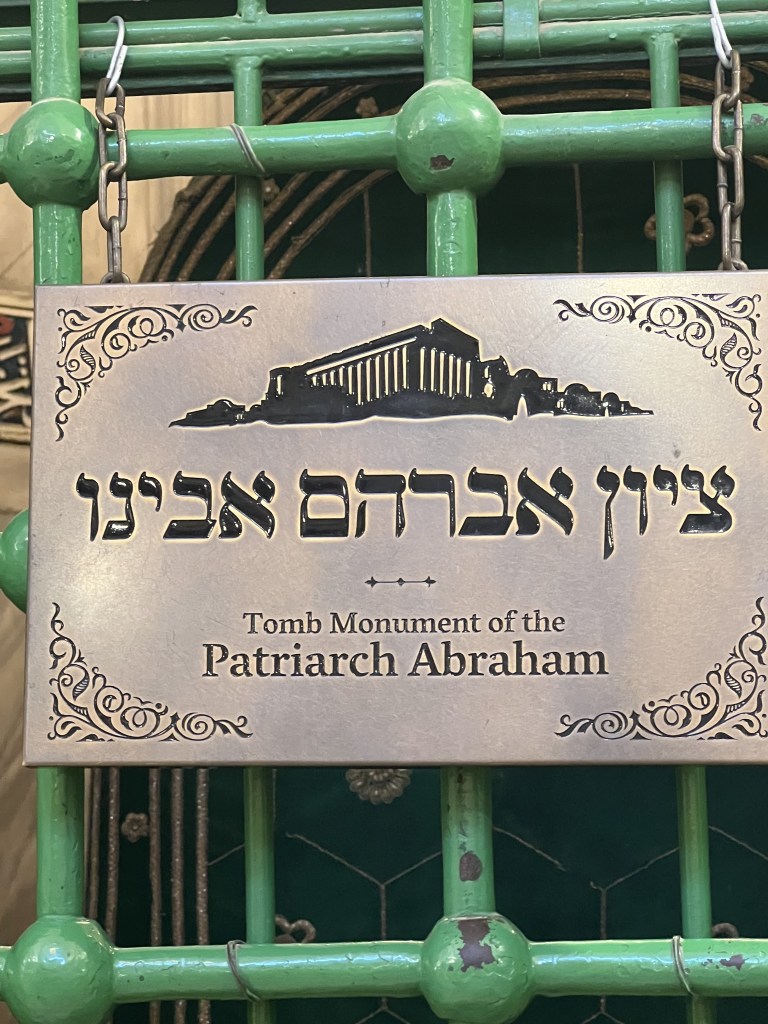
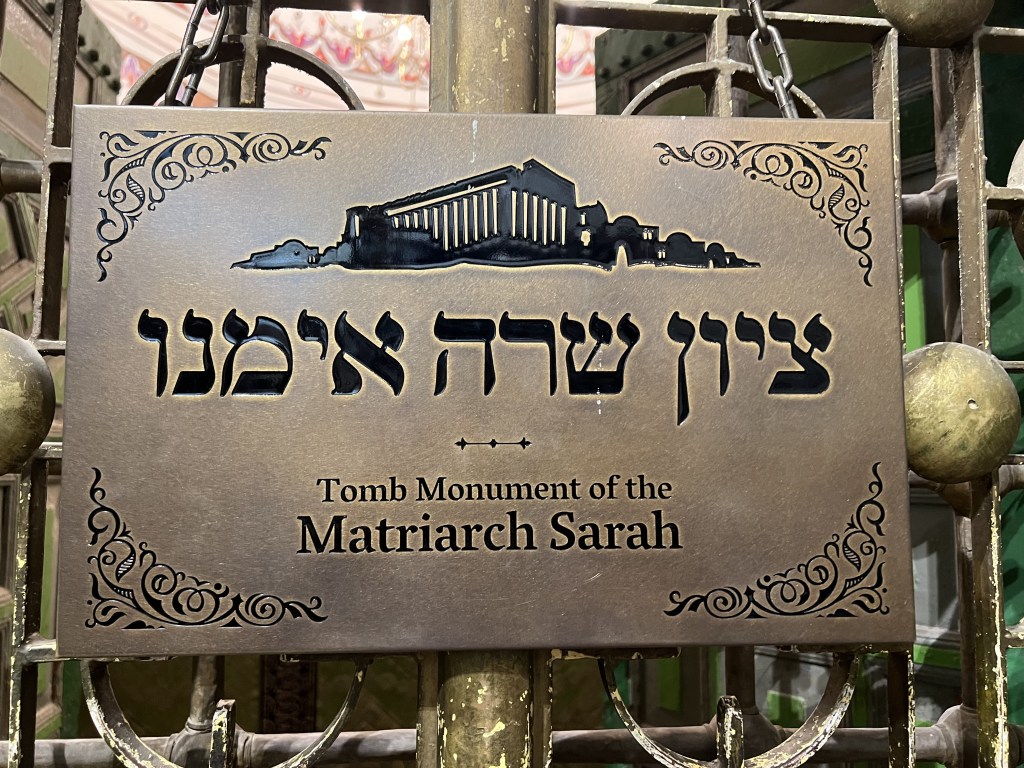
One of my most memorable experiences with this type of learning happened in Israel when we visited Hebron, where the tombs of the Matriarchs and Patriarchs are (other than Rachel).  We sat between the tombs of the Patriarch Abraham and the Matriarch Sarah, which was surreal by itself, and discussed the story when God told Sarah she was going to have a baby when she was 90 years old, and she laughed.  My friend Harry Rothenberg led the learning session.  What did that mean?  What could it mean?  We dissected the story and the different possibilities.  It was fascinating hearing all the different possible interpretations of this story.  At the end, Harry shared his interpretation.  How it was really a love story between Abraham and Sarah.  How it was about communication and honesty between partners.  How it described not just their relationship but included relationship lessons for us today.  It wasn’t anything that I had contemplated before we sat down or during the conversation.  And then I thought how amazing it was to be talking about the love story of Abraham and Sarah while sitting between their burial tombs.  It is an experience I will never forget.

A year later, back in Israel with Harry, we were climbing Masada.  I’ve climbed Masada with both the snake path and Roman path many times.  The Roman path is pretty easy and quick.  The snake path is longer, harder, and more meaningful.  This morning we took the snake path.  I had been having some health issues and probably should have take the cable care to the top instead, but I was stubborn and chose poorly.  As I was making the long climb, I found myself needing to stop very frequently to catch my breath and let my heart rate slow down.  Everybody else passed me and a couple of friends slowed down to stay with me as we made the climb together.  Harry started late and came upon us.  He joked about me resting until I told him what was going on.  He then said he’d walk with us slowly as well.  I then challenged him – use this moment to teach me a little Torah.  I figured I had stumped him!!  Instead, he thought for a minute and told me the following story.

When Moses led the Jewish people to the edge of entering Israel, he was not permitted to enter the land.  He begged God thousands of times to please change his mind and let him enter the land.  God would not relent and change his mind.  However, after all of Moses’s pleading, God told Moses to climb to the top of the mountain where he would be able to see all of Israel.  Moses climbed the mountain and looked out at all of Israel.  His heart broke into pieces at the beauty and that he wouldn’t be able to enter the land.  It is those pieces of Moses’s heart in all of us that creates our longing and love for Israel. 

Harry took a Torah lesson, applied it to the mountain we were climbing, and our love and passion for Israel.  It was a beautiful moment.  He has a weekly video blog that I encourage you to check out. It’s 3-4 minutes and I find it interesting each week.

This week’s video blog by Harry Rothenberg, an attorney who is the best Jewish educator I have ever experienced.

When I lived in Seattle, I spent some time with Rabbi Levitin, the head of Chabad for the Pacific Northwest.  One day at lunch, he was talking about a big talk he was about to give.  The topic was about surrogacy and donor sperm/eggs.  He then went to the Torah to cite passages that apply to various circumstance for surrogacy.  Something we couldn’t contemplate at the time of the Torah, yet it applies today.  We discussed how it might affect a couple if it was the man’s sperm and a donor’s egg.  What if it was donor sperm and the woman’s egg?  And what if it was donor sperm and a donor egg?  Did it matter if the egg was implanted in a surrogate or in the woman who wanted the baby?  Is there a difference in how parents would treat a child they ended up having biologically instead of one of the other ways?  Fascinating topics and discussion points, all tied back to Torah lessons and commentators from centuries ago.

Now I learn with Rabbi Ehrenkranz from JOIN Orlando.  Each week we meet to study and learn Torah.  We meet in a public place, usually a Starbucks or Krispy Kreme.  While I don’t wear a kippah all the time, I put one on when I learn Torah out of respect and in honor of what I am doing.  So we sit in public, both wearing kippot, our siddurs open, reading out loud and discussing what we are reading.  We also use the Sefaria app (a free download and really a great resource that is now adding Lord Rabbi Jonathan Sachs teachings to it) to study what the commentators said over thousands of years.  We discuss, often debate, and I push him to better explain to me the things I either don’t understand or don’t agree with.  Most of the time he is able to do it but there are still things that I struggle with and that’s ok.  It’s part of the process.  I just hope that I don’t frustrate him too much with my questions and challenges!

Usually nobody bothers us, but I remember one time when a man came over and asked if we were doing bible study.  When we told him yes, his response was, “Cool!” and he walked away.  As I think about what happened in the UK yesterday when a man was threatened with arrest because he was wearing a kippah while a pro-Palestinian march was going on because him being Jewish was threatening to them, I am grateful we can learn publicly in Orlando.  I also wonder when/if that will change here. 

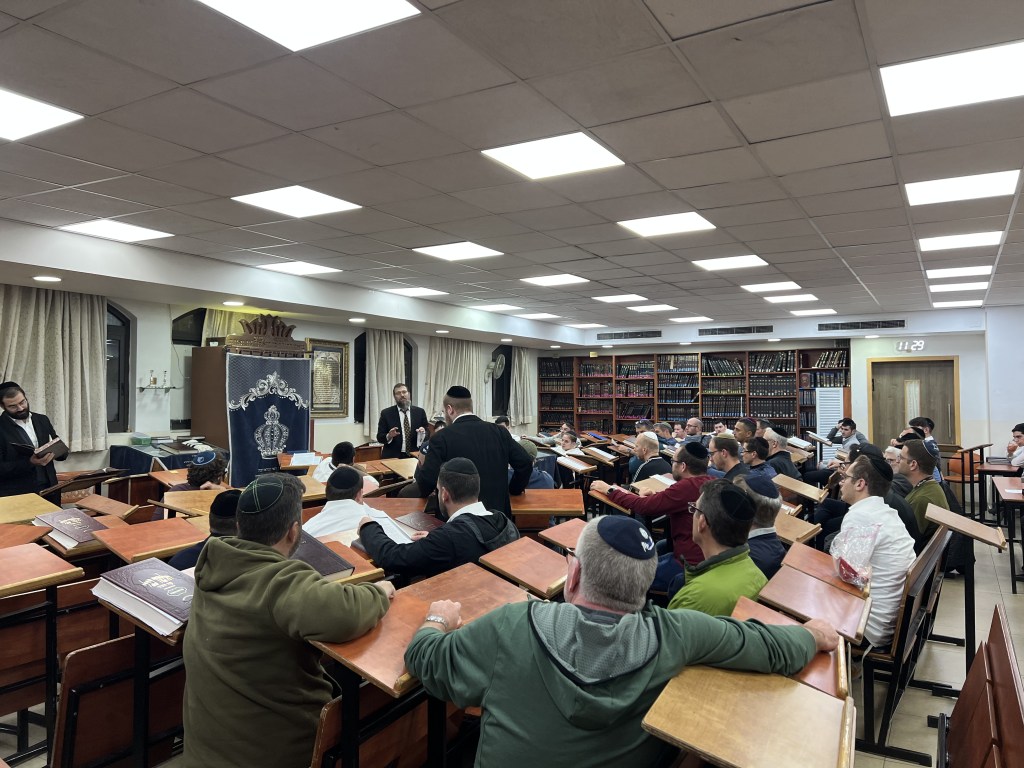
On two of my last three trips to Israel, I had the chance to go to a Yeshiva in Jerusalem on Thursday night for an hour-long learning session from 11 pm until midnight.  Usually I’m asleep well before 11 pm (I have gotten old).  I was worried I would fall asleep in the middle of it and embarrass myself.  Yet when it started, it was interesting and exciting.  It was a legal discussion.  It was back and forth.  Voices raised a bit.  Excitement when somebody thought they had the answer.  Disappointment when the explanation showed they were wrong but vindication when their thought process was affirmed.  The hour went fast.  The Rabbi teaching us shared his explanation.  It was great.  And then we had chicken poppers and cholent while hanging out.  What a fun night.  So much fun that it now happens in Orlando as well.  I don’t go often but enjoy it when I do.  There is a good crowd of regular people like me, not Torah scholars, who enjoy the back and forth.  We have to think thoroughly.  We build off prior lessons.  We do it together. 

Learning at the Yeshiva in Israel – it was captivating

Being Jewish is often seen as being a burden.  In fact, Rabbi Ehrenkranz and I talked this week about how being Jewish means you are taking on more responsibilities.  How we are the chosen people because we have chosen to take on these responsibilities.  If you are like me, then as a child you weren’t given meaningful Jewish content.  You never had the chance to argue with a teacher about Jewish topics.  It was bible stories and boring things.  Judaism was the thing for my parents and not something that was meaningful to me.  And yet that changed dramatically for me as I got past what and how I was taught as a child and understood the meaning that was possible.  I’m far from Orthodox.  I don’t go to synagogue.  I don’t keep kosher.  Yet I find the teachings of the Torah fascinating.  I find the exploration of Jewish texts to be relevant and impactful.  Hanging mezuzahs, putting on tefillin (occasionally), lighting shabbat candles, the Hanukkiah, baking challah, and other Jewish rituals are meaningful to me.  I’m excited to build a sukkah in my backyard this year.  I don’t think I’ll sleep in it, but I will enjoy building it and eating in it and hanging out in it.  It’s fun.  Judaism can be fun.  Learning Torah can be fun. 

So much fun singing Hotel California with this Hassid at Mamilla Mall in Jerusalem – proof that being Jewish can be fun.

So if you decide you want to start a journey like I did with Jewish learning in this way, let me know.  I’ll find somebody for you to learn with so you can find the joy that I have.  I encourage you to try – I’m willing to bet you won’t be disappointed.

Dancing at the Kotel on Friday night – so much fun being Jewish

SUPERHEROES DON’T ALWAYS WEAR CAPES

I have hear this statement a great deal lately.  Most often it has related to the heroes of the Israel Defense Forces (IDF) who are defending both Israel and the Jewish people in a war against evil.  The specific names today are Hamas, Hezbollah, the Houthis, and Iran.  It is an age old hatred that threatens not just the Jewish people but the civilized world.  This video expresses it well.

These aren’t the only superheroes that don’t wear capes.  They live among us and too often we don’t even realize it until they are gone.  On Sunday night, a childhood friend posted an update about one of them.  Unfortunately, it was the news of his death.  The gratifying part of seeing this post was that his impact had been so great for so long, that we didn’t just realize that we knew an actual superhero that didn’t wear a cape upon his passing.  So who was this amazing person?

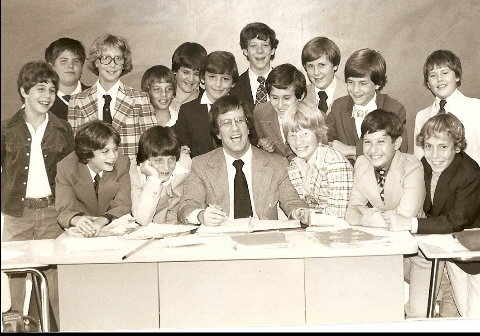
Richard Rome was a middle school math teacher.  Let that sink in fully.  The superhero without a cape that I am talking about taught 6-8 grade children math.  He was my teacher somewhere between 1978-1981.  Middle school math.  That’s what he taught.  In the 1970s and 1980s.  40-50 years ago.  Or at least that was what he formally was tasked with educating us about. 

Even his obituary is teaching us something as it tells us to plant a tree.

Mr. Rome, as we all called him both in class and for the next 40-50 years, was so much more than a math teacher.  While we were formally his student, he was a human being, a leader, a role model, a friend, a mentor, and a person who made math important, understandable, and relatable.  While he cared about teaching us math and helping us understand the broader implications of it, he cared more about molding us into good human beings. 

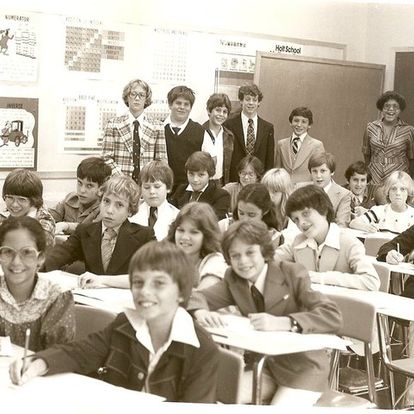
Mr. Rome’s middle school math class in the late 70s
Mr. Rome’s ‘math humor’ was decades ahead of ‘dad jokes’ and always made us smile no matter how old we are.

People often talk about finding something you love to do, and you’ll never work a day in your life.  While I believe that Mr. Rome did truly enjoy teaching math, I don’t think that is what he loved to do.    I think he truly loved being able to have an impact on young people’s lives and help mold them into good citizens, good people.  I think over the years, his true joy came from hearing stories about our lives, our children, our spouses, and for many, our grandchildren.  What makes me think this?  It’s actually pretty easy to come to this assessment of Mr. Rome.  It’s because so many of us still kept in touch with him.  How many people in their mid to late 50s or early 60s keep in touch with their MIDDLE SCHOOL MATH TEACHER?  That’s exactly the point.  He wasn’t just a math teacher.  He knew it.  We knew it.  And all of us appreciated it. I went to his Facebook page today to see if there were any other updates.  What I saw was amazing.  It wasn’t a formal posting but rather that we had 63 friends in common.  This means that there are 64 of us from his class in 1978-1981 who were still connected to him.  What a legacy – that 45 years later, so many of your math students are still connected to you.  I promise you it wasn’t about math and any math questions we had for him were entirely so we could help our children or grandchildren with their math homework!

Mr Rome surrounded by students
More studnents with Mr. Rome.

Mr. Rome posted this exchange with permission from a former student a while ago.  It’s how we all feel about him which is why I want to share it with you.

I asked one of my former students if I could post this so everyone could read exactly what she wrote to me. She sent me this on FB messenger. I appreciate it so much:

“Let me tell you. You singlehandedly are responsible for the most positive experience with Math I’ve ever had. Through that experience, you are indirectly responsible for my career path and choices. It is my pleasure to help you in your time of need. I may not have been the best or most docile math student, but you let me conquer the obstacles in my path. Thank you sir for your dedication to all the students at Susquehanna. I’m so lucky to have been able to have you as my teacher. My thoughts and prayers for your improved health and recovery'”

“Kim, ahh, thank you so much for the kind words. I deeply appreciate it. <smiling>”

“Your teaching means a lot to your students.”

He liked to share his math humor with us as kids and as adults.  A few things that he said that make me smile and remember why his class was one we all liked are:

To My Former Math Students: In honor of 3/14, I will repeat what I told every one of my math classes. Pie R Round; Cake R Squared. <smiling>

Also, remember the formula for Circumference of a Circle C = Pie x D, or C = who ate D Pie!

I went back to our last Facebook messenger chat, regrettably too long ago.  There are two comments that jump out to me.  More than 40 years after being in his class, Mr. Rome stated,

“Keith, I was wondering why I did not hear from you. I trust you and your family are well. Take care, Keith.”

So 40+ years later, he honestly wondered why he hadn’t heard from me.  That’s the relationship he had with his students.  After I explained what had been going on in my life and why I hadn’t reached out in a bit, he replied,

“That’s ok. As long as you are healthy, that is what it is all about, Keith <smiling>”

So, he wasn’t so talented with the use of emojis, he knew how to communicate.  I updated him about my family and particularly my children and what they were doing, and he responded.

“Keith, congrats “big fella.” <smiling>”

I wonder how many of his other students he had similar conversations with on a regular basis.  More than I can imagine.  A superhero without a cape.

Over the last few years, Mr. Rome began have some health issues and related financial issues.  His MIDDLE SCHOOL MATH STUDENTS, now in their 50s and 60s, created a GoFundMe for him.  I see this happening when active teachers have family, health, or economic challenges.  I have never seen it for somebody who many of us haven’t seen in person for 30 or 40 years.  As Kim wrote to Mr. Rome, he changed not just her life but all of our lives.   And he continued to teach us throughout life. 

Mr. Rome math humor was years ahead of being a ‘dad joke’.

Every year near Christmas, Mr. Rome would post this story about his parents and his childhood.  Even though he had retired from teaching many years ago, he knew he could teach us how to be good people, good human beings, and to improve our portion of the world.  He always took advantage of the opportunities to help us to be better people.  At 56, Mr. Rome continues to teach me.  There are so many lessons that even though he won’t physically be here to teach, he has inspired others to teach on his behalf.  Here is his reminder every year about making a difference in your community.

There is one day of the year that I miss my mom and dad even more that the rest of the year My father, Earl Rome, along with his brother, Isadore Rome, owned and operated an independent supermarket, Rome’s Superette. Every Christmas Eve they would host a Christmas Eve informal get together. Usually, around 250 of his loyal customers would drop in and relax and unwind before mid-night Mass. My mother would make all kinds of little finger sandwiches, Mrs. Boyle would bring her famous chopped liver mold, and many of their customers would bring bottles of booze to share. My dad, being Jewish, had a customer base that was 95 percent Christian. Some of his bigger customers were Catholic Churches.

That was back in the day when churches had large rectories, including lots of priests and lots of nuns. St. Ignatius Church was my dad’s best customer. They had a large parish, and, at the annual Christmas Eve party, usually Monsignor Gagen, along with a few of his priests, would attend the party. It was my job to usher the Monsignor out the back door so that his parishioners would not see him stone cold drunk. What was funny was that all members of his church knew he drank like a fish, but we kept up the pretense. anyway. It was the one night of the year that my father, may he rest in peace, got loaded. His favorite line of the night he used at every party was “Open up your song books to hymn number 64. If you do not like hymn number 64, we can sing hymn number 32 twice.”
My dad, a Jewish businessman, had a great relationship with the Catholic community. When he died in 1976, at the age of 62, over 1500 people came to the Shiva, including the Monsignor and a number of priests and nuns. I often “hark back” to those days and smile. The true meaning of brotherhood and what most religions preach was evident on Christmas Eve, at Rome’s Superette, in Kingston, Pa, for 44 years, ending in 1976.

As I read this story once again, the day after gathering with friends for Purim, I wonder what the world would look like if we all gathered for these types of celebrations, regardless of our religion.  If we truly created local communities of people who got to know each other as people, could we put an end to the growing hate that poisons our world?  It’s a conversation I’d like to have with Mr. Rome.  It is one that I will have with my local community leaders to see how we can replicate what used to happen in Kingston, PA until 1976.

As I said, Mr. Rome was more than just a middle school math teacher.   He taught us his entire life.  Here is another lesson from Mr. Rome. Notice that even though we are in our 50s and 60s when he wrote this, we are still ‘boys and girls’ to him.

I chose this picture because I can imagine him sitting like this in front of us while telling us this story.

Good Morning Boys and Girls. Rather than teach a lesson involving grammar or math, I am going to tell you a story that is fitting during the holiday season.

1967 was my first year of teaching. I taught 6th grade at Sara Lindemuth Elementary School. The other 6th grade teacher was Mrs. Sollenberger. It was the last day before Christmas vacation. Both 6th grade classes had a combined Christmas party. The kids all brought a gift that cost 50 cents and each child got to pick out a present. The kids wanted Mrs. Sollenberger and me to open our presents. Mrs. Sollenberger went first. There were the usual assortment of gifts. She opened her gifts and thanked each kid as she read the card that accompanied each gift. The next gift she opened was wrapped in a small box. When she opened the box and read the card, there were chuckles and some of the kids were laughing. In the box was an old pin. It was ugly looking and some of the stones were missing. When she read the card, she realized that this gift was from Debbie. Debbie was the daughter of migrant workers. Her clothes were usually dirty, and her hair went often times, unwashed. Debbie was not a very good student and let’s just say she was not the most popular girl in 6th grade. It was at that moment when Mrs. Sollenberger did something I will never forget.

She told Debbie that her present was her favorite of all the presents she received. She made a point of asking Debbie to pin the pin on her dress. The smile on Debbie’s face said it all. She was so happy. It took a few minutes, but then the other kids got involved in the spirit of that moment and what I observed was like a transformative moment in time. One girl told Debbie that her pin was so pretty. Another girl said to Debbie that I can see why Mrs. Sollenberger liked her present best of all. Several kids asked Debbie if she wanted some extra Christmas cookies. Kids can be very cruel sometimes. But in this special moment, even some of the boys who often picked on Debbie and made fun of her, were actually nice and a few of the boys said some nice things to Debbie. For the first time in her life, Debbie was the “star of the show.” Almost every kid in class joined in the fun. Mrs. Sollenberger continued to make a “big deal” about Debbie’s pin. Debbie could not stop smiling.
When it was my turn to open my presents, in my mind I thought, how am I going to react when I open the present from Debbie? In a small box was an old rusty tie pin, shaped like an arrow. Following Mrs. Sollenberger’s example, I told Debbie that my father had a tie clip similar to this one and I always loved it. I wore the tie clip the rest of the day. I take no credit. Mrs. Sollenberger is the one that set the tone. Mrs. Sollenberger then did a special arts and crafts project with the kids. She told them they had to work in pairs. It was both heartwarming and amusing when the kids started fighting over who would be Debbie’s partner. Finally, the school day was over, and the kids were dismissed. I had a moment with Mrs. Sollenberger, and I said to her “Mary, you made one kid very happy today. She will never forget this day.” Mrs. Sollenberger just smiled and said thank you.

The kids returned from vacation and, for the most part, nothing out of the ordinary happened the rest of the school year. Occasionally, Mrs. Sollenberger and I wore our presents from Debbie, and she always smiled more than usual on that day. I would like to tell you that Debbie’s “one shining moment” continued, but that was not the case. Debbie’s grades did not really improve. Her clothes were still dirty, her hair went unwashed. She was usually quiet and did not have a lot of friends. Mrs. Sollenberger is long gone. May she rest in peace. Debbie’s family moved out of the school district, and I never heard from her again. I would like to think her life has been filled with moments that were more positive than negative. Debbie had a tough life as a child. But there was one moment in time when Debbie was a star. She had a huge smile on her face, and I have a feeling she will remember that day, always. Her teacher, with one simple heartfelt gesture and some kind words, made Debbie feel extra special. That day, Mrs. Sollenberger exemplified what it means to be a teacher.  I have never forgotten that moment that happened almost fifty years ago.  Take care.

I hope you can get a sense of how special a man Mr. Rome was.  How he impacted lives when we were in 6-8th grade and how that impact continued throughout our lives.  How it shaped us into being better people.  I look at some of my friends from that time and see how they have chosen to impact the world and it is all truly a tribute to Mr. Rome.  It doesn’t matter what their success in life has been, it seems they all find some way to give back.  They find some way to try to help a Debbie that they encounter or inspire a Kim in her life’s journey.

The world lost a legend at the end of last week when Mr. Rome died. Yet he continues to live on through all of his ‘kids’ that he invested in and that invested in him as well. He lives through our volunteer week, our charitable giving, the way each of us, in our way, does what Mr. Rome taught us. Not math. He taught us to be good human beings. He taught us to care about other people. He taught us that no matter what the seemingly reason we were together (in his case teaching math) we are really together to build relationships and to build friendships. We are there to better ourselves, better the lives of those around us, and better the world.

Thank you will never be enough Mr. Rome. While I only had you as a math teach for 2-3 years, I have had the privilege of having you as a life teacher for 45 years and as a friend for nearly 40 years. And although I am not a teacher in a school, I will do my best to honor you and what you invested in all of us to continue to invest in ‘my kids’ for the future as they have a piece of my heart just as you do. Rest in Peace Mr. Rome. Your memory will always be a blessing to so many people Baruch Dayan HaEmet. Your legacy is secure. I’m gonna go and be a little teary now because you taught us all that’s ok.

https://www.rosenbergfuneralchapel.com/obituary/RICHARD-ROME?fbclid=IwAR3DXjGYV8Nd7czTkqkaY-XWdH3EvbSIRRmI4SaowybpjVyxFacMbdWn5sg#tributewall

The Center for Israel Education inspires and teaches

Approximately 20 years ago at an AIPAC Policy Conference, I attended one of the breakout sessions to learn a bit more about a detailed topic.  The presenter, Professor Ken Stein from Emory University, blew my mind with details and facts that I didn’t know.  I sat there taking notes with tons of questions forming in my mind.  There were so many of them, I had to write those down as well.  After the session, I went up to talk with him and ask some of those questions.  It was an inauspicious start of a friendship and professional relationship that lasts until today.

My friend Professor Ken Stein

I made it a point to always attend Ken’s sessions at AIPAC.  I was amazing that he was the only speaker on Israel that I found nobody had a problem with.  They may ask tough questions, but Ken wasn’t trying to do Hasbara (trying to convince somebody you are correct) but rather shared the facts and allowed you to determine your own beliefs.  As a result of this, I brought Ken to Seattle and then to Orlando to teach about the history of Israel. 

In 2008, Ken created the Center for Israel Education (CIE), a nonprofit dedicated to educating the public about modern State of Israel.  Using source documents, CIE provides context to a challenging topic.  A number of years ago, I was honored when Ken asked me to join the board of directors and I have been a member ever since. 

Each week, CIE provides information that is both timely and interesting.  Sometimes it is related to, “This week in Israeli history” while other times it relates to what’s happening in the world.   I find it interesting and learn a lot about people and policies that I didn’t know.  This week’s information was particularly interesting for two reasons.

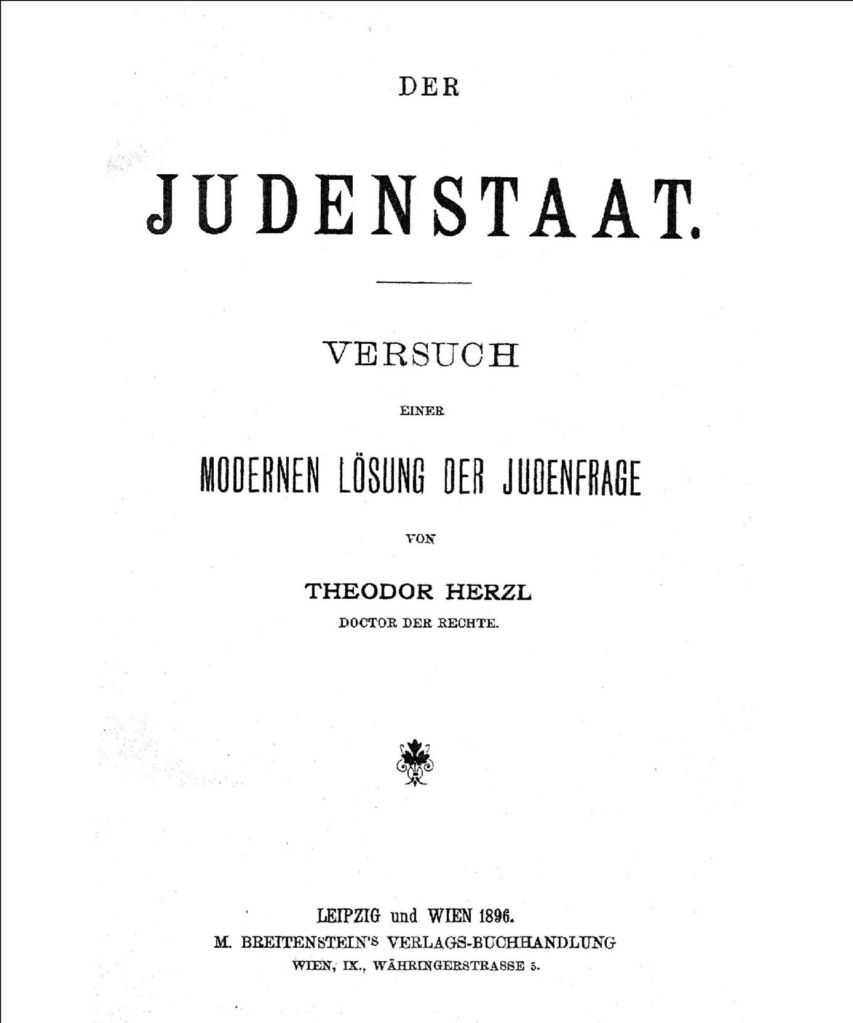
The first reason relates to ‘This week in Israeli history’.  On Feb. 14, 1896, Vienna journalist Theodor Herzl published 500 copies of a pamphlet entitled “Der Judenstaat” (“The Jewish State”), declaring the need and justice of Jewish sovereignty 18 months before he convened the First Zionist Congress.  I’ve been to Israel 20 times and been to Herzl’s grave at least 20 times.  It’s a powerful place to visit as he was the person who had the vision of a Jewish state.   Whenever I am there, I find myself humbled by his vision and always remember his famous quote, “If you will it, it is no dream.”   That quote has inspired me throughout my career.

Theodore Herzl – the founder of Zionism

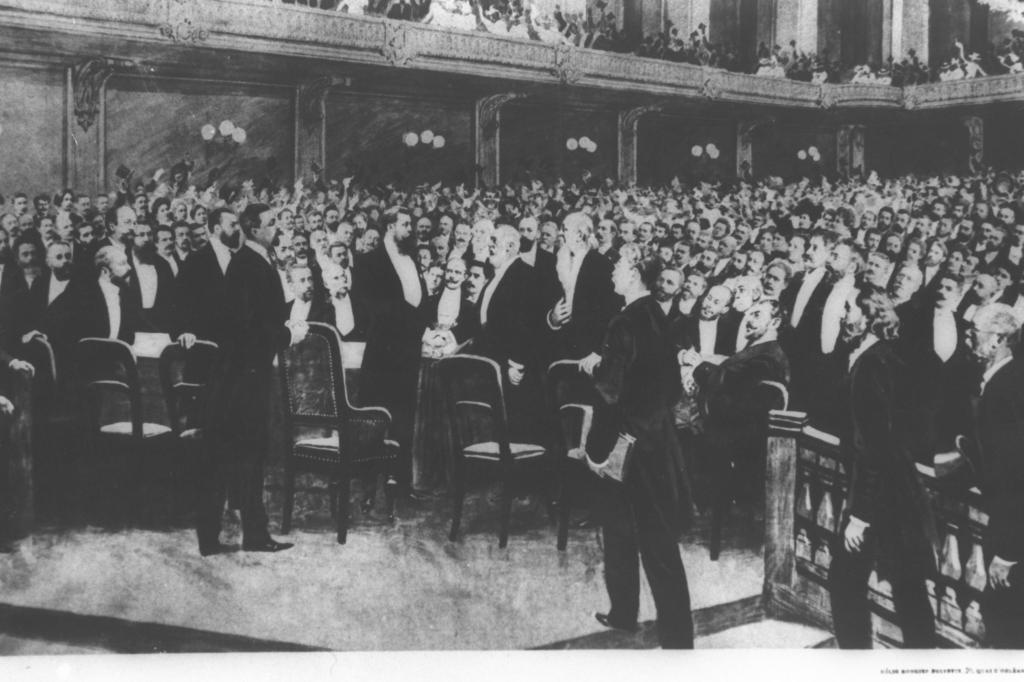
Interestingly enough, Herzl’s idea wasn’t limited to the middle east or to the historic greater Israel.  He merely wanted the Jewish people to have their own land where they were in charge and had self-determination.  He wrote about It wasn’t until the First Zionist Congress held in Basel, Switzerland with 200 delegates from across the Jewish world, that the goal to establish a Jewish State in the Land of Israel were explicitly adopted by the new Zionist movement.

Theodore Herzl at the First Zionist Congress in Basel on August 25, 1897

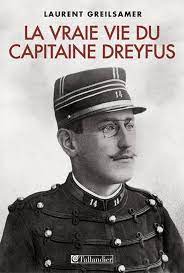
Herzl, as a secular Jew and journalist, was inspired by the Dryfuss Affair to find a way to keep Jews safe.  It was his vision to have a Jewish State, a homeland, where Jews would be in charge and Jews would be safe.  Where Jews would have the power of self-determination.  He didn’t care where it was, only that it existed.   It was at the First Zionist Congress that non-secular Jews, who understood the tie to the biblical land, ensured that the land would need to be in our historic homeland, not just anywhere.

The Dryfuss Affair on the cover of The New Yorker

Captain Alfred Dryfuss, wrongly convicted because he was a Jew.

It ties to the famous Chaim Weizmann quote.  When a member of the House of Lords asked him, “Why do you Jews insist on Palestine when there are so many undeveloped countries you could settle in more conveniently?”

Weizmann answered: “That is like my asking you why you drove twenty miles to visit your mother last Sunday when there are so many old ladies living on your street?”

Wiezmann said, ‘Mr. Balfour, if you were offered Paris instead of London, would you take it?’ … He looked surprised. He said: ‘But London is our own!’ Weizmann said, ‘Jerusalem was our own when London was a marsh.’ He said, ‘That’s true.'”

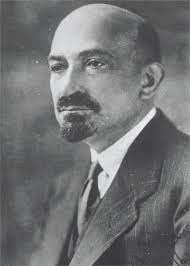
Dr. Chaim Weizmann, one of the great founders of the State of Israel

Having been to Israel 20 times in my life, there is something special not just because it is a Jewish state and the only place that I am in the majority.  Being in Jerusalem and standing at the Kotel is a direct connection to King Solomon.  It’s a direct connection to the ‘holy of holies.’  To 5,000+ years of Jewish history.  

Being at the Kotel is always such a special feeling

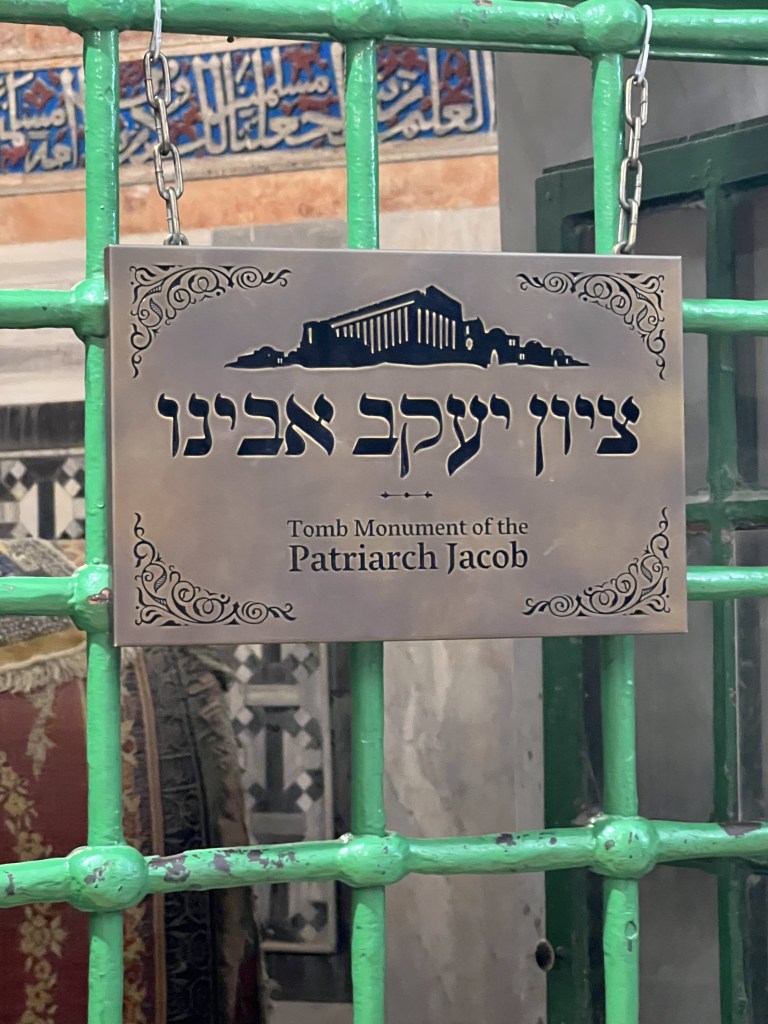
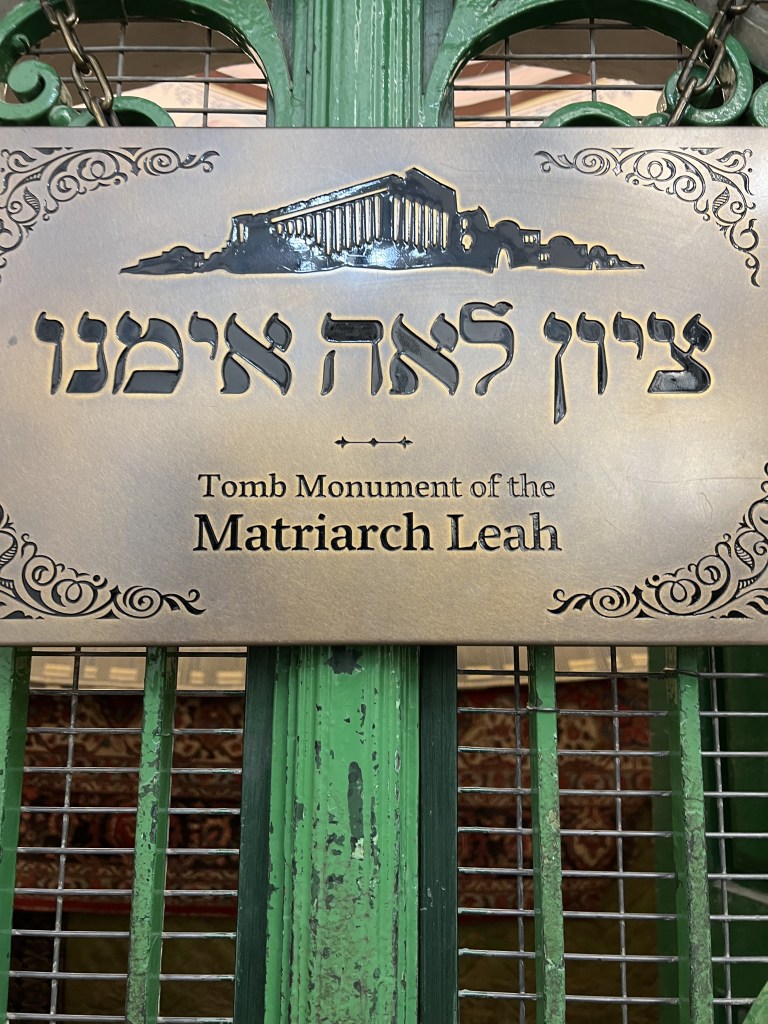
Going to Hebron and visiting the graves of Abraham, Jacob, Sarah, and Leah is a special feeling. (Isaac and Rebeca are also buried there but they are on the Palestinian side so Jews can only go there 10 days a year).  I’ll never forget sitting between the graves of Abraham and Sarah as my friend Harry Rothenberg led us in a discussion focused on the text where Sarah was told by God that she would get pregnant when she was 90 years old, and she laughed.  We explored not just the story but the love story of Abraham and Sarah.  It was incredibly powerful to do this between their graves. It’s something I will never forget.

We also learned that one of times when all of the Tomb of the Patriarchs and Matriarchs is open to Jews, Christians and non-muslims is during the Shabbat of Chayei Sarah. This is when Sarah dies and is buried in Hebron. There are 40,000-50,000 people who come to spend Shabbat outside the Tomb. They bring in catered meals, tents, and it’s a huge party. Watching the videos of the celebration put this on my bucket list.

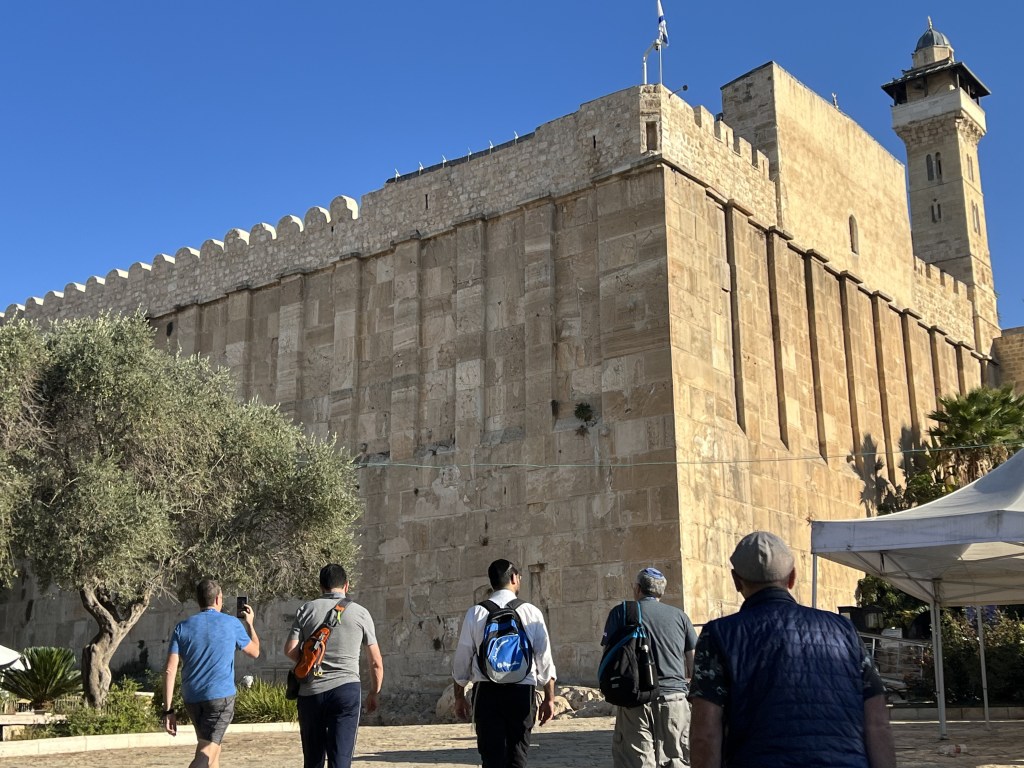
In Hebron, the oldest complete building still used for it’s original purpose in the world. Inside are the caves (graves) of the Patriarchs and Matriarchs.

Below is the cave with the grave of Abraham, the patriarch.

Across from the cave of Abraham is the cave of Sarah our matriarch, where Abraham buried her himself.

The grave of Jacob, our patriarch. He wrestled with the angel and got the name Israel. It’s unbelievable to be at his grave.

The grave of Leah, our matriarch. Rachel was buried on the road (her grave is in what is now Bethlehem) while Isaac and Rebecca are on the side controlled by the Palestinians and are only accessible 10 days a year to Jews.

I’ve been the Tomb of Joseph, not too far from Nablus.  There is something unique and special being there, knowing his story and how integral he was to the Jewish people.  It’s hard to explain the feeling of connection, of thousands of years of history, and of peoplehood that occurred for me there. 

The tomb of Joseph in Nablus. When I was there it was packed with Jews praying over his grave.

Being in the Jordan River is another unique experience.  This is where our people crossed over to enter the land of Canaan after leaving Egypt.  The history and connection is amazing.  It was smaller than I expected and reminded me of the Ichetucknee River outside of Gainesville, Florida, that I used to go tubing down in the summer.  I had imagined this powerful river that was both wide and deep.  It’s the same river my ancestors crossed thousands of years ago as they entered ‘the land of milk and honey’ for the first time.

Rafting down the Jordan River is always fun – on one trip we went with a group of Muslim women who were fully clothed while we were in bathing suits. They started a splash fight with us and we had so much fun with them. 

As you drive through Israel you see the field where David slew Goliath.  In Tzfat you see the fields where Lecha Dodi was inspired, the mikvah of the Ari, various ancient synagogues.  In Akko the excavated buildings from the crusades exist.  You can see the Dead Sea Scrolls.  It’s a land filled with rich Jewish history everywhere that you turn.  That’s what Herzl didn’t understand but was smart enough to listen the First Zionist Congress.  It’s why the modern State of Israel is home to all of us.  It’s not just a country of Jewish self-determination.  It is our historic homeland, our past, present, and future.  It is tied to our souls as anybody who has visited there, Jewish or not, will attest.  I’m grateful that Herzl listened to the delegates at the First Zionist Conference and wouldn’t accept just anywhere.  Israel is my mother that I travel 6,500 miles to visit and it’s worth it every time. 

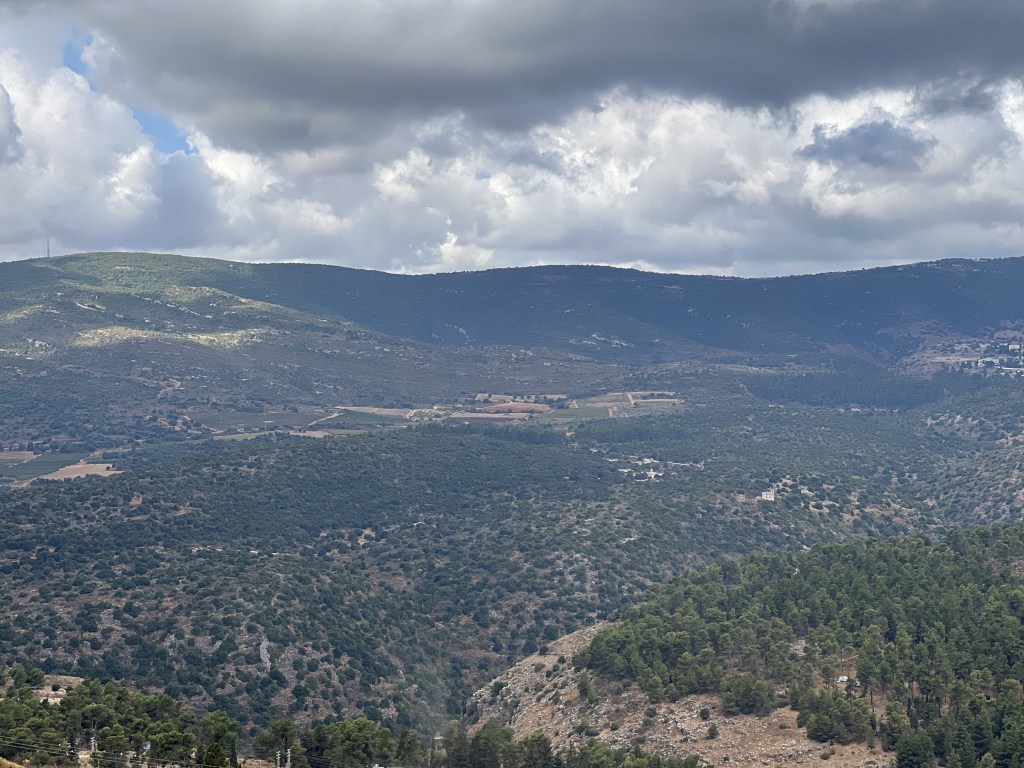
Looking out on the fields in Tzfat. This is what inspired L’cha Dodi and where they would walk out to meet the Shabbat Bride each Friday night.

Looking down at the Mikvah of the Ari from the 1500s. It’s inside the building. He used in the 1500s and I used in in 2021 and 2022. That’s the power of Israel for Jews.

The actual Mikvah itself. The Ari used it in the 1500s, stepping into the same pool (not the same water) as I did in 2021 and 2022.

The second piece of information that I found fascinating goes back to 1993.  During the Knesset debate over the Oslo Accords in September 1993, then Foreign Minister Shimon Peres warned that “There are in Gaza this year between 750,000 and 800,000 inhabitants. Within 20 years, there will be almost 2 million residents in the Gaza Strip. The population density leads to violence, the poverty leads to terrorism.” If you read his full remarks, it is fascinating to apply them to today. 

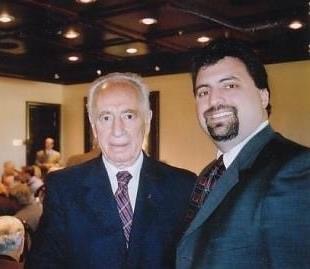
I met Shimon Peres more than 20 years (and 70 pounds!) ago. A truly special man and leader.

As Israel continues to respond to the horror of October 7th, there are more than 2 million people in Gaza.  Life there has led to violence and terrorism.  Hamas, UNWRA, and the UN have contributed to these problems.  At a JNF lunch event today, Ambassador Michael Oren told us that Israel is figuring out how many of the terrorists on October 7th were taught at an UNWRA school.  I’m afraid to see how high that number will be.  UNWRA ignored or allowed the strategic headquarters of Hamas to be built in tunnels under the UNWRA headquarters.  The textbooks are filled with antisemitism.  Even children’s programming is targeted to hate and kill Jews.  The Hamas version of Sesame Street, Tomorrow’s Pioneers, is focused on murdering JewsThis clip blames the Jews for a character cheating in school.  Shimon Peres was right about the growth in Gaza and what the consequences would be.  October 7th proved him right.  The question is how do we move forward from here?

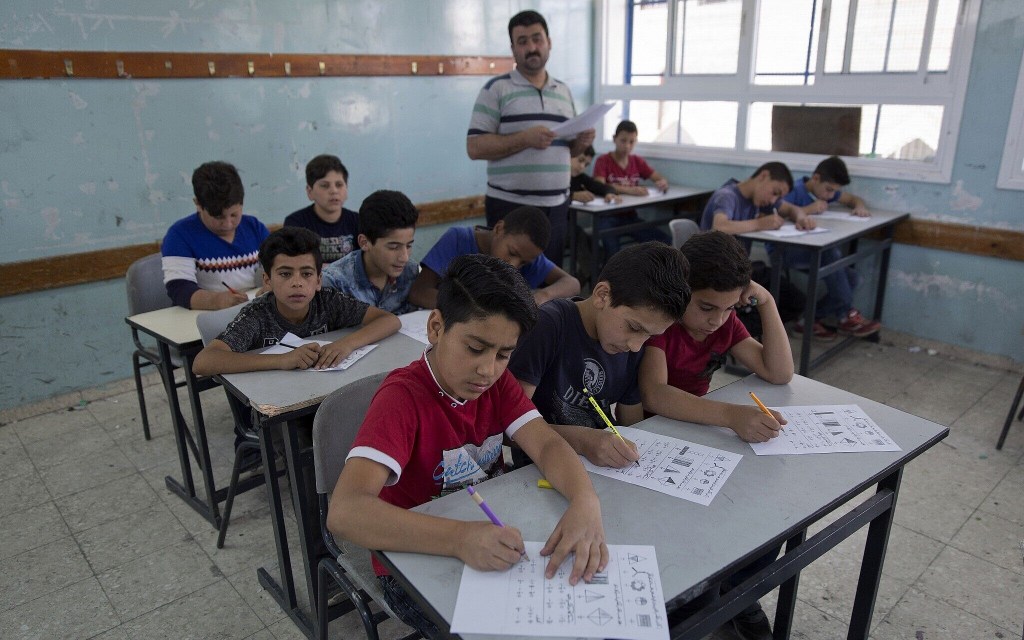
The textbooks provided by UNRWA to the Palestinian/Gazan children are filled with antisemitism and Jew hatred. 

In the same warning, Peres stated, “Neither do I propose that we talk of economic cooperation. Why? Because the Arabs believe that the State of Israel wants to dominate the region. We do not want to do the Arabs any favors. I am not even suggesting economic cooperation with the Arabs. All I am telling the Arabs is this: There are problems that will remain unresolved unless we tackle them jointly. We should make a joint effort only when problems are insolvable without such a joint effort.”

Was this Peres foreshadowing the Abraham Accords?  The threat of Iran brought Arab countries together to recognize Israel, forever changing the dynamic.  The Iranian problem was insolvable without a joint effort.  After October 7th, these nations did not abandon Israel.  They understand that Iran is the problem and that it’s insolvable without Israel being a part of the solution.  Could this be the basis for a new government in Gaza and perhaps the West Bank/Judea and Samaria?  Could this be the key to rebuilding Gaza and finally making it into the ‘Singapore of the Middle East’?  Could this be the basis for peace and a willingness to live together?

An incredible picture of the signing of the Abraham Accords as more muslim countries recognize and normalize relations with Israel.

I find myself looking to some of the great Israeli leaders of the past for inspiration on a regular basis.  David Ben Gurion.   Golda Meir.  Shimon Peres.  Yitzhak Rabin.  Moshe Dayan.  Menachem Begin. 

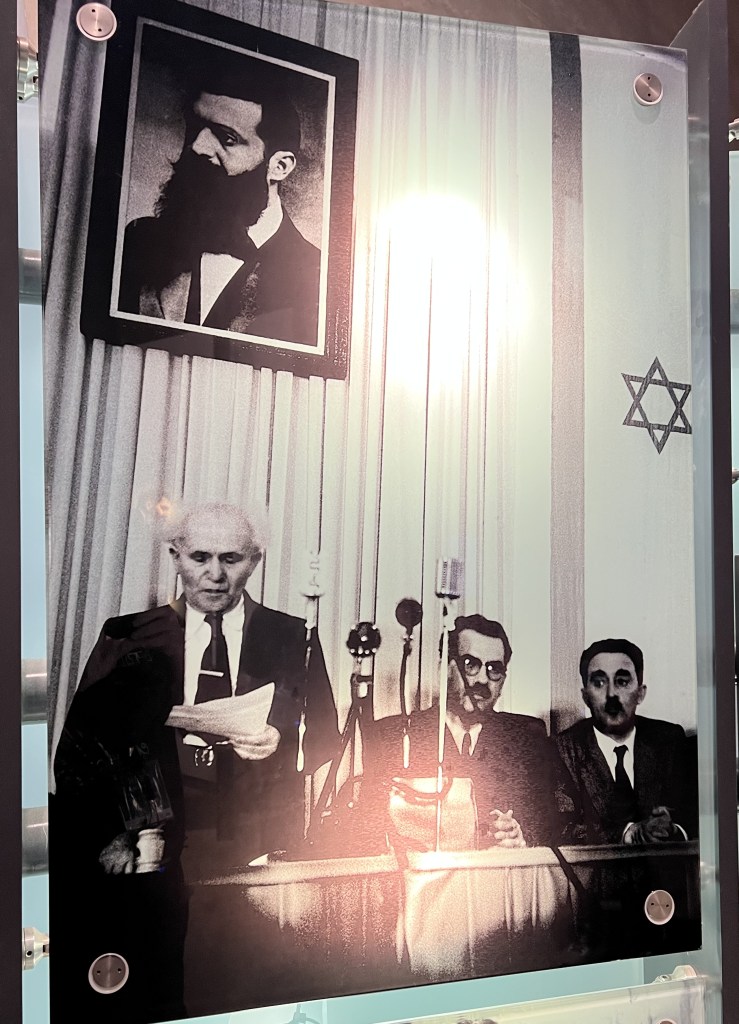
Picture of Ben Gurion reading the Declaration of Independence in Independence Hall

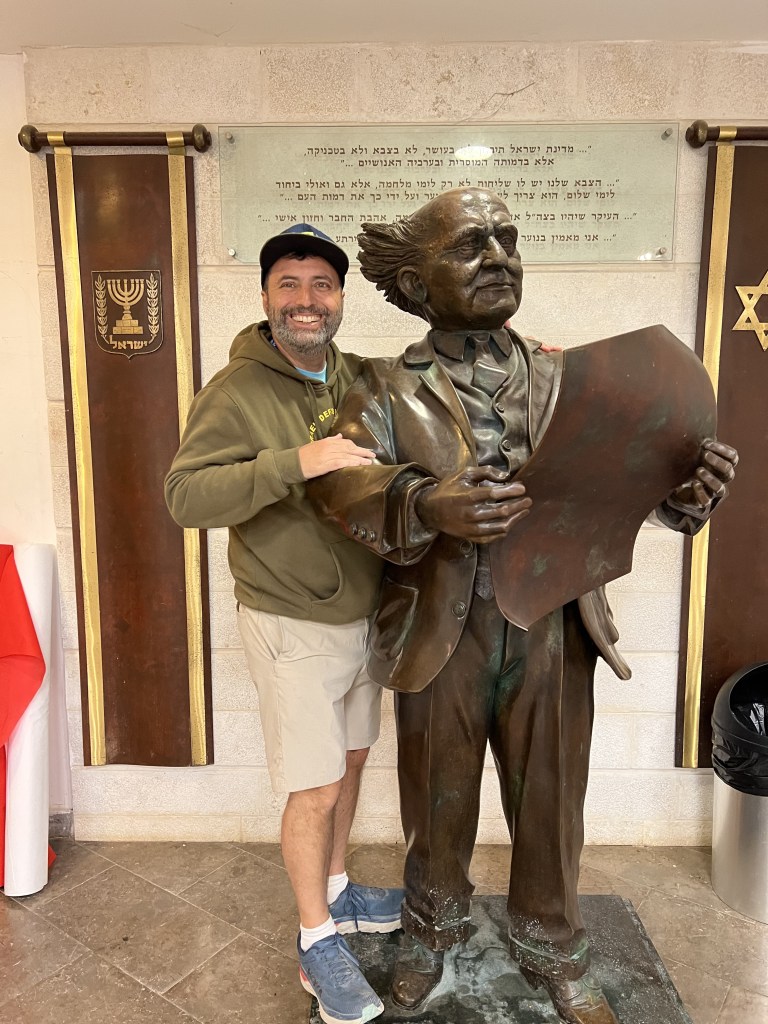
When I saw this statue of Ben Gurion, I had to get a picture with it. The more I learn about him, the more in awe I am of who he was and what he did.

I think of current Israeli leaders such as Ambassador Michael Oren, Ambassador Ron Dermer, and the many Consul Generals I have had the pleasure to interact with and befriend.  We are wise to listen to their insights.  Michael Oren has a substack that I now subscribe to.  Their words are treasurers. 

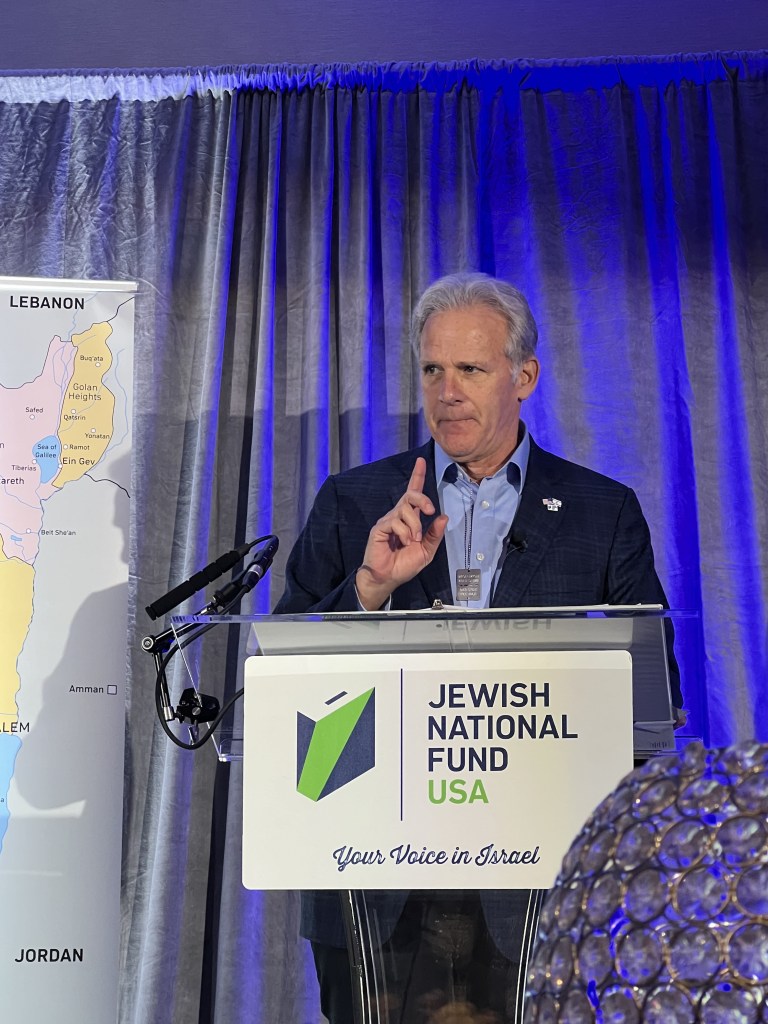
Michael Oren speaking in Orlando this week at a JNF event. A future blog will talk about what he said.

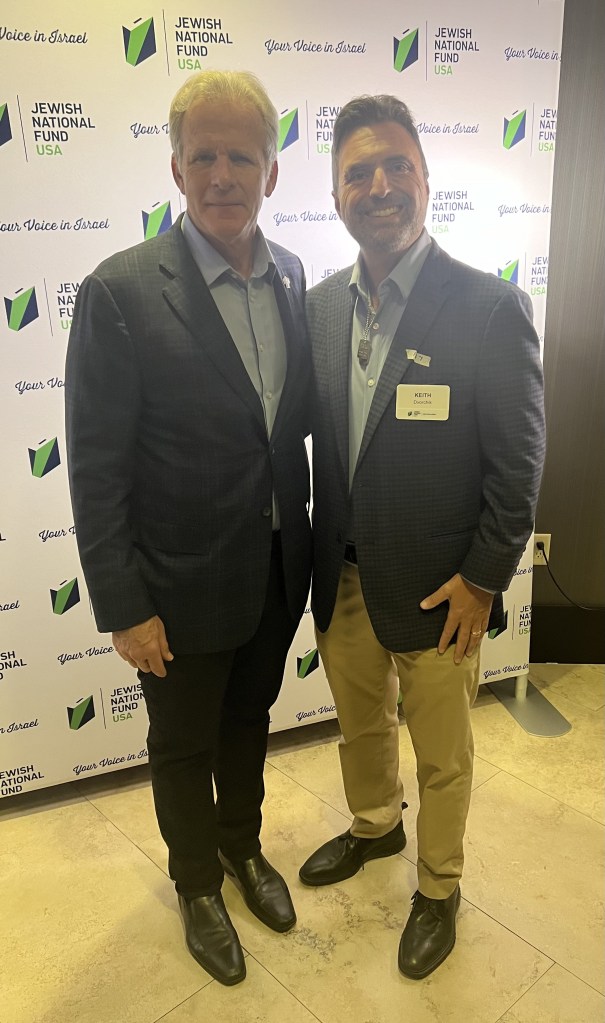
Talking with and listen to Michael Oren is truly incredible. A brilliant man to learn from

Two of my favorite Ben Gurion quotes are: 

“Dare, Persevere, Succeed.”

“Pioneering is refusing to accept reality as it is.”

As I look back at Herzl and at the words of Peres; as I look forward to ‘The Day After’ and the Abraham Accords, these two quotes inspire me for the future of Israel.  And they inspire me personally.  We change the world by being daring, persevering, and succeeding.  And by being pioneers and not accepting reality as it is, we have the opportunity to create a new reality.  A new dream.  “If you will it, it is no dream.  Dare, persevere, succeed.  Refusing to accept reality as it is.”  Three quotes that sum up Israel and the Jewish people.  Three belief systems that will change your life and change the world.