The Hospital for Broken Souls

There is something special about Fridays in Israel. While Shabbat happens everywhere in the world, Friday in Israel, especially in Jerusalem, just seems different. There is a different energy, a different vibe. There is a buzz in the air, an excitment about it almost being Shabbat. It is something I don’t think I can adequately explain – it’s something you have to feel, you have to experience. This Friday was no exception, especially because it is Jerusalem. There was an energy in the air, a vibe that you can’t describe, you can only feel.

Being in Jerusalem always creates a desire for me to learn. One of my favorite teachers, Ari Ben-David joined us to explore some facinating questions. Today’s topic was “What am I?” A great and deep question. Being in Israel and in Jerusalem, we went to the Torah to explore it.

If you are like me, the image of torah study that I grew up with was boring. Reading these stories with no context and taking them literally. Over the years, I have learned that is not torah study. It’s simply reading stories. Torah study involves discussion, analysis, questioning, and debating. That’s what we did, led my friend and amazing educator, Aryeh Ben-David. Aryeh took us through Genesis chapter 1, verse 1 and half of verse 2. That’s it. All we needed to spend an hour or more discussing the deep topic, “What am I?”

He asked us to pick one line in chapter 1 and one line in chapter 2 that most answered the question. In chapter 1, we agreed on verse 26, “And God said, ‘Let us make man in our image, after our likeness.” In chapter 2, we agreed on verses 7 and 8, “the Lord God formed man from the dust of the earth. He blew into his nostrils the breath of life, and man became a human being.” So we are the image of God, have God inside us, and are dust. Simple points.

It doesn’t end there. Dust is our physical being but the image of God and having God inside us is our soul. That’s the competition we face every single day. Every single decision. Dust (physical wants and needs) vs. soul (the greater good). Dust is about the self and immediate pleasure. The soul is about all and comprises the past, present, and future. What will we choose when faced with the decision? That’s the key question that each of us answer every day with every decision. It’s not about always choosing one over the other – there are times when we need to choose dust and there are times when we need to choose the soul. It’s about being conscious of the decision. What a mind blowing realization on a Friday morning in Jerusalem? With Shabbat approaching quickly, it’s a deep thought to take to the Kotel.

I love the energy of Machane Yehuda, the shuk, especially on a Friday. I went to help bring the catered food for Shabbat dinner to our room and get everything set up before heading to the shuk. A little bit of soul work. When I got to the shuk, as usual it was packed. I wanted to get to my favorite gluten free bakery there to get a bunch of challah, challah rolls, babkah, dates and walnuts. Most I will bring home and freeze, but I wanted a challah I could eat for shabbat and dates with walnuts to snack on. It was 100% for dust, for my own wants and needs. While there, I got to buy some desserts for Shabbat dinner (parve rugalach from Marzipan) and wine for those at dinner. A little bit of soul, doing things for others, since I wasn’t eating the rugalach or drinking the wine. Torah into action.

We got to the Kotel for shabbat very early. It was fairly empty when we arrived which gave us time to spend at the wall in deep thought and prayer. For the first time in a very long time, I had the time and space to sit in a chair at the kotel and just be. To let the air and the spirituality overwhelm me as I did nothing but sit and be. It was incredibly peaceful and powerful. I looked at the notes in the Kotel that others had left – their prayers, hopefully answered. I saw Jews of all shapes and colors arrive and pray. As the sun began to set, I felt the quiet and peace around and inside me.


If you’ve never been to the Kotel for Shabbat, it’s quite an experience. It never gets old for me. The singing, dancing, ruach (spirit) and connection is incredible. This was no exception. We gathered together in the plaza and prayed, sang, danced, and connected. We listed as others, in bigger groups, did the same but even louder. It was more than personal prayer – it was the feeling of a people coming together as one. As somebody who doesn’t love services, I always love Friday night at the Kotel. When we finished our prayer, I wanted to go join one of the others.

Instead we began our walk from the old city to where we were having Shabbat dinner. It was about a 40 minute walk, on a beautiful night, exiting through the Armenian Quarter and continuing up Jaffa Street until we arrived. The table was set for 15, the food was plentiful, and the company divine. I love the Shabbat table where you have a little bit of prayer, a little bit of ritual, and a lot of food and conversation. We prayed, ate, sang, and talked for a few hours, getting to know each other better, sharing pieces of ourselves, and enjoying the beauty of peoplehood, Shabbat, Jerusalem, and Israel.

During our learning with Aryeh he asked us what Jerusalem really was. We threw out a bunch of answers before he gave us his. He said, “Jerusalem is the hospital for broken souls.”. Powerful, beautiful, and true. Each of us has our own cracks in our soul. It’s part of being human. In Jerusalem we can get the treatment to begin the healing process for our soul. I’ve always loved Jerusalem but never really had a deep understanding why. Aryeh’s explanation fits. When I’m hear, my soul gets the treatment it needs to heal. To improve. To be better. I can get out of focusing on the dust, on my wants and needs, and instead focus on my soul. On the bigger picture. On being of service instead of what’s in it for me.

If you’ve never been to Jerusalem, I encourage to visit. To explore. To open your heart and heal your soul. If you’ve been – come back. It’s time for another treatment.

This was a wonderful Shabbat filled with happiness, joy, friendship and peace. I want to do my part to make sure they are all like this, no matter where I am.

Being Jewish and Inspired

Those who know me, know that I am not the most religiously observant person. While I am very Jewish and have a strong Jewish identity, when it comes to religious observant, I’m on the low end. When my friend asked me to come to services this Shabbat as he was sponsoring the kiddush in memory of his son, I said yes without hesitation. Not because I love services but because friends show up. Instead of my relaxing Saturday morning on the couch, watching College Gameday, rooting for the student to make the field goal and take Pat McAfee’s money, I found myself in synagogue.

I care much more about what goes on inside a synagogue that what the inside looks like in a synagogue. I have been to many that are beautiful inside but I don’t find warm, welcoming, or the service interesting or meaningful. I understand why many people want to invest in making the environment beautiful but I’d much rather see the money go to ensure great clergy, staff, culture. It’s a personal preference.

I note this because I have found that those that are more modest aesthetically tend to be more welcoming and I tend to enjoy what happens in them. As soon as I walked into this synagogue, I felt at home. It was warm, welcoming, and it was clear to me that the investment was being made in what happens inside the rooms rather than the rooms themselves. A number of people welcomed me immediately and the Rabbi, in the middle of the service, walked up to me to welcome me and give me a hug. In a crowded room, they made sure to find me a seat. People came up to say hello and welcome me.

I often find that in Jewish spaces, this type of welcoming doesn’t happen. We want people to come to our events, to be a part of our organizations, and yet we don’t make sure they feel included or special when they do. It was the first time I was at this synagogue and they made me feel right at home. As sombody who doesn’t love services, I found myself enjoying it because of how I was made to feel while there. I enjoyed the loud singing and comraderie that was happening as part of the service. Amazingly, I found myself thinking I would like to go back.

I found myself wondering why we don’t do this more often. We see our synagogues and Jewish organizations struggling with membership and attendance. We also see so many people who want to have a Jewish connection and yet they can’t find one that resonates with them. The old ways, the “Jewish tax”, the mandatory synagogue membership, etc. are no longer applicable. People want to spend their time in a meaningful way and many of them aren’t finding it in Jewish spaces. How do we change this?

There was recently a study about the shortage of people enrolling in Rabbinic School. In the study, they found an incredible diversity of those who enrolled. 58% identify as women, 30% as men, and 12% as nonbinary with an estimated 51% identify as LGBTQ. It’s amazing to see how the field has changed in the past decade or so. There was a big outrage by some about the high percentage being LGTBQ and women Rabbinic students, as if that was a problem. Perhaps to some it is. The bigger concern to me is about the overall number of people enrolling in Rabbinic school and the Rabbis that are graduating. I am a firm believer that the Rabbi is the key to the success of a synagogue. When the Rabbi is inspiring, the synagogue tends to flourish. People want to learn from somebody who inspires them. People want to spend time around those who inspire them. Rather than focus on the sexuality or gender of those in Rabbinic school, perhaps we should be asking ourselves why we aren’t recruiting the best, inspirational people to be our clergy?

At the synagogue I attended this Shabbat, the Rabbi was engaging. He was teaching us torah in between each aliyah. He was funny. He was engaging. I learned something new and applicable to my life each time he taught during the service. It made me want to learn more with him. It made me want to go back. He was inspiring. Our leaders, particularly our clergy, need to be inspiring. What are we doing to ensure we have inspiring clergy? Where are we failing? How will we address it?

One of my favorite clergy members is Cantor Azi Schwartz from Park Avenue Synagogue. He does amazing work putting classic Jewish prayers and songs to contemporary music. His version of Hallelujah set to Bruce Springsteen’s Born to Run at Rosh Hashanah this year is outstanding. I’ve listened to it more than a dozen times.

His version of Adon Olam set to the music of the Broadway show Hamilton has over 1.2 million views on Youtube. I don’t get tired of listening to it and signing along. He inspires and I look forward to seeing and hearing what he will do next. When the streaming services from Park Ave Synagogue come on, I watch because I know it’s going to be special and meaningful.

When the Broadway show Wicked (one of my personal favorites) came out as a movie last year, Cantor Azi and Cantor Mira Davis were ready with a new version of Adon Olam set to the music from Wicked. It’s fun to listen to, to sing along with. There is very little Jewish music that I want to sing along with yet Cantor Azi has multiple versions of Jewish prayer that he has inspired me to listen to for fun and to sing along with.

As I was writing this and looking at the things Cantor Azi has done, I even found new ones. Adon Olam set to Born in the USA. I quickly began to sing along, tapping my feet, clapping my hands, and thoroughly enjoying myself. I found a version of Mi Chamocha set to Taylor Swift. That’s inspiration. Oseh Shalom to the tune of Shallow.

Not everybody has to be Cantor Azi. There are many ways to inspire. There are many ways to be welcoming and engaging. It takes effort. The payoff is worth it, both for the Jewish people as a whole and for each of us individually.

I’ve been lucky to work with and learn with many inspiring Rabbis. My childhood Rabbi, Jeffrey Wohlberg (always my image of a Rabbi) set a great example for me. Rabbis David Kaiman, Andy Koren, Yoni Kaiser-Blueth, Aaron Alexander, Dave Baum, Jonathan Siger, Yonah Schiller, Gail Swedrow, Chaim Albert, Jill Borodin, Randy Brown, Gabi Gittleson, Herb Tobin, Dovid Yachnes, Ari Federgrun, Ben Hassan, Danny Weiner, Josh Broide, Mark Kram, Efrem Goldberg, Irving “Yitz” Greenberg, Ed Rosenthal, Joseph Telushkin, Daniel Wolnerman, Darren Kleinberg, Mayer Abramowitz (z’l), Steve Engel, Neil Zuckerman, Jeremy Barras, Jonah Zinn, and Amram Hoffer are just a microcosm of the Rabbis who have impacted me. While the number of Cantors who have impacted me are smaller, I can’t leave out Cantors Lisa Segal, Rachelle Nelson, Mitch Martin (my Bar Mitzvah Cantor who I still keep in touch with today) who are incredibly inspiring. Perhaps I am spoiled by these amazing Rabbis and Cantors so I have set the bar too high. I don’t think so. Their excellence has showed me what is possible.

As a people, we need to invest whatever it takes to ensure we have excellent clergy. We need to do invest in ensuring we are a welcoming community. We need to invite those who show up into our community. When I was in Hebron a few years ago, our guide pointed to the parking lot and said to us, “This is where Abraham, recently self-circumsized, greeted the strangers and washed their feet.” (the the three angels). I think that if Abraham, at that point in time, would get up to welcome the stranger, who am I not to do the same?

As I finish writing and prepare to return to Israel in 2 days, I want to leave you with Cantor Azi and his Taylor Swift cover. As he sings, “We are never going back to Egypt again” think about what you are willing to do to ensure you are never enslaved again – mentally, physically, or spiritually. Think about what youwill do to find a way to make being Jewish interesting and fun. Ask yourself what it would take for you to want to be involved? To get your family involved? To make sure Judaism has an important part in your life, no matter how religious you may or may not be. No matter how much you may like or not particularly like religious services. No matter how you define being Jewish. Because at the end of the day, we are all Jewish so lets figure it out together.

The Genocide Libel

For more than two decades, I have made one simple claim. American’s are dumb. It’s simple. It’s clear. I don’t think it is even debatable at this point. This doesn’t mean I don’t love America or that I hate the American people. It does mean that we are so self-righteous and have such a small attention span that we believe whatever we are told. It means that the Big Lie theory, popularized by Adolph Hitler, is right when the theory says, “if a lie is sufficiently enormous and repeated frequently enough, people will eventually believe it.” We see it all the time. Our news media does it all the time. Our leaders do it all the time.

I have lunch every Friday afternoon with a group of 80 year old men. It’s a fabulous group and I’m thrilled that they invited me over a year ago, 20 to 30 years younger than them, to join. When working, they were titans of their industries. Lawyers, Doctors, Judges, Newspaper editors, and much more. Their wisdom infuses the conversations each week into something rare in today’s world. For the past few months I have been bringing up the subject of the media and their agenda with everything that they do. No longer is it the about getting the facts and the truth out into the public arena. No longer is it about verifying stories before you go to press because truth and integrity matters. Today’s media is about money. It’s about clicks and views and being the fastest out with something because that’s how you monitize it. I often make the comment that there is a reason why the news is now in the entertainment division. My friend who was the newspaper editor always takes umbrage when I say this because he recalls a different day. A day when the media had an obligation to truth and independence. A day when you could count on the media almost all the time to get it right, even if they didn’t get it fast. I long for those days but am realistic about where we are.

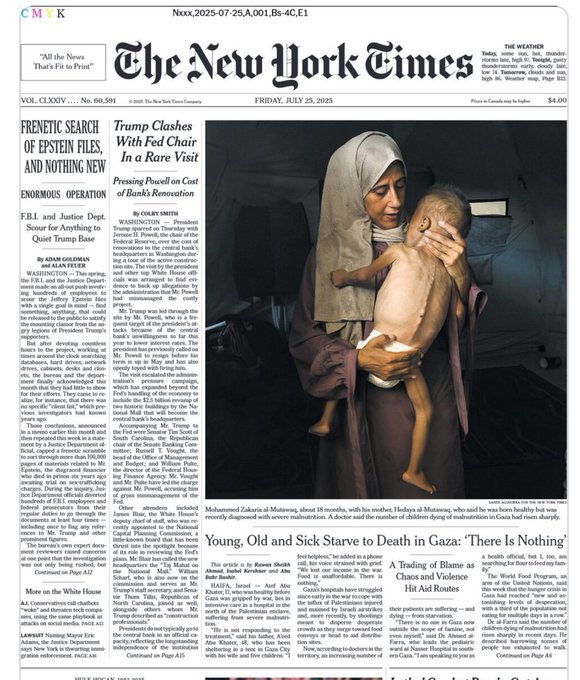
The media lies because it sells papers, gets ratings, and gets clicks. They don’t even try to hide it. Take the NY Times. In order to blame Israel, they used a photo of Mohammed al-Mutawaaq, a child with a muscular disorder, as the face of famine in Gaza.

This isn’t the first time they have lied about Israel nor will it be the last. Earlier in the week they ran a terrible piece, based on no facts, stating that there is no proof that Hamas is stealing the food from the UN. The day after, a piece in the Jerusalem post showed just how wrong the Times was once again and how they and Reuters ignored a mountain of evidence to print their narrative and lies. The NY Times and the media simply don’t get held accountable. I’m stunned by the number of Jews who continu to read the NY Times and view it as a source of respectible journalism. Then again, I am stunned by the number of Jews who support those who would kill us all if they had the opportunity. This isn’t a new phenomenon. It’s been going on for thousands of years. In our effort to build a better world, we have done harm to ourselves going back thousands of years. It is our history. The question is when will we learn from our history – or maybe better stated, will we ever learn from our history.

A friend of mine from Jewish summer camp many years ago just wrote a piece accusing Israel of Genocide. I won’t post it. He is a University Professor in Canada so it didn’t surprise me. It did sadden me. As I read it, I was even more disappointed as so many facts were simply wrong. When educated, smart Jews who I know have a strong Jewish identity believe the lies, it is clear that we have failed. It is clear that what we have done up until now has not worked and that if we don’t take a hard look at ourselves, our organizations, and our communities and understand where we went wrong, where we missed, and devise a new path, we have a very troubled and scary future in front of us.

We had a detailed interaction and conversation on Facebook about it. It was very civil and reasonable. Topics were discussed, information shared, and no minds were changed. I think what was the saddest part for me, other than seeing the lack of real information being used by him was his final statement. I had asked him to read a piece written by John Spencer, the chair of Urban Warfare studies at the Madison Policy Forum. Spencer is one of the world experts on war and specifically Urban war like in Gaza. He is not just an academic, as he served 25 years in the U.S. Army, to included two combat tours in Iraq. The piece, titled I’m a War Scholar. There Is No Genocide in Gaza, is filled with facts and information from somebody who is world renown in the field and has no skin in the game. He isn’t Jewish or Israeli and is completely independent. My friend’s reply was “Thank you, but I think I’ve read enough.”

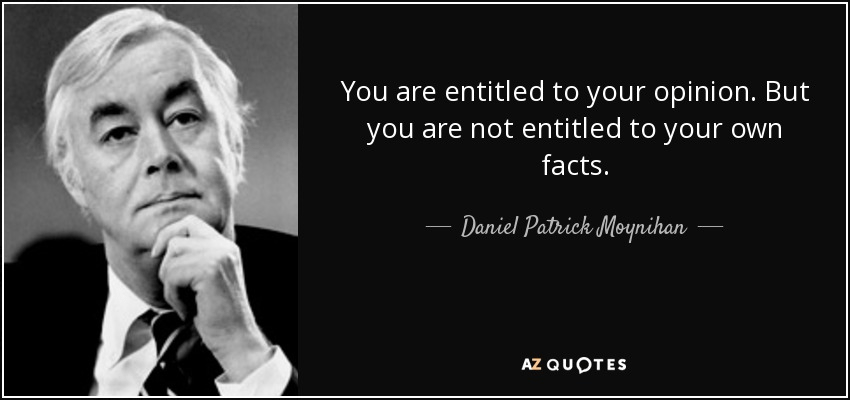
That’s a major part of the problem. People read things that confirm their bias. They watch the news that is clearly far left or clearly far right. They never read things that challenge their beliefs or their world view. It goes back to the saying “my truth”. There isn’t ‘my truth’. There is only ‘the truth’. As the late, great Senator Daniel Patrick Moynihan said, “You are entitled to your opinion. But you are not entitled to your own facts.” In today’s world, people are choosing their own facts.

I read a piece in the Free Press today about the greatness of Billy Joel. In it, they quoted two verses from his classic song, “Prelude/Angry Young Man”. It’s one of my favorite songs and the lyrics hit me different this time.

The first verse quoted reflects the attitude of the young. It reads: 

There’s a place in the world for the angry young man
With his working-class ties and his radical plans
He refuses to bend, he refuses to crawl,
And he’s always at home with his back to the wall.
And he’s proud of his scars and the battles he’s lost,
And he struggles and bleeds as he hangs on his cross
And he likes to be known as the angry young man.

Billy Joel

When I was young, I related to that verse. It spoke to me as who I was at that time. Then I got older. I got more mature. I got married, had a family, built a life within society. The second verse of the song that they wrote about reflects that version of me.

I believe I’ve passed the age
Of consciousness and righteous rage
I found that just surviving was a noble fight.
I once believed in causes too,
I had my pointless point of view,
And life went on no matter who was wrong or right.

Billy Joel

Until October 7th, that was more of who I was. I no longer had that ‘righteous rage’ and understood that there was a nobleness in surviving the challenges of life. Everything didn’t have to be perfect and there were certain things that no matter how wrong I thought they were, they were not going to change. My point of view was mine and the world didn’t need to conform to my worldview. I respected my scars and the battles I’ve lost but I didn’t need to obtain new ones or lose new battles. October 7th changed that for me.

Since October 7th, I’m no longer that person passed the age of conciousness and righteous rage. I’m also not the angry young man. The person I am has more of the angry young man than the older version. I know that we can’t sit by idly and I need to be part of the group that will have radical plans because what has been done up to now has epically failed. I can’t bend and I can’t crawl. I have to fight because now it really is about survival.

So despite my inability to change the mind of my camp friend, I won’t stop speaking the truth. I won’t stop calling out the Jew hatred all around us. I won’t stop naming those who are vile antisemites or those who blatently lie because of their Jew hatred. Will there be consequences? Probably. Will I get new scars? Definitely. Will I be proud of the battles I’ve lost? Not a chance. Because losing a battle isn’t success. There are no moral victories when it comes to my life and the lives of my fellow Jews. I may be known as the angry ‘not so young’ man, but I don’t care. Because if we don’t stand up and fight now, by the time we may be ready, it will be too late. I’m not willing to take that chance. Are you?

Queen Esther and Sacrifice – a Purim leadership lesson

Purim is one of my favorite holidays. It’s got a great story, an evil villian, a heroine that is tough to beat, and delicious triangle cookies. What’s not to love?

This year before Purim, I took the opportunity to learn a bit more about the story from a variety of teachers. It took me down a much deeper road with lots of lessons that apply to to our world today. I always enjoy when I find something in ancient texts that somehow team me a lesson for today’s world.

Purim is highlighted by a few major characters. Queen Esther, the heroine. A much deeper character to explore that the basic story presents. Her ‘uncle’ Mordechai, the hero. He pushes back against the evil villian and wins. Haman, the evil villian, who’s triangle hat becomes the Hamentaschen, the cookies we eat, at Purim. Haman, who’s name we drown out during the reading of the Megillah. King Achashvarosh, who divorces/murders his wife and marries Esther. And Queen Vashti, who refuses the King’s order/request, resulting in her divorce/death. I want to focus on Queen Esther here.

She was always one of my favorite charcters because of my Grandma Esther. Subconciously, there was always a connection to my Grandma Esther and Queen Esther. Plus dressing up, Purim carnivals, hamentaschen, and the fun makes Purim a special holiday for children. For much of my life, I thought of her as Morchechai’s niece who married the King to save the Jewish people. A wonderful and simple heroine. I never bothered to ask what happened to her when the story ends. I never bothered to ask if her ‘Uncle’ was really an uncle. I took it at face value and enjoyed the story.

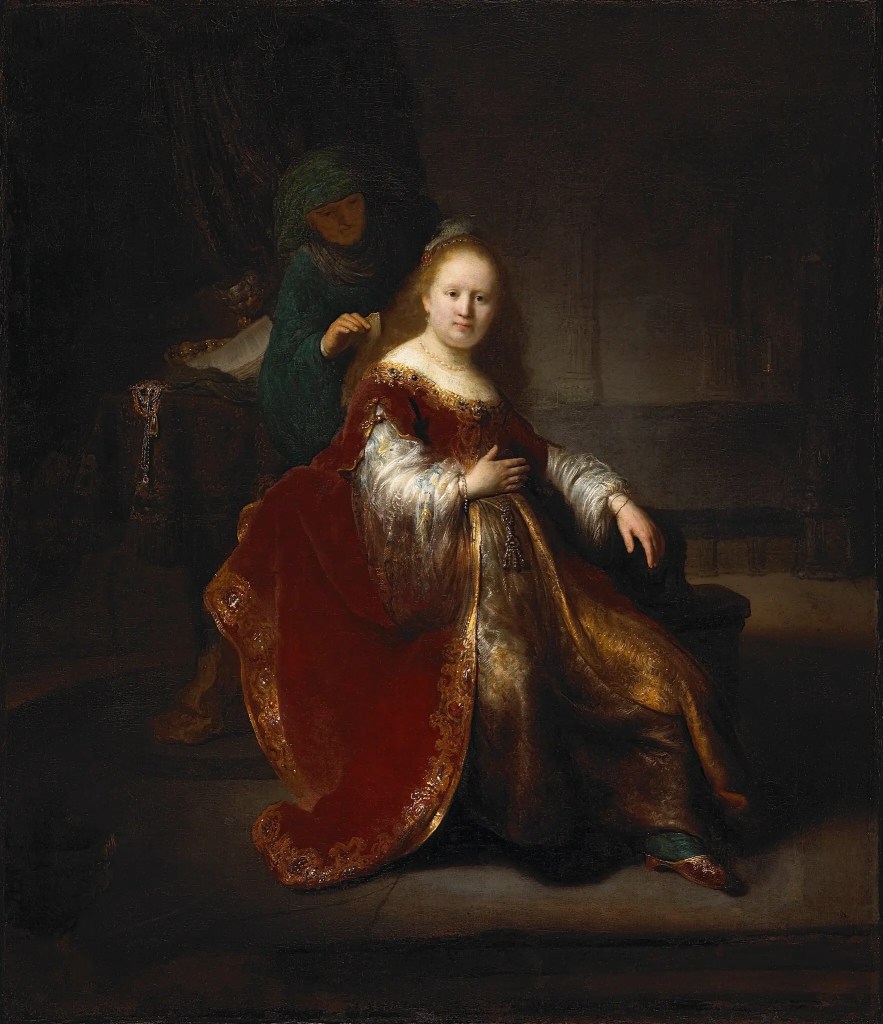
Queen Esther as painted by the great Rembrandt. He painted many images from the Purim story.

It is much deeper than that. Jewish tradition and the talmud teaches us that Esther and Mordechai were actually husband and wife. The Talmud interprets the phrase “Mordecai adopted her as his own daughter” (Esther 2:7) as “Mordecai took her as his wife”. Think about what it must be like to be settled, married, and planning what your life will look like when all of a sudden your husband asks you to leave him and try to marry the King. Your husband who pushes you out of his bed and into the King’s bed. It is hard to believe that this is something that Esther wants to do or is looking forward to doing. I find myself wondering why shouldn’t just tank the interview to be Queen, find some way to ensure that the King will not pick her so she can return to her husband and her life. That’s the easy thing to do. Finish second, don’t strive to win, just be a part of the pack and be forgettable. Yet that isn’t what she does. Instead, she charms the King and he picks her to be his wife, forever ending any chance she has of returning to her life with Mordechai. She makes a huge sacrifice based entirely on trust and faith.

How often do we face challenges that require a sacrifice and we fail to do so? These aren’t always life changing challenges and yet we still are not willing to make the sacrifice for the greater good. History has shown us what happens when you fail to make the sacrifice for the greater good. When you put yourself first and the world or your community second. True leaders are willing to make that sacrifice. It doesn’t mean they aren’t afraid of the cost. Instead, they are very afraid of the cost yet go ahead and do it anyway. That’s leadership. Queen Esther did what was needed at great cost to herself and her life. She gave up the life she knew for the greater good.

Queen Esther took a risk when she told King Achashveros that she was Jewish. There was no guarantee that the King would choose her over Haman. She couldn’t be sure that the King wouldn’t be disgusted with her and get rid of her like he did with Queen Vashti. She didn’t have to take the risk to tell him. She was safe. Like many people in today’s world, she was a hidden Jew. She could have stayed quiet, stayed hidden, and lived a full life. But she didn’t. She is the example to us today that no matter how good we have it in our country, at the end of the day, we will always be seend as Jews first. Jews in Germany who had prominent roles in the military, the government, and business got no special dispensation from the Nazis. They were Jews first. Our Jewish legislators who think they are safe because they defend the rights of others at the cost of the Jews are merely fooling themselves. Queen Esther showed us the way.

I look at many of our leaders today, both in and out of the Jewish community, and wonder why they aren’t following Queen Esther’s lead. Very few are willing to actually put it on the line and take the risk of losing their power and position to do what is right. There are the exceptions. Senator John Fetterman has been outspoken and lately there have been pieces written about the cost he has paid as a result. The Wall Street Journal wrote a piece about him being the “Lonliest Democrat in Washington”.

He has spoken out repeatedly against Hamas and those who defend them. He is a throwback to the days when America didn’t negotiate with terrorists, when terrorist was evil without any excuse. He is a true leader who is going to do what is right, regardless of the personal consequences.

Secretary of State Marco Rubio has done the same, talking about the evil of Hamas and revoking the green cards of those who incite violence and support terrorist organizations. He is unequivative is his condemnation of Hamas and those who support them.

We simply don’t have enough of these leaders in the Democratic or Republican party. We have far too many Bernie Sanders, who blames Israel when Hamas won’t agree to ceasefires, won’t release the hostages, and remains responsible. We have Thomas Massie on the right, who is an open antisemite. We have people like Rashida Tlaib, Ilhan Omar, and Pramila Jayapal on the left who are so far into their Jew hatred that they could be mistaken for Marjorie Taylor-Greene or Lauren Boebert with their hatred. Queen Esther teaches us all that we must stand up for what is right, regardless of the personal cost. The greater good matters.

As a Jew, the ending of the story of Purim was always a happy one. Like most Jewish stories, they tried to kill us, we won, let’s eat. However the story ends differently for Queen Esther. She doesn’t go back to her regular life after Haman is hung and Mordechai promoted. She doesn’t get to leave the castle and stop being Queen or the wife of King Achashverosh. Her sacrifice is truly one for her entire life. Often times we think it is just for the length of the story. That the things we are willing to give up, the choices that we make are only going to be temporary. Queen Esther reminds us that is not always the case. There are times when the sacrifice we make is much greater and lasts much longer. It doesn’t change the importance or significance of that sacrifice. The megillah continues after Queen Esther tells King Achashverosh she is Jewish and Haman wants to kill her and her people. The story continues about the role of Mordechai and the gifts and power he is given. Esther falls into the background. Her work is done but her sacrifice is not done. It is one she continues to make on a daily basis for the rest of her life.

That’s the lesson about sacrifice. It’s for the greater good and must be willing to pay the price regardless of how much it may be. The cost of not making the sacrifice is far greater. We see this with the IDF soldiers and the people of Israel. Since October 7th, they have made incredible sacrifices. Many have lost their lives. Their families have been changed forever. Children have spent most of the year without their parent(s) who have had to serve in milium (reserves). Incredible instability with rockets falling daily, war all around, funerals on a regular basis due to the war, many forceably relocated for safety. Soldiers facing PTSD and their lives changed forever. Hostages who endured unbelievable torture. Every Saturday night there are massive protests against the government and demands to release the hostages. The leaders of these efforts pay a high price. Those who commit to be there pay a high price.

One of my friends was a high level commander in Gaza during the first four months of the war. The price he paid was easy to see when we got together after those four months. Just recently, he was one of the commanders in charge of the hostage releases during phase 1 of the ceasefire. He shared how difficult and painful that was for him. What he experienced on October 7th, the first four months of the war, and managing the hostage releases will stay with him for life. He is not the same person he was on October 6th. Like Queen Esther, he was willing to make the sacrifices that were necessary, regardless of the personal cost.

There are lessons to be learned from Queen Esther beyond being proud of being Jewish and standing up for the Jewish people to those in power. The lesson of sacrifice is key among them. The lesson of the greater good. The lesson of standing up for what is right regardless of the cost. Nowhere in the Megillah does it recount Queen Esther complaining to Mordechai that she did her job and now is stuck for the rest of her life. That’s true leadership.

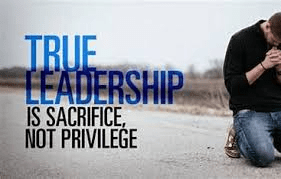
True leadership is remembering that it is a sacrifice, not a privilege. It is an obligation not a coronation. This applies in our political arena as well as our Jewish organizations. The lesson of George Washington only serving two terms and our Founding Fathers wanting to get home to their families and their lives rather than serve forever in Washington DC has been lost. Their willingness to sacrifice their personal success and time with their familes for the greater good has been lost. The Israeli people are showing us what it looks like. People stepping up to serve much longer than required. People letting their spouses serve and figuring out how to raise children and pay the bills without one of the parents being there. People leaving the government because they fundamentally disagree with decisions being made. People peacefully protesting every single week because they want to see change. It’s time to bring it back. It is time for us to do our part. Otherwise we are letting evil win. I, for one, refuse to do that. What about you?

Temptation and the real lesson from Adam and Eve

It’s always interesting learning Jewish things in Israel, especially in Jerusalem.  Aryeh Ben David explored Chapter 3 of the beginning of the Torah with us.   We talked about Adam and Eve being expelled from the Garden of Eden.  The midrash (story from Rabbi’s) is that after being forbidden by God to eat from the tree of knowledge, it took them about 20 minutes to eat the apple.  It is about temptation. 

So why would God tempt Adam and Eve, knowing that they would fail the test and be expelled from the Garden of Eden?  How do we do when told we can’t do something, especially something that sounds interesting, fun or would be totally awesome?  A friend parks their Lamborghini in your driveway, gives you the keys, tells you they will be back in a month and that you CANNOT drive it.  How long would it take before the temptation to just take it for a little spin would win out?  He won’t know – it’s just a couple of miles.   Temptation is all around us and our goal is to do the best we can to not fall into it.

It is easy to fall into temptation.  We do it every day.  Too much food.  Delicious desserts.  Some people it’s with sexual activity.  Alcohol.  Drugs.  Buying expensive things that we can’t really afford.  Temptation feels good.  It’s immediate gratification.  The consequences happen down the road and we don’t think about them when we are in the middle of enjoying the fruits of temptation.  Adam and Eve didn’t think about what God would do if they ate the fruit they were told not to.  The consequences came after. 

How do we avoid temptation?  What can we do to be more aware?  That’s where structure comes in.  That’s where gratitude comes in.  Adam and Eve had everything, yet they still couldn’t appreciate what they had and risked everything because of temptation.  The desire for more.  They lost.  Often times we do the same.  We risk everything.  Our health by eating too much, the wrong type of foods, or too many sweets.  Our lives with drugs or alcohol.  Our marriage and families with sexual desires and behavior.  Sometimes we see the consequences and they are devastating, like Adam and Eve.  Sometimes we get away with them, which only reinforces the behavior.  It is like Las Vegas, and we are gambling with our lives.  Just like in Vegas, we forget that the house ALWAYS WINS

The second lesson we learned from Adam and Eve was to dream.  It sounds strange to think of that since the story doesn’t seem to focus on dreams at all.  Nobody ever told me that having dreams was part of Adam and Eve’s story.  It was about obeying God and the consequences when you don’t.  It was about being created in the image of God.  But dreaming?

After being kicked out of the Garden of Eden, Adam and Eve dreamed of finding a way back.  When they realized they could never get back, they began to dream about how to make the world they now lived in as perfect as they could to resemble the Garden of Eden.  That is the beginning of the Jewish value of Tikkun Olam, repairing the world.  Adam and Eve tasted the perfect world and lost it.  They, and their ancestors for thousands of years, would spend their time trying to recreate it. 

Each of us has the ability to make the world a little more perfect.  It’s not our job to make the whole world perfect.  That’s too much for any of us.  However, we do have the ability to do little things to make the world better.  That’s the essence of the story of Adam and Eve.  It’s not about how the snake convinced Eve or how Eve tempted Adam.  It’s not about how God took Adam’s rib to make Eve.  It’s about each of us doing our part to make the world a little bit more like the Garden of Eden.

It can sound overwhelming but it’s not.  It is the little things.  At our hotel in Jerusalem, I say hi and good morning to all of the people who work here.  The man who cleans my room is a nice guy, we talk throughout the day when I see him.  Instead of thinking of him as less than or pretending not to see him, I recognize him and treat him nicely.  He does the same to me.  Treating everybody as an equal human being makes the world a better place.  That’s an easy thing for us all to do if we simply pay attention and make the effort.

Adam and Eve had a big dream to make the world resemble the Garden of Eden.  Bigger dreams have bigger impacts.  We know one thing for sure, we cannot achieve a dream that we don’t have.  Dreamers in today’s world often get shut down.  There are too many challenges, too many risks to dream.  Yet it is dreamers who change the world.  Steve Jobs used to dream about making devices that you didn’t even know you needed.  The iPhone.  The iPad.  I remember the Thanksgiving discussion with my grandfather and my father about desktop computers.  My grandfather was 100% certain that there was no way that every house would want, need, afford, or have a computer.  In the end, he was right.  In my house we don’t have one computer. We have 6 or 7 computers (including laptops) and that doesn’t include iPads, iPhones, Apple Watches, etc.  Steve Jobs’ dream changed the world.

It isn’t just Steve Jobs though.  I remember a few years ago reading about a man named Rodney Smith Jr.  I’m sure you have all heard of him.  What?  You haven’t?  Rodney Smith Jr. came up with an amazing idea.  He wanted to raise boys into men, girls into women AND help those in need.  How does he do this?  He created a nonprofit called Raising Men and Women Lawn Care Service that encourages them to take the 50-yard challenge.  They are challenged to cut 50 lawns FREE for the elderly, disabled, single parents, veterans, & anyone in need of help in your town.  At each level of 10 they receive a new t-shirt of a different color and when they reach 50 lawns, the come to visit the boy or girl and present them both their black shirt to mark 50 lawns and give them a brand-new lawn mower, weed eater & blower!  How cool is that?  They are now in all 50 states, 8 countries, and have thousands of kids mowing lawns for people who need help.  In the winter, they shovel snow, and, in the fall, they rake leaves.  They are truly making a difference in the world.  Rodney Smith Jr. has made the world better for the thousands of children who are giving back, for their parents, and for the tens of thousands of people who get their services. 

Steve Jobs had another important quote for this context.  He said, “We’re here to put a dent in the universe. Otherwise, why else even be here?”  Each of us has the ability to put a dent in the universe.  As it says in Pirkei Avot (Ethics of our Fathers), Chapter 2:16; “(Rabbi Tarfon) used to say… It is not up to you to finish the task, but you are not free to avoid it.”  Our job is to participate in the job that Adam and Eve started.  Making the world as close to the Garden of Eden as possible.  What are you going to do today to make the world a better place?  What are your random acts of kindness going to be?  What impact will you make today.  We all have the opportunity to change the world a little bit every day.  The questions is are you going to do your part?

The trading of time

I’m here in Israel for two weeks with a group of young adults on a leadership program.  The Jewish Leadership Institute (JLI) was created by Rabbi Mayer Abramowitz more than 30 years ago.  He was a visionary.  He understood in the early 1990s that the future was on the college campus and that providing answers to the WHY of Judaism was critical to developing Jewish leaders.  I was introduced to the program in 1998 and have been a fan ever since.  Now I get to work with my friend David, Rabbi Abramowitz’s son, on JLI and the future of JLI.

While the focus of the trip is on the young adults, it is impossible not to be inspired by both them and the content.  I find myself thinking deeply throughout the different experiences and while I am not the intended target of the program (nor are you) the impact is felt.

Yesterday we had an amazing tour guide, Eytan Rund, take us on a tour of the Old City of Jerusalem.  I’ve been on many tours of the Old City.  Too many to count.  I love the Old City.  Last month, our guide gave a totally different view of the Old City that I wrote about.  Eytan spent two hours with us giving one of the most amazing tours I have ever experienced of the Old City. 

Eytan’s focus was on the difference between seeing old stuff and seeing stories, history, and memory.  The Old City was his muse to talk about peoplehood.  To talk about the Jewish collective.  To talk about what being Jewish means – being part of a mishpacha, a family, that is thousands of years old.  As we looked down into the ruins of Jerusalem from the time of the first Temple, he explained this was this built 3,000 years ago by Jews.  Well before Christianity.  Well before Islam. This is our homeland that we built.  He talked about how after the destruction of the first Temple, Jerusalem was filled in with sand to make an entirely new ground, well above the prior city.  It is always amazing to look at the areas from the time of the first Temple however this was different.  He tied it to us.  We built the first Jerusalem.  We built the second Jerusalem.  And we built the current Jerusalem.  It was powerful.

As we walked through the Old City, he focused on 1948 and the battle for the Old City as well as the battles with the Assyrians, Persians, and Romans.  The stories were vivid.  They were personal.  On my trip last month, Saul Blinken, our trip leader, talked about what a miracle it is that we get to wake up in Jerusalem.  We walk the streets of Jerusalem.  We breathe the air of Jerusalem.  That was incredibly impactful for me.  I am fulfilling the dreams of my ancestors from 2,000 years ago and I can never forget that.  Eytan reiterated that in his own way.  The modern state of Israel is truly a miracle that our ancestors who were conquered by the Romans could never imagine. 

It made me think of a story that my friend Harry Rothenberg told me a few years ago as we were climbing Masada.  I challenged him to do some on the spot Torah teaching about climbing a mountain.  He said that when God told Moses he would not be permitted to enter the land of Israel, Moses begged God thousands of times to be allowed to enter.  God refused every time.  God finally told Moses that if he climbed this mountain, he would be able to look into Israel and see the entire land.  Moses climbed the mountain, saw the land, and his love for the land he saw but could not entered is a part of all of us.  That is why we love Israel.  It’s a great teaching about how our love for this land goes back thousands of years.  It’s not since 1948.  It’s not since the late 1800s and Theodore Herzl and the creation of modern Zionism.  It goes back to Abraham.  To Moses.  To King David and King Solomon.  It is a part of who we are. 

One of the things I love about JLI is our morning services.  As somebody who does not like services, that is an interesting statement to make.  The reason I enjoy these services so much is because they focus on the WHY not the WHAT.  As we continued to discuss the prayers about thanking God for restoring our soul and for the rooster knowing the difference between day and night, we talked about time.  Previously I wrote about how Judaism marks the passage of time, so we don’t lose our focus.  Today we talked about how we are always trading time.

It is a fascinating concept that most people don’t really think about until they are older.  That is when we begin to realize that time is our most precious commodity.  We can always make more money, get a new car, a new house, new clothes, TVs, computers, etc.  What we can never get back is time.  Life is about the value of time and what we are willing to trade time for.

For many years, I was willing to trade time for money.  For career.  For ego and for title.  For status.  For the nicer house and the better car.  I wouldn’t trade time with my children – I took them to doctors appointments, went to their sporting events and music performances. I specifically remember having a small counseing practice and when I did the analysis of what insurance was paying me, realized that I would rather have dinner with my family than make money. Until I got a bigger job.

The bigger job, for some reason, changed the equation. I began to trade time more freely. I didn’t realize that’s what I was doing. I knew I didn’t like it but I continued to do it. After a few years, I realized that among many things, I wasn’t willing to trade that time for the money, title, and prestige of that job. So I left. My new job was still demanding but not in the same way. The trading of time was different. Perhaps it was because my children were a little older.

The question to ask ourselves is what is each experience worth? What would I trade it for? As one of our teachers here in Israel asked, ‘Would you trade your elbow for a million dollars? How about both elbows for ten million dollars?’ Over the past almost year, my equation for trading time has changed. I am eternally grateful for the last three weeks of my father’s life when I was able to be there for him and my mom. It is time I can never get back and I’m glad I didn’t trade that time for money, prestige, power, or anything else. I am not willing to trade time with my children the way I used to be. I won’t trade the time with my wife the way I used to be. My job today requires travel and it is not always balanced (July is a month of almost entire travel) but I built in time for a trip with my wife.

As we evaluate our lives, time is the ultimate measuring stick. Not money. Not titles. Not power nor prestige. At the end of the day, it is the time I spent with my family, with my wife, my children, my parents, that matter the most. It’s a lesson I continue to learn and I’m far from where I want to be with my willingness to trade time but I am much better than I was just a year ago.

Maybe this comes with age. Maybe it comes with losing a parent. I’m excited to take trips this fall to watch my older son coach college football. Sure it’s a 10 hour drive each way but who cares. It is likely either my wife or younger son or both will be in the car with me. Plus I get to watch him do what he loves. I’m excited to take trips with my younger son to sporting events, concerts, and other things. I look forward to planning the things my wife and I will do together and when not traveling for work, the time we just spend together as I get to work from my home office those days.

Life is far too short to give away our most valuable possession. Time.

How do you value your time? What are you willing to trade for time with your spouse, your children, your parents, your friends? Once you trade that time away, you can never get it back.

Lessons to make me a better person

Shabbat (the Sabbath) is an interesting concept.  A day of rest.  A day where you don’t do work.  A day of reflection.  What is it really and what do words like rest, work, and reflection actually mean? 

I have never found an interest in ‘keeping shabbat’ (following all the rules) in a strict sense.  Not turning on light switches or the using the remote control never made sense to me.  Driving isn’t really work, is it?  You turn a key or push a button and it starts.  After that, what’s the difference?  Not turn on the oven or stove.  Why can’t I push buttons on the microwave or the air fryer?  And not carry?  Why do pants have pockets anyway? 

When I am in Israel, Shabbat becomes a little bit clearer.  I typically find that I look forward to it for a number of reasons.  First, by the time Friday afternoon arrives, I am usually wiped out.  The thought of having a day with little to do and a chance to really unplug from the prior week is attractive.  Going to the Kotel (Western Wall) for Shabbat services is always fun and meaningful.  You’ll hear more about that later.  A nice dinner with friends that is leisurely and relaxing?  Sign me up. 

On this trip I had the privilege of learning from three amazing people.  As we were walking back to the hotel on Friday after an amazing morning at the Begin Center, I started asking Lori Palatnik, the founder of Momentum, about Shabbat.  I understand the prohibition about not working and a day of rest, but my definition of work isn’t starting and driving a car, turning on the stove or oven and cooking, turning on the TV, changing channels and watching shows.  So how does that reconcile?  Lori taught me something interesting that I am still chewing on.  She told me that there is no prohibition against work.  That is a wrong interpretation.  The prohibition is for creating.  And the reason there is a prohibition against creating is that Shabbat is a chance to honor and recognize THE creator, God.  The reason she doesn’t do these things is because they involve creating.  On Shabbat, it’s all about our creator, God. 

It is an interesting concept to take a day each week and use it to honor and thank God.  I meditate and pray every day.  I have for more than 35 years.  I don’t use a prayerbook when I pray, it’s a quiet conversation with God.  Over the years it has gone from asking him for things that I wanted to thanking him for the things that I have.  When I meditate, it’s often in silence, just focusing on my breathing and paying attention to all the sounds around me.  I get in touch with God and with the world.  Sometimes I will do a guided meditation to mix it up and they are enjoyable as well.  But most of the time, my meditation is about getting closer to God. 

So what if I was to expand my practice of prayer and meditation to take a full day each week and focused entirely on that connection with God?  I don’t know that I’d go to synagogue or follow a formal process, but what if I were to unplug, honor our creator, and not worry about making anything for a day?  It’s an interesting question and one that I will ponder for a while.

I also had the opportunity to learn with Rabbi Yakov Palatnik, Lori’s husband.  I have seen him on other trips, but this was the first time I really got to spend time with him, and WOW!  I have been missing out.  This quiet and humble man is filled with incredible wisdom.  One of the things we discussed that really intrigued me was about prayer.  As a scholar of Maimonides (the Rambam), he told me that the Rambam said you need three things in a prayer.

The first is to praise God and acknowledge his greatness.  While I am not an overly religious person, that is something I always do.  One of my favorite things to say is that God often does for me, what I can’t do for myself.  I have seen that happen over and over again in my life.  Things happen that I hate and that I think are awful and I would get upset about.  A few days or weeks or months later, I would look back and realize it was the best thing that could have happened.  I know and understand the greatness of God and it centers me and gives me great comfort.

The second is to ask for what you want or need.  As I said, I used to do this but stopped.  In part this was because of my understanding of the greatness of God.  Who am I to ask?  I don’t know what’s best for me.  Isn’t it better to ask God just to take care of me and that’s enough?  Rabbi Palatnik said no.  He said we have to ask because we have to know ourselves.  If we don’t ask it means we don’t know.  Of course God knows, and we aren’t asking for him to know.  We are asking to show that we know.  We are asking because we have done our part and done the work.  That makes sense to me but it is still going to be uncomfortable to ask for things for myself.  That is because of the third thing that Rabbi Palatnik told me Maimonides required in prayer.

You have to say Thank You to God.  That I do every day.  I thank God for giving me another day of life.  Sometimes it’s saying the Modeh Ani, but most of the time it is just saying thank you for another day.  I say it at night when I go to sleep.  I say it throughout the day.  Part of the reason I struggle with asking God for things is because I know he will take care of me and I’d rather say thank you than ask for things that I may think I want but in hindsight I wish I didn’t get.  Saying thank you to God is comforting to me. 

It is an interesting process for sure.  Over the next few days, weeks, and month, I am going to follow Rabbi Palatnik’s suggestion to listen to the Rambam.  I’m going to work to make sure I include all three components in my prayers.  We will see what happens as a result.

Lori and Rabbi Palatnik and me. Two great teachers. One average student.

The third person I got to learn from was our trip leader, Saul Blinkoff.  Saul is an amazing man, and you can google him to learn more about him.  During Shabbat, he said two things that really resonated with me. 

The first is that what you will die for determines what you live for.  It’s a fascinating concept.  He shared the story of a woman in a concentration camp during the Holocaust.  The woman looked like she was ready to end her life when she walked up to the Rabbi in the camp and asked for a knife.  The Rabbi was shocked and worried about her.  She demanded a knife again.  The Rabbi didn’t have one and tried to talk to her.  She looked behind him and saw a member of the SS who had a knife.  She walked up to him, grabbed the knife, reached down to her leg and pulled a baby out from under her uniform.  She had recently given birth and was keeping the baby a secret.  She took the knife, performed a circumcision, a Brit Milah in Hebrew, entering her son into the covenant with God.  She then gave the knife and the crying, newly circumcised baby to the SS officer, turned around and walked away.  A minute later there was a shot and the baby stopped crying.  A few seconds later and the SS officer shot the woman in the back of the head.  She knew what she was willing to die for – to be Jewish and part of the Jewish people.  So she knew what she was living for. 

It is a powerful lesson and question.  What am I willing to die for?  What is so important to me that I would sacrifice my life for it?  I have started my list and will be thinking about this for a long time.  Once I know what I would die for, I will know what I live for and can make sure that’s what I am doing in my daily life. 

The other lesson Saul taught me on Shabbat was about the mezuzah.  I have had a mezuzah on my door for many, many years.  I know what it is, why it is there, what is inside it, what it says, where the commandment comes from.  One of my clients has a focus on the mezuzah so I’ve learned even more over the past few months.  And yet, Saul taught me something new and important.  He said that one reason the mezuzah is on the door is because it signals a transition.  When we walk into the home from outside, we need to leave our outside problems at the door.  It is a visible signal to change our focus to what is inside the house, our family, and go all in.  What a really cool concept.  A visible reminder of what is important.  This is one that I have already started using.  When I walk through a new door with a mezuzah on it, I think about where I am going to and what mindset do I need in this new space. 

Saul Blinkoff teaching us. What an amazing man and teacher. Lucky and proud to call him my friend.

Learning stuff like this to challenge my behaviors and beliefs is really cool (at least to me) but that isn’t the only special part of Shabbat.  As I have said, I am not the most religious person and don’t really go to shul.  Ok, I don’t go to shul unless it is a family simcha (celebration).  In Israel, I don’t want to miss Shabbat at the Kotel (Western Wall).  It is joyous, fun, exciting, and meaningful.  There are so many different types of Jews there and so many different services going on.  And you never know who you are going to see.  This Shabbat was no exception.  As we got to the Kotel and began our service, I looked ahead and saw Rabbi Lipskier from Chabad at UCF.  I quickly made my way over to him to give him a big hug and to wish him Shabbat Shalom.  Only in Israel!  I returned to our group and the singing and dancing began.  We were a group of about 25-30 men.  This is small on Friday night at the Kotel but as we sang louder and danced, we started seeing others come over and join us.  IDF soldiers in uniform.  Hassidic men.  Men in Black hats.  Men pulling out their kippah from their pocket before they joined us.  Men with the big fur hat.  Men who looked like they belonged at a Grateful Dead show.  Even a little boy.  It was amazing to see all these different types of Jews join us to sing and dance.

When it was over and it was just our group again, I started thinking about how this was an allegory for the world.  If Jews of all different types can come together at the Kotel on Shabbat and not only pray together and separately but also join together in unification, why can’t we do it elsewhere.  Forget about the entire world, why can’t we do this in our local communities?  Why can’t we find different types of people who will be happy with their differences and yet also celebrate their similarities?  What can we do to make our local communities look more like the Kotel on Shabbat?  Different types of people enjoying both their differences and similarities.  That’s the type of world I want to live in.

My takeaway is really something else that Rabbi Palatnik taught me during this trip.  We have to be able to learn from everybody.  It is a fascinating concept that everybody has something to teach us.  It doesn’t matter who they are, where they come from, how much or how little they have, how well educated they are or are not, or anything else.  Everybody in the world has something to teach us.  I haven’t only learned from these three amazing people on this trip.  I learned from the other men on the trip.  I learned from some of the women on the women’s trip who spoke.  I learned from the French Machal soldiers and the families from Kibbutz Alumim who have been relocated.  I learned from the farmer, visiting Kfar Aza and Nova.  I learned from the Chabad Rabbi who put my tefillin on at the Kotel on Wednesday.  When I am open to thing, I can learn from everybody.

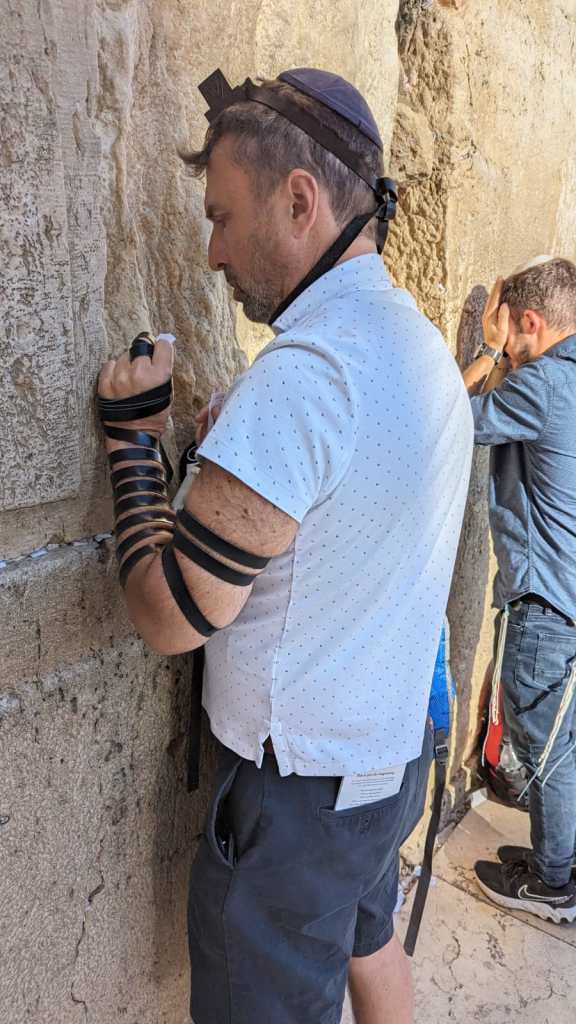
I know how to put on Tefillin but I can still learn from the Chabad Rabbi who did it for me at the Kotel.

What a powerful thought – to learn from everybody and every interaction.  That sure makes us all better people and makes for a better world.

Can learning the Torah actually be fun and exciting???

A number of years ago, I was exposed to Jewish learning in a different way.  Instead of the boring lecture style of a classroom, I was in a group of 3 where one of us was the leader and would guide us into a discussion of Jewish text.  We spent months over a weekly lunch discussing the book of Daniel.  It was fun and interesting and something that I looked forward to each and every week.  It was very unlike my Hebrew School experience which I found boring.  I never thought that learning Jewish texts could be both fun and interesting.  I learned that I was wrong.

Since then, I have had the opportunity to learn with a few different people.  It’s something that I enjoy as I have found it to be intellectually challenging.  With a good learning partner, it’s not about the dry words, it’s about how the words come to life.  What can we learn from the words and the teachings that apply to our lives TODAY?  How does it impact the choices we make now?

I want to share a few examples of this from my own life and experiences. 

Many years ago, at UF Hillel, I gave a D’var Torah (sermon) on one of the High Holidays.  I talked about how for many years, I found the Torah to be a dusty old scroll.  It wasn’t relevant.  It wasn’t that interesting, especially since I didn’t speak Hebrew.  And, quite honestly, I preferred the movie (The 10 Commandments, still a favorite.)   I shared how I was exposed to this different type of Torah learning.  How it was a discussion and debate.  How I could ask questions and disagree and argue my points of view with another person.  They would argue back, and it would be a passionate conversation.  We would understand each other and sometimes agree at the end, and sometimes still disagree.  How it was intellectually challenging even if I wasn’t a Torah scholar and couldn’t speak Hebrew. 

One of my most memorable experiences with this type of learning happened in Israel when we visited Hebron, where the tombs of the Matriarchs and Patriarchs are (other than Rachel).  We sat between the tombs of the Patriarch Abraham and the Matriarch Sarah, which was surreal by itself, and discussed the story when God told Sarah she was going to have a baby when she was 90 years old, and she laughed.  My friend Harry Rothenberg led the learning session.  What did that mean?  What could it mean?  We dissected the story and the different possibilities.  It was fascinating hearing all the different possible interpretations of this story.  At the end, Harry shared his interpretation.  How it was really a love story between Abraham and Sarah.  How it was about communication and honesty between partners.  How it described not just their relationship but included relationship lessons for us today.  It wasn’t anything that I had contemplated before we sat down or during the conversation.  And then I thought how amazing it was to be talking about the love story of Abraham and Sarah while sitting between their burial tombs.  It is an experience I will never forget.

A year later, back in Israel with Harry, we were climbing Masada.  I’ve climbed Masada with both the snake path and Roman path many times.  The Roman path is pretty easy and quick.  The snake path is longer, harder, and more meaningful.  This morning we took the snake path.  I had been having some health issues and probably should have take the cable care to the top instead, but I was stubborn and chose poorly.  As I was making the long climb, I found myself needing to stop very frequently to catch my breath and let my heart rate slow down.  Everybody else passed me and a couple of friends slowed down to stay with me as we made the climb together.  Harry started late and came upon us.  He joked about me resting until I told him what was going on.  He then said he’d walk with us slowly as well.  I then challenged him – use this moment to teach me a little Torah.  I figured I had stumped him!!  Instead, he thought for a minute and told me the following story.

When Moses led the Jewish people to the edge of entering Israel, he was not permitted to enter the land.  He begged God thousands of times to please change his mind and let him enter the land.  God would not relent and change his mind.  However, after all of Moses’s pleading, God told Moses to climb to the top of the mountain where he would be able to see all of Israel.  Moses climbed the mountain and looked out at all of Israel.  His heart broke into pieces at the beauty and that he wouldn’t be able to enter the land.  It is those pieces of Moses’s heart in all of us that creates our longing and love for Israel. 

Harry took a Torah lesson, applied it to the mountain we were climbing, and our love and passion for Israel.  It was a beautiful moment.  He has a weekly video blog that I encourage you to check out. It’s 3-4 minutes and I find it interesting each week.

This week’s video blog by Harry Rothenberg, an attorney who is the best Jewish educator I have ever experienced.

When I lived in Seattle, I spent some time with Rabbi Levitin, the head of Chabad for the Pacific Northwest.  One day at lunch, he was talking about a big talk he was about to give.  The topic was about surrogacy and donor sperm/eggs.  He then went to the Torah to cite passages that apply to various circumstance for surrogacy.  Something we couldn’t contemplate at the time of the Torah, yet it applies today.  We discussed how it might affect a couple if it was the man’s sperm and a donor’s egg.  What if it was donor sperm and the woman’s egg?  And what if it was donor sperm and a donor egg?  Did it matter if the egg was implanted in a surrogate or in the woman who wanted the baby?  Is there a difference in how parents would treat a child they ended up having biologically instead of one of the other ways?  Fascinating topics and discussion points, all tied back to Torah lessons and commentators from centuries ago.

Now I learn with Rabbi Ehrenkranz from JOIN Orlando.  Each week we meet to study and learn Torah.  We meet in a public place, usually a Starbucks or Krispy Kreme.  While I don’t wear a kippah all the time, I put one on when I learn Torah out of respect and in honor of what I am doing.  So we sit in public, both wearing kippot, our siddurs open, reading out loud and discussing what we are reading.  We also use the Sefaria app (a free download and really a great resource that is now adding Lord Rabbi Jonathan Sachs teachings to it) to study what the commentators said over thousands of years.  We discuss, often debate, and I push him to better explain to me the things I either don’t understand or don’t agree with.  Most of the time he is able to do it but there are still things that I struggle with and that’s ok.  It’s part of the process.  I just hope that I don’t frustrate him too much with my questions and challenges!

Usually nobody bothers us, but I remember one time when a man came over and asked if we were doing bible study.  When we told him yes, his response was, “Cool!” and he walked away.  As I think about what happened in the UK yesterday when a man was threatened with arrest because he was wearing a kippah while a pro-Palestinian march was going on because him being Jewish was threatening to them, I am grateful we can learn publicly in Orlando.  I also wonder when/if that will change here. 

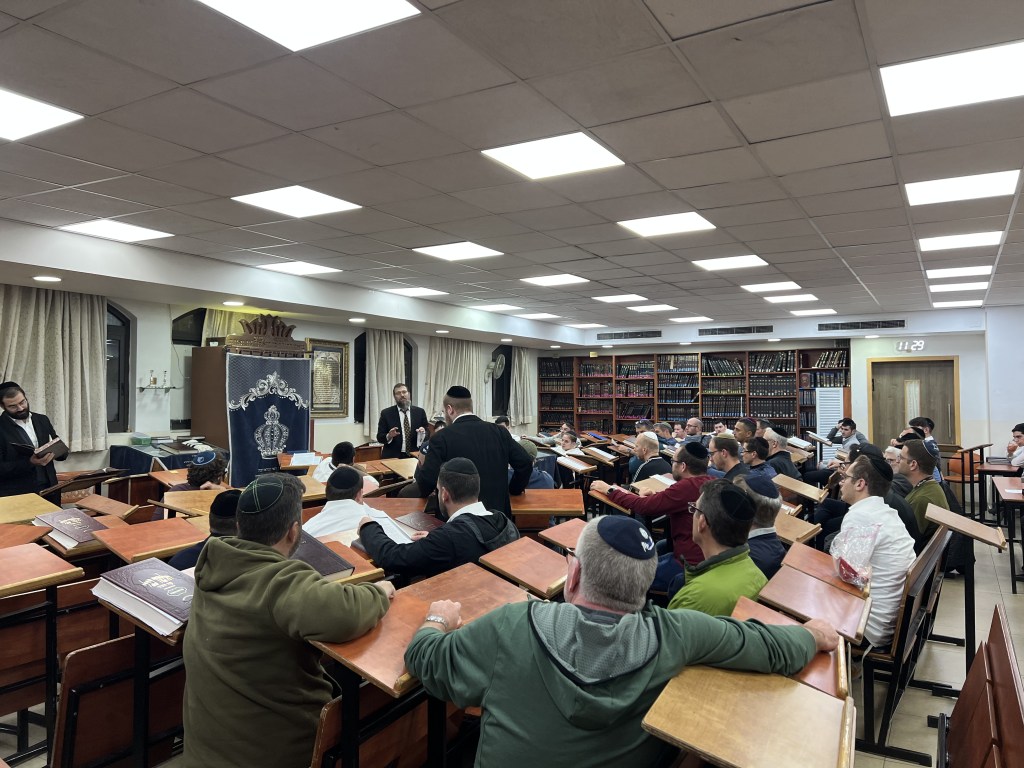
On two of my last three trips to Israel, I had the chance to go to a Yeshiva in Jerusalem on Thursday night for an hour-long learning session from 11 pm until midnight.  Usually I’m asleep well before 11 pm (I have gotten old).  I was worried I would fall asleep in the middle of it and embarrass myself.  Yet when it started, it was interesting and exciting.  It was a legal discussion.  It was back and forth.  Voices raised a bit.  Excitement when somebody thought they had the answer.  Disappointment when the explanation showed they were wrong but vindication when their thought process was affirmed.  The hour went fast.  The Rabbi teaching us shared his explanation.  It was great.  And then we had chicken poppers and cholent while hanging out.  What a fun night.  So much fun that it now happens in Orlando as well.  I don’t go often but enjoy it when I do.  There is a good crowd of regular people like me, not Torah scholars, who enjoy the back and forth.  We have to think thoroughly.  We build off prior lessons.  We do it together. 

Learning at the Yeshiva in Israel – it was captivating

Being Jewish is often seen as being a burden.  In fact, Rabbi Ehrenkranz and I talked this week about how being Jewish means you are taking on more responsibilities.  How we are the chosen people because we have chosen to take on these responsibilities.  If you are like me, then as a child you weren’t given meaningful Jewish content.  You never had the chance to argue with a teacher about Jewish topics.  It was bible stories and boring things.  Judaism was the thing for my parents and not something that was meaningful to me.  And yet that changed dramatically for me as I got past what and how I was taught as a child and understood the meaning that was possible.  I’m far from Orthodox.  I don’t go to synagogue.  I don’t keep kosher.  Yet I find the teachings of the Torah fascinating.  I find the exploration of Jewish texts to be relevant and impactful.  Hanging mezuzahs, putting on tefillin (occasionally), lighting shabbat candles, the Hanukkiah, baking challah, and other Jewish rituals are meaningful to me.  I’m excited to build a sukkah in my backyard this year.  I don’t think I’ll sleep in it, but I will enjoy building it and eating in it and hanging out in it.  It’s fun.  Judaism can be fun.  Learning Torah can be fun. 

So much fun singing Hotel California with this Hassid at Mamilla Mall in Jerusalem – proof that being Jewish can be fun.

So if you decide you want to start a journey like I did with Jewish learning in this way, let me know.  I’ll find somebody for you to learn with so you can find the joy that I have.  I encourage you to try – I’m willing to bet you won’t be disappointed.

Dancing at the Kotel on Friday night – so much fun being Jewish