A love for life – we will survive

The world seems to get crazier and crazier. The stock market plummets and then returns. Tariffs are high and then are gone, delayed, or small. The only constant seems to be Jew hatred, lies, and the hostages being ignored by the UN, Red Cross, and the world.

May 15th is the day of Israel Independence on the secular calendar. 77 years ago, David Ben Gurion stood in Tel Aviv, in what is now Independence Hall, and declared Israel to be a State. Every time I stand in Independence Hall, look at the seats set up as they were that day, and listen to Ben Gurion’s voice declaring the State, I get chills.

That declaration by Ben Gurion was a statement about the Jewish love of life. Of how we never forget. Of how we place life ahead of everything. This week, there were two examples of this. It was recently announced that Israel had recovered a number of documents and items from Syria that belonged to Eli Cohen. Captured as a spy by Syria and hung as punishment, Cohen is one of the great stories of Israel. I knew about what he did long before I knew his story. The actor Sasha Baron-Cohen played him brillantly in the Netflix mini-series, The Spy.
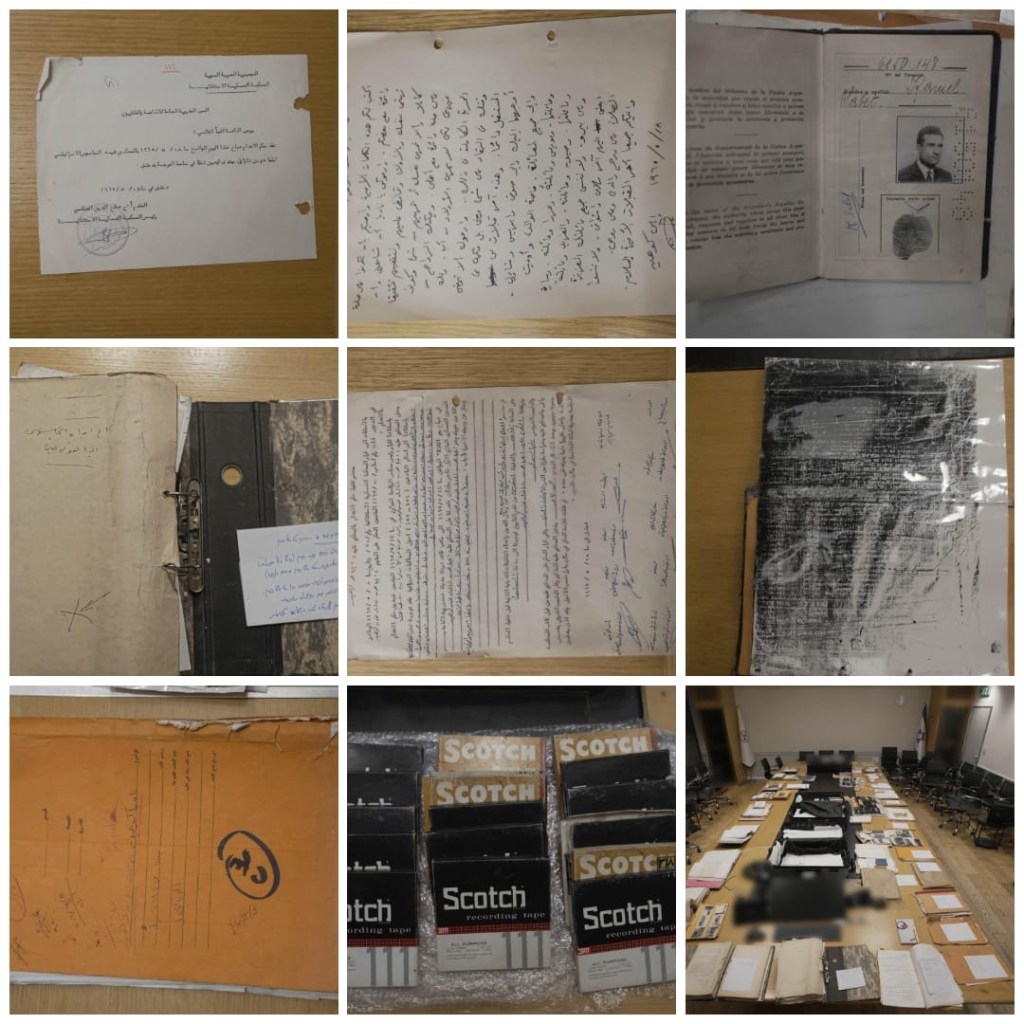
Top row, center: Cohen’s final will, handwritten in Arabic just hours before his death on May 18, 1965. Addressed to his wife Nadia and children, the letter is a heartfelt farewell filled with guidance, dignity, and emotional clarity.

Top row, right: A forged Argentine passport issued under the alias Kamel Amin Thaabet, the identity Cohen used to infiltrate the highest levels of the Syrian regime.

Middle row, right: The official death sentence, signed by Syrian military judges, condemning Cohen for espionage.

Bottom row, center: Scotch-brand audio tapes, used by Syrian intelligence to record Cohen’s interrogations and radio transmissions

While we have now retrieved more than 2,500 documents and artifacts related to Eli Cohen, we still don’t have his body back. Executed in 1965, 60 years ago, we have never forgotten him or the desire to get his body back.

This past week, the IDF and Mossad were able to recover and return the body of Sergeant First Class Tzvika Feldman. 43 years after he was killed in the Battle of Sultan Yacoub during the First Lebanon War. Syrian soldiers transferring his body to Syria until this past week when his body was returned to Israel. We love and treasure life. We don’t ever forget.

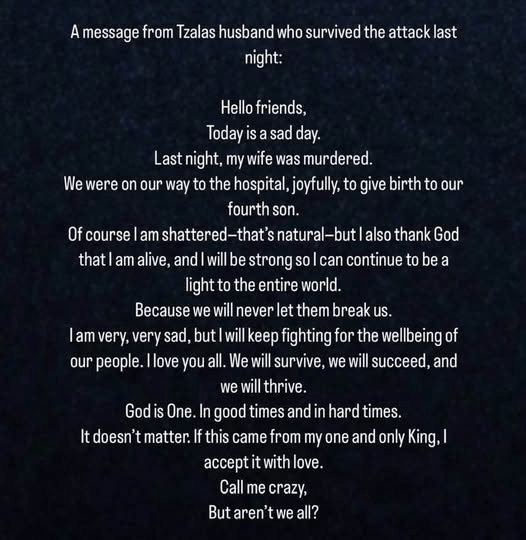
This week, Tzeela Gez and her husband Hananel, left their home in the northern West Bank community of Bruchin to head to the hospital so she could give birth to their fourth (4th) child. A terrorist shot at their car, wounding them both. A few hours later, after an emergency C-section to deliver their newborn son, Tzeela died.

The media barely covered this brutal attack. They don’t cover the violence against Israelis in the West Bank. They don’t cover the rockets that are launched at the citizens of Israel. They don’t address or condemn the ballistic missiles fired by the Houthis from Yemen targeting civilians. It is up to us to remember, to never forget. It is up to us to ensure that the souls of Eli Cohen, Tzvika Feldman, and Tzeela Gez are never forgotten. It is up to us to ensure that future Hersh, Carmel, Alex, Eden, Or, and Almog’s know who they are named for and what their obligation is to honor those they are named for.

The message below from Tzeel’s husband Hananel is the essence of Judaism. We have never and will never let them break us. We will fight for our people no matter how sad or downhearted we are. We will survive, succeed, and thrive under any and all circumstances.
Our effort to survive, succeed, and thrive means that we fight for truth. Even when it is inconvenient. Even when it is difficult. Even when the world doesn’t want to see, hear, or recognize it when it’s right in front of their face.

A friend of mine shared this piece about the history of the term Nakba that was written by Adam Louis Klein. It is a fascinating history that shows the power of the media and of repeating a lie long enough and loud enough that people think it is the truth

The term Nakba, now central to Palestinian national memory, was coined by Constantin Zureiq, a Christian Arab nationalist and key figure in shaping modern Arab nationalist ideology. As detailed in a recent article in Fathom Journal by David Szeftel, Zureiq was part of an intellectual movement in the 1930s and 40s that openly admired fascist and even Nazi models of anti-Western power, seeing them as templates for Arab revival.

When he introduced Nakba in his 1948 book Ma’na al-Nakba (The Meaning of the Disaster), it did not refer to Palestinian suffering or displacement. It referred to the Arab League’s failure to destroy the newly declared State of Israel and the humiliation of Arab armies. It was a political lament over defeat, not a humanitarian reflection on refugees.

Only later was it linked to the “right of return” for Palestinian refugees, a policy heavily promoted by the Arab League and eventually formalized through the United Nations. But this “right of return” wasn’t about refugee welfare—it became a political tool designed to prevent Israel from continuing to exist as a Jewish state by flooding it demographically.

This strategy also led to the unprecedented perpetuation of refugee status across multiple generations (see Einat Wilf’s work on this). Unlike any other refugee situation in history, Palestinians were deliberately kept in a state of statelessness by Arab regimes, denied full citizenship rights even in places like Egypt and Jordan, which directly controlled Gaza and the West Bank after 1948. In effect, the Arab League actively denied Palestinians the right to rebuild their lives in order to weaponize their suffering and make Israel appear impermanent and illegitimate.

Over time, the meaning of the Nakba shifted. It became less about the Arab world’s military failure and more about constructing a permanent Palestinian grievance narrative. The historical record was rewritten to erase the Arab invasion and rejection of the UN’s two-state partition plan, portraying the events of 1948 instead as unprovoked Israeli aggression. This narrative also conveniently erased Jordan’s displacement of Jewish communities from the West Bank, the appropriation of their land and property, and suppressed the mass dispossession of Jewish communities across Iran and Arab countries after 1948.

Eventually, the displacement of Palestinians was rebranded as a case of “ethnic cleansing” and “settler colonialism,” rather than what it historically was: the tragic outcome of a war of independence triggered by the Arab world’s invasion of the newly declared Jewish state—though it’s important to acknowledge that some forced expulsions of Palestinians did occur amidst that war.

In short, Nakba has evolved from a term describing the Arab world’s military failure to a political myth that erases historical complexity in favor of a one-sided narrative of perpetual grievance.” 

I’ve been the Aida ‘refugee camp’ in Bethlehem. It is a city. They live in apartments, not tents. They have schools and community centers. Their schools and community centers teach them hate. In 2019, I met with and talked to the head of their community center. He bragged about the suicide bomber that he helped raise and create. Openly. Publicly. The world loves their Jew hatred and they will continue to use whatever and whoever they can in their effort to eliminate us. From the Assyrians to the Babylonians to the Persian to the Greeks to the Romans to the Byzantine empire to the Spanish Inquisition to the pogroms in Russia to the Nazis in the 1930s and 40s, to today, whatever it takes to attack us is free reign.

The difference is that today we fight back. Today we don’t cower in fear. We don’t allow others to determine our fate. The world can hate us and we will still fight. The world can lie about us and we will still fight. Survival isn’t an option and we won’t allow survival to be under the control of anybody else. Today we have the IDF. Today we have Israel. Today we won’t stay silent and we will fight back.

Am Yisrael Chai.

The Center for Israel Education inspires and teaches

Approximately 20 years ago at an AIPAC Policy Conference, I attended one of the breakout sessions to learn a bit more about a detailed topic.  The presenter, Professor Ken Stein from Emory University, blew my mind with details and facts that I didn’t know.  I sat there taking notes with tons of questions forming in my mind.  There were so many of them, I had to write those down as well.  After the session, I went up to talk with him and ask some of those questions.  It was an inauspicious start of a friendship and professional relationship that lasts until today.

My friend Professor Ken Stein

I made it a point to always attend Ken’s sessions at AIPAC.  I was amazing that he was the only speaker on Israel that I found nobody had a problem with.  They may ask tough questions, but Ken wasn’t trying to do Hasbara (trying to convince somebody you are correct) but rather shared the facts and allowed you to determine your own beliefs.  As a result of this, I brought Ken to Seattle and then to Orlando to teach about the history of Israel. 

In 2008, Ken created the Center for Israel Education (CIE), a nonprofit dedicated to educating the public about modern State of Israel.  Using source documents, CIE provides context to a challenging topic.  A number of years ago, I was honored when Ken asked me to join the board of directors and I have been a member ever since. 

Each week, CIE provides information that is both timely and interesting.  Sometimes it is related to, “This week in Israeli history” while other times it relates to what’s happening in the world.   I find it interesting and learn a lot about people and policies that I didn’t know.  This week’s information was particularly interesting for two reasons.

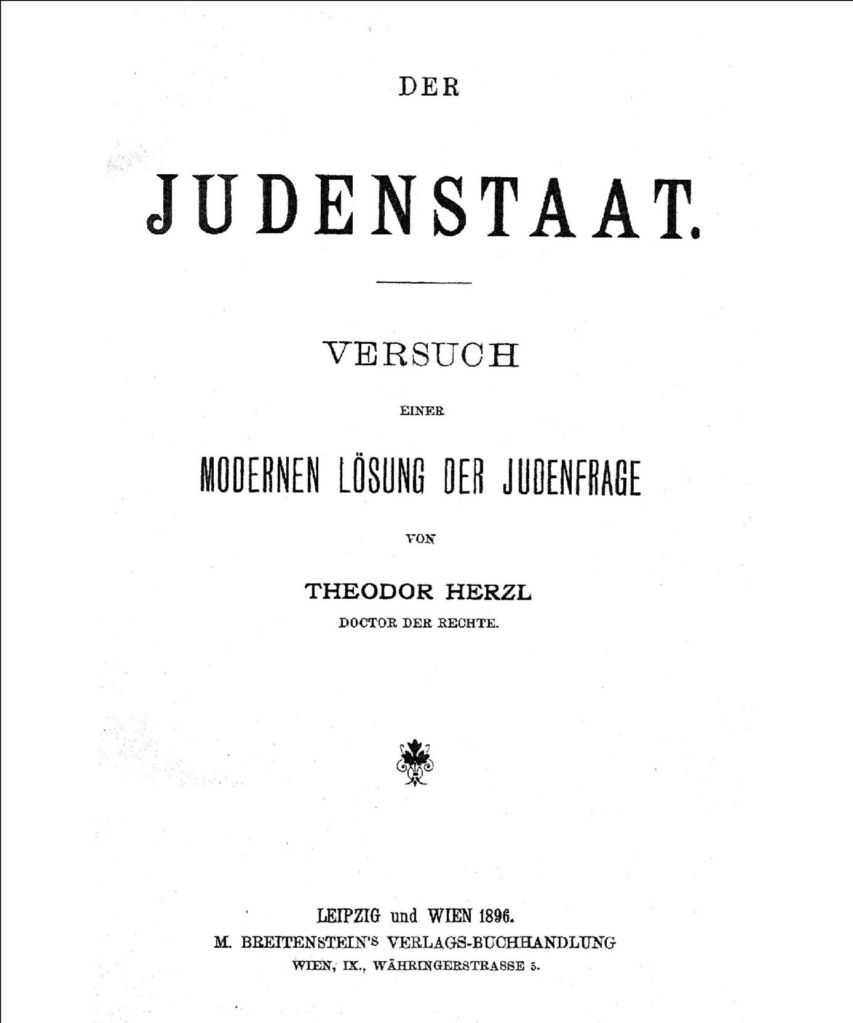
The first reason relates to ‘This week in Israeli history’.  On Feb. 14, 1896, Vienna journalist Theodor Herzl published 500 copies of a pamphlet entitled “Der Judenstaat” (“The Jewish State”), declaring the need and justice of Jewish sovereignty 18 months before he convened the First Zionist Congress.  I’ve been to Israel 20 times and been to Herzl’s grave at least 20 times.  It’s a powerful place to visit as he was the person who had the vision of a Jewish state.   Whenever I am there, I find myself humbled by his vision and always remember his famous quote, “If you will it, it is no dream.”   That quote has inspired me throughout my career.

Theodore Herzl – the founder of Zionism

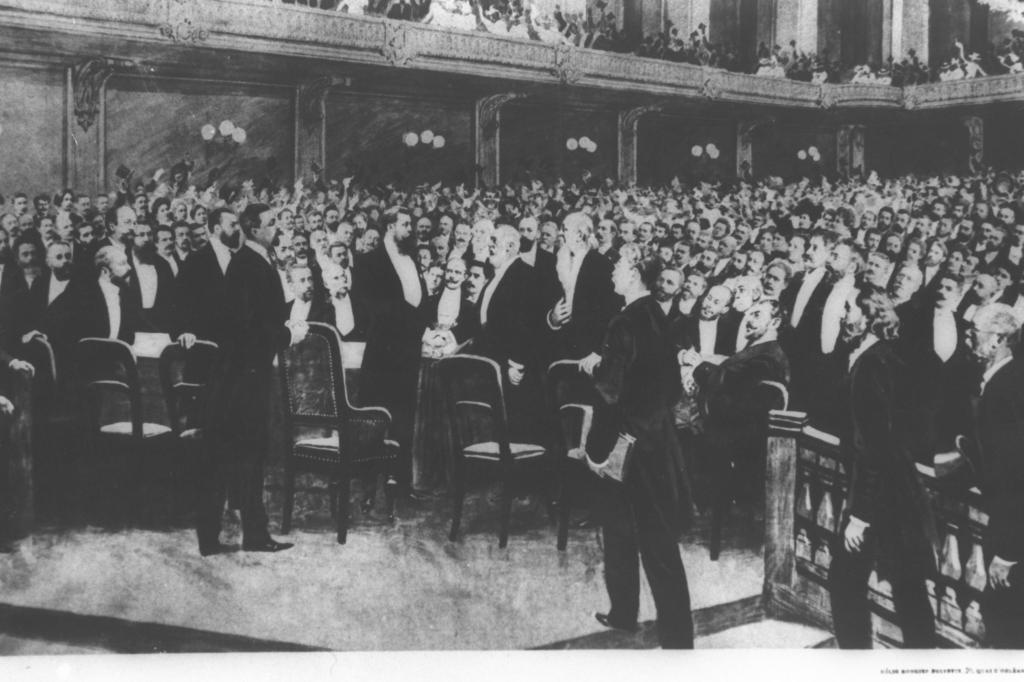
Interestingly enough, Herzl’s idea wasn’t limited to the middle east or to the historic greater Israel.  He merely wanted the Jewish people to have their own land where they were in charge and had self-determination.  He wrote about It wasn’t until the First Zionist Congress held in Basel, Switzerland with 200 delegates from across the Jewish world, that the goal to establish a Jewish State in the Land of Israel were explicitly adopted by the new Zionist movement.

Theodore Herzl at the First Zionist Congress in Basel on August 25, 1897

Herzl, as a secular Jew and journalist, was inspired by the Dryfuss Affair to find a way to keep Jews safe.  It was his vision to have a Jewish State, a homeland, where Jews would be in charge and Jews would be safe.  Where Jews would have the power of self-determination.  He didn’t care where it was, only that it existed.   It was at the First Zionist Congress that non-secular Jews, who understood the tie to the biblical land, ensured that the land would need to be in our historic homeland, not just anywhere.

The Dryfuss Affair on the cover of The New Yorker

Captain Alfred Dryfuss, wrongly convicted because he was a Jew.

It ties to the famous Chaim Weizmann quote.  When a member of the House of Lords asked him, “Why do you Jews insist on Palestine when there are so many undeveloped countries you could settle in more conveniently?”

Weizmann answered: “That is like my asking you why you drove twenty miles to visit your mother last Sunday when there are so many old ladies living on your street?”

Wiezmann said, ‘Mr. Balfour, if you were offered Paris instead of London, would you take it?’ … He looked surprised. He said: ‘But London is our own!’ Weizmann said, ‘Jerusalem was our own when London was a marsh.’ He said, ‘That’s true.'”

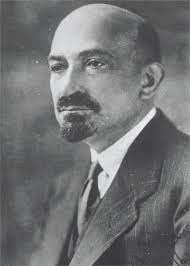
Dr. Chaim Weizmann, one of the great founders of the State of Israel

Having been to Israel 20 times in my life, there is something special not just because it is a Jewish state and the only place that I am in the majority.  Being in Jerusalem and standing at the Kotel is a direct connection to King Solomon.  It’s a direct connection to the ‘holy of holies.’  To 5,000+ years of Jewish history.  

Being at the Kotel is always such a special feeling

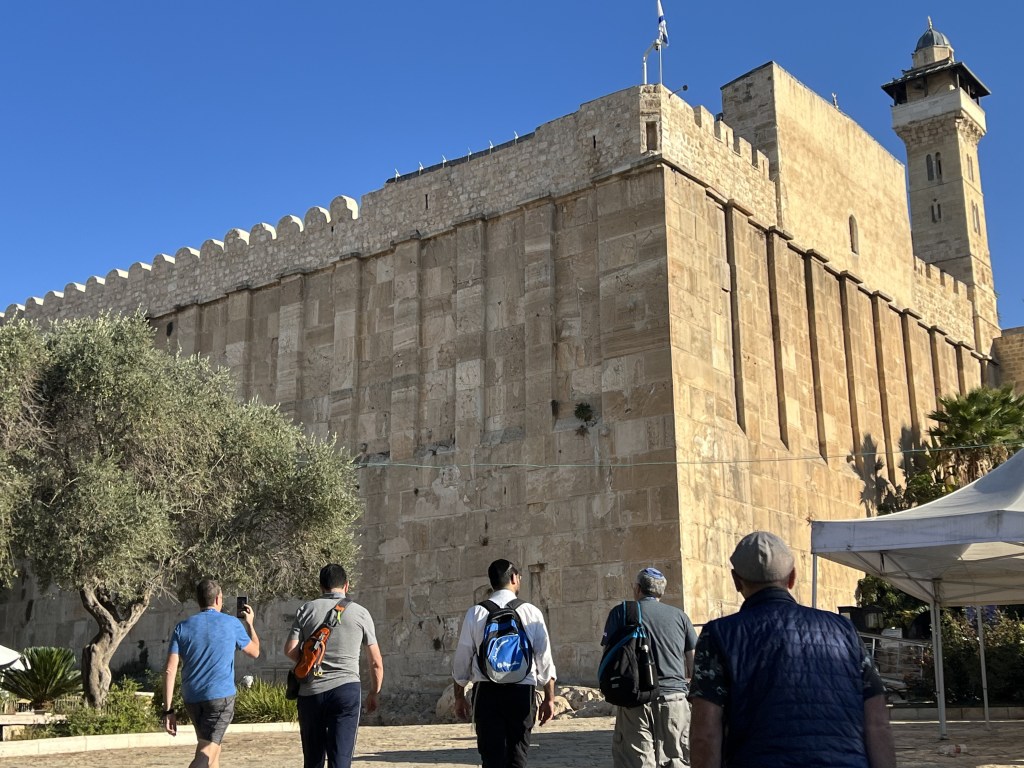
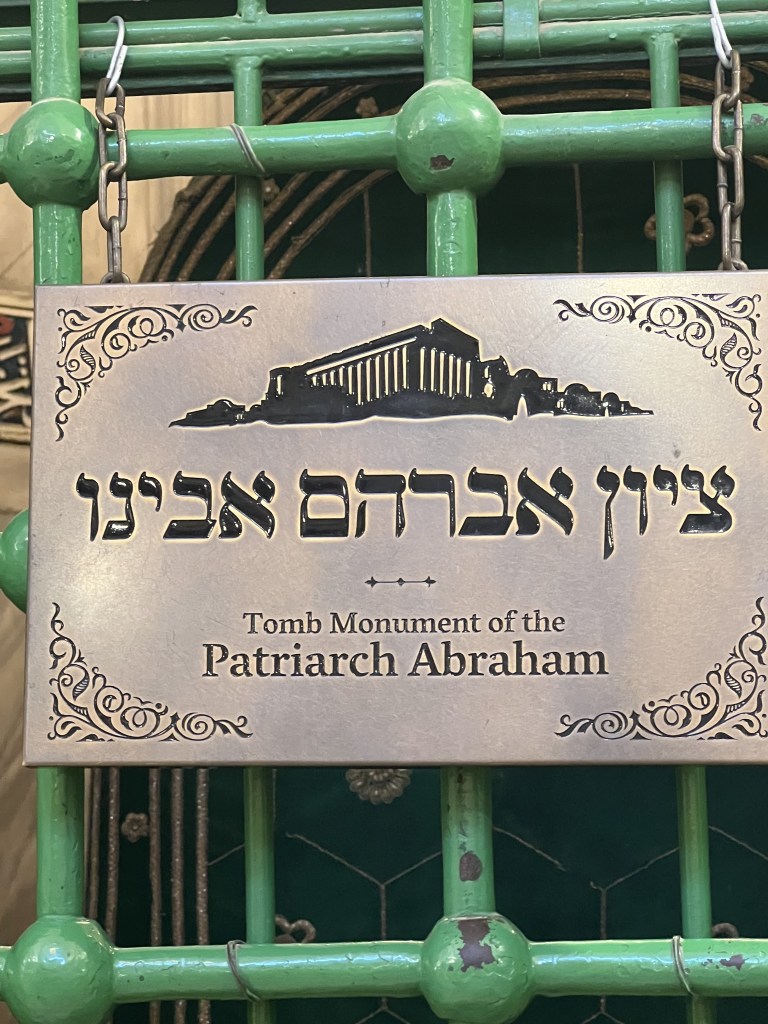
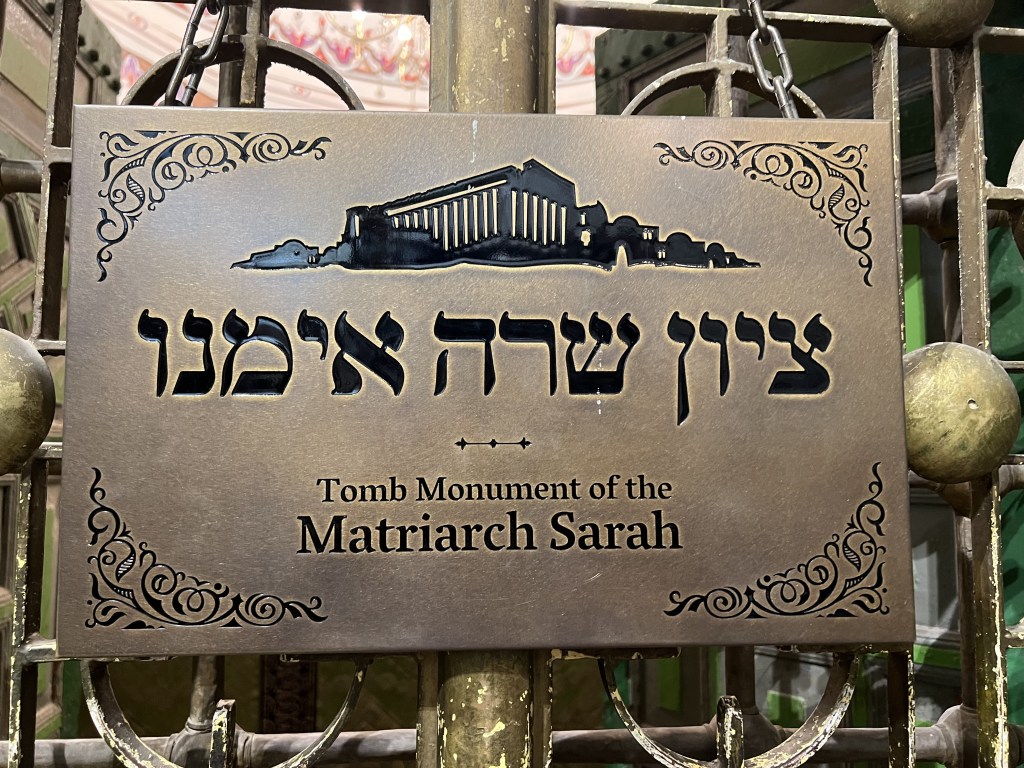
Going to Hebron and visiting the graves of Abraham, Jacob, Sarah, and Leah is a special feeling. (Isaac and Rebeca are also buried there but they are on the Palestinian side so Jews can only go there 10 days a year).  I’ll never forget sitting between the graves of Abraham and Sarah as my friend Harry Rothenberg led us in a discussion focused on the text where Sarah was told by God that she would get pregnant when she was 90 years old, and she laughed.  We explored not just the story but the love story of Abraham and Sarah.  It was incredibly powerful to do this between their graves. It’s something I will never forget.

We also learned that one of times when all of the Tomb of the Patriarchs and Matriarchs is open to Jews, Christians and non-muslims is during the Shabbat of Chayei Sarah. This is when Sarah dies and is buried in Hebron. There are 40,000-50,000 people who come to spend Shabbat outside the Tomb. They bring in catered meals, tents, and it’s a huge party. Watching the videos of the celebration put this on my bucket list.

In Hebron, the oldest complete building still used for it’s original purpose in the world. Inside are the caves (graves) of the Patriarchs and Matriarchs.

Below is the cave with the grave of Abraham, the patriarch.

Across from the cave of Abraham is the cave of Sarah our matriarch, where Abraham buried her himself.

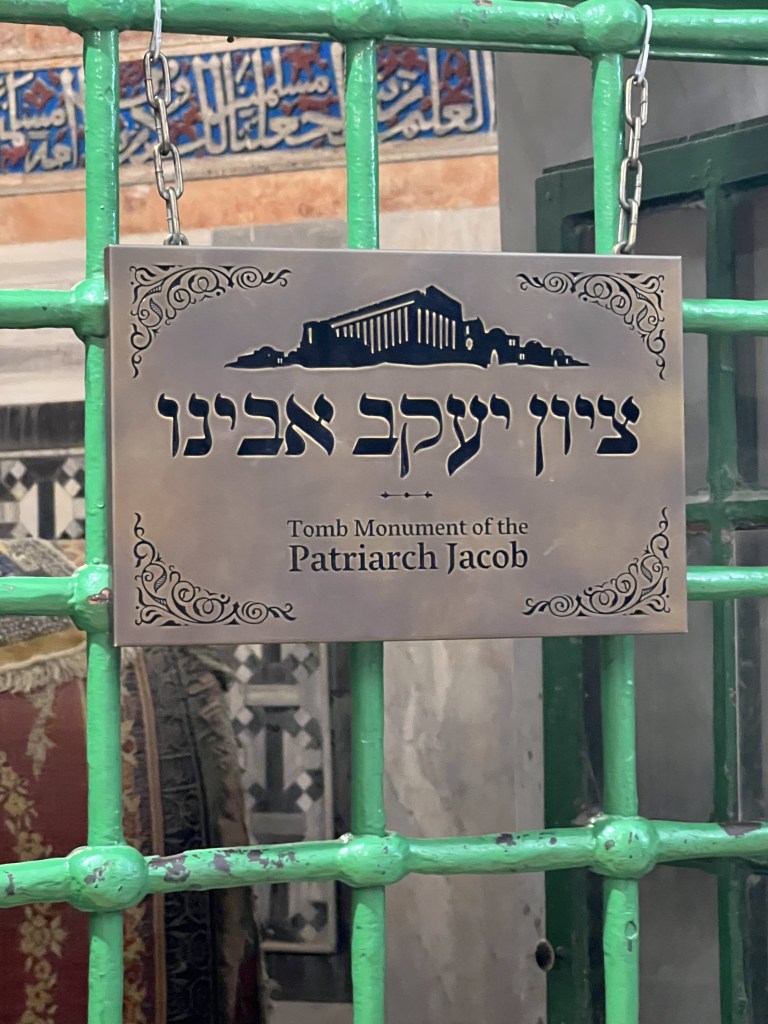
The grave of Jacob, our patriarch. He wrestled with the angel and got the name Israel. It’s unbelievable to be at his grave.

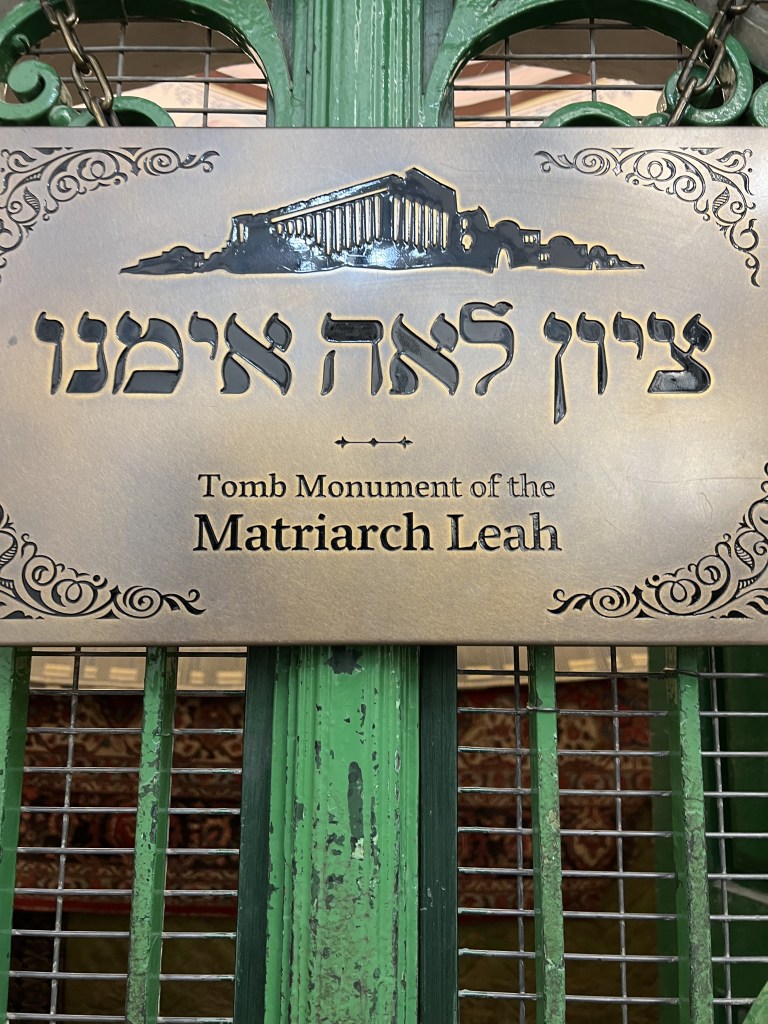
The grave of Leah, our matriarch. Rachel was buried on the road (her grave is in what is now Bethlehem) while Isaac and Rebecca are on the side controlled by the Palestinians and are only accessible 10 days a year to Jews.

I’ve been the Tomb of Joseph, not too far from Nablus.  There is something unique and special being there, knowing his story and how integral he was to the Jewish people.  It’s hard to explain the feeling of connection, of thousands of years of history, and of peoplehood that occurred for me there. 

The tomb of Joseph in Nablus. When I was there it was packed with Jews praying over his grave.

Being in the Jordan River is another unique experience.  This is where our people crossed over to enter the land of Canaan after leaving Egypt.  The history and connection is amazing.  It was smaller than I expected and reminded me of the Ichetucknee River outside of Gainesville, Florida, that I used to go tubing down in the summer.  I had imagined this powerful river that was both wide and deep.  It’s the same river my ancestors crossed thousands of years ago as they entered ‘the land of milk and honey’ for the first time.

Rafting down the Jordan River is always fun – on one trip we went with a group of Muslim women who were fully clothed while we were in bathing suits. They started a splash fight with us and we had so much fun with them. 

As you drive through Israel you see the field where David slew Goliath.  In Tzfat you see the fields where Lecha Dodi was inspired, the mikvah of the Ari, various ancient synagogues.  In Akko the excavated buildings from the crusades exist.  You can see the Dead Sea Scrolls.  It’s a land filled with rich Jewish history everywhere that you turn.  That’s what Herzl didn’t understand but was smart enough to listen the First Zionist Congress.  It’s why the modern State of Israel is home to all of us.  It’s not just a country of Jewish self-determination.  It is our historic homeland, our past, present, and future.  It is tied to our souls as anybody who has visited there, Jewish or not, will attest.  I’m grateful that Herzl listened to the delegates at the First Zionist Conference and wouldn’t accept just anywhere.  Israel is my mother that I travel 6,500 miles to visit and it’s worth it every time. 

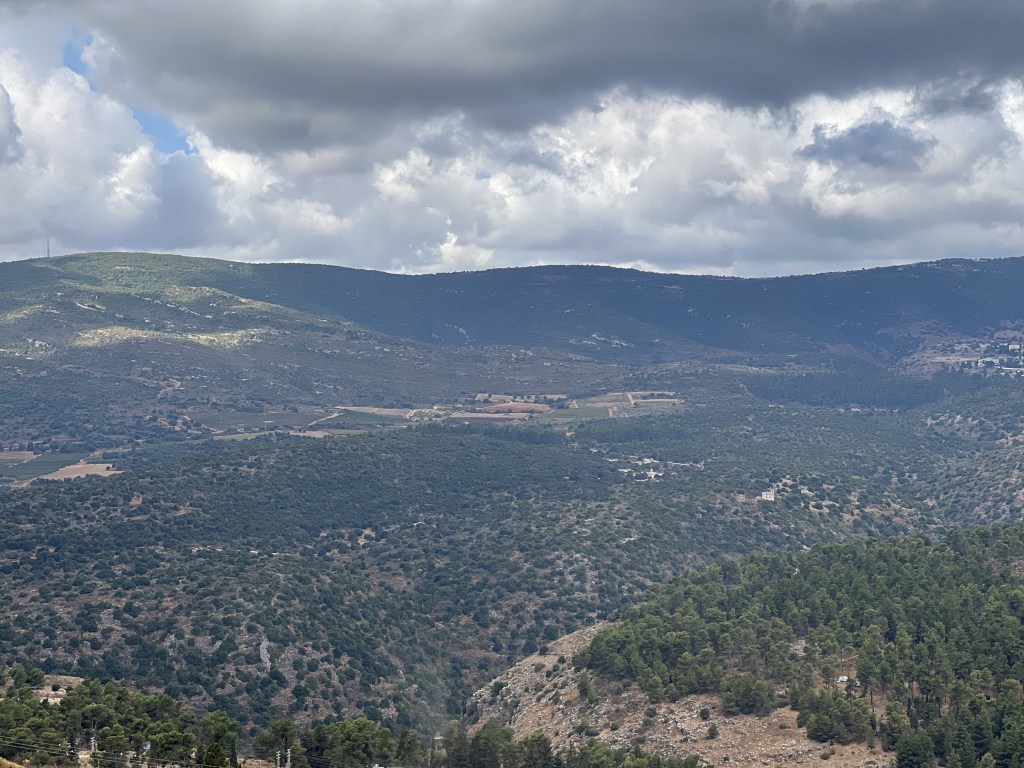
Looking out on the fields in Tzfat. This is what inspired L’cha Dodi and where they would walk out to meet the Shabbat Bride each Friday night.

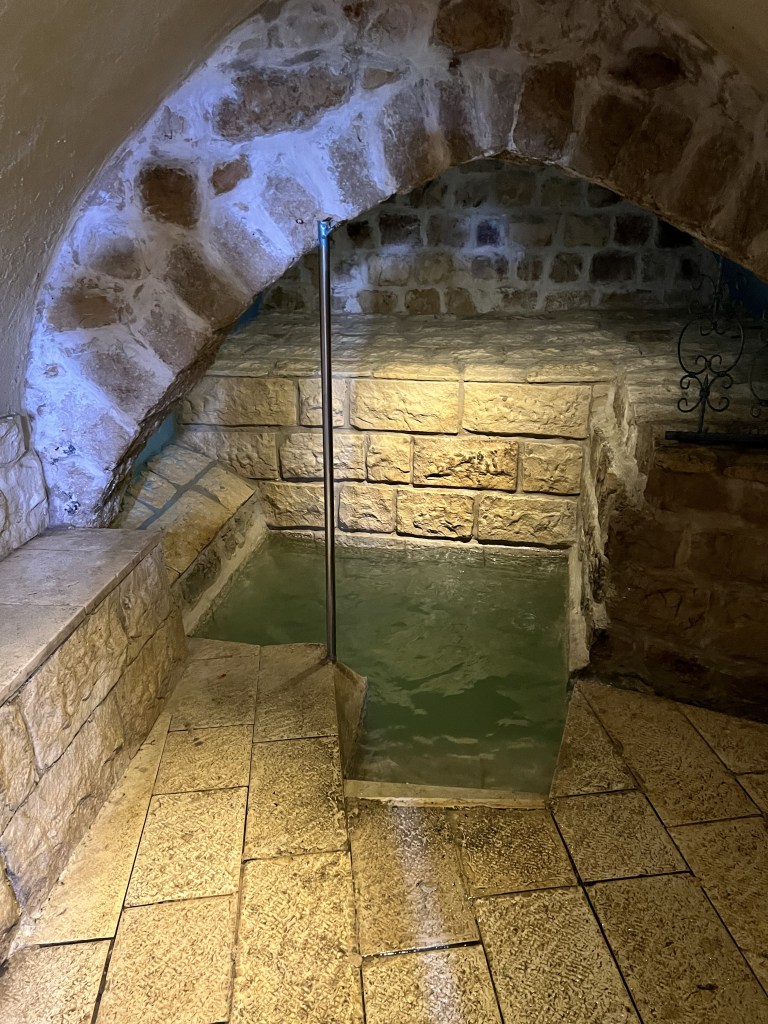
Looking down at the Mikvah of the Ari from the 1500s. It’s inside the building. He used in the 1500s and I used in in 2021 and 2022. That’s the power of Israel for Jews.

The actual Mikvah itself. The Ari used it in the 1500s, stepping into the same pool (not the same water) as I did in 2021 and 2022.

The second piece of information that I found fascinating goes back to 1993.  During the Knesset debate over the Oslo Accords in September 1993, then Foreign Minister Shimon Peres warned that “There are in Gaza this year between 750,000 and 800,000 inhabitants. Within 20 years, there will be almost 2 million residents in the Gaza Strip. The population density leads to violence, the poverty leads to terrorism.” If you read his full remarks, it is fascinating to apply them to today. 

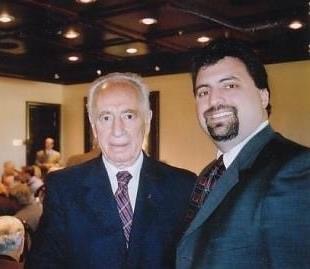
I met Shimon Peres more than 20 years (and 70 pounds!) ago. A truly special man and leader.

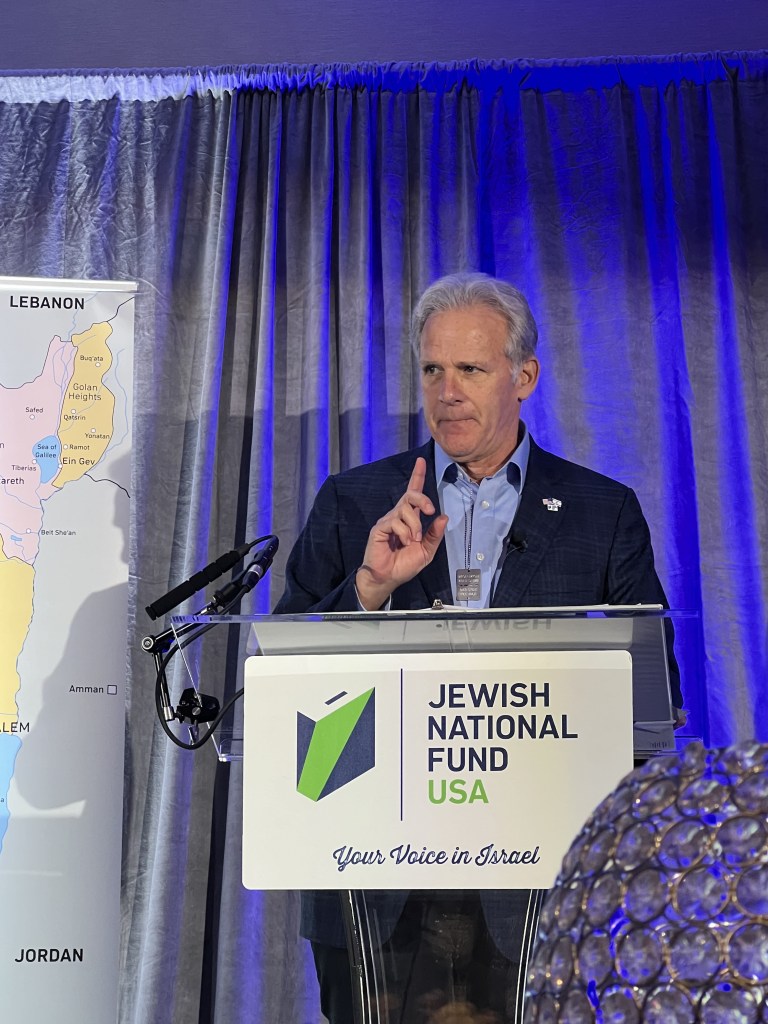
As Israel continues to respond to the horror of October 7th, there are more than 2 million people in Gaza.  Life there has led to violence and terrorism.  Hamas, UNWRA, and the UN have contributed to these problems.  At a JNF lunch event today, Ambassador Michael Oren told us that Israel is figuring out how many of the terrorists on October 7th were taught at an UNWRA school.  I’m afraid to see how high that number will be.  UNWRA ignored or allowed the strategic headquarters of Hamas to be built in tunnels under the UNWRA headquarters.  The textbooks are filled with antisemitism.  Even children’s programming is targeted to hate and kill Jews.  The Hamas version of Sesame Street, Tomorrow’s Pioneers, is focused on murdering JewsThis clip blames the Jews for a character cheating in school.  Shimon Peres was right about the growth in Gaza and what the consequences would be.  October 7th proved him right.  The question is how do we move forward from here?

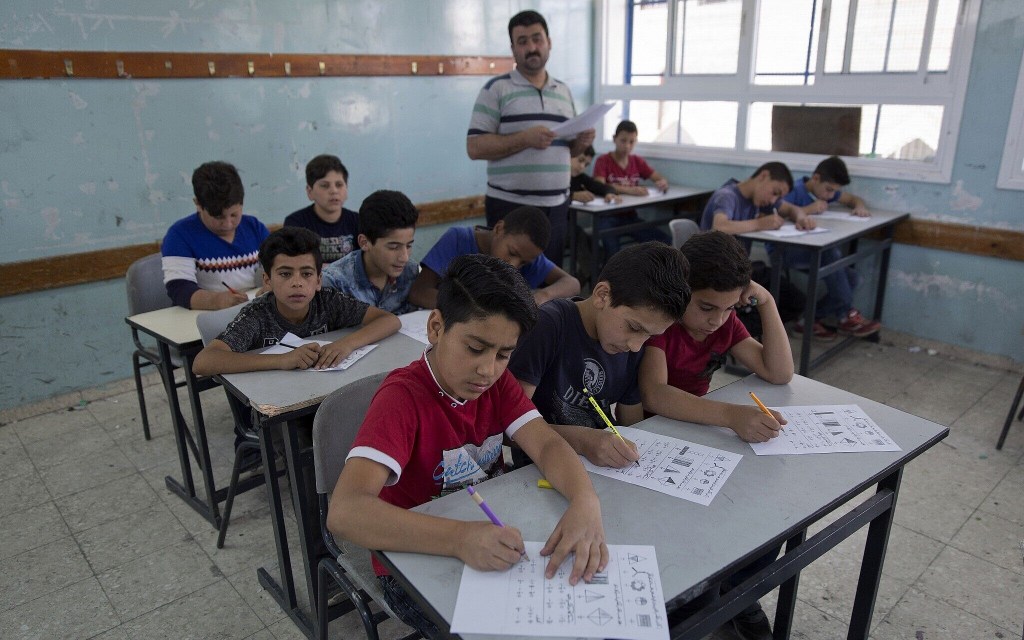
The textbooks provided by UNRWA to the Palestinian/Gazan children are filled with antisemitism and Jew hatred. 

In the same warning, Peres stated, “Neither do I propose that we talk of economic cooperation. Why? Because the Arabs believe that the State of Israel wants to dominate the region. We do not want to do the Arabs any favors. I am not even suggesting economic cooperation with the Arabs. All I am telling the Arabs is this: There are problems that will remain unresolved unless we tackle them jointly. We should make a joint effort only when problems are insolvable without such a joint effort.”

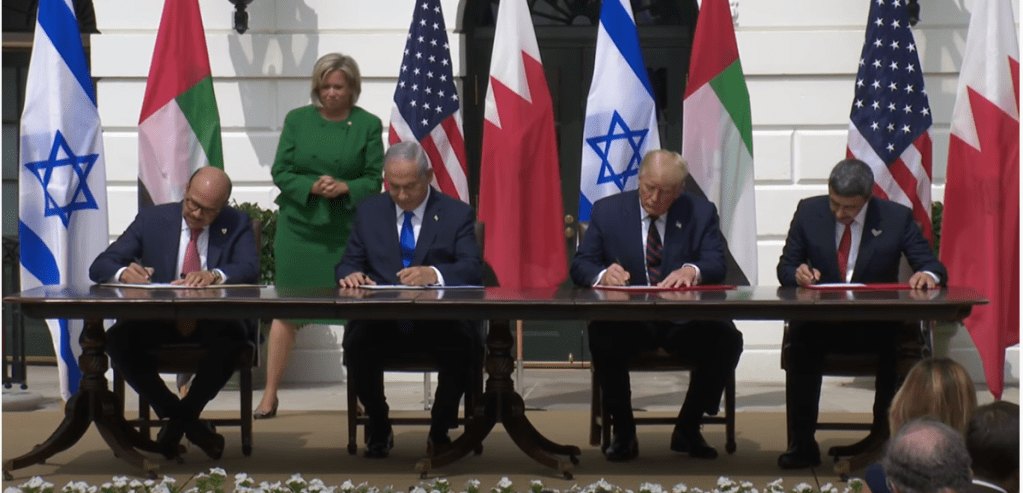
Was this Peres foreshadowing the Abraham Accords?  The threat of Iran brought Arab countries together to recognize Israel, forever changing the dynamic.  The Iranian problem was insolvable without a joint effort.  After October 7th, these nations did not abandon Israel.  They understand that Iran is the problem and that it’s insolvable without Israel being a part of the solution.  Could this be the basis for a new government in Gaza and perhaps the West Bank/Judea and Samaria?  Could this be the key to rebuilding Gaza and finally making it into the ‘Singapore of the Middle East’?  Could this be the basis for peace and a willingness to live together?

An incredible picture of the signing of the Abraham Accords as more muslim countries recognize and normalize relations with Israel.

I find myself looking to some of the great Israeli leaders of the past for inspiration on a regular basis.  David Ben Gurion.   Golda Meir.  Shimon Peres.  Yitzhak Rabin.  Moshe Dayan.  Menachem Begin. 

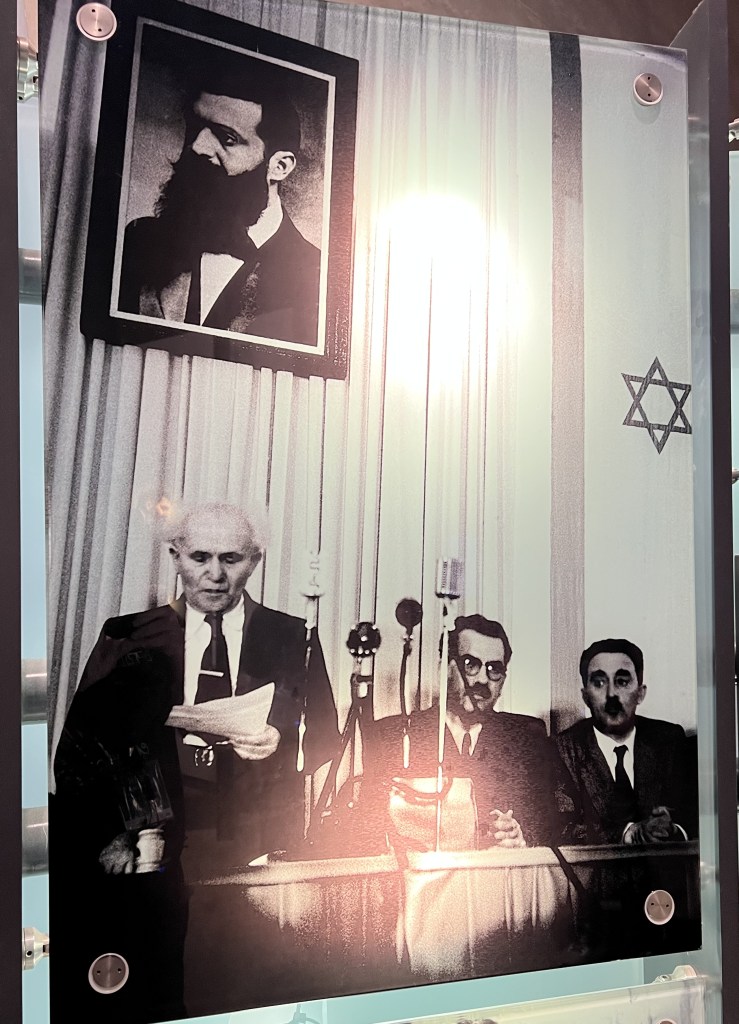
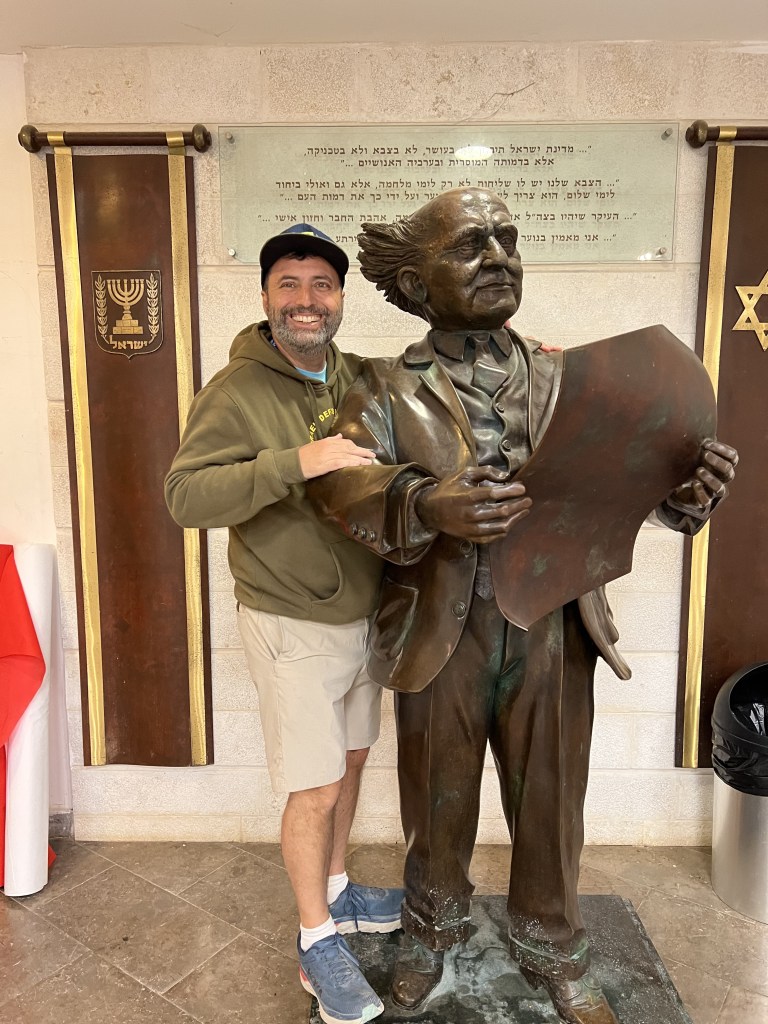
Picture of Ben Gurion reading the Declaration of Independence in Independence Hall

When I saw this statue of Ben Gurion, I had to get a picture with it. The more I learn about him, the more in awe I am of who he was and what he did.

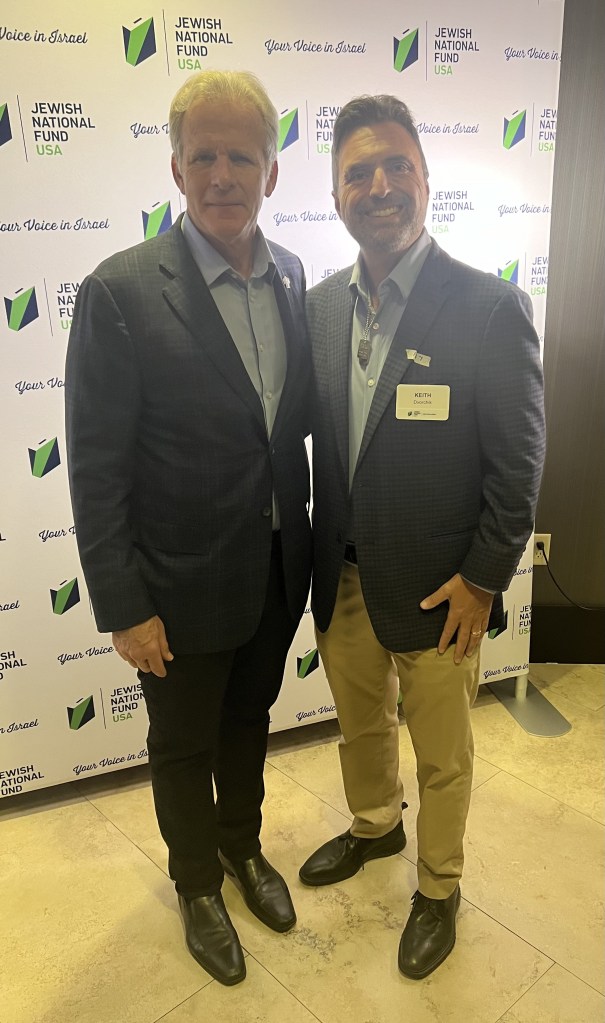
I think of current Israeli leaders such as Ambassador Michael Oren, Ambassador Ron Dermer, and the many Consul Generals I have had the pleasure to interact with and befriend.  We are wise to listen to their insights.  Michael Oren has a substack that I now subscribe to.  Their words are treasurers. 

Michael Oren speaking in Orlando this week at a JNF event. A future blog will talk about what he said.

Talking with and listen to Michael Oren is truly incredible. A brilliant man to learn from

Two of my favorite Ben Gurion quotes are: 

“Dare, Persevere, Succeed.”

“Pioneering is refusing to accept reality as it is.”

As I look back at Herzl and at the words of Peres; as I look forward to ‘The Day After’ and the Abraham Accords, these two quotes inspire me for the future of Israel.  And they inspire me personally.  We change the world by being daring, persevering, and succeeding.  And by being pioneers and not accepting reality as it is, we have the opportunity to create a new reality.  A new dream.  “If you will it, it is no dream.  Dare, persevere, succeed.  Refusing to accept reality as it is.”  Three quotes that sum up Israel and the Jewish people.  Three belief systems that will change your life and change the world.