In light of Spike Lee’s antisemitic attire at the NBA and the NBA’s failure to follow their own Fan Code of Conduct in this incident, I am writing this open letter to you about the NBA’s failure to follow your own fan code of conduct and choice to be silent in the face of blatant Jew hatred at your 2026 NBA All Star Game.
Your league’s code of fan conduct states, “The National Basketball Association seeks to foster a safe, comfortable, and enjoyable sports and entertainment experience in which:
Obscene or indecent messages on signs or clothing will not be permitted.”
There are those who will make the argument that wearing the signs and symbols of Hamas are not obscene or indecent. Your choice to allow Spike Lee to wear this at the game is a clear indication that you agree with them. So let’s take a look at some actual examples of what you and the NBA does deem to be obscene or indecent based on your actions.
Yet wearing clothing and pins that glorify the massacre of 1,200 Israelis, the kidnapping of 252 people and them being held hostage, the rape of women, some repeatedly for more than 400-500 days, the murder of children and the elderly while the league ‘celebrates’ the first Israeli player in their all star game is totally acceptable. No consequences for Spike Lee. He wasn’t removed, he wasn’t asked to change his clothes.
Even worse, after the outrage from NBA fans and members of the Jewish community, you and your league continue to remain silent. No statement issued. No mea culpa. No apology to Deni Advija, the Israeli NBA all star.
Even Spike Lee, with his long history of Jew hatred and antisemitism, realized he went too far because of the public outrage. While his clarification isn’t really an apology or believable, he (or his publicist) knew he couldn’t stay silent. To think that an NBA superfan, which Mr. Lee is, wouldn’t know Advija is Israeli, especially with the PR about him being the 1st Israeli NBA all-star and knowing that Mr. Lee attended a NY Knicks game against Advija’s Trailblazers is beyond the pale. Yet he still had to make some statement, no matter how unbelievable it is.
Yet you and the NBA remain silent. Perhaps you think we will forget. Perhaps you think the game is so good that people won’t walk away. I have bad news for you. I’ve been an NBA fan since 1975. I have followed the 76ers since that Dr. J, George McGinnis, and Darryl Dawkins team. I grew up imitating the voice of Sixers PA announcer Dave Zinkoff. I watched the tape delayed coverage of the 1977 NBA finals against the Trailblazers (yes, the NBA was so popular then that the finals were on tape delay). I loved shouting out, “Julius Errrrrrrrrrrrving’ and still sing the classic 76ers theme song from the 70s and 80s. Acquiring Moses Malone and winning the NBA championship is a signature moment in my fandom and Charles Barkley remains one of my all-time favorite athletes. Allen Iverson was a can’t miss player. I ‘trusted the process’ and the horrible years of tanking. I had season tickets to the then Washington Bullets when I lived in the DC area just to go to NBA games and now that I live in Orlando, attend Magic games including the playoffs against the hated Celtics last season.
No longer. The NBA has showed me your true colors. You have showed me what you really value. You stand up for every minority except the Jews. Despite having a Jewish commissioner. Despite many Jewish owners. And despite the first Israeli NBA All Star.
I am no longer an NBA fan. I will no longer go to games, buy merchandise, or watch games on TV. The NBA is Dead to Me.
There is a chance that perhaps the NBA isn’t dead to me and just on life support. The ball is in your and the NBA’s court. Do you stand for freedom or for hatred? Do you stand for murderers, kidnappers, and racists or do you stand for those who value life? Do you even care about your own players?
I look forward to your response. I look forward to seeing the NBA’s response. I look forward to seeing a response from the NBA Players Association.
Over the past few years, I have struggled to find media that would educate, inspire, challenge, and interest me. Most of the main stream media (MSM) comes with their own biases. They are no longer focused on informing viewers/readers of the facts but rather on putting their spin and convincing the viewers/readers of a specific point of view. About 18 months ago, I discovered The Free Press and about 14 months ago became a paid subscriber. It is the best money I spend every year. There is diversity of viewpoints. Interesting articles that make me think. Positions that challenge my beliefs and cause me to take pause and rethink and re-evaluate what I believe. Today’s Free Press provides a wide variety of examples.
I choose to write about this today because we so rarely have the opportunity to engage with things that challenge our thinking. Today’s world is focused on finding those we agree with and immersing ourselves with them. Most people have their TV news that they watch and stick to it – CNN, MSNBC, FOX, ABC, NBC, CBS, etc. The same is true with newpapers and magazines. The NY Times, Washington Post, The Wall Street Journal, etc. As I read through the summary of today’s Free Press, I found five (5) articles that intrigued me. That made me think. I want to share them with you along with my thoughts and why each one interested me.
There has been a lot of talk for a number of years about vaccines. I’m a believer that vaccines work. I’m vaccinated. My kids are vaccinated. We believe in science. Do vaccines have a link to autism? (The data clearly says no.) There has been a long debate about the Covid vaccine (full disclosure – I got the vaccine and 2 boosters.) My wife and I argue about the flu vaccine as it seems I only get the flu when I get the vaccine. I don’t get it any longer and have promised her that if/when I get the flu and it’s really bad, I will get the vaccine the next year. It’s been about 6 years since I had the flu. I know there is no statistical validity to this belief (my father-in-law is a pulmonologist and we have this conversation every year and I know I frustrate both him and my wife) but it’s working for me so I’ll continue until it doesn’t. With the rise of Robert F. Kennedy Jr. in the incoming administration, vaccines are under scrutiny once again. In today’s Free Press, there is a powerful piece about the polio vaccine, currently under attack.
I’m very grateful for vaccines like the polio and smallpox vaccines. They eliminated horrible diseases. Watching vaccine deniers push their agenda scares me. I remember when my younger son’s school had an outbreak of Whooping Cough in Seattle. I was startled and then learned that in Seattle, vaccines are optional for school attendance. That shocked me. Vaccines save lives. The article in the Free Press is a powerful reminder of what life was like before the polio vaccine. The way families suffered and children died. We live in a world where we often forget the realities of the past, of what the world looked like before vaccines, before medical breakthroughs and before advances we take for granted. My father had an older sister, Barbara, that he never knew because she died as an infant. What killed her in the early 1940s was completely treatable by the 1960s. We cannot allow our society to regress against science. I’m thankful for this powerful article that reminds me how far we have come and how much work we have to do to ensure we don’t return to those dark days of death by what are now preventable diseases.
There has been a lot of unbelievable support for Luigi Mangione’s alleged murder of United Healthcare CEO Brian Thompson. Like many other people, I have many issues with health insurance, the cost, the coverage, and the need for radical reformation. That does not excuse murder. That does not permit murder. We have seen such incredible political violence in the past few years that it is frightening. We see it on college campuses with antisemitism. We see the antisemitic violence in the streets of London. We see antisemitic violence in New York, California, and throughout Canada. Across the world and throughout America. Today’s Free Press has a great article about why political violence occurs.
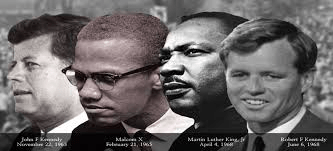
As I read the article, I was reminded of the political violence in the 60s and 70s. How today’s leaders have been able to forget that political violence cost us the lives of Dr. Martin Luther King, Jr., Bobby Kennedy, Malcom X, and President John F. Kennedy (conspiracy theorists may disagree here) amazes me. I found it interesting that the author stated that the political violence went away without having any meaningful effect. Nothing was solved by the political violence and yet it still went away. It is a reminder that, “such a situation is unsustainable, because political violence cannot coexist with a functioning democracy.”
As I read the article, it made me realize that so many things happen in our world because we allow them. If we tolerate bad behavior, it happens. We have allowed money to rule politics so it does. If we were to demand changes, they would happen. But we don’t. Congress complains about dark money when the other party is raising big dollars that way but won’t pass laws to outlaw it because they want to do better in raising it themselves. They allow it and use it as a political tool. Immigration is another example. Instead of taking action to create real immigration reform, our political parties use it as a weapon against their opponents. Political violence is no different. As the author stated so simply and eloquently, “All of this suggests that political violence is downstream of public support, and that political violence happens because we let it.”
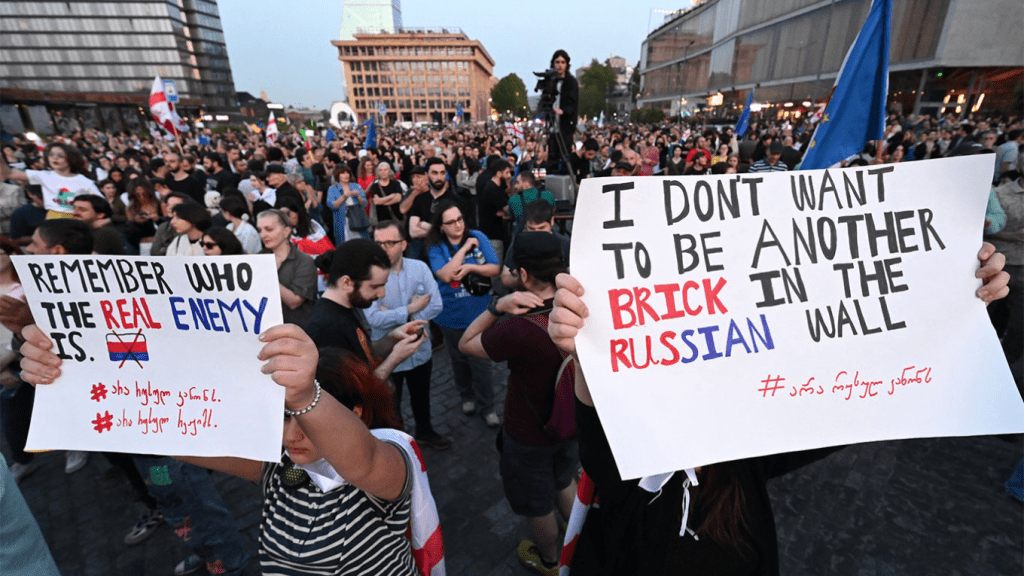
The media covers the war between Israel and Hamas in Gaza. Between Israel and Hezbollah in Lebanon. They cover the rockets being fired from Yemen by the Houthis. They report on the uprising in Syria and the overthrow of the Assad regime. They don’t cover what is happening in Georgia though (the country not the U.S. State). According to the media, there is nothing worth covering there. Today’s Free Press does a great job highlighting the uprising in Georgia by the pro-Western groups and what they are dealing with. You would think that our media would want to cover people looking to overthrow tyranny because they want more freedom like the West. You would think that something so validating for the freedoms we have, people risking their lives because they want what we have, would be leading the news. The more I read, the more upset I got at our media. We did this the last time the Iranian people attempted to rise up against the tyranny of their government and the regime survived. We did this when the Syrian people tried to overthrow Assad a decade allow, allowing Russia and Iran to save his dictatorship.
The uprising in Tbilisi, Georgia
When I read the closing lines of the article, I am inspired by the people of Georgia. I am inspired by the hope they have for a better future. I am inspired by their willingness to sacrifice for a better life. And, I am ashamed of how we sit by idly, doing nothing to help, nothing to support their efforts, and allow tyranny to remain. “As he regained consciousness, the man, who called himself Jimmy, spoke with me. ‘Every day, it’s hard for me to wake up, fearing that they’ll do something worse,’ he said, lighting a cigarette. ‘Life has to mean something, and right now, it’s worth fighting for this—to crumple up the regime and throw it into the trash where it belongs.'” How do Jimmy’s words not inspire you? How do you not want to help? How do you not want to take action ourselves to make life worth living, to make sure life has meaning?
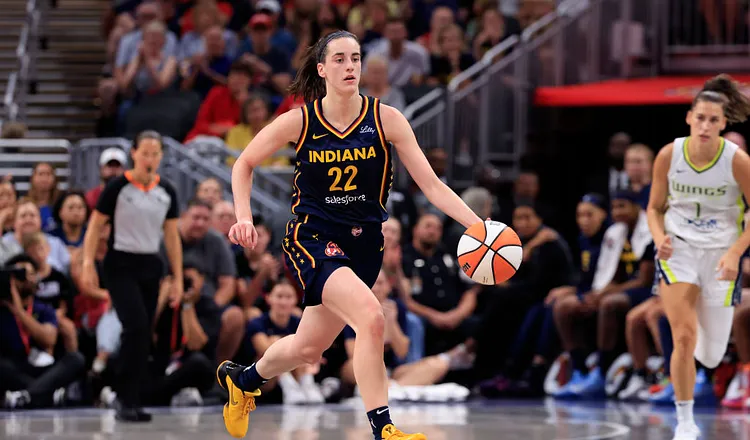
Caitlin Clark is an incredible basketball player. The fact that she is a woman and plays in the WNBA doesn’t diminish her skills or talent. She has single handedly brought women’s basketball and the WNBA to a new level. There have been and there are many great women’s basketball players. None has been able to do for the league and women’s basketball what Caitlin has done over the past two season, in college and now in the WNBA. She has been involved in controversy this week for seemingly apologizing for being a white player. The Free Press wrote about her and this challenge today.
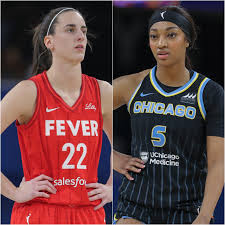
Yet she gets terrible abuse from WBNA players and even owners because of her race. Because she is white. “Sheila Johnson, the black owner of the Washington Mystics, echoed Wilson, telling CNN that the only reason Clark was getting the acclaim was because she was white.” Yet 31% of the Mystics annual attendance came from the two games Caitlin Clark played there. She is the league’s star. There are many outstanding players in the WNBA. I didn’t like watching it for years because it wasn’t very good basketball. Today’s WNBA is very good basketball. It’s fun to watch because of the quality of play. My favorite games that I want to watch are when Caitlin Clark is playing against her college rival, Angel Reese. They don’t like each other. They are both great players. It reminds me of Larry Bird against Magic Johnson. Bird against Dr. J. Magic against Isiah Thomas. Only without the respect the men had for each other.
Caitlin Clark and Angel Reese, two rivals and great WNBA players
Reading the article made me wonder why we are so obsessed with race in America. I grew up with friends of all different races and religions. My friends were and are my friends. In the words of the great Rev. Martin Luther King, Jr., it is about “the content of their character.” Would I watch the WNBA if it’s main star was Angel Reese? Maybe. She’s a great player. Do I want to watch every game when she is playing against her rival, Caitlin Clark? Absolutely. Do I watch other WNBA games? Not really. The finals this year were amazing and I have friends who watched it. I stopped watching when Caitlin Clark’s team was eliminated. The same way I stop watching baseball when my favorite team, the New York Yankees are eliminated.
It’s a shame that in the WNBA, basketball can’t be just about on the court talent. It’s a sign of the times, of the challenges we face in America. As long as we remain obsessed with race, we are the ones who lose. We can’t appreciate the greatness of talent because we see it as color specific talent. I hate that. I like watching talented performers because of their talent, not because of, or in spite of, their race. I like the beauty of sports, of music, of art, dance, and writing because of how it makes me feel and how it inspires me, not because the person who is behind it is a specific color, race, religion, or ethnic background. Maybe we can all strive to pay attention to that, instead of race, religion, or ethnicity. I think we would all be a little better if we did.
The last article of the day is about assisted death. It is something I struggle with. Earlier this year, we chose to put down our beloved 13 1/2 year old Labrador Retriever, Bella. I was the last holdout. I saw the light in her eyes until the very end, when I saw her agony. Making that final decision was very difficult and still brings tears to my eyes. Sitting with her on our couch, the entire family loving on her as the vet gave her the medicine that would end her suffering, was both beautiful and heartbreaking. If we do it for the animals we love, why can’t we do it for the people we love?
My dad died on September 6, 2022. Getting woken up at 1:30 in the morning to hear the news is something burned into my memory. I saw him a few hours earlier and expected to see him that morning. I believe that he chose to die when he did out of kindness to our family and to himself. The life he would have lived would be very different from the way he lived his life up to that point. He was able to do for himself and for the family what we would have never been able to do. Forget about the legalities, which the article addresses well. Earlier the day before, my mom signed the Do Not Resuscitate (DNR) paperwork. I walked in to the hospital room just after she signed it and she was in tears. We knew he didn’t want to live with no quality of life and she was able to sign the DNR. Would we have ever been able to go that extra step? I don’t think so.
The article has me thinking deeply about why. Why, as hard as it was, could I do it for Bella but don’t think I could have done it for my dad? What stops me from being willing to offer the grace of ending suffering to a human that I love when I can do it, as hard as it is, for an animal? What does it say about me? What does it say about our society? Do we value breathing that much over truly living? What is my definition of living? If it were me, would I want my family to be able to end my suffering? Or should I suffer and ‘be alive’ just because it alleviates guilt?
These are hard questions with no easy answer. I’m grateful that there is a publication that, in just one day, can have five (5) articles that really make me think. That inspire conversations. Each author has their own perspective yet writes in a way that doesn’t say you are wrong if you disagree with them. It is true journalism. If you are looking for a publication that will make you think every single day (I haven’t even talked about the Honestly podcast or the debates they offer), subscribe to The Free Press. You won’t regret it.
This week I had a business meeting with filmmaker Dani Merkin in Boca. I was introduced to him through a friend but didn’t know much about him or his work. His newest project sounded interesting so I wanted to see if I could help. He was in Florida for a showing of his 2016 movie, On the Map along with Israeli basketball icon, Tal Brody. I met Tal a few times in random occasions and it was great to see him again for a few minutes during the meeting. During the meeting with Dani, we not only discussed his new project but also talked about On the Map, a movie about the 1977 Israeli team that won the European basketball championship. As a sports fan who is Jewish and that grew up in the 70s and early 80s, I knew the team had won the championship but didn’t know the story. Dani graciously sent me a screener to watch the film.
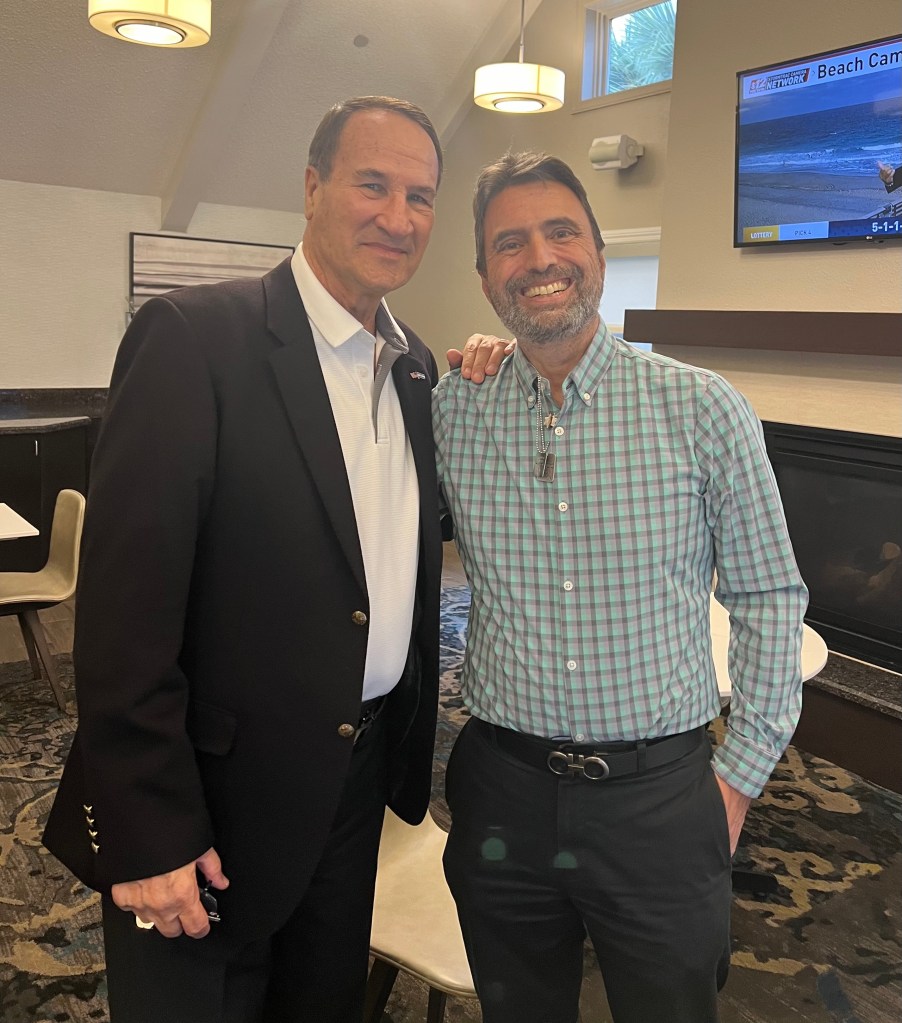
Tal Brody and me
I watched the film and something happened that I did not expect. I got incredibly emotional. The story, from 1977, had so many links to what is happening in our world today. In the movie, they talked openly about the Yom Kippur war of 1973, “the worst attack on the Jewish people since the Holocaust.” Unfortunately, today we know that the worst attack on the Jewish people since the Holocaust is now October 7, 2023.
I knew that in 1977, the USSR was persecuting the Jews who lived there. We all knew about the Refuseniks and our Jewish hero, Anatoly (now Natan) Sharansky. We prayed for them in synagogue. There were marches and rallies in DC. There were local rallies. We raised money for them. As a 9-year-old boy, I didn’t know that they refused to play the Israeli team in the European championships because they didn’t recognize Israel’s existence. They wouldn’t play in Israel and they wouldn’t play in Moscow. Today, it is South Africa stripping the captaincy from the Jewish player on their cricket team because of Israel. The International Ice Hockey Federation removed the Israeli team from its competitions until under massive pressure, they relented and just this week restored them. Israeli and Jewish athletes are facing problems all over the world just to compete. There are musicians who refuse to play concerts in Israel. I have a list of actors and musicians that I won’t support, won’t watch their movies or tv shows, won’t listen to their music, because of their hatred of Israel. Have we really made any progress since 1977?
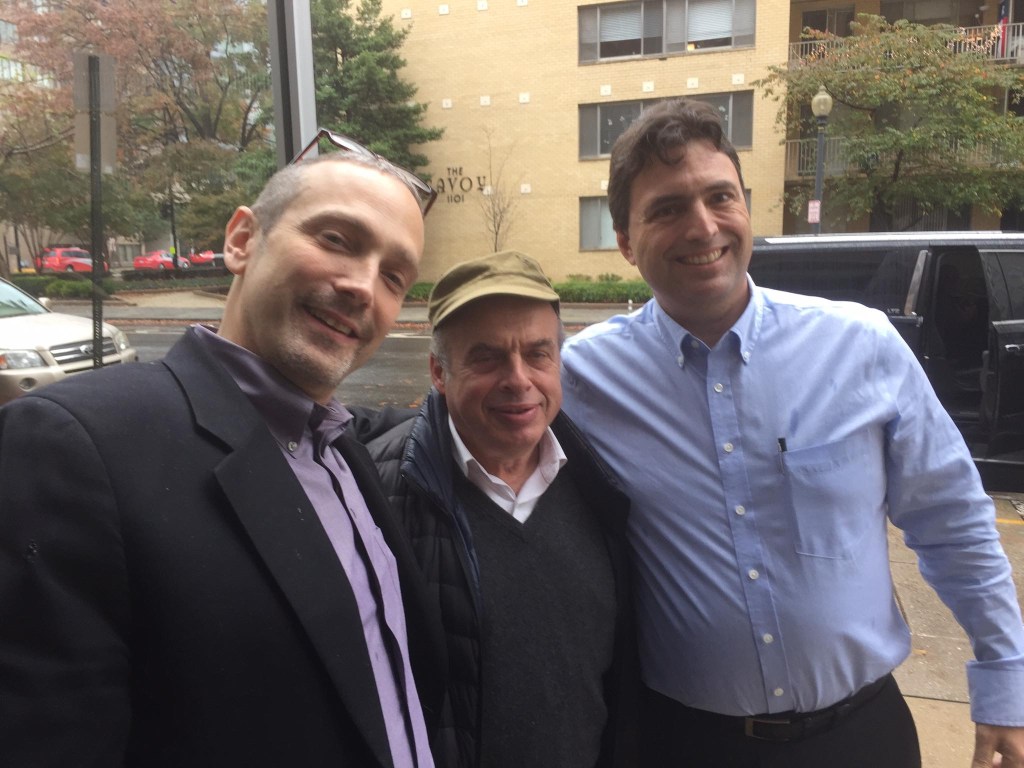
My friend Todd Sukol and I meeting the iconic Anatoly Natan Sharanksy
In 1977, FIBA, The International Basketball Federation, pressured the Soviet Union to play the Israeli team. After much negotiation, they agreed on the condition that the game was played in Virton, Belgium, a small out of the way town. The arena only held about 400 fans, almost all of the Israeli fans. It was truly a David vs. Goliath match as the powerhouse Red Army team, had won the FIBA Euro Cup Championship in 1961, 1963, 1969 and 1971. Nobody, except the Israeli team, thought they could actually win against the Russians. In the film, Ambassador Michael Oren talks about how just getting the game played was a win.
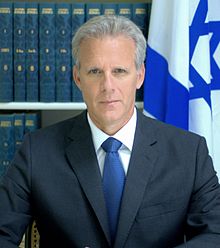
Ambassador Michael Oren – he will be here in Orlando in February 2024 for the JNF event!
Today it seems like just getting people to remember the hostages held in captivity by Hamas, underground in tunnels, is a herculean effort. As Kfir Bibas celebrated his 1st birthday as a hostage in the tunnels, the world mainly remains silent. As Hamas announces the murder of Yossi Sharabi and Itay Svirsky, hostages in Hamas captivity, South Africa is accusing Israel of Genocide. As Israel dropped leaflets and made phone calls to warn civilians of upcoming bombings, Hamas refused to let the civilians leave, uses human shields, turns hospitals, mosques, schools and homes into military targets, it’s Israel being accused of war crimes. The groups who support women’s rights and speak out against sexual violence, fail to do so because they are Jewish and Israeli women. Just as in 1977 when Israel was held to a different standard and not recognized, today it is the same.
In 1977, there was a lot going on in the world. As Israel was still dealing with the impact of the 1973 Yom Kippur War, the United States still dealing with the impact of Watergate, the Viet Nam war, and the oil crisis. Israel was dealing with the Dollar Account Affair scandal while in the United States we had the impact of Elvis dying. Today there is a lot going on in the world. The Ukraine-Russia war, the border crisis, the impact of Covid-19 and inflation over the past 3+ years, the Israel-Gaza war. The more things change, the more they stay the same.
Tal Brody, Israel’s Mr. Basketball is an amazing story. A star player who was the first round pick of the Baltimore Bullets, he elected to move to Israel and play Israeli basketball instead. Both David Stern (z’l) and Bill Walton, talk about how extraordinary what he did was. It was unheard of. When drafted by the US army, he served 2 years in Viet Nam to complete his service before returning to Israel to play. He had decided to retire and everybody knew it. Just before the championship game against Italy, who had won the championship 6 of the prior 10 years, his father had a heart attack and was in ICU in New Jersey. He flew home to be with his father. Nobody knew if he would be back in time for the championship game. This game was why he went to play in Israel. To bring Maccabi Tel Aviv from a team that lost in the first round to a team that could compete for championships. And yet, days before he flew across the world to be with his father. When his father awoke, he told him to go back. There was nothing he could do sitting with his father but he had an important role to play for Israel and the Jewish people. So he went to the airport to pick up his ticket to fly to the game however there was no ticket there. Luckily, one of the managers of the airline knew who he was from watching him play and put him on the plane, without a ticket, so he was able to get back to the team 24 hours before gametime.
Just like Tal, we all have important roles to play in our life. As parents, children, siblings, spouses, friends, mentors, bosses, and employees. Knowing what they are and balancing them is where the challenge comes in. Tal knew he had to be with his dad. His dad knew that Tal needed to be with his teammates, playing for Israel and the Jewish people. We often make mistakes when we confuse our important roles because we think we know best. Just like Tal had his coach and teammates say go see your dad, he also had his dad to say, no go be with your teammates and play the role you need to for Israel and the Jewish people. We have those people in our lives, and it is so critical to listen to them. When my dad got sick, I knew I had to play the role of son first. I had to do what I could to help my dad and support my mom before anything else. Once I did what I could, I needed to be husband, father, brother, uncle, employee, and supervisor. After my dad died and shiva ended, one of the hardest things for me was leaving my mother’s house to come home to mine. My primary role as my mother’s support had changed and as difficult as it was to return to my life and my other roles, I had to do it. Our roles are fluid, as Tal showed. He went from the star of the team and Mr. Israeli Basketball to son to player on the team all in a week. We do that all the time and again, like Tal, need to use our support system to help us with those transitions.
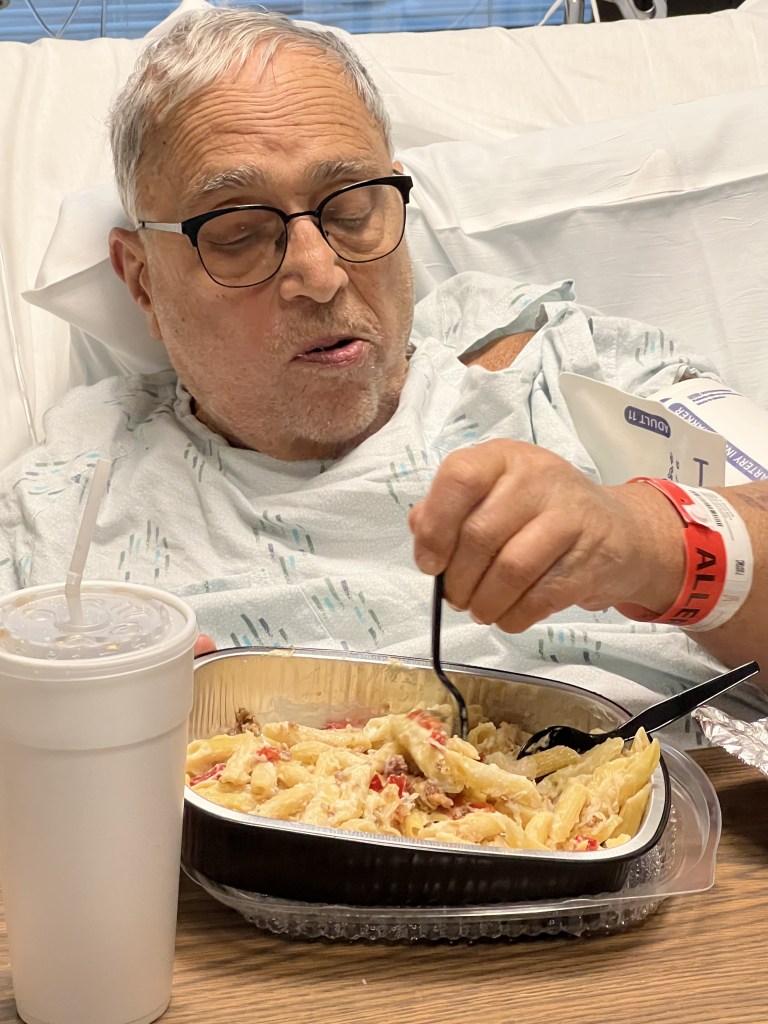
My role taking care of my dad.When my dad could finally eat non-hospital food, I ordered him this.I can still hear his voice as he enjoyed it and it still puts a smile on my face.
My rolse as son with my mom
My role as dad. Taking my son Matthew to go watch my son Evan coach college football and the obligitory ‘dad takes college kids out to eat’ photo.
My role as mentor with Shelley Greenspan who is now the Biden Administration’s Liaison to the Jewish community.
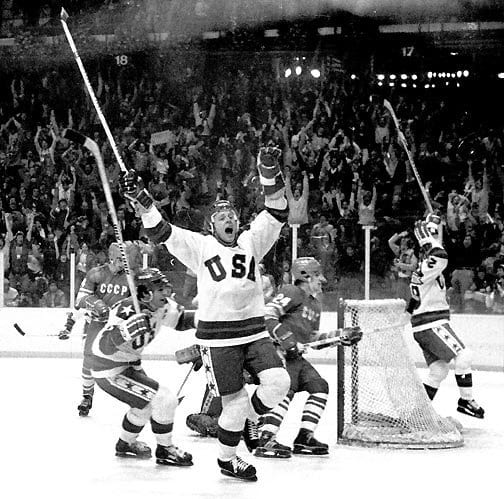
As a huge sports fan who grew up in the 1970’s and 1980’s, the US Olympic Hockey team of 1980 is burned into my being. “Do you believe in miracles? Yes!!’ is as loud in my head today as it was coming from Al Michaels through my TV set in 1980. Mike Eruzione and Jim Craig are childhood heros. Herb Brooks was the epitome of a coach we all wanted growing up. Mark Johnson, Dave Silk, and Buzz Johnson were personal favorites. Dave Christian, Ken Morrow, Mike Ramsey, Neal Broten were future NHL stars I followed throughout their careers. 44 years later, I remember their names and what they accomplished.
One of the greatest, if not the greatest, call of all time. ”Do you believe in Miracles? Yes!!” I still get chills.
As a Jew, the names that were burned into my head were not athletes. They were Moshe Dayan, who I spoke about at my Bar Mitzvah and was a huge fan of Maccabi Tel Aviv, David Ben Gurion, Golda Meir, Menachem Begin, Anatoly Sharansky,Yitzhak Rabin,Yoni Netanyahu (the only Israeli casualty of the raid on Entebbe and Bibi’s older brother). They were political and military leaders. They were the founders of Israel. Quite different. Yet now I have new names to match the 1980 US Olympic Hockey team. They are part of the 1977 Israeli European Champions Cup winning basketball team.
Ralph Klein, a Holocaust survivor who was the head coach of the team.
Tal Brody, an American who gave up an NBA career to put Israel ‘on the map’.
Aulcie Perry, an American who was the last cut by the Knicks in 1977, resulting in him playing in Israel. Aulcie, an African American man, converted to Judaism. Dani made a movie about him that I now need to see.
Jim Boatwright, an American who made the key shots in the championship game
Miki Berkovich, an Israeli with an incredibly sweet jump shot
When this team won the European Cup Championship, Israel exploded in joy. While Prime Minister Rabin resigned that same day, the country was filled with pride and joy. We can learn from the players, coaches, and the citizens of Israel in 1977 that despite, or perhaps because of what happened on October 7, 2023, we need to be proud of being Jewish. We have an obligation, just like the players on that team did, to show that we belong in a world that often times doesn’t want us and doesn’t think we deserve to exist.
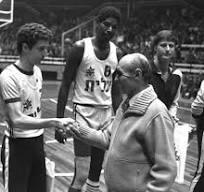
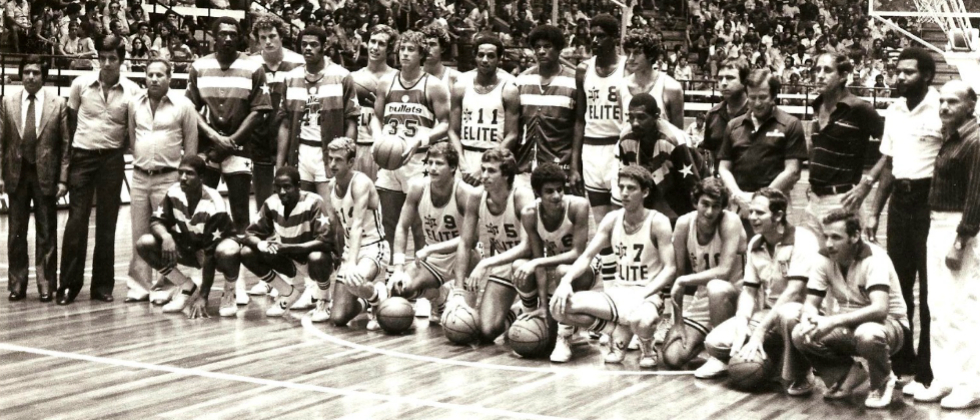
There are many key moments in Israeli history that I always think of.




 keithdblog