Having been to Israel so many times, I know what is reported in the media isn’t true. I know they exaggerate and like to say and show what they think will draw eyes and clicks. It used to not bother me that much because it was so obviously not the truth and people would ask me about it. It used to be like that.
Since October 7th, the media’s coverage of Israel has been worse than ever. The big difference is now people believe what they are being fed is true and don’t bother asking questions. They see something on social media and that becomes the truth. A perfect example is the recent fire that occurred in Rafa after Israel dropped a bomb on Hamas terrorist leaders. The bomb was a smaller caliber one, targeted to hit an exact spot, which it did, to eliminate the terrorists (which it did). However, the terrorists had additional weapons with them that created a secondary explosion that started the fire that killed civilians.
The media was all over the fact that Israel bombed a civilian area. That Israel attacked a safe zone. That Israel was burning civilians alive. That the explosions beheaded babies. The “blame Israel” narrative from the media and on social media has been brutal. Now that Israel is responding to the daily massive rocket attacks from Hezbollah in Lebanon, the “blame Israel” narrative is growing. The tent cities are returning on campuses. There were shootings at Jewish Day Schools in Toronto and Montreal and a synagogue in Vancouver (luckily nobody was there when they happened so there were no injuries). Yet the media stays quiet. Since returning from Israel, what I have noticed the most is the combination of silence in defending Israel and the massive attacks on Israel and Jews from all over the place, including Jews.
I understand well-meaning Jews who care about morals and ethics having issues with the Israeli government’s decisions with the war. I don’t understand those who haven’t been to Israel or at least those who haven’t been since October 7th leading the charge against Israel. Being at Kibbutz Kfar Aza was an unbelievably powerful experience. Hearing the stories, seeing the devastation, and seeing Jabaliya so close, there was clarity in the war and the need to eliminate Hamas. Standing at the site of the Nova Music Festival, sitting in front of the pictures of those murdered or kidnapped brought clarity of the evil of Hamas. Stopping to visit the bomb shelter where Lee Sasi hid and survived while so many others died was deeply moving. When I see Jews defending Hamas or using terms like ‘genocide’ for what’s going on, I am reminded of an old joke.
Throughout our history, we continue to make the same mistake over and over and over again. We forget that we will always be Jews first. We think we are Americans. We thought we were Germans. Polish. Austrian. We aren’t. We are always Jews. So those who forget this often times are at the front line of our persecution and then are shocked when they find themselves facing the hatred they denied existed or fought to defend. When I see these Jews posting on social media or being used as props in demonstrations, it makes me sick. We know the ending as we have seen it repeatedly over the past 3,000 years.
Since I have been back from Israel, the other thing I have noticed is the pressure being put on Israel to unilaterally solve the problem without the answer being war and defeating Hamas. It’s as if Hamas never videoed the events of October 7th for the world to see. Or that they didn’t publicly state that there will be many more October 7th events in the future. UNRWA is treated as a legitimite agency despite the proof that their employees participated on October 7th, were involved in hiding the hostages, and their schools and hospitals not only store weapons for Hamas, not only are the base for tunnels built by Hamas, but Hamas uses them to fire rockets at Israel. UNRWA gets the aid coming into Gaza and somehow it ends up in the hands of Hamas instead of the people. This is the agency people are listening to about humanitarian issues – one that behaves as anything other than a humanitarian agency.
Tunnels found under an UNRWA school – they were filled with weapons.
We have a leadership crisis. In the Jewish world. In America. Around the world. In Israel. Our leaders are determined to continue doing what has failed. The President of Iran, Ebrahim Raisi, dies in a plane crash. Raisi, The Butcher of Tehran, is then eulogized at the UN, in the US Congress. A man who murdered tens of thousands of people in Iran is treated as a great leader. Our lack of leadership is appalling and yet we do nothing about it. One of my favorite movies, The American President, addresses leadership incredibly well.
Lewis Rothschild: People want leadership, Mr. President, and in the absence of genuine leadership, they’ll listen to anyone who steps up to the microphone. They want leadership. They’re so thirsty for it they’ll crawl through the desert toward a mirage, and when they discover there’s no water, they’ll drink the sand.
President Andrew Shepherd: Lewis, we’ve had presidents who were beloved, who couldn’t find a coherent sentence with two hands and a flashlight. People don’t drink the sand because they’re thirsty. They drink the sand because they don’t know the difference.
The quote begins at the 2:44 mark but the whole scene is amazing
We often get hung up on our elected leaders and think that they are the only ones who can be leaders. I’m reminded of Rami Davidian, the farmer who lives near the Nova music festival site. Rami is a farmer. A regular guy. Nobody special. Elected to nothing. And yet on October 7th, he rescued 750 people from the Nova festival while Hamas was trying to murder them. We can all be Rami. We can all step up to lead when it is our turn, elected or not. We can speak out and speak up. We can change our small part of the world which changes the entire world. We can get educated and confront those who lie and spread lies.
As Spain recognizes a Palestinian State and calls the war genocide, they quickly backtrack when they realize that by doing this they make every person in Gaza a political refugee able to enter Spain on a humanitarian visa. They quickly stopped being public about either because they realized their words and actions had consequences.
As the Maldives now refuses to allow anybody with an Israeli passport to enter the country, they will see the impact as people with resources and morals refuse to visit the Maldives and pick other options instead, hurting tourism, their top industry.
As politicians lose their seats in the upcoming election because they tell lies and support terrorists, our leaders will shift what they say and what they do.
All of this happens because we take action. We lead by our example. We stand up and speak out when we hear people telling lies about Israel and about Jews. We refuse to be silent and refuse to stand by and allow others to attack us. For generations we were visitors in other countries and so we tried to fit in and keep quiet. We wanted to stay under the radar until it was impossible and then, too late. Today, with the modern state of Israel, we have a homeland. We don’t need to stay under the radar and quiet. Yet too many of us do. Too many of us remain convinced we are Americans first. Too many of us are afraid to lose what we have by standing up and speaking out when history tells us time and time again, if we don’t stand up and speak out, we are guarnteed to lose what we have. We each get to choose if want to be lambs to the slaugher or fight back. We have our examples. Abraham argued with God about Sodom and Gemmorrah. Queen Esther risked everything for the Jewish people. Moses gave up the chance to be Pharoah and rule Egypt to serve God and the Jewish people. King David took on Goliath. Hannah Senesh risked it all and paid the ultimate price for the Jewish people. The list goes on and on.
Hannah Senesh sacrificed her life for the Jewish people
So in these crazy times that we live in, who are you going to be? Are you going to be Nachson, who bravely walked into the Red Sea until it was over his head before God parted it to save the Jewish people or are you going to be the one who served the Egyptians and the Nazis to harm the Jewish people? Are you going to speak up for Israel and the Jewish people like Dr. Martin Luther King Jr. did or are you going to be Mark Ruffalo who constantly criticizes Israel for existing and posts his own antisemitic digs at Jews?
I choose to be Dr. King. I choose light over darkness. I choose love over hate. I choose peace over war. I choose hope over despair. I choose being Jewish over hiding who I am. I choose good over evil. I choose action over inaction. I choose speaking up over being silent. Like our historical ancestors, I choose risk to flourish over safety to hide and eventually lose everything.
We each have to make our own choice. I hope you choose wisely.
The wise choice will give you life but the wrong choice will take it from you
As I continue to process my 10 days in Israel this month, I can only do so in bite size pieces. Here is my second bite at the experience and what it has meant to me and what I have learned.
On my trip in 2021, we had a number of Israeli men on our bus. I wrote about Alex, whose son died on October 7th, in my last blog post. Another person I met on that trip has become a close friend. I can’t use his name or pictures for security reasons.
There were a few things that he spoke about that really resonated with me then and as I unpack the time in Israel, reinforce common themes that have come out of the trip and that I want to apply in my life. One of the most significant was when he talked about holding his son’s bar mitzvah at Kibbutz Be’eri. After being decimated on October 7th by the Hamas terrorists, he wanted to bring light and life to Kibbutz Be’eri, so that is where he held his son’s bar mitzvah. It’s like saying that I want to get married on the still smoldering ruins of the Twin Towers in 2001. Let’s celebrate a significant event at the devastated site of the apartment building in Sunny Isles, Florida. Let’s celebrate our 50th wedding anniversary at any of the sites of school shootings a few months after children were murdered there. In many ways, it doesn’t make sense.
Yet through a Jewish lens, it makes total sense. We value human life more than anything. The Talmud teaches that Whoever Saves a Life Saves the World. The idea of bringing light and life to a place where light and life was destroyed is incredibly Jewish. It’s similar to what Noa was saying at Shura Army base when she spoke about making a better dinner for her family, being better for her children and husband. We can take the sad, the dark, the bitter, and find a way to make the light shine again. That’s what he and his family did at Kibbutz Be’eri. They door a place stained with death, kidnapping, torture and pain and brought light to it. They brought joy to it, if even for just a few hours or a day.
Noa, a true inspiration about how to live life. Our teachers show up when we are ready to learn.
The lesson I take from this is that we all have an opportunity to bring light and joy to the world every single day. It doesn’t matter what is happening in our own lives, in our country, or in the world. We have the ability to make a conscious decision to do things that bring light to the world. Sometimes it can be something as simple as holding the door for somebody. Helping somebody cross the street. Say a kind word to somebody that you see even if you don’t know them. It doesn’t take much to bring light to our lives and the world. It does take a conscious effort. After this trip, one of the things I am going to do is find ways to bring light to the world around me. Pay attention to the opportunities that present themselves every day and act. The small random acts of kindness brighten somebody’s day and improve the world. Thank you Yaron and Noa for inspiring and teaching me.
Our trip leader, Saul Blinken, was incredibly inspiring. We spent most of our time based out of Jerusalem and he said something that had an immediate impact on me. Saul said that every day we wake up in Jerusalem, it’s a miracle. Every day we breath the air in Jerusalem is a miracle. Every day we walk the streets of Jerusalem, it’s a miracle. And every night we go to sleep in Jerusalem, it’s a miracle. He asked us to imagine if somebody told the Jews who were being exiled by the Romans not to worry, that 2000 years later the Jews would be back in Jerusalem and there would be a Jewish state. They wouldn’t believe it. Yet it happened.
Saul passionately speaking to us. What an incredible teacher and friend.
From the time Saul said that I took it to heart. Every day when I woke up, it was an incredible feeling to know that I was waking up in Jerusalem. As I walked the streets, I had a deeper appreciation of what it meant to be able to do that. Going into the old city, visiting the Kotel, walking freely throughout the city – everything became a WOW moment. It reminded me of what my friend Roni Akele, the Director General of the Ethiopian National Project said about being a Jew in Ethiopia. He said that they always dreamed of returning to Jerusalem. Everything was about Jerusalem. The psalm we sing is “If I forget you, oh Jerusalem….”
I fell in love with Jerusalem on my first trip to Israel in 1989 and it has never changed. I am not an overly religious person, yet going to the Kotel is powerful. This trip I got to visit Temple Mount for the first time. Incredibly powerful. As we stood there and said the Shema, I felt a connection that is indescribable. Saul’s words hit home and deeply. I’ll never take Jerusalem for granted again. I’ll never take for granted all the time I have spent there, all the sites I have seen, all the friends I have who live there.
It’s an opportunity to think deeply about gratitude. This was my 21st trip to Israel and I hope to be back in Israel a few more times this year. I don’t think much about it yet now I am filled with gratitude that I have these opportunities. Each time I go to Israel, I get a deeper connection to Judaism and to understanding myself. As I have said, I’m not very religious but I am very Jewish. Israel brings that home to me.
I also think about how many things I have to be grateful for in my life. Jerusalem can easily be representative of so many important things. My family. My health. Doing work that is personally meaningful. The success of my children as people and in life. The life I have is truly beyond my wildest dreams. It is easy to lose track of that and focus on the things that aren’t going well or that I don’t like. Temple Mount was a good example. I wish we could go there whenever we want. I wish we could openly pray there and celebrate that holy space. I could focus on the things we don’t have. Or I can focus on the fact that we can go there. That I did find a private place to pray quietly. That I did feel the connection with God in this special place. Our choices determine everything. Do I want to focus on what I don’t have or what I have? Do I want to be bitter about the things I think I deserve or be grateful for the wonderful things I actually have? Just like I’ll never take Jerusalem for granted again, I won’t take the wonders and gifts of my life for granted either. Nothing is perfect but it sure can be great.
A picture I took overlooking the Western Wall plaza. The beauty never disappoints.
The last thing I want to unpack in this post relates to Israelis. Not since the second intifada have I been in Israel where I was thanked so much by Israelis for being there. During the second intifada they were happy to see Jews coming because most were not. It was the Christians who were coming to visit. This time they were grateful for Jewish solidarity. For knowing the Jews of the diaspora love Israel and support them as brothers and sisters. That we are willing to come in the middle of a war because of our love for Israel and the people of Israel. That the Jewish community truly is global. There was a unity we felt and that they needed. I never expected to get the thanks we did or for it to mean as much as it did to me.
During the second intifada, part of the thanks was due to the economic benefit the country needed by our visiting. While that is very true right now, that wasn’t what I was being thanked for. The Israelis need to see us in person. They need get our hugs and love. They need to know they aren’t alone. When the guys on our bus from an LA Jewish Day School gave the soldiers letters from kids at the school, they were deeply moved. October 7th, the hostages, and the ensuing war is taking an incredible toll on the entire country. Seeing their Jewish brothers and sisters from America and the rest of the world makes an incredible difference.
It’s a reminder to me that not only do I need to show up both through WhatsApp and in person for my Israeli brothers and sisters, I need to do the same for my friends and family. That random phone call, text, or email may often mean far more than I ever thought. Checking in on friends and family doesn’t take much effort and the payoff is always significant and meaningful. This trip reminded me that the 30 seconds it takes to send a text or email, or the 15 minutes I allocate for a phone call, may change a person’s entire day and outlook. It doesn’t matter if they reply or if they answer the phone. The effort is what is meaningful.
The other thing that was surprising to me was the Israelis response to my tattoos related to October 7th. I got them because of their meaning to me. My children could have been at Nova. I could have been there with them. It hit home and hard. The Mia Schem quote, “We will dance again” and the tattoo she got inspired me as well. It is a reminder that we never give up hope. We will overcome the challenges and not just survive but thrive. Whatever is taken from us, we will get back. They will never take our spirit or our soul. Here in America, I get very few comments on them. People are very used to tattoos and I have been surprised at the lack of comments or questions because of the uniqueness of them. In Israel it was just the opposite. Not only did they notice them, but people were stunned that October 7th meant that much to me. ‘Wow’ was the most common thing said to me, followed by questions and a conversation. At a t-shirt store where I got a few meaningful ones for myself, the owner was so taken by my tattoos that he asked if he could take pictures of them and use them on t-shirts he would sell. Of course I said yes. On my next trip, I’ll swing by and see if he has them on a t-shirt. How cool would that be??
Nova music festival – it could have my kids and me.The Mia Schem saying and tattoo
Standing up for what you believe in matters. The old saying, “If you don’t stand for something, you will fall for anything” really holds true. I’m not advocating that everybody should get a tattoo. I am advocating that whatever matters to you, whatever you stand for, make sure that you actually do it publicly. It matters. People notice what you say and do and what you don’t say and don’t do. If they are your values, make it public.
Trips to Israel, especially the Momentum Men’s Trips, always have me returning with my head spinning. There is always much to unpack. More is coming as I continue to process the time I spent there, the people I met, the things I saw, and how I felt. If you have never been, I urge you to go. If you have been, I urge you to return. It truly does change your life.
Processing my recent trip to Israel has been a challenge. This is my 21st trip yet the first since October 7th. In many ways, this makes it my first trip to Israel. Rather than being able to sum up the trip in one blog post, I am going to take bits and pieces and talk about them. Take bites out of this experience and share them. As I was talking to somebody this morning about the trip, we discussed how it really was an overwhelming experience filled with emotion. I’m going to begin by writing about three things.
In 2021 I participated in my first Momentum trip. One of the people on our trip was an Israeli man named Alex Malayev. While we didn’t become close friends on the trip, we did get to know each other. Throughout the years after the trip, we kept in touch through our WhatsApp group. He shared with us in the group that his son Yoav was in the IDF and killed fighting Hamas on October 7th. It was devastating to hear this news and my heart broke for him. On the trip, he talked about his son and shared what Yoav wrote, after he was mortally injured and was dying.
Yoav Malayev z”l with his father Alex and mother Maya
“The best 20 minutes of my life, we crawled up to here. I got injured, and there’s a barrage now. I’m thinking about you, and I’ll be thinking about you the whole journey. I love you.”
It brought tears to my eyes then and brings tears to my eyes now. As this 19 year old boy was injured and dying, his thoughts were on defending Israel, defending the Jewish people, and how much he loved his family. He was proud of his effort to defend the Jewish people and the Jewish homeland. The best 20 minutes of his life. What bravery. What inspiration. When I first heard it from Alex and read it on the page, I felt like I was being slapped in the face. He was willing to sacrifice his life for the Jewish people and the Jewish homeland. What am I willing to do? What am I willing to risk? How important is it to me? As I sit on my comfortable couch back in America, I continue to ask myself that question. I thought I did enough before this trip. After hearing Yoav’s story, I know I am not. I have to do more. I have to advocate for Israel. I have to advocate for the Jewish people. I can’t be silent because I am worried about my safety. He didn’t worry about his safety.
Alex’s son Yoav may have died but he didn’t die in vain. Not only did he help protect Israel and the Jewish people, his life and death is an inspiration to us all to do more. To give more. To take bigger risks. To represent being Jewish in a public way. We have a collective responsibility. When Israel called, 350,000 reservists answered right away. More than were expected. The Jewish people are calling. Israel is calling. We need to respond. I know that I will. The next few weeks will be figuring out exactly how. I urge you, if inspired by Yoav, to do the same.
The second thing I want to talk about is when we went to the Shura army base. When we arrived, we got there just as the body of Nachman Vaknin z”l was being loaded into the van to be taken to Eilat for burial. Nachman had been killed in battle a few days earlier. It was incredibly powerful watching his coffin being loaded into the van. Then, the doors were kept open so one of our group, who was saying mourners kaddish for his mother, could say kaddish there for both him other and for Nachman. When he finished, we were given the honor of escorting Nachman out of the parking lot and on his final journey home, where he would be buried later that day.
Nachman Vaknin z”l
None of us had known Nachman yet all of us felt we lost somebody close to us. This 20 year old boy was defending us. He was defending Israel. He was defending the Jewish people. On Thursday, we had been in Kfar Aza, less than a mile from Jabaliya. Before that, we had been working on a farm in the Gaza envelope where we could see Khan Yunis. After Kfar Aza we went to the site of the Nova music festival. Both Kibbutzim and the Nova festival were attacked on October 7th and suffered losses. Two of the three also had hostages taken. In the middle of the war, we knew that we could have been attacked at any time at those sites. Nachman was killed on Saturday, just two days after we were in the area. I think all of this combined to make him feel like an additional son to all of us.
We were incredibly moved by being there for Nachman as he was put into the van and driven away. It made us think about life. Earlier on the trip, Saul, our trip leader, had talked to us about what we would die for determining what we would live for. I know that as I stood there with Nachman’s body, I knew what he would die for and so I knew what he lived for. It continued the spin in my head. What would I die for? Because I know that determines what I live for. Now that I am home, that spin in my head hasn’t stopped. Yoav and Nachman both knew. My head still spins. They were 19 and 20 yet they knew. I am 56 about to be 57 and I am not sure. My family is one thing that I would die for. I know that and have known that for a long time. What ideals? What values? It goes to my core which is what makes it so difficult. A core value of mine is honesty but would I die rather than tell a lie? I don’t think so. Where that line is a challenge for all of us to ask of ourselves. This trip has truly highlighted it for me and I want to be like Yoav and Nachman and know to my core what I would die for. Then I know what I truly live for.
The final thing I want to write about also is from the Shura army base. After we said l’hitraot to Nachman on his final trip, we were introduced to Noa, who talked to us about the forensic center located at the base. Noa has 8 children and on October 7th, 7 of their family were called up from reserves. This includes both her and her husband. This means 7 of 10 people in her family have been active duty in the war since October 7th. It makes the story in Saving Private Ryan seem tame as he was one of 4 brothers and these are 5 siblings and 2 parents. Her job at the forensic center was to prepare the bodies of those who were murdered on October 7th for burial. One of the beautiful things she said that she always believes that the neshama, the soul, of the person who died is in the room with her. You can listen to her talk in this first video.
Noa speaking to us and introducing herself and the base.
Noa was truly amazing and inspiring. She talked about how they got not just the bodies of soldiers but of civilians as well. Men, women, and children. They also got the bodies of terrorists. This made it challenging as many of their bodies were booby trapped with bombs and grenades. Imagine working to humanely treat the bodies of the dead and having to rush out because there is concern one of the bodies has a grenade or bomb that could go off. As she talks about how many bodies were there on October 7th in such matter of fact voice was chilling. She finishes talking about an injured soldier with a twin brother and how she can’t make a mistake in the identification.
Noa talking more about the base and what she does.
When we went inside the thing Noa talked about that stuck with me the most was how after all the horror she saw, after all the blood she described dealing with, after seeing the mutiliated and abused bodies, she finds that she must still look for the positive. She still has to think about how to make the family a more delicious dinner. How to be a better wife and mother and friend. After all the horrors, instead of being stuck in them, she looks for the beauty in life. She looks for ways to make life better not just for herself but for those she cares about and loves. What a beautiful concept.
After she talked about that, I found myself thinking about the things that I struggle with that keep me from focusing on the beauty of life. What things am I allowing to keep me from asking how I can be a better husband, father, and friend. What more delicious dinner should I make? What keeps me focused on the negative instead of the positive? And if Noa can do this after what she has seen, what stops me from doing it? It should be so much easier for me as I haven’t seen the gore she has. I haven’t dealt with the inhumanity that she has.
Now that I am back in the United States, far away from the active war, I want to do better. I want whatever comes to my life to only make me want to do more. To do better. I have seen religious people talk about this often in the past, regardless of their religion, and always questioned it. After October 7th, after meeting Noa, after seeing the sacrifice made by Yoav and Nachman, after being at Kfar Aza and the Nova music festival site, I feel like it is my obligation to find ways to bring more light to world. Not to allow the darkness we all face to win. Noa actively shoves the darkness away and doesn’t merely make room for the light, she is the light. She fills the room with light. We were all amazing by Noa. Who she is as a person. What she does for Israel, for those who die in service to Israel, and for their families. The type of mother, sister, and wife she is. Who she is as a human being.
Three amazing people to inspire me and hopefully inspire you. Yoav, who while giving his life for the state and people he loves not only celebrates the opportunity but shares his love for his family. Nachman, who paid the ultimate price to keep us all safe and while we didn’t know him, felt like a family member to us all, and Noa, who took care of those from October 7th and every female soldier since so they get treated with dignity and respect before burial. Who makes sure the families going through intense pain and loss know somebody was caring for their child until they are buried. All three knew what they’d die for. All 3 knew what they live for. While only one remains alive today, all three have full lives. All three have changed my life. I hope that over the rest of my life, I can live up to the standard they have set. I know I have work to do.
I met Mahmoud in 2019 on my Encounter trip. You can read about the trip starting with this blog post and continue forward. It was great to see Mahmoud and we hugged when we saw each other. He asked us to sit as we caught up on our families, work, and life changes. This of course brought up the war which has impacted him both economically and in terms of how safe he feels for his family. It was another connection point as I have those same feelings as a Jew in the United States.
Mahmoud is incredibly smart. The conversation was deep and not stuck on talking points or things that often impede real conversation. It was refreshing to have somebody to talk with about what is happening without the incitement of specific words.
We didn’t use words like Genocide. We both agreed that lots of people were dying, and we wanted that to stop. We didn’t use words like forced famine. We agreed that not enough food was getting to the people, and they were hungry. He doesn’t believe enough food is getting in even if it wasn’t being stolen and sold. He said there were fewer trucks going in now than before the war. From what I understood that wasn’t accurate but I didn’t have the facts in front of me so chose not to dispute that point and just agree that people were hungry. We agreed that the Hamas attacks on October 7 were unacceptable. We agreed that Hamas was evil. We agreed that Hamas must be removed and cannot continue to exist in power. The murders, rapes, burning of bodies, and other actions were evil and unacceptable. He shared that he and his friends were horrified when they learned of the attack. We agreed that taking the civilian hostages was unacceptable and he shared that his hope was that they would be released the very next day. He also said that he felt the taking of soldiers was different as this was an act of war by Hamas and taking military personnel for future prisoner swaps was ok. While I understand his position on this, I struggle with it because of how Hamas treats prisoners.
We talked about Zionism. When we met in 2019, he made the comment that, “If Zionism means the Jews have a right to the land and we do as well, then I am ok with Zionism.” When I said that the definition of Zionism is that the Jews have a right to a homeland and says nothing about anybody else, he commented that too many people disagree with me. There are people who believe all of historical Israel belongs to the Jews and not only should we have the West Bank/Judea and Samaria but also Jordan and more. That Greater Israel should be ours. Just like there are Palestinians who believe there should be no Jewish state at all. They believe the entire land should be Palestinian. We can’t listen to the extremes and that’s where we are at the current time. The media only covers the extremes. That is what sells. That’s what gets ratings and advertisers.
We talked about the campus protests. He wasn’t aware of the number of outside agitators that were involved with them. As we discussed it, he commented that the fascists and communists always do that. This is their pattern throughout history, so it isn’t a surprise. I shared that in my opinion they were stealing his story and his pain for their own agenda which had nothing to do with Palestinians. It was about anarchy and changing the United States government. He agreed.
We discussed how the status quo in the relationship between the Israelis and Palestinians was not something that could continue long term. When I participated in the Encounter trip, one thing that was clear to me was that the status quo couldn’t continue. We agree on that. From the day I met him, Mahmoud has been a proponent of a one state solution. For him this doesn’t mean someplace that is free of Jews. It is his position that Israel already controls the entire area and that it is already one state in which some of the people who live there get treated differently. The challenge of a one state solution is that it would mean that Israel would no longer be a Jewish state. That’s the cost of peace in a one state solution. Unfortunately, I agree with him that the cost of a one state solution is the loss of Israel as a Jewish state. I chose not to tell him that this would be unacceptable to the world Jewish community as the entire purpose of having a state of Israel is to have a Jewish state. It is why I believe a one state solution will never occur. The Palestinians would have to agree to leave the land and they are not going to do that.
He was pessimistic about any chance of a two-state solution working. He made the point that Gaza was effectively a two-state solution. We see how that worked out. I agree with him. The challenge of a two-state solution is that the Palestinian leaders and people need to not just accept that Israel exists as a Jewish state but also there will be travel limitations and challenges because there are two countries with sovereign boundaries. This also doesn’t even consider the trust factor needed. The current trust factor is at best zero right now. When I made the comment that it might take ten (10) years to get to a real two-state solution he shook his head and told me that was likely too long. He said if it is going to take 10 years, it is dead. I don’t agree with him here and we spent a lot of time talking about leadership.
For those who have been reading my blog, you know how critical I have been about our lack of leadership. This lack of leadership exists in the Jewish community, in America, in Europe and certainly in Israel and with the Palestinians. The Palestinian Authority President Abbas was elected to a 4-year term in 2005. There have not been elections since. He is in year 20 of a 5-year term. The world stays silent and supports him. Prime Minister Netanyahu has been in power longer than any other Israeli Prime Minister. While he has been in and out of power due to free elections, there is a reason why many countries have term limits for these and other positions. A new voice is needed. New leadership.
Both Mahmoud and I expressed our concerns about future leadership. Who might it be? Mahmoud is concerned Israel will elect Ben-Gvir, Smoltrich, or somebody on the far right like them. I don’t share those same concerns as the Israeli people are not far right like them. They are given a far too large platform because Netanyahu needs them to remain in power. I am concerned that the leadership that will follow Abbas is going to be Hamas or Hamas like. Somebody who will not lead towards peace but will lead back to the days of the intifadas and violence. Both of us are stunned that in the United States, with well over 300 million people, these are the two candidates we have for President. Because of their age, it is unlikely that either of them will be running in 2028 (one won’t be eligible per our constitution) so perhaps we can see some change in the US in four years but no matter who wins, it will be a very challenging four years. With all this negativity about leadership, Mahmoud wanted to talk more about the people rather than leadership.
His concern is that leaders are elected by the people. His concern is that the anger and rage at Hamas is spilling over to the Palestinian people and will make things worse. There are people who say, “just bomb them all” or “flatten Gaza and kill them all” or “they are all terrorists”. I shared with him that as I was in Kfar Aza and at the Nova site, I felt rage. I didn’t share that at Kfar Aza, as each bomb exploded in Jabaliyah, I felt better, as not only does that really bother me that I felt that way but also it would have been counterproductive to our conversation. He isn’t wrong. Israel is not the same country as it was on October 6. The people of Israel are not the same. The events of October 7 have altered the people and the country. I don’t know where it is going to end up. I told him I remain hopeful that when the war ends, and the war will end at some point, I am hopeful that the Israeli people can heal and look to a future where there can be peace and something like October 7 will never happen again. He was much more pessimistic and really fears that the long-term impact on the Israeli people will be to radicalize them further and further to the right. I shared my hope that after the war, it would bring them back towards the center due to the desire to live life.
We also spent time talking about how important it is for Jews and Palestinians to talk the way we were. To respect each other and share ideas, not ideology. To work towards finding solutions, not arguing and fighting for the sake of arguing and fighting. He shared that while some Israelis do some to talk with him, he has no platform in Israel to do this. Coming to the United States to talk to Israelis and Jewish communities isn’t the answer either. We need more dialogue. We need more discussion. This brought me back to my points about leadership and how they can’t and won’t do this. Perhaps after the war ends and Bibi is replaced and in the next few years when it is likely that Abbas will die, we will have a chance for new leadership that is willing to engage with each other and really work for the benefit of their people rather than to remain in power. Maybe I am overly optimistic. Maybe I am being too positive and too hopeful. I don’t see another way to live.
As we wrapped up our 90-minute conversation, there is much to think about and much to contemplate. We hugged goodbye and made plans to get together on one of my future trips to Israel. Because of the time and the heat, we chose to take a cab back instead of walking. Matthew and I began to talk a little about the experience, but those conversations will happen back in the US over a coffee or twenty.
I appreciate Mahmoud for giving his time. For sharing his opinions and concerns. For listening to both Matthew and my comments, concerns, and opinions. For being open to a real discussion and conversation. For looking to the future and not being stuck in the past. As we said during the conversation, we can’t change the past, but we can change the future. I look forward to future conversations with Mahmoud and to a future where there is peace. To a time when the Palestinians can live in peace with their neighbor Israel. When the thought of another October 7th isn’t on everybody’s minds.
My friendship with Mahmoud and a number of other Palestinians living in East Jerusalem and the West Bank/Judea and Samaria (two names for the same place) are examples that we can live together. We can have difference and get beyond them and live together. It gives me hope that when we finally get new leadership who truly cares about a different future, we might be able to have peace.
One of the things I have always wanted to do is visit Temple Mount. On my prior trips, I never had the opportunity to do it for many reasons. The first intifada. The second intifada. Jews not being allowed on Temple Mount. A schedule planned during the limited time that it is open to Jews. This time it was different. Jews are allowed on Temple Mount from 7 am until 11:30 am during the week. I had nothing planned for the day so I could get up early and go up onto Temple Mount.
Every time I have seen the line to go up on Temple Mount it was long. I expected a wait, so we left the hotel at 7:30 to we would make sure to have some time up on Temple Mount. When we got there, there was one person in front of us. I guess war changes everything, including those who want to go up on Temple Mount. The man who was in front of us had on his tallis (prayer shawl) and tefillin (the boxes on his forehead and arm). The rules for Temple Mount are controlled by Jordan. This has been the agreement since 1967 to attempt to limit conflict. This is why access is limited for Jews and at times has been prohibited. Of the rules is that we are not allowed to enter any of the buildings now, including the mosques. There was a time that we were allowed to do that. Another rules I that Jews are not allowed to pray on the top of Temple Mount or use obvious prayer symbols like this man was wearing. He was arguing with security who would not let him through. It was clear he wanted to provoke something. We passed the first part of security and headed up. There was an area with information and clearly could be used for prayer. We decided to keep on going. On our way up, we passed a large number of Israeli security forces. It was far more than I have seen at any other site in Israel, including Jacob’s tomb in the West Bank. One final security officer greeted us to go over all the rules of Temple Mount including the hours, so we knew when we had to leave. A few minutes later we stepped on the ground of Temple Mount.
It is hard to describe what it felt like to step on Temple Mount for the first time. It was something I always wanted to do but never really expected I would get to do. Knowing that I was standing on ground that was the center of Judaism from over 2000 years ago was incredible. It was more powerful than being at the Kotel because I was actually even closer to the holiest place in Judaism where the actual Temple would have been. I know that the Temple that Solomon built was smaller and likely in a different location on the mountain that the second Temple built by Herod, but it was likely in the area that I was now able to walk and explore. I am not a religious person, but I had the urge to say a prayer now that I was up there. My friends felt the same way, so we headed to a vacant area near the edge where we quietly said the Shema together. It was a powerful moment and one that I will never forget.
Shema Yisrael
The door to the Al Aqsa Mosque was open, so we went to try to take a peek inside. My friend Michael got a little too close to the door and the people there thought he was trying to enter so he was shooed away. It was clear this was no joke. We wouldn’t walk that close to another open door the rest of the time on Temple Mount. The Kotel is a retaining wall built by Herod to support the floor of the Temple Mount on which the Temple was built. It is the holiest place we have to pray as it is the holiest place we have access to 24/7. It made me sad and a bit angry that as a Jew, in Israel, I was limited where I could go on the holiest place we have.
We continued to walk around and explore the Temple Mount. Despite the security and having to use a special entrance to get there, for Muslims there were multiple easy access points. All had Israeli security at them, but they are there to keep non-Muslims from entering. A number of years ago, our tour guide showed us one of the entrances from the Arab shuk in the Muslim Quarter. As we got close to the entry, we were quickly approached by security who told us not to enter. The difference in access was palpable. There was an open park with its own access to and from the Muslim Quarter. I didn’t expect that either. I thought that we would be able to stand on the top of Temple Mount and look down on the Kotel but learned that there were buildings that blocked that area.
We still couldn’t believe we were actually on Temple Mount just walking around and exploring. My friend Matthew took a picture that mimicked one from his family 50 years ago. Michael and I did the Gator Chomp on top of Temple Mount (I don’t think we were the first to ever do that, but we wanted to make sure we did it).
Doing the Gator Chomp on Temple Mount. Go Gators!!
Then, with nobody around us, we decided to sing very quietly Am Yisrael Chai. I guess another benefit of war is that so few people were on Temple Mount that we had the ability to be alone and do this. We did it quietly because we didn’t want to offend anybody. We also wanted to be Jewish on Temple Mount. Maybe we shouldn’t have. Maybe I shouldn’t be writing this. To both say the Shema and sing Am Yisrael Chai on Temple Mount was very meaningful. Since nobody saw it and we didn’t offend anybody, it was worth it.
We headed down from Temple Mount through the exit in the Muslim Quarter and in 5 minutes were standing at the Kotel. We went to put on our own Tefillin and go to the Kotel to say our own prayers. I had a note from a friend that she asked me to put in the Kotel so I did that for her and then began my own prayers. I decided to try what Rabbi Palatnik told me from Maimonides and included all three components this time. First, I acknowledged the presence of God and the greatness of God. Then I asked God for what I wanted. It felt a little weird to be doing this as I haven’t done this for a very long time. Finally, I thanked God for everything in my life. All around me there were different groups of people praying Shacharit, the morning service. It was a cool way to spend the morning and when we finished, it wasn’t much past 9 am!
In front of the Kotel
Off we went to the final stop in our morning exploration of the Old City. Both Michael and I had been to Church of the Holy Sepulchre before, but Matthew never had and wanted to. It took us a little longer to get there because we made a wrong turn but in a few minutes we were there. It is a reminder of how close these three important places to Jews, Muslims, and Christians are. For me it is a reminder that no matter what you believe, something happened here. The church is nondescript from the outside and home to seven (7) different churches representing seven different types of Christianity. Home to the spot of the crucifixion, the place where Jesus’s body was ritually washed and anointed, and the cave in which he was buried and then was resurrected, it was originally built by the mother of Emperor Constantine who converted the Roman Empire to Christianity on his deathbed. If you want a detailed accounting of that, read Constantine’s Sword (spoiler alert – it is a very long book). As we entered, once again I noticed how empty it was. The Greek Orthodox church was preparing for a ceremony. We stood to the side and watched the ceremony. You can see some of it below. It is the second time I have been there when there was a mass/ceremony by one of the churches and it was cool to watch.
We stood by the area where Jesus’s body was washed and anointed as a nice, out of work tour guide told us about the church. It was clear how much he was enjoying having somebody to share his knowledge with.
Where Jesus’s body was washed and prepared for burial and then annointed.
We went upstairs to the spot of the crucifixion. I have been up there a number of times but there was always a line to pray at the spot and I never wanted to impede somebody who found it spiritually meaning to just see something that I found interesting. This time there were two people praying and when they left, I was able to walk up and see the spot undisturbed.
The site of the crucifixion
We went downstairs and stood in line to enter the building that protected the cave where Jesus was buried and then the cave itself. Usually, the line wraps around a number of times and it is easily a 15–30-minute wait to get inside. This time there were two (2) people in front of me. Two nuns then came up and we let them go in front of us to enter the cave where Jesus was buried so they could pray. Then we entered one at a time. It is a small area and the place where his body was laid was accessible. The first time I was there, the line was long, so we were rushed. This time there was time to look around and spend a few minutes there. It isn’t what I believe and doesn’t have spiritual meaning to me. It was very meaningful to be in such a holy site to so many of my friends and others in the world. I realized how many of my friends would never have the opportunity to be right where I was at that moment. Gratitude flooded me.
The building protecting the cave where Jesus was buriedWhere Jesus was buried. His body was laid on this slab
We left the church and headed to Ben Yehuda Street to do some shopping. Our trip was busy, and we didn’t have much time to buy anything. I had requests to buy three things. My oldest son wanted a Star of David necklace. My younger son’s girlfriend wanted a piece of art to put on her wall. And all three of them wanted the ‘cow chocolate’ from Israel (it is a special brand that is delicious). Since it was still only 5 am at home, I shopped, took pictures and sent them for them to view when they woke up hours later so I could go back and buy what they wanted, and enjoyed a quiet Ben Yehuda Street.
In 2019 I participated in a program called Encounter. It takes Jewish leaders into the West Bank/Judea and Samaria for four (4) days to interact with members of Palestinian Civil Society. It was a powerful trip for me. You can read about it in my many blog posts starting here. One of the people that I met at that time was named Mahmoud and during the day we spent together he said a lot of things that stuck in my head. Some I agreed with. Some I disagreed with. Some just stuck and I have been chewing on for 4 ½ years. I had reached out to him over the past four years a number of times to check on him during Covid and the start of the war. Since I was coming to Israel I asked if he would be willing to meet and spend some time talking. Today was that day. Matthew came with me as this would be the first Palestinian that he would meet and listen to. We walked from Ben Yehuda Street through a number of Arab/Palestinian neighborhoods until we got to the American Colony Hotel where we were meeting. On the way there was a Palestinian Christian school letting out and we saw the kids with their backpacks being picked up by their parents. It could have been any private school anywhere in the world and was a beautiful thing to see. Matthew and I talked on the walk about how few people would do this out of fear, yet we felt safe as we walked.
My morning was a great and meaningful morning. For my final day in Jerusalem, it was an amazing way to connect spiritually and appreciate how lucky I am to go to sleep in Jerusalem, wake up in Jerusalem, and walk the streets of Jerusalem. This was a dream for my ancestors for 2000 years that I get to do on a regular basis. I think prior to this trip I took that for granted. I won’t any longer.
Rather than continue with my conversation with Mahmoud which would make this post far, far too long, I am going to stop here and my next post will be about that conversation. This morning was about celebrating the beauty of Jerusalem and the freedom Israel provides to all religions. The access I had today to these three sites has only been possible since 1967 under Israel. I won’t ever take that for granted.
The last day of our trip was a powerful one on many levels. The amazing thing is that we only went three places and one of them was the restaurant for lunch!
We left about 30 minutes late which frustrated our staff. It ended up being perfect. Our first stop was at Shura Army base, a forensic center near Ramle where most of the victims from October 7th were brought to be identified. As we got there, they were loading the body of one of the IDF soldiers who was killed on Saturday in Gaza into the van to take him home to be buried. We go to watch them put him into the van, one of our group who was saying Kaddish for his mother said Kaddish, and we then escorted him out of the parking lot on his final journey. It was incredibly powerful and moving. To be able to do that type of honor for a soldier killed defending Israel and the Jewish people was overwhelming. These kids, and they are kids, put their lives at risk every day to protect Israel and the Jewish people. In America when I see a soldier, I always thank them for their service. In Israel, I want to begin doing that as well. It’s the very least I can do.
We met Noa, the woman who works to prepare the bodies for burial and for identification. Noa told us that she has 8 children and on October 7th, 7 of them, plus her husband and herself were drafted into the army. Think about what that must be like. It was yet another reminder that the Israeli people do not want this war. They do not want this war to go on indefinitely. They want the hostages returned. They want Hamas out of power and not able to kill Israelis any longer. They want peace and quiet on the border. They want to go back to living thir lives. They don’t want to worry about their children or their spouses in firefights. They want normalcy and that only comes with the return of the hostages and Hamas removed. They will deal with the emotions and fear to accomplish those goals. But it’s not what they want to do, despite what the media may tell you.
Noa speaking to us
We entered the base and came to the meeting room where we learned what they do here. After October 7th, this is where most of the bodies came for identification. They have a lab on the second floor to do DNA testing. They have DNA, dental records as well as fingerprint records for every IDF soldier . It made some of the identification easier but many of the bodies were burned or were just ashes. As we entered the actual area where they did this work, we were silent as the gravity of the work settled in each of us.
The meeting room in the base before you enter. Notice the pictures on the wall are all faces of those murdered on October 7.
In the room where they do the ritual preparation of the bodies, we heard what it was like after October 7th. I’m not sure that i can even try to describe what she was telling us. The condition of the bodies that came in. Some of the challenges identifying them. Some that were just ashes or parts of bodies. And the blood. That is the one thing that I will never forget. Her description of how much blood there was and they had to deal with. She told us about a Hassidic man who came in with bodies. He had been pulling dead bodies out of bomb shelters that Hamas attacked at Nova. He had blood halfway up his calf because to pull them out he had to step in pools of blood. The more stories she told us, the more horrified we were. Then she said something that has me thinking. She said that she can’t focus on how awful it was and what happened. Instead, she chooses to focus on the good in her life and what she can do to make the world better. She wants to cook a better dinner for her family. Be a better mother for her children. Be a better wife for her husband. Be a better friend, neighbor, and boss. It’s an incredible way to look at the world and an incredible attitude. It made me thing about what I am willing to do to deal with the anger and rage from Kfar Aza, Nova, and being at this base. Am I going to let the anger and rage consume me or am I going to turn it into something to make the world a better place. If Noa can do it after what she has seen, I know that I can as well.
We left the room and moved to the room where families have their chance to say their last goodbyes to their loved ones. It was hard sitting in that room, looking at the table where the body would be, knowing what families must be feeling and experiencing when their loved one is on that table. We were all quiet as we sat in the room and Noa talked to us. I think we were all grateful to have been in the room but even more grateful to leave it.
Listening to Noa talk about what she and her team have gone through since October 7th makes me think about all the people we normally don’t think about. They aren’t family members of those murdered or kidnapped. They haven’t lost family members who are serving in the IDF. Yet they are traumatized by what happened on October 7th and what has happened since October 7th. What is it like to have 7 of your 8 children drafted into the army to fight a war? What is it like to have both you and your spouse drafted into the army during a war, potentially leaving your chidren as orphans? What is it like to deal with that many dead bodies? With that many mutilated people? With remains that are just ashes? The entire country is dealing with PTSD and I’m not sure what it will mean long term.
Our last stop on the base was to visit the place where all the IDF Torahs that need repair or can’t be repaired are kept. It was incredible seeing how many Torahs they have there. As the Rabbi who is in charge told us, it’s the largest Aaron Kodesh (ark) in the world. He also told me that the IDF needs thousands of mezuzahs for their soldiers. They need them for the rooms where soldiers sleep in bases, outposts and bunkers both within Israel, along the borders (south and north) and in Judea and Samaria. They also need a few dozen at this point for buildings inside Gaza seized and used for headquartersWhen you watch this video I took, you will be amazed at what you see.
The IDF torahs in need of repair or that can’t be repairedThe sofer (scribe) repairing a Torah
As we left the base, we were all shaken by the experience. Like at Kfar Aza and Nova, we felt the death. We felt the overwhelming loss related to the murder of 1200 people on October 7th. As I think about how Israel has changed since October 7th, these feelings are a part of it. If I am feeling it after only 8 days, how powerful must it be for Israelis who have been feeling it for over 7 months?
We headed to our last stop of the trip, the Palmachim air force base. This is where they fly drones from. The base is highly secure, no pictures were allowed, and things were off the record. What I can tell you is that I was blown away by what we learned. I can tell you that the process Israel uses to actually have a drone drop a bomb is multi-leveled and requires multiple approvals. And I can tell you that the drone operator ALWAYS has the authority to abort the mission no matter what the supervisor says if they determine that there are civilians, women or children in the area and that it would not be appropriate to execute the mission. I can also tell you that this happens more often than you would expect. The drone operators are kids. Their support staff are 18-19 year olds. It’s always amazing to look at who comprises the Israeli military. It’s largely the 18-22 year old population. This is very different from the US military and not what most people think of when they think of an army. These are kids who are willing to do whatever is needed to defend their country and the Jewish people but really want to finish their service, travel, and then go to college and live their lives.
After the briefing, we had our final barbecue with the soliders on the base. These 18-25 year old men and women were so happy to have us there. We sat with them, talked, and got to know them. The DJ played great music, the food was good, and we had fun. After we ate, the DJ really got things moving and we got up and started dancing. The soldiers joined us as we danced and laughed and had a great time. As it got to be time for us to leave to take people to the airport, they had difficulty getting us to stop. We finally did, celebrating with the soldiers. Some of the guys on our trip were from Emek, a Jewish Day School in Los Angeles. They had some of their students write letters to the soldiers. The day after our visit, we got this note from the wife of one of the soldiers on the base. If you ever wonder if the letters you write, the visits you take to Israel, the support you provide really matter, I think this note proves how much they really do.
It was sad as some of the guys headed for Tel Aviv and then we dropped a bunch at Ben Gurion airport. The rest of us returned to Jerusalem and a few of us made plans for the next day. The trip was over but the experience will last a lifetime. There is so much for me to unpack from this trip. So much to understand about what it means to me to be a man, a husband, a father, and a Jew. What does it really mean to be a Zionist? what am I willing to die for that shows what I actually live for? Much much more. As I unpack it, I will share them.
I still have 2 days in Israel, two precious days in Israel. Two days to wake up in Jerusalem, smell the air, walk the streets. What a blessing that is. A day in Tel Aviv with meetings. Time to see friends. Israel is truly in my heart and in my soul. As my 21st trip approaches the end, I am already looking at possible trips 22, 23, 24, and 25 in the next year. I appreciate how lucky I am to get to go to Israel. How lucky I am to have the contacts and connections in Israel that I have. The Israeli friends that I have. An understand of the land, the history, the challenges, the struggles, and just how much it means to me as a Jew. If you haven’t been to Israel, I urge you to come, especially now. If you have been to Israel, I urge you to come back. I promise you will experience a different country and a have a different experience.
Shabbat (the Sabbath) is an interesting concept. A day of rest. A day where you don’t do work. A day of reflection. What is it really and what do words like rest, work, and reflection actually mean?
I have never found an interest in ‘keeping shabbat’ (following all the rules) in a strict sense. Not turning on light switches or the using the remote control never made sense to me. Driving isn’t really work, is it? You turn a key or push a button and it starts. After that, what’s the difference? Not turn on the oven or stove. Why can’t I push buttons on the microwave or the air fryer? And not carry? Why do pants have pockets anyway?
When I am in Israel, Shabbat becomes a little bit clearer. I typically find that I look forward to it for a number of reasons. First, by the time Friday afternoon arrives, I am usually wiped out. The thought of having a day with little to do and a chance to really unplug from the prior week is attractive. Going to the Kotel (Western Wall) for Shabbat services is always fun and meaningful. You’ll hear more about that later. A nice dinner with friends that is leisurely and relaxing? Sign me up.
On this trip I had the privilege of learning from three amazing people. As we were walking back to the hotel on Friday after an amazing morning at the Begin Center, I started asking Lori Palatnik, the founder of Momentum, about Shabbat. I understand the prohibition about not working and a day of rest, but my definition of work isn’t starting and driving a car, turning on the stove or oven and cooking, turning on the TV, changing channels and watching shows. So how does that reconcile? Lori taught me something interesting that I am still chewing on. She told me that there is no prohibition against work. That is a wrong interpretation. The prohibition is for creating. And the reason there is a prohibition against creating is that Shabbat is a chance to honor and recognize THE creator, God. The reason she doesn’t do these things is because they involve creating. On Shabbat, it’s all about our creator, God.
It is an interesting concept to take a day each week and use it to honor and thank God. I meditate and pray every day. I have for more than 35 years. I don’t use a prayerbook when I pray, it’s a quiet conversation with God. Over the years it has gone from asking him for things that I wanted to thanking him for the things that I have. When I meditate, it’s often in silence, just focusing on my breathing and paying attention to all the sounds around me. I get in touch with God and with the world. Sometimes I will do a guided meditation to mix it up and they are enjoyable as well. But most of the time, my meditation is about getting closer to God.
So what if I was to expand my practice of prayer and meditation to take a full day each week and focused entirely on that connection with God? I don’t know that I’d go to synagogue or follow a formal process, but what if I were to unplug, honor our creator, and not worry about making anything for a day? It’s an interesting question and one that I will ponder for a while.
I also had the opportunity to learn with Rabbi Yakov Palatnik, Lori’s husband. I have seen him on other trips, but this was the first time I really got to spend time with him, and WOW! I have been missing out. This quiet and humble man is filled with incredible wisdom. One of the things we discussed that really intrigued me was about prayer. As a scholar of Maimonides (the Rambam), he told me that the Rambam said you need three things in a prayer.
The first is to praise God and acknowledge his greatness. While I am not an overly religious person, that is something I always do. One of my favorite things to say is that God often does for me, what I can’t do for myself. I have seen that happen over and over again in my life. Things happen that I hate and that I think are awful and I would get upset about. A few days or weeks or months later, I would look back and realize it was the best thing that could have happened. I know and understand the greatness of God and it centers me and gives me great comfort.
The second is to ask for what you want or need. As I said, I used to do this but stopped. In part this was because of my understanding of the greatness of God. Who am I to ask? I don’t know what’s best for me. Isn’t it better to ask God just to take care of me and that’s enough? Rabbi Palatnik said no. He said we have to ask because we have to know ourselves. If we don’t ask it means we don’t know. Of course God knows, and we aren’t asking for him to know. We are asking to show that we know. We are asking because we have done our part and done the work. That makes sense to me but it is still going to be uncomfortable to ask for things for myself. That is because of the third thing that Rabbi Palatnik told me Maimonides required in prayer.
You have to say Thank You to God. That I do every day. I thank God for giving me another day of life. Sometimes it’s saying the Modeh Ani, but most of the time it is just saying thank you for another day. I say it at night when I go to sleep. I say it throughout the day. Part of the reason I struggle with asking God for things is because I know he will take care of me and I’d rather say thank you than ask for things that I may think I want but in hindsight I wish I didn’t get. Saying thank you to God is comforting to me.
It is an interesting process for sure. Over the next few days, weeks, and month, I am going to follow Rabbi Palatnik’s suggestion to listen to the Rambam. I’m going to work to make sure I include all three components in my prayers. We will see what happens as a result.
Lori and Rabbi Palatnik and me. Two great teachers. One average student.
The third person I got to learn from was our trip leader, Saul Blinkoff. Saul is an amazing man, and you can google him to learn more about him. During Shabbat, he said two things that really resonated with me.
The first is that what you will die for determines what you live for. It’s a fascinating concept. He shared the story of a woman in a concentration camp during the Holocaust. The woman looked like she was ready to end her life when she walked up to the Rabbi in the camp and asked for a knife. The Rabbi was shocked and worried about her. She demanded a knife again. The Rabbi didn’t have one and tried to talk to her. She looked behind him and saw a member of the SS who had a knife. She walked up to him, grabbed the knife, reached down to her leg and pulled a baby out from under her uniform. She had recently given birth and was keeping the baby a secret. She took the knife, performed a circumcision, a Brit Milah in Hebrew, entering her son into the covenant with God. She then gave the knife and the crying, newly circumcised baby to the SS officer, turned around and walked away. A minute later there was a shot and the baby stopped crying. A few seconds later and the SS officer shot the woman in the back of the head. She knew what she was willing to die for – to be Jewish and part of the Jewish people. So she knew what she was living for.
It is a powerful lesson and question. What am I willing to die for? What is so important to me that I would sacrifice my life for it? I have started my list and will be thinking about this for a long time. Once I know what I would die for, I will know what I live for and can make sure that’s what I am doing in my daily life.
The other lesson Saul taught me on Shabbat was about the mezuzah. I have had a mezuzah on my door for many, many years. I know what it is, why it is there, what is inside it, what it says, where the commandment comes from. One of my clients has a focus on the mezuzah so I’ve learned even more over the past few months. And yet, Saul taught me something new and important. He said that one reason the mezuzah is on the door is because it signals a transition. When we walk into the home from outside, we need to leave our outside problems at the door. It is a visible signal to change our focus to what is inside the house, our family, and go all in. What a really cool concept. A visible reminder of what is important. This is one that I have already started using. When I walk through a new door with a mezuzah on it, I think about where I am going to and what mindset do I need in this new space.
Saul Blinkoff teaching us. What an amazing man and teacher. Lucky and proud to call him my friend.
Learning stuff like this to challenge my behaviors and beliefs is really cool (at least to me) but that isn’t the only special part of Shabbat. As I have said, I am not the most religious person and don’t really go to shul. Ok, I don’t go to shul unless it is a family simcha (celebration). In Israel, I don’t want to miss Shabbat at the Kotel (Western Wall). It is joyous, fun, exciting, and meaningful. There are so many different types of Jews there and so many different services going on. And you never know who you are going to see. This Shabbat was no exception. As we got to the Kotel and began our service, I looked ahead and saw Rabbi Lipskier from Chabad at UCF. I quickly made my way over to him to give him a big hug and to wish him Shabbat Shalom. Only in Israel! I returned to our group and the singing and dancing began. We were a group of about 25-30 men. This is small on Friday night at the Kotel but as we sang louder and danced, we started seeing others come over and join us. IDF soldiers in uniform. Hassidic men. Men in Black hats. Men pulling out their kippah from their pocket before they joined us. Men with the big fur hat. Men who looked like they belonged at a Grateful Dead show. Even a little boy. It was amazing to see all these different types of Jews join us to sing and dance.
When it was over and it was just our group again, I started thinking about how this was an allegory for the world. If Jews of all different types can come together at the Kotel on Shabbat and not only pray together and separately but also join together in unification, why can’t we do it elsewhere. Forget about the entire world, why can’t we do this in our local communities? Why can’t we find different types of people who will be happy with their differences and yet also celebrate their similarities? What can we do to make our local communities look more like the Kotel on Shabbat? Different types of people enjoying both their differences and similarities. That’s the type of world I want to live in.
My takeaway is really something else that Rabbi Palatnik taught me during this trip. We have to be able to learn from everybody. It is a fascinating concept that everybody has something to teach us. It doesn’t matter who they are, where they come from, how much or how little they have, how well educated they are or are not, or anything else. Everybody in the world has something to teach us. I haven’t only learned from these three amazing people on this trip. I learned from the other men on the trip. I learned from some of the women on the women’s trip who spoke. I learned from the French Machal soldiers and the families from Kibbutz Alumim who have been relocated. I learned from the farmer, visiting Kfar Aza and Nova. I learned from the Chabad Rabbi who put my tefillin on at the Kotel on Wednesday. When I am open to thing, I can learn from everybody.
I know how to put on Tefillin but I can still learn from the Chabad Rabbi who did it for me at the Kotel.
What a powerful thought – to learn from everybody and every interaction. That sure makes us all better people and makes for a better world.
The events of October 7th have been widely circulated and publicized. Most people know what happened and even thought there are deniers, they are largely discredited. As sombody who sat in front of the TV all day on October 7th while sending WhatsApp messages to my Israeli friends and family to check on them, I have been more aware than most. In addition, I put together a viewing of the 47-minute Hamas video and I saw the Nova music festival documentary and heard a survivor speak afterwards. I have friends in the IDF reserves who gave me updates.
I thought I was prepared when we went to Hostage Square and heard from the fathers of two hostages earlier in the week. I wasn’t. Hostage Square was overwhelming and I want to go back and just sit there for hours with the family members to show support. Hearing the pleas of the fathers of two hostages was beyond painful. I’ve mainly processed the experience and while the hostages will be in my heart and mind until they are released, I figured out a way to cope with the experience.
Today, we went to the Gaza envelope. This was something I have looked forward to being able to do since October 7th. To volunteer with agriculture because the Kibbutzim and Moshavim are short workers. To visit Kfar Aza or Be’eri, the Kibbutzim that were brutally attacked. To be at the Nova music festival site and pay tribute to those murdered by Hamas terrorists while they were enjoying live music and their friends. It felt noble. It felt important. And it was.
The location of the farm where we worked on the lemon grove
Working on the lemon fields was rewarding. It wasn’t fun work. It wasn’t hard work. It was necessary work. We started by seeing the office area, using the bathroom, and getting a feel for where we were. We were about 2 miles from Gaza. They had a collection of rockets fired from Gaza in the front as well as some remnants from the Iron Dome rockets that shot them down. I got a chance to hold one of the Iron Dome rockets which was much lighter than I expected.
Holding an Iron Dome rocket used to shoot down a Hamas rocket
We then spent about an hour and a half cleaning the trees, cutting away excess branches that made it harder for them to properly water and nourish the trees. The lemons were big and delicious and I cut one up to squeeze into my water bottle. As we worked the fields, we found parts of rockets and Iron Dome rockets lying around. They couldn’t be bothered with cleaning up the smaller fragments from the grove.
Our guide from the kibbutz shared the challenges with having lost their workers from Thailand and all the workers that came daily from Gaza. The King of Thailand won’t allow them to come back to Israel but he was able to get some Thai workers back by having them go to Cypress and then pick them up there. They also added some workers from India but are still woefully short of labor. When we asked him if the Kibbutz lost any members on October 7th, his response was a bit surprising. “Yes, only 4”. I had to double and triple check that he understood I meant were any of them murdered by Hamas terrorists, not if they decided to leave the Kibbutz. He understood clearly as he told me they had 3 women and 1 man murdered. He said they got lucky. Some people climbed out of the window and ran to other houses, allowing the people coming from Gaza to just rob their homes. Others opened the door and told them to go away and they did. Nobody is sure why they got so lucky (as if having four people in your community murdered is lucky) but they were.
I think the most impactful think that he said to us was that they were planting because it gives them roots. They aren’t going anywhere. They aren’t leaving the land. They aren’t moving and they aren’t afraid. This is their home. It was a powerful statement and I thought to myself, “F them! I’ll move here. I’ll live here to show Hamas and others that we as Jews aren’t going anywhere!” Since my wife has already said I have the softest hands of anybody she knows, that feeling was really good for about 30 minutes and then reality set it. I’m not moving to be a farmer in the south of Israel. But it should did feel good for a while. Israel is our historic home and after 2,000 years, we aren’t giving it up and aren’t leaving.
On the way to Kfar Aza, one of the men on our bus asked if we could stop at the bus shelter near the Nova site to pay tribute to two of his friends who were murdered that day. As it turns out, one of the people was the uncle of the woman I heard speak in Orlando after the showing of the Nova documentary. Lee survived the massacre. Her story was brutal and gunwrenching. She had described the shelter she hid and and where she watched her uncle and others die. To see it in person and pay my respects both to her uncle and the others who perished but also to honor her survival, I wanted to get out and see it as well.
The exterior of the bomb shelter where Lee Sasi hid and her uncle and 11 others were murdered
I have been inside bomb shelters on prior visits to explore them. I knew what the size was like, the dark and dinginess. The feeling of being trapped even as the only one in there. For some reason I didn’t apply that when Lee told her story. As I stepped into the bunker, it all camp flowing back. I thought about 25 or more people cramped in this tiny space. I thought about being trapped with no way out as terrorists reached their guns around the corner and began firing randomly, guaranteeing to hit people based on both the small area and the concrete walls. I thought about what would happen each time a grenade was thrown into that small space by the terrorists. I thought about Lee, hiding underneath dead bodies to protect herself from the bullets and the grenades, using the dead bodies as shields from the explosions of the grenades. It became overwhelming and I quickly left.
Walking through the bomb shelter where Lee Sasi hid and 12 people, including her uncle, were murdered.
On the entrance and interior of the shelter there are plaques to commemorate the 12 who were murdered in this shelter. There were stickers to commemorate and remember each individual who was murdered here. It was a powerful thing to see. I’ll never forget Lee Sasi’s story nor will I forget seeing As we headed to Kfar Aza, I had no idea that this wasn’t even close to what I would experience.
Earlier I said I thought I was prepared for Hostage Square and wasn’t. I also thought I was prepared for our visit to Kfar Aza. I have a friend who is from Kfar Aza and I knew it was beautiful before October 7. When we pulled up, it looked like many other kibbutzim that I have been to. Beautiful trees, grass, and warm, welcoming feel.
Welcome to Kfar AzaBeautiful entrance to Kfar Aza
For those of you that don’t know, Kfar Aza is located in what is known as “The Gaza Envelope”. It is 1 mile west of Gaza and the city of Jabalyia. You can easily see Jabalyia from Kfar Aza. The people of Kfar Aza were peaceniks. They believed in peace and lived in peace. They had Gazans coming to work at the kibbutz and eat there as well. They’d sit as friends. On October 7, 2023, Hamas terrorists broke through the gate of the kibbutz, massacring the people in the kibbutz. 62 people were murdered with another 19 people taken hostage. Four of those people remain hostages today.
Jabalya in the distance. The back of the Kibbutz’s fields are only a few hundred feet from Gaza.
As I said earlier, I thought I was prepared for Kfar Aza. I thought I understood what happened there. After all, I had watched tv all day on October 7th, talked to friends of mine who live in Israel and serve in the IDF, talked with friends who live in the south, close to Gaza. I saw the 47-minute Hamas video. I watched the Nova documentary and heard a survivor speak afterwards. I talk with my friend who is a reserve commander in Gaza and one that is a reserve commander in the north. I’m very plugged in and get real information. And yet, I wasn’t close to being prepared for what I saw.
As we began to tour the area of the Kibbutz where the Hamas terrorists attacked, I was sad with what I initially saw. It was what I expected. Houses with their roof torn off.
House in Kfar Aza with the roof torn off House in Kfar Aza with their Sukkah still up 7 months later.
Then we moved deeper into the Kibbutz and our guide from the IDF started telling stories. Watch her tell the stories. They are powerful and painful. It is something I will never forget.
Outside one of the homes in Kfar Aza where the IDF soldier tells us the story of the family who was murdered by Hamas.
This was powerful. It was hard to hear. Hard to look at the house and know the story that went with it. Yet we were only beginning.
She walked a little bit, stopped at another house, and told us another story. I’m sure she has told these stories many times. It was clear to me that no matter how many times she tells the story of the people murdered in each house, it causes her great pain. My anger continued to grow. I could feel the rage growing in my body. We moved on to another home and another story.
By this time I was boiling over with rage. I began thinking about those who deny this happened. I was thinking about those who say and believe that these people deserved it. I was furious with those who say it is all Israel’s fault and Hamas was right to massacre the Jews. I began hearing bombs dropping in Jabalya and something strange happened that I didn’t really like and continue to struggle with. Instead of feeling fear, I felt relief. Each time I heard a bomb explode just a mile away from me, it made me feel better. I’m not proud to say this and I don’t want any innocent people to be harmed. Yet what Hamas and those Gazans who followed them and looted and raped did was so horrific, bombs became the salve for my soul. Part of me feels terrible for this. Part of me is glad that something soothed my soul. It’s incredibly conflicting and I don’t think I will come to any resolution for a long time. We began walking to the next home.
The next area of homes were the youth village. At Kfar Aza, when you turn 18, you move out of your parents home and into your own apartment in this part of the Kibbutz. She told us that this was filled with life. Music and dancing. Karaoke. Barbeques. Fun. It was the heart of the Kibbutz. This was the part that was hit the hardest by Hamas. As we walked down the street, we saw pictures of those murdered and kidnapped.
There were so many, I only took a few pictures. We reached an intersection and turned towards the gate that Hamas breached to enter the Kibbutz. You can see from the picture, Jabalya is just behind the Kibbutz. 1 mile away. Maybe a little less.
I went to the gate and recorded this video. As the bombs continued to fall, it made me feel good. I hate writing that and I hate admitting it. It is not the person I am nor the person I want to be. Hamas is that type of evil. As we experienced the impact of October 7 in this part of the Kibbutz, the need to eliminate Hamas was not only clear but became an imperative.
As we headed down that part of the Kibbutz, the IDF soldier asked us not to take any pictures of the houses on that street. Everybody who lived on that street was either murdered or kidnapped. Let me repeat that again. EVERYBODY WHO LIVED ON THAT STREET WAS EITHER MURDERED OR KIDNAPPED.
The bombs went off again and I hate to admit that my thought was, “They are not coming fast enough. We need more bombs in Jabalya. We need bombs in Rafah. We need them home.” I’m not proud of these thought but I want to be honest about the feelings that were occurring as I was seeing and hearing the horror of Hamas terrorists.
We headed to the final home we would learn about and visit. They had previously explained to us that the circle with the dot inside on the walls meant there was a dead Israeli inside. They explained all the other symbols as well but that was the one I looked for first. On this house, however, along with the circle with the dot inside, there was written in Hebrew that there were human remains on the couch. Watch and listen to her tell the story.
The couch no longer exists although some of the remains are outside the house. There are pictures of the couch inside. Here are pictures of not just the couch but also inside the house. Grenades were thrown in the house so what you are looking at are because of grenades, not bullets.
Picture of the couch with human remains on it. You are looking at the blood.The ceiling. These are from grenade explosionsMore damage to the ceiling from grenades. Imagine being in the room.More pictures of the horror inside this house
I was glad this was the last house. I was completely overwhelmed with anger, resentment, sadness, grief, and similar emotions. The horror documented in this house was beyond comprehension. I couldn’t speak for a bit as we walked down to the end of the road and met with one of the new leaders of the Kibbutz security team. The team is new because 7 of the 12 members were killed by Hamas and 3 were injured. Listen to his words and maybe you can understand what they faced and what it is like today not just in Kfar Aza but all of Israel.
We headed to the bus, all of us shaken by the experience. It was quiet and solemn. It was intense. We were all a little anxious as our next stop was the Nova music festival site. After what we just saw and experiened, would we be able to handle the Nova site? I really didn’t know.
We arrived at the Nova site about 20 minutes after leaving Kfar Aza. I needed the time on the bus to just have quiet and some peace. As we pulled in, it looked so peaceful and beautiful. I could imagine the festival happening and the joy of everybody in attendance. When we got off the bus, Saul Blinkoff, our amazing trip leader, showed us a picture of where we were standing from October 7, 2023. I took a picture on May 16, 2024. You can compare the two and see how much was left in haste compared to the emptiness now.
October 7, 2023 Nova Music FestivalMay 16, 2024 Nova Festival
I wandered around the site, letting everything seep into me. There was a sadness and a beauty to the site. It was also overwhelming at the sheer number of people that were memorialized at the Nova site.
The pictures of everbody who was murdered or taken hostage at the Nova music festival. Look closely as there are a lot pictures of people.
I wandered amongst the pictures and notes about each one of the victims. Looked each person’s picture in the face and said their name in my head. Remembering them as living people. Paying tribute to how they died. Praying for their safe return if they were taken hostage. It was amazing how many young lives were ended. It reminded me of Kfar Aza and how the young people were wiped out.
Walking through the Nova site
After wandering around looking at the images of those murdered or kidnapped and taken hostage, I found myself wanting to sit down in front of some of them and really look at the person. Spend some time with them, as if I was sitting at their grave. Treat it like I was going to the shiva house (house of mourning for the 7 days after burial). So I did. It was beautifully peaceful. It felt right. Investing time in remembering these beautiful, innocent people who were murdered by Hamas because of hate. As I sat for 5-10 minutes in front of various memorials, I found some peace. Kfar Aza was hard. Nova seemed different. Perhaps it was the lack of obvious violence at the site. Maybe it was the beautiful tribute to the souls lost or kidnapped on October 7. At both Hostage Square and Nova, I felt the same peace in my soul. Awful atrocities happened at Nova and Hostage Square is a remembrance of the kidnapping and murder of innocent people. Yet both seemed to have a soul calming effect for me.
In front of the Nova tribute. It’s beautiful and peaceful and sad.
While at Nova, we had the privilege of hearing directly from Rami Davidian, a true hero of October 7 and the Nova music festival. You will want to read about him here as I can’t do justice to his story, but I will tell you a bit of it and the impact and takeaways for me.
Rami is a farmer who lives in the Gaza envelope. At 6:45 am on October 7, he received a phone call from a friend, asking him to rescue his daughter, who was near a farm in the area. She had been at the Nova festival and managed to escape and was hiding from the terrorists. Rami not only saved her, he found others on the way to save her and got others to come pick them up. Since he was out saving people, his number was shared to those who had children at Nova and his WhatsApp was filled with requests to save people. He showed us the number of messages he received. It was unbelievable as scrolled and scrolled and scrolled.
The story he told us that made us all gasp was when he went to rescue a girl named Amit. He was able to figure out where she was and as he came up to rescue her, he saw that she was surrounded by 6 Hamas terrorists. Thinking quickly, he spoke to them in Arabic (he is fluent) and introduced himself as Abu Rami, a muslim. He told them that the IDF was closing in on them and they needed to run now to stay alive. As they began to move, he told them he would take the girl to his car and come around to pick them up. It would save them time and keep them safe. They believed him, gave him Amit, and ran. He took Amit back to the car and drove away.
Unfortunately, Rami also found many people who were murdered. He took them all to one spot where he laid them together. For each person he found dead, he would also say the Shema before he left them, saying the prayer for them in case they weren’t able to. There were people who reached out to him to save their children and Rami knew they were already dead. He didn’t feel it was his place to tell them this news so he would either lie that he couldn’t find them or ask them to pray to God for safety. Even during this crazy and horrific time, he thought with compassion.
Rami is a true hero. A regular man who took action when needed and saved 750 people. To put that into context, Oskar Schindler, famous for saving Jews in the Holocaust and highlighted in the Steven Spielberg movie, Schindler’s List, saved 1200 people. Rami is a role model. A hero. A regular man who did great things. He should inspire us all to do what we can to make the world a better place. There are generations that will exist because of Rami.
Standing with Rami, a true hero, at the Nova site. He rescuted 750 people that day.
We finished our time at Nova in an incredibly beautiful way. We had Anders, a musician, with us all day and at Nova, he gathered us together in a circle to play guitar and sing. Since we were at the site of a musical festival that was attacked by terrorists who committed horrific murders, rapes, and kidnappings, I couldn’t think of anything better as a tribute to those at the festival than to play music and sing. As he played the song and we joined in, our singing attracted others. A number of boys from Miami who were visiting the site joined us as we put our arms around each other, rocked back and forth, and sang loudly. It’s something I will never forget. While the impact of Kfar Aza remains and I have much more processing to do, the time at Nova was incredibly healing. It is a place I want to return to regularly, not just to pay tribute to those who lost their lives, were kidnapped, or who escaped, but also to heal my soul.
Anders leading us in song at the Nova site. It felt right to be singing and brining music to this site.
This was a heavy and hard day. Our trip leader told us that what we were doing was similar to visiting Auschwitz not long after it was liberated. I don’t like comparisons to the Holocaust as nothing does compare to it. 6 million Jews and 11 million people are not the same as the 1,200 people murdered and 250+ kidnapped on October 7. The thought behind it, however, was the same. True genocide. Not the made up word used by those who hate Israel and the Jews. Full intent to kill every Jew and Israeli they found. The goal was to eliminate the Jews. I think back to the joy in the voice of the Hamas terrorist telling his parents that he killed 10 Jews with his own hands. His celebration. He dad congratulating him. His mother being excited and elated that he killed 10 Jews.
It bothers and frustrates me that people think Hamas is the victiim. That those who support Hamas and their evil are the ones deserving of praise. When it’s a Jewish person, I shake my head, as they clearly don’t understand that these people want them dead. The media does a terrible job reporting on Israel, with tremendous bias and often times outright lies. After having been to both Kfar Aza and Nova, it is even clearer what a terrible job they have done. The horrors at Kfar Aza will remain with me. The feeling of standing on the grounds of the Nova festival will remain with me for life. Looking at the skyline of Jabalya, less than a mile away, will stay with me. Note that I said skyline – there are buildings, and plenty of them, in Jabalya.
This has been a pilgrimage for me in many ways. I needed to be in Israel for my own connection. I needed to be immersed in the culture and with the people. I needed to be here for Yom HaZikaron and share the sadness with my Israeli brothers and sisters. I needed to visit Kfar Aza to see and experience the horrors that happened there. I needed to put my feet on the ground at the Nova site, to walk around and pay my respects to those who were murdered and those who were kidnapped. I needed to sing while at Nova to honor the festival and heal my soul.
As somebody who has been to Israel 21 times now, I know not the believe the media reports. Too many others don’t. It isn’t the same Israel that I visited the first 20 times. There are questions about the hostages. Questions about Hezbollah and the north. Uncertainty about American policy. PTSD from October 7 and everything that has happened since. The hostages need to be returned. Hamas and the war in Gaza needs to be finished. Hezbollah and the north need to be stabilized. There are many existential issues facing Israel and Israelis. I’m glad to be here now and make my contribution, however small it may be.
At the end of the day, we can all do something. If you can come to Israel, please do. If you can’t, do what you can. Speak up. Speak loudly. Don’t hide. Learn the facts to address the lies. What we each choose to do now will not just shape the Jewish future, it will determine the Jewish future.
Today we went to Hostage Square and heard from the fathers of two hostages and the aunt of another. The videos say more than I can ever say. Watch, listen, and feel.
The replica Hamas Terror Tunnel at Hostage Square. It was tough to walk through. I can’t imagine being forced to live there for over 200 days already.
The father of one of the hostages
The father of another hostage
The aunt of Hersch Goldberg-Polin spoke to us
I hope you watch all the videos. They are incredibly powerful and moving. My heart broke listening to the fathers speak. Yours will too
Yom Ha’atzmaut continued today in such a subdued manner it was shocking. It was easy to forget that it was still Independence Day as so much was different than previous years. I am used to the beach being packed, barbecues happening, an undercurrent of joy, the planes flying over the beach in formation, and so much more. Last night, the port was empty as we went for dinner. In a normal year, it would have been packed with people, music, fireworks, and celebration. This year is different.
My friend, Dr. Debi Gilboa (also known as Dr. G) spoke to use this morning about courage and resilience. Debi is a wonderful person, doctor, friend, and speaker and today was no different. There were three things she talked about that really resonated for me.
Dr G, my friend Debi Gilboa, and me.
The first was about how in 1908, sixty-six (66) families left Jaffa and moved to Tel Aviv to create something. There was nothing there. I have seen the pictures at Independence Hall in Tel Aviv or what it looked line then. Huge sand dunes. That’s it. These pioneers and their families took and incredible risk moving to the middle of nowhere, on a sandy beach, with no drinking water, no housing in place, and no farming for food that was growing. Why would they do this? What could be their rationale?
The pioneers that created Tel Aviv in 1908. They had courage.
By moving to Tel Aviv, they had a chance at self-determination. They had a change to take control of their own destiny. They could build a city where they were in charge and could live the way they wanted to live, as Jews. I’m sure every one of them was scared and felt unsure at times. Yet they did it anywhere. The fear of where they were coming from along with the opportunity that presented itself was enough to help them fight through their fear to build the city of Tel Aviv.
The second was about courage. Courage is not feeling fear or being afraid. Courage is feeling fear and being afraid and getting through it anyway. The 66 families that started Tel Aviv in 1908 felt plenty of fear, yet they would not let that fear stop them from following through and building the city of Tel Aviv. We heard from and met people from Kibbutz Alumim today. The Kibbutz is 3 km from Gaza and was attacked on October 7. It is the only kibbutz that was attacked on October 7th, the terrorists got into the kibbutz, but did not get into the houses. Those on the kibbutz who hid in their safe rooms with their families and those who defended it were scared but they fought through the fear to survive. Courage looks different but always involves facing your fears and finding a way through them.
The third topic that resonated strongly with me was when she talked about how God told Abraham and Sarah, “Lech Lecha”. Translated this means ‘Go to yourself.” This is when they left where they were living, left Abraham’s father’s house, and followed God’s directions. Debi shared with us that it also means for each of us to be true to ourselves. That we must take care of ourselves. After October 7, Israelis are doing what they have to do to take care of themselves. It’s emotionally difficult and requires courage to do this. In the diaspora, we are struggling with this. How do we take care of ourselves in a world filled with rising antisemitism? How do we take care of ourselves when we see the hate on college campuses? How do we take care of ourselves when we see physical violence occurring just because somebody is Jewish? When Jewish speakers and events are cancelled because the venue ‘can’t ensure security’? During the day today, this became a topic of many conversations I had. The consensus seemed to be that we need to invest more in what being Jewish means to us. Each of us individually has the opportunity to ask that question of ourselves and our families. What does being Jewish mean to me? How do I express being Jewish in a meaningful way to me? Are there things I might want to do or that I like to do that I am not? If so, what are they. If not, maybe I want to explore what they could be. I have found myself doing this over the past few years and coming up with my own answers for me. I have found that I enjoy learning more about what being Jewish entails by spending time each week talking and learning some Torah with a Rabbi and how it applies to my life today. Can the lesson change my behavior and how I feel about things? Each week I learn a little bit more. I am not more religious. But I do feel more Jewish.
Debi’s talk, similar to when I am learning lessons from the Torah with my Rabbi, made me think a little deeper about issues. I have more to chew on and more questions to ask myself. Being on this trip, I have brothers to talk with and delve deeper together. That’s also part of being Jewish – having a community to be a part of so life is not lived alone.
We spent time at the Peres Center for Innovation and Peace. I’ve been there before and it is an amazing place, created by Shimon Peres, with an intentional incredible view of the Mediterranean Sea to inspire peacefulness. The main floor is an exhibition space and when I walked in, I was struck by the exhibit from October 7th that was there. It was truly unbelievable. There was a huge screen with a video documenting the events. There was a photo exhibit that was captivating. I videoed part of the video screen and noticed that the reflection of our group watching it was also seen in the recording. I thought that was appropriate as we are all a part of October 7 just like it is a part of us.
The video presentation at the Peres Center for Peace
I came out of the Peres Center with three takeaways this time. First, Israel has always been about peace. The Declaration of Independence explicitly offers peace and a welcome to the Arabs to join the new country. It was the Arabs that rejected that peace and went to war. Since 1948, Israel has offered peace many times and until the Abraham Accords only found peace partners with Egypt and Jordan. Neither is a warm peace, but both have held. Despite the media wanting to say that Israel is the problem, the colonizer, the oppressor, Israel’s actions since 1948 have shown them to be a willing partner for peace with whoever wants to engage with them about peace. When the war with Hamas in Gaza ends, and it will end, it is highly likely that the peace and normalization with both Saudi Arabia and Indonesia will be finalized. More and more Arab nations are coming to realize that they are better off being peaceful and partners with Israel than trying to eliminate them. That is both the narrative we need to be using and the future for the region.
Secondly, there was moment in the video about Shimon Peres where he says that he didn’t feel like he was really the Prime Minister until he “sat in the Old Man’s chair”. The Old Man is David Ben Gurion and it made me think about leadership. Israel has had some incredible leaders. Ben Gurion, Shimon Peres, Moshe Dayan, Yitzhak Rabin, Menachem Begin, Golda Meir, Ariel Sharon, Chaim Weizmann, Ze’ev Jabotinsky, Yigal Allon, Abba Eban, Levi Eshkol, Yitzhak Shamir, Yigael Yadin, and Ezer Weizman are like Israel’s version of our American Founding Fathers, only I remember almost of all them in my lifetime. Israel is a young country and with the loss of these key leaders, the question remains who is going to step up. There is no question that the current situation both in Israel and in the world is a result of leadership challenges. I found myself wondering who would be the next wave of leaders that will step up, both in Israel and the United States, to take us to the next level. Israel turned 76 this week. When the US was 76, it was 1852. We were 8 years away from Abraham Lincoln and his leadership. The US was about to enter a civil war. It was leadership that got us through those challenging times. Who will be both Israel and the United State’s Abraham Lincoln for this time period? Without that leadership, I fear for the future of the world.
The third takeaway was when Peres was summing up his own life near the end. He said, “I didn’t dream big enough” and he urged everybody to dream bigger. In today’s world, I think we need to listen to him and dream bigger. We need to think beyond what is possible and think what would be ideal. Then we work towards accomplishing the ideal. We may not reach ideal, but we will be far better off than if we just try to accomplish what is possible. It reminds me of the saying, “Shoot for the moon, and even if you miss, you will be among the stars.”
One of the highlights of the day was our visit to The Squadron, a flight simulator created by a high-ranking commander in the Israeli air force. The commander gave us a very high level briefing which was incredible. The pattern of three take-aways continued from his talk.
The Squadron let us wear flight uniforms and do the simulator. I always wanted to be Top Gun
When talking about October 7, he said that the country was already in a weakened position because of the civil unrest that was going on before then. The protests of the government policies and attempts to change key laws, the status of the Prime Minister and his legal issues, and the split in the country. It sounded far too familiar to what we are dealing with in the United States. He said to us, “When the body is weakened, the germs can get in and attack”. This is what happened on October 7. This is what we are seeing set up in the United States today. I found myself asking myself how far away are we in the US from our own version of October 7? Would it come from the far right? From the far left? From a terror attack funded by Iran? Are we getting ready for another 9/11 but on a much larger scale? Will we learn from Israel or continue to stick our heads in the sand?
He also said that he believes there will be no peace for at least 100 years because we have lost the youth. It made me think of the exodus from Egypt and how we had to wander for 40 years for the generations of slaves to die so that a new generation that didn’t know slavery could rise. Do we need to wait until the generations who have grown up with hate die off so we can have a new generation that doesn’t know hate rise? I hope we don’t need to wait 100 years or more. I hope we can make changes in our world now that shorter that time. The one thing that I do believe is that the instant gratification expectations of the US and Europe are not realistic and that this will take time. Can we shorten the 100 years to a decade? 2 decades? I don’t know but perhaps it is time that we change our expectations and begin the hard work to get there instead of hoping and praying that it will happen in 2024 or 2025.
The final takeaway was when he said that the only thing that will get us out of this is leadership. I agree with that 100%. As I wrote above and have written before, we have a serious lack of leadership in the world and in our Jewish communities. It is time to invest in leadership. We need to make hard choices and difficult decisions. We need to change the paradigm that we currently live in where leaders are determined by money. Our leaders need to lead, unafraid of the personal consequences because they are doing what is needed for the community, the nation, and the world. We need the courage Debi talked about. We need to dream bigger like Shimon Peres said. We need to allow the great leaders to rise and truly lead.
We then got to try their fight simulator. These were F-16 simulations and it was truly amazing. It gave me great admiration for the air force pilots and made me want to practice more and more.
Keith taking off in the flight simulator
Our final stop for the day was to meet with the people from Kibbutz Alumim. They have been relocated from their kibbutz near Gaza to a hotel in Netanya since October 7. We heard from two people at the kibbutz. Sarit, a young mother, hid in her safe room for 26 hours with her husband and 2-year-old daughter. Sarit’s husband was able to grab a little schnitzel for their daughter and one diaper for her before they entered their safe room for 26 hours. That’s not much in terms of food and one spare diaper for 26 hours isn’t nearly enough. Her descriptions were intense and thankfully the terrorists didn’t get into any of the houses on this kibbutz.
Sarit talking to us
The reason they didn’t get into any of the houses on this kibbutz was because of people like Eyal, the second speaker. This kibbutz had 15 members of their defense force that were trained and had access to guns in their armory to protect the kibbutz. Facing 150 or more terrorists invading the kibbutz, these 15 people fought them off. They ended up getting help from the IDF with a helicopter coming and helping shoot at the terrorists, killing many and driving them away after a full day of battle. Eyal ended up getting shot 4 times. Once on the side of his face, once in his back, once in his side, and once through his lung and out his scapula. He was rushed to the hospital where he was able to recover. The story of bravery on this kibbutz was not remarkable compared to the stories I have heard on other kibbutzim. What I took from it was the importance of being prepared and trained. Nobody wants to think that we have to be prepared to protect ourselves, but the reality is that we do. We can hope that we never have to use the training and that the practice is just that, but we need to be prepared. Whether it is in Israel or in the United States, a failure to prepare is preparing to fail. We no longer can afford that luxury.
Eyal talking to us
Outside the hotel, near the school they had created for their children, we had a huge barbecue and got to celebrate life with the members of the kibbutz. There was nothing like seeing the children fully engaged in life. Just as my grandparents used to say that looking at us, their grandchildren, was the proof that Hitler had lost, watching these children play and live life was proof that Hamas failed. Those who hate us failed. We survived once again and we will thrive again. Some of the little kids gave us gifts of vegetables from the kibbutz and seeing them warmed my heart. Then a few of the young boys came over to dance with us and that was the highlight of the day. It warmed my heart. We danced. We sang. We smiled. We laughed. We lived. I made sure to get a picture with them to remind myself that no matter what, we choose to live. And we choose to live freely as Jews. Authentic to ourselves.
The boys from the Kibbutz who came to dance with us
Dancing with the kids from the Kibbutz – it made the entire day.
Kids from the Kibbutz giving us gifts of vegetables from their Kibbutz. They were so adorable.
How can you not smile watching this toddler on his tricycle. 7 months ago he was hiding in a safe room as his parents hoped they wouldn’t be butchered by Hamas terrorists
I knew when I got on the plane to come this time that part of why I was coming was because October 7 and what has followed has ripped a hole in my soul. Watching the children, dancing with them and seeing them choosing life has begun to repair that hole. We need to listen to Dr. G and be courageous. We need to hear Shimon Peres and dream bigger. We need to pay attention to the lessons from the air force commander and demand real leadership and invest in leadership development. And most of all, we need to live authentically and with joy. Life is too short and too important to waste.
Kids at the barbecue back to life after the terror of October 7th. We must live life to the fullest.
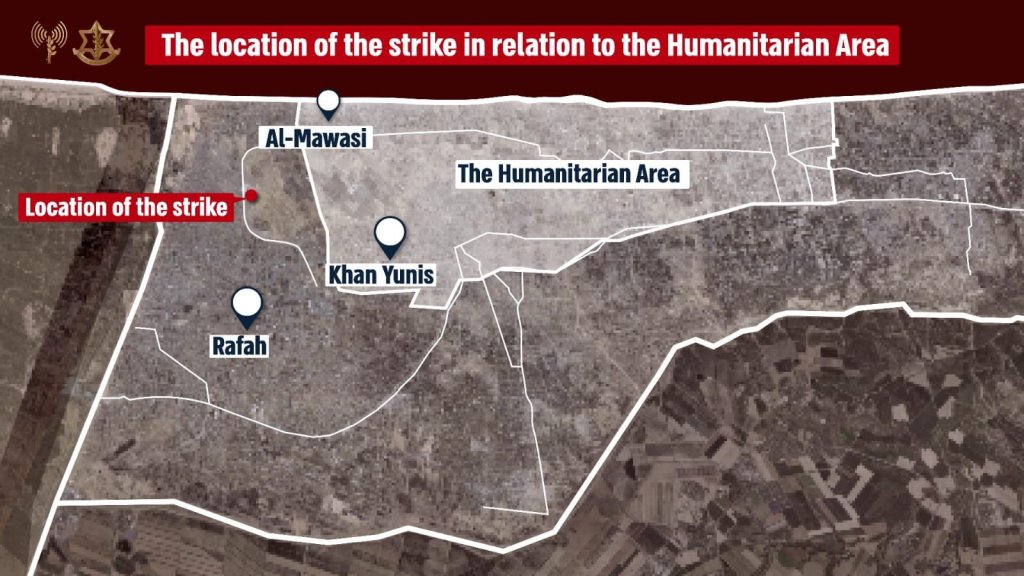
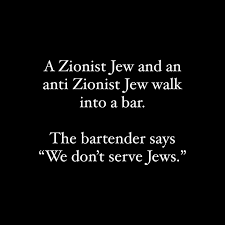
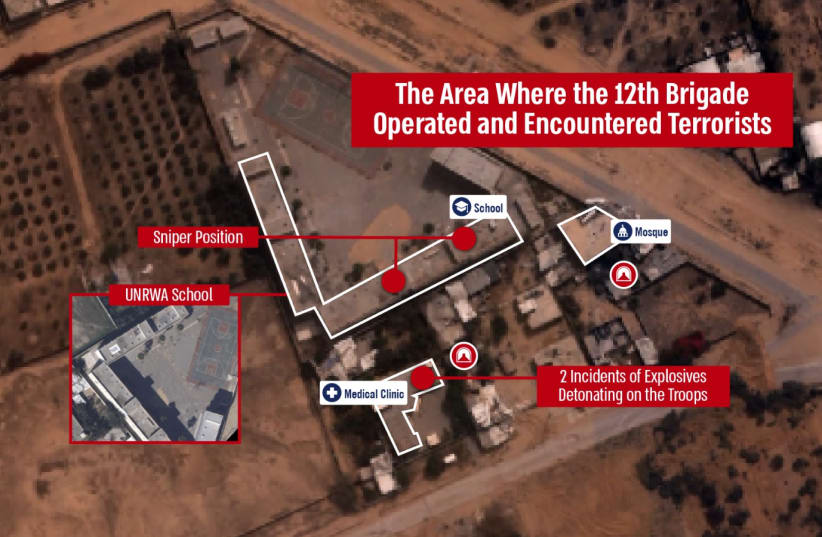
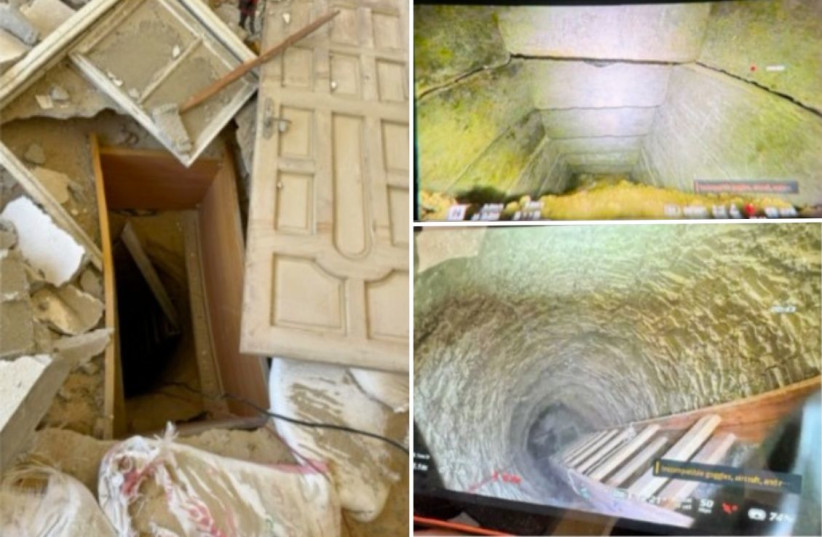
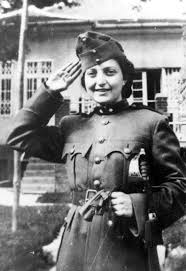
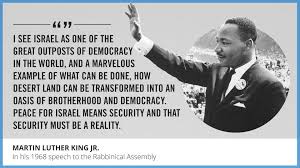
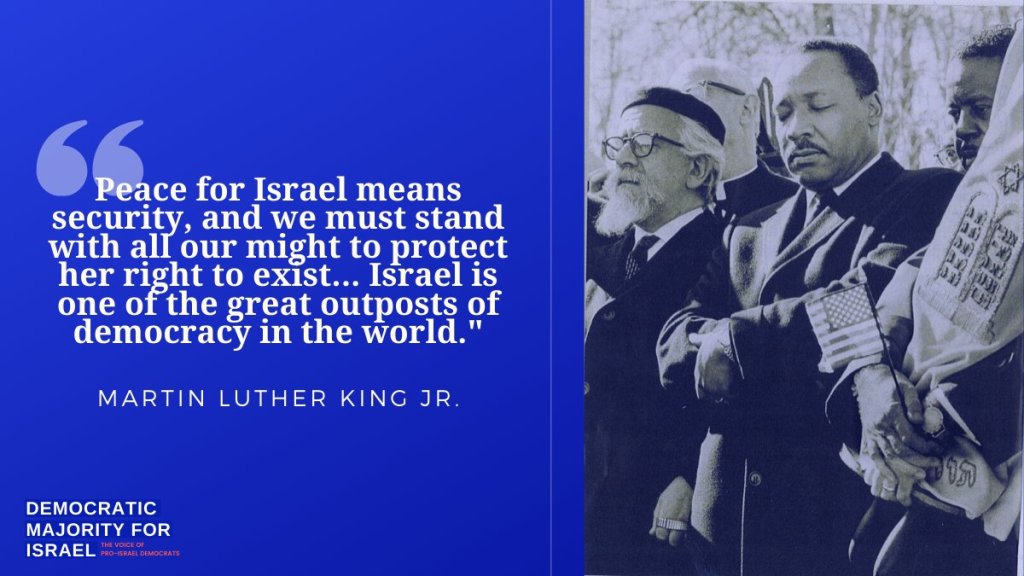
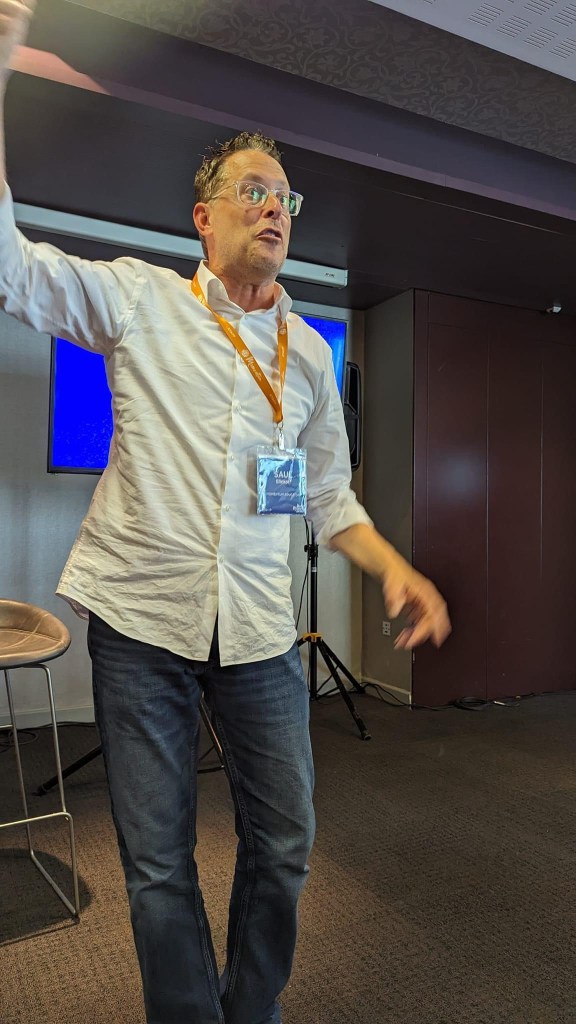

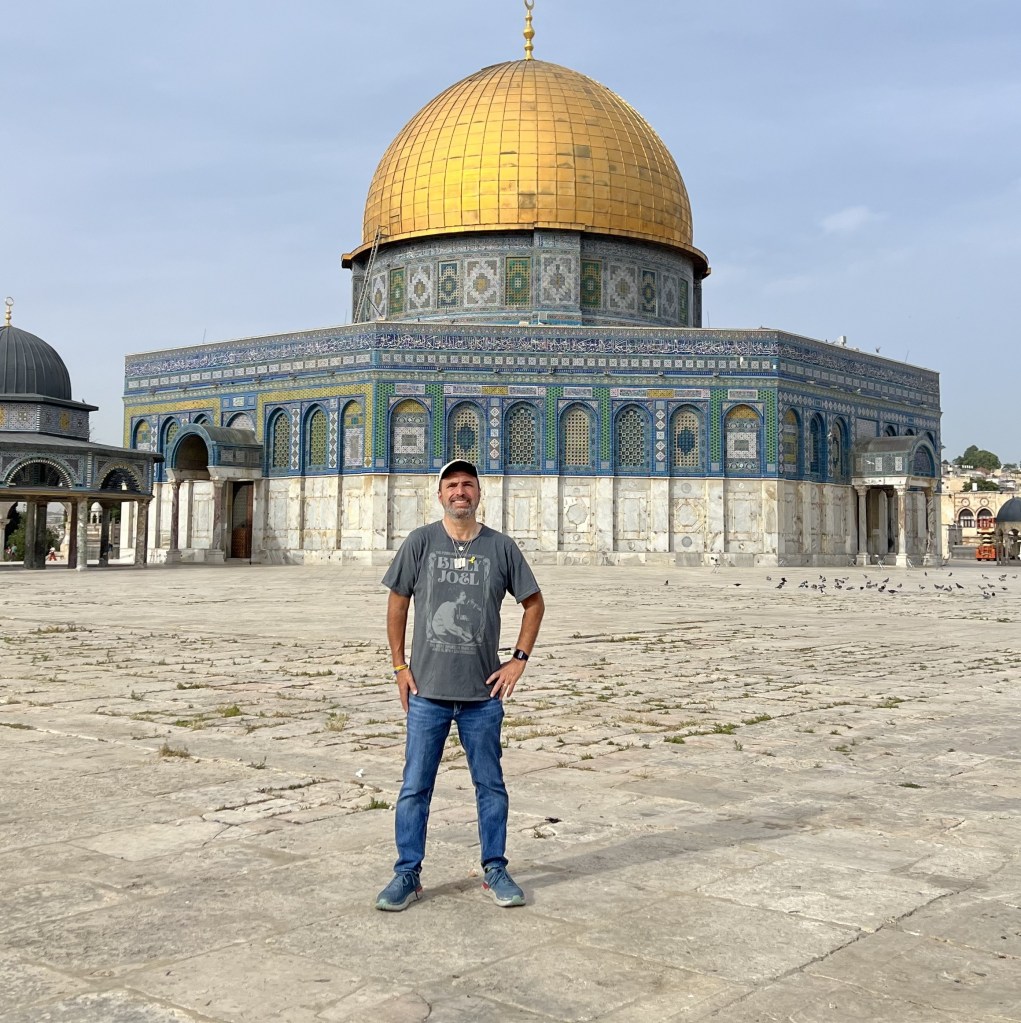
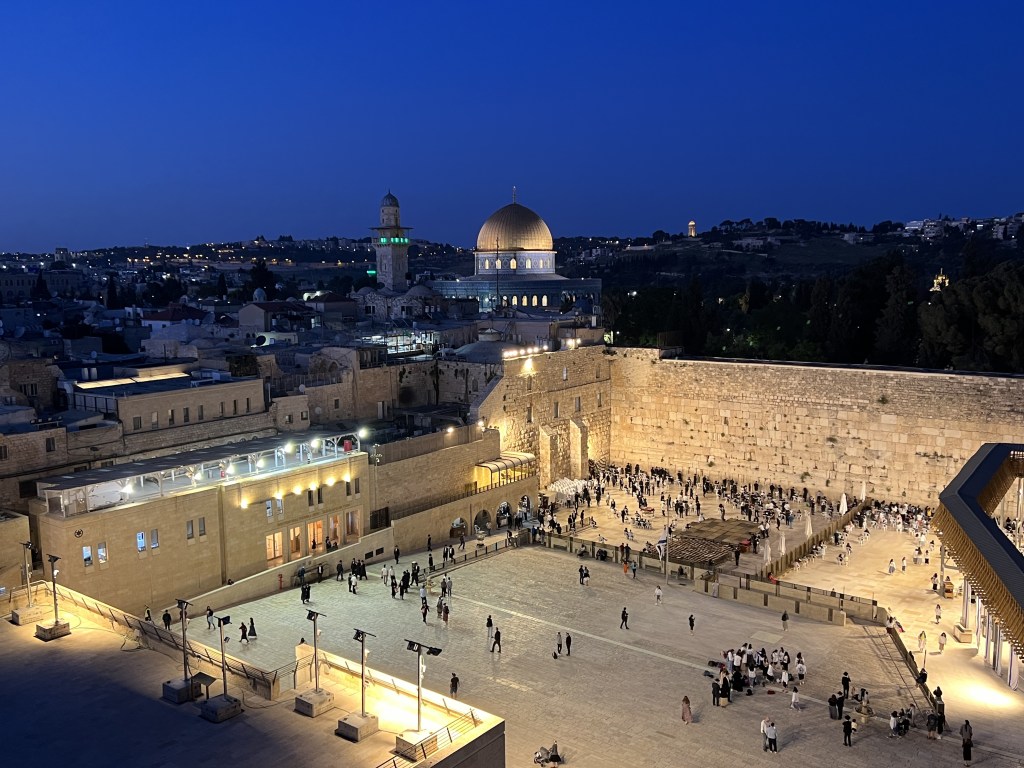

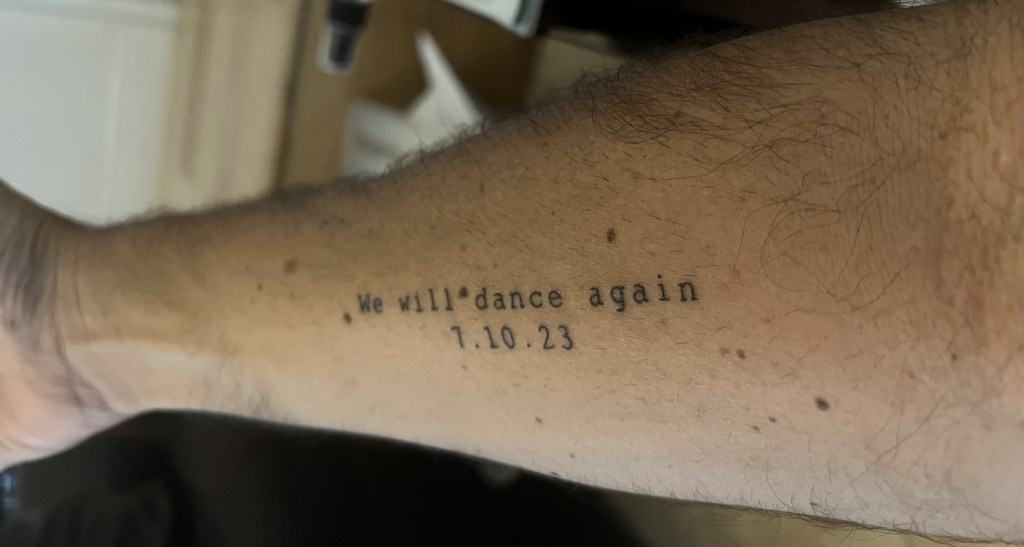
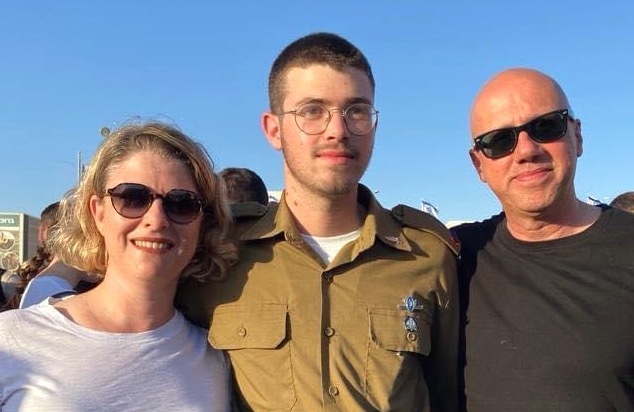
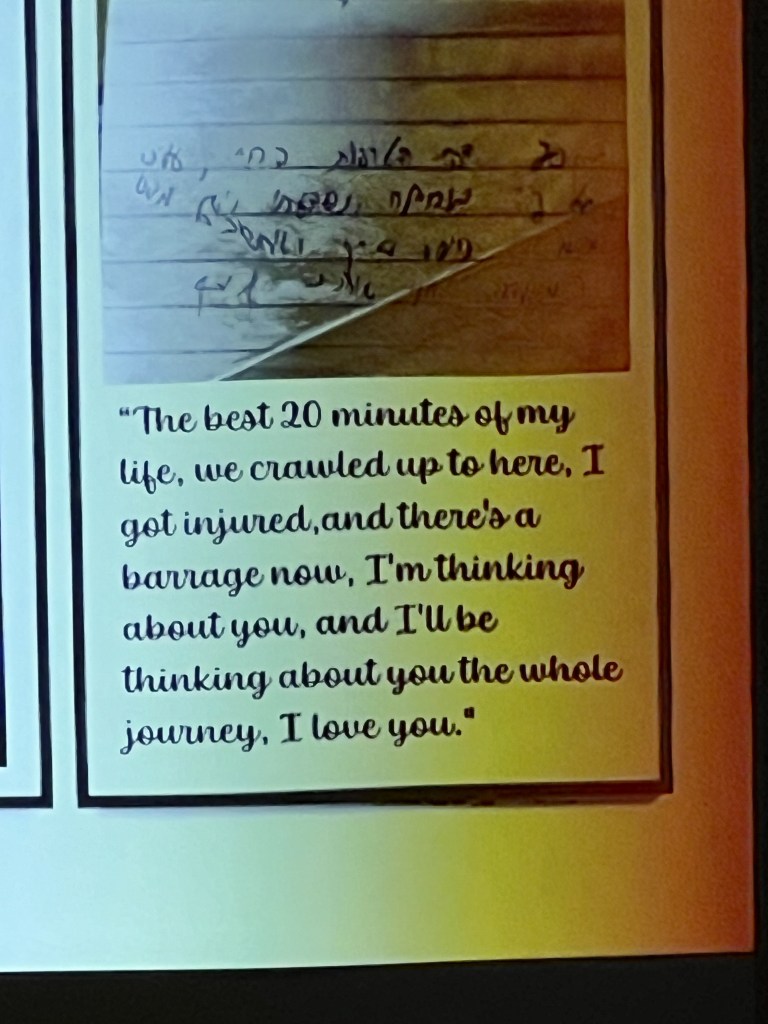
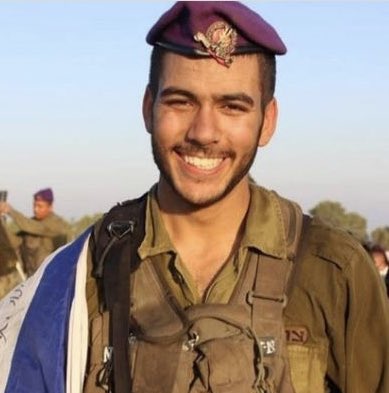

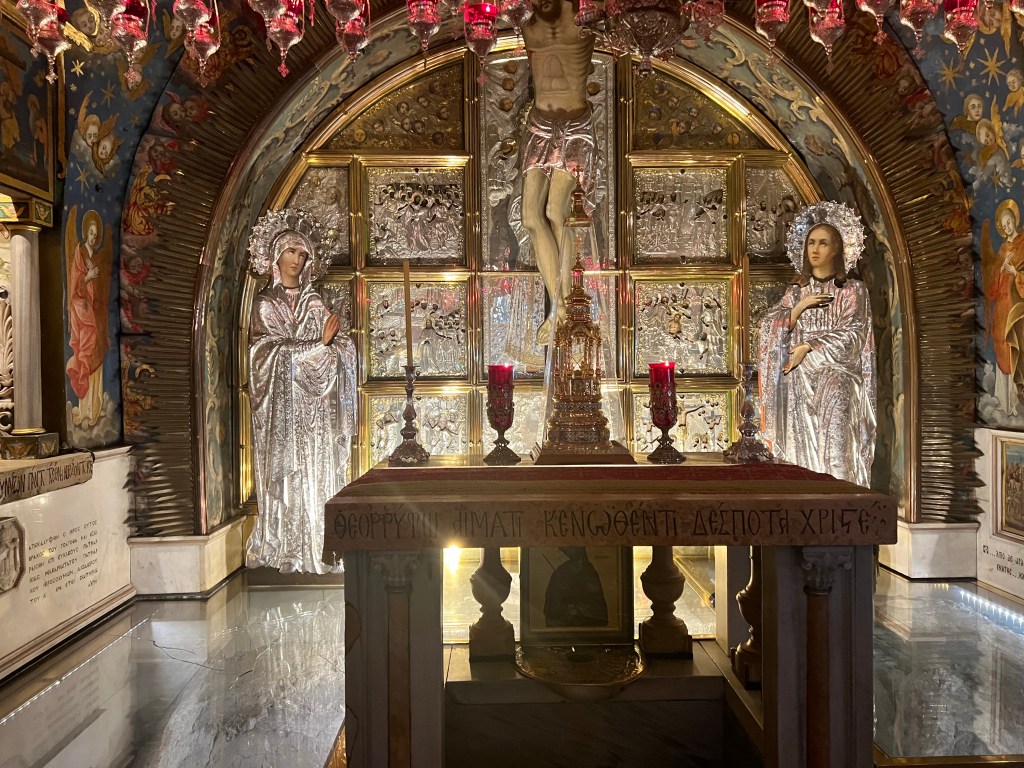
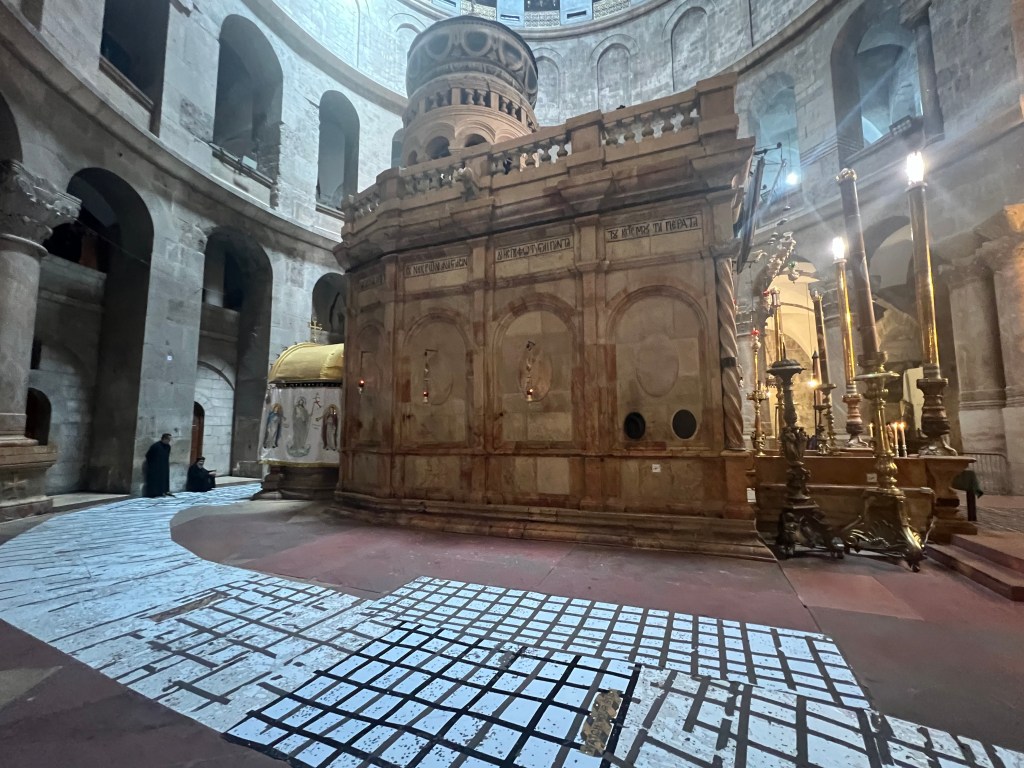
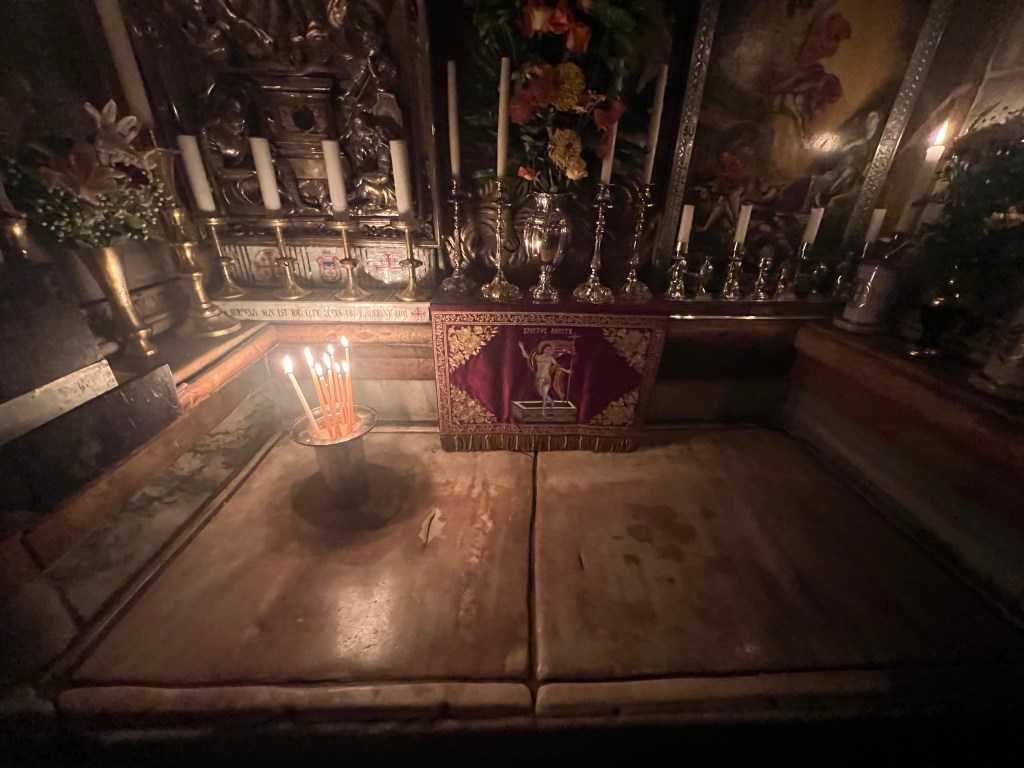
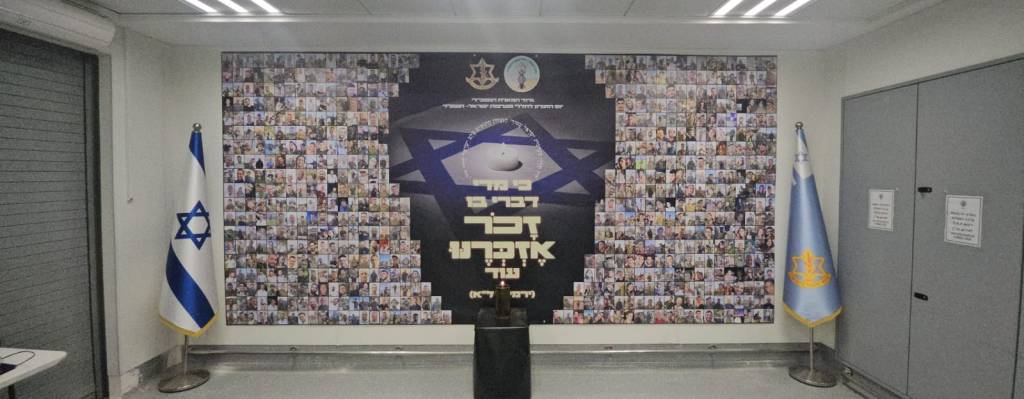
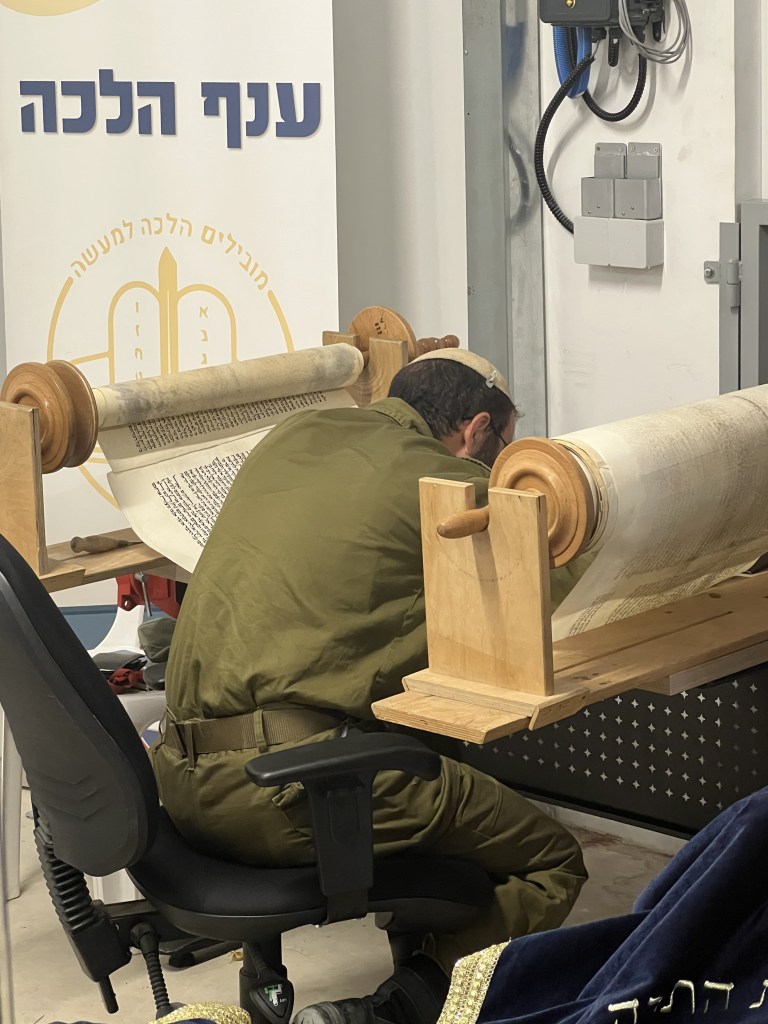
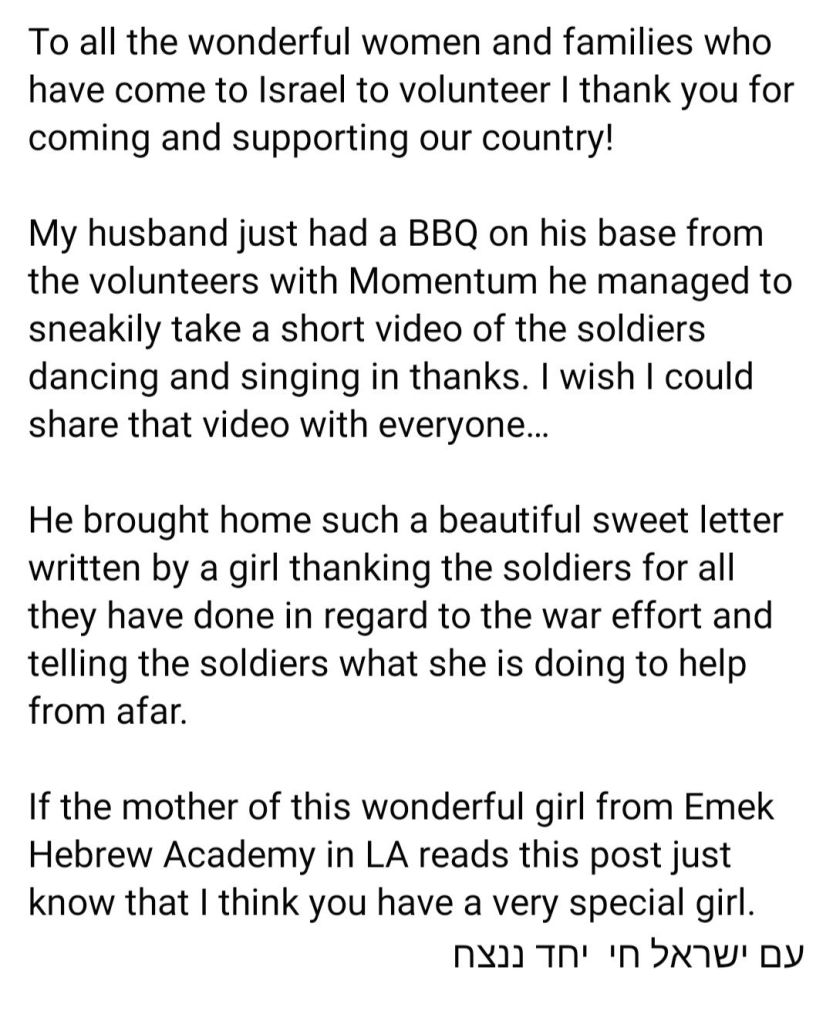



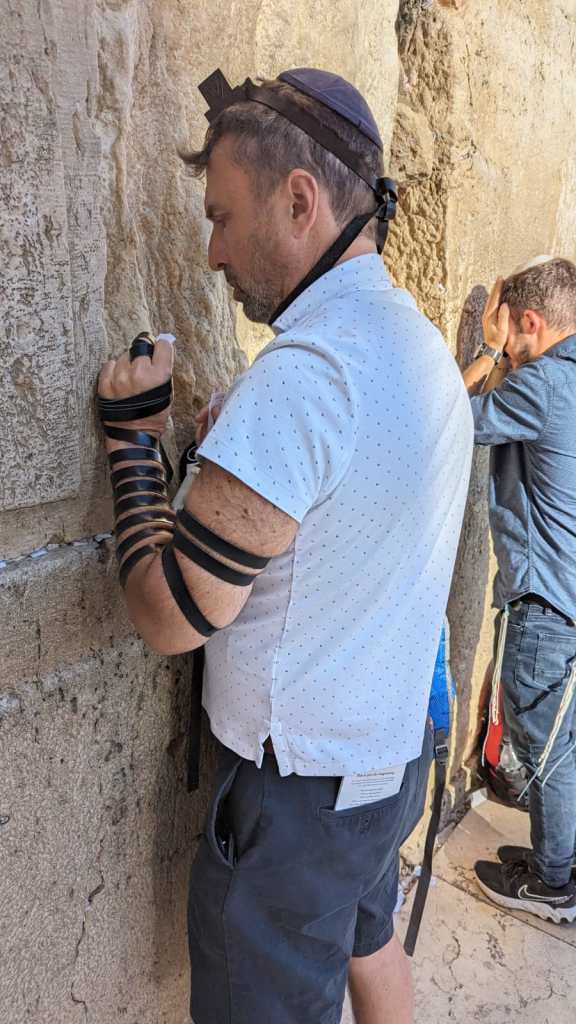

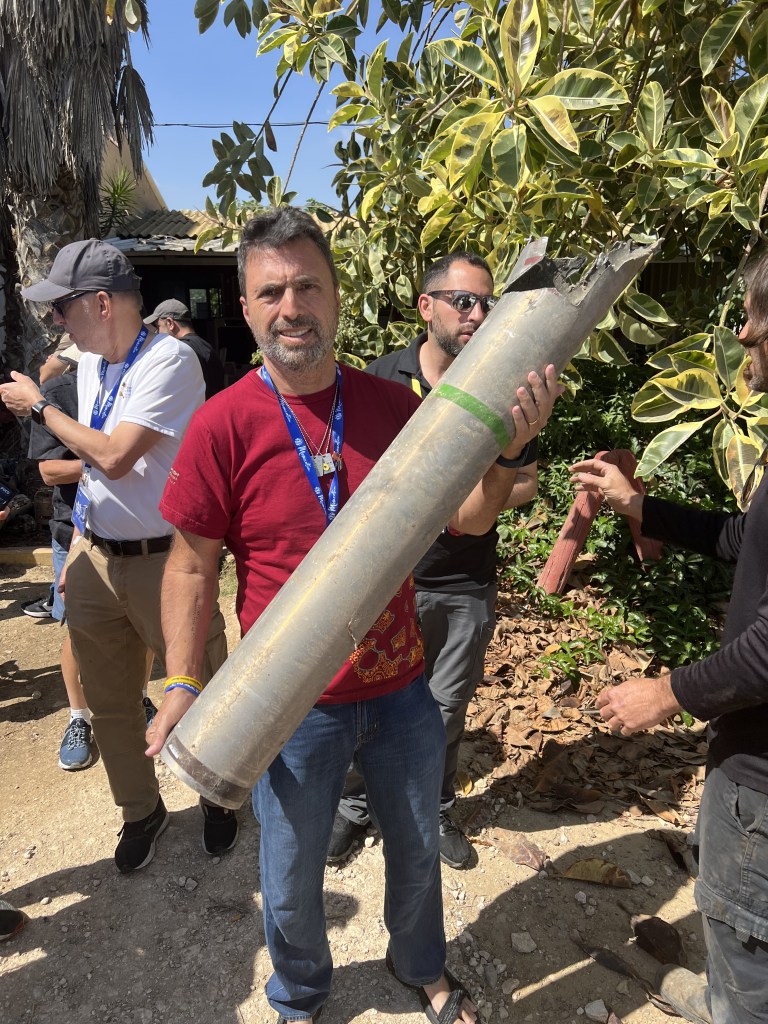
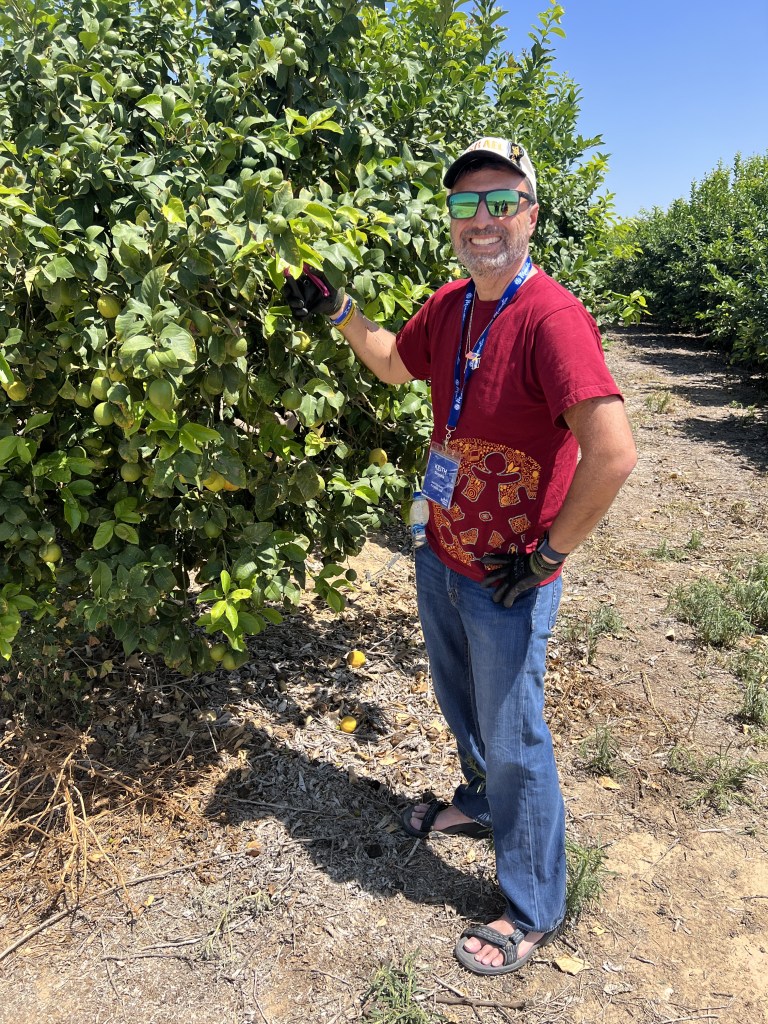

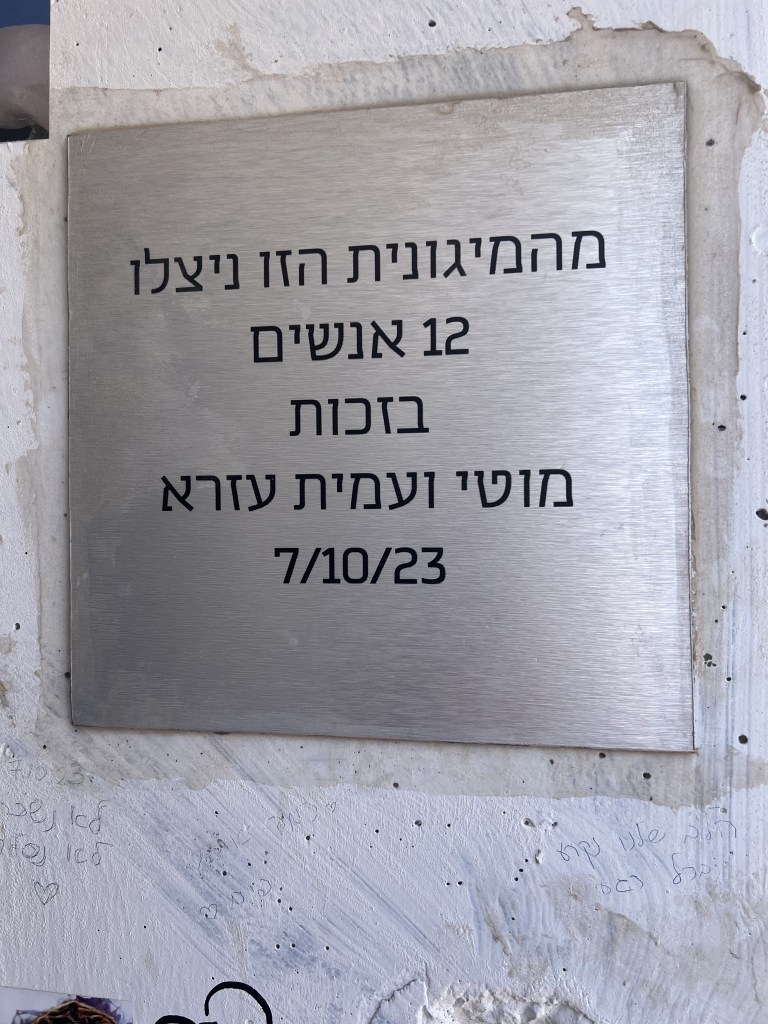
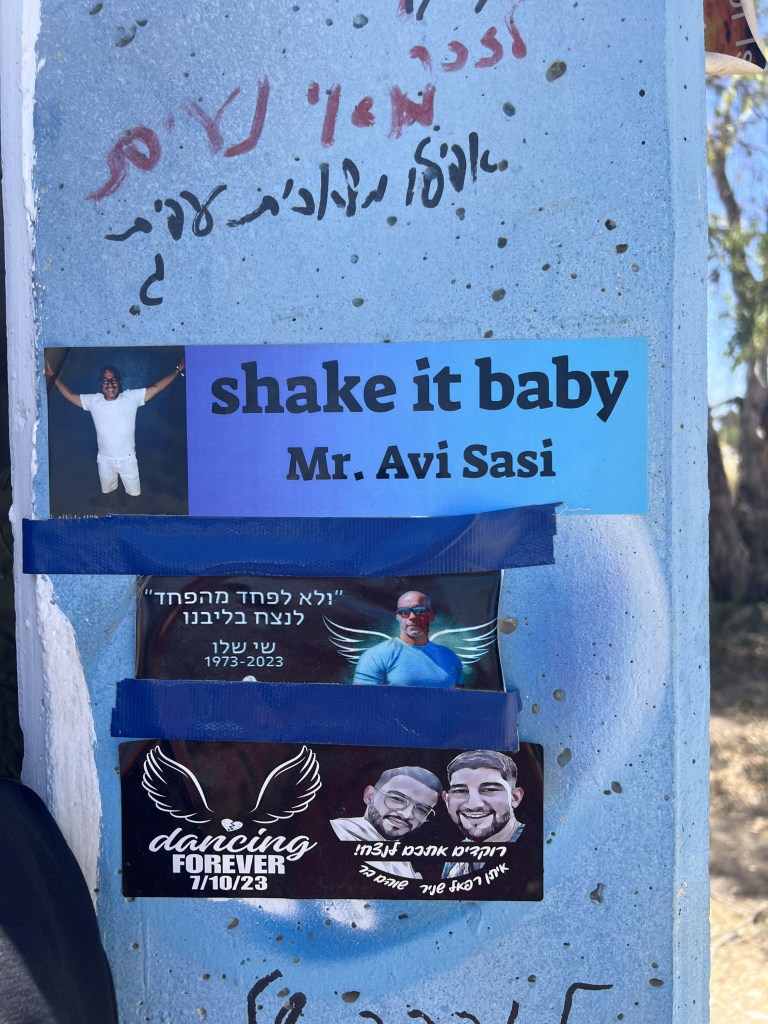

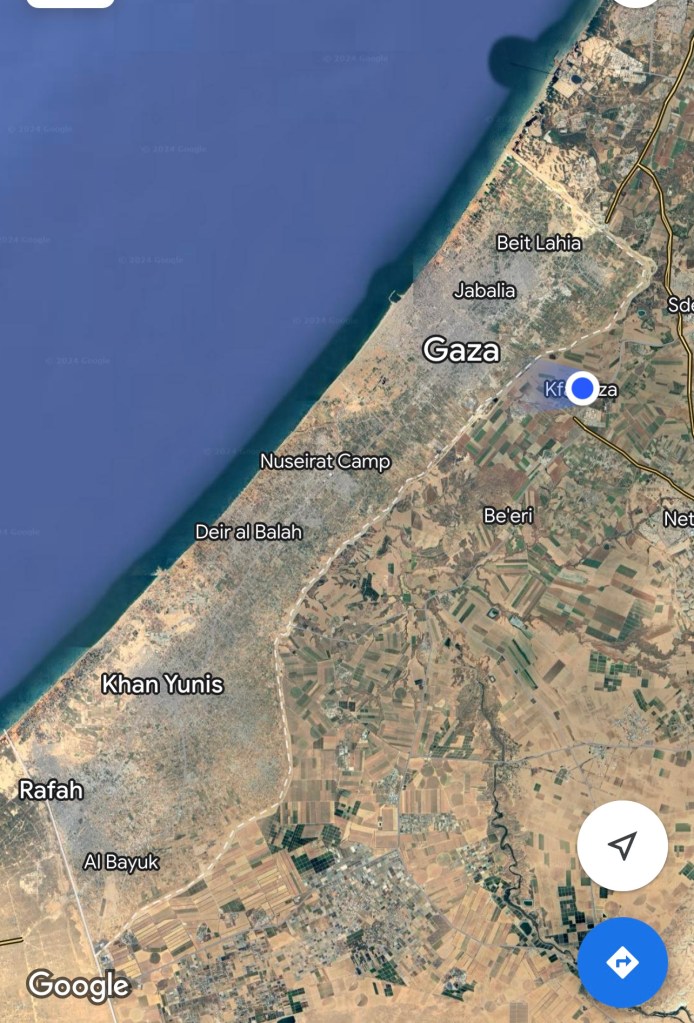
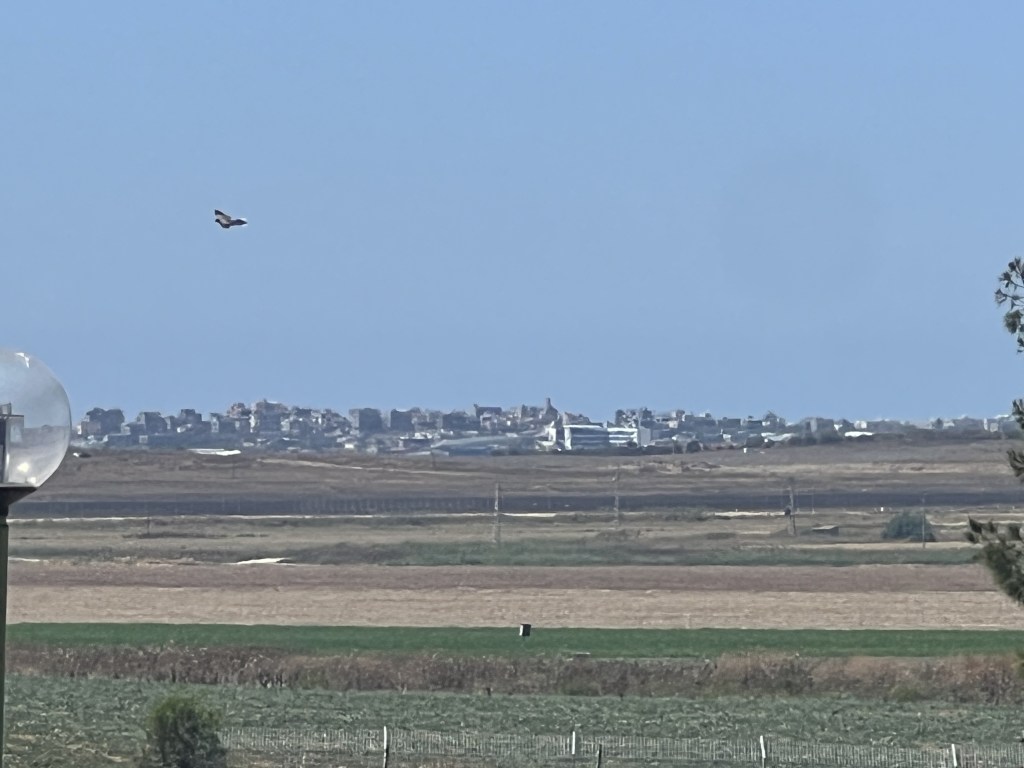
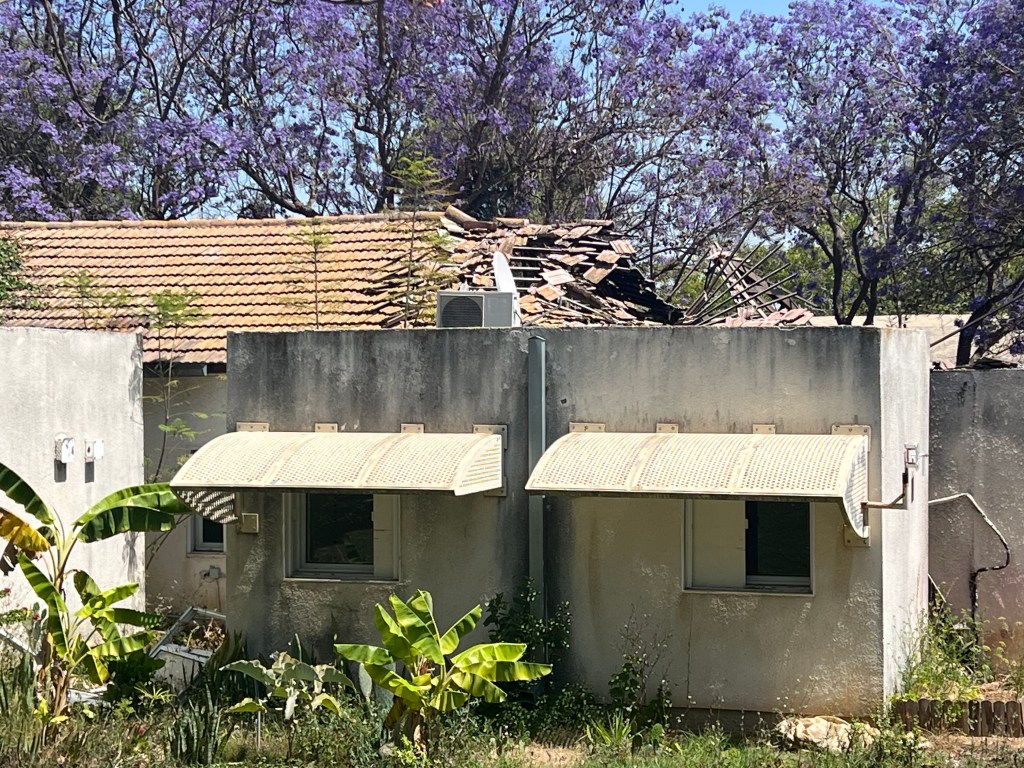
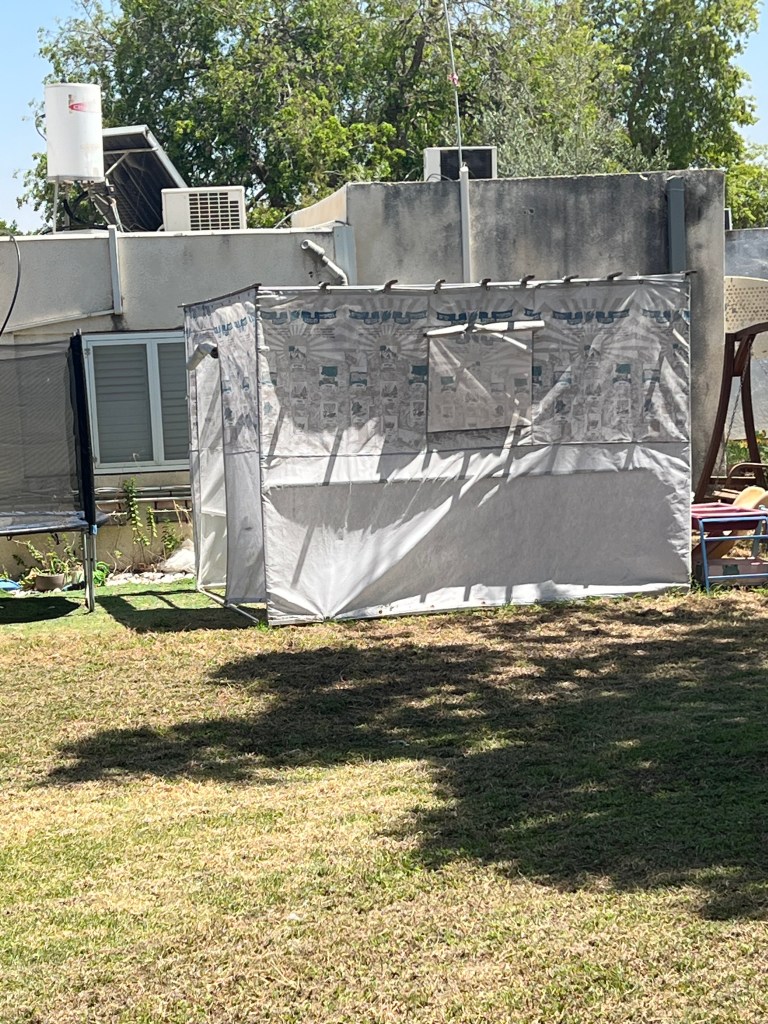
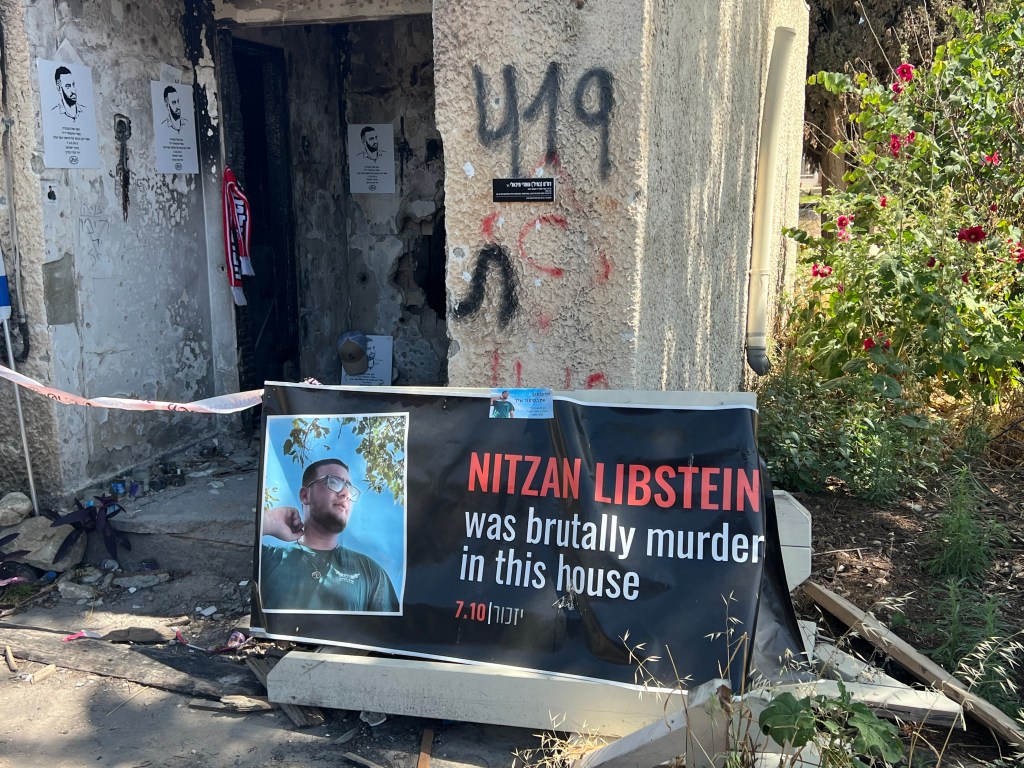

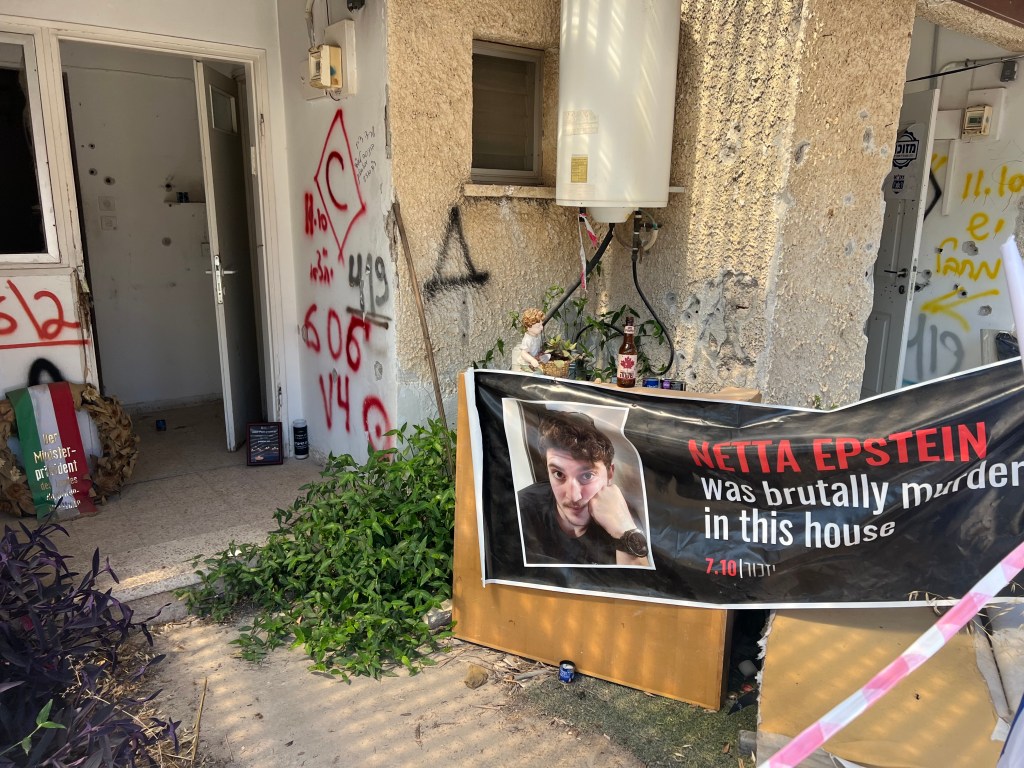
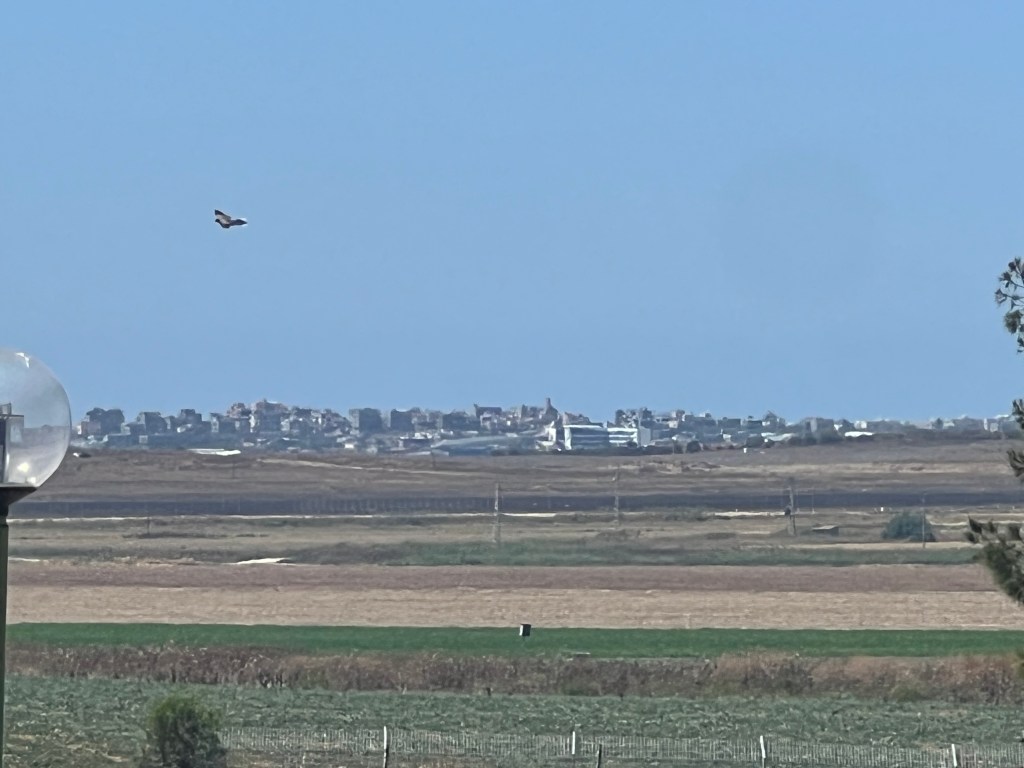

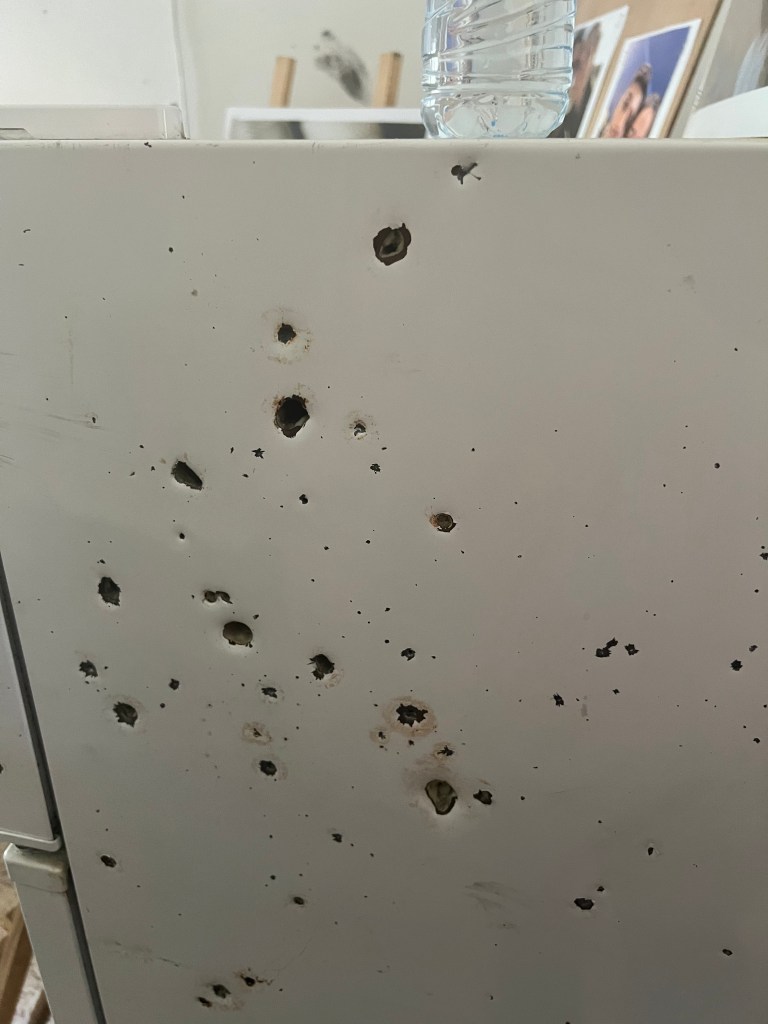
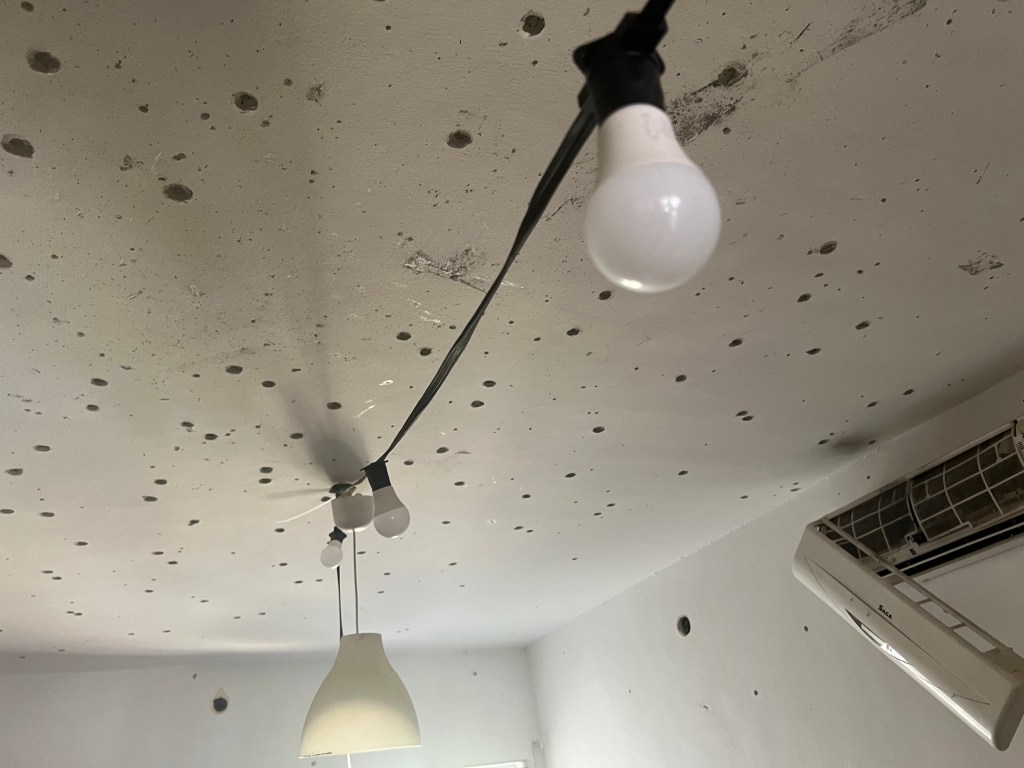
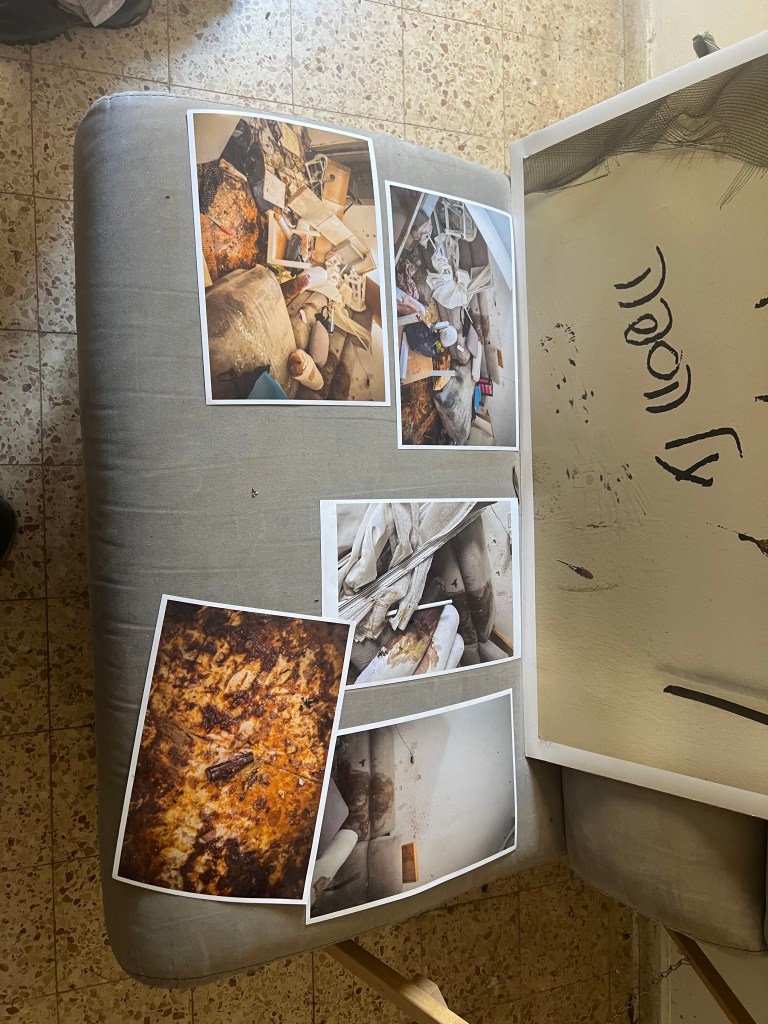
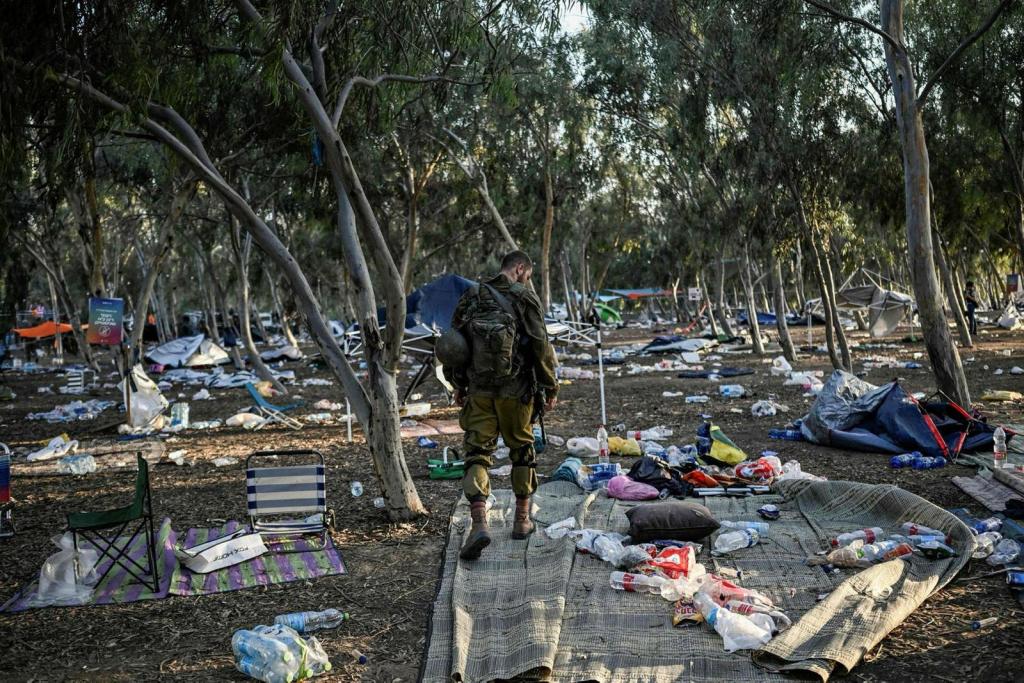

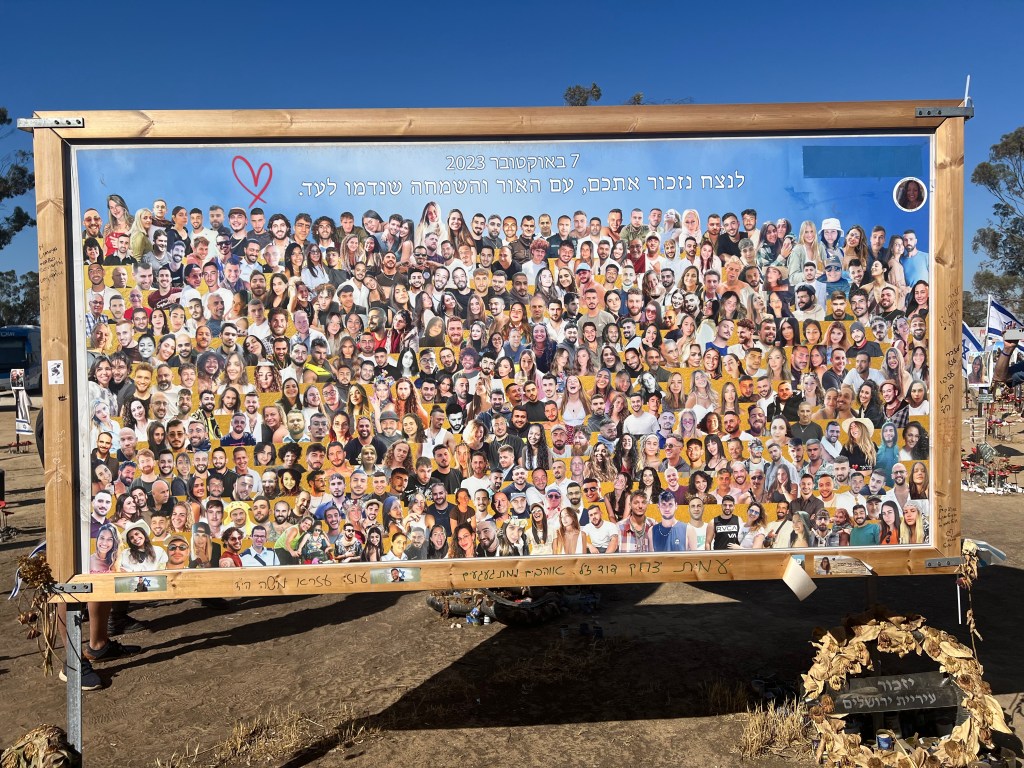
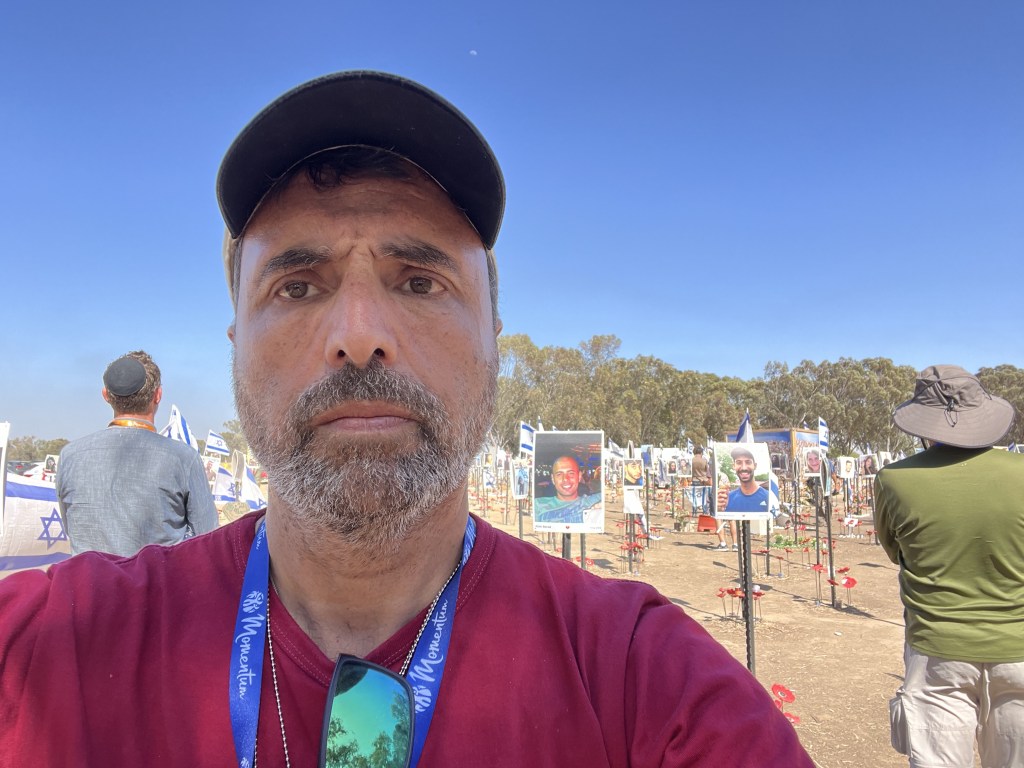
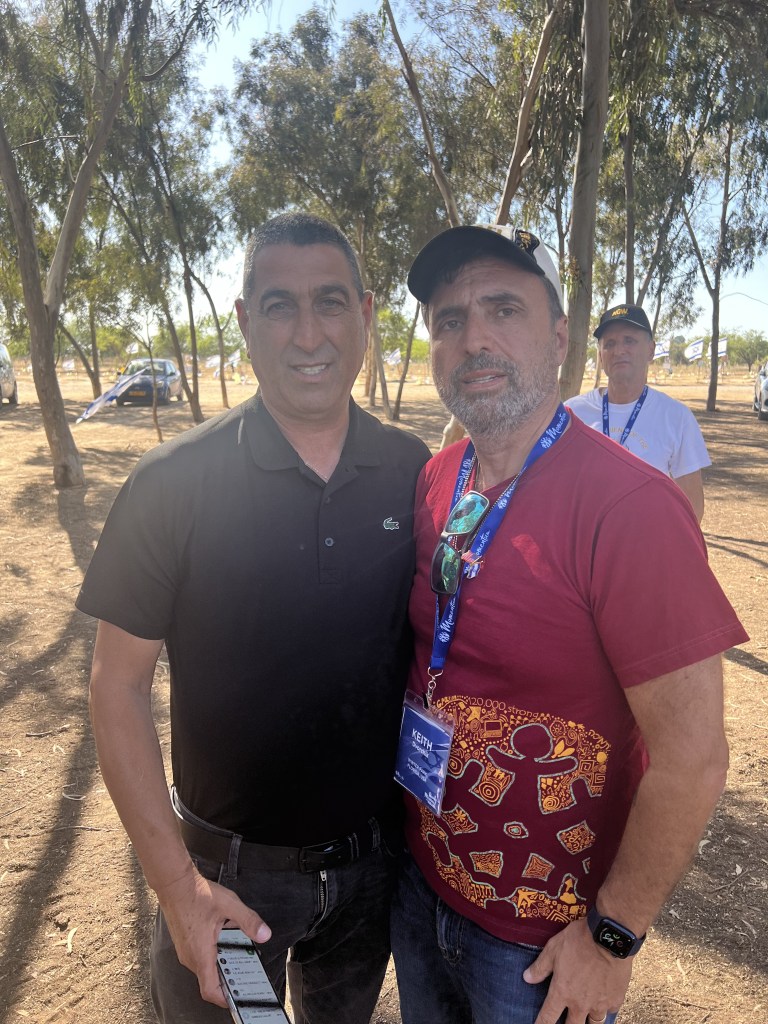

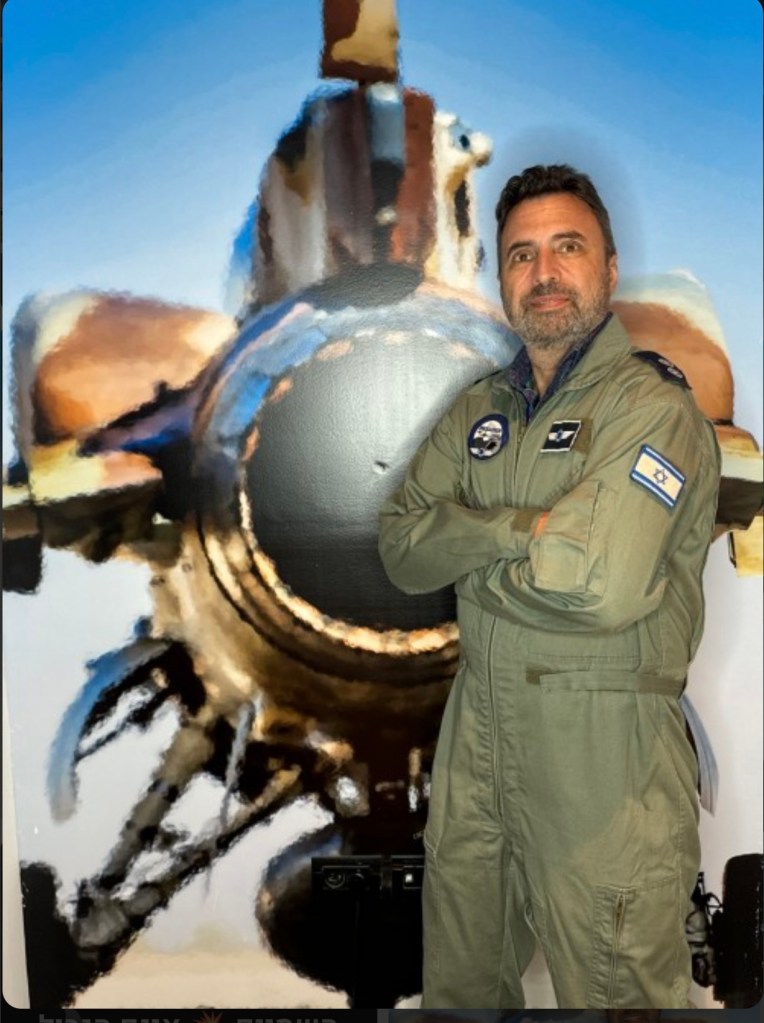
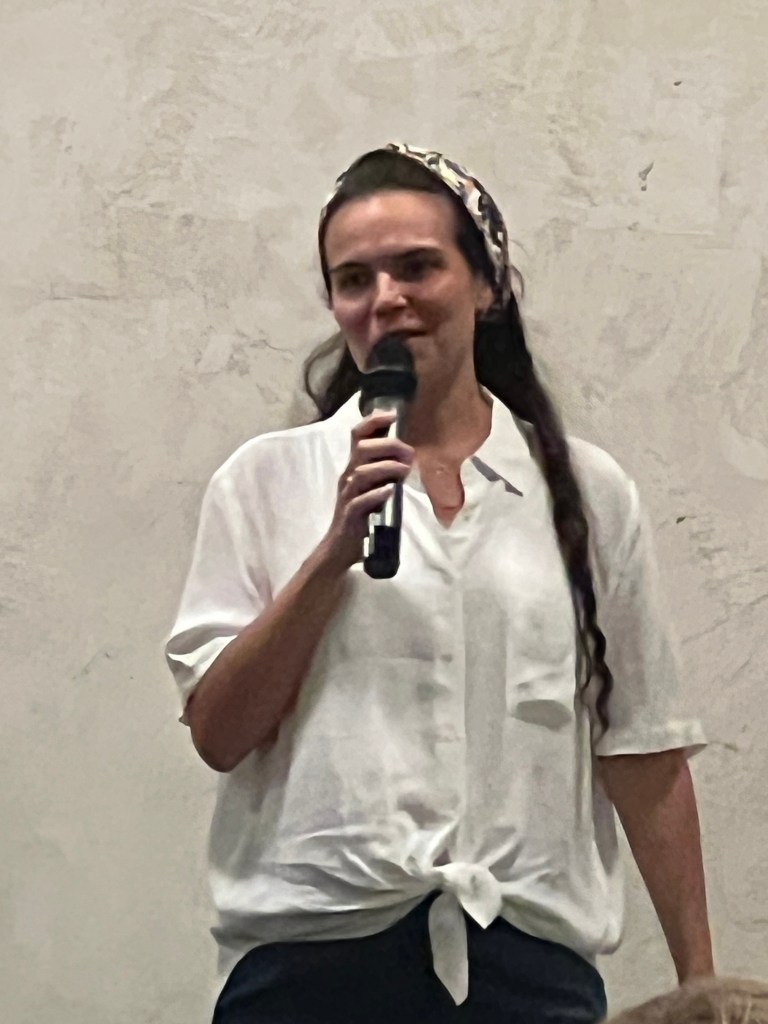

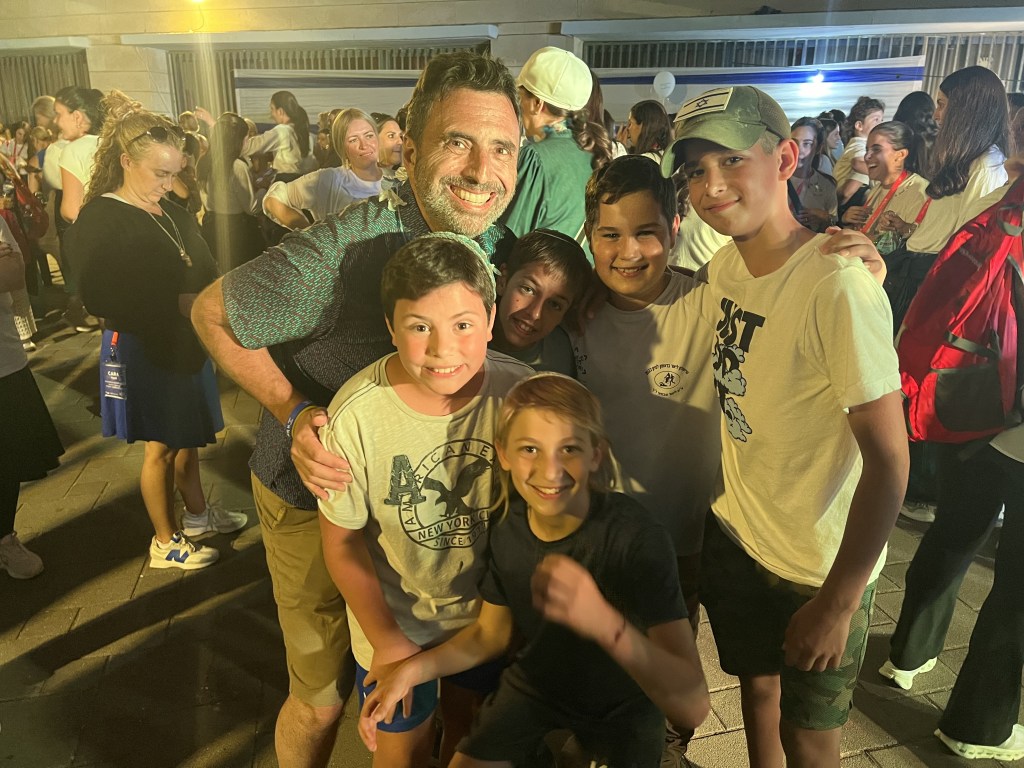
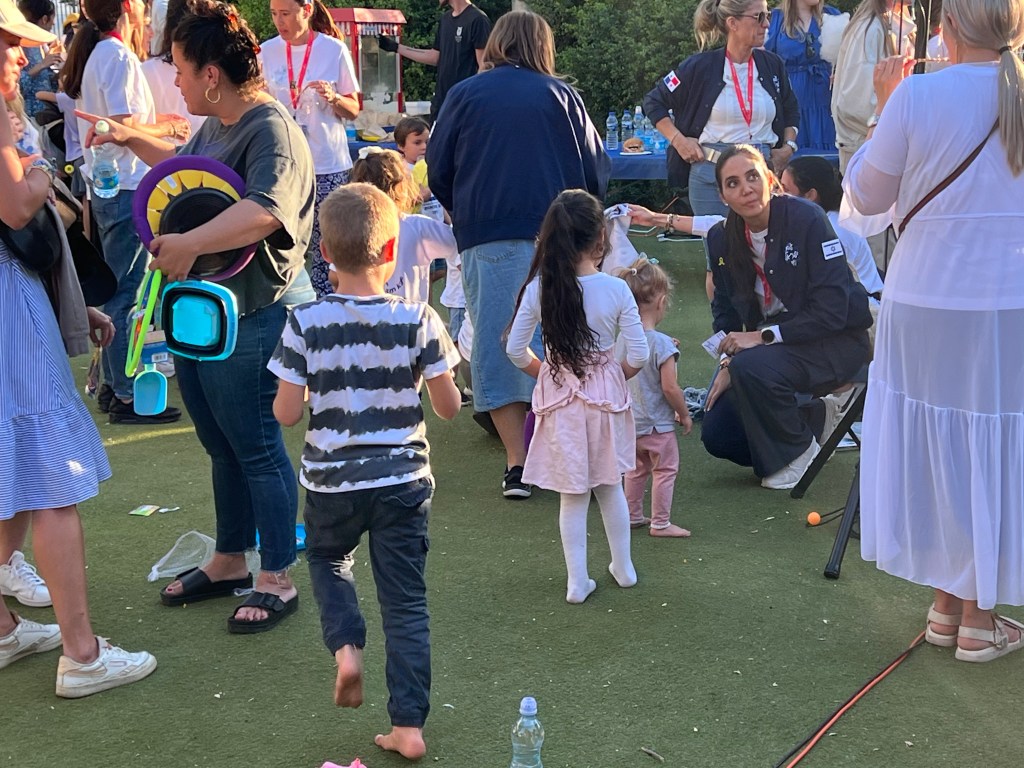
 keithdblog