Speaking out against Jew hatred

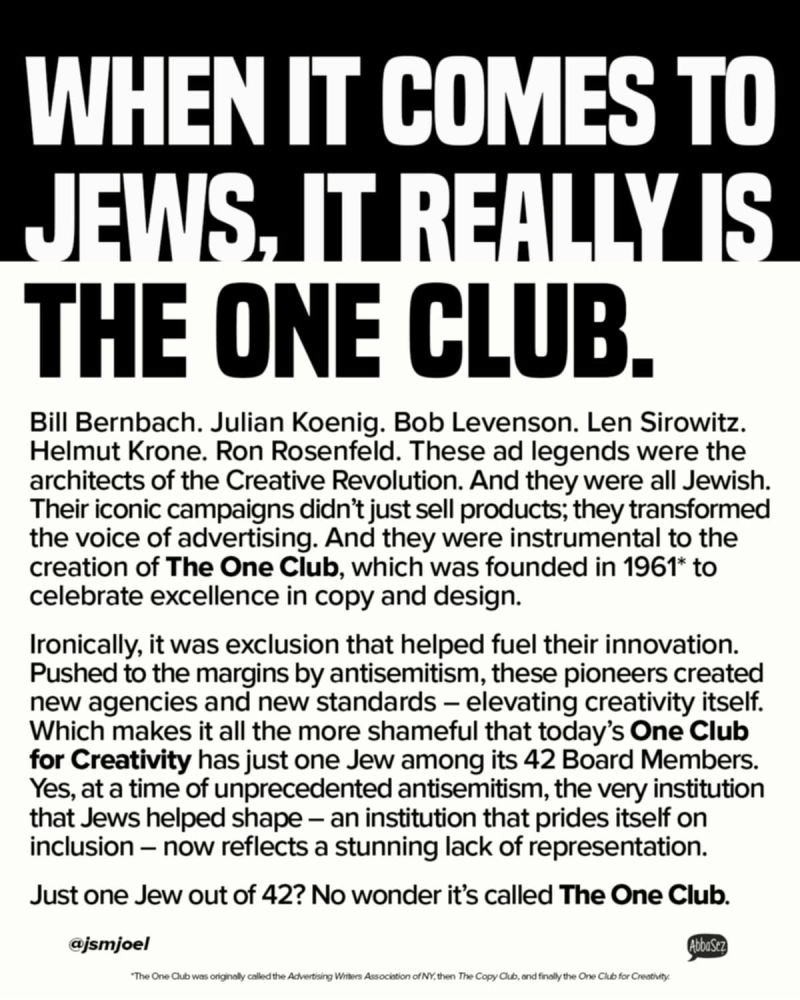
A college friend forwarded me this post on LinkedIn by a friend of hers from childhood. In her own words, “I grew up w Joel. He is the best in his profession. He composes music for ads & commercials. He wrote the music for 7 commercials that ran during this years Super Bowl. He is a giant in the industry.” When I read his post I was horrified and inspired. I was angry and I was proud. I could relate. It’s personal. For all of us.

Last year, I was honored to be named Jury President for Music & Sound Craft at the 2025 The One Club for Creativity. I’ve supported The One Club for decades as a sponsor, advocate, judge, and multi-award winner. JSM has earned dozens of One Show Pencils and topped the One Show Global Creative Rankings both globally and domestically.

Shortly after accepting, I received an email from the CEO and Board stating that my personal social media posts unapologetically condemning antisemitism and supporting the Jewish people were “too much” and “triggering” to some at the Club. They said such posts would not be “tolerated.” They objected specifically to my use of the word eradicate when describing what I hoped would happen to the terrorists of October 7. They didn’t like my post celebrating the IDF’s elimination of Sinwar, the architect of 10/7, who raped, mutilated, burned babies, and held hostages. My expression of joy in his demise, they said, was also “too much.”

I refused to accommodate and resigned.

They knew my nephew serves in the IDF. This isn’t theoretical. It’s personal. My values, my family, my identity, my people were under attack. Again.

In a follow-up call, TOCC leadership asked what they could do to keep me. I requested one simple thing: a specific, standalone statement condemning antisemitism—like they’ve done for BLM, LGBTQ+, AAPI, Ukraine, and others. Instead, they sent a vague, diluted message grouping antisemitism with racism, xenophobia, homophobia, Islamophobia, etc., scheduled to run on Holocaust Remembrance Day.

I told them how tone-deaf and offensive that was. They refused to revise it. And then… said nothing. Complete silence. No statement at all. No support for Jewish creatives in our industry. No condemnation of antisemitism.

I also pointed out that only 1 of 42 board members is Jewish, despite generations of Jewish creatives who helped shape this industry. I can name at least 100 deserving Jewish creative leaders off the top of my head. That silence and lack of representation speaks volumes.

I formally cut all ties. I won’t support any organization, especially in my industry, that refuses to condemn antisemitism. This was a choice. And a refusal.

Many urged me to stay quiet. That going public might hurt the business I’ve built over 35 years.

I can’t.

I will not be silenced. Not now. Not ever. And certainly not by an ad awards show that acts as moral authority on every issue and condemns all forms of hate, except Jewish hate by consciously and purposely remaining silent while Jews are hunted, threatened, and murdered. Again.

I was a Jew before JSM. I’ll be a Jew after JSM.

Am Yisrael Chai.

Joel isn’t the only one who faces this type of Jew hatred, discrimination, and expectation to just accept it. It happens to most of us every day and we don’t even see it or realize it. Some of us even think it’s acceptable because we have ‘privilege’. We cannot stay quiet in the face of this hatred. We cannot stick our heads in the sand and hope that it will just go away or leave us alone. History has shown us that it never does. It comes for us all in the end. We must fight back. We must stand up and speak out. Staying quiet isn’t an option. Joel isn’t. Neither should any of us.
Britain suspended free trade talks with Israel and the EU said it will review whether Israel is violating the human rights clause of the EU-Israel Association Agreement. France, the U.K. and Canada threatened  sanctions against Israel. All because Israel refuses to let Hamas, a terrorist organization still holding Israeli hostages, stay in power to murder, rape, and kidnap more Israelis. They think we are the same Jews of the past who meekly hid and accepted our fate. They are 100% wrong. Prime Minister Netanyahu spoke up powerfully about this today.

“The world is telling us to end the war,” Netanyahu said, in the first press conference he has held in Israel since December. “I am prepared to end the war according to clear conditions: Hamas lays down its weapons, steps down from power, returns all the hostages, Gaza is demilitarized and we implement the Trump plan” to relocate residents of Gaza. Whoever is calling for us to end the war is calling for Hamas to stay in power,”

Love him or hate him, Bibi won’t just accept our fate as Jews to be that of victims. Neither should we. Joel showed us how to stand up and speak out. Bibi showed us how to do it. The question is, what will you do? Will you be like Joel and stand up and speak out despite the personal risk? Will you stand up to Jew hatred in the face of your ‘friends’ like Bibi is doing to the UK, France, Canada, and the EU or will you fold because they are your ‘friends’?

The choice is yours. Take the risk now or wait for the inevitable that has happened over and over again for thousands of years? I know what I am doing. I’m going to stand up and speak out. I’m going to fight Jew hatred publicly, no matter the personal cost.

A love for life – we will survive

The world seems to get crazier and crazier. The stock market plummets and then returns. Tariffs are high and then are gone, delayed, or small. The only constant seems to be Jew hatred, lies, and the hostages being ignored by the UN, Red Cross, and the world.

May 15th is the day of Israel Independence on the secular calendar. 77 years ago, David Ben Gurion stood in Tel Aviv, in what is now Independence Hall, and declared Israel to be a State. Every time I stand in Independence Hall, look at the seats set up as they were that day, and listen to Ben Gurion’s voice declaring the State, I get chills.

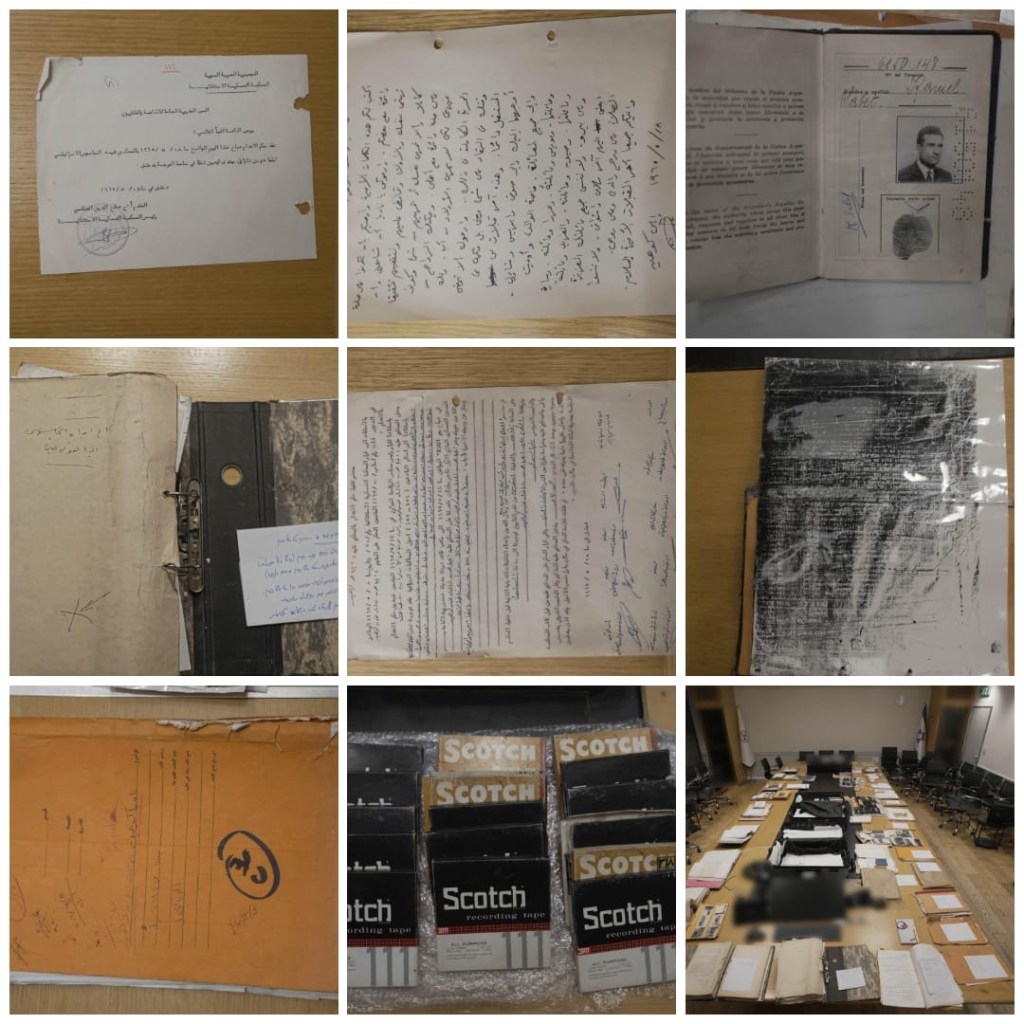
That declaration by Ben Gurion was a statement about the Jewish love of life. Of how we never forget. Of how we place life ahead of everything. This week, there were two examples of this. It was recently announced that Israel had recovered a number of documents and items from Syria that belonged to Eli Cohen. Captured as a spy by Syria and hung as punishment, Cohen is one of the great stories of Israel. I knew about what he did long before I knew his story. The actor Sasha Baron-Cohen played him brillantly in the Netflix mini-series, The Spy.

Top row, center: Cohen’s final will, handwritten in Arabic just hours before his death on May 18, 1965. Addressed to his wife Nadia and children, the letter is a heartfelt farewell filled with guidance, dignity, and emotional clarity.

Top row, right: A forged Argentine passport issued under the alias Kamel Amin Thaabet, the identity Cohen used to infiltrate the highest levels of the Syrian regime.

Middle row, right: The official death sentence, signed by Syrian military judges, condemning Cohen for espionage.

Bottom row, center: Scotch-brand audio tapes, used by Syrian intelligence to record Cohen’s interrogations and radio transmissions

While we have now retrieved more than 2,500 documents and artifacts related to Eli Cohen, we still don’t have his body back. Executed in 1965, 60 years ago, we have never forgotten him or the desire to get his body back.

This past week, the IDF and Mossad were able to recover and return the body of Sergeant First Class Tzvika Feldman. 43 years after he was killed in the Battle of Sultan Yacoub during the First Lebanon War. Syrian soldiers transferring his body to Syria until this past week when his body was returned to Israel. We love and treasure life. We don’t ever forget.

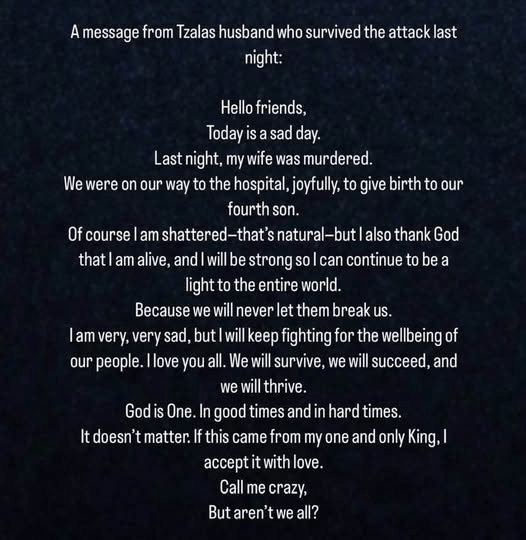
This week, Tzeela Gez and her husband Hananel, left their home in the northern West Bank community of Bruchin to head to the hospital so she could give birth to their fourth (4th) child. A terrorist shot at their car, wounding them both. A few hours later, after an emergency C-section to deliver their newborn son, Tzeela died.

The media barely covered this brutal attack. They don’t cover the violence against Israelis in the West Bank. They don’t cover the rockets that are launched at the citizens of Israel. They don’t address or condemn the ballistic missiles fired by the Houthis from Yemen targeting civilians. It is up to us to remember, to never forget. It is up to us to ensure that the souls of Eli Cohen, Tzvika Feldman, and Tzeela Gez are never forgotten. It is up to us to ensure that future Hersh, Carmel, Alex, Eden, Or, and Almog’s know who they are named for and what their obligation is to honor those they are named for.

The message below from Tzeel’s husband Hananel is the essence of Judaism. We have never and will never let them break us. We will fight for our people no matter how sad or downhearted we are. We will survive, succeed, and thrive under any and all circumstances.

Our effort to survive, succeed, and thrive means that we fight for truth. Even when it is inconvenient. Even when it is difficult. Even when the world doesn’t want to see, hear, or recognize it when it’s right in front of their face.

A friend of mine shared this piece about the history of the term Nakba that was written by Adam Louis Klein. It is a fascinating history that shows the power of the media and of repeating a lie long enough and loud enough that people think it is the truth

The term Nakba, now central to Palestinian national memory, was coined by Constantin Zureiq, a Christian Arab nationalist and key figure in shaping modern Arab nationalist ideology. As detailed in a recent article in Fathom Journal by David Szeftel, Zureiq was part of an intellectual movement in the 1930s and 40s that openly admired fascist and even Nazi models of anti-Western power, seeing them as templates for Arab revival.

When he introduced Nakba in his 1948 book Ma’na al-Nakba (The Meaning of the Disaster), it did not refer to Palestinian suffering or displacement. It referred to the Arab League’s failure to destroy the newly declared State of Israel and the humiliation of Arab armies. It was a political lament over defeat, not a humanitarian reflection on refugees.

Only later was it linked to the “right of return” for Palestinian refugees, a policy heavily promoted by the Arab League and eventually formalized through the United Nations. But this “right of return” wasn’t about refugee welfare—it became a political tool designed to prevent Israel from continuing to exist as a Jewish state by flooding it demographically.

This strategy also led to the unprecedented perpetuation of refugee status across multiple generations (see Einat Wilf’s work on this). Unlike any other refugee situation in history, Palestinians were deliberately kept in a state of statelessness by Arab regimes, denied full citizenship rights even in places like Egypt and Jordan, which directly controlled Gaza and the West Bank after 1948. In effect, the Arab League actively denied Palestinians the right to rebuild their lives in order to weaponize their suffering and make Israel appear impermanent and illegitimate.

Over time, the meaning of the Nakba shifted. It became less about the Arab world’s military failure and more about constructing a permanent Palestinian grievance narrative. The historical record was rewritten to erase the Arab invasion and rejection of the UN’s two-state partition plan, portraying the events of 1948 instead as unprovoked Israeli aggression. This narrative also conveniently erased Jordan’s displacement of Jewish communities from the West Bank, the appropriation of their land and property, and suppressed the mass dispossession of Jewish communities across Iran and Arab countries after 1948.

Eventually, the displacement of Palestinians was rebranded as a case of “ethnic cleansing” and “settler colonialism,” rather than what it historically was: the tragic outcome of a war of independence triggered by the Arab world’s invasion of the newly declared Jewish state—though it’s important to acknowledge that some forced expulsions of Palestinians did occur amidst that war.

In short, Nakba has evolved from a term describing the Arab world’s military failure to a political myth that erases historical complexity in favor of a one-sided narrative of perpetual grievance.” 

I’ve been the Aida ‘refugee camp’ in Bethlehem. It is a city. They live in apartments, not tents. They have schools and community centers. Their schools and community centers teach them hate. In 2019, I met with and talked to the head of their community center. He bragged about the suicide bomber that he helped raise and create. Openly. Publicly. The world loves their Jew hatred and they will continue to use whatever and whoever they can in their effort to eliminate us. From the Assyrians to the Babylonians to the Persian to the Greeks to the Romans to the Byzantine empire to the Spanish Inquisition to the pogroms in Russia to the Nazis in the 1930s and 40s, to today, whatever it takes to attack us is free reign.

The difference is that today we fight back. Today we don’t cower in fear. We don’t allow others to determine our fate. The world can hate us and we will still fight. The world can lie about us and we will still fight. Survival isn’t an option and we won’t allow survival to be under the control of anybody else. Today we have the IDF. Today we have Israel. Today we won’t stay silent and we will fight back.

Am Yisrael Chai.

Lessons – will we ever learn?

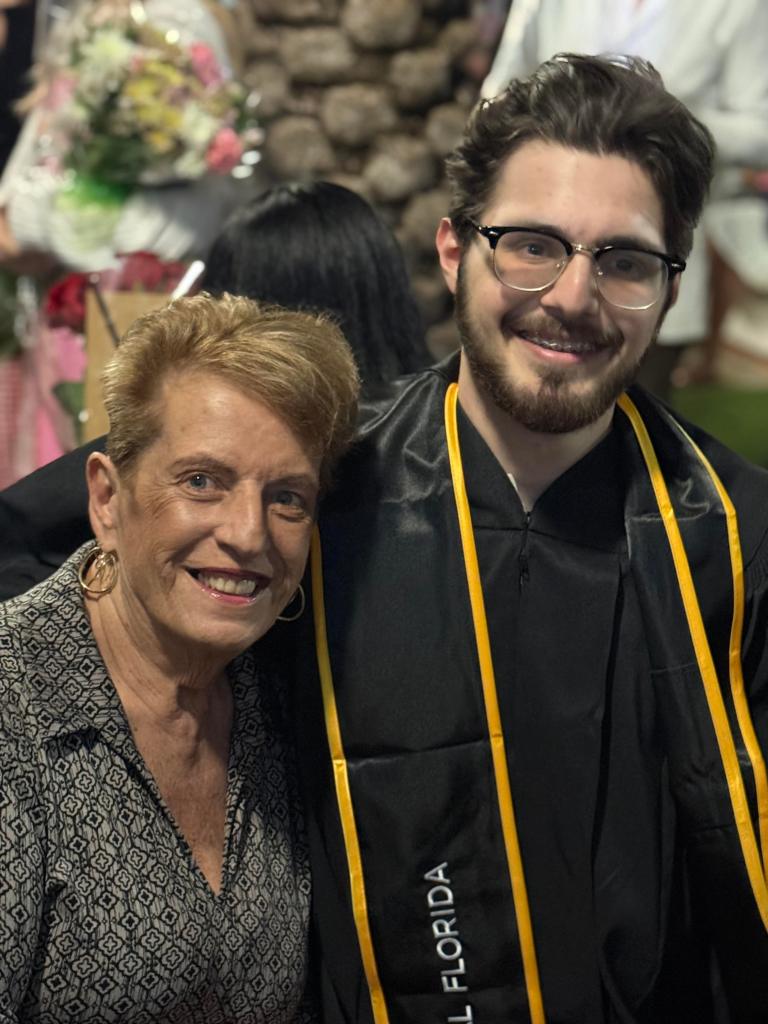
My youngest son graduated college on Friday. It was a momentous occasion in his life and in ours. My mom came in to celebrate and attend the graduation. I treasure these moments more and more as time goes on. We sat in the auditorium, watching where he was sitting (he helped us find him, texting us his location and turning around to us and waving), and waited for him to have his name announced and walk across the stage. As a parent, it was an incredible moment for many reasons.

My mom and Matthew at graduation – I treasure these moments more and more.

I noticed a few things surrounding his graduation that got me thinking. They may seem totally unrelated, but for me, they all tie together.

On the drive to campus for graduation, I noticed a few things. First, how many people drove as if they were the only car on the road. Turning right from the left turn lane. Going straight and trying to outrace cars from the left turn lane. Where was the common courtesy? Where was basic rule following? I laughed as one car that did this ended up far behind me – they almost caused an accident to end up behind the car they had to cut off.

The second thing was that when I tried to be kind, to let cars in ahead of me, how they wouldn’t accept the kindness. They wouldn’t go in front of me. It got me thinking, “When did kindness become so rare that people don’t recognize it?”

At the graduation, it was the same conflict. They asked not to scream and yell when your loved one’s name was announced as it meant the next name couldn’t be heard. Yet people screamed, drowning out the name of the next person graduating. Rudeness and lack of caring was all over the place. As I went to video my son about to walk across the stage, the people in front of me had to stand up, blocking my view. No awareness of people around them. I stood up, moved slightly, and was able to video and watch him walk. Had they done that a minute later, I would have missed it.

Yet the number of people willing to take pictures of my family when asked, the number of families who I took pictures of when asked was remarkable. The wishes of congratulations to strangers because they were celebrating the graduation of a loved one was remarkable.

What a dichotomy. It got me thinking that perhaps America isn’t really as lost as it appears. Perhaps there is hope. Perhaps we can regain our country from the extremes and return to a world of kindness, caring for others, and awareness of the world around us. Perhaps we don’t have to live in a world where it is ‘my way or the highway’ on every single issue.

I do know one thing for sure. It starts with each of us. We may not be able to change the entire country but we certainly can change our own behavior. We certainly can change the world of those around us. I hope we can all make a commitment to do our best to be kind. To be aware of those around us. To celebrate with those who are celebrating and to embrace joy rather than hate. It is how we will save our country and our world.

A little more than 10 years ago, I began writing about the rise in Jew hatred. It was controversial at that time to use the words Jew Hatred. I used them anyway because that’s what I was seeing. Swastikas being drawn on buildings in Seattle. This article in the Seattle Times on June 26, 2016, got pushback that it wasn’t happening and that this was all being overblown and exaggerated. We see now that unfortunately, I was right. This article, almost 9 years old today, is hard for me to re-read because of what has happened in those 9 years. Because of what was being called out then that was ignored by so many. Because of October 7, 2023 and what has happened since then. The signs have been there and far too many of our ‘leaders’ have chosen to ignore them.

Take for instance, this harrowing exchange between David Horowitz and a student at the University of California San Diego in 2010. This was FIFTEEN (15) years ago. The only difference between then and now is that Horowitz would be booed offstage now, this vile, hateful woman would be cheered, and the University would defend HER hatred instead of protecting Jewish students on campus.

The Jew hatred on campus was clear in 2010 but we ignored it

We saw things like this years ago but failed to take it seriously and failed to act. As a result, our Jewish students on campus today are faced with incredible antisemitism. I spoke with one of the leaders of Mothers Against Antisemitism from the Dallas chapter this week and the stories she shared about the University of North Texas were horrifying. Students afraid to be publicly Jewish in any way. Jewish/Israel speakers being spirited to campus at night, under the cover of darkness, to an unadvertised speech because had it been advertised, students would have been too afraid to show up. The work we have been doing has simply failed and we must admit it. We built building on campuses while the Jew haters built departments, programs, and hired Jew hating professors and administrators. We put Jewish names on libraries and centers for performing arts while the Jew haters invested in teaching that Jews are evil, are powerful and responsible for all the bad in the world, that Israel is a genocidal country that doesn’t want peace and are colonialists that want to take over the entire middle east and the world.

My friend Adam Bellos wrote a powerful piece last week. Most of you likely did not see it or read it. I encourge, no I implore you to read it. To think about what he writes. To take action to change the current reality. He writes:

This is the tragedy: we trained kids to explain checkpoints without explaining Herzl. We taught them to debate apartheid without introducing them to Ahad Ha’am, Rabbi Kook, or the Book of Joshua. We armed them with casualty charts, not courage. With U.N. resolutions, not roots. With talking points, not Torah. Hasbara failed because it tried to outsource pride. Because it assumed the average young Jew could fight for Israel while remaining estranged from Hebrew, from Zion, from the soul of their people. Because it traded the moral complexity of the conflict for the false clarity of press releases.

His summary is a beautiful and powerful statement that I believe in, have advocated for, and continue to push to create.

And so, this moment demands something entirely different: a revolution of Jewish education. A renaissance of context. A return to knowing who we are, not just what we’re defending. We don’t need more content creators to explain why Israel is right. We need Jewish children who know why they are Jewish. We don’t need another “crisis comms” playbook. We need people who speak Hebrew, dream in Zion, and learn how to walk into a room not begging for understanding but embodying truth.

We need to make sure we are providing quality and meaningful education to our children and, in all honesty, to our adults. As my friend Ari Shabbat often says, “The Torah is playbook for life”. If we don’t know this, don’t know how to use it, don’t bother every learning that it can be interesting, fun, and meaningful to learn Jewishly, how can we survive? If Israel becomes just another country rather than our spiritual homeland, Judaism will never be more than meaningless rituals that we do because our parents did them. There will be no meaning in hanging a mezuzah, putting on tefillin, or identifying as Jewish. We will merely be Jewish because we have been told we are Jewish. To me, that is unacceptable. I hope that you find it unacceptable as well.

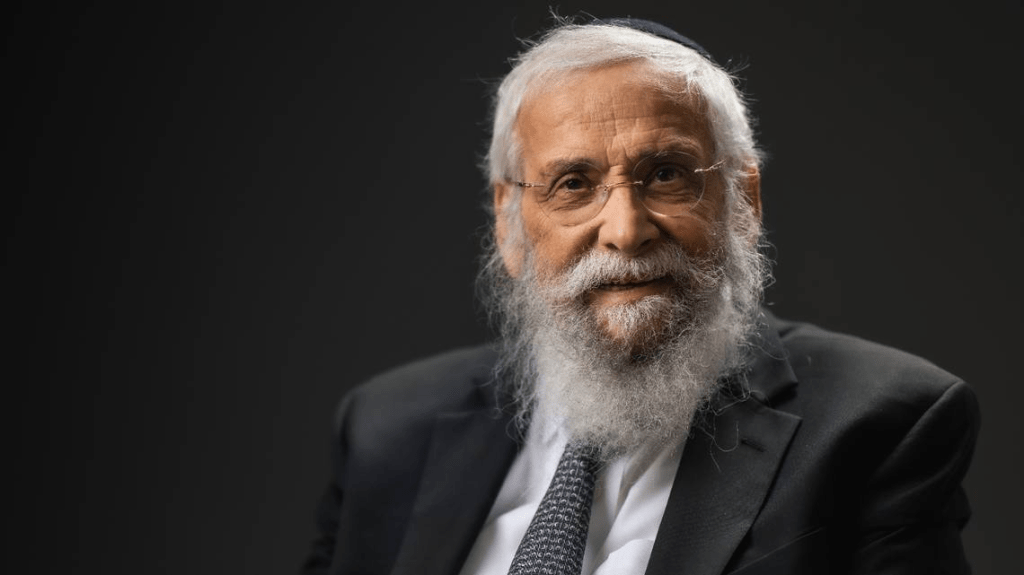
I was deeply saddened to hear the news that Rabbi Sholom Lipskar (z’l), the longtime leader of The Shul of Bal Harbour and founder of the Aleph Institute, died this week. I had the privilege of meeting Rabbi Lipskar a number of times and the community he build at The Shul of Bal Harbour is extraordinary. I found him to be a man who didn’t accept the impossible. His vision impacted not just the South Florida Jewish community but the entire South Florida community and the world. I found him to be a kind man, always willing to listen, always seeing the good in people, and working to make the world a better place. If you want to read a little about him, you can do so here. The world is certainly a bit dimmer without him in it, however his teachings and life’s work remain to inspire us all.

At the end of the day, we are left with one simple question. What are we going to do? Are we going to be like Rabbi Lipskar (z’l)? Are we going to take action as Adam implores us? Are we going to take the time to learn what being Jewish is really about? Are we going to make the effort to be kind to others? The world we live in today is one that is short on kindness, on wisdom, on compassion, and on knowledge. Are you going to believe whatever somebody decides to tell you or are you going to actually learn something? Are you going to only listen to one narrative or are you going to engage with others and learn both with and from them?

The choice is yours. Just remember that choices have consequences. We are where we are today because of the choices we made years ago. When we look back in a decade or two, I hope that we are happy with the choices we make now and that we have the type of world so many of us desire and want to work to build.