As most of you know, I am a passionate and unapologetic Zionist. Being a Zionist simply means that I believe that the Jewish people have a right to their own country and their own self-determination. No matter what else you may THINK Zionism is or means, that’s what it really does. The rest is simply propaganda created and spread by those Jew haters who want no Jews to exist and those who aren’t willing to actually learn something about Zionism.
As a result of my love affair with the State of Israel, I got connected with Dr. Ken Stein and the Center for Israel Education (CIE). Each week, CIE puts out ‘This week in Israeli history’. Some weeks there are nuggets that I learn about and other weeks there are monumentous events. This week it’s of the monumentous variety.
On February 27, 1928, Ariel Sharon was born is born in K’far Malal (near Hod Hasharon). For those of you who know much about Israel, Hod Hasharon is the home of the Alexander Muss High School in Israel. My cousin Eric attended there in 1984 and I have many friends who have attended as well. This would have been Ariel Sharon’s 96th birthday.
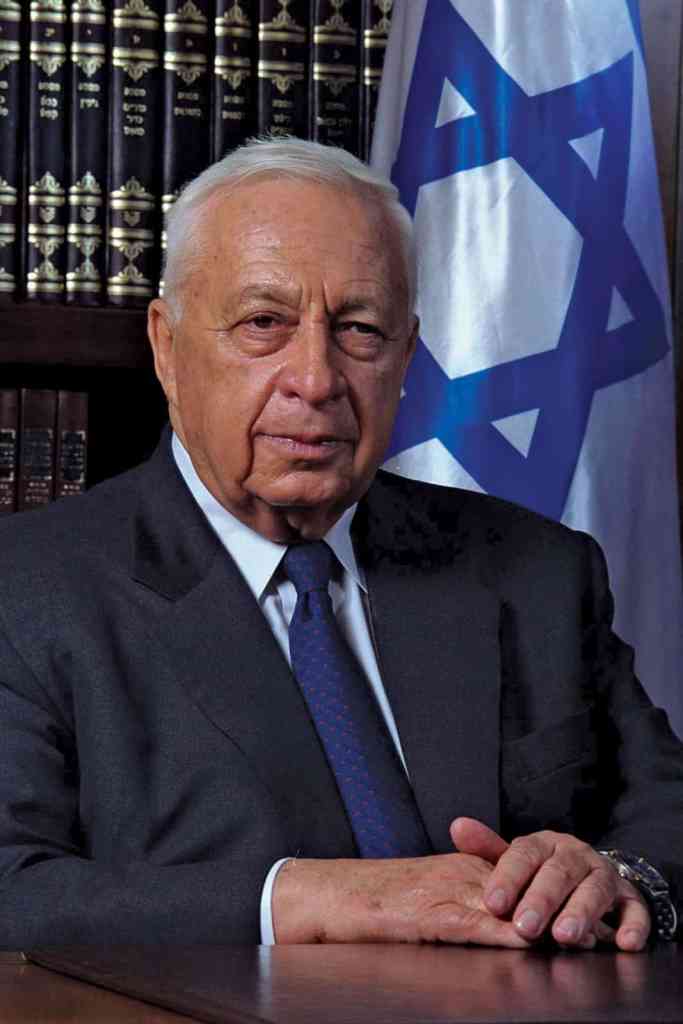
Sharon, like many of that generation, took an Israeli last name, changing his birth name of Scheinerman to Sharon. A true Zionist and patriot, he joined the Haganah in 1945 and served in the War of Independence. His reputation, which continued through his life, was having a lack of restraint and being very aggressive. He served as a paratrooper commander in the 1956 war, a Major General in the Six Day War (1967), and the commander of an armored division in the Yom Kippur War (1973).
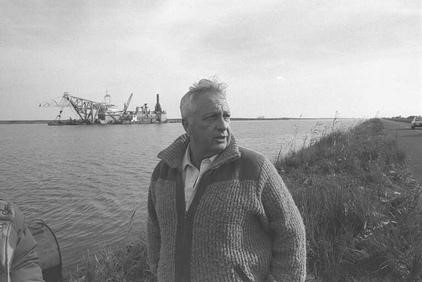
Already a hero, Sharon was appointed the Israeli Defense Minister in 1981 by Prime Minister Menachem Begin. He launched the Operation Peace for the Galilee (1982) and was forced to resign after being found negligent in failing to prevent the massacre of Palestinians in the Sabra and Shatilla refugee camps by the Lebanese Christian Phalange troops.
Sharon was elected head of the Likud party in 1999 and became Israel’s 11th Prime Minister in 2001. As Prime Minister, he approved construction of the security fence, advocated for settlements in Judea and Samaria (the West Bank) and despite his reputation as a military hawk, oversaw the disengagement from Gaza, hoping it would jump start peace talks with the Palestinians. In 2006, he suffered a stroke that left him incapacitated and was no longer Prime Minister. He passed away in January 2014 after spending 8 years in a coma.
Ariel Sharon is a complex figure and a good lesson in the complexities of Israel and the region. Most of his career, he was considered a far right, war hawk. He was a military hero whose leadership was critical to the victory in the Six Day War. His leadership and actions in the 1973 war were essential to Israel turning the tide and capturing the Suez Canal and almost marching to Cairo before America and Secretary of State Henry Kissinger stepped in to stop the war.
His resignation after being found negligent in the Sabra and Shatilla refugee camps by the Christian Phalange troops have many branding him a war criminal. He certainly did not use good judgment at the time, doing nothing to stop Christian militiamen allied with Israel from entering the camps, despite fears they might seek to avenge the killing of their leader the previous day. War criminal or not, it was a poor decision that helped define his life, career, and legacy.
In 2000, he went to the Temple Mount and visited the Al Aqsa Mosque. To many people this would be seen as no big deal. It’s the historic site of the ancient first and second Jewish temple. The ‘Rock’ in Dome of the Rock is supposed to be both the rock that Abraham bound Isaac to, prepared to sacrifice him, as well as the rock that Muhammad rose to heaven from. It’s also a flashpoint for violence as Jewish access is limited and many attribute the 2nd intifada to this visit. It’s a place I have never been to and hope that one day I will be able to have access. I remember this visit and wondering why he chose to do it as it was clearly going to incite violence.

In 2005, he made the decision to withdraw all Israelis and Jews from Gaza, returning it to Palestinian control, as an effort to jumpstart peace. The settlers and many Israelis were very upset that he would take this action as 21 Israeli communities were forcibly removed from Gaza and relocated inside Israel. His hopes for peace as a result never materialized, his stroke a few months later meant that he never had the opportunity to follow up on his vision. The Hamas massacre on October 7, 2023, is tied back my many to this action in 2005 which led to the creation of modern Gaza.
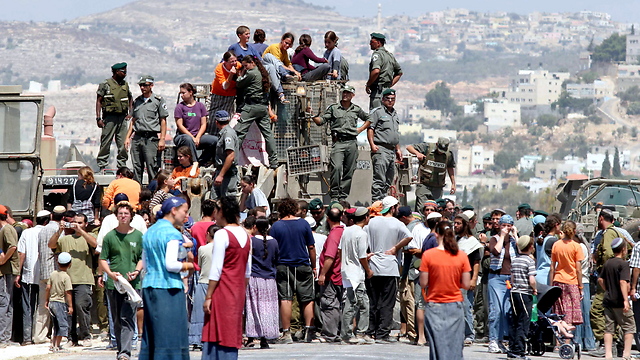
Sharon is an Israeli hero that I have always struggled with. My grandparents loved him because after the Shoah, he was the face of an Israeli and Jewish warrior. He kept safeguarding the Jewish people as his top priority and his actions were very public and visible. From 1957 through 1973, he played key roles in winning wars to ensure Israel’s existence and inspiring Jews in Israel and the diaspora. When I look back on those years, I see a headstrong officer who I can say thank you to for ensuring Israel exists.
The Sabra and Shatila massacre cause me great pain and challenges. While he didn’t actually murder anybody and it wasn’t IDF soldiers under his command who committed the massacre, he had the opportunity to stop it or at least intervene, and he didn’t. From what I know of Ariel Sharon, I believe it to be a tactical choice that he made. I cannot reconcile the Jewish hero I wrote about with the man who would allow this to happen. I remember struggling with his being elected Prime Minister because of this. This struggle was enhanced by that 2000 visit to Temple Mount. As I’ve said, it’s a place I have always wanted to go and have never been able to visit. While there have been times when it has been permitted, the access is limited and as meaningful as it would be to pray on the Temple Mount, that is forbidden to Jews. Most people don’t know of this prohibition. It is hard to believe that his visit was not intended to incite violence. At the time the impeding visit was discussed with this being the likely outcome. Yet he did it anyway. Just like Sharon in battle, who did what he wanted, and thought was right, he did it with this visit, with the 2nd intifada as the resulting outcome.
And then there was the withdrawal from Gaza. I grew up being taught that when we finally got to the point of land for peace or money to release the Jewish people from oppression (like in the USSR), the battle was won. We would always give up land for peace just as we would pay for the freedom of our people. 21 Jewish communities were relocated. I hated seeing the families uprooted from their homes and forcibly removed. I hated seeing their crying and outrage. Yet I was hopeful that it would be for the greater good and that perhaps, the Palestinians would create a ‘Singapore of the Middle East’ in Gaza, and we might have peace.
As Israel faces all sorts of calls from countries around the world for a ‘Ceasefire Now’ and the creation of a Palestinian State without conditions. It’s worth remembering what President George W. Bush said in his August 27, 2005 radio address about the withdrawal from Gaza and the hope for a different future and what was required.
During the past two weeks, Prime Minister Sharon and the Israeli people took a courageous and painful step by removing Israeli settlements in Gaza and parts of the northern West Bank. I congratulate the Prime Minister for his bold leadership.
Now that Israel has withdrawn, the way forward is clear. The Palestinians must show the world that they will fight terrorism and govern in a peaceful way. We will continue to help the Palestinians to prepare for self-government and to defeat the terrorists who attack Israel and oppose the establishment of a peaceful Palestinian state.
We remain fully committed to defending the security and well-being of our friend and ally Israel. We demand an end to terrorism and violence in every form because we know that progress depends on ending terror. And we will continue working for the day when the map of the Middle East shows two democratic states – Israel and Palestine – living side by side in peace and security.
It is obvious this didn’t happen. There was no Palestinian fight against terrorism, nor did they govern in a peaceful way. The demand for an end to terrorism and violence remains a key requirement for peace and security. The withdrawal from Gaza was an abject failure even before October 7th. My hopes didn’t come to fruition and while I respect Sharon’s efforts to find peace, it turned out to be yet another failure of his leadership decisions.
Ultimately, I find myself viewing Sharon as a Lion of Israel, one of the key people who ensured the survival of the Jewish state, but also one who struggled with political leadership. He isn’t a role model, there is far too much that is troublesome, but he is an icon in the history of the modern State of Israel and one worth studying and discussing to learn from.
Remember that in the start of this post, I used the work momentous. The birth of Ariel Sharon in a week is significant but not momentous. On March 1, 1922, Yitzhak Rabin was born. They celebrated their birthdays just a few days apart. Two amazing leaders of the Modern State of Israel and the Jewish people. This would have been Rabin’s 102nd birthday!
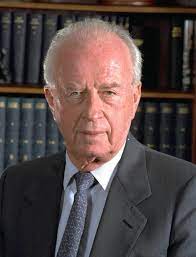
When I read about Rabin, I’m always shocked that he was Israel’s 5th Prime Minister. I forget that he took over for Golda Meir in 1974 and think of him much more during his 2nd term of Prime Minister from 1992-1995. I also am always shocked at how short his second term was as it seems he accomplished so much during that term. It speaks to how young the country really is that somebody who played a prominent role in virtually all of Israel’s history is somebody that I recall so vividly. In many ways it would be like experiencing George Washington, Thomas Jefferson or Ben Franklin in the US.
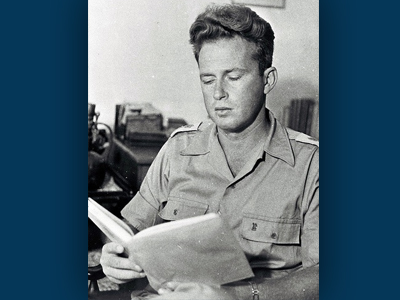
Rabin, the first Israeli Prime Minister to be born in Eretz Yisrael (Palestine at the time), served in the Palmach and as a commander in the 1948 Independence War. As Chief of Staff of the Israel Defense Forces (IDF), he was in charge of the 1967 Six Day War. Following the War, he was appointed Israel’s Ambassador to the United States from 1968 until 1973. Fifty years ago, he was already an icon. After returning to Israel, Rabin was elected to the Knesset and became Prime Minister Golda Meir’s Minister of Labor. Upon her resignation in 1974, Rabin became Prime Minister.

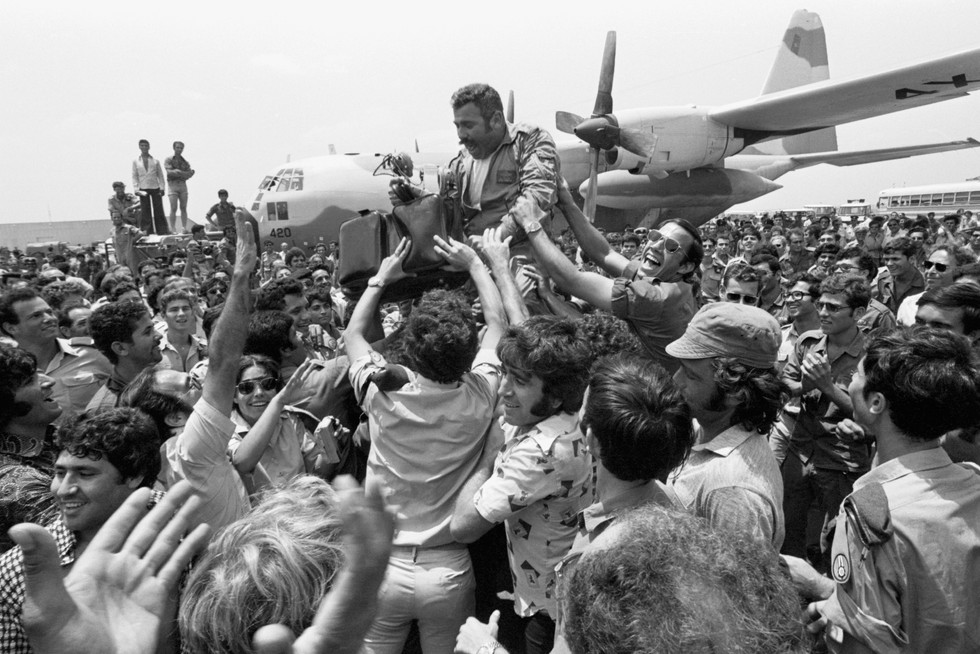
Being Prime Minister in Israel means you live in interesting times and your leadership is constantly tested. As Prime Minister, Rabin signed an interim agreement with Syria in May 1974 and one with Egypt over the Sinai in 1975. One of his most famous actions occurred in 1976 when terrorists hijacked an Israeli plan and flew it to Uganda. Rabin ordered the rescue of Israeli, Jewish, and other hostages from Entebbe in Uganda in 1976.
Israel is an interesting country with some interesting laws and scandals. In 1977, it was discovered that he and his wife, Leah, had maintained an American bank account from their time in the US as the Israeli Ambassador. Leah publicly confirmed that she opened and operated the account alone however, then Attorney General Aharon Barak decided to prosecute both Leah and Yitzhak for this violation which normally only incurred a civil fine. Named by the media as the ‘Dollar Affair’, Rabin chose to resign over the lapse. When we look at our leaders today, it’s hard to imagine them taking such a moral and ethical stance over such a small infraction when they are involved in much larger scandals and choose to deny, minimize, and deflect. Unlike Ariel Sharon, Yitzhak Rabin chose to live his values, morals, and ethics, no matter the cost.
Rabin returned to the Knesset and also served as Minister of Defense from 1984-1990. In 1992, he again assumed leadership of the Labor party, and was elected to his second term as Prime Minister in June of 1992.
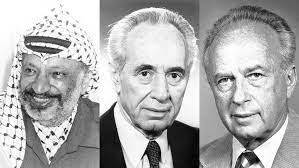
The 1992-1995 years of his second term as Prime Minister, Rabin oversaw some amazing breakthroughs that most people hoped would be transformational in the peace process. The Oslo Accords were negotiated and signed by Rabin with Yassir Arafat. In 1994 Rabin was able to negotiate with King Hussein of Jordan on a peace treaty that remains in place 30 years later. These efforts inspired the world and in 1994, Rabin, Shimon Peres and Yasser Arafat were jointly awarded the Nobel Peace Prize “for their efforts to create peace in the Middle East.”
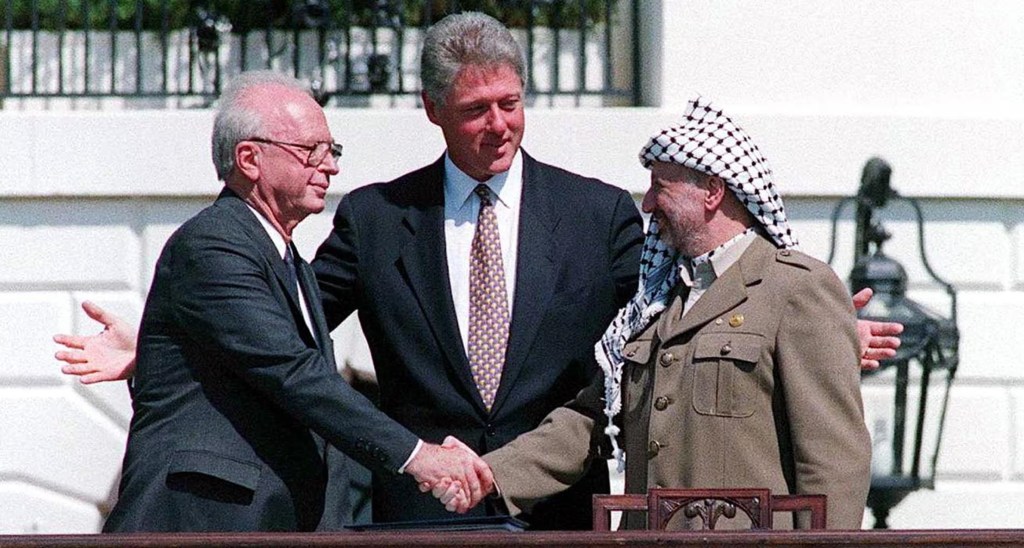
Sadly, on November 4, 1995, Rabin was assassinated by a right wing, nationalistic Israeli who didn’t want peace. The assassination came minutes after Rabin gave a pro-peace speech in Tel Aviv to more than 100,000 people cheering and hopeful about a different future.
I remember when Rabin was assassinated and the shock that was felt around the world. The fact that it was a fellow Jew who murdered him made it even worse. Hope for a brighter future seemed to disappear and in the 28 years since, has never recovered.
Every time I am in Israel, I seem to find my way to Rabin Square, the location of the pro-peace speech and his assassination, named for him after his murder. I’ve been there for Yom Ha’atzmaut celebrations and for concerts. It’s an empty space until there is a reason to gather. I can imagine the energy that night and the power of hope. In the back, there is the area where he was shot. It’s preserved as a mini-museum documenting what happened. You can see where everybody was standing and even stand in their footsteps. You can see where Rabin’s security failed, allowing the murderer access to shoot Rabin. You can learn about the chaos that happened after the shooting, resulting in him being taken to the wrong hospital, wasting key time that may have been able to save his life. I am always humbled when I stand there and find myself dreaming of what could have been.

I read the David Horovitz biography of Rabin, Shalom Friend, and was deeply moved by the man. Similar to Ariel Sharon, he was there from the beginning in the War of Independence and throughout all the wars that came after. Rabin remained committed to his core beliefs throughout and unlike Sharon, didn’t waver. Rabin was complicated in the fact that he was both a man of war and of peace. While Sharon faced significant questions related to his sincerity for peace, Rabin was seen by the world as the bringer of peace. I often wonder if Yitzhak Rabin was the last politician I will see in my lifetime who truly acted on his morals, values, and integrity rather than his electability. While I don’t doubt what I think Sharon would say and do after October 7th, I am challenged by what Rabin would say and do. As a Zionist who did everything he could to ensure Israel won every war, he also did everything he could to ensure Israel could win the peace. Would he bring clarity to the world at a time when it’s so greatly needed? Would he be able to unite Israel at a time when we are seeing divisions again about the hostages, finishing the war in Gaza, Bibi as Prime Minister, and so much more.
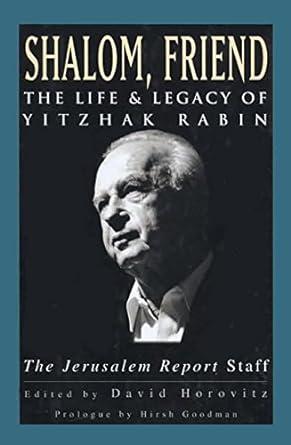
Despite the Oslo Accords not working the way we hoped, Rabin is a true hero. Unlike Sharon, a Lion of Israel, Rabin was a true statesman. He was a true leader. He had a clear vision for what Israel could and should be. He had a vision of a world where Israel lived in peace with her neighbors. Rabin understood America and diaspora Jews just as he understood Israelis. Perhaps the only thing he didn’t understand was the power of hatred, which cost him his life and has resulted in the Hamas massacre of October 7th. That’s a shortcoming I’d be happy to accept in a leader of Israel and the US.
As we celebrate the birth of two icons of the Modern State of Israel this week, we have a chance to learn from them both. Both taught and continue to teach us important lessons about moral character, about hatred and the short term and long term impacts of it, of leadership and of hope. Although both died before accomplishing their goals due to a stroke and an assassin, both died with hope in their hearts and in their efforts. Let’s not let the sacrifices of these two great men go to waste because we lose hope. Even in times of despair, we must hold onto hope for a brighter future. It is that hope which will sustain us through the difficult times and allow us to reach better ones.
Discover more from keithdblog
Subscribe to get the latest posts sent to your email.
 keithdblog