Purim is one of my favorite holidays. It’s got a great story, an evil villian, a heroine that is tough to beat, and delicious triangle cookies. What’s not to love?
This year before Purim, I took the opportunity to learn a bit more about the story from a variety of teachers. It took me down a much deeper road with lots of lessons that apply to to our world today. I always enjoy when I find something in ancient texts that somehow team me a lesson for today’s world.
Purim is highlighted by a few major characters. Queen Esther, the heroine. A much deeper character to explore that the basic story presents. Her ‘uncle’ Mordechai, the hero. He pushes back against the evil villian and wins. Haman, the evil villian, who’s triangle hat becomes the Hamentaschen, the cookies we eat, at Purim. Haman, who’s name we drown out during the reading of the Megillah. King Achashvarosh, who divorces/murders his wife and marries Esther. And Queen Vashti, who refuses the King’s order/request, resulting in her divorce/death. I want to focus on Queen Esther here.
She was always one of my favorite charcters because of my Grandma Esther. Subconciously, there was always a connection to my Grandma Esther and Queen Esther. Plus dressing up, Purim carnivals, hamentaschen, and the fun makes Purim a special holiday for children. For much of my life, I thought of her as Morchechai’s niece who married the King to save the Jewish people. A wonderful and simple heroine. I never bothered to ask what happened to her when the story ends. I never bothered to ask if her ‘Uncle’ was really an uncle. I took it at face value and enjoyed the story.
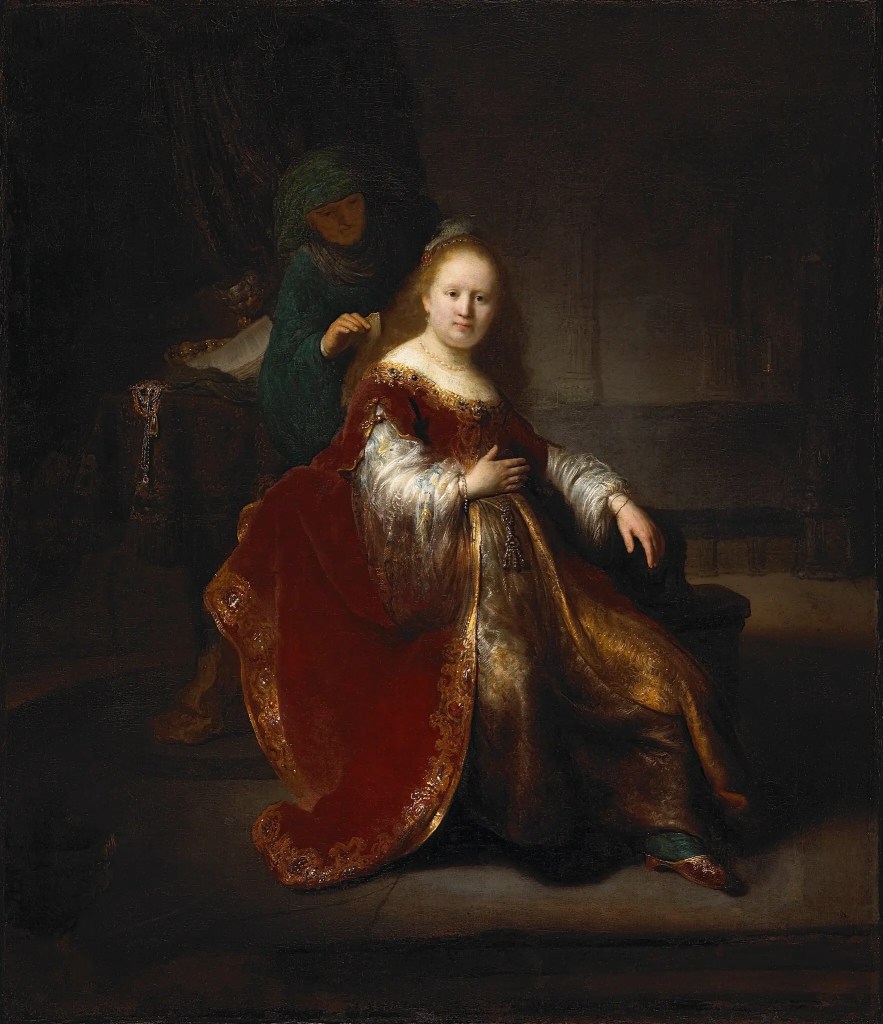
It is much deeper than that. Jewish tradition and the talmud teaches us that Esther and Mordechai were actually husband and wife. The Talmud interprets the phrase “Mordecai adopted her as his own daughter” (Esther 2:7) as “Mordecai took her as his wife”. Think about what it must be like to be settled, married, and planning what your life will look like when all of a sudden your husband asks you to leave him and try to marry the King. Your husband who pushes you out of his bed and into the King’s bed. It is hard to believe that this is something that Esther wants to do or is looking forward to doing. I find myself wondering why shouldn’t just tank the interview to be Queen, find some way to ensure that the King will not pick her so she can return to her husband and her life. That’s the easy thing to do. Finish second, don’t strive to win, just be a part of the pack and be forgettable. Yet that isn’t what she does. Instead, she charms the King and he picks her to be his wife, forever ending any chance she has of returning to her life with Mordechai. She makes a huge sacrifice based entirely on trust and faith.
How often do we face challenges that require a sacrifice and we fail to do so? These aren’t always life changing challenges and yet we still are not willing to make the sacrifice for the greater good. History has shown us what happens when you fail to make the sacrifice for the greater good. When you put yourself first and the world or your community second. True leaders are willing to make that sacrifice. It doesn’t mean they aren’t afraid of the cost. Instead, they are very afraid of the cost yet go ahead and do it anyway. That’s leadership. Queen Esther did what was needed at great cost to herself and her life. She gave up the life she knew for the greater good.
Queen Esther took a risk when she told King Achashveros that she was Jewish. There was no guarantee that the King would choose her over Haman. She couldn’t be sure that the King wouldn’t be disgusted with her and get rid of her like he did with Queen Vashti. She didn’t have to take the risk to tell him. She was safe. Like many people in today’s world, she was a hidden Jew. She could have stayed quiet, stayed hidden, and lived a full life. But she didn’t. She is the example to us today that no matter how good we have it in our country, at the end of the day, we will always be seend as Jews first. Jews in Germany who had prominent roles in the military, the government, and business got no special dispensation from the Nazis. They were Jews first. Our Jewish legislators who think they are safe because they defend the rights of others at the cost of the Jews are merely fooling themselves. Queen Esther showed us the way.
I look at many of our leaders today, both in and out of the Jewish community, and wonder why they aren’t following Queen Esther’s lead. Very few are willing to actually put it on the line and take the risk of losing their power and position to do what is right. There are the exceptions. Senator John Fetterman has been outspoken and lately there have been pieces written about the cost he has paid as a result. The Wall Street Journal wrote a piece about him being the “Lonliest Democrat in Washington”.
He has spoken out repeatedly against Hamas and those who defend them. He is a throwback to the days when America didn’t negotiate with terrorists, when terrorist was evil without any excuse. He is a true leader who is going to do what is right, regardless of the personal consequences.
Secretary of State Marco Rubio has done the same, talking about the evil of Hamas and revoking the green cards of those who incite violence and support terrorist organizations. He is unequivative is his condemnation of Hamas and those who support them.
We simply don’t have enough of these leaders in the Democratic or Republican party. We have far too many Bernie Sanders, who blames Israel when Hamas won’t agree to ceasefires, won’t release the hostages, and remains responsible. We have Thomas Massie on the right, who is an open antisemite. We have people like Rashida Tlaib, Ilhan Omar, and Pramila Jayapal on the left who are so far into their Jew hatred that they could be mistaken for Marjorie Taylor-Greene or Lauren Boebert with their hatred. Queen Esther teaches us all that we must stand up for what is right, regardless of the personal cost. The greater good matters.
As a Jew, the ending of the story of Purim was always a happy one. Like most Jewish stories, they tried to kill us, we won, let’s eat. However the story ends differently for Queen Esther. She doesn’t go back to her regular life after Haman is hung and Mordechai promoted. She doesn’t get to leave the castle and stop being Queen or the wife of King Achashverosh. Her sacrifice is truly one for her entire life. Often times we think it is just for the length of the story. That the things we are willing to give up, the choices that we make are only going to be temporary. Queen Esther reminds us that is not always the case. There are times when the sacrifice we make is much greater and lasts much longer. It doesn’t change the importance or significance of that sacrifice. The megillah continues after Queen Esther tells King Achashverosh she is Jewish and Haman wants to kill her and her people. The story continues about the role of Mordechai and the gifts and power he is given. Esther falls into the background. Her work is done but her sacrifice is not done. It is one she continues to make on a daily basis for the rest of her life.
That’s the lesson about sacrifice. It’s for the greater good and must be willing to pay the price regardless of how much it may be. The cost of not making the sacrifice is far greater. We see this with the IDF soldiers and the people of Israel. Since October 7th, they have made incredible sacrifices. Many have lost their lives. Their families have been changed forever. Children have spent most of the year without their parent(s) who have had to serve in milium (reserves). Incredible instability with rockets falling daily, war all around, funerals on a regular basis due to the war, many forceably relocated for safety. Soldiers facing PTSD and their lives changed forever. Hostages who endured unbelievable torture. Every Saturday night there are massive protests against the government and demands to release the hostages. The leaders of these efforts pay a high price. Those who commit to be there pay a high price.
One of my friends was a high level commander in Gaza during the first four months of the war. The price he paid was easy to see when we got together after those four months. Just recently, he was one of the commanders in charge of the hostage releases during phase 1 of the ceasefire. He shared how difficult and painful that was for him. What he experienced on October 7th, the first four months of the war, and managing the hostage releases will stay with him for life. He is not the same person he was on October 6th. Like Queen Esther, he was willing to make the sacrifices that were necessary, regardless of the personal cost.
There are lessons to be learned from Queen Esther beyond being proud of being Jewish and standing up for the Jewish people to those in power. The lesson of sacrifice is key among them. The lesson of the greater good. The lesson of standing up for what is right regardless of the cost. Nowhere in the Megillah does it recount Queen Esther complaining to Mordechai that she did her job and now is stuck for the rest of her life. That’s true leadership.
True leadership is remembering that it is a sacrifice, not a privilege. It is an obligation not a coronation. This applies in our political arena as well as our Jewish organizations. The lesson of George Washington only serving two terms and our Founding Fathers wanting to get home to their families and their lives rather than serve forever in Washington DC has been lost. Their willingness to sacrifice their personal success and time with their familes for the greater good has been lost. The Israeli people are showing us what it looks like. People stepping up to serve much longer than required. People letting their spouses serve and figuring out how to raise children and pay the bills without one of the parents being there. People leaving the government because they fundamentally disagree with decisions being made. People peacefully protesting every single week because they want to see change. It’s time to bring it back. It is time for us to do our part. Otherwise we are letting evil win. I, for one, refuse to do that. What about you?
 keithdblog