Part 4: In search of common ground – November 5, 2019

Day 2 of Encounter began early as we met at 7 am for breakfast and to continue debriefing. I couldn’t imagine the connection with this group 2 days ago and how much I need their support through this experience. It’s an unexpected benefit.

As we talked this morning a few themes emerged for me. First, the unintended consequences of the Oslo accords. I heard repeatedly how much better it was for the Palestinians before Oslo and how that was a seminal moment for them that changed their status and their lives. I never would have thought that much significance would have been a result of what I considered a failed attempt. It reminded me of recent conversations I have had with some of our local Muslim community leaders about 9/11 and what it means to them and their community.

Secondly, the overwhelming desire for a 1-state solution. The desire to have one country and to feel a part of this country. To have freedom of movement. To not feel like a 2nd or 3rd or 4th class citizen. It made me wonder if the 2-state solution really is dead.

Our day began by going through checkpoint 300. This is the main checkpoint to get from Bethlehem into Jerusalem. While we could have driven through, having the experience of walking through was important, even though as a group of Americans going through at 9 am would make it not a true experience. As we walked in and got it line, we left everything other than passports on the bus. This is because historically things have been ‘lost’. It was a privilege we had that Palestinians don’t. After passing through security uneventfully we got in line. It was slow – like when I don’t have TSA Pre at the airport. It became easy to imagine a packed hall and what the delays can be like. As we got near the front, a security officer seeing us as a group of Americans waved us over and waved us through. Some Palestinian women came over with us and were summarily dismissed and sent back to the longer line. We didn’t even need to show my passport. Talk about privilege. It was very disappointing to get that special treatment.

I think I was struck by two things at the checkpoint. The first is the difficulty in navigating it for Palestinians and how it would be awful to have to do this every day to go to work. The second was looking at the families and the children in lines. The children were smiling and happy. They again reminded me of the children in our JCC school. They waved and engaged. The universal beauty of children was clear and gave me hope that perhaps we can find common ground, perhaps we can find a solution to the conflict and perhaps these children can live a different life.

This isn’t a comment on the necessity or non-necessity of checkpoints. This is merely my observation and thoughts a few hours later.

Part 3: Profound disappointment – November 4, 2019

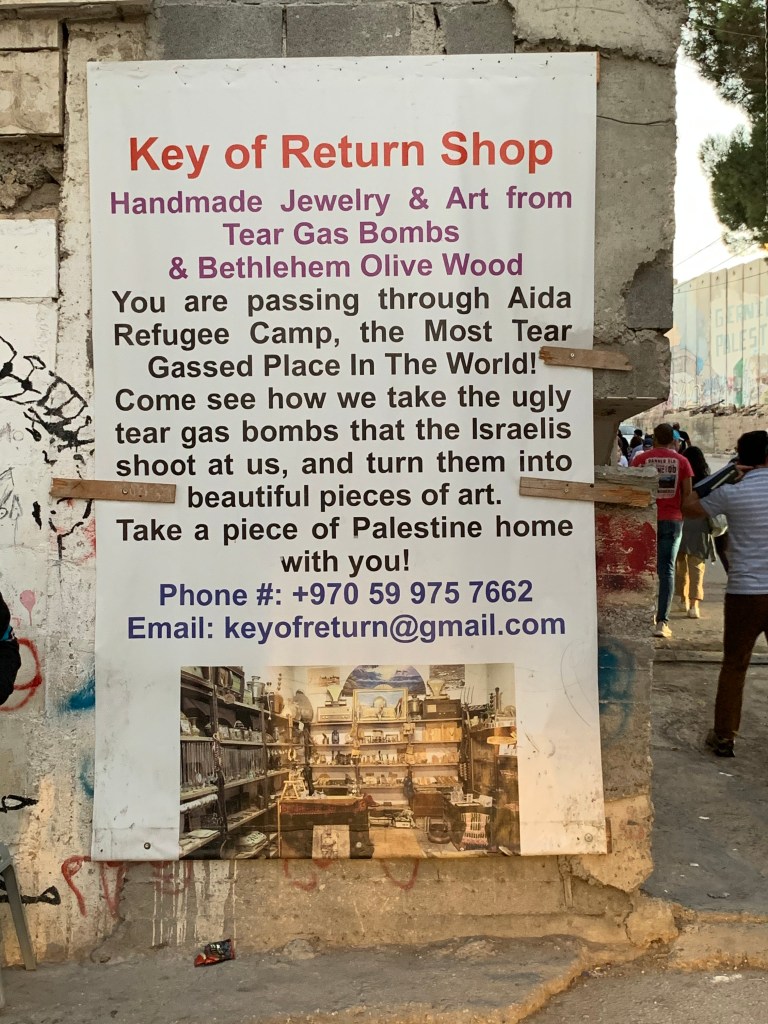
The final stop on the bus today was the Aida Refugee Camp. I had heard many things about Refugee Camps but have never been to one. I’m not sure what specifically I expected. I hoped I would feel empathy for the people living there.

First, the refugee camp is like a city. I couldn’t tell where Bethlehem ended and where the refugee camp ended. The housing was in better condition than the village in Gush Etzion. They had working roofs that didn’t leak. It looked like a city, not overrun like I expected.

The Aida ‘Refugee Camp’


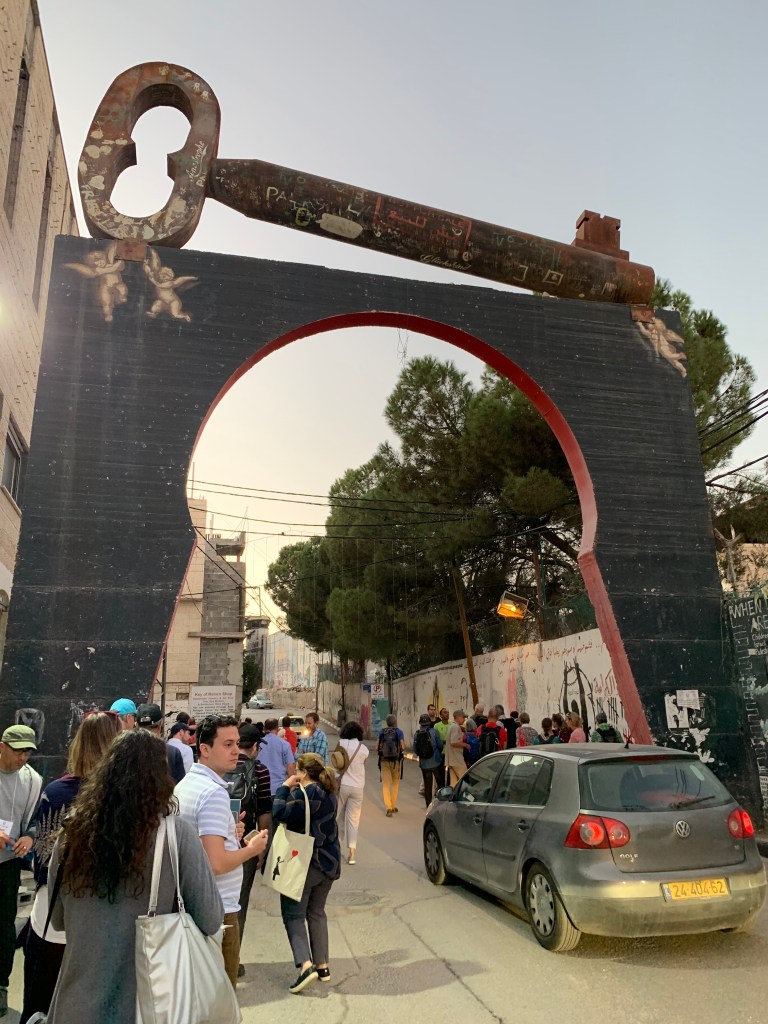
The entrance/exit for the Aida ‘Refugee Camp’

As we began the program with the head of the local community center, I hoped to hear the challenges they faced and the hopes and dreams that they had. He teaches the youth in the refugee camp and I really hoped to get a positive and hopeful message.

My hopes were dashed. I had heard that refugee camps were breeding grounds for hate and I hoped that this would be proven wrong. Unfortunately, that isn’t what happened.

He told us how he teaches the children there is only one state – Palestine. He told us that the wall/fence wasn’t what stopped terrorists, it was the PA and Israeli government agreeing it would stop. And since this agreement, there were only 2 bombs on buses and one was by someone from Aida. The way he said it seemed like he was proud. He talked about how under international law they were allowed to fight back and while he didn’t believe in suicide attacks or bombs killing women and children, soldiers were ok and he certainly didn’t say that public places were off limits.

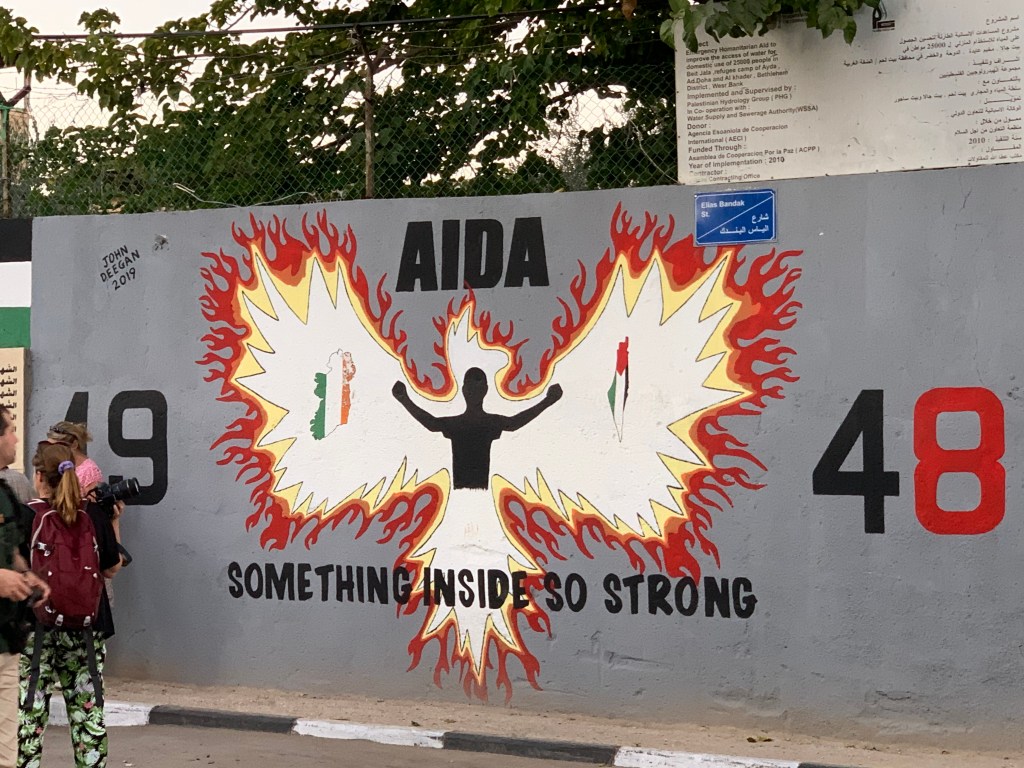
I had questions for him but couldn’t open my mouth to speak because of what I was afraid I would say. As we walked out of the community center into the streets of the camp, I was shaking my head in disbelief. I saw the images below and felt hopeless. In the village I felt sadness and empathy. Here it was pure hopelessness and despair. He told us how Israeli soldiers test new rifles on Palestinian children in the camps. It was surreal. I could barely talk as the bus brought us back to the hotel.


A big part of Encounter is the dialogue you have with other participants. While I had concerns about this part of the trip going into it (really my biggest concerns, far more than safety and security), I was really looking forward to my small group to help me process. I wrote my first post after checking into my room and then went downstairs to my small group.

Almost everybody on this trip I met today. My small group was no different. As we talked and began to share our anger, sadness, disappointment, frustration, hope and hopelessness, it was cathartic. We talked about a group of children we saw in the refugee camp. They were adorable children – smiling, laughing and waving at us. I wondered if at 5 or 8 years old their minds have already been poisoned against peace and if we have lost another generation. I wondered what they will be like in 5 or 10 years and if they will have hope for a better future or be filled with anger, resentment and hate. It felt good to share my experience with the group and as we wrapped up and prepared to head for dinner, I finally was in a place that I could think clearly and deeply about my experience.

Part 2: So many questions …Nov 4, 2019

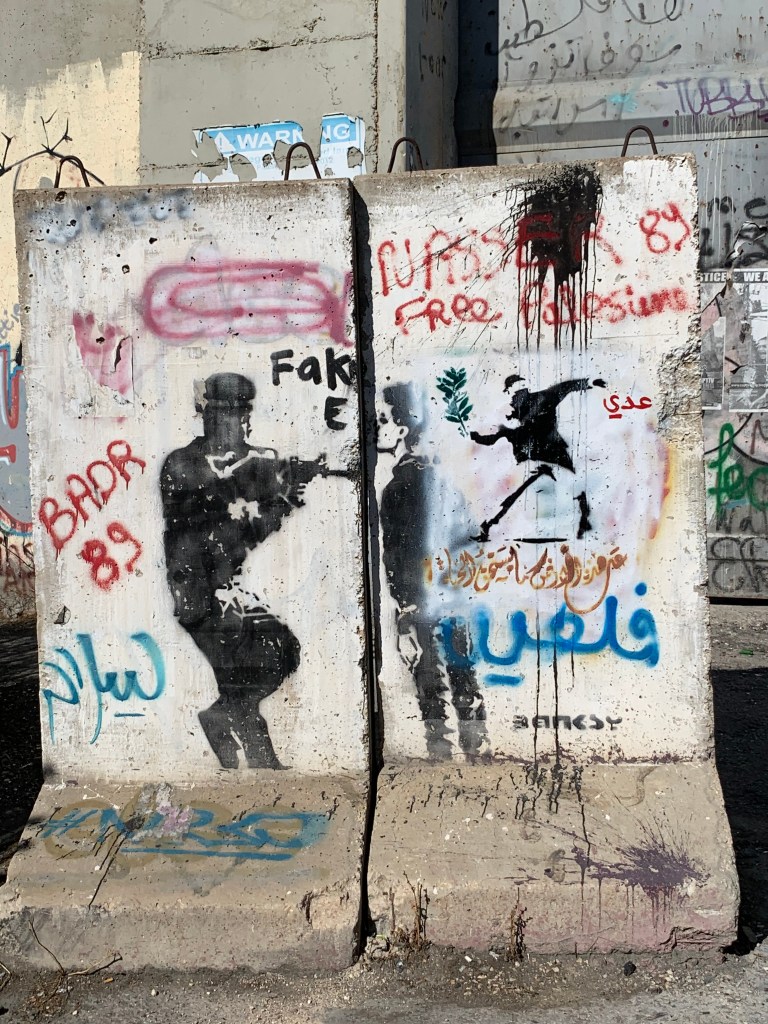
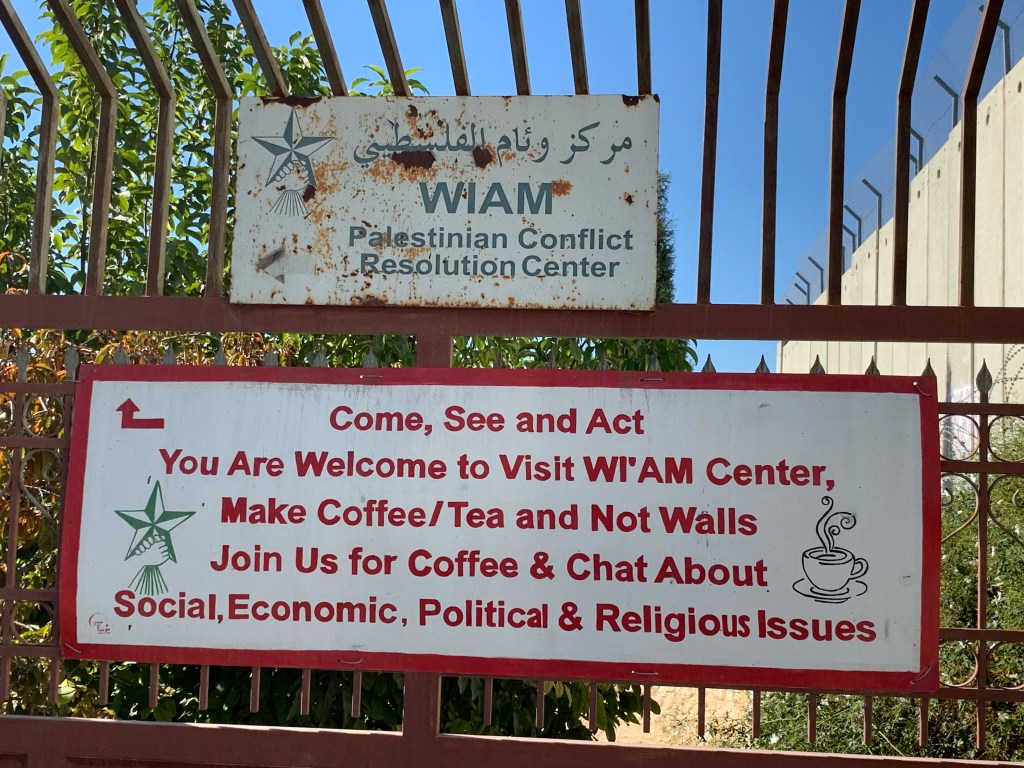
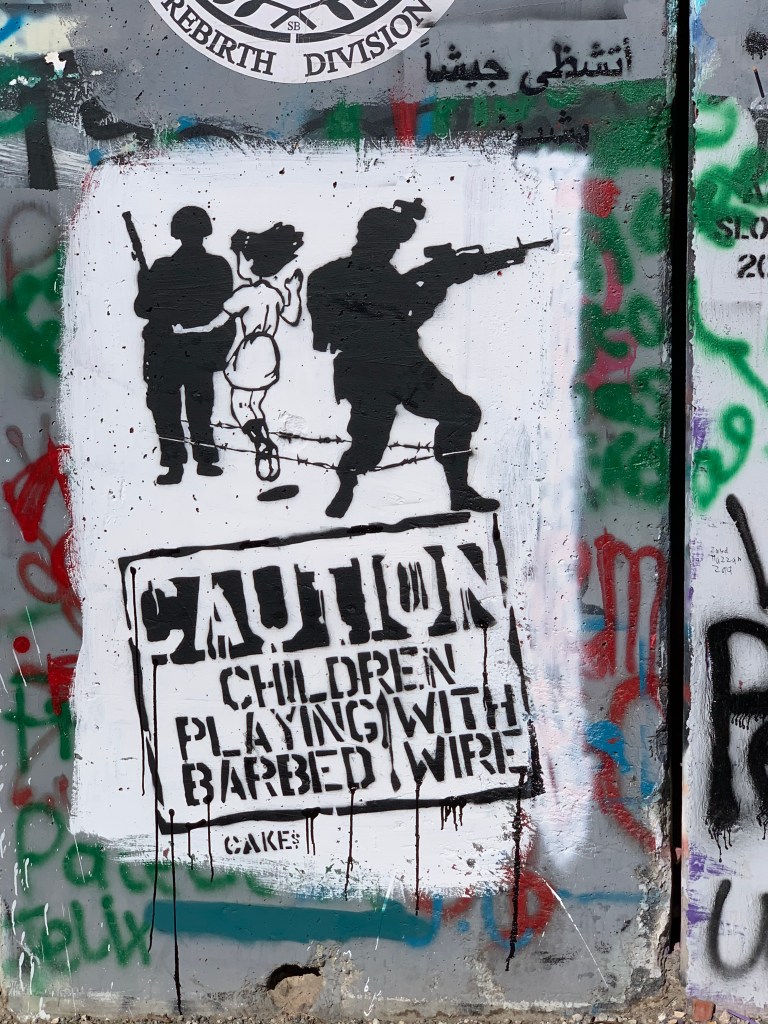
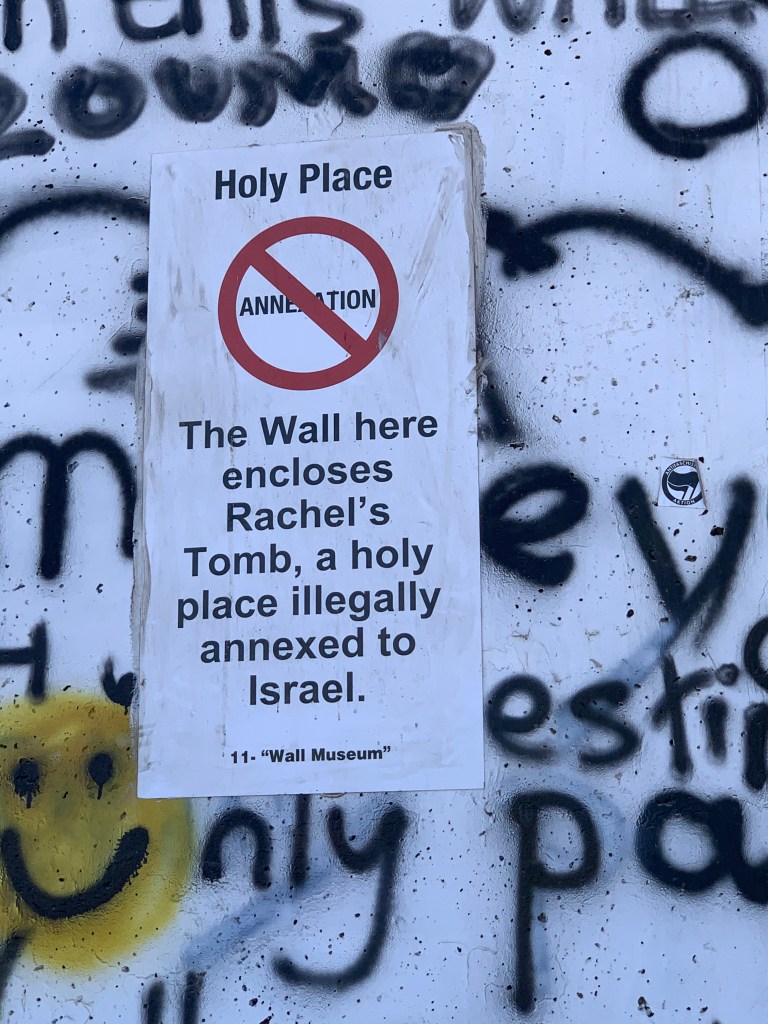
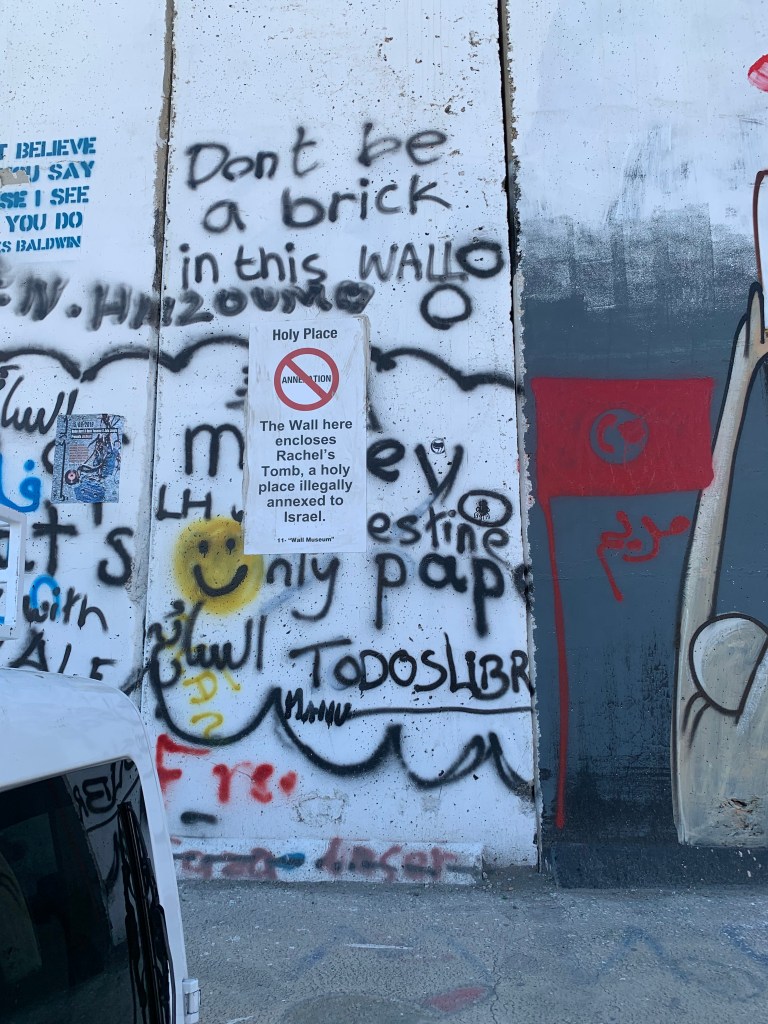
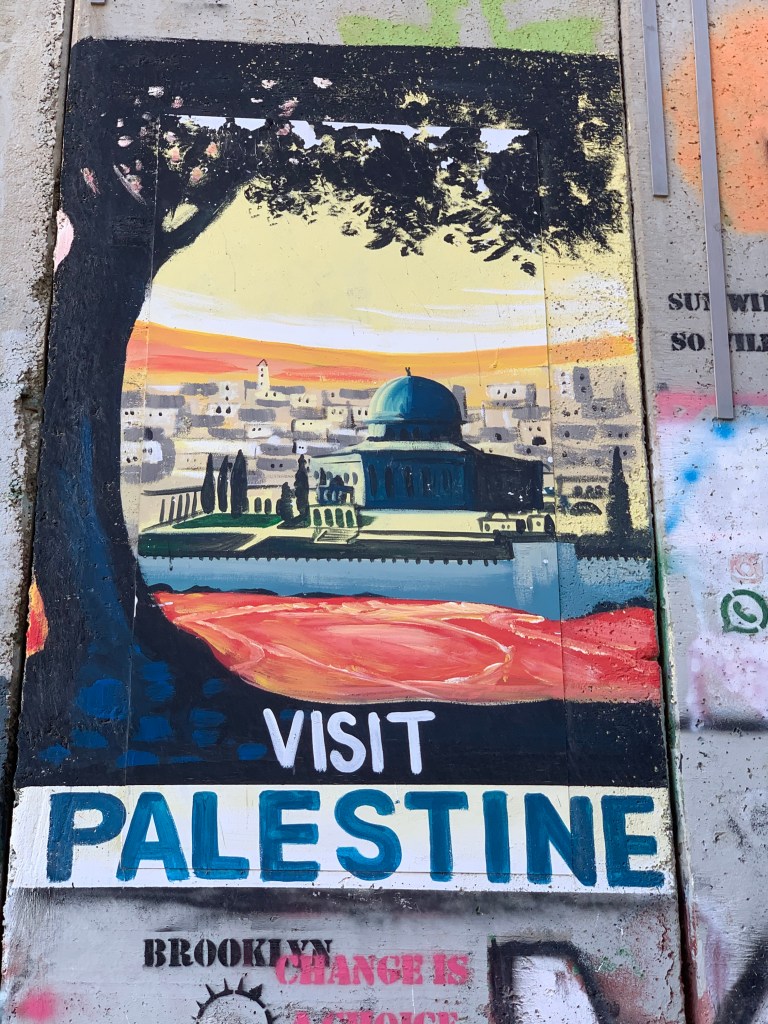
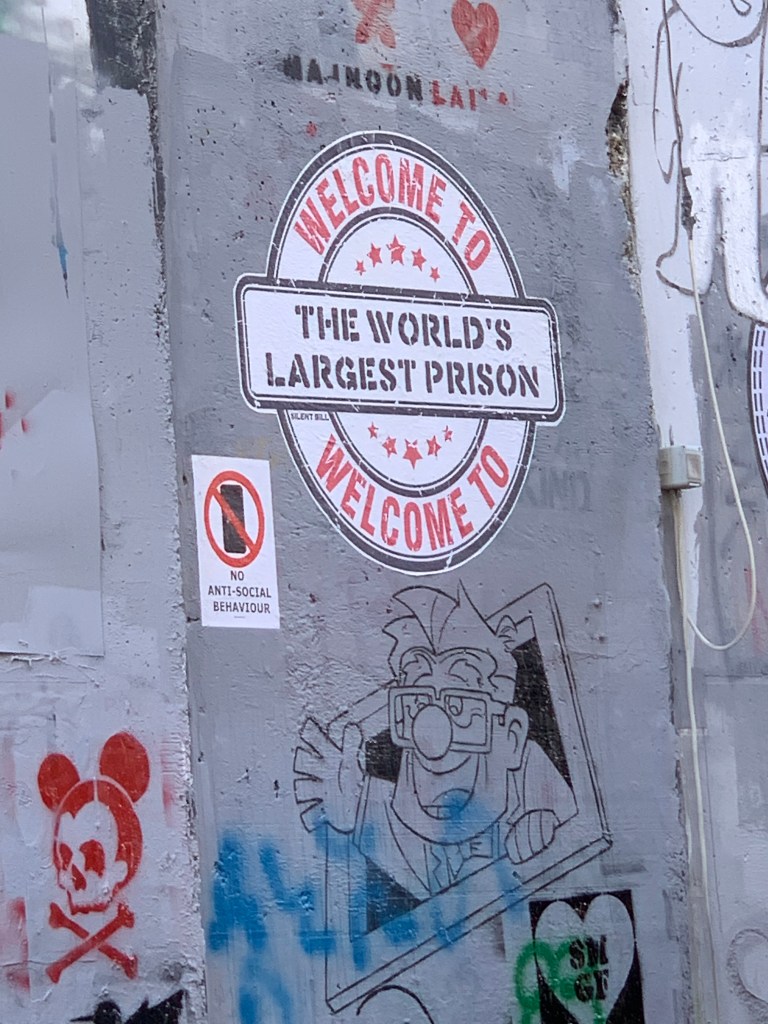
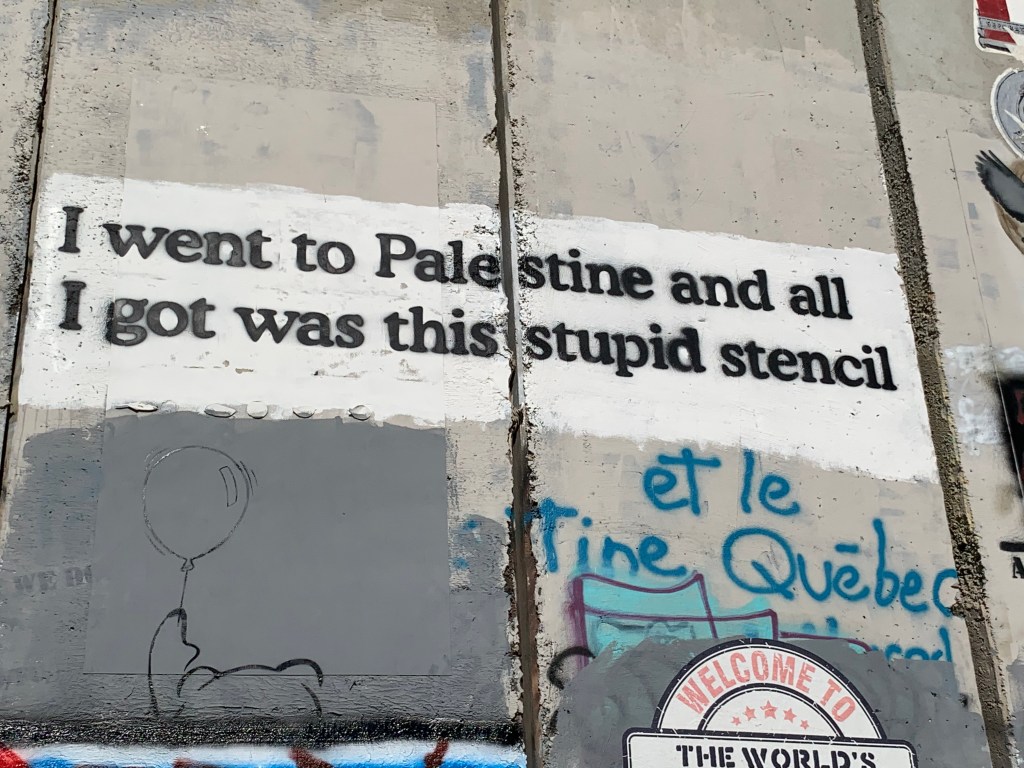
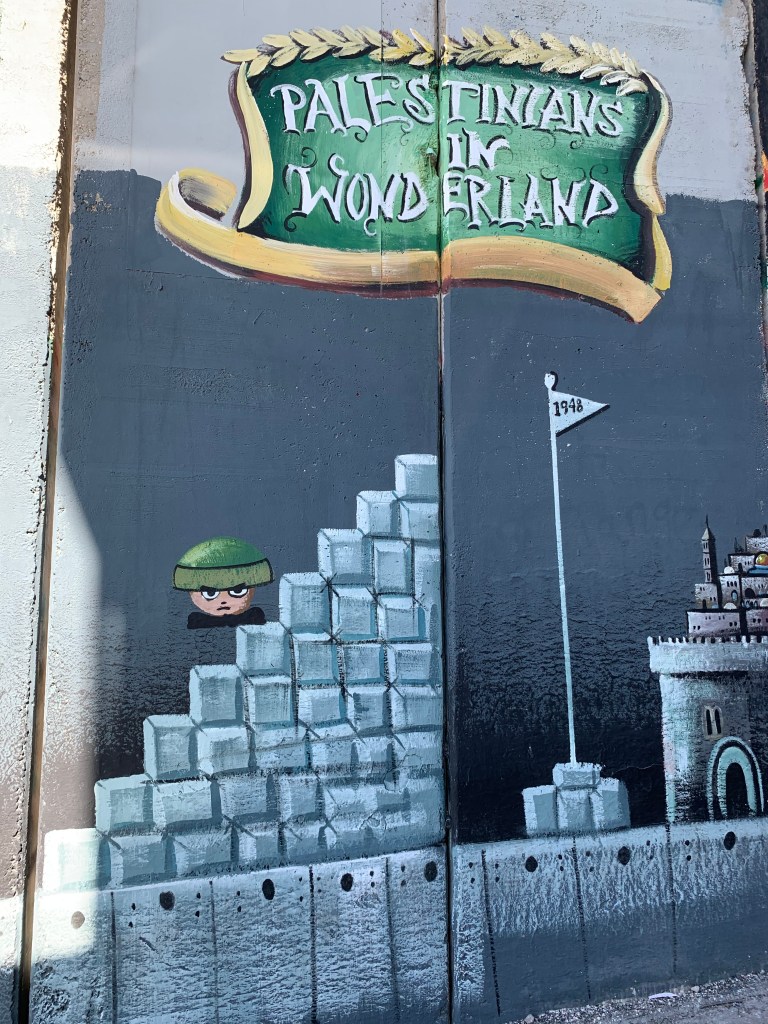
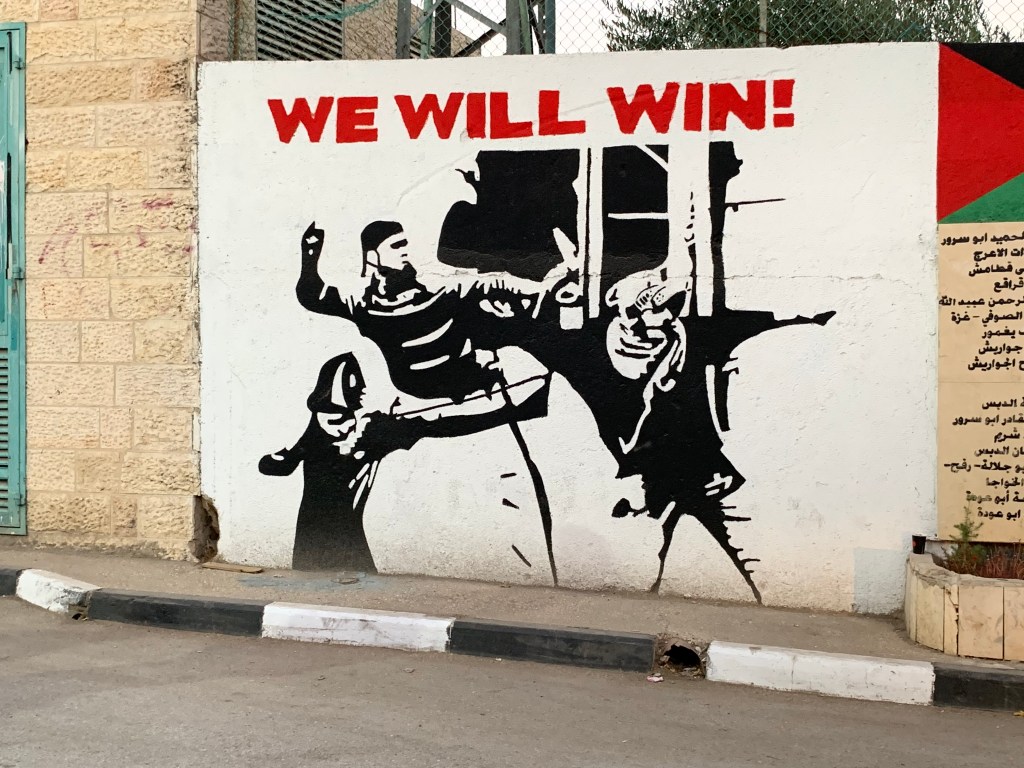
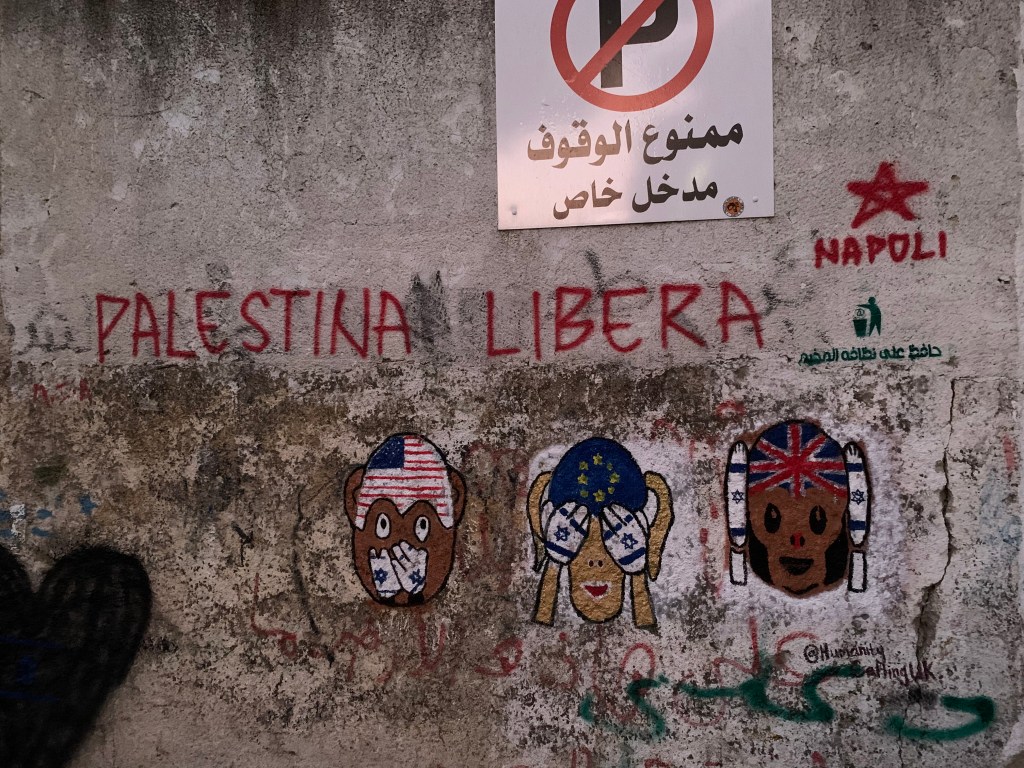
Having 4 hours to process the day has really helped. What a day it has been. After our session on the different zones, we began walking around Bethlehem, specifically looking at the international graffiti that has been painted on the Security Fence/Wall, Separation Fence/Wall (whatever you want to call it – everybody has a different name for it). I am posting some pictures I took – BEWARE THAT THEY MAY UPSET YOU!

After walking through this graffiti on the wall/fence, we got on our bus to go to a Palestinian village in the Gush Etzion area. There are a number of Jewish neighborhoods/settlements (I call them neighborhoods because of the size and scope of them, others call them settlements) and it has been widely accepted that if/when there is peace, this will become part of Israel with a land swap. The village we went to was in area C. This means that no construction can occur without permission from the Israeli government. This permission is rarely ever given. So, what does this mean in practicality. It means that they can’t fix their roofs when they leak. It means they can’t build new homes or expand their homes when needed. They can’t repair or replace their broken playground equipment. If they do, they get a ‘stop work’ order and ultimately a demolition order. It’s sort of like building in the US without a building permit. Only the permits are rarely issued. It’s a challenge and a problem.

As I watched the children playing, I had a smile on my face. They were just like the children at my JCC. Young, smiling, fun, cute. Only their playground equipment wasn’t safe and I wouldn’t let any of our children go near it. Yet it was all they had.

As we spoke with the head of the village council, he told us he and their village just want to live with dignity. They don’t care if they end up in a Palestinian State or as part of Israel. He looked at the new construction that happened on two sides of him in the Jewish neighborhoods with sadness as he knew his village wasn’t allowed to do that.

Seeing this village today was challenging and difficult. My heart broke for the people there who have severe limitations put on them due to the conflict. These are mainly people who work agriculturally and who aren’t interested in anything beyond their small village. When asked about ideas to solve the conflict, to bring peace, to allow his village to grown, their village council head said, “I’m just a simple man”

Many of you may understand why Israel has to put limitations on building in Area C or agree with this policy. I can only tell you that after visiting this village and listening to this village leader, I was left with a lot of questions and no answers.

Day 1 of my Israel Encounter – November 4, 2019

Many of you know that I am in Israel right now. I came to participate in a program called Encounter. Encounter takes Jewish leaders into the Palestinian Territories (the West Bank) for an immersive, intensive, 4-day program. My intention was to post about the day however we are not even finished with the first day and there is too much to post about just once a day. So, if you want to follow what I am experiencing, it will have to be in multiple blog posts. I can’t adequately describe this experience without taking time and space.

After our morning overview today, we left to meet with a leader of the civil society here (I am intentionally leaving names out). We got to experience our first checkpoint and it was closed – resulting in a 15-20-minute delay to our day. He spent the entire day with us giving us lots of insight and at times, some hope. As he described the difference between areas A, B, and C, I learned a great deal.

Area A is the major city centers where the Palestinian Authority (PA – their government) is in charge of both Security and Social Services. This is about 18% of the West Bank.

Area B is approximately 22% of the West Bank and the PA controls the Social Services while the Israeli government controls security.

Area C, the largest area covering 60% of the West Bank is under the control of the Israeli government. Of the estimated 2.5 million Palestinians who live in the West Bank, only 150,000 live in Area C.

Area A is doing well economically and many people are able to work in Israel. Due to the increased security, Israel has been able to lower the age and requirements to enter Israel. As we discussed some of the challenges, I felt some hope that there could be peace.

I’m going to take each part separately as there is a lot to unpack. Later, I will talk about the next two stops and how my hope was dampened and then questioned greatly.