Day 6: Keith in Israel! – October 24, 2021

Shabbat morning meant my visit to the Great Synagogue I’ve been inside before, but never for Shabbat.  We donned our masks, showed our green passes (proof of vaccination), put on our tallitot, and entered the beautiful shul.   The Torah service had already begun at 9 a.m.!  The young man reading Torah (he had to be between 13-15) was truly amazing.  His strong, clear voice rang out, and we were all captivated at his talent and the beauty of the Torah reading.  I was moved by his skill.  While I don’t speak Hebrew and didn’t know what he was reading, I was captivated by every word.  It was truly beautiful.  Of course, the entire service was in Hebrew and the tunes were different, so I struggled to follow along.  And then, at 10:30 a.m., we were finished!  I was shocked that the service was that fast.  As our group exited the Great Synagogue, we talked about how amazing the boy was, how he truly captivated us, and how astounded we were that the service ended so quickly.

After a brief rest, I went to listen to Adrienne Gold speak to us.  We are the first group of the Men’s Momentum Trip that she has spoken with, and she had previously spoken to us at the Women’s Mikvah in Tzfat.  Once again, she had an interesting perspective to offer, and there were things that resonated and things that didn’t.  I will be thinking about her two talks for some time, processing and discerning what fits best for me.

The Momentum Men’s Trip meeting IDF soldiers earlier in the trip.

Shabbat afternoon meant choosing between rest or a tour of the Old City.

Having toured the Old City many times—and knowing that nothing will be open on Shabbat—I took advantage of the opportunity to rest and relax, contemplating the trip and what I’ve learned about myself during our time in Israel.  I’ve had many fascinating discussions with the other men on the trip.  My mind is spinning with some of the topics, both personally and professionally, and I don’t expect to have many answers in the coming days.  There is definitely a lot of processing yet to be done, however one thing that I know already is that personal growth will come from the trip.

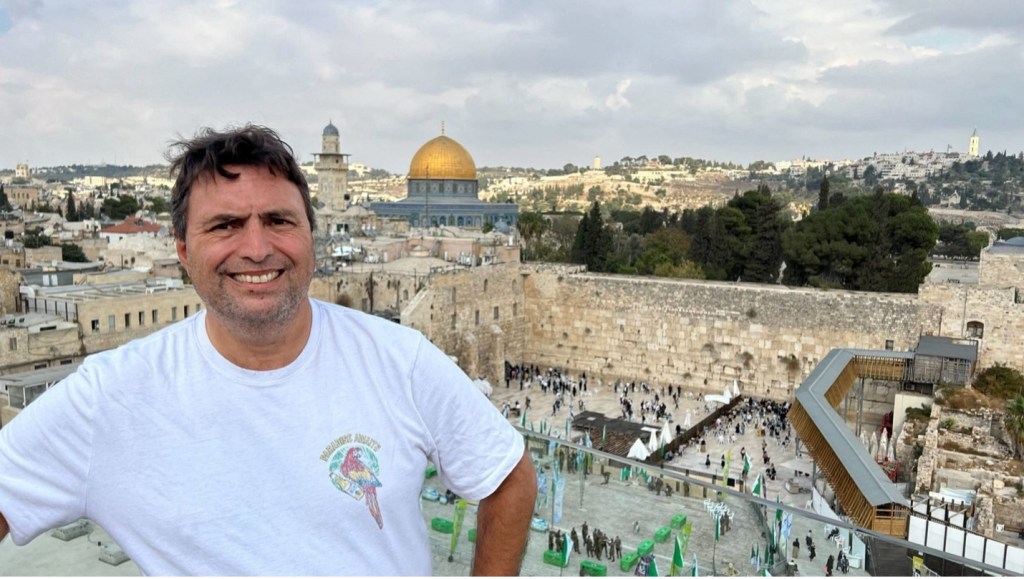
We returned to the Old City for Havdalah, the ceremony that bridges Shabbat and the rest of the week.  Pamela and Aba Cleman opened their home to us.  It’s an absolutely magnificent home in the Old City, overlooking the Kotel at the edge of the Muslim quarter.  Their rooftop has an exquisite view and we enjoyed it as we ate and learned about the work they do with Thank Israel Soldiers, a nonprofit they created to support and provide for the needs of Israel’s soldiers throughout their service and their transition out of the IDF.  We heard from soldiers about their experiences, and it was very moving.

The stunning view from their roof.

One thing I haven’t mentioned yet is that some Israelis joined our group.

They come from all walks of life and have been an incredible addition.  One of our Israeli participants got up and shared his story with us.  It was incredibly moving and really touched my heart, and gave me some first-hand understanding of what these brave soldiers face that is never in the news.  His role in the IDF was as commander of a special unit, and one day his commander sent his unit to a town where a terrorist had taken captive a woman and her daughter (who was in a wheelchair).

The terrorist had stabbed them both, and barricaded himself with them in their home.  The soldier’s unit broke down the door and a gun battle ensued.  In the battle, he killed the terrorist, but not before he was shot, too.  He had to be airlifted out with the mother and her daughter.  After waking in the hospital, he learned neither captive survived their injuries.  He was devastated.

A few weeks later, he had to return to the town to help understand what happened.  The husband and father of the victims approached him and asked if he was the commander.  When he said yes, the man told him that it was all his fault, that they arrived too late.  This only added to the soldier’s devastation, and he decided he was responsible for not saving them and that he would leave the army.  But before his commander would allow him to leave, they sent him with a group of soldiers to Poland to tour the death camps.  While there, they had a special trip to the north of Italy.  While walking the streets, an elderly man came up to them, kissing the Israeli flag on their uniforms and asking if they were from the IDF.   When he told the man that yes, they were, the man yelled at him that they were too late.  Where were they when his family was murdered by the Nazis?  All the soldiers took this to heart—they could not come during the Shoah, because there was no Jewish army.  He decided to return to service.

Soon after, he received another call from his commander that there was another terrorist in a town right next to the first town.  All he could think of was what the people in the town must be thinking and feeling, and what his responsibility was.  He took his team there, and they began searching.  He ended up face-to-face with the terrorist, and shot him before he could harm anybody.  Afterward, a woman in the town came up to him and asked if he was the commander of the unit.  When he said yes, she told him they had arrived just in time.  

This hero epitomizes the IDF.  They are there to keep Israel and Israeli’s safe.  They are here to protect the Jewish people and to provide assistance to those in need around the world.  They put their lives at risk to keep us safe, and we owe them a tremendous debt of gratitude.  I had the pleasure of sitting next to him, and gave him a big hug when he returned to our table.  I feel an obligation to do more to help support our IDF soldiers and will see what I can do to make a difference.

The view from the other side of the roof

After Havdalah on the rooftop, we had free time.  I have many friends living in Israel, and a good number of them live in Jerusalem.  As much as I wanted to see them all, the structure of the trip only provided limited time to do so, and I couldn’t see most.  Tonight, I had a chance to meet with my former student and longtime friend, Margot.  I sent Margot to Israel for her first trip and found ways to send her back again.  In her work, I provided the spark that lit her fire, and she made aliyah years ago and as it turns out, lives a few blocks from our hotel.  We sat together and got sparkling water and a cheese plate and just talked and talked and talked.  It was wonderful to hear about her family and her kids, her job, and the exciting things happening.  Since Sunday is a work day in Israel, we had to stop around 10:45.

Hanging with Margot at a cafe in Jerusalem

It’s amazing having so many connections to this country.  They seem to get deeper all the time—and every time I’m here, I begin thinking about my next trip back before I even leave.  Israel is not just an amazing country; it is a powerful concept and a true homeland.  When you are here, it begins to seep into your soul—and the more you return, the more it becomes an essential part of who you are.  I’m at that place in my relationship with Israel where it is a vital part of my being.  In just the six days we’ve been here, my soul has been refreshed.  My spirit has been inspired.  And even though I am exhausted from the long days, the walking, the hills, and the mountains, I am also incredibly refreshed.

Israel is special and while you can appreciate it without being here, you can’t begin to understand the depth and the connection until you visit.  You can’t understand the deep warmth of the people, of being part of a national family, until you are here.  I hope to be able to take many of you to explore Israel, to have it touch your soul, and to change your life.
Day 5: Keith in Israel! – October 23, 2021

When I woke up today, I was excited because it was Shabbat—and sad because I had to get my PCR test to fly home on Sunday.  It was both the culmination of an amazing and exhausting week, and also the reminder that I will be leaving Israel far too soon.

Wandering the streets of Jerusalem.

The PCR testers didn’t show up in the morning as planned, so we left to start our day and they returned later.  In an old synagogue around the corner, we gathered to do some traditional yeshiva-style learning.  To be honest, years ago that would have made me yawn and try to find some excuse to not do it.  I’ve since had great experiences with great teachers, and enjoy it.  One of the best parts of this trip has been our excellent educators, and today we had one of the finest that I have encountered: Harry Rothenberg.

Harry is an attorney by trade, yet is one of the most amazing teachers of Torah that I have encountered.

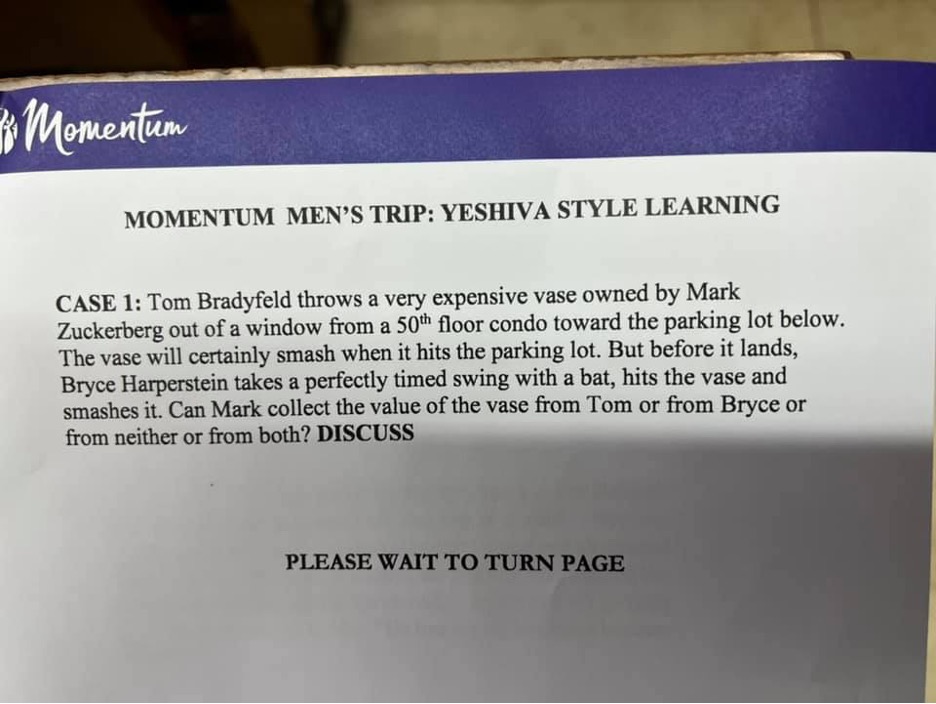
He taught us Torah and Talmud with case studies that involved Mark Zuckerberg, Tom Bradyfeld, Bryce Harperstein, and Julio Jonesberg (get the puns and the joke?).  With over forty men, many of whom had never done this before, we discussed the cases and had a fun and interactive discussion.  We debated in chevrutas (pairs of two), and then as a big group.  The time flew by as we debated Torah.  It was extraordinary to see the impact of a skilled teacher, and the experience renewed my gratitude for all the work our teachers in Orlando do at the Roth and Rosen JCCs, the Jewish Academy of Orlando, the Orlando Torah Academy, and all our synagogue religious schools and youth and adult education programs.

A sneak peak of our Torah study.

After a break (and our PCR tests), we were inspired by Ari Shabat as he tied together being a man, husband, father, and Jew.  Four different roles interwoven in deep, meaningful ways.  We enjoyed hearing from Ari, and we all spoke of his wisdom as we left the shul.

Then came my favorite thing of all: FREE TIME!

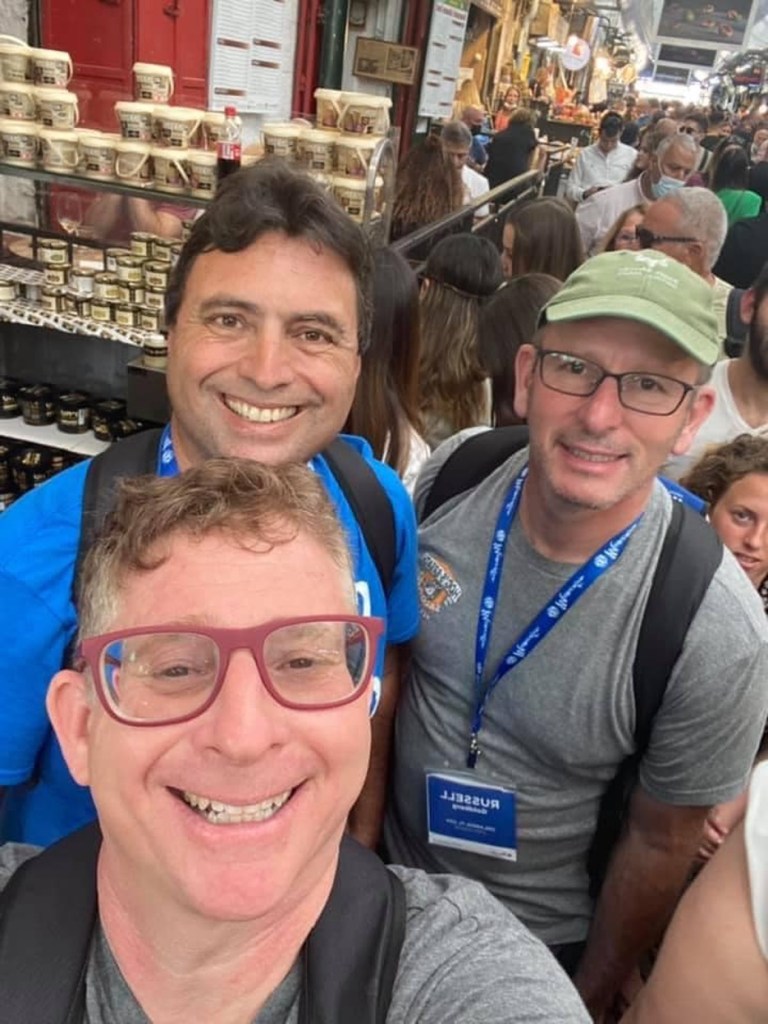
We had the afternoon free to explore.  Off we went to Machane Yehuda, the big shuk in Jerusalem.  It was astounding to see how busy and packed it was.  Yes, it was just before Shabbat—but I’ve been there on Fridays before, and I had never seen it this busy.  We got in the long line at Marzipan to start.  If you have been to Israel before, you know that Marzipan has THE BEST chocolate rugalach in the world.  They were hot out of the oven and smelled incredible.

As we fought through the crowds, those here for their first time learned what it’s like if you wait in a line in Israel: You wait! And wait! And wait!  Here in Israel, if you want to get anywhere, you must keep moving forward with a quick, “Selicha (excuse me).”  We shopped around the market, exploring and simply enjoying the atmosphere.  The fresh fruits, nuts, spices, baked goods, halva, and so much more were incredible to see.  While it was very crowded, the energy and excitement in the shuk inspired and excited me.  I loved the buzz and the vibe.

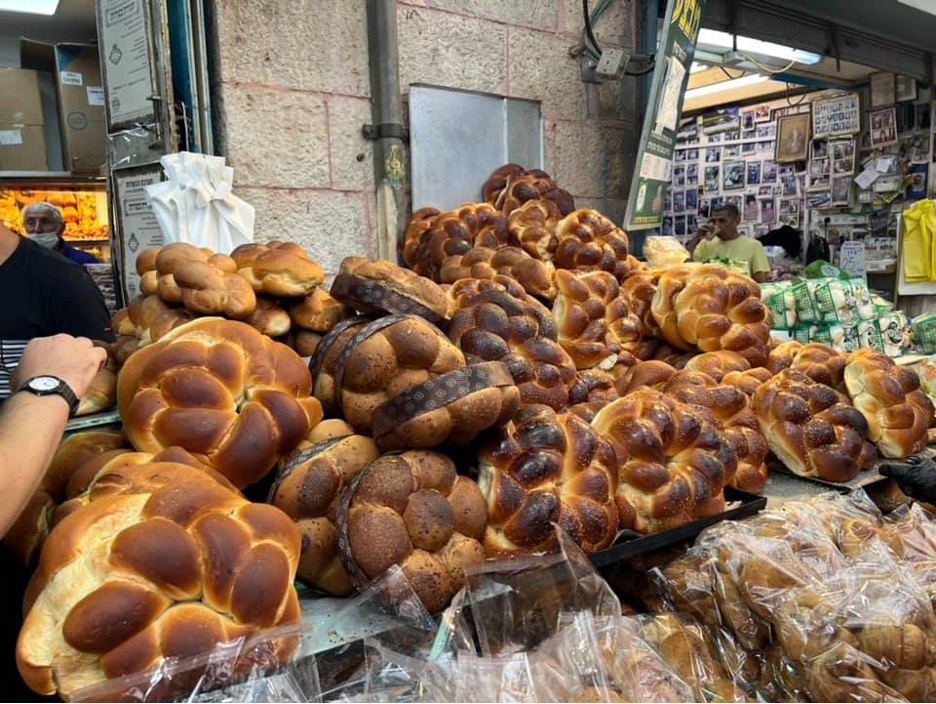
After wandering around the shuk, we took a walk down to Mea Shearim, one of the oldest neighborhoods in Jerusalem and home to Haredim.  It was interesting to see a different way of Jewish observance, and our visit sparked some very interesting conversations.  One of the guys on the trip sent me a message on WhatsApp that he found a gluten-free bakery at Machane Yehuda, so we turned around and headed back.  When we got there, they had these amazing gluten-free challahs that had just come out of the oven.  I got a small one to eat right there, and a large one for Shabbat dinner.  The hot, fresh out of the oven, gluten-free challah was delicious.  We elbowed our way through the shuk to find a place for lunch, and finally sat down to eat and relax.

Mountains of fresh challah.

After returning to the hotel to get ready for Shabbat, we headed back to the Old City.

Charlie Harary amped us up for the experience at the Kotel, and prepared those who have never spent Shabbat at the Kotel for what they’d experience.  We headed to the area we had reserved, gathered together, and looked around.

There were all types of Jews there, and we had a chance to introduce ourselves to them and wish them a Shabbat Shalom.  It was so cool to connect with Jews wearing shtreimels (the big fur hats) and white stockings, Jews wearing black hats and kippot, IDF soldiers, and teens.  We were all there to celebrate Shabbat, and it was one of the most unifying things I have ever been a part of.

We began services, singing together loudly.  I looked over and saw the other groups all watching us in awe.  I think many religious Israelis are surprised when they see American Jews actually praying and singing and dancing.  As we finished one section, one of the other groups began singing loudly as if in competition with us.  It was awesome to see.  We continued with services, and gradually the soldiers and teens came and joined ours.  Our group got big, and we all sang, danced and prayed together.  It was an awesome experience.

When services ended, we still had about 30 minutes before we had to head in for Shabbat dinner.  Patrick, our tour guide, offered to take us somewhere ‘cool’.  A group of us fought through the mass of people at the Kotel for Shabbat and followed him.  We exited the Kotel area and entered the Muslim quarter, where he took us right up to the entrance of where Muslims head up to the Al-Aqsa Mosque and Dome of the Rock.  There were two Israeli soldiers there to make sure that only Muslims could go through the arch and up toward the mosques.  Patrick explained that this was to protect the Muslim sacred prayer space for them and ensure they had the ability to pray at their holy site without being bothered by tourists.  There is access to the Temple Mount for Jews, but only on certain days and times to ensure there is no conflict with Muslims’ need to pray.  I’d never been to that part of the Muslim quarter before, so it was interesting to see it and learn a bit more.

We left the Muslim quarter and heading to Aish HaTorah for Shabbat dinner.  The Aish building is massive and right in front of the Kotel.  We headed up for Shabbat dinner and sat with the other men from Orlando.  It was fun sitting with all these new friends and celebrating Shabbat together.  The food was delicious—with more than enough for everyone— and it was a wonderful night of community.  I had the chance to spend quality time with my dear, long-time friend, Rabbi Josh Brodie, and we had a great conversation.  After dinner, it was back to the hotel, and we sat on the patio, once again eating and drinking.  This time, we had an open question and answer session with our trip leaders and the rabbis who were on the trip.  Any question was fair game, and it was quite interesting.

Today was probably my favorite day.  I got a real taste of almost every part of being Jewish.  The mind with our Torah study, the body with all the walking, the spirit at Machane Yehuda, and the soul at the Kotel for Shabbat.  I got to experience friendship and community.  Another exhausting day—but also incredibly fulfilling. 

Tomorrow, I am going to the Great Synagogue for services.  It’s something I have wanted to do since I first had a chance to explore and visit there some 15 years ago.  It’s a beautiful and magnificent place, so I am very excited.  

Day 4: Keith in Israel! – October 22, 2021

I had to set my alarm for 5 a.m. because we were leaving Jerusalem at the crack of dawn to travel to Masada and the Dead Sea. I’ve been to both about a dozen or so times, and they are both very cool and fun to explore. The only thing that stinks is the super early morning wake-up. We drove south through the desert, and it wasn’t long before we were below sea level. Bedouin encampments dotted the landscape, and the desert had this beautiful, mysterious look to it. When I got the first glimpse of the Dead Sea, I was captivated, as I always am. It’s very big, it’s a stunning aquamarine, and it’s bordered by the most picturesque mountains. It’s truly breathtaking. As we approached Masada, the mountains began to dominate the area. It’s a beautiful drive.

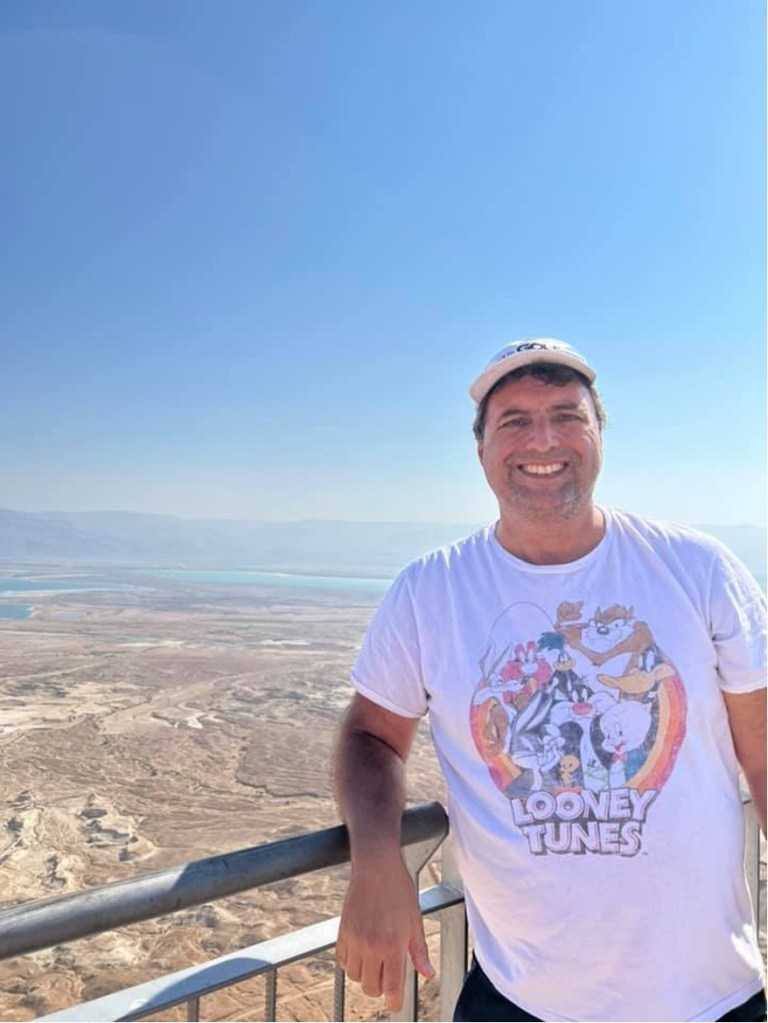
Atop Masada.

We got off the bus and went into the Masada welcome center. I usually walk up either the snake path or the Roman path (although it’s been well over a decade since I walked up the snake path), but this time I took the cable car. After a long flight and longer days, I opted to get to the top the easy way. One member of our Orlando group decided to run to the top. This is his first time visiting Israel, and he wanted the challenge. From the cable car, I could see him way ahead of the group, gradually nearing the top. As it turns out, he reached the top of Masada and all the way to the north palace in under 19 minutes! We were all in awe.

As we gathered at the top of Masada, there was another group there. They were a pre-army preparation group, and it was fun to talk with them. There is no question how important military service is in Israel and what a key part of Israeli identity it is.

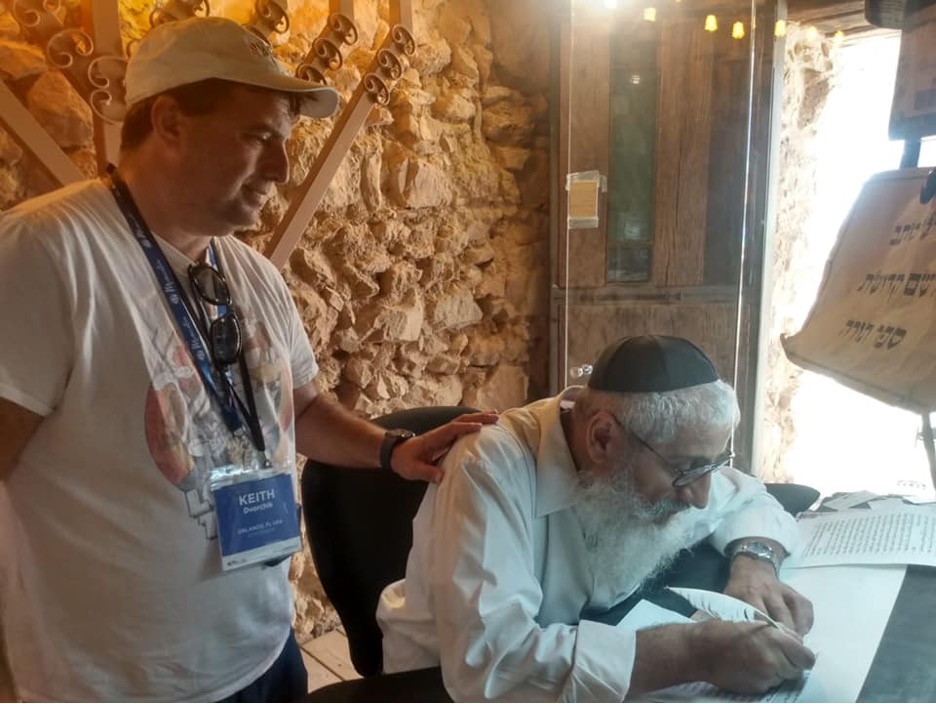
We began our tour of Masada by celebrating b’nai mitzvah for men on the trip who hadn’t had one. It was so exciting and filled with joy and ruach (spirit). We sang and celebrated them. In the ancient synagogue atop Masada, there is a sofer (scribe) writing a Sefer Torah. We had the opportunity to go in and ‘write’ a word in the Torah by touching his arm as he wrote the word and saying a blessing. It was an honor to get to write a word in a new Torah that will go somewhere in Israel.

Writing a word of Torah.

After the b’nai mitzvah, we began our tour of the mountain.

Having done this many times, I know the story and wasn’t totally invested. But then our tour guide did something amazing—he began sharing historical information I had never heard before, about Herod the Great, the Roman Empire, and placed Masada firmly in that context. He explained everything that happened to get to the point where the Jews of Masada found themselves besieged by the Romans. It was fascinating.

As we wrapped up, our guide shared some words of wisdom that his rabbi shared with him, which applied to both Masada and our lives today: “Figure out what it is that you would die for—and then begin living for it.” Such simple yet profound words, and certainly something to aspire to. I know this is one lesson I will be taking home with me.

The view from Masada.

After descending in the cable car, we had a quick lunch and then made our way to the Dead Sea. The area we were in was a private men’s section. It was filled with amazing salt crystals that were like rocks. I was grateful that I had my water shoes to protect my feet. We loaded up on Dead Sea mud and spread it all over ourselves to get the healing power of its minerals. And then it was into the Dead Sea!

The Dead Sea is hard to truly explain.

It’s approximately 35% salt content. (The ocean is approximately 3%.) You feel every cut on your body when you first enter the water, and it doesn’t take long for the buoyancy to kick in, and all of a sudden you’re floating. It’s a very cool feeling, as your body is mostly out of the water and you aren’t doing anything to make that happen. You float, talk with others, and relax. After about 45 minutes in the Dead Sea, it was time to get out, change clothes, and move on.

Our final stop of the day was Ammunition Hill. Ammunition Hill was the site of a critical battle in the Six Day War of 1967 that allowed the recapture and reunification of Jerusalem. It memorializes the 182 soldiers that died in the Six Day War. Most of them were paratroopers who died at Ammunition Hill. It’s truly a special place and has meant something to me since I first visited in 1989 on my first trip.

This time we did something different: we played laser tag on the actual battlefield. The guns we used looked and felt like real rifles, and we split into two teams with different objectives that were related to the Battle of Ammunition Hill. Our team lost the first exercise and then won the second one. In the final team exercise, we lost. Each exercise was very challenging and helped us understand just a little bit of what the paratroopers faced. We then went into the Bruce K. Gould Auditorium (named for our very own Bruce Gould!) where we heard from Alon Wald, the Head of Operations. Alon’s father was one of the paratroopers who was killed during the Battle of Ammunition Hill. It was a powerful and inspiring talk.

We headed back to the hotel for a quick shower, and then it was off to dinner. We walked to the Old Train Station, which is now a hip area with restaurants, bars, coffee shops, and live entertainment. I’ve been there before, but not at night when it was alive like this. There was a real energy in the air, and it really felt like pre-COVID times. It put a smile on my face and in my heart. Dinner was delicious. We ordered a bunch of different appetizers, and our entrees were fantastic. It was a wonderful dinner with great conversation.

The rest of the Orlando crew went off to visit the Mir Yeshiva, the largest yeshiva in the world with over 8,000 students while I went back to the hotel, completely exhausted after three very long and very intense days.

Tomorrow will be Shabbat, and I’m excited to be here in Jerusalem and to visit the Kotel for Shabbat. It’s something truly special, and I’m excited to share it with the men on this trip. We are forming amazing bonds while doing personal exploration, and really opening up with each other and the larger group. It’s an incredible thing to be a part of and to watch happening day by day.

Day 3: Keith in Israel! – October 21, 2021

Every day that starts with an Israeli breakfast is a good one.  Today was no exception.  Amazing food, good company, and your choice of caffeine from the espresso machine.  Then it was off to Yad Vashem.

The Orlando contingent in Jerusalem.

I have been to Yad Vashem many times—at least a dozen, and likely more.  I’ve seen it, felt it…and to be perfectly honest, I am no longer truly excited to go.

This time began differently, which had a major impact on my perspective.  First, Patrick, our own guide, gave us the tour, rather than a dedicated Yad Vashem tour guide.  Second, our first stop was the children’s memorial, instead of finishing there.  Third, a discussion beforehand reframed Yad Vashem for me.  I’d always seen it as a depressing reminder of the Shoah.  I was sad in the beginning watching the home videos of Jews who likely all died at the hands of the Nazis.  Then I grew angry as the buildup to the Final Solution was shown, then depressed at the loss of life, and finally inspired by the view at the end which provides hope.   It’s an emotional roller coaster.

Patrick framed it differently.  It was about overcoming and survival.  It was about the Jews who stood up to remain Jewish even facing death.  It was about the future that was stolen from us—and that we are remaking. 

Yad Vashem was empty when we walked in.  I’m used to bustling tourist crowds—being pushed to move forward by other groups—missing things because I can’t see around the masses.  This time, it was only us and one older couple (the impact of COVID on tourism).  It was depressing, but also incredibly refreshing and inspiring.  We stayed in the main entry for a while, and I watched the home videos with more focus than ever before.  They were filled with the most beautiful footage of families, young and old.  Despite my deep sadness, I smiled.  And then the schoolchildren video singing Hatikvah came on, and my heart broke once again.  That video always hurts my heart.  These beautiful children, so filled with live and future, singing such a beautiful song of hope, who were all murdered by the Nazis.  It was more haunting than ever before.  

As we made our way through the halls, it all looked different to me.  I don’t know if it’s getting older, or the ways my life has changed since my last visit, or even Patrick’s new framing.  I really paid attention to each picture and truly saw the people in it.  And in the blink of an eye, the people in those pictures became my family, the loved ones at my wedding, my children.  I realized as I looked at the dates that we are coming up on 100 years since the beginning of the Shoah.  I no longer saw myself as the young person who would be forced to work or be part of the resistance.  I was now the old person who would have been murdered right away.  My children would be the resistance.  My grandchildren would be the ones in the children’s memorial.  It was surreal to see things that way—and very powerful.

There was a deep pain in this realization—yet also an incredible joy that nearly 100 years since the Third Reich came to power, here I am, in Israel.  I have two Jewish children who will hopefully raise Jewish grandchildren.  Despite the catastrophic loss, we won.  As we left Yad Vashem, I felt hope, not sadness.

Next, we walked to Har Herzl, the Israeli Jerusalem military cemetery.  It is always very moving for me to be there.  I make it a point to stop at Golda Meier’s grave every visit and say a little thank you.  I pay tribute to the leaders who are there for the sacrifices they made for the State of Israel.  This was the first time I saw Simon Peres’s grave.  He is the only one of them that I actually met in person.  I stopped to say hello along with my thank you.  We strolled through the cemetery looking at graves, reading names and ages.  So many of the solders buried there are so young.  We climbed to the top to pay tribute to Theodore Herzl, the founder of Zionism, who believed that Jews needed their own sovereign state and began the process that resulted in the creation of the State of Israel.   Visiting Har Herzl always fills me with gratitude and awe, and this time was no different.

Our day was only half over at this point—and it was already a full day!  Our next stop was the Old City of Jerusalem.

We toured the Jewish quarter, got lunch, and then headed to the Aish HaTorah building where we got to view the Old City from their rooftop deck.  It’s something I’d never done before and I was awestruck by the view.  It was simply beautiful and inspiring.  After lots of pictures, we went to the Kirk Douglas theater (yes, named for that Kirk Douglas), where Charlie Harary spoke to us.  Charlie is very inspiring and spoke to us about our relationship with God and how it’s really a father-child relationship, not a king-subject relation.  It is, after all, Aveinu Malkenu (Our FATHER, our King), not just our King.  He urged us to go to the Kotel (the Western Wall) and simply speak openly with God, our Father, and not worry about saying the wrong thing.

Having been to the Kotel many, many times, I have my rituals.  Charlie’s words changed them.  Instead, I followed his suggestion.  Like at Yad Vashem, the Kotel was empty.  I’m used to it being full, waiting for a spot to get close, and encountering beggars.  Today, I walked right up.  As usual, I placed my forehead against the Kotel and began to speak to God.  While I won’t share my prayers with you, it was very deep and very meaningful.  I was fully focused for the first time ever and blocked everything out.  I don’t know how long I stayed there but when I was done, I began to pay attention to the service happening next to me.    I listened for a bit and then left.  On my way out, I put on tefillin, as I do at the Kotel—and I felt the connection.

View of the Kotel and Temple Mount.

We had two hours to spend before our tour of the tunnels beneath the Western Wall, so I texted my family to ask about gifts.  My youngest, Matthew, told me what he wanted, so off I went with a friend from Orlando to shop at my favorite store, Mira.  When we got there, it was closed, so we walked on and into the Arab shuk.

There are many perceptions about Jews and Arabs and how they get along.  Most are very wrong.

As we walked in the Arab shuk, we saw friendly faces and kind people.  I found a store that had what I was looking for and began to shop.  The storekeeper was kind and showed me lots of options.  I texted Matthew pictures to figure out the right one.  While we waited on responses from him, my new shopkeeper friend offered me Turkish coffee, which I accepted.  We chose the right gift, drank some delicious Turkish coffee, and negotiated a price.  He asked what else we wanted, and my friend from Orlando needed specific gifts for his kids.  Our new shopkeeper friend knew just where to go, and after previously unsuccessful searches, my friend got what he needed.  As we walked out, our new friend invited us to stop by again for coffee if we returned to the area.  Of course, we said yes.  I very much look forward to it.  On our way back to the Kotel, I got hooked into another shop in the Arab shuk, and ended up buying something else I wanted for myself.

We hustled back to the Kotel to meet the group and ran into another shopkeeper, who I had promised earlier that I’d look in his store.  Charlie had reminded us during his talk about the power of words and when you say something, you need to mean it, so I shopped in his store as promised.  While there was nothing of interest to buy (and I did try to find something), I felt good that I had honored my word. 

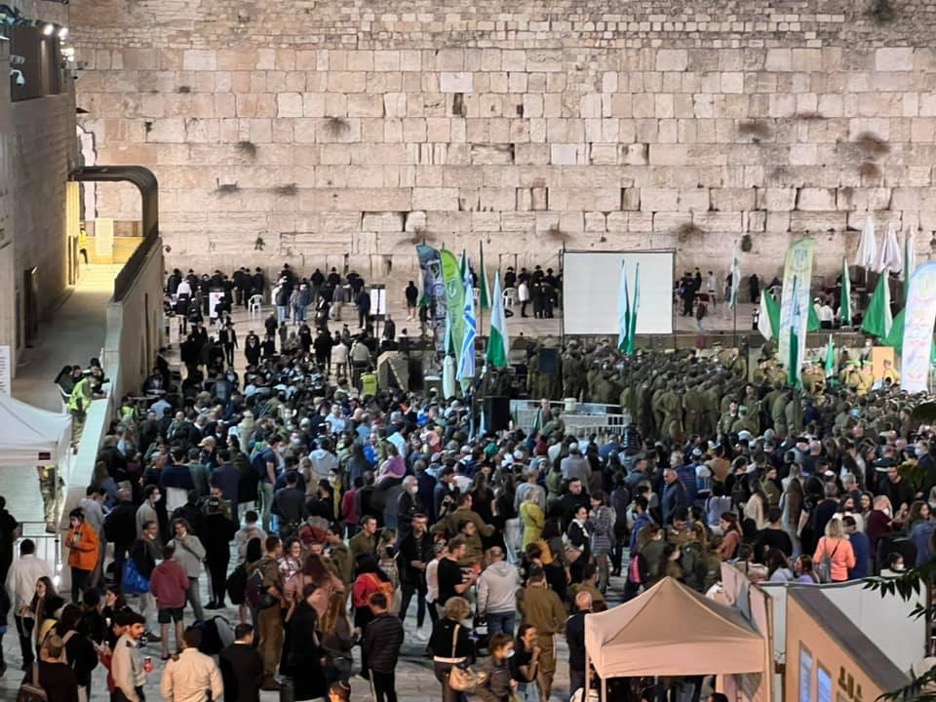
We got back to the Kotel in plenty of time and watched the beginning of an IDF induction ceremony.  It was amazing to see the joy in the eyes of children and their parents, grandparents, aunts, and uncles.  One family struck me deeply as I watched the interaction between first mother and son, then father and son.  It brought tears to my eyes.  Then we went into the tunnels beneath the Kotel.  It’s a fascinating tour that I did about 15 years ago.  There is a synagogue built below to get closer to where the ‘Holy of Holies’ (the ark of the covenant) was kept.  We saw the Herodian stone in better condition there, and realized just how high the wall really was and is.  We went to the place that is the closest we can get to where the ‘Holy of Holies’ was kept and had another chance to speak to God.  It’s something I encourage you to do when you visit.

IDF induction ceremony at the Kotel.

We were now an hour late for our dinner reservations.  Once we arrived, we enjoyed a delicious dinner at a Kosher-Asian fusion restaurant.  We had an amazing conversation—that surprisingly included engaging Torah study!  Many people think of that as incredibly boring.  I can tell you from first-hand knowledge, when you have a good teacher, it’s really fun and very cool.  It was a very fulfilling end to a very long and exhausting day.  We didn’t know how long the walk back to our hotel was going to be, and laughed when we realized it was literally right next door!  We walked in behind another group of people, which meant the elevators were not an option (Israeli hotel elevators fit 2-3 people max!) so up six flights of stairs it was.

As I lay in bed preparing for an early morning and visits to Masada and the Dead Sea, I am overwhelmed with gratitude.  The connections I’m building with the Orlando men are amazing – it’s hard to believe it’s only been three days.  The deep questioning I expected to do on this trip is happening, and I’m enjoying the process.  It’s truly an amazing place that provides far more questions than answers, while also providing deep meaning and connection.

Day 2: Keith in Israel! – October 20, 2021

Anyone who has experience traveling understands the impact of jet lag.  Having been to Israel many times, I knew it was crucial to stay awake as long as I could on Monday night so I could sleep through the night and wake up refreshed.  Mission accomplished!

Day 2 began with an Israeli breakfast.  For those who have been to Israel, you know exactly what that means.  For those who have yet to experience such a delight, there’s really no adequate way to describe it.  Mountains of fresh and grilled veggies, salads, eggs, shakshuka, hummus, tahini, pita, rolls, and the cheesesthere is no better breakfast buffet in the world.  Not to mention the coffee and espresso for all your caffeine needs, the lemonade and water and orange drink (not orange juice!)…needless to say, we enjoyed a veritable feast before starting our day.

First on the itinerary was an inspirational talk from our trip leader, Ari Shabat (yes, that’s his real last name).  Ari spoke on how to be AWESOME and live our most AWESOME lives, and then we boarded the bus to Tzfat, thoroughly inspired.  Of course, no stay at Kibbutz Lavi would be complete without the bus getting turned around because someone forgot to return their key.  You see, Kibbutz Lavi still uses real keys—not the plastic, disposable ones that every other hotel uses.  These are real keys on heavy keychains, and the bus couldn’t leave until every last key had been returned.  Once the key issue was solved, we were off—sort of.  We had too much luggage to fit under the bus, so we had to store them in the back of the bus, leaving barely enough seats for everyone.  But we made it work, and off we went!

The group in Tzfat.

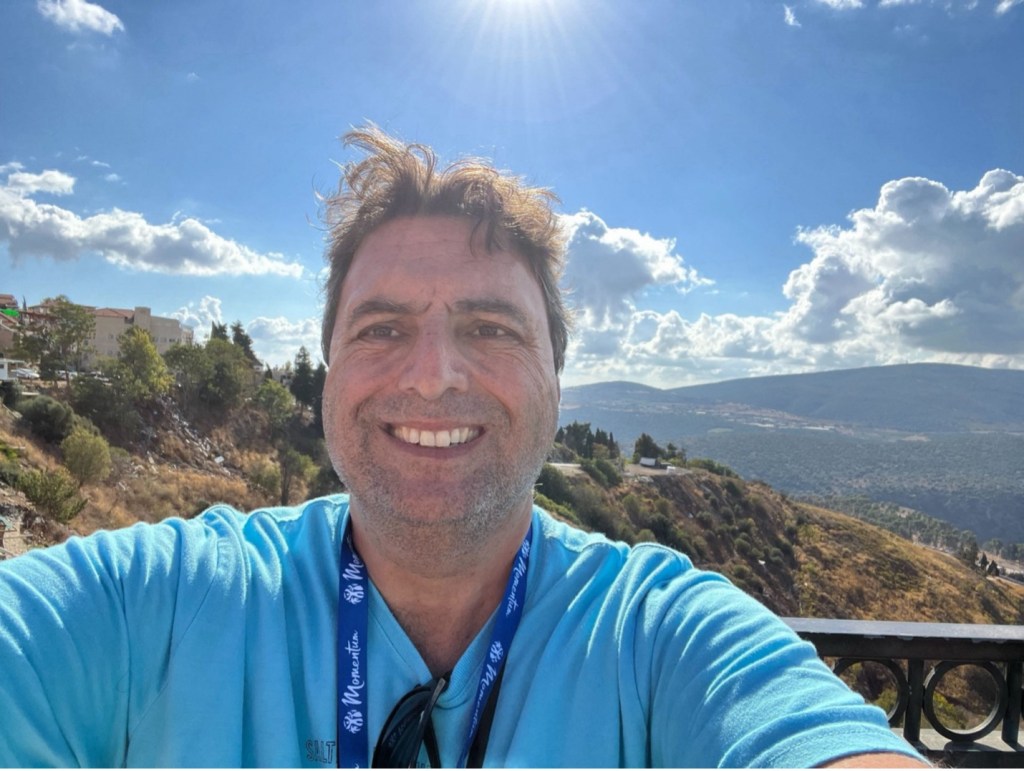
Tzfat is a mystical city.  It’s the birthplace of Kabbalah, Jewish mysticism.   It’s where Lecha Dodi was written.  The city resides on a mountain; in one day there, you’ll climb more steps than you would on a Stairmaster.  It’s also home to an amazing artist colony.  Can you tell how much I love the city of Tzfat?  Our first stop was Women of the Waters, a women’s mikvah.  Most mikvot are designed for women due to the laws of Niddah, which pertain to menstruation and ritual purity.  Elisheva, our host, was a wealth of information, and I was blown away by the details she taught us.  Soon, Elisheva turned it over to Adrienne Gold, an instructor on the Momentum Women’s Trip.  We were the very first men’s group she had spoken to, and she had much to share.  Before we left, we were afforded an incredible privilege: to tour the women’s mikvah.  Ordinarily, no men are allowed—period—but we had the opportunity to see the mikvah up close and understand what it was all about.

After the women’s mikvah, we descended the mountain on ancient steps leading to the Mikvah of the Ari.  The Ari was a 16th century rabbi in Tzfat, and this was the mikvah he used daily.  For those who don’t know, when you immerse in the mikvah, you immerse naked.  So we all went into the Mikvah of the Ari, took our towels, waited in line, and then dunked ourselves into the fresh, ice cold water.  It was an amazing, refreshing experience, and I could feel the spirituality of it.  There is something special about my first mikvah experience being in the mystical city of Tzfat, and in the very same mikvah the Ari used 500 years ago.

The Mikvah of the Ari.

Then it was back up those ancient stairs, all the way to the top again—an immense workout, to be sure.  Level after level we climbed, until we finally reached the main area filled with shops and synagogues.  The Joseph Caro synagogue was closed, but we did get to visit the synagogue of the Ari.  It’s another one of my favorite places in Tzfat; it never gets old being in that sacred space.

Judaism means MISPACHA, family, and one of the greatest things about Israel is running into people you don’t expect.  There are always people you know to see and visit.  A friend of mine moved to Tzfat in 2003, and we took advantage of our lunch break to get together, catch up, and of course, eat.  He took me to an amazing hummus restaurant—yes, there are restaurants that just serve hummus.  Many of us pronounce it hum-us but in Israel, it’s choom-oos.  We both had the hummus with sabich.  It was some of the most delicious hummus I’ve ever had, and a wonderful time catching up with my friend.

I rejoined the group after lunch, and we headed for the Lebanese border.  Israel is a small country, so it’s easy to go see all the borders.  From high in the mountains by Misgav Am, we looked out upon Lebanon.  It really gives you perspective on just how tiny Israel is, and how significant borders and mountains are in this part of the world.  We didn’t go to the Golan Height, but it’s the same there—the high ground matters to protect villages in the valley.

Next, we drove down into the Hula Valley to stop at the Jordan River.  Where we stopped happens to be the same location I’ve gone rafting down the Jordan on countless Birthright trips.  Memories flooded back, and I couldn’t help but smile.  If you’ve never seen the Jordan River, it’s not the raging, wide river you imagine.  It’s more of a creek—not very deep, and not very wide.  But very important.

Then it was time for dinner.  We dined outside beneath a tent while music played.  It was a beautiful environment to end the day—and once again, the food did not disappoint!  Course one was filled with salads and delicious salmon.  Then the main course: steak, chicken, potatoes, sweet potatoes, and more.  Whenever our table ran out of something, our servers simply brought more.  As dinner ended, the dancing began.  The energy was infectious, and we danced with joy.  It was truly special to be a part of, and again, impossible not to smile.  (Before you ask, there are no pictures of me dancing!)

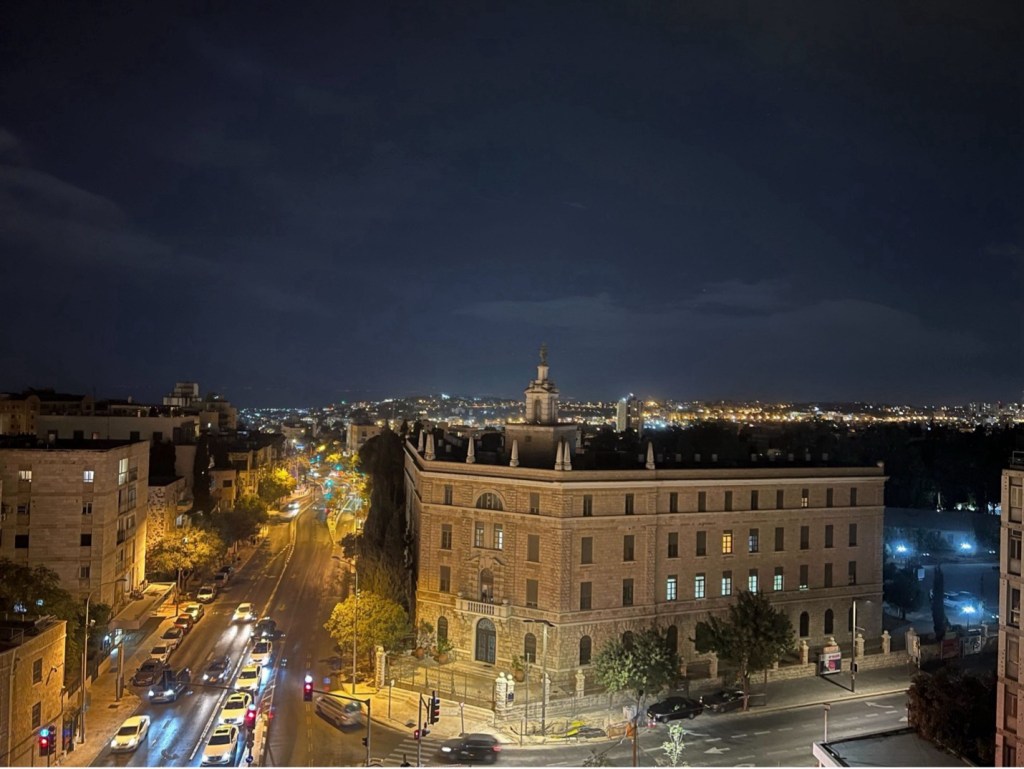
At last, we embarked on the 3-hour drive to Jerusalem, the City of Gold.  There is nothing like the approach into Jerusalem, even at night.

Jerusalem at night.

This blog is long, I know—it was an incredibly busy day.  It was also a beautiful day filled with introspection and friendship.  I’ve known most of the men on this trip for less than two days, yet already, we’re having deep discussions and learning with and from each other.

Being in Israel changes you.  It fundamentally alters who you are.  Each time I come, I delve a little deeper, become a little more introspective and thoughtful, and leave with the desire to make subtle changes in my life for the better.

I’m excited to share this journey with you, and hope you will be inspired to come here, as well.  The natural beauty is amazing.  The people are wonderful (and crazy).  The food is unbelievable.  And the nature of the country gets into your soul, your neshama, and begins to impact what you think, how you feel, and how you act.  It’s an incredible gift.

Day 1: Keith in Israel! – October 19, 2021

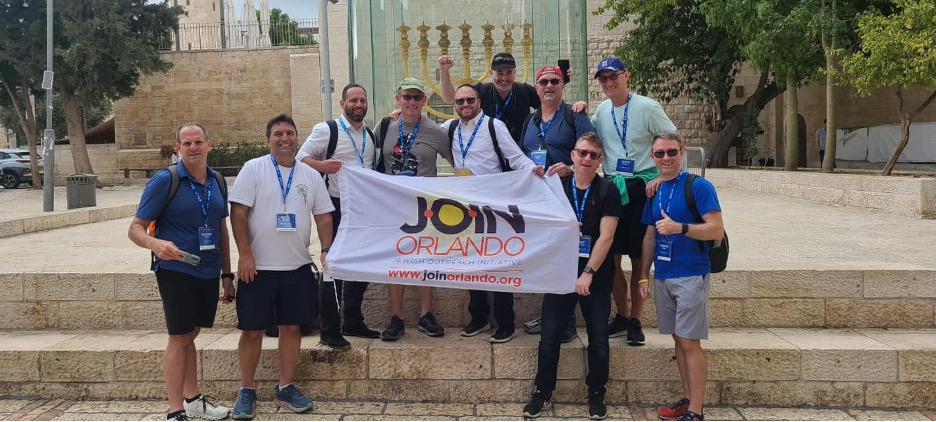
Once again, I am in Israel.  As of Monday, I have begun my 18th (my CHAI—life) visit to our homeland.  I love Israel.  I love the concept.  I love the country.  I love the people.  And I love the feeling I get being here.  I am on this trip with MOMENTUM, a group of 85 men (including 10 from Orlando!) who are exploring spirituality, brotherhood, and Judaism together in Israel.

The power of an immersive Israel experience is unparalleled.  It never ceases to amaze me how quickly people bond and connect.  This trip has been no different.  From the time we met in pre-trip meetings to when we met at the airport, we were all already connecting.  We hung out at the Delta Club at JFK and on the flight to Tel Aviv.  By the time we landed, a bond had been created.

Day 1 began with multiple COVID tests to get out of isolation quickly—and then, we were off to our hotel in the Galilee!  Kibbutz Lavi is absolutely beautiful.  After a delicious lunch, we sat in the grass, drinking coffee and resting.  I took a nice walk around the kibbutz, enjoying the views and sitting in the beautiful garden, making some calls, and letting Israel overtake me.

Our program inspired us from the very beginning.  All 85 of us sat outside with birds chirping around us, the cool weather setting the tone, as Charlie Harary challenged us to embrace “AWESOME.”  Using the biblical story of Gideon, Charlie reminded us that the few people who are truly dedicated can do wonders and by coming to Israel at this time, for this trip, we had proven we were truly dedicated.  It was hard to get here (and required more COVID tests than you can imagine!), but we persevered to get to our homeland.  Things that matter—the truly important things—take work, and this was another reminder of why we are here.

Photo of Kibbutz Lavi (taken by Keith).

Our evening was highlighted by a security briefing from a high-ranking officer in the IDF, who spoke to us about the geopolitical realities of what is currently unfolding around us.  Syria, Iran, the Abraham Accords, and more were discussed.  It was interesting to get a view from the inside.

Photo of Kibbutz Lavi (taken by Keith).

Israel and Judaism have an incredible focus on food.  Dinner was an incredible BBQ with steaks, chicken, and more food than you can imagine!  We sat outside, once again enjoying the beauty of Israel, and ate, drank, and built relationships.  It’s hard to believe it’s only been one day.

You will hear me say this and write this often: if you haven’t been to Israel, come!  It won’t disappoint.  If you have been to Israel, come back!!  There is something special here that you can’t explain until you experience it—and once you experience it, nobody will have to explain.

Tuesday is Tzfat, one of my favorite cities in Israel.  I can’t wait to see the beauty of the mystical city, take a dip in the ancient mikvah, explore the candle factory once again, and have lunch with my friend Shmuel. More to come…

Next week in Jerusalem – October 15, 2021

As we all prepare for Shabbat this week, I am preparing to travel to Israel. I leave on Sunday as part of the Orlando contingent of the Momentum Men’s Trip. (The women’s trip leaves October 31st.) Momentum is a special program designed to bring men together using Israel as a crucible for Jewish connection, involvement, and meaning. This year, the program is launching an advanced track for those who have been on the trip before; our Orlando group is lucky to have several participants on that track, as well.

I think it’s fitting that during COVID, this trip will be my 18th trip to Israel. 18 is the number of life in Hebrew—chai—and Israel certainly is the lifeblood of the Jewish people, and holds a special place in my own life. Each trip I have taken has been different, enhancing my life in new ways, and furthering both my Jewish identity and Jewish journey. I have no doubt this trip will do the same.

For those of you who have been to Israel, you know and understand what I mean. There is something special there. The air smells different, the water tastes different. I remember realizing on my first trip in 1998 that the people collecting the garbage were Jewish—the bus drivers were Jewish—even the beggars were Jewish.

This trip will be more about introspection than seeing Israel itself. I look forward to the opportunity to use Israel as a tool for my personal growth and journey. I’m excited to spend more time in Tzfat, one of my favorite cities that I never get enough time in, and to immerse in the ancient mikvah there. To wake up early, to be able to pray at the Kotel (the Western Wall of the Temple) as the sun rises. To spend Shabbat in the Old City of Jerusalem. And of course, to bond with the other men on our trip, creating and deepening friendships.

Israel is an amazing country, and also an amazing concept. If you haven’t yet been, I encourage you to do so. And if you have, I encourage you to return again and to get involved with the Federation’s Israel and Overseas committee. The task of this committee is to identify the focus we want to have in Orlando with Israel and the wider Jewish world—to identify the relationship we want to build. It imagines how we bring Israel to Orlando, and how we bring people from Orlando to Israel. It reviews our funding to Israel, and makes recommendations about where and how that funding is used. It’s a great way to get involved in the Jewish community, here in Orlando and beyond.

This Shabbat, I will be in Orlando—next Shabbat, in Israel. I consider myself very lucky and privileged to once again visit our Jewish homeland. I’ll be blogging and filming videos while in Israel, so if you are interested, be sure to watch the Federation’s website, social media, and emails for updates.

As a Jewish community, we are lucky to have Israel.

Shabbat Shalom,
Keith

Encounter thoughts on Thanksgiving – November 26, 2019

On Thanksgiving, I realize just how much I have to give thanks for. And as I continue to think about my trip to the West Bank, my mind has been filled with thoughts of the trip and the experience. The rockets that flew out of Gaza into Israel just days after I left Israel only exacerbated my processing and I have found myself dreaming about the trip and its impact on me. So on Thanksgiving, I find myself thinking about those people living in refugee camps in the West Bank.

The Aida Refugee Camp and refugee camps in general impacted me greatly. Refugee camps are designed to be a temporary space. Having never been to one before, my expectation was that it would have the feel and look of a temporary space and that the problem was that people were living in temporary spaces for 70+ years. Boy was I wrong.

The Aida camp looked like a part of Bethlehem. It was hard to tell what was the camp, and what was the city. The buildings were concrete and appeared permanent. In comparison to the village in the Gush we had just been to, this was a big improvement. There were schools and opportunities for a full life. While people were moving out of the camp, the vast majority were staying in order to keep their refugee status, international funding, and to make a political statement.

Before going, I always wondered why these camps still existed. What was their purpose? Having seen them first hand and having listened to one of the camp leaders and having a chance to ask him questions, I can only come up with one answer. The camps exist only to serve a political purpose. They only exist to teach hate. The people who live in the camps are pawns of the Palestinian Authority, Hamas, the PLO, and Europe. They exist to teach hatred of Jews and to provide talking points for why Israel should not exist.

One thing that really stood out to me about the Aida camp was the hate that was being taught. We heard it from the head of the community center who worked with children. It was not about hope and building a life, it was about hatred of Israel, of Jews, and maintaining the refugee status. The cuts in aid were beginning to have an impact as it was forcing a change to their victim reality. It was painful to hear of the personal suffering due to the decision to use these people as political pawns. As I walked through the camp, I noticed the children. Adorable 5 year olds who were playing, smiling, and laughing. They would wave to us with joy. I found myself wondering if it was already too late for them. Had the hate being taught already been too much to overcome?

The more I think about these camps, the more I think they need to be eliminated. European nations who fund these camps and the United States have a moral and ethical obligation to eliminate the camps and find new homes for those who live in the camps. Israel has an opportunity to allow new Palestinian communities to be built where there can be sustainable economic and social opportunities for growth. It’s time for the residents of these camps to begin new lives and to find hope. It’s time for them to have an opportunity to create lives with meaning and not to be political pawns against Israel. It’s time to give them dignity and a chance to show they can build a state that will live next door to their neighbor, the Jewish State of Israel. As long as these camps continue to exist, continue to breed hate, and continue to be used as pawns against Israel, it’s hard to see an opportunity for peace where two nations live side by side. So on Thanksgiving, I hope that these camps can be eliminated, giving an opportunity for those who live in them to have things to be thankful for that don’t involve killing Israelis and eliminating the State of Israel. And I hope that the elimination of these camps will give Israelis something to be thankful for – a chance to have neighbors who are more interested in building lives for themselves and their children than hating Jews. It’s time for 5 year old children to grow up with happiness and joy, not hatred and bitterness.

I’m coming home … – November 8, 2019

One last post before I return to America. After an exhausting experience like this, there is nothing better than getting to unwind with friends. I took a taxi to my friends Margot and Tamar’s house for dinner, conversation, friendship, to play with their kids and meet their new baby. We talked about it being 13 years since Margot made Aliyah (I took her on her first trip to Israel!) and how my oldest turns 20 in less than 3 months. It was an incredibly refreshing way to walk away from the challenges of the conflict and the deep thought of the past 4 days and talk about kids, food, family, and the wonders of daily life. Of course, they are Israeli and asked questions about the trip and we discussed things but the intensity was different. It was back on my home ground. I wasn’t challenged by what they said, in fact it was mostly what I believed before the trip and/or what I still believe today.

And the beauty of the Jewish community showed through as I got a text from a friend whose son is in our JCC preschool telling me that after such a tough week, I deserved to see this picture (it’s of her son and 3 of his friends in their classroom). All the pictures are below. It was amazing feeding the new baby – it made me understand what being a grandfather will be like sometime WAY in the future 😉

Despite the sadness and anger and hope and joy that this week has brought me, I am feeling grateful and relaxed. I will miss Israel and all her beauty but I know I will be back in the near future to experience all her wonders again.

Part 15: Trip summary – November 8, 2019

We gathered together for the final time as a group to begin the processing of the entire experience. I learned so much from the others on the trip as well as those we heard from and what I saw throughout the West Bank. One of the things I said in that final gathering was how I knew I needed more time to process and unpack the entire experience. There is much that I have been thinking about that I haven’t written. As I figure stuff out, I’ll write about it.

Four days ago, I met these 35 or so people for the first time (well I did know two of them before and had met one a few years ago). We were strangers in a strange land. After 4 days I feel like I have new friends. We joked how the trip started weeks ago.

Intensive immersive experience is a commonly used term. I’ve used it many times. This was by far the most intensive immersive experience I have ever had. My head is still spinning with all I have seen and experienced. The beliefs I held at the start of the trip, the beliefs that were challenged, the contradictions not only from speaker to speaker but also within the session of a speaker.

As I sit at Ben Gurion airport waiting for my 5:20 am flight (it sounded bad when I booked it and it’s even worse now in actuality), the only thing I am certain of is that this is a very complicated situation and there are no easy answers. Israel has an existential security threat they must address. The Palestinians are suffering and struggling. I’m not into blame and don’t want to go there. I do believe the current situation is untenable and something must change but what, how, who starts, how long it takes, I have no idea.

In the end, just as the Encounter staff told us at the beginning, it’s not my job to solve the conflict. That’s for the Israelis and the Palestinians. I’m not even a citizen so I don’t vote there and have no say in the government. I do believe it’s my job to facilitate conversations. To help people in both my local community as well as in my sphere of influence gain a better understanding of the complexities and challenges that exist. So, as we discussed what our ‘intentionality’ was after the trip, I said mine was to bring this to my community and sphere of influence to do just that.

Now I’m really looking forward to plane taking off so I can go to sleep. The flight home will give me time to rest and maybe begin the processing. Or I may just watch a movie to numb my mind.